



 Unlock with Patreon
About This Episode
This episode was recorded on October 28, 2020.
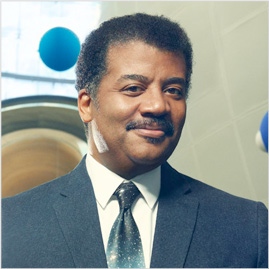
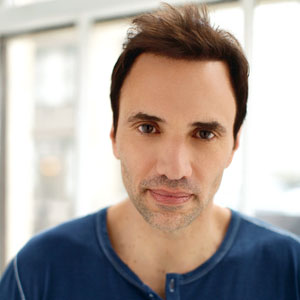
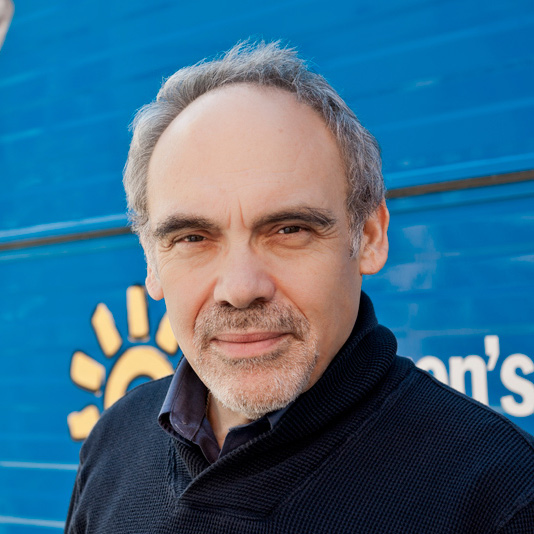
COVID-19 is running rampant in the United States and on this episode of StarTalk Radio, Neil deGrasse Tyson and co-host Paul Mecurio are investigating how the pandemic is impacting children with the help of Dr. Irwin Redlener, MD, co-founder of the Children’s Health Fund, pediatrician, Director of the National Center for Disaster Preparedness, and author of The Future of Us: What the Dreams of Children Mean for Twenty-First-Century America.
To start, Irwin tells us about The Pandemic Resource & Response Initiative. You’ll hear about Irwin’s book The Future of Us, and how his observations working as a pediatrician serving underprivileged children led him to write the book. Find out why Irwin calls children the bellwethers of society. We discuss the societal and civic importance of making sure all children can fulfill their potential.
Irwin explains why we’ll need an effort equivalent to The Marshall Plan in order to re-build ourselves once the pandemic is behind us. Then, we answer some Cosmic Queries. You’ll learn how the pandemic will have an impact on young children whose brains are still developing. We explore how our mental health is being impacted by quarantine. All that, plus, we look for places to find optimism and why everyone needs, when they can, to take a break from the sorrow and tragedy through laughter.
Thanks to our Patrons Joshua Ratcliffe, Mick Pirgmann, Jason Sills, Mario Dalla Riva, Kaleb Saleeby, Curtis Miller, Shashank Subramanian, Tore Hongset, David Mikhael, and John Kiousis for supporting us this week.
NOTE: StarTalk+ Patrons can watch or listen to this entire episode commercial-free.
Transcript
DOWNLOAD SRTWelcome to StarTalk, your place in the universe where science and pop culture collide.
StarTalk begins right now.
This is StarTalk, and this is going to be a COVID-19 edition, where we’re going to explore the future of us.
And just to be clear, since we’re talking about COVID-19, we have to sort of put a date stamp on what’s going on.
So we are recording this on October 28th.
So whatever we say that’s true on October 28th, we discover things after this that could affect the information that we share with you.
So that’s my entry disclaimer on what’s going on, or rather my entry claimer if there’s such a thing.
So my co-host for this episode, Paul Mecurio.
Paul.
Hey, Neil, how are you?
Dude, you’re special for this because you actually had COVID.
Yes, yeah, you asked me to get it for the episode.
Yes, thank you.
You are such a role player in what we’ve got here.
I’m committed.
You’re committed.
You have to be the virus.
Yes, exactly, be the balls.
Be the virus.
You’re host of the Paul Mecurio show, which I will never forgive you for just not being inventive there.
I tried other things.
I tried two chairs and a microphone, that didn’t go.
And three ferns and a zinia plant or whatever.
Two kidneys and a thyroid.
I tried everything.
I gotta work on that.
Yeah, keep working on it.
I’ll help you too.
I like coming up with new names of things.
But today we’re talking about the future of humanity in the wake of COVID.
And also we’re gonna focus on those who are most vulnerable in a societal way, which are the children, right?
Even if children, they sort of get it, but it’s not too serious and they bounce back.
Society that is trying to take care of them and the society they will inherit has been indelibly touched by this virus.
And so since neither you nor I, other than that you have become the virus for this episode, have special expertise, we go back to our man who’s not only a specialist in diseases, he’s a specialist in children who get disease and it’s Irwin Redlener.
Dr.
Irwin Redlener, welcome back to StarTalk.
Thanks, Neil, so happy to be with you and Paul.
Yeah, let me get your resume just out there, just so people know.
You’re a pediatrician, co-founder of the Children’s Health Fund.
And that’s an international thing where you just, you’re helping children no matter where they are and no matter their capacity to afford.
And you’re founding director of Columbia University’s National Center for Disaster Preparedness.
And we’ve had you on for that reason before, right?
So thanks for having agreed to do that.
You can check our archival episodes for that.
And you show-
The show brings you on for all really depressing stuff.
Yeah, yeah.
I’ve been called Dr.
Doom by a couple of radio hosts.
Yeah, because he’s the, you know, for that other title he carries, that’s like when the asteroid comes and takes out the grid and the ability to respond with first responders.
So yeah, that’s definitely the doomsday dude, doomsday doctor.
And you created the Pandemic Resource and Response Initiative at Columbia University.
So what is that and when did you create that?
Well, we created this back in April when it was apparent that things were really going to hell here with, especially in New York where we are and the hospitals were completely overloaded.
The fatality rates were through the roof and sort of leading the world in death and destruction from this COVID virus.
So yeah, so we created it and what-
Leading the world because of our, we just didn’t, we were ignorant and-
Well, we, you know-
And we didn’t listen.
We didn’t listen.
We didn’t take proactive action.
And we actually performed way more inadequately than other peer countries.
In fact, we just issued a report that said that if we had done what Japan or South Korea or Canada, Australia or Germany had done, we could have saved more than 100,000 lives.
In fact, there were 217,000 fatalities from COVID a week ago, Friday, which is the day we issued the report.
And at that point, and there were 217,000 fatalities, if we had done what Canada had done in terms of early on aggressive interventions, we could have saved 130,000 lives, Neil, of that 270,000.
So these countries, you choose these countries because they are our technological social peer group.
Right, right, okay.
Exactly.
It’s sensible to compare.
And economic, especially.
Yeah, and we should be leading the world.
And we have the werewolf, we have the scientific power.
If we had done what South Korea and Japan had done, we would have had 200,000 lives saved.
In other words, if we looked at the-
Almost all of those who died in the United States.
And this is a tragedy of just enormous proportions.
And it should not have happened in the United States, but it did.
And it’s still happening because there’s really not much that’s changed in terms of our policies and leadership from the top.
So I’m especially disappointed by this because I’m old enough.
I’m older than both of you guys.
No, you’re not, you’re not even close.
I mean, I grew up.
I could have adopted you, that’s all.
I’d change your diapers.
No, I just remember it with all of the problems we had, you know, with Vietnam and all the civil rights, we were still the model of the world for scientific advances and health advances.
Exactly.
And I expect that, you know, we would see these film loops of other countries, oh, look at them, they don’t have an infrastructure.
There was like, they would be the benefit of our pity, right?
That we would then send money their way, help them, because we are exemplar.
And now, you know, I feel bad about that.
It’s upside down.
But the fact is we are now, October 28th, at a higher peak in new COVID cases in the United States than at any previous time in this pandemic.
Is that correct, Irwin?
It is correct.
And the trajectory is up.
There’s no suggestion that it’s about to, you know, peak and then start coming down again.
It’s just up.
And we’ve been predicting for a long time.
So in other words, it’s not even leveling.
It’s not leveling.
It’s aiming high.
Aiming high.
Aiming high.
And that’s a problem.
And, you know, what we’ve been talking for a long time about, you know, the winter is coming, to borrow the Game of Thrones phrase.
Yeah, that started there, yeah.
And it’s scary.
There’s no let up in sight, and there’s no way to create a model, or there’s no model that suggests that it is going to slow down anytime soon, in fact.
And, you know, there’s a great case study in Kansas because the governor was going to mandate masks and the Republican legislature then took the power away from the governor to do that.
And said the community, so of 120 counties, 100 said no mandate on masks, 20 did.
And in July, at that point, it went like this.
In other words, those that mandated masks leveled off.
And those 100 counties didn’t spike and they’re continuing to spike.
Yeah, the data is incontrovertible.
In fact, there’s a compilation of this with regard to actually a red state, blue state compilation for what states are leading in new cases versus others that have leveled off.
New York City, while our rates have gone up, they’re still really low compared with most other states at this point.
That’s right.
I’m very proud of my fellow New Yorkers because we’re a crammy set of people, right?
It’s like, you know, oh, you can fit another 12 people in that elevator.
Keep them coming in.
Exactly.
It’s the only time you’re justified to push an old lady out of an elevator.
And I have done it now.
So, Irwin, I want to talk to you about your book, which is The Future of Us.
Let me get the full title, What the Dreams of Children Mean in 21st Century America.
So, Irwin, can you tell us a little bit about this book?
Yeah, so what was driving this book, Neil, was my observation personally.
You know, I’ve taken care of very disadvantaged children as a pediatrician for decades.
And there was one particular situation that stuck with me.
It was in the early 90s.
I was seeing a homeless child whose family was homeless, and this kid actually was separated from his family.
Extremely poor, he was in a foster home that we were providing care in.
And we were using the mobile pediatric clinics with children’s health fund.
Long story short, the nurse says this is a child named William, a 10-year-old in the back exam room with a mobile.
And I go in and I’m chatting with him.
He’s very shy.
And I ask the question that often works, which is what do you want to be when you grow up?
And I was shocked.
This was a homeless kid picked up by a foster family being treated in your free medical care children’s health fund truck.
Exactly.
And he was incredibly poor and faced many adversities in his life.
But when I asked him what he wanted to be when he grew up, he said I want to be a paleontologist.
I’m saying, really, what is a paleontologist?
He said, well, I want to look for dinosaur bones and whatever.
I said, well, how did you learn about that?
He pulls out an old yellowed article from the New York Times about paleontology and he kept this in his pocket always.
And this was his lifeline, his beacon of hope that someday he would get out of whatever he was facing and be able to do that.
And I looked at him, Neil, and I was, first of all, I was almost weeping.
I didn’t weep.
I was just very overwhelmed with sadness because I was realizing the chance of this kid becoming a paleontologist were essentially nil.
And it was very distressing to me.
And I happened to be speaking to a friend of mine named Billy Shore who started an anti-hunger organization.
I was telling him about this story.
I was on one of his podcasts and he said to me, well, my 10-year-old son, this is Billy saying, wants to be a paleontologist.
And we bought him a dozen books on the subject.
We’ve taken him to the museums.
And we flew him out to actually meet a very famous paleontologist.
And I’m saying, Jesus, this is the point.
There are some children who have the support mechanisms from their family, from their parents, from their community that allow them to pursue their dreams.
And there’s other children like William who have no chance.
And the fact is that we have millions of children in America who face futures that are uncertain at best.
And certainly the ability for them to achieve their dreams is extremely limited.
Even if you’re selfish, where you say, I don’t care about these other people, I only care about my people, there is still the loss to the country.
Terrible loss to the country.
And for the intellectual capital that is not being nurtured, that could propel the nation back into its leadership status on so many of the frontiers that I grew up for which that was true.
Right.
And you made this point earlier, Neil, that we used to lead the world in innovation, in science and whatever.
We cannot afford to have so many children or any children really not fulfilling their potential.
It is really, really a terrible reality that’s facing America’s future.
And then the COVID pandemic has exacerbated all that because the kids that were behind the eight ball and in trouble before the pandemic ever appeared are in worse trouble now.
In fact, calling them the pandemic generation of children who have impossible catch up missions now because a lot of them have had their education interrupted.
Exactly the last thing we’d like to see happen.
Save the Children did a survey in September of 25,000 kids and less than 1% of the poor children interviewed had access to the internet versus 19% who were non-poor and they missed out on access to education, health care, food, and in the early developmental years.
So this is the point, Paul.
So we are creating a situation, we’re going to need something akin to a Marshall Plan to try to recover the potential and make up the lost education.
Okay, just remind me, the Marshall Plan was the rebuilding of Europe after the second World War?
Exactly.
Okay, so this requires broad cooperation and progressive visionary thinking.
And investment and commitment, right?
So this is what we need, and I think we really need it badly.
And so this book, The Future of Us, which has been updated to include issues about the pandemic specifically.
Because it just came out in paperback now, right?
Yes, an updated version in paperback.
It looks like this.
Oh, you just happened to have one!
Isn’t that funny?
Yeah, so this is the point here.
I think we’re going to need a lot of work and a lot of commitment.
But like you point out, Neil, this is not just about a focus on our own children.
That’s easy for people like us.
We got the will of all, we can do it.
It happens to be understanding with empathy that there are many, many children who don’t have what we’re able to give our children.
And it’s in our interest as well as theirs that we are able, that we need to help them redress the…
Even if you’re feeling selfish.
So use the term that the children are the bellwethers of any society.
Could you just give me a little more detail about that?
So what I mean by that is that if the children…
Oh, by the way, because we have a comedian with us.
Paul, I’ve always thought of comedians as the bellwether of society.
Because you guys see stuff coming down and you comment, well, I know I hadn’t thought about that.
Oh, is that weird?
That’s how I behave.
I didn’t know that.
Why do you think society is in the shitter right now?
Because of us.
It’s because of comedians.
So how do children plug into this?
So here’s the point.
So if you have a community where children are doing well, the majority of children are going to school, they’re getting the health care they need, everything’s fine.
That portends well for the future.
That’s a society and a community that is trying to make sure that the next generation has the ability to take care of the problems and the challenges that will certainly be facing us from climate change to dealing with pandemics and so on.
But if you have, on the other hand, a community where children are not doing well, where there’s failures in school, where there’s kids are not getting health care, that is a very bad sign.
And that’s why I’m saying that children are the bellwethers.
You can measure the success of society by how well our children are doing.
And if they’re doing poorly, watch out, because we are not going to be in the same position 20 years from now.
We’re already tumbling in terms of international leadership and inspiration.
And it’s just going to get a whole lot worse.
But I think, look, I have apologized multiple times to young people for the mess that we’re leaving them.
In fact, after a few glasses of wine, the first time…
As you should, it is your fault.
It’s all your fault, Irwin.
I’m not going to, because this is a family podcast, so I’m not going to use the language I used in front of these 400 young people.
But I apologize for the mess that we’re leaving them.
And actually, it’s true, you know, when I first started my career, it was in 1971 and 72, in rural Arkansas, running a government-funded clinic.
I was, you know, I’m a child of the Kennedy and Johnson eras, and I thought 10 or 15 years from 1972, we would have ended child poverty, we would have ended racism, we would have ended lack of access to health care.
And I said, in 10 or 15 years, this will all be history.
Here we are half a century later, Neil, and Paul, and it’s like, what the hell did we do or didn’t do to leave the country as much as it was back then?
Paul’s right, it’s just your fault.
It is my fault.
If you spend less time hawking your book, if you spend less time with, hey, hey, here’s my book, everybody, and you know.
You sped up the whole thing.
We get it, you have a book.
But you know what, can I just say something?
This goes back to what we talked about earlier.
The problem with this thing is the elephant in the room, and it’s not even something you want to talk about.
It’s the politics.
I hear all of these goals, and the politics is going to continue to get in the way.
Wait, wait, wait, however, however, I’m going to quote my father, my late father, who said, it’s not good enough to be right.
You also have to be effective.
So, if you know the politics are going to get in the way, then you navigate that.
So, it’s not like you, politics are in the way, and you’re in a prison, all right?
We still kind of live in a free society.
And especially in modern times, with access to the internet, and podcasts, and everything else, you are not, we are not powerless.
But let me ask you, does your book have, you have other anecdotes about your encounters with children?
So this is another one of a kid I saw in a waiting room in the South Bronx.
And I was actually waiting for my wife.
And I was sat down in the waiting room with the kids and the families.
And I see this little kid, a girl playing with a little toy shark.
It says it’s a shark.
And then she went in.
And this kid was, I don’t remember, 12.
And she went into this long explanation about different species of sharks.
And it’s in the South Bronx, in the poorest urban zip code in America.
And this kid was clearly in love with the science of marine biology.
Okay, so Paul, you know what he’s really saying here?
He said, so with those two examples, we need more movies like Jaws and Jurassic Park.
That’s what you’re saying here.
And he just happened to have written a script for both of those, for sequels that he sold.
He just did this stuff.
It’s all he’s doing.
I didn’t even think of that.
But this kid had never been to an aquarium.
In fact, most of the kids that I’ve talked about have never been to one of New York’s museums, which are the envy of the world.
And it’s just incredible how much we are blockading children from the experiences and the opportunities to pursue their lives, like our children are able to do.
And it’s a pathetic indictment, really, of us.
And then there was a kid who was a phenomenal graphic artist.
And I saw him in a homeless shelter.
His name was Raymond.
And he had this big, old backpack, Russack, whatever it’s called.
And I said, what’s in there?
He said, oh, just my artwork.
And he started showing me drawing after drawing that he had done.
He carries it around with him because wherever you go…
If you’re homeless, you got to move around with it.
Yeah, he’s got to take it because he didn’t trust leaving it any place.
And it was unbelievable.
And this kid was in a shelter in Brooklyn.
And he had also never been to an art museum in New York City.
It’s astounding.
So this is the problem.
And I was looking at it at a micro level.
And then the book goes into, well, what’s the big picture here?
And it’s unfortunate.
But I also would say there’s optimism to be had here, Neil.
I think we can fix it.
This is not our inevitable fate.
Well, let’s take a break and let’s find out what is your recipe for fixing it before Paul just rails on you one more time.
Okay, I can’t break it.
I’m going to fix it.
You think you can do it.
Let’s take a quick break.
And when we come back more with Irwin Redlener just telling us about how we’re going to survive this COVID pandemic and what our kids role they will need to play going forward.
Hey, it’s time to give a Patreon shout out to the following Patreon patrons.
Ryan Baratow, Dan Snyder, and Sheila Hudson.
Guys, you are the solid rocket fuel that propels us to the stars.
Thank you so much for your support.
We couldn’t do the show without you.
And for those of you who’d like your very own Patreon shout out, please go to patreon.com/startalkradio and support us.
Thank you.
We’re back, StarTalk.
I got Paul Mecurio.
Paul, go get to have you, man.
Oh, great to be here.
All right, and you’re looking healthier than the last time we had you on.
You’re rising up out of COVID.
Do you have your taste buds back yet?
No, I don’t.
I mean, I do some days, and sometimes in the middle of a meal, I’ll taste it, and then all of a sudden, I can’t taste anything for the rest of the week.
And you find out, oh, I thought I ordered pizza, but I’m eating cardboard from Staples.
Okay.
It’s really helping my budget, I’ll tell you that.
Cardboard is cheaper.
Also, for some reason, soda right now, coke, ginger ale, can’t drink it.
It has this horrible taste, and I don’t know if there’s a chemical in there or something.
Strange.
Yeah, so, thanks for asking.
So, Irwin, we’ve been talking about your book, The Future of Us, and so what you’re telling us is that it has sort of gut-wrenching stories of children who will never realize their potential.
So, do you have any positive, I don’t mean to make light of that fact, but generally, this is America, we like happy endings to things.
So, are you doing something, is the country doing something, is the world doing something, how are we not going to lose people?
I think about you often, Neil, because you are the purveyor of the most effective articulation of the need for people learning and science and what that means to us, and we’re in a very bad spot right now.
And the solution is not just you continuing to talk, but we got to get people who will listen and people who hold the purse strings and are able to change policies.
And this is why, to Paul’s point, the answer, unfortunately, and unfortunately for a lot of scientists, a lot of public health experts, who keep thinking if they write one more paper, that somehow government will be convinced and they’ll do the right thing.
It’s just bullshit.
And what is going to matter is having the right recipients of the information that are controlling our dollars and our policies.
That’s what it’s boiled down to for me.
And look, I think the answer is that we need something that I mentioned before, that we’re calling like a Marshall Plan for Children, which is the Marshall Plan referring, as you pointed out, to the incredible investment we made in Europe to have it recover after World War II.
We need a similar investment, a moonshot, that will make us adhere to a national vision for what we can do and an investment to make sure that no child goes to an inadequate school, every child has health care they need, and families are helped to rise out of poverty.
It’s-
Well, you know, I hadn’t heard that phrase in so many decades, a national vision.
Yeah.
Yeah, it’s only just about me and you.
Yeah, exactly.
And it’s not about us.
Yeah, well, no.
But the word us is in your title of your book.
Yeah.
And that’s what-
So Paul, let’s go to, I think you have some questions that we got from Instagram.
Let’s go to, on Instagram, we have something from Monovaret11.
How will the pandemic affect children whose analytic brain is still developing?
Ooh, interesting.
Yeah, so does the COVID get in the brain or is it just disrupting the system that educates you and so now there’s a gap in when you could have learned, but you can’t right now?
It’s actually both, Neil, because we know that there can be neurological symptoms from people that had COVID.
There was just a report out that children were increasingly seeing the problems of the effect on the neurological system and brain function in children.
Still very small numbers, but something for us to worry about, unfortunately.
And that’s what we’re dealing with, but also-
But just to generalize that notion, just to generalize it.
So what we’re saying here is, if you have a fully formed brain, it’s more resistant to assaults on it, whatever those assaults might be, relative to one that is still taking shape.
This is a very important point, and this is why the focus should be on children.
Because if you experience trauma, and if you get COVID, or you are in a refugee camp, and for years you’re suffering in agony, you will, once the situation, the adversities leave, you are feeling better, and you are better.
For children who are, especially younger children, whose brain is in active development mode, they are affected by all sorts of trauma and all sorts of absence of the appropriate stimulation of the brain, which is why it’s a problem if they are interrupted in their educational trajectory.
So, yeah, the children, there’s a timeliness here with doing what children need versus what adults need, and that has to do with the biology of brain development, and it’s really important, Neil, exactly as you point out.
Next one?
By the way, is there any chance this COVID, and regarding kids’ brains, anything to kind of keep them from asking why?
I’m not saying I’m a fan of it, but like…
Whiny Rex.
I’m sorry, we see what you did there.
That was gonna happen.
I hate it when you’re funnier than I am.
It’s the Y gene, or the Y.
You’re smarter than I am, you’re funnier than I am.
Okay, number two.
The leader’s true, but okay.
Now, what kind of mental effects is being in quarantine having on people, especially teenagers?
Yeah, so it depends, because some families and children do okay and some don’t.
So what’s the difference?
So the families are able to become more resilient to the traumas and weirdness associated with quarantine and all the other regulations and rules that we have now in a COVID world, is that for children, we set up a schedule.
We create play times.
We’re eating together as a family.
We talk through things that are bothering us, and we entertain ourselves the best we can.
I’m telling you, comedians, just to make a point here, Paul, are really important because of not only the insights that come from good comedy, they’re really important, but they also are distracting from focusing on the downside, the doom side of what we’re dealing with.
We’re going to be dealing with COVID-19 for another couple of years.
So, we got to settle in, we got to figure out ways to keep ourselves intact mentally and psychologically, and it’s really important.
It’s about building adaptability and resilience in young people, and it’s doable.
And this is one of the things I talk about in the book.
Interesting because this notion about comedy, I’m a big fan of comedy.
I know you are.
And I attempt it every now and then, not on the stage, but I’ll speckle what I’m doing with some attempts.
Trying to be funny.
So, I tweeted recently the beginning of a coronavirus joke, but not having the end of it.
And I invited people to give me their best ending.
And I just simply said, a coronavirus walks into a bar.
That’s all I said.
I said, give me some help here.
I need a punch line.
I don’t have a punch line.
And so, 2,000 entries, if you want to call it that, came by.
But anyhow, there were a few, not many, maybe three or four people who said, you are making light of a pandemic where 200,000 people have died.
I expect more serious communication from you.
And so, Irwin, your point that you have to see the humor in the tragedy, otherwise you’ve got no lifeline.
I mean, I don’t want to second judge how those people actually felt about it, but you seem to be saying that I was okay.
You’re endorsing the fact that I at least attempted this exercise.
So, I was speaking with Nicole Wallace and a New York Times reporter named Nick Confessary on MSNBC a couple of weeks ago.
I think we mentioned this, but I’m talking about something very serious about a big uptick in COVID, and I see Nicole Wallace start to smile and Nick Confessary is laughing, and I realize, I turn my head and my four-year-old grandson, my youngest grandson has made a cameo appearance and has appeared on either side of me jumping up and down and listen, that clip got over 600,000 views and I was inundated with texts, not texts, with tweets from people saying they loved it, they laughed.
It was the first big laugh they’ve had in months.
It was an incredibly positive, uniformly positive response and it points out to me what you just said.
We need a break.
We need a break and this is the kind of humor that people don’t get in the operating rooms and whatever amongst the docs.
You are taking a break from the sorrow and the tragedy and that’s human and I’m fine with it.
I don’t mock anything about the seriousness and I’m a major attacker of Trump and all that.
But, you know, my God, we’re all feeling incredible stress, incredible.
You know, if you don’t have the comedy to make a point, then like you said, it just becomes a sort of morose, you know, it’s glad to hear that you think it’s necessary.
So Paul, I think we’ve got time for like one or two more questions and if we can answer them efficiently.
Sorry, okay, I was trying to…
No, no, I was not dissing on you.
Hang on one second.
This one is similar to the one I just asked, so I’m going to skip it.
This is from Adam Gulada.
How do we become more educated as citizens on COVID-19?
People think it’s fake.
Yeah, so let me reshape that, Irwin.
The source of education to learn what is not fake is out there.
So there’s a wanton disregard for what is true by a subset of the people.
What do you do with them?
It’s not a matter of just, oh, here’s what the truth is.
Oh, I never knew that.
And then everyone holds hands.
Right.
So let me just harken back to the anti-vax movement that existed for decades, long before COVID came.
Did you ever speak to somebody who was opposed to vaccines?
You cannot, I don’t know at least, what to tell people about the truth that the mumps and measles rebelled vaccine, that it does not cause autism.
It’s been debunked.
Yeah, as they say, you can’t use reason to argue someone out of a point that they didn’t use reason to get into.
Right.
These are the same people who electrocute themselves on a regular basis.
You’re not going to be able to convince them.
These people said to me it’s fake in Florida, it’s a hoax.
I looked in their eyes.
They believed it in their soul.
Paul, that was Florida.
We know.
There was a headline, I have this headline.
It was, Florida sheriff urges residents not to shoot their guns into the hurricane.
Because this was a, so Florida, Florida is another.
They’re an outlier.
Yeah, yeah.
So do you have anything up your sleeve, Irwin, for folks that you can’t otherwise convince?
Yeah, it’s very, very difficult.
This in a certain way is your core business, you know, Neil.
And trying to help people understand how important knowledge and truth is.
And I don’t, you know, I’m not sure what the ticket is to make this happen right now.
If anything softens people, it’s how things affect their children and children.
And there’s studies, Save the Children did a study, and regarding the effects of what’s going on.
And it’s, you know, 83% of the kids reported negative feelings and violence was a violence uptick in the home and so forth, dropping domestic violence, yeah, yeah, domestic violence.
So that those facts are facts.
And when you put that in front of people, even who are skeptical is maybe should there be a greater emphasis on studies like that?
And what any information that they reach them emotionally then?
Yeah, yeah, yeah, yeah, those studies are good.
But I think Neil might confirm this.
Information does not necessarily convince someone who has deep ideological, religious, whatever it is, there’s no competition.
Science and facts, unfortunately, turn out to be not a strong competitor.
And I know, you know, the two people that I, you know, well, you, Neil and our late pal, Carl Sagan, spent lives and careers on trying to get people to understand the beauty and the importance of learning through the scientific process or whatever you want to call it.
But really, really being curious about how the world works and that curiosity plays out as we learn more and we learn more through science and evidence and all that.
So, we’re going to have to leave it at that.
That’s at least a mildly uplifting thought relative to everything else that came out of your mouth in the last.
This is kind of embarrassing in a way, but I take it.
I can take it.
You’ll take that.
You take it.
You take it.
Paul, keep getting better.
Thank you.
And put down that cardboard.
It’s not a pepperoni pizza.
And I always say this, and I want to say it again.
If I had Neil as my science teacher, I would be a scientist today.
He makes it accessible, fun, and relieving.
I don’t make it accessible.
It was always that.
I’m just revealing the fact that it was always that.
Don’t disagree with me when I’m complimenting you.
What do you want?
All right.
Thanks for having me.
Great to be on.
And great to meet you, Dr.
Excellent.
And Irwin Redlener’s book, The Future of Us, an exploration of how children will inherit an earth and what kind of earth do we want to hand over to them.
And so, Irwin, always good to see you on StarTalk.
Likewise, Neil.
Thank you.
And nice to meet you, Paul.
And really get better quick.
Thank you.
Neil deGrasse Tyson here, your personal astrophysicist, as always, bidding you good-bye.
 Become a Patron