


 Unlock with Patreon
About This Episode
What is infinity? Neil deGrasse Tyson and comedian Negin Farsad explore whether we are in a finite universe, the issues with infinity, string theory, and more with theoretical physicist Stephon Alexander.
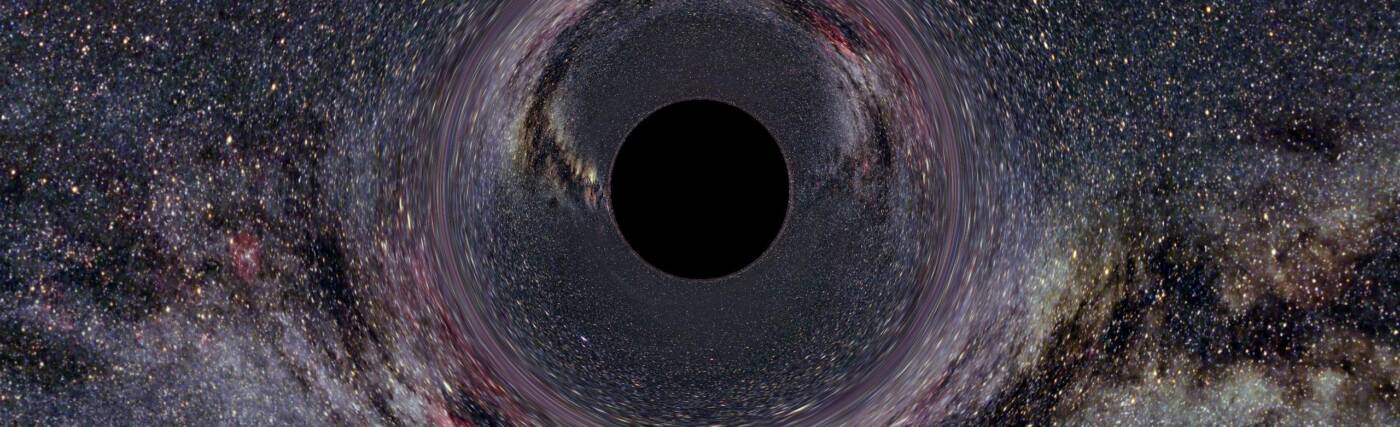
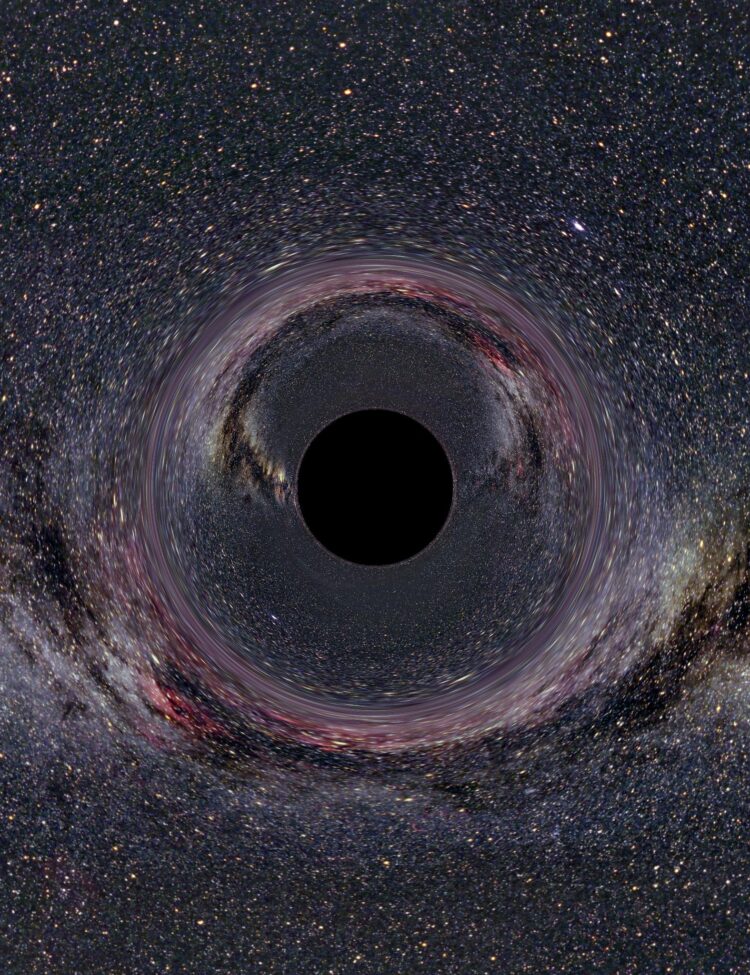
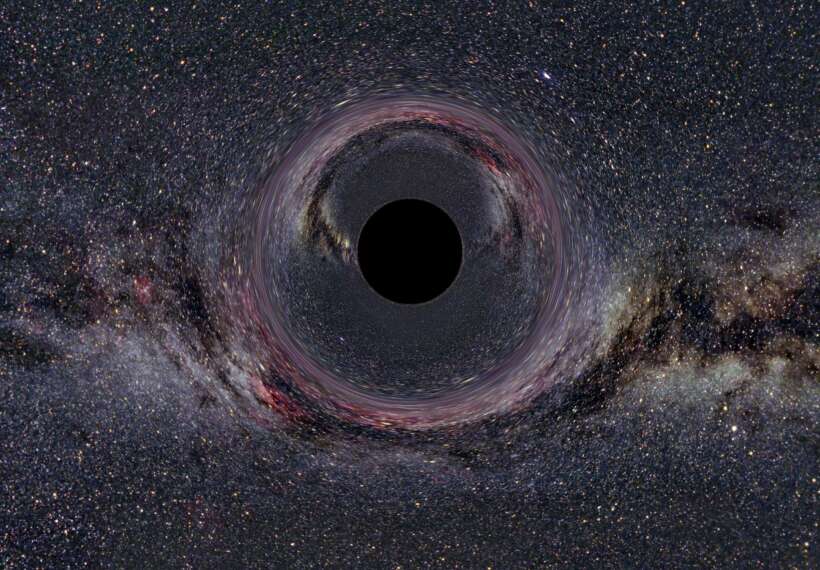
Is infinity just a cop-out for something we don’t understand? Learn some everyday examples of infinity and how Einstein’s relativity led to the singularity. Is it real? How can you have infinite anything? Could there be new physics in the middle of black holes?
What are some other singularities in physics? Discover how quantum physics was supposed to fix classical physics and how it continues to get more complicated from there. Is infinity inevitable? How could multiple universes exist within a finite universe?
Find out ways that the Earth is infinite. How does string theory work and what does it have to do with music? How do we compensate for human biases and deficiencies when tackling the concept of infinity? What is quantum loop gravity? Finally, if the universe is under no obligation to make sense to you, can you still make it make sense?
Thanks to our Patrons Ken Duffy, Austin Newman, Melvin Guerra, MirandaJanell, and Jeff from Titan for supporting us this week.
NOTE: StarTalk+ Patrons can watch or listen to this entire episode commercial-free.
Transcript
DOWNLOAD SRTWelcome to StarTalk, your place in the universe where science and pop culture collide.
StarTalk begins right now.
This is StarTalk.
Neil deGrasse Tyson here, your personal astrophysicist.
We’re doing another Cosmic Queries.
These have become fan favorites.
I guess I understand why, because you get to participate.
Well, actually, if you’re a Patreon member, you get to participate in asking those questions at the entry level of Patreon.
Today’s topic, infinity, with my friend and fellow physicist, Stephon Alexander.
We’ll get to him in a moment.
Let me introduce my co-host, Negin Farsad.
Negin, it’s been so long.
Hello, yes, I’m your honorary astrophysicist comedian friend.
Right, minus any of the astrophysics, just to be clear.
I have none of that.
You are a host of the show, Fake the Nation.
And very cool.
And in addition to Fake the Nation, you’ve got some side gig where you’ve got a succession recap.
That’s right.
What’s up with that?
I’m doing a succession recap pod on the Fake the Nation feed.
And in addition to talking about space, I love talking about billionaires.
So those are my two main interests right now.
So yeah, definitely subscribe to hear all the succession chatter.
Succession from HBO, right?
I saw the whole first season and it’s like really weird for me to continue.
Yeah.
It’s like, I don’t want this to be true.
I don’t want that.
I know.
It’s pretty gross, but so hilarious at the same time.
Well, help me welcome my friend and colleague, Stephon Alexander.
Stephon, you’re a returning guest.
You first appeared with us when we were on the Nat Geo channel.
And it was a Nat Geo TV episode.
You’re a theoretical physicist, a cosmologist, a musician, and an author and professor of physics at Brown University up in Providence, Rhode Island.
And among those books, the one I remember most is from now six years ago, seven years ago, The Jazz of Physics.
Let me get the right subtitle here.
The secret link between music and the structure of the universe.
And then you follow that up with Fear of a Black Universe, an outsider’s guide to the future of physics.
So you’re still at it, but you’re also a jazz saxophonist?
So you’re out of control here, it seems.
You also appeared in the 2022 Netflix documentary, A Trip to Infinity, and that is the subject of today.
Infinity, which boggles everybody’s mind who’s ever thought about it.
And so could you just tell us what infinity…
Can I tell you my first encounter with infinity?
I’m old enough to remember this, okay?
So, I am five when Kennedy is assassinated, okay?
That’s how old I am.
And there’s the burial, and they put him in Arlington Cemetery.
And there’s a flame there at the burial spot, and they called it the eternal flame.
And I said, what?
Does this flame never go out?
How could it never go out?
What?
And at age five, this f***ed with me, okay?
This was like, how?
At night, do they secretly put more oil in the flame?
You know, but the camera doesn’t show it?
And then I would later learn, yes, that was figurative, that it’s eternal, but there is a formal mathematical concept called infinity.
Negin, did you have any existential angst over infinity at any time in your life?
Just to put that on, put it on the table right now, because we got the man who’s going to straighten us out.
God, I feel, I mean, I had just an existential angst as a teenager in general and started reading all of the works of Jean-Paul Sarch as like a 16-year-old and not fully understanding them.
Oh, that’ll mess you up.
That’ll mess you up big time.
So that messed me up big time.
And it led to a lot of brooding and a lot of eye rolls on my part.
But it didn’t freak me out the way Infinity freaked you out.
All right.
So Stephon, tell me about Infinity.
What’s up with that?
Let me admit something to you and Negin.
I don’t know what Infinity is.
Okay, we’re done here.
Bye, everybody.
Negin, you got any jokes to take us out?
Wow, who booked this guy?
I know, right?
I think my first encounter with Infinity was just as a kid.
Like, you know, you get taught how to count.
And you say, okay, one, two, three.
And you realize that you could just go on counting for eternity.
And, you know, at some point, I think it was a friend or a teacher, I forget, I was in third grade, who said, actually, there’s this number, it’s called Infinity.
And so basically, once you get to the largest possible number, you can count in.
And Infinity is that number that goes on basically in the force to what?
To Infinity.
And plus the old geek contest is what’s the biggest number you can name, then you name it and say, is that plus one?
And that’s how you win.
You win the geek counting contest.
Exactly.
And so what I’m going to do is give a couple of examples of where Infinity comes up in everyday common sense stories.
Let’s look at fractions, right?
I have one over two.
Well, if you tell a kid, hey, I’m going to give you half of a pie of pizza or one quarter of a pie of pizza, right?
The kid will know I want half of the pie of pizza.
They know that the larger you make that fraction of the slice, right, they get a smaller slice of pizza.
If I say you get one over one of the pizza, well, a smart girl will say I get the whole pie, one over one.
If I make, if I go smaller than one, which is smaller than one is something that looks like zero, one over zero, then that number goes, that’s what infinity is.
And that, we call that a division by zero.
And so computers crash, actually, because you want to avoid these kind of things when you wrote code, these divisions by zero, because what would happen, right?
Yeah, the program crashes.
It crashes, exactly.
The computer doesn’t know what to do with it.
By the way, in Star Trek, smoke would come out of the computer if they did that.
Are you trying to say the computer was doing things that you didn’t want it to do?
Yeah, yeah, Captain Kirk, without reason, the computer, and then the smoke would come out.
But in modern times, no, the computer just crashes.
Wait, can I, this is actually giving me flashbacks of when I first had to graph an asymptote, which is this is essentially right asymptotic, this situation.
And I remember just being like, oh, let them touch, let the thing touch the line.
Oh, you cared for them.
You wanted them.
I wanted them to touch.
It felt, you know, it just felt like a missed connection forever, you know?
And it felt so frustrating.
Let them touch at infinity.
So get your ass to infinity and you’ll see them touch.
But right, so Stephon, asymptote is another one of these concepts, right?
It’s a great word.
It’s a great word, too.
It’s a fun word.
You almost get there, but never quite until you go out to infinity.
And that’s a very good, that’s another.
In fact, that’s very relevant to physics.
And by the way, the ideas of the asymptote and this division by zero, all of these things, you know, does, you know, touch, you know, have, you know, a deep relationship with physics and astrophysics and cosmology.
So you say it shows up in a lot of different ways.
It shows up in a lot of different ways.
And we physicists, you know, there’s, of course, philosophers that pay a lot of attention to infinities.
Mathematicians actually make a living from it.
And we physicists try to run away from it and try to avoid it.
I’m trying to see a mathematician busker on the street, you know, trying to make a living off of infinity.
You know, I don’t, I can’t, I’m trying to picture that.
I don’t, I’m sorry.
Someone makes a living off infinity.
But, but, Negin, do you have, you have questions from our Patreon members?
I, I absolutely do.
Let me dive in with a question from Captain James Riley.
They rate, it always drives me crazy when I hear that a singularity has infinite density or that the universe is infinite.
Is this just something we label things that we don’t fully understand?
I hate the concept of infinity.
It seems like a cop-out.
Which is how I felt about asymptotes.
So I’m totally with you, Captain Riley.
So Stephon, you know the captain’s got a point here.
Are we just invoking infinity because we can’t otherwise solve the problem?
Yes and no.
Can we evoke one of your favorite astrophysical objects, Neil?
The black hole?
Because I think this is a perfect example of where you kind of get to have your cake and eat it too.
Because here is an interesting thing.
When Einstein came up with his theory of general relativity, which describes how matter and energy can warp the space-time fabric and create the effect that we call gravity, a mathematical prediction, a mathematical solution came out of.
That theory spat out a very extreme walk in the space-time from a collapse, into a very dense region, and this thing is called a black hole.
Neil, you have done some excellent reports on that in the past.
Just to be clear, Negin, he said that Einstein’s theory just spat out the equations for a black hole.
But with the help of really brilliant people who understood what they were doing, it did just poop it out.
Although I like the imagery of just a bunch of numbers coming out of someone’s butt.
It just pooped it out en route to whatever it was doing.
No, no, some brilliant people applied Einstein’s general relativity, now that they had that framework, to arrive at a black hole as a new object, a new prediction.
And it was literally, the Einstein Institute was 10, what we call, 10 coupled nonlinear partial differential equations.
Very, very difficult and still difficult to solve.
So, you’re lucky when you get one solution, a black hole solution or Schwarzschild solution.
But at that time, some people, one of my mentors, David Finkelstein, I have the Edenton Finkelstein coordinate system, which was based on Schwarzschild solution about the event horizon, the point of no return once you fall into this black hole after gobbles you up.
This was seen by many to just be some mathematical trickery, some mathematical solution that has no element of reality, until of course we found one.
Okay.
We found many.
Right.
Now there are black hole laboratories out there.
Yeah, yeah, yeah, yeah.
And so the thing I find interesting about that was people already knew that the black hole, the reason why they thought it was a mathematical artifact or mathematical gobbledygook of Einstein’s theory, some physicists thought, was because it actually had a singularity.
It actually had an infinity.
What do I mean by that?
If you actually, this is the example we used before.
If you look at the, you know, if I fall into a black hole, if I, you know, describe going in as some, the radius, you know, like a ball, think of the black hole as a gigantic ball in outer space, a gigantic, invisible dark ball, and as I go in to the center of the black hole, this radius will eventually go to zero.
But if I divide, and it turns out that the density and the force really falls off, it actually decreases as one over r, sometimes one over r squared, one of r.
So what happens when r goes to zero?
You get an infinity.
You get an infinity in the density, the mass density.
Infinite density.
You also get an infinite density, thank you.
You get an infinity in the forces, right?
And you get an infinity in the curvature, because the curvature becomes infinite as well.
So, I think the person who asked the question knew that that’s what you would say.
The question is, is that real?
Is it?
Yes.
No.
Good.
Good.
Now this is interesting.
I’m pretending I’m the dude who asked.
I’m the captain.
No, you’re just making this up.
How can you have anything that’s infinite anything?
That’s a physical thing.
How is that even possible?
We agree you can do that mathematically.
No one’s arguing.
Now you’re going to tell me an actual physical thing.
It’s the infinity that your math delivered.
And that’s what.
Because like, yeah, because like at the end of the day, if we’re looking at like a top, if the black hole is in a Tupperware container.
Yes, very good.
Okay, where you going with this?
I’ll stay with you.
Go.
I’m going to bake the black hole.
I’m just saying like, if it’s infinitely dense, the Tupperware container is going to break, right?
Or whatever.
Does that make any sense?
No, that’s actually so that’s right.
So what it’s interesting that you had a theory that put out a sick solution.
So many people thought that’s not real, but then you find this thing in reality.
So what do you do with the fact that this infinity is there in the prediction?
And so then this is where you get disagreements amongst physicists and astrophysicists.
Some people say, well, there’s something that replaces that theory, meaning general relativity.
There’s some new physics that we yet we do not know.
Some people say you have to accept the infinity.
And you know, there’s something is censoring that infinity from actually realizing itself and coming out and doing bad things.
I like that idea that nature might be censoring our infinities.
I like that.
And so it could be that the infinity is the limit of the applicability of this theory of the universe.
That’s the take I take, actually.
Okay, all right.
That’s why I land on…
Okay, now where does the Tupperware go?
We got enough…
I know.
You have some really…
Yeah, some really expansive Tupperware.
Leftovers forever in your Tupperware.
Leftovers forever because it’s infinitely dense.
It could feed everyone forever.
We got to take a quick break, but when we come back more with Stephon Alexander, who’s taken us to infinity and beyond with, of course, my co-host Negin Farsad.
We’ll be right back.
Thanks for Hi, I’m Chris Cohen from Haworth, New Jersey, and I support StarTalk on Patreon.
Please enjoy this episode of StarTalk Radio with your and my favorite personal astrophysicist, Neil deGrasse Tyson.
We’re back, StarTalk Cosmic Queries.
We’re talking about infinity.
Oh yeah.
And we got one of the world’s experts who thinks about this subject, Stephon Alexander, a friend and colleague, professor of physics at Brown University, Rhode Island.
And I got Negin Farsad.
Negin, you wrote a book.
A few years ago.
Just, it was, and I’m trying to remember the title.
Is it How to Make White People Laugh, or something like that?
Yes.
How to Make White People Laugh.
Neil, it wasn’t for you.
Oh, it wasn’t for me.
That’s why I never, I heard about the book, but I said, no, this is not addressed to me.
Not for me.
It’s How to Make White People Laugh.
So I remembered the title correctly.
That’s the title.
Okay, so Stephon, you were gonna add to the point about the black hole singularity being an infinite density point, and possibly others stepping in to save the day.
Yes.
So there are other types of singularities that show up in physics that can maybe, I think, that where we were able to, what we call tame or cure the singularity and…
The beast.
The beast, yes.
Tame the beast.
One was the electric charge and the electric force.
So if you look at a charge particle.
An electron, okay.
Or a magnet, or a magnet, right?
The magnetic force also between two magnets, actually, as I bring the magnets closer together and closer together, actually turns out that that force, when you go to zero distance, according to the equations that work really well for all of our motors and all of our electricity and all that wind energy and all that stuff, it’s used as the same physics that we trust.
But according to this physics, when you go here, all that good stuff goes out the window because you will get, according to the theory, an infinite force and infinite amount of energy.
And we do not measure that because the magnets touch and nothing blows up.
And you’re strong enough to make the magnets touch if they’re resisting each other, for example.
That’s right, you’re strong enough to do that.
But according to this thing, the magnets should never touch.
You can never be strong enough because you require infinite force to make them touch.
Okay, so what solved that problem?
It turns out Richard Feynman and his colleagues figured out actually there’s quantum physics going on.
So what happens is that quantum physics fuzzifies and softens, in a sense, like, you know.
You just made up that word fuzzify.
I’m pretty sure you just made up.
I’m pretty sure.
But okay, we know what you mean.
But let the record show he’s making up words as he goes along, okay?
Which by the way, which is what infinity sometimes sounds like.
Just throw in the word infinity and that’s exactly the point of the question.
It sounds like a cop out, like it fuzzifies, but continue.
Fuzzifying infinity, all right.
Okay, so weird things happen.
So in the quantum world now, if you say, okay, the force between the magnets is really what we call a non-quantum or classical theory.
It doesn’t require quantum things.
What do you mean by quantum now?
Well, it means that there are things called quanta.
And in this case, the thing that becomes the quanta is light, because light is actually the thing that’s mediating, communicating the force actually.
And so what Feynman taught us is that you can’t no longer think about the magnetic field as a magnetic field, but actually as a particle called a photon that gets transmitted, bouncing back and forth.
And as a photon goes, is communicating this force and the magnet gets closer and closer, the photon can actually do weird things.
It can do weird quantum things.
But the point is, you are saving the magnetic field problem invoking quantum physics.
Is quantum physics going to save you from the center of the black hole?
From the singularity?
Very good.
So there are now people, not people, there are great physicists that argue like Stephen Hawking being one and Gerard Atufft and Lenny Susskind and others that said, ah, what if what happened with real magnets?
By analogy, there’s something quantum, what quantum?
Quantum gravity.
There’s something to do with gravity being a quantum, having a quantum effect.
What if that would like jump in and save the day and as I go into the singularity of a black hole, you don’t get infinity, but you get new quantum effects?
What would that look like?
You’d have to marry quantum physics with Einstein relativity for that.
You have to do that.
And it’s some kind of shotgun wedding right at that last moment.
But here’s the problem.
None of the in-laws are happy in that situation.
None of the in-laws.
Here’s the funny thing.
If gravity and quantum mechanics were to be a couple, they’re very incompatible with each other.
Every reconciled difference is that this allowed them from actually making a bond.
All right.
It’s like when I tried to date a Pisces, it never works out.
You know, I could have told you that.
So, we replied to the captain whether or not we fully satisfied his question.
So what are the questions you got, Negin?
All right.
Let’s move on to David.
He’s actually happy to submit his very first question after years of being a Patreon subscriber.
Oh, excellent.
David, does he have a last name or is it just David?
He just, it’s just David.
He’s like Madonna.
He just goes by the one.
I once heard Alex Philopenko explain infinity in our universe is operationally infinite to us because we can never achieve the edges of it.
Not even at the speed of light, because space is expanding faster than the speed of light.
Almost like going up an escalator that is going faster than you can walk up it.
You’ll never reach the top.
Is my small mind grasping this concept of an infinite universe?
And if so, or if not, how do multiple universes fit into our infinite universe?
Ooh, I love those questions.
But I love that escalator metaphor, because if that’s right, that puts things into making sense for me.
Right, right, right.
The way I look at it is, and I can contribute a little bit to this answer, all right?
So I’ll contribute two parts.
You take care of the rest.
So yes, if the universe is expanding, and Alex Philopenko is a colleague of mine.
We came up together actually in graduate school.
And so if you have an infinite universe that’s expanding, right, you’ll never reach the edge.
And I’d love, like you said, we all agree that escalator analogy is excellent.
However, you don’t need an infinite universe to never reach the edge.
For example, the surface of the earth is not infinite, yet you could just keep walking and never reach the edge.
So, don’t equate reaching an edge with something having to be infinite because the space can turn back on itself and you can end up just making loops and never stop walking and always walk in the same direction, whichever direction you choose and you’ll never get to the edge.
So, that’s my first point to that.
And the second point is if you embed, so I can have a sheet of paper that’s infinite, infinite, okay?
Now, but a sheet of paper is two dimensions.
I can have another sheet of paper that’s infinite and put them one centimeter apart from each other and they will never intersect, even though they’re both infinite.
Because I pulled one into a third dimension.
And so, when you embed infinities in higher dimensions, you got no problems at all.
You can put them in, cram as many as you want in there and there’s plenty of room.
So, you take it from there, Stephon.
You took all the good examples.
And of course, you know, there’s infinite time.
Oh, you can have a finite world, but the clock can continue ticking for an infinity.
Meaning that the universe could be finite in extent, but just continue expanding for an infinity.
So, the universe is like a vampire that never dies in that scenario.
Negin, it’s exactly like that.
Great, got it.
Just wanted to explain for the listeners.
Minus the blood, minus the blood.
And just to follow up on what you just said, Stephon.
So, if the spherical universe were expanding, you would still have a finite universe, but you could walk in it forever, even though it’s expanding.
So, there’s a lot of variations on this geometry that make for fascinating thought in all of this.
Absolutely.
And in fact, one of the great mathematicians, somebody that you know in New York, he went off and made a lot of money, but he literally put a lot of money towards this satellite so that he could know about the Big Bang, called the Simons Observatory.
Oh, yes, yes.
Jim Simons.
Jim Simons.
He’s a geometer, so he came up with some important mathematics all about this topic.
He believes that the universe actually is finite.
It’s a sphere.
It has a spherical geometry.
And if you play with the assumptions and the data and the statistics enough, you might be able to still accommodate that the universe actually might be finite in terms of the data.
So that’s an interesting side note.
And just for, in case people will know, Jim Simons made his billions trading in the stock market, bringing high-level mathematics to his predictive models that no one knew was even possible at the time.
And now he’s put his money back to further research.
There’s the Simons Foundation, the Simons Center for Research in Physics, Biology, and Computing, which is right here in downtown Manhattan.
Oh, I thought you were going to say, which is on a yacht, because that’s what he gets to afford now.
He does have a yacht, and I’ve been on his yacht, and it’s called the Archimedes.
Of course.
Yes, yes.
So thank you for that, for cueing.
That was your cue.
Time for another question?
Yeah, please.
So from Gavin Bamber, he says, Hello from North Vancouver.
Please visit.
Can string theory be represented by music?
If so, would it be more of a monophony, classical or jazz?
Would it be a complete composition, or would it continue on into infinity?
Wait, is that a word monophony?
Does that mean a one note concert?
What are you saying there?
That’s what it sounds like to me.
Oh my God, I have two of the smartest people on the planet and none of us know if that’s like a word.
Well, this is actually a good point to actually talk about, going back to Feynman and his colleagues, that they used quantum mechanics to smoothen out, for lack of a better word, de-infinitize the infinity.
I’m going to put a new word.
Get rid of the infinity.
We’re up to six new words this episode.
There is now an uber quantum theory, and that theory is called string theory.
It turns out that just when you thought that quantum mechanics actually would help with infinities, it turned out that quantum mechanics itself had infinities.
We call these things divergences or instabilities.
These are all words that just basically mean that things in your theory go to infinity.
You’re saying quantum physics was brought on to possibly help with the classical infinities, but then it introduces infinities of its own.
That’s correct.
That ain’t right.
These things are called ultraviolet or infrared divergences for the audience member who wants to get fancy.
It turns out that string theory, one of the reasons why many people got behind string theory, including a younger version of myself when I was a younger researcher, was that it actually was an infinity-free theory, quantum theory actually, that contained gravity in it as well, contained aspects of all the forces, but you had to live in ten dimensions.
There’s some give.
There’s a catch.
Going back to what Neil exactly said, is that now that you have all these other dimensions, you can go and stuff infinities on those other dimensions now.
Anyway, string theory is such a theory that does that.
It’s a theory that does not have in its mathematical structures and the solution it spits out, it does not have infinities.
We all love that.
It’s elegant and beautiful.
It’s also a musical theory.
That’s correct.
I do want to hear what you have to say about string theory and music, because that is a part of the Questioners’ content.
But we got to take a quick break.
When we come back, the third and final segment of Infinity…
Does Infinity have three segments?
Can it have three segments?
I don’t know.
Come back and find out on StarTalk.
We’re back, the Infinity Edition, with Stephon Alexander, a physicist who’s thought a lot about cosmology and infinities.
And of course, Negin Farsad.
Negin.
Love having you here.
It’s been too long.
Come back more often, okay?
Absolutely.
But I’m on nearly every show in other dimensions.
Oh!
So, you have to go to the other dimensions, I think is what’s going on.
And if you don’t tell me that dimension, I will never find you, right?
You’ll be found only when you allow yourself to be found.
I’ve also got hot dog fingers in those other dimensions, but don’t worry about it.
Oh, yes, oh, okay.
Everything, everywhere, all at once, I think that was.
So, Stephon, why would string theory have to do with music at all?
Just because it has the word string in it, and just because music has string instruments, I don’t, you know.
It’s a weak connection.
Yes, yes, yeah, that’s, it feels like really weak.
They should have just called it maybe something like guitar string theory, maybe a bit better.
But yeah, you know, so string theory, one of the good ways was able to solve these infinities had to do with an assumption that we made about even our physics pre-string theory, which is that things fundamentally are made up of point particles.
And the minute you talk about a particle, then you’re forced to go to zero, and that’s when things blew up on you.
The infinity revealed itself.
And the idea of string theory is that nothing is ever made up of a point particle anymore.
Even when you take a magnifying glass and you try to resolve that point, instead of what looks like a point from really, really far away, you zoom in and you realize it’s a string.
But it’s not just any old string.
The string, because it’s quantum, has to be vibrating.
We know very well the physics of any kind of vibrating string.
The vibrating string generates a spectrum or it generates characteristics types of waves, and these waves are called standing waves.
What is a standing wave?
It’s basically what you’d know as a note, a tone, a particular type of vibration that can be represented as a sound or a note on the piano.
When I play a note on a piano, what’s really going on is that there’s a piano string, and that piano string is vibrating.
And because it vibrates, it undulates at a given rate.
That rate of vibration, the call of frequency, denotes what we call a tone or a sound.
So string theory, the physics of strings, really does match on very nicely.
The physics of how notes are generated in instruments.
Sorry to badmouth you at the front of that.
I’m sorry.
Negin needs to apologize too.
I’m so sorry.
It’s an analogy.
It’s an analogy.
But it’s a really good analogy.
I get it.
I get it.
It feels right.
All right.
Negin, keep going.
It’s the last segment.
Okay.
So rapid fire section.
Here we go.
From Anthropocosmic Dylan in San Diego writes, question for Dr.
Alexander.
Neil says, quote, the universe is under no obligation to make sense to us.
So how do the concepts of infinity and quantum mechanics get distorted due to our human condition?
And how do you reconcile this gap with your research and your artistic expression through jazz music?
Whoa.
Whoa, whoa, whoa.
That’s a very good question.
Let me tighten up the beginning of that.
So he’s asking if I say the universe is under no obligation to make sense to you, do these infinities make sense to you, and does it bother you?
Do you keep going?
Do you just accept it?
Or because it doesn’t make sense, you have to do something about it and then violate the Neil Principle.
Very good.
I like the Neil Principle.
I adhere to it, actually, because it doesn’t make sense to me a lot of times, but I have to pay my bills.
Yeah, you have to continue.
No, I write and publish papers in respect to journals.
But I haven’t said that.
So, yes, I think there is a sense in which we have to…
My take on it is that I actually embrace the infinities.
I embrace it.
I said, let’s live with the infinities, and wherever we can, try to sidestep it and make progress.
I see.
So you kind of…
even if they’re difficult, it shouldn’t prevent you from making other kinds of discoveries in the terrain that surrounds them.
I get it.
Okay.
And how about…
Negin, the second part was about jazz.
Read that again.
Yeah.
They wrote, how do you reconcile this gap with your research and your artistic expression through jazz music?
Yeah.
I mean, one of the things that’s great about jazz music is that it’s a dual thing.
You’re always striving to master your craft and build on the foundations of others, but you also must try to break the rules and stumble and fall to make something new based on that foundation.
So really embracing the mistakes that you made and not being afraid of that.
That’s kind of what jazz improvisation is also about.
While at the same time, building on the foundation and getting your chops together and practicing and all that good stuff.
And there’s surely some people who would say, would invoke the nihilism on jazz.
Jazz is under no obligation to make sense to you.
I’m pretty sure some people out there feel that way.
Well, there’s a funny story about that.
I want to hear your thoughts about it very quickly.
When I first heard Ornette Coleman, I was like, what kind of, I made no sense.
It didn’t make any musical sense.
And then much later on in life, as I thought I became more advanced musically, it started making sense to me.
Oh, okay.
All right.
So it doesn’t have to make sense upfront.
That’s right.
Also, just for when jazz doesn’t make sense, I usually go to the bar, get another drink, and then jazz starts to make a lot of sense.
That’s why jazz is in bars.
That’s why.
And also why all physicists and astrophysicists should be drinking when they talk about infinity.
Well, I learned something very cool by the way.
I’m very proud of this.
I always feel like I was the outside of physicists that played music.
It turned out that the hero, the guy that won the Nobel Prize for figuring out how to actually deal with infinities and our quantum field theory that led to the discovery of the Higgs boson.
His name was Ken Wilson.
I just found out that he played the oboe when he was a postdoc.
Except I don’t know that the oboe shows up much in jazz concerts.
I’m pretty sure.
Well, now it should.
I’m pretty sure that that was not a first choice.
I know.
The oboe feels like something you just get saddled with in middle school.
Exactly.
You don’t choose it.
In elementary school, you would last in line.
Exactly.
You get the oboe.
Now he’s saddled with a Nobel.
Ugh.
Well, let’s take a question from Bruce Ryan.
Bruce writes, I saw that Stephon’s specialty includes quantum loop gravity, and I’ve always wanted to ask, what the heck is quantum loop gravity?
Yeah, me too.
Me too.
Count me in that question as well.
Well, it’s a beautiful, it’s a very tantalizing idea, and it actually does deal with gravitational affinities in some respects.
And the idea is really interesting.
Let’s go back to our picture of the magnet.
If you actually can see a magnetic field line with these iron filings, you see that it’s like, some of it is concentrated in like a tube, like a magnetic tube.
Well, what loop quantum gravity is saying is that imagine that you can make tubes of gravitational fields and sort of loop them around like chains, like a chain.
A link in a chain, like a link in a chain.
A link in a chain, and I can link a fabric of space time with those loops.
But what’s linking is a gravitational field, and you can think of them as atoms of space.
Oh, I see.
Not atoms, pixels of space.
Even better.
Yeah, pixels of space.
The smallest unit of space.
Yeah, okay.
All right, Negin, we might have time for one, maybe one and a half more questions.
Okay, so let’s see.
Abhinav Yadov from Philly asks, I struggle to think about space time as a concept that exists in our daily lives.
As a medium, though, which light wave travels?
As a fabric that gets shaped by mass and as a vacuum out of which virtual particles pop in and out of, what’s an easier way to think about space time?
Well, this is silence.
Wait, what was that question?
Wait, space time is all those things, so what is the question?
I guess, yeah, there’s a grammatical something missing that’s making it hard to understand.
We need some semicolons, but all those things are true, right, Stephon?
They’re all going on in space time, right?
And what’s the easiest way of thinking about the concept of space time?
Okay, so if all that’s going on in space time, what’s the first way you teach it?
You don’t dump the bucket onto people before they know what’s going on.
What’s your first step to say what space time is?
To like a kid?
Yeah, so I would say that, yeah, I think it’s a good analogy to think of space time as some sort of very, very faint and invisible fabric.
But it’s a special kind of fabric because that fabric can also support space time itself to move along, like gravitational waves, right?
So space time itself can actually support motion of ripples up itself.
And that is different than any other types of medium that we know, right?
Normally, something like an electric field or particles need space time to move through, but they can’t move through their own medium.
Space time has a very special type of medium in that sense.
But it’s a very weird medium, for lack of a better word.
It’s a relational medium, okay?
And nor is it under any obligation to make sense to us.
Buddy, just like what you described, it still makes no sense to me.
So the answer to this person’s question is basically, there’s no way of really thinking about it in your daily life.
No, I mean, again, this is what Neil just said, it makes no sense.
But I know I could write down this object called a space-time metric, and we describe it as a field of, you know, space-time as some kind of a field.
But again, these are just words that we attach to the equations that we write down.
But they make predictions and they work.
They make very good predictions and they work very well.
That’s why however fantastical they sound, they still are connected to reality in that important way.
I mean, the detection of gravitational waves with LIGO and Virgo, yep.
Again, I think we got one more question.
So, I mean, this is sort of like related.
Everyone seems to be having a crisis in understanding.
But Malcolm Marfan from Trinidad and Tobago says, infinity is often described as a mathematical abstraction.
How can we know that the concept of infinity exists in the physical world and not just in our minds?
They are really testing you today.
Yeah, they are, Stephon.
They want hard answers.
And I tell you, I remembered learning infinity mathematically, and they said one divided by zero is undefined.
I remember being taught that in my math class.
Well, I have a math friend who we actually had as a guest, John Alan Paulos, professor of math at Temple University outside of Philly.
And I tweeted, I called him out on Twitter, and I said, John, if one divided by zero is undefined, why don’t you guys define it?
What are you waiting for?
I’ve been waiting my whole life, and all you have to do is define it, and we’re cool.
What’s up with that?
So apparently to him, infinity is undefined, because one divided by zero is infinity.
So wait, so this thing is just totally up for grabs.
I could just do a journal article right now, and just be like, one divided by infinity is a bowl of jello.
If this is up for grabs, I’d like to take a stab.
We have to put closure on your theory, and one divided by zero is an acetote captured in Tupperware.
I mean, that’s beautiful.
That’s a beautiful theorem right there.
We got to call it quits there.
Stephon, great to have you back on the show.
Thanks for having me again, Neil.
All right, Negin, it’s been a delight.
And by the way, Negin, just quickly, weren’t you on TV with Hillary Clinton?
I’m channel surfing.
They say, that’s Negin.
Wait, that’s Hillary Clinton.
What was that?
I’m on the show Gutsy on Apple TV.
Hillary Clinton is just basically doing a series about gutsy women.
And I, crazily, I’m one of them.
So check it out.
It’s a really great series.
You’re one of the gutsy women.
Yeah, it’s called Gutsy on Apple TV.
Gutsy.
Very cool.
I don’t mean to brag, but Hillary Clinton said, I’m her favorite astrophysicist.
Yeah, I’m pretty sure she knows only one astrophysicist.
That’s the problem.
The best is when I meet my favorite musician and he goes, hey, by the way, can you get me introduced to Neil deGrasse Tyson, please?
All right, guys, we’re done here.
Land this plane.
This has been StarTalk Cosmic Queries, the Infinity Edition.
It’s a delight to have an old friend and colleague, Stephon Alexander and Negin Farsad.
Always good to have you back.
Neil deGrasse Tyson here, as always, bidding you.



 Become a Patron