What did politics and the Cold War have to do with the space race? On the flip side, how did the Apollo program and landing on the Moon impact us here on Earth? Neil deGrasse Tyson, our host and the author of Space Chronicles: Facing the Ultimate Frontier, answers fan-submitted questions chosen by co-host Chuck Nice about the Apollo program, landing on the Moon, and so much more. Explore whether John F. Kennedy’s role in pushing for a lunar landing was more important than the geopolitical realities of the Cold War with the Soviet Union. Neil explains how going to the Moon influenced our relationship with our home planet, coinciding with the first Earth Day, the passing of the Clean Air and Clean Water Acts, the founding of NOAA and the EPA, the banning of DDT and leaded gasoline. Discover how comparing samples of lunar soil and minerals to terrestrial samples helped us discover that the Moon is the result of a collision by a Mars-sized protoplanet with Earth’s crust. Neil and Chuck also discuss conspiracy theorists who deny that we’ve even landed on the Moon, and the reported incident where Buzz Aldrin punched a denier in the face. You’ll hear whether Neil feels we could have better spent some of the money for the Apollo program on other types of space exploration, and also who he thinks “won” the space race. Plus, you’ll learn about plans to mine the Moon for Helium-3, and find out what cosmic event Neil would want to witness if he could travel back in time.
Transcript
DOWNLOAD SRT
Welcome to StarTalk, your place in the universe where science and pop culture collide. StarTalk begins right now. This is StarTalk, and I'm your host, your personal astrophysicist, Neil deGrasse Tyson. I work at the American Museum of Natural History...
Welcome to StarTalk, your place in the universe where science and pop culture collide.
StarTalk begins right now.
This is StarTalk, and I'm your host, your personal astrophysicist, Neil deGrasse Tyson.
I work at the American Museum of Natural History right here in New York City, where I also serve as director of the Hayden Planetarium.
And for this episode of StarTalk, we're doing what we call Cosmic Queries, where questions come to me from our social media.
But I don't read them, I don't even know what they are until I walk in and sit down at this microphone and I get help today from Chuck Nice.
Hey, Neil, what's happening?
Good to be here, man.
Yeah, welcome back.
Thank you, thank you, sir.
Always good to be here.
So you're gonna read, what are these questions?
What is today's topic?
Today's topic is the space race.
Okay, I think I know a little bit about that.
A little bit about that.
I got this.
But actually, just so you know, this may sound like a cheap plug, but it's just, so I wrote a book called Space Chronicles.
Right.
Facing the Ultimate Frontier, came out two years ago.
Do you know why I write books?
Because you can.
I'm gonna tell you why I don't write books.
Because you can't?
There you have it.
And I know my limitations.
No, I write books so that I never have to talk about that subject again.
Really?
I compile it all in there and someone says, tell me about it, I just hand them the book.
Here's a book.
Yeah, and I walk away.
Oh my God, so now you're resurrecting this in me when I'm trying to think about other stuff, but fine.
Sorry, I'm sorry to do that.
Oh my God, I can't believe you just said that, that you write a book so you don't have, you remind me.
This is the household I grew up in.
So I would ask my mother or my father, what does this mean?
And they would say, go look it up.
Whoa, whoa.
And I'm like, yeah, that's what you're for.
So what may have looked like evil parents at the day turned you into an independent researcher?
Actually, yeah.
You know, I'm kind of, and now it's funny because I do the same thing to my children.
They're like, you know, my son, he'll say, dad, do you know what, and I'm like, yeah, I do know.
Do you?
So we'll find out and come back.
So that works whether or not you actually know it.
Exactly.
There you go, see.
All right, let's jump into our Cosmic Queries.
And of course, we always start off with a Patreon patron question.
And if you support us on Patreon, we will give your questions priority here at Cosmic Queries, okay?
Patreon, where we basically buy your loyalty.
Okay, here we go.
Matthew Messonon from Calgary, Alberta says, in your opinion, Dr.
Tyson, what was the most significant thing that the Apollo program achieved with the exception of landing on the moon?
Wow, that's a good question when you think about it, because everybody, you say Apollo program, it's moon landing, bang, that's the end of it, that's it.
But he's saying, give me something that is just as significant that we don't think about.
Tang.
So, beginning in 1970, a little earlier, but in 1970 was the first Earth Day nationally, and then it became a rapid international hit, if you will.
Yeah, because Earth Day is global now.
It's global now, and it's a significant global celebration of our home planet.
And around that same time, so what else happened?
In 1971, two and three, we would see the passing of the Comprehensive Clean Air Act, Clean Water Act.
In 1970, NOAA was founded, the National Oceanic and Atmospheric Administration, to monitor our climate and our oceans and our weather.
And not only that, the Environmental Protection Agency was founded in 1970.
By the time 1973 came around, leaded gas would be banned, DDT would be banned, the catalytic converter would be introduced.
All of this happened during the years we were going to the moon.
At a time when we had a whole lot of other stuff distracting us, like a cold war with the Soviet Union and a hot war in Southeast Asia and campus unrest from anti-war protest and the civil rights movement and assassinations.
1968, we'd see two assassinations on domestic soil.
And so, why am I saying all this?
Because while we had all these other potential distractions, we nonetheless paused to reflect on our relationship to our home planet.
So I submit to you that though we went to the moon, to explore the moon, upon getting there and looking back, in fact, we would discover Earth for the first time.
Wow, so it's like I've been to paradise, but I've never been to me.
Thank you Yes, it's exactly that.
So can you put a dollar figure on the fact that seeing Earth in the sky from the moon was like a firmware update in our sense of awareness.
And who we are.
Of the importance of Earth and our relationship to it.
Right, okay, that's actually, that's a bit more existential than I was expecting for an answer.
I have to say that's a damn good answer because it's more of the, it's more of a collective conscious enlightenment.
Yes, and I don't think anyone started the program with that expectation.
Right.
But that is clearly a consequence of it.
And so, and remember that TV commercial with the Native American standing on the, and there was a tear in his eye.
The single tear went, and people throwing garbage out the window.
That didn't happen until this period, till we were going to the moon.
We were total garbage out the window people for long before that, right?
No, I never got that about us.
I mean, seriously, garbage out the window, pretty much all through human history.
All through human history.
And in fact, that was great for anthropologists.
They can find stuff along the Roman via, you know, that people, oh, McDonald's Cup, boy, McDonald's would have been around.
No, but you, it was, we didn't start thinking of it as a cultural environmental problem until that period.
Wow, that's, hey, Matthew, I hope you're satisfied with that answer because it was a completely curveball with that answer.
And then there's Tang.
That and Tang are close second.
There you go.
All right.
OK, here we go.
Our next question.
Oh, oh, Abhijit Manay.
Let's hope.
I'm sorry, Abhijit.
I'm sorry.
From Facebook wants to know this.
The space race was in a way an extension of the Cold War arms race, but also the resolve of President John F.
Kennedy, who pledged that we'd get there in 10 years.
Do you know anyone today in the political sphere who could do the same?
What kind of politician would be ideal in this regard?
We go to the moon because we choose to miss that.
And the other thing we do because we forget it.
Chuck, that was your worst impression.
Normally, you're good.
I'm not even doing Kennedy.
I'm actually doing Mayor Quimby from The Simpsons.
Vote Quimby.
You imitate a tie fighter from Star Wars.
I thought Kennedy would be easy after that.
There's an assumption built into that question that the political will and charisma, perhaps, of Kennedy was a significant force operating in how and why we got to the moon.
And this is commonly thought, but I'm contrarian in that regard.
Well, good.
Right?
No doubt Kennedy had charisma.
No doubt he had a sort of way with rallying people behind an idea.
No doubt about that.
But I submit that if we were not at war, all of that would have just been empty rhetoric and nobody would have signed the check.
Congress is not as swayed by speeches as the public is.
Absolutely.
And so it's Congress who writes the check at the end of the day.
So consider 1989, the 20th, July 20th, the 20th anniversary of the moon landing.
Who was the then sitting president?
I don't know.
Herbert Walker, George Herbert Walker Bush.
He goes to the steps of the Air and Space Museum, delivers a speech, not fundamentally different from Kennedy's speech.
We're Americans, we're explorers, Columbus set sail.
This is our time.
We will put men on Mars and have a space station, we'll have us build a space station and we will put this.
He was trying to give a Kennedy speech, okay?
Fell flat on his face.
Now why?
People said, well, because he's not Kennedy.
I beg to differ.
Not that he isn't not Kennedy.
Right.
That sentence makes sense?
That's correct.
Because he isn't not Kennedy.
No, he isn't Kennedy.
It didn't work not because he isn't Kennedy.
Right.
I claim it didn't work because, do you remember what happened in 1989?
I don't know.
Peace broke out.
Peace broke out in Europe.
That's a terrible thing.
That is the collapse of the Soviet Empire.
That's right.
That is the tear down the wall.
The wall came down in 1989.
All of a sudden, our motivation for our military might, the very thing that drove who and what we were as the carriers of freedom and the American way in the face of evil communists, it all evaporated that year.
And he's trying to give a speech to get people to go to Mars in the absence of a mortal enemy.
Right.
So we would have either needed Martians.
That would have been the best.
That would have been the best.
The best.
Right.
We either needed Martians.
Evil Martians.
Evil Martians.
Not ET.
Exactly.
Yeah.
What would it be cool if ET came out guns drawn?
And he shot Elliot or whatever the hell that.
That's the way it ends.
You know what I mean?
ET go home.
But first.
We must test our ray guns on you.
Right.
Exactly.
So yeah.
So really the competition.
No competition.
No.
It's not only competition because you can do that, yes, and still succeed.
But the greatest competition our species knows is the threat of death from someone who might outcompete you in a way that would kill you.
So I claim that the biggest reason that failed was not because Bush lacked the charisma of Kennedy.
What happened is he lacked the Cold War.
Right.
And by the way, he proposed, you know what it was?
He said, this will be a 25 year, I forgot the exact time interval, 25 year plan.
And it would be 25, 30 year plan.
And it'll cost a trillion dollars.
Whoa.
Okay.
So people freaked.
And that was the end of that right there.
Okay.
Or half a trillion dollars.
Half a trillion.
Okay.
Oh, that's better.
Half a trillion.
I'm like, all right.
Okay.
We can work with that.
But here's the thing.
If you took NASA's budget at the time, which is between 15 and 20 billion dollars in today's annual budget, and then you multiply that over 30 years, you get half a trillion dollars.
So we already are allocating half a trillion dollars to NASA over that same amount of time.
So to say that's DOA because it's too much money, that's a false argument.
NASA might have to retool NASA with its budget, but it was a false argument to think it's too much money.
That's all.
So I'm unconvinced by people saying that George Herbert Walker Bush was absent the charisma of Kennedy.
So I don't think it has anything to do with politicians, it has to do with whether we think we're going to die.
Okay, and there you have it.
By the way, just to let you know, you are going to die.
So we should do it irrespective.
I think that if we really want to go to Mars...
Die by unnatural causes.
There you go.
But if we really want to go to Mars, scientists should get together and in a somewhat conspiratorial way, tell the world that there's oil on Mars.
But then we'd be lying.
Yeah, but we go to Mars.
Do you know why there's oil?
Or that there's terrorists on Mars.
Do you know why there's oil on Earth?
Because we have life on Earth.
Right.
And so maybe, okay, maybe there's an episode of Mars where there was life, all that life sunk down and then it made oil.
So that'd be cool.
That would be cool.
Go to Mars and get oil.
And we'd be there next week.
But what I joke about is we should go to China and go, psst, go tell the leaders of China, psst, can you leak a memo?
Don't be true.
It doesn't have to be true.
Just leak a memo saying you want to put military bases on Mars.
Boom, that's it.
We're done.
There you go.
We're on Mars.
We're on Mars in 10 months.
10 months.
One month to fund, design, build the spacecraft, nine months to get there.
We go to Mars, not because it is easy, but because it is hard and the Chinese.
Once again, awful, awful impersonation.
All right, let's move on.
Well, that's pretty cool.
I agree with what you're saying.
It's not about...
I think people put too much emphasis on the importance of the presidency and they're unaware of how much power the president really has.
Our whole system of...
Has or does not have.
Right.
Our whole system of government is designed to keep power out of the hands of the president.
Precisely.
So the president doesn't run away like a dictator.
Right.
Right.
Right.
So people often overestimate what the president can and cannot do.
Exactly.
All right, cool.
Let's move on to...
Time for a couple more questions in this segment.
In this segment, here we go.
Isaac J.
Kim of Facebook.
Thank you, Isaac.
Isaac has a pronounceable name for you.
Yes.
Thank you, Isaac, from NYC.
This is what Isaac said.
Hometown bar.
That's right.
He said, what kind of computing power did Mission Control and the shuttle have during the Apollo era?
I can only tell you what I've read about that because I didn't calculate this myself, but there have been comments that the computing power, I don't believe this, but it was fun to read it and say it.
The computing power of a singing greeting card?
No.
I heard that because there's a chip in there.
It's hilarious.
Open it up, happy birthday to you.
Happy birthday to you.
It had to have been a little more than that.
I don't know the answer for sure because again, I don't know these questions, but I could have researched it, of course, but what is no doubt, no doubt, anything we're carrying in our hip pocket is greater than anything that was going on when we went to the moon.
Wait a minute.
Now, okay, I do believe that because of the microprocessors that we use in order to run our phones.
By the way, by the way, by the way, the miniaturization of electronics is entirely driven in its initial stages by NASA.
We had electronics filling, you know, so our parents, our grandparents had radios the size of furniture in their living room.
Correct.
Where they would gather around and listen to radio shows.
And was any of them saying, gee, I want to carry this on my hip.
It's just a non thought.
Right.
Doesn't mean they might not welcome it, but no one is even thinking that way.
Oh my God, you're right.
NASA is saying we need this technology and we need to launch it and it costs $10,000 a pound to put anything in orbit.
So we got to shrink this shrink this down.
You got to shrink it down to the lab and shrink it down right now.
Okay.
So this this miniaturization drives a whole frontier that then becomes commercial commodities.
Absolutely.
I just had a fascinating what you just said about grandparents and radio, sitting around the radio listening to their programming.
When I was a kid, we sat around the television.
I never once thought I want to carry that television on my hip.
Never.
Guess what?
I do.
My phone is a freaking television.
I can watch the Internet or any TV show I want on demand on my phone.
I am carrying a TV on my hip.
Exactly.
Amazing.
Yep.
That is so cool.
And if you don't think about it, it's just TV is the thing you do when you get home and you turn it on.
Right.
Right.
Right.
Yeah.
But no longer.
So yeah.
Oh, man.
That's super cool.
So basically, I would say, yeah.
So do you remember the movie Apollo 13?
They're trying to save the guy's lives.
And they said, here is the only thing they have available.
They dump out this bag onto the table.
Okay, engineers save their lives.
And they said, okay, but wait a minute.
They said, oh, we need this.
The slide rule.
Now we're doing.
Now we got it.
Okay.
Well, now we can do this.
Slide rule to the rescue.
Anybody got an abacus?
We got to save a life over it.
So anyhow, yeah, yeah.
So you would they would blow it away.
So back then, computers were used for timing things and simple simple and simple calculations.
And the rest was very mechanical.
But that back when was the right stuff.
Now the right stuff is all in the computer.
We got a break.
When we come back, we'll have more Cosmic Queries from you on the past, present and future of Space Exploration.
With me, my co-host, Chuck Nice.
That's right.
Doing Cosmic Queries.
Yes, we are, sir.
Space Exploration.
That's right, the Space Exploration.
All from Facebook and Twitter, and the fan base of StarTalk.
Everywhere they are, we went and asked, and they asked back.
And they're coming back, that's good.
And I haven't seen these questions before, so I'll be candid of my ignorance if I don't.
But I did publish a book on this subject.
Okay, so yes, but we'll forgive your ignorance.
I do have some thoughts on this matter.
All right, let's jump into this.
And by the way, in the first segment, you asked me very clean, intelligent questions.
There no crazy questions out there?
Don't worry, I'm sure we got some crazy questions here.
Okay, since you said that, I'm gonna get right to it.
I didn't mean this minute, but fine.
You know what, I'm glad you brought it up, because it's staring me right in the face, and I actually wasn't gonna ask you this.
So Sean Thomas from Facebook says this, have you ever punched someone in the face like Buzz Aldrin did?
If yes, why did you do that?
If no, who would you like to?
I added the last part.
Okay, so what's the person's name again?
Sean, Sean Thomas.
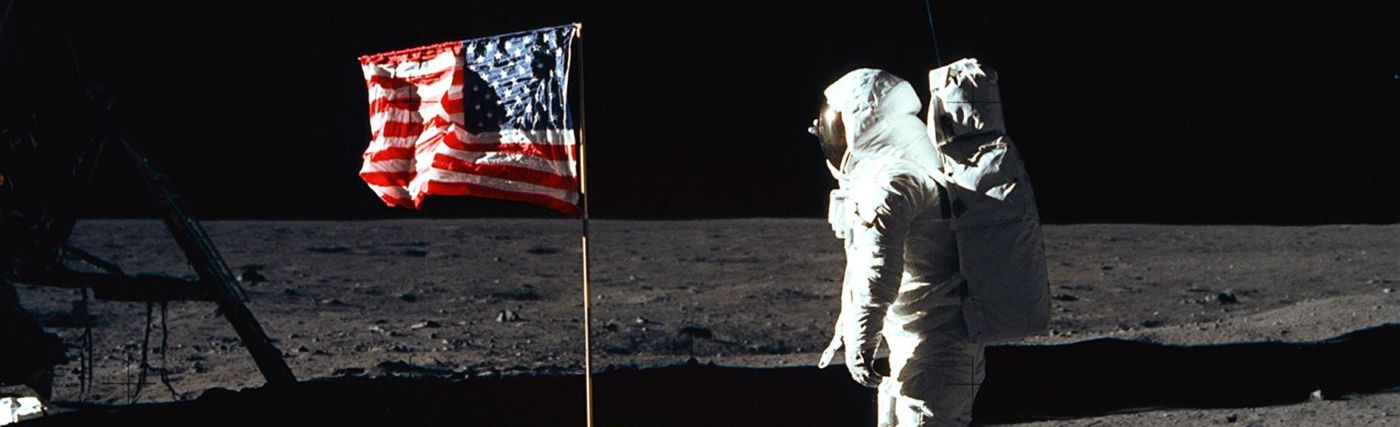
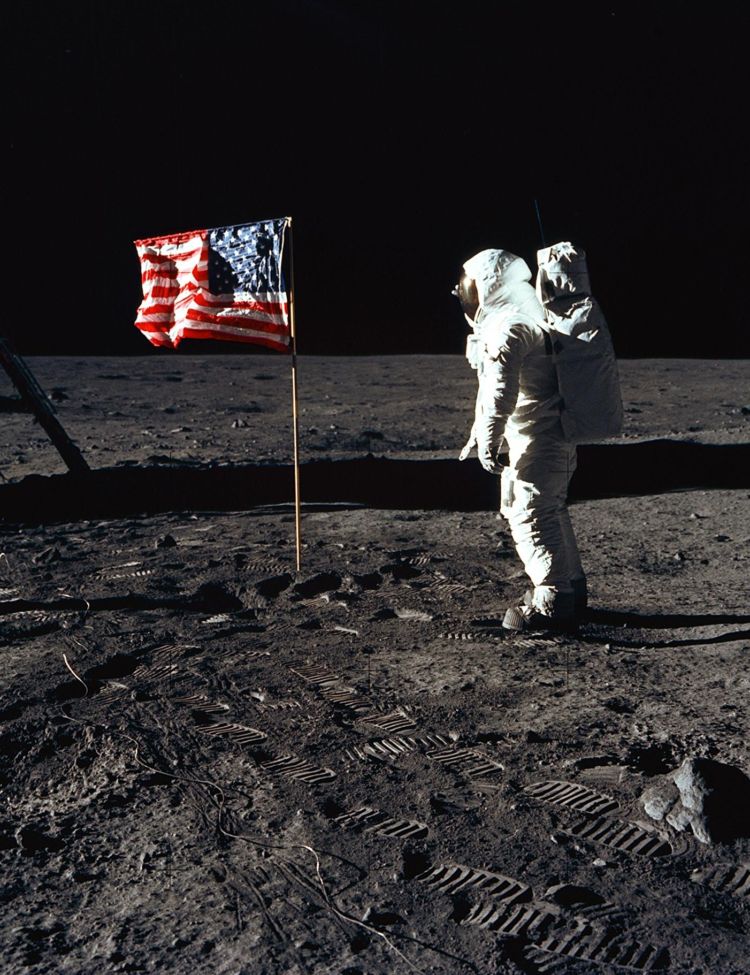
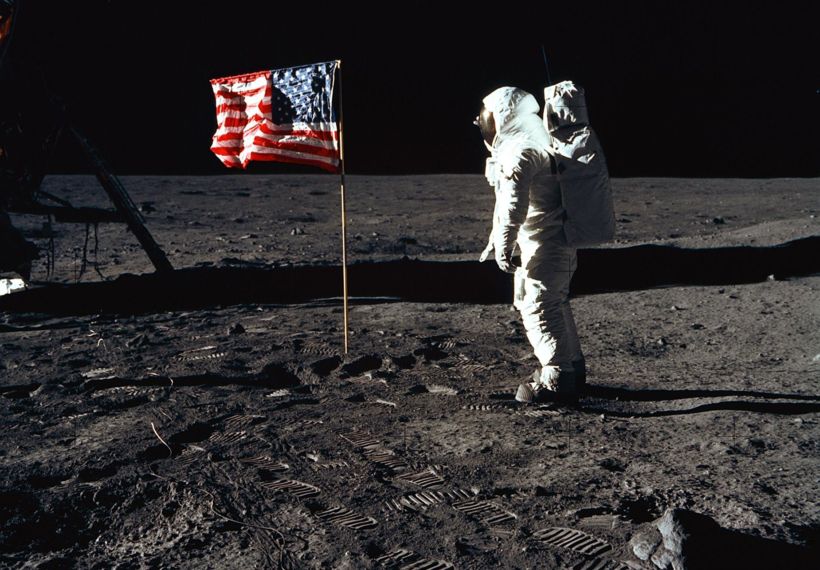
Sean is remembering an incident, because Buzz Aldrin, the second man to walk on the moon.
By the way, he landed on the moon in the same instant that Neil Armstrong did during the same damn spacecraft.
And then they played rock, paper, scissors.
And some other guy actually won.
So, you know, I always call it scissor, paper, stone.
Get out of here.
Rock, paper, scissors.
Rock, paper, scissors.
Scissor, paper, stone.
You truly are a geek.
No, no, that's how I used to.
Who's ever heard of scissor, paper, stone?
I know, that's how I learned it.
But rock, paper, scissors.
Fine, fine.
Rock, paper, scissors.
I'm going to start calling it scissor, paper, stone now, just to get a reaction from people.
What about scissor, paper, silicon dioxide?
Scissor, papyrus, silicon dioxide.
Papyrus, right.
So now what was the question?
Okay, have you ever seen somebody punch?
Oh, have I ever?
Have you ever punched anybody in the face?
Buzz Aldrin would constantly be accosted by people saying, we didn't go to the moon, and can he prove it?
Will he swear on a Bible that he went to the moon?
As nobody ever lies with their hand on the Bible.
We know that from every single court case in history.
You put your hand on that Bible, oh, you got me, I murdered her.
Let's ask OJ that's what he did.
They put his hand on the Bible, gosh, darn it.
Now I gotta tell you.
He had the glove on, so he wasn't touching the Bible, actually.
Nice, nice with the glove, nice.
And apparently there's a YouTube video that shows him punching a guy.
Now Buzz was badass in his day.
Do you know who's a pole vaulter?
I did not know that.
Yeah, if you're a pole vaulter, you've got muscles in all the right places.
Let me tell you, yes you do.
And so Buzz was like 89.
We had him on StarTalk.
Yeah, I've actually met him through you.
Okay, yes.
And by the way, still a surly guy who, and I shouldn't say surly, still a vibrant guy.
Vibrant guy.
He's got energy for life and for thinking.
Exactly.
And so there's this video of him punching a guy out.
Now I didn't really believe the video, and then I asked him and he denied it.
That didn't mean he didn't feel like doing it at times.
So let's assume this is what he feels like doing, whether or not he did do it.
So the really question is, do I ever feel like punching someone in the face for not believing that we landed on the moon?
And I don't feel compelled to harm people in their ignorance.
Oh, that's very kind of you.
No, no, I don't mean ignorance in a bad way.
This just, this stuff they don't know.
You're saying, and that's very compassionate of you, you're saying that you look at a person and you will sympathize because they're in their ignorance.
Yes, I'm an educator.
Educator, so you wanna help that person.
You see a person in need when you see an ignorant person.
Yes.
I see a dumbass.
And that is the difference between me and that is the difference between you and me.
I see someone, there's a gap in their education and people think that education is just what you know.
Right.
No, no, no, no, no.
Yeah, that's an aspect of it.
But for me, the most important element of education is what is your capacity to think?
And so what leaves you in denial that we went to the moon?
Right.
Why, what's the resistance here and look at everything else you do embrace.
They're probably using a cell phone, a smartphone that's communicating with satellites.
We can put a satellite up there.
Cell phone.
So I don't understand why this is such a stretch to imagine.
And why would we not go to the moon nine times?
Well, there you have it.
Then stop not going to the moon.
Exactly, because if it were a fraud that we perpetuated, wouldn't we still be perpetuating that fraud, but just a little further out in the moon?
I mean, why not?
And then, so someone did the analysis.
What would it take to fake the moon landing?
So you'd have to fake all of the buildings where you're constructing the spaceships.
The spacecraft.
Right.
The Saturn V.
And you would have to fake all the engineering drawings, the warehouses of engineering drawings.
And you'd have to fake the docking and all this communication.
And by the time you figure out what it takes to fake it, it's way easier just to go.
It certainly is when you put it that way.
It's, wait, just go to the moon.
You know what?
And that's very much, it's funny, because people who think like that, I call that the criminal mentality, or I call it the genius criminal mentality.
Nemesis mentality.
The Nemesis mentality.
If you took half the energy that you put into doing what you are doing that is wrong, into doing something constructive, you would be very successful.
Yes.
You wouldn't be sitting in prison right now.
You'd be running, you'd be CEO of whatever company.
You'd be Tony Stark.
Right, you'd be Tony Stark, because some of these guys, they come up with genius ways to do the wrong thing, but because they have this criminal mentality, it screws them.
There's a synapse firing in the wrong...
It went the wrong fork in the synapse.
Exactly, yeah.
And you're right.
It's like when you think about everything.
First of all, the other thing too is, when you see these rockets take off, where are they going?
I know it.
You can calculate how much fuel is in a Saturn V rocket in all three stages.
And I assure you, they were not going into Piggly Wiggly down the street.
This is enough fuel to get them to the moon and back.
It's not intro calculus, a little later, you can learn what's called the rocket equation.
And you can derive it and know what it is.
And the rocket equation prescribes how much fuel you need.
That's how much fuel was in the Saturn V rocket.
So, but I take a slightly other view of this.
I think, wow, they are so impressed with modern technology that they're in denial of it.
That's how far we've come.
See, you really are a compass.
You truly are, and I tell you, it's funny because people ask me all the time about you, but they're like, what's Neil really like?
And I tell them, Neil is exactly like what you see.
And he truly is, when people call him the world's foremost science educator, that is like his singular focus in life.
Like, people who have a singular focus like yours, at every turn, I see you take the time to talk to...
Lex Luthor has a singular focus.
Singular focus, right.
That's what I'm like.
That's just like you are.
Except instead of ruling the world, it's to educate the world.
Right, I just want people to be empowered, and then I go home.
I'll go back to the beach, and then call me if you need me.
But once you're empowered, you don't have to keep coming back to me.
Right.
Think for your own damn self.
That makes perfect sense.
I mean, I don't get it.
I think it's people are in denial of that kind of thing because they just want a government conspiracy.
They love them some governments.
They just love government conspiracy.
And anyone who's worked for the government said, we are incapable of a conspiracy.
That's funny.
Yeah, we are not organized enough to conspire anything.
That is funny.
It's never government workers saying, we're...
That's hilarious.
Find someone who's worked their life in the government and ask them if they can ever possibly pull off a conspiracy.
If they can ever possibly hide aliens.
Because you're gonna have the...
You're gonna have the office assistant at the front desk.
What the hell is that?
You just brought...
Right, exactly.
Did you just bring an alien in here?
No, you saw nothing.
I'm gonna call Betty.
You can't keep that shit a secret.
Oh, that's hilarious.
Okay, hey, there you go.
There you go, Sean Thomas.
We ate up half the damn segment on that question.
But it was funny, it was good.
It was good to know, it was good to know.
So there you have it, Sean.
Neil doesn't wanna punch people in the face, he just wants to educate them.
So his punch in the face is knowledge.
I just punched you in the face with knowledge.
They slap you with knowledge.
They slap you with knowledge.
Take that, learn that, take that.
Also, this reminds me of one of Arthur C.
Clarke's edicts, which is any sufficiently advanced technology is indistinguishable from magic.
Ooh, you know that?
Absolutely.
So you think, so going to the moon, that's advanced for you?
Exactly.
Magic or conspiracy?
Right.
Like if you took like an oculus back to just, let's say 1925, okay?
Where there were significant-
Oculus was at a leader of Rome, I am oculus.
I am, dear oculus.
Meet my cousin Calculus, he's good at math.
Oculus and Calculus, what say you?
What say you, oculus?
I like that you're being ancient Roman with a British accent.
Well, aren't all ancient Romans, don't they all have a British accent?
Every single ancient Roman is a Brit.
Every ancient ancient Roman is, father, tell me father.
Why do you not love me?
No, the oculus is that-
Of course, yeah.
The VR, the virtual reality.
Virtual reality.
If you took that back to 1925, which is at a time where there were significant advancements in technology.
In everything, yeah.
In everything, I mean, you know, at that point, Einstein had already had the theory of relativity, was already established at that point.
If you put an oculus on somebody back then, they would believe that you were a god.
Yeah, their head would explode.
Their head would explode.
Like you could put an oculus on them and say like, by the way, I'm from another planet.
And they would believe whatever you say after that.
And then they'll say, how could we make this do have sex?
Definitely.
That's the next thing.
That's always.
Always, every new technology.
Every new technology.
That's how that goes.
By the way, they've already figured that out.
They just have a new, okay, I don't even want to.
They even have it with cars.
How do we have sex in a car?
You know, a whole generation of people born having been conceived in the backseat of cars.
Absolutely.
That's why my middle name is Mercury.
Chuck Mercury Ford Lincoln.
Nice.
All right, here we go.
Here's the next one from.
So I should watch out for that.
Anybody named Bonneville or?
Right, exactly.
This is my daughter Bonneville.
That's my son Chevy.
And that's my other son Pickup.
All right, here we go.
This is Hobbitromic.
Hobbitromic from Instagram wants to know this, Neil.
Do you think the amount of money or time spent going to the moon multiple times could have been better spent focusing on other space related research exploration projects?
Could we be on Mars by now if we had not gone back to the moon several more times?
Could we have a small scale orbital colony somewhere?
A zero G manufacturing plant?
I mean, are there other things he goes on, other things that we could have done?
Most of the money to get to the moon was to get there the first time.
Yeah, after that, it's sort of incremental cost.
It's not, so you had to build the infrastructure to make the Saturn V rockets, to get the engineers and the scientists.
So it's like scaling up for anything.
Scaling up for anything.
Scaling up for anything.
It's not even unique, right.
As pharma companies will tell you, the very first pill is a billion dollars.
The next one costs 10 cents.
Yeah, 100 million, whatever, it's expensive.
The second one costs 10 cents to make.
Exactly, right.
So, that's the, so really, that's not the right way to think about that problem.
The right way to think about it is, or I don't want to force this question to be a different question.
No, go ahead, make it a different question, because you just answered that.
The answer is this, when you scale up, that's it.
Let me morph the question to be slightly different.
So, suppose the Apollo mission was not, let's go to the moon, but let's explore space.
Right.
Then we would, then you would have resources, not only going to the moon, but exploring an asteroid, a comet, Mars, and you'd be building the capacity to go to space.
And then your destination would be what you would choose after you have that capacity.
In the same way, we built the interstate system of the United States.
We didn't say, here's a road from New York to LA, that's the only place you're gonna go and that's it.
If I wanna be creative and I have an idea, I wanna do something in Utah or Wyoming or Illinois, don't force me to go one place and no place else.
So, I think it would have been a little better had there been a broader, the rebuttal to that is you have to focus, you need the singular mission, otherwise it'll never get done.
And I get that.
But if you wanna sustain it forever, you wanna turn a space program into a space industry.
You wanna turn it into just a thing.
You wanna turn the sky into your backyard, then you wanna build the capacity to go anywhere you want.
A continuing mission.
Continuing mission.
These are the...
That's right.
That's correct.
That's right.
So once you have a...
So I think some of that money might have been better suited to set up a way to maintain that mission for space at all.
And so I agree with the sentiment of that question, but I just read...
Okay, but now let me just ask you just a quick follow-up because we're running out of time in the segment, but just as a quick follow-up.
Do you think the commercialization of space and the commodification of space will allow us to get to where you are talking about right now?
The commercialization and the commodification...
The commercialization and the commodification of space.
Which is what's happening with space expansion and all that.
What that will do is drop the price of going to space to the point where other creative things you can think of doing in space become real.
All right?
So that's the fascinating thing when things get cheaper.
Whole ideas pop up you would have never thought possible.
So if going to space is cheap, I can't even imagine what more we can think of doing in space, but it is surely there, because it happens every other time anything gets cheap.
So yes, that will happen.
The frontier space is a different thing.
I don't see...
Because there's no money in that.
There's no money in that.
There's no business model to do that first.
Right.
But once that routine is set up, oh yeah.
We got a break.
When we come back, we will continue with Chuck Nice reading the cosmic queries on the Funkeo Space Exploration.
We're back on StarTalk.
Yes, you do, sir.
This is Cosmic Queries edition.
That's correct.
This is a fan favorite, Cosmic Queries.
People love this.
You know why?
Because this is the thing that we do on StarTalk that belongs solely to the fans.
It really is.
Maybe that's it.
Yeah, it's their show.
It's really, you know, we're just here as a conduit to carry out their whims.
So I shouldn't tell them that I really don't like doing Cosmic Queries, because I'd rather just sit there and let someone else do the talking.
You're making me talk.
You're making me work hard.
So, before we go to Chuck, so you're still doing standup work?
All the time.
Pretty much every, you know, so here's the thing, I don't travel as much to on the road, which I get a lot of requests, but two reasons.
One, I have a small child, and so I'd like to be home and be-
More than one child, one of them is small.
One of them is very small, because I'm an idiot.
And we just had a new baby two years ago.
Did I say new baby?
Like there's such a thing as an old baby.
We had an old baby five years ago.
Yeah, I gave birth to Benjamin Button.
Anyway.
But I always do stand up in New York City and surrounding area pretty much every weekend.
I love your work, and that's why we have you here.
Thanks man, I always love being here.
We affirm that, all right.
So what do you got?
Okay, let's get back in to our queries.
Hayden Astronomy from Instagram says.
Astronomy is in his handle.
Yes, it is.
I love that.
You like that?
People love in the universe and they can't help not tell people.
They gotta let people know.
So he says, what was it like for the command module pilots when they went around the backside of the moon?
And why did the Soviet N1 moon rockets all blow up?
So, and instead of what was it like, let me just say, on the backside of the moon, what are you experiencing on the backside of the moon that you're not experiencing on the front side of the moon?
So first, as you may remember, the Apollo missions all sent three astronauts to the moon.
Two of them deployed down to the surface.
One did not.
Stayed in orbit around the moon, eating their lunch, waiting for them, finished driving the golf cart.
That are known as the Uber Driver of Apollo.
I'm wondering if I would have just snuck in and crammed three people into the lander.
And I don't know, you're going to travel that far and just not.
And have to sit in there, hey man, wait in the car.
We'll be right out.
We're going to walk around on the moon.
We're going to walk around on the moon.
Do me a favor.
Can you just keep the car running?
Keep the car running.
Keep the car running, buddy.
We're just going to take a little stroll on the moon now.
On the moon.
Yeah, so here's the thing.
When you go to the backside of the moon, you are one moon diameter away from the other two astronauts.
That is the record for the loneliest person ever.
Oh, that's so cool, because you're farther out than if you're by yourself.
The next closest person in that moment is one moon diameter away.
And that is farther than any other solo person has been.
Yes.
Right.
So just one little fact.
That is the loneliest place we have ever found ourselves.
Oh.
That's pretty cool, a little back to it.
What makes it extra lonely is when you're behind the moon, then the moon is between you and Earth, and the radio signals don't penetrate through the moon.
You're also radio silent.
Oh, my god.
You're alone and alone.
Yes, you're double alone.
You're double alone.
You're alone squared.
You can't communicate with anybody either.
Correct.
This is why in the future, when we're thinking of moon colonies, and you want to inhabit the far side of the moon, the far side never faces Earth.
The moon, its rotation is what's called tidally locked, where it's actually rotating, but at the exact rate that it takes to go around the Earth.
So it's always turning its one face towards you, no matter where it is.
It happens, it's a very natural thing in the universe.
Don't think too much about it.
Okay, I'm thinking about it.
Let me tell you something, as I'm thinking about it.
Oh my gosh, what a coincidence.
Is that just for us?
I'd do that.
It's a natural thing.
So when we're thinking about moon colonies, if you're gonna pitch tent on the far side of the moon, you're gonna still want communication channels opened up.
So there's a whole separate conversation about radio transmitter repeaters that are on the edge of the moon, where signals can come from the back side and then work their way back over to the front side and then make it way back to the earth.
So you send the signal to the booster, the booster sends it over.
Exactly, exactly.
And so it's a repeater, whatever is the mechanism.
Right.
Can you hear me now?
I'm sorry, let me move over here.
Sorry, I'm on the back side of the moon.
Let me just move over.
Can you hear me now?
How's that?
Ah, Jesus, I'm roaming.
I can't believe this.
I'm roaming, dude.
I'm sorry, I'm on the moon.
I can't talk, man.
This is costing me a fortune.
Okay, sorry.
Can I give like a weirdly perverse version of that?
All right, so I was on a presidential commission to study the climate of aerospace around the world relative to here on Earth.
The climate, I mean, the business climate.
And so in one of our trips, we go to China.
And China has these, they've got plans to go to space.
All right, this is before they launched their first taikonaut.
Which is what they call their astronauts or taikonauts.
They're taikonauts.
And so there's this underbelly of advanced technology that we're reading about and hearing about.
And I always wondered, is it real?
Is it there?
So I'm on the Great Wall of China.
Sweet.
And there it is, just like the photos, going to the horizon into the mist.
All right, you can't, there's no end in either direction you look.
Look, I do not see any technology at all.
In any, there are no antennas.
There's no, nothing made of metal.
There is just the wall.
And I said, let me try something.
I pull out my cell phone.
Okay.
It was a flip phone at the time.
I call my-
StarTech.
I call my, it was in fact, the Motorola StarTech.
And I call my, cause it's good.
Of course.
Thank you.
I call my mother in Westchester, New York.
She said, oh, hi Neil, are you home already?
That's how good the connection was.
Nice.
It was crystal clear connection.
You certainly didn't have Sprint.
It was one of the best connections I've ever had in a cell phone ever from the great wall of China with no visible cell phone towers.
And at that time, you would walk past a tree in the United States and say, I'm sorry, I lost my signal.
Exactly.
Let me get out in the open here, away from the blades of grass, whatever.
So that's how I knew China was gonna make whatever they want happen happen.
Wow.
In that moment.
That's pretty wild.
In that moment.
Right.
That's actually a very good story and really telling, because it makes sense.
Right.
You don't see anything and...
It's there.
Now, why did I even say that?
I was somehow related to this question.
Well, no, we were talking about just the dark side and the actual repeater and all that kind of stuff.
No, no, but the guy with the command module pilot, there was a question.
What was the question?
Oh, no.
It's just like, no, I'm sorry.
Now I lost.
I don't think I answered the question.
I'm sorry.
All right.
So what is it?
Oh, God.
Jesus Christ.
Where...
You just mentioned God and Jesus in the same sentence.
You must be in a really bad situation.
No, you did answer the question perfectly.
What was the question?
You wanted to know what it was like for that pilot.
Oh, the pilot.
Yeah, that's what it was like.
And that's exactly what it was like for him.
Eating a sandwich, waiting, just...
And by the way, I'm gonna say that is the lonely existence ever.
Not just because of where he is and not just because of his isolation, but because of the context of that isolation.
Yes.
You are alone and your friends are walking on the moon.
It's triple.
It's like I'm alone, I can't communicate with anybody and I'm keeping the car warm and they're on the moon.
Yes, getting all the glory.
All right.
Chuck, time for Cosmic Queries lightning round.
All right, let's do it.
Let's do it, here we go.
I'm gonna give sound bite answers.
Sound bite answers, okay, here we go.
This is...
Chuck, if I'm giving sound bite answers, you have to read the questions a little faster.
Chris McManara, 97, from Instagram.
What is the biggest thing the moon taught us about Earth?
For me, I have my personal list of that, all right?
I think going to the moon and getting direct measurements of its mineral content and soil content.
For me, the coolest thing was discovering that the moon is the product of a collision between a Mars-sized protoplanet, side-swiping Earth's crust in the early solar system, having that material that had been side-swiped gather into another cosmic body that orbits Earth that we now call the moon.
The moon for its size should have much, much more iron in it, but it doesn't.
The iron has already been sifted out.
Well, how do you make that happen?
Well, on Earth, the iron all went to the core.
Most of the iron went to the core.
So the crust has hardly any iron in it.
If you're gonna make a new cosmic object out of the crust, you're gonna have hardly any iron in your substance.
So the moon has suspiciously low iron, and it is completely consistent with this scenario.
Nice!
And people ask me, if I wanted to go back in time and see something happen, I'd wanna see the collision of that Mars-sized proto-planet with Earth and watch the moon get formed.
We think it would have formed within a few months.
That quickly?
Yes, that quickly.
Wow.
That quickly.
That would have been a badass collision.
Yeah, that's a nice collision.
You got it.
Okay, quick, go.
There we go.
That was too long.
I got to answer faster.
All right, here we go.
AtSeabass621 wants to know this.
Fisherman there.
Just loves him to eat some sea bass.
All right.
Who do you think won the space race?
Oh, so I call it a tie.
Between the United States and Russia.
Yeah, you know why?
Because they were the first to put anything in space.
A, they were the first to put a living creature in space.
They were the first to put a human in space.
They were the first to put a woman in space.
They were the first to put a black person in space.
They were the first to have a space station.
They invented the rocket equation that enabled all this to happen in the first place.
And we went to the moon first.
There you go.
So.
Okay, so to me, I'm saying, you know, we didn't do any of that other stuff first, and we got to the moon and said, we win.
So I'm saying, give the people some credit here, please.
Next.
Oh, that was a great answer, man.
All right.
Since the moon is loaded, I'm sorry.
By the way, that black person was a Cuban.
Oh, really, a Cuban?
Yeah.
So Brentrow, at Brentrow, wants to know that since the moon is loaded with helium-3, which is useful for alternative energy, how do you think laws will form in retaliation to mining the moon?
Oh, nice.
He's assuming that we're gonna mine the moon.
Nice, so helium-3 is a version of helium missing one proton.
Helium usually has two protons, two neutrons.
That would be helium-4.
Take away a neutron, you get helium-3.
That's what it's called, okay?
Helium-3 is one of the things that is emanated from the sun in the solar wind.
And it comes through space, it gets lodged in the surface of the moon, and it sits there.
And there are whole books given unto mining, quite simply, scooping up the topsoil of the moon, collecting this helium-3 and using it for nuclear fusion reactors.
So there's a whole plan that people have for this.
And there's been some rebuttals, will it really recoup the cost, whatever.
But helium-3, yeah, we need laws going into the future.
Who owns the moon, who owns asteroids, who owns the mining rights?
Do they have to be shared?
Who paid for it?
There are some laws related to this, but for me, it's still undiscovered territory.
And this is why the future in space is not just about astronauts, scientists and engineers.
There's the rest of what life is.
Lawyers, the artists, the politics, all of this has to come together.
If we are going to turn what is sitting there above our head that we call space into our backyard.
Wow, there you have it.
Chuck.
Yes, man.
We got to call it a wrap right there.
All right, you've been, you have been, you've been listening to and possibly even watching StarTalk.
I've been your host, Neil deGrasse Tyson, your personal astrophysicist, Chuck Nice.
Yes, sir.
Dude.
Always good to see you.
Thanks for coming through, helping me get through this.
See the full transcript



 Unlock with Patreon
 Become a Patron