



 Unlock with Patreon
About This Episode
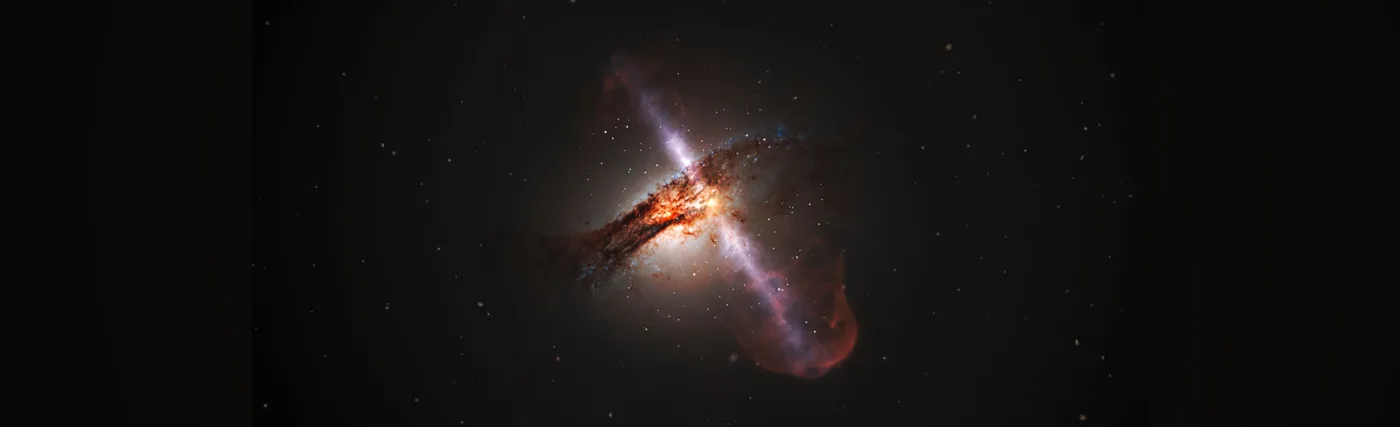
What does space sound like? Neil deGrasse Tyson and comedian Matt Kirshen explore space sonification projects and Chandra Observatory x-ray data with astronomy visualization expert Kimberly Arcand. Hear what the supermassive black hole at the center of The Milky Way sounds like…
What is sonification? Learn about different ways of presenting and visualizing data and how we can make space images more accessible to blind or low vision people. We talk about Chandra Observatory and the x-ray data it produces into images. Discover the Perseus Galaxy Cluster and the lowest note a galaxy can make. We listen to sonifications of the center of The Milky Way, the black hole M87, and Chandra deep field.
How do they pick which images to sonify? What are other ways you can present the universe? Find out about 3D printing the cosmos and scientists like Wanda Díaz-Merced who use sonifications to study stars. What are the most active wavelengths in the universe?
Why is a pulsar best seen with x-ray and radio waves? Are there sonifications of the planets in our solar system? We listen to a sonification of black holes colliding. Does the universe sound like water because of all the waves? We discuss the five senses, the sonification of Stephan’s Quintet, and translating the sounds of the universe into sheet music. Could someday an orchestra play the universe?
Thanks to our Patrons Brittani Vega, Anish Abraham, Charlie Chapter Zhang, John McCormack, Eugene C Nickel Jr, and Marcus Ruzzon for supporting us this week.
NOTE: StarTalk+ Patrons can watch or listen to this entire episode commercial-free.
About the prints that flank Neil in this video:
“Black Swan” & “White Swan” limited edition serigraph prints by Coast Salish artist Jane Kwatleematt Marston. For more information about this artist and her work, visit Inuit Gallery of Vancouver.
Transcript
DOWNLOAD SRTWelcome to StarTalk, your place in the universe, where science and pop culture collide.
StarTalk begins right now.
This is StarTalk, Neil deGrasse Tyson here, your personal astrophysicist, and today is a Cosmic Queries edition.
And we titled this one Sounds of the Universe.
Sounds of the Universe.
And there’s only one person who is Editor-in-Chief of the Sounds of the Universe, and that’s Kim Arcand.
We’ll get to her in just a moment.
Let me introduce my co-host, Matt Kirshen.
Matt, welcome back to StarTalk.
Oh, it’s a pleasure.
Host of probably science and just all-around funny guy.
We love you when you come on, so thanks for…
I love being on.
Also, I’ve recently just had a couple of messages.
I’m on a tour at the moment and just had a few tweets from people who were like, I didn’t know you were on this show.
I know you’re from StarTalk.
Excellent.
Excellent.
That’s how that’s supposed to work.
Exactly.
So, hey, StarTalk listeners who’ve just seen me on stage.
It’s nice to see you through the screen.
So we have Kim Arcand as our expert guest.
She’s been a StarTalk visitor before, many years ago, pre-COVID, before COVID, BC, I think we should call it that.
She’s a visualization scientist and was an engineering tech lead for the Chandra X-ray Observatory, a very important space observatory on the ranks of Hubble, except its data was in X-rays, so it didn’t quite get all the PR that Hubble got.
But it was one of our great observatories that we put into orbit around the Earth to see the universe in X-rays.
And she works on several projects.
We’re interested in the stuff she’s done that connects the acoustic world to the cosmic universe.
And some of the stuff she’s done has even went viral.
And so, Kim, welcome back to StarTalk.
Thanks.
It’s so great to be back.
So what is NASA’s sonification project?
Well, the sonification project essentially is just a way that turns NASA data into sound.
That’s all it is.
It’s like data storytelling, but using our ears to hear it instead of just our eyes to see it.
It actually started as a project because during the pandemic, I really wanted to be able to keep working with my community members and colleagues who are blind or low vision.
And our previous 3D printing program just became very challenging during the pandemic.
You couldn’t be in the same room with someone, never mind share a 3D print.
And so we started converting data into sound and it turned into a much bigger thing than I expected.
So this is not just for grins.
This is because it really can serve the needs and the desires of the seeing impaired.
I mean, that’s…
Yes.
It’s not just, oh, that’s cool.
No, it’s like, oh my gosh, how else are you going to feel this?
Yeah, absolutely.
We had, like I said, been working in 3D printing primarily, so translating data sets into three dimensions that we could 3D print whole or into tactile plates where you could kind of create like relief maps from the data.
But then during the pandemic, that was just all kind of impossible.
So I recalled a colleague that I had met at a visualization conference, Matt Russo.
He’s part of System Sounds.
And he and his partner, Andrew Santaguida, had been working in some cool areas of data sonification that I thought would be great to bring towards the Chandra data.
And so we started working together and we created a few sonifications and they were very well received.
And I think I was very surprised at that.
I thought it would be something we created for and with people who are blind or low vision.
So I don’t know why I just didn’t expect it to go beyond that community.
But it really did.
And it was very lovely to witness that.
So Matt, I got an idea for her.
You want to hear my new idea?
OK.
I’m listening.
They started out with 3D printing.
So that’s your sense of touch if you otherwise don’t have a sense of sight.
And then COVID put a kibosh on that and they switched senses because we got five traditional ones.
So why get stuck on one?
So then you went to auditory data.
And I’m thinking, why not go to taste?
I’m just drawing the line.
We can taste the data.
Taste and smell?
I feel like the taste and the smells might be scary.
Like sulfur, iron.
I don’t know if I want any of that.
Rotten eggs?
No, thank you.
Yeah, hydrogen sulfide in the universe?
Oh my gosh.
This is the next thing.
No, I think we’re good.
So, just so I can get a grasp on this, because obviously this is Neil’s world, but you’ve got a map or you’ve got these images that are coming through that are x-rays or radio waves or whatever, and you’re converting them into sound waves.
So, yeah, what is happening?
Right.
So, all this data that we’re capturing, say, with Chandra, that’s all x-ray light.
So nothing that humans can naturally see, right?
So humans do this amazing stuff where they build these crazy spacecraft that can capture that data and then write this awesome software that can translate that data.
Because, essentially, astronomy, like, that is just numerical, right?
So we’re translating that into something we can see, that visual representation of the object.
And then from there, the pipeline is to sound.
So we essentially take all of those pixels that we get from that resulting image and we do a mathematical mapping from those pixels into something we can hear by using, like, assigning different kinds of sounds, either a synthetic sound or, like, an instrumental sound, for example.
So the whole picture, though, is seen all at once, where a sound has a beginning, middle, and an end.
Yes.
Are you scanning left to right across the image and then it comes into, quote, auditory view, if I can borrow that word?
Yeah, and that’s a great question.
Is that how you do that?
Yeah, and that’s a great question because it actually brings up some interesting things of why this has been such a fun project.
So it depends on the data set is the short answer to your question.
If it’s a sort of landscape shaped image, if you will, then we’ll scan from left to right.
If it’s like tall and skinny, then we usually scan either top to bottom or bottom to top, depending if we’re trying to use stereo sound or whatever the data is showing.
If it’s an object like a supernova remnant that’s got very sort of spherical structure, then we typically do center out or a radial scan, right?
So we let the data drive the process.
They’re all– it’s a bespoke process still at this point, but it’s really taking the science that’s all tucked up inside those images and letting that drive the data sonification to tell the story.
That makes complete sense now that you say it.
Thanks.
Yeah, if you have a spherically symmetric object, you want to sample that in a spherically symmetric path.
Exactly.
That makes complete sense.
You want to match your geometry to the geometry of what it is you’re presenting.
But now, I got a bone to pick with you.
Yeah.
Okay?
Matt, I need backup on this in case she gives me a hard time here.
You ready?
Okay.
Yep.
You are leaving people with the impression that these objects in space are making sound.
Yes, I see where you’re going with this.
I know.
So, yes and no.
No, I know.
Because I saw the movie that in space no one can hear you scream.
I saw Alien.
That’s how I knew.
I didn’t know before then, of course.
But I…
That’s such a good movie.
I love that movie.
This is…
This is why rockets don’t have cars.
Get out of the way.
Exactly.
Exactly.
But yeah, that’s a great point.
So is there some housekeeping you have to do at the end of all of this to say we’re not actually hearing the universe?
Yes.
So I have two answers to that.
And the simple one is yes, we always say we’re not holding a microphone up to the sky, right?
We’re not recording actual sounds.
We’re too far away from any of these objects even if they were making sounds.
However, there are objects in the universe that do create sound waves.
And so one of the sound vacations I think we’re going to listen to on this show today is actually sound waves.
Yes.
We have some clips.
Yes.
I will totally.
By the way, this is a Cosmic Query.
So we just lay in some landscape here before we go to the queries.
In our garden.
In the garden, yes.
Yeah.
So yeah, there is this idea that there is no sound in space, but that’s not really true.
You know, there are sound waves that are occurring in things like galaxy clusters, where there is all this super hot gas around things like supermassive black holes.
And a supermassive black hole might have like, say, a relativistic jet coming out of it.
And if it’s surrounded by all of that super hot gas, the jet is kind of like the drumstick and the hot gas is like the drum, right?
And it can create sound waves.
So we do have an example where we’ve taken a sound wave and re-sonified it up to something we can hear.
Okay, damn, why did you just convince me?
I didn’t want to be convinced.
I wanted to argue with you about this.
Damn, she’s right.
Oh my gosh.
Okay, what you’re saying is wherever there’s gas in the universe, which is in many places, it’s reasonable to say what is sound doing in that gas because the sound is moving through a medium.
Right.
It’s the vacuum of intergalactic space or wherever there is no gas that brings in the…
Exactly.
That’s where you have the issue.
And we’re not going to hear anything here on Earth.
We’re too far.
And these sounds are way too deep and all of that.
But out there in outer space, there are places where there are sound waves occurring.
And even like the early universe, you know, the sort of…
that early archaeological history, if you will, you know, the cosmic microwave background, like when there was all of that, you know, dense hot fog, they can translate that information into sound and kind of learn about things differently.
Authentic sound, not just a conversion.
Image conversion.
Yeah.
So I know like, I know audio gearheads are always like trying to search for like the deeper bases, like the bigger and bigger subwoofers, like how, how deep are these galaxy clusters getting?
Wait, Matt, I’ll ask…
If one of them was mounted on the back of someone’s Volkswagen Golf, like how…
So I can tell you…
Wait, wait, Matt, I’ll ask that question, ready?
Kim, how deep can you go?
How deep can you go?
Very deep.
So, for example, the Perseus Galaxy Cluster, which is like a couple hundred million light years away from us, so pretty far, that black hole is singing out at a note that’s about 57 octaves below middle C.
And so that is, I think, one of the deepest.
It’s possible that M87 is also deeper, but it doesn’t sing as well.
But so that is, as far as we are aware, at least one of the deepest notes in the universe.
Okay, so now…
57 octaves below middle C, B flat.
Okay, so all of these notes, even those that are not the deepest, still fall well outside of our 20 to 20,000 hertz, you know, auditory range.
So in order to hear these sounds, you have to, I don’t want to say fake it, but you have to boost it.
Yes.
Change.
You have to put it in another octave where we can hear it.
Exactly.
Yeah, exactly.
So in the sonification project for that, we re-sonified it by bringing back up about 57 and 58 octaves so that we can hear it.
I like that.
Re-sonify.
You got your own vocabulary for this.
Yeah, we kind of have developed it.
And I have to give such credit to my partners, Matt and Andrew, on this project because we really thought hard about this stuff and they’ve definitely tried to lay a lot of groundwork.
It’s a very exciting thing.
So what’s the first clip you have?
Oh, I think the first thing that we’re going to listen to is kind of like a general introduction to what sonification is.
And this is just translating an image into sound.
There’s no sound waves that we’re capturing here, although this is a supermassive black hole so there could be some.
But this is the inner like 400 light years around Sagittarius A star, our supermassive black hole at the center of the Milky Way.
And what’s cool about this data set is we’ve got three different kinds of light.
We’ve got light from the Hubble Space Telescope that’s kind of like optical near-infrared.
We’ve got Spitzer Space Telescope infrared data and then we’ve got the Chandra data in X-ray, right?
And so all three of those layers combined, it makes a beautiful image.
It’s red, yellow and blue respectively from low to high energies and it’s very rich but very dense.
So, you know, the area around our supermassive black hole, it’s like Times Square, right?
There’s a lot going on.
It is the downtown of our Milky Way region.
There’s just a lot happening.
There’s all kinds of exploding stars, large stars, lots of gas and dust, really cool stuff.
But stars getting eaten, probably.
Stars getting eaten, asteroids getting snacked on, all sorts of great stuff, right?
So the image itself is very busy and dense.
And when we listen to it, what we’ve done is we’ve assigned each of the types of light a different sound.
And so the lowest energy is a very soft piano.
The medium energy from Hubble, that’s like a plucky violin.
And then the highest energy from Chandra, that’s like this, you know, pringly little glockenspiel sound.
And so we’re scanning across the image from left to right as you’re hearing all these sounds.
Wait a minute.
You get to pick your own instruments?
We do.
Who put you orchestra instrument in chief person?
We did.
We self-selected, I guess.
Yeah.
And I should say, I should say, to be fair, I’m a former band and chorus geek, so I have some music theory under my back.
Also, Matt is actually a musician today.
Like he plays in a band.
And he’s also an astrophysicist.
And then Andrew is like an amazing musician and sound engineer too.
So there is a nice mixture.
I won’t, yeah, exactly.
So we’re self-selected.
But it seems to me, you could choose instruments differently so that the center of the galaxy feels kind of bluesy or hard rock, you know, or country, right?
How do you want your universe to sound like?
Exactly.
Right.
Matt, what did you say?
A kazoo?
And a slide whistle.
And an accordion.
Yeah.
Yeah.
Yeah.
But yeah, sure.
What do you want your universe to sound like?
That is a question because we are absolutely picking instruments based on the science story that’s in that data that we’re trying to communicate, right?
So, we want the three layers to be distinct from each other because that’s one of the key things, particularly for people who are blind or low vision.
They’re accessing this data with their ears.
They want to be able to hear all of that amazing sciencey goodness tucked inside.
So, Kim, it seems to me you have more information than just the sound if you can listen to it in stereo, correct?
Correct.
Exactly.
You can get a sense of that positional information.
And also what that helps do, I think, is make you sort of feel immersed in it, right?
And I think that is sort of the gift of presenting it in this more musical sound based way.
You have that sort of gift of time across, but also that immersive sort of opening to it.
Okay, let’s do it.
In stereo, the center of the galaxy.
Go for it.
Okay Okay, so the black hole in the center of the galaxy really fed that experience.
But what about M87?
That’s one of the largest known galaxies in the universe, trillions of stars.
It’s got a Mondo black hole in its center, one of the biggest known.
It’s got jets.
And you tell me, you worked on that one as well.
Yes, we did actually create a sonification of M87 too, because that’s another system that is supposedly also burping out into the surrounding gas.
And from what I understand, the note might actually be pretty low, like 59 octaves below middle C.
But that sonification is a little bit simpler than the one that we just heard.
It’s more of a basic sound scrubbing across left to right, mostly the jet features that you’re seeing in different kinds of light.
So you’ve isolated the jet.
Exactly.
Rather than all the downtown time square behavior going on in our own galaxy.
Yes.
Got it.
Let’s take a listen for that.
Cool.
And so, and we have a third and final bit, but this is just a sampling of what is in your full portfolio.
So we have the Chandra Deep Field.
So what are we listening for here?
This is one of my favorites, because if you’ve ever seen the image, it’s not the most exciting, perhaps.
It looks like you’ve taken a black canvas and just splattered some multicolored paint droplets on it, right?
But the science of that data set is really important.
It’s the deepest X-ray image we’ve ever taken.
Chandra looked at a patch of the sky for a really long time.
I want to say it was about 40 days and 40 nights, very poetic sounding, and captured this landscape, if you will, of black holes.
So thousands of black holes or very bright galaxies with supermassive black holes at their cores.
If you look at the image, it doesn’t always communicate that as easily to a non-expert.
But when we sonified it, this is using stereo sound again, we scrolled from the bottom of the image to the top.
The image itself, the X-ray sources, they are shown by energy levels.
The lowest energy sources in X-ray are red, up to the highest energy X-ray in blue.
And we can play with that so the sounds are synthesized sounds and you can hear the different energies of those X-rays as you scan.
You’re telling me your acoustic map is better than the original data.
It actually captures that a little bit, a little bit.
It captures more of that sciency goodness that I think the image actually can, which was a really cool project.
All right, so let’s give it a listen.
Let’s give a listen.
When we come back, we’re gonna pick up our Cosmic Queries theme with questions given to us from our Patreon membership when StarTalk returns.
Thank you.
Hey, I’m Roy Hill Percival, and I support StarTalk on Patreon.
Bringing the universe down to Earth, this is StarTalk with Neil deGrasse Tyson.
We’re back, StarTalk, Cosmic Queries edition.
We’re talking about sonifying the universe.
Oh my gosh.
And we’ve got one of the world’s experts on that very topic, Kim Arcand.
Again, Kim, welcome back to StarTalk.
And I’ve got with me my co-host, Matt Kirshen.
And so, Matt, you brought questions with you, didn’t you?
I do, yeah.
And I’ll try and get through as many of these patron questions as I can, because there’s some really great ones.
Some things you’ve already started to answer.
So, Malcolm Marfan from Trinidad and Tobago, you’ve already answered the first part of his question, but he also asked, how do you and your team decide which areas of the universe to study and what factors go into making those decisions?
It’s a big universe, and you’re hand-picking, you’re cherry-picking it, right?
It’s a big universe out there.
So, first, I guess what Chandra looks at is decided by a committee of scientists, right?
So, anybody can propose for time on Chandra.
And those proposals are all put together and then, like, sorted through and decided on what Chandra will actually look like.
And then time is, you know, set to it, and Chandra’s schedule is created and all that happens.
So then when it comes to us to actually choose what we sonify, we’re looking for objects that will sonify well, if that makes sense.
So we’re looking for things that will give us, like, a really nice landscape of something like the Galactic Center that we talked about earlier, a way to really get all of that really really interesting science material translated into sound.
Or we’re looking at something like an exploded star that has a lot of detail in it that as you’re like scanning across it, like a radar scan, if you will, really lets you get a sample for what that object is like.
So we’re definitely cherry picking through the universe because this is more of a bespoke project.
It’s not an automated project that you can just scan everything with the push of a button.
But what it does is it absolutely enables our friends and colleagues who are blind or low vision to be able to sample some of the most iconic and important data sets that we’ve got in our back pocket.
So it’s interesting because we make a selection at any time for what we want to know about first and second and third.
So what you’re doing is no different from that.
You’re finding the parts of the universe that would be most interesting.
Yeah, exactly.
Yeah, some of those really cool stories that need to be told through sound.
And earlier you were talking about 3D printing.
You have a book that just came out.
Yes.
What’s the title?
Stars in Your Hand, a Guide to 3D Printing the Cosmos.
Yeah.
That sounds a little scary.
You know, you don’t want people printing black holes, right?
It’s true.
Though I actually do have a 3D print of a black hole with me today.
Indeed.
It’s just a little guy right here.
But yeah, thank you for asking about the book.
It’s fun.
I like writing.
I’ve been writing with my partner, Megan Watsky, for a while because I don’t know.
I love books and I know other people do as well.
And this book was just kind of like…
That’s so old-fashioned of you.
I know.
I will take books over like TikTok any day.
Books don’t even require batteries.
I mean, what’s wrong with you?
I know.
I’m very old-fashioned.
Vintage, I think they call it.
That’s what they use.
But yeah, I love books and so for me, it was a great way to concatenate all of these cool 3D printable data sets of our cosmos into one place.
It’s just like a quick guide, if you will, to some of the cool sites to feel, I guess, versus the sites to see.
So things like exploding stars, galaxies, some constellations.
I worked with a bunch of colleagues around the world and gathered a bunch of data sets into one place.
Excellent.
And it’s out now?
It is.
It’s out now.
And it’s meant to be a very gentle introduction.
So even if you don’t have a ton of experience with 3D printing or with the universe, it’s a very gentle sort of workbook style feel to it to kind of give you a little intro.
Thanks.
So what else you got for us, Matt?
So I like this question a lot.
This is from Tarina from San Francisco who says, I work with visually impaired people and we use lots of technology using sound waves to detect obstacles.
The beeping gets louder when the device gets closer to the object, for example.
Does the same thing happen in space or do we need an atmosphere for this?
Do radio waves bounce off objects?
Is that one way to measure and or detect unseen objects?
Oh, that’s an interesting one.
Neil, do you want to take that one?
Well, I know.
So it turns out there are not many telescopes in the world that have that dual capability.
We had one of the Arecibo telescope, which collapsed out of misuse.
But it was a huge radio telescope that can receive radio waves, but can also transmit.
And so it’s the transmitting that allows you to beam it at a thing that you can’t otherwise detect and record the signal that comes back to you and make a map of it.
This is like sonar, like a battery.
Precisely.
It’s sonar, but not with sound.
It’s like sonar, but with radio waves.
I guess they call it radar.
Radio detection and range.
That’s a cool acronym right there.
So for many asteroids that are just so small that a regular telescope can’t really reveal what their surface looks like, then you have these radio wave topography, topographic maps that you can create with them.
So, in a way, technically you can measure how fast they’re going, give them a speeding ticket because that’s what the cops do with their radar gun using microwaves.
They beam microwaves at you and time the signal as it returns and invoke the speed of light and they get exactly how fast you’re moving.
So there are things you can determine about these objects, but only in our solar system.
Far away, it will take years for the signal to get there and by the time the signal comes back you’re not interested anymore.
This idea of bouncing signals off of things, the best you can do is at the speed of light and at distances in the universe, it’s not a very practical solution for getting the distances to things or even for giving them speeding tickets.
I had no idea traffic cops were invoking the speed of light, they are much smarter than I think.
Yes, they are.
So, Gavin Bamber, this is sort of like the reverse of what you’re doing.
So Gavin Bamber from North Vancouver says, please visit and my question might be arcane for arcand.
I see what you did there, Gavin.
But Neil, maybe Neil and Matt can provide assistance, I don’t think so.
I think the Neil part, but various wavelengths of light can be explained to a blind person in terms of varying levels of heat, but how can we translate the sound of the universe for deaf people to understand?
So I guess this is sort of the reverse of you’re converting signals into sound.
How do we convert sounds into other signals for deaf people?
Yeah, because Kim, you’re focusing on sight impaired.
And what about the hearing impaired?
Well, so for the most part, what we’re doing is we’re translating an image that already exists into sound.
So for people who are hearing impaired, they do have access to that original image.
But what we also do is we provide like a description of what the sonification is.
So it gives a loose sense of what’s included in that translation.
But yes, things are going to be lost in translation.
You can’t really get the essence of the feeling of music through just words.
But we do add that as a layer of accessibility to our products.
And I would add, if you have sight but not hearing, people with sight were not saying to themselves, gee, I wish I could hear the universe to understand it better.
They can see it.
Right.
Right.
Yes.
So this whole project actually came about for two things in a way.
So one, all the sonification work that I’ve ever done has been inspired by my friend Wanda Diaz.
She’s an astronomer and a computer scientist who’s been blind since she was a teenager.
And she uses sonification to actually study stars.
She had her whole PhD thesis kind of showed that scientists, humans can become better listeners.
Right?
And so that has always been kind of the inspiration point.
But also my friend and colleague, Christine Malek, she’s been blind since birth.
And so she’s never seen the night sky.
She’s never seen any of these images.
And for her, she’s remarked to me that these sonifications, they’re like a main meal where she gets her nutritional stuff from versus somebody who’s sighted who can access the images that the sound is like a dessert.
Right?
It’s delicious and it’s another layer and you like it.
But for her, the main meal is adding like the nutrition that she needs.
And I love that way of thinking about it because it does provide that, you know, everybody has different access points into stuff.
Right?
So Kim, this is personal for you.
I mean, you have close friends.
It’s very, it’s very personal for me, honestly.
And my so I’m like a super, super shy person and at least I’ve always been super shy.
And when I was a kid, I had a very hard time making friends.
My very first friend in kindergarten was a little girl who was partially deaf.
And she like came up to me and she made me her friend.
And she like and her helper started teaching me sign language and all these things.
And you know, that’s something that I have never I know it sounds corny.
I know it does.
But that is something that like I’ve never forgotten, like I’ve never forgotten that someone helps me in those early days when I could like barely move from behind my mother.
Right.
And so I don’t know, there’s just this part of me that like wants to look at the world like that.
Do you know what I mean?
No, it opens up a box that we don’t even know we’re in.
Yeah.
You know, to how to see.
And also just how many potentially brilliant scientists were kept away from the work that they could be doing because it wasn’t as accessible to them.
100%.
If there’s anything that I hope comes out of this project, it’s that.
It’s that I hope other people can sort of see themselves or picture themselves, envision themselves, hope for themselves to be scientists or just part of the science community.
Well, that’s just part of the inclusion movement, I mean, really, if you want to think of it more holistically.
Yeah.
Matt, give me some more.
All right.
So, Conor Holm from Squim in Washington.
There’s a pronunciation guide.
I appreciate that.
Squim?
That’s a place in Washington?
That’s a town?
Squim.
It spells S-E-Q-U-I-M, but then there is a pronunciation in brackets afterwards.
I’m glad because I never heard of the town.
Never knew.
But Connor says, really love the show, what is the most active electromagnetic wavelength in the universe?
Also are all wavelengths found everywhere in the universe?
That’s a great question.
I mean, Neil, I’m sure you have better answers for these things because I love the way your mind works.
But you know, the more energetic you get, obviously it’s going to be very, very active.
So that’s how I’m thinking of active.
So I would say things like gamma rays and X-rays are going to be the most energetic regions of the universe and hence the most active sort of.
But there are less X-ray photons in the universe overall.
So maybe that’s not the perfect sort of way to think about things.
I like that distinction you’re making.
Yes.
So there are places that have very high energy output, all right, in X-rays and gamma rays.
Those are the highest energy variants of photons of light.
But if you’re in another place where it’s giving out mostly infrared but boatloads of infrared, then the total energy budget might be higher there than where your single high energy photons might be found.
So which one?
That’s an excellent distinction to make.
But the whole electromagnetic spectrum, as we have discussed in StarTalk explainers before, it’s the full range.
You go from radio waves, microwaves, infrared, visible light– red, orange, yellow, green, blue, violet, ultraviolet, x-rays and gamma rays– and that sequence is a sequence from low energy to high energy.
And not all parts of the universe give equal amounts of those bands.
And in fact, we didn’t know that the universe was talking to us in bands outside of visible light until we discovered invisible light.
And then you say, well, wait a minute, you know, our eyes aren’t– I mean, think about if you were religious, you know, why would God give you eyes that can’t see everything you want to see, right?
People had to, like, figure this out.
What does it mean that there’s stuff going on that our bio-physiology has no access to?
And so it took the methods and tools of science to discover ways to discover and detect and figure out ways to detect infrared, ultraviolet, x-rays, gamma rays.
And we’ve exploited them all in our modern civilization, which is a great triumph of 20th-century physics, I would say.
But yeah, so x-rays enabled us to see black holes, to discover the vicinity of black holes.
Gamma rays, we found bursts of gamma rays in the universe.
We didn’t know they were there.
Infrared we find deep gas clouds that are birthing stars.
Each of these bands is a different window to this universe in which we’re immersed.
And so, yeah, and now, Kim, with what you’re doing, you’re opening up windows of access to those windows that are otherwise invisible.
Yes, right.
Because what are we doing when we’re studying x-ray astronomy?
We’re transcending human vision, right?
And so then that we can take the data and translate it into some other way of knowing, some other way of making meaning through sound or perhaps taste or sense that I still object.
You know what it is?
I was waiting for that.
You call me, okay?
I mean, I’ve read comic strips.
I know smell has ways.
I know.
I’m kind of picturing those like 1980s, 1990s, like scratch and sniff stickers or something.
Is that what’s in my future?
Is that what you’re saying?
I don’t think so.
It’s next.
It’s next.
Matt, let’s slip in one more question before we take our final break.
Well, this is sort of connected.
By the way, I’m filling in for Chuck, and this Patreon patron says, Chuck, you’re the only person to pronounce my last name correctly on First Attempt.
Wow!
We’ll tell Chuck that.
We’ll tell Chuck that.
Let’s give this a go.
I’m going to go with Colby Lapprese from South Carolina.
Sorry if it’s Lapprese or anything else.
But it says, I’m wondering why a pulsar is best seen in X-ray and radio wave.
Seems contrary.
Thanks.
Love the show.
Cool.
In fact, we’re going to take a break, and we’re going to come back to that very question.
X-rays and radio waves, they do seem contradictory.
We’re here with the world’s expert on sonifying the universe when we come back.
We’re back, StarTalk, Cosmic Queries.
Matt, what do we call this edition?
Sonifying the universe?
Not personifying it, but sonifying it.
Generally sonifying, not just for you, it’s for everyone.
Yeah, yeah, that’s right, not personifying.
Sonifying the universe is for everyone.
Kim Arcand, delighted to have you back as our guest on this fascinating subject, that we’re learning that it goes deep with you, not only personally in your life experience, but as a child, but with friendships that you’ve carried throughout your life.
Absolutely.
So, we left off, Matt, read that question one more time.
Yeah, why is a pulsar best seen in X-ray and radio wave seems contrary?
Well, I mean, I can add that pulsars are really fascinating objects because they’re like the leftover cores of stars that have passed on, exploded, if you will, exploded their guts out over the universe.
And so all of that material that’s packed in there, it’s superheated, it’s super exciting, great for X-rays.
But it is always interesting to me how well X-ray information and radio information do complement each other, not just for things like pulsars, but things like galaxies, things like supernova remnants.
And, Neil, I would love for you to talk to us about that.
No, this is great.
This is, I mean, it’s a brilliant answer.
When you have a place like a pulsar, which is extremely hot, any time you have very high temperatures in the universe, things happen that give you high-energy photons, so X-rays and occasionally gamma rays in the most extreme case.
But also, a pulsar has a magnetic field, and a magnetic field, when it interacts with some of the particles in its vicinity, will generate radio waves.
And so, for example, Jupiter has a very strong magnetic field and a strong radio waves that it emits.
So, in fact, Kim, have you thought of acoustically representing the planets, those that have sort of radio wave emissions?
Or are you just badass things out in the far reaches of the universe?
I do like the high-energy work, I won’t lie.
So there is actually some really cool data sonification work on some of the planets that Matt and Andrew have done at System Sounds, and we are actually working on some related stuff right now.
Yep.
Okay, yeah, very good, very good.
So no part of the universe is out of your purview.
No.
That’s very good.
So pulsars gives you both ends of the spectrum there because it’s doing more than one thing.
And we have magnetic fields, you tend to have radio wave emissions, and high temperatures you’ll get higher energy light.
So that’s all that’s happening there.
It’s not magic or anything.
That’s a great question.
And they do complement them so well.
And it makes for more interesting sonification projects.
Yes, exactly.
And we have actually sonified the Crab Nebula Pulsar.
So that might be one that your listener might want to take a listen to.
That was the very first pulsar.
The one in the center of the Crab Nebula.
First known pulsar.
Gorgeous.
Yeah.
In fact, there was giving us pulses and what else can you think if nothing in the universe ever gave you such regular signals?
Such reliable, repeated signals.
And we were sure it was little green men.
I know.
It did seem suspicious.
Nature can do that, it turns out.
Good thing.
Matt, keep going.
Alright.
I’m going to combine a couple because we’ve got a lot to fit in.
So, Daniel Johansson wants to know what other wavelengths or types of telescopes could bring us new views on the universe in the future.
And Biren Amin from Florida says, If you had to design any instrument to begin answering more complex questions, what would be the ideal properties it would have?
Well, let me lead off and then, Kim, you pick up the baton here.
So, a new telescope that came online within the last six years is LIGO, the Laser Interferometer Gravitational Wave Observatory.
It’s discovering gravitational waves from colliding black holes that have been moving through the universe for billions of years.
And so, Kim, that sounds like a natural to turn that into sound.
What do you think?
Yes, and actually, I’m pretty sure that someone has done that work, and I forget who it was, but I’m pretty sure someone has done that already.
I think this is me jumping.
I’ll take this one, guys.
But I seem to remember on this show when we were here with Jan Eleven, who is all about black holes and radio waves, sorry, gravitational waves rather, she played an audio representation of two black holes colliding, which actually one of our Patreon patrons asks about, this is Troy from the DMV area asked about, said it sounded like a drop of water, and does the universe sound like water because of all the waves floating around?
Matt, in fact, we have that sound right now.
Check it out.
So, Kim, how did they do?
I think they did pretty well, though I’m, of course, partial to our own technique.
I think it’s a really interesting way to represent data.
And anytime you can open up access like that, it’s an absolutely worthy endeavor.
Okay, excellent, excellent.
And another kind of telescope we don’t quite have yet.
We have detectors, but not really telescopes.
You can detect something, but not know anything about the object.
You just know that you detected something.
So that’s the difference between a telescope and just a bare-ass detector sitting out there.
Neutrinos are not light, they’re not gravitational waves, but it’s another thing in the universe, moving through the universe that comes from some places and not others.
We have neutrino detectors, but not really neutrino telescopes.
So that would be another frontier that we can put on the docket.
The day we have a telescope, Kim, I want to see you lined up right at the door.
For sure.
And if I could just add, it’s kind of a cheat, but I also would love to have access to a next generation Chandra.
Chandra is almost 25 years old, it celebrates 25 years next year.
And yeah, we could definitely use for like a bigger, more powerful version, the next generation.
Just tell Congress and get the $10 billion, that’s all.
Yeah, right.
James Webb, but in X-rays, please?
Could someone deliver that?
Oh, yes, that’s a helpful reference point.
Yes.
James Webb, but in X-rays.
You got it.
I’ll write that check.
Small, small little one.
All right, Matt, what do you got?
Yeah, well, you’ve just answered Nick R from Texas’ question right there.
So I’m going to jump on to Kenneth Von Smelsmore of the Atlanta Von Smelsmores, who says…
Oh, we all know the Atlanta Von Smelsmores, of course.
Very official, who says, Sight and hearing are sensors we developed here on Earth using the physics of our environment.
We know other animals can sense other phenomena like magnetic fields.
How might an extraplanetary being sense and communicate?
Would a four-dimensional space whale sing via gamma rays?
Could they feel via gravitational waves?
I love that.
Kim Arcand, how much effort do you put in to thinking about alien sensory systems, or are you boxed into being human?
I feel so boring and vanilla right now after that question.
That’s pretty intense.
Yeah, so I can address that.
I can’t answer it, but I can toss some words in that direction.
And I can say that in science, we’ve known maybe for 300 years that our five senses are not telling us everything that’s out there.
And when we first discovered infrared, we said, well, could there be even more than infrared?
And then that’s how we start filling out our ability to know the world in which we’re immersed.
I can say without hesitation that the methods and tools of science have developed at least a dozen senses.
Right.
Well, there could be magnetic field, gravitational vectoring, polarization of light.
These are things you cannot see.
You cannot experience.
We don’t have the means of experiencing it, but our methods and tools of science can.
So I say to myself, if an alien has extra senses, why wouldn’t they just be drawn from what we already know we can determine by science?
Just because our physiology doesn’t get it.
Our science can.
Which means when someone walks out, and Kim, I don’t know if you feel this, someone says, you know, I have a sixth sense.
And I say, I’m not impressed.
I have 12 senses.
I’m right.
Come into my lab.
You’ll see every sense that we’ve got.
So, yeah, it would be fun to just think about, just broaden what it is you’ve done.
Yes, a lot to be proud of.
But maybe that’s just the beginning.
That’s it.
I love when people think big, right?
And I love when you’re thinking outside of the box.
Because, you know, even with this project, there are people that were sort of like doubting, is adding sound really worth it?
Or with 3D printing, is that really necessary?
And each time we’ve tried one of these projects, that just goes a little bit, you know, into a strangely new place, we keep getting rewarded for it.
So, yeah, thinking creatively, thinking big, it’s, I don’t know, it’s really worth it.
All right, Matt, give me some more.
Well, Joey Santos also asks, is there any medium that sound can potentially travel through in space, like a dust cloud or trapped particles?
Which I think you answered a bit in the area around black holes, but…
Yeah, yeah, any of that.
Exactly.
Absolutely.
Dusty particles around stars, any kind of white accretion disk.
Yes.
That’s your palette.
Yes.
I love it.
Sam Pennington from Texas says, I’ve been listening to audio files that say this is what Jupiter sounds like.
Is that really what Jupiter sounds like or is that a compression of the spectrum into audio form?
So I don’t know what he’s listening to or what that person is listening to, but I know there is a scientist, Bill Kurth, I think his name is, that does a lot of interesting stuff with planetary data.
He’s using things like radio emissions of auroras from Saturn, perhaps from Jupiter too, plasma oscillations.
Wait, you just blew by that.
So Saturn has aurora borealis just the way we do.
You just blew through that.
Pause on that.
Okay, yeah.
Earth is not the only planet in town with the Northern Lights and the Southern Lights.
That’s good to know because it’s expensive to get to Iceland right now.
If you have a magnetic field as we do and an atmosphere and the sun has its charged particles, it’ll render your atmosphere glow.
And that itself generates radio waves.
So that’s where you just blew right past that.
But there are great sonocations of those.
So it’s possible that that’s what they’ve listened to.
That’s what they can’t at least.
Okay, cool.
Dr.
Edwin Florence from West Lynn, Oregon says, Since the James Webb has provided very fascinating data from the infrared part of the spectrum, what data do you hypothesize the Chandra project will provide from the shortest wavelengths of the spectrum?
So I think, well, Chandra has been providing fantastic data of things like exploding stars, things like colliding galaxies, merging black holes, pulsars, you name it.
I mean, you find a lot of X-ray data more than I ever would have expected.
And what’s actually pretty cool about it is Chandra data and Webb data complement each other very, very well.
So we have, we’re actually in the process of working on a sonification right now that combines James Webb data and Chandra data of the Stefan’s quintet.
And actually, I think that should be out in like another week or so.
Yeah, Stefan’s quintet is one of the first images released by the James Webb telescope.
Exactly.
The five galaxy interaction image.
And there’s like these beautiful pockets where the X-ray data just kind of fills in like a bridge in between some of those interacting galaxies.
And it’s a really lovely way to experience the data.
Again, you say this casually, but I want to emphasize that when you have two completely different telescopes observing the same object, they’re going to reveal different things to you.
But maybe those two different things connect in some way physically in terms of what phenomenon going on inside.
And so this is extraordinary vision to bring to bear on these objects when you have completely different telescopes looking in the same direction, especially at the same time.
Yep, it’s powerful.
All right, Matt, one more question.
So last question, we’ll squeeze this in.
Bill Bailey from Ohio says, speaking of hearing the universe, will we know the difference between the sounds or gravitational waves created by the Big Bang and those created by Ultra slash supermassive black holes?
So, like, more than just the cosmic wave background kind of thing?
Well, no, no, no.
You know, we’re talking about the Big Bang itself would be responsible for…
Yeah, even before the cosmic background.
Yeah, it seems to me that if we do the calculation right, it should look different.
It’s a different phenomenon.
If you want to blow the universe into existence, it seems to me that would have a different signature from two colliding black holes.
Right, right.
Would you agree with that, Kim?
That would be great to hear.
So yeah, let’s do it.
Let’s capture that.
And what would that be?
That would be like the ending bombastic finale to a classical symphony.
Yes, exactly.
Exactly.
And yes, actually, thanks for cueing that because I can say one of the really interesting extensions of this project has been whenever we talk about sonifications, there are musicians in the audience and they want to play the sounds.
They want to play the data.
And so we’re actually working on that.
I’m working with a young composer who’s very talented and she’s transcribing, translating the sonifications into stuff that’s playable by humans with their instruments, such as flutes, violins, all of that.
So I think for the Big Bang, every instrument has to be playing simultaneously at its loudest.
Yeah, absolutely.
I’m still going to put a pitch in for my original slide whistle.
Lots of percussion.
I don’t know.
I don’t know about the slide whistle.
That is not the time to hold back.
All right, all right, fine.
Every instrument ever known to humans, bring it in.
At full volume, there’s the Big Bang for you.
We got it.
We don’t even have to…
That might be pretty cool.
Yeah, it would be totally cool.
Yeah.
All right.
Well, Kimberly, it’s been a delight to have you back.
This is your second appearance on StarTalk.
It was great to check in with you and have this new book out, the 3D Printing of the Universe.
And the original, the full title is?
Stars in Your Hand, which I think is kind of fun.
Stars in Your Hand.
Very poetic.
Thank you.
We love it.
Matt, thanks for being with us here.
And Kim, where do we find you on social media?
What’s your footprint?
I’m on Twitter and Instagram.
I think at Kimberly Cowell for both.
Kimberly?
K-O-W-A-L.
It’s from when I had my maiden name a long time ago.
Oh, it’s leftover.
Yeah, it’s a leftover from ages ago.
And then my website is kimarcand.com.
kimarcand.com.
All right, we can totally find you that way.
All right.
All right.
Thanks again.
Thanks for being on StarTalk.
Matt, always good to have you here, man.
Always good to be here.
All right.
This has been StarTalk Cosmic Queries edition.
What the universe sounds like to us all, but especially to Kim Arcand.
Until next time, Neil deGrasse Tyson here.


 Become a Patron