



 Unlock with Patreon
About This Episode
Can black holes alter light speed? Is astrophysics the Meryl Streep of the Nobel Prize in Physics? On this episode of StarTalk Radio, Neil deGrasse Tyson and comic co-host Chuck Nice answer your fan-submitted Cosmic Queries about black holes and the 2020 Nobel Prize in Physics with the help of their guest, Janna Levin, professor of physics and astronomy at Barnard College of Columbia University. Janna is also the Director of Sciences at Pioneer Works in Brooklyn, NY and happens to be one of our former StarTalk All-Stars hosts.
We start with the history of physicists who have won the Nobel Prize for black holes, such as Roger Penrose, Andrea Ghez, and Reinhard Genzel. How do three people split the Nobel Prize? (More importantly, who keeps the medal?!)
We learn how Penrose used ingenious methods to prove a general prediction of the theory of relativity. Janna breaks down how Ghez and Genzel studied stars for two decades to determine that there is a supermassive black hole at the center of the universe.
Then, we answer your fan-submitted Cosmic Queries! If a black hole has the gravitational pull to affect light, does it then slow the light down? Does antimatter alter the size of a black hole? And can black holes tell us anything about the age of nearby stars?
Lastly, we investigate singularities, Einstein’s Theory of Relativity versus Newton’s Laws of Physics, and why Nobel Prizes are so important to the growing interest in astrophysics for future generations.
Thanks to our Patrons Sand McUnicorn, Marcus Guerra, Loren Kimble, Mahmoud Hayat, Rupert Thomas, Elliot T Rauba, Byron J Reid, and J Ayala for supporting us this week.
NOTE: StarTalk+ Patrons can watch or listen to this entire episode commercial-free.
About the prints that flank Neil in this video:
“Black Swan” & “White Swan” limited edition serigraph prints by Coast Salish artist Jane Kwatleematt Marston. For more information about this artist and her work, visit Inuit Gallery of Vancouver.
Transcript
DOWNLOAD SRTWelcome to StarTalk, your place in the universe where science and pop culture collide.
StarTalk begins right now.
This is StarTalk Cosmic Queries edition.
We could not resist the Nobel Prize in Physics are related to black holes.
Chuck, we’re devoting this entire Cosmic Queries to black holes as manifested in the recently announced Nobel Prizes in Physics.
And the cool thing about it is no one will ever be able to see or hear this video because it won’t be able to escape our black hole.
Oh, is that right?
I didn’t know that all of our shows are in black holes, Chuck.
Just this one, just this one.
I know a little bit about black holes, but not as much as our guest, a recurring guest, Janna Levin, Janna, welcome back to StarTalk.
Thank you, it’s always good to be here, wherever here is, wherever here is now.
I know, but for you, you kind of look like you’re in a safe house.
I know, I sure am.
Yeah, are you in an identity protection program or something?
I’m at Pioneer Works, which is a cultural center in Brooklyn where I’m director of sciences, but I tell you if the apocalypse is happening, this is where I’m coming.
We’ve got all the resources you need.
Wait, wait, Chuck, did you hear that?
If the apocalypse is coming, that’s where she’ll be and that’s where she is now.
You’re invited.
So wait, tell me what happens at Pioneer Works.
So this place really started as inspiration of Dustin Yellen and Gabriel Florence as an art center, but with a vision of just impacting culture and creating ways, really kind of breaking down boundaries, doing things in a new way.
And when I came in, we started bringing sciences in here, and we’ve been doing a lot of pretty incredible science events, not least interviewing Sir Roger Penrose last December.
Oh my God.
Oh my God.
That’s why he got the Nobel Prize.
That’s why he got the Nobel Prize, because you interviewed him.
I just rubbed my good karma on him.
So tell me, I know two of the three Nobel Prize winners, maybe all three.
So there’s Roger Penrose, a well-known physicist from Oxford, I think, in the UK.
We have, who else was on that list?
Andrea Ghez.
Andrea Ghez.
And is she still in University of California?
UCLA, and we had Gensler.
Reinhard Genzel, yeah.
Reinhard Genzel.
And so they all split the Nobel Prize, all for their work in black holes.
So if you can just give us sort of the short version of each of theirs contribution to our understanding of black holes.
Well, technically Roger got half the prize.
And Andrea and Reinhard split the other half.
So now when you say got half the prize, are we talking about cold hard cash?
Half the money, half the money, half the money.
They each get, they don’t get a half a medal.
All right, they all get a medal.
But when they say half, they mean half the money.
Let me tell you something, you can keep your stinking medal.
How much do you have to make?
I want that check.
So it’s a super interesting prize because that’s happened before where they’ve divided the prize unequally amongst the three participants.
And you can never have more than three winners of the Nobel Prize.
So it does reflect the fact that Andrea and Reinhardt, their work is observational and they’re both responsible independently for understanding supermassive black hole, the center of our galaxy.
So that’s why they shared an apprise because they both contributed to that particular aspect of the award.
Roger Penrose was just off on his own in like 1964.
He’s been on for forever, he’s been doing what he’s on about right now.
Right, so that was all Roger and he is very theoretical.
So I’d say one of the most surprising things about this award was that people as theoretical as Roger Penrose, for example, Stephen Hawking, don’t usually get awarded the Nobel Prize.
And so this was considered, I think a lot of people were kind of chilled and delighted to see Sir Roger honored in this way.
But it could be that the trend is not so much that they don’t give it to theorists, but if they’re gonna give it to theorists, in the same breath, they’re gonna give it to the experimentalist who verified what the theorist said.
Is that a fair way to characterize this?
That is a fair way to characterize it.
But there’s still a long stretch between like Roger’s theory and the observations.
So if you want to talk about Roger’s…
But wait, as was true with the Higgs boson.
That’s right.
So they gave it to Peter Higgs.
Higgs himself.
Yeah, but he’d come up with that decades ago.
Yeah.
Whereas the fresh discovery of the Higgs boson was recent, in recent news, but they stapled it together and then they gave him the award.
Yeah, that’s right.
I mean, Higgs’s prediction was so very specific though.
He literally predicted through this one particle, it would be roughly around this mass, and it would have these particular properties.
I mean, it is a pretty spot on prediction.
Whereas Roger just sort of was dreaming big dreams.
Not to put Higgs down in any way, but there was a less specificity.
And even when Einstein got the Nobel Prize, he got it for very specific things.
He did not get the Nobel Prize for general relativity, which was clearly his greatest achievement.
He got it for more specific statements and more specific predictions.
So maybe the Nobel Committee is coming along.
Yeah, maybe it’s coming along.
But Roger did do something tremendous, which was to make generic the prediction that black holes would be the end state of the collapse of a star.
And he was able to show that essentially singularities, which we thought were this, may be an artifact of very special circumstances and wouldn’t really happen if you thought more generally about things.
He was able to prove that, in fact, it was a generic prediction of general relativity that a collapsing star would create behind it an event horizon, and the interior would create a singularity, essentially.
So it’s right after Einstein first thinks of general relativity that Schwarzschild writes to him from the Russian front and discovers this thing that we now call a black hole.
The Russian front in the First World War.
In the First World War, it’s 1916, and he’s on the Russian front, and he’s saying, you know, the war has treated me kindly enough, and I’ve been able to wander through the land of your ideas.
And so here he solves this problem, and it’s very idealized.
It’s a complete sphere.
It’s perfectly collapsed.
He doesn’t ask how or why.
He just idealizes a situation, and he comes up with this thing that we now call a black hole.
And so for decades after that, people thought, well, that’s just a silly, idealized situation.
It’s not wrong.
It’s correct mathematically, but that’ll never happen in nature.
What Roger Penrose does in 1964 is he uses the most ingenious methods in a paper about three pages long, and the final paragraph of this incredibly clear, lucid, simple paper, he proves that, in fact, it is absolutely generic prediction of general relativity that a collapsing body would create behind it an event horizon and inside a singularity.
So he makes black holes inevitable.
He made them real.
He made them real.
Made them real.
Yeah, so they go from this mathematical, perfect, silly, platonic idealization to an inevitable reality.
So, and now on the other side of that Nobel Prize coin, we have two people, independent researchers, who are figuring out that our galaxy has a supermassive black hole in the middle.
But of course you can’t see black holes.
So what light can you shed on their discoveries?
Ah, I see what you did there.
You punster.
You punster.
So they demonstrated the opposite characteristics as powerful scientists.
Slow and methodical.
They looked at these stars for decades, right?
Two decades.
And they watched these stars orbit an invisible object.
And just, they don’t even need to…
At the center of the galaxy.
At the center of the galaxy, it’s 26,000 light years away in the direction of the constellation Sagittarius.
So we call the object that they orbit Sag A star, Sagittarius A star, only because it’s in that direction from our point of view.
It’s a cute little nickname.
So around Sag A star, they see some stars orbiting, and they can follow their entire orbits.
One of them takes about 16, 17 years.
That’s kind of the one that was most helpful to them.
But just to be clear, normally when we think of things orbiting other things, we think of planets orbiting stars.
Now you’re talking about stars orbiting other things.
Yeah, right, exactly.
So now you have a bunch of stars in the center of the galaxy, a bunch that are orbiting this thing.
Now you can’t see this thing.
It’s definitely dark.
And it’s very massive.
And contrary, I think, to sort of the popular imagination about black holes, black holes aren’t huge.
The whole point of black holes is that they’re tiny.
So for how heavy they are, they’re tiny.
So this object, they just look at the orbit and deduce, wow, that thing is 4 million times the mass of the Sun.
But it’s fitting in a region much smaller than the solar system.
Not 4 million times the size of the Sun, right?
If you calculate how big you think it should be, it’s about 17 times the width of the Sun across.
But 4 million times its mass.
So they go, look, it’s really heavy, it’s really small.
It’s a supermassive black hole.
Well, there you have it.
And by the way, this is our second or third hour, the astrophysics community.
Our second or third Nobel Prize in a decade.
Generally, they used to throw us a bone once every 10 years.
Wait, are you saying that you guys are the Meryl Streep of the Nobel Prize?
No, no, no, I’m saying.
Oh, wait.
Well, the prize is in the category of physics, just to be clear.
So we in my community, we’re not living our lives, wondering if we’ll be considered.
Occasionally, we do something that touches on laws of physics, and then people take a note.
We just got it for exoplanets, which is not itself a new branch of physics, but it’s a very interesting advance in our understanding of the world, or the universe.
So I’m just saying, maybe we’re done with laboratories on Earth, and the best laboratories on the frontier of discovery are the universe itself.
Well, it’s fascinating because Hubble lobbied for astrophysics to be considered by the physics Nobel Prize.
How about Hubble the man?
Edwin Hubble the man.
And not the telescope.
The telescope, right, is not live.
The telescope is not lobbying.
That’d be awesome.
It remains inanimate.
Yes, it remains.
It’s still, to this day, not alive.
Right, but Hubble, so what did Hubble do that was so tremendous?
Today, Hubble absolutely, unquestionably, would have won the Nobel Prize.
Right, so for one…
In the same decade, yes.
He realizes that there are other galaxies.
You have to realize, when Einstein was working in 1905 and 1950 and 1916, he did not know that there was another galaxy besides the Milky Way.
He suspected, but he wasn’t sure.
Right, so Hubble observes the first external galaxies.
But just to be clear, at that time, the universe was just the stars of the night sky.
And how far do they extend, nobody knows.
Yeah, exactly.
And then the second thing, which I’m sure, I’m guessing Neil’s referring to, is he then also notices that, oh, by the way, all those galaxies are moving away from each other.
And so he deduces that the universe is expanding.
So he lobbied the Nobel committee, and then what did they say?
I guess they said no.
Yeah, I don’t know if they were like formal letters exchanged, but there was certainly political, you know, there was internal politics.
And they said no for one month, so 1920s.
They said no for another 50 years.
I don’t think it was until the 70s that the Nobel Prize committee considered astrophysics.
Yeah, I think the first one was maybe the discovery of pulsars.
Yeah.
And that was the 1970s on a discovery made in the 60s.
Yeah.
Cool.
Well, actually, we got to take a break now, but Chuck, did you load up questions?
Because this is a Cosmic Queries.
I got them all loaded up and ready to go, and there are pages of them.
People love black holes.
All right, when we come back more with our friend Janna Levin to get us through an understanding of black holes on StarTalk.
We’re back, StarTalk, Cosmic Queries, Black Hole edition.
Actually, Chuck, we’ve had other Black Hole editions of Cosmic Queries, but this time Black Hole’s done one, upped and won Nobel Prizes.
In fact, it’s not the first time Black Holes have won Nobel Prizes.
And last time we did that, we had to bring in Janna Levin to explain what the hell was going on, and we’re doing that again today, in this week’s second segment of Cosmic Queries.
Janna, always great to have you back in the Loop.
Thank you so much, I always love being here.
One of the times we brought you in was because of the LIGO, the discovery of colliding black holes, and they got a Nobel Prize.
So, black holes, so the Nobel Commies liken them to some black holes lately.
Yeah, definitely.
I think there’s probably another one in the near future.
Uh-oh.
Yeah, I mean, I don’t want to, you know, I don’t want to, I don’t know, jinx any.
Don’t jinx them, but don’t keep us in suspense either.
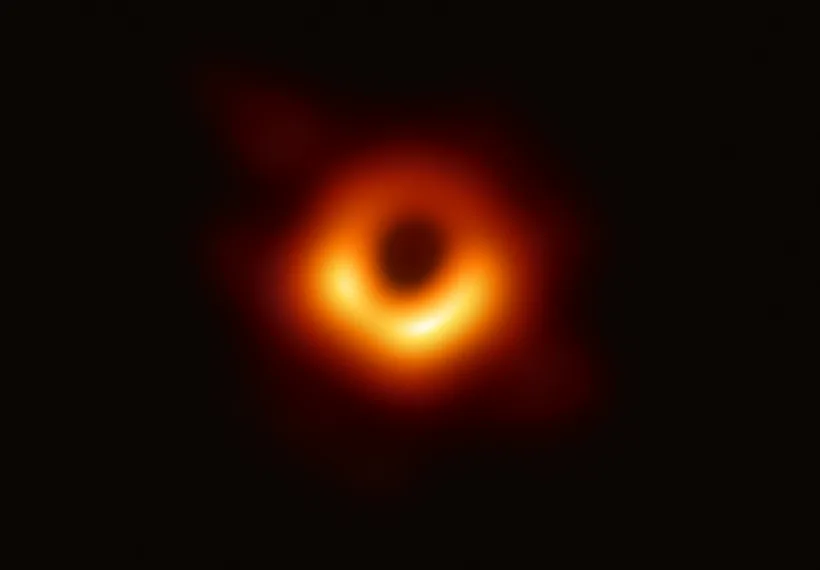
Well, I think we should talk about LIGO, but I think Event Horizon Telescope, which took that image of the black hole at the center of M87, which is a galaxy 55 million light years away, and they imaged as close to the event horizon as is essentially conceivable, given the realities of…
The resolution was there, yes, that’s right.
Yeah.
So for taking that photo, the photo of a black hole, okay.
Conceivable.
So even, so it’s interesting, if you look at the Nobel Prize announcement for this prize, they say about Roger Penrose for his contribution to understanding black holes, and they explicitly say that, but for Angiergez and Genzel, when they’re talking about the supermassive black hole, they don’t name it.
They say for their discoveries of a compact object at the center of the galaxy.
They won’t call it a black hole.
They won’t call it a black hole?
Yo, let me just say, that’s racist.
Yo, that’s some racist stuff I ever heard, all right?
You are crazy.
That ain’t right.
If anything has a tinge of it, Chuck is all up in it.
He’s going to call it out.
Okay, thank you, Chuck, for calling out the racist ways of the Nobel Prize committee.
Well, the interesting reason why I suspect they did that is because so they’re looking at these orbits of these stars, right, around this dark object that we know it’s really heavy and really small, and by rights we should call a black hole.
But it doesn’t come near the event horizon.
It doesn’t come all the way close.
So I think the closest approach of the star is about a few times as close as a Neptune comes to the Sun.
And that’s very, very close when you’re talking about an object four million times the mass of the Sun.
But if it’s only 17 times as wide, it’s not that close.
You know what I mean?
Whereas Event Horizon Telescope is seeing stuff like right on it.
Okay, so Chuck, if they gave it to the Event Horizon Telescope and still didn’t call it a black hole, then you’ll have a good argument.
Then I got a case, right?
You got a case, we’ll take that to the Supreme Court.
Oh, by the way, one thing about the Event Horizon Telescope image, first of all, a zillion people participated in that, so they probably have to give the Nobel Prize organizationally, I would bet.
That’s a really interesting question.
It’s a reminder that today consortia make discoveries more so than individuals.
For LIGO, they gave it to three individuals.
Because they were at it long before LIGO was even LIGO.
Exactly, they were at it for 30, 40 years before other people joined, so that was different.
But some people also argue that it should be given a Nobel Peace Prize because here you have an international consortium that transcends all these nationalities, all of these political boards, all these languages, all of these cultural differences and come together and then give the work freely.
Then the work is free.
They don’t even monetize it.
So that’s an interesting argument.
It’s a form of peace, that’s exactly right.
A form of peace that scientists have known ever since the beginning as collaborations take us international.
A quick Event Horizon photo story.
So I used the Event Horizon photo for a tweet.
Can I tell you what that tweet was?
So, scientists, colon.
We’ve imaged a black hole in a galaxy, in the nucleus of a galaxy, 55 million light years away.
Public.
Ooh.
Scientists.
Humans are causing global warming.
Public.
I don’t…
That doesn’t agree with my philosophy.
Excellent.
How did that go down?
It was, you know, people…
It’s social media, so it goes every which way.
But the irony wasn’t lost on most people.
That’s brilliant.
That’s a brilliant tweet.
So Chuck, give it to me.
Let’s get to it.
Okay, so actually we’re going to start with a Patreon question from my son, because I actually am on Patreon, so he gets to ask, which is, can black holes tell us anything about the age of nearby stars or stars that are orbiting them?
Interesting.
Am I trying it or are you trying it, Neil?
I’ll try, and if I miss anything, you jump in.
Because I think there’s a lot of dimensions to the answer.
So a black hole as the endpoint of a star, of a dead star, that star didn’t live very long, you know, maybe half a million years tops.
So if you see a black hole, if it’s freshly made, then the thing that made the black hole itself was not all that old.
Half a million is not long in the history of the universe.
Not at all.
So black holes are the product of very high mass stars that have very short lives.
But once you make the black hole, it’s there, right?
So you’d have to have seen the black hole get made to then know how young it is.
But if the black hole is just hanging out, I don’t know that you can know how old it is just by observing.
Now, we know there’s an upper limit to how massive a black hole can get as the endpoint of a dying star.
But if you find a black hole that’s much more massive than that, then stuff happened after that or some other phenomenon went on that would have kept accumulating, kept eating.
And as it eats, it gets bigger and bigger and bigger.
So I don’t know that you can know precisely the age of a black hole, but you can get a sense of how long a black hole has been in town.
Yeah, I’m going to agree with you.
I’m going to say even more so, one of the big mysteries about the supermassive black holes that were acknowledged, although not by name, in this year’s Nobel Prize was that they’re so big.
And we definitely know those do not form as the end state of stellar collapse.
Something had to happen to make that thing so big.
So either it formed in the early universe, and this is something that’s really odd.
The bigger the black hole, the less dense the material you need to make it.
It’s very surprising.
So you could make a really big black hole out of the density of air under the right conditions, which really surprises people.
But if you make it from a star, it’s got to be incredibly dense.
So it could be that it was made in the early universe and not from stars at all, or it could be that it started as a smaller black hole and then went through a bunch of collisions and got bigger and collected other black holes and just amassed and amassed and amassed until it was this supermassive black hole at the center of the galaxy.
And that requires a lot of time and a lot of convergence.
And just to round this out, currently none of us in my field doubt the likelihood that every single large galaxy has a supermassive black hole in its core.
Initially it was hypothesized and then we had some early Hubble data and then some other data and then it was like, you know, this looks pretty endemic to what it is to be a galaxy at all.
And if you have colliding galaxies that merge, you’d expect the black holes to ultimately merge in the middle.
So I got you on that one.
But also, it’s still, I don’t know, I haven’t seen the latest in this, but when I last looked, there was still some uncertainty about whether the black hole nucleated the formation of a galaxy or whether the galaxy had mechanisms that funneled material to the center to then make the galaxy.
Because even if you have a billion solar mass black hole, which some galaxies do in their center, that is a tiny, it’s less than one tenth of one percent of the mass of the whole galaxy.
So as ferocious as that sounds, the total galaxy wins, if you’re on a balancing sheet.
Absolutely.
So you might have thought, oh, even if it’s true that all of these galaxies have these supermassive black holes, there’s such a small percentage in terms of the mass, they’re probably not influential on the galaxy, who cares?
But it actually turns out that’s not the case because they can blow these gigantic winds, they could have been very active in their early history and been like quasars, they could have sculpted the entire galaxy, they could have regulated the size, the shape, the number of stars that form.
So they might actually have incredible agency despite their smaller fraction in terms of mass.
And is that because in the formation of the black hole that it is spewing out materials in order for it to become what it becomes?
Yeah, in the early days it was reeking, it was blowing out these jets, you know, and it was just, it was like imagine these winds, there are black holes whose jets are so strong that they’re puncturing neighboring galaxies and basically wiping out any planetary life in those galaxies.
The galaxies just get into a fight, that’s all.
You’re not understanding the dynamics of this.
So the Nobel for exoplanets is in a fight for the Nobel over the same amount of black holes.
But the point is you only get to see all this if there’s material in the vicinity of a black hole for it to do that to.
If a black hole completely ate everything in its vicinity, then all these mechanisms shut off.
Then there’s nothing to see.
Right.
Wow.
God, that’s so cool.
All right.
Keep it coming, Chuck.
Here we go.
This is Liam Pendergrass also from Patreon.
What opportunities for future research into black holes are created as a result of this particular prize being awarded?
So is there anything new that came out of this that may spur further discovery?
Let me lead something here, and then I’m going to hand off to Janna.
Because the Nobel Prize is essentially always delayed from the discovery itself, it’s not clear whether the prize itself is stimulating more research, because the original research already did that.
So the original search was already in…
We already knew it was important.
The best kind of prize is the one that affirms what you already knew.
And in this case, like Janna said, we knew Roger Penrose was brilliant.
We knew he had influential papers.
We knew the supermassive black holes in the centers of galaxies.
That’s a long-standing project.
So that did trigger other interesting projects.
Let’s look at other galaxies to see if they have supermassive black holes with the next most powerful telescope.
But Janna, do you think the act of getting a prize itself changes any of that landscape?
Gosh, I think I’m with you.
I don’t think the act of getting a prize does.
I think it might affect generations that are just on the rise.
Like, you know, your son, Chuck, asked a question, inspired because we were talking about the Nobel Prize.
Who knows?
Maybe that’s going to affect your son’s interest in science.
I mean, for the scientists who are practicing now, I would say, no, not so much.
But it does have that effect, I think, for the younger generation.
Excellent point, because it’s Black Holes are in the news now for a whole other reason.
There’s a celebration with a big fat check associated.
Because in America, money talks.
Well, I’m glad to hear you say that, because for his research club, Black Holes are his focus.
So I’m going to ask you to talk to him.
By the way, kids love my clothes.
I don’t care.
We’re totally cheating.
Do the mother kids.
I’ll be like, my son has Neil deGrasse Tyson and Janna Levin.
I don’t give a damn.
Sorry.
That’s how the cookies crumble.
That’s how the cookies crumble.
What can we say?
But it’s an interesting point, Janna, that if it’s another reason to talk about something in the context of it having been a celebrated result rather than just a highly respected result, that definitely adds a societal force on this.
I agree with you there entirely.
And it’s interesting that a lot of these Nobel Prizes are connected.
So for instance, the supermassive black hole at the center of the galaxy also has littler black holes orbiting it.
And they did form from the end state of gravitational collapse.
Now, littler might be 30, 60 times the mass of the Sun.
And so LIGO, which is the experiment that you mentioned earlier, Neil, that got the Nobel Prize, what was it, to 2016, 2017?
2017, they’re detecting the collision of two black holes that are more around 50, 60 times the mass of the Sun each.
And they might be doing that near a supermassive black hole.
And so these are all connected discoveries.
And so some of the ones that LIGO is beginning to, and I don’t want to say observe, but really listen to, because LIGO doesn’t take pictures, LIGO listens to the resonance of space around these orbiting mallets, we’re starting to think that maybe those, in fact, really are coming from galactic centers.
So there could be 20,000, 40,000 black holes around the center of our own galaxy that are just smaller ones.
Well, all I can say to that is, there goes the neighborhood.
Black holes coming in.
And they’re gathering and becoming bigger.
They’re going to destroy your neighborhood.
I’m letting you know this.
And they get together, and they get bigger.
And they’re getting bigger.
So Chuck, we just blew that whole segment on your son’s question.
Oh, well, totally worth it.
Okay, so when we come back, we’re picking up StarTalk Cosmic Queries with Janna Levin.
We’re talking about black holes.
We’re back, StarTalk, Cosmic Queries.
Chuck Nice, with me always.
Always a pleasure.
And you’re tweeting at Chuck Nice Comic.
Thank you, yes I am, sir.
And we’re talking black holes today, so of course that means Janna Levin is in the house.
And Janna, you’re tweeting at what?
Janna Levin.
At Janna Levin.
And that’s a Janna with two Ns, we gotcha.
Yeah, yeah.
I like an extra consonant, you know, just, I lose one, his one drops off.
Janna Levin has three Ns in it, just to let the record show.
Yeah.
That’s funny.
Yeah, what is it, 40% of the letter is in your name?
So this is Cosmic Queries.
So Chuck, keep coming at us with these questions.
I’m staying with you.
This one is from your wife now, right?
You’re the whole family.
So this one is from Grandmom Eugenio Barno.
This is Eugenio Barrera says, hey Chuck, Neil, Janna, how are you?
After years of following you guys on YouTube, I finally pulled the trigger on being a Patreon and I’m glad I did because now I get my question read.
Yeah.
And he says, I was wondering if black holes have the gravitational pull to affect light, does it also alter its speed so it bends light?
Does it slow it down when it bends it?
So interesting.
Interesting question.
Neil, what do you think?
Wanna try this one?
I would just say no.
Okay, next question.
But there’s a really subtle example that I think illustrates how bizarre it is.
So because the event horizon is by definition the place at which light cannot escape, you could ask, well, what happens to light at the event horizon then if it can’t escape?
And so you could just drop a little beam of light, a little bundle of light, and let’s call it a photon, and it would sit there at the event horizon.
It would not move.
It’s actually a completely, not stable, unstable, but a place where it can be.
However, you can’t sit there and not move.
So if you’re falling across the black hole event horizon and you fall past that little piece of light, you go, oh, it’s moving at the speed of light.
But nobody can say it’s not, because nobody could stay there with it, because you’d have to be traveling at the speed of light to stay there with it.
So when you fall into the event horizon, it looks to you.
This is Janna in Wonderland.
Not Alice in Wonderland.
It’s Janna in Wonderland.
That is a rabbit black hole if I ever heard one, man.
Well, the other way to think about it is it’s like a salmon swimming up the Niagara, like swimming upstream, and the waterfall of space time is just falling in so rapidly that it effectively stands still.
But nobody can stand still with it.
Everybody else is gone with the waterfall.
Right, right, right.
So everyone else, if they try to measure the speed of light, is like, oh yeah, it’s traveling at the speed of light.
It’s nearly 300,000 kilometers a second.
Nobody says it’s standing still.
But technically, it’s sitting right there at the event horizon.
That’s so-
But it’s still trying to get out.
It’s still trying to get out.
It’s trying like hell to get out.
But it, oh, that is so freaky.
Trying like hell to get out.
Yeah, that’s freaky.
So now, so what’s the observation outside of the black hole?
What are we seeing?
Is it just sitting there?
You just gotta see that photon because it never gets to you.
When you say, what do I see?
The only way you see something is if the light hits your eye.
Right, so, but you can’t do it because it’s stuck there.
So you don’t see it.
So it’s dark.
So the light horizon is dark.
It’s a black hole.
That’s crazy.
And another, just to add another point there.
Right, you will only see that photon if that photon enters your eye.
Right, so therefore you have no ideas even there.
This was my issue with Star Trek, right?
They have these phasers that, no, the phasers, right?
When it shoots lasers at another ship, okay?
In the vacuum of space.
Those are phasers, and then they have photon torpedoes.
Photon torpedoes.
So they’re sending this in a direction towards the ship, but the camera view is from the side.
But you see this like…
You see it, but no, no, it’s sending this energy to the ship, there’s no way you would see that laser going to the ship, there’s just no way.
Unless it’s sending light in your direction, but that wouldn’t be an efficient weapon.
Or like you make, yeah, or you make like a gas cloud and it scatters.
Oh yeah, yeah, yeah, okay.
You can make like a fog chamber, you have to make a fog machine.
You hit the chalkboard erasers together.
Right.
All right, Chuck, give me some more.
All right.
We now know Janna is a cousin of Alice in Wonderland.
This is from, Biscivi, Biscivi.
Cool.
We’ll go with that.
I’m gonna go with it.
I’m going with that.
Says, what did Roger Penrose do that wasn’t already done by Einstein and Schwarzschild before?
Little bit of a hater here.
Little bit of a hater.
So I think, Janna, you hinted to some of that.
Yeah.
But why wasn’t Einstein’s solution or the Schwarzschild solution inevitable?
What is the different thing that Penrose did to make it a natural end state?
Well, in the simplest terms, he was able to show that generically without assuming any special properties, like something’s a perfect sphere.
It could have been an oblong kidney shaped eggplant thing.
Doesn’t matter.
If it collapses, he was able to prove it would inevitably form that event horizon and within that event horizon, inevitably would be the singularity.
And one way to think about this, which I think is really profound, is he was able to show that all paths of light, and this is technically one of the ways that he did it, point towards the singularity.
Technically what that means is that the singularity is in the future.
We look at a black hole, we think of a spherical thing with a center point that says point singularity in space.
What Roger Penrose showed is the singularity is not in space.
It’s in the future once you’re inside that black hole.
And so nobody who enters the black hole can do anything but plunge into that singularity.
You can no more avoid the singularity than you can avoid the next moment in time.
Okay, so, wow, that’s…
Like I said, Alice in Wonderland, there it is, that’s what, like I said.
Dad, come on, you know, give me a second, I’m gonna go pour myself a little vodka and we’re gonna come back and talk about this.
We’re definitely missing some mind-altering forces.
Wow.
So, Janna.
We’re gonna have our after party Zoom link.
Wait, so, Janna, just to, if I understand what you’re saying, if all light beams go to the singularity, then all possible paths into your future as you fall in would go to that singularity, because you can’t take a path that’s not the path that the light takes.
That’s right.
So basically what it says is if I should, it basically says if you’re going slower than the speed of light, you are definitely going into that singularity, because the only way you could not go into that singularity is if you went faster than the speed of light, and you can’t do that.
Right.
So, the technical language would be, just because it’s sometimes poetic to hear it, it’s not necessarily edifying, but it’s poetic, is that he proved that all of the future light cones pointed towards the singularity.
That’s what he showed.
There’s one figure in this paper in 1964 where he draws it all out.
I’m telling you, it’s just the most beautiful, it’s all compact, it’s all right there in this one picture where he just shows that this absolutely is inevitable, that the black hole singularity forms, and that it is in the future of any path on the interior of the black hole.
All right, Chuck, keep it coming.
Okay, all right.
This is Izzy Rohr.
Says, hi Neil, Chuck, Janna, it’s Violetta, my mom Izzy.
I’m 12 years old from Birmingham, Alabama, and I love all things astrophysical.
Professor Guest says that the data collected, which ultimately proved the existence of Sagittarius A, are consistent with Einstein’s general theory of relativity, while absolutely 100% not consistent with Newton’s law of gravity.
And even then, she said that Einstein is right, at least for now.
My questions are, how can something, a major thing like this in the cosmos, abide by general relativity, and yet not follow one of the most basic and fundamental laws of physics?
Does this mean we will need to discover a new law of gravity?
And does this mean general relativity needs to be upgraded or expanded upon?
PS.
Janna, you are the first woman astrophysicist I ever saw in an episode of StarTalk a few years back, and you have inspired me so much ever since.
Thank you for rocking science so hard for girls and kids like me all over the cosmos.
And by the way, none of that question impressed me like the way the question began, because she knew that the word data is plural.
These data show, these data are.
So if you know that, you’re ready for any kind of science or career.
Well, I was so flattered and flushed that I forgot the question.
Oh, but I think I got it.
It’s actually…
I think if it violates Newton’s laws, how is that possible if Newton’s laws apply across the universe, but it satisfies Einstein’s laws?
Yeah, so I liken it this way.
Just because Newton’s laws aren’t all encompassing doesn’t mean the laws are like wrong.
They’re not dead wrong.
And I sometimes try to explain it this way.
If you thought English was the only language in the universe, and then you discovered there was this broader concept called language, wouldn’t it make English wrong?
English is not useful.
It just has a limited range of validity.
It doesn’t help you with French.
Or Arabic, or whatever other language.
It turns out that there are extensions that’s a much bigger umbrella, which is this concept of language.
So to a certain extent, in its limited range of validity, Newtonian physics is great.
Works terrific.
It just doesn’t work everywhere all the time.
It’s just not big enough.
It’s not that it’s wrong.
It’s just a subset of a larger concept.
So the first thing that Einstein did when he was trying to test his own theory was exactly to make sure he matched, he respected Newton, that he respected Newtonian dynamics in its range of validity, which would be when you’re not moving very quickly, when you’re around big things like the Earth, when you’re moving slowly, it should look like Newton said it should.
So it’s not as though when I drop an apple it no longer does what I used to think it does just because of general relativity.
So what you’re also saying there is that if you take Einstein’s equations and put in low gravity and low speeds, they become Newton’s equations.
That’s right.
They become very close approximations to Newton’s equations.
Exactly.
Okay, so they’re still in the same sandbox.
The sandbox is bigger now.
Yeah, the sandbox just got, I mean, Newton never considered, well, what happens if I crush the earth to a point?
Or what happens if I was going near this pit of light?
And those were exactly the kind of thoughts, experiments, the kind of fantasies that led Einstein to realize that, oh, Newtonian mechanics would slowly look different than we presume it is, and we would start to learn that there are generalizations that start to look very different in certain extreme circumstances.
All right, Chuck, we only have like a couple of minutes left.
Give me…
See if we can squeeze two in here.
And Janna, sound bite answers.
Okay, go.
All right, here we go.
Cameron Bishop says singularities or ringularities?
I just got to know what we know about the geometry at the center of a black hole.
Yeah, what’s a ringularity, Janna?
Oh, in a spinning black hole, it turns out that the singularity has a different geometry than it does in what Schwarzschild considered, which was just kind of a perfect…
Well, implosion.
But I think that…
Is it a doughnut?
And wouldn’t most black holes then be spinning black holes?
Yes, most black holes are spinning black holes.
Yeah, absolutely.
And when things collapse, just like an ice skater pulling in her arms, they tend to spin faster and faster.
So we do believe that black holes are likely spinning.
But most, to be honest, most astrophysicists and theoretical physicists believe that the singularity is where general relativity will break down, kind of connected to your previous question.
We believe that there’s another theory that will make us understand that singularities actually don’t exist.
And that they’re signaling, they’re telling us, this isn’t working anymore.
This is breaking down.
As has been said, the singularity is where God is dividing by zero.
Which is, that’s a no-no.
No, seriously, you’re now going to have a cult.
You can’t say stuff like that, you know?
Come to where God divides by zero.
On November 3rd, God is dividing by zero.
Another one, quick, Chuck, give it to me.
All right, very quickly.
This is Sam Axe.
Sam says this, if you were to throw some anti-matter into a black hole, would that shrink it or make it bigger?
So, a lot of people have a misconception that anti-matter has negative energy or negative mass, but it doesn’t.
There’s really not to store knowledge anything with negative mass.
So, if you have an electron, its anti-particle has opposite every other quantum number.
For instance, if the electron is negatively charged, the positron is positively charged, but they both have the same mass.
So mass and energy is what matters when it goes into a black hole.
You might change the charge of the black hole, but you’re just going to make its mass go up.
It’s going to get heavier.
So, yeah, so antimatter is not some panacea for undoing the universe and the damage that gravity has done.
Yeah.
Guys, I think we got to call it quits there.
We’re out of time.
Man.
Damn.
Always so good.
It’s always so good with Janna Levin.
Janna, I have…
I miss you guys.
I hear rumors that you’re working on another book.
I just…
There’s just rumors.
I’m just saying.
There’s just rumors.
Okay.
When the book comes out, can we bring it back?
The Black Hole Survival Guide.
Oh, we need that.
Well, we got to bring it back for that.
Can we bring it back?
I’d love that.
Okay.
We’ll talk about your book.
And we’ll bring it back soon.
I think your book is coming out even just in a few weeks.
So, all right, Chuck.
Always good to have you.
Always a pleasure.
Janna, we love you here at StarTalk, and thanks for always accepting our invitations.
This has been StarTalk Cosmic Queries, the Black Hole Nobel Prize edition, of course, with Janna Levin and Neil deGrasse Tyson.
You’re a personal astrophysicist.
Cheers.

 Become a Patron