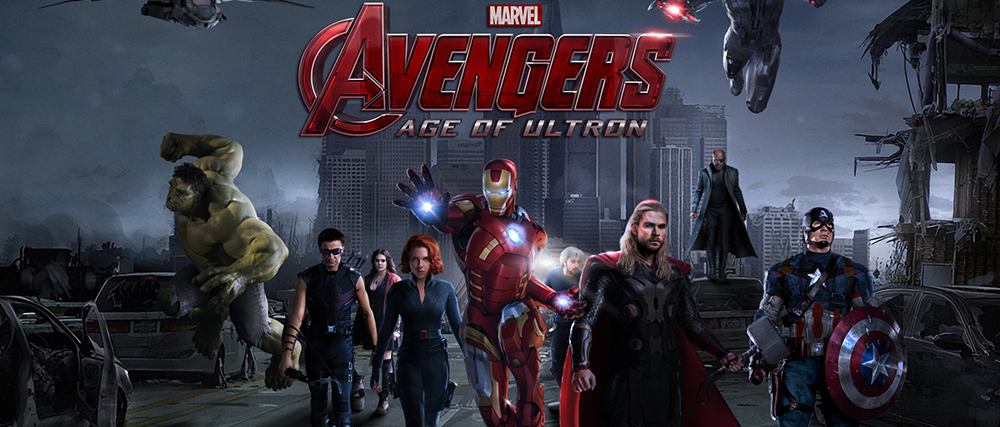
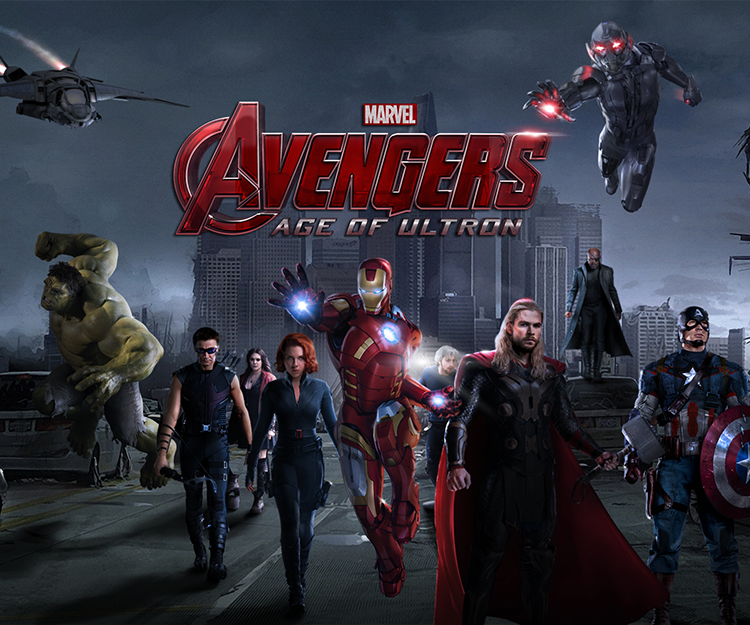
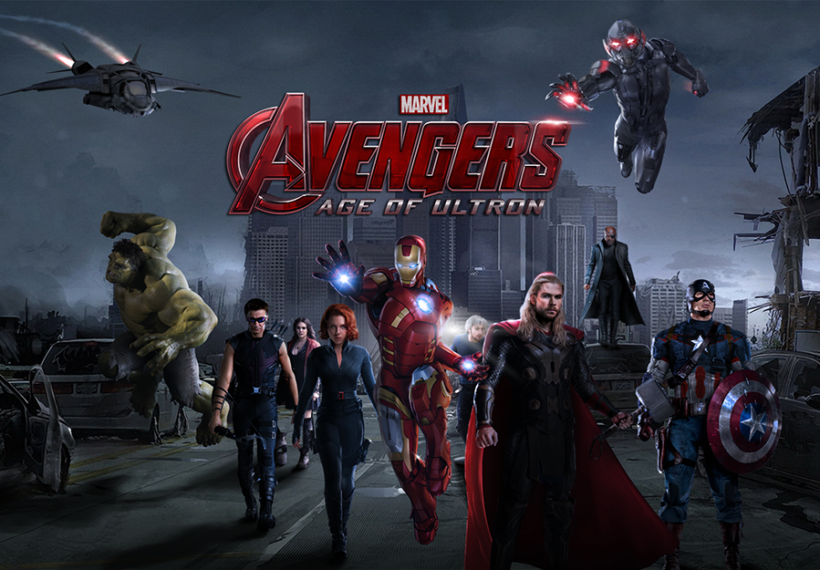
Would Superman survive spaghettification within a black hole? What about Mr. Fantastic? Can Magneto control the magnetic field of the Sun and tear apart stars? Could an alien race with enough power create controlled wormholes like the Rainbow Bridge in Thor? Tune in for the answers to these and other Cosmic Queries when host Neil deGrasse Tyson and comic co-host Colin Jost (co-anchor of Saturday Night Live’s Weekend Update) get their geek on, comic book style. Neil injects a dose of physics into Iron Man’s ARC reactor, Captain America’s super strength and the feasibility of Superman gaining power from Earth’s “yellow sun.” You’ll explore Wolverine’s healing factor and adamantium skeleton, cyborgs, the Terminator, nanobots and nanotechnology. Find out why Colin wants to be Wolverine and Neil would choose Batman – even though he really wanted to be Mighty Mouse as a kid.
NOTE: All-Access subscribers can listen to this entire episode commercial-free here: Cosmic Queries: Superheroes.
Transcript
DOWNLOAD SRT
Welcome to StarTalk, your place in the universe where science and pop culture collide. StarTalk begins right now. Welcome to StarTalk Radio. I'm your host, Neil deGrasse Tyson. I'm an astrophysicist with the American Museum of Natural History in New...
Welcome to StarTalk, your place in the universe where science and pop culture collide.
StarTalk begins right now.
Welcome to StarTalk Radio.
I'm your host, Neil deGrasse Tyson.
I'm an astrophysicist with the American Museum of Natural History in New York City, where I also serve as the Frederick P.
Rose Director of the Hayden Planetarium.
And here we are entering the Cosmic Queries portion of StarTalk Radio.
Now, the Cosmic Queries section, I don't do that alone.
We get questions that come from every conduit through the internet, from Facebook, from the tweets, on our website, and I troll the streets and found Colin Jost walking among them.
That's right.
Colin, welcome.
You know, the last time I had you on, I called you Colin.
Yeah, I know, I remember.
Yeah, I'm sorry.
I like how little faith you have in my mom.
She would name me after like the least appealing part of a body.
And you were so polite to not correct me on it.
So certainly Colin Jost, and you're a lifetime guy in the world of comedy, right?
I've been doing it, yeah.
I've been an SNL player and been doing standup too.
And man, but you're not that old.
So you've had quite a resume in these years.
No, maybe time traveler.
I don't know.
You know, I'm old enough to like remember the first episodes of Saturday Night Live, back before it was called Saturday Night Live.
This is like forties.
Exactly.
In fact, it was just called Saturday Night, which is why they begin live from New York.
It's Saturday night.
And it predates that day of the week, right?
There wasn't even that day of the week.
And then they were like, we should name this whole day Saturday.
Because the show needs a place to air, right?
There you go.
So thanks for joining me for this StarTalk Cosmic Queries.
It's a delight to be here.
So now I don't claim any personal expertise on superheroes, but I do know physics and astrophysics.
So let's see what we can offer.
Yeah.
The spate of questions that have just arisen.
So what do you got for me?
Here's right off the bat, here's one from Google Plus from Nathaniel Dorn.
I'm a big X-Men guy, so I'm very curious about this.
If you were Magneto, what would be the coolest thing you would do with your power over magnetism?
This is really more of a wish fulfillment question for you rather than a science question.
Oh, wow.
Magnetism, power of magnets.
You know what I would do?
I would clone myself and put one of each of me on the interplanetary voyages of the astronauts and create a magnetic field around the spaceship to shield it from harmful solar particles.
No, but see, that presupposes you can also clone yourself.
I feel like that's a whole other step first.
Oh, so the magnetic, control over magnetic fields, that's the easy one to accept, but not the cloning.
I can't give you every power.
Oh, my gosh.
Even magic has its limits.
So the big challenge today is when you leave the magnetic blanket of the earth, the earth has its magnetosphere, which extends not quite to the moon.
And so if you're in earth orbit, you're protected from it.
Sorry, you're within the protective blanket of earth's magnetic field and charged particles from the sun, which would otherwise harm your DNA, get channeled to the poles away from you.
And it collides with molecules in earth's atmosphere and it renders the atmosphere of glow becoming the aurora borealis.
The northern lights and the aurora australis, the southern lights.
I didn't know it was called the aurora australis.
Got to call it.
Yeah, yeah, the borealis and the australis.
I would have thought it would have been like Antarctica or something.
Oh, okay, there'd be aurora arcticus.
Arcticus.
No, that was a guy from Rome.
I am aurora arcticus, you are my subjects.
Someone brought up too that Magneto as a controller of all things magnetic could theoretically just tear the universe apart.
Is that accurate?
No.
Next question.
Well, the universe is not magnetic, I'm sorry.
Well, what's the most damage, like, you know, long-term, wide-reaching damage they could do?
Okay, the way they've written his character in the comic books is that he's controlling metal because metal is the obvious magnetic.
Of course, yeah.
But if I remember my chemistry, if you super cool certain gases down into a liquefied state, you can have liquefied magnetic materials.
So he could combine with Iceman.
Oh, that would be cool.
You know what I mean?
Oh, wow, yeah, but not only that.
That might be a good plot line.
Plasma, plasma, which is what the sun is made of, which is essentially the contents of flame, but the sun makes a better example for what I'm about to describe.
A plasma is a gas that's so hot that the electrons in the outer layers of the atoms have escaped and they're running, they're roaming free in the gas.
And that means that the gas can respond to magnetic fields.
So the sun has a very powerful magnetic field and it's plasma.
And so here's this gas trying to rotate with the sun and the magnetic field gets trapped in the rotating gas and gets wound up on itself and it busts through the sun's surface every now and then.
In fact, it's on a cycle of 11 years and you get solar storms and sunspots and solar flares and prominences.
All of this is magnetic activity.
So a magneto would not be limited to metal.
Magneto could totally tear a new one in a star because he can interact with the magnetic fields that control where those gases appear and what they do.
I think you just wrote the Latinx 12 issues of magneto for them.
Okay, here's the next question from Twitter from Jimmy B at HeyJimmyB.
Could Superman survive the spaghettification of a black hole and the force required to escape it?
Obviously, he's known to be traveling faster than the speed of light.
Yeah, so, okay.
Well, Superman, in Superman 1, what's the one where he went back in time to save Lois Lane?
Oh, where he traveled, where he spent.
Yeah, it is 1, right?
Yeah, Superman 1, he, in order to fly around the earth that fast, he's going faster than light.
So that establishes that.
So it's real.
So it's real.
That makes it legit.
So yeah, actually, if you can actually travel faster than light, you can just climb out of a black hole.
Nothing will stop you.
However, the journey down to the singularity would, as sure as night follows day, would spaghettify him.
He would be ripped apart head to toe.
Yes, he's made of denser matter and can stop bullets.
And he's, yes, but if his material is of this universe, he is not resistant to the power of gravity on that scale.
And you'd have a totally spaghettified Superman.
Whoa.
And just to go over what spaghettification is, oh, we only have 20 seconds left in this.
So he needs a, he needs to pair with Wolverine who has a healing power.
So if he got out of it, he could reunite his particles.
We'll find out when we come back in the next segment on StarTalk Radio, the Cosmic Query section.
We'll see you in a moment.
This is StarTalk Radio.
I'm your host, astrophysicist, Neil deGrasse Tyson, and we are in the Cosmic Queries section.
Helping me is Colin Jost.
Colin, welcome to StarTalk Radio.
Thank you very much.
We left off the last segment.
Talking about spaghettification.
Spaghettifying Superman.
Yeah, which is a real, that sounds like a classic Italian dish.
What is spaghettification?
It's when you're being sucked in, the particles are being ripped apart.
Yeah, so what happens is as you get closer to the center of a black hole, the field of gravity at your feet becomes insanely higher than the field of gravity at your head.
This is a feet first dive into the black hole.
And the consequence of this is that your feet will accelerate towards the black hole faster than your head will.
And initially that, you know, you're just stretching and maybe might even feel good, but there's a point where that stretching force, it's officially the tidal force, the same force that makes the tides on earth is what rips you apart as you fall into a black hole.
That tidal force eventually exceeds the binding force of the molecules of your flesh.
At the point-
Which sounds bad.
Because it is bad.
And when that happens, you snap into two pieces on your way down.
And this difference in force continues.
Your upper half and your lower half each feel this difference in force.
And they then rip into a pair of pieces each.
Now you're four segments, and then eight, and then 16, 32, and you run the series down.
There'll be a point where you will be a stream of atoms descending impossibly towards the center of this abyss.
If Superman is made of materials of this universe, whether or not he is of this earth, if it is of this universe, he is subjected to those same laws of physics, and he will be spaghettified just as day follows night.
But then what if he were basically took on the powers of a worm who's able to, you know, you could segment them and they would still live different pieces, would then there be a bunch of supermen out there?
Here's the problem, when you cut up a worm, each segment of the worm still has a full genetic code for what the whole worm was.
When you spaghettify, you are just atoms.
Oh, okay, so it's not even.
Yeah, the hydrogen atom that got yanked off of your DNA molecule does not remember the DNA molecule from which it came.
Yeah, you're a host.
And then so what about Mr.
Fantastic, the rubber guy?
Oh, the rubber dude.
Because then how would he go in a black guy?
Oh, in a Fantastic Four, ooh.
Or who's the woman in The Incredibles?
Oh, yeah, right.
Was it Elastic Woman?
Elastic Girl, Rubber Girl.
Elastic, so Elastic Girl, yeah, anybody who's stretchable in principle might be immune to this.
The question is.
But they have to then travel faster than the speed of light.
Well, to get out.
If they want to get out, you gotta travel faster than lights.
We've established that Superman can do that.
So we would send Superman into a black hole until he was ready to snap into two pieces, then he flies his way back out again.
Gotcha.
And that'd be cool.
Or Superman has a baby with this elastic girl, right?
Ooh.
Which we all have been fantasizing.
Wow.
Have you been fantasizing about being with Elastic Girl or fantasizing with Superman with Elastic Girl?
I just wanna watch.
And I don't even know how old Elastic Girl is.
Maybe that's inappropriate for me to say.
So this seems, this is the next question.
This is from Jeffrey Williams on Facebook.
And it says, the character of Captain America seems to be the closest to reality.
I don't know what that means, but I guess of the Avengers, say.
No, Batman is, Batman.
Yes.
Batman's a regular guy.
He's regular, but of a someone that has superhuman powers.
Do you believe there are currently experiments happening that are trying to increase the capacities of the human genome, example, super strength, increased visual acuity, heightened stamina, et cetera, and he also wants to know if these experiments are going on, are they morally correct?
I'm not authorized to comment on that.
Next question.
No, so I can say a couple of things.
First, you can't just take a guy that has normal looking muscles and make them 10 times stronger.
If the muscles are, if it's made of muscle tissue, because the physics of strength correlates with the cross sectional area of your muscle.
So in other words, the reason why when you work out, your muscles get bigger is because they're getting stronger.
It's a direct correspondence between the strength of your muscle and how big it is.
There's some variation in there, like are you in good shape?
So you can be slender and still be stronger than someone else who's slender, but who's not in shape.
Cause aren't there varying muscle densities that people have too?
Sure, but not so, we're all human at the end of the day.
We're all human.
And so muscle size correlates with muscle strength.
So you can't have a Captain America who he had a good body, no, you know, he turned heads in a fitness center, but the strength of those muscles are not such that he would have the strength exhibited by any genetic manipulation at all.
It's just not, no, unless-
So you couldn't genetically alter the say density or efficiency of muscles.
Not in have it still be biological matter.
You'd have to, in fact, just replace the muscle with some other material.
Make it more cyborg-y?
Yeah, just cyborg them out.
Oh yeah, then you're good to go.
So to rely on our feeble biology to improve in strength, I think is not the right way to go if you wanna make a better human.
Not only that, and try to improve your sight, there's a limit to how dim you can see because of the size of the iris in your eyeball.
Right, like we were talking about the size of the eyeball.
Back in the telescope show, I had you in the studio for the telescope show.
Bigger telescopes see dimmer things.
It's that simple.
And so people said, oh, can cats see in the dark?
How big is their eyeball?
If it's not bigger than your eyeball and we all have retina in the back as detectors, no, they might do a little better, but they're not gonna do much better than you, all right?
So unless they had huge eyeballs.
There are no owls.
Right, exactly.
And this, another question here from Sean Karp on Facebook is would it be possible to do an embedded metal skeleton with optional deployable weapons, a la Wolverine?
Could you do that?
Now, here's the problem.
So if we replace your bones, which are already pretty strong, with some kind of metal.
Adamantium, for instance.
Adamantium.
Adamantium, yeah.
I forgot about it, okay, right, this is what I want.
So if you replace that with some kind of super alloy metal, you're still susceptible to tissue damage, right?
What you're describing is the Terminator.
Right.
That's the Terminator.
You could still stab him and he'd still bleed.
So you still suffer tissue damage, but you're not knocking him down.
Right.
Because he's got that super alloy metal for bones.
Sure, I don't see why you couldn't work that.
Yeah, but then you still could, you know, if you don't have a healing factor, the healing power, then you're-
You'll just be this bloody mess at the end of the day.
You'll be alive and bloody.
Like when he was repairing himself in the hotel room in Terminator.
Exactly, when he was-
The guy knocks on the door and he looks for a response.
And he says, go away.
Ha ha ha ha.
Except a little more colorfully.
Yeah, so, and he's got flies and stuff.
Yeah, cause he's got biological tissue.
Keep in mind that for the human body to work, you'd have to graft the tissue onto the metal.
Our muscles connect to tendons that connect to ligaments that attach to your bones.
So it works biologically in order to get foreign material in there, you're gonna have to attach it all some other kind of way.
And now what about, now this is, I've read articles too about the rise of nanotechnology where theoretically one day we'll have tiny robots in our bloodstream that will just sort of rebuild cells.
Is there any, do you ever think that's?
That'd be cool.
Yeah, I mean, a nanobot would be smaller than what a cell would identify as being a hostile invader.
And so it would just be able to do anything it needs to do.
I don't see why we can't manage that, but I'd rather do it from the outside.
Why get all a fantastic voyage on us and just have some kind of device that beams through your skin and lands at the tumor and cures the tumor?
I mean, why?
All right, I'll do that, I'll just do that.
But I'm a bot fan from way back, so.
Good.
Yeah.
So you won't stop me.
I won't.
Well, by the way, and Thor, to lift the nuclear matter that is his hammer, but he's an alien.
So aliens, you know.
That's a whole other thing, right.
It's a different.
Do you have, can I ask, do you have a favorite superhero or one that you're most impressed by their construction or what the physics of them are?
I like Batman, cause he's a regular, I can be Batman.
He's a regular.
I can be Batman.
Right.
And who doesn't like the gadgets, all right?
And who doesn't like the car?
So he's got the best car of any of them.
I guess cause they can fly, they don't need a car.
But you gotta like the car.
As phallic as it is, nonetheless, he's got cool things that the car can do.
And so the car is an extension of his utility belt in terms of its coolness factor.
So for me, I'd have to be Batman, but as a kid, I don't know if I told you this directly, I wanted to be Mighty Mouse.
Really?
In a way, just...
Cause I wanted to save women who were mean people were trying to harm them.
And I wanted to sing opera while I was doing it.
Here I come to save the day.
Yeah.
No, I just, I somehow resonated with that character.
I don't know why.
That is a great combination.
I had not would have thought is saving women and singing opera.
Yeah, and he could fly and other things were bigger than him, but he had strength beyond what you would expect.
So I just felt good about...
You wrestled, right?
You were...
I used to wrestle, but we'll get back to that.
So we're in the Cosmic Queries part of StarTalk Radio.
I'm Neil deGrasse Tyson.
Join us again for our next segment coming right up.
We're in the Cosmic Queries part of StarTalk Radio.
I'm Neil deGrasse Tyson, your resident astrophysicist, here with Colin Jost, a resonant comic.
Colin, welcome.
Yes, thank you for having me.
These are Cosmic Queries on our superhero show.
Yeah, this is kind of an exciting.
Yeah, I thought so.
And you, just before the break, one of the questions was, what superhero would I, do I most resonate with?
And I said, I think Batman, just cause he's real.
And his toys are fantasy-like, but they're in reach, curiously, right?
They're justifiable with technology.
Justifiable extrapolations of what we know today.
And I confess that in childhood, I totally was digging Mighty Mouse.
Yeah, and I was asking, is that part of what got you into wrestling?
Was it Mighty Mouse?
Oh, I did wrestle in high school, college, and a little bit of graduate school.
No, cause when I'm wrestling, I'm not thinking I'm doing it to win the heart of a woman.
I'm just doing it just to do it.
I mean, it's a very personal thing, actually, cause if you lose, you just got beat.
Nobody to blame.
There's no team.
No team, and there's not some apparatus.
It's you, your muscles, your quickness, your smarts, and that's it.
So for me, it was the purest form of athletic contest.
So yeah, so what are the questions you got?
I gotta ask you, what superhero do you resonate with?
I mean, Wolverine for me is my favorite of all time.
I just, just his style.
And his attitude, he's so attitudinal.
It's great.
It's pretty awesome to get shot in the head and then just like kind of shake it off and see the bullet come out of your head and just drink a beer and be unshaven.
And I'm approximating the look as much as I can with his hair and not be shaving.
Is he the only superhero that drinks beer and goes unshaven?
I'm wondering.
I'm sure there are others in binges, but he seems like the most regular.
He's, yeah, he's, it's a reliable form of his character.
Yeah.
And I would feel more comfortable riding a motorcycle if I had a healing power and an adamantium skeleton, you know, then my mom might allow it.
Rather than be the organ donor that the rest of them are.
Right, exactly.
So this next question from Facebook from Eric Shaw is, if Superman needs the sun's rays for his strength, how does he still have powers at night?
Well, first, I didn't know he needed the sun's rays.
Oh, because he comes nearer to the yellow star.
Exactly.
Of course, the sun is actually white, but that's a separate conversation, in fact, for another show.
The sun is yellow when it's on the horizon when it's dim enough for you to notice and look at it without protection.
So sunsets are these beautiful yellow-orange colors.
In the middle of the day, when the sun is not crawling its way through the muck and mire of the super thick horizon depth atmosphere, the sun is not yellow, it's white.
That's the color of the sun, period.
If the sun were actually yellow, then white things would look yellow, by the way.
If you put yellow light on a white sheet of paper, the white sheet of paper is yellow.
So if the sun were yellow, then snow would look yellow.
But that's only near fire hydrants last night.
Check, so, no.
But so I don't see why he just doesn't have storage batteries to store up the energy from his daytime in the sun.
Maybe.
Why not?
Maybe.
Maybe he doesn't have powers, but at least the electric car he has, he can still putter around in.
Wait, Superman?
Yeah, maybe he's got a little solar power car.
A little solar power car that he gets.
You don't see him at night, he just goes.
That's where he recharges.
His Batmobile.
So it means, wait, Superman, if you send him to the Arctic, where there's six months of darkness, he'd be pretty ineffective.
That's the thing, yeah.
And isn't that his cave that he goes to?
Isn't that sort of, it looks pretty icy.
Oh, that's in the North Pole, oh my gosh.
Whoa.
Seems like the worst place for it, right?
The North Pole, for six months of the year, has no sunlight.
Seems like, why go there?
Of all places.
It should be an equator cave that he goes to.
It should be an equator cave, yes.
So if it's only his proximity to the sun, whether or not he's receiving sunlight, then he's still an earth distance from the sun.
So he's still getting some...
Getting whatever is the magic rays from the sun, whether or not it's the light.
Okay, so he's gonna be okay.
You think he'll be okay?
We don't have to worry about him.
So this is a question from Stephen King on Facebook, I assume, I hope.
God, I hope it's the real Stephen King.
Stephen King.
Is what is the likelihood of creating a real world arc reactor like an Iron Man, the kind of artificial arc reactor heart that he has?
What if any negative effects would be present if you were to house something like that within the human chest cavity?
Yeah, so I like that question.
So that's a huge, oh, by the way, so I resonate more with Batman than with Iron Man because the energy source for Iron Man is too remote for me to embrace that.
But if you, energy, it depends on how you store it.
If it's stored thermally, it would be very, very hot.
If you store it electromechanically, you'd have a lot of what are effectively wound up springs.
All right, there are many ways you can store energy.
You can store it chemically.
That's what you have in the form of gunpowder.
It's sitting there ready to explode, but it's not.
So it's energy built in chemically.
You can think of mechanically, you can think of thermally.
And so if it was thermally, it would eventually heat him up.
You wouldn't be able to insulate it perfectly.
And so that would be bad for him.
That'd be bad.
Is there a chemical way that you'd have in the way of a gunpowder where you would have a store of it and it would have small gradual reactions and parts of it?
The best way to do that is to have a repository of antimatter.
Keep it separate from the matter with some kind of magnetic bottle.
You can't put it in a regular bottle.
I'm just writing this down so I know how to do it later.
You're going back to your lab.
And where's the antimatter?
And then you would leak out little bits of it to merge with the matter, and then you'd have energy at your disposal, and there'd be no bad side effects.
More on antimatter when we come back to the Cosmic Queries part of StarTalk Radio, the subject Superheroes in a moment.
This is StarTalk Radio.
I'm your host, Neil deGrasse Tyson, astrophysicist.
Based in New York City, where we do most of our broadcasts, and I'm here in studio with Colin Jost, comedian extraordinaire.
That's the grandiose way of saying it.
Is that on your resume?
Comedian extraordinaire, there you go.
Yes, that's very, it's, yeah.
And verifiable too.
Yeah, I was before that, I was a journalist extraordinaire, and before that, I was a lifeguard extraordinaire.
And what did you major in in college?
I majored in the history and literature of Russia and Britain.
So I read some, lived in Russia for a little bit.
Very erudite, wow.
No, not that, I read some books, that's about it.
Okay, and there's a lot of comedic repository in British.
Yeah, Russia and Britain are two different ways to go about humor.
Yeah, oh yeah.
But one a lot darker than the other.
And one of our favorite friends of StarTalk is Eugene Merman.
Who has total 100% Russian.
I know, that's right.
I gotta talk to him in Russian sometime.
I don't know if he's still fluent.
Oh, okay, well, we can probably both have two lines and then end the conversation.
So, we have questions about superheroes right now.
Here's one, this is from Christian Demaria on Facebook.
And the question is, would it be possible for a sufficiently advanced race to develop controlled wormholes as a means of transportation similar to the rainbow bridge that Thor uses?
Yes, entirely.
We don't wield enough power over energy in the universe to just create wormholes on a whim.
If we did, and the kind of power that would require, if we harnessed all the energy produced in all the stars, all the several hundred billion stars of the Milky Way galaxy, that'd be enough to kind of do what we want to accomplish.
Which is to what?
To pierce through?
What you do is you use that much energy because energy and mass are the same thing.
So, if you wield that much energy, you can compress energy to smaller volumes than you can solid matter.
But they both will have the same effect on the fabric of space time because mass and energy are the same in relativity and in this universe.
They're the same in terms of their effect on the universe and on the gravitational fields of the universe.
So, you'd wield this, you'd pull it out of your pocket, you say, open me a wormhole right here.
And there it opens and you dial up coordinates in time and in place and you go through the wormhole, come out the other side and you can be anywhere in principle in the universe instantly.
One of my favorite scenes in the movie, what's the one where the Monsters, Inc.
Undiscussed in the reviews of this movie is that that movie tapped the fourth dimension.
That movie was all about wormholes.
Those doors were the wormholes.
They would go through the door in the factory and end up in a kid's closet.
No one talked about this.
Just by the way, here's a little extra physics.
A little extra physics there.
This was an awesome feature of Monsters, Inc.
Because you know they didn't come in your front door to get in your closet.
There must have been some other way.
It's a wormhole connecting the factory to everybody's closet.
Awesome.
Yeah.
That's so possible.
You don't even need to be a god like Thor to potentially down the line.
No, Thor wasn't a god.
Thor was a regular guy in his own place.
They just called him a god in Norse legend because he had powers above anybody here on earth.
Right, but then in some legends, he's a god, right?
I mean, in some things.
No, he's a god on earth, but in his hometown, he's just Thor.
Oh, in Asgard, yeah.
He's just a dude.
He's just a blonde hair in a tan, right?
That's all he is.
So he's just another guy, right?
Yeah.
That's the crazy thing about Avengers is that the people are operating on all different levels.
There's a guy that people will think is a god.
There's a guy made of an Iron Man.
Captain America is just kinda like stronger.
Right, right.
Hawkeye guy can shoot kinda well.
That's just crazy.
Scarlett Johansson can kick.
Yeah, it's an excellent mixture.
Yeah.
This question is, could Superman use a large telescope to view Krypton from afar, seeing his long lost family and race before the planet was destroyed, assuming Krypton is further away in light years than Superman is old in human years?
Awesome question.
Right, I love they did that.
And could he then fly to Krypton and armed with his knowledge of Krypton's past, reverse time like in Superman the movie, number one, and therefore prevent Krypton's destruction?
No, but then he would have never come to Earth to then observe the destruction, to go back and prevent the destruction.
So it would require some sort of being here, but then a time travel element.
No, I'm just saying, if he came here, saw Krypton being destroyed, but didn't want it to be destroyed, and went back in time to prevent it from being destroyed, he would have never been cast adrift to have landed here on Earth.
But then if he goes back and reverses it, would it stop, but then he would have no remembrance of what happened?
Then he would have never come here on Earth to have stopped the explosion.
So it's just, it eats itself?
It's like you can't do.
It.
There's steam coming out of your ear.
StarTalk Radio, back in a moment.
We are back in the Cosmic Queries part of StarTalk Radio.
I'm your host, Neil deGrasse Tyson.
I'm an astrophysicist, and it's my job each week to bring the universe down to earth for you.
And helping me accomplish this are people who bring different lenses from their walk of life.
Today, I've got Colin Jost with me, comedian, bar none.
And definitely not an astrophysicist.
Non-astrophysicist by title.
Colin Jost, not an astrophysicist.
You're reading me these questions.
I've never seen them before in these moments.
But they come to us in all of our media outlets, Facebook.
Actually, on Facebook, we are StarTalk Radio.
And they come via Twitter.
And StarTalk Radio is our Twitter handle.
And what else do they come?
Also on our website, startalkradio.net.
So.
And here's one that's pretty great from.
Did I finish answering the other question?
I don't think I did.
Oh no, so I didn't quite understand it.
Yeah.
Because it's Superman.
He goes back.
He finds out, he sees through a telescope, Krypton is being destroyed in the past, as you know the traces of it.
Because that light is just coming to reach us now.
Just reaching us now.
So he flies out there, does his time travel, whirligig around the planet, spins it back, saves Krypton, but then that means he never traveled to Earth.
That's correct.
So where does that leave him physically?
It means it doesn't.
It can't happen.
Right, right.
I mean, it's not simply a paradox, it's a contradiction of what is even possible.
So here's, consider it this way.
Yeah.
With a telescope, he can go look and see Krypton in the past.
Right.
Yes, that's true.
Which is crazy.
However, okay, as he travels to Krypton, Krypton is still advancing into the future.
Right.
While he's traveling.
He'd have to travel faster than light in order to go back in time to then.
But can he do that?
Right, can he?
He's Superman and we demonstrated earlier, he can travel faster than light.
So could he?
We said that already.
Superman won.
Right, so he can do that.
Okay, so, all right, so yes.
So he sees it destroyed, then he travels faster than light, gets there before the star explodes.
But he can't save, they're all powerful folks back there.
Somebody would have saved the star.
They knew the star was gonna die.
And plus, back then, he was a baby.
So what's he gonna do?
I don't know.
Don't you think somebody there would have figured out how to save Krypton?
Or someone would have done the time travel thing on their own, the spinning thing.
No, but time travel doesn't stop the star from.
They would have figured out the star, more physical.
What they would have done was move to another star.
Right.
Just do what the hermit crab did.
They could send him away, just they all gotta get out of there.
Right, just all, just hightail out of there.
Go find a star.
That's what hermit crabs do.
This became a question for Superman's parents.
What are you doing?
Exactly.
What were you thinking, guys?
But they had to get that Moses thing going, you know, send him for it and save it.
It makes a better story.
It makes a better story.
They were martyrs for the sake of fiction.
This is a question from Google Plus from Steven Burkhart.
And he asks, he says, fun questions.
So he's already saying it's fun.
We'll be the judge of that.
Yeah, we're very cocky.
Great question here.
What element based life form other than carbon would you be most interested in finding?
Silicon, tungsten, potassium, et cetera.
Oh, silicon, of course.
And why is that?
Well, because if you remember your periodic table of elements from your chemistry class.
You mean SI?
That mysterious chart of boxes on the wall.
You might remember that columns of elements have the same configuration of electrons in their outer shells, which means they combine with the same other elements.
So every way you can make a molecule with carbon, you can make that same molecule with silicon.
So carbon monoxide, CO, you can make silicon monoxide.
Carbon dioxide, you can make silicon dioxide.
Wherever you find carbon in the human body, you can swap in a silicon atom for it.
So in principle, you can make life based on silicon and silicon is kind of abundant, although not as abundant as carbon, it's plenty of silicon out there.
And if you were trying to invent another kind of life based on the model that we now have, a silicon-based life would be cool.
Could we somehow create beings that are genetically the same but replacing silicon with...
Today we have tools to manipulate atoms.
There's been no reason why we couldn't swap one atom at a time.
Well, it just so happens I have those tools right here.
You've got those nano tools.
So what'd be interesting is if you imagine maybe a silicon-based life form superhero, that'd be kind of interesting.
I wonder what that would be like.
What kind of powers it would have.
Yes, the molecules are the same, but the properties would be different.
They might have different strengths, different capacity to think, different acuity of vision.
This would be interesting to explore, something I've never done.
The problem is that the heavier you get on the periodic table, rapidly they become more rarer and rarer.
So if you want any chance of life happening spontaneously, it's gotta be just hanging out doing nothing, and carbon fits that bill marvelously.
I think we've run out of time.
We should have a really fast question.
Let's see.
Favorite Avengers.
Favorite Avenger.
I'd have to say Thor throwing a hammer.
That's so primal.
Right?
It's low tech.
Yeah, you just get everyone gets it.
If you were a baby and that was his rattle, that's what you just, it is so, he is how you feel.
I don't like you.
And then you smash him.
He becomes a Thor after five.
That's what BamBam was in the front stones, right?
We gotta wrap it up.
This is the end of the superhero show.
This is a dream.
The Cosmic Queries.
Colin, thanks for coming on to StarTalk Radio.
You've been listening to StarTalk Radio.
I've been your host, Neil deGrasse Tyson.
And as always, I bid you not only farewell, but I compel you to keep looking up.
See the full transcript



 Unlock with Patreon

 Become a Patron