


 Unlock with Patreon
About This Episode
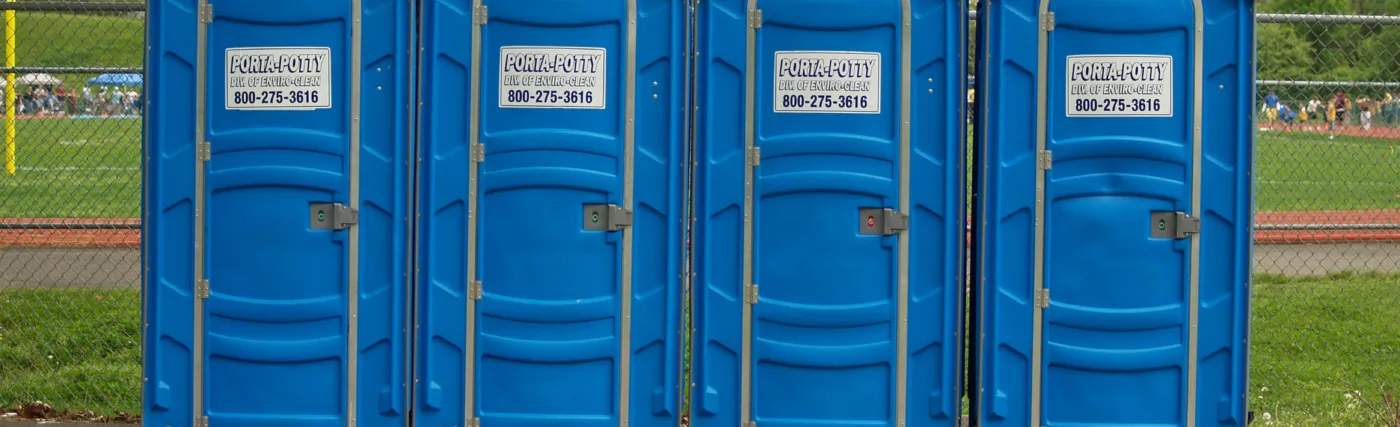
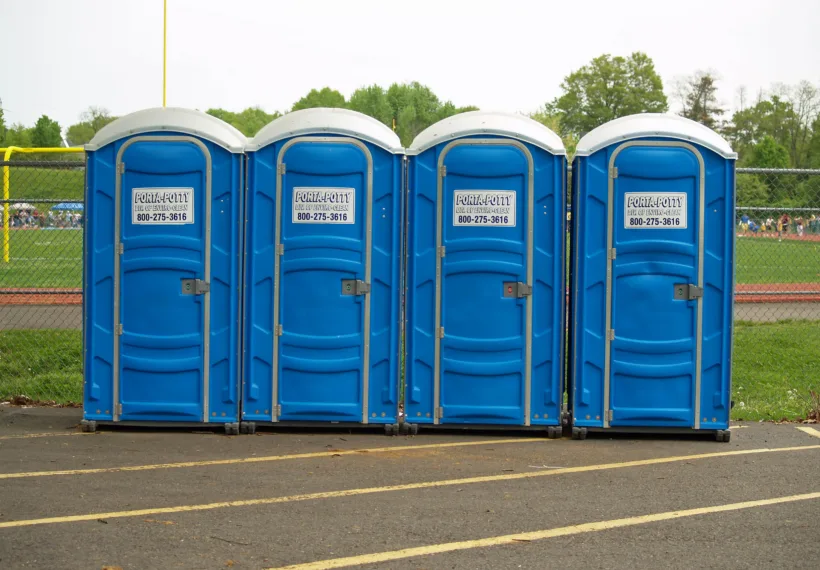
How fast is a porta-potty slingshot? On this episode, Neil deGrasse Tyson and professional stuntman and comedian, Steve-O, break down the science of Jackass, explosions, and what it takes to survive the laws of physics.
Learn about Steve-O’s book A Hard Kick in the Nuts and his “Bucket List Tour” as he details the stunts he’s wanted to do his whole life. We talk about the laws of physics and the art of being a professional stuntman. Should Steve-O take a physics class? We explore the physics of intentionally crashing a smart car with a human inside it. Is there a way to do it safely? What’s the fastest you can go without getting seriously injured? What about going off Niagara falls?
How high did the porta-potty slingshot go? Steve-O details one of his most iconic stunts and the story behind getting excrement for it: it’s more complicated than you would think! What is Steve-O’s biggest injury? When has physics screwed him over the most? Find out whether Steve-O has left the gene pool or not and his stunt involving an intentional vasectomy.
We explore the methane released into Steve-O’s fart mask and the blast of an underwater fart explosion. Steve-O asks his burning questions to Neil: what happens after we die? We explore near death experiences and the nature of consciousness. Discover why Steve-O speaks Portuguese in his sleep. All that and what Steve-O has learned from a lifetime of terrible decisions.
Thanks to our Patrons Graylyn, Paul Vortman, Chalice (Shalese) Davis, James Bennet, and Joe for supporting us this week.
NOTE: StarTalk+ Patrons can watch or listen to this entire episode commercial-free.
Transcript
DOWNLOAD SRTHe held this hose up to his butt.
I just started barfing in the mask.
I didn’t smell anything.
It didn’t even need the smell.
It was…
Welcome to StarTalk, your place in the universe where science and pop culture collide.
StarTalk begins right now.
This is StarTalk, a Cosmic Queries edition of a special kind.
I’m Neil deGrasse Tyson, your personal astrophysicist, and Steve-O, this is the man of Jackass, one of many players in that franchise.
So, Steve-O, welcome to StarTalk.
Well, thank you for having me.
It’s exciting.
You’re a comedian, a professional stuntman, and best known for participating in the franchise Jackass, which is not only on TV, but multiple movies.
You’ve got a new book out.
Let me get the title of this book, A Hard Kick in the Nuts, What I’ve Learned from a Lifetime of Terrible Decisions.
People like, this sounds like a self-help topic, and people totally get into that topic.
So, I wish you well on that.
We’ll talk more about it.
And you’ve got a bucket list tour.
So, this is you’re on stage.
You’re doing crazier, more extreme stunts than ever made it to the screen or to television.
Is this in a theater stage?
What is this context for this?
Tour theaters, from like 1,000 to 2,000 seats.
And it’s a multimedia show.
So, the crazier stuff than ever before happened as I put the show together.
And after each bit in the show, I paid off by playing video of the story that I just told.
And so, you are a household name in an entire demographic of this country.
And in fact, when we put out our request for questions, it was like flooded with people who are your fans and who want to see whatever might be the mix of the stunts that you do with whatever physics might be behind it, either physics you’ve thought of or haven’t.
And I’m here to fill in some of those blanks if necessary.
So, in this particular episode, you’re serving not only as my co-host, but as the guest.
So, you’ll be reading the questions that people have sent to you.
So, but before we start that, have psychologists looked closer at you to see what’s going on inside your head?
I don’t think so.
And I think it’s pretty straightforward.
I’m an attention whore.
Oh, that’s okay.
Boom, there it is.
You got the whole explanation.
Yeah, it’s really that simple.
And speaking of physics, quite literally, one hour ago, I was jumping a skateboard onto a moving car.
This was my plan.
I just bought a new Tesla Model Y.
And I had a vision of the car coming towards me and jumping up onto the hood and skateboarding over and dropping off the back.
Of course.
Oh, because it has that very curved, dew-dropped shape.
Is that why?
I was looking at it.
I thought that that was very skatable.
I had a…
Well, you didn’t actually do this.
You just thought of doing it.
No, I was just jumping onto it, but I didn’t complete the whole thing.
I got a friend of mine to build the hood a little further down so that it’s kind of a wedge ramp which the Tesla was pushing so that I could get onto the hood more easily.
Okay, so you might have died before this podcast.
I was only going five miles an hour.
Nothing was…
Okay, you might have been injured before this podcast.
I might have, yeah.
We need to build something onto the back.
All right, so you’re still dreaming that one up.
Yeah.
Okay, well I’m glad you survived for this podcast because I’d feel bad if that one didn’t work out.
So you say a bucket list tour, normally a bucket list is things you want to do before you die.
Correct.
And these are things that you might die doing, so you’re doing them before you die?
Or is it just things you’ve dreamt up your whole life and thought you’d put them all in one show?
Correct.
They’re ideas that I’ve had for, in some cases, decades.
And it’s not like a morbid, like, I’m going to die, so I’ve got to hurry up and do these things.
It’s more a case of me recognizing that there’s a finite amount of time left for me to be able to do these type of crazy stunts.
As when you’re an old man on the porch, it’s not happening, right?
Right.
That’s the first thing I say in the show, is that I find myself in a terrible situation.
I’m Steve-O in my 40s.
And I think that it gets a good little laugh and the idea that, wow, you know, Steve-O in my 40s.
Right, because you were Steve-O in your 20s when all this began, right?
Correct.
Yeah.
So I’m delighted to report you’re alive and healthy.
I mean, this is good.
Yeah, thank you.
So you got questions there.
Do you want to start reading some?
Okay, the first question comes from Chris Knopp for Steve-O.
Longtime fan, ever since your earliest days of filmmaking, always able to produce some good laughs and frankly ballsy stunts that no one else would be willing to do.
Has there ever been anything intriguing about science and physics for a year?
And if so, what sparked it?
Yeah, because what I would say there is, you can’t go at your stunts.
You got to understand some laws of motion, gravity.
There’s got to be some physics foundation within you before you attempt much of this.
So how does that all settle out within you?
Yeah, the question continues, has your career changed this for you, such as injuries forcing you to learn more about these things?
Okay, so I think that, has there ever been anything intriguing about science and physics for you?
Again, I’m an attention whore.
I’ve always sought to make an impact on people, to be notable, to be shocking and entertaining.
And my way of going about that was to do stunts.
And the stunts that I’ve done, the stunts that I do are designed to make me appear really crazy.
Like, this guy, he could die, he’s out of his mind.
This is so wild and unhinged.
When in reality, for the most part, everything that you see me do is something that I started doing on a very low level and just gradually worked my way up.
In the beginning, it was a lot of jumping off of buildings into swimming pools across gaps.
And I would be doing a flip off of a three-story roof into four feet of water.
And there’s some physics in that.
I had to start off on just the second floor balcony and then go to the third floor and learn how to hit the water and curve in.
So that’s one example.
Well, that’s a very important revelation.
What you’re telling us, and thank you for even admitting this, is that you have made your stunts safer than they look.
Oh, by design, 100%.
And that’s the whole foundation of it.
So it really has to say, do not try this at home, because if you just try it at home, you would not have put in the homework necessary to end up surviving and even thriving in the face of those stunts.
Correct.
And we always did have that warning, that these stunts are performed by professionals.
Do not attempt anything you’re about to see.
And I think that there’s a contingent of the audience that sees that warning, and maybe they’re dyslexic to some extent, because it says, dare.
And YouTube is full of such dares.
Yes, right.
All around.
Right.
And so, did you take physics in high school?
I suppose I did.
I don’t remember very well.
I just remember that I did quite well in school.
I mean, I don’t know quite well.
I was like a solid B student and a good kid through the first couple years of high school.
And then in my junior year of high school, that was when I sampled a marijuana cigarette.
Uh-oh, uh-oh, reefer madness, here it comes.
And it kind of had me, you know, stop doing quite so well in school.
And I remember trigonometry did not go very well.
Trigonometry and marijuana.
That’s the age, yeah, 11th grade, yeah.
That’s trigonometry right there.
Trigonometry and weed do not mix.
That should be the title of your book.
That’s your next book, okay?
I love that trigonometry.
By that measure, I think physics and weed don’t mix either.
So there were a number of classes I really underperformed in.
And physics may have been one of them.
So what I would say is there’s a lot of physics you can glean by trial and error.
And as you said, you did it smartly by incrementing your steps.
But I can say that if you take some physics, even this late in your life, you might see other stunts you could perform once you realize what the physics is doing beyond whatever you were sort of inventing in your crazy sleepless nights.
That’s just a thought.
I don’t know if I’m going to end up taking a physics class, but…
Okay.
Just put it on my radar.
On your radar.
To know some physics is to be good at matter, motion and energy.
Right.
You think about those three things, and all three of those are completely balled up in what it is you do.
Your body is in motion, you land from gravity, and in physics you get to calculate all of that.
Right.
And you get to see, well, how fast can I go before that happens?
Or what is the friction between me and that surface?
Can I reduce the friction or increase the friction, depending on what you need?
These are entire chapters in an introductory physics book.
There’s one I’ve got on my to-do list, which will happen in the beginning of next year.
It’s rather simple.
I bought a smart car for the purpose of crashing it into a brick wall to make sure the airbags work.
But a smart car is that little car that you can park almost anywhere between two other cars.
Right.
And I just love the irony of doing that in a smart car.
But the thing is, this is where I’m going to need the physics, because it’s not something that I can start small and work my way up.
If I’m crashing this car into the wall, there’s only one shot at doing this.
And I don’t want it to be underwhelming, and I don’t want it to be too much where I really get hurt.
So I need to actually…
Oh, you’re in the car when it happens.
That’s the whole point.
Oh, you said I’m going to crash this car into a wall.
I’m going to drive the car into the wall.
Oh, and this is the smallest car in the marketplace.
So that could be your tomb.
I’ve got to figure out the science of that one to get the sweet spot about what’s going to be the most impressive rate of speed into the wall to get the most footage.
Okay, here’s what you do.
You go knock on the door of the NTSA, National Transportation Safety Association, and say, lend me one of your crash test dummies.
Yeah, well, that’s the plan is to dress up as a crash test dummy.
Oh, okay, you got that thought out already.
So what you need is look at their data.
And they will show you at what speed above which, because they test all these cars, right?
Because they have to report their safety records before they’re even marketed.
So you find out at what speed before the chest or the crash test dummy collapsed, or before their kneecaps broke by the front of the car moving into their legs.
So you should be able to get some prior data on this.
Right.
It’s going to be great.
You know, there was another one.
I was on tour in Niagara Falls, and I got disinterested and looked up a video of people who went over Niagara Falls deliberately.
And it was a fascinating video I watched.
I think there had been like 12 people or so who did it deliberately.
And it became evident by the end of this video that the people who put like real effort into planning it out fared pretty well.
And so I got kind of obsessed with the idea, and I reached out to this company that works for NASA, but it’s not called NASA, but they work in Pasadena.
These are all the scientists in Pasadena.
It could be Jet Propulsion Labs?
Because that’s a branch of NASA and they’re in Pasadena.
The Jet Propulsion Labs?
And I didn’t hear back from them.
I was asked and I wanted to help building a crash capsule to go over Niagara Falls.
Yeah, I probably would not have returned those emails.
In all fairness, to the rational universe out there, but go on.
My buddy from Jackass, Chris Pontius, masterfully got me to stop pursuing that idea by telling me, dude, it’s been done.
We’re pioneers, man.
We do things that have never been done.
Don’t go doing other people’s stuff.
Well, we’re going to take a quick break.
When we come back, we’ll get to the next question with Steve-O.
One of the great jackasses of our generation when StarTalk returns.
Hey, I’m Roy Hill Percival, and I support StarTalk on Patreon.
Bringing the universe down to earth, this is StarTalk with Neil deGrasse Tyson.
We’re back, StarTalk, Cosmic Queries edition.
I’ve got Steve-O right here with us, who is a beloved participant in the Jackass franchise from the beginning.
And he’s got a new book with the best title ever, A Hard Kick in the Nuts, What I’ve Learned from a Lifetime of Terrible Decisions.
And he’s on a bucket list tour, visiting a theater near you to demonstrate some of the craziest stuff he’s ever dreamt up.
So, Steve-O, thanks for being on StarTalk.
And you’ve been not only my guest, but my co-host reading the questions that have come to us from our Patreon fan base.
So why don’t you read the next question?
Okay, here we go.
This comes from Dade Bloomfield.
Hello, Dade from Milwaukee here.
Steve-O, have you ever done the math to see how fast your Porta Potty slingshot was going?
Oh, yeah.
I have not.
For me, that was the most famous one.
Sorry.
That was the, that one, nothing else compared to that for me.
But…
I don’t disagree.
I think that that was my most iconic jackass moment.
And I was never too concerned with how fast it was going, but I think how high it was going, or how high it went is probably the most notable perhaps.
I think it was a good 100 feet in the air.
100 feet in the air.
So as you know, in modern baseball, they calculate all manner of statistics from a hit ball what the exit angle is, what the exit velocity is, how fast the bat was moving.
And so you could just invite some of those folks, anytime you’re do a projectile stunt, they could have it totally analyzed for you, coming out the other side.
So just remind me, inside that porta potty, was it clean or was it not clean?
It was not clean.
The idea was for it to be filled with poo.
However, as a part of the Motion Picture Film Association, that we have to abide by what’s called OSHA, OSHA, Occupational Safety.
Safety hazards, yeah.
Yeah.
Administration, yeah.
So according to OSHA, it was against the rules to fill the porta potty with human poo.
However, it was not against the rules of OSHA to fill the porta potty with dog poop.
And if you can believe it, they found a company which sold poop.
Like you could buy as much dog poop as you wanted.
And the name of the company, believe it or not, I swear I’m not making this up.
It was that this company was called We Do Doodoo.
We Do Doodoo.
And they bought lots and lots of dog poop and filled up the porta potty with that.
So this is for all needs that people have for dog poop.
That’s right.
And I’ll tell you, I had just gotten two dogs around the time of that movie.
And after I filmed that bit, when I would walk my dogs and pick up their poo, I would bend over, pick up the poo and I’d look at it and think, man, I am gnarly.
I’m a gnarly guy.
Well, what’s the subtitle of your book?
What I’ve learned from a lifetime of terrible decisions.
Yeah.
So are there moments from that book that you can share that are sort of other sort of crazy moments that you should have thought twice about it?
For my second comedy special, because it was a multimedia thing.
All of my comedy is multimedia.
And so I wanted to have a really big fantastic ending.
And the idea I came up with for that was to bring in like a pyrotechnics guy and get real like impressive explosions going on to like blow up my living room of my house with me in it.
And I had all these silly little things blowing up.
And each thing was a little bit more sort of ambitious than the last.
And I kept getting away with all these explosions stunts.
And nothing was happening to me.
And so ultimately, I decided, well, I’ve got to get like kind of hurt, you know, like I can’t just walk away with this and nothing can happen.
By the end of this shoot, I actually, my buddies and I, we were hollowing out model rocket engines.
And so this rocket engine fuel from the model rocket engines, we sprinkled it all over.
So SDs makes these rockets and I remember the D engine was the largest engine.
And you put several of those, you build a Saturn V rocket, they had one of those.
And so, yeah, so you knew where to get your explosives is what you’re saying.
Yeah, we got a lot of model rocket engines.
We had a whole team hollowing them out in the garage.
And we sprinkled the rocket engine fuel all over my living room floor.
And I laid down in it and did snow angels and my buddies lit it with me laying in it.
And yeah, it was a disaster.
I ended up five days later in a burn unit having skin graft surgery on 15% of my body.
So this sounds like one day you’re not going to get through it.
If it keeps accelerating in this way, that’s what it feels like to me.
Or it sounds like I’ve closed the book on the fire stunts.
You know, there’s certain things, there’s certain times when you got to recognize you’ve reached the end of a trail.
Yeah, I’d say 15% skin graft.
Yes, end of the trail there.
Totally.
You got another question.
Yeah, I think we actually just answered it.
Connor Holm asks, Hey, Steve-O, when has physics screwed you over the most?
No, physics, just to be clear, physics is doing what it does.
It’s not trying to screw you over.
It has no agency about it.
There’s so much I’d love to talk to you about in this regard.
The concept of good and bad is such a mental construct that we’ve come up with.
There is no such thing as good or bad.
There’s simply that which is.
Yeah, well, okay, there’s that which is, and then you nuance it with a good or bad, right?
The is is more foundational, clearly, than whether or not that is good or bad.
And you can say, is it good for my health or longevity?
Right, okay.
Or is it bad?
So you can ask those questions.
Okay, I like that.
I like that.
We can save some of those for the end.
We can go get them all philosophical if you want.
There’s no such thing as punishment.
There’s just the law of cause and effect.
And Connor’s question continues.
He says, and are you still able to contribute to the process of producing children?
How politely asked that was.
This is actually part of my bucket list show.
There was an idea, the oldest idea of law on the bucket list was called the Vesectomy Olympics.
And it was inspired by a joke I heard when I was 12 years old, which was, what is the definition of macho?
It’s a man who jogs home from his own vasectomy.
And being the attention whore that I am, I’ve never wanted anything more than to be macho.
And I grew up with the idea that I would get a vasectomy and then really go nuts.
So, when I planned to do it…
We need evidence of your vasectomy.
Oh, I got that covered.
It’s a multimedia show.
I’ve got the most hilarious vasectomy video ever produced.
But before I got the vasectomy, I just couldn’t do it without first going to get a sperm count at the fertility clinic.
Because people have been asking me the same question.
Like, after all the terrible things that have happened to your nuts, could you have kids even if you wanted?
And what I learned when I went to the fertility clinic, the average man has, believe it or not, 20 to 30 million sperm per milliliter of semen.
And your boy clocked in at 51 million.
So what you’re saying is, over all these years, your nuts have actually been stimulated.
If it doesn’t kill you, it actually makes you stronger.
Except, despite the fact that I’ve got a remarkably high sperm count, they’re all swimming sideways.
They’re all on wheelchairs.
Crutches come to me.
That’s worth noting.
So just to finish out on the laws of physics, I’m just defending the laws of physics that they have no agency here.
That they’ll do whatever the laws of physics allow them to.
And so it’s a matter of you navigating that.
That’s really all that’s going on.
Is it safe to describe the laws of physics as the natural law of cause and effect?
Is there any difference?
There are some things that have no obvious cause like radioactivity.
When an element decays from a higher element, from a heavier element to a lighter element, it does it on its own time.
We cannot predict when it will happen.
It’s sitting there mining its own business, and then bada-bing, it changes.
And without any obvious cause.
So we’re forced to say it just is.
Now what is true is that all the atoms of a particular kind have a very repeatable half-life.
So the half-life is over this amount of time, half of them remain yet to convert to another element.
And then you wait the same amount of time and half again.
And so it keeps halving all the way down.
And so some live a longer time, some don’t.
And it’s a mystery per atom what each atom is going to do next.
So I can’t call that a cause and effect.
Okay, I love that.
And it makes perfect sense.
It makes perfect sense.
Okay, the last question was from Connor in Squam, Washington.
All right.
We have time for just one more before this break.
Okay, let’s do it.
From Aaron, Hey Steve-O and Neil, this is Aaron writing in from Richmond, Virginia.
Here’s a question you can both weigh in on.
In the fart mask stunt from Jackass 2, do you think there was a real possibility the mask could explode from the amount of methane being produced by Preston Lacey?
Thanks for doing this episode.
Now I can answer this.
I love that.
Are you familiar with this?
I’ll lead off and then when we come back from the break, you pick it up.
Okay, so just lay down some physics here and some chemistry.
So methane is chemically the element carbon attached to four hydrogen atoms.
So it’s CH4.
And it is the byproduct of microbes basically digesting, eating, we call it digesting, eating their food in an environment that has no oxygen.
So deep in your gut, there’s no oxygen.
So it’s what we say anaerobic.
So that’s deep in your gut.
And so there are microbes that just love it there.
And one of their byproducts is methane, which happens to be highly flammable.
It is highly flammable.
And so that old trick you might have heard in camp, okay, let’s try to light their farts.
You know, that actually comes from foundations in chemistry and physics.
There’s energy stored in that molecule.
And so that if you bring a flame to it, you break apart that molecule and energy gets released.
And depending on how much of it’s there, it’ll just be a sort of flash of a flame or it could be an actual explosion.
So that’s just to get the physics laid down.
And so now when we come back, we’re going to find out what the hell were you thinking?
And we’ll look at the risk factors of your face blowing up when StarTalk continues Cosmic Queries with Steve-O of Jackass Info-
So we’re back, StarTalk Cosmic Ferries, with Steve-O, who’s entering his bucket list tour at a theater near you.
Is it just called The Bucket List Tour?
It’s called Steve-O and The Bucket List Tour.
Steve-O and The Bucket List Tour, that’s all the information you need.
It’s actually somewhat winding down now.
I’m about to go on a run through Canada, and then I’ve got some US dates after that.
But the book lives on.
And remind me the title of it again.
It’s something about getting kicked in the nuts.
It’s called A Hard Kick in the Nuts, What I’ve Learned from a Lifetime of Terrible Decisions.
There you go.
There you go.
So the questioner asked about your methane fart mask and the risk of it blowing up.
Were you near any possible spark or flame at the time?
A bit, but there’s a pretty fascinating newer one.
To explain to you, the fart mask was, it was kind of like, it was a sphere, like a globe.
Kind of looked like an astronaut mask type of thing.
And it was sort of sealed around the neck and it had a hose coming out of it.
And the hose had a funnel and my buddy Preston held the funnel up to his butt and farted into it.
Now, the reality is that I don’t see any possible way that any of that fart actually made it through that whole hose and into the mask.
But what made the bit visually successful was that I just have such a hyperactive imagination that the idea that something might be gross historically has just set me off barfing.
So, just as he held this hose up to his butt, I just started barfing in the mask.
I didn’t smell anything.
It didn’t even need the smell.
It didn’t even need the smell.
And there was not the danger of a spark inside the mask.
But for our most recent Jackass movie, which came out this year called Jackass Forever, they brought in a big water tank with a seating situation in it and this great guy from Mythbusters, Tori Boleci, who had an underwater torch.
And there was this mechanism to capture farts completely underwater.
So, it would be a bubble of air, but it’s fart air, right?
Right, and bring in the torch to light it underwater.
Now, I could not believe the blast that that caused.
And in hindsight, it makes sense to me because, like the philosophy of a pipe bomb, if you take an explosion and try to contain it, what you’re actually doing is just magnifying it.
Yeah, that’s correct.
And so, let me ask you this, does it follow that same magnification of the explosion from a pipe bomb, what applied to an underwater fart, they don’t like make the…
Well, so the fart bubble is completely surrounded by water, which is much denser than the air itself.
And so, just to be clear, any explosion, any explosion in the atmosphere is a high temperature spot that, because of the high temperature, rapidly expands the air around it.
And it’s the expanding air that we think of as the explosion.
And if it’s a weapon, they put like BBs and nuts and nails and things in it, and you get like a grenade that the expanding air turns the shrapnel into, because there’s the shrapnel that’s just the residue of the bomb itself, but there’s the shrapnel you can put in on purpose, right?
And that then becomes individual projectiles that can each become deadly.
In this case, you have rapidly expanding bubble, but the bubble has its size, right?
If you try to make that bubble any bigger instantly, what’s the water going to do?
The water is not going to compress.
It has to fly out of the way.
It can only just bust out of the way.
So it would make a much…
It was a brilliant setup because it would make a much bigger explosion in the water than it would if you just did it in the air because then that’s just air expanding into air.
I couldn’t believe it.
It caught me completely off guard.
Yes, yes.
So if you did it in a balloon, if you wanted to be physics mythbustery about it, you do it underwater and it explodes the water out of the way.
But if you do it in a balloon and then explode that, it’ll be like a pop, but it’s not going to be a massive thing because it’s just pushing other squishable things around it called the atmosphere.
I remember I felt like I had been kicked in the nuts.
Like the blast of the underwater part, like it was, the water went flying.
It was like, it was a real, like I think that that was my favorite moment of our most recent Jackass.
I love it.
I love it.
And just to round out the methane conversation, we have found methane on Mars, oozing out from the sides of ravines.
And so there are many people, because Mars doesn’t have oxygen in its air.
So where people are wondering, are there microbes buried beneath the surface undergoing anaerobic metabolism, metabolism without oxygen, and then it would be releasing methane.
So that’s one appearance of methane, like in our backyard.
For me, it’s our backyard, Mars.
And a moon of Saturn called Titan, the temperature is so low that methane that’s on that moon has liquefied.
So there are actually rivers of methane going into lakes of methane on Saturn’s moon Titan.
So methane is a really fascinating molecule that is sort of the foundation of so much of what’s going on in organic chemistry.
So one other thing, at Cornell University, they have a huge agriculture school where they have cows that are there to study.
They study the lactation, the four stomachs, however many they have.
And one of them, they carved open a side of the cow.
You can see into the, and put a plexi window.
I would think the cow would care about this, but apparently they don’t.
And you can just see the food come in and get digested.
They collect the cow farts.
And they burn the cow farts in the winter to keep the barn warm.
So it’s one closed thermodynamic system.
There’s a lot going on with methane.
So do you, sir, have questions for me?
We’ve got a very short amount of time.
There’s two things that come to mind as my bigger priorities.
I’ve heard this saying that we are not human beings having a spiritual experience, but rather we are spiritual beings having a human experience.
And I’ve read different things that talk about how as spirits, before we incarnate into this physical body, that we choose our parents, that there’s a blueprint for the experience that we’re seeking to have in the human body.
And that as part of the blueprint, there are life events which are predetermined that are going to just happen.
Have you ever heard of any of that stuff before?
I’ve heard about it just briefly, but what I would say is I think it’s a beautiful concept, right?
And just turning the tables on something that religious people feel deeply, that we are a corporeal experience hosting a spiritual entity, be it your soul or anything else.
And you turn the tables on that, and you’re talking about a spirit looking for a body or creating, going through the body factory and ordering up à la carte what kind of life experience you wanted your body to have.
That would make an amazing science fiction story if it hasn’t already been done.
And so I’m intrigued by the concept.
But what I can say as a scientist is, if I’m going to apportion my confidence that something is true, I’m going to apportion that confidence according to how much evidence supports it.
So you’re saying not a lot of evidence to support that theory.
Not a lot of evidence to support spirits floating around, choosing bodies and their parents and life.
There’s not a lot of evidence for that.
I love the idea, though.
That’s in the mix of fun sci-fi ideas that people have made movies about.
So I’m all in on it.
I’ll be the first in line at the IMAX.
I just don’t see evidence for that.
Right, okay.
Now, when we talk about what happens after the end of our physical body, we don’t have a lot of evidence for that either.
Well, so here’s what we do have.
Consider that many people who have near-death experiences and they come back, some of them say, oh, I saw a light and I wanted to follow the light.
And no one follows up on that to then report that they were near-death, they were brought back to life in the hospital on an operating table that has a light over the table.
So if you’re dead and then you’re coming back in half-consciousness and you see a light, we got it for you, all right?
That’s the light over the operating table.
And there are people who say that they have an out-of-body experience where they look down and see their body.
So you can test for that.
Here’s what you do.
You get your relative to write something down on a card and put it up above the light facing upwards.
So if you have an out-of-body experience and you look down on yourself, you should be able to read what’s on that card so that when you come back to life you’ll say, oh, it said, order me a slice of pizza or whatever.
There has to be some simple saying.
And that has yet to be duplicated as an experiment.
That’s for the out-of-body people.
And in terms of what happens to you, of course, reincarnation people are all about that, right?
They’re totally in on you taking on another form, another human form, or if you’re in India, you come back either as a different animal or a lesser animal if you were not good.
So there’s a lot of people thinking about this.
All I can say is that there’s evidence from people who have strokes, mini strokes, and you systematically, you can do the brain scan and parts of the brain start shutting off bit by bit.
Rather than a catastrophic stroke, I’m talking about little bitty strokes, and they lose their language, they lose their ability to identify you, lose their ability to speak, and this just accumulates until they lose their ability to do everything.
And then they’re basically brain dead.
So this is evidence that everything you are is manifested in the electrochemical impulses in your brain.
And when those impulses go away, we got nothing left for you except the body.
Right.
And by the way, your body has energy content.
You know how the methane molecule has energy?
So does the molecules in your body.
It’s just not highly flammable.
Right.
It’s not as energetic as a…
But your body can burn, all right?
The fact that something burns means it had energy as part of it.
Paper burns because there’s energy locked into the molecules that were once wood in that paper.
And it gets released in the form of heat.
So your dead body, if you cremate it, your body’s energy becomes flames, and that energy radiates into space, which moves at the speed of light across the universe.
So in a way, you’re still out there.
The energy that was once in you.
So that’s a little bit of a spiritual thought that actually has root truths in physics and thermodynamics.
What about life review?
Have you ever heard of that?
Is this while you’re dying and you see a whole life unfold in front of you?
Yeah.
Yeah.
Yeah, I’m intrigued by that.
I know that that’s happened to me even when I knew I wasn’t about to die, but there was some emotionally stressful moment.
It was like, whoa, that was kind of freaky.
So maybe it’s not that you’re about to die, therefore this happens.
Maybe your brain has been jostled in some way, and it releases these memories that are all there.
At different times of day, depending on whether you’ve had coffee or Red Bull or whatever, whatever is your stimulant of the moment, you can have different depths of access to your memories.
And I try to make sure, ever see people now?
What was it?
The Pope was visiting a city somewhere, and the Pope was going by in the Pope Mobile, and everybody had out their smartphone, and they’re looking at the Pope in the smartphone.
I say, it’s the Pope.
Put down your smartphone and look at the Pope and create a memory on that.
What are you doing?
Or anything.
They pull out the screen, and they’re looking at their screen.
And I’m thinking, people forgot how to cherish a singular memory.
They just want to record it on a 3-inch screen and watch it back on a 3-inch screen.
And then it’s not a memory anymore.
It’s a repeat.
Yeah, it’s crazy.
I spoke my first words in Portuguese.
I spoke Spanish in nursery school.
And my parents spoke English.
I spoke three languages by the age of three and forgot two of them completely by the age of five.
However, when I was 11 years old at summer camp, these kids who spoke Portuguese, maybe they were from Brazil, maybe Portugal, they said they were freaking out.
They said that in my sleep the night before, I was speaking Portuguese in my sleep.
Now, I had no access to this language.
However, it’s in there.
It’s in there.
Were you a Portuguese conquistador in an early life?
No, my father was the president of Pepsi Cola in Brazil.
Oh, my gosh.
So, there’s some Portuguese root stock there in some way.
So, what I would say there is we need better evidence than just the eyewitness testimony of your fellow campers.
Next time this happens, have them set up a recording device.
And then we can listen back and have experts analyze it and not just, I heard you speaking Portuguese, because consider they have Portuguese filters in their brains.
So, if they hear words out there, if they just hear syllables, utterances, and you know to hear Portuguese, they could be selecting Portuguese syllables.
And I’m pretty sure you’re not composing complex sentences in your sleep.
So, we’re just talking about utterances here.
It could be that they cherry picked the bits and pieces and say, I heard you speak Portuguese.
So, to head that off, you want to get data on it and record it so that we can then bring it to the lab.
Just future advice for you.
I think that’s fantastic.
Man, I’ll tell you what, Neil, I wish we could talk for longer.
Listen, it’s great.
I’m glad to know you’re alive and you have a high sperm count before your vasectomy.
Now your sperm count is presumably zero.
Yeah, I went in for the test afterwards.
There was not even a corpse on the battlefield.
Not even one that got through on crutches.
No, not enough.
But Steve-O, it’s been a delight to chat with you.
Thanks for being my host and guest.
All rolled up in one.
We knew you had it in you.
Likewise, man.
And you made it happen.
And good luck on your tour and the sale.
I’m more closer to books than to theaters.
I’ve done work in theaters before, but for me as an academic, the book is the forever record of what you’ve done.
Because if someone doesn’t show up at your show, unless it’s on Netflix or something, they don’t see it, they don’t experience it.
But the book is your chance to speak through the ages.
And so I’m glad you have a book out there.
I got two.
This one’s my second.
Second?
What was the first one?
It’s called Professional Idiot, a Memoir.
I’m going to go back to that one first, and read that one before we continue.
All right, dude, thanks for being on StarTalk.
Thank you, Neil.
All right, this has been StarTalk, a special Cosmic Queries edition with the one and only Steve-O, who’s apparently still alive.
This has been StarTalk, Neil deGrasse Tyson here, your personal astrophysicist.
Keep looking up.
 Become a Patron