


 Unlock with Patreon
About This Episode
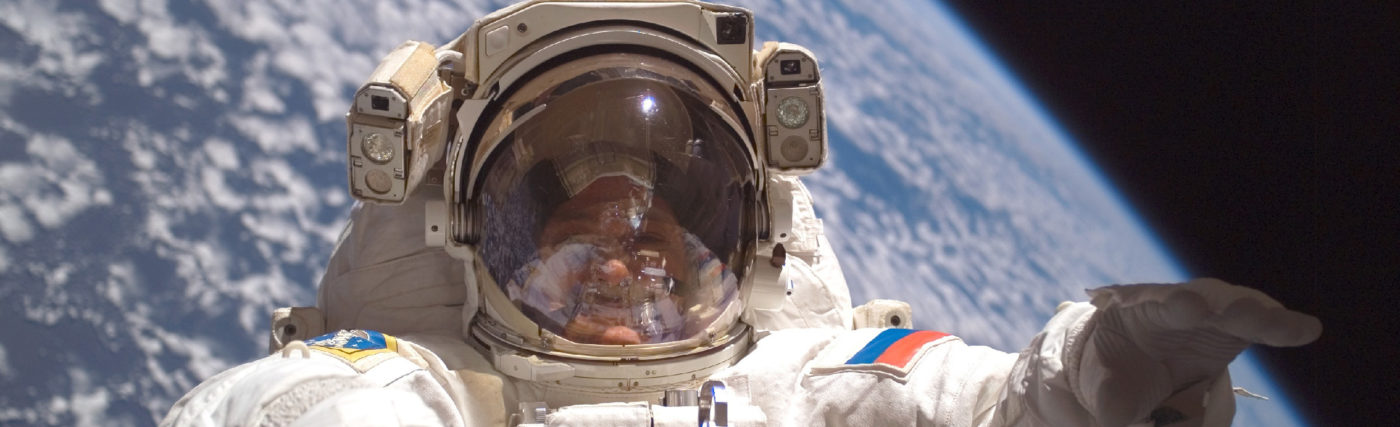
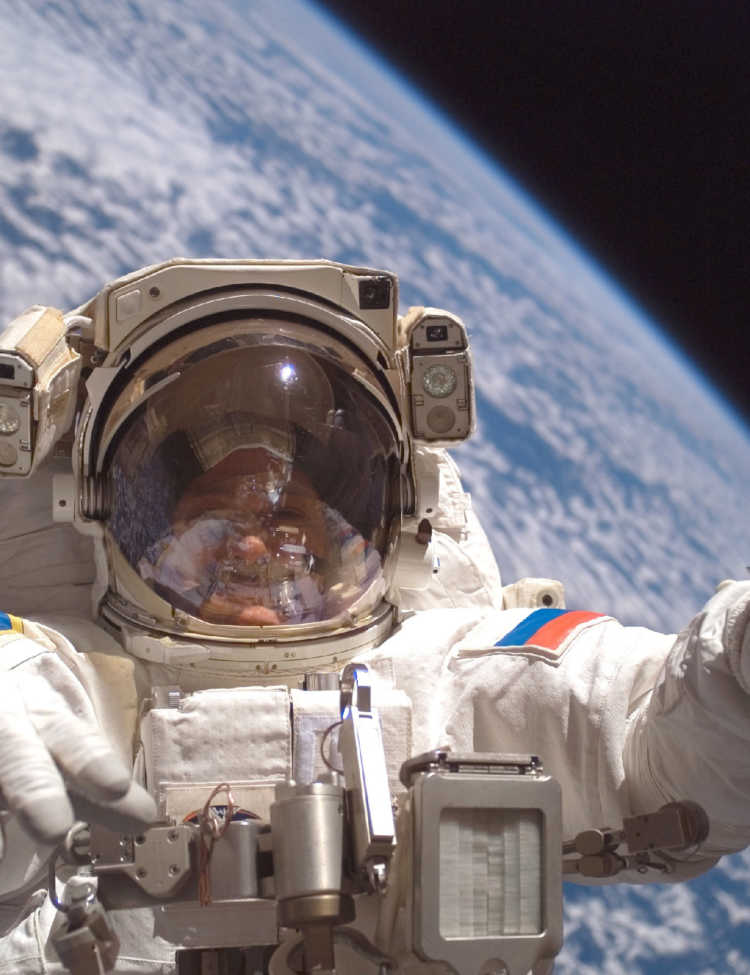
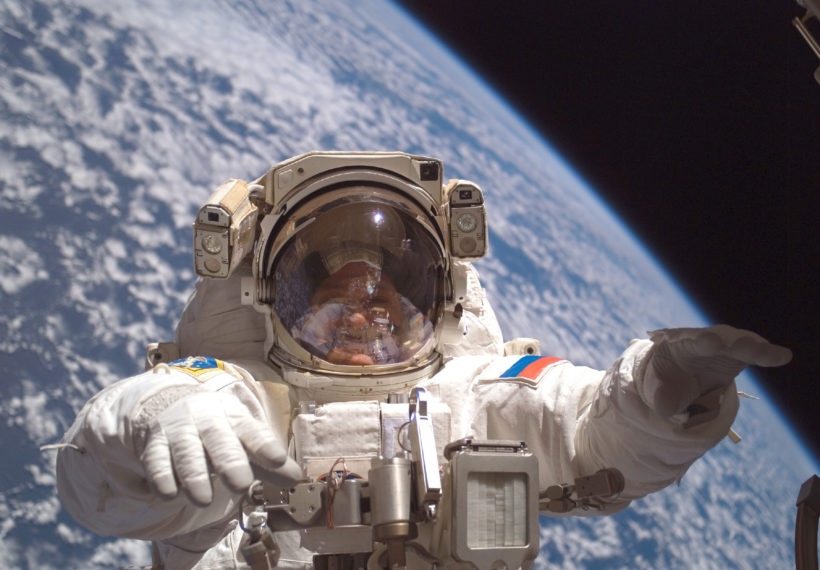
What’s the future of space suits? On this episode, Neil deGrasse Tyson and comic co-host Matt Kirshen explore innovation in space suit technology with aerospace engineer Ana Diaz Artiles.
What would happen to a human who goes into space without a space suit? Learn about the importance of air pressure, aerospace engineering, and how going into space is like scuba diving. How do you even get into space suit design? What is the main flaw in current space suit design? Find out differences between EVA and IVE space suits. Is there a difference between a suit made for Mars versus a suit made for the Moon?
What do we do about ionizing radiation from the sun? We discuss space weather, the need for wormholes, and micrometeorites. Can micrometeorites puncture a space suit? Is there anything we can do about it? Find out about self healing membranes and technology being developed for a new Smart Suit. What if you had an exoskeleton that anticipated your movements? What advances in material science have been made?
What’s the smartest thing they’re putting in the Smart Suit? When is Neil going to get to try one on? Will all this technology work in the extreme environment of outer space? Discover how other bio-suit ideas use mechanical counterpressure to regulate suit pressure. Finally…could technology being developed for the space suit be useful outside of space?
NOTE: StarTalk+ Patrons can watch or listen to this entire episode commercial-free.
Transcript
DOWNLOAD SRTWelcome to StarTalk, your place in the universe where science and pop culture collide.
StarTalk begins right now.
This is StarTalk.
Neil deGrasse Tyson here, your personal astrophysicist.
And today, we’re going to talk about spacesuits, which or we could retitle this, how to not die in space.
And I’ve got with me co-host Matt Kirshen.
Matt, good to have you, man.
Good to be here.
I’m at home right now.
I’m back home, which is another way to not die in space.
It’s just stay safe.
Being on Earth is a way to not die in space.
Staying safely in Los Angeles.
That’s my tip for this episode.
So this is kind of a hybridized, it’s going to be sort of an info show on spacesuits, spacesuit design, what is protecting us from, why, why is it necessary, and then we’re going to blend in some cosmic queries in the second and third segment.
So I look forward to this.
Well, I know a little bit about spacesuits.
I don’t know nearly enough to carry this show.
So we combed the landscape of people with this kind of expertise and they exist, okay?
And we found Professor Ana Diaz Artiles.
Ana, welcome to StarTalk.
Hi, thank you so much for having me here.
This is great.
I love it.
You’re an assistant professor in the Department of Aerospace Engineering at Texas A&M.
And you have developed or are in the process of developing a new spacesuit.
And it’s called the Smart Suit.
So I want to totally get into that.
But in this moment, you’re coming to us from Barcelona, is that correct?
I’m originally from Spain, although I was born in Canary Islands, but I’m now in Barcelona.
My husband is from Barcelona, so I’m here visiting some family.
Okay.
I love the Canary Islands.
We have some telescopes there.
It’s volcanic and there’s some good wine there, too.
There’s a wine industry.
We got to bring you back.
We’ll talk about the Canary Islands, a whole other show.
And Matt, you’re not just my co-host comedian.
You host your own podcast, Probably Science.
That’s the one.
And I’ve been a guest on that show.
You have indeed.
And yeah, so we’ve got that connection.
The connection I have with Ana is I’ve sent in my designs for spacesuits many times to universities around the world.
No replies so far, but…
Yeah, she’ll tell you why.
I’m wondering if the fishbowl is not using high enough quality material, I think, because I’m using Target, just like a standard Target fishbowl, but maybe you need to go to one of like the specialist pet supply stores or…
I mean, the fishbowl inverted on your head.
Is that what you’re saying?
Yeah, exactly.
It’s fishbowl and jumpsuit.
What more do you need?
I can’t imagine.
I think that’s the end of the science, right?
We’re done.
Episode over.
There you go.
Okay, so Ana, why in just that moment was Matt a complete idiot?
No, Ana, what kills you in space?
Why can’t we just hold our breath until we get to our destination?
There could be many things that can kill you in space, but if I had to pick one, I would say, you know, we do have a lack of atmosphere, there isn’t any pressure put in on your body.
So that lack of pressure is actually going to make all your fluids basically become gas and then you’re going to boil in space pretty quickly.
Okay, so that’s not even about whether you can hold your breath.
No, actually, if you hold your breath, like that’s not a good idea because that oxygen that you’re holding is going to expand also because of the lack of pressure and then, you know, that is not going to be good for your lungs if you can’t expand.
I’ve obviously, I’ve never been to space, but I have gone scuba diving and one of the very first things they tell you that they drum into you very many times is you must not hold your breath as you come up to the surface for that exact reason because you’ve breathed in air at high pressure down in the depths and then as you come up to the lower pressure on the surface, you could basically burst, right?
So, Ana, that sounds like exactly the same problem, is that correct?
I was going to say that’s exactly the same problem.
It’s just the other way around.
When we go into a space suit, we’re generally going into lower pressures compared to the spacecraft they were having and there are many reasons why we want to go to lower pressures and one of them is mobility.
We can talk about it.
But then if we think about scuba diving, the problem is not when you go down but it’s actually when you go up because you go for higher pressure to lower pressures and this is why I’m not a diver, unfortunately, but this is why you need to do all these waiting times and you cannot just go up to the surface really quickly.
You need to stage those.
So Ana, how did you get into this?
I mean, when you were a little child and said, I want to design a spacesuit, I mean, like who does this?
Did you watch some movie?
Did you have visits someplace?
How does one become a spacesuit designer?
Maybe that’s really what the question is.
Yeah, so I’m just a traditional aerospace engineer.
Just a regular aerospace engineer.
Just the kind you bump into them on the street all the time.
I’ve always been fascinated with space.
And yes, there was a movie.
It was actually a TV series from the Earth to the Moon.
I don’t know if you remember this.
Yes, of course.
1997, if I remember correctly.
And we didn’t have Netflix or anything at the time.
So you just had to be there on Saturdays at 7 p.m.
Otherwise, you missed the whole thing.
Or wasn’t streaming.
Yeah, yeah.
And yeah, it was at the time that I was finishing high school and just like, what do I want to do with my life and such?
So yes, I said, this is what I want to do.
I want to do space.
And I started working my way into that.
So I went into aerospace engineer.
And then I went to industry for a while.
And so I didn’t do research right after my degree.
But let’s be clear, Matt, if you didn’t know this, she could go on for more education or she can make a boatload of money going into industry immediately.
That is the choice.
Is that correct, Ana?
Tell, fess up, this is what happened.
Correct?
Well, I was launching rockets.
I was in operations and related to space.
So, very far away from research but still space related.
And I was there for a while.
I was there for a few years.
That’s true.
Okay, okay.
That’s always been my issue.
Whenever anyone, to take us marginally off topic, whenever anyone, there’s climate change or evolution arguments and there was like, these academic elites, do you have any idea how unelite academics are compared to what they could be doing with their learning and their brains?
How much money they don’t make compared to how much money they could.
They’ve turned down the C-suite for hacky sacks and sandals, you know?
So yeah, so I’m impressed that this TV series had an impact on you because do we fully, do we really know how much influence our media has on people’s ambitions?
I don’t think we think about it enough.
We just think of it as entertainment.
But my gosh, if it puts you on a path to where you are now, people need to know that.
It did.
And I feel like I’ve told this story before.
I feel like I’m always repeating myself, but suddenly it was a game changer for me.
And at the time also we didn’t have this huge social media or social presence.
So that’s something that I definitely try to contribute.
And with this podcast and trying to tell, especially little girls and STEM, and girls in particular, because it has been shown, they sort of start not becoming interested in STEM disciplines anymore.
So I’m trying to do my part on that.
Right, right, right, right.
So, okay, so getting back to the inventory of all that will kill you in space.
So one of them is your blood begins to boil and outgas.
Okay, that can’t be good for what’s going on inside your skin.
So what about the temperatures?
You start getting very cold to the point that eventually you will freeze, but I believe you will die way before that.
So you will die because of that.
So don’t worry about freezing.
The temperature will just preserve the corpse that’s already there, I guess.
Yeah, you will die because of asphyxiation in two minutes or less, and then you’re sort of getting cold, and eventually you will be like a freeze rock in there.
I don’t think it will happen very, very quickly, but it will eventually happen.
Yeah, because all the heat has to still come out of your body, and that would take time, I guess.
But wait, so do you asphyxiate before your blood boils?
What happens first?
Well, I don’t have experience with this, thankfully.
I guess you can’t just put a person out there and say, will you be out of test cases?
Right, right, so I’ve been reading a little bit about it, too, to see, well, let’s see what we think this will happen.
But I believe you will asphyxiate first, like you will pass out first and then eventually die 30 seconds later because you don’t have any more oxygen going anywhere because there is no oxygen to take from.
Also, your blood is not liquid anymore, it’s not bringing oxygen to your tissues anymore.
So, it’s more of a matter of minutes.
This is a matter of minutes, you’re saying?
So, here’s a question I really wanted to get to.
I grew up a little bit before you, or a lot before you, and astronauts wore spacesuits.
So, I didn’t think to myself, I need to go into spacesuit design because they already had them.
So, did you see a flaw or a need that others didn’t in spacesuit design for it to attract you as one of its students and then, ultimately, one of its researchers?
Yeah, and I have to give all the credit to one of my PhD advisers, Dr.
David Newman, and this is how I did get into spacesuit design.
Going back to that I was in industry, then I decided to go back to academia and get a PhD, and I was lucky enough to get into MIT when I started working with Dr.
David Newman.
Wait, wait, Ana, it wasn’t luck, right?
If you’re good, they’ll take you.
There’s no luck involved.
Let’s be clear about this, okay?
Okay, I’ll reword that sentence for you.
They realized how important I would be to their group, so they brought me on, okay?
Now, pick it up from there.
That’s it.
So I joined this amazing group of individuals, and for my first two years in grad school, I worked on a project on spacesuits and trying to understand how humans interact with these spacesuits.
So the human-spacesuit interaction.
Like spacesuit as a system, you put this system around a human, and this human has to move and not get injured, and being able to do all these tasks and do them really well.
Right, because they did look a little bulky on the moon.
That looked like that’s a lot of spacesuits they wear in there.
Right, so these injury aspects, it was the one that I started looking into at the time.
And unfortunately, it’s really hard to move inside the spacesuits.
It’s like this big pressurized balloon that causes a lot of problems and musculoskeletal issues.
And lots of astronauts actually had surgeries in their shoulders because of the spacesuits.
It’s a big, big issue that maybe, you know, we don’t think often about it.
And this is how I got first exposed to start thinking about all these issues with spacesuits.
Okay, so now, before we go to a break, we’ve seen new designed spacesuits, like SpaceX, I guess.
Those look kind of even stylish, right?
And they’re not so bulky as we saw the astronauts going to the moon wear.
So does anyone care, like, what they look like?
Is there style involved as well?
There is, but before getting into the spacesuits, the SpaceX spacesuits, these are spacesuits designed for inside these spacecrafts.
So these are IVA, spacesuits intravehicular activity.
And the bulky ones that you imagine when going back to the moon and all those big ones, these ones are EVA, so extravehicular activity.
So these are very, very different type of spacesuits.
And it’s normal that the ones for inside the spacecraft are way, way thinner and way, way less bulky about it.
Okay, so Matt, I heard tell that this extravehicular activity term NASA has finally at some level simply called it spacewalking.
They’ve just cut out, yeah.
There’s too many acronyms already or initialisms.
Too many syllables.
Just tell it like it is, spacewalk.
But then they’re floating, really.
They’re really space-floating.
Space-swimming.
For now, they are just floating.
But when we are going to the moon, we need other things.
Oh, she’s ready.
Okay, excuse me.
Excuse me.
I don’t mean to hold you back.
Going to the moon.
All right, so do you think much…
And we’ll get more of this in the other segments.
Do you think much about how the role of the spacesuit, depending on how strong the gravity is on the object, you’re going to use it?
So, on the moon, it’s like one sixth gravity, right?
So the suits they wore on the Apollo astronauts were very heavy on Earth.
But when you divide by six, it’s not so bad.
So I presume there’s a different design for what would be a moon suit versus a Mars suit, where Mars you weigh like 40% of your current weight.
So how do you think about the gravity field that you’re in?
And I don’t think we have been thinking about that very much, because it’s not like we go to different gravity levels every day and we can just pick the gravity level that we want.
But yeah, certainly now we are starting to think about, or the last few years, to think about moon spacesuits.
I think they want to do those spacesuits a little bit lighter.
Right, because a spacesuit that might be too heavy for Mars might be just right for the moon.
I guess that’s really all I’m commenting on here.
So somebody has to go in there and figure that out for that.
Well, why don’t we take a quick break, and I just want to talk a little bit more about the design of current spacesuits and any specific changes you are making to them, or any more interestingly, I think, any particular innovations that no one even thought to do that would make going into space that much more pleasurable than anyone had experienced before.
So we’re on StarTalk, all about spacesuits, and we’ll get to cosmic queries in a minute, and I’m with my co-host Matt Kirshen and Dr.
Ana Diaz Artiles, aerospace engineer and expert on spacesuits when StarTalk continues.
Hi, I’m Chris Cohen from Hallworth, New Jersey, and I support StarTalk on Patreon.
Please enjoy this episode of StarTalk Radio with your and my favorite personal astrophysicist, Neil deGrasse Tyson.
We’re back to StarTalk, Hybrid Cosmic Queries Edition.
We’re really trying to learn about spacesuits, and we have one of the world’s experts on it, Professor Ana Diaz Artiles at the Texas A&M, Department of Aerospace Engineering.
And remind me what town Texas A&M is in?
It’s in College Station, Texas.
Oh, of course, College Station, Texas.
That’s right, that’s right.
And A&M’s course stands for agriculture and mining, I guess?
Mechanical, mechanical.
Okay, yeah, so this is one of the land grant institutions where science for better living has been a fundamental part of their mission statements.
There’s a bunch of them across the country.
And so there it is.
And you know, in Texas, because Texas has the Johnson Space Center and it’s the seat of the manned space program, you’d expect Texas to be a little more up on just what you’re telling us and what you specialize in.
Because it’s in their backyard, right?
So I love it, I love it.
So what about the threat of sort of ionizing radiation from the sun?
When we think of sort of the solar wind, we think of them as sort of innocent charged particles deflected by our magnetic field on earth and you get the aurora.
But if you’re bare-assed in space, or sorry, if you’re in a spacesuit in space, are the spacesuits you’re designing protecting astronauts from that as well?
That’s the million dollar question.
So I’m going to start by saying I’m not a radiation person.
But what I understand from radiation is that we don’t really know what to do about it very much.
Basically, we just hide whenever we know radiation is coming.
That works every time.
And I apologize if there are radiation people out there with better answers than me.
I apologize for that, but…
Yeah, but hiding works is what you’re saying.
Hiding works.
And we do have the means to know when there is something coming from the sun and a coronal mass ejection or a flare.
We know when those are coming.
And we can just take shelter.
We don’t do EVAs or spacewalks when we know there’s some activity coming our way.
So that’s the way to deal with it today.
As far as I know, this is how we do it.
And what’s interesting is we do call it, NASA calls it space weather.
And just like if there was thunderstorms outside, you either wouldn’t go out until it stopped or you would bring on special protection.
So I guess in terms of how you would react to that information, it’s not fundamentally different from what we do daily just in life when we’re preparing for the weather.
Absolutely.
And the other way to deal with it and I guess this is more transportation.
If we want to go to the moon or we want to go to Mars, the other way is just go faster so you are exposed less time to it.
Oh, of course.
Than the other way.
That takes more fuel.
Takes more fuel to go faster.
And we don’t know how to go that fast yet to Mars, but I guess other people are looking into those new technologies to get faster.
So Matt, what we need is a wormhole between Earth and Mars.
You just step through it.
Yeah.
And enjoy it.
And then the coronal mass ejection comes.
You just step back to Earth, protected by our atmosphere.
See, it’s easy when you put it that way.
My idea was just to move Mars closer.
I love your ideas, Matt.
I’ll show you my drawings later.
Yeah, of course.
And you did them in crayon, I bet, right?
Well, you’ve got to make an effort.
This is science.
This is, you know, I can’t just do black and white.
Let’s, you know.
Exactly, full color crayola.
Full color, there’s dragons, there’s swords.
It’s really colorful.
Do you have questions from our Patreon members, Matt?
So as well as radiation, a couple of our listeners, Salvatore Scuri and Alan in the Stars, are both asking about micrometeorites, like the one that knocked the mirror out of the JWST out of alignment.
And also, Salvatore says, what are the chances of microsized meteors puncturing spacesuits and what can be done to mitigate the consequences?
And how does it feel to them, Alan wants to know?
And I want to add to that, is there’s presumably a trade-off between how much protection a suit gives you and how less useful it becomes.
Because you can just put people out there in a cement block or whatever, and they’ll be fully protected, but you can’t do anything in it.
So do you ever think about those kind of engineering trade-offs between safety and utility?
Yeah, yeah, absolutely.
So in terms of protection, the current spacesuit has up to 14 different layers.
And one of them or a few of them are just for protection.
So there’s thermal protection.
And there is this other one, which is exactly what this listener is asking for micrometer-wise.
That doesn’t mean every, you know, there’s like a big thing coming your way.
It’s going to make you a hole in the spacesuit.
So that’s a risk that we know that exists.
And actually that’s one of the risks that we want to attack from, you know, the kind of smart suit things that they were doing.
But there’s always a race for that, although there is some layer of protection in there.
Wait, wait, so what is a smart suit then?
So the smart suit is our new space suit architecture that we are studying.
And we got some NASA funding to do some research on this.
So this smart suit, it’s still a gas pressurized suit.
And we haven’t talked about mechanical counter pressure suits.
We can do that too.
But basically, we’re adding cool technology to the current space suit.
And one of those technologies is to have a self-healing membrane on the outside of the space suit.
So for example, in the case of a puncture…
No, no, no, Ana, I’ve only seen that in science fiction movies.
Well, this is a little bit science fiction.
We are making this a reality.
And when you have a hole, you can just put some pressure on it.
And then it’s just going to self-heal.
So you can come back to safety and maybe later do better repairs.
But at least it keeps you alive and you can go back to your shelter to do that.
Okay, so actually, if you get punctured and then it self-heals, you’d be a collecting device for micrometeorites.
So you’d be full of micrometeorites and you just bring them all back down for analysis.
That could work, right?
Yeah, well, it depends if it passed through.
Maybe it just goes away from the other side.
So the little bit I know about sort of ballistic protection, you know, clothing protection, is if you have many, many layers, if an impactor hits the top layer, that energy now has to sort of work its way to the next layer, and there’s a lot of dissipation at each layer.
So is that why there are so many layers, to spread the energy out?
I think it’s more about all the functionalities that we need in this spacesuit.
So we definitely need temperature management.
So the first three layers are for something that we call the liquid cooling and ventilation garment, which is a garment that has water circulating.
So then you can regulate if you are too hot, you can increase the flow, and then that’s going to help you with temperature regulation.
Then you have another layer that it’s for the pressure.
It’s the pressure bladder, like the one that holds the pressure of your spacesuit.
Then there is another one that it’s called the restraint layer.
And that’s basically to avoid the bladder or to be like a balloon in many shapes and forms.
Oh, interesting.
Yeah, interesting, interesting.
And then you have all these other thermal protection, micrometrial protection.
And I think it’s more about that.
The case of puncture, again, there is a spaces work design 50 years ago, but there are some layers to protect you, trying to protect you from that.
But unfortunately, this happens regularly or sometimes in the ISS, too.
There is a hole just coming and we just need to put it.
So it’s one of those risks that are up there.
And we try to manage it the best we can.
But if there is like a big one coming really fast, I’m not sure we can do something about it, at least today.
If it’s big enough to knock your head off, the spacesuit is not going to be that helpful.
Right?
It’s got to be a category of meteor that just like, the spacesuit does not help.
But let me ask this another question.
At what point can the spacesuit become kind of, I’m not using the right word here, but it’s the word that comes to my mind, an exoskeleton, where the spacesuit is empowered with tools and machinery or software or whatever, so that it’s not just smart because it’s keeping you alive better.
It’s smart because it’s an extension of what it is you need to do in your environment.
So the answer is, as today, there isn’t any sort of exoskeleton helping you out, but that’s the second feature, I guess, that we are, I mentioned three different features.
So we talked about the self-healing membrane and then the exoskeleton, soft exoskeleton is the second one that we are trying to implement.
And that’s exactly what you said.
It’s just so hard to move within this highly pressurized environment that we can use a little help to bend your arm or bend your knee, walk around.
And even we can think a little bit more smart than that.
Like the suit can anticipate your movements and just helping you walk naturally.
If the suit knows that you’re gonna walk and do a certain task or something like that.
Exactly, I mean, why not engage the suit in part of what your body is trying to do?
So it’s not just an enclosure for you, becomes an extension of you.
Right, right, and instead of the traditional exoskeletons that we can think about, which are typically hard, you know, hardware and hard, and hard and humans are never good with one another.
So we are looking into soft exoskeletons.
So these are very compliant materials that you can put inside the spacesuit and can make that human spacesuit interaction a little bit easier, avoid injuries and all those things.
I just realized just in this moment, but of course it’s surely something you guys think about all the time, that advances in your field often depend on advances in material science.
You’ve got to read their journals to find out if there’s something that you could exploit for your own needs, right?
So how much do you guys talk to material scientists?
Yes, I’m glad you brought that up because I definitely want to mention my colleague and co-investigator, Professor Rob Shepard.
He is a professor at Cornell University.
I used to be at Cornell, so this is why I know him very well.
And this is a project from both of us, and he’s the materials guy, and he’s the robotics guy that is making all this technology.
And then I’m bringing more of this space knowledge and the space components on it.
So he’s got a foot in both camps.
You see, Matt, I keep thinking, do the comedians have material comedians?
They’re called prop comics.
Prop comics?
Oh, those are the ones that pull stuff out of a bin and then use it for their jokes.
They’ll collaborate with an umbrella-glued-to-a-phone guy at a different institution.
Okay, so those are the material science comedians.
We do have, while we’re talking about pressure, John David Newman wrote in saying, why does our current space suit have 4.3 PSI?
Is that a consequence of the suit itself or was 4.3 PSI a health and safety requirement?
Granting better mobility from lowering the PSI is great, but are there any health risks of lowering the pressure on our body in space?
Wait, so regular pressure is like 15 pounds per square inch, right?
14.7, I think, PSI.
Oh, okay, I was way off.
Okay, so 14.7 at sea level, and so this person clearly, like, they either know what they’re talking about or they don’t.
They’re just coming in saying 4.3, which is obviously much less than sea level.
So if that’s correct, are we susceptible to this boiling problem under such low pressures?
Yeah, so going back to your question about trade-offs.
So here we have a really, really interesting trade-off between pressure in the suit.
You want to have less pressure because it’s easier to move.
Decompression sickness that you mentioned.
You know, we need to be careful if we go very low, and if we do, we need to make sure we are going to…
We are going to make sure we do it safely, and that requires lots of time of free-breathing pure oxygen.
And then the third aspect, I guess, is mobility.
So pressure, mobility, and decompression sickness, which translates into operations.
People in the space station now can pre-breathe pure oxygen during up to four hours just to make sure they don’t experience decompression sickness.
So that’s a huge investment.
So that’s the bends you’re describing.
That’s what scuba divers call it.
Correct, bends.
But a scuba person would say it was the bends, right?
It is, yeah.
It is exactly what it is.
We don’t know of any incidence of the bends in space, but yeah, it’s definitely a risk.
And the nowhere you go is great for mobility, but then you need to be more careful with this sort of thing.
Okay, so it’s the trade-off that you’re describing.
Very interesting.
All right, why don’t we take another break?
And when we come back, we’ll go all cosmic queries from our fan base and just find out how they’re thinking about our future in space when StarTalk returns.
We’re back, StarTalk, talking about spacesuits.
And we’ve got Professor Ana with us to tell us all about it.
And of course, Matt Kirshen.
Just to find out where everybody is on social media.
Matt, how do we find you on social media?
I’m at Matt Kirshen on Twitter.
I’m at Matt underscore Kirshen on Instagram, which I almost never use.
And if you just Google something vaguely close to my name and bang the keyboard, Google will find me.
And your podcast, where can we find it?
Podcast dealer near you?
Probably sign some of the podcast places.
That’s where we find you on social media.
But do you also do stand up and things?
We see you like in person?
Yeah.
I tour around.
I’m mostly in the US these days, but I’m sometimes internationally.
So yeah, find me.
I normally tweet out when I’m gigging.
You can…
Oh, good.
You can find me at a Pestera comedy club near you to have me on.
And Ana, how do we know about what you do from a social media perspective?
Are you guys active?
Is your group active online?
So we have Twitter.
I have my own personal Twitter.
And then the lab at Texas A&M, it’s called the Bioastronautics and Human Performance Lab.
And again, I think if you Google my name or the lab’s name or Texas A&M’s face suits, it’s just going to pop up.
You should find it.
And your name, Ana with one N, Diaz.
With one N, yes.
And Artiles with one L.
Artiles, yeah.
And okay.
So, excellent.
So I want to bring back up your smart suit.
And just to learn from you, what’s the smartest thing you’re putting in the smart suit that wasn’t there before that Neil Armstrong didn’t have as he bounded around the lunar surface?
So as I mentioned, the smart suit has three technical innovations that current spacesuits don’t have.
The first one, I guess I’m going to start with the sub-robotic layer that we mentioned.
So imagine this internal layer that is the smartest sub-robotic that helps you move around.
It’s really hard to move inside.
People basically have to fight against the spacesuit.
And as Jeff Hoffman mentioned to me, former astronaut, he said, the spacesuit is always going to win.
I was feeling…
It’s a brilliant sentence.
And you don’t want that to be the case, right?
We don’t want that to be the case.
You want the human to win.
Okay, so if the suit senses that I want to bend my elbow and then helps me do it, is that what you’re saying?
That’s the future.
That’s the idea.
And this project also I would mention, this is really food touristic.
We were funded by NASA with the NASA Innovative Advanced Concepts Project.
And this is a program that only funds really crazy ideas, like 10 years down the road.
Yeah, high risk.
I’m familiar with them.
It’s great.
And in fact, that wasn’t always there.
I mean, I think people had to lobby for that.
I don’t mean literally lobby, but just describe why it’s so valuable.
And to fund a crazy idea, because sometimes it will come true.
And the person who does it has to be a little crazy themselves, and that’s okay too.
Yeah, and sometimes things don’t work, and I guess that’s fine.
At least what they want to do, they want to fund.
So they are a wonderful people and program.
So we were funded with these guys, and all that to say that we are in the very early stages.
We are getting great research and really promising results, but it’s still a little bit down the road to have this fully functional, smart space that anticipates your movements.
So when are you going to have a prototype?
We do have a couple of neat sub-robotic prototypes that we have been characterizing, but just on a table, not on a human, that would be the next stage.
Okay, when can I try one on?
Well, I mean, if we get more funded, we were planning to do a glove prototype.
So we can implement all this, you know, we need to start small and sort of integrate all these technologies that we’re talking about.
And I guess I never even told you the first one.
So we have the sub-robotic layer, the self-heating membrane on the outside, and then embedded in the self-heating membrane, the idea is to have optoelectronic sensors that are displayed visually, pressure of movement or able to enhance your interaction with the environment.
Because with these bulky gloves, you can’t feel anything.
It’s really hard to do things with your hands.
Or even with the rest of your body, maybe you have persons in your body that are stretching too much and the self-heating membrane is going to break.
Well, you want to know about it.
And we can put sensors all over that helps you with that.
Right, and sensors today are very small compared to the old days.
So you can be sensing everything you need, right?
Pressure, stress, everything.
No, that’s good.
That’s good.
Okay, so you’re saying I can come by next week and I can try on a suit?
Right, yeah.
I heard you say that, I thought.
Come to the lab and we can show you around.
And once again, whenever you come to LA, you can try on my design.
And it’s…
Your new design, yes, yes, Matt.
I’m just going to say, does the MIT Cornell one have a little bit of elastic that joins the two gloves together so you can’t lose them?
I don’t think so.
Oh, I see.
It goes through your jacket.
That would be funny, you know, like for little children.
Yeah, it’s smart.
It’s got the name sewn into the back.
I’ve thought of everything.
You have, by the way, with your questions and answers, you’ve covered a bunch of the Patreon questions that have come in, like Jesse Desmond from Alaska was asking about having visual data within the helmet and voice commands.
So it sounds like that is something you’re implementing very much so.
Loads of people, I think I’d be doing them a disservice if I didn’t push you further about this self-healing thing because…
It would be good if you could mention their names too.
So Anthony Schaener from Plymouth, Alejandro Reynoso, is one of the people who’s asked about this.
And I hope there are other people as well.
I’ll throw in the extra names in a second.
But they all want to know basically how this self-healing works, whether nanotechnology is involved.
Oh, Tom Lindelis also wants to know.
I read it’s supposed to have an outer layer of self-healing material and heard about it used in things like Rotablase.
But yet to understand what this material actually is, what does self-healing mean for material and how does it work?
And what are its limitations?
Ask Alejandro.
So, Ana, I think everyone wants to know about this self-healing material, but your co-researcher is the expert in that, correct?
Yes, yes, he’s the expert.
Okay, so my sense is if anyone is not an expert in the self-healing material, it’s just magic.
Well, I have to say it’s a little bit of magic to me as well, but it’s really great.
And the work that we have been able to do, he has been able to do in his lab, we had, you know, it’s a little piece like this, this bag of self-healing material with a sensor, optoelectronic sensor embedded on it.
And you can get a knife and cut through it.
So you’re going to cut the membrane and also the optoelectronic sensor on it.
You can see that the signal is just going away.
And then pretty much two minutes later, you get all this signal back up to 80%.
And if you wait 24 hours, the signal was completely back up to 100%.
Matt, like I said, it’s magic.
So the officey clerk.
Yeah, yeah, yeah.
Any sufficiently advanced technology is indistinguishable from magic.
Okay, so to everyone but Ana and her colleagues, it’s magic.
We’ll take that.
We’ll take magic, Ana.
So is this an ingredient that you can tell us what, I mean, is it a substance we’ve seen or encountered or not?
Yeah, I think you need to know the right formulation and be able to know how to put it together and then make it in the lab.
And it’s what we were able to do.
The next steps will be to really figure it out if this is going to work in extreme temperatures or extreme vacuums.
Oh, my gosh.
That’s another thing we don’t know yet.
And Ana, I have to emphasize there, when we build space vehicles, it’s not good enough just to work in the lab.
You got to shake it and bake it and heat it and cool it.
And all the lubricants have to work under all those conditions.
And the metals can’t expand too much or too little.
I mean, yeah, you can’t emphasize that too much about testing it in actual, in real cases.
Right, real conditions.
Case studies, real conditions.
I’ve just recently been binging on the Isaac Asimov story foundations now streaming, and a big part of it, it’s just in the background, there are people, you can infuse your body with nanobots, and they know how to heal an injury for you.
And so, because they just work their magic, they’re healing nanobots.
And so I think that’s why, Matt, that person asked about nanobots, whether it’s a nano thing going on.
Yeah, there’s definitely been a couple of questions, yeah, about that, whether it can sort of fix people as well.
Right, right, okay.
There’s a really interesting question that comes in from Ruhan Periacheri from the Bay Area.
He says, is there anything we are sacrificing to make this suit so light?
I find it incredible we’re able to clamp handle the tech from the old space suits into this new smaller model, but were there any features cut during the process?
Wait, wait, I have to interject.
I must interject, right?
Smaller was my edition, by the way.
Sorry, that…
Okay, it was yours?
Okay, so a hundred years ago, the radio was a piece of furniture in your living room.
Okay?
And now it is an uninteresting addition to your smartphone.
So I refuse to believe that you made things smaller, but somehow lost effectiveness.
So, Ana, I will not believe you if you say, well, 10 things we couldn’t do because we made it littler.
So tell me, where are we on this?
Yeah, I wonder if the question goes more towards a different spacesuit concept, which is called the Biosuit, and it’s about all mechanical counterpressure.
Because though when I think about that, that’s a very slim, small spacesuit, but the technologies that we are developing in the concept of a smartsuit are sort of added to the current size of these spacesuits, so it’s not going to be smaller.
But the Biosuit, this idea of mechanical counterpressure, which is something that we are also implementing in this smartsuit, is this idea of providing the pressure mechanically, just with some garment really, really tight.
Well, like they do for fighter pilots, right?
When they go into high G-turns, something squeezes their legs to put pressure so that the blood doesn’t go someplace where you don’t want it, or doesn’t leave your head when it shouldn’t.
Is that what it means?
Yeah, so these are engineering solutions to the pressure problem.
It’s the same concept, just putting pressure, really elevated pressure, but for the space suit, you need to get up to 4.3 psi, remember?
So that’s a lot of pressure, and that’s another concept that has been out there for a while.
And actually Dr.
Dayma Newman, my former advisor, she has been the one pushing that idea, which is literally get rid of all the gas and all the bulkiness and all the problems with mobility, and then just put this super tight garment that actually looks really good, going back to your question about, we want this space suit to look good and to look, you know.
And that’s another concept that is out there, and I don’t think we are ready to do that much pressure in an equal way in your entire body.
We don’t know how to do it yet.
It’s like the concept is great, we just don’t know how to do it.
So we’re borrowing some of that concept a little bit in the sense like, remember that exoskeleton, soft exoskeleton layer that we’re trying to do, so that soft exoskeleton layer can also provide some mechanical counter pressure to help a little bit with that.
So we are not looking for replacing the entire gas of this space suit with just mechanical pressure, but we can add a little bit of mechanical pressure so we can get a little bit less of gas pressure and help with mobility too.
That’s another trade-off that we are trying.
Okay.
And by the way, any good engineering project will always have trade-offs.
That’s part of how to become clever as an engineer, is to figure out how to minimize the trade-off, but you’re always giving up something.
So Matt, just a couple more minutes left.
You got some fast ones there?
I’ll chuck in two quickies, and I apologize to the people that we haven’t.
There are so many really great questions that came in this week.
James Smith from Indianapolis says, I wonder if the smart suit has any other utilization out of space.
Could a football player or swimmer, for example, take components from your invention and use them in their suits to gather any physical or outside data to use to their advantage?
I love it.
I love it.
Cool.
Yeah, so any use of an exoskeleton that helps you with human movement or human motion, it’s a great application for this, a great spinoff for this.
And for data gathering, I mean, if you have your sensors in a football helmet, and then I can measure by the end of the game how much impulse or how much, you know, acceleration your head goes through, that’s got to be very useful.
Yeah, and actually, I would mention, this reminds me, my colleague, Professor Shepard, his spinning of some of that technology also for score applications, I didn’t mention that.
Okay, good.
So it is happening.
It is happening.
I would have thought also that stuff would have had uses for people with disabilities as well down on Earth.
Oh, interesting.
On that same note, Nicholas Lenson says in Scott Kelly’s book Endurance, he mentions the hassle it is for an astronaut who has to wear glasses when they do a spacewalk.
Contact lenses weren’t an option, so he had to glue his glasses on his head in one of his spacewalks to prevent them from falling.
Are you taking visual impairments into account in the smart suit?
How would that work?
Oh, that’s a great question.
I haven’t thought much about it, but that’s correct.
Astronauts experience a lot of visual changes in space.
That’s another area of research that I’m interested in.
Yeah, that’s a great comment.
I’m actually taking it as a good idea for future implementations, for sure.
Cool.
You don’t think about it.
If you’re wearing glasses inside of a space helmet and the glasses fall off, there’s nothing you can do.
They’re stuck on your chin.
Yeah, I mean, there’s a lot that none of us have thought of.
I’m glad somebody out there is on top of the situation, Ana.
Guys, we’ve got to call it quits there, but this has been fun and enlightening and very hopeful for what the future of space might be like.
And I presume that you were describing the good-looking spacesuit.
It can’t make you look better than you otherwise would without the spacesuit.
I’m just presuming that, right?
We’ll get rid of my middle-aged man-belly.
The design is so well.
You thought of like first-person stripes.
That’s all it needs.
Okay, Ana, it’s been a delight to have you.
And Matt, good to have you, as always, on StarTalk.
Lovely being here.
Excellent.
I’m Neil deGrasse Tyson, your personal astrophysicist, as always.


 Become a Patron