JPL astrophysicist Dr. Amy Mainzer is back as guest host for this week’s podcast, and together with comic co-host Chuck Nice she answers your questions about space probes, from WISE to New Horizons and everything in between. Discover how different propulsion systems like ion drives work, why the nuclear fuel on spacecraft like Cassini and Curiosity is safe and why “slingshotting” is so vital to space exploration. Find out how expensive it is to get into space in the first place, why it’s so hard to come back from Mars, and why it’s just easier to use robots than people. You’ll get to explore the asteroid belt, Venus, Europa, Titan and the nearest solar system 4 light years away, and learn about asteroid sample return missions like Japan’s Hayabusa probe and NASA’s pending OSIRIS-Rex mission. Plus, Amy and Chuck ponder warp drives and welcoming our robot overlords.
Transcript
DOWNLOAD SRT
Welcome to StarTalk, your place in the universe where science and pop culture collide. StarTalk begins right now. Now. Hi, everybody, and welcome to StarTalk Radio. My name is Amy Mainzer, and I'm an astronomer at the Jet Propulsion Laboratory...
Welcome to StarTalk, your place in the universe where science and pop culture collide.
StarTalk begins right now.
Now.
Hi, everybody, and welcome to StarTalk Radio.
My name is Amy Mainzer, and I'm an astronomer at the Jet Propulsion Laboratory in Pasadena, California, and I'm here guest hosting.
I'm here with my wonderful co-host, Chuck Nice.
Hey, Amy, how are you?
I'm doing great.
Yeah, yeah, yeah, good to see you.
Good to be here with you.
Yeah, and today, we are gonna talk about spacecraft.
Yes, that's right, space probes.
And something you would know about, because as we have talked off the air, I found out that you were an engineer for quite some time with Lockheed Martin and building spacecraft.
Yes, that was my other life, my alter ego.
You know, and it's so weird because I, when I think about Lockheed Martin, what comes to mind, I envision like the underground layer of a Bond villain.
You know, like there's no walls, there's just rock and titanium everywhere and guys walking around in white jumpsuits with clipboards and hard hats.
That's, you know, what's it like?
Do you have a security clearance number one?
No security clearance, but I would say there were a lot more guys wearing socks with sandals.
Lots of socks with sandals.
There was one really cool tunnel that went a long ways and the walls were made out of rock.
Oh yeah, actually there were.
Okay, I'll take that.
That was kind of cool.
I'll take that.
But socks with sandals.
All right, well, listen, you know, we have Cosmic Queries.
What we do is we take questions from all over the internet and all of the outlets where we are found and people just write in things they want to know about.
And this is right up your alley, so you will answer them.
So you ready to get into it?
Sure, let's go.
All right, here we go.
Let's start off with David Spitzer, who has a two-part question.
Where would you most be interested in sending a probe?
And of the upcoming missions, which interests or excites you most?
A little personal there from David.
Sure, well, there are so many great places to explore in our solar system and beyond it.
And the robots that we send out are basically our eyes and our ears.
They can go places and see things that our fragile human bodies pretty much just can't do.
So they can go places like, for example, into the surface of Europa or maybe even into the ice of Europa.
I personally think that would be a pretty cool place to go.
Because Europa is a moon of Jupiter and they think that it has a liquid water ocean underneath a very icy surface.
So who knows, maybe there's space squids under there.
That would be fun.
Nice.
So there you have it.
Probes to Europa.
That floats your boat personally is what you're saying.
So to speak, yes.
Right, because on Europa, it'd be more like that skis your ice.
I don't know.
Yeah, something like that.
Something like that, who knows?
Okay.
All right, so now, when we're talking about probes, these are spaceships, basically, that we're sending out to look for things.
And here's something that Logan Keeps tweets at tweets by LK.
Now, are asteroid fields, she says, think Star Wars, really dangerous?
Or is there enough room between the rocks to navigate?
So that makes sense.
If we're going past our solar system, how do you get past the asteroid belt?
You know, when astronomers first thought about sending spacecraft out into the outer reaches of the solar system, like the pioneers and the Voyager missions, at first, they were very worried about this exact thing.
The asteroid belt is full of asteroids between Mars and Jupiter, and we know that at least 600,000 of these asteroids there today.
The thing is, is it like the Empire Strikes Back, you know, that scene where Han Solo is trying to give Darth Vader the slip, right?
Absolutely.
Got to dodge among all the space rocks.
Well, no.
No.
No, it's one of the great disappointments of an asteroid scientist.
When you're first starting out in the field, you realize that actually the asteroids are big, but space is bigger.
Right.
And there's a tremendous amount of room between all of these space rocks.
So it's a very comfortable commute.
Yes, it's not so bad.
So it really is that you don't need the Millennium Falcon to get through an asteroid.
Unfortunately not.
I wish I had a Millennium Falcon, though.
Don't we all?
Yes, everyone need one.
Yeah, I take it to work every day.
You kidding me?
That'd be awesome.
So, and speaking of that scene, okay, completely unfathomable that a giant space lizard could live on an asteroid, right?
Seriously, right?
Unfortunately.
I mean, space lizards are cool, but we don't know of any, actually, in real life.
It's probably a good thing.
All right, let's move on from Facebook.
This is Carrie Carell who says, what is the single most important thing we've learned through data sent by a space probe?
Have we learned anything that prior to launching probes, we had never even contemplated previously?
Oh, wow.
Okay, so one of the, there have been so many discoveries that have just really changed our understanding of astronomy that have come from space missions.
For example, the cosmic background.
Then this is something that was first discovered on the ground by radio astronomers.
This is an echo leftover from the Big Bang itself, way back in time, 13.7, well, here we go.
Billion years ago.
Wow.
Yes, exactly.
It was a long time ago, but this radiation is still around and astronomers had found evidence of it on the ground.
But when they launched the Cosmic Background Explorer mission back in the 80s, they were actually able to really precisely tell exactly how old those echoes of light were.
And from that tell the age of the universe itself.
So would you say that's the most important discovery that we have made, ones by launching a probe?
I would say that's one of the big ones.
That's a pretty important discovery, the age of the universe.
And of course, the Hubble Space Telescope was instrumental in finding other ways to help pin down that number by measuring the distances of exploding stars called supernovae.
So that's another one.
I mean, there are just so many examples of where these robots have helped us out.
I just learned that there is a plural for supernova, which is supernovae.
Yes.
All right.
We have a special, in fact, the nail polish I am wearing right now is actually called supernova.
And what color is your nail polish?
Let me see there.
Silver.
And quite fetching, I must say.
Thank you.
Very sparkly.
Very sparkly.
For a supernova, that's what you want.
Supernova.
Cool.
The only supernova ever in my life was a Chevy, and it wasn't so super.
It wasn't so super.
All right, let's move on.
Scott McGregor wants to know this.
What's the most important probe in use today?
The rock star of probes, the one to watch.
Also, can we look forward to it in terms of new probe technologies?
Right.
Okay, so I have a personal couple of favorites.
Everybody knows and loves the Hubble Space Telescope.
That's one of our biggest workhorse telescopes that we use as astronomers to look at everything from the distant universe to very nearby things.
I also have a fan.
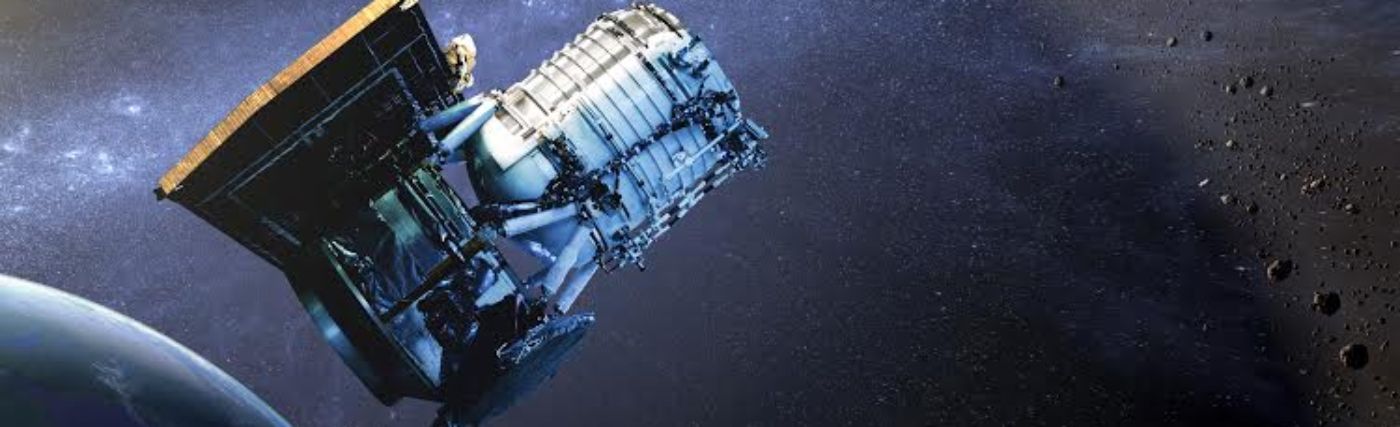
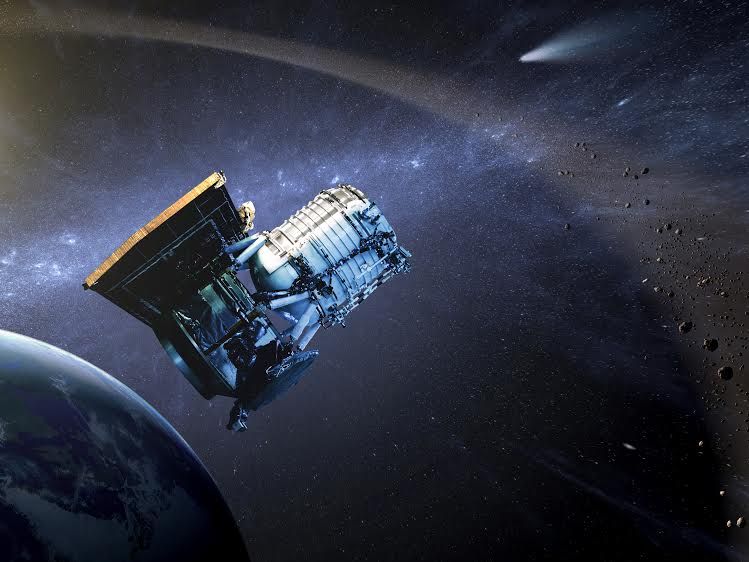
I'm a big fan of smaller things like the Wide Field Infrared Survey Explorer, a little infrared telescope.
It's a heat-seeking telescope, and it's seen an awful lot of asteroids.
Nice.
Yeah, so we've got, hopefully, we've got a few new things coming up on the horizon that'll really expand our knowledge of the universe.
But that's classified, buddy.
Okay, well, we're gonna take a short break here.
So more when we come back to StarTalk Radio.
And we're back to StarTalk Radio.
I'm your guest host, Amy Mainzer, from the Jet Propulsion Lab, and I'm here with my co-host, Chuck Nice.
Hey, Amy.
How are you?
Of course we're doing Cosmic Queries space probes.
And let's jump right back into the questions.
This one from Google+, and Steven Woolery would like to know this.
Do you think it's worth spending limited science budgets on smaller purpose-built missions likewise, which you mentioned already today, or is it better to invest in larger, more diverse missions like Webb?
This is a very, very important point in question here for NASA and how we decide our priorities.
I'm a big fan of having a mix of missions.
I like not putting all of my eggs in one basket.
So I like to be able to have, I'd like to see us be able to do a mix of small missions, some medium missions and one or two really big ones.
But if you have only one thing, then you kind of can't do certain classes of science.
Some missions don't need a big giant Battlestar Galactica.
And other questions you can only answer with some fairly big stuff.
So I think having a mix is a really good idea.
Cool, cool.
So there you have it.
Gotta mix it up.
So do we think that we'll ever see a refunding of NASA, or is it going to continue to be a constant stripping away of funds because the dummies in Congress don't see the value in what we do when we glean things from knowledge from space?
Well, one thing that gives me hope is all the people who are listening to StarTalk Radio right now.
I mean, there are people who love space.
And if you love space, say so.
Tell your neighbors, tell your friends, tell your kids, because that's how we get to do all of this stuff.
When people demand that we explore our universe, that we learn more about it, then we get to do that, because our Congress and our Senate, they hear us when we talk to them, so.
The squeaky hinge gets the oil.
Absolutely, absolutely.
Even though there's no noise in space.
All right, very cool.
All right, this one from Google+, John Mink wants to know this.
What tends to be the limitations you run into with probes?
With probes, is it size, available power, cost redundancy?
Is it a combination of things, or is there always one or two, and how much do these limitations change on different missions?
Oh yeah, so there are a lot of things that are difficult about launching stuff into space.
Main thing is, it is $10,000 a pound.
What?
It is crazy expensive to put something in space.
$10,000 a pound?
Yes.
So I would assume lighter materials are priority number one.
Yes, absolutely.
In fact, one time I was thinking about it, what if we wanted to launch what I would call BrickCam, which is basically to launch a brick into space?
It would be very expensive just to even launch a brick.
Just to launch a brick.
Yeah, if you really wanted to put it on spacecraft.
So yes, mass is key.
You've got to get the thing as lightweight and as small as you possibly can.
That's the challenge.
So those are the challenges.
Now, and I guess because you build this stuff, or you did at one point in your life, where are we headed?
I mean, how close are we to getting something very small, very light, and still very effective?
Well, I am waiting for someone to invent something that I call unobtainium.
And this is a material that has zero mass, consumes zero power.
I think we could do this, right?
That's awesome.
I mean, unobtainium.
Unobtainium.
You and James Cameron.
We're both looking, working on the same thing.
Awesome.
All right.
This is from Patrick Dennett from Facebook.
Is the reason we haven't sent a rover to Venus, that the temperature would be problematic?
Or is there some other reason, technical or budgetary, that's stopping this from happening?
Oh yes.
So Venus is one of these places that is just really tough to explore.
It's kind of Earth's evil twin, if you will.
Because even though it's sort of the same size as the Earth, it's about 900 degrees on the surface.
It's hot enough to melt lead.
And the atmospheric pressure is about 90 times our surface pressure here on Earth.
And then to top it all off, a lot of the atmosphere is sulfuric acid.
Oh.
So take your pick.
It's not a nice place.
Not a nice place.
No.
And so the question I've always had is, okay, well, what is it that gets your spacecraft first?
Is it getting crushed to death?
Is it getting cooked or burned by acid?
Right, right, or dissolved by acid.
Yes.
So basically not a very friendly place to go.
And it turns out, weirdly enough, we think that what really gets these things is actually temperature.
Really?
Because the Russians did in fact land a couple of space probes onto the surface of Venus and they lasted 45 minutes.
And that was it.
And that was the end of it.
That was the end.
Look at that.
And isn't it funny that Venus is the god of love?
After all that nastiness you just put out there, that makes no sense to be whatsoever.
Very true, very true.
I would rename it.
All right, here we go.
This is Brett A.
Verbick wants to know this.
The president announced funding for a landing on unmanned craft on an asteroid to lasso it to the moon.
Are probes going to be sent to prospect a candidate asteroid?
Any news to share about this mission?
Now, if I'm not mistaken, I believe the president said 2025 or 2030, something like that.
Yeah, so our president set out an ambitious goal to go to an asteroid by 2025, I think.
And so one of the concepts that's come up is, well, what if we were to bring the asteroid back?
It's a possibility.
The thing is, is you have to find exactly the right asteroid, not all asteroids are alike.
Some of them are much harder to get to than even getting to Mars.
So you'd have to find an asteroid that's in exactly the right orbit that wouldn't cost an enormous amount of fuel to get to and then get back.
So that's a toughie.
I don't work on this project, but I know other people who do.
Oh, okay, really?
Oh yeah, there's a lot of work if they're gonna really make that a reality.
So we'll see what happens.
So here's the thing that really disturbs me just a little bit.
You talk about bringing it back.
You know, I kind of get the feeling like people who go to Florida and bring back a little alligator.
Yes, indeed.
And then it becomes more of a problem than they thought and then they flush it and now I got a big albino, a monster alligator living in my sewer system.
So where exactly are we bringing this asteroid back to?
There's an alternate concept that isn't so much about bringing back a whole asteroid as just bringing back a small boulder off of one.
Oh, okay.
Maybe that's a little better.
No alligators.
All right, Rufus from Facebook wants to know this.
Would it be possible to send a probe out into space, land on an asteroid, hitch a ride somewhere and then lift off of it again and continue?
Kind of like a space bus.
If so, could we get farther into space than we would normally be able to?
Oh, that is, okay.
So really cool thing about this, someone's already done it.
What?
Yeah, the Japanese sent a mission called Hayabusa and it actually went to an asteroid and it landed on it and even collected a few tiny, tiny little grains off of it.
Right.
And then it came back.
Sweet.
And it actually came back and it re-entered the Earth's atmosphere, bringing back its very precious sample cargo.
You know, I saw that and what's funny is, what came back was this tiny little disk.
That's all it was, was this tiny little like plate.
It was like a saucer.
Yeah, tiny little bits and pieces that came back.
And so they're sending a second one.
It's called Hayabusa 2.
How creative.
The revenge of Hayabusa, I guess.
So they're gonna do it again and they're gonna go to a different asteroid and they're gonna try to bring back more.
And we also have another mission that's coming up called OSIRIS-REx.
OSIRIS-REx.
We love our acronyms at NASA.
Don't ask me what it stands for.
I can't remember.
But it's gonna go to an asteroid and collect a sample with a sampling technique that looks kind of like an air filter on your car.
And the idea is it's gonna touch down on the asteroid surface and fire some gas into it.
And that's gonna push a bunch of dust and pebbles into this thing that looks like an air filter.
Okay, and that captures it.
So that will capture all the dust and everything from this little, and then that will come back, I suppose.
Exactly, and then it returns to earth and they're gonna pick it up somewhere.
Presumably it's gonna land in some nice backyard or something, I don't know.
Let me ask you this, because I'm fascinated now, you got my curiosity.
Do we have international cooperation?
Because you can't tell where this thing is gonna land.
If you send something out there, it lands on an asteroid and it comes back.
You can't say, well, now it's gonna land here, right?
You know, the crazy thing is they can.
They can do this and they are going to, but they do have to plan.
No, when I say you can't tell, I'm saying you can't say like, okay, we're gonna make it land here in New York City.
That's what I meant to say.
Of course you could tell where it's gonna land.
But do we have international cooperation so that when it lands in another country, they don't say, what you talking about?
Yeah, what is this?
What is this?
This is mine.
Yeah, well, like, Hayabusa landed, I think in Australia, if I remember right.
And boy, did they have cool space uniforms for picking up the capsule.
So I hope they have cool space uniforms wherever it lands.
Nice, nice.
All right, well, it's time for us to take a very short break and then we'll be right back with more Cosmic Queries on StarTalk Radio.
And be sure to check us out on startalkradio.net.
Bye And we're back with StarTalk Radio.
I'm Amy Mainzer, your guest host, and I'm here with my co-host, Chuck Nice.
Shall we talk about some space probes?
Yes, we shall.
Every time you say space probes, I feel so immature.
I'm sorry that I do.
I can't help myself.
It's just like space probe.
I'm like, space probe!
It sounds like aliens.
It really does.
But space probe is different from alien probe, so let's not confuse the two.
All right.
Let's move on with our questioning from our audience.
And this is Brenton Federoff, who wants to know, why haven't we sent a probe that can take a core sample of the Martian lunar surface?
Now, this is what I want to know.
We do have a rover there, right?
Oh yeah.
There's a couple rovers there.
There's a couple rovers on Mars.
It was a big deal.
Yeah.
So are we not getting anything back from there?
We are not at present returning samples from Mars.
What we're getting back are a lot of pictures.
We're getting an incredible amount of photos and data.
But it's really hard to get something off the surface of Mars.
And that is because Mars has a lot of gravity.
Of course, yeah.
A lot of gravity.
You have to launch it the same way you launched from Earth.
Exactly.
So you would need some type of propulsion system that would be able to clear the gravitational pull of the planet and then get back to Earth.
That's exactly the problem.
And so the thing is that is really difficult to do because propulsion means you need fuel and fuel means it takes mass.
You gotta have something to burn to get off the planet.
And up until now, that's proven very, very difficult.
So people have plans for what's called a Mars sample return mission, but it's not easy.
And it's gonna take a lot of talent to do that.
So now I may be silly, but could we not attach a very long string to some type of canister and just give it a hell of a yank?
Yeah, I was thinking catapults myself.
What do you think, like a trebuchet, like a medieval sample flinger, right?
Yes, exactly.
I think we could do this.
So just as a quickie though, wouldn't that be feasible to think of, instead of a propulsion system, perhaps a...
Like a tether.
Not even a tether, but something that would shoot it off the planet.
Oh yeah, yeah.
So people have talked about these things like rail guns.
Like a rail gun, right.
Like that ride, Superman ride at Magic Mountain.
Yeah.
Yeah, it's like, like straight off.
Yeah, people have talked about that.
And it's just up until now, it's proven pretty difficult to get something like that to work in practice.
Mostly what we rely on is chemical propulsion.
That's what most of our rockets use.
So basically that would have to be, if you're gonna do that, you might as well have a manned mission to Mars.
Yeah, it's pretty tough.
I mean, the Mars sample return with robots is probably a lot easier than sending people, because people have this annoying habit of wanting air, and food, and-
Babies.
Oh yeah, and you know-
Yeah, big babies, that's what the problem is.
It's like, it's kind of hard.
We call it the canned meat flinging, right?
I mean, it's just harder than robots in some ways.
Robots, they're much tougher, and so they can tolerate things that the human body can't.
Right, well one day though, all be our overlords, so-
I for one welcome our robot overlords, I think.
All right, here we go.
Let's move on to Fernando Morales Francini, who wants to know, are there any defined candidates for New Horizons to explore after Pluto?
So now we've been to Pluto, what's next?
Right, well New Horizons is gonna really whip by Pluto super fast, because in order to get to Pluto in any kind of reasonable amount of time, they had to basically do a bunch of slingshot maneuvers to pick up the speed.
And so the thing is, they're gonna blast by Pluto and collect a lot of great data, but the question is, could they go somewhere else?
And so astronomers have been looking very hard to see if there are any other Kuiper belt objects.
These are very icy bodies far away from our sun to see if they could find any.
And as far as I know, there are no viable candidates at present.
That doesn't mean there aren't any.
It just means we gotta look harder.
Yeah, that's right.
And part of the problem is Pluto right now is in the plane of our galaxy.
That's just where it happens to be in its orbit.
We're seeing the Milky Way behind it, and there's a lot of stars in there.
So picking out a distant, faint moving object is challenging, and they're working on it.
So now you mentioned slingshotting.
Is that a means of propulsion that is common when you're talking about sending something somewhere?
Yeah, it turns out this has been one of the key techniques for getting around the solar system.
It's funny, you would have never thought this 50 years ago that this was possible, but it turns out to get to some of the most distant parts of the solar system, you've actually gotta steal a little bit of energy, of orbital energy, from planets like Jupiter and even from the Earth itself.
Right, so cool.
So basically, it's like playing pinball.
Yeah, exactly.
It's like playing pinball.
It's just like playing pinball.
You gotta pick up a little speed by hitting a resonance.
Nice!
All right, let's go to Andrew McBandrews.
I wonder if that's a real name.
Hello, I'm Andrew McBandrew.
Higher priority target with limited NASA funds, Europa or Titan?
He's talking to you personally now.
He wants to know which one do you think is more important?
Well, I have to say, I really loved getting those images from the Huygens probe as it made its way through Titan's atmosphere.
But Europa looks like an interesting place too, and we know less about it.
So I think that might be an interesting place to go.
In other words, we haven't really been there in person with a probe going directly there.
So I'd probably vote for Europa at this point.
Yeah, so you got to go to the place that's the road less traveled.
Try something new.
Exactly.
So all right, well, we're going to take a short break here, and then we'll be back with more StarTalk Radio.
And be sure to check us out at startalkradio.net and on Facebook and on Twitter.
And we're back with more StarTalk Radio Cosmic Queries edition.
I'm Amy Mainzer, your guest host, and I'm here with Chuck Nice.
Yes, yes, and we've got lots of questions and inquiring minds want to know about space probes.
So let's jump right back into it.
This question comes from Twitter.
Gabriel Michaels at Doc Michaels wants to know this.
Are ion drives feasible for probes that have planetary or moon, asteroid surface landing missions?
Yes.
Well, it turns out that the Dawn mission used just such an ion drive.
And I think people are planning to use them for other kinds of encounter and rendezvous missions.
So I think it's on the books and people are considering it.
Of course, these are systems that kind of allow you to use energy very efficiently, but kind of like an electric car, it takes a long time to build up speed and a long time to slow down.
So now, can you just, for those who are listening that don't know, because of course, I'm very well versed in ion drives, something I spend my time reading about all day, but how exactly does an ion drive work?
Right, well the basic idea is to take something like xenon and you basically shoot voltage across it.
You apply electricity to it, and that produces a reaction, right?
And it's nice because you get a nice gentle push from it.
Instead of using chemicals, where you have to put them together and make them explode, which can also work very well, but can also take a lot of mass.
And they're a little more risky in some sense to use.
Although they've got a lot of hardware heritage with the chemical propulsion systems, the ion drives do have some advantages in that they're very, very efficient.
And mass is key when it comes to space missions.
So people really like that.
So now, if you were to use something like this, you would use a chemical propulsion to get off of Earth.
And then you would engage an ion drive once you're in the vacuum of space.
Exactly.
And then you probably get to say engage ion drive.
Doesn't that sound great?
Ooh.
I'm sorry, you just got me a little excited.
All right, let's move on.
We got something from Google Plus here, which is Aru Sani is the name.
I remember there being a lot of controversy over Cassini's nuclear contents prior to the probe being launched.
Yes.
Since then, however, I haven't seen or heard much about nuclear probes.
Has NASA become reluctant to use nuclear energy for its expletory needs?
Well, it turns out that the Mars Science Lander, the Curiosity rover, actually has a small amount of nuclear material that it uses.
Now, the thing to keep in mind here is we're not talking about a lot of stuff.
It's a pretty small amount, and it's built to withstand a lot of force against it.
The thing is, these are not fusion reactions that we're talking about here.
It's radioactive decay, so it's a completely different process than fusion.
Right.
So this isn't the nuclear reactor that's happening in your submarine that stays under water for 10 months at a time.
Exactly.
This is basically taking a chunk of plutonium, and you just sort of let it naturally decay and do its thing, and you capture the electrons, the energy that comes off of it.
You capture the heat, and you basically turn it into electricity.
That's how it works, more or less.
So it's a passive process.
You're not really reacting anything together.
It's just sort of this lump that sits there.
And you're just letting it do its own thing.
Yeah, that's right.
And the reason that it has to be used in certain circumstances is because if you get too far from the sun, what are you going to do?
Right, you don't have the sun's light or heat or power or anything.
You can't use solar energy.
Nope, the sun at Jupiter just kind of looks like a star, a bright one.
But still, that's the way Jupiter looks to us in the night sky.
Exactly.
So the problem is you got to have something to power your spacecraft.
And they use the little chunks of this nuclear material.
That is fascinating, very cool.
All right, Luke Scowron wants to know this or Scowron wants to know this.
After chemical rockets, ion thrusters and thermal nuclear propulsion systems, what's the next big step in space propulsion?
And how much longer do we have to wait for a functional warp drive?
By the way, you know, that's his real question.
You know, that other stuff was just to get to when are we getting a warp drive?
I know, you know, I have to say as a professional physicist, I am sorely disappointed that we don't have warp drive.
It would be really nice to be able to skip traffic, wouldn't it?
That would beat the subway.
So are there any new propulsion systems on the horizon?
Do we think there's some kind of breakthrough for space propulsion?
Well, chemical propulsion is our main means and the ion drive is the new latest thing.
People are working on other technologies, but they're really pretty hard.
It's going to be a while, unfortunately, until we have that warp drive.
Until then, we've got to keep doing research, fundamental physics.
Eventually, some smart person will figure it out, I hope.
Oh, there you go, buddy.
Wait is the answer.
Yes.
All right.
Well, it's time for a short break.
And then we'll be right back with more StarTalk Radio Cosmic Queries Edition.
Check us out on Twitter at StarTalk Radio.
Welcome back to StarTalk Radio, and I'm here with my co-host, Chuck Nice, and it's time for The Lightning Round.
Yes, it is, Amy, and this is where you will answer as many questions as quickly as possible so we can get to them.
And when you have finished, we will hear, there you have it.
So you ready?
Yeah, so what do we say?
Lightning round, engage.
Yes.
All right, this is from Luke James, and he wants to know this.
How feasible would it be to send a probe to a solar system with an Earth-like planet, and if one could even make it, would it be possible for one to detect signs of life?
Ooh, okay, well, other solar systems are really, really, really whopping far away.
The nearest star to our sun is four light years away.
If we were traveling at the speed of light, which we cannot do, it would still take us four years to get there.
And we can't travel anywhere close to the speed of light.
If we could, someday maybe, we might be able to find signs of life, but really I think our best bet is to stay here on the ground and try to develop the technologies that we can use here.
Nice.
So the answer is we're going to be receiving guests, not going to find them.
Google Plus and Petros wants to know this.
How long does it take for a telescope to capture an image?
Do you have to point it at a distant object for hours or is it pretty much instantaneous?
Now he's talking about once you're past the atmosphere and you're in a probe.
You got it.
Okay, so if you're a telescope in space, let's say we're the Spitzer Space Telescope and we want to look at an exoplanet, depends on the kind of object.
If it's really far away, it takes a lot longer.
And it turns out that the farther away and more distant something it is, the fainter it is.
So it takes longer for us to gather information, gather light from that object.
So basically it's a question of how faint it is.
If it's a really bright object and it's close by, not so very long at all, maybe even just a couple seconds.
If it's a very distant galaxy, hours and hours.
Hours.
Nice.
So it really works just like a camera.
Exactly.
Yeah.
If you've got low light, you got to take a long exposure.
Duh, go on, nice.
Okay.
Francisco Escobar Preto wants to know this.
Well, he's from Costa Rica.
I thought he was joking at first.
What does NASA do with probes once they have completed their task?
Ah, very good question.
Okay, now this is what I want to know.
Do we get them back, really?
Sometimes we get them back.
Oh, okay.
Yeah, there've actually been a couple sample return missions which even come back and re-enter into the Earth's atmosphere.
But by and large, most probes are gone, gone, gone.
Now, if it's an Earth-orbiting satellite, we actually have requirements to not create space junk.
And we deliberately plan to de-orbit our satellites or let them decay in the Earth's atmosphere where they are designed to burn up completely.
Okay, this is from me.
You say space junk.
So is there like a junkyard in space?
Do we need like a Sanford and Sun for our space?
Yeah, there is a tremendous amount of space junk up there right now.
And I think we have a business opportunity here, you and I, Chuck.
I think we should start our own space junk company.
We could be Sanford and Sun in space.
Fum, fum, fum, flan out.
Burn it.
All right.
Excellent.
Let's move on to Ramon Pinzon from Mexico City.
He wants to know this.
If we could travel at the speed of light where time doesn't exist, how would our biology be affected while we travel?
Now that really doesn't work for probes because we don't have people on probes.
That's right.
So if a person is actually traveling close to the speed of light, we know from theory that there should be something called time dilation.
They would actually age more slowly the faster they go.
So this is the ultimate in anti-aging.
Just go really, really, really fast.
And in fact, the time dilation that astronauts on the space station experience is a very, very tiny amount though, because they aren't going a very large fraction of the speed of light, even as fast as they go.
Nice.
Okay, Joseph Breda wants to know this.
Space is so ridiculously, insanely, mind boggling big.
Is it really feasible for humans to travel between star systems?
Oh boy, well, not with the physics we have today.
It would take many, many, many generations, lots of generations, in fact, even go to the nearest star, which is four light years away.
That is incredibly far.
It's taken about nine years for the New Horizons spacecraft to go at top speed to Pluto, and that isn't anywhere close to the nearest star.
So unfortunately, we need that warp drive we were talking about.
Yes.
That'll do.
There you go, Joseph.
Not gonna happen, buddy.
Jace Thorson wants to know this.
If it takes three months to get to Mars, is that the time perceived by the astronauts on the shuttle or on Earth?
Ooh, I think it takes a little bit longer to get to Mars in practice.
Yeah, it's a little more than three months, but our spacecraft do get there, and I think it's about nine months or something like that for the spacecraft to get there.
And we do have to actually account for the speed of the spacecraft when we make the spacecraft's clock.
It's actually because of time dilation, this fact that if you go faster, your perceived time is actually a little bit slower.
So they do make an adjustment for that.
So we do make an adjustment for the speed of the spacecraft.
Look at that, Jace, great question.
There you go.
Nice.
All right, Morgan Noonan wants to know this.
Why can't we set up a chain of probes that repeats data streams to accelerate signals, kind of like cell towers?
Well, funny thing, we actually have that at Mars.
There are orbiter spacecraft that relay data from the rovers back to Earth.
Sweet.
Yeah, so we actually have Wi-Fi in space.
And that's about all the time we have on this show.
Well, this has been great, Chuck, and thanks a lot.
I'm your guest host tonight, Amy Mainzer from the Jet Propulsion Laboratory filling in for Neil deGrasse Tyson.
And please be sure to check out Chuck at ChuckNiceComic on Twitter.
Thank you.
And check out startalkradio.net.
And until next time, clear skies everyone.
See the full transcript



 Unlock with Patreon

 Become a Patron