


 Unlock with Patreon
About This Episode
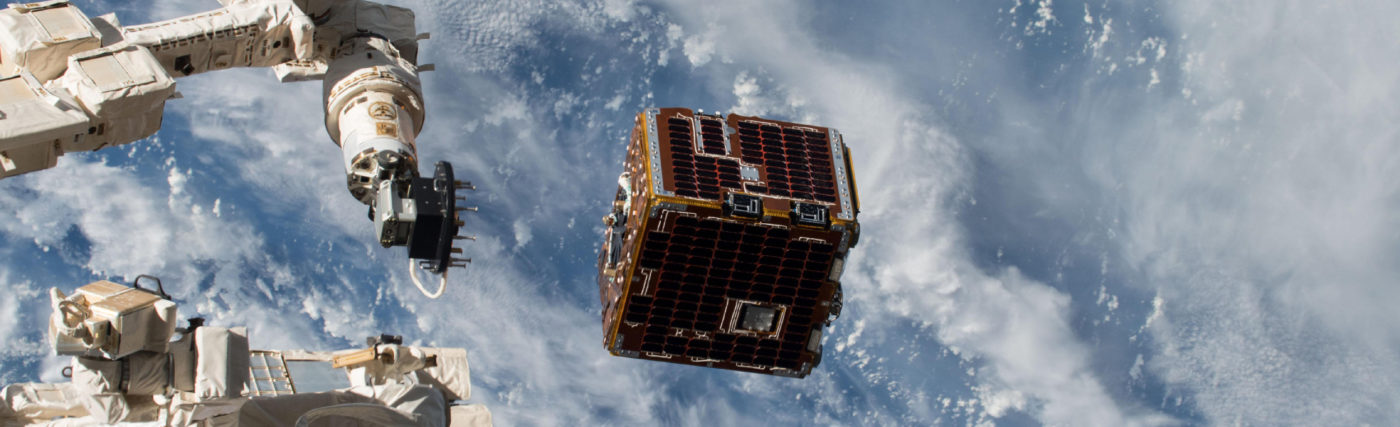
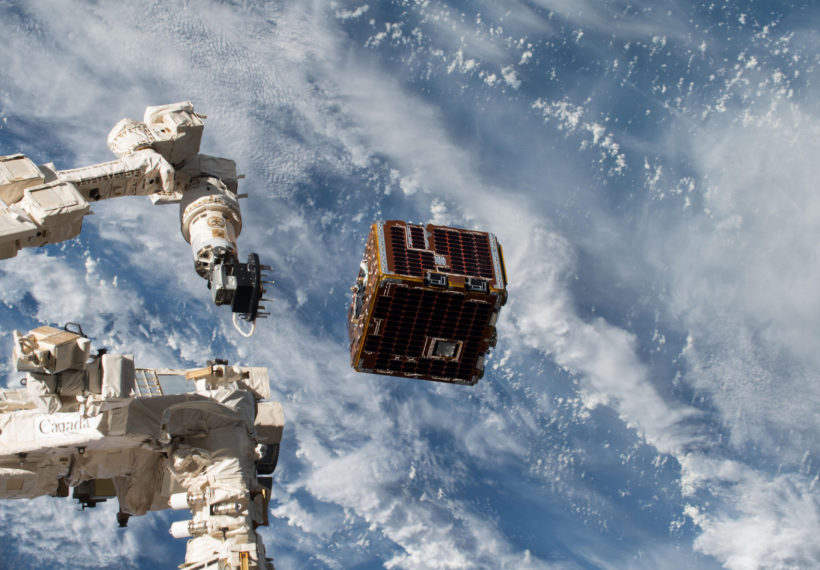
What do we do with all this space junk? On this episode, Neil deGrasse Tyson and comic co-host Chuck Nice answer questions about the stuff we put into orbit with astrodynamicist and space environmentalist, Dr. Moriba Jah. How much stuff and how many satellites are really up there?
Discover how Moriba discovered his field and his path to studying objects in orbit. What’s the magnitude of the problem with space junk? You’ll learn just how many objects are in low earth orbit and who is responsible for them. What do we do about parts that fall out of orbit toward earth? Is there any way to control it? Do we have any space junk laws?
We talk about the space debris of different government space projects. Who’s responsible for falling debris? Is the U.S. guilty of this? Can we create a “great junkyard in the sky” in a Lagrange point? Are satellites at risk of colliding with each other? We break down regulations that should be made to manage objects in orbit as we enter a new era in space travel. Should there be space traffic laws?
Are all these objects making the sky brighter? Find out about how space objects impact light pollution for hobby astronomers and researchers alike. Is all this stuff in the sky going to make stargazing difficult? Are there any solutions to limit how many satellites are in orbit? We discuss plans to remove space junk and how world governments need to coordinate on this. Is our orbit a new wild wild West? Are there any upsides to space junk? All that, plus, find out about eyesonthesky.org and space lasers!
Thanks to our Patrons Louis Smith, Dana Fambro, David Johnston, Tracy Fox, Charlene Hale, Lucas Pires, and Paulina Banach-Mazur for supporting us this week.
NOTE: StarTalk+ Patrons can watch or listen to this entire episode commercial-free.
About the prints that flank Neil in this video:
“Black Swan” & “White Swan” limited edition serigraph prints by Coast Salish artist Jane Kwatleematt Marston. For more information about this artist and her work, visit Inuit Gallery of Vancouver.
Transcript
DOWNLOAD SRTWelcome to StarTalk, your place in the universe where science and pop culture collide.
StarTalk begins right now.
This is StarTalk.
I’m your host, Neil deGrasse Tyson, your personal astrophysicist.
And today, we’re gonna talk about the space environment in which business, surveillance, travel, all takes place.
It’s like from earth’s surface up to the top of the atmosphere.
That’s something we haven’t talked about.
Chuck, that’s where we’re going today.
Yes, that’s right.
I like space junk better than…
See, you said it all fancy.
I just like to say space junk.
Space junk, space junk.
I almost hear Quincy Jones in the back.
Fomp, fomp, fomp, when, oh, fomp, oh, fomp.
Sanford and Son in space, that’ll be the next…
Well, I’ve got one of the world’s, if not the world’s expert on this very subject right here with StarTalk and his name is Moriba Jah.
Moriba, welcome to StarTalk.
Thank you so much.
It’s an honor and pleasure to be here with all of you.
Yeah, so you’re an astrodynamicist and space environmentalist.
That sounds like if no one knew what that was, you would have to invent it just because the world needs it, right?
Is that a fair way to describe what you do?
Yeah, absolutely, yeah.
You know what, though, I got to tell you, that means that there was a time…
When there wasn’t such a person.
When we didn’t need you.
So this is not a good thing that you exist because it’s like social media manager.
Like there was a time that meant that you had somebody who you were clearly a person who socialized with the media quite a bit and you needed somebody to handle that.
It didn’t mean what it means now.
Right, right, right.
It’s a bad thing that we have to have you.
It’s a bad thing that you exist.
I’m sorry, I’ve got to say that.
No, no, no.
I agree with all of you full heartedly.
After about 1957 with the launch of Sputnik, the need for me to exist began to grow.
So now Sputnik.
Well, let me finish with the man’s resume.
I’m sorry.
I already got my spread in it.
I’m ready to talk to him because he’s got some fascinating stuff.
So he’s a professor and researcher at UT Austin at the Cockrell School of Engineering.
And so let me just give the list here because every one of these could be like an entire StarTalk.
Non-gravitational astrodynamics.
I love that.
But I don’t know what in the universe is moving without the influence of gravity.
Advanced non-linear multi-sensor object tracking.
Sounds like the Pentagon needs you.
Prediction and information fusion.
What a space object detection.
This man is like, okay, if we’re gonna have a space war, I want him on our side.
But on top of that, and we’ll get to it in a later segment, but I want to put it up front right here.
Eyes on the sky mixed reality experience.
That’s not with the engineering department.
What is that?
Yeah, so interestingly enough, we have some faculty that are in the fine arts and they’ve created something called Texas Immersive.
And it’s really trying to combine digital and physical experience for storytelling.
Wow, okay, so this would increase the impact of any kind of science that you do.
Absolutely, yeah, 110% because one of the things that I’ve seen is just going to talk to scientists, it’s like the echo chamber and the self-licking ice cream cone, not so useful.
So I need to be able to reach people and the storytelling with mixed reality seems to be something that could really help.
I love that and the website is eyesonthesky.org, so that’s good.
So Chuck, would I keep interrupting?
No, I was just going to say, I just want to be a self-licking ice cream cone now.
That sounds awesome.
That just sounds like the happiest thing in the world.
Yeah, but I think there’s a limit though.
I think that’s part of the problem here.
It’s like the snake eating its tail.
Yes, exactly.
There’s a point where that doesn’t really work out.
For the snake or the tail.
That’s right, that’s right.
So, we’re actually going to turn this into a Cosmic Queries, where we’ve actually solicited questions from our fan base.
Chuck, I think you have those questions, right?
I hope so.
Give me the other Chuck who doesn’t have them.
Where’s the Chuck that has the questions?
But before we get there, while Chuck is finding his questions, Moriba, you wrote something recently just towards the end of May, which seemed to me to be a kind of a self-reflection autobiographical sort of memoir, sort of it’s an arc of life from your beginnings to where you are right now.
And I just want to ask what compelled you to write that?
Because it is a highly unusual story.
And between you and me, every interesting person I know and have ever met has had an unusual background.
It wasn’t just that linear fat, go to college, go to graduate school, get the degree, get the degree.
And then boom, no, the most interesting people are the ones who’ve lived a little.
And often that living involves stress, trauma, failures, as well as achievements.
So what can you tell us about that?
Yeah, look, I mean, I grew up in Venezuela and I went to military school for high school and a lot of trial and tribulation going through that.
I enlisted in the US military when I graduated and I wanted to be a fire pilot, watch plenty of Top Gun when I was a teenager.
So that was like my dream.
I never thought that space would have a place for me.
And yeah, basically as a security guard, guarding nukes in Montana, that’s when I started noticing dots going across the sky that disappeared in the middle of the sky.
And I’m like, is it just me seeing this?
Like, is this a UFO?
And I feel like, what is this, right?
I was completely ignorant and when I found it.
But just to be clear, it most definitely was a UFO because you didn’t know what you were looking at.
It was definitely a UFO for me, right?
And so.
Definitely, for others, for me, others it would have been an IFO.
That night, for you, it was a UFO, okay.
Absolutely.
So yeah, so basically, when I was able to figure out that these things were human-made objects reflecting sunlight and going through Earth’s shadow, that really, that really crystallized this curiosity for me to want to know more about that.
And that’s where I think my path towards astrodynamics and motion of stuff in space started.
Chuck, you see what happens when you look up sometimes?
See what happens?
And now, about you and Philadelphia, I don’t know where you’ve been looking.
When we looked up, when I looked up, what I saw was a ceiling.
So, not quite the same.
By the way, you have to not only look up, you have to be curious about what you see.
Right.
Exactly what Moriba was doing.
Okay, so how, were you American-born in Venezuela, not Venezuelan, otherwise you couldn’t just join the US military?
No, that’s good for you to notice that.
So, I was born here in the US in San Francisco, actually.
My mom’s from Haiti, my father from Sierra Leone.
They got divorced when I was very young.
My mom met this guy from Venezuela, so we moved to Venezuela when I was seven years old.
And tell me about your life in terms of discipline.
Because to be a faculty member at a major university, specializing in the fields you do, requires discipline.
So, how do you go from my reading your tract, basically no discipline to discipline?
Because if that’s a secret, you can let out.
And by the way, that should be your new job.
Teaching people that.
I’m gonna talk about getting paid.
Nice, nice.
Yeah, absolutely.
So look, I think when I was a teenager and kind of having some moments of self-reflection and going through some very low points in my life, and I think that I kind of discovered, I want my life to serve a purpose for humanity, for other people.
And I think the discipline came as a function of my inner commitment to that inner clarion call of thou shalt do something that’s useful for humanity and don’t let other people’s opinion become your reality sort of thing.
I think that’s where that came from.
Okay, so, but that takes a level of maturity, particularly growing up, to even realize that.
Yeah, I mean, having gone through military school, I think that was being forced to grow up faster than a regular teenager would have.
And then doing four years in the military at a nuclear missile base in Montana, that was also something that instilled some hard knocks discipline into me as well.
Yeah, if that doesn’t, I don’t know what will.
Here’s the nukes, your watch.
Right, yeah.
So, you know, it’s kind of hard to screw that up and then you can’t get out of it with them, my bad.
My bad, that doesn’t work.
You know, eating a sandwich and you sit back on the control board and bam, you pop the button.
Yeah, that’s my bad for a lot of people.
Yeah, exactly.
That’s right, everybody’s bad, everybody’s bad.
So before we get to our Q&A, could you give me some sense, give us all, some sense of the magnitude of the problem of space junk right now?
Yeah, so in 1957, we launched Sputnik, one satellite that, you know, didn’t live in orbit too long, but since 1957, we’ve been launching hundreds, thousands of things.
And it turns out that now we track almost 30,000 individual objects in orbit around the Earth, ranging in size from cell phone all the way to the space station.
These things are in different orbital highways going at very fast speeds, as you know.
And so when two things meet at the same place at the same time and the speeds are quite different, bad things happen and they become smaller pieces and those collisions generate more garbage and that sort of thing.
And we don’t have any sort of space traffic rules, protocols, practices that people say, hey, yeah, if I’m gonna head towards you and you’re headed towards me, we’ll both turn left or do this or there are no rules of thumb in Earth orbit, which makes things a little bit worse.
Well, you mentioned things smaller, the size of a cell phone, but you don’t mean actual cell phones are in space, do you?
Well, yeah.
So actual cell, to the best of my knowledge, we don’t have actual cell phones in Earth orbit, but it wouldn’t be a surprise to me if an astronaut went on a space walk and decided to pop this thing out and they left it like they’ve left wrenches and these sorts of things and people just don’t talk about it sort of stuff.
It’s like it fell out of people’s pockets.
That’s right.
It also wouldn’t surprise me if somebody has my carrier, which I won’t disparage publicly, but they actually were just trying to get some service.
Can you hear me now?
I’m so tired.
I’m so tired.
I’m so tired.
Can you hear me now?
I think that’s what they needed to do for the commercial, man, is actually like go up to the space station and see how well that worked.
Absolutely, that’s a good advertisement.
I’ll buy that, you know what I mean?
That’s the carrier I’m going with.
So I love your expertise.
Let’s see how our fan base, where they come from with regard to your expertise and their curiosity.
So Chuck, what do you have?
All right, for Dr.
Moriba Jah, we have questions that come from our Patreon patrons, which is how we solicit our questions now.
It used to be that we gleaned them from the various iterations that we find ourselves on the internet, but now, if you want, you just support us on patreon.com and then we’ll read your question.
Here’s the deal.
Jeff Johnson of Salt Lake City, Utah says, Dr.
Jah, can you please give us some insight into China’s recent space station, Snafu?
Were they irresponsible or was there really little to no danger to Earth’s inhabitants?
Or did they do it on purpose?
So yeah, so this was with a rocket booster from one of the stages and it just, they didn’t know where it was gonna fall.
And I thought when you launch something that big, you put little retro rockets or something on it and you guide the thing into the great toilet bowl of space, the Pacific Ocean.
So what went wrong here or what was not in the planning from the beginning?
Yeah, so I think you got it, as they say, tickety boo there, Neil, in that the responsible thing would have been to outfit this rocket with propellant and thrusters to force it in to maximize the chance of the thing not surviving reentry.
But when you leave it to mother nature to clean up the mess, hard to predict what mother nature is gonna do sometimes.
And so I think that’s where the increased risk is.
And until China actually puts on these thrusters for subsequent rocket bodies, it’s a problem.
And it’s really bad news to make the world spin up on, is this guy actually gonna fall on me today?
And we should try to avoid that.
It sounds like the Wild West, aren’t we overdue for some rules and regulations, a treaty for what you do with your trash.
It’s a trash treaty.
All right, everybody gets together.
Here’s how you dispose of the recyclables, the smelly trash, the burnable trash.
Why don’t we have that?
So the interesting thing is that we do have the United Nations Convention on Liability and Damage and it specifically states that the parties to the treaty should avoid harmful interference.
I would say that a big rocket body falling on top of your head would constitute harmful interference.
But the thing is it’s so loosely interpreted that perhaps China is saying, well, we don’t necessarily consider that harmful.
Harmful interference is not really defined and I think that’s the major issue.
So, from a sheerly litigious standpoint, they were not really-
Is that a word?
Sheerly?
I don’t know, it is now.
Sheerly?
Sheerly.
No, from a sheer, litigious standpoint.
Of, like, or pertaining to sheer.
Yes, sheerly.
So, they are, I told you it’s a word now.
In the Chuck Dictionary.
Look, let me tell you something.
There’s three dictionaries, all right?
You got Webster’s, you got Oxford, and you got Chuck.
There you go.
So, if you are looking technically by the law, they’re not irresponsible, but then if you wanted to attach morals to this, then yes, they would be irresponsible.
Yeah, absolutely, right?
And I think most of the world agrees that this is not behavior that they wanna see carry on, carried forward, and they should do something responsible about it, just like Neil said, finding a way to purposefully deorbit this thing, so that at least there’s some intent with how the thing might reenter and hopefully burn up.
Sorry.
That’s the next question.
Is it from Patreon or is it from you?
Nah, it’s from me.
I told you, you want to ask a question, you go to Ben’s join Patreon.
I just joined while we were here.
Okay, all right.
I wouldn’t know.
Has the United States ever done this?
All right, we will get to that after the break.
All right, yeah, so it’s one thing to point your finger, if, you know, he who is without sin, cast the first stone.
We will get back to that when StarTalk returns.
Space junk.
Hey, I’m Roy Hill Percival, and I support StarTalk on Patreon.
Bringing the universe down to earth, this is StarTalk with Neil deGrasse Tyson.
We’re back, StarTalk.
Got special guest, Moriba Jah, who’s a professor of, was it Astrodynamics?
Did I get that right?
Yeah, absolutely.
Astrodynamics, I love it.
I love it.
At the University of Texas at Austin, and is in their School of Engineering.
And I have Chuck.
Before the break, Chuck asked a great question, and even though he’s not on Patreon, I’ll let him ask this question.
It was, here we are pointing our fingers at China for dropping one of their boosters, who knows where, right?
Well, we know where, but they didn’t know where until it hit.
So are we without guilt in this game of lost boosters?
No, we’re not.
In fact, I would say in low earth orbit, where you can think of low earth orbit going from about, I don’t know, roughly a hundred kilometer altitude to about 1200 kilometer altitude, there’s probably about 2,000 dead rocket bodies, derelict rocket bodies of the 2000, probably about 1300 belong to Russia, launched from the Soviet Union era and all that stuff.
Wow, still there.
Yeah, yeah, yeah, still there.
And out of the remaining 700, I’m thinking that somewhere about 350 of those are Chinese and the rest are American.
So the US has quite a few hundred dead rocket bodies that are kind of like ticking time bombs and yeah.
Oh, and none of them will have a controlled re-entry.
That’s what you’re telling us.
That’s what I’m telling you.
So of all the non-controlled re-entries going forward, based on your statistics, half will be old Russia, half of the half that remains is China and then what remains is gonna be us.
So watch that place plus Skylab.
We didn’t have that.
Seems like enough people went in and out of Skylab.
We should have known where that would have fallen and we didn’t at the time.
I was alive and around and ready for that.
And I remembered Baskin Robbins, the ice cream store, said if you get hit with a Skylab part, you will get an ice cream cone that has every one of their flavors stacked on top of it.
What a prize, right?
What a prize for being dead.
Yeah, yeah, yeah.
So tell me, what happened with Skylab, America’s first Skylab laboratory?
Yeah, I mean, as you said, that thing reentered and people were pretty freaked out about that.
I remember the Mir space station.
That’s the one that I remember was Mir.
And even that was a very scary experience.
That’s the Russian space station.
All right, so we are not without guilt.
So we just have to be nicer if we weren’t pretend we were high and mighty as we point out things.
That brings further to bear the point that you made about having international rules, actual rules, then everybody would have to follow them.
Yeah, yeah.
Chuck, give me some more questions.
This is Robert Weaver and he says, Hey, would it be possible to use the Lagrange point to make a giant pile of space debris?
Seems like that would be easier than bringing it all back to earth and much more ethical than just flinging it out into space.
Also in the future, we could use it like an auto junkyard.
And when we want components or metals or stuff like that, we could just go to that to build in space instead of recycling.
So, Moriba, tell us first about Lagrange points.
Yeah, so basically these are points in a three-body system where you have some stable and some unstable points, places where this gravitational influence in that system is, let’s say, kind of null.
Things cancel each other out.
But yeah, out of the five points, out of the five Lagrange points, I believe two of them are stable and the other three are unstable.
And so I would say this.
We need to find ways of not creating orbital landfills.
So the thing is sending stuff to a Lagrange point while you might be able…
And oh, by the way, even when you send stuff there, it doesn’t mean it just stays there forever.
Like, you know, eventually the thing is going to drift out just due to perturbations that are non-gravitational, mostly in that sort of stuff.
Plus, as Neil, you clearly know this, there’s more than just a few bodies in the universe.
And so eventually, you know, the curvature of space-time will force these things out if they’re uncontrolled.
So it’s not a good answer and it’s not a viable solution.
And we should avoid trying to find a place in space to just send garbage to.
So, yeah.
And so basically, let me just see if I got this right.
He’s asking whether or not we could create a celestial equivalent of our ocean’s great garbage patch.
Yeah.
Which is where the currents come together and create a stillness.
And let’s do that in space.
And let’s just do that in space.
Yeah, so we don’t want to do that, Chuck.
Okay, so just let me throw some astrophysics in here, okay?
One of the Lagrange, one of the attractive Lagrange points in the Jupiter orbit, the Jupiter Sun orbit, there’s a leading Lagrange point and a trailing Lagrange point.
If you look there, there are asteroids that have collected there.
And they’re called the Trojan asteroids.
And so it’s fascinating.
And we knew to look there because we said, here’s a place where all the gravitational forces cancel out so there’s got to be something, anything that sort of drifts in won’t have a reason to drift out very quickly or at all.
So we actually find these places that are repositories.
But I’d like the trash heap example.
And I think of Sanford and Sun space in space.
We should do that.
If we do do that, it should have the theme song that goes along.
It should have happened.
By the way, every time you drop something off in that great junkyard in the sky, you should hear, shut up, dummy.
All right, give me some more.
All right, here we go.
This is Chris Newbry and Chris says, Hey, Chuck, I bet you don’t get my last name correct on the first try.
Oh, man.
See, I should read these first.
I’m going to say Newbry instead of Newbry.
But anyway, because it’s N-E-W-B-R-Y.
Dr.
Tyson, just love you and love your Cosmic Queries book.
SpaceX, the idea that put 42,000 satellites into orbit for optimal Internet around the world.
That being said, does that put a lot of junk into orbit?
How much does that increase the risk of future endeavors of this rock having such a net surrounding it?
Oh, so let me reshape that slightly.
So, Moriba, if we have functioning satellites, then they’re not junk.
But if you have thousands and thousands of functioning satellites, isn’t there still a risk that they could collide with each other?
Yeah, and so I would say this, low Earth orbit is already building itself up to be this place with these functioning satellites, like you said, owned by different companies, but there isn’t a space traffic coordination entity, right?
So the thing is people are making decisions about how to maneuver and how they want their satellites to behave, but they’re doing that in the absence of coordinating with other people that are also making decisions.
And so that does increase the risk of things bumping into each other in the night, so to speak.
And space isn’t just so supremely empty that we shouldn’t worry about it?
No, because we have very specific orbital highways where we put these satellites, given the purpose that we want.
And right now, for instance, with SpaceX and the StarLinks, which, oh, by the way, out of the nearly 30,000 objects that we track, about 3,500 are working satellites and Elon owns about 1,500 of those.
So it’s already quite a bit.
But…
Wait, wait, wait, so Chuck, Elon is going to become Skynet.
Oh, yes.
Look at that.
And Skynet is going to achieve consciousness.
Right.
And then that’s the end of us all.
And control the robots.
And by the way, Neil, he’s your friend.
I can’t count him as a friend.
But you say that like, okay, I’m also to blame, just because I know the guy.
All right.
Well, hold on a second.
So I’m not saying that Elon is at fault for anything.
What I am saying is that he owns most of the working satellites in Earth orbit.
He will continue to own most of them, as I see now, given the fact that he’s got licenses to launch.
And so pretty much if you want to go beyond 500 kilometer altitude, you’ve got to coordinate with Elon, because you got to go through his layer of Starlink satellites.
So the coordination piece is really important.
And that has not become manifest yet.
So that is an issue.
So I got this.
Elon is the next James Bond.
So he’s 008.
And they say, license to launch.
License to launch.
License to launch.
That’s the next thing.
Oh my God.
Well, first of all, that sounds ominous.
I know, right?
Because that guy may be on his way to being the first real supervillain.
And you heard how quickly Moriba backpedaled on pulling out his name.
Let me say something nice about him before you go to the next topic.
I didn’t mean he’s bad.
No, no, no.
He’s good.
Nothing wrong with Elon.
Yeah, we all know that Jeff Bezos is really the bad one.
Yeah.
He’s the villain.
Plus, he’s bald like Lex Luthor.
He actually does make for the perfect…
Lex Luthor.
Yeah.
He’s going to be the world’s first trillionaire probably because he’ll be the one that will land on an asteroid and mine it for all of its presence.
Right.
Cool.
Let’s go to Avneesh Joshi.
And Avneesh says this.
Hi, Dr.
Tyson, Mr.
Nice and Dr.
Jah.
I am 10 years old and I want to be an astrophysicist.
My parents gifted me with the StarTalk subscription on my birthday.
And this makes me super, super excited.
Damn.
Now we can have potty mouth on the show.
So he says this.
I read that space debris is causing the night sky to be much brighter.
Why does this happen if it does?
And will it not make stargazing that much more difficult?
How can we overcome it?
Look at this kid.
Man, what were you doing when you were 10?
Yeah.
Say one thing.
It wasn’t that.
It wasn’t that.
That’s a good answer, Moriba.
I don’t know the answer, but that is the answer.
I was writing letters like, Dear Santa Claus.
People were like, you still believe in Santa?
Anyway, go ahead.
So what about night sky observing?
What’s going on there?
Yeah.
So I will say this, right?
I’m actually working with the astronomy community to try to quantify the effects and impacts of these pieces of human stuff orbiting the Earth, and they do reflect sunlight.
So in a sense, it’s light pollution coming from the skies towards the ground, towards large pieces of glass.
And yeah, when you look at the night sky, if you’re in a place dark enough, you’re going to see more dots going across the sky than you did a decade ago.
That’s happening now, and it’s not going to get any better.
So I would say to you, 10-year-old, what’s his name again?
Abnish.
Abnish.
So I’ll say to you, Abnish, the skies are not going to get less polluted with time because we’re going to keep on launching satellites.
And so the night skies are going to be changing.
And I would love it if you could be part of the group of folks trying to find solutions to the problem.
So how about this?
Once again, we’re admitting we messed up everything.
And we can’t wait till the next generation get older and fix it.
That’s all.
Yeah, the real sorry, Abnish.
Yeah, you’re screwed.
And we did it.
Basically, that’s the answer.
So sorry, Abnish.
You’re screwed.
And we are responsible.
You’ll find us in the Bahamas.
You’ll fix the world.
I’ll be in Tahiti spending your inheritance.
What did you say, Moriba?
Yeah, I know.
So basically, I was just saying what Chuck had said is that, you know, basically, I’m trying to quantify the problem for Abnish’s generation to try to do something about it, I guess.
Yeah, that’s great.
I mean, you’re really kind of a voice crying in the wilderness right now, my friend.
And you are indeed the John the Baptist of space junk, because nobody is really paying attention to this.
So it’s important work to kind of wake people up about this issue, you know.
That’s a second religious reference here.
Yeah, no, I really appreciate that.
But I know how John’s story ends.
I was about to say.
That was great.
That was very funny.
All right, let me ask you this.
Wait, wait, so for the atheist out there, John the Baptist had his head served to…
Is it Salome?
Yes, absolutely.
Who ordered up his head?
Yeah.
Here we go.
Let me ask you this.
In terms of all this…
No, no, you’re not…
No, I want to hate you on questions.
No, no.
One per segment.
All right, here we go.
Here’s the next one.
This is from Simaya Cosmica, okay?
And she says, which is the cosmic seed.
Are there noticeable effects caused by space junk in the scientific astrophotography that interfere with ground-based observatories?
This is kind of like what Avneesh was talking about, but more on the more professional level.
When we look up into the sky, is there any research?
Is there any discovery that is being hindered because of all this junk in space?
And we got to do that when we come back from this next break.
We’ll find out all the ways that space junk may be harming the professional community, even if it’s just another interesting object to watch from the from your backyard.
So, on StarTalk, stay tuned.
We’re back, StarTalk, and we’re talking about space to be, space junk, and it’s Cosmic Queries, just trying to find out what’s going on, and how and why.
And we left off, Chuck, with the question, and who is it from?
Teresina is her name, but she calls herself the Cosmic Seed.
The Cosmic Seed, oh, very nice.
So, I know at least this much, Moriba, that these satellites that reflect sunlight, and you can see them streaking across the sky, that’s primarily in twilight, when you’re deep in twilight, but once all of the sky above you is Earth’s shadow in space, then the satellites above you don’t see sunlight, and so they don’t reflect.
So, can you think of another cost to night sky observing if you can’t otherwise see them because they’re deep in Earth’s shadow?
Yeah, absolutely.
So, these objects in space, they’re getting heated up by the solar radiation and also thermal radiation from the Earth if they’re sufficiently low, gets to where the satellites are as well.
And so, when these things go in a shadow, they’re radiating heat.
And so, from an infrared wavelengths…
Very important band that we use in modern astrophysics, because not everything just gives visible light.
So, we want to be sensitive to infrared.
Okay, go on.
Yeah, so that’s where these things are now emitters of infrared radiation that then pollutes the folks that are doing IR imaging from astronomy observatories.
That is first fascinating, but just something you really wouldn’t think about, because we tend to think about everything in terms of visible light, which is…
Well, Geordi on Star Trek would have seen it.
Right away, right?
Yeah, he would have.
Because he’s got full spectrum vision.
Yes, right, exactly.
Wow, that is so cool.
All right, so now that it’s another segment.
Give me, and this is the same, you’re allowed one question per segment, Chuck.
Okay, all right, so one of the reasons why we have all this stuff in space is because they forget just the replenishment of outdated equipment, like some new satellites.
They’re doing something for us, like some GPS or geosynchronous, like they’re all doing some communications, weather, they’re all doing something for us.
What if, would it help?
If there were like a giant relay station, so you wouldn’t put your satellite up into space, you would connect to that satellite relay station that would serve as your satellite here on Earth.
So a geosynchronous-
A satellite hub.
A satellite hub, thank you, Neil.
So a geosynchronous satellite hub that would allow you through like lasers to connect anywhere on Earth.
So the satellite hub is all connected, and then on Earth you would connect to that satellite hub instead of throwing a piece of equipment in the sky.
I’m making this up as an idea that I just want to know, could that work?
And Chuck, I’m going to tell you once, I tell you a thousand times, stay off the drugs, okay?
That’s just a line from Coming to America, actually.
But yeah, so Moriba, what do you think of that concept?
Here’s everybody doing independent things.
Well, maybe a lot of people want to do the same thing.
Right.
So I want to say that there’s merit to your idea, Chuck.
Absolutely.
Oh man, that was the best blow off I’ve received in a long time.
He didn’t even have to finish.
He didn’t have to finish.
As he went with, there’s merit to your, in other words, that is the dumbest crap I’ve ever heard.
Would you let the man be polite?
Be polite on the show.
No, so look, I think it’s a great idea if you could get enough people to buy into it, right?
But the thing is nobody’s been able to kind of assemble this sort of consortium mentality behind doing something like that.
Everybody wants to, they have their own investors, they want to do their own thing, they want sovereignty, full independence, yada, yada, yada.
So people have thought about doing this for Mars, actually.
A Mars relay, just like you said.
So, oh my God, now you’ve just opened up a whole new perspective on space junk for me just now, which is it is emblematic of our greater problematic disposition here on Earth, which is…
It’s emblematic of our problematic…
Yes, disposition.
Which is…
You had a sentence with those three words in it.
What’s wrong with that?
Emblematic of a problematic disposition.
Yes.
I’m just trying to follow you here.
I’m thinking of what you’re putting down.
Yeah.
Okay, go on.
I mean, here’s the deal.
The deal is this.
We don’t really cooperate.
I mean, scientists do, but other than that, let’s be for real.
Outside of like scientists on this Earth, we are effed.
Nobody gets together and says, hey guys, do you want to do this?
Or hey guys.
There are four things.
Just to be clear, there are four things.
There’s science.
The Olympics.
The World Cup.
And the waging of war.
These are the only things that nations coordinate for.
I’m going to eliminate one of those, Neil, for I think obvious reasons.
I’m just saying, I’m just saying.
But you know what I’m saying?
Like that’s so weird.
Like this problem in the sky from what you just, you know, said to us is the fact that we’re not together.
We can’t get together.
Well, we did it with the space station, space station, except we kicked China out of it for, and then they made their own damn space station.
Exactly.
Putting more junk in the sky.
Well, space station is not really junk though.
Wow.
It’s the size of a football field.
Yeah, that’s really cool, man.
All right, here we go.
You got your damn question.
Now let’s go back to Patreon.
All right, this is Teresina Rujas again, who says this, because I like her questions.
Is there a plan underway to remove this dog on earth junk, I mean, space junk orbiting earth?
If so, I imagine it must be really expensive.
Or is there a way to put together a plan so that someone could yield a great profit?
Ah.
So she’s tapping into the real deal, which is how do we make money off of the space junk?
Because once you start doing that, everybody will race to remove space junk.
Yeah, that’s how you motivate people.
So yeah, any plans, Moriba?
Because it sounds pretty hopeless.
Well, so in order to like monetize the whole space garbage cleaning thing, a couple of things have to happen first.
For one, I think we need sustainability metrics, like being able to say, look, here’s this orbit highway.
This is the carrying capacity for the orbit.
It’s saturated or it’s going to be exceeded.
And so in order to get capacity back, we need to remove some stuff, right?
And then we could actually hire somebody just like a tow truck.
Maybe when you see a piece of some car on the side of the freeway, you can’t just go into it and pull it off the road, right?
We have tow trucks that come by and do that.
And so we could have the equivalent, you know, orbital tow truck company that, you know, gets paid to provide capacity back to an orbit.
But without that metric, it doesn’t make a whole lot of sense because there’s no rhyme or reason, like what’s the benefit of removing this object versus that one, right?
So I got it.
You create a space tax and that tax supports the cleanup to the beautification of the highways, right?
And that way every launch, there’s a little bit of money there that’ll help get your ass back out of orbit in case you go dead.
How about drones?
Is there any way that we would be able to dispatch drones that would attach themselves to whatever, I know these things are moving at incredibly fast speeds, but that would be able to safely deorbit them.
So the drone and whatever it is together, the drone would just drag it down to a place where…
Normally drones have propeller blades, which require…
No, no, these are jet-powered drones.
Jet-powered drones, jet-packed drones.
Yeah, they wouldn’t be…
But they would only fire, they would be dispatched, but they would only fire to drag the piece back down to where the gravity would then take over.
I got it.
What about something like that?
Well, so here’s the thing, Chuck.
I mean, gravity is always doing its thing, so it’s always there.
Things are always falling, right, towards something.
But yeah, I mean, basically, if you could have a satellite that attaches to something to bring it back down, there’s several companies that have proposed something like that.
I think Astroscale out of Japan is one of them.
So Chuck, you do have…
I’m getting on your case, but these are some good ideas.
Okay, all right.
It’s not bad.
All right.
Okay, here we go.
Hey, this is Gary Marmol.
And Gary Marmol says, hey, Neil and Dr.
Jah, if light photons can push and pull a spacecraft, why not bring the laser for a ride?
So he’s looking at like solar sails.
Why can’t we do something like a solar sail on the pieces that are floating up there as junk?
Wow, so you have an orbiting laser that you aim and knock satellites back down in a controlled way for them to reenter and burn up.
And the coolest thing about it is when the laser fires, it goes pew, pew.
The space laser.
Nice.
We have the sound effects already here.
You heard it on StarTalk.
Yeah, yeah.
No, so look, certainly there are a couple of groups of people that are trying to do something like that from the ground as kind of like a risk reduction, a demonstration of the ability of lasers to effectively remove some objects from orbit.
People in Australia and Canberra are doing that.
Some folks in Germany, Stuttgart and that sort of thing.
So people are already looking at applying these lasers, at least from the ground to test that out.
But yeah, here’s the problem, Chuck, is that when you put the laser in space to do that, people from a space security perspective start having concerns because a threat is something that has the opportunity, capability and intent to cause harm.
And so with a laser, you clearly have an opportunity and capability to harm something.
Then the question is, how do you rule in or out the intent of this?
If you can use it to push junk out of the way, then maybe you could do some damage to a working satellite and how would you know and that sort of thing.
So it gets a bit contentious.
Interesting.
And interestingly enough that you said that about the threat, who’s to say that you won’t use it to push my working satellite and disrupt my communications?
Yeah, yeah, right.
Or maybe you did have good intent and then someone else takes control that you don’t have control over.
So it’s like someone steals your gun and then they commit a crime, but it was your gun, right?
Right.
So.
Interesting.
Oh, man.
This is really a…
This is quite the perplexing little problem that you had.
Because it’s the Wild West.
It’s the Wild West except it’s space.
It really is.
That’s right.
Oh, my God.
All right.
Well, let’s…
It’s Cowboys vs.
Aliens, right?
Cowboys vs.
Aliens.
I saw that movie.
I saw it.
So did I.
I didn’t quite know what to make of it, but…
Yeah, I didn’t really like it that much, but, you know, except for the scenes where the aliens were doing…
probing the humans, that was cool.
You know, the weird thing is they were mining Earth…
Right…
.
for natural resources.
Way easier to mine an asteroid.
Why would you come all the way here?
It’s like Earth is not your best supply…
.
of rare ingredients.
That’s right.
It’s like passing by like 30 gas stations just because, you know, you want…
You heard somebody…
Joey filled up a pan-heeled tank.
Exactly.
That’s crazy.
I’m really glad we debunked that movie.
It doesn’t deserve it.
There you go.
No, no, there’s another one.
I heard a radio play of aliens who came to Earth sucking up the water because they needed the hydrogen in the water for them to survive.
And that person probably had only just learned that water molecule is H2O.
And they probably just learned that, but didn’t learn anything else.
Right.
Right.
The universe is 90% hydrogen.
Right.
Right.
Right.
You don’t have to…
Let me find a compensive way to get the hydrogen, right?
Exactly.
Exactly.
That’s so funny.
Yeah.
It’d be like creating a big giant tank that allows you to breathe air.
Right.
Right here on the surface.
All right.
Here we go.
I think time for just one more question.
Okay, let me give you this one.
We know Violetta.
Violetta is the 12 and a half year old.
Uh-oh.
That’s Violetta.
This is Violetta.
Brace yourself.
Yeah, we got to close the show out with 12 year old Violetta, who is also going to be an astrophysicist.
All right.
Love that.
At 12, she knows this and she says this.
I only ever hear space junk described as being a negative thing.
So this may be kind of a weird question, but I’d like to think on the bright side a little bit.
Is there any possible upside to this space junk?
Like even any way to turn trash into treasure?
And then she goes, haha.
So clearly, that’s a 12 year old joke.
Okay.
But go ahead.
What do you have?
So to Violeta, this is a very good question.
In fact, one of the things that I’ve been proposing to to NASA and other people is let’s use the space garbage as a sensor.
And what I mean by that is this, right?
So, you know, Neil had raised this thing about non-gravitational astrodynamics at the beginning.
And basically, there’s like four things that motivate motion of stuff in space.
There’s gravity and then there’s everything else.
Everything else is like radiation, electromagnetic type stuff, particles bombarding different surfaces.
And so space environment, space weather, just like with Earth Earth weather is very complex.
But the thing is, just like we can tell how global circulation of water behaves based on following where the junk goes, like Chuck had brought up earlier, we could understand what the space weather is doing by following how it influences where the junk goes.
And so we could actually try to solve the inverse problem of given the behavior of the junk, what’s our interpretation of the space weather and use that for space weather science.
Call me crazy.
So these are these are proxy for like weather balloons almost, or weather buoys.
Yeah, absolutely.
But just to be clear, when you say space weather, it’s particles from the sun that create what we could say solar wind.
That’s right.
So the space environment, exactly, has been by recent decades has been known as space weather.
That’s right.
And so, wow.
So they are all just just corks on the waves.
Yeah, as they bob back and forth.
So I’d like to use them in that way.
But nobody’s given me any funding for that yet.
So we’ll see.
Right after they hear this show, exactly.
We edit out the Chuck Perkins.
No, by the way, now that you said that, I take back everything I said about Jeff Bezos.
Cool, well, we got to end it there.
But let me ask, so Moriba, what’s your social media presence?
Yeah, so basically, if you go to like flow.page, forward slash Moriba, you’ll find all my stuff there.
I’m on Instagram, Twitter, Moriba Jah, and also on Facebook and everywhere else.
And so, yeah, I’m easy to find.
Okay, Moriba Jah, M-O-R-I-B-A, pronounced as it’s spelled, spelled as it’s pronounced, and Jah, J-A-H.
All right, and Chuck, you’re on social media?
Yes, sir, at ChuckNiceComic, there you go.
And I do, I don’t officially follow you, I have you on a list, so.
Or maybe I do follow you, do it, wait, what’s the?
No, well, you better start.
I track you, I don’t know if I officially follow you, but I do track you.
How do you not follow me?
This is so disappointing on so many levels.
My God, I’ve never been more in.
Okay, tonight I will follow you.
Thank you.
All right, Chuck.
I think I already do follow you, though.
I follow Pee Wee Herman.
Thank you.
I’ll get on a bar and I’ll dance to some Big Shoes, maybe that will change your mind.
There you go.
There you go.
All right, we got to call it a quits there, Moriba, thanks for this.
You know, as more things fall out of the sky, can we think of you?
Yeah, absolutely.
So here’s what I want people to do, right?
I want people to go to eyesonthesky.org, check it out, see what we’re doing, make a contribution if you’re so inclined and let’s keep the love on being environmentalists for the sky alive and well.
Because you can’t love what you don’t know.
Exactly.
Or you can’t love it as deeply as you ever knew you could until you have some kind of emotional, psychological relationship with the cause.
So it’s all good and continued success down there in Austin.
Thank you so much.
All right, so I’m Neil deGrasse Tyson, your personal astrophysicist, as always bidding you good bye.


 Become a Patron