


 Unlock with Patreon
About This Episode
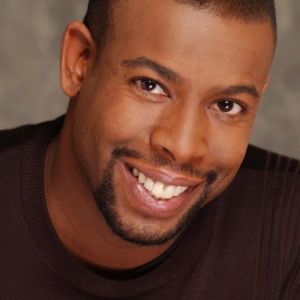
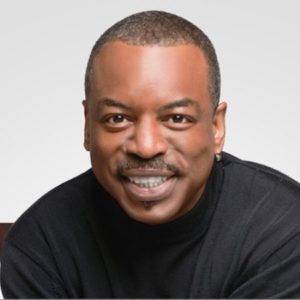
What science concepts have we not seen in fiction? On this episode, Neil deGrasse Tyson and comic co-host Chuck Nice sit down with actor and national treasure LeVar Burton to discuss future science and storytelling, and to answer fan questions.
What if you actually saw the whole electromagnetic spectrum? We discuss LeVar’s role on Star Trek, the evolution of technology through human civilization, and the digital age. Does science fiction play a special role in storytelling? We break down speculative fiction as a political act and Neil’s interaction with Ray Bradbury.
What is LeVar reading? Learn about LeVar’s podcast, LeVar Burton Reads, and what you should be reading next. We dive into questions from our patrons like: How did you deliver Star Trek jargon in a believable way? What unexplored science concept would be enjoyable to watch? What is your favorite episode of Star Trek: Next Generation? Find out what we think it would take for humanity to band together and how we can make science literacy more accessible.
Next, we explore future climate solutions and electric vehicles like the Chevrolet Bolt EUV. We break down the accessibility of electric vehicles and common worries about them. Can I take road trips? Is my Chevy going to die on the way to the levee? Discover how we’re going to get anti-green movement people to go electric. All that, plus, when the #$%& are we going to get wormholes already?!
Thanks to our Patrons Gabriel Paavola, Robert Marchal, DarenW, Im The Wiener Dog, vamsee krishna jayanthi, Stan Russell, Balackey, Chris Page, Paul Anderson, and Angy Phillips for supporting us this week.
NOTE: StarTalk+ Patrons can watch or listen to this entire episode commercial-free.
Transcript
DOWNLOAD SRTWelcome to StarTalk, your place in the universe where science and pop culture collide.
StarTalk begins right now.
This is StarTalk.
I’m your host, Neil deGrasse Tyson, your personal astrophysicist.
As is usual, I have as my co-host, Chuck Nice, Chuck.
Always good to have you, Chuck.
Oh, come on, man.
It’s always better for me to be here than it is for you to have me.
Better for me, I’m saying.
Okay, that’s complicated.
Yeah, that is.
That’s, yeah.
How about this?
How about this?
Thanks, Neil.
There you go.
I can follow that.
So we have on our show today a friend of StarTalk.
He’s been on StarTalk before.
And anyone who’s been on StarTalk before, I call them a friend because they decide to come back.
So that’s evidence that they’re friends.
We have the one and only LeVar Burton.
LeVar, welcome back to StarTalk.
Thank you so much, Neil.
It has been more than a minute.
And I was wondering if it was something that I said the last time I was here that prevented this invitation from having come sooner.
I think it was, it’ll be a cold day in hell before you guys see me again.
Oh, by the way, Neil, I just want to say before we go any further, you’re saying his name wrong.
It is National Treasure LeVar Burton.
Okay, I have to think about that.
He’s definitely National Treasure, but that takes too long.
I’ll come up with something better by the end of the show.
All right, fair enough.
NTLB works for me, I’m just saying.
A notorious NTLB.
That’s so cool.
So the last time we were together, LeVar, you fulfilled a sort of a dream of mine, because I remember dreaming, I wish someone would read to me, Good night moon.
Yes, sir.
And then the way we filmed it, like you showed up, that wavy sort of dream video, and then you showed up, and you read it to me, and so many people found that so endearing, including me, that I just want to thank you for agreeing to that, and it’s just part of your thing.
It was a pleasure, it was an opportunity that could not be passed upon.
And you’re right, I mean, it did go a little viral, didn’t it?
Yeah, yeah, a little viral.
I think it had room for more virality, but I’ll take what it got.
I’ll take what it got.
But, of course, I posed that question to you, and you fulfilled it, because you have made a modern career of supporting reading.
But let me get back to that in a minute, and just for people, just to fully introduce you.
We all, the old timers, all saw you on Roots, okay?
So, as Kuntukinte.
And by the way, I think, Chuck, are you old enough to remember?
Roots had every single black actor in the universe.
In every way, yeah, yeah, absolutely.
I’m pretty sure.
Yeah, well, you know, it was just one of those vehicles that was difficult to get white actors to play.
We could have put him in blackface, but no.
But let me just say, they.
They tried.
You know what?
I will say this, though, about Roots’ casting, because there were, I mean, so many luminaries.
My very first day as an actor on Roots, Cicely Tyson played my mother.
Dr.
Maya Angelou played my grandmother.
That’s day one on set.
Yeah, there’s no way to go after that.
I mean, gosh, yeah, where are you going after that?
But as regards the white characters, I thought that David Wolper, the producer of Roots, did a brilliant job of hiring all of America’s, think about this, all of America’s TV dads played villains in Roots.
To lower the barrier of entry for white America to this story.
Lauren Green, right?
Chuck Connors, Chuck Connors.
These are heroes.
These are white American dad heroes.
Papa Brady, Robert Reed, Lloyd Bridges.
So this was on purpose.
This was purposeful casting.
This was intentional that Ed Asner and all of these other all these lovable leading men from television played villains in Roots.
Wow, that’s really brilliant move.
And I think it’s still big of those actors because not all actors want to play a villain, right?
They think it might mark them or mess up their career.
So more power to everybody who was involved in that.
So thanks for that bit of trivia for that.
However, just a point of trivia.
All those actors stayed out of Detroit for quite some time after Roots.
This is true.
This is true.
None of them went to certain metropolitan areas until the mid-80s.
So after that, we found you in the resurrection of the Star Trek series and Star Trek Next Generation as, of course, Geordie.
My favorite part of you had nothing to do with your acting or anything, or that you were black or anything, is that you could see all bands of the electromagnetic spectrum.
That was the baddest ask.
That was physics gangster to me.
Wasn’t it just?
It really was.
I mean, seeing all of the electromagnetic spectrum is something that not many people understood.
Right, right.
Not many people understood.
And what the hell is an electromagnetic spectrum?
What is going on there?
But I thought it was scripted well because when you were given the chance to describe what you saw, there was a little bit of explanatory note in every one of those bits of commentary.
So I thought that the scripting did a good job bringing the viewer along into your…
And you saw all the stuff that nobody else could too, which was so cool.
And I have thought about that though.
Maybe if you see too much of the electromagnetic spectrum, it would be too visually noisy.
For example, right now, if you had such vision, you would see all the microwaves darting back and forth, going into your cell phone.
You would see radio waves with carrying television.
You would see so much.
And maybe if you see too much, you end up seeing nothing.
Well, you know what?
I actually had to figure out what it was Jordy saw, at least to satisfy my actor’s process, right?
So I imagine Jordy’s vision through the visor, being a lot like hearing, our hearing.
You can be in a room and you can be aware of the low hum of the refrigerator and you can hear that conversation.
You can sort of defocus and focus on one or the other.
We hear a lot of things simultaneously, but it is our brain and awareness that filters out that which we do not need to focus on in the moment.
And so I imagine Geordi’s vision a lot like that.
Even though he had access to the entire EM spectrum, he could be absolutely selective in terms of what band of information he was seeing.
Well, that’s brilliant and that’s how it would go down for sure.
That was my thought.
That was my feeling.
Yeah, very good work there.
And so, of course, the Star Trek fan base is huge and ever-growing and loyal.
And so, that surely is a part of your life, just managing that side of your fame.
But there’s a whole other community of people to whom, who are endeared to you for your commitment to reading.
And it’s not just reading, because it’s reading, but reading and storytelling.
So, tell me something about storytelling.
Tell me something about storytelling, other than the obvious.
Like, oh, we all like storytelling.
But tell me more from, because you’re in the middle of it.
In fact, you’re redefining it as we go into this next generation, when nobody is reading.
All right, so what tactics and methods and tools are you invoking?
And what’s the importance of it?
Well, there are a couple of ways to approach the answer to that question.
One, in terms of tactics, I have whole hog embraced technology as a conduit for literacy.
Because I think that the evolution of storytelling, and storytelling is as essential to humanity as is breathing oxygen, in my view, right?
Storytelling contains all of our hopes, our aspirations, all that we hold dear.
All of that, which has meaning to us, is contained in the stories that we tell.
Yes?
I don’t want to stop you because you are on a roll.
The fact that Chuck is silent, further evidence, just keep going.
I was just like, I’m going to start reading.
No, no, that’s not the biggest compliment.
The biggest compliment is, unstated there is Chuck is saying to himself, damn, I don’t even have a joke for that.
That’s Chuck’s highest compliment when somebody is talking.
So true.
Okay, please continue.
So given that everything that we embrace as essential to who we are and this journey that we’re on as human beings, given the importance of it, we need to recognize that it is only a series of technologies that have enabled us to carry this torch for storytelling throughout the ages, throughout the history of humanity.
We began with cave paintings, right?
And then gathering around the fire and telling stories about the day’s hunt.
When language became a part of how we related to one another as human beings, we then moved into the…
So that gave birth to the oral tradition, oral storytelling, which gave way to the written word.
That technology of stylus and papyrus was a sea change for how we told stories and communicate.
LeVar, people don’t often think about that as technology, but it is.
It is technology.
It’s a whole invention.
It’s a whole invention.
It gave rise to an entire industry.
Exactly right.
Conscribes.
It had impact, right?
And then that written technology gave way to printing, the printing press, right, was another whole advancement in technology that impacted storytelling, which then led us into the, you know, the moving picture and sound, right, of film and television, which I sort of categorize as the cool fire.
We gathered around the cool fire now to share stories, right?
And now we’re in the digital age.
And that’s another advancement.
So I’ve embraced, and when we brought Reading Rainbow back, we brought it back for the digital generation, right?
We used television to advance reading, to cement the relationship between a child who is learning how to read and literature.
I like to say that, you know, if you can take a kid who can read and make them a reader for life, then you’ve done something, right?
And that was the whole point of Reading Rainbow.
So, the answer to your question is I have embraced technology, Neil, in the service of promoting literature and literacy because that’s simply what my ancestors have done.
That is the great tradition of that sequence of ages, right?
Exactly.
By the way, I was going to say just before we, because I know we’re running short for this segment, but speaking of Reading Rainbow, you read to Neil, Good Night Moon.
Yeah.
Would you please read to me the bedtime story, Go the F to Sleep?
It would be my pleasure.
Chuck, it would be my pleasure.
I was in the kids section and I stumbled on that book.
Yeah.
And I said, wow, where was that book when I had kids real young?
Right.
Who lost their job because Go the F to Sleep was in the children’s section of the bookstore?
Who lost their job?
That is so funny.
Because somebody should have lost their job.
That’s the real book people, just so you know.
We got one minute left just in this segment.
LeVar, does sci-fi have any special role in storytelling relative to stories that just take place in everyday life?
Absolutely.
I think that science fiction or speculative fiction, as I prefer to call it, is absolutely relevant because it’s political.
Inventing the future is a radical act of political statement.
Nice.
So you can have a force, you can introduce a force of change on people’s moods, attitudes and thoughts.
Yes.
By inventing the future.
Absolutely.
So in the flow of time from the present and the future, you can put basically messaging in there that influence how people actually make the future happen.
And very important, I hadn’t thought about it that way.
Because most fiction is just, you know, they met in school or whatever.
It’s just something happening in the here and the now.
And oh, that was a nice story.
Now let me go on to the next story.
And nobody’s thinking trajectories into how they might behave politically, culturally, economically, socially, genderly, racially in the future.
These are all clues and cues for how we might adopt and adapt going forward.
Wow, that’s pretty dare going awesome.
Let me end this segment by saying, it’s like probably the seventh time I’ve recited this in this show, but it’s got extra relevance in this moment.
So LeVar, I spent some time briefly with Ray Bradbury, famous sci-fi author, and he recounted a story.
A woman came up to him one time and said, Mr.
Bradbury, why are all your stories so apocalyptic?
Do you really think that’s going to be our future?
And he said, no, no, no, no.
I write that so you know to avoid it.
And I said, oh wow, that’s good.
That is good.
That’s good.
Well, guys, we’ll take a quick break when we come back to StarTalk More with our interview with He Who Is a National Treasure, LeVar Burton.
We’re working on that.
And of course, Chuck Nice.
Hey, I’m Roy Hill Percival, and I support StarTalk on Patreon.
Bringing the universe down to earth, this is StarTalk with Neil deGrasse Tyson.
We’re back, StarTalk.
This is kind of a hybrid edition where we had a nice long chat with LeVar Burton in the first segment, but now this is our Cosmic Queries segment.
And so many fans out there, LeVar, you know they’re out there.
But before we go to the first question, as the reader in chief in the country and in the world, is there a book you’re reading right now?
Right now I’m reading an awful lot of short stories for my pod, to prepare for my podcast.
I have a podcast.
Oh, oh my gosh.
Oh yeah, tell me about it.
LeVar Burton Reads, where I…
Really?
That’s the name of your podcast?
LeVar, you have a podcast where you read.
What’s the name of your podcast?
LeVar, I love it.
We try to keep it simple.
We try to keep it simple.
I’m going to get a podcast called Chuck Watches TV.
Wait, I would subscribe to that shit.
I would.
I would.
I would love to watch you watch TV, Chuck.
LeVar Burton Reads.
So basically it’s like a book club, right?
Well, not exactly.
Because I have a book club, too, for the first time.
But maybe we can talk about that a little bit later.
The podcast LeVar Burton Reads, I pick a different piece of short fiction.
I’m a huge short story fan.
I love short stories.
That’s what Twilight Zone was all about.
Exactly right.
They were short stories.
I pick a different piece of short fiction in every episode and I read it to you.
And I like to say that the only thing these stories have in common is that I love them.
And I hope you will too.
Beautiful.
Beautiful.
All of my time is taken up.
My reading for pleasure time is taken up with finding stories for the podcast.
We are finishing recording season nine and about to start recording season ten.
I’m embarrassed that you’ve been at this for a while.
Yeah, we have.
Twelve episodes to a season and season nine is currently available wherever you get your podcasts on.
There you go.
Well, okay.
Well, congratulations on that.
And I’m going to tune in because I love me some short stories.
Particularly the ones with good twists at the end.
And I lean heavily into speculative fiction because it’s my favorite genre when I’m reading for personal pleasure and enjoyment.
So I lean heavily into sci-fi fantasy, the whole speculative fiction bag because that’s what makes me happy.
Okay.
And quickly, how do we find your book club?
LeVar Burton Book Club.
It’s at GetFable.
So the technology has advanced so that I could actually conduct a book club in cyberspace, right?
So I choose the books.
The first book we did was Go Tell It On A Mountain by Baldwin.
Then we read Octavia Butler’s Parable of the Sower.
You know what’s great about this?
There are many people who do like to read, but how do you know what to read next?
Yeah.
And if you curate this, oh my gosh, this is a path to enlightenment.
And I’m right there in the app having conversations, commenting, interacting with other members of the book club.
It’s perfect.
It’s a real time thing.
It’s a beautiful thing because it’s real.
I’m actually having interactions with the fans and folks who are, and we’re all reading the same thing at the same time and talking about it.
It’s pretty cool.
All right.
Super cool.
All right.
So let’s get to this.
All right.
Let’s jump right into it.
Here it is.
Okay.
All answers have to be given within 15 seconds so we can get through these.
Here we go.
LeVar, you got to go in soundbite mode.
Soundbite mode.
Here we go.
Go.
Hello, Neil, LeVar and Chuck, my wife Maria.
All of the Star Trek techno babble in such a fluent, natural, believable way.
We love you.
Thanks for everything.
Love you too, Maria.
The methodology was very simple.
As Jordi LeForge, Chief Engineer of the Enterprise, I spoke as quickly as possible, giving the impression that I knew what I was talking about.
Wow, that’s tremendous.
Right, because it’s just sitting there ready to come out.
Well, memorization is another thing.
It’s like memorizing the phone book.
It’s not in response to anything.
It’s just information.
And so that was the challenge, the memorization.
The delivery, once it was up there, I could spit it out and then it dumped out of my short term and it was gone.
Oh, I got it.
Okay, so that implies these are two separate elements of your acting.
Yes, right.
There’s the memorization and then the delivery.
And the rote memorization means this is natural to you.
No one has to know that you forgot it two minutes later.
Nobody has to know that.
Exactly right.
That’s right.
It flowed trippingly off the tongue, as they say.
But it does have to be, unlike in some cases, you can deviate just a little.
You cannot deviate at all with Star Trek because there is a technical Bible that must remain consistent throughout every single episode.
And sacrosanct, absolutely.
You could not him, you could not Haw.
You’re the chief engineer.
You have to be absolutely authoritative and demonstrative.
And that’s what the character required.
That’s awesome.
That’s just great.
Okay, this is Quentin.
Here he goes, Quentin.
Hello!
What real science concept that you have never seen in sci-fi, but you wouldn’t think would be really enjoyable to watch?
That’s for both of you.
And that’s Quentin, no last name.
He’s like Cher.
He’s just a male Cher.
That’s it.
Quentin.
Quentin, that’s a good one.
What do you got on that, LeVar?
I got nothing.
A science fiction concept that we have yet to see depicted in science fiction.
Okay, I got one.
Or a real science concept that you’ve never seen stretched out to science fiction.
Okay.
We never see in science fiction movies and books, we never see people go to the bathroom in space.
Ha ha ha!
I’ve never seen it.
I’ve never seen it.
Okay, so we need the first poop in space in a movie.
There it is.
We know it happens.
We know how it happens.
In the movie The Martian, he’s growing poop potatoes with other people’s poop, but you never see him poop.
We never see him poop.
We never see him poop.
We take that leap.
I’m just saying.
Now I just want to see a scene in any Star Trek where they go through the automatic doors and you hear a toilet flushing in the background.
I got a quick one.
Number one.
I had to do a number two.
So there’s certain constants in the laws of physics.
The speed of light is a constant.
A Planck’s constant defines what happens in the small world of quantum physics.
If you change the value of one of those constants, then exotic things happen in different regimes.
So for example, suppose the speed of light were 60 miles an hour.
Then as you drove down the street, 40, 50, 60, you start seeing relativity happen just in your own life experience.
So I would like to see a science fiction movie where they change these parameters, even the quantum parameter.
If Planck’s constant were large, you would walk through a doorway and you would diffract through the doorway the way a beam of light would because it would affect you in the way it would affect subatomic particles.
That would be really fun, I think.
Here’s another idea.
I’m making notes because this is a great idea for a story.
And you could do it with precision too because you know the exact value of the speed of these things.
That’s what I do.
So that’s my answer to Mr.
One Word Name.
Yes, there you go, Quentin.
This is Abhishek Mathur who says this.
Hello, Dr.
Tyson, Mr.
Burton, Mr.
Nice.
We have all been inspired by Star Trek.
Can you please tell me where the inspiration for the original series came from?
Live long and prosper.
Do you have any idea?
Well, I know that Gene Roddenberry, the creator of Star Trek, was a television writer.
And he envisioned, Gene’s own description of Star Trek was he wanted to create what he referred to as a wagon train to the stars.
Now, wagon train was a very popular, we used to have almost exclusively westerns on TV back in the early and mid-60s.
Wagon train was a western where you had your wagon master and his sort of cadre, but the guest stars made up the people that were on the train that week, right?
So it was sort of a cavalcade of actors that were acting out scenarios with a core cast of regulars and they were on their way west.
And that was Gene’s original concept, to do sort of a wagon train to the stars.
And what I like most when we interviewed Nichelle Nichols for StarTalk, what she told me and then she said, yeah, that’s so completely obvious now that you tell me that, that Star Trek wasn’t just simply storytelling every episode, to the extent that you could be consistent with this as a writer and as actors and everything else.
The goal was that each episode had a certain dose of morality to it.
Yes, right.
There was a lesson in there, a takeaway.
And that, and oh my gosh, yes, yes, the show was moral.
It was.
And I got to hand them that.
And one other thing, if you didn’t think, you must have thought about this.
I thought about this and I realized the enterprise, I think, I thought about this, is the first ship, the first ship portrayed in science fiction that had no destination.
Oh, wow.
Think about that.
Every other ship, oh, we’re taking this to Mars, then you get out of the ship, right?
Oh, let’s take this ship to the moon, then we get out of the ship, right?
That’s right.
Let’s go here and then you get, the ship was a vessel to transport you.
It was not its own vessel of exploration.
And that I think is an under heralded fact about that series.
It changed what exploration is all about.
That’s why children weren’t allowed on the bridge because they would be like, are we there yet?
Yes, you are because the ship is the there.
Is the there.
That’s where we’re going.
We’re here already.
All right, Chuck, time for a couple more.
Come on.
Okay, here we go.
By the way, these are all from Patreon members, right?
Yes, they are.
Is that right?
Yes.
Do they actually sound like the way Chuck is reading them?
Do you do research, Chuck, on who these people are?
No, he don’t do that.
This man don’t do any.
No, don’t even go there.
All right.
He can’t pronounce their name.
Come on, Neil.
Stop blowing me up, man.
Don’t blow up my show.
Put a shade on you there.
This is go.
This is Elizabeth Flores.
Oh, my God.
LeVar Burton is going to be on my favorite podcast.
Oh, no.
Oh, yes.
Mr.
Burton, is there any episode from The Next Generation that you were particularly proud of that stood out to you and actually in terms of being moral or a great story?
It’s my favorite TV show of all time.
I can’t wait to hear what your answer is for this episode.
You are a legend.
Yes.
So there’s that morality coming back in.
Yeah.
So LeVar, which episode do you think?
In terms of morality, I think Measure of a Man, where Data was put on trial and Picard had to defend his sentience, his humanity.
Oh, wow.
Oh, I remember that.
I think that one, that’s an episode that really stands out to me as really brilliant, really brilliant in terms of wrapping itself around the idea of artificial intelligence and where is the line?
Where is the line between?
And that was early in that trial, in that debate, right?
Absolutely.
Oh, yeah.
Okay.
So I think Measure of a Man, I believe the episode is called, Elizabeth.
Check me out, keep me honest, but I do believe that’s the…
All right.
All right, got it.
Good answer there.
Okay.
Chuck, give me two more and we’ll get them fast.
Go.
This is Hayden Barnett.
What would it take for the human race to come together and achieve a Star Trek-esque mission centered around the prime directive of protecting and preserving civilizations without interfering?
When can we even…
When we can’t even protect and preserve our own planet?
I think you just answered your question, bro.
I actually do.
I have thought about this a lot, in fact, and I believe that a first contact with another, to us, an alien civilization, reaching out and making contact to us, would be an event that had the power to get us to realize, whoa, we really are in this together.
It would cause us to get our act together right away.
I do believe.
I thought the coronavirus would have done that.
You would have thought.
It’s like an invading force, not from outer space, but it’s something that would attack all humans.
And did we band together?
So LeVar, no, I don’t believe you, but I don’t believe you.
But I don’t believe it would be an invading force.
I believe that any race of beings, intelligent enough to figure out, you know, light travel, how to get here, would be involved enough to know that violence is a primitive emotion.
Unless, of course, they saw this place as a McDonald’s drive-
Hello, Neil, Mr.
Burton, I admire all the work you have done to make science accessible to kids, also making it cool.
So, how can we improve science literacy for all?
So that’s Carey Manberg, who’s bringing in the science and the literacy, tying you guys together.
So, LeVar, a big part of what you do is to get people to read, enjoy reading, and fiction is a big part of that.
But at some point, the reality of the real world matters.
And there’s half the books published are nonfiction.
So, where do you, how do you, the storytelling versus the learning of the reality, is that a cog in this wheel of getting people to be scientifically literate?
I believe it is because it is our engagement with fiction literature that exercises our imagination.
The imagination is the superpower of the human being.
No other species can do what we do in our minds.
And life is a series of solving problems.
The tool that we need most prevalent in our problem-solving exercises is what?
Imagination.
Imaginations.
Mic drop.
Can’t end it any better than that.
You’re right.
Because if you have no imagination, you’re just confronted with information and you won’t know what the hell to do with it.
You won’t know what to do with it.
Sweet.
No, you won’t know what the hell to do with it.
You won’t know what the hell to do with it.
That hell belonged in that sentence, dude.
You’re right.
You’re right.
I should have tried to clean it up.
All right.
We got to take a quick break.
But when we come back more of StarTalk with our special guest, the man who is high and exalted, LeVar Burton and Chuck, when we return on StarTalk.
Hey StarTalk fans.
This next segment of our episode with the one and only LeVar Burton is sponsored by the All Electric Chevrolet Bolt EUV, the everyday electric vehicle for everyday people.
The All Electric Chevy Bolt EUV has so many cool features, including the ability to engage in conversations hands-free with the industry’s first hands-free driving assistance technology.
You can find out more at chevrolet.com/electric/bolt dash EUV.
Now let’s get back to the show.
We’re back StarTalk, which is a hybrid of conversation plus cosmic queries in this third and final segment of today’s show with our special guest, LeVar Burton.
Sorry, Neil.
What?
I said this all show.
You’re saying his name wrong.
It’s National Treasure LeVar Burton.
Here it is.
If in America we had knighthood, it would be Sir LeVar Burton.
Nice.
I like it.
That sounds better than National Treasure.
Because that’s just…
He’s also a National Treasure.
But let’s give him an American knighthood.
A StarTalk knighthood.
I will take the StarTalk knighthood.
I think part of the point of America was no monarchy.
No, you’re not to do that.
But the StarTalk knighthood?
There it is.
That’s legitimate.
We just came out of a whole segment with our fan base and your fan base asking you questions.
But this one we’re going to devote to a topic that’s important to you.
So what’s the question that you have?
Well, here’s my question.
I will set it up with a feeling, a thought that I possess.
There’s no feelings on this show.
Don’t put feelings.
There’s no feelings in science?
There’s no feelings in science.
What are you doing?
There’s no crying in science.
There’s no crying in astrophysics.
It is clear and all of the scientists, the experts, have recently come out and said that in terms of global warming, and climate science, we have reached a point of no return.
That human behavior, most of it in recent memory, has caused an acceleration of the warming of the atmosphere.
And there is no going back.
There’s no putting that genie back in the bottle.
So, I know that I am looking for my next vehicle to be an electric vehicle.
My query, Neil, is given the state that we’re in, do we have enough time?
I mean, they say that there are certain things that we can’t roll the clock back on, but there is time to make certain changes.
Is there enough time?
Okay, I have a simple answer for you.
We’re all going to die.
This segment actually has a sponsorship with Chevrolet, and Chuck may have some insights into that for you, LeVar.
So, Chuck, what do you have?
Super excited about this, because as I always say, or try to point out, I’m very concerned about the environment, as you and LeVar are as well.
And we’re doing this segment in partnership with the Chevrolet Bolt EUV and…
But that E, that’s SUV, but it has an E in it?
Yes, yes.
That’s clever.
Okay, but that stands for electric, because I’m smart, I figured that out.
Electric utility vehicle.
All right.
And I was able to take a tour of this car, and it’s really exciting technology.
So I’m really happy to talk about this.
Okay, but that’ll be relevant only if, to LeVar’s point, what, you know, okay, LeVar probably has slightly more means than most people, so he could buy any car he wanted.
And so, but he alone can’t make this, he can’t put the genie back in the bottle, but we need everyone to participate in one way or another.
And so, why is this car a part of that equation?
That’s what I want to know.
The cool thing is, you want to call it the electric vehicle of the people, if you want, because what they have done is made this accessible at an entry point that many people can enter, enter the market.
You mean a price point?
But the truth is that you can, you know, this is a very accessible vehicle, and the people who normally drive electric vehicles right now, you know, they’re pretty expensive.
The expensive ones, and it’s wealthy people, you know, kind of showing off that they’re very green, and you can’t expect sort of your average person to spend big parts of their pocketbook just to lead the way in the green movement.
You need corporations to meet us somewhere, somewhere halfway, or more than halfway, right?
More than halfway.
More than halfway, yeah.
Yeah, yeah.
So this makes sense.
This is good.
So this is an electric SUV that has a price point that most people can meet.
And that’s important.
Most people who buy cars at all can meet it, should be able to meet it.
Right.
Okay.
But one other thing, Chuck.
In the early days of electric vehicles, they had a range of maybe 60 miles, 100 miles tops.
So really they were like town cars.
You’d commute with it.
Nobody’s going on any trips.
First, how would you recharge it?
You don’t want to get stuck in the middle of nowhere.
And how are you going to go on any trip because you don’t have the miles to do it?
So what’s going on here?
So the great thing, I mean, this is what really impressed me.
So what you’re talking about is range anxiety, which is kind of a hesitancy that affects a lot of people for getting an electric car, like you said.
But this car has, I would say, nearly a 250-mile range, depending on how you drive.
That’s real distance.
That’s real distance.
Yes.
And with respect to what you said.
Unless you live in Siberia or Northern Canada, if you live in any place where people live, that’ll get you to any near city, for sure.
Yeah, but before then, if you live in Siberia, or like far in North Canada, you just strap a bunch of dogs to the EUV.
That gets you where you gotta go until you gotta actually use the battery.
I can hear the dogs talking now.
They’ll say, you know, when we get your ass to this destination, you’re putting us in the car, and we’re driving away.
Yes, we’re riding in the back from now.
But yeah, the great thing about your other point in charging is that right now there are 40,000 charging stations, public charging stations that pretty much allow you to charge on your destination to, you know, many, many places in the country.
And there’s an app that allows you to map your trip beforehand so that if you do have to stop and charge, it shows you where to do that.
Okay, so you’re not blind searching for what’s out there.
Right, again, because that’s part of the anxiety that you mentioned that no one has if you have a gas car.
So let me get back to LeVar’s question then.
So is it too late?
And so here’s what people, if you read the reports, you would learn this, but most people don’t.
They just see the headlines.
Here’s what happens.
As you, as you, as we have warmed the earth, in part by boosting greenhouse gases and the most famous, there’s several, but the most infamous among them is carbon dioxide.
And that’s why we loosely speak of, speak of a carbon footprint.
It’s not carbon specifically.
It’s carbon dioxide as the footprint that people want to reduce because that would then reduce the trapping of heat.
All right, we got that.
Here’s the thing.
As carbon dioxide picks up in the atmosphere, the oceans see it and the oceans have their own amount of carbon dioxide dissolved in it.
But if you have more in the air than in the ocean, the carbon dioxide goes into equilibrium with the ocean.
So the ocean uptakes carbon dioxide from the atmosphere.
Not only that, as the atmosphere warms, the ocean says, hey, you can’t be warm without me.
I want to take some of that heat.
And so the ocean becomes a repository for the carbon dioxide at heat that we are pumping into the atmosphere.
The point is if we just stopped all carbon emission tomorrow, took it to zero, what will happen is that carbon will slowly come out of the atmosphere as plants absorb it and they grow and this sort of thing.
But then the ocean says, hey, I can give you some more, because it’s going to try to always be in equilibrium with that.
And so the ocean has been stockpiling our wrongdoings for decades.
So that’s why they…
So when they say it’s the point of no return, what they really mean is that even if we stopped, it will get worse before it gets better.
Before it gets better.
That’s right.
And so…
But to say no return ever, that’s not true.
So the language is a little…
it’s sharper than the actual reality, but it’s the kind of sharpness we need to take action.
Otherwise, we’re going to lose all of Florida.
Chuck wouldn’t mind if that happened, but…
Not at all.
I got family in Orlando.
We’ll evacuate them.
Okay, thank you, Chuck.
We’ve got a special evac for LeVar’s family.
So that’s the problem.
And by the way, transportation is one part of the total effort that is necessary.
But the fact that it’s not just privileged people who can show off that they’re green with the expense of electric cars they’re buying.
If everybody has access, then it could become a…
This is directly to LeVar’s concern.
If the price point is right, then it becomes a natural economic driver of doing the right thing rather than hitting people on the head.
So if you’re…
let’s say you’re anti-green movement, and we probably all know people who are, maybe even relatives who came over for Thanksgiving.
Talking to you, Uncle Jimmy.
Talking to you.
I don’t care.
Is Uncle Jimmy listening?
That’s right.
So here’s the thing.
So you don’t have to wave your finger at Uncle Jimmy.
You could say, Uncle Jimmy, you spent $10,000 more than you had to, and we’re all driving this car, and we save money.
How about you?
And he’ll look really stupid and say, I prefer to spend more money and pollute.
So that doesn’t play.
So you make the economic solution part of the solution.
And then there’s no one playing high and mighty relative to other people’s morals or principles.
Well, go ahead.
Go ahead, Chevy.
Go ahead, Chevrolet.
You know, because we are going to need everybody’s buying.
Yes.
I mean, planet wide, we’re going to need everybody’s buying.
And so having an affordable solution, you know, for regular folks.
And for me, my first family car, I mean, when I was a kid, was a Chevrolet, a Chevy Impala.
Big old, back when that, you know, land yacht, you know, one of those things.
Fits six people across the front and the rear seat.
The kids were playing football in the back of the car.
It would be a pre-seatbelt.
Seatbelts weren’t invented yet.
No seatbelts in sight.
That’s how old I am.
So it would be fun if Chevy really takes off with this, they should get everybody to get together and drive the Chevy to the levy.
There you go.
Now you lost everyone under 30.
Listen, Mr.
Grey-haired man, don’t be pulling rank on me.
Hey, I’m just saying, I love Don McLean as much as the next guy.
American Pie, American Pie.
Right?
So did you have another question?
Well, so what does this mean then for the far future, Neil, going way down the line?
Okay, so we’re going to get, I’m going to make the assumption that we’re going to get to a point where planet wide, we have changed our mindset, which is really what’s necessary.
We have to just really change our mindset about what makes sense in automobile transportation.
And clearly the electric option is the best option going forward.
Yeah, but I can take it another notch.
You know, you have size fiction chops.
So let me take it up another notch.
Just a little bit, a little bit.
He did a couple things, that’s all.
It’s been too, it’s been way too long since we’ve…
I know, I know, yeah, we’re long overdue, long overdue.
Long overdue.
So here’s, let me tell you about something I tweeted long ago.
Alright, I was in, was it Charlotte?
What’s the city in North Carolina?
I guess Charlotte and Charlottetville mixed up.
Charlotte, North Carolina.
I’m there and it’s an airport where I had to go from a big plane to a little plane.
I’ve told this story before, but it has extra relevance now.
And in that, and I decided to have Carry On, and that was a mistake because the gate for the big plane was really far from the gate, and I’m just walking and walking, and my deltoids are in pain.
And I finally get to where I’m going, and I thought I’d be clever.
So I got on Twitter, and I said, I can’t wait until the day we have wormholes.
That way all gates will be adjacent to each other.
Okay, so I thought being clever, right?
I’m being geek.
I’m feeding the geek soul with that tweet.
And then I got out geeked.
Because the geek spectrum, as you know, Jordy, excuse me, as you know, LeVar, goes the full, there’s no limit to the geek spectrum, okay?
So someone tweeted back and said, Dr.
Tyson, the day we have wormholes, you won’t need airplanes.
And I said, oh, I said, I just got smoked on that one.
So here’s my point.
The day we have total access and manipulation of, access to manipulation of wormholes, the entire transportation grid is rendered obsolete.
So your refrigerator has a door to the produce shelf at the grocery store.
You just pop it open.
And you bring it in and you automatically charge, you close the door and there it is.
Think Monsters Inc.
Remember, they took home, the Monsters took home doors.
They open the door and the kids closet is on the other side of the door.
What no one said in that movie, and I went out screaming to everybody, this movie is about wormholes, okay?
Yes.
That’s what this is about.
Well, now no kid wants wormholes.
Okay.
The monster will show up.
So, LeVar, I’m thinking, let’s take it to the very distant future.
You don’t even need transporters because you’re not beaming energy through space.
You’re just opening a portal stepping through coming out the other side.
And if that’s the future of transportation, imagine how much real estate is returned to the people.
LeVar, you live in LA?
What, is the 405-12 freaking lanes not including off-ramps and on-ramps?
How much room is just roads and cars and pollution and all of this?
Infrastructure that will not be necessary in the far future.
And in the same way today, we don’t have horse stalls to put the cabs that you would be taking when you came back.
No, so that’s my vision of the future.
And so, that’s even beyond the electric vehicles.
But we got to do electric before we get there because I don’t know when the hell we’re going to have…
I know we got electric cars.
I know we got electric cars.
So, Chuck, any final remarks on that?
It’s funny that you were talking about technology and the EUV because one of the things I was impressed with is the fact that, one, they have hands-free driving with supercruise.
So, that’s kind of futuristic, right?
That’s futuristic, that’s right.
It allows you to kind of…
You can engage in a conversation without being distracted by the road.
The car is kind of watching things for you.
I think it’s really…
It’s interesting because I see us heading in that direction.
You said you won’t be distracted by the road.
And, I mean, one of my pet peeves in Los Angeles is people driving their phones.
Oh, right, right.
And, you know, they’re just…
Attention is split.
So, I really think that our saving grace is autonomous driving vehicles so that we don’t need to be concerned with what’s going on on the road.
The car will make those decisions for us.
Yeah, so it will save not only the driver, but whoever the driver might end up hitting for not having paid attention.
That’s the other traffic on the road as well.
Right, right, right.
And my favorite bumper sticker ever, which I saw in Los Angeles, was caution, driver applying makeup.
And that was me.
That was me, by the way.
And that was you, Chuck.
I don’t know how you got behind me.
That’s why I look good.
That’s why I look so good.
Let me just say this, guys.
Always pay attention while driving when you’re using Super Cruise for compatible roads.
And do not use hand-held devices.
No matter what we’re saying.
No matter what we’re saying, okay.
And view chevrolet.com/electric/super Dash Cruise for compatible roads, which is, I mean, that’s really kind of cool.
But that’s the part where everything else you guys were talking about.
Well, very good.
Well, guys, we’ve got to land this plane or park this car.
LeVar, it’s always good to see you, dude.
You did it again.
Sir LeVar.
Sir LeVar.
Sir, it’s StarTalk Sir.
Sir LeVar.
No, it’s been great to see you.
It’s not often enough.
But I do track you on Twitter.
You have the kindest, gentlest Twitter stream.
And people still get pissed off.
Unless you come for me.
Unless you come for me.
If you come for me, you better bring a fire extinguisher.
I love it.
Because Coonta don’t play.
Coonta don’t play.
That’s amazing.
Coonta, cut off half your foot and keep running.
Whatever.
I thought I remembered a scene like that.
Anyhow, good.
So we had it.
LeVar, don’t be such a stranger next time.
Chuck, always good to have you as my co-host.
And Neil, let me say to everybody before we go, if you’re ready to make the electric future part of your present and check out the Chevrolet Bolt EUV at chevrolet.com/electric and take the virtual tour if you can.
That’s just saying.
Neil deGrasse Tyson here, your personal astrophysicist.
As always, keep looking up.
 Become a Patron