


 Unlock with Patreon
About This Episode
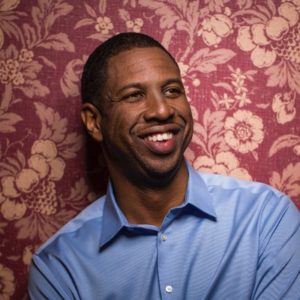
Do we really know the age of the universe? On this episode, Neil deGrasse Tyson and comic co-host Paul Mecurio answer astrophysics questions about the big bang, gravitational waves, and the speed of light with astrophysicist Hakeem Oluseyi.
We dive into Hakeem’s research into the atmosphere of the sun. What’s going on in there? Is there a secret to the solar cycle where the poles reverse? What is solar dynamo? Next, does the universe end with another big bang? We discuss whether the universe will recollapse on itself, Ibn al-Haytham’s views on observation, and the evolution of the scientific method. How will JWST help us fill in gaps in our knowledge?
Could we use gravitational waves like radio waves? Could we one day be able to detect gravitational ripples of everything? How do we get the Internet out to rural areas? We give our takes on Starlink and what the Kessler effect means for all these satellites. Is there a limit to how many things we can put into orbit?
We explore the ingenuity in Ebonics and how language becomes more efficient. We get into why the speed of light is what it is and the nature of mechanical waves. How do we have stars that are supposedly older than the universe? You’ll learn about uncertainty and error bars but also the great conundrum facing cosmology today. How did we arrive at two different ages for the universe? Is one of the methods wrong? All that, and find out which age of the universe we think could be the right one.
Thanks to our Patrons Samuel Case, Daniel, Nicole Hensley, Larry Nixon, NaOnak Apophis, Erik Maynard, Carrie Beougher, Michael Aguilar, Shakhan, and Alexander Newhouse for supporting us this week.
NOTE: StarTalk+ Patrons can watch or listen to this entire episode commercial-free.
Transcript
DOWNLOAD SRTWelcome to StarTalk, your place in the universe where science and pop culture collide.
StarTalk begins right now.
This is StarTalk.
We’ve got another Cosmic Queries edition for you, an all-purpose general astrophysics Cosmic Queries.
And we’ve got an old friend of StarTalk, he’s been on once or twice before, Hakeem Oluseyi, did I pronounce that right, Hakeem?
Close, close, yeah, yeah.
It’s an O and a shh, Oluseyi, think O-lu-she-y.
O-lu-she-y, but it’s O-lu-she-y, yeah.
It’s great to have you back on.
And I got as my guest co-host, Paul Mecurio.
Paul, good to see you, man.
Hey, good to see you again, Hakeem.
Great to meet you.
And great to be back.
Yeah, yeah, it’s been too long, Paul.
And you’re a host of the Inside Out podcast.
So, and I was once a guest on that program.
You were, and we got to get you back on.
It’s been a while and you were great.
Excellent, excellent.
There’s a lot of sobbing during the interview, but we cut that out.
So, Hakeem, you’re a fellow astrophysicist.
Educated at Stanford, and you’re right now a professor at George Mason University.
And you’ve been a busy guy.
You’ve got a memoir.
Came out a couple of years ago.
When did that come out?
This past June.
Yeah, June 2021.
Yeah, yeah.
Because your story, you’re in the military.
Yeah.
You were, weren’t you homeless for a while or something?
Or in the streets?
Absolutely, yeah.
Yeah, I had a couple of abouts with homelessness.
You know, not really sleeping on the street homeless, sleeping on somebody’s couch, on somebody’s floor homeless.
You know.
Those are two different levels, right?
There’s different levels, that’s right, yeah, yeah, yeah.
So, but anyway, I grant all that has worked out, and I encourage people to read that memoir.
Memoirs, I think as a genre, are packed with all the lessons anyone ever needs.
Absolutely.
And so, I’m delighted to have yours as part of that community of storytelling.
Thank you.
To help people bring shape to their lives.
So, Paul collected questions from our Patreon supporters, and they’re just all purpose, grab bag astrophysics.
So, I know a little bit, you know probably more.
So, we’ll knock this out.
We’ll see.
But just before we begin, what was the title of your thesis, your PhD thesis?
Oh yeah, my PhD thesis was titled, Development of a Global Model of the Sun’s Atmosphere with an Emphasis on the Solar Transition Region.
Oh.
That is so weird, because mine was exactly the same thing.
It’s like, we’re brothers from another mother.
Okay, so we need sun expertise, right?
Oh, absolutely, yeah.
The sun seems to always be misbehaving.
It burps up gases, it unleashes solar flares, it’s got spots.
What have you been doing to the sun?
Yeah, so I look at how energy and mass are transferred throughout the solar atmosphere.
So traditionally, the way we look at it is, by the mid 20th century, we thought we understood stars really well, but it failed at the surface of the star.
Because if you look at the surface of a star, you see all these plasma loops and jets and weird stuff happening, right?
That’s due to action of magnetic fields.
So, I’ll tell you what really was cool for me.
Now, this, Paul, you’re gonna probably have thought the same thought.
But to me, it was-
Because he had the same thesis.
He was studying the same subject.
Yeah, but what we do as astronomers and astrophysicists is that we look at light and we say, oh, here’s what the matter millions of miles away are doing and the fields are doing based on our analysis of this light.
So, I really got into the interaction of light and matter.
So, I left graduate school and went into Silicon Valley and my first patents were on using spectroscopy and semiconductor manufacturing.
Ta-da!
So, Paul, what were your first patents on?
I invented this thing called sunglasses, Mr.
Wiseguy.
Okay, so there, which everyone gets to look at the sun.
What about solar, can we, I just have a question.
Solar cycle, right, is that still a conundrum and not sort of something that we have our head around yet?
Yeah, so when we say solar cycle, what we’re talking about for those people who might not know is, you know, just like planets are like a bar magnet, a planet like the earth that’s spinning fast and have a liquid iron core, so is the sun.
But the difference is, the sun doesn’t have a solid surface, it’s plasma.
And so, you know, when it gets fully separated, one pole at the top, the opposite pole at the bottom, they then migrate and mix up.
And when they’re mostly mixed is when we get the biggest flares and coronal mass ejections, and then they pass by and it flips, right?
And it just does that over and over.
And each time-
That’s an 11 year cycle, right?
Yeah, that’s an 11 year cycle, or 22, if you go back to the original configuration, right?
Yeah, and so the thing is, is that this so-called source of these magnetic fields, we call the solar dynamo.
And the people who do helioseismology have somehow, I don’t know the details.
You know, if you look at the interior structure of the sun, there’s the core where the fusion reactions occur.
Then there’s this region known as the radiative zone, where the energy moves out via light.
Then there’s the outer 30%, that’s like boiling.
We call it the convective zone.
So the magnetic fields appear to be generated at the boundary between the convective and the radiative zone.
Exactly how?
Who knows?
I don’t know, maybe someone does.
And if you can answer that, then you can explain the solar cycle and sort of what’s behind that.
Yeah, exactly.
If you can answer that question.
Well, part of it is that the sun does not rotate as one physical solid object, right?
It’s that the equator rotates faster than other latitudes, right?
That’s right, that’s right.
So, you know, so it’s really weird, you know, and it also has, if you look at Jupiter’s bandit structure, it also has a bandit structure in the subsurface that the helioseismologists have figured out.
And, you know, and these bands go at different velocities, right, so, you know, you have this big, you know, difference, like you say, it’s slower at the poles, faster at the equator, but then, you know, there’s details within there.
Right, and it’s the equal, same speed at each pole?
I have no idea if that’s the case or not, I don’t know.
All right, can you get back to me on that?
Yeah, I’ll go, I’ll go.
No, no, we have a mission going to the sun, but the sun’s very hot, so we’re gonna go at night.
What questions?
Yeah, we got a lot of great questions.
We have a lot of great questions today.
So I’m gonna start with Kevin Bond.
We know that the Big Bang Theory created the universe and it’s been constantly expanding, then it begins to shrink and implode on itself.
So when the universe reaches that final point of imploding to the smallest point, is that event what recreates a Big Bang Theory and recreates the universe?
Now there’s a second part to this, but I think we should do it in two parts and that’s the first part.
I got this, guys.
I can take this, Hakeem.
I can take this one.
There is no observational evidence ever in the history of cosmology to say that we’re gonna re-collapse.
None.
All data has always shown a one-way trip, which has been very unsettling to people who prefer tidy stories where, you know, it expands and contracts and expands and contracts, and it’s like, no, it’s a one-way trip, and it’s philosophically unsettling to me.
Yeah.
Yeah.
Do we know why it’s only a one-way trip by scientifically?
The explosive energy exceeds the gravitational energy that would pull it all back together.
That’s all there is.
It’s that simple.
So deal with it.
And I’ll say it, I say it often, I’ll say it again.
The universe is under no obligation to make sense to us.
I think I’ve seen that on a T-shirt somewhere or a bean.
I don’t know.
Yeah.
Bumper sticker or what?
Yeah.
You know, that’s the interesting thing about this Big Bang thing is because, you know, if you hear people talk about it in the public sphere, you know, there’s some sort of, there’s one train of thought that leaves me to believe that people think that every 30, 40, 50 years, all the world’s scientists get together in a room and the topic is, what’s the big lie we’re all gonna agree on, right?
That’s what they think is happening.
That’s what they think is happening, right?
Literally, no, nobody can agree on anything.
So, yeah, so the Big Bang, you know, it was one of those things where it really shows you the power of science and what we do, you know?
So I was reading, I was just reading a book written by Albert Einstein and someone else in 1938, right?
And so he was, it’s called The Evolution of Physics.
And one of the things he was talking about is how physical thought, you know, what we call the scientific method developed.
And so, you know, in the Western world, we start with Galileo.
I know the other author, it’s Leopold Infeld.
That’s right, yep, yep.
And so the thing that he picked up on that I was unaware of, so, you know, one thing I knew that, you know, my fellow Western scientists typically don’t know is Ibn al-Haytham, you know, the guy who wrote the Book of Optics and, you know, was sort of like, you know, in the golden age of Islam, the golden age of Islam, around the year 1021, right?
So I was like, why weren’t we celebrating the thousand years of the scientific best in 2021?
Because he wrote the Book of Optics in 1021, but he insisted that what we believe to be true about the universe should be consistent with what we observe to be true about the universe.
And the thing that Einstein points out is that what we observe can only take us so far, because the universe is deceptive and it throws you these clues that can lead you astray.
Yeah, and so like Aristotle and Al, they took all the clues in and they came up with a model that was wrong, but was consistent with what they observed.
Then Galileo decided to do these mental experiments that you could never actually do in real life, right?
He’s like, you know, he was noticing that if I roll a ball down one plane, it goes almost to the same height up the next plane, but then if you make the second plane have a shallower angle, it still tries to reach the same height.
Now he imagined, what if I got rid of all the friction on the between the ball and the floor and I got rid of the friction within the wheels, it would go forever is what he realized, right?
And that’s what overturned everything was him imagining an experiment that we could never do.
Now here’s the thing about that.
You can take that idea and you can make predictions.
And I feel like the Big Bang is the best example of how powerful that technique is.
Because unlike other experimental science where you can like control variables, you can’t do that in a Petri dish.
The universe is not in a Petri dish.
That’s right.
So you gotta say, if this happened, what must have occurred?
And then go look for it.
And the fact that we have all these crazy predictions that have all, to high precision have come to fruition.
So I get on that because the good doctor said, observations, right?
Everything we observe shows that the universe is not gonna collapse, but the big bang has gone even further.
It’s not just what we observed, it’s what we could have imagined must have occurred.
And then we find that it’s there with high precision.
So it’s not like one idea in competition with others.
Like the whole idea of the universe being small and dense and hot and expanding to this point is observed fact.
I would add to that in a more simple terrestrial example.
If there’s a cave and it just snowed and you see bear prints in the snow entering the cave without ever having seen the bear, you have evidence that there was a bear in the cave.
Absolutely.
There are ways to know without actually seeing.
But is there some sort of, is there some hesitation to sort of theorize on things?
I mean, obviously not.
I mean, that’s what science is about.
It’s not just observation, but it’s about going the next step.
I mean, like the fact that the Earth, the big bang, it’s 13.86 billion, but there’s a star out there that’s 14, 15, 16 billion.
Right?
Right, yeah.
Those.
Oh, he remembered that one.
You still can’t get to sleep on that one.
They’ll pop up.
They’ll pop up every now and then, you know?
And so yes, it’s a conundrum.
And so that’s, I mean, that’s the fun part about being on the frontier.
The frontier is full of conundrums.
Only some of them get the interest of the press and the public.
But what they want to think is that, see, scientists have no clue about anything.
And they’re all like, no, we keep working on it and we figure it out.
You know, an example I like to give is, you know, it’s not new to me.
I mean, I didn’t invent it, but it’s the damselfly.
It lives but a day in a forest, right?
Now imagine you’re a damselfly scientist and you’re in a forest and you see a tree standing, you see a rotting log and you see a seed on the ground.
You could not think, oh wow, the seed must grow into the tree, which we don’t, right?
You gotta get lucky.
Which then dies and rots in the tree.
Right, right, you gotta get lucky.
You need many generations, you need to make lots of observations, you need people to say, oh, I noticed that when the tree falls, it looks like the, oh, and I saw the seed fall, right?
And you can begin to piece things together, but you still have some gaps, okay?
So we just launched the James Webb Space Telescope.
One of those gaps is from when the Big Bang radiation was set free, what we call recombination 380 million years ago, all the way up until we have stars and galaxies, right?
There’s a big gap of no knowledge.
The dark ages, reionization, the first stars and galaxies, you know?
So even though you know a lot, you don’t necessarily know everything, but because you don’t know everything, it doesn’t mean you don’t know a lot.
Yeah, right, that’s a perfect way of putting it.
Love it.
Exactly.
T-shirt worthy as well.
It’s not a dumb to me, but okay.
If you wanna, no, that’s brilliant, it’s brilliant.
I didn’t say a damn thing while you were talking.
If you wanna rationalize your laziness and lack of knowledge that way, good for you, go for it.
Wait a minute, wait a minute.
As the one white dude in the conversation, I’m not sure lazy is the word.
I know, I’m teasing, I’m teasing.
All right, I got another one, we’re gonna move on.
I apologize to the person, this is a tough one to pronounce.
Slawik Wazik, nice Irish boy.
Hello, wonderful people.
When will we be able to create gravitational waves and use them to send information like we do with electromagnetic waves now?
Listen, I don’t know, but I’m pretty sure when it’s possible the airlines are gonna keep it from happening because…
I’ve been doing that forever, man.
I could flex my pecs and send gravitational waves out.
Then you woke up and then what happened?
Then I started flexing my trapezius ease.
So Paul, with that question, we’re gonna take a quick break and when we come back, more Cosmic Queries with Hakeem Oluseyi.
Alright, we’ll be right back.
Hi, I’m Chris Cohen from Hallworth, New Jersey, and I support StarTalk on Patreon.
Please enjoy this episode of StarTalk Radio with your and my favorite personal astrophysicist, Neil deGrasse Tyson.
We’re back, Cosmic Queries, a grab bag edition on all things astrophysics.
So I got one of my colleagues from Professor George Mason University, Hakeem Oluseyi.
Yee-haw!
I hear that.
When I’m up in New York, walking through the streets, I hear people yelling, yee-haw, all the time.
There you go, finally did it right.
You just need a cowboy hat.
When you put that on, you can go, yee-haw.
So Paul, just before we begin, you do stand up, right?
I mean, I’m not sure in COVID, but you’re a stand up guy.
Yeah, stand up and act, yeah.
Did we first meet on Colbert’s Late Show?
We first met, it might have been The Daily Show.
I was writing on that show.
Oh yeah, yeah, so you go way back.
And then we connected and I was a fan.
And then you warm up the crowd there at The Daily Show?
Yeah, well I was writer on the show, performing on the show, the warm up, and then I went to the Colbert Report and then went to the late show with Stephen Colbert.
And we’ve kind of been attached at the hip.
That’s great, that’s great to have that tracking.
It’s great to hear that.
Yeah, we’re kind of in the same mindset.
Like there’s sort of a core group of us that started at The Daily Show that started that kind of point of view.
And Stephen came in a few years after we started the show.
And obviously he was great on the show and then that led to his own show.
So we kind of have a shorthand, and know how we like to parse the news and all of that.
And when we first started on The Daily Show, we weren’t doing just politics and the media’s coverage of politics.
We were doing everything, music, pop culture.
And when John came on board like three years in, Jon Stewart, he focused the show a little, pretty much on, you know, That’s right, people forget that The Daily Show long predates Jon Stewart.
Yeah, right.
Yeah, it was over three years with Craig Kilbourne.
And very lovely locks of golden hair that he had and he was great because he would read anything.
He didn’t care about offending anybody or whatever.
And he had that very dry, Doug Herzog was at President Comedy Central, he was involved in creating the show, really liked Craig from Sports Center.
And that’s how he got to know him.
So he kind of, yeah.
Let me tell you one more idea about you, Paul.
I call it the monthly show.
I listen, I think we’re going to, it might be a little dated.
That’s all I’m saying.
It might be.
It might be.
I have a yearly show I want to do.
So what was the, what question did you leave off with at the break?
So it says, when will we be able to create gravitational waves and use them to send information like we do with electromagnetic waves now?
So let me start that out and I’ll go hand off to Hakeem.
Gravitational waves travel the same speed as electromagnetic waves.
So you’re not gaining anything by this.
Plus, they’re very hard to make.
They take a lot of energy, more so than turning on your laser.
So I don’t know, Hakeem, can you do think of any advantages to using gravitational waves?
Yeah, encrypted communications in a way, right?
It’s like, I’m gonna take my two little pulsars, binary pulsars, and I’m gonna move them in this way to create a series of Xs and Os, dots and dashes.
Oh, so secret messages.
Yeah, and the other thing is is that they’ll pass by things that will attenuate light, so you could, but again, you still have the same speed.
So I hadn’t considered that, of course, gravitational waves pass through everything.
If you participate in the space-time continuum, gravity waves will go right on through it, they don’t even care.
So what you’re telling me is you’re gonna send me some secret message with orbiting pulsars, and then I decode it on the other side, and no one can block it, no one can do anything, okay.
Unless they know, you know, if the Ferengi or the Klingons or the Borg are trying to intercept, we got them.
Uh-oh, uh-oh.
We have a geek in the house.
Do we ever?
Well, why is this not, is this being experimented with at all, or is it just too…
Paul, he used to work in the Navy, so he can’t divulge information.
You’d have to kill me if he tells me.
I don’t wanna die right now.
Well, I could bring you into the lab forever to entertain, you know.
So is it conceivable that this could be developed for that kind of use?
Well, the key thing is what the good doctor said, and then you notice, he talked about the amount of energy required, and you notice that I invoked pulsars, neutron stars.
So that, yeah, doing it, making them happen, and so the other question I have is, you know, that’s detectable gravitational waves.
I don’t know it to be the case, but I would imagine that moving any mass will create some sort of, you know, gravitational ripple, just like, yeah.
You just have to accelerate the mass, that’s all.
So it’s not movement so much as acceleration, and that creates the ripple.
Got it, got it.
Yeah, yeah, so it’s a matter of, you know, how sensitive can you detect and to signal the noise back, you know, for your system.
Right, right, so what you’re suggesting, implying, is that LIGO, Laser Interferometer and the Interferometer Gravitational-Wave Observatory, which is our first means of detecting colliding black holes, though that costs a zillion dollars and a grant from the National Science Foundation and, you know, monies from Congress, that’s just our first foray.
Yeah, that’s true.
In a hundred years, maybe we can get way more, that’s like Galileo in his first tellsy.
Yeah, yeah.
And wait a little while and we’ll be knocking this out and so I can catch you walking down the street, just wiggling your arms in a particular way.
And I’ll go there.
So in the future, maybe, Hakeem is walking down the street and does a Hakeem arm jiggle, that’ll create a specific gravitational wave signature that only comes from him.
Oh, it’ll have only his imprint on it and only his.
Correct.
It’ll have an unbelievably sexy voice.
Whatever that wave is, it’ll be an incredible, deep voice.
So Paul, what’s next up?
What do you think is the, what do you think is the best?
Who’s asking the question, Paul?
I wanna know who these people are.
All right, I gotta step up here.
That’s three questions from dudes.
I’m stepping in for the women.
I need a question from a woman.
You know they’re there.
All right, okay, we’ll get you on the next one.
What do you think is the best strategy to expand broadband internet access to rural areas?
I’ve seen lots of talk about satellite, high altitude tech, but also the concept of using unused TV frequencies between the active ones in the VHF and UHF, which seems far more practical.
I think this is important, especially in a pandemic, to achieve anything close to equity and education.
And I couldn’t agree more.
I’ve said it once, I’ve said it a thousand times.
Rural Kansas needs squid game.
And let’s get on that, will you?
So what is the viability?
It’s not just rural Kansas.
There are a lot of very desolate parts of China, Siberia, and people live there, Alaska.
So you got any ideas, Hakeem?
I’m thinking, isn’t that what Elon is trying to do?
Yeah, he is.
Every time he launches, there’s a hundred satellites that get deployed.
Yeah, and that’s why it’s fraught with danger to comment on the topic.
But there’s a Starlink satellites, right?
He’s attempted to do that, but I think he’s not the only game in town.
I cannot say what the best option is, but I think we all agree that there’s an injustice in it, not being available to everyone.
And it’s going to further…
One thing I think about is how, if you look throughout history, I love to study human history over the universe’s history.
Dirt poor versus well-off.
You look at these old movies, right?
Today, the average person lives better than a king or a queen in ancient times, just because we have air conditioning and clear water, clean water.
And plus, we can all buy and eat a turkey leg.
There is that, there is that.
We can’t…
That’s the evidence.
We’re not a king.
And there’s court jesters.
There’s this court jesters like myself that are everywhere now.
See?
We got Paul.
He’s minus the hat.
That’s what he is.
With the hat, and then I do a little thing and…
Healthy and comfy jesters is what we have in the modern world.
But the thing is, is dirt poor is still dirt poor, right?
Dirt poor in the Mediterranean, I mean, excuse me, in the medieval times, dirt poor today, they’re still pretty darn dirt poor.
And the top keeps moving further and further away, right?
And so when you move the bulk of humanity, like we are the knowledge animal, right?
We’re the technology knowledge animal.
So what you’re doing is you’re giving a percentage of humanity access to all of humanity’s knowledge and another group of people are just like, ah, y’all go fetch some water.
You know, I mean, you know, it’s terrible.
What this feels like something sort of going back to what Neil was saying a minute ago, sort of, you know, why doesn’t science know everything?
But is this, is this sounds conspiratorial, but is it these large carriers have the ability and are sort of holding onto the technology for later?
Like, this seems not that complicated to achieve.
Here’s my read on that.
Well, no, first of all, one of the problems is the, it depends on what you needed the communication satellites to do.
If it’s to actually speak to one another in real time, you can’t use geosynchronous satellites for that because as fast as light moves, the time delay is mostly unacceptable to people if you want witty repartee in a conversation.
If it’s streaming, then it doesn’t matter.
You just wait there and it streams and gathers and it buffers and then you play it.
The problem is orbiting satellites mostly are equatorial.
And so if you are at very high latitudes or very low, high polar latitudes, it doesn’t have much satellite coverage.
And so, and you always need a satellite over you in order to be sending you the signal.
So if you have low lying satellites, you need more of them for there always to be a satellite above your head.
If they’re far away, it can be over everybody’s head, right?
But if they’re really low, they can only see a couple hundred miles at a time.
So that’s what Starlink is putting up.
I lost count, Hakeem, how many satellites this boy is putting up in orbit.
Yeah, same here.
I just see a new one.
This number of new satellites went up, right?
You see these announcements.
And then there’s isn’t there a practical limit to how many can be up there at one time and function and not crash into each other?
Isn’t there that?
There’s the Kessler effect.
Hakeem, you know about the Kessler effect?
The Kessler, Kessel Run, the Kessel, what was that?
It’s called the Wookie effect.
So the Kessler effect is, there’s a guy named Kessler, I think it was, when was it, in the 70s?
He did a calculation, he noted that as our satellite population increases, okay, we’re more susceptible to what would happen if a satellite broke apart and then destroyed other satellites and broke them apart.
So suppose two satellites collide, then each one, let’s say, makes 10 pieces, moving at 18,000 miles an hour.
So then each of those 10 pieces hits another satellite, breaking them into 10 pieces, right?
So we go from one to 10 to 100 to 1,000 destroyed satellites.
He cited a threshold of satellite density in orbit above which we are at risk of if one satellite gets damaged, they all come out because it becomes a catastrophic avalanche of destroyed satellites.
So yes, there is a limit.
We’re not there yet, but…
By the way, they showed that in the movie Gravity.
And I saw that sucker in an IMAX.
That was the Kessler effect.
Oh, you saw it when it breaks, when it hits and breaks up, you mean?
Everything breaks up and it kept breaking up, and there’s a mass of satellite debris.
That’s why their communication links got taken out.
We already have a solution for this.
Because this is how we run our nuclear fission reactors.
So all we need is control rods.
Just drop some control rods in orbit, blip, blip, blip, blip, they’ll absorb the pieces.
Reaction stopped.
Like giant magnetic poles, it just, anything that’s metal, like, just, it gets stuck.
Okay, see, that’s the problem when you’re a scientist and you also have a sense of humor.
You might say something wild and crazy and somebody take you seriously.
Yeah, okay, I’m gonna stop now with that sort of humor.
You can go keep it, you could sell me a bridge and I would buy it.
So I’m an idiot when it comes to some of this stuff.
Well, we gotta take a break.
When we come back, we’ll have the third and final segment of our astrophysics grabback.
Wait, wait, can I bring the show back in, please?
I love it.
I’m gonna talk it fast enough.
StarTalk Cosmic Query.
You got it.
So now, as you were, Hakeem.
Yes, yes, yes.
So, you know, I just made a mistake I made once before, and I just wanted to tell Paul the story.
So I used to teach, I was working in Silicon Valley in the daytime, and I was teaching an astronomy course at night at Foothill Community College in the San Francisco Bay Area, which is an international, yeah, you know, and our guy, Andy Frackenoy, write the textbook.
Our guy is there, yeah.
Mm-hmm.
So anyway, I like to make jokes, and so one of my jokes is, a lot of my jokes are self-deprecating humor, okay?
And where I come from in Mississippi, we often turn the TH that occurs at the end of words to an F, okay?
So breath is breath, you know?
So I would joke in my classes and say, Irf, and I’d even write Irf on the board, ERF, right?
But being, I get my first quizzes back, and I see that some of the students for whom English is a second language have written Irf on their exam.
Why you gotta do that?
I know, I know, I gotta think my humor through.
They call it into the administration.
Listen, you’re making our students dumber.
We have to fire you.
I know.
You’re the only.
Just to get the names out there.
The guy we’re talking about is Andrew Fracknoy, who’s a big astronomy educator.
And if you go to the Foothills College website, you’ll see that there’s a Silicon Valley lecture series, the speaker series there.
So this relationship goes way back.
So good to hear that.
So, Hakeem, if it’s T-H-E-V, where do you put the F?
No, it’s when it occurs at the ends of words.
So truth would be truth.
Yeah, truth, that’s right.
Yeah, right.
Yeah, exactly, yeah.
Love it.
How to promote illiteracy.
No, listen.
Oh, it’s the exact opposite.
It’s the exact opposite.
Let me tell you my idea.
So I was reading about linguistics, and I was reading about how the language of intelligentsia went from Greek to Latin to English.
And one of the reasons why this, whatever I was reading claimed, is because the languages are more and more efficient.
And one thing about the English language is that it doesn’t have as many of the gendered stuff.
But here’s the thing.
So the romance language is almost all nouns are gendered.
And you have to then structure the sentence to accommodate the gender of the noun, which has nothing to do with sex.
In fact, that was the first feature of the term gendered was in language.
Yeah, so go on.
Interesting.
It is he that did not answer the door.
So anyway, if you look at what linguistics think of what they call black vernacular English or ebonics, which is, you know, the language of my homeland, then one characteristic it has in comparison to normal English is it’s more efficient.
So my prediction is that all the highly educated people are gonna be saying truth and breath and death because it’s so much more efficient.
It’s so much more efficient.
What’s up is, what’s up?
So it’s not what’s up or it could be what up.
So you’re right.
No, in fact, but you don’t need the what.
It’s just, no, it’s just Paul.
Paul, it’s just, what’s up?
That’s right.
You all right?
Yeah.
Ain’t no party like a StarTalk party.
Cause a StarTalk party don’t stop.
So I try to come up with a word.
I’m getting dumber by the minute talking to you guys.
I try to come up with a slang that had the most number of collapsed syllables in it.
Okay.
And I worked with this with my son and this is what you know.
Now I’m saying.
What is that?
Now I’m saying.
Now I’m saying.
Now I’m saying.
Do you know what I am saying?
Do you know what I am saying?
Right, right.
That’s impressive.
Now I’m saying.
But you know what?
You brought up another-
You can’t beat that.
Another story.
You can’t beat that.
That’s impressive.
Now I’m saying.
You know what I mean?
That sounds like a question that would be a final on Hakeem’s class that he teaches where he makes people stummer.
You have to take that sentence that Neil just said and make it into the short-
I love what you just said, Paul, because I do make people dumber, right?
Because-
No, but that’s not the intent of StarTalk.
You’re brilliant.
Hear me out.
Hear me out.
Patreon members-
Okay, what?
Listen, did you know-
And every Patreon member’s gonna love this.
Did you notice how often I have used the phrase, I don’t know, right?
To me, the key thing is knowing the difference between when you know and when you don’t know.
And you leave my classes understanding that distinction.
Very rarely do people walk in understanding it.
I didn’t understand it, right?
I was in my PhD program.
And then Art Walker would say to me, do you know that?
And I’d be like, uh.
Yeah, because he’s like, do you know that?
And I’m like, oh, okay, I’ll be back.
Yeah, so, you know, that’s right.
I’m making them dumber.
I’m making them know they don’t know.
Ah, no, you’re brilliant.
Come on.
You want to jump to the next one?
Oh, yeah, go for it.
Nice question.
Leonard Letty, good morning.
Two part question, why is the speed of light 186 miles, NPS and we’re not 190, 170 or some other speed.
And the second part is if I’m in a spaceship going 06C and have an oncoming spaceship at 06C, isn’t the other spaceship traveling faster than that’s the speed of light according to my frame of reference?
I just want to say, Leonard, I think it’s inappropriate for you to ask Hakeem and Neil to help you with an astrophysics example.
Right, that’s what that sounds like.
Clearly you’re taking a test right now.
Exactly.
You are cheating, Leonard.
Mm-hmm.
I don’t know, but I’m going to turn in to StarTalk and get this answer right on this test.
So there you go.
All right, so I’ll jump in here.
So light travels as a wave.
And waves, one of the things that surprised me about waves when I was learning about waves as a student is what comes from where.
So here’s what I mean.
Suppose I have a long string and I do my hand like that, right?
And I send a wave traveling down, right?
Let’s say I do it over and over, right?
Now that wave that’s produced is going to have certain properties.
It’s going to have an amplitude.
It’s going to have a wavelength, the distance between the peaks.
It’s going to have a frequency, how many peaks occur in a certain interval of time.
And the wave is going to move at a particular speed.
And so it turns out that the frequency of the wave is determined by how an amplitude is determined by how fast and how much I move my hand, right?
But the speed of the wave is determined by the string itself.
It is determined by its resistance to its change of state of motion.
It’s material density.
And it’s also related to how tight it’s strong, right?
It’s tension, right?
So one wants to stop it from moving, the other wants to move it back to equilibrium, but it’s just that.
So the question is, if I see a wave moving, like if we talk about the speed of sound, right?
What we’re talking about is the speed at which waves move through that medium, okay?
So if it’s a table, I knock on my table, that sound wave moves through it.
It’s a different speed than when I speak through the air.
It’s a different speed than when I clap my hands under water.
And it’s because of not what I’m doing, but the nature of the medium itself.
So light is an electromagnetic wave.
It’s moving through the vacuum of spacetime.
And so the speed of light is a constant, right?
So is it set by the medium, which is the vacuum?
Whoo!
All right.
So that’s why it’s not, wait, wait, so Paul, that’s why it’s not higher than that, but you can sort of slow down light by passing it through other media.
And so through diamond, a transparent diamond, it goes at only 40% of the speed of light in a vacuum.
But that’s a little bit of a cheat because through the diamonds, it’s actually still going at the speed of light, but it takes breaks.
It’s tired.
Yeah.
But you know, it’s the nature of space time.
Yeah, so as light goes through a medium, it is stopping and then getting re-emitted in the same direction it came in.
And so, and that pause effectively slows down the speed of light in that medium.
But between stops, it is going the speed of light.
But we don’t generally speak of it in that way.
We say light slows down in glass, in air, in a diamond, as long as it’s a transparent medium for that.
But yeah, so that’s good.
So what you’re saying, Hakeem, is the property of the vacuum is such that you get that speed for that weight.
But is there a vacuum?
In other words, you mentioned the table and sound going through a table versus underwater.
It is about the environment that you’re in as well, right?
But space-time is different, right?
So if you look at, you know, so we do these things in these weird diagrams called space-time diagrams, right?
And so light happens to be the speed of causality in our universe, right?
Nothing can happen faster than that speed.
So it’s one of those things where if you look at a space-time diagram, you see, oh yeah, it makes sense where, blah, blah, blah, negative energies, backwards in time, you get all this weird stuff happening.
So I kind of was in a way misleading the audience by saying the vacuum, but it’s more like space-time itself.
Yeah, but here’s the other thing to know about the vacuum and whether or not it’s something.
So we have the Michelson-Morley experiment which allegedly showed that there’s no ether because electromagnetic waves, all mechanical waves that we know of require some medium, the trance, to travel through, but light was different.
So physicists say there must be some medium in space because how is it this wave we call light propagating without a medium?
And so Michelson and Morley did the experiment and they found that, oh, I don’t see any differences, but then in these perpendicular directions along the Earth’s orbit and perpendicular to it, if you were measuring a relative speed, they would be different, but then you have this person called, what’s his name?
Contraction, Fitzgerald, not Fitzgerald, what is it?
A Lorenz?
Lorenz, yeah, Lorenz, Lorenz, Lorenz Fitzgerald, yeah.
So Lorenz comes along and says, well, there’s another interpretation of the data and that is if one arm got shorter, shorter about what we call Lorenz contraction now, so space, time itself.
So anyway, now we understand in our highest understanding of knowledge that everything is fields, space is a field, you know, the reason why every electron is identical is because they’re not actual independent entities.
It’s just like every C note on a piano is identical because it’s a vibration on a string of a particular length with a particular, you know, density and such, right?
And radius, yeah, so, you know, these electrons are just evidence of this so-called electron field or lepton field.
So you know, the universe that we live in is not the universe we see, right?
And so when you look at these subatomic particles, they get closer and closer to that fundamental nature of the universe, right?
So things start to get weird.
But I’ll stop there because I’m using up so much time.
Okay, all right.
All I know is that you…
Or not.
No, I mean, you just said that you were misleading people like you did in your class using the word, the letter F when it should be T-H.
I think there’s a consistent thing with you misleading people.
No, you are…
Because that’s how he rolls.
He just wants to…
Oh, with people, yeah.
We have another question.
Should we move on?
Paul, give me…
We got time for like one more question, Paul.
Okay, this is Sandra.
Okay, we have a woman here.
Hi.
Just to be clear, Paul, you only know that it’s a woman’s name.
You don’t know that it is a woman.
That’s right.
I thought that after I said that earlier.
Sandra, whoever you are, is it possible that we found a star that’s 16 billion years old?
Methuselah is the star I’m referring to.
It’s a puzzle to me.
Exactly.
So, when you hear that number, there’s a second number or a third that is always cited when scientists talk to each other.
And that is the uncertainty.
And hardly ever cited with a best report time.
Absolutely.
And that is the error bar.
Right?
And there’s two types, systematic and statistical errors, depending upon how you’re creating the number.
And so my guess is that if you look at the error bars of the stars age, the error bars of the universe’s age, that both are consistent.
But if you look at the central value, it appears to be an inconsistency.
This has happened before, will happen again.
All the science is in the error bar.
Or could the star be lying about its age?
Just putting it out there.
See, first you said it was a woman.
Now you’re saying you’re lying about the age.
Paul, I’m beginning to see a trend with you too, man.
So, once we make the monthly show, you’re going to see.
Yeah, exactly.
But wait, didn’t the astronomer Howard Bond with his team come up to bring the number down to like 14.8?
We’re using luminosity, oxygen in the star, and rates of nuclear reactions, and then there was a margin of error around that?
We’ll go out with this one.
Wait, wait, so Hakeem is right.
What you want to look at is not the number that’s the center of the average that you obtained from the observations.
You want to look at the uncertainty in that estimate.
And every single measurement ever reported in a scientific journal, when properly reported, comes along with the uncertainty.
It’s sometimes called the error rise.
But error makes you think they made a mistake, but they didn’t.
It’s just an uncertainty.
So I have no doubt that the uncertainties overlap between the age of the universe and the age of the star.
There’s a deeper problem here.
We actually have two independent ways of getting the age of the universe.
Forget the star, the universe.
And those two numbers are statistically different from each other, where they don’t even enter each other’s error bars.
And it’s a cosmic conundrum right now.
And the two numbers look like they’re close.
So what are you worried about?
It’s because the uncertainties have been beaten down to be so narrow that they don’t overlap anymore.
And so either we need new physics or something else deeply that we don’t understand.
So this can and does happen and it’s happening right now with the age of the universe.
And which of those two methodologies do you more subscribe to in terms of measuring the age of the universe?
Well, you’re looking at it like Newton versus Maxwell when Einstein was looking at it.
But it could be they’re taken at very different times in the age of the universe, right?
What is made using the cosmic microwave background radiation, highly precise, very early in the universe.
And the other is using different types of standardized candles that are calibrated one off the other.
Here’s what I mean by that.
The way we find out distances astronomically in most cases is by the first method is parallax.
So we have a new satellite, Hipparchos, which is doing that with super high accuracy within our galaxy.
Then we find stars of known luminosity.
They’re in various types.
The brightest ones pulsate, right?
These so-called Cepheid variables.
And then we have these exploding stars, type 1a supernovae, which are calibrated off of the Cepheids.
So now the question becomes, are Cepheids identical in every galaxy such that we can trust that we know their brightness to within the same percentage within every galaxy?
There’s some evidence that that may not be the case, right?
And so, you know, if there is a variation, I learned the word autochthonous.
I used to propose to study this, so formed where found.
Geologists use that word.
So, you know, is a Cepheid period luminosity relation universal or is it formed where found, right?
And then it’s the same thing with the type 1a supernovae.
Do we understand everything about them and their environments and intergalactic medium?
So there’s so much detail and so much to understand that the cosmic microwave background radiation seems like a much cleaner measurement.
So if you’re a betting man, that’s where you’re going to put down your money.
That’s where I would put down my money.
But then there’s some things.
So here’s the problem, right?
So what you just said over the last four minutes is an entire chapter in the StarTalk book called Cosmic Queries on that subject.
And it’s called Cosmic Tension.
And it tells you how you get the distances and the standard candles and the microwave background and the conflict.
It’s all in a book.
Cosmic Queries, inspired by the fact that we actually have these kinds of conversations.
Your book is always number one in astrophysics.
And I’m getting tired of you.
Hey, can I say something?
I have a book.
It’s How the Cow Moved.
It’s the top of the charts of the…
I think people should get both books.
Between the two books, your book, Hakeem’s book, and Neil’s book, StarTalk book.
I’m like, wait a minute.
Shaq is getting all the commercials.
Give the guy something.
You’ve got to come up with your own cell phone.
How about that?
I’m actually looking to write a book about my life story because people have told me there’s a story.
No, I thought if you could write a book about cows saying moo, you know, the whole story about the cow jumping over the moon, maybe they’re actually saying moo.
Let me write this down.
Let me steal this idea.
Hold on.
But I’ve already tweeted, make sure it’s a not-so-spherical cow, Paul.
So guys, we’ve got to call it quits there.
This has been great.
Love this grab bag astrophysics.
And by the way, two astrophysicists are always better than one.
This is what I think I’ve concluded here.
It’s just a lot of astrophysics love right here.
You’re feeling it.
Totally feeling the love.
Hakeem, good to have you back.
Thank you, sir.
I trust this won’t be the last time.
I sure hope not.
Paul, it’s been too long.
Don’t be a stranger.
Neil deGrasse Tyson here, your personal astrophysicist.
Keep looking out.
 Become a Patron