


 Unlock with Patreon
About This Episode
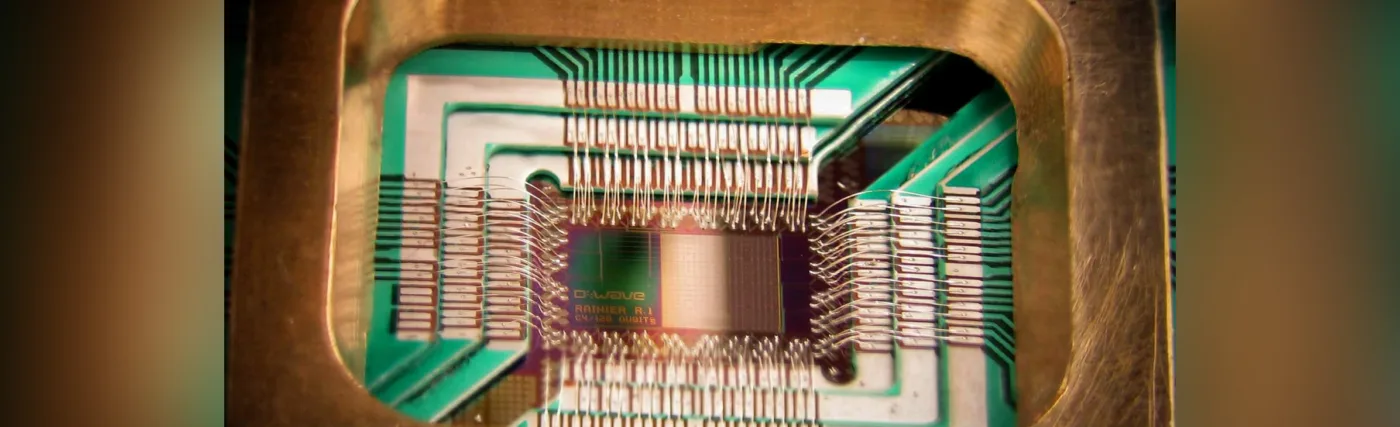
How will quantum computing change the world? Neil deGrasse Tyson and comedian Chuck Nice learn about the development of quantum computing and what it means for humanity with theoretical physicist Michio Kaku.
What will quantum computing do beyond regular computing? Find out about the race to create the first all-purpose quantum computer and Michio’s book, Quantum Supremacy: How the Quantum Computer Revolution Will Change Everything. Discover quantum bits and how quantum computing breaks from binary. How will we use quantum computers in astrophysics? We explore disaster scenarios and how quantum computing could help us predict coronal mass ejections.
Where is quantum computing currently? We discuss brain mapping and whether quantum computers could be used as transporters. Plus, learn what it’s like to work in string theory and how Michio got his start. Would it be possible to create instant interstellar communication using quantum entanglement?
Learn how quantum entanglement works and why it would be hard to send a message faster than the speed of light. Could quantum computing solve infinity? What is spacetime foam? What forces cause the strings in string theory to vibrate? All that, plus, what comes AFTER quantum computing?
Thanks to our Patrons Nickolas Godlove, Recreational Ninja, Micheal Walcott, John Z, Joel Cruz, and Laert Pasko for supporting us this week.
NOTE: StarTalk+ Patrons can watch or listen to this entire episode commercial-free.
Transcript
DOWNLOAD SRTWelcome to StarTalk, your place in the universe where science and pop culture collide.
StarTalk begins right now.
This is StarTalk.
Neil deGrasse Tyson here, your personal astrophysicist, and today is a Cosmic Queries edition on a subject I know we’ve all been thinking about.
Maybe not all the time, but some time, because we’ve heard it in the news, we’ve heard people talk about it.
It’s quantum computing.
I’ve got with me my coach, Chuck Nice.
Chuck?
Hey, hey, hey.
What’s happening, Neil?
Yeah, you’re going to help me get through this, right?
Um, yeah.
I don’t know if help is the right word.
Yeah, yeah, yeah.
So we had to dig for some expertise here.
Yeah.
And we found an old friend of StarTalk, Professor Michio Kaku.
Michio, welcome back to StarTalk.
Glad to be on the show.
It’s been too long.
Michio, you’ve got a new book out this year, 2023.
Let me get the right title.
Quantum Supremacy.
Oh, dear.
Blood Spilled.
How the Quantum Computer Revolution Will Change Everything.
So, Michio, this is a Cosmic Queries where we solicit, have already solicited questions from our patrons through our Patreon portal.
But I want to just warm up a little bit.
So, tell us what we should know what quantum computing will do differently from regular old computing.
Well, computers have gone through three stages.
The first stage was analog computers will be computed on sticks, levers, gears.
We would turn the crank to do a calculation.
But the abacus was one of those too, right?
The abacus, the mechanical.
Slide rules, right?
Then comes electricity and the transistor.
So, all of a sudden, everything becomes a matter of zeros and ones, zeros and ones, and digital.
And that’s the computer revolution of today.
Now, we are beginning to enter the third stage in the evolution of the computer.
No longer computing on transistors, computing on atoms.
This is the ultimate computer.
You can’t do better than that, computing on atoms.
And that’s what the quantum computer is all about.
They exist already.
They are millions of times more powerful than our most powerful digital computer on certain tasks.
So there’s a race, a race between China, between IBM, Google, Microsoft, a race to see who can get the first all-purpose quantum computer to put on the marketplace, which will change everything.
The CIA is interested in this.
All the big commercial banks are interested in this.
Aerospace, energy, you name it, everyone is interested in who is going to be first to bring out a commercialized quantum computer that could outrace any normal computer by a factor of a million.
So by the way, this race, scientists among them, but certainly the military, were early out of the box in regular computing, right?
And then that regular computing that finally sort of spilled out of the military and science and engineering communities and made it to people’s desktop and then their laptop and then their pockets.
And that clearly changed everything.
So should we fear this change relative to any other?
I think that other change was quite welcomed by people.
Was it because it was slow and we got used to it?
Or because we saw what it could do and understood what it can do?
How would you characterize this shift compared to the one we’ve all entered already?
And is the military looking for this for the same reason they did the first computers that we talked about in the second stage?
Chuck, what do you think?
What do you think?
Do you want to grow flowers with it?
Well, I mean…
We’re talking about the US.
Pentagon, dude.
I guess so.
God, that’s frightening.
So, Michio, where are you there?
Well, first of all, everyone’s interested in the CIA, is very much concerned about it, because they are so powerful, these quantum computers can crack any known digital code.
So, this means the crown jewels, the crown jewels of any nation, with all their top secrets about the military and defense posture, all of that can be broken into by an advanced quantum computer.
But of course, everybody else, the sciences, and the sciences are interested, because this means better cars, rockets, food, energy.
We’re talking about unveiling the secrets of the Big Bang, the understanding of black holes, neutron stars.
In other words, everything is going to be affected when we can multiply the power of digital computer by a factor of millions to billions.
So, we’re talking about a new era in computation that will change everything.
You know it, it will change it.
Okay, so one last question before we go to our…
And you got the questions lined up, Chuck.
They’re sitting right here.
I’m scared to ask them now.
I know.
I don’t even want to ask them at this point.
So, one last question.
We’ve all heard of quantum bits, zeros and ones.
This is the binary nature of classical computing, let’s call it that.
So, could you tell us…
I’ve heard the term qubit.
Could you tell us how a qubit differs from a bit?
Well, think of a spinning top, like an electron.
It can spin up or spin down.
This is one, this is zero, and that’s how electricity can be used to calculate zeros and ones, zeros and ones.
Now, let that spinning type spin in all directions simultaneously.
So, not just up or down?
Not just up or down, but in between simultaneously with all positions, how much more powerful is that than an ordinary digital computer?
An infinitely more powerful paradigm shift.
And these electrons compute in parallel universes because these electrons are simultaneously rotating in all possible directions.
Now, you cannot be two places at the same time.
Electrons can do that, and this is what makes quantum computers so powerful.
They live that way, right.
That’s right.
Electrons can be two places at the same time, and a quantum computer, they are in all orientations at the same time.
That’s why they are infinitely more powerful than a traditional digital computer.
And who uses this?
Mother Nature.
Because that’s the nature of atoms.
That’s the nature of atoms and flowers and enzymes of the body and cancer and Alzheimer’s.
All that stuff is at the quantum mechanical level, which is beyond the reach of digital computers.
That’s one reason why we don’t have a cure for cancer, for example.
Digital computers cannot model cancer.
Quantum computers, we think, can.
So, Chuck, just to be clear, Michio kept sticking his right thumb in the air.
Do you see that?
Yes.
Okay.
So there’s something called the right hand rule in physics, which was completely implicit in what Michio’s gestures were.
So I just got to untangle that Michio before we…
So if you put your thumb up, hold it and curl your fingers.
All right.
So if your fingers are curling in the direction an object is spinning, then your thumb is pointing up.
Right.
I mean, in like the North Pole for that object.
But if you stick your thumb down, then your fingers are curling in the opposite direction.
That’s right.
That’s right.
So that’s how we decide which way things are rotating for everything in the universe.
Is it rotating if it had a thumb?
Is it thumb pointing up?
I was going to say, it’s a good thing pigeons didn’t discover this.
Yeah, who knows?
We call it the different rule.
Completely different rule.
Thumbless creatures.
What kind of physics today, Venn Michio?
Alright, so Chuck, let’s start off with some questions here.
Alright, here we go.
Plenty of curious people here on the Patreon portal sending us their questions.
And we will start with our old friend, Violetta.
Hello, Uncle Neil, Uncle Chuck, Dr.
Kaku.
She says, this is Violetta here.
Violetta Roar, 14 and a half year old astrophysics kid writing from Washington DC.
I’m keeping it simple this week.
Quantum computers are said to harness the laws of quantum mechanics to perform certain calculations exponentially faster than today’s supercomputers.
What are those calculations?
And what could their technical applications be to, and here’s the rub, specifically astrophysics?
Okay, well, I got into this quantum computing game because I work in something called string theory, which we think is the theory of everything, including the Big Bang.
But string theory is so complicated, it’s so complex, no human has been able to use their mind to solve it.
Now, when we look at a proton, how do we solve the mechanics of a proton?
By hand?
No, by computers.
Lattice-Gayes theory allows us to solve the properties of a proton.
We use computers at the fundamental level.
So I think that for the Big Bang, to calculate what happens at the center of the Big Bang, the center of a wormhole, whether or not time travel is possible, whether or not parallel universes can be visited, all these questions can be solved using a quantum computer rather than a digital computer, which computes on zeros and ones and zeros and ones.
And that’s how I got into it.
Because I think in astrophysics, there are so many problems that cannot be solved with a digital computer.
For example, we know that the sun explodes sometimes and releases a coronamass discharge.
In 1859, it just wiped out telegraph wires throughout North America, the Carrington event.
Quantum computers may be able to model that event.
So we can predict the next Carrington event when the sun goes berserk and shoots a tremendous coronamass discharge at the planet Earth and wipes out all communications, causing at least $2 trillion in property damage.
And so astrophysicists…
Because we have so much orbital assets that would be susceptible to such a pulse of solar…
Everything that’s floating above us, satellites and all that crap will just get wiped out.
Including power plants on the surface of the Earth.
We’re talking about a blackout, a planetary blackout.
We’ve never had that before.
A planetary blackout where every single nation on the planet Earth has its power wiped out simultaneously.
Therefore, there’s no rescue crews, no ambulances, because they’re out too, right?
The entire Earth is the infrastructure, electrical infrastructure is wiped out by another Carrington event.
Michio, I’m now reminded…
And that’s our show, people.
Good night!
Enjoy your evening.
Kiss your ass goodbye.
So, Michio, I’m reminded that you’re like the king of disaster scenarios.
I’ve forgotten.
Thanks for reminding me about that.
So, a couple of things.
Let me just sort of put some further punctuation on what you just said.
The Sun is a roiling mass of plasma with free electrons roaming among mostly hydrogen and some helium and some other trace elements.
And there’s a magnetic field coursing through it that’s getting dragged around the surface because the Sun is not rotating as a solid object.
So, the magnetic field is embedded in the plasma that magnetic field is getting stretched in all directions.
And then there’s a point where it snaps, it flings material with it, and all we could do is watch.
And Michio, if we could calculate all the stuff that’s happening there, what a boon that would be to solar physics.
So now, is that different than a solar flare or just bigger than a solar flare?
This is much bigger than a solar flare.
This is the mother, the mother of all solar flares, capable of wiping out all power supplies in, on the surface and in outer space surrounding the planet Earth.
We’re talking about shutting down civilization as we know it.
It’s a matter of scale of energy, Chuck.
It’s energy.
And we have evidence in relatively recent past, 160 years ago, where this actual Carrington event, that’s what it was called, Michio?
That’s right.
And even before that, 700 AD, 800 AD, this has happened before.
Again, thousands of years ago.
But we can now track these Carrington events even into the past.
Wait, their computing didn’t collapse in 700 AD?
Whatever it is.
How do you think we got back to this point?
All this time, we’ve just been working back to this point.
Back to AD 700.
How do you know it happened in AD 700?
Because several things.
The radiation affected tree rings and also affected the Arctic ice cores.
So by looking at ice cores and tree rings, you can see there was a disturbance in 700 and 800 AD.
And of course, there was no electricity back then.
So there was no blackouts.
But if they were to happen again, it would paralyze the Earth.
We would be thrown back 200 years into the past.
Think about it for a moment.
No electricity, no power plants, food riots, no refrigeration, people rioting in the streets, scrounging for any scrap of food they can find.
It would be a horrible mess.
And we’re powerless, but we do know it happened in the past.
And that’s where quantum computers can calculate, we hope, calculate some of these disasters.
So what we need, we need a backup plan to have civilization restart itself, such as how we lived before there was electricity, right?
We are with my good friend and colleague, Michio Kaku, professor of physics at the City University of New York.
And we’re talking about quantum computing, as described in his current book.
What did you call it, Michio?
Oh, quantum supremacy.
Yeah, that was coined by a physicist at Caltech.
It’s his word.
All right.
We’ll get back to that when we return on StarTalk.
Hey, I’m Roy Hill Percival, and I support StarTalk on Patreon.
Bringing the universe down to earth, this is StarTalk with Neil deGrasse Tyson.
Thanks for listening.
We’re back, StarTalk, Kaku Aquarius.
Quantum computing is the subject.
And we’ve got a man who wrote the book, a book, on quantum computing.
Michio, you call it quantum supremacy.
And just before the break, you said that you’re quoting someone who called it that.
Who was that?
Yeah, Joe Preskill at Caltech.
You see, people used to think that quantum computers could never, never rival a digital computer.
So quantum supremacy is the point at which a quantum computer can beat a digital computer on certain tasks.
Two years ago, the Chinese and also Google built quantum computers that were millions of times more powerful than a standard computer for a specific task.
The next step is to make an all purpose quantum computer that can outrace a general computer on all possible tasks.
That’s the race, it’s a horse race.
And right now, the Chinese and IBM are some of the leaders in the horse race, but IBM is in it.
I mean, also Google is in the race, Microsoft, Honeywell.
Everybody realizes that whoever wins this race will dominate the world economy.
Oh man, I’m sorry, but this sounds very Third Reich.
This sounds very Third Reich, I’m just saying.
I’m just saying, it’s like, we got this race, it’s supremacy, leading to a master race, it’s crazy.
It’s a little nuts.
But Chuck, it’s a computing race.
It is a computing, okay, okay.
Not a race of the thing, I’m just saying.
As long as, it’s computing supremacy, basically.
That’s what it is.
So, Michio, I actually overlapped with a press school at the University of Texas before they snapped him up over at Caltech.
Yeah, well, he was the one who coined the concept and we actually made it two years ago and now we’re going for the next step, which is to create an all-purpose quantum computer that can handle ordinary problems, problems of medicine, problems of global warming, problems of food production, all the problems that cannot be solved today using digital computers.
Or they could be solved but they would take a thousand years to run the program.
Or an infinite amount of time, right?
Or infinite, okay.
It would take an infinite amount of time for a regular digital computer to model the electron wave function of a molecule.
But that’s what quantum computers can do.
They can model molecules.
You know, I forgot about that.
I think we perfectly modeled the hydrogen atom, but after that, we just have to approximate because the atoms are too complicated.
Exactly.
With all the protons and the electrons, and what orbitals they occupy and what the shape is.
I’d forgotten that, Michio.
Because in the universe, we’re mostly hydrogen.
So I naively said, we got hydrogen.
So surely you physicists have the rest of these atoms completely calculated, but you don’t.
Because Chuck, hydrogen has only one proton and one electron.
And it’s 90% of the atoms in the universe.
So we’re good.
I’d never pause to appreciate what you have to go through, Michio, as a physicist.
Okay, so this is Andrei Sibru, who says, I’m sorry, Serbu, who says, hello, my dear brain smoothie makers.
He says, as a vampire non-eternal friend, Andre from Romania, I’ve been trying to understand and put quantum computers to good use in the following hypothesis.
Wait, did you say non-eternal or non-nocturnal?
Non-eternal, he says.
How do you be, oh, oh, so he’s a vampire that does die.
Yes, exactly.
Because Romania is the original vampire, I think.
Yeah, I believe it is.
Just catch, I’m slow, I’m slow catching up on him.
No, you hit it, you hit it.
Got it, got it.
Okay, go ahead.
So then he says, will quantum computers be able to map out and transport our existential information as entities so that we can live eternally inside them and travel at the speed of light between them?
I like that, transporter, transporter.
Beam your brain.
So Michio, we all know the complexities of the brain and how many neurosynaptic combinations there are.
And that’s always been kind of an intractable problem.
This question suggests via a question that the power of quantum computing can simply map our brain with perfect precision.
Is that in the future?
Well, there is a program to digitize the brain and there is a program to map all the neurons of the brain.
Right now we’re at the level of a mosquito.
We now know that the mosquito brain has 100,000 neurons.
Every single one has been mapped and you can Google it and see what an insect’s brain looks like at the level of neurons, 100,000 neurons in the brain of a mosquito.
And then of course, we’re going to go up the scale.
It’s going to take time.
We have 100 billion neurons in our brain.
Well, wait, just to be clear.
Wait, wait, so that number is not what’s impressive.
What’s impressive is the number of connections those neurons can make.
10,000.
That’s what you ultimately have.
Wait, wait, no, you said there’s how many?
100,000 neurons.
100 billion neurons, each neuron connected to 10,000.
Wait, in a mosquito, how many neurons are there?
Approximately 100,000.
And so now the total combinations, the total ways those 100,000 neurons can connect, that’s a huge number, correct?
Right, right.
Okay, so that’s where the computing challenge is, not simply that there’s 100,000 neurons, right?
Right, right, the connection is everything, because it’s the connections that separate us from other animals.
Other animals have brains bigger than ours, for example.
Okay, but we have more connections and more ability to do tasks that certain animals do not have.
Take that, you brick-baned dummies.
You idiot, which of them?
Big brains and your stupid self.
But you see, a quantum computer has enough computer power to begin to model these things.
A digital computer would go berserk counting how many connections you can have within the human brain.
But that’s exactly where quantum computers excel, because we’re talking about the states of an atom.
How many states of an atom are there?
Infinite number of states of an atom.
For every atom.
Not that zeros and ones, zeros and ones are binary, which is finite.
That’s the difference between quantum computers and regular digital computers.
Digital computers compute on a finite number of objects, zeros and one.
While the quantum computer computes on simultaneously an infinite number of positions of electrons.
In other words, computing on parallel universes.
All right, so give us a time frame.
When do you think we can map the human brain and know every neuro synaptic connection?
And the day we do, can you just beam that map to another place thereby beaming your consciousness or at least everything stored in your mind in that moment it was mapped?
Well, I think it would probably take a few more decades before we can map every single neuron of the human brain.
Because there’s a hundred billion neurons, each neuron connected to 10,000 of the neurons in the human brain, it would take a while.
But once it’s done, then the quantum computer can easily begin to manipulate it and fire away and create certain thoughts, okay?
So the problem is not the quantum computer.
The quantum computer has more than enough power to model the human brain.
The problem is to slice up the human brain, slice and dice the human brain so that we get all the connections of the human brain mapped.
That’s what takes time.
That’s labor intensive.
So what we’re lacking are volunteers.
That’s really the problem here.
Brain volunteers.
Yeah, that’s right.
All right, so it’s still a little while before that happens.
But the day it does happen, do you foresee being able to beam an entire person’s, is that the same as beaming their consciousness?
At that point, the quantum computer would have to locate consciousness within the brain.
But once you do that, why wouldn’t you be able to recreate it, download it or manipulate it?
And maybe consciousness is not a thing in the brain.
Maybe it’s an emergent feature brought forth because of all of those connections.
Yeah.
Right, I mean, that’s my personal opinion that it is emergent.
There’s no one quantity that you can put into a computer.
It emerges naturally as a consequence of all the neural connections.
Consciousness emerges just as a byproduct of hooking up everything.
You plug it in and it becomes conscious basically.
Okay, next one, Chuck, keep it going.
Okay, here we go.
Let’s keep going.
This is Chris Trent and Chris says, Hi, I have heard Michio Kaku say that his day job is actually string theory.
I’ve always wondered when he shows up at the office, gets his coffee, and gets to work, what exactly does he do?
How does one work on string theory?
Yeah, Michio, is there anything on your desk at all?
Is there a pad and paper?
See, so Chuck, I’ve always joked that a string theorist, theorists, they’re really cheap, right?
Give them a laptop maybe, you know, a pad and a pencil, and just give them a room and they’re good to go.
Yeah, they’re good to go.
So, Michio, have we completely characterized you’re a professional?
Well, when I was in the Army back in 1968 as a GI, I used to, I read the first articles on string theory, and I began to play with it when I was doing basic training.
So dodging machine gun fire, I would imagine twisting strings in my mind.
And so in other words, it’s very visual.
These are real strings, like violin strings.
You can turn them around, twist them, make knots out of them or whatever.
And that’s what I would do when I was in the military.
After I get out of the military, I would write up the papers, okay?
And I would create something called string field theory, the field theory of strings.
Just like Maxwell’s equations, there’s a field theory of electricity and magnitude.
Aren’t you the father of that whole branch of physics?
Is that correct?
That’s right.
If I remember correctly.
That’s right.
Uh-huh.
Wow.
So Chuck, you see, he must have known something in the, did you hear what he said?
He said, as I was dodging machine gun bullets.
So he’s got some extra access to higher dimensions there because the bullets were not hittin them.
See?
You were phasing in and out of this dimension.
So, Dr.
Michio, you’re at your desk, and now what?
You sharpen your pencil.
And I go through hundreds of pages of calculations.
This is tensor calculus, super symmetric tensor calculus.
On my desk is a pile of paper.
Each paper basically filled of chicken scratches, because it takes a lot of brain power to be able to write down all the equations, because these are resonances.
Resonances of strings vibrating in 11 dimensional hyperspace.
And so it takes a lot of paper to do that.
Dad, go on.
I mean, can you just say that again?
I wanna get a t-shirt that says that.
So now combine that with when Michio was in the army, he just slipped it out that he was dodging machine gun bullets.
So last I saw that was in The Matrix, where Morpheus is teaching Neo how to be badass and Neo saying, you mean one day I’m going to be able to dodge bullets?
And Morpheus says, Neo, when that day arrives, you won’t have to.
And then he’s like, what does that mean?
You don’t have to dodge them.
And my boy just stopped the bullets in midair.
And that’s what happened.
There it is.
I’m not even going to duck.
I’m just going to stop.
So I think Michio has those powers and he just leaked it on this show just now.
Nice.
I just want to demonstrate it.
No free demonstrations.
No free demonstrations.
There you go.
All right.
Keep going, Chuck.
Okay, here we go.
This is Chris Henderson.
And Chris says-
Do we know where they’re from?
Don’t they say where they’re from?
Or are you skipping that?
No, they don’t.
Okay.
If they say where they’re from, I like to know.
I like knowing where they’re from.
Okay, go on.
Or sometimes they’ll put it in the body of their question.
Hello, Dr.
Tyson.
Hello, Dr.
Kaku.
This is, or is it theoretically possible to make communications that uses quantum entanglement?
Ooh.
If it is, would this give us the ability for instantaneous communication with distant spacecraft?
So he’s talking about subspace communications.
The subspace network, yeah.
And Michio, adding to that, I read, because I only know from what I read, right, about quantum computing, that there isn’t the circuitry of quantum computing exploiting quantum entanglement between adjacent particles in the circuit board.
I heard something about that.
So how does quantum entanglement fit into quantum computing?
Well, yeah, quantum entanglement is one way in which these two bits can communicate with each other.
Now you know that in a digital computer, the bits do not talk to each other.
Zeroes do not talk to one, one does not talk to zero.
They are independent when you do a calculation.
Not so the atom.
If I have two atoms close together and I jiggle one atom, the other atom responds to it.
This is called entanglement.
And the question is, well, that’s one reason why quantum computers are so powerful.
All the different kinds of qubits talk to each other simultaneously.
Then the other question is, do they talk to each other faster than the speed of light?
Let’s take a break there and leave everyone dangling on a cliff edge about whether we are communicating on a circuit board faster than the speed of light.
Cosmic Query with my good friend and colleague, Michio Kaku, we’ll be right back.
We’re back, third and final segment, Cosmic Query StarTalk, with my friend and colleague, Michio Kaku.
Michio, tell us about your social media footprint.
How can we find you?
Go to mkaku.org, m-k-a-k-u dot o-r-g.
I have about five million fans on Facebook and the internet.
And yeah, so I’m definitely on the internet.
Okay, and you’re totally on Twitter, right?
You’re active on Twitter.
I follow you on Twitter.
I know where you’re coming and where you’re going.
So okay, that’s what we can do.
Chuck, you left us off with a question about quantum entanglement and whether we can use it as a byproduct of quantum computing for instantaneous communication.
So Michio, what can you tell us there?
Well, it turns out that Einstein was wrong on this question.
Einstein said that you cannot break the light barrier.
It turns out that these qubits will actually communicate with each other instantly faster than the speed of light.
Now it turns out that even though Einstein was-
Einstein was such an idiot.
He was such an idiot.
Well, I’ll tell you, what a dumbass, that Einstein.
Even though Einstein was wrong on that, that some things can go faster than the speed of light, he has the last laugh because it turns out that what goes faster than the speed of light is nonsense, random information.
Morse code cannot be sent faster than the speed of light using the EPR effect, E for Einstein.
And it turns out that we can test this in the laboratory.
We can now prove that you cannot break the light barrier for usable information like Morse code, but for non-usable-
So EPR Einstein-Podolsky-Rosen.
That’s right.
Effect.
That was some experiment that they proposed to test something about quantum physics.
That’s right.
Let’s say I have two electrons that are together.
One spins up, one spins down.
And then-
He’s got his thumb there.
Well, they are in opposite directions, okay?
Then I separate them.
I separate them by a light year, okay?
If one of these is measured to spin up, then the question is, what is the other one spinning?
The other one is spinning down, because the sum of the two has to be zero.
It has to be either like this-
They have to cancel out.
Mm-hmm.
But before you open up one of these electrons, you don’t know what the other one is.
But as soon as you know that one is up, the other one is down.
Now, how fast did you know that?
Instantly, instantly faster than the speed of light on one side of the Milky Way galaxy, you know the electron is spinning up.
Therefore, you know that on the other side of the Milky Way galaxy faster than the speed of light, the other electron spins down.
That is the EPR experiment.
And Einstein thought, ha, that proves that it’s all nonsense.
It proves that all quantum theory is wrong.
Well, we do these experiments now.
Einstein was wrong.
Information travels faster than the speed of light, but it’s not usable information.
You can’t send Morse code this way.
Morse code cannot be sent this way.
Let’s say, for example, that you have one sock which is green and one sock which is red, okay?
You put the red sock on and the other sock is green.
Now, let’s say you open the sock one day and it is red.
What is the color of the other sock?
Green.
It has to be green.
How fast did you know that?
Instantly faster than the speed of light.
You knew that the other sock…
It sounds like you’re sending information faster than light.
Yeah, but you see, it’s not usable information.
You can’t send Morse code this way.
Morse code cannot be sent using socks.
Why not?
I mean, think about it for a moment, because as soon as you know that one sock is red, the other sock is green, but where did the message go?
There’s no message there.
You’re not sending dash, dash, digit, digit.
You’re saying that the message is fixed, therefore it’s not usable.
No, it’s random.
It’s random and therefore not usable.
But it’s random even though you know the outcome?
Well, you don’t know the outcome until you reveal that one is green, the other one, the sock is going to be red.
But that knowledge, the knowledge of the fact that they are opposite sides, is instantly transmitted faster to the speed of light.
But try sending Morse code that way.
Wait, so what you’re saying is, then maybe you misspoke, because you said you put on the green sock, and then send out the red sock.
No, but you don’t know that you put on a green sock.
You just know you put on a sock.
Okay, well then reveal that foot.
It’s the reveal that we’re really talking about.
We’re talking about the reveal.
The position of the sock existed before the reveal.
But we don’t know what it is.
But once we know what it is, then we know the information.
He’s got it.
There it is.
A physicist in the making right here.
We’re going to give him an honorary StarTalk degree at the end of this.
Okay, all right.
So it’s not useful.
All right.
It’s not useful.
God, that’s so disappointing.
The way you go faster than the speed of light, consistent with Einstein’s theory, is wormholes.
Wormholes will take you faster than the speed of light.
And it is consistent with the known laws of relativity.
Stephen Hawking even wrote papers on it.
Now, to create a usable wormhole is quite difficult.
You’d have to have negative matter and positive matter.
But in principle, if you could have negative matter and positive matter, you could go faster than the speed of light in a wormhole.
And Stephen Hawking even wrote papers.
Wait, Chuck, he just said, when pigs fly, just translate.
All we need is negative matter.
So, Michio, when pigs fly, continue.
Yes.
No, negative matter is very rare.
Instead of falling down, negative matter falls up.
Now, when was the last time you saw a rock fall up?
When was the last time you saw a pig fly?
But if you could create negative matter, you could go faster than the speed of light through a wormhole.
All right.
And just to be clear, you’re still not moving through space faster than light.
You’re kind of cheating in an authentic way by curving space, and the wormhole then cuts through a passageway.
And so you’re effectively going faster than light, but you’re not actually moving through the fabric of space-time faster than light.
That’s a fair way to say it.
Yeah, that’s right.
You simply hop across.
Yeah, you’re hopping.
There’s a hole there.
You just hop across.
How fast do you go?
Zero.
Zero velocity.
You just hop across.
Right.
There you go.
Rick and Morty knew all about this.
Exactly.
That’s portal guns.
That’s all we need.
All we need are portal guns.
Maybe Violetta will invent one of those, a portal gun.
Probably.
And we’re good friends with her.
I think she’ll tell us about it first, and then we can take over the world from there.
I love every second of that.
Violetta will be the world’s overlord.
Violetta will be the world’s overlord.
Right.
All right.
This is a Zeigmund Wasig, I believe.
He says, in singularity, I have been told that mass could have infinite density.
Can the algorithm of a quantum computer resolve mathematically infinity?
I like that.
I like that.
Let me even add to that, Michio.
We know if you take general relativity to its extreme, you’re basically dividing by zero or doing something that doesn’t work out on paper.
Is there a stopping point that you can say, general relativity stops here, and now I’ve got the rest of, I think, strength theorists worry about this, right?
And now I can compute what’s happening where general relativity ends, basically.
Right.
There is a stopping point, and that’s called the Planck length.
Planck length is 10 to the minus 33 centimeters.
That’s a very small number.
And how would you then manipulate something like this?
If you have empty space and you could heat it up, heat up empty space to the Planck temperature, then bubbles will begin to form, just like you boil water.
You heat water, water boils.
You heat space, space will boil at the Planck length or the Planck temperature.
And at that point, each bubble is a wormhole, and each bubble in principle can become a universe.
In fact, that’s probably where our universe came from.
Our universe probably came from a bubble in nothing that expanded, giving you the Big Bang of today.
Okay, Michio, you keep talking like that.
Chuck is going to run out and smoke a joint, okay?
I’m smoking one?
Are you kidding me?
I ate an edible while you all were talking.
That’s just…
I couldn’t wait to smoke.
You want to boil the universe, Michio.
This is amazing.
This sounds like out of control.
We’ve done the calculation.
People who do what is called inflation theory have calculated what it would be like to be a god to create your own universe.
Of course, you want to do it safely.
You don’t want to blow yourself up in the process.
Basically, you boil space to the point where space becomes unstable.
You have quantum transition, what are called Feynman diagrams, that allow for universes to pop out of nothing.
Usually, these things pop in and out of nothing all the time.
Stephen Hawking called this space-time foam because it looks foamy with bubbles percolating all the time, each bubble being a wormhole.
But one of those wormholes just kept on going, and here we are.
That’s how the universe started, we think, as a fluctuation of the Planck energy or the Planck length, as energy is 10 to the 19 billion electron volts, as a distance is 10 to the minus 33 centimeters.
But that’s my world.
I live in the Planck length and the Planck energy.
Michio, to call us a, you know, what did you say we were?
A fluctuation?
That’s right, we are a fluctuation in space time.
The cherished universe is a fluctuation.
There you go.
You guys are a blip.
That’s what we call them.
When you write papers, you write papers on quantum fluctuations of nothing.
Even nothing is unstable.
Nothing would violate the Heisenberg uncertainty principle.
Pure nothing is not possible.
It’s an unbelievable show, man.
I’m telling you right now.
This is crazy.
Alright, this is Alan Reyer.
And Alan says, hello, Dr.
Kaku.
I used to watch your YouTube channel, and I’ve been watching since 2012.
I’m a huge fan.
I live in Lithuania, and could you please explain, on string theory, what force makes a quantum string vibrate its string?
And are there strings in the circuit boards of quantum computers?
Or you’re just going to say there’s strings everywhere, you know, there’s strings all the way down, as they say.
So how does everything you know about strings inform the people trying to perfect a quantum computer?
Okay, first of all, strings have to fluctuate because of the Heisenberg uncertainty principle.
Pure nothing, pure motionless, pure anything like that violates the uncertainty principle.
Therefore, strings have to vibrate.
The lowest string, the lowest vibration of the string, gives us our universe.
Our universe is the lowest vibrating octave of the string.
There are higher octaves of the string, and these higher octaves we think correspond to dark matter.
So that’s why we have dark matter, because it’s nothing but the next higher excitation of a vibrating string.
But again, strings have to vibrate because of the Heisenberg uncertainty principle.
This is a quantum theory, and when the strings vibrate, they create subatomic particles, mainly us.
We are the lowest vibration of the string.
So people sometimes say, well, can the string predict our universe?
Yes, our universe is the lowest vibration.
We’re fluctuating blips, and we’re the lowest of the lows.
And the next set of vibrations would be dark matter.
And one day we’re going to find dark matter, and that could clinch it.
People want experimental proof of the correctness of string theory.
That could prove it.
If we find dark matter in a laboratory, analyze its properties, and show that it’s predicted to be part of the next vibration, the next octave of the string.
So back to the question, the string in its natural state vibrates because it can’t not vibrate.
That’s right, because of the quantum mechanics.
The quantum mechanics, guy.
So is this exploitable in a computer circuit, in quantum computing?
Well, the computer circuit would have a low excitation of the string.
I mean, a low excitation of the electron, but the electron itself is an excitation of the string.
Of the string, got it.
So Chuck, do we have one last quick question?
All right.
Let me see here.
All right.
How about this one?
Here we go.
Charles Mako or Mako.
He says, hey, what comes after quantum computing?
Ooh.
Whoa.
Well, I think that the step beyond quantum computing is nuclear computing because quantum computing computes on electron shells.
We’re talking about the electron shells that give us the Bohr atom, you know, electrons going around the nucleus.
But the nucleus itself is nuclear, and it also is quantum mechanical.
And that in principle is stable, so you can make things out of it.
However, of course, if you don’t watch out, you could hit critical mass, in which case that would ruin your day.
It would destroy the universe.
Yes.
Okay.
So it’s interesting.
What you’re saying, Michio, is that all these rules that we’re talking about are electron-based and electron orbitals and all of this, electron spins, but you can go deep into the nucleus and there’s a whole other realm that is in principle in reach.
That’s right.
And the energy scale of that is millions of times the energy scale of the electron.
And that’s why we have nuclear weapons.
The nuclear weapons, in fact, the sun, the sun itself is a simple example of what happens when you tap into the nuclear fire that drives the sun and lights up the universe.
That’s what lights up the universe, the nuclear force.
Yeah.
So that could be the next step beyond quantum computers would be nuclear computers.
Okay, so when quantum computing looks old, let me get you on the show.
In the old days, quantum computing, we thought that was fast.
We’ll get you on for that and take us into the nukes.
All right, Michio, it’s great to see you again.
Hadn’t seen you since pre-COVID.
Great to have you back on the show.
So we’ll be looking for your book.
It just came out, Quantum Supremacy.
How quantum computers will change everything.
And no doubt about it, from how you described it, it definitely will.
Yeah.
All right, Chuck, always good to have you, man.
Always a pleasure.
All right, Neil deGrasse Tyson here for StarTalk.
Another episode of Cosmic Queries.
As always, I bid you to keep looking up.


 Become a Patron