
Cosmic Queries: Potpourri Vol. 2

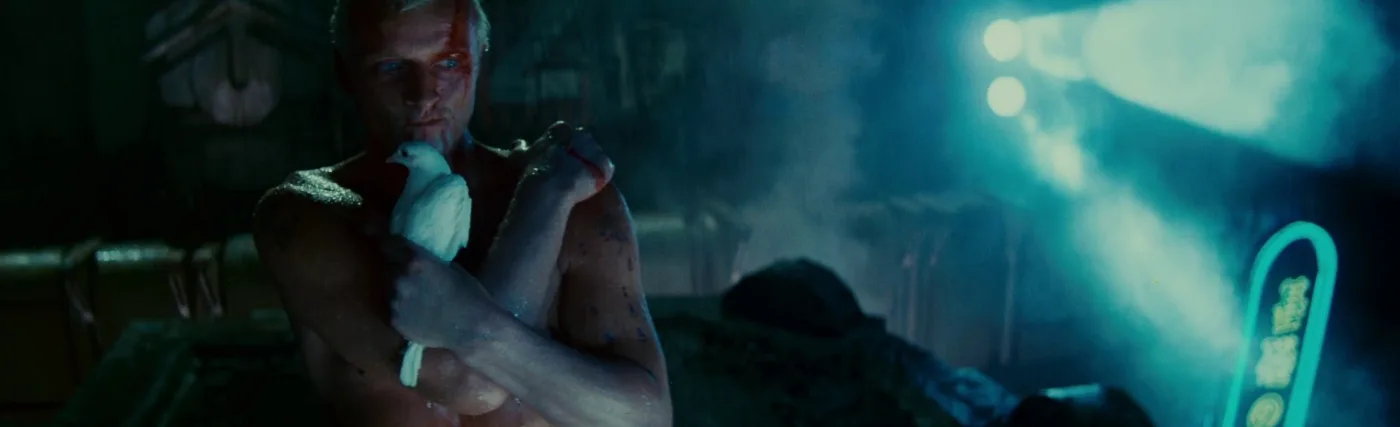
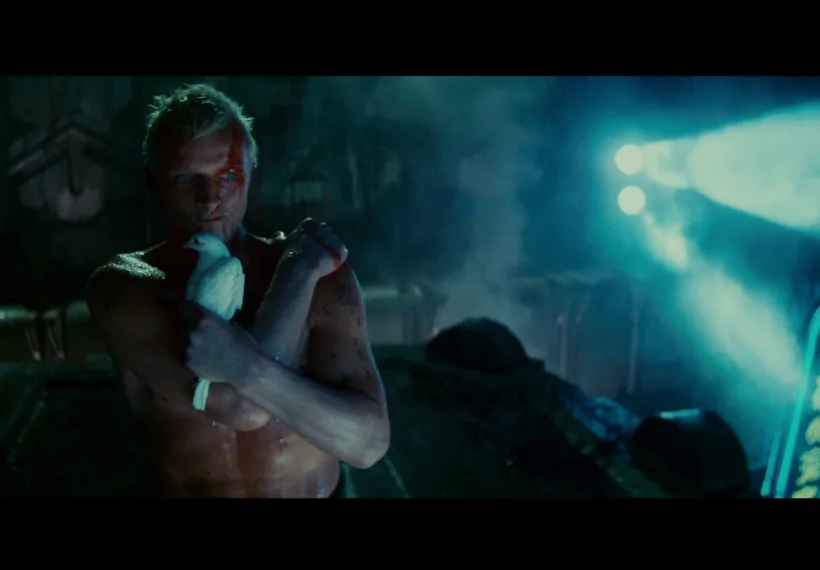
“I've seen things you people wouldn't believe. Attack ships on fire off the shoulder of Orion. I watched C-beams glitter in the dark near the Tannhäuser Gate. All those moments will be lost in time, like tears in rain. Time to die.” – replicant Roy Batty’s immortal last words in Blade Runner. Image courtesy of Warner Bros.
  • Free Audio
  • Ad-Free Audio

About This Episode

Neil deGrasse Tyson welcomes first-time comic co-host Eddie Brill to help answer another potpourri of fan-submitted Cosmic Queries. You’ll hear Neil discuss what we should ask intelligent extra-terrestrials upon first contact, what aliens might eat, and if we should be reaching out to alien life. Explore innovative science in movies: the science of the replicants in Blade Runner, the science behind the water planet in Interstellar, and what professionals he would have brought to meet with the aliens in Arrival. Discover more about gravity assist and what other factors are needed for it to succeed. You’ll learn about combating junk science, becoming an independent thinker, and the similarities between science and comedy when searching for the truth. Neil and Eddie also address the “magic” of electromagnetism and physics, and why science works as a vaccine against charlatans. All that, plus, Neil and Eddie talk about Neil’s annoyance with superheroes and whether an immortal superhero could survive the death of the universe.

NOTE: All-Access subscribers can watch or listen to this entire episode commercial-free here: Cosmic Queries: Potpourri Vol. 2.

Transcript

DOWNLOAD SRT
Welcome to StarTalk, your place in the universe where science and pop culture collide. StarTalk begins right now. This is StarTalk. I'm your host, Neil deGrasse Tyson, your personal astrophysicist, and this is going to be a Cosmic Queries Potpourri...
Welcome to StarTalk, your place in the universe where science and pop culture collide. StarTalk begins right now. This is StarTalk. I'm your host, Neil deGrasse Tyson, your personal astrophysicist, and this is going to be a Cosmic Queries Potpourri edition. And I have a guest co-host today, the one, the only, Eddie Brill. Eddie, dude. Hey, it's good to see you after all these years. You're from the comedy firmament. I mean, you go back, you've been everywhere, you know everybody, and it's a delight and a pleasure and an honor to have you as my co-host for this episode. Well, that's very, very nice of you. Yeah, I've been at this game since I was in college at Emerson in the 1970s, and it's just been, you know, starting to- Were you one of the kids in the class that were cut up in class, and they say, what are you, a comedian? And then they- Yeah, as a matter of fact, I am. All right, but no funny stuff. Exactly. Yeah, you know, I was very shy as a kid, and I was a good student. I was actually a science and math guy. Nice. In school, but you know, my stepfather died very young. Good night. No, my stepfather died very young. And all of a sudden, I realized life's too short, and I went sort of to do like broadcasting, and I got some laughs at it, and I kind of liked that. And little by little, I went to school to study journalism, and the first friends I met were Steven Wright and Dennis Leary and Mario Cantone. We formed a comedy group, and then I stopped math and science. I stopped journalism. I mean, we could have understood the unified field theory by today. By today. Except that you left. Yes, so it's my fault. Comedy is very mathematical. The writing of comedy, the writing of music is very mathematical. And I just liked getting laughs, and I liked being creative much more than, not much more, in a different sense. So to summarize this, comedy is a serious business. So you've got questions for me, which I haven't seen yet, but they were called from our internet base. It's wonderful. And I always like knowing who they come from, but when Chuck does this, he can never pronounce their names correctly. And people write in and correct him and complain and laugh. Well, I understand. Like the first one I saw here, the guy, I love that he used this name. It's JJ. Hingleheimer Schmitt, which is a play on words. And maybe his name is Billy Hingle or not really. But here, it really came out at me because his name is so long and I worked hard to memorize it. But he said, suppose we meet aliens. How do we go about asking them which creatures from their planet taste good? So this guy not only has a good name, has a good question, and he's a little odd. A little odd, a little odd. I think if aliens come to Earth, that means their technology is vastly superior to ours. And it means they're smarter than we are. They will be asking who among us are tasted. We will not have that power over them to even dare to ask such a question. It'll be by the grace of their will that they do not eat us and only enslave us, or only put us in their zoo of creatures that they found in their journeys across the galaxy. Well, there might be some of us in their snack bar. You know, that might be the few of us that really taste good, and then we'll find out. It's like, you know. But I think in the history of human hunting and gathering, for us, it's really just trial and error. And there's stuff that'll kill you. If you eat something and it killed you, garner your genes to propagate to a next generation who would think the same way. So, evolution by natural selection has a way of tuning what it is that tastes good and what it is that does not. That's interesting. What do you think of those five planets that we found? Is it exciting in a way about, I'm asking mostly, is it a place that we want to go to? Yeah, well, it's a seven planets. Seven planets. Three of which we're in. Two I don't really care about. Well, there are three in the Goldilocks zone. So, yeah, if you are headgemonistic, if you feel a bit of conqueror in you, yeah, you'd go there and say, I declare these lands in the name of the empire, right? Because, of course, humans did that for millennia. Sure, but it's not an interesting thing to do if no one's there and it's a hostile environment and you would die if you tried to pitch tent. Who the hell wants it anyway? You'll never find out if they're tasty or not. By the time you get there, well, you might be hungry by then, you never know. There's a friend of mine who's a fan of fish, but it has a strong objection to ugly fish, because you've been at aquariums before. Oh, yeah. There's some ugly, just butt ugly fish. And so, what she said was, is that, her name is Denise Gamble, and she said, you know, if you're gonna be, if you gotta be ugly, at least be tasty. Have some redeeming features about you. Otherwise, there's no point of you ever having been born. Well, that goes back to JJ. Hingleheimer Schmidt going, well, you know, maybe they'll take the ugliest of us and eat us, because we've, at least, we're tasty. All right, let's see what some other people have to say. Here's Kyle Toth. What would a truly invincible and immortal superhero experience as the universe reaches its final moments? Oh. I like that. Interesting, I love that. So, let me remind people, if you didn't otherwise know what the final moments of the universe will be, we are on a one-way expansion trip. One way. Look at me. Look at the lunch I had. We call that, you're developing an accretion disc. We have other vocabulary for when your belt size is growing. So, what we have is an expanding universe that's getting cooler and cooler. You can measure the temperature of the universe. Right now, it's three degrees on the absolute temperature scale. It's already very cold. That's why we say space is cold. That's why, all right? But it's still getting colder. So, in a few more billion years, we're gonna drop another degree, a trillion years. You start getting into the fractions of a degree, and you start approaching absolute zero. And so, the death of the universe will be an absolutely cold universe that has reached zero degrees. Now, here's the problem. I don't mind if it's just zero degrees, but how about the stuff that's in the universe? Might you still have stars? No, they will use up all of their fuel, and then they'll burn out. And what happens to them? Then they will cool. And come into equilibrium with the cold temperature of the universe. What happens to orbits? There's energy contained in orbits. Orbits will decay, and will collapse into one mass into the center. And so all motion, all processes will cease. If you're an invincible superhero, but you require food, you need some place to get your energy. I don't care where. All energy phenomenon in the universe winds down. So even the invincible superhero, who presumably needs energy for their sustenance, will wind down, and you will find them seated and dead in the corner. Because they've got no energy to do anything anymore. Yeah, I guess there would be a hierarchy of how people would die. I guess a superhero doesn't mean you're gonna live long. You could just be a mediocre superhero, like Ice Cream Man. That might actually work in your favor. Yeah, so depending on how sensitive you are to the flow of energy into your body, you'll be the first to die off if you didn't have that. By the way, this scenario is what they play out in zombie stories, right? So zombies are dangerous not only because they'll eat you or eat your brains, but they'll eat the brains of the people who are running the power stations. They'll eat the brains of the people who are running the farms. So slowly, there's the dismantling of civilization. And what we so take for granted that provides a sustenance is one by one gets taken out. If the farms go away, then the cows go away, because now there's no vegetation for them to eat. So your steak goes away first, then all the vegetables go away, and then you go away. And then as an earth winds down. But if you had a superhero that had infinite energy, then they're around forever, but there will be no one to save. Right, or nothing to eat. When you were growing up, did you have a superhero that you wanted to be or liked? I did, I did. It's a little embarrassing, but I can take it. I want it to be Mighty Mouse. Ah, here I come to save the day. I just thought you can sing opera and save a damsel in distress. That was just, I just thought that was awesome. And I didn't think too hard about how little a mouse is. You know, mouse are really tiny. And how do you actually lift up big buildings? And back then, I wasn't analyzing the physics of it. Today, yeah, I would say no, the mouse is not lifting the building, no matter how big as pecs are. You have to work out pretty hard in this world to lift a building. Yeah, yeah. For me, it was not superhero, but it was more like, I always loved the idea of the three wishes and to be the genie. Oh. And to always ask the third question to be, I need two more questions, can I have two more? Oh, two more wishes, yeah, right, right. Three more wishes, and then I can infinitesimally, that's why I went to comedy, infinitesimally want to, would be able to constantly be able to have the favor. Oh, infinitely, infinitesimally would be tiny. So, infinitely would be as many more as you need. That's why I need you here with me. I got your back. You did. And front on that one. You saved my front and back. Now here's a question, and I'm picking this one out of a few because a lot of them are asking the same general idea. This is potpourri, so they can come from anywhere. Right, and it doesn't smell like potpourri. This smells like paper, which is odd. But because of our society right now and what we're going through, how can ordinary people distinguish true facts from alternative facts, especially if true ones, and I like this part of it, are not appealing? Oh, yeah. Yeah. There's like four questions that have to do with the truth. Yeah, yeah, and of course, they're quite topical. So the way to answer that is I can say what we do as scientists, okay? By the way, there are things that I can tell you that completely defy common sense, and I'm telling you they're true, and I might expect you to believe me, but if you don't, I'd have to go then find the evidence for it. So, for example, for me to say that particles pop in and out of existence, you say, oh, that doesn't make any sense. Well, I've said many times the universe is under no obligation to make sense to you, especially when you're probing places, regions, conditions of the universe that fall outside of your physical five senses, then what's natural in those environments is not natural in your life. So you have to be open to things that don't fit into what you expect to happen. All right, so now what about truths? This is why one of the great powers of science is there are certain things that are repeatable in this world. The laws of physics, the laws of optics, the laws of quantum physics, certain laws of chemistry, biology. This is why knowing science is so important, because it gives you a foundational landscape on which other people are trying to plant facts or false facts. But I know how things are and how they operate, because I studied that. You're now going to tell me something that is inconsistent with something I know to be true in the universe. Maybe it's a new discovery and I want to know about it. Maybe it's not, maybe it's fake news, maybe it's just a mistake. But I am now empowered to ask questions about it. You come to me with crystals you want to rub together and it can bring heal ailments. You say, here, I have these crystals, do I completely discount it? Knowing the physics I know, I could, but that's equally as intellectually lazy as embracing everything you say. What's harder is to pose the question and to know how to pose the questions. We're not taught this in school, how to be curious about the natural world. So I would say, what are these crystals made of? Where did you find them? Are they manufactured? Are they natural? What ailments do they heal? What is the evidence that they heal these ailments? How quickly does it heal it? What is the mechanism? And by the time you've done it, the person's ran away. If they're charlatans, they won't have believable answers to those questions. And in that way, you can ferret out what is true and what is not simply by an intelligent sequence of questions that you pose upon it. Yeah, because a lot of people will say, well, this is fake news, or if they don't agree with it. And not just the president or his people, but a lot of people do that in our society. And this is why the last part of the question was really kind of cool for me. Even if the true ones are not appealing. Oh, yeah. So you got to get over that one. Exactly. Yeah, there are many facts that are just the reality of the world. You can ask yourself the question, I think. If you had the choice to know a truth that was unpleasant or instead, or know a series of truths that were unpleasant or lead a delusional life, thinking something that's true that isn't, what would you choose? This is kind of like The Matrix, the red pill or the blue pill. Right. I think I value reality. I don't know. In comedy, we were talking about this a little bit earlier before we started. In comedy, the truth is the foundation, and reality is the foundation, is where you go from there. In addition to that, I did a podcast in Finland, of all places, called We Are Not Here To Please You, and I loved it, and it really changed my thinking in comedy. Wait a minute, a comedian had a podcast saying, I'm not here to please you? How many gigs did that get you? Well, the truth is, it's the best way to be as a comedian, because if you have your perspective, you don't have to, George Carlin taught me that. He said, they can't argue with your perspective. Because it's authentic. Right, that's the word, it's authentic. Where if, I mean, you don't have to agree, but if I don't take you for granted or treat you poorly, then if I do treat you poorly, then I'm being irresponsible. But as a comedian, this is how I feel. Like I talk about, I don't believe there's a devil, because I don't, I believe it's a fear-based society and having a devil would be, it's just foolish. I mean, and I'm not saying there's no devil, there could be. I'm saying I don't believe there's one, and I believe, say- So you want to these people say, I know there ain't no heaven, but I pray there ain't no hell. Right. I love Blood, Sweat and Tears. I just saw them and they didn't have David Clayton Thomas, unfortunately. But the fact is, for me, so I don't believe it's the devil. And so if God created everything, why would he make a devil? He's like, well, I made this beautiful planet with trees and mountains and ducks and James Brown, but there's not enough drama in my life. Let me create some SOB who's gonna go against everything I've ever created. And just to piss him off, I'm gonna force him to wear a red jumpsuit. You know, with a tail and horns and all this stuff. And but, you know, as a kid, I was taught that sex was the devil's work. And I said, look, I don't know if you've had sex before, but it's fantastic. So, but I believe if there's a god, that god created sex, because what do we yell when we're having sex? You don't yell to the devil, you yell to god. Right, you go, oh god, because we're thanking the manufacturer. Right, okay, for the whole thing. For the beautiful gift that he's given us. So, back to the point that, you know, the truth should be the foundation. And reality being the foundation, it's really picking apart comedy, but it's the same thing in science, the same thing in man. Right, and so once, in fact, you're not funny if you're not basing it on something that's real. Otherwise, you don't have me at all. Right. We have no common ground on which you can then take me. Unless you're so outrageous, because there are no rules in comedy. If you're just outrageous, that could be funny and consistent. But the best comics, the Carlins, the Lily Tomlins, the Pryors, they were based in reality. Yeah, yeah. So we only got a few seconds left in this segment. So let me just round that out by saying, at the end of the day, it's not only, how much do you know about the physical world, you should also know, is something consistent with something else? There's a photo of me where I'm on stage and it shows me holding up my middle finger. I gotcha. Can you picture me doing that? Just ask. Well, I can. No, no. No, let me assert that my vocabulary is sufficiently large that that will never be something I need to do. And so this is a doctored photo. I had held up just my index finger and someone flipped it with the middle finger and that's the thing. And so, but that became a meme. And I'm just saying you should ask yourself, is there a, is what they're saying, is it consistent with all of my expectations of what it is? Or are you so duped by others telling you what to think and how to think that they're just feeding you anything you want? And this is a shout out for being an independent thinker of whatever a pundit wants to have you say or think. It's beautiful, that's what we all want. That's what we all want. We gotta take a break. You were listening to, possibly watching, StarTalk Cosmic Queries Potpourri edition. And I'm with my guest co-host, Eddie Brill. We're back, StarTalk, Cosmo Queries, Potpourri edition. I got my guest co-host, Eddie Brill. Eddie's been around the block over the river and through the woods. And here I am at Grandma's house. So, you got any projects now? What are you doing now? Yeah, tons of things. I have a podcast called The Break with Eddie Brill, and I'm talking to all A-list comics, like Suzy Esmond and Mario Cantone and Steven Wright and on and on and on. Because you know all these people, so they'll come out for you. Yeah, and I have a ton of great comics coming in for that. So, you go to SoundCloud or iTunes and go to The Break with Eddie Brill. To The Break with Eddie Brill, very nice. And talk about their childhood and their house, who was the funniest and how were they influenced? You know, you're missing an opportunity to be a psychoanalyst and find out what is troubling these people who are professional comedians. Right, and the truth is, is that we kind of come up with that, yeah. So, you got questions for me. Yeah, I do, I do. And there's some great questions. And like I said, a lot of them have to do with fact checking and all this kind of stuff. But here's something different, from Amanda Good. Are there resources, or resources, no matter where you're from, within the scientific community that we can use to help refute junk science in public forums? Right, it has that same kind of theme. Same kind of thing. But I like this one because, you know, there's a lot of people typing on Facebook and typing in there and there. Yeah, so let me just clarify what junk science is. It has a broad definition, but when it most commonly rears its head, it is something that looks, smells like, tastes like science, but it's not science. And we know when something is not science, when, for example, your controls on the experiment were not properly conducted, when you have certain funders that could influence what the outcome is and thereby have you abrogate your responsibility as the dispassionate researcher. There are cases where there's only one result and no secondary confirmation of that one result, yet people gravitate to that one result because that's the result they wanted, only to find out that later, subsequent studies showed that it was false, but they got suppressed in the media because they didn't want to hear that result. All of this is science that is not in the service of advancing our understanding of the world. And so is there a toolkit to bring to bear? What you do is you listen to that one result and then do some homework. There's something called Google Scholar. Do you know about Google Scholar? Yeah, yeah. It's fantastic. It's a separate branch of Google. You just type Google Scholar, it'll take you right there. Type in a topic or a researcher's name and it will find every published scientific paper associated with that person. And let's say that one name shows up in more than one field, you just add another keyword to tighten down the list and you'll find out are these peer-reviewed journals or not? Or are the articles something they wrote for their local thing and it's being passed off as official science that you want to then hold opposite something that was a collaboration in an academic setting with peer-reviewed journals. So no, there's no easy toolkit. It's always hard to show when someone is wrong, but oh, how much that can pay dividends on the progress of society. If we all just had a little piece of that tenacity. And combine with a thirst of knowledge. Yeah, oh yeah. I really wanted to know. Then you get it for free. Then you get it for free. It's like, oh my gosh, I wonder if that's true. That's an amazing result. Let me check. You don't say, oh, that is true. Now let me base my and pivot my life on what the person just said. Which a lot of people do. And then when they find out that it's not true, sometimes they'll even hold on to it because they don't want to upset the foundation they've created, that false foundation. Well, I mean, this is our susceptibility in modern times. As I've said many times before, the good thing about science, it's true whether or not you believe in it. So that's one of the distinguishing features of science relative to practically anything else we engage in, politics, religion, cultural hegemony, whatever. And in all these other branches of human existence, you can develop a sort of a philosophy of where you are better than others. Practically every religion says this, right? Right. That we're correct and everyone else is false. Essentially every religion says that, says almost all, said there are a few exceptions. And so that means you are living in a belief system that rejects what doesn't agree with it and accepts what does. That is not the way to find the actual truths of the world. So if you're not interested in the truths, that's a different kind of country. But if you care about the truths, these are the foundations of the advance of civilization as we come to know it. Yeah, because if you have a garden and all the flowers are white color, because it basically is that same feeling and that same thing, and it has nothing to do with the color, but it's all the same color, it's not as beautiful as a garden that has different flowers and different colors in it. That's beautiful. No, while I was saying it, I go, that's BS. It's stuck with the garden thing. You know, it's funny where I was talking about the truth is that that's basically in comedy. And when I was a kid, I loved playing cards. Our family, we didn't have a lot of money, so we played games all the time. We had a lot of fun. And we were talking about... Card games would be cheap. Yeah, unless you played poker or pochino or any of those things. Then you lost money. Penny poker was okay, but we were wondering about the royalty in the deck of cards. We know who the king is. We know who the queen is. That has existence based in historical truth. Right, but who the hell is the jack? I don't ever remember reading about jacks. There's no jack in history. Other than the jack of all trade. Right, that's the one jack, but he's a different jack. Jack be nimble, jack be quick. But I am the jack of England. There's no jack. And I was talking about this. I did it on stage. I wanted to do it on one of my first Letterman appearances. And the day before, Princess Diana fell to that horrible car accident. And I had to take that joke out of my set. Because it was the king, the queen, the royalty. And I had to save it for another set. And I was so loved that joke. And there's more to it. If you're the 10, you're probably pissed off because you don't get the nice clothing. You get clubs on. You're like, get these clubs off me. I want to robe in a knife like that one-eyed bastard. And it was kind of silly and funny. But I couldn't do it on TV until later. And again, but it was based in the truth. And then you take it to another odd place. And that's how that goes. Plus, with The Jack, we accept it in the deck of cards. Because that's the only place we've ever seen it. But if The Jack started showing up elsewhere, we would question it, I think. Because there's no Jack. Honey, there's a Jack at the door. Jack who? All right, let's go on to some more questions. See if anyone named Jack here. This is funny. Is it like Superman, Batman? Also, there was Jack Shit. You don't know Jack Shit. I don't know him. Yeah, yeah. And there's Ruthless. That would be without Ruth. Ruthless, yeah, okay. Who's Ruth now all of a sudden? I always want to meet Claire Voyant. Yeah, she's incredible. You know, you would think you'd see her coming. But it's just not happening. Okay, here we go. Truth, truth, truth, truth, truth. I can't believe you have three pages of things there. There's so many of them, but here's a different one. What would be the first question the scientific community ask an intelligent, intelligent extraterrestrial visitor? And the second part, what major problem could they help us solve today? Yeah, I don't think we would give the same answer. We all have our little pet ways we would interact with the alien. But I've given this a stupid amount of thought. Embarrassingly, okay? I think we already said that there's no embarrassing amount of thought. So, for example, I've tweeted as such that in the film Arrival, where they got a linguist and a theoretical physicist, I'm saying no, no, no, that's not how you play this. No, you don't bring a linguist to aliens, all right? A cultural linguist to aliens, I'm sorry. Nor do you bring the theoretical physicist. I'm sure he's a smart guy. But we got aliens here, please. So I would bring a cryptographer who specializes in decoding messages, and I'd bring an astrobiologist, of course. Naturally. That's what I would bring. And so you would first set up a common vocabulary, but you would do so by referencing things that you know we would have in common, and that would be science. Right. That would be science. You might show a lightning spark. You know, what do you call this? You know they would have seen it, because it's moving electrons, and they took a ship to get here. They must know something about electricity, okay? You don't show them an apple. You say, we call this an apple. What do you call it? We don't have apples. I don't know what the hell you're holding up. So we would show maybe the periodic table of elements. The organization of that chart is surely universal, literally universal. Right. We abuse the word universal here on Earth. Miss universe, excuse me. Right. No. Universal ball joint in your car? It works on Earth, right? No, miss universe is miss Earth. Let's get over that, okay? So I would take scientific iconography displayed in front of them, and then we would share a common vocabulary. Then I'd ask them how far they've gotten scientifically. I'd want to know. I would tell them that we were on the brink of destroying ourselves because perhaps our conduct and our intellect was not at the same level as our scientific discoveries that we had to harness. What did they do to survive themselves? Is there a playbook that we can borrow from them? That's kind of the things I would ask them. Yeah, and the second part to that question, if I can find that again on this beautiful page here, is what major problem could they help us solve today? Oh, so yeah, great. So I would say the energy, the energy problem. Well, how do they get the unlimited energy do they need? Have they figured out a way to suck energy from a star at random, like the modern Death Star device that can suck energy out of a star and then destroy multiple planets all at once? You know, I tweeted about that, by the way, and people said, oh, why are you putting all this science on Star Wars? It's just a fantasy. And I'm thinking, no, had they known a little more science, they could have improved their Death Star. You can calculate how much energy there is in a star. If you contain that and then destroy, you can destroy a thousand planets easily. A thousand planets. Right, that's a lot of planets. That's a lot of planets. We have one and we worry about it. A thousand planets. You could totally destroy the Force, all right? The Force will have nothing over on you if you've taken out a thousand planets at a time. So, if you can harness the energy of a host star, I'd like to know what methods, tools, and tactics they invoked for it. So, yeah, I would be asking survival questions. Now, when you go to a film, do you constantly take it apart like you did a rival? Yeah, but not in a mean way or... I have these thoughts, but I don't share it with... I'm not annoying in the aisle. Well, to yourself, do you... To myself, oh yeah, yeah. I'm thinking, oh no, that wouldn't happen. That was good. They did that. They represent, that was good. So here's my favorite compliment for a film would be when they do something that was based in good science, which is a topic we've already discussed, but then has an extremely innovative step beyond the science. So I say, wow, they really thought this one through. Kudos to them for this new thing that they came up with. Right, well, one of the... And I took a screenwriter's class, and one of the films they call the perfect film, and it's one of my favorites, is Blade Runner. How do you look at Blade Runner as a film and the future and the science? Let me see if I had any issues with Blade Runner. That's a good one. I'm sure I had a couple of issues. Well, perfect just in terms of setup and storytelling and beginning, middle, end and all the way. And the science of the replicants and how long they last, and Batty, the character who knew his own death and found out the death and how people lived to a certain place and how they finished their life and still held on and wanted to live forever as humans do. I've seen things you've never dreamed. Attack ships off the belt of Orion. Something else, something else. All these, all this will be lost in time, like tears in the rain. Time to die. I think, did I get that almost right? Oh my God, I got chills. It's one of my, it's my, I would say, my third favorite movie of all time. And that's a pretty good one. Did I get it almost right? It was incredible. It was great. And then the dove leaves his hand. He can no longer grip it. And there it is. And that was great. That was chilling, actually. And I was watching you do it and going, oh my God, he's good. Well, so the point is, in that, you sympathize for him, because he's not your warmest or snuggliest of the replicants. And in the end, all of a sudden, he brings you into his fate. And you can only shed a tear for him in that moment. And relate to it, because that's how we are as humans. And who's a replicant, who's not. And nowadays, in those days, now the line was very small between what was and what wasn't. And that'll only get very blurry going forward. What do you see as the next sort of human form? Well, I don't think human form is the goal. I think in the old days, we would say the ideal robot will be indistinguishable from humans. That implies that the human form is useful or interesting. But we're not. That's the ego. It's completely ego. If you want something that can drive a car the best, you don't make a humanoid to drive a car. You make a self-driving car. If you want something that can run fast, we don't even replicate human bones in feet. We just have them run on blades. Blade runners. The literal blades that the Olympic runners, who by whatever misfortune have no legs, they're running on blades. That is a better return on the energy of every step than anything going on in the human physiology. The human form, as far as I can see, is not going to be anything anyone wants to emulate, unless you want it like a sex bot or something. Right, well that you definitely want. What are you talking about? You mean it, sorry, sorry. Yeah, I'm on the road all the time. We got to take a break. When we come back more with the one and only Eddie Brill as my guest co-host, you're watching, listening to, likely, StarTalk. We're back for the third and final segment of StarTalk Cosmic Queries, Potpourri Re-Edition. Eddie Brill, my comedic co-host, guest starring as co-host today. It's fun, you know, I've enjoyed your work. I know it's very Arsenio of me to say that. You know, you're the greatest, you're the greatest. But I really have, I've enjoyed your work for so many years. And you know, as a kid science person, you know, it just thrills me to do that. And again, you got a little bit of science in you, is what you're saying, a little science sympathizer. I am, and I had incredible science teachers. I had one guy with a southern accent, he thought he was funny. And he was talking about the elements. He says, when you see a mouse, you seize him. And then when he dies, you bury him. Bury him. You know, never forget it. That was 11th grade. Seize him and bury him. Seize him and bury him. All right, so you got questions. The last round of questions there, what do you have? Okay, Potpourri, so these are just random from wherever people come up with them. Okay, Manfredo Aguilar. Very nice. Chuck would have totally mangled that name. Manfredo Aguilar. Aguilar, yes. Muy importante, verdad. What is the maximum speed a gravity assist can get you? Second part of it, could we gravity assist towards the speed of light? Ooh, so great question. So, gravity assist is widely misunderstood. So, let me tell you what people think it is and I'll tell you what it is. So, a gravity assist, generally, if you don't have enough energy fuel to pack into your rocket to get to its destination either at all or quickly enough before you die, one of the great rules of being a scientist is your experiment should be finished before you die. That's not written anywhere, but it's built into the design of the experiment. So, if you don't have enough, you will sneak up behind a planet, you will fall towards the planet, gain speed and then you're slingshot out on the other side and you'll have more energy coming out the other side than when you fell in. And you can do this, the famous Voyager spacecraft back in the 70s and 80s, they did this multiple times. And so that was required to give it the energy we wanted for it, for it to escape the solar system forever. So we gave it enough energy, it's never coming back. It achieved escape velocity. Not speed of light, but just escape velocity, all right. So the way this works is if the object is just sitting there and you drop something towards it and it skims the outer edge and continues out the other side, that is a symmetric diagram. You will speed up falling in and you'll slow down climbing back out and you won't gain any additional speed for having done so. So that's why a pure gravity assist, as I've just described, in that moment will not work. The reason why actual gravity assists work is because the planet is in orbit around the star and you sneak up behind the planet, you will accelerate towards the planet because the planet's gravity, but because the planet is in motion, you pick up the orbital speed of the planet in addition to your speed. Ah, yeah. So you will speed up and slow down going in and out, but you're left off with a net extra speed, the speed of the speed of the planet in orbit around the host star. So in fact, you have stolen a little bit of orbital energy of that planet. Stolen it. That's great. Now, I don't know if you are, are you a baseball fan at all? Okay, well, there's a thing that constantly comes up where if a guy is running to first, if he slides into first, they say it takes him longer to do that as we just ran through to try to get to the base quicker. Right. Because every time you are not in contact with the ground, you are not moving as fast as you would for having done so. So in other words, if I, yeah, so, there's the front slide and the back slide. Let's do the front slide because all your momentum is forward, okay? The moment you stop touching the ground and just lean forward, okay? Right. Your body still has to go that distance, okay? And so you're, so, now, the value of a slide is of course, now they have to like, well, first base, they don't have to tag you, right? But if they have to tag you, it's harder to slide you if you're close to the ground than if you're standing up, like chest level. So generally, that's why you're sliding. It's harder to be out. But if you're ever not in touch with the ground, no, you are not moving as fast as you possibly can. Right, because this is the first base question where you don't have to be. So it's not a tag question, right, right, right. Yeah, so your steps are the most important thing that you could be taking. Yeah, that seems to make the most sense, okay? All right, let's move on here. This is a very interesting question. Adam Raymer, do you think the early experimenters and discoverers of the properties of electromagnetism missed the opportunity to announce they had discovered magic? And of course, the second part, it can levitate, illuminate, disintegrate, ignite, remotely cause motion, et cetera. So I love that because you know what I think about all the time? Suppose we physicists didn't tell anyone how and why the laws of physics work. We just performed them and we said, it's because we have powers. If we did that, we would be running the world and people would be genuflecting as they walked by us. People would be bringing us chickens from their farms. People would be begging that we don't incinerate them with our anti-matter device. The fact is, the people who are doing the research into magnetism, electromagnetism more broadly, they tended to be educators, academicians, not charlatans. Only if you're a charlatan will you not tell someone how something works, pretend you have the power, and then you have the power over that person. That is diabolical. It is incumbent upon the educator's class, if you can call it that, to say exactly what it is we're doing and why. And then it's not mysterious. You could do it too. You could be a physicist. You could probe the operations of nature as we do. In what way? In what way? Oh, well, no, you want an example? So, I can take two clear liquids, put them together, and they make a blue liquid. That's kind of mysterious, right? Or two other liquids and it makes a red liquid. I could put two liquids together to make a solid just by pouring them together. I could take something, squeeze it, and then it freezes right in front of your eyes. You could put your hand on a Van de Graaff generator. Remember those? Those big silver balls where you put your hand on it and your hair stands on end? I can have a secret one below the desk and you hand me a fluorescent light bulb and I grab my hand around it and it will light up under my hand. I gotcha. Okay, because the charges are within me. They go into the phosphors and they excite the phosphors. I have powers and you don't. So, but I explain them and therefore, you don't come running to me thinking that I'm your demigod for having these powers. You say, what book did you learn this out of? I wanna be able to do that too. So, yeah, we could have been magicians or charlatans. This is a comedian, I'm sorry to interrupt. Yeah. A comedian, you see some of them and you go, well, how much did that trick cost at the store? Because you know it's a trick. And how did they pull that off and you start doing that? And then there were people like Penn and Teller who would break it down for you and show you how they did it. But there are many people in the world who believe in magic, believe that charlatans can create. Yeah, so that's an education issue right there. And rather than beating adults over the head, because it's not their fault they weren't educated or wasn't exposed or whatever, I think we just have to rethink K through 12 and what is taught, what science is, how and why it works. For me, science is vaccine against charlatans. It enables you to know when someone is full of shit and when they're not. And that's power. It's power of protection for yourself. So you will not be exploited by those who do not have your best interests in mind. Speaking of best interests in mind, things are changing now with the EPA and with the public school situation and the knockdown of science. For a reason, there's a reason. There has to be a reason. And that's really about making more money. How does that affect you and how hard is that for you to move ahead in this new world? Because these people, they have a plan. Well, you'll make money temporarily, but the long-term plan will just fail. It'll fail miserably. And we'll have to pick ourselves up from the bottom of the world's rankings in science, math, technology, economic strength. Because the engines of tomorrow's economy will be driven by innovations in today's science and technology. Again, people don't know how to think about what role science has played, is playing, and will continue to play in their lives. And that's unfortunate, but. It's like at the end of Godzilla when you see people running in the streets going, oh, I should have listened to them getting to the scientists. I forgot. That should be the playbook for when Congress doesn't listen, right? Yeah, well, you know, I'm scared for the planet because it seems like we have been making all of these forward movements and we haven't. So, we go on a lightning round? So, now you read the question fast and I answer fast. We'll see how many we can get in in the last three minutes. Okay, let's see what you got. Okay, Kurt Mintz, why not reach out to Ellie in life? Because they may annihilate us. Yeah, lately we've just been listening to see if they're out there with our radio telescopes. We could send active signals. In fact, we already have. It's called the radio bubble, which is the history of all of our television and radio communication leaking from Earth, moving at the speed of light, washing over already known exoplanets that have been discovered. So, our earliest emissaries are gonna be early episodes of I Love Lucy and Honeymooners and Howdy Doody, this sort of thing. And why were they successful? Because it was non-verbal as well as verbal, and that's what science plays to me in a part in the world. There's that part where we talk about things, but it's the actuality of the non-verbal. Well, I'm just saying, if the aliens' first understanding of humans is Howdy Doody, I don't know what that means. I just don't know. Or early images of warfare that were broadcast, they'll wonder what kind of evil. Yeah, maybe we should purposefully send a signal that's kinder. They're just getting 70, 80 years of previous signals before we even knew what the hell we were doing. We should send it to our children now. Next, what do you got? Tony Williams, do you ever get annoyed that the superheroes don't do much to help science, such as Green Lantern could retrieve an asteroid and place it in the desert? Neil helps Superman, so there's at least one favor. Yeah. So yes, I get a little frustrated because there are problems they could solve that would preclude the daily problems that they encounter so that you can get to the bottom of society's problems rather than finding the criminal after it's too late. Now you gotta put them in jail. There are ways you can fix the educational system. You can fix, there's a lot of things superheroes could do that they're not doing. So yeah, give me some time with superheroes. I'll bring them as guests and we'll see what we can do. Give me another one. What do you have? Alma Cassandra, I still don't understand why speed of time was different on the water planet than on the spacecraft in Interstellar. Oh, okay, good. So, it simply has to do with how strong... Oh, I see what you're, okay. So, the spacecraft was orbiting far enough away from the planet and the black hole to have a very different rate of time progress. So as you descend towards the black hole, which they did to get to the water planet, time slowed down for them. The strength of gravity slows down the passage of time. And as you get closer to the surface of the black hole, your time goes slower and slower and slower. And they were much farther away in their spacecraft. Had the spacecraft just been orbiting the planet? Right, they would have been about the same distance. They would have had about the same passage of time. So with the gravity assist, you could do this for as many planets as you can. And you'll just keep boosting your speed. And you're adding it to your speed. In principle, you could just keep doing this. And I suppose you could possibly one day come near the speed of light. It would just take a very long time adding up one planet's orbital speed plus another. It would just take a really long time. And by the way, if you're moving really, really fast, it'll be harder for you to navigate to come near another planet to get its orbital speed. And at that point, just go on sale, sail away. Come sail away, come sail away, you've got to speak. Come sail away, come sail away. I think that's all the time we have. Okay. Eddie. What fun. It's beautiful to see you. You reminded me we met some 10, 15 years ago. Right, at a private function. You did a private gig that I was in the audience and I loved your work. Well, I just have a soft spot for comedians wherever I see them, because you guys carry the soul of our culture in the palm of your hand. You know, people say we're the truth tellers. We're the last people who can tell the truth because there's so much political correctness in the world and it's really a shame. People have to be careful about what they say instead of really being passionate and the word you used earlier, authentic. Authentic, you got it. Eddie, good to have you. You've been listening to StarTalk Radio. I've been your host, Neil deGrasse Tyson. In this edition, Cosmic Queries, we've had Eddie Brill as my guest co-host. As always, I did you.
See the full transcript

In This Episode

Get the most out of StarTalk!

Ad-Free Audio Downloads
Priority Cosmic Queries
Patreon Exclusive AMAs
Signed Books from Neil
Live Streams with Neil
Learn the Meaning of Life
...and much more

Episode Topics