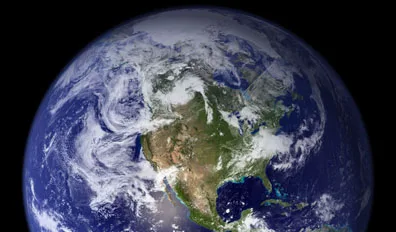
StarTalk Radio comes down to Earth as astrophysicist Neil deGrasse Tyson and comic co-host Chuck Nice answer fan questions about our home planet. How was Earth formed? What is the earliest limit of the fossil and tectonic record? How does the high proportion of landmass in the Northern Hemisphere affect Earth’s rotation? Which will happen first – the Sun’s expansion into a red giant or the death of the dynamo inside Earth? Could a shift in magnetic poles happen in the near future, and what would that mean? In terms of natural disasters, where is the safest place to live? Does the full Moon affect tides? What would carbon-based life be like if Earth had double the gravity? Were there red sunsets in prehistoric times, before human pollution? All this, plus Neil’s classic answer to the question, “If the moon is getting further away from the Earth each year, how can we have a Super Moon?”
Transcript
DOWNLOAD SRT
Lenovo is sponsoring Life with Machines, a new video podcast hosted by comedian and tech whiz Baratunde Thurston, where he discusses all things AI. Lenovo's Smarter AI is your AI. Personalized and easy to scale, Smarter AI delivers outcomes that...
Lenovo is sponsoring Life with Machines, a new video podcast hosted by comedian and tech whiz Baratunde Thurston, where he discusses all things AI.
Lenovo's Smarter AI is your AI.
Personalized and easy to scale, Smarter AI delivers outcomes that matter most to you and your business.
With full stack AI hardware, software and service solutions, Lenovo is bringing the transformative power of AI to industries, organizations and people of all kinds.
Discover how Lenovo and Baratunde are using AI for good to power people forward.
Listen to Life with Machines now streaming wherever you listen to your podcast.
The holidays bring the world together and language can help us enhance our connections.
How will you be connecting with others this holiday season?
As the most trusted language learning program for over 30 years, Rosetta Stone immerses you in an enriching experience.
I'm learning and practicing Spanish with Rosetta Stone, so that I can say things at the holiday table and nobody will know what I'm talking about.
Things like, estas terriblemente equivocado, which means you are horribly mistaken.
Start learning today with Rosetta Stone's lifetime membership holiday special.
Visit rosettastone.com/startalk for unlimited access to 25 language courses for the rest of your life.
Available for a short time at rosettastone.com/startalk.
With incredible new features and upgrades, there's never been a better time to armor up and play the critically acclaimed action RPG Diablo IV.
Get ready to continue the epic story in your battle against evil in the new expansion Vessel of Hatred.
As darkness spreads through the lands of sanctuary, it's up to you to fight back the encroaching corruption.
Read the benefits of massive updates to character progression, loot systems, difficulties and tons of added activities.
Face off against new and iconic bosses teeming with the spoils of sanctuary.
Plus harness formidable powers of the jungle with the all-new Spirit-Born Class, now yours to customize and progress alongside five other iconic classes.
Embark on the epic journey solo or with friends.
You'll quickly understand why Diablo IV has been called one of the best action RPGs of the last decade by PC Gamer.
Forge your own path through hell-torn lands of sanctuary.
Get Vessel of Hatred, available now in the Diablo IV Expansion Bundle, rated M for Mature.
Welcome to StarTalk, your place in the universe where science and pop culture collide.
StarTalk begins right now.
This is StarTalk.
I'm your host, Neil deGrasse Tyson.
I'm an astrophysicist with the American Museum of Natural History, right here in New York City.
In studio is the one, the only, Chuck Nice.
Hey Neil, what's happening?
Chuck, good to have you.
This is the Cosmic Queries edition of StarTalk.
Yes it is.
I like to think of it as StarTalk.
After hours.
After hours.
But it's not after hours, it's like broad daylight outside right now.
So sometimes we do them random, you know, popular-y, but today it's themed to the Earth.
I haven't seen any of these questions.
That is correct.
Questions that come in from our fan base and our listeners, from all our social networks.
That is correct.
Why do we make a category?
I'm like an astrophysicist.
I care about everything that's not Earth.
Right.
You're not a terrestrial physicist.
I'm not a terrestrial, thank you.
He's an astrophysicist.
Thank you.
So we'll see how far I get.
I know some osmotic things that the geophysicists tell me, but otherwise we'll see how.
I can answer questions about Earth as a planet.
Okay.
All right?
Well, you know what?
We'll find out.
We'll see.
We'll find out.
At first I've ever heard these.
The first time you've ever heard them, that's my favorite part.
So let's jump right into it.
And we've got Ryan Misak.
Ryan Misak.
From?
Well, the question's from Facebook, but Ryan does not notate where he is from.
How was the Earth formed?
What happened at the birth of the planet?
Well, and that goes for not just this planet, but pretty much planets, how are planets formed?
We can split planets into two varieties, rocky planets, of which we are, and gaseous planets.
Jupiter, Saturn, Uranus, and Neptune are gassy.
You mean Uranus is gassy?
I had to do it.
I had to.
Somebody's gotta go there.
I'm ashamed of myself right now.
Somebody in every show's gotta go there.
Gotta go there.
Go ahead.
All right.
So what we think happened here is, as the original nebula that formed the solar system, it would form the sun first.
That's where the strongest gravity is, the greatest accelerations of particles into it.
You can make the sun.
Now that's where the interesting things happen, because now the sun begins to heat the remaining rest of the gas that's trying to condense and make other kinds of objects.
So in our solar system, we may have had a huge gaseous envelope, but we don't anymore.
We don't have enough gravity to hold on to it.
Got you.
All right?
For example, if you have a helium balloon and you let the gas out, helium travels very fast in our air, so fast that if it gets to the top of the atmosphere, it will escape forever.
Wow.
We don't have enough gravity to hold on to our helium.
But Jupiter and Saturn do.
So Jupiter and Saturn are, you know, they're almost 10% helium in each one of those.
So if you don't have enough gravity to begin with, you'll hold your rock so you don't hold your gas.
Gotcha.
That's what I'm saying.
So now there's a point where Earth would have been sort of molten, because things are very hot in the early solar system.
When you're molten, heavy things can fall to the middle and light things rise to the top.
So guess what kind of core we have?
So we have a very heavy metal core.
Metal, iron core.
Iron core.
Yeah, nearly all the iron in Earth settled to the core.
And the light stuff, like what the geologists call the silicates.
So there's a lot of silicon bound with oxygen.
Silicon and oxygen, that's like the active ingredient in rock, basically.
So these are the light elements compared with iron and nickel and cobalt and all the rest of that.
So Earth has been what we call differentiated in its density.
And there you have it.
And then it cools in place.
It cools in place.
So then you have different layers and different as you go down.
Now you know the rarest meteorite?
It's called a palisite.
That meteorite is the broken remains of a planet that was differentiating its material, the light things floating to the top, the heavy things sinking to the bottom, but it froze before everything fully separated.
And you capture the light things rising up through it and the heavy things coming down.
It is the combination of these two ingredients in one mass.
So it's those two things kind of passing in the night.
Passing in the night.
And then there's a snapshot of that found in that rock or that meteorite.
Chuck, I could not have said it better.
Yes you could have.
No, I could not have said it as simply and beautifully.
You came through on that one.
Well, I got a simple, beautiful mind.
So there you have the earth and we kept our heavier gases in the atmosphere.
It was fantastic man.
That was really good.
Okay, what else you got?
Okay, let's move on to Omar Buckingham.
That's the name.
The third, yes.
Where's the Roman numeral?
Indeed, Omar Buckingham the third.
Could a shift in the magnetic poles happen in the near future?
How does that occur and what would that mean for both humans biologically as well as technologically?
Okay, dude, the poles are shifting all the time.
Okay.
All the time.
All the time.
All right.
And we say, oh, the compass points north.
No, it points to the north magnetic pole, which is not near the north geographic pole.
Like where Santa is like north pole.
Right.
Bar none, all right?
The magnetic pole is like in Canada somewhere, all right?
So people who in the old days, pre-GPS, who hiked with compasses would need a magnetic, what they called it, was it a declination or decrement?
They'd need to know what angle difference between the compass and true north would give you, depending on where they were in the world.
Is that where true north comes from?
True north is Santa.
True north is the difference between true north and magnetic north.
That difference you have to keep track of.
Otherwise, you're lost, all right?
So a compass is only good as how close the north pole is to the north pole.
All right, now here's something cool.
You ready?
Do you realize that the north pole of a compass points to the north pole of the earth?
But you've played with magnets before.
What happens when you bring two north poles together?
Well, they kind of hate each other.
They repel.
That's right.
Yet your north pole on a magnet is pointing to the north pole of the earth.
That tells you that earth's north pole actually has the south magnetic center.
Oh!
So it's just the opposite.
It's just the opposite.
The north magnetic pole of the earth is earth's south pole.
That's why all north poles of magnets point there.
Oh my...
That is amazing.
You didn't know that.
No, because you think it's north pole.
That's what you've been told.
That's what you point to if you're north.
But you're right.
But the north pole of the magnet would not point towards the north pole.
It would go the opposite way.
So the north pole is actually the south pole.
Exactly.
I'm just saying.
So Santa is truly at the south pole.
Yes, near the south magnetic pole.
The south magnetic pole.
The real rotational north pole.
Exactly.
So the poles not only wander, they've actually diminished in intensity and increased over time.
Right now we're on a diminishing intensity pole.
The worry is if it goes away, then what happens to the solar particles and radiation that hits the earth?
Do we all go extinct?
We're worried about that.
So, you look at the record of where the pole has been.
We have that because it freezes, quote, freezes into the lava that comes out of volcanoes.
It remembers what orientation the pole was at the time it solidified.
So, you have a whole tracking of the history of where the magnetic pole was.
And after this break, you'll find out whether we go extinct or not.
You're listening to StarTalk Radio back in a moment.
We are back on StarTalk Radio, Cosmic Queries edition, I'm Neil deGrasse Tyson.
Chuck Nice.
Yes, Neil.
Is with me.
Yes, I am.
You're one of our regulars, Chuck.
I'm glad to be a regular.
I just heard you had a kid.
Why didn't you tell me this?
Oh man, you didn't know.
How old's your baby?
Well, right now, four weeks.
Four weeks?
Four weeks.
Okay, we call that a month, just so you know.
Well, congratulations, it's your third.
Thank you, it's my third.
It's a little girl.
Baby-making machine, you.
Oh God, you're telling me.
Congratulations.
What's your name?
Charlie London.
Charlie London.
Charlie London is her name.
A shout out to Charlie London.
Welcome to the universe.
Thanks.
Cool.
So Cosmic Queries edition, we're talking about Earth, and I claim expertise on Earth as a planet globally, not like Earth as a geologist.
Right.
Don't ask me what the molecular form of orthoclase feldspar is.
I won't know.
Okay?
So I haven't seen these questions before, so what do you have?
What's next?
Okay, let's move on, and this next question comes from David Worley.
This is just a personal question for you.
So this isn't really like a science thing.
He just wants to, he's picking your brain.
Okay.
Okay?
Even though we are on the air, and this is a science show, but go on.
This is true.
Okay.
But you know, you gotta sometimes indulge.
I'll roll with it.
You gotta indulge.
Taking into account the natural earthbound disasters such as earthquakes, flooding, drought, tsunami, and last, but certainly not least, volcanoes.
Neil, where is the safest place you'd like to live?
The safest place.
The safest place you'd like to live.
Actually, the safest place is like the International Space Station, where you could watch it from above.
There you go.
No, there are some places that are not as susceptible to natural disaster.
The United States, there's all this God bless America stuff, but we lead the world in tornadoes, and we get these Mondo hurricanes, and we are like, you know.
We're disaster central.
Disaster central.
Not only in real life, but in the movies as well.
We got everything but the frogs and the locusts.
Basically, we have the fires, the floods, that we've got all of that.
So, what you want to be is a place that is not as susceptible to the fluctuations in climate.
And among those places would be like rainforests, for example.
Right, the climate, by the way, Seattle is at a latitude that promotes rainforests.
So, Seattle, I don't know that they have tornadoes, floods, you know.
It's pretty stable.
Just dreary rain.
The sun never comes out.
That's true.
Just dreary rain all the time.
If you're okay with no sun, you're cool.
And the Brazilian rainforest, that's why it is so rich in its bio, and it's one of the richest parts of the biosphere.
Life can thrive there.
Life has a hard time if you stress it with climate, you know, fire, flood, whatever.
I believe me, I know.
So, the rainforest latitudes are great places.
Now, you'd be infected with bugs and other, you know, malaria and everything.
You'd be dead for other reasons, but not because Earth as a planet kills you.
Not to mention all the loggers you'd have to fight off.
Not nowadays.
For your rich natural resources.
Correct.
Yeah.
All right, let's move on to the phone, and I believe on the line.
You got a caller.
Got a caller.
Nice.
And this is Magic from LA, Neil.
Magic from LA.
Of course, okay.
So, what does Magic have?
Magic, are you there?
Yeah, I'm here.
That's not Magic Jones.
I'm sorry.
No, it's not Magic Jones.
No, no.
Okay, Magic, what do you have for us?
Well, I wanted to know if you put all of the natural resources together on Earth, how much would our planet be worth?
Oh, wow.
Oh, he's trying to trade Earth on the open market.
What are you, a Ferengi?
I'm a registered stockbroker, so, you know, I always ask these questions.
What is Earth worth?
Oh, Ouch.
What is Earth worth?
Ouch.
Who would ever think of that?
Well, I do know this much.
I know we have $60 trillion worth of oil in the ground, which is why we can't get any legislation pass to stop killing the Earth.
Right, because it's cheaper to pull energy out of the ground.
So, okay, I don't have that number, but I can address certain aspects of it.
There's the oil, there's the coal, there's the minerals, which includes diamond, and then there are the elements from the periodic table that have value to our industry.
There's copper, there's cobalt, there's iridium, there's...
So you just go right on down, there's uranium.
Helium is becoming expensive, okay?
Yeah, here we're running out of it.
Now, helium is one of the most common ingredients in the universe, but as we said in an earlier segment, helium, if it's in our atmosphere, migrates to the top of the atmosphere and escapes into space.
In the old days, the Macy's Thanksgiving Day Parade, with the helium balloons, they would release the helium back into the air and refill it every year.
They don't do that anymore.
Yeah, they keep it now.
They re-canister that.
Macy's Day Parade, the second largest consumer of helium in the world after the US government.
And children at parties who want to talk funny.
Talk like Mickey Mouse.
So, if you add it all up, I wouldn't know how to say that, but it's maybe quadrillion.
I mean, if there's a number, a quadrillion is a thousand times bigger than a trillion.
If I had to pick a number, I'd say a quadrillion dollars.
So, what is Earth worth to somebody else who wanted to reno?
But here's the problem.
Some of the value of those minerals is because they're rare.
If you call in an asteroid that is rich in gold, platinum, iridium, then the price that you are now trading it at on Earth will plummet.
Will plummet.
And then it's a whole other valuation.
So, if you're worried about aliens taking our resources and you want to charge them for it in a swap of currency, I don't know that that's going to matter because on the root here from their home planet, they're going to pass asteroids.
That they'll be able to mine for all the things that we find rare.
In fact, they won't have to mine.
Just haul the damn thing in.
Take a bite out of it.
It's sitting there on the ground.
No drilling, no shipping.
Just there it is.
So, the value of resources is, as you know, if you're a stockbroker or into economics at all, is a function of not only the demand but the supply and the cost of acquiring it wherever it happens to be.
So, it's a quadrillion dollars to us.
Right.
But to aliens...
We're worthless.
Food stamps.
Food stamps.
Here you go.
So, thanks, Magic.
Thank you so much, Doctor.
All right.
Thanks for checking in.
Okay.
That was a lot of fun.
Chuck, what else you got?
Okay.
This is a little geologist oriented.
Then I'll get to say I have no clue.
Okay.
Go on.
But let me go.
What is the furthest limit of the fossil and tectonic record, and what is known about how much further back the Earth supported a stable crust and life?
I have heard...
Okay.
Earth has never had a stable crust.
Just look around.
Whoa.
No.
It's churning daily.
That's why we have earthquakes.
Right.
Go look at the USGS Earthquake page on the Internet, and it's a record of all the earthquakes in the world.
There are hundreds a day.
Every day.
Every day.
Every day there's earthquakes.
The only ones you hear about are the ones that shake and bake a city.
Right.
But there are tremors.
There are level two, three, four and five.
New York City had one last year, for goodness sake.
Okay.
Not big enough to topple buildings.
And that was based in Virginia, I think it was.
It was.
That's right.
The energy was spread out, so it thinned out the energy.
So that's why, you know, there was no real disasters from that, from that earthquake.
So we've never had a stable crust.
A, it's still not stable and it will remain unstable for a long time to come.
B, C, the earliest fossil evidence of life goes back, if you push it, if you really push it, 3.7, 3.8 billion years.
3.8 billion?
Yeah, these are single celled organisms.
That's correct.
And before, here's what happens, if you wait long enough, the land mass that you're on subducts beneath other land masses and rejoins the mantle and comes back out as a volcano, as lava.
So earth remakes its surface over several billion years.
So that's why the oldest rocks on earth are not as old as the oldest rocks on the moon.
Exactly.
Because the moon was done with its volcanic activity very early.
And once you're done, your rock sits there.
You're not remaking yourself.
You're not remaking yourself.
You're just sitting there.
You're just sitting there.
But the earth is kind of like our skin.
Is that what you're saying?
Kind of like a...
I guess, you know, if you're a metrosexual and you get skin peels and things, fine.
It's not my first thought, Chuck.
Groomed Chuck.
It's not my first thought, but yes, you're constantly remaking your outer epidermis, yes.
Okay.
I love that that's where my mind goes to my next chemical peel.
All right, that was fast.
Next one.
We only got like a minute.
What do you got?
We got a minute?
Okay, let me find something.
In this segment.
Very quick.
Which will happen first?
The expansion of the sun into a red giant or the death of the dynamo inside the earth leading to the loss of the earth's magnetic field?
Oh, we'll probably lose our dynamo before the death of the earth is what I'm saying.
Dynamo is is lingo for the movement of molten iron.
And when you move metals in a you, what you can do is you can end up generating currents.
And if you have a current, you also have a magnetic field.
And this is what a dynamo is.
It's the relationship between sort of moving electrons and the magnetic field that comes about as a result.
By the way, that's how we create electricity to begin with.
That's right.
All right.
We take wires, move it through a magnetic field.
So it works both ways.
Moving current makes magnetic field.
And magnetic field can induce a current to make electricity.
We gotta break.
When we come back, more of StarTalk Radio, Cosmic Queries.
Experiences make life more meaningful.
And with MasterCard's priceless.com, you can immerse yourself in unforgettable experiences in dining, sports, art, entertainment, and more in over 40 destinations.
From a round of golf with a legendary player to a cooking class with a celebrity chef, you can fuel your passions and create lasting memories.
Explore experiences today at priceless.com exclusively for MasterCard card holders.
Terms and conditions apply.
Lenovo is sponsoring Life with Machines, a new video podcast hosted by comedian and tech whiz Baratunde Thurston, where he discusses all things AI.
Lenovo's Smarter AI is your AI.
Personalized and easy to scale, Smarter AI delivers outcomes that matter most to you and your business.
With full stack AI hardware, software and service solutions, Lenovo is bringing the transformative power of AI to industries, organizations and people of all kinds.
Discover how Lenovo and Baratunde are using AI for good to power people forward.
Listen to Life with Machines, now streaming wherever you listen to your podcast.
If you're ready to elevate your driving experience, the first ever Kia K4 is worth a closer look.
It combines style and performance with a sleek futuristic design featuring star map LED headlights and an available panoramic display for unforgettable looks.
SiriusXM comes standard in every Kia K4, bringing you closer to what you love.
Plus, with an available 190 horsepower turbocharged engine, the Kia K4 delivers everything driving enthusiasts crave.
Learn more at kia.com/k4.
We are back on StarTalk Radio.
You can find us on the net, startalkradio.net.
All our archive shows are there.
We might have put the first season under wraps, but after that, they're available to you.
Excellent.
Yeah, and check it out.
There's quite a bit of interesting shows from our archive.
Absolutely.
That's the voice of Chuck Nice you're hearing, and he's reading me Cosmic Queries.
I've never seen these.
They come in on all of our social media portals.
That's correct.
And give it to me.
And the topic today is Earth.
And I'm like astrophysicist, so to me, it would be Earth as a planet, not Earth as a geologist.
There you go.
All right, so here we go.
Let's move on to an email question.
This is by Bud Sant.
Oh, wait, wait.
In a previous segment, someone asked what would happen to life if the Earth's magnetic field changed?
That's right, if we lost our dynamo.
If we lost it, I forgot to say, we have evidence that the magnetic field has gone away many times before.
Because it goes to zero as it flips.
Our magnetic field has flipped many times in the past, it's flipped.
Okay, so it's happened.
And so when it's flipped, it goes to zero.
You can look at the fossil record while we had zero magnetic field, they would carry on making babies just fine.
So whatever is their version of a baby is just fine.
It's just fine.
So it does not appear to be as severe as you might think.
Okay.
The evidence shows.
That's good to know.
Yeah.
All right.
So what else you got?
This is an email by Bud Sont, and Bud wants to know this.
How does the Northern Hemisphere's high proportion of landmass affect the Earth's rotation?
Yeah.
So here, what's the fellow's name?
This is Bud Sont.
Bud knows that most of the land of the Earth is in the Northern Hemisphere.
It's like 80% of the land is in the Northern Hemisphere.
And by the way, about 80% of the population, the human population is in the Northern Hemisphere as well.
So we tend to live where the land is.
Help us, Aquaman.
Just an FYI on that one.
So Earth has a rotation rate that is endowed by the distribution of matter on our surface and throughout the solid ball.
If you were to change the distribution of matter, if you were to move continents from the Northern Hemisphere into the South, towards the equator, away from the equator, you will change what's called the moment of inertia of the Earth.
The moment of inertia of the Earth.
It's a physics term.
If you change the moment of inertia, Earth rotation rate will change with it.
And by the way, skaters do this.
When they pull their arms in, they are changing their own moment of inertia and what happens to their rotation rate?
They go faster and faster.
And by the way, how do they stop?
They put their arms out.
Back out and they can stop on a dime.
They change their rotation rate by bringing the arms in or out.
If you move continents towards the equator, away from the equator, into the southern hemisphere, towards the northern hemisphere, you are changing the moment of inertia.
Our rotation rate will change and you can calculate how much we change after every earthquake.
Because an earthquake is a redistribution of the continental shelf.
Wow.
And so we would actually change our days and nights and everything.
You can make it longer or shorter depending on where you will...
The moment of inertia change.
Exactly.
In fact, melting glaciers changes the rotation rate of the Earth.
What?
Yep.
Because you have mass in one location and then it melts and moves to another location on Earth.
Got you.
Yeah.
Awesome.
Wow, man.
They also change the rotation rate because the glaciers are on land.
And so not only will the mass redistribute, it also moves from high altitude to sea level.
Okay?
So now you're changing how far away the matter is from the rotation axis of the Earth.
All this conspires to influence our rotation rate.
You know what?
I got to tell you, I never thought you would give that much information from that much...
That is awesome.
Yeah, you got it.
All right, what else do you got?
Let's go back to Facebook.
And this is Brian Engel from Facebook.
If the moon is constantly getting farther away from the Earth every year...
About two inches a year.
Okay, so about two inches a year.
Then why do we have a super moon where the moon appears larger?
Okay, first, I got to nip this in the bud.
Don't get me started.
I'm getting you started.
Don't get me started.
I got to get you started here.
All right, so there's something called a super moon.
Okay.
I don't know who first called it a super moon.
All right.
I don't know, but if you have a 16-inch pizza, would you call that a super pizza compared with a 15-inch pizza?
How many meat toppings are we talking?
Because if we're talking like totally loaded, then yes, I'm going with yes.
And is there cheese in the crust?
Right, if there's cheese in the crust, come on.
The super moon is a 16-inch pizza compared with a 15-inch pizza.
It's a slightly bigger moon.
I ain't using the adjective super.
Super moon.
No, excuse me.
That's like super Tuscan.
I'm not going there.
Super Tuscan wines, yes.
Yes, they're super because they're super priced.
That costs like four or five times regular.
You pay like a hundred bucks to...
All right, so where was I before?
Why are we talking about wine?
I'm talking about the universe here.
Bring up Tuscan wine.
You know, what did I say?
I'm always thinking about wine.
So, there is no super moon, is what you're saying.
So, the super moon is...
The moon's orbit around the earth is not a perfect circle.
Sometimes it's closer, sometimes it's farther away.
At every month, there's a moment when it's closest.
Occasionally, that moment when it's closest coincides with a full moon.
People are calling that a super moon.
But there's super half moons.
Every month, one of those phases is the closest.
I don't hear people go, oh, super crescent, super half moon, super, no, no.
Don't get, I told you, don't get me started.
Not only that, I was going to tweet this, but I'm going to say it here and now first.
You ready?
Do you know the full moon has no higher tidal effect on earth than any other phase of the moon?
Now you're just making stuff up.
All right, when we come back, more of StarTalk Cosmic Queries.
We are back, StarTalk, the Cosmic Queries edition.
We are themed today with questions on the Earth.
Yes.
Now, do I look like an Earth expert to you?
You know, I gotta tell you, as long as I've known you, I don't know pretty much anything you're not an expert on, seriously.
I'm serious when I say, I'm not even blowing smoke.
Somehow, our producers thought we would have a, wouldn't it be nice if we had Earth questions?
So, I can answer Earth questions, Earth as a planet, not Earth as a geologist, okay.
Hey, before we go for it, I just, because I need you to clear something up, man.
What?
I'm serious, Neil.
What?
Okay, you said that there's no effect that the moon has on the tidal, I mean, a bigger full moon, sorry, let me say this again.
You said there's no effect the full moon has on the tides than any other moon.
Yeah, that's correct.
When you couldn't let it go.
You couldn't?
No, because when Sandy came, I believe you, but I'm just saying there's a lot of people out there who's going to have a problem with this, because the news when Sandy happened, Hurricane Sandy, they talked all about the tidal effects of the moon, and it was a full moon, and this is why Sandy was so.
There are only two things that affect the tides.
From the moon.
You ready?
Go ahead.
The mass of the moon.
Is that changing?
That never changes.
Is the mass of the moon higher at full moon than at half moon?
No, it's the same moon.
A, B, the distance to the moon.
The moon orbits us, sometimes it's closer, sometimes it's farther away.
That has nothing to do with the phase.
It's an elliptical orbit.
Sometimes it's closest to the full moon, sometimes it's not.
But it's not, okay?
Those are the only two things that affect the strength of the tides on earth from the moon.
Okay.
So why do we have a higher tide during full moon?
Because the sun's tides add to the full moon's tide.
To the moon's tide.
So it's the sun.
It's the sun, blame the sun.
Blame the sun.
Blame Sandy on the sun, not the poor moon that dutifully orbits us every month of the year.
Fantastic.
Don't blame the moon on that one.
What's next?
Okay.
Well, we have a phone call.
We got a phone call.
And we have Blake, who I believe is a soldier at Fort Bragg.
Ooh.
Yes.
Is this Blake on the line?
Yes, it is, Dr.
Tyson.
Blake, you call me doctor.
I got to call you by your title.
What are you?
One Officer One.
One Officer One.
One Officer One?
Mister.
Mister.
Oh, okay.
No, no, he said yes, sir.
Okay, so Blake, what do you have for me?
Call me Neil, please.
Please.
Yes, sir, Neil.
My question.
These military guys, you can't get the sir out of them.
That's great.
All right, so what do you have?
No, you can't.
My question has to do with the gravity of the Earth.
If the Earth had been born with twice the size, it would have twice the gravity, and anything that evolved on the planet would have evolved in that double time gravity that we currently have.
Is there any upper limits to a Earth-like planet where carbon-based life forms just wouldn't have been able to evolve because of the massive gravity?
That's a brilliant question.
Really, yes.
It is.
It is.
A couple of things.
If Earth were twice our size, we would have eight times the mass, because the volume goes up as the cube of the thing.
So that's two cubed would give you eight.
Right.
So the surface gravity then is a combination of how far, how much farther away we are from the center of the Earth and how much extra mass is there.
So you can do the math, but you can just assert, make an Earth that is twice the gravity.
Here's what will happen.
Everybody's legs would be more squat.
First of all, so everyone would look a little bit more like a hippopotamus.
Like a dwarf.
Dwarfs, right.
Things wouldn't grow as tall.
Giraffes would have thicker legs.
Horses would be shorter.
All of that would happen.
The giraffe has very high blood pressure to get blood to its brain, to go up to all the vertebrae of its neck.
And so if you have twice the gravity, you would need twice the pressure to get it up there and that could blow your blood vessels.
So you'd have shorter giraffes.
So you wouldn't have any of these tall creatures.
But you didn't ask about mammals.
You asked about carbon-based life.
Most of the biomass on Earth could care less, couldn't care less what the force of gravity was on Earth.
Period.
All the life in the ocean is neutrally buoyant.
That's right.
It doesn't care.
Bacteria swimming in the pond, in the pond, what do you, the pond drop.
You know, you look at it when you're in high school, you look at the petri dish, you get a drop of water from the pond and you see paramecium in it.
They don't care about gravity.
That's right.
Their lives, they thrive under like the surface tension of the water.
So most life actually does not care about gravity.
We do because we're out here on the land.
Out here on the land, we're trying to jump.
Olympics would be kind of different.
There'd be no hurdling.
There'd be the low hurdles, not the high hurdles.
So yeah, so sports would be very different, but a factor of two gravity, not a problem for life.
Right.
And you'd have sort of more, sort of smaller life thriving than bigger life.
And that's about it.
Wow.
Yeah.
There you go, Blake.
So thanks Blake for that one.
Thank you very much.
All right.
You're listening to StarTalk Radio, the Cosmic Queries edition.
Today's topic, the earth.
We'll see you in a moment.
If you're ready to elevate your driving experience, the first ever Kia K4 is worth a closer look.
It combines style and performance with a sleek, futuristic design featuring StarMap LED headlights and an available panoramic display for unforgettable looks.
SiriusXM comes standard in every Kia K4, bringing you closer to what you love.
Plus, with an available 190 horsepower turbocharged engine, the Kia K4 delivers everything driving enthusiasts crave.
Learn more at kia.com/k4.
This is StarTalk Radio, the lightning round.
Chuck, you know what the rules are.
Oh yeah.
You're gonna read me questions.
Rapid fire, I'm gonna give you sound bite answers.
I haven't heard the questions before.
That's correct.
And we invented the lightning round because we never got through all the questions.
Right, so this is a way of getting to everybody's questions.
Just one follow up on that last bit from the soldier at Fort Bragg.
He had asked about the doubling earth's gravity.
And I said, ocean life wouldn't care.
But I should have commented, water then weighs twice as much.
So if you're accustomed to swimming at a particular depth, you then swim at half that depth.
Gotcha.
That way the weight of the water above you would be the same as it was in the previous earth.
Right.
Right, that's all.
Okay.
Just want to like straighten that out.
Okay.
And they could easily find that place, right?
They're fishes and they move in three dimensions.
Exactly.
There you go.
Right.
All right, lightning round.
Let's do this.
I have a bell.
Where's your bell?
Let's get it out.
Here it is.
There's the bell.
All right, here we go.
Are we ready?
Yes.
All right.
Let me test it.
Yeah.
There we go.
Okay, we're good to go.
This is from Justin Keeney.
How large would an object have to be to impact the Earth and alter its orbit around the sun?
I'm going to change that to, is there an object large enough to do that?
Anything that hits Earth alters our orbit.
The question is, is it altering it in any significant way?
There is nothing on a collision course that will have any significant impact on Earth's orbit around the sun.
And odd that he's worried about our orbit around the sun and not on our survival from such a collision.
Yeah, because such a collision will wipe us out.
You'll go extinct and Earth's orbit will be just fine.
There you go.
All right.
Oh, by the way, in the early solar system, there was such stuff that would have knocked our orbit well out of whack.
But all that's been absorbed up and vacuumed up by all the other planets, and we're in a mature looking solar system.
Hey, thanks Jupiter for taking one for the team.
Taking one for the team, you got it.
Jupiter ate most of it.
There you go.
So, Leon Bruce wants to know this.
If we continue to leave scraps, debris, in space from our satellites and such, would we ever develop a ring such as Saturn?
A debris ring.
A debris ring.
So the low hanging debris will reenter Earth's atmosphere because it'll get friction from the air.
If it's very high up, it'll never go away ever.
And we already have a ring of debris.
It's at the 22,000 miles up where we put the communication satellites.
They're in a ring over the equator of the Earth, so we already have rings.
Well, we already have a ring.
Yeah, yeah.
It's not big enough like Saturn's rings, but if we kept at it, because when a satellite dies, we just lift it up a little higher and to make room for another satellite.
For another satellite.
So to keep this up.
So there's a bunch of dead satellites floating above us.
Dead satellites too far away to reenter the atmosphere and then just stay there forever.
Forever.
Yes, we are creating our own Saturnian ring around the Earth system.
Nice.
Nice.
Okay, Susan Hemmack wants to know this.
I know that atmospheric pollution contributes to the colors we see in the sunset and sunrise.
What would those sunsets and sunrises look like during prehistoric times with no man-made pollution?
Would they still have been red and orange?
First of all, women are making pollution too.
So don't be blaming men for that.
A.
B.
It's not only pollution, it's pollen, it's water vapor, it's dust kicked up from deserts, it's volcanic particles.
All those particles make a sunset red, because all the colors from the sun are red, orange, yellow, green, blue, violet.
Mix them together, it is white light.
Those particles scatter out of the sunbeam, all the blue.
That's why we have a blue sky.
And the more it scatters, the deeper the yellow, orange, red the sun appears, so that when you have maximal scattering, that's right at sunset when the sun is deepest red and the sky is deepest blue.
So dinosaurs would have totally enjoyed red sunsets in their day without the benefit of our pollution.
No, so red sunsets, just breathing easier.
That's right, exactly.
There you go, awesome.
All right, let's move on to Felipe Santiago.
Felipe wants to know this, could a cataclysm like the one that destroyed Krypton occur in reality?
Can a planet explode from within?
And what would be the reason?
So we're talking about Superman's home planet.
Krypton.
Okay, if we remember from the film, they overmined the planet, made the core unstable, and then the planet collapsed and then exploded.
Correct.
We are not overmining our planet to destabilize the planet.
We're overmining our planet to destabilize our atmosphere.
That's different.
So, no, we're nowhere close to that ever happening here on Earth.
But if you start taking whole chunks of the inside of the Earth out, yeah, you're going to start collapsing.
You're going to have some serious sinkholes on your hand.
Will we explode?
No.
The energy isn't enough to explode the Earth and have us scatter into space.
So the answer is we won't explode, but there's still hope for the cataclysm.
Next.
Let's.
All right.
Quick.
Okay, here we go.
One minute, go.
Here we go, one minute.
All right, here we go.
Mike McGill wants to know this.
What's the most unexpected and less well-known danger we are exposed to as a planet from the cosmos?
Ooh, well, in the year 1900, you ask people what are you most worried about?
They're worried about overpopulation and lack of food and all of this.
They were not worried about asteroids.
So true.
They didn't learn about asteroids yet.
And we know about them.
Well, now we know about them.
So I ask myself, there's the known knowns and how about the unknown unknowns?
In a century, what will people be listing as the biggest risk to their lives?
We have no idea.
That's why it's good to kind of learn what's out there.
Don't be saying, oh, I'm just looking at Earth.
That's all I care about.
No, because the end of your life may come from space.
Learn something, dummy.
We gotta go.
This has been StarTalk Cosmic Queries edition.
Chuck Nice, thanks as always for being my co-host here.
My pleasure.
I'm Neil deGrasse Tyson, your personal astrophysicist, thanking the National Science Foundation for their support in part for the production of this program.
As always, I bid you to keep looking up.
If you're ready to elevate your driving experience, the first ever Kia K4 is worth a closer look.
It combines style and performance with a sleek, futuristic design featuring StarMap LED headlights and an available panoramic display for unforgettable looks.
SiriusXM comes standard in every Kia K4, bringing you closer to what you love.
Plus, with an available 190-horsepower turbocharged engine, the Kia K4 delivers everything driving enthusiasts crave.
Learn more at kia.com/k4.
See the full transcript



 Unlock with Patreon

 Become a Patron