


 Unlock with Patreon
About This Episode
Is space infinitely stretchable? Neil deGrasse Tyson and comedian Chuck Nice explore fan grab bag questions about supermassive black holes, Planck lengths, and the gravitational wave background with extragalactic astrophysicist and host of PBS Space Time, Matt O’Dowd.
Neil and Matt compare notes on science communicating on the internet. Learn why Neil would choose death by black hole and how falling into a supermassive black hole would be different from falling into a regular one. Could you communicate what happens on the inside?
Learn about the discovery of gravitational lenses, quasars, The Einstein Cross, and whether dark energy is changing over time. Will we find out what dark energy is in our lifetime? Could we zoom in on matter indefinitely? Is there such a thing as the smallest particle? We break down a Planck length, cosmological inflation, and whether space is infinitely stretchy. What happens to all the gravitational waves? Discover the gravitational wave background, how to find it, and what it could tell us about the universe.
Is there a correlation between the space compressed by black holes and the rate of expansion? We also discuss the mystery of the early universe uncovered by JWST. How do supermassive black holes form? Do we have any black hole clusters? Learn how NuSTAR will help us track the movements of black holes. Plus, does every object have an event horizon?
Thanks to our Patrons Nick Francis, nick lopez, John deLeo, Jeff Otis, Deano F, Ekam Khaira, and Jeffrey Tallcott for supporting us this week.
NOTE: StarTalk+ Patrons can listen to this entire episode commercial-free.
Transcript
DOWNLOAD SRTComing up on StarTalk, Cosmic Queries Edition, from here, my office, at the Hayden Planetarium of the American Museum of Natural History, we talk about black holes, clusters of black holes.
We talk about the plank length, the big rip, dark matter, dark energy, and everything in between.
And of course, I end it with a cosmic perspective.
Welcome to StarTalk, your place in the universe where science and pop culture collide.
StarTalk begins right now.
This is StarTalk.
Neil deGrasse Tyson, you’re a personal astrophysicist.
Today, we’re going to do cosmic queries.
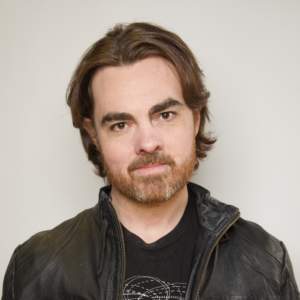
And this time, my special guest is friend and colleague, Matt O’Dowd.
Matt, how you doing, man?
Great, Neil.
How you feeling?
All right, been too long.
Been too long.
It’s exciting.
And of course, we got Chuck Nice.
What’s happening, Matt?
Good to see you.
Chuck, there’s no Cosmic Queries without you reading the question.
There is.
There is.
There truly is, but I appreciate that.
So let me catch up our audience, the few of them who might not know who you are.
So first, you’re a professor and science communicator, so in the same business in that part of your life.
And you have a PhD in astronomy and astrophysics from the University of Melbourne.
Did I pronounce that right?
Milbz, as we say.
No, I’m not going there.
No, no, that’s too intimate.
I’m just…
For you, Neil.
University of Melbourne, Melbourne, Australia.
And you’re into all the stuff that I like most about the universe.
Extragalactic astrophysics, everything that’s happening beyond the Milky Way.
Quasars, active galactic nuclei, these are badass galaxies.
They have supermassive black holes in their core.
Just into that.
You’re also associate professor at the City University of New York at Lehman College.
Exactly.
Up across the street from my former high school.
Oh.
The Bronx High School of Science is on one side of the street, Lehman College is on the other.
Separated by a field, an athletic field.
Oh, they had to keep you guys apart?
No chance of my people taking over the athletic field.
Bronx High School of Science is not that kind of place.
Oh, that’s hilarious.
And you’re also affiliated here in our Department of Astrophysics as a research associate.
But I think most people who know you, know you as host of the PBS to YouTube program, Space Time.
Exactly right.
Oh my gosh, what a following that has.
We busted through three million subscribers.
Three million?
Oh, congratulations on that.
Congratulations.
I think YouTube gives you a little memento for that.
We got it at one million, the gold button.
Yes.
Which, by the way, does nothing when you push it.
Oh, wow.
Nothing that you know of.
Every time you pushed it, somebody’s computer exploded in their face.
So, let’s compare notes, because we’re both in the same business, if you will.
So, you brand yourself as a science communicator, but not a science teacher.
So, how would you divide those two tasks?
Well, I do teach and communicate, so I see the division.
I teach a nice astronomy class each semester at Le Mans.
With a textbook.
And exams.
Slide show.
Exactly.
Which is really fun.
I mean, you don’t get quite the intimate contact when you’re staring at a camera and pretending it’s your audience, right?
Right.
You have to pretend that there’s a human on the other side of the glass.
Unless you see humans at all times.
Sure.
No matter where you go.
That’s a different diagnosis.
Even when you’re alone, you see a human.
Yeah, there’s this point in the like ten seasons of Space Time where you can kind of tell where I started to do that.
And a friend who’s like an improv champion gave me this advice, just imagine it’s someone you know.
And I became so much more natural as soon as I was doing that.
Just imagining that it’s my mom or, you know, like your friend or whatever.
What you’re saying, the early episodes, you were a little stiff.
You were like delivering information rather than hanging out with the person in the camera.
Yeah, I was thinking exactly what my hands were doing and it was uncanny valley.
Don’t go back to those anyway, but yes, to get back to your question.
Ignore his first nine seasons.
This was just last week, actually.
But you know, talking to real students and having the interaction in real time is great.
So I teach classes and…
You get feedback.
Yeah, it’s a very different day.
If you say something that befuddles them, they’ll look befuddled.
And there’s such a…
You can get away with more when you’re talking to the camera, because there’s no immediate accountability.
In the classroom, there’s accountability every single lecture.
So when I first started proper professor lecturing, my mood at any time was completely based on how the last lecture had gone.
Like if I flubbed the lecture, I would feel like crap until the next lecture.
And if it was amazing, then I would be on top of the world.
So there’s a lot of feedback.
Oh yeah, oh yeah, yeah, yeah.
But it’s also, you know, the stakes are high because if you don’t get it right this class, the next class will be lost from the beginning.
So you’re building this edifice of knowledge and you have to do it right.
And how do you know that they’re just not sitting there glazed over it, receiving all the information and not really processing it?
Well, if they’re glazed over, that’s a hint.
And so then you have to know that they’re glazed over.
Part of your social skills is to be able to read that.
To some extent.
And one trick is there’s always a few kids who are so into it that you can be totally teaching to them and not everyone else.
Suck up.
Always sitting in the front.
They bring an apple every class year.
And if you’re one of those, thank you.
Thank you so much.
So which astronomy, how much math is in that intro astronomy class?
This one is not much.
Okay.
Because at CUNY, you got to take a science class.
CUNY City University of New York.
Yeah, exactly.
So you got to take a science class.
And so there are people with all sorts of trajectories who don’t have a lot of math otherwise.
So I’ve paired it back semester after semester until now we have, like if I teach them a core mathematical concept, they come out with one big intuition.
And for this class, it’s like the nature of proportionality.
And so understanding why these equations are what they are without having to solve too many of them.
Yeah, because they’re people who think astronomy is just looking at pretty pictures.
That’s how the press delivers images from the James Webb Telescope from Hubble.
And no, behind closed doors, we got to figure this stuff out.
It ain’t Instagram, you know what I mean?
It’s like Instagram for science.
It was shocking when I discovered that, that it wasn’t just taking pictures through telescopes.
Yeah.
So, just today, just today, my assistant brought to my attention some paper mail, not email.
Paper.
Snail mail.
Snail mail, and it’s right here.
This is two letters, one from a 10-year-old and one from an eight-year-old.
Wow, look at that.
Wow, those are real.
And…
Handwritten letters.
And this, I know this is Cosmic Queries, but I don’t think they’re Patreon members.
Well, they don’t have a job, most likely.
I’ll read them only because I know that they’re probably unemployed, but I will tell you this much.
Let’s see, one is from Dexter, and the other is from Abby.
And Dexter and Abby, I’m gonna let you know, you owe us $5.
And the moment you get a job, you need to join Patreon and send us our money, okay?
Because you have cut the line, and you have displaced many people who take their hard-earned cash and send it to us so that they may inquire of Dr.
Tyson, the wonders of the universe.
But you think because you’re 10 years old and cute, that we’re just going to do whatever you want.
Well, I got news for you.
You need to get a job.
I think they got the point.
Do you think they got the point?
At some point there, I morphed into talking to my own children.
You will not just lay around this house, you’re five years old.
Exactly.
You know.
So you pick one from each?
Okay.
All right, here we go.
All right, let’s go with Dexter.
Dexter is coming from Middletown, Maryland, and he says, Dear Mr.
Tyson, or should I say, Dear Mr.
Tyson.
Okay, I’m not gonna do that.
Because if he’s watching, he’s gonna be like, Chuck, you know what?
You’re a real a-hole.
No, he’s gonna say, Chuck, my voice is deeper than that.
I’m like, Dear Mr.
Tyson.
Oh no, what his problem is.
Anyway, he says, Dear Mr.
Tyson, my name is Dexter, I’m 10 years old, and I have a few questions if you have time to answer them.
We’ll only take one of them.
Okay, we’ll only take one.
By the way, let me just say to Dexter, your handwriting is impeccable.
And it’s cursive.
It’s in cursive.
He’s a 10 year old in cursive.
What planet is he from?
Do you see this, Matt?
Look at this.
What planet?
What planet is right?
I didn’t know they taught kids to write anymore.
You don’t have to write at all, it’s just the emojis row after row, all right?
Pick one, you’re the man.
I’m going to say, here’s one I’m gonna pick the last question he asked, because he asked a lot of great questions.
I wanna read them all, but here’s the last one.
Finally, why do you want to die by jumping into a black hole?
I mean, it sounds awful.
What would it feel like?
What could you actually learn?
Oh, yeah, so he might have heard something I said at some other time about this.
It’s not that I want to die by falling into a black hole.
It’s that if I’m going to die and I could pick, I would pick the black hole.
Instead of getting hit by a bus or laying up from some disease.
Right.
If somebody says, you’re gonna die tomorrow, pick, I’m picking the black hole.
Right.
Because how many people get to tell you what happens while they’re falling into a black hole?
I’d be the first person sharing that information.
That’s true.
Wait, who would you tell?
Well, so whoever’s listening.
That’s the problem with the black hole.
I need like a tin can, a string.
A long cord that comes out.
So my signals will get redshifted as I get closer to the black.
You’re a black hole man, right?
So my signal-
I’m dubious.
You don’t think I could pull this off?
So I would send signals as I descended, but those signals would get shifted by the gravity difference between where I am and where you are receiving my signals.
So we’d have to figure out a way to make that work.
But I would be broadcasting the entire time until the title forces ripped me apart.
Right.
Now, it would first rip me apart at my midsection.
You can calculate that.
When the title forces exceed the molecular forces that hold together your flesh.
If I’m broken at my midsection, I probably am still alive.
Yes.
Because all my organs, my vital organs are up here, and my brain, so I’m probably staying alive.
But the intestines will be hanging out.
I’m also a little thinner because of the spandex of the medication.
I didn’t get there yet.
So the intestines will hang out, but you don’t need your intestines in your final moments of life.
Because you’re not gonna have a meal in the black hole.
Exactly, right, okay.
So, yeah, the intestines will spill out, but my heart, lungs, you know, all right.
So, but then my other, those two other parts would snap into, that would become four pieces.
Right.
And then eight.
And at some point, it’s just my head, okay?
All right.
And then after that, my head splits.
So, and he says, how would that feel?
It would hurt, what do you think?
But also, as Matt made sure I’ve included here, I’m being funneled down into a narrower and narrower channel through Space Time.
So not only am I being stretched head to toe, I’m being extruded through the fabric of space.
Like toothpaste.
Like toothpaste through a tube.
And we have a word for this.
You should be impressed with the English language is for how many words we have for how to die.
And one of them is spaghettified.
I guess spaghettification.
Oh, that’s the most delicious way to die.
Spaghettification.
Yeah, but anyhow, yes, it would hurt and I would be stretched apart.
So what would we learn?
Matt, is there something to learn if I get close to a black hole that you can’t figure out theoretically?
First up, so my favorite type of black hole is the supermassive type.
Not just the massive type, the supermassive type.
They’re a little smaller than the superdupermassive, but bigger than the interm…
Anyway, those ones are so big, like they can be the size of our solar system.
You don’t get spaghettified until you’re deep in the interior so you can cross the event horizon.
I’d be able to talk about it.
You’re totally fine.
Totally fine.
I mean, you still get the red shifts.
Those weights, you might have to weight the entire age of the universe to get your message, crawl out of that black hole, but you would witness it yourself and you would know.
You’d be able to tell yourself the story about what’s inside a black hole.
So once I’m inside the black hole, I’m alive because I’m not spaghettified yet.
Right.
The super magic.
You’re falling towards.
Exactly.
Towards the singularity.
Towards the singularity.
And I would be enlightened to myself.
To yourself.
What would happen, but that’s about it.
Oh man.
But that wouldn’t have.
But you know, you gotta die some way.
That would be almost worse because, you know, you would have all this knowledge of the only person who’s ever seen a black hole.
Yeah.
And you wouldn’t be able to tell anybody.
Yeah.
It’s been so selfish of you, I really am.
For me, I’d rather tell people, but if it’s just me, you know, I still wanna know.
It’s good to know.
Hi, I’m Ernie Carducci from Columbus, Ohio.
I’m here with my son Ernie because we listen to StarTalk every night and support StarTalk on Patreon.
This is StarTalk with Neil deGrasse Tyson.
All right, so Chuck, you got Abby there, what do you have?
Oh, this is Abby, and she’s eight years old.
She says, firstly, what has been your favorite discovery so far, and what do you predict they will discover in the future?
All right, Matt, that’s going to you.
Wow, my favorite discovery.
Not of mine, because those are-
Yes, of yours.
A little crappy, I thought, you know, historically.
Oh no, no, your favorite, this is a personal letter, handwritten.
Wow, I found some pretty cool gravitational lenses that-
Okay, that’s geeky.
That are pretty awesome.
Yeah, so, I mean, you know, at this point-
What does it, so a gravitational lens would be a mass in the universe that sits between you and something behind it, and the light from behind it got lensed.
What makes one lens better than another?
By the way, I’m old enough to remember the very first lens discovered.
Yeah, we were losing our shit.
Oh, sorry, she’s an eight-year-old child.
It’s a grown-up show.
Yeah, so we think of the universe as, you know, the light comes to us, it follows straight lines, and wherever you see a star or a galaxy or whatever, that’s where it is.
That’s not the case.
Okay, the universe is wibbly wobbly, so there’s gravity everywhere that makes this space like this stretchy fabric, and so light travels by these slightly wiggly paths.
But sometimes, if there’s a big mass like a galaxy lined up, then the light can travel multiple paths from some distant object, like those giant black holes to us.
And so instead of seeing one, we can see many.
Well, four.
Many images of that one object.
So why do you have a favorite one, but they all sound like they’d look the same after a while?
There are some that are just, you would call them golden lenses, because everything is lined up.
They are more photogenic.
Everything’s lined up so perfectly that we just see amazing stuff.
Like we, you know, there’s this, one of the very, was it the first one?
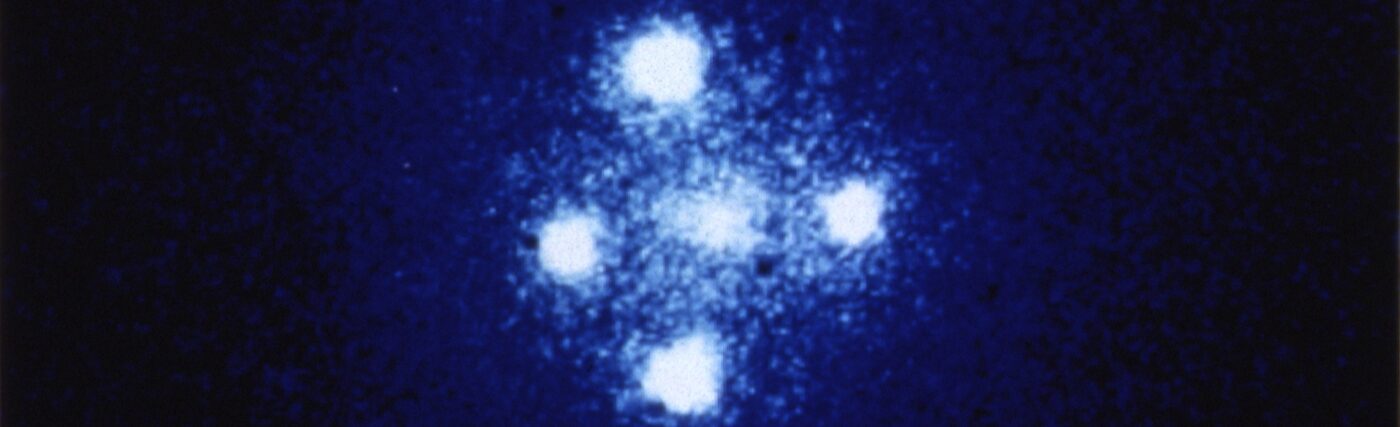
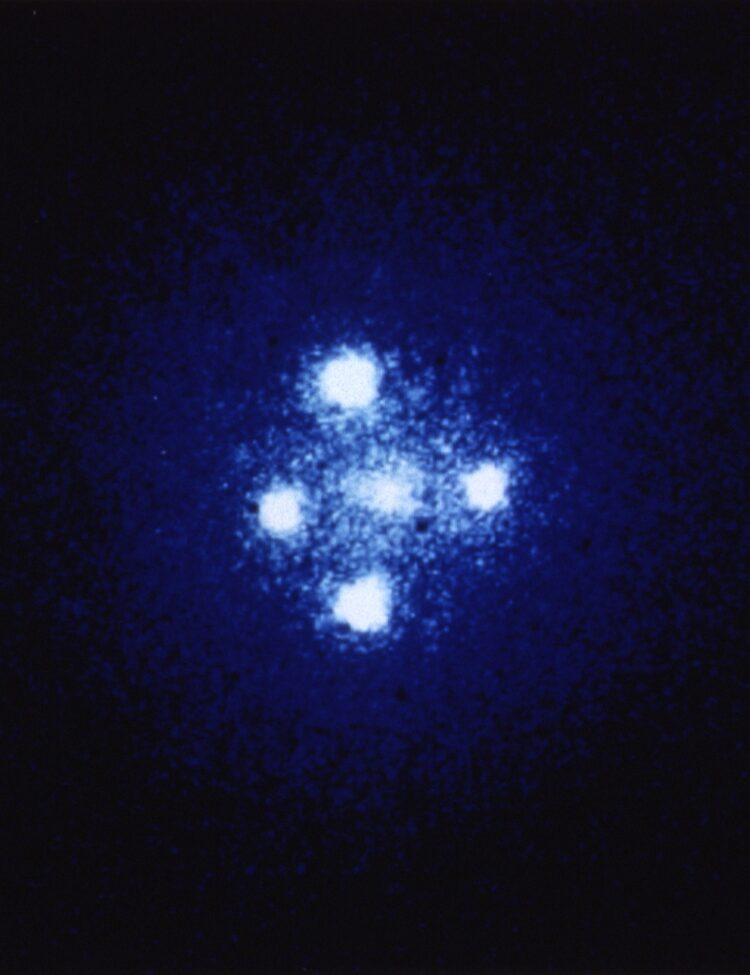
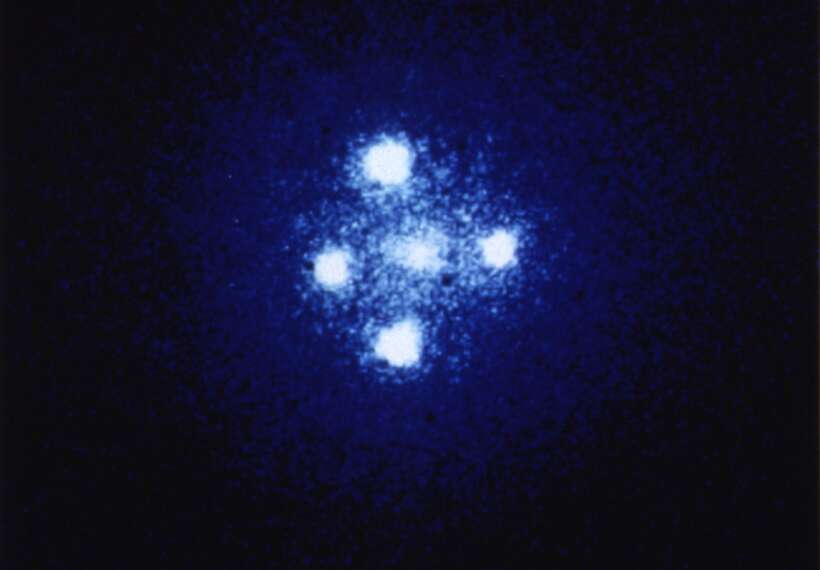
The Einstein Cross.
Yeah, yeah, that was early.
Yeah, yeah, that one’s really cool because the lens is really close to us.
And so everything that’s happening happens much more quickly.
So we see the quasar flickering really quickly as the stars in that lens move around.
And we just, we can do really cool stuff.
We can essentially map that distant black hole by looking at how the thing flickers and.
You know how we first discovered that it was an actual, so in Lens we have two images of a quasar.
Initially there’s just two different quasars.
Until someone discovered that a variation in one quasar was repeated in the other quasar, but with a time delay.
Look at that.
Okay, so it meant the two path lengths were different.
And it was like, whoa, and everything to change matched.
That’s really cool.
Yeah, so it was the same object.
Yeah, yeah.
We freaked out in a joyous way.
Yeah.
That’s how old I am.
Back in my day, we discovered Earth in the first planet.
First, we thought it was a copycat quasar.
Playing Simon Says.
We did.
We thought these could be like binary quasars.
Yeah, yeah, that was a whole lot of first thought about it.
Because no one’s seen a lens.
Why would you, that’s not your first thought.
Well, Einstein knew that his theory predicted these lenses, general relativity, but he didn’t think it would ever be seen.
Because it was such a small effect.
Same with gravitational waves.
You know, then we built some pretty good telescopes.
Yeah, better than he imagined.
So what’s the second part of that question?
What’s your favorite discovery?
The second part is, what do you think they’ll discover in the future?
Yeah, yeah, give us your best prediction.
Well, one thing that you can do with gravitational lenses, I’m on the bandwagon today, with this whole time delay thing, so you see one change and then you see the other change, this lets you measure the distances to these galaxies, to the quasars, and that’s one of the hardest things to do in astronomy, as I’m sure you know.
We discovered that the universe is expanding by looking at these fluctuating stars in Andromeda and more distant.
And now we use supernova explosions to try to get the distances to more distant galaxies.
But, and all of this showed us, one thing that the universe is expanding.
If we track the size of the universe, looking back through cosmic time, we see that it’s expanding.
We also see that that expansion is accelerating dark energy.
Okay, that’s what the supernova showed us.
But in order to, so we have no idea what dark energy is.
But if we have a way to track the rate of expansion over cosmic time to the greatest distances, then we can see if dark energy is the thing that fits into Einstein’s equations in the kind of most simple way, the way that Einstein actually wrote it himself, the so-called cos-module constant, or if dark energy is changing over time, okay, in which case it could be something really crazy.
So we can use these time delays to figure out what the hell dark energy is.
And this is, I would say, one of the most-
Well, wait, you’re giving all this hypothetical.
We might see it.
It could be, the kid wants to know what your prediction is.
My prediction is that this is, that what dark energy is, is one of the biggest unsolved questions and one that we really have a hope of finding.
So knowing what dark energy is, I’m going to say.
It could happen.
Okay, that’s the prediction.
That’s the prediction that we will find out.
Next year, five years, 10 years, 20 years?
One of those.
Yeah.
I mean, that’s the thing with science.
You just don’t know.
You don’t know which experiments are going to pan out.
Yeah, yeah, all right, all right.
All right, so Chuck, let’s get straight to the cosmic queries.
All right.
Patreon edition.
For the, not the freeloading con.
We’ll do the real Patreon.
Did you find out that Dexter and Abby had to go to therapy after listening to your…
No, those guys are the best.
Eight and ten years old and listening to this show.
Yeah.
I mean, that’s impressive enough.
You know, that’s outstanding.
And one of them said their favorite show, their favorite variant of this is Explainers.
Explainers.
Yeah.
I mean, that kid is pretty advanced.
Way to shame all the other kids out there.
I like that.
All right, what do you have?
This is Kylie Ronning.
Dear Neil, Matt and Chuck, I have been waiting for this moment for so long.
Thank you for reading my question.
I’m wondering if you think it is possible that there is no such thing as the smallest particle, and that we can zoom in on matter infinitely.
The big rip theory assumes that there is a finite end to the universe’s ability to stretch out.
Why do we assume this?
And what if this assumption is wrong?
Look at that.
That’s so easy.
I’ll let Matt take that one.
This keeps me awake at night.
This whole idea of is there an end to scale?
We have this idea that there is a smallest measurable distance, the Planck length, right?
So we can’t do experiments that can probe space distances down there.
Planck length, remind me, that’s the distance over which light travels in…
A Planck time.
Imagine, right, so you have this ruler and you break it down.
It’s a meter ruler.
Break it down to a centimeter.
Okay, now it’s made up of millimeters.
Break the millimeters down, blah, blah, blah.
You can go all the way down.
Why is it that you have to stop being able to break it down into smaller…
At a Planck length.
At a Planck length.
You know, these are no more rulers.
Why?
And I don’t think it’s understood, honestly.
I think we don’t know what the dimension of space even is.
You don’t think it is understood?
Or you don’t think you understand?
No.
The it and the I are different things.
I definitely don’t understand it.
And I think there are others who have better ideas, but it’s certainly not known.
So, there is an I in it.
So, the limit comes from these combinations of these fundamental constants, like the speed of light, the Planck constant, the gravitational constant, and when you put them together in certain ways, you see, including things like the Heisenberg uncertainty principle, you see that it is unmeasurable at this scale.
But there’s no other reason besides the value of those constants.
It’s unmeasurable well before then.
It’s just unmeasurable in principle.
In principle, yeah.
Exactly.
You ain’t measuring.
You ain’t coming near that with your school ruler.
Exactly.
I have a pro track, so it has to work.
Anyway, so what happens when you try to subdivide even smaller than…
Okay, so maybe the big rip is a hypothetical thing.
So, at what point is anyone declaring that space cannot stretch?
So, the idea is, if the space is infinitely stretchable, the idea of the Planck length doesn’t preclude that.
So you could take whatever is smaller than the Planck length and make it bigger than the Planck length and then it’s measurable.
But it doesn’t…
bear space to shreds.
So if the dominant theory of what happened at the Big Bang is right, which is inflation, so the idea that the universe multiplied its size by a factor of 10, like 60 times, then that’s pretty stretchy.
And so if it could do that, then the current pretty gentle rate of expansion isn’t going to be a problem.
Using past evidence.
If inflation is right, which some smart folks believe.
Okay, well, it’s more fun to think we’re all going to end in a tear in the fabric of space and time.
And they’re just going to get fat and bloated.
And we’ll get stretched out until we can’t stretch.
I mean, forever.
Just continuously stretching.
Wow, that’s a great question, Kylie.
Way to go, way to go with the question there.
Nicely touched me.
Very good.
This is Jeremy Corbello.
He says, hello, Dr.
O’Dowd, Dr.
Tyson, Lord Nice.
This is Jeremy from Austin, Texas.
Considering all moving objects in the universe are causing gravitational waves, as proposed by Einstein’s general theory of relativity, can we mathematically accumulate all of the outward momentum from gravitational waves from the inner portion of the universe and use that to help justify the acceleration that we’re seeing in the expansion of the universe vis-a-vis dark energy?
Everything from the beginning of the universe has always been pushing outward and every bit of gravitational wave energy would be accelerating that expansion.
By the way, love the show.
Okay.
That’s a mouthful of question right there.
That’s a lot, man.
So it sounds like they’re wondering, since everything makes gravitational waves, however small, that these go out into the universe and form this pressure that we measure as the dark energy.
Yeah.
I mean, I haven’t heard this idea, and I need to think about it more.
A couple of nitpicks is that the normal way we think about the universe is not as it having a center and an exterior.
So we don’t have, it’s not pushing out into anything.
It’s either according to the standard general relativity, it’s either infinite and expanding, or it’s this kind of closed volume that doesn’t have an exterior.
So there’s no middle of the universe.
There’s definitely no middle of the universe to push out.
So you can think of it as like a cake rising in a pan.
You could try, but I don’t think you’d get to the right answer if you did.
If you did, okay, just eat the cake and call it a day.
Just drown your sorrows in the cake itself.
You know, that’s it.
Could gravitational waves do this for some of the, what the universe actually is?
Let’s ask it differently.
What is happening to all those gravitational waves?
Oh, yeah.
Because we measured it, it washed over us.
We know that it’s happening.
The black holes collided.
We had the waves.
So what happens to them?
So they slowly dissipate, right?
So they get weaker and weaker, but then they…
Especially in an expanding universe, we’ll get…
Even more.
They get redshifted, et cetera.
But they become part of what we call the gravitational wave background.
Oh, okay.
So there’s this very…
I forgot about that.
Right on, so it’s everywhere.
The ones we’ve detected are relatively nearby, big gravitational waves, but black holes have been merging since the beginning of time, close to…
There’s a background din.
A background din.
A little wiggle, wiggle, wiggle, wiggle, wiggle.
Can we talk about this?
Because this is the first I have ever heard.
Well, I knew about it.
I forgot to connect the dots.
Background, gravitational.
I forgot to connect the dots.
Gravitational wave background.
The coolest observatory ever, I’m not going to say built, because it wasn’t built, but invented, is looking for it.
Conceived, which is the pulsar timing array, which is just the most awesome thing in the world.
This is not using pulsars across the galaxy, carefully timing them, and watching waves move through your line of sight, changing the pulse rate that you had so carefully measured.
And that way you can track gravitational waves going bump in the night, even if they don’t come across.
Galaxy-sized gravitational waves.
Galaxy-sized gravitational waves.
Okay, so now I’m going to be honest, because you lost me.
Let’s go back.
You’re tracking what, the spin of the pulsar?
Or what is the spin of the pulsar?
Pulsars are these exquisite cosmic clocks.
They’re the cores of dead stars that weren’t quite massive enough to make black holes, but they spin incredibly rapidly.
And very precisely.
And very precisely, yeah.
And so when, and they also shoot out these beams of particles that sweep by the earth.
And so we see this.
It’s faster.
And so we see these across the galaxy.
That’s right, if they were simply spinning, you wouldn’t be able to see.
But you also have something spinning off of them.
Yes, yes.
For you to see the difference in.
So it’s actually a little more interesting than that.
So it’s not just particles and energy being spewed out the poles of the axis.
The spewing part is actually tipped relative to that.
Gotcha.
So as it spins on its axis, this other pole swings by.
That’s a better gauge.
This is the beacon.
That’s a better gauge of the spin.
Like Earth’s magnetic pole doesn’t align with our spin pole.
If we had one of these, it would spin around.
Every day, you’d see this beam.
This makes great sense.
It’s great.
Okay, so keep going.
Yeah, so in some cases, like 1,000 times a second.
And so we see just slight variations in the, in the, in the, that are correlated across the galaxy.
So a little lag here that becomes a little lag here that becomes a little lag here, and we can reconstruct.
We can reconstruct these waves at the speed of light.
Exactly.
And so recently there was this, the first tentative, but still pretty intriguing detection of the gravitational wave background and how big it is.
And so could that gravitational wave background be dark energy?
I don’t know.
That was the question.
That’s basically the question.
The answer is I don’t know.
I surely, they’ve asked this, but no one’s told me.
Should we Google it?
That’s awesome.
Well, there you go.
So we don’t know.
We don’t know.
Okay, Jeremy, what a great question.
That was enlightening.
All right.
That was my Pulsar joke, let’s see.
Enlightening, I get it.
Yeah, you had to actually explain that, didn’t you?
Seriously, you gotta explain them.
Alright this is Town Poem.
Hello, world.
This is Jesse from West Virginia.
Is there any correlation between the increasing amount of space being compressed in the interior of black holes and the increasing amount of space stretched by the expanding universe?
Kind of the same, but here’s the difference.
Could radiation and dark matter be thought of as counterparts?
Since radiation is a wavelength without mass, and dark matter is a mass without wavelength.
What?
Whoa.
Since radiation is produced by matter interacting with radiation, could dark matter be produced by matter interacting with mass?
Damn, these people are.
Where these people come from?
Where are they coming from?
That’s like three questions in a row where they’re just like, yo man, I’m gonna make sure you went to school on this.
Like, I gotta make sure that your degree is legit.
Here’s the question.
So there was a paper on the first idea.
It was pretty recent.
A paper, a research paper.
A research paper.
Published by scientists.
So the, so all right, so the first paper was in the 60s and was by a Russian physicist named Gleiner.
And he had this notion that there could be this coupling between the interior of the black hole and cosmological scales.
And Gleiner was this sort of forgotten genius.
And it sort of got, you know, got forgotten.
But there was a recent paper that sort of tried to resurrect it and to argue that this coupling between the interior of the black hole and the cosmological scale, by what mechanism I don’t know, would lead to this global negative pressure.
And negative pressure is what you need to accelerate the expansion of the universe.
And crazily, I actually read these papers, but I don’t remember why I strongly objected to them.
Which I, but I do remember objecting to them.
Like, I don’t think there was a meaningful mechanism to have that communication between the scales, right?
There was like a loose interpretation of general relativity that I thought was unjustified.
So I thought there was a slightly crappy interpretation of GR.
I was just saying, crap.
Yeah, it’s crap.
Yeah, like, it felt like, you know, looking at the…
What college do you go to?
Your work is crap?
Yeah, I just, I didn’t buy it.
We did an episode.
We did an episode on this, actually.
Of Space Time.
Isn’t that the whole, you know, that’s the whole crux of science, right?
That’s the whole point.
It’s for you guys to hate on each other’s work.
You’re worse than rappers, to be honest.
Scientists are worse than rappers.
No, no, you think you’re good?
You think you solved this?
How about this?
Your work is crap.
The scientific method.
Yeah, exactly.
That’s pretty cool, though.
So, Chuck, we only have a couple of minutes, so maybe we can speed up our answers.
All right, here we go.
This is Gina Martin.
She says, hello, smarty pants.
I was wondering, since space is expanding, what is filling in the gaps?
Is matter being created to fill and expand our universe volume?
I’ve heard space compared to a balloon is expanding with dots on the surface.
You know the old balloon, right?
But a balloon is only able to expand if something is put inside of it.
So what exactly is inside of our universe that’s making it expand?
So I love it.
These people are taking all the examples, like the rubber sheet and the balloon and all of that.
And they’re just like, yo, man, what’s the deal?
Like, what’s inside?
I don’t know.
I think it’s possible to extend a metaphor too far.
And that might be what’s happening here.
Gina, you’re the problem.
You’re the problem, Gina.
You went too far.
You went too far, Gina.
Well, I can say, because I’m the senior member here, back in my day, before we confirmed that the universe, well, we knew the universe was expanding.
We didn’t know whether one day we’d collapse.
Plus, there was no direct evidence for the Big Bang.
Because that’s how old I am.
At the time, Fred Hoyle said, I get it, we live in an expanding universe, but I don’t like the Big Bang.
But he named it the Big Bang pejoratively.
And then it stuck.
He said, we want a Big Bang?
You don’t cop an attitude about it?
That’s a Big Bang.
And then it stuck.
So he hypothesized.
Like Obamacare.
Now we own it.
So the problem was, if we’re expanding, how do you keep the universe approximately looking the same at all times?
If you’re expanding.
So he said, hydrogen molecules are being hatched into the expanding vacuum.
And those molecules then create clouds and then form new generations of stars.
So if that were true, you’d be able to see new galaxies being born today.
Or at any time.
But we didn’t.
All galaxies are approximately the same age.
So it’s a steady creation of matter.
He just hypothesized that.
But people said to him, how is it that you can just assume matter is popping in out of nothing?
That’s crazy.
And he said, is it any crazier than you popping the universe into existence out of nothing?
And that shut everybody up.
He was a smart guy.
He was still wrong.
But he knew how to shut people up.
But I’m just saying, in the day, this idea that matter is being created in the vacuum, expanding vacuum.
This is like how much can you stretch space?
And the answer is maybe infinitely.
But there’s also no interior to the balloon in the case of our universe.
There’s no analogous interior.
So there you go.
Wow, that’s pretty cool, man.
All right, this is…
A couple more questions, and we can even speed up our answers.
This is Euclid A.
Loguidice, who says…
His name is Euclid?
Euclid.
Okay, I’m afraid.
They sell those other four questions.
Loguidice is the last name.
Aloha, Dr.
Tyson, Dr.
Dowd, and Sir Nice.
It’s Lord Nice, thank you.
Lord is above Sir.
Lord is above Sir, just in case you didn’t know.
Euclid here from the Big Island.
I tried asking this question before, not sure if I missed the deadline.
Dude, relax, there’s no deadlines, okay?
You’re okay.
All right, here we go.
Could there have been…
But the Big Island, he’s from Hawaii.
He’s from Hawaii.
That’s right, the Big Island.
Where we have our big telescopes.
The big ones, yeah.
Could there have been much more massive clouds of gas and dust in the early universe with strong enough gravity to cause supermassive black holes to form rather quickly?
So that’s your deal, man.
That’s all you.
I feel like I feel mildly qualified for once.
The answer is yes.
So there is a big mystery, especially with JWST, the James Webb Space Telescope.
We’re seeing these quasars in the early universe that are powered by these black holes that are just too big.
These things had to grow, and they had to grow by either eating gas or by merging little black holes into bigger ones.
So the ones we see back there that are a billion times the mass of the Sun, there’s no way that in our current understanding, they could have grown that big.
So a lot of people have been asking, how did they start?
Was there some crazy mechanism by which they could just gobble up all the gas super quickly?
Did all these black holes form near each other and then fall together?
Or did supermassive black holes spontaneously form?
Or at least, if not supermassive, the one tier below it, which is intermediate mass black holes.
So there are ways to collapse clouds of gas directly into black holes.
Normally what happens when you have a giant cloud of gas is it starts to collapse, but then it fragments, it breaks apart and it forms stars, right?
But in the early universe, the gas was, let’s say, more pure, the thing that makes gas fragment today is that it’s polluted.
It’s polluted by-
Enriched.
Enriched, correct.
Oh, look at that.
We’ve made enough stuff.
Let’s be positive.
Enriched, okay.
He’s talking about oxygen, carbon.
So all this stuff, so all the other nove, is it nove?
And those elements cause these clouds to cool down too quickly, which causes them to fragment.
But in the early universe, it was just hydrogen and helium.
None of these elements had been made because there had been no stars to make them.
And so the clouds cooled down very slowly, which means they could hold together as they collapsed, not fragment.
Make one giant mass.
Exactly.
And when you get, wow, it’s like if it’s a million solar masses, the size of our…
This answer is not shorter as it should be.
Well, cut the cut.
So the answer is some people think so.
Some people think these things could have formed.
By the way, that’s fascinating.
Yeah.
All right, sleep in.
One last one.
One last one.
Okay, 30-second answer.
30-second answer.
All right, here we go.
This is Bogart Dieter.
Okay, I think it’s Bogart Dieter.
Hello, Professor.
I’m hailing from Belgium.
Could you please describe plank second by plank second on a quantum scale what happens the moment a black hole event horizon is created?
So he wants you to step by step give us the breakdown of the event horizon in the next 30 seconds, which I mean measure by plank seconds.
Can I talk that fast?
So black holes these days are created by collapsing cores of dead massive stars.
And the first thing that happens is that the supernova occurs, which results when the core collapses into a neutron star.
Most of the stuff gets flung off.
The neutron star, if it’s big enough, will shrink.
The bigger it is, the smaller it ends up.
But at some point, a virtual event horizon forms in the core.
And it doesn’t really exist, but it grows.
And if the neutron star isn’t too big, the virtual event horizon doesn’t quite reach the surface, and it’s a neutron star.
But if it is big enough, then as the neutron star shrinks, the virtual event horizon expands.
When they meet each other, it becomes a black hole.
The escape velocity of the surface becomes the speed of light.
And in that instant, everything goes dark.
That is pretty damn dope.
So that’s cool.
So the event horizon is actually born within and then expands out.
Well, the Earth has a virtual event horizon also.
It’s about one centimeter in diameter at the core.
And it’s not real.
It’s just how much you would have to crush the Earth down.
To get down to that point.
I thought about the size of a plum.
But I did the math on that.
If Earth were a black hole.
I’ve been telling people it’s a centimeter.
Holy crap.
I have to contact a lot of students if that’s wrong.
Maybe that’s a really tiny plum.
I think it’s nine millimeters.
But is it diameter or radius?
Oh, so two of those.
So two centimeters is a little closer to a plum.
Have you been telling them that’s the diameter?
I think it’s the diameter.
You’ve been telling them it’s the diameter.
Oh no, it’s the Schwarzschild radius.
Yeah, no, I get it.
No, you’re right, it’s the radius.
The radius.
So two of those gets you two centimeters.
That’s about like that.
Yeah, small plum, about an inch.
About an inch.
Oh, that’s an inch.
I was getting the plum.
Look at that.
That’s pretty cool, man.
So that’s still a cool thing to think about is that.
Yeah, that’s just mind-blowing.
Yeah, so every object has its own virtual event horizon.
If you just collect within that, you’re a black hole.
You ain’t coming out.
Exactly.
Are there any…
Okay, because I know you need a certain mass in order to actually achieve black hole-ism.
Some density.
Density.
Right.
Yeah, because the mass itself has to go down to a certain density to create that.
But are there any localized black holes that, you know, like we have clusters.
Do we have black hole clusters?
Yes.
Yes?
Crazily, we do.
At the center of our galaxy.
And so this has been hypothesized for a long time because we think that black holes tend to be a bit denser.
They, just as dense materials fall to the bottom of, you know, whatever material, they slowly trickle into the center of our galaxy.
And over the billions of years, the inner core of our galaxy, the black holes, should have ended up in the center.
Okay, so you can do these dynamical calculations that show that.
But there were recent observations with, I think it was the New Star X-ray observatory.
New Star, is it also N-U-S-T-A-R?
That saw them.
So it took these X-ray images of the core of our galaxy and saw these bright spots, too many of them.
And so we do expect there to be this swarm of black holes in the core of our galaxy, like thousands of them.
That’s amazing.
Yeah.
Avoid the Galactic Center.
So guys, this is great.
Thanks for enlightening us.
Absolute pleasure.
I’m sorry.
You enlightened us, not guys.
Thanks for enlightening us.
Matt, thank you for enlightening us.
Thanks for enlightening us.
You really made us laugh.
But I’m reminded that with the power of math and knowledge of the laws of physics, that we’re not limited by just what you can see.
We’re only limited by what you can think.
Which brings the question, is there a limit to how far the mind can go in the universe?
How far beyond where we can physically travel can our mind take us?
That’s the real future of science.
You just came up with that shit on yourself right then?
This has been StarTalk Cosmic Craze Edition.
Of course, all about the universe.
Until next time.

 Become a Patron