Neil tells us how the North Star is used to navigate. Find out what the North Star looks like at the North Pole, and, why you won’t see the North Star in the southern hemisphere. You’ll learn some different ways to find longitude and latitude. We discuss early maps of the world and their distorted representations of the coastlines.
In a slight tangent, you’ll learn the history behind our famous phrase “Keep Looking Up.” Then, it’s back on course. You’ll hear why there were no conquering cultures before the rise of proper navigation. You’ll also learn about the construction of the Verrazzano-Narrows Bridge, which connects Brooklyn and Staten Island.
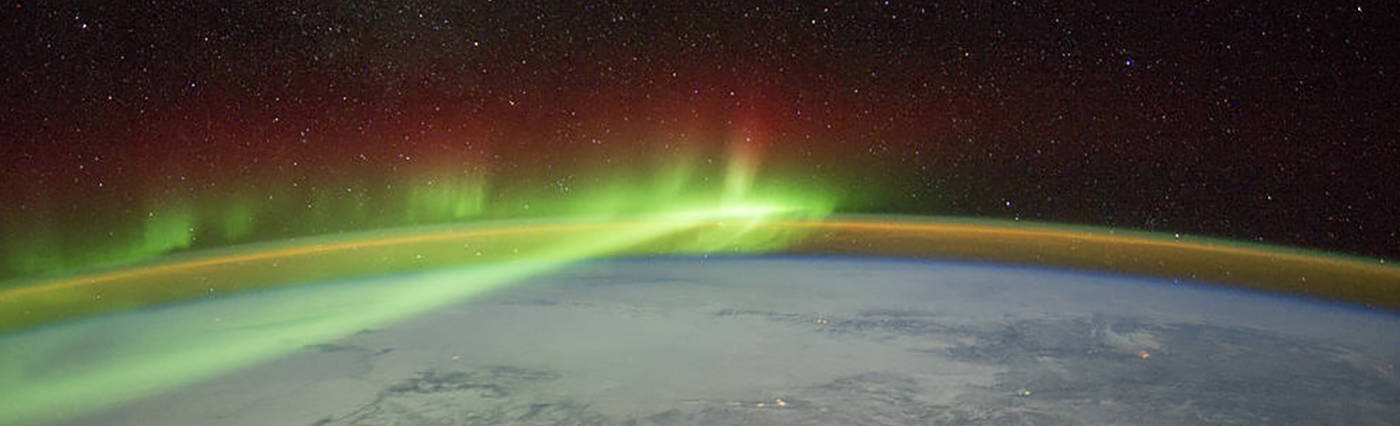
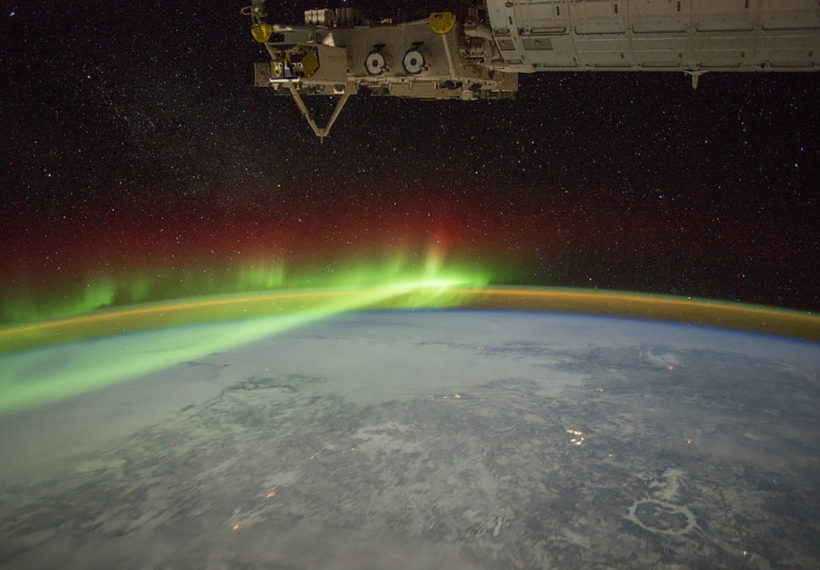
Discover more about geomagnetic reversal: what it is, why it changes, and how it impacts Earth. You’ll find out if all compasses will need to be reset when the next reversal happens. We investigate what will happen to the aurora borealis and aurora australis when the reversal kicks in. Neil explains how we can uncover the history of Earth’s magnetic field by studying volcanic deposits.
Explore the government’s role in the creation of GPS. Neil dives into the alliance of astrophysicists and governments. We ponder how pirates from the 1700s would react if they came across a modern-day GPS device. Lastly, you’ll get details on how early space probes like Voyager 1 navigated without hi-tech computers or cameras. All that, plus Neil tells us how to form the best coordinate system using quasars.
Thanks to this week’s Patrons for supporting us: Stella Burkey, Derek Pavan, Travis Dunn, Michael Jonsson, Chad Hunt.
NOTE: StarTalk+ Patrons and All-Access subscribers can watch or listen to this entire episode commercial-free.
Transcript
DOWNLOAD SRT
Welcome to StarTalk, your place in the universe where science and pop culture collide. StarTalk begins right now. This is StarTalk. Neil deGrasse Tyson here, your personal astrophysicist. I got with me Harrison Greenbaum. Hey! Did anybody call you Harry?...
Welcome to StarTalk, your place in the universe where science and pop culture collide.
StarTalk begins right now.
This is StarTalk.
Neil deGrasse Tyson here, your personal astrophysicist.
I got with me Harrison Greenbaum.
Hey!
Did anybody call you Harry?
My mom got really mad one day when somebody called me Harry, so I put the kibosh on any nicknames.
I wanted to be like an encyclopedia.
She wants all the syllables, Harrison.
She wants the whole thing.
Yeah, I thought I was big into encyclopedia brown as a kid, so I thought I could be dictionary Greenbaum, and that never stuck.
Harrison is very waspy though, isn't it?
Yeah, it's great because they see the first name and they're like, oh, we should let him in the country club.
And then they hear Greenbaum and they're like, get that dude out of there.
Okay, so you have personality issues.
Yeah, exactly.
So thanks for joining me for a Cosmic Queries edition.
My pleasure.
Very good, and this particular edition, we've culled questions from our following on navigation.
That's a thing.
Yeah, I can barely navigate through this city, let alone through space.
Well, we've gotten lazy with GPS, of course.
And so we let GPS do it.
Even if we know in our heart it makes no sense what it tells us to do, we just do it.
We've stopped thinking about it.
But I'm curious, I haven't seen any of these questions.
And so bring it on.
All right, let's start with Rudiam2010 from Instagram.
Nice.
How is the North Star used in navigation?
Besides the North Star, are there other elements in the sky that have been used or can be used to navigate?
Yeah, so the North Star happens to be sort of near the projection of Earth's north pole on the sky.
So imagine we have longitude and latitude, right?
On Earth, we all know that, right?
So how might you put a coordinate system on the sky?
So one way is you take the longitude and latitude and just sort of project it out to the sky.
And so the sky has its version of longitude and latitude.
Okay, so now, as you walk to the north pole, we rotate, Santa knows this, obviously.
Earth rotates.
Who's definitely real children who's watching.
By the way, there's no land on the north pole.
It's all just an ocean.
So where are all the toys?
I know, so they're on ice flows?
There's elves in scuba suits.
They're just floating in the ocean.
And most renderings of Santa's workshop, they're like usually trees and mountains and things.
No, no, he's on an ice floe with the polar bears, whatever those are left in the winter.
So if you walk to the north, the earth rotates around that axis.
So if you look at the night sky, all the stars would just make circles around you.
In fact, on the north pole, nothing rises or sets on any given night.
It all just turns around you.
And what's directly overhead, kind of directly overhead, is a star that we call the north star.
It's not exactly over the pole.
It's like a little bit over.
It's like a couple of full moon.
It's the way I do recipes.
It's just like close enough.
A pinch of this, a pinch of that.
So now here's the rub.
Do you know your latitude when you're on the north pole?
I guess it keeps going up until it...
Yeah, but there's a number, the latitude.
Oh, is it zero?
No, that'd be the equator.
Oh, gotcha.
So you have one more try.
A million.
A million.
You're excellently wrong.
So the equator is zero degrees latitude.
We are recording this from New York City, which is 41 degrees latitude.
And you keep sort of going north.
That number increases until you get to the North Pole.
And you're at 90 degrees latitude.
Gotcha.
Right angle.
Right angle.
Very good.
You remember that from eighth grade.
Very nice.
Who is your teacher?
I never need to use that again.
Did they say, what, are you a comedian?
Well, yeah, as a matter of fact.
So notice that your latitude on Earth is 90 degrees.
And what is the elevation above the horizon of Polaris, the North Star?
How high up?
It's an angle.
What's that angle?
Straight up.
Straight up 180?
No, that would be like the other.
Oh, yeah, 90 would be.
It's 90.
Okay.
So in fact, the elevation of Polaris above the horizon, measured in an angle, is your latitude on Earth.
So from New York City, Polaris is 41 degrees up.
You march all the way to the equator.
Polaris gets lower and lower in the sky.
And on the equator, it's right on the horizon.
Zero degrees up.
So Polaris can let you know what your latitude is on Earth.
But that's still like huge circles around the Earth.
And if you're in the Southern Hemisphere, that's going to be...
Oh, they don't have...
Oh, thank you.
They don't have a star.
Oh, they're just screwed?
They're totally screwed.
Oh, no.
So you're trying to navigate Australia.
There is no...
There is no star conveniently positioned over the South Pole above Antarctica.
So no, so there's not some easy star to get your latitude.
You have to be a little more clever and use tools and instruments and tables and charts and this sort of thing.
But still, it's nice to know where you are in latitude, but if you want to conquer the world as early Europeans felt the need to do...
You need other ways to find longitude, right?
It's not good enough just to know what your latitude is.
You want to know where you are in that big circle that is your latitude.
And that's way more complicated.
If you look at early...
Yeah, look at Columbus.
He thought he was in India.
For example, right?
I celebrate Columbus Day, by the way, by just walking into a bar and declaring it mine and then murdering everybody else.
Oh, yeah.
So, yeah, times have changed for Columbus.
Yeah.
Yeah, it was good probably up until 1992, right?
Because that would have been the 500th anniversary.
Then after that, people rethought that.
They're like, he kept calling it America.
Like, what's going on?
What?
They're Indians?
Who?
What?
And what happened after he came?
And what happened to us?
And what happened to them?
So, yeah, yeah, so his stock value is dropping rapidly.
But if you look at early maps of the world, they're highly distorted images of coastlines.
They're actually, you wouldn't necessarily know this by looking at them.
They're actually accurate north-south.
But they're really bad east-west.
Look at any early map of the United States.
It's like, what were they thinking?
They did not know their longitude.
And that was not really perfected until...
It's like my mental map of the United States.
It's like a very good picture of the coast and the middle is sort of a blur.
It looks like how a third grader would draw it from memory.
So if you know what other stars are in the sky at what time of night, and you have charts and tables and you have an accurate clock, you can basically infer what your longitude is with ever greater accuracy, depending on how good your tables are and how good your clocks are.
And you didn't have world conquering cultures until you had navigation.
This is the navigation enabled this.
And I feel bad because the navigation of all stars and that's my thing.
So the early astronomers, my sort of historical brethren, were handmaidens to hegemony.
I like the alliteration at least.
That good word?
That's a good word.
All right, so next question.
All right, next one.
What's up, Neil?
I don't know if that counts as a question for a query.
The universe is up.
There you go, Science Bob on Instagram.
In fact, it's, you know, I said, I see keep looking up in my Twitter handle, which I've never done before.
But of course I say it on every one of these shows.
But that tells me that none of my Twitter followers listen to StarTalk for some reason.
They say, keep looking up.
Where'd you get that?
Is that right?
By the way, just a quick thing on that.
That's a common phrase between Astro folk.
Keep looking up.
But it was made popular by a guy from the Miami Planetarium named Jack Horkheimer.
And he had this PBS spot.
Is it weird that I'm picturing him in a speedo with a telescope?
He wore a silver shiny leisure jacket.
And the name of the show was the Star Hustler.
And he came walking down off the ring of Saturn.
And then he had a kind of squeaky voice.
Like a car salesman squeaky voice.
Oh, I got a star for you.
Exactly.
Are you interested in the Antromeda Galaxy?
He gave you like that week's night sky.
And he'd always end by saying keep looking up.
So many people associate that with him.
He died a little earlier than he should have.
And so...
Ironically buried him down.
Yeah.
You could bury up if you launched him into space.
No, no, he didn't have the budget for that.
So I figured somebody's got to keep that going.
So we'd always say it among ourselves, but in the popular spheres, I figured let me just keep...
So it's a shout out to Jack Corkheimer, the star hustler.
So keep looking up.
So up is any direction opposite the way gravity wants to pull you.
So it might be down, depending where you are related to that other person.
If you're upside down, then it's down for you relative to your body.
But the center of the earth is down for everybody on earth.
So people were thinking that up is some uniform thing that is the same direction for everyone.
It is not.
Right.
Unless you're a flat earther and then somehow there is a way for everything to be up.
Everything to be up.
Now, so down is down.
Let me tell you how down works.
Are you ready to get schooled on down?
Oh, absolutely.
New York City.
I should have said I'm down.
There is no up until the 1970s, late 60s, I forgot the exact year.
But there was no connection between Brooklyn and Staten Island.
You had to take a ferry.
So Staten Island was kind of isolated there.
There were bridges getting you into New Jersey, but if you want to get into the rest of your own city, you had to take a ferry.
Dead at quarantine, the way it should be.
For Staten Island, it's always one of the five counties that comprise New York City.
And we call counties boroughs here, all right?
It's one of the few cities that's bigger than its counties.
Isn't that interesting?
Yeah.
Yeah.
So, it might be the only one, actually.
So they went to the narrowest point between Brooklyn and Staten Island.
It's called the Verrazano Narrows.
And they said, let's put a bridge here.
Certainly bridges are always at the narrowest point, just to save money.
Right.
Right.
Okay.
But that was still really far.
All right?
It was farther than anyone had ever put up a suspension bridge.
So they built the Verrazano Narrows really long bridge as the longest bridge in the world.
And when I read the records on this, I learned that it's the first bridge where they had had to put the uprights, the uprights of what's holding up the middle of the bridge.
Right.
Right.
Okay.
The two uprights are not parallel to each other.
They're actually at an angle to each other because they're each pointing straight to the center of the earth.
Whoa.
And the curvature of the earth between one upright and the other forces them to not be parallel.
Whoa.
Whoa.
That's some badass engineering there.
Or that's their excuse for they try to get them straight up and they lean back a little bit and like, no, no, no, you don't understand.
That's on purpose.
Oh, yeah.
It's the curve of the earth.
We meant that.
Wink.
So those are two different downs even on the same bridge.
That's what I wanted.
And it's still up.
Yeah.
That's because we have engineers in the world.
Right.
All right.
So he said...
We love our comedians, but at some point you got to turn to an engineer.
No, absolutely.
All right.
I'm a punchline engineer.
I construct ha-has.
So Science Bob said, what's up, Neil?
We answered that.
And then it seems...
We haven't gotten to his question yet.
Oh, yeah.
No, he had two questions.
That was the first one.
And then he said, it seems that geomagnetic reversal is eminent.
Will all compasses in the world need to be recalibrated when the magnetic poles reverse?
Do you say eminent or imminent?
Imminent.
Imminent.
Good.
I think you read eminent.
Oh, I'm so sorry.
Yeah.
Science Bob.
Yeah, because, you know, geomagnetic north would be an eminent thing.
Your eminence, so many people, I don't know if you know or don't know, but certainly boy scouts and girl scouts knew this.
A compass points north, okay?
But it doesn't really.
It points to Earth's north magnetic pole, which is not in the same place as Earth's north pole where Santa lives.
They're not in the same place.
There's some child who's set out on a journey like a children's movie and he ends up in the wrong place.
And he gets to the point where the compass is spinning and said, I know I'm on the north pole here and Santa ain't nowhere to be found.
Coming soon to Disney+.
If your precision of navigation is not all that important, the compass will generally tell you which way north sort of is.
But the closer you get to where that north magnetic pole is, which is somewhere lost in the northern islands of Canada.
Like in Canada, if you are north of the north pole, magnetic pole, it'll point south.
So.
That's where the white walkers are.
Oh, is that right?
I didn't know that.
The very Game of Thrones of you.
Is that still current?
Very old, stale Game of Thrones of you.
Exactly.
This is 2020, dude.
So, a compass, if you really needed accuracy, you had to have a table of correction angles depending on where you were on earth.
And it would say, okay, we know as you walk north and you're sort of to the right of the north magnetic pole, the compass is going to start pointing west when you think it's pointing north, all right?
So we have to, we want to correct for that.
And so you look up at a table and you put in the correction.
All right.
This is like so ancient now, given that we have GPS.
So compasses are like curiosities now.
They're not really, nobody's using a compass.
Although my phone has one, which seems crazy that I would pull that app up instead of my GPS app.
Okay, that is not a magnetic compass.
Your phone compass is, you might have a mode where it can look to the geomagnetic north, but probably not, I think it's going to Santa.
Gotcha.
And they're using the table essentially to adjust to make sure I'm always going north.
No, it knows where north is.
It's connected to the fricking satellites.
Yeah, that would be so unnecessary.
You have the power of an iPhone.
And there's a little tiny compass inside.
A little tiny actual compass correcting for north.
It knows where north is, just ask the GPS chip that's in the same satellite.
I like to go backwards.
I like to break the screen and put a little thing up and use it as a sundial.
That was so, let me get obscure on you.
In the novel, a Jonathan Swift's novel, Gulliver's Travels.
We all know the one where he visits the little people.
The other stories in there.
One where he visits the big people.
And there's another one where he visits this floating island of basically crazy scientists.
And I think it's a parody on what people think scientists do.
So there are these scientists with lab coats on and they're really intense and they can't even have a conversation with you.
And one of them is working on crushing freshly mined marble into material that they can make pillows out of.
So all their experiments are like the complete opposite stupid thing you would never do.
There's another one where there's a weather vane which tells you the direction of the wind.
It's usually like a rooster or something on the top.
You're from New York, so I have to tell you what a weather vane is, right?
So a weather vane, it points to the direction of the wind with an arrow.
I've seen Wizard of Oz.
So in another experiment, they would rotate the house in such a way so that it would help them interpret which way the weather vane was pointing.
It's just crazy opposite things.
So if your iPhone actually read the geomagnetic north and then put a correction on it to get the true north, that would be a very Jonathan Swift move from Gulliver's Travels, that's all.
I take that as a compliment.
So he's talking about the reversal.
Yes, and in fact, we're running out of time in this segment, but I will tell you when we come back, what happens when the magnetic poles of earth flip.
Sound spooky?
Only on StarTalk when we return.
Back on StarTalk, Cosmic Queries, Harrison Greenbaum.
Oh yeah, we were about to reverse the polls here.
It sounds terrifying.
Sounds really scary.
Go back to that question that we left off on.
It seems that, he said, what's up Neil?
We answered that.
This is Science Bob on Instagram.
Science Bob, love him.
And it seems that geomagnetic reversal is imminent.
Very casual about that.
Will all the compasses in the world need to be recalibrated when the magnetic poles reverse?
Okay, so a couple of things.
Nobody gives a shit about compasses anymore.
Let's just not worry about the compass, all right?
There's a couple of Boy Scouts listening who just very sadly put theirs in the drawer.
So A, B, the magnetic field is getting weaker, measurably weaker.
And when that has happened in the past, it's been the beginning of a magnetic field flip, okay?
Where the south pole goes to the north and the north pole goes to the south.
The big worry realizing this is, wait a minute, our magnetic field shields us from harmful charged particles from the sun.
These are bad particles.
And what happens is it deflects them towards the poles and they collide with-
But some of them are fine particles.
None of them.
I don't want to get hit by any of them.
And so they get deflected towards the poles because that's what the magnetic field, you ever see on a bar magnet, the magnetic field lines, they go from pole to pole.
Well, we have those in space.
And so the particles come from the sun, they get deflected towards the poles.
And as they descend through the atmosphere, they collide with the atmospheric molecules, pump them and give them energy.
And then they re-release that energy as beautiful light.
A dancing curtain of lights.
And you're biased there, there's also the southern lights.
There's another half of the earth, you know.
That's true.
But my parents keep trying to go to Iceland in order to see.
So there's the aurora borealis in the north and the aurora australis in the south.
Usually they have equal intensity because it happens symmetrically.
So if the pole reverses with the magnetic field going through zero, then we'll lose the aurora borealis.
We'll lose the aurora, okay?
And well, we may still have it, but it just won't be concentrated in those places.
You can still get hit by these particles and it'll still excite the atmosphere, but it won't be all concentrated in the northern and southern caps.
So the aurora will dim significantly and probably disappear altogether.
That's the sound of a million people canceling their travel plans.
And there was worry that some birds might be migrating north-south by some measurement of the magnetic field.
And if they don't, then it would kill all birds because they wouldn't know to fly south and they'd freeze to death.
Oh, that's not good.
There's some worry about that, but I don't think we understand this mechanism.
All the birds dropped out of the sky dead.
Would New Yorkers be scared or celebrate?
Celebrate, because it would be the pigeons.
There's only one species of bird in the universe.
To a New Yorker, it's the pigeon.
I think we would be okay in Manhattan.
We'd be like, this is great.
This is totally cool.
Is there a way to kill the rats?
So, there was a genuine concern until we dug up, the geologists dug up the history of the magnetic field on earth, which you can do.
You know how you do that?
You look at volcanic deposits.
There's iron particles that can be launched out of volcanoes and before it solidifies, it'll align to the magnetic field of the day.
And as you look at the history of volcanoes, you can see that there were times when it didn't align at all and times it aligned south and times it aligned north.
So we have a full record of this, of the changing magnetic field of the earth.
And it happened on relatively short time scales compared to evolution, and we still have birds.
So birds are fine.
Birds don't, you know.
There's no layer filled with just bird bones and then magnet, magnet, bird bones, like a KFC dumpster.
That's exactly the evidence we would be looking for and we don't find that.
Gotcha.
So, and by the way, the magnetic field flip is not an unusual thing.
It happens in the sun.
The sun has a very strong magnetic field and it flips every 11 years.
And sunspots always come in pairs and there's a positive spot and a negative spot.
And when the magnetic field flips, the spots flip in their orientation.
It's very cute to watch this.
And for the earth, when it does reverse, it's a gradual thing or?
It's gradual.
Gradual.
It's gradual, right.
And so, well, not in your life.
It takes a long time, thousands of years, but it is gradual.
Yeah, so just don't worry about it, really.
And we're done with the compass.
Give it up.
Yeah, so stop recalibrating a thing that doesn't matter anyway.
Now, let me tell you something, I don't want to blow your mind.
Okay.
No, go for it.
Are you okay with that?
Absolutely.
Permission to blow your mind.
100%.
You know, in magnetic fields, opposites attract.
Right.
Right?
So if you have a magnet, the south pole attracts to the north pole and vice versa, okay?
On your compass, the side that points north is the north part of the north-south needle.
Okay?
Okay.
So the north on your compass is pointing north on earth, which means it's pointing south.
So earth's magnetic north pole is our southern, our southern is the south part of the earth magnet.
Gotcha.
We just all agree to call it north.
Right.
It was like when The Secret came out.
Do you remember that book?
No.
There was a book called The Secret and they were like, well, like attracts like, and that if you believe something will happen, then it will happen.
And they're like, that's how magnets work, is like attracts like.
No.
And that's when I was like, this book is BS.
Yeah.
Magnets, the opposite attracts.
Yeah, exactly.
Right, right, right.
So, it's just weird that, I mean, they never tell you this when you learn about compasses.
That all compasses point to Earth's south magnetic pole, which we just agree to call north.
Right, exactly.
That's incredible.
All right.
So, that question.
Let's do, ooh, this one is a long one, but interesting.
Alex Land Photos at Instagram says, hello Dr.
Tyson, Alexander M here, a Russian in Norway.
Ooh, okay.
That is the beginning of a novel.
Yes.
The Russian was in Norway.
The whitest person.
Given how everything in the universe rotates around something else, say planets around stars, stars around galaxy center, et cetera, is there truly a good coordinate system possible at all?
It is, is, it is, if, I think he means if it is, is there something already invented to find stars, not on the sky in two dimensions, but in space?
Ooh, there's a lot going on there.
Yes.
So, let me unpack it.
Why is he in Norway?
So, let me unpack it and then repack it.
So, first of all, let's fix the vocabulary here.
If you turn on an axis, you are rotating.
If you move around another object, you are revolving.
So, Earth revolves around the sun, and we rotate on our axis, just to separate the use of those two words.
That's all.
Makes sense.
Some people say we rotate around the sun.
No, we rotate on our own axis.
Revolve around the sun.
Okay.
And a revolver handgun, the bullets actually revolve around the axis.
So, that's, otherwise they call it a rotator.
But the gun manufacturers knew the difference.
Their ability to have the gun revolves around the NRA.
Yes.
Correct.
No, actually revolves around one of the amendments of the Constitution.
Right, so, so just to separate that out.
Now, what's the person's name again?
This is Alexander M.
So, Alexander is correct.
Now, Alexander is correct.
If everything is moving, how the hell do you have a coordinate system?
So, here's what we do.
We have the night sky and there's a coordinate system on the night sky.
Basically a projection of Earth's longitude and latitude, as we said earlier in the show.
By the way, Earth, as we rotate, we also wobble, like a top.
We rotate once a day and we wobble once every 26,000 years.
People don't play with tops anymore, but you know what I mean by wobble?
It's spinning, but it's also kinda-
It's spinning, it's kinda bobbing, right?
Like that.
And that means the North Pole of the Earth is not always pointing to the same spot on the sky, which means it wasn't always pointing to the North Star.
In fact, we only call it the North Star in modern times.
That wasn't always the other stars that were in the North Star.
Egyptians had a different North Star 5,000 years ago.
That's a big number relative to the 26,000 year period of the wobble period.
So not only do you not keep your North Star, your North Star, not only that, you have to tell people what coordinate system you're using when you give them the coordinate of a star.
So you say, Neil, what star did you look at last night?
I said, is this star right here?
I want to look at it too.
What are its coordinates?
I give you the coordinates.
I have to tell you, this is the coordinate system agreed for the year 2000.
Gotcha.
And that's the coordinate it had in 2000.
And then you'll put that in your computer, the computer will update it to tonight when you observe it tonight and it'll be in the right place.
So we have a little hidden secret in my field.
All observing programs are calibrated and have computing systems in them to make sure we all look in at the same spot in the same sky no matter when you reported what it was you saw.
So it is a big problem, but it's a solved problem.
It's like distances in New York.
Like they say you're a mile from Brooklyn, but it's an hour.
So you need to, people need to tell you in relative time.
Yeah, miles are completely useless in New York.
Right.
How far do you live?
An hour.
That could be half a mile, that could be four miles.
But as you know, time and distance, space and time, we've known they've been inextricably woven together ever since Einstein.
Actually we've known before that, but we didn't realize it.
Yeah, like time passes slower on Staten Island.
But it has a higher gravitational field, is that right?
Yeah, exactly.
Alexander M, Russian in Norway.
All right, this guy is, oh, this is Mr.
Findell on Instagram from Omaha, Nebraska.
Very nice.
I'm currently dating a girl from Nebraska, which is a fun sentence to say, because different parts of it are surprising to each of you.
Dating, girl, Nebraska, that's three different plot twists.
It's a lot, a lot of M.
Night Shyamalan movies.
So Mr.
Findell.
And I have to ask, is she Jewish?
Working on it?
Right, because there might be the only, yeah, I don't know how many Jews are in Nebraska.
I went, we visited her family for the holidays and I wanted to get her family a menorah because I'm Jewish and she's Nebraska.
So we went to the Target and I was like, where's the Hanukkah section?
And the guy was like, I'll take you.
And he let me through, the Christmas section was like half the store.
And then he went through the toy store, the toy section and the clothes section.
And then he led me out the exit.
He was like, you have to go.
I was like from the store and he's like from the state.
And in fact, that door is the border.
Exactly, you need to go down.
So when I left Omaha, the Jewish population decreased by 100%.
There you go, there you go.
So Mr.
Fendel, who doesn't have a first name, he's just Mr.
Fendel, but he wrote, what was the government's role in the creation of GPS?
And did they help lead the frontier on that?
Oh, you know, should I just pull rank here and say, read my freaking book?
I wrote a whole book, okay?
I had a co-author, because it was a huge 600 page book called Accessory to War, the unspoken alliance between astrophysics and the military.
And you're damn straight.
There is no navigation without an understanding of what's going on in the night sky.
There is no navigation without an understanding of space.
There's no, and so there's been an astronomer sitting right next to the generals and the conquerors and the hegemonists and all the rest throughout the history of civilization on this earth.
And move that into modern times, throw away the sextant, definitely throw away your damn compass.
We will give you coordinate systems delivered to you via satellite.
And the military put up a system of global positioning satellites.
And there's multiple satellites.
They're in middle earth orbit.
Nothing to do with Lord of the Rings.
And they're MEO, middle earth orbit.
So it's LEO, low earth orbit, MEO, middle earth orbit and GEO, geosynchronous orbit.
So they're sort of out there and they're orbiting the earth.
And your device at any time sees at least three of them.
And they will triangulate on you and tell you exactly where you are and where you want to go.
The software will tell you where you want to go using the information about where you are.
That was so that you can guide a missile with very high precision.
You can know exactly where your ships are.
You can know exactly where coastlines are.
You can know exactly where things you have to watch out for that you don't want to crash into are, okay?
It was completely a military project.
Not the first Gulf War, but the second Gulf War.
The one...
Gulf War II, Revenge of the Gulf.
Revenge of the Gulf.
The Revenge of the Gulf.
That was completely conducted using space-borne assets.
But wasn't it worth it because now you can track where your pizza is?
Or you can swipe left or right and get...
There's whole industries that derive their functionality based on exploiting this coordinate system that was invented by the military.
And so, yes, it is all military.
And it's basically now gifted to international commerce.
There's no Uber without GPS, for example.
So every time you order an Uber, you're technically responsible for death by missile.
No, because the death by missile happened first.
They didn't say, one day we'll have Uber with this, so let's invent it and we'll also blow somebody up.
No, the goal was to target a missile.
And by the way, that's why, not to get all deep into this, but I did write a whole book on this.
When we think of we're powerful because we have nuclear weapons, it's like, what?
You want to blow up a whole city, and then do what with what remains.
What's your point?
It's overkill.
Yeah, it's like, it is the greatest act of imprecise war there ever was.
So when you have a guided missile, you have a target.
You take out the target.
You're done.
You got a tank over there, take out the tank.
We know exactly where it is.
Exactly where it is.
If I'm dealing with a heckler, I want to shut down that heckler.
The nuclear war is pulling the fire alarm and just getting the whole audience out of the place.
Just take out the heckler.
So precision warfare has practically rendered nuclear weapons obsolete, as tactically obsolete.
You might still want them strategically because you want to flex your muscle.
Say, we have nuclear weapons, we can completely obliterate you, even though that's not really solving anything.
You're killing innocent people.
People who have just, you know, they're farmers or whatever.
They just want to, you know, they just want to live like anybody does.
So...
I've been to Nebraska.
I've seen those farmers.
So, yes, it's all up and in the military.
And that's the beginning of a long list of things that we take for granted in our lives that were first used by the military and enabled in part by the intellectual capital of astrophysicists.
I'm just saying.
Amazing.
All right.
Well, that was a great question, Mr.
Fendel.
I got to say that we as a community are overwhelmingly liberal leaning anti-war.
So it's an awkward relationship between being that culturally and politically knowing that there's a two-way street.
They'll make stuff that we can use and we think up stuff that they can use.
It's an unspoken alliance.
That's the subtitle.
It was like Einstein and the Manhattan Project.
For example, but he didn't want to participate.
Too late, cat's out of the bag.
You can't un-think E equals MC squared.
All right, we got to take a break.
When we come back, more Cosmic Queries on Navigation on StarTalk.
It's time to give a Patreon shout out to the following Patreon patrons.
Derek Pavan, Travis Dunn, and a special shout out to perhaps our youngest Patreon patron, three-year-old Stella Burkey.
Hey, Stella!
And thank you to all three of you for being Patreon patrons.
If you would like your own special shout out, make sure you go to patreon.com/startalkradio and support us.
We're back, StarTalk, Cosmic Queries, Navigation.
You all had questions about navigation, and I'm here with Harrison Greenbaum to help me answer.
You navigated your way to Omaha, Nebraska.
I did, I made it.
Using what tools?
Using my Delta app, and I navigated to, I think it was in Missouri, and then Missouri back.
It was an indirect flight, it was very weird.
Wait, isn't there Tinder for Jews?
J-Swipe.
J-Swipe, okay.
Yeah, it's like regular Tinder, but if you both swipe right, you get half of our father's business.
Yeah, you don't upload photographs, you just kind of list your allergies to see if you're compatible.
Okay, so the J-Swipe was warning you that there were no Jews.
I opened J-Swipe and my phone exploded.
That's right, it said, warning.
Exactly, get out while you can.
Do not cross border, nothing here for you.
Exactly.
So, all right, so.
All right, the next question is from West Tech City Boy.
West Tech's City Boy at Instagram.
And he asks, I can't even navigate my way to my truck in the grocery store parking lot.
That is his entire question.
Do you have any response?
Okay, next time you buy a truck, get one in the color pink.
And you just see it from afar.
Is that the easiest color to see from a distance?
No, it's that no other car is pink.
Oh, I thought there was a scientific explanation.
There could be other red trucks.
No, I'm just trying to find a color car I've never seen before, okay?
But if he's from Texas and it's a truck, pink probably is not the color that he's gonna want.
Unless he's selling makeup.
Out of his truck, yeah.
A lot of makeup.
With the gun rack and everything.
Yeah, so it's an interesting point.
But that's been solved.
There are apps now that will follow which way you got out of a parking lot, that will tell you where it is if you bring up the map.
So they're parking apps.
I assume he's got a smartphone.
Yeah.
I'm assuming that.
Hopefully.
He just used a parking app.
Yeah, he used a smartphone to type a not question question.
Exactly.
So, but here's an interesting point.
Precision matters.
Suppose the GPS was only accurate to 400 yards.
He'll tell you your car is in the parking lot.
It will just see, the car is in this four square blocks.
Here.
And it's not useful to you.
But it is useful to know where the mole was.
Yeah.
So as GPS gets more and more precise, you can, it empowers you in more and more precise ways.
Right now it's precise enough to locate your car.
It can even locate it on level if it's a multi-level parking lot.
Because GPS is not only the two dimensions of earth's surface but it's also the third dimension vertically.
You can get both.
So, yeah, we got apps.
There's an app for that.
Amazing.
Well, let's get to the Patreon question.
It is Dan Dymick.
Patreon, you're supposed to ask that first.
Yes.
You saved it for last.
No, you saved it for last.
The best for last.
Yes, yes, there you go.
Absolutely.
When we see Mars in the night sky, we're actually seeing the light reflecting off of Mars where it was about three minutes ago.
How does the phenomenon of observed versus actual position come into play for astrophysics, like communication with deep space probes or when performing deep space astronomy?
Thanks.
Happens all the time.
Plus Mars is way more than three minutes away.
Yeah.
Way far, well, I mean, it's like on average 20 minutes, but sometimes we're on the same side of the sun as Mars and then it's quicker and sometimes we're on the opposite side of the sun as Mars and it's much longer.
And if we're traveling to it, it's like at least 200 days.
I had to calculate that, yeah, about 200 days, very good.
About nine months, yeah, about 300 days, yeah.
So, well, actually, you can get there in arbitrarily short amount of time, just how much fuel you want to burn to do it.
We do it the cheap and easy way, it just takes longer, where you burn all your fuel and then you coast the rest of the way, okay?
And that gives you enough speed to start out.
No, excuse, you coast till you have just enough speed to cross over from Earth's tug into Mars' tug and then you fall towards Mars.
So that reduces how much fuel you need to get to your destination.
You're exploiting gravity, the competing gravity of the two objects.
And why not just fall towards it if it's going to get you there for free?
So you want to make sure you had enough fuel to cross that border, otherwise you'll just fall back to Earth and you don't want that.
So, yeah, first of all, when you're controlling rovers on Mars, and you say, watch out for the cliff.
It's too late.
It's already on the cliff.
It's too late.
So you had to build rovers on Mars to have some kind of AI.
And rovers predate our modern conversations of AI.
It had some sense of where it is and what it should not do based on what it reads in the terrain and the, not just a cliff, but should you go up a hill and accidentally flip over.
There's a rock there.
Don't go into the rock.
This sort of thing.
So we've been doing this.
Yeah.
You have to build in the light travel delay, the time travel delay from the speed of light or speed of any electromagnetic waves, which includes radio waves, communication.
We build that in to the communication because we see the universe not as it is, but as it once was.
It sounds like watching a scary movie.
You can yell at it, but it's too late.
It's already done.
You already made that bad decision.
Not only can no one hear you scream, even if they did, it's too late.
So, yeah.
That is a very good question.
This one is an interesting one from David Chris.
He has a lot of A's in his name.
David Chris on Instagram.
If you were a pirate in the 1700s, would you rather have a modern GPS or Jack's magic compass from Pirates of the Caribbean that points to what you desire most and why?
Magic wins every time.
I think if you showed up with a modern GPS on the pirate ship, they would murder you for your witchcraft.
No, but see, no, I'd have a full up smart phone.
And that just would blow them all.
I mean, that just, they could, yeah, I would be strung up for sorcery for sure.
So I think magic wins every time.
But let me make a philosophical point.
I would always prefer magic to reality.
But all magic ever declared historically, has been revealed to be someone's knowledge of the laws of physics that they exploited over others who knew nothing of it.
So in fact, the magic we praise is just the deeper understanding of the operations of nature.
And that's why I'm a scientist.
I want to wield the magic that was only dreamt of in generations before.
And that's why I do card tricks.
I think last time we talked about your...
Yes.
Yeah, I was just in London and I got to see one of the earliest copies of the Discovery of Witchcraft, which was people were burning people at the stake.
And he came out with a book to be like, these are magic tricks.
They're based on scientific and technological principles.
Right, and either the person performing them didn't know that or they did know it and were fully exploiting their audience.
So my kids, when they grow up, they're now like 19 and 23.
But by the time they each turned about 13 or 12, because my wife is also a scientist and we, a PhD in mathematical science, mathematical physics.
So one of the goals we had was to make sure they'd be scientifically literate.
No matter what else we achieved, we want scientifically literate kids.
And they were that by age 13.
So if you ask them a question, if we're at a cocktail party and they're there, and you're an adult, a full grown adult, and you say something that's not quite fully supported by objective truths, they'll ask you.
They'll say, why do you think you're a Gemini?
All because I'm this.
Well, have you considered?
And they'll ask you questions politely.
But then I say, once they achieve that point, I say, I'm done with them.
They are now inoculated against any future charlatan who might try to exploit the laws of physics to their loss.
I actually figured out why the hot white girls on Instagram love astrology.
I like figured it out.
It's because things go their way so often that on the rare occasion they don't, they've decided to blame outer space.
Oh, interesting.
They get to walk into a bar like, oh, I get it.
The only thing that can block me right now is the universe.
So it is an excuse for failure.
Offloading your own accountability to the forces of the universe itself.
Oh, I would love it if I got rejected by a girl and was like, I get it.
Jupiter.
Yeah, or retrograde or something.
And of course, Shakespeare had this figured out.
Oh, of astrology.
The fault, dear Bruce, lies not in the stars, but in ourselves.
Here I thought that was just like a movie.
A book by, what's the guy's name?
No, it's not a scientist.
No, it's one of the brothers.
John Green?
Yeah, one of the Greens.
I think, did he have a YouTube channel that was science?
That's a scientifically literate pair of brothers right there.
I'm glad they're out there.
They're a positive force in civilization, spreading the love of what it is to think rationally about the world.
But if there's a sun, that means there's an equal negative force of two brothers who are not scientifically literate.
Oh, oh.
Yeah, just make sure they're not in this galaxy.
We'll be fine.
Did you only have one Patreon question for me?
Actually, we have a bonus second one.
A bonus second one?
All right, give it to me.
What do you have?
Frank Kane, he wrote, How did early spacecraft like Voyager navigate so precisely over large distances without the benefit of digital computers or high resolution digital cameras?
Good question, because Voyager was launched like back in like the 70s.
So they had those like disposable cameras on board.
They had to like wind after you shot.
Made the little clicks, disposable flash bulbs.
Anytime they needed a flash, they had to hold it down for a second.
So first of all, celestial mechanics, which is the mathematics of getting where you want to go.
And my band name.
Very nice.
Is invoking the forces of gravity among all the players on the terrain over which you're traveling.
You're going far out in the solar system.
There's sun's gravity.
You got to go around the moon.
Make sure the moon doesn't perturb you.
You might get a gravitational assist from the planet Jupiter to go in another direction.
All of this you can calculate.
Now, there could be stuff you don't know could go wrong.
So all of our space probes have a little extra fuel.
And we say, no, you're off track a little bit.
Let's do a mid-course correction.
And you get a little pulse of a jet pulse in one direction or another.
And you have jet nozzles pointing in all three coordinates so that you can precisely fix what might have been drifting in a direction you didn't want.
So it's not like finding your way around a city, which, do I go left here or do I go right?
Where am I?
Oh my gosh, this is a one-way street.
The streets close.
That's not what's going on in the solar system.
We know where stuff is.
Yeah.
And by the way, when you are launching a probe to a planet, you don't send it to where it is.
You send it to where it will be when it gets there.
With my luck, if I was on a space shuttle, I'd be stuck behind a garbage truck, for sure.
For sure there'd be a space garbage truck making it real slow for me to get wherever I need.
So that's just part of the bad attitude that goes on in people who calculate these orbits.
Just you're going to not where Mars is, but where it will be in nine months.
And that's where you're going to intersect it.
And we're on a moving platform as well.
That's incredible, yeah.
It's all good.
It's all good.
So thanks for that question, Frank.
Yeah, Frank, nailed it.
Alright.
I think we have time for like one more question.
Oh no.
You got a good one there?
It's got to be a good one.
This one's from Twitter, which is known for its complex thoughts.
It's deep reflective commentaries.
You know when you're looking for smart things, you go right to Twitter.
Look, dude, they double the character count from 140 to 280.
So now...
It's twice as stupid.
You can get in twice as much trouble.
Fantastic.
All right.
Adam Le Bay, L-A-B-B accent over the E.
He's at Lomass Peculiar.
With everything in the universe in constant motion, what landmarks could be used to share our location with extraterrestrials?
Brilliant question.
I love it.
I love it.
Okay.
You haven't noticed that if you're in an airplane, which I assume most people have been in airplanes by now, but if not, you can picture what I'm saying.
When you're on the runway and you're taking off, the airport is like flying past you quickly.
You're on a runway and then the runway is not there anymore.
Meanwhile, the hill farther away is still there in view.
And the city buildings on the horizon, they're just still there.
So you're actually passing them just as fast.
But if you're far away, it doesn't manifest as noticeably in front of you.
So this is what started the old thing.
Mommy, daddy, how come the moon follows me?
You're walking down the street.
How come the moon, you don't leave the moon behind?
The moon is a quarter million miles away.
And you just walked one block.
And I tell my kids, it's because you did something bad and it's going to track you until you do something good.
That's why I don't have children.
And your kids are in therapy.
Your unborn children are in therapy.
Why did the moon follow me?
It knows what you did.
That's why.
So you would indeed leave the moon behind if you walked a quarter million miles in a straight line.
Then the moon would be like way behind you.
But you only walked a block and the moon is a quarter million miles away.
So.
Although you do walk a quarter million miles, you get to put it on Instagram because people love posting their long-distance runs.
And then that's like a gazillion calories right there.
On the health app.
You track your walking.
So.
So here's what's interesting.
If you want a coordinate system, you could use stars.
They'll follow you like the moon would, okay?
They'll always be there as you walk.
But the stars themselves are moving in space.
So it would only work for until they move to a completely and then the coordinate system.
So here's what you do.
Use something that's farther away.
How about whole galaxies?
Okay.
If you use whole galaxies, that'll anchor your coordinate system for longer, except galaxies are big, fuzzy things.
How do you get a precise read and what part of the galaxy are you saying is the spot on the coordinate?
We have things in the universe called quasars.
Really bright, very tiny sources of electromagnetic energy.
And they're the farthest things in the universe.
If you set up a coordinate system with quasars, you are good to go because you will never walk past them.
Because they're at the edge of the freaking universe.
If you walk past them, you don't need the quasars.
You have the power beyond local navigation.
So yes, you'd want a coordinate system that is so far away, your movement and their movements are irrelevant to each other.
And they will preserve themselves as something you can reference now and evermore.
Quasars.
That's amazing.
Harrison, I forget how fun it is to do shows with you.
Oh, no, this is amazing.
You got to do this some more.
Absolutely.
And for those who are not watching, he's wearing an Apollo 11 patch T-shirt.
Absolutely.
It's his one cosmic accoutrement.
Oh, no, I've been gathering all this space stuff.
Excellent.
So now you got to come back and wear something different next time.
I have 17 pairs of NASA socks.
Really?
I acquired them for Christmas.
That's because during Hanukkah, you only get socks for gifts, right?
You don't get the big flat panel TV or anything.
No, you get a great gift day one and then you get all the accessories over time until you end up with the batteries for the Game Boy and the keys for the Game Boy and the game to play it.
Okay, so you can't do anything with it until the last day.
We get the plug for the wall.
Exactly.
All right, we got to call it quits.
So Harrison, good to have you.
Thanks for joining us on this episode of StarTalks, Cosmic Queries, Navigation.
I'm Neil deGrasse Tyson, your personal astrophysicist, as always bidding you to keep looking up.
See the full transcript



 Unlock with Patreon

 Become a Patron