Guest host Bill Nye and comic co-host Chuck Nice are back this episode to answer more of your Cosmic Queries about Space and Science. Could life have started on Mars and ended up on Earth? If the speed of light is constant, why is there a light shift in the Doppler effect? Find out about the importance of planetary science, NASA’s role in the exploration of Enceladus, Europa, and Titan, the benefits of a manned mission to Mars, and New Horizons’ mission to Pluto. Explore the interaction of gravity in multi-planet systems and how to figure out the gravitational attraction between a man and a woman. Get schooled by the Science Guy on information theory, the speed of light, and time. Learn about the accuracy of carbon dating, why there is less gravity at the center of the Earth than the surface, and how the Earth’s rotation is 1/3 slower now than in prehistoric times. Plus, Bill and Chuck discuss the impact of technology on human evolution.
Transcript
DOWNLOAD SRT
Welcome to StarTalk, your place in the universe where science and pop culture collide. StarTalk begins right now. Welcome, welcome, welcome, ladies and gentlemen, boys and girls, kids of all ages to StarTalk Radio. Bill Nye here, sitting in for...
Welcome to StarTalk, your place in the universe where science and pop culture collide.
StarTalk begins right now.
Welcome, welcome, welcome, ladies and gentlemen, boys and girls, kids of all ages to StarTalk Radio.
Bill Nye here, sitting in for Neil deGrasse Tyson.
And I'm here today with none other than Chuck Nice.
Hey, Bill.
And we are going to have Cosmic Queries.
Yes, we are.
Questions from the Cosmos submitted by you to Chuck.
And Chuck, you not only have the questions, you have what they want to look like.
That's right, I do.
What they want to look like, because these are their avatars from Facebook and Twitter and what have you.
And we have questions from all over the internet, wherever we find a home.
And...
Before you go any further, I just want to point out that we are excited to have GE as a partner for this inaugural video Cosmic Queries.
Head over to their YouTube page to check out videos of how they are bringing imagination to life.
I'm talking about www.youtube.com/ge.
Yes.
We have a query.
Yes, we do.
Let's jump right into this and go to Justin Connors, who's coming to us via Facebook.
And Justin says this.
Since Mars' core cooled off much faster than Earth because of its higher surface area, wouldn't it have had a much earlier start than that of Earth?
That is to say, how much sooner could Mars have been habitable than Earth?
Also, what kind of period of time could Mars have had to develop and sustain life and could you compare that to Earth?
First of all, this is a fabulous question.
It is a great question.
And let me say, he worded it as best as he could, but it's not just that Mars has more surface area, it has more surface area relative to its mass.
It's a smaller thing.
It has about as much surface area as the land of the Earth, the dry land of the Earth.
And so the number that I hear people work with quite a bit for Mars is four billion years ago, it would have cooled off enough to have liquid water running around on Mars.
So that would be, pick a number, a billion or half a billion years before the Earth.
So maybe it is just not, it's not crazy, but it's extraordinary to say that life started on Mars.
Mars was hit with an impactor about three billion years ago, stuff got tossed off into space, through home and orbits, a little mathematical fabulous thing.
These rocks with living things in them landed on Earth and you and I are descendants.
From those particular microbes.
So we are really Martians, it's possible.
It could be, but I'll tell you what it is.
It is worth finding out.
It is worth mounting a human mission to Mars to go look for signs of water and life.
Got you.
If we were to discover evidence of life on Mars, on that other world, it would utterly change this one.
In the same way astronomy has humbled us through the ages.
Right.
We found out that we go around the sun, not the other way around.
Right.
We find out that planets are, if I may, a dime a dozen, maybe even cheaper than that.
Maybe.
And so we are no big deal.
Our star is no, our sun is no big deal star wise.
And maybe life happens all the time.
It will be worth knowing.
As they say, your world is getting smaller and smaller and you didn't even know it.
I didn't write this joke.
It's a good one.
Go ahead.
It may be a small world, but I wouldn't want to have to paint it.
So, okay, that's really actually a great question and pretty fascinating stuff.
Let me ask you about the Mars Rover though, as an addendum to this question.
The Curiosity Rover.
The Curiosity Rover.
Because there's Opportunity Spirit and Sojourner.
But right now we've got Opportunity running and Curiosity, take it.
Okay, so have they been able to determine whether or not there's been any, not life of course, but rivers, streams, things of that nature?
What place used to be very wet.
And the Curiosity Rover landed in essentially a stream bed.
It's crazy, you see these rocks embedded in what was ancient mud that's solidified into rock.
And then Opportunity stumbled or rolled up to a layer of gypsum.
This is the rock that looks, that you make wallboard out of.
And it is a mineral that only shows up when things are really wet, like clays.
And so geologists, you know, they just can't get enough of this.
But what we want to do is go to some place, if I may, even more interesting, but to get to such an interesting place, you have to be able to land more accurately.
The places we land these rovers are wide open spaces so that we can not crash very much.
Yeah, because those are some expensive stuff.
Let me tell you something, okay?
Opportunity Curiosity Together, about three and a half billion dollars.
Right.
Spirit, they're not even locked.
Okay, anybody could just walk up to those rovers.
It's weird.
You think somebody's up there with the club.
The keys are in them.
They're just sitting there with the keys.
Yes.
They're virtually bait cars is what they are.
That's what I'm saying.
They're like virtually bait cars.
Surprised the wheels are still on them after all this time.
All right, let's move on.
I'm doing Doug McKenzie.
Doug.
And Doug wants to know this.
I understand Doppler effect with sound.
But give light speed properties.
How does it catch up or pull away from itself to create red and blue ships?
Oh, it's fabulous.
So here's the cool thing.
Another good question.
It's a fabulous question.
This is the great thing to grasp about the Doppler effect.
And by the way, full disclosure, my brother still dreams of starting a band called Christian Doppler and the effects.
But his first name's not Christian.
Oh well.
Anyway, that aside.
It's like Hootie and a Blowfish.
Yes.
That's right.
Darius Rucker is actually Hootie.
So tell your brother he could do that.
It's totally fine.
It's crazy.
Okay, what this said, here's the thing to grasp is the frequency is what changes, not the speed.
Ah.
So it's a fabulous subtle thing.
When we do experiments on light to observe waves, we observe waves.
Right.
And if you can show or accept that sound travels in waves, then you can, by perfect analogy, you'll have light travel in waves and get the right answer.
So as an object like a star moves away from us at extraordinary speeds, dozens and hundreds of kilometers a second, it stretches the waves of light.
And so they go to lower frequencies.
And it's, you have trouble remembering this.
I strongly encourage you just to do a little Latin.
Ultra means beyond.
Ultraviolet is beyond violet.
Infra means below.
Infra is below red.
So the red is the longer wavelength and blue and violet are the shorter wavelength.
So when you go faster and faster away, your wavelength is stretched out.
The speed of light is the same.
The wavelength is stretched out.
And so the color, as we perceive it, the color changes.
Fabulous question.
That is really fantastic.
So that's, I suppose that's where we get Ultraman.
That's right.
Ultraman was beyond man.
If the blinking light stops.
That's right.
I remind you Ultraman may never rise again.
Hayada and the Science Patrol, Chuck and I will be back right after this.
Thank you Welcome back to StarTalk Radio.
Bill Nye, guest hosting for our beloved Neil deGrasse Tyson.
I am here with Chuck Nice.
That's right.
And you know what's cool, Chuck?
What?
Slow-mo, even cool or super slow-mo.
Head over to GE's YouTube channel and get a look at what GE's up to with their super hydrophobic materials and watch what it looks like when a T1000 gets built.
That's right, www.youtube.com/ge.
That's it, ladies and gentlemen, that's it.
With that said, before the break, Chuck and I got off on a little Ultraman tangent.
Ultraman, for those of you unfamiliar, he's a Japanese superhero.
Yes, he is.
And that he was Japanese was a big part of it.
Yes, it was.
Because he was fluent in karate.
He was a giant guy.
He was a giant guy.
He was from the Science Patrol.
Hayata was his civilian name, like our Clark Kent.
Correct.
Takes out his beta capsule.
Correct.
He would become Ultraman and for some reason Ultraman had a light that flashed on his chest.
And every week, Chuck, there's a monster.
Every week there was a monster.
And just shows you.
From somewhere, from the bottom of the sea, somewhere, a monster would appear.
Yes.
And Ultraman had to be called.
It's very stressful.
And it shows you something about our deepest fears, that the unknown and monsters are trouble.
And I got to think it's related to the Japanese islands tendency to have earthquakes.
I thought it was the fact that we dropped a bomb on them that was a hundred million megatons.
Well, it was about 30 kilotons.
30 kilotons.
And so I think this monster thing goes back in Japanese culture way before that.
Way before it, way before us.
And can I name the artist you dropped a bomb on me?
Was it, you dropped a bomb on me and then you'd hear the bombing?
I want to say Cool and the Gang.
We have work to do.
We've got work to do.
It's on the tip of my tongue.
Gat Band.
Gat Band.
You dropped a bomb on me.
Okay.
Here we go.
With that, another question.
A Cosmic Query actually.
Oh man.
And just think what it was like conducting warfare without aircraft.
Now we can't imagine it.
And the whole world, as of this broadcast, the whole world is fascinated with whatever became of Malaysia Flight 370.
Absolutely.
Our fascination with flying is deep within us.
And space flight is perhaps the ultimate expression of flying.
I would agree.
All right.
Let's take one from Saeed who wants to know this.
All right.
Saeed.
Saeed at his last name is Roshan.
Saeed Roshan wants to know this.
Will the earth ever increase or decrease in its size over life?
Over its life.
Over its life, not our life.
Well, I gotta think, yeah.
Now, geologists, I'm sure pondered this question deeply.
It's a question of timing, time, timing.
Will the sun expand and heat the earth before the earth has a chance to cool off?
See, when you cool the metal of the inside of the earth, your nickel, your iron, your molten earth core, are you going to, you're going to shrink, but will the sun come out here and cook things up before that happens?
I think the sun's going to beat us.
As far as cooling the earth off, I wouldn't worry about it.
And let me remind you, one of the tremendous insights into the nature of geology, the nature of our place in space, people wondered quite reasonably, how could you have evolution happen over 3 billion years?
How could the earth stay hot as it seems to have all this time?
And you can tell the earth's hot inside when you have a volcano.
Absolutely.
Which we have now and then.
That and the way Venus looks at us, lets us know we're hot.
I'm sorry, go ahead.
I'm sure you're right, Chuck.
I'm sure you're right.
I've always kind of had a thing for Venus myself.
I don't blame you.
But that said, Venus stays really hot for other reasons.
Anyway, the inside of the earth has fission going on, nuclear fission, and that keeps it really hot.
But eventually you would think, hypothetically, theoretically, things would cool off, but I think the sun's gonna heat up and cook us before then.
Venus stays hot because of all its carbon dioxide in the atmosphere, which is run away with the greenhouse effect.
So Venus, please, could that be our future?
Will you talk about the greenhouse effect?
Could it be?
No, I don't think so.
Venus is so hot.
How hot is it?
Thank you.
It's so hot that you would melt lead on the ground.
You take your fishing weights, they would melt.
Your stainless steel cutlery would just bend, yield.
So, furthermore-
Like a Salvador Dali painting.
It would be.
Really?
But you'd be dead before you could appreciate it, probably.
I mean, instantly.
And then furthermore, not only the, wait, wait, there's more.
It rains acid rain.
Wow.
This sounds like an environmental disaster, this place.
Well, Venus is like hell.
And the guys who did the first in the modern era, not the people from the 1700s and the early 1900s, in the modern era, the people who discovered climate change on earth, James Hansen, June of 1983, testified in front of Congress.
It was studying Venus, the atmosphere of Venus with telescopes, that people discovered the real.
The real effects.
The deleterious effects of too much carbon dioxide.
Too much carbon dioxide.
Wow, wow.
And by too much, we're talking about just a little bit too much.
Just a little bit.
Just a little bit.
And that's all we need here, is just a little bit too much.
That's right.
And it's game over.
Yes, but I think it's gonna happen, even if I whisper about it.
Chuck, we have another query.
Oh, you know why I'm laughing?
Because we do have a tendency to do that.
When something's bad, we have a tendency to whisper.
Like, that's gonna make it okay.
But I remind you, the Earth can still hear you.
We're now over 400 parts per million of carbon oxide in the Earth's atmosphere.
There you go.
Even if you whisper about it.
It's still gonna happen.
All right, let's move on to Matt Milligan.
And this is what Matt wants to know.
Why does the light from stars go on for billions of light years, but the light from my flashlight will only go two feet?
Oh, no.
Oh, it does go.
What's up with that?
Good question.
But first of all, let's remind us, the light year is a unit of distance, not a unit of time.
Right, not a unit of time.
Right.
It's speed of light times time.
And just if you want to do units.
And that gets you the distance.
And by the way, everybody, if you're out there having trouble with your distance equals rate times time problems, just relax.
Just look at the units.
If you're going meters per second times seconds, you're going to get meters.
If you're going miles per hour times hours, you're going to get miles.
Cheer is happy.
Speed of light times years, you get a long way.
A light year.
Right.
All right.
Now your flashlight.
I used to sit on the beach particularly, and sometimes the forest, and shoot the light straight up, the flashlight straight up, and wonder if there was somebody else out there on another planet, pick one, Rigel 12.
Rigel 12.
Who's doing the same thing.
Here's lovely in the spring, by the way.
It could be with the Rigelians.
And is there a Rigelian out there shooting her or his flashlight back at me?
And yes, the photons do go on forever.
It's just they get so dim your eyes can't detect them.
Now in a room where you shine your light around, that light will get absorbed by your quilt in your bedroom.
Even the paint of your walls is absorbed.
What if you set up mirrors everywhere on all the walls and you turn on the light?
Would it bounce around forever?
No, even at 99.99999% at the speed of light, things bounce around very quickly and it's all absorbed.
Turned into heat.
Sorry, man, re-radiated in another form of light, but in general...
So it's still there.
It's just kind of...
Energy doesn't go away, man.
Energy doesn't go away.
It's still there.
It's just like, hey, baby, this is what I am now.
Got you.
In those terms.
It might have been...
I'm very scientific, though.
That might have been how the Gap Band would have expressed it.
Or people from that era.
From that era.
Hey, baby.
I'm just something else now.
I'm just an energy man.
All right.
Let's move on.
Why?
You know, we really don't have to.
Okay.
This is a question directly for you.
Okay.
Let me see.
I think we might have enough time.
Hey, Bill.
Matt here.
Student at Sacramento State University of California.
There you go.
When we see an object of light away from us, we are seeing it in a year in the past.
An object of light year from us, we're seeing a year in the past.
Okay.
A reasonable way of record.
That's a reasonable way.
Theoretically, if we are able to grow a tree, say, five light years tall, with the aid of a telescope, will we be able to see the different ages of the tree as we look at its farthest branches?
Say, for example, the tree begins to die near the ground, blah, blah, blah.
The short answer is no.
Because you can only see it at the speed of light.
In other words, you can't detect that it's dying out there on the end of its five light year away branch.
Right.
Unless you're looking at the light bouncing off the branch.
So along this line, another interesting thing to interestingly think about.
You say you're looking at light on distant stars.
What's ever happened there has already happened.
Right.
Be that as it may, it hasn't happened here yet.
Gotcha.
Until the light gets here.
And this gets into this thing of information theory.
Like, although the thing landed on Mars 11 minutes ago, it hasn't landed on Mars here until the light gets here.
We will discuss this further, right after this.
Welcome back to StarTalk Radio.
Bill Nye here, guest hosting, if I can use that verb for Neil deGrasse Tyson.
And people, check me out, because I'm with Chuck Nice.
Yes.
And it is fabulous.
I don't think he's gonna change his name.
Not gonna change my name.
To fabulous.
But he could, that's what I'm saying.
No, that sounds too much like a rapper, as you know.
Chuck fabulous.
What does Chuck Nice sound like?
You know what?
A wimp, that's what it sounds like, young man.
Certainly, no one is afraid of Chuck Nice, that is for sure.
And they should be.
This guy will cut you.
It's good though, it's good.
Chuck, Cosmic Queries, your queries from the electric interweb that the kids are using.
Very happy that you all took the time to write to us.
And your questions, this show especially, have been just outstanding.
We really have had some great questions.
Before we go on to the next question, very quickly, I just, because you didn't finish this because we had to come back for the break, but we were talking in the break very quickly about, I said, I think that we're so science averse in our country because there's certain people who benefit from that because they have, it gives them power.
Some power.
It gives them power.
I mean, that's just my own personal opinion.
And so this is especially true of military hardware.
Okay.
Historically, these scientists have been pressed into service.
You know, Galileo, I guess Fraunhofer was pressed into service in science, in the military, using science in the military, making these extraordinary lenses and stuff.
With that said, science democratizes knowledge.
Chuck, this may mean more to me than it should, but it doesn't matter who shows you the earth goes around the sun.
The man does not control what makes the earth go around the sun.
Science is true for everybody.
True.
Science is knowledge outside of us.
What we hope to find in science are rules or laws or things or ways of looking at things that are true everywhere in the universe.
Doesn't matter where you're from, your ethnic background, how much money your ancestors made.
The man does not control the facts of science.
That is an elegant, beautiful thing.
So you and I and the regular host, Neil deGrasse Tyson, are working to change the world.
So everybody listening to the broadcast right now, turn it up loud as we take another Cosmic Query.
Fantastic.
That was outstanding, sir.
Let's move on.
Jerry Yitsi-Sandberg wants to know this.
If you could pour to the center of the earth and not get burned to a cinder, a trick, a trick, a trick.
Let's suspend some disbelief here and hollow out a sphere in the geometric center of the earth.
How would gravity affect you then?
Oh, it's cool.
There'd be no gravity.
So you'd be zero G?
Zero G.
So what we recommend to you all is-
Get yourself a drill.
Well, take physics.
And a classic physics problem, which is every bit as much fun as what you just described, is drilling a hole, a hypothetically imaginary hole, through the center of the earth, and then big enough for pick an enchanting object, a bowling ball, and drop it through the hole in the center of the earth.
What happens?
As the ball goes all the way through.
And then comes out the other side.
And then comes out the other side.
What happens?
Does it shoot off into space?
No.
It falls back through.
It falls back through.
With no aerodynamic drag and not bring burn to a cinder.
And this is a fabulous problem.
And wait, wait, there's more.
I'm a mechanical engineer and one of my really satisfying technical jobs is working on this navigation system for drill bits.
This would be the technology that is the ancestor of modern fracking drills.
No kidding.
Where you can guide the drill, steer it underground.
With extraordinary precision.
Like when they had this oil well leak in the Gulf of Mexico and they had to come in sideways.
You can guide drill bits very accurately.
And the moment you start going down inside the earth, there's less gravity.
And these were detected by our accelerometers.
This was at a company called Sunstrand Data Control, which is now part of Honeywell.
And these accelerometers are excels because we're so cool.
These excels would detect micro G's, millionths of a G.
Millions of a G.
And so when you have a shell of material, this is a mathematical shell of material above you, it all cancels out.
Wow.
And so to those of you listening who have not taken physics and have not tried this math problem, I encourage you to do it.
These are both just outstanding, cool, insightful math problems that come to us really from the discoveries made by Isaac Newton.
Where were you when I was taking physics in school?
I don't know, man.
Physics, it is all science is either physics or stamp collecting.
But that turns out, that's from a different era.
It turns out now life science is so fantastically complicated that it kind of overwhelms physics, much as I love my physics.
Take it.
Sorry, I digress.
Imagine me digressing.
You know what?
We have a minute left in this segment.
So I've got Derek Wilson here who has a really cool question.
I think I know why he's asking this.
How accurate is carbon dating really?
Very accurate.
The least long time ago or it was, the better more accurately it is.
This is to say.
That's what I was about to say.
I think he's asking this.
So here's how it works.
Carbon-14 is formed in the air.
When you are a living thing and you stop breathing or stop transpiring if you're a plant, carbon-14 changes to nitrogen and then back then down to carbon-12.
And so the moment you die or stop breathing, this process happens.
Carbon-14 doesn't get refreshed.
And so it's extraordinarily accurate.
But do not confuse carbon-14 dating with how we determine the age of the ancient dinosaurs.
Exactly.
That's potassium argon and uranium uranium and lubidium strontium.
We'll be back after this.
Bye Welcome back to StarTalk Radio.
Bill Nye here, guest hosting for Neil deGrasse Tyson.
And wait, wait, there's more, everybody.
I'm not here by myself.
No, no, I'm here with Chuck Nice.
That's right.
And it's all that.
It is, it is.
It's so good to have you here, Chuck.
Ah, man, we're having a blast.
What are we doing today?
We are taking what?
Cosmic queries.
These are queries.
From the internet.
Well, from the cosmos, Chuck.
They are from the cosmos, via the internet.
Yes.
They are.
Nicely.
And we have quite a few people who've actually written in to ask specific questions of you, Bill.
I know that.
Wow, people got a lot of free time out there.
I know because they're saying, hey Bill, like Will Burke, who wants to know this, are there any locations in the solar system that you think we should focus more on sending a mission?
What benefit would we gain from doing so?
Well, we at the Planetary Society, the world's largest non-governmental space interest organization advancing space science and exploration for the betterment of humankind, where we want everyone on earth to know the cosmos and our place within it.
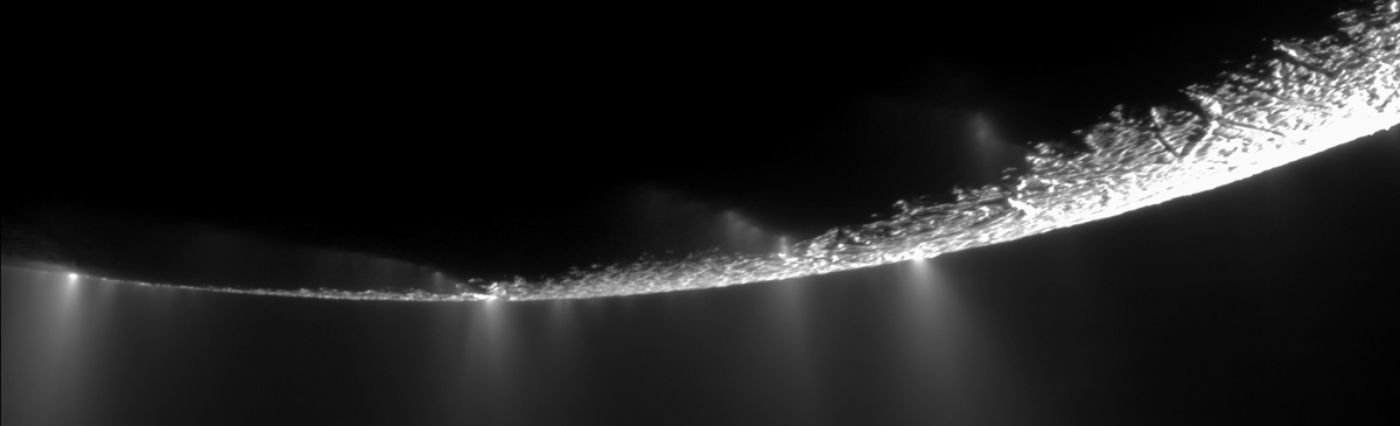
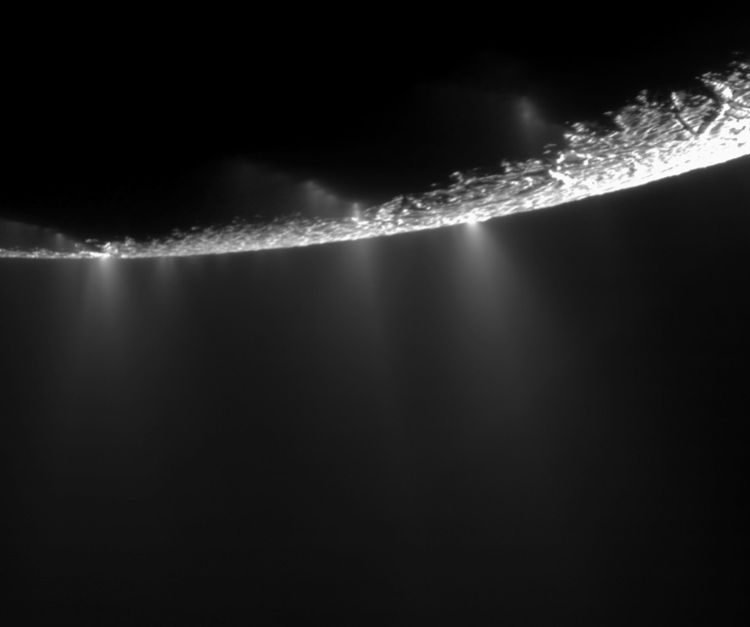
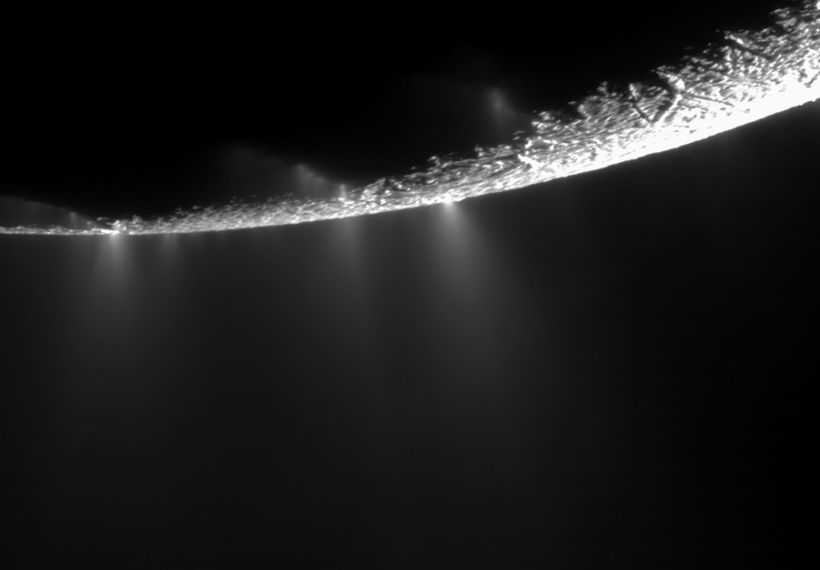
That planetary society encourages missions to all these worlds, Enceladus, moon of Saturn that seems to have an ocean, and Europa, which has got an ocean.
We want to go to Titan where there are tides of methane and ethane, these natural gas kind of liquids.
They're liquid because it's so crazy cold.
Smells like a fragrant trip.
And we would put sniffers on them, by the way.
Just keep in mind, if we were to discover evidence of life on one of these worlds like Europa or Enceladus or Mars, it would change this world, utterly change this world.
It would change the way everybody felt about what it is to be alive in the universe, alive in the cosmos.
It would change us.
And you know what else we'd discover?
What?
Nobody knows.
That's why we're going to go send missions to find stuff.
If we send missions out there, we will make discoveries and we will have an adventure, an adventure shared by all humankind.
If you talk to kids, what are they, and you say, what's your favorite planet?
They often, not so much as they used to, thanks to Neil, they'll say, Pluto.
That's so true.
Pluto.
Thanks to Neil.
I'll tell you what, 2015, there is a mission going by Pluto, New Horizons.
It left in 2006, I was there at Cape Canaveral.
It's the fastest rocket anybody's ever built, and it will get to Pluto nine years later in 2015, and we will make discoveries that will change things.
Furthermore, when you invest in these missions, Chuck.
Yes.
You solve problems that have never been solved before.
So true.
So planetary science is what NASA does best right now, and NASA's the world's largest space agency by a factor of three.
So that is planetary science, the line item within NASA, which is in turn a line item within the federal budget, which is in turn an economic entity in the world.
That's where we invest to innovate and keep the United States in the economic game.
Next question.
Awesome answer, sir.
All right.
JD Prevost wants to know this.
If a planet had a slower axis rotation allowing the star that it's orbiting to heat the planet over a longer day, could a planet be further out of what we consider the habitable zone and still sustain life at similar temperatures as Earth?
So bigger planet, farther out, longer day, do all those things factor into?
Let's back up.
The Earth Day used to be, before we had clocks, as far as it used to be 18 hours, in the ancient dinosaur days.
So that's a fact, that's like 30%.
The Earth is going a third slower than it used to.
I did not know that.
And we're here, we're alive.
So you gotta figure if you're farther out and turning slowly, if conditions are right, you could be a living thing.
Why not?
Who's to stop you?
Wait, wait, there's more.
The planet Mercury spins two thirds of a time for every orbit.
And I don't think there are any Mercurians because it's too close to the sun from what we understand.
Right.
But there's ice in the craters of Mercury.
Is there some place on some other world that's turning slowly, that has some slush and there's living things in it?
I don't know.
Right.
One way to find, to make sure we never find out.
Is to stay here.
Not go looking.
And not go looking.
Exactly.
That is very cool.
That is, hey, hey, JD, number one, great question.
And number two, who knew that the Earth Day used to be 18 hours?
Well, that's when you talk to the ancient dinosaurs, take a meeting with them.
Well, really they're the fossil ferns that are extant, that are along with their fossils.
You can infer a lot about the ancient environment.
And then you look at silts and ice and things, and you can infer a lot about how the Earth is slowing down now, caused by tidal friction with the Moon.
And you can work backwards to how fast it must have been spinning in ancient times.
Meanwhile, we've got to spin on out to a break.
Welcome back to StarTalk Radio.
Bill Nye here, your host, sitting in for Neil deGrasse Tyson, and I am here with none other than Chuck Nice, and tell you what, Chuck.
Yes, yes, Bill.
It's time for the lightning round.
Yes, it is.
Now, this is pure lightning round.
That's all it is.
No bells and whistles.
Wait, wait, there's bells.
There are bells.
There will be bells.
So take it with the Cosmic Query and the lightning round, Chuck.
And here we go.
Let's jump right into this with Steve Hoseed, who wants to know this.
I'm from Heartland, Wisconsin.
My question is, when the New Horizons spacecraft reaches Pluto next year, what is the mission exactly?
Take pictures.
Take pictures.
Take pictures.
Record some thermal data, radiation, some science instruments aboard, but pictures, pictures that could, dare I say it, change the world.
Change the world.
Steve, I think the answer might be pictures.
All right.
Jonathan Suto wants to know this.
Bill, why do we give Latin NASA so little money?
How did that happen?
If I were king of the forest, we'd give NASA more money.
We at the Planetary Society, getting everyone in the cosmos to know our place within it and advancing space science and exploration lobby continually to get more money for NASA, the world's largest space administration, so that we will make discoveries that will not only change the world, but keep the United States in the economic game and lead the way.
Not that the United States has to do everything, but space exploration is what the United States is good at.
All right, next question from, I'm just going to say, Ms.
McNaughton, because I can't pronounce her first name, and I'm sorry, Ms.
McNaughton.
Here we go.
Hi, from Biggingsville, New York here.
My question is, what is your opinion of Stephen Hawking's time travel fourth dimension theory?
Do you believe it is accurate?
Don't know.
It's cool to think about, though, isn't it?
It's riveting.
And the fourth dimension is time, everybody.
It's not an extraordinary thing.
It's just time.
It's just XYZ and time.
And time.
All right, here we go with Jared Reese, and Jared is from Minnesota, wants to know this.
Is it possible and or probable to use gravitational lensing with a Hubble-like telescope on the outer edge of our solar system?
What tangible benefits could there be to do this?
I've heard that lensing could be enhanced with radio pictures.
Radio pictures, maybe.
Wherever there's a lot of gravity out there in deep space, like when you have a black hole, you can observe light, and in this case, radio waves being bent by the gravity.
And that can give you tremendous insight into the whereabouts of black holes and their nature.
The more spacecraft we have out there, the better as far as I'm concerned.
Let's fly them.
Fly them.
Fly them all.
There you have it.
All right, Philip Brinkman would like to know this.
How do the advancements in technology affect our own evolution?
Are we still subject to natural selection or do humans evolve only artificially now?
PS.
Excellent job on the debate.
Oh, thank you.
Thank you for the post script.
Yes, humans are still evolving.
The thing is, let's take me for example.
Please, no, I had appendicitis, I'd be dead otherwise.
If I run around having kids, that means those kids might have been not come into existence.
But wait, that's part of being in a tribe.
As your tribe advances culturally, you have the potential for your individuals to advance culturally and that's evolution.
Could it be that if we go back in time and talk to the ancient Egyptians who built the pyramids and they don't get any of our jokes?
Wouldn't that be weird?
Because we've changed just in those 5,000 years.
Whoa!
Nicely done.
Here's what Susan Minnaub wants to know.
Wait, we don't get any of your jokes either, Bill.
Take it, Chuck.
Susan Minnaub wants to know this.
What happens to a black hole after it runs out of stuff to eat?
That's very unlikely.
So it remains a very massive star sending material to other parts of the universe.
That's a good question.
When the source of energy material stops coming in, people have speculated about what happens, it shrinks.
And what I'd like to do is hold that thought, Chuck, till you have Neil deGrasse Tyson here who's so into his astrophysics.
Whoa.
James Lesperance wants to know this.
Is it possible to have binary planet systems, much like a binary star system, with the gravitational pull of the star they orbit, as with the pull of each other, make it unfeasible?
No, no, it's probably quite feasible.
In fact, that's a fun physics problem.
The old thing that we're crazy for, what's that?
The three body problem.
So the Earth and the Moon, the Moon is like a traditional planet in a sense.
It's a gravitational body orbiting the Earth and the Earth and the Moon are in turn orbiting the Sun.
And it's nothing but fun to consider the Earth and the Moon as a system with a center of mass, a center of gravity somewhere between us.
And that center of gravity is in turn orbiting the Sun.
So we do it all day.
And when you get Jupiter with its four massive Galilean moons, I mean, that's like a whole binary, quaternary, quad, a quintenary, a quintenary system.
So yes, it's possible.
Party on.
Nice.
All right, here we go.
What engineering hurts from crystal?
What engineering hurdles prevent us from traveling faster than the speed of light?
Well, it's not engineering hurdles so much.
As far as we know, the speed of energy is the speed of light.
As far as we can tell, you just can't go any faster.
Just can't go faster.
You start pumping in more energy and instead of going faster, you become effectively more massive.
That is to say, you increase your momentum without increasing your speed very much.
It's a complicated problem discovered in my father's lifetime, not that long ago.
Hey, we're almost done.
We are.
Thank you for listening to StarTalk.
We gotta fly, Chuck.
Bill Nye, The Science Guy, with Chuck Nice.
See the full transcript



 Unlock with Patreon

 Become a Patron