


 Unlock with Patreon
About This Episode
When you think Middle Ages, does scientific advancement pop into your head? On this episode of StarTalk Radio, we’re exploring the science and history of medieval times as Neil deGrasse Tyson and comic co-host Matt Kirshen answer fan-submitted Cosmic Queries with Seb Falk, Cambridge Historian of Science and author of The Light Ages: The Surprising Story of Medieval Science.
Quite a lot happened during the Middles Ages and we start with a brief history. Seb tells us how incremental improvements to science occurred during this time. Find out how science functioned in an age of mysticism and miracles. We discuss “natural magic.” Discover more about the storytelling of medieval maps.
We explore the invention of the mechanical clock. You’ll investigate the importance of monasteries for educational thinking and how they led to the establishment of medieval universities. Seb explains why, despite common misconceptions, biblical literalism was not popular during the Middle Ages and is a fairly new idea.
You’ll learn about the transition from Roman numerals to Hindu-Arabic numerals. How important was the cosmos during medieval times? Seb tells us why the real science was happening amongst astronomers. Lastly, we contemplate the lessons that can be learned from studying the past. All that, plus, we ask, is science intuitive to our species?
Thanks to our Patrons Trumpet Wom’, Xavier Sims, Rhys Smith, Michael Fournier, Saawan Patel, Gary Wight, Chris K Samuel, Carson Haynes, Adrian Hernandez, and Sanchit Monga for supporting us this week.
NOTE: StarTalk+ Patrons can watch or listen to this entire episode commercial-free.
About the prints that flank Neil in this video:
“Black Swan” & “White Swan” limited edition serigraph prints by Coast Salish artist Jane Kwatleematt Marston. For more information about this artist and her work, visit Inuit Gallery of Vancouver.
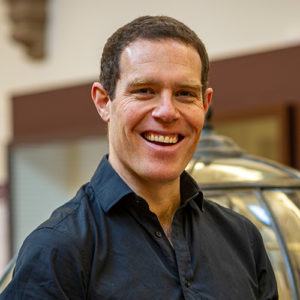
Seb Falk headshot by Jason Bye.
Transcript
DOWNLOAD SRTWelcome to StarTalk, your place in the universe where science and pop culture collide.
StarTalk begins right now.
This is StarTalk, Neil deGrasse Tyson, your personal astrophysicist.
And today we’re gonna do StarTalk cosmic queries, which continues to be a fan favorite in our format.
On the topic today is science history, specializing in a part of human history that nobody thinks any science happened at all, me included, and that would be medieval history, okay?
That is the benchmark for anyone’s concept of where no science touched anybody’s life.
I got Matt Kirshen here to help me out as my co-host.
All right, dude.
Thanks, it’s a pleasure to be here.
Co-host of Probably Science, and tell me when will that show ever graduate to be actually science?
It’s never gonna get there, Neil.
We got the closest when you’re on the show, but.
Oh, so if I come back on the show a couple more times, then it can be turned into likely science, and then.
It’s tending towards science, but it.
Most definitely science.
It’ll never actually reach it.
Okay, well, that gives you freedoms, in your conversational latitude there.
But so who we have in studio, or actually he’s not quite in studio.
He’s at his home base in Cambridge, England, where he serves as one of the academic scholars there.
We’ve got Seb Faulk.
Seb, welcome to StarTalk.
Thank you very much for inviting me.
Seb, you’re the first Seb I’ve ever met, so that’s gotta be short for something other than Seborrhea, I presume.
Sebastian, yeah.
Sebastian, very nice.
It’s a mouthful.
In the UK, we give it four syllables, Sebastian, but over there, I think you only give it three, right, is Sebastian.
Sebastian, yeah, we just, yeah.
Famous lobster, I think.
Really?
So, is that right?
What lobster was that?
In The Little Mermaids.
Oh, Sebastian, yes.
No, he wasn’t a lobster.
He was a hermit crab.
Was he a hermit crab?
I apologize.
Totally.
That’s why he has a shell with him.
Yeah, hermit crabs inhabit other shells that they didn’t create.
That’s why they’re called hermit crabs.
As he’s a crab, not a lobster.
But that means they taste the same.
All I know is, darling, it’s better down where it’s wetter.
Don’t get me started about her song, where she longs for being on the ground.
And I’m thinking, look, you have the entire freaking ocean to swim in.
There are two things you can miss, fire and sunlight.
But everything else she sings about, she wants to walk on streets.
It’s like, no, you can swim in three dimensions.
Like, shut up.
Compose a different song, why it’s great to be in the ocean.
But that’s not what the point of the podcast is.
That’s another episode we’ll talk about, the science of the little mermaid.
But this is Cosmic Query’s science history.
So Seb, you’re a historian, and your specialty is science in the latter Middle Ages.
That’s right.
And I didn’t know it was divided up that precisely.
What’s going on?
What’s the beginning, middle and latter?
What are the years associated with that?
Well, the Middle Ages, people normally say, when we’re talking about Europe, is from about 500 to 1500 AD of our era.
A thousand years.
A thousand years, quite a lot happens in that time.
Yes, that includes the time of the Golden Age of Islam, where science was happening back, between 800 and 1100, yeah.
It’s a problem for historians because the word medieval means in the middle, the time in the middle, and so the very word is a slander.
The very word is a way of saying, that bit we don’t really care about.
The bit between this one good bit and this other good bit.
And the first good bit was ancient Greece and Rome, and the other good bit was the Renaissance, and people in the Renaissance said, okay, we’re great.
We are recovering the wisdom of the ancients.
And so everything that came between us, we can just ignore.
We leapfrogged over them, yes, because they had nothing but plagues.
Exactly, exactly.
So it’s defined as-
But just to be clear, so you got a PhD from the University of Cambridge, and what was the title of your thesis?
The title of my thesis, oh gosh, was, Improving Instruments, Equatoria Astrolabes, and the Practices of Monastic Astronomy in Late Medieval England.
So these things behind me.
You got some astronomy in you.
Very nice.
Oh yeah, no, I focus on astronomy.
Like you say, keep looking up, and that’s what people were doing in the Middle Ages.
Excellent, excellent.
Okay, and of course, this year, you released a book, The Light Ages, clever title, I see what you did there.
Clever title, The Surprising Story of Medieval Science.
So I love it, I love it.
So tell me again, so latter Middle Ages is what?
So it depends on what you’re looking at, but what I study is mainly from about the 1100s to about the 1400s, 12th century to about the 15th century.
I’m focusing in particular on the 14th century, which was called famously the calamitous 14th century, because that’s when they had the Black Death, and they had the Hundred Years’ War between England and France, and a whole lot of horrible things happened.
But at the same time, as all those horrible and exciting battles and plagues and things were going on, there were people looking up at the stars, people investigating nature, people asking questions.
Yeah, see, no, no, we all just think you’re lying.
So, I tell you, this whole show will be you trying to convince us all that our understanding of that period is just flawed.
Because that is, I’m sure, this is the focus of your work and your book, because I definitely have the impression that for roughly 1,000 years, everything was just made of mud.
That’s why I felt I had to write this book.
And it’s also why I wrote the book in the way I did, because what I don’t do is say, you’ve got to take my word for it, because he’s going to take my word for it.
I walk people through, so I say, this is how you multiply Roman numerals.
It’s not as difficult as you might think.
This is what you can work out just by looking up at the heavens and figuring out the calendar and the phases of the moon and so on, and just step by step trying to get people from zero to advanced medieval astronomer, which of course is not as advanced.
Not to put too much in your lap in one instant, but in my notes it says here you focus on a monk named John of Westwick.
That’s right.
And why is he special?
I actually never heard of him.
Well, that’s kind of the point in a way that so many…
Well, the point of your book is that I’ve never heard of him.
In a way, the point of my book is that nobody has ever heard of him, and that doesn’t matter.
The point is that so many histories of science are told as parades of great men, and it is so often men in these stories, where it’s like a lone genius who solved this problem, and then another lone genius comes along 100 years later.
And we all know that science doesn’t work like that.
It definitely doesn’t work like that now, and it never did in the past either.
There’s so many people whose names are just not widely known, who made their own contributions and who made incremental improvements in our understandings of everything.
And so, I wanted to tell the story of medieval science through an unknown figure precisely to avoid falling into this trap of saying, you know, this is a famous person who made this contribution.
So, very clever.
Now, as a tool to get in and out on the subject, so before I get you to explain what it is we all don’t know about that period, let me just throw something else in your lap.
As I understand it, the 14th century is the only 100-year span in the history of our species where the population of humans in the world was less at the end of that century than it was at the beginning of that century.
So, is that true?
I couldn’t say for certain, but it is entirely plausible to me, because the Black Death killed somewhere between 40 and 50 percent of the population wherever it hit.
And recent research has shown that it’s spread much more widely than historians have previously thought.
A lot of new genetic research showing how it’s spread into Africa, spread right across Asia.
The Americas, of course, aren’t touched by it.
But apart from that, Eurasia and Africa, at least Northern Africa, and down into the middle of Africa were all hit by the Black Death.
And it was just catastrophic.
Now tell me what’s great about this time.
Go.
I’m not here to say that we should all wish that we lived in the Middle Ages.
But what I am here to say is that if you think that everybody was stupid in the past, or that people didn’t achieve anything, or that nobody was interested in the world around them, then that’s wrong, because people have always been interested in the world around them.
People have always looked up.
And even at times of great famine or hardship or conflict, people have found time to investigate the world around them, and people have asked interesting questions.
And so what I’m trying to do is reclaim the word medieval a little bit, and make people look again at this period, and look at the achievements and the interests of the times, including inventing really interesting astronomical instruments like those astrolabes, and also kind of asking questions about nature, and fitting nature into the framework of their understanding of the universe, which for Christians was of course a universe created by God.
And so it’s a different understanding to the one we have today, but still, you know, scientific in its own terms.
So how does science gurgle up under the forces of mysticism, and miracles and magic of the time?
It’s a big question.
But isn’t the legend of King Arthur in this period as well, correct?
Well, no.
So Arthur, I mean, was Arthur a real person?
This is a kind of an open question.
Lots of legends spread around this time, and this is a time when people are really into myths and legends.
But the point is that people look around them, and they need a world that operates in a predictable, coherent way, just as we do today.
King Arthur had Merlin, right?
And so Merlin was sort of the closest thing anyone could reference who knew about chemistry or biology or the natural world.
And I just wonder if his knowledge would manifest in other people’s impressions as magic, even if he was just doing science.
Well, magic was certainly something that interested people, and there was a whole category that was called natural magic, and natural magic is essentially what you can’t really explain, like magnetism or some features of plants that seem kind of surprising, but also things that we might now say were fraudulent.
So astrology kind of shades into natural magic.
Basically, this is a world in which miracles can and do happen, but the whole point of a miracle is it doesn’t happen every day.
So while you’re waiting for your miracle to come along, you still have to live in the world as it is day to day.
So just as people would go to their churches or go to cathedrals and pilgrimage shrines and pray for a miracle to be healed from whatever disease was afflicting them, while they were waiting for that miracle, they would be treated by healers, often priests, who would treat them according to the best standards of the medicine of the day.
So it’s not one thing or the other.
You can still look up at the stars and make predictive models of when there’s going to be an eclipse or when the planets are going to be in conjunction, while also believing that those planets are going to affect your health and the weather in ways that we today would call incorrect.
I’m going to ask a question for Matt.
Matt, I’m asking on your behalf.
So back then, did they also have court jesters who if they weren’t funny, they would be killed?
In principle, yes.
I don’t think always, but I think you might get fired before you were killed.
A job’s a job.
Well, what are your other options, right?
Social mobility is low.
I know my comedian friends and tell them it’s cash on the night and there’s a meal, and they’ll risk getting killed afterwards.
They’ll risk it, okay.
That’s meritocracy.
I was just wondering if, because comedians who do really well on stage, people say, oh, they killed.
I’m wondering if that’s just part of the culture of kill or be killed in that environment.
They very well be.
I mean, it is all the same language.
You die on stage when it goes badly.
Wow, yeah, there’s some truth in there.
It’s quite brutal, the language that’s used.
So, Seb, give me some concrete examples of jewels of science that girled up in this period that none of us would have imagined.
Well, so the way that medieval people looked at science was that they were trying to build on the ideas of the ancients.
So some of the stuff that you might have heard about, people like Aristotle or Archimedes, Eratosthenes, who worked out the circumference of the Earth.
These are ideas that are picked up and kind of enthusiastically studied in the Middle Ages and then refined.
So, for example, planetary models of Ptolemy, the Greek astronomer from the 2nd century AD, were studied and refined and then they invented instruments in order to try and model them.
They invented instruments to model the motions of planets like Equatoria, which are kind of planetary computers.
And then they try and kind of refine and improve.
So the spirit of the era is very much to try to kind of tweak and improve.
It’s showing respect for the past and then kind of adding your own slant to it.
So what’s motivating them?
Is it God?
Do they want to get closer to God?
Certainly somewhat, yes.
Because I’m worried that I’m going to die from the plague, I’m not really thinking about the universe.
So something’s got to give them this sort of free time.
Yeah, but then you shouldn’t worry about dying from the plague because if you’ve been a good person, you’re going to go to heaven and that’s much better than anything that’s on earth anyway, right?
Good, I forgot about that.
Don’t worry about that.
But absolutely, they wanted to get closer to God.
And it was universally understood that there were two ways of understanding God.
One way of understanding God was of course to read the Holy Scriptures.
The other way of understanding God was to look at creation and see that as evidence of God’s work in the world, God’s plan for the world.
So for these people, they literally called them two books, the Book of Scripture and the Book of Nature.
And nature was often after the invention of the clock, the mechanical clock, which is a key invention of the late Middle Ages.
Without clocks, we’ve got nothing.
We’ve got no GPS.
We’ve got no precise timekeeping, none of that.
Wait, wait, many of you people didn’t have GPS?
No, apparently not.
But they did have maps.
Maps improve a lot in the late Middle Ages.
Map making is a really interesting thing because it’s both symbolic and descriptive in a way that our maps are purely descriptive.
So we kind of know what we want out of a map.
Medieval people wanted lots of different things out of their maps.
That’s another thing, again, is Here Be Dragons just fiction?
There is one, you occasionally do get…
Well, explain Here Be Dragons because maybe not everyone has pored over medieval maps and looked at the edges of the map.
Yeah, that for me is the stereotype of any medieval map.
It’s got heavy ink stains and then in one corner, that’s where the dragons are.
Yeah, there’s one map that I think says here are lions.
There is a famous world map called the Hereford map on Monday, which is in Hereford Cathedral in England, which says these are dragons on an island in the Red Sea.
And also that map has Salamander, which was kind of a mythical beast that was believed to live in fire and kind of get energy from living in fire.
But the kind of the interesting thing about that is that that map was in Hereford Cathedral because it was intended to inspire pilgrims.
So we shouldn’t think of it as a map that’s like how to get from A to B.
This is more like a kind of pictorial history of a providential universe.
So basically, it shows Bible stories kind of superimposed onto a very sort of schematic map of the world.
So you shouldn’t, it’s just like trying to use your kids’ picture atlas of the world that has like, you know, foods from every country inside the outline of that country.
You don’t want to use that to get from A to B.
And these maps also were kind of aids to contemplation.
But they did also have navigational maps increasingly in the later Middle Ages when the compass comes in.
The compass, magnetic compass increasingly used for navigation.
So that’s, you know, I own quite a few old maps and I never fully put two and two together.
The older the map, the more other crap information it has on the map.
It’s just, you know, all manner of illustrations.
And it’s like an entertaining, it’s like you can make a board game out of it or something.
It’s just what it’s for.
It’s like the difference between a roadmap and a hiking map, right?
You know, you don’t need your roadmap to show you where the interesting trees are or the hills even.
And you don’t need your hiking map to tell you about the speed limit on the roads or where the speed cameras are.
And so the map serves a purpose.
Every map serves a purpose.
And it’s the same, of course, as different projections, which many listeners will know about the Mercator projection or the Goldpeter’s projection or different projections.
They all serve a different purpose.
No one is necessarily better than any others, but they have different benefits and drawbacks.
Yeah, that’s a lost art actually.
I mean, today a map is just I got to get to grandma’s house, you know, and so there it is, turn left at the red light and you’re there.
We got to take a quick break when we come back more on medieval science.
The truth, the untold truth about medieval science with Seb Faulk.
Bye I’m Joel Cherico, and I make pottery.
You can see my pottery on my website, cosmicmugs.com.
Cosmic Mugs, art that lets you taste the universe every day.
And I support StarTalk on Patreon.
This is StarTalk with Neil deGrasse Tyson.
We’re back, Cosmic Queries, StarTalk.
We’re talking about medieval science.
Apparently, there was science in medieval times, and Seb, Seb Faulk knows this, and wrote a whole book on it called The Light Ages.
See what he did there?
The Light Ages, the surprising story of medieval science coming out just this year, 2020.
And so Seb, tell me about monasteries as institutions and what role they played.
Monasteries, of course, were intended as places where people could study holy scripture, could get closer to God, could take themselves out of a kind of mundane day-to-day existence and seclude themselves from the world and study and pray.
But that studying included studying God’s creation.
So there was always science happening in monasteries, because in order to try and understand God, they had to kind of understand creation.
They had to study what God had done in the world.
Now, before you mentioned this concept of two books, Galileo mentions two books when he refers to, he said, in my worldview, God wrote two books, one, the scriptures, and one, how the world works, which then leads to the fun quote, attributed to him, but I think it’s to someone else.
The quote is, the Bible tells you how to go to heaven, not how to heaven’s go, so I always enjoyed that quote, but it’s an implicit reference to these two pathways of inquiry, but go on.
And people in the Middle Ages were quite used to reading the Bible allegorically, right?
We think of biblical literalism as being kind of an old thing.
Actually, it’s a very new thing that people, like fundamentalist Christians, are a new phenomenon.
People in the Middle Ages were quite happy to read the Bible as being figurative if it conflicted with their experience.
And great theologians like Sir Augustine say, if an infidel, if somebody who’s not a Christian knows more about science than you, listen to them.
Because you don’t want to bring Christianity into disrepute by saying, you’re wrong, this is what it says in the Bible.
And then it turns out that you’re wrong and you make the Bible look silly.
So St.
Augustine is, if I remember correctly, he shaped a lot of what we think of as modern Christianity, right?
He helped put together pieces to make it a religion as opposed to the cult following that Jesus had in his day.
And he popularizes this idea that infidel knowledge, which later comes to include the great Greek philosopher Aristotle, was like Egyptian gold, he called it.
And that’s a reference to the story of the Israelites who flee out of Egypt and they steal a lot of the gold from Egypt when they leave.
And that’s okay because they’re kind of putting it to good use.
So they’re taking this gold and they’re putting it to a better use than the Egyptians would have done.
And that’s all right.
And in the same way, using this kind of science that was created by pagans like the ancient Greeks was okay for Christians if they could use it to convince other people of the glory of God.
So studying nature was absolutely practiced and endorsed in the monasteries.
And what happens is that the monasteries, they get wealthy, they get lots of books, they either copy books or people give them books.
And they spend a lot of time on their hands, right?
So they spend a lot of time studying these books.
And then what happens is the universities, the foundation of the great universities in the 12th century and in the 13th century means that suddenly there’s kind of another center for people to study learning and scholarship.
And then the monasteries kind of lose a little bit of that importance as people go to universities instead.
Yeah, but all the first universities, so many of them had theological foundations, right?
That’s right.
That’s where, that’s the only organized anything in a society are the religious orders.
Well, there were three higher subjects that you could study at university, theology, law and medicine.
But before you do any of those three subjects, you have to study the seven liberal arts.
And the seven liberal arts were the three arts of the word, which is logic, grammar and rhetoric.
So arts of making yourself understood and convincing an audience.
And then the four arts of number, which were arithmetic, astronomy, geometry and music.
We think of music, that doesn’t really fit in, but of course, music is all about harmonic ratios and things, particularly for people in the Middle Ages.
So music is like applied arithmetic to that.
And astronomy is applied geometry.
So astronomy is all about making models that explain how the heavens go.
In fact, for men, for more than a century, astronomy, learning astronomy was based in the math departments of universities.
So that juxtaposition is real.
And one last thing before we go to Q&A, tell me about the transition from Roman numerals to Arabic numerals.
That’s a really interesting one.
Did that happen under your watch?
Yeah, more or less.
So the Arabic numerals kind of misnamed in a way because they come out of India originally, and they come out of India in about the sixth, seventh century, we don’t exactly know when, and they’re picked up in the Islamic world in the eighth, ninth century, and then they come to Europe in about the eleventh, twelfth century, but they kind of picked up gradually.
You’ve got to admit, that’s pretty slow moving.
Yeah, well, the point is this, right?
That’s pretty slow.
I can walk that distance in less time than that.
Yeah, but this is pre-broadband.
They were like dial-up at best.
But again, it’s why change if it works for you, right?
You know, I’m really slow to streaming because I have a perfectly good DVD player, right?
DVD works for me.
I don’t get streaming and I’m quite happy to watch the same DVDs over and over again.
What’s a DVD player?
It’s like a videotape.
Except if your kids mess around with it, it doesn’t work anymore.
I think that’s true for videotapes as well.
But anyway, I have a lot of scratch DVDs at home because I have small children.
But basically, if it works, then why change it?
If it ain’t broke, then fix it.
And that was kind of the attitude in the Middle Ages, right?
They’re quite happy with Roman numerals.
And as I explained in the book, it’s not as hard as you might think to multiply Roman numerals.
If you have a system and you practice it, and there were various systems that they could use.
One of them was called kind of the Russian peasant method by some people, but it’s practiced in different parts of the world and involves, basically turns multiplication into a series of doublings and halvings, which you can more or less do in your head.
So it doesn’t matter about the Roman numerals being not place value.
That’s the problem with Roman numerals is that you don’t have the place value, the columns that we have in Hindu-Arabic numerals.
So they come in, astronomers are the first people to use the Hindu-Arabic numerals because they’re the ones that are doing the really, yeah, there we are.
There we are.
Neil can get on board with something here.
The astronomers are doing the biggest maths, right?
They are calculating to like nine sexagesimal places.
This is billions upon billions, right?
So the sexagesimal system is base 60.
So they’re working in base 60 because of course that’s how it makes degrees easy because there are 360 degrees in a circle.
We use base 60 still of course for hours, minutes and seconds.
That is a base 60 system and the astronomers are routinely-
So the hours are not base 60, but the minutes and seconds are.
Yeah, sure.
But there are 60 minutes in an hour and 60 seconds in a minute.
But they’re not 60 hours in anything.
No, indeed.
But they do come up with tables actually that have 60 days as well.
So they do it that way as well.
So they try and make it work as much for them as possible and they do 60ths of a day rather than hours and so on.
So they try and make it as easy to calculate as possible, but those are the people that need to do the Hindu-Arabic numerals because for that kind of level of calculation, they need to make it much, much easier.
Very cool.
All right, so Matt, start us off here.
Are these Patreon questions?
Yeah, so these questions are all from Patreon and this dovetails very neatly into the question from Cody Klebusky, which is how important were the cosmos in medieval times and what type of uses and discoveries were made?
Well, that’s where the real science was taking place, right?
Was looking up at the stars.
And the reason was because the stars were susceptible to precise measurement.
You could measure the exact magnitude of an eclipse, or you could measure the angles between a star and the horizon, or you could measure the angles between two planets in the sky.
You could precisely time when the sun was going to rise and you could work out where on the horizon the sun was going to rise.
So all of these things are susceptible to precise measurement.
So it’s really super scientific.
The other thing is that pretty much everybody in the Middle Ages believed that the stars affected what happened down here on Earth, astrology, pretty much.
And that kind of has a logical underpinning in the sense that the sun heats the Earth, the moon affects the tides, and if those things are happening, then why shouldn’t the planets also affect what’s happening down here on Earth?
So every planet…
Plus a dose of human hubris that the whole universe knows about you.
Yeah, I mean, a universe created by God.
And very much that humans are a microcosm of this heavenly macrocosm.
So basically humans are made of elements, four elements, the four classical elements, earth, air, fire and water.
And those are represented…
Wait, wait, I thought it was earth, wind and fire.
So Seb, on your next edition of the book, just get it correct this time, earth, wind and fire plus the rhythm section.
Those are the elements we’re made of, okay.
Absolutely.
There was a whole debate about this, right, in the Middle Ages.
Of course, it’s a mistake to think that people in the Middle Ages thought the earth was flat.
They didn’t.
But they did operate on the basic principle that the natural place of earth was inside water and the natural place of water was inside air and the natural place of air was inside fire.
And that makes sense.
If you drop a stone in the ocean, it sinks, right?
But if the earth is inside the water, why are we not under water?
Why haven’t we drowned?
If the sphere of earth is inside the sphere of water, why are we above water?
And this was a question that was debated a lot in the universities.
Because there was not a water layer between earth and the air.
Exactly.
The earth touched the air.
So, I mean, it’s kind of, it’s not a question that bothers astronomers, right?
Astronomers are not, like, they are more interested in looking up at the stars than they can measure the size of the earth without worrying about the sphere of water.
But they do, some philosophers, wonder whether maybe the sphere of water has been displaced so that the southern hemisphere is entirely underwater.
And that’s why us in the northern hemisphere are above water.
And this is something that’s debated a little bit in the Middle Ages, particularly just in the 15th century, when people kind of start to ask this sort of question.
But most people just say, actually, mountains poke up above the water, what’s the big deal?
And also the elements can change into one another.
So it’s happening, it’s changing all the time for these people.
But yeah, so humans are made of elements.
So we have these four humors, blood, phlegm, black bile, and yellow bile.
And those still are in our own language today, right?
When people talk about being sanguine or being phlegmatic or melancholy, those words that we still use today are kind of humoral theory.
And that’s to say that the composition of these humors in your body affects your well-being and it can affect your mood.
And if it affects your mood…
Yeah, we can say, he’s good humored, we’ll say that.
That’s a perfectly common phrase, right?
Yeah, yeah, absolutely.
And of course, one of the things about medieval medicine was it’s all about maintaining a balance, right?
You’ve got to think about going to a doctor as being more like going to a physio today, if you’re an athlete, that you have an ongoing relationship with your physio and they stop you getting ill in the first place rather than just always curing you.
Nowadays, we tend to only go and see a doctor, unless maybe if you’re above a certain age and you have a regular checkup.
But most people who are healthy most of the time only go and see a doctor when they get ill.
But in the Middle Ages, it was more about maintaining a relationship with your physician, which of course is very good for your physician financially.
And one of the things they do is they balance your humors, right?
Which for men often meant bloodletting, meant taking blood out of your body because it was the imbalance that was thought to cause disease there.
Not so much a problem with women because they bleed monthly anyway.
But there were all kinds of beliefs about what that might cause and how that might be regulated naturally.
So it was kind of an interesting world, but basically what happens is that the cosmos is affecting what’s down here below.
So the heavens, the planets clearly affect the weather because the weather is the elements.
When we talk about the elements, we’re talking about the weather even today, casually, I mean.
And if the planets can affect your humours in your body, then they can also affect your mood.
Because let’s face it, if you get hungry and you get angry, then that’s the top of your body, your chemical.
It’s called hangry.
Exactly, there we are.
So then what happens is actually people’s behaviour can be affected by the heavens.
So there’s a kind of a logic to it.
Okay, that helps me out here because I kept, if I think about them as disparate constructs, it’s like, what, WTF, right?
But if they all come together in this sort of harmonious…
And what’s interesting is that like the intuitive knowledge of a lot of these people can be sometimes ahead of the philosophers, right?
So Galileo has this great theory of the tides, which is part of, for him, supporting his theory that the earth spins, because of course the earth has to spin if the heavens up and spin, and he says that the tides are caused by the earth spinning.
Like imagine if you’re in your bath and you’re kind of, or kids are in the bath and they’re like sloshing the water and you get these waves in the bath.
That’s what’s happening for Galileo, right?
But the general understanding of the tide is actually much better.
Like your average sailor knew when the tides were high and when the tides were low, and on a monthly basis, they might not be able to predict high tide and low tide to the nearest minute, but they could do it to the nearest hour.
So, you know, they understood the effect of the moon on the tides better sometimes than the philosophers.
Mm-hmm, mm-hmm.
Because they were active daily observers of it.
Right, so they were in it.
Naturally empirical, yeah.
We gotta take another break, and when we come back, more of Cosmic Queries, the science or absence thereof of it in the Middle Ages with Seb Faulk.
Hey, we’d like to give a Patreon shout out to the following Patreon patrons, Trumpet Whom, Xavier Sims, and Rye Smith.
Guys, thank you so much.
What would we do without you?
I’ll tell you what we’d do less.
So thank you for your support.
And for those of you who would like your very own Patreon shout out, go to patreon.com/startalkradio and support us.
Thank We’re back, StarTalk, I’m Neil deGrasse Tyson, Matt Kirshen, it was good to have you, dude.
It’s nice to be here.
You’re tweeting at Matt Kirshen?
That’s where I am.
Like, what do you put on Twitter?
Is it just an amazing feed?
Oh, it’s pure quality.
There’s no fat whatsoever on my Twitter thread.
That’s what I wanted to hear.
It’s just gem after gem, perler after perler.
And they just have to know how to spell your name, K-I-R-S-H-E-N.
S-H-E-N, yeah.
If you Google anything very close to it, it’s a weird enough name that you’ll find me.
It’ll find you.
And how about you, Seb?
Are you on social media?
I am, at Seb Underscore Faulk, and lots of pretty pictures of medieval manuscripts and instruments and people doing weird stuff in the Middle Ages.
People biting off their own testicles and unicorns and all kinds of stuff like that.
Wow, that’s a new one.
I’ll tell you all about it, yeah.
Just to be clear, in medieval time, all books were themselves manuscripts, right?
There wasn’t a…
Printing press had not yet been invented, so everything is hand-scribed.
Absolutely.
So if you want a copy of something, you’ve probably got to make it yourself or pay someone a lot of money.
How old are your kids?
Six and three.
Okay, the six-year-old, show your six-year-old how good the penmanship was of these people 800 years ago.
Because the penmanship has gone to hell, at least in the United States.
I don’t know what it is in the UK.
So just give them something to aspire to by showing them 80 pages.
Especially the illuminated first letters of pages.
Well, this is it, right?
Some of the time, I have to say to people, you’ve seen these beautiful illuminated medieval manuscripts, right?
The ones that are in kind of sell for millions and millions of dollars and kind of are in exhibitions in art galleries all the time.
And the ones I look at are not always like that.
The ones I look at are the kind of science books.
And just as science books today are not always the most beautiful things to look at, so they weren’t in the Middle Ages either.
So often they were very utilitarian.
They’re full of tables.
And little sketchy diagrams, but not beautifully decorated.
And there’s a mix of all those in my book.
So lots of this, I think 65 illustrations.
Interesting, so an illustrated book.
Very good, very good.
How would I fare as a scientist if I were dropped into medieval times?
Because I thought I’d be king of that domain based on my not previous assumptions about their lack of advanced knowledge.
Well, I mean, a lot of the stuff that we take for granted, they were incredible with, right?
Calculation, spherical trigonometry is not a thing that’s taught in schools today, but to be an astronomer in the Middle Ages, you had to understand your spherical trigonometry really well.
And so in understanding of latitude and longitude, three-dimensional understanding as well, right?
Astronomers worked in horizontal coordinates.
So that’s above the horizon and along the horizon.
They worked in equatorial coordinates, right ascension and declination.
And they worked in ecliptic coordinates, a longitudinal latitude according to the path of the sun through the stars across the year.
So they’re working in three dimensions and three planes.
It’s pretty easy.
So Matt, nice try.
Nice try.
Yeah, I’d be screwed.
I’d be done.
Yeah.
All right, so again, let’s see how many questions we can get in in this segment.
Yeah, so I’m going to combine two different questions here because they’re in the same sphere.
But I do want to hear their names.
So Avinav Abraham and Chris Hampton have both asked questions about the primitive nature of medieval science and how primitive our present science will look to future generations.
For example, Chris says, perhaps the way we smash atoms together will be seen as barbaric.
If atoms have feelings, I guess.
And Avinav says, how far in the future would we consider today’s tools as medieval or obsolete?
Yeah, that’s a good one, Seb.
I mean, it’s a good question.
I can’t predict what’s going to happen in the future, but I think one of the things that’s really important is when we belittle the past, when we belittle people in the Middle Ages, it’s often because we assume that we know everything now.
And real scientists will tell you that that’s not the case.
Science has never finished.
Science is never going to finish.
There’ll always be more questions to ask.
And if this year has taught us anything, it’s that science has its limitations, right?
That there are certain things that science can’t do, even though, of course, the production of a vaccine for COVID has been incredibly impressive.
There are still certain ways that nature can take us by surprise.
When the World Health Organization said pandemic, I’m thinking, no, it can’t be a pandemic.
That’s for, like, long ago people to have pandemics.
You know, we’re modern.
That’s even a question that Sherri Lynn SK asks, which is, what lessons can we learn from medieval science to help us through the current pandemic?
Yeah, because they themselves had some pandemics, right?
I mean, they used some…
More bloodletting, that’s what she said.
Well, I mean, I would say one of the lessons is not a lesson that I would like people to take away, which is don’t trust the scientists, because often the experts in the Middle Ages were just as blind as everybody else.
But it has to be said that a lot of the measures that were taken in the Middle Ages against the Black Death are a lot like the ones taken today.
People wearing masks, people social distancing, not letting people out of certain cities if there was a case of a plague, so kind of quarantines and things.
And back then cities had walls, so you could actually do that.
Or not letting people in.
So a lot of the measures that people are talking about today were tried in the Middle Ages as well.
But of course, the sort of theoretical understanding was on a very different level.
Right, plus you can’t see the culprit, right?
If it’s a microscopic element.
So, at least today, only some people are saying that there’s some divine wrath.
But back then, that would have been everybody’s assumption.
If you got the plague, you misbehaved yesterday, right?
It was one explanation, right?
But I think one of the things that’s really important to say about the Middle Ages is people don’t all believe the same thing all the time.
So there’s lots of different competing explanations.
And those do compete in a kind of a scientific marketplace, right?
So you’ve got people saying it’s caused by astrology.
It’s caused by a planetary conjunction because Mars and Jupiter and Saturn all came together in 1345 and this caused the plague.
There are other people saying, yes, it’s the wrath of God and we won’t be able to repent for our sins.
There are other people talking about much more mundane explanations like bad air, pollution, bad water.
Some people say it’s caused by poisoning.
There’s some people who blame the Jews, unfortunately, and kind of scapegoat them for poisoning wells and so on.
So there’s lots of different competing explanations.
And you get people writing at the time about which of these are more plausible than others and who can we trust.
And correct my memory if I’m wrong.
Weren’t there women who were suspected of sorcery or witchery because many unmarried women living alone had cats and the cats would eat the mice and the rats that would otherwise be the vectors of plague.
And so you had this community of women who owned cats who didn’t get sick while everyone around them was getting sick.
And so this would implicate them in sorcery or some kind of…
There is that story that goes around.
Clearly they’re witches.
And that’s why witches have cats.
I don’t think it’s very widespread, I’m afraid.
It’s a really nice story.
And it might have happened in one place, but it’s not a big story because how are people going to notice that the cat is linked?
The level of epidemiology is not on that level.
So you’re not really able to notice.
And also the time of witchcraft and witch trials is much later.
It’s not really a medieval thing.
But how about Muslims who where ritual cleaning is multiple times a day out of just what’s prescribed in the Quran, so that the general hygiene is higher among Muslims.
So if you have this plague running through town and the Muslim community does not catch it, and you don’t know it’s because of their cleansing rituals, then you could end up blaming them as well, right?
People looking for stuff to blame if you don’t know what the real answer is.
I mean, again, it doesn’t happen a huge amount because unlike Jewish communities where there were established Jewish communities in a lot of towns across Europe, there weren’t many Muslims apart from in Spain.
And there wasn’t a huge amount.
I mean, there was some mixing.
So there weren’t Muslim pockets within other communities.
No, not in other communities.
The way Jews were basically everywhere in pockets, right.
Okay.
Exactly.
All right, so I was just thinking, if you brought someone from your time, your people, and bring them to modern times, and they say, look, we have a plague today.
We call it a pandemic.
And they said, wow, show me the hospitals and things.
So you go to the hospitals and there’s, you know, and then there’s a whole section where people are giving blood.
They say, oh, you’re still bloodletting, oh.
We’re just capturing it in a bucket now.
Well, I’m gonna, that sort of backs into a couple of questions about the advancement of science.
I’m gonna again combine two, one from Tom Bock and one from Jason, because they’re in the same field.
So Tom asks, when contemplating all the things that were discovered in medieval science, what do you believe was the most ahead of its time discovery?
Or the one thing that could be deemed as simply incredible they were able to discover given the limits of their tools.
I like that.
And then Jason asks, Jason’s a truck driver and says, I drive a large box equipped with a first aid kit, fire extinguisher and roadside emergency kit.
But if my truck was somehow to travel back to the Middle Ages, in whose backyard would you hope it landed in?
And what things might they be able to reverse engineer or apply to their current understanding of science?
Oh, gosh, that’s a brilliant question.
You know, that’s, you know, that, what’s the guy’s name with who drives the truck?
That’s Jason.
Yeah, Jason should write a sci-fi time travel novel.
That’ll be good.
What was there in his truck?
Can you read?
So we’ve got a first aid kit, a fire extinguisher, and a roadside emergency kit.
And then obviously the general mechanisms of a truck.
Yeah, absolutely.
I mean, I think people in the Middle Ages, they were really obsessed with gadgets, and they would have been really interested in the combustion engine.
They would have been interested just to see how everything fitted together and how everything was incredibly smooth.
Because on their terms, you know, they’re dealing with problems like that.
The mechanical clock was probably the most impressive innovation of the Middle Ages.
That perhaps, along with advances in lenses, that spectacles, because glasses, spectacles, were invented in the Middle Ages as well.
And without the invention of the spectacles, you know, the telescope at the beginning of the 17th century couldn’t have happened, right?
So it’s the understanding of magnification that’s developed, even if the lens grinding techniques aren’t quite there yet.
So this community of curious people are the ones he should drop his truck off, park his truck in front of those folks.
Friars or those kinds of people, right?
Because Friars, they’ve got the kind of interest in scholarship that the monks had, but they move around.
So they kind of come into contact with more knowledge and more understanding.
Given the mystical tandem beliefs, would he be viewed as some kind of a demon to be shunned and maybe even killed?
I think you’d have to just say the right thing.
I mean, there’s no…
People wouldn’t automatically eat to the conclusion that he was a demon.
Wait, wait, if there’s a fire going off and he goes with his CO2 extinguisher, boom, fire’s gone.
Oh my gosh.
He would be the god among men.
You possibly…
Or he might be seen as a kind of devil worshipper, right?
Because this is what is often said about devil worshippers, that they make smoke, right?
They make smoke.
It’s all smoke and mirrors, right?
They kind of…
They mutter incantations and then smoke rises, and this is how they bring out the devil.
So, this is…
He’s got to think before he should demonstrate something.
He’s just got to be a bit careful, exactly.
He’s got to get his excusing clearly first, and then he’ll be fine.
So, based on what you’ve said, I would vote then that the mechanical geared clock is one of the great inventions coming out of that period.
I mean, and that goes into a lot of things, right?
Milling, really effective milling, cranks and camshafts are kind of engineering type stuff, also engineering solutions that allow the building of the great cathedrals.
And the fact that the Romans had such great urban engineering that they didn’t come up with a mechanical clock.
That’s an interesting fact to me.
Yeah, but again, it’s about the desire for these things, right?
Because these clocks, you know, there’s the desire to kind of have some kind of an automaton, a device that will beat out an equal amount of time in, you know…
In equal amounts of time.
Exactly, in equal amounts of time.
But then they go beyond this, right?
So you’ve got this monk, Richard of Wallingford, who got leprosy, he was abbot of St Albans in the 1330s, and he invented this mechanical clock, and it didn’t just tell the time, it told three different kinds of time.
It told the canonical hours, which are kind of seasonal hours, which change in length at different times of year, but the mean hours, which is what we use today, and the true hours, which are the time that changes at different times of year.
So this clock could show you the true time, which is something clocks today even don’t show.
And then it could also show you the phases of the moon and the height of tides and all kinds of different things.
So that’s why I think that they would have been really interested in seeing the combustion engine, because that would have just been like an incredible piece of gear.
Right, so it’s not just science, it’s emergent engineering.
So that’s good.
But then that would have scared them in this, because I think sort of an iPhone or a computer would be just baffling, but you can look into a combustion engine and there’s nothing in there that doesn’t rely on science that they already understand, it’s just fire and movement.
Well, exactly, that’s why I think that they will be most impressed by it.
And a mystery liquid too.
There’s a mystery liquid that makes it happen.
So Matt, we’ve got to go into like lightning round here, so let’s see how many questions we can get out.
So Seb, we need two or three sentence answers.
Pretend you’re on the evening news and all they want is sound bites.
Okay, go Matt.
Alright, Philippe de Wind from Belgium says, what are your personal favorite discoveries and what do you hope we will discover in the future that will help humanity?
I really love the animal myths and legends, right?
The bestiaries, like the idea that you can tame a unicorn by taking a virgin into the woods and a unicorn will put its head in her lap.
And I like the idea that beavers get away from hunters by biting off their testicles and throwing them in the hunter’s faces.
I love that kind of stuff.
And how is that going to help us in the future?
It’s not.
But I think it’s important that we maintain that medieval sense of wonder.
I think it’s really important that we maintain a kind of sense that in the world amazing, incredible things happen and they’re out there for us to discover.
Tovi Sonnenberg says, Are there any textbook famous scientists whose discoveries were actually rediscoveries because a previous scientist had had their work forgotten or unacknowledged?
Well, that’s a great question.
There were quite a lot of rediscoveries in the later Middle Ages where medieval people rediscovered what were thought to be lost works of ancient thinkers like Aristotle and Euclid and Ptolemy the Astronomer and then kind of picked them up again.
And those have a massive, make an enormous impact on scholarship in the later Middle Ages.
Will Breon says, Is science intuitive to our species?
In other words, is it natural for young children and pre-evolution humans to logically think through a problem to find a solution?
If so, why is the spread of misinformation so common now?
It seems like people should be using more logic.
Man, that sounds like he’s accusing Seb of this or something.
I think it is.
I think people are really interested in understanding the world around them, and people always ask questions about, you know, why is this thing happening?
The rainbow is a classic example, right?
Explanations for the rainbow go right through human history, attempts to understand the rainbow, attempts to categorize the colors, attempts to kind of work out how it works, the combination of reflection and refraction in water droplets.
That’s something that gets a lot of intense study in the Middle Ages.
And so people are always asking these questions about nature.
But then I think people now as then are susceptible to groupthink and just, you know, picking up what they’re told and, you know, not trusting the right people or trusting the wrong people.
And I think that can come sometimes override our natural sense of questioning and ingenuity.
Okay, so it’s different to say we have a natural sense of wonder about the natural world that’s different from my ability to explain it is also logically constructed because these are two different sides of the coin that we are.
The wonder side and then what’s my account of that wonder?
And one can be spiritual, supernatural, the other could be scientific.
And the other thing you have to have for science is a sense that your explanation is going to be good for somebody else as well, right?
It’s this universality.
And that was something that people kind of were not so sure about in the Middle Ages, that they didn’t think that knowledge was necessarily transferable.
So you’re on safer ground with logic.
You’re on safer ground by saying, I believe that every motion in the heavens is in a perfect circle.
And on that basis, we can logically predict this is how the universe is going to work.
And that logic is very strong.
But of course, if your premises don’t hold up, then it leads you to false conclusions.
Matt, time for one last question.
Make it a good one.
All right.
I like this one from Sriram Govindan.
If we were to look at major scientific discoveries made in the past, do we see any pattern?
Can we predict when the next one is likely to be made?
Also, what is the major trigger for such discoveries?
War, seclusion, education system?
Wow.
So I would broaden that, not just as he intends, not single discoveries, but periods of time and place where you have great fertility of creative thinking.
I mean, communication, humans talking to each other, is the impetus for great discoveries.
And we see that in the European Middle Ages when they pick up ideas from the Islamic world.
And we see that in the Islamic world when they pick up ideas from the ancient Greeks.
And it’s this desire to kind of learn from other cultures.
One of the myths about the Middle Ages…
Or to contest your ideas, right?
Because maybe you have an idea, and if you have another idea that contests it, you go, well, wait, let’s figure this out.
And that’s another sort of motivation there.
Yeah, and that’s why the medieval universities were so important, because that was a place where they brought in ideas from different places, and they said, hold on, Aristotle conflicts with what we believe about Biblical creation, what’s going on here, or this Islamic thinker conflicts with what we thought about the motions of the heavens, and can we reconcile them, and if we can’t reconcile them, who’s right and who’s wrong?
So the more ideas you throw into the mix, the more we communicate, the more things advance, and that, to me, is the key.
And I think, wasn’t there a pact during the Second World War among warring factions that no one would bomb each other’s universities?
I mean, I heard this.
I mean, universities did often get off lightly, but that, I think, is mainly because the priority was to bomb the industry.
So universities like Oxford, for example, got bombed, Cambridge didn’t, because Oxford had big motor factories.
So, you know, I think it was more about the priorities, right?
All right.
Listen, guys, I think we have to call it quits there.
But Seb, this is brilliant.
I love it.
You got to book out, hopefully set the record straight.
But it is true.
No, I don’t want to go back and live then.
Just if, no offense.
No, no, but you can still be interested in it, right?
People, the old saying is the past is a foreign country, right?
Yeah, that’s true.
I love that saying.
Then why not be a tourist for a bit?
Why not go and hang out in the Middle Ages, see what they’re doing, play with an astrolabe and have a good time.
Get a novelty pencil with the name of it on the side.
You know, do all the tourist things.
Okay, Matt, always good to have you, dude.
It’s a pleasure to be here.
Thanks for having me.
Don’t be such a stranger.
And Seb, we’ll get back to you again.
Yeah, that would be lovely.
There is so much more.
There’s lots more history of science.
So much more.
All right.
I’m Neil deGrasse Tyson, your personal astrophysicist, as always, bidding you to keep looking out.

 Become a Patron