


 Unlock with Patreon
About This Episode
On this episode of StarTalk Radio, Neil deGrasse Tyson and comic co-host Chuck Nice are answering fan-submitted Cosmic Queries about lunar geology alongside planetary scientist Raquel Nuno. And as Raquel says, she’s here to change your mind about the Moon!
As it turns out, we don’t know very much about the Moon. Raquel explains how the Moon has been a celestial witness to everything Earth has experienced. Learn about some surprising discoveries we’ve made from moon rocks and other samples. You’ll hear how our views on the Moon changed from it being a piece of primordial dust and rock to a place with an incredible geologic history. We also discuss why we currently can’t go back to the Moon.
Next, we explore the Moon’s craters and why Earth has far fewer craters. What would we find if we extracted a core sample from the Moon? Raquel tells us about finding Moon samples on astronaut space suits. Are there still bacteria alive on the Moon left from the Apollo missions? We explore where the ice on the Moon comes from, and Raquel gives us details on creating “water out of thin space.”
You’ll learn more about Theia and the “giant-impact” hypothesis. Explore the Moon’s magma ocean of the past. Uncover the “truth” about the dark side of the Moon. Ponder what would happen if the Moon broke apart. Lastly, we discuss the true color of the Moon, and, whether we can terraform the lunar surface. All that, plus, we ask, can a moon have a moon?
Thanks to our Patrons David Frederick, Jennifer Aiken, Jamie Boneleye, Kyle Walker, Evan Blackburn, Jon Mack, Wyatt Smith, Cole Smart for supporting us this week.
NOTE: StarTalk+ Patrons can watch or listen to this entire episode commercial-free.
About the prints that flank Neil in this video:
“Black Swan” & “White Swan” limited edition serigraph prints by Coast Salish artist Jane Kwatleematt Marston. For more information about this artist and her work, visit Inuit Gallery of Vancouver.
Transcript
DOWNLOAD SRTWelcome to StarTalk, your place in the universe where science and pop culture collide.
StarTalk begins right now.
This is StarTalk Cosmic Queries Edition.
Co-host Chuck Nice, Chuck.
Hey, Neil, what’s happening?
Feeling good today?
Absolutely, man.
So today’s Cosmic Queries are, they’re all based on the moon.
Really?
And I know a little bit about the moon.
You know, a little bit.
You’re being modest, bro.
No, no, no.
I know it as an astrophysical object.
Okay.
I don’t know.
What?
What more is there?
It’s an astrophysical object.
That is what you do.
Yes.
However, it’s also a geological object.
Ah ha.
So people who think about rocks and minerals and filigrees and rocks and cratering, they’re people who have that expertise and that’s who we have on this show right now.
Raquel Nuno, Raquel, welcome to StarTalk Cosmic Queries.
Hello, it’s such an honor to be here.
Thank you for having me.
Excellent, excellent.
And so you are a doctoral candidate at UCLA and University of California, Los Angeles.
That’s what that stands for and-
How much does your mother pay somebody that gets you in there?
I didn’t get it.
What does your mom, what sport does your mom lie about this?
UCLA was on the list.
My daughter, Raquel, she’s an archer.
So, okay, well, I guess we’ll find out, Chuck, the kind of expertise she actually has.
So, you’re in the Department of Earth and Planetary Sciences?
Mm-hmm.
Excellent, and you’re a doctoral candidate, so we expect your PhD within a couple of years, perhaps?
Hopefully within the next year.
My advisor told me he wants me out by June, so.
Oh, yeah, well, that works.
Yeah, yeah.
I keep having babies during grad school, so it’s delayed the process a little bit, but I think he’s like, you’re ready.
Well, if you have babies during graduate school and you successfully graduate graduate school, that’s it.
You got that done.
And now you.
By the way, you get something called degree plus.
That’s right.
It’s got to be some.
Yeah, you get extra, you get a PhD plus.
Plus, there’s Disney plus.
Yes, right, exactly.
Well, congratulations on pulling all that off.
And, but just in particular, you know, to the astrophysicist and to the biologist, the moon is just kind of a dead place.
And it’s, you know, it’s just, there’s no color.
And yet, this is the subject of your PhD thesis.
So what’s up with that?
What do you see that we don’t see?
So it is my goal to change your mind with this.
Yeah, thank you.
Cosmic Query episode.
So it actually turns out that we don’t know very much about the moon.
We know something, but we still don’t know how it formed.
We think we know, but it’s not a solved case.
And so what’s really interesting to me is I’ve always looked at the moon.
We see it and when we go at night, we see the moon and it’s beautiful.
So it’s always been a thing for me to appreciate.
And I think that’s what’s so appealing for me, the moon is that I’ve seen it ever since I was a child and just wonder like, what is it?
Is there, are there beings on there?
But of course there’s not, there’s no life on the moon.
But it’s something that has been with the earth since the, almost since the beginning of the earth.
So everything that the earth has experienced, essentially the moon has witnessed.
And I like to think of the moon as a witness plate to what has happened here on earth.
Chuck, Chuck, can I get a witness?
Yes, right, hello, I’m the moon, I like to watch.
Can I get a witness?
So, Raquel, you make a fascinating sort of point of scientific romance where you have an object of interest that you study and when you go home, there it is in the sky.
And it’s there to remind you to come back the next day, I guess, because so much of science involves things you can’t see, it’s too far away, you need a big telescope and you have it right there as this daily poke.
And it’s the only place where we’ve actually been.
You know?
But even so, we know hardly anything.
We’ve landed in six spots on the, imagine landing in six spots on Earth and saying, yeah, I know Earth, we got Earth all sewn up.
Yeah, but I’m just saying, like, it’s kind of cool that we can go there.
Like, I’m surprised that we haven’t gone back more and more to find out more.
Something we can go there is that we once went there.
We don’t know how to go there today.
We got nothing that’ll get us there.
Why are you serious?
Yes, dude.
We can’t go to the moon today.
That’s why for most of the last 40 years, the comment, we can go to the moon, but we can put a man on the moon, we can’t, and the answer is we actually can’t any longer put a man on the moon.
Okay, this show has depressed the hell out of me.
Well, Raquel is here to sort of brighten our day.
All right.
Exactly.
We’ve got the questions.
Raquel, we solicited questions from our fan base on our social media platforms.
Chuck has them.
I haven’t seen them.
So we have Chuck.
So let’s get to it.
Let’s start off with Patreon.
We always start with a Patreon patron because they give us money.
They pay.
That’s right.
Pushes them to the front of the line.
Thanks, guys, because that’s the American way.
There you go.
It’s Tracy Scrubbett.
And she says, What is the most surprising thing we’ve discovered from studying the moon rocks and samples that we brought back from the moon?
Also, have there been any unmanned missions to collect more samples?
I will answer that second question because it’ll be quick.
Yes, there have been uncrewed samples collected from the moon by USSR.
They brought back, I think it was about a pound of rocks and dust from the moon.
A pound moon weight or a pound earth weight?
Ah.
I see what you did there.
I see what you did there.
Whereas the Apollo missions brought back, I think it was around 900 pounds of rocks.
So the Soviet Union brought back a very small amount.
But if you actually, if you go online and try to buy moon dust, so you can’t buy and you can’t sell Apollo moon rocks and dust, it’s illegal, but you can buy the Soviet collected moon dust and rocks on the web somewhere.
If you have enough money, you can also buy a nuclear warhead from Russia.
Okay, that’s interesting.
So they had a sample return mission.
I didn’t know that.
Now for the first question, what was the most surprising?
Right, from studying moon rocks and samples, what did we learn that was absolutely shocking?
So we had no idea how the moon formed at the time.
There’s a famous scientist, Yuri, who his idea and a lot of people believe…
I bet he was a Russian scientist.
Figured that out.
Let me just think.
He’s a Russian scientist.
Yuri, yes, okay.
So what did Yuri say?
But he believed that the moon was a very ancient, it was made up of primordial dust and rock from the beginning of the solar system.
So he thought that just these rocks had kind of stuck together and ended up here on the moon so that nothing had ever happened to the moon.
It’s just a bunch of pile of rock from the beginning of the solar system stuck together.
And this was actually kind of good because people wanted to go to the moon to collect a sample of what the solar system started out to be.
And why can’t we do that on Earth?
Because presumably we formed at the same time.
We did, but what has happened is we have melted.
We have been completely reprocessed.
Our surface of the Earth has been completely reprocessed.
So that’s why when we collect certain types of meteorites, they’re called chondrites.
We’re very excited because that is made up of the primordial dust and particles from the beginning of the solar system so we can learn about what it looked like when it all started out.
Because Earth is geologically active, it contaminates the purity of what you see.
You change it, it becomes different minerals, it becomes completely different.
And so we thought that the Moon was just this gigantic piece of primordial dust and rock.
And when the Apollo astronauts went there to collect rocks, it turned out that the Moon has had an incredible geologic history.
It has melted.
The Moon was at some point completely melted.
It was covered in magma, magma ocean, that’s what we call it, and differentiated and ended up differentiated.
So the heavy stuff sunk to the bottom forming an iron core and then the light material, the light minerals and rocks floated to the surface and that’s what you see.
What’s the difference between magma and lava?
Okay, so magma is lava that hasn’t erupted out of its source.
So you have a different word for where you find the stuff.
Right, so if it comes out of the surface and becomes lava, if it’s still trapped underneath and melted, then it’s magma, that’s what we call it.
So whatever geological thing it is, once it gives birth, now it gives birth to lava.
Yes, so it goes from being a fetus to a baby.
The fetus is magma.
That’s right.
Keeping with the maternity theme of the show.
I just had a baby a month and a half ago, so I got a baby.
How many kids do you have?
How many kids?
Three, that was my third.
Three little lavas, that’s so lovely.
And they’re spilling all over the house too.
Sure is.
Everywhere.
Yeah, so we learned that the moon has had an incredible geologic history.
It had been processed, it had been melted, and minerals, different types of minerals formed.
And it made us think about, okay, so it didn’t form the way we thought it did.
So how did it form?
Okay, so that’s so…
So your biggest surprise was not a question that it answered, it was a question that it left you not knowing the answer to.
That’s right, and I think that’s the most exciting thing, when you have more questions, when things don’t lead to the answer and you have more things to explore.
All right, so what are the questions you got, Chuck?
Here’s Robert Weaver, also from Patreon.
And Robert says, My daughters, Lila and Peyton, would like to know how come the moon has so many craters and the earth doesn’t have any?
And I’m going to say, Robert, you tell Lila and Peyton to go look it up.
We’re not here to do their homework.
That’s a question.
I love that question.
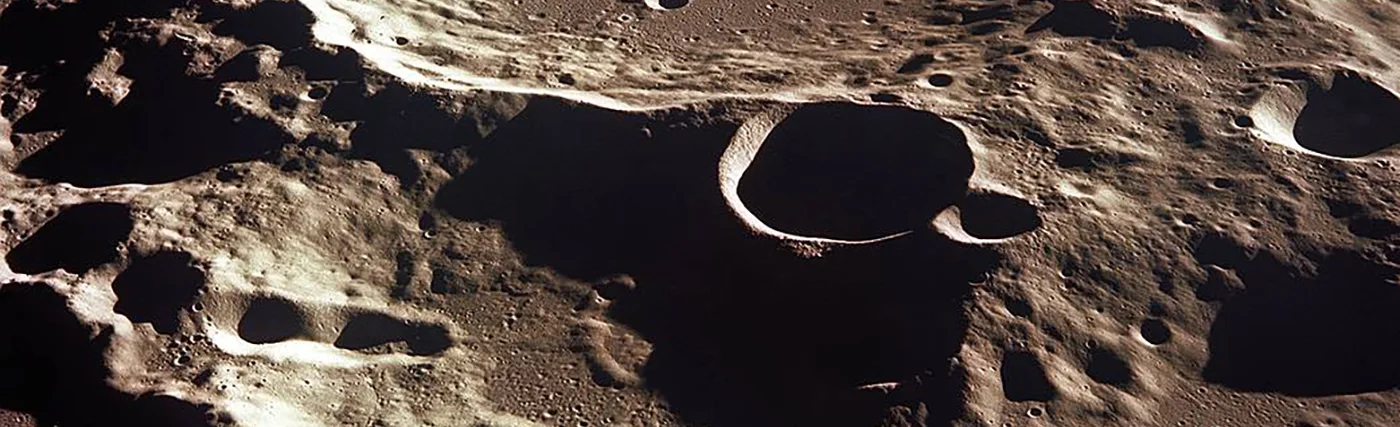
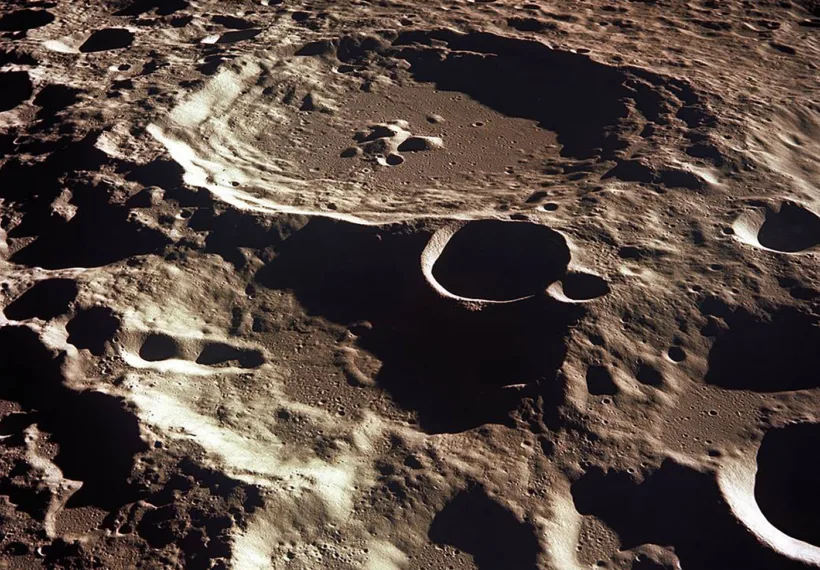
So actually, the earth does have craters.
So we have about, I think it’s about 150 recognized craters on the surface of the earth.
But because, like I said, the earth is very geologically active.
We have plate tectonics that’s causing the plates to subduct underneath each other.
You essentially erase the history of what has happened in the past on earth.
And the other thing we have, we have an atmosphere.
So certain rocks, if they’re small enough, they just burn up in the atmosphere.
They never enter, they never hit the ground.
Whereas on the moon, anything that hits it, if it’s a large enough size, it’s going to create a crater.
And then we also have wind which erodes any evidence of past craters.
We have water that also erases evidence.
And even life, little critters making their homes underground collapse crater features here on earth.
So that’s why we don’t see them.
We’ve had them and we have them.
There’s actually a beautiful crater in Arizona called Meteor Crater that formed about 50,000 years ago.
And it’s one of the best, I think it might be one of the best preserved crater on earth.
And you can really, you can see it.
And it’s cool, yeah.
You preserve not because there was a preservation society, but because it was in the desert, right?
There’s not much more rain.
Exactly.
And it’s a geologically dead area, right?
Exactly.
Oh, that’s super cool.
So the earth is basically a contaminated crime scene.
You can never, you never know what’s going on.
Okay, you just made me, you just made me nervous, Raquel.
I’m serious.
I’m like, wait a minute.
You know a lot about cleaning up a crime scene.
I used to be in the military and I was…
She went straight to that.
I went, I worked in a medical laboratory, so I’m like, I know about cleaning, cleaning things.
Okay, all right.
Cleaning the evidence, yes.
Yes.
That’s very cool.
What you’re meaning, just to summarize, I think, is if we didn’t have these cleansing, these evidence removing processes, we would look just like the moon.
That’s right.
Everything that…
This is what I meant by the moon being a witness plate, is everything that…
Because we’re in the same part of the solar system together.
Exactly, exactly.
Exactly, yeah.
All right, Chuck, give me some more.
All right, let’s see here.
This is…
Canadian.
Nope.
Canadian.
Very funny, the way they spelled it.
This is Canadian from Patreon.
Hello, Neil.
Chuck, stop blaming how people spell things on the fact that you can’t pronounce their names.
What else am I going to blame it on?
Oh, this person is messing with me.
Please, as much as I butcher names, I’m telling you, I got to find a way to, you know, I got to have some excuse.
All right.
Hello, Neil, Chuck and Raquel.
If future missions end up drilling into the surface and extracting a core sample like we do on Earth, what do you think we might find?
How far down do you believe the rock layer extends before we start hitting cheese?
Okay.
Or oil.
Right, right, exactly.
They both have value.
Oh, man, as much as I love cheese and wish I could eat some moon cheese, I think we’d have to go pretty far down to not find it.
Ah, nice job.
I like the misdirection.
I like the misdirection.
Yeah, what makes you think the surface isn’t cheese?
But it turns out there are layers.
Yeah, I was going to say, what would we find if we actually pulled a core out?
Yeah, well, it depends on how far you go, but the moon is a differentiated body, so like I said before, it’s melted and it’s been separated.
The heavy stuff sank to the bottom and the light stuff’s at the top, so what you have, you have a core in the center, you have your mantle, and then you have your crust, like here on Earth.
But just to be clear, when people, you know, we think of rocks as heavy things because they go to the bottom of a pool, but when you think of rocks, you think of light things because metal things are heavier than rocks are.
That’s right.
Or denser.
Right, right.
They’re more dense, so they sink right.
You say, oh, the light things float to the top.
They’re rocks, they’re boulders, what the hell are you talking about?
Yeah, right, yeah, no, I have a very different perspective.
Because you’re a geologist, you’re from another species of person.
But on top of the crust, we have what’s called the regolith.
So because the moon has been bombarded by billions of years of rocks hitting its surface, it’s broken up the rocks that were there before.
And so there’s this powder of dust on the surface that I think it’s between 5 and 10 meters on top.
So it’s not a matter of breaking apart the rocks, it’s like completely pulverized.
Pulverizing them, yes.
Yes, yes, turns it into powder.
That’s right.
Is this the same stuff they couldn’t get off the spacesuits?
That’s right.
So it ends up being very sharp because there’s no water or anything to round out the corners.
These fragments are so sharp that when they stick to you, it’s like impossible to get them off.
And we actually have samples in our lab.
There’s people in our lab that study the optical properties of the regolith.
And the samples that we got were removed from the astronauts’ spacesuits.
So they brushed, they were trying to save everything they can because it’s such precious material.
It was a hundred zillion dollars to get to the moon.
You don’t want to leave anything in the trash can.
So when they brought, you know, the astronauts came back, they got their suits and brushed off their dust.
And we actually used that for scientific research.
And you can find little fibers in there.
And it’s not mixed with their dandruff or anything.
Oh man, that would be so cool.
That would be an interesting thing.
It’s like, oh, you don’t use head and shoulders?
We’re going to take a quick break when we come back more StarTalk Cosmic Queries with Raquel Nuno when we return.
Bye We’re back, StarTalk 2000 Queries.
This episode on the moon.
The moon is a geological object, not just a pretty thing in the nighttime sky.
Chuck.
But we don’t mind that, we don’t mind that it’s a pretty thing in the nighttime sky.
That’s right, that works, that works.
And we have Raquel Nuno, who’s a doctoral candidate at UCLA, studying the moon, coming to it as a geologist.
And that’s a whole other species of scientist, as far as I’m concerned.
Because you all see the world very differently from the astrophysicist, you know.
You look at the moon, you see rocks on the moon.
I look at the moon, I just see a beautiful orb in the sky.
That’s where it ends for me.
And then I go to Mars to look for life, see?
So Chuck, you got more questions.
Sure, sure thing.
This is from Kevin Kalakickamaka.
You just made that up.
Nailed it!
I don’t know what it is, man.
I mean, it says, it says Kevin Kalakickamaka, I think.
And if it is Kevin Kalakickamaka, then I say aloha.
He says, what is it when the moon hits your eye like a big pizza pie?
No, I’m joking.
He does not say that.
He did not say that.
Okay.
Here’s what he says.
Can the moon have a moon?
And can that moon have a moon as well?
I think this is a question more for Neil, but maybe you know too, Raquel, are there any?
Cause this is really kind of a really interesting question.
Are there any instances that we find in the cosmos where a moon also has its own satellite?
So, I don’t think we’ve found one yet, at least definitely not in our solar system, but it is theoretically possible to have a moon of a moon.
There’s a paper that came out, I think they called it a sub-moon or moon-moon, depends on, I think there was a thing on Twitter where people on Twitter were like, no, we want moon-moon, because it hasn’t been named officially yet.
But yeah, so theoretically you can have a moon of a moon, but I think what the problem is, is that you have to have the right conditions, because if, for example, I think if it’s the moon is too close to the parent body, like the planet, you can just disabilize its orbit and it will either spiral out of orbit or into the planet.
So Neil, do you have any more insights about that?
Yeah, yeah, I agree entirely.
Yeah, it’s a matter of, I mean, just think it through.
So let’s say our moon had a moon, right?
And so it’s going around our moon.
And I think as it comes to this side, Earth’s gravity on it will be stronger, much stronger than it is on the other side.
So here’s this satellite that’s getting tugged asymmetrically as it’s trying to orbit the moon.
And this creates conditions for very unstable orbits.
When you have an unstable orbit, your future is doomed, either, as Raquel said, to fall into the Earth or to spiral off into infinity.
So you need, in order to have one of these three body systems, what you would need is a very big separation between the planet and the moon, so that an object can go around that moon and not have the difference in gravity be so great.
That’s what the moon and Earth is relative to the sun.
Okay, if Earth is a moon of the sun, then the moon is a moon moon of the sun.
Okay, but that’s okay, because we’re really far away from the sun.
So you can do the math on the fabric of the of the stable orbits.
And you can see where you can put objects, where they can stay, and where you can put objects where they’re unstable.
So see, and now I am really, not that I could do the math, because I couldn’t, but now I’m just thinking, how cool would it be to create a solar system mathematically, where you can actually have a planet, a planet, the moon, its moon, and they all are in orbit, so that the gravity pulls just at the right time to keep everything in balance, like those plate spinners on that, you know, like, Raquel, Chuck has always wanted to be God.
Yeah, these are ambitions that he’s had.
It’s on the right path, though.
I like these ideas.
But it is fun, Chuck, there are these orbit programs where you try to create a solar system and you might be surprised how hard it is.
Yeah.
Because you, I want to put a planet here at this speed.
Nope, that’s going to fall into the sun.
So there’s only a speed that works at a distance in whatever is the shape of the orbit that it has.
So in fact, the solar system, correct me if I’m wrong, Raquel, recent models suggest that we might have started out with as many as 30 planets in the formation scenario, most of which have spiraled off into interstellar space.
Is that about the right number?
30, is that a fair number to use?
That rings right, and it seems reasonable, but yes, that was the idea.
Yeah, I think that the takeaway is there’s more planets that we don’t have than we currently have that have been ejected out into.
Ejected out, yeah.
Wow, okay, all right.
That is super cool.
Okay, here we go.
Morgan Tangee, also from Patreon.
If there’s no weather or atmosphere on the moon, where does the ice come from?
Ooh, because we learned about ice.
There’s ice on the moon.
Uh-huh, uh-huh, uh-huh, uh-huh.
So y’all just thought you knew everything, but you don’t, there’s ice.
There’s still so much to learn.
We think there are thunderstorms on the far side, you just can’t see them.
It would be cool, it would be cool.
So what’s up with the water on the moon?
Yeah, so there’s different sources of water on the moon.
They can come from comets and meteorites that bring water to the surface of the moon.
You also have what I think is really cool, is the sun, so the sun is spewing this massive amount of charged particles called the solar wind.
And protons from the solar wind hit the surface of the moon, so it hit oxygen that’s on the rocks, hit the rocks and bond with oxygen forming water, like hydrate as minerals.
Wait, the proton is the nucleus of a hydrogen atom?
Yes, that’s right.
Hydrogen combining with the oxygen in the rocks, forming hydrate and minerals, forming water at the surface of the moon.
And there’s actually…
So wait a minute, is this like water out of thin space?
It’s just…
The water just got conjured out of the particles.
It’s just like, boom, boom, boom, right?
It’s like, wow, you’re just looking for the moon to have a wand, just like it’s Priyama, right?
Yeah, and there’s actually one other place that we get water from, and that’s actually from the interior of the moon, and we didn’t know this until recently.
They did, there’s these, they call them glass beads.
They’re just volcanic glasses from the samples collected by the Apollo astronauts.
And when you slice them open and look inside, you actually find trapped water molecules inside those glass beads.
So that tells you that there is water, at least in the past when these, when the moon was geologically active, there was water trapped within the mantle.
Okay, but it gets very hot during the day.
Why doesn’t all that just evaporate?
Oh, that’s a good question.
See, Chuck, I asked a good question.
You know what?
I got that compliment.
I didn’t want to break up the flow, but I was about to say, it better be a good question.
Like, could you imagine if Neil asked a question and you were like, what a crap-ass question that was?
I’m glad I didn’t do that.
Wait, did Neil deGrasse Tyson just ask me that?
That dumb ass.
Bad question.
So what ends up happening is there’s these places at the poles, these craters at the poles of the moon, so at the top and at the bottom, that haven’t seen sunlight.
They’re so deep, and because of the way that the moon rotates, they haven’t seen sunlight for billions of years, so it’s very cold.
It actually turns out to be one of the coldest places in the solar system, actually even colder than the surface of Pluto, and so if water ends up there, it gets trapped essentially forever for billions, millions of years, and that’s where the ice is.
That’s where we think that the ice is, is trapped inside these, we call them, permanently shattered regions, because they’re so cold, essentially nothing can escape it.
Raquel, you can say it, the water is where the sun don’t shine.
It’s an expression for that, I think.
So I guess if you’re on the poles, the sun never gets very high in the sky.
That’s right.
And so you can have a crater lip that permanently shadows because the shadows are very long by the low sun.
That’s right.
Those pockets are where you’re talking about.
So if we’re going to have colonies on the moon and want to use in situ resources, we got to have some access to these craters at the poles.
That’s right.
In order to get the water.
And that’s a lot of mission concept designs have been to go to these crater rims.
So you can, you still have access to sunlight to power your equipment.
And also now you have these permanently shadow regions where you can go and collect the ice that we think is there.
Okay, the moon is sounding a little more interesting.
Yeah, I got to tell you, I just have a question.
So when you, the water that we’re talking about that in the form of ice, whether it’s deposited there or it just forms, is it potable?
I mean, is it like, is it just water?
Can we drink it or is it something else?
So it is water, but it’s probably mixed in with that regolith, that moon.
So it’s got all that mineral and all the other crap is in there too.
That’s right, so you might need to bring some filters with you if you’re gonna drink that water.
You would need some machine to scoop up the regolith and have some, you know, a spigot at the end, but something’s gonna have to process it.
That’s right.
Because a lot of these, is it true, a lot of these are just sort of isolated or just a few water molecules?
Yeah, at the surface, yes, yes.
It’s pretty much just like a coating on these minerals that you have some coating of water.
So you need to go to these permanently shattered regions where we think there’s large amounts of water ice, but we don’t know how much.
And that’s actually a really exciting field of research is sending more spacecraft or people try to figure out what is happening in these regions.
So if I went back to the moon, I’d want to go to near one of those coal traps and start digging around.
I bring my ice skates too, maybe.
Moon hockey, whoa.
I like it, I like it.
All right, Chuck, what else you got?
All right, this is Evan Wells from Patreon who says this.
Dr.
Tyson and Dr.
soon to be Nuno.
I’ve been waiting for this topic for a very long time as I’m a big fan of the moon as well as planetary geology.
Do you two personally believe in Thea?
Is that correct?
Am I saying it right?
Thaia, Thea, T-H-E-I-A.
The most logical theory of the moon’s origin.
Are there any other examples that you can recall of the moons that are exceptionally close to their planet such as our moon?
Looking at different other moons in the solar system.
Thanks and so much respect from the space coast.
Oh, so down in Florida.
Yes.
Very excellent.
That’s a really great question which we don’t have time to answer.
And so we come back from this break.
See what I did there?
I teased it.
That’s what the pros do that.
We’re gonna be right back.
StarTalk Cosmic Prairies The Moon.
Hey, we’d like to give a Patreon shout out to the following Patreon patrons, David Frederick and Jennifer Eichen.
Guys, thank you so much for all that you do to make StarTalk a success.
And if you would like your very own Patreon shout out, go to patreon.com/startalkradio and support us.
We’re back with Chuck Nice, my cohost, Jack.
Yes, yes.
And our special guest today, Raquel Nuno.
Nuno, I feel I have Hispanic background, and so to say Nuno feels wrong.
I know, I hear you struggling with it too, it’s so funny.
So you have a Portuguese root.
I do, yeah, that’s born, raised, my whole family’s been there for thousands of years.
So they don’t have an enye in Portugal?
No, we don’t.
So if you want to make that sound, it would be an N and then an H afterwards.
That’s how we make the nya sound.
Nya, nya.
Yeah, but my name is just Nuno, just an N.
All right, where we left off, Chuck, there was a question about Thea.
Yeah.
Is that correct?
So Evan Wells wants to know this.
Do you two personally believe in Thea?
And the other thing is, are there moons in the solar system that are like our moon?
So the whole idea of Thea, can you let me in on that, please?
Yeah, sure.
So the idea was that a Mars-sized object, which we’re calling Thea, impacted an early Earth.
And it was such a massive impact that sprayed all this material out into space and that it condensed out and formed our moon.
So that’s the idea.
So Mars-sized object called Thea hit the Earth and formed the moon.
Just to be clear, Thea is gone.
Yes, and so some became Earth and the rest became the moon and some scattered wherever else.
That’s right, that’s right.
So now wait a minute, for this to happen, that thing would have to be super, super hot.
Like, you know what I mean?
So Chuck, it’ll get hot just from the collision.
Yeah, it gets hot just from the impact.
Oh yeah, you get that for free.
Oh, that’s super cool.
You don’t have to order that.
Oh, okay, great, oh okay, okay, excellent.
And that’s actually, that’s what caused all that impact.
So then when the moon formed and all these pieces came together, it heated up the surface of the moon and that’s how we got that magma ocean.
It completely melted.
So yeah, you get energy just from things, you get heat from things hitting each other.
Wow, all right.
So what’s the status of that hypothesis?
Is it embraced?
So yeah, I mean, it’s the best we got.
I read it, I read it, it was like, yeah, I’ll go with that, it’s fun to talk about.
And on multiple occasions, people said, if I could go anywhere in the universe, where would I go?
And I said, does that include time?
And they said, sure.
I said, I wanna go back and watch Thea hit the earth and see the moon get formed.
That’s cool, man.
So you’re saying it’s got good support by your people?
It definitely has good support.
So we know that early in the solar system, giant impacts like this were very common.
So it makes sense that this would have happened to us.
And they would produce moons and disks.
And there’s other pieces of evidence in geologic record.
So the moon actually lacks iron in bulk.
So what we think happened is when Thea hit the earth, its core, the core of Thea kind of sank into our earth.
And what you ended up having is the mantle stuff.
So the stuff without the iron to form the moon.
So then there’s the evidence for against it is the fact that the moon rocks are so similar to the ones here on earth.
You would expect that you would see some evidence of Thea somewhere and we don’t.
So we do not have any evidence of Thea material here on earth or on the moon.
So we need an explanation as to why that is and how that happens.
So if you found an asteroid stream around the sun and you looked at its ingredients and they matched some combination of earth and the moon, that could be the remains of Thea.
That’s right.
Orbit still orbiting the sun.
That is right.
But how do you form two objects that are essentially identical?
So that would mean that the moon, that Thea and the earth were very similar to begin with.
And we have a very hard time with models making that happen.
It’s very hard because when we look at other objects, other planets, asteroids, everything is really different.
You can find the fingerprint for each of these bodies and we really can’t with the earth and the moon.
So what other moon in the solar system comes closest to matching our own?
Well, I guess it depends on what you’re trying, what you mean by closest.
So if you’re talking about size, so the moon is very big compared to the earth.
Because when you look at other moons in the solar system, the planets are huge compared to the size of their moons.
But it’s not only big compared to earth, it’s big compared to anything.
Anything, that’s right.
All the other, if you lined up all the moons, our moon is like in the top side of that.
It’s huge, absolutely.
Yeah, it’s very, it’s weird.
Moon is weird.
Way to go earth, yeah, really huge.
But Pluto, I know it’s not a planet, has a moon that…
But it has a moon that is very large compared to Pluto itself.
So in that sense, it is similar to our system, our earth moon system is similar to the Pluto-Sharon system because of the size ratios between the planet and the moon.
Mm-hmm.
All right.
All right, Chuck, keep going.
Here we go.
This is Will from Twitter.
He says, do you think there is bacteria still alive in the Apollo missions?
Oh God.
Leavings, I will say.
The bags that they had to leave.
If there is none that have survived, what would that mean for future deep space travel?
So I’m guessing, oh, I think I know.
Okay, I think I know the question, okay.
Yes, yes, yes.
So they did do that.
You mean these poop bags?
Yes, the poop bags.
See, cause you can say that, Neil.
When I say poop bags, people go Chuck.
Okay, so here we go.
I’ll restate it.
These poop bags.
Describe for me the bacterial composition of these poop bags.
Thank you, Neil.
So the question was, do I think there’s any bacteria still alive?
Would there be any bacteria still?
But wait, just to be clear, they left it on the surface of the moon?
They did.
Wait, wait, you have to carry your poop out of our national parks or something?
There’s some places that are so preserved, you can barely pee on a tree, scraping it off and taking it out of the park with you, and we can leave poop on the moon?
Yeah, these astronauts are like the neighbors that I have because I live next door to a dog on dog park, okay?
They’re worse than my neighbors.
Raquel, I didn’t know that.
Yeah, yeah, yeah, so if you had a choice, would you want to bring poop back to earth or rocks back to the earth?
That is true, it’s a trade-off, isn’t it?
So you want to bring, you know.
I’m bringing the rocks.
You’re bringing the rocks.
So weight is a very important thing when it comes to space travel and space exploration, so you’re going to try to maximize the quality of the weight that you’re actually transporting.
I don’t think that there’s bacteria alive.
So I know that the poop bags had dermicidal in them to actually kill bacteria.
So the bags themselves, I think they had to tear these pouches and pour it into the, and mix the stuff.
TMI.
And there’s other reasons, but I don’t think it’s alive.
Nothing’s alive in there.
Irradiation is a really big challenge in space.
So it’s probably been completely irradiated for all these years.
So this is irradiation because it has no atmosphere to protect it.
So anything come and hits the surface.
Yeah, and also the heat.
So the surface of the moon can get as hot as I think 260 degrees Fahrenheit.
So you essentially have probably cooked everything that was inside.
Baked poop.
You know, I’m getting a-
A specialty in some parts.
Getting the feeling that after this conversation, there’ll be several young people who are like, yeah, I don’t think I’m gonna be an astronaut.
No, no, no, we need astronauts.
Yeah, all right.
Let’s see here.
This is whoopsie doodle.
You can pronounce that one, Chuck.
Yes, you’re damn right.
Finally, somebody likes me.
Whoopsie doodle says, Dr.
Tyson and Raquel, and hi, Chuck.
My question is, can you explain what is the dark side of the moon?
So, there is no dark side of the moon, but there is a dark side of the moon.
Raquel said it, we’re done.
But a lot of people don’t know that.
So, we don’t have a dark side.
It’s only a side that we never see because the moon is tidally locked to the earth.
But it’s not dark.
It gets sunlight.
And so, Gary Larson did it right with the name of his column was the far side.
That’s right.
And Pink Floyd got it wrong with the name of the album was the dark side.
That’s right.
This is a measure of science literacy.
Yeah, we call it the far side.
That’s what we call it.
What a lot of people know as the dark side.
Yeah, it’s dark to us.
All right.
So, Manuel Delgado, and it’s actually Delghetto.
Wow, Delghetto, there it is, Manuel Delghetto from Instagram says, in the film Time Traveler, the moon breaks apart due to mining.
What would happen to the earth if the moon broke apart?
By the way, that’s, I think the Umbrella Academy, that’s the destruction of the earth too.
The piece of the moon breaks off and destroys the earth.
But what would we be?
It’s also true in the movie Melancholia.
The moon approaches earth and then they collide.
Wow.
And everyone dies.
My favorite book called Seven Eaves, that happens in the first page as well.
In the first page.
The first page.
The moon breaks up.
And it picks up from there.
And they live happily ever after.
What are we without the moon?
It would be a very bad time on earth if the moon broke up.
So the energy between the pieces breaking up and hitting each other would destabilize their orbits.
And they would end up crashing into the earth.
And that would be bad.
Very, very bad as we know happened to the dinosaurs.
With much smaller pieces.
With much smaller pieces.
Yeah, so the earth, we wouldn’t survive.
Life might not even survive if that were to happen.
But if you don’t even take that into account, so we don’t worry about pieces falling into earth, the moon provides the earth with a very stable orbit.
So we don’t tilt.
The earth doesn’t tilt very much because it has the moon there to stabilize its orbit.
So that’s why we have very mild seasons.
So if we didn’t have the moon there, our seasons, we would have years, thousands of years of ice ages, and then life would not survive.
The same thing actually happens in Mars because Mars has small moons, they don’t stabilize their orbit.
So Mars is always tilting over periods of millions of years.
And yeah, so bad thing.
But to be clear, this would not happen if you’re just, with normal mining techniques, you don’t have enough energy to actually break up the moon.
So we don’t have to worry about that.
Unless they find Roca for cheese and they pull it all out, that’s half the mass of the moon.
That’ll totally mess up the moon.
We confessed earlier in the show, you have to dig very deep to not find cheese.
I think you said that at the beginning of this program, didn’t you?
What do you think, Neil, if the moon broke apart?
That’s terrible, right?
Yeah, but I think our axis would go unstable on a period of time longer than civilization.
I mean, tens of thousands of years, not just a few thousands.
So I think the astronomers would love it, because the moon completely messes up our night sky.
We can’t see anything when the full moon is out.
So I would love it for the time until we all died.
It would be great.
That’s so funny.
All right, that’s funny.
Chuck, what do you have next?
This is Desi from Twitter.
It says, what color is the moon really?
Is it all really gray?
Are there features in different colors?
And why?
Why?
And then he says, Chuck, you get 10 cosmic points if you say my name correctly.
Well, guess what?
Because you know damn well.
Let’s see.
That’s all I can say.
Maybe.
That might be your name.
Okay.
So what do you have, Raquel?
Well, it’s really interesting is that how many people think that the moon is white or this very light gray color?
You know, when I do outreach events, people and I bring moon dust with me, people are like, whoa, it’s so dark.
I thought it was white.
And it’s not.
It’s actually a very dark thing in the sky.
When you look up at the night sky, you see these different regions.
So you have the dark and the light regions.
And the dark regions, those are ancient volcanic plains.
So those rocks are like black lava rocks that you see in Hawaii or in Iceland.
They’re almost as dark as a newly paved road.
So it’s very, very dark.
Those rocks are very dark.
And then the lighter region of the moon, those are the highlands.
Those are made up of certain minerals that are lighter, but it’s still a dark gray color.
So the fact that the moon is so bright just means the sun is really bright on them.
That’s right.
That’s the only reason.
And the other reason is a relative thing.
When it’s in our night sky, we look at it compared to a dark background.
So it looks even brighter to us.
So what’s around it is darker and that makes it look brighter.
Yes.
That is so cool.
So now I’m going to use the saying, black is the moon.
Black is the moon.
I like it.
Alright, here we go.
This is Pratik Kotari.
Pratik wants to know this.
What would it take to make the moon habitable?
Is it possible for a colony in the near future?
Yes, you can have colonies on the surface, but you have to mitigate all kinds of issues, like the heat and the radiation.
But there’s actually lava tubes on the moon so you can go underground with colonies, which is really exciting.
But you cannot terraform, so you cannot change the moon to give it an atmosphere, to have running water, because there’s just not enough gravity to hold an atmosphere on the moon.
Yeah, I don’t think people think actively about that.
We take it for granted that there’s air here available for us to breathe, without thinking that the gravity of Earth is keeping the atmosphere on its surface.
That’s right.
And so on the moon, the molecules will just escape.
Absolutely.
So you can have maybe a very short time where you might have an atmosphere, but the solar wind will just blow it out of the way, just blow it out, and the gravity won’t hold it in place.
So what you’re saying, apart from the dozen things that will kill you, you can easily just have a colony on the moon.
Not a problem.
Ignoring those other complications, that’s fine.
We got to call it quits there.
Raquel, thank you for being on the show.
Thank you for having me.
I love talking about the moon.
I guess so.
That’s why we picked you out of the…
That’s why we did this.
Chuck, always good to have you.
Always a pleasure.
Tweeting at ChuckNiceComic.
Thank you, sir.
Raquel, you do public stuff.
Do you have active social media?
I mostly use Instagram to do my science outreach.
Your handle is?
It’s the space geologist.
But, you know, come on.
Very on the nose, on the nose.
All right, great to have you.
Good luck.
Thanks.
This has been StarTalk Cosmic Queries, the Moon Edition.
I’m Neil deGrasse Tyson, your personal astrophysicist, as always, bidding you to keep looking up.


 Become a Patron