


 Unlock with Patreon
About This Episode
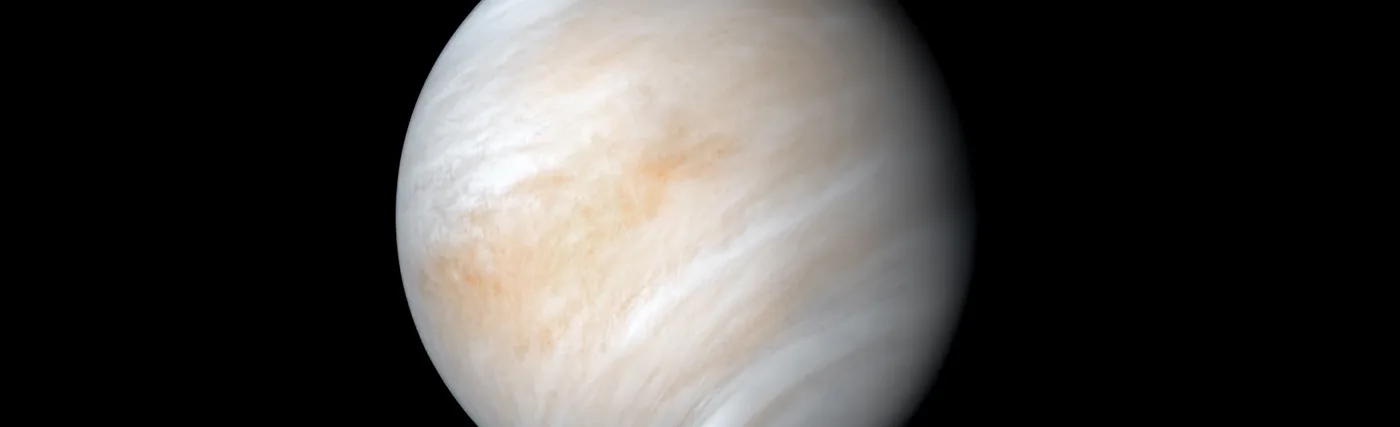
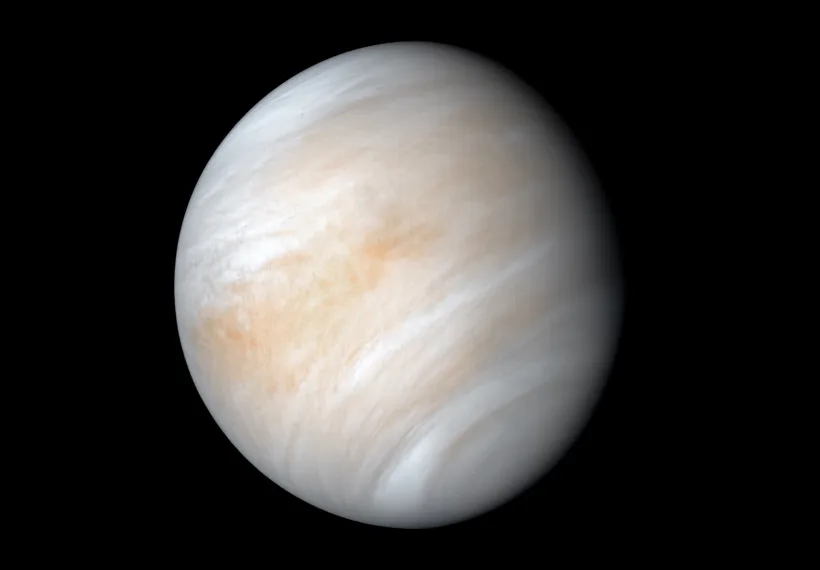
Is there life on Venus? On this episode of StarTalk Radio, Neil deGrasse Tyson, comic co-host Paul Mecurio, and astrobiologist David Grinspoon, aka Dr. FunkySpoon, are investigating the discovery of phosphine gas in the atmosphere of Venus.
We gathered up all your Cosmic Queries about the recent news and we start with the big question: Does this mean there’s life on Venus? Could there be a habitable zone? David tells us why the answer is…maybe. We explore the discovery of the phosphine gas and the possible explanations behind its existence in Venus’s atmosphere.
You’ll explore what’s next after a discovery like this. Can we bring samples back to Earth? David gives details on the complexity of a mission to the Venusian atmosphere. We also explore Venus’s volcanoes and its geologically-active surface. David explains why, if we want to know what’s going on in the atmosphere, we have to know what’s happening on the surface.
Then, we take a look at Earth: Can we use Earth to help us deduce what’s happening on Venus? We ponder the best way to search for life in the universe. We also ponder whether life needs water to thrive or if life just needs liquid. David gives us the top three gases that could be used to signify life elsewhere.
Find out why Venus’s atmosphere is so thick. We discuss Venus’s runaway greenhouse effect and the viscous circle of its carbon cycle. We also wonder if a probe from Earth might have introduced microbes to Venus’s atmosphere. All that, plus, we ask the very important question: Is the Wicked Witch of the West actually from Venus?
Thanks to our Patrons Patrick Gibbs, Jonathan O’Rear, Landon Orman, Rommy Jamal, Jason Peller, Dave McNeely, Andrew Nourry, and Kyle Rhodes for supporting us this week.
NOTE: StarTalk+ Patrons can watch or listen to this entire episode commercial-free.
About the prints that flank Neil in this video:
“Black Swan” & “White Swan” limited edition serigraph prints by Coast Salish artist Jane Kwatleematt Marston. For more information about this artist and her work, visit Inuit Gallery of Vancouver.
Transcript
DOWNLOAD SRTWelcome to StarTalk, your place in the universe where science and pop culture collide.
StarTalk begins right now.
This is StarTalk Cosmic Queries.
This is the Venus edition.
Is there life or is there not?
And my cohost for this is longtime friend and funny as all get out, Paul Mecurio.
Paul, welcome back to StarTalk.
Thank you.
Yeah, it’s been a while.
It’s great.
Always fun.
I was on your podcast.
Yes.
And the name of your podcast was the Paul Mecurio Show.
Is that like the best name you could come up with?
Well, we workshopped it for six months.
It’s like we focus grouped it.
Yeah.
Focus group.
Yeah, it’s on iTunes and we got all, I guess have an array of interests in people.
So it’s everybody from you to Paul McCartney, Kevin Costner and-
Oh, excuse me.
Name drop.
Oh, excuse me.
Yeah, I gotta get people to go listen to it.
No, it’s great.
So it’s great to have you on.
And so I’ve read about Venus, but I’m not an expert on it.
And so I had to call one of my old time friends and colleagues, David Grinspoon, Dr.
Funky Spoon.
David, welcome back to StarTalk.
Thanks, Neil.
It’s great to see you.
And always fun to do StarTalk.
Is your Twitter handle still Dr.
Funky Spoon?
Oh yeah, yeah.
I am Dr.
Funky Spoon on Twitter.
And you’re also a part-time musician, I guess.
This is you, you riffed some lines about, was it the Big Bang or planets on an earlier episode of StarTalk?
Well, we did the astrobiology blues.
Astrobiology blues, looking for a lot of blues.
Yeah, especially these days when we’re all kind of stuck at home.
I’ve been playing a little bit.
Right, excellent.
I see a guitar in your back there.
And where are you now in this moment?
In Washington, DC in my undisclosed location in a basement.
Oh, so in your parents’ basement.
Okay, Paul, let the record show he hasn’t moved out yet.
He still hasn’t launched.
Ma, Meelo!
I’m trying.
It’s like that scene with the Will Ferrell, Ma, Meelo!
And he just screams for Meelo.
Hey, you’re making me hungry.
So, but anyhow, you’ve literally wrote the book on Venus.
A few years back, the book Venus revealed, so Venus is one of your planetary objects of affection as a working scientist at the Planetary Science Institute based in Arizona, but you’re in a satellite location there in Washington, DC.
So just welcome back to StarTalk.
Thanks.
Yeah, Venus has been an obsession of mine since graduate school.
And so it’s always fun when you see it, when I see it get a little extra attention.
Well, what we did was we solicited, as we always do for Cosmic Queries, questions from our fan base on all the various social media platforms about Venus, about the possibility of life on Venus.
And Paul, you have all those questions, right?
So I haven’t seen them.
I don’t know, David, you haven’t seen them either, have you?
I have not.
Yeah, yeah, so he’s gonna pull out the hard ones.
Uh-oh.
Okay, this is for a new car.
Wait, wait, before you begin, I just want to just establish this.
So David, you’ve been a planetary guy your whole life?
Yeah, I’ve been doing research projects with Paul McCartney and Kevin Costner.
No, no, yeah, I have, I mean literally my whole life in the sense that even as a kid, you know, like a lot of scientists, my generation after the moon landing, that was it.
I was going to be a space person in some way, and then I was pretty much obsessed with planetary exploration.
As a teenager, all the first missions were going out to, you know, Venus and Mars and stuff, and then undergraduate, grad school, planetary science researcher, you know, that’s been my thing, literally pretty much my whole life.
Paul might be your age, so he had the same moon landing experience, but he didn’t become a scientist.
So Paul, what’s happened to you?
Wow, I got to go.
If I want to be heckled, I’ll do the 230 spot at the Comedy Cellar.
The back room comedy.
Well, in fifth grade, I made a solar system out of styrofoam balls.
So there, okay?
Beat that.
No, I, you know, it’s just never been…
I like science.
I just wasn’t…
I didn’t feel like that was sort of my…
Well, you have good science literacy, otherwise we wouldn’t keep inviting you back, just so you know.
I do.
Thank you.
Yeah, I do enjoy it.
I do read up on it.
And when I leave these shows, I always feel both dumber and smarter at the same time.
So it’s good.
That’s a good thing, actually.
Yeah, that’s a good thing.
Yeah.
So you know that you don’t know everything and you’re proud of what you do know.
Yeah, exactly.
It’s a good place to be.
Yeah.
So Paul, what do you have for us?
Okay, here we go.
First one is from Patreon, Izzy Roar.
So much about Venus is still a mystery to us.
And since our early reference point for life is Earth-based, isn’t it hard to say that the phosphine found on Venus is a sign of life?
Could it just as easily be caused by something that we never encountered before?
And so we wouldn’t even know to think of.
What do you make of it?
Whoa.
And just start off by giving a three-minute, two-minute overview of that press conference and what news we’re all reacting to here.
Yeah, so the big news this week is that it was announced that a discovery was made about Venus, which is that a gas called phosphine was detected in the atmosphere of Venus using two different radio telescopes on Earth, a spectroscopic signal, a line, an absorption line that shouldn’t be in the atmosphere of Venus, and they couldn’t find any other gas that would explain it except for this gas called phosphine, which is just a phosphorus atom with three hydrogen atoms hanging off it, a simple molecule, which on Earth is only produced in our atmosphere basically by life or by industrial processes, including meth labs, but nobody’s saying, hey, there’s meth labs on Venus, but you know that-
We’ll go there for sure.
By the way, I hope this leads to an outer space reboot of Breaking Bad.
That’s all I want to see happen.
I think it needs to happen.
So this is a surprising result because phosphine is a chemical that should not be in the atmosphere of Venus, meaning that if some of it, if you just put some in the atmosphere of Venus, you would expect it to go away very quickly because the other chemicals there, you would expect them to eat it.
It’s not stable there.
And so this is a known way of searching for life on, well, on exoplanets, especially planets around other stars where you can only look at the atmospheres, because the idea is that if something is producing an unexpected gas in an atmosphere, it could be a sign of life.
And so there’s this unexpected gas in the atmosphere of Venus, which on Earth is only made by life.
And so the scientists have said, well, what if, could it be volcanoes?
And they did calculations and they said, no, there’s no way it could be volcanoes.
Could it be caused by lightning?
Venus has volcanoes.
Venus does have volcanoes.
So that’s an obvious thought.
But it, you know, if they’ve done their calculations right, and you can be sure all of this is going to be scrutinized, you know, it ought to be scrutinized, you know, is there a problem with the observation?
Maybe it did.
They do their calculations wrong.
Maybe there’s some obvious way to make the phosphine they’re not thinking of.
But you know, at this point, it seems like a big mystery why this biogenic gas is in the atmosphere of Venus.
So but but you know, the question is well taken because yes, absolutely, it could be a sign of something else that we haven’t figured out yet.
It’s just that simply that nobody has yet figured out a good way to make it this not life.
So that doesn’t mean oh, we’ve found it doesn’t mean oh, we found life on Venus.
It means we found this mysterious indicator that has been before this discovery, it was already published the idea that if you found phosphine in an atmosphere, it could be a sign of life.
So so there it is isn’t one theory that this life, I mean, it’s 800 degrees on Venus, but somehow some of it got into the atmosphere of Venus, which is more life friendly, it’d be like 85 degrees Fahrenheit, I was reading in that atmosphere.
And that’s where it sort of has maybe taken hold.
Yeah, Paul, that’s a very important point, because, you know, anybody listening to this who knows, you know, basic facts about the solar system knows that Venus is not a place you would expect life because the surface is 900 degrees Fahrenheit, and it’s, you know, it’s hell there.
So why are we even talking about this?
Well, there’s a layer of Venus, but there’s a layer up in the atmosphere about 35 miles up, where there are permanent global cloud decks, and it’s rather comfortable, at least in terms of temperature and pressure.
It’s like earth surface conditions, and there are, you know, potential flows of nutrients and energy and, you know, all the stuff you might need for life up there.
And that’s part of, you know, this is this idea that I’ve been pushing for a while.
It’s like, hey, there could be a habitable zone up in the Venus atmosphere.
And could you just go up with a mirror and see if there’s any fog on the mirror and then that’s life form, you know, like a dead body kind of a thing?
That’s the old days.
Yeah.
Paul, how old are you?
That was a 19th century way to know if someone was dead.
You put up, see if they…
I’m 106 years old.
There it is, because if you fogged the mirror, that was evidence you’re still alive.
Well, you know, we’re looking hard for techniques to go there and test this.
So all suggestions are, you know, we’ll put that one in the…
No, bring a mirror just in case.
You never know.
Well, wait, wait.
So David, I don’t know if you’re a betting man, but let me just ask you, what are the chances it’s actually life versus a completely yet to be discovered way to make phosphine that no one has dreamt of yet?
Yeah, man.
How do you balance this?
Because both are extraordinary, right?
Because we think we got a good chemistry.
You know, we’ve been doing chemistry forever, right?
We think we got that.
So where do you, if you’re a betting man, where would you put it?
Yeah, boy, it’s hard to put a number on it.
I mean, you know, there’s a third likely possibility, which unfortunately, which is that maybe the observation is wrong.
And it’s very difficult inference.
And I mean, to me, it seems as though it’s very solid work, the way they’ve described it.
But you know people are going to be looking really hard and trying to repeat the observation.
And maybe the phosphine will go away because it will say, oh, well, actually it’s something else or it was a mistake.
Well, let’s assume that there really is phosphine there.
What are the chances it’s life?
People keep asking me that.
It’s so hard to put a number on it.
So yesterday on Facebook, I said, I’m going to say 5% but I’ll probably change my mind tomorrow.
And I reserve the right to have a very fluid opinion of this because we just don’t know.
And of course you have to, our friend Carl Sagan, extraordinary claims require extraordinary evidence.
And if there was ever a place where this applied, we need better evidence, much more evidence, more evidence before we say, oh, life.
But this is a legitimate mystery that has a legitimate logical path to infer that it could be life.
And whether that’s 1% or 10%, I don’t know, but it’s less than 50%.
It’s more likely that it’s something else, but it’s not zero that it’s life.
And that in itself is a pretty exciting thing to realize.
And just for people to recognize, when you have results that are interesting and unexpected, they naturally attract more scientific scrutiny to see if it’s correct.
So that’s a very natural urge that we all have.
In fact, Paul, it’s a problem if you get a result that’s not particularly interesting and wrong, very few people will find out that it’s wrong because they don’t care, so the verification process is not a level playing field, unfortunately.
Right, if you make a really interesting mistake, then everybody’s gonna know about it.
So what else you got, Paul?
Okay, Philip Lyons, Patreon, my question is simple.
When can we get a sample and bring it back to Earth to be studied?
I think you can get it on Amazon.
You gotta be a Prime member.
And they deliver tomorrow, you’ll get it.
Yeah, exactly.
No, it’s actually August 22.
Somebody’s selling them on eBay right now, but I wouldn’t give it a lot of credence.
But that does leave the question, which I was thinking is sort of, is this a parallel track issue of, you make this discovery, but then you also have to create or invent a way to kind of confirm this or sort of get to the next level with this.
So do you have to develop processes and techniques at the same time?
Oh yeah, no, very much.
We need follow up experiments.
I mean, first of all, just on Earth, in the labs, people are going to be going crazy saying, well, let’s mix phosphine in a Venus-like environment and put this and that, and can we do it?
How else can we make it?
Just here on Earth trying to simulate it.
But you can be sure that we are going to be sending, I mean, we’ve been trying to, some of us have been trying to send new missions to Venus anyways, and there’s momentum.
And I think this is going to be happening, even, I would have said that even before this discovery, but now there’s that much more incentive.
We’ve got to go there and understand what’s going on there.
Now, bringing back a sample would not be the next step.
That’s a hard thing to do.
You know, it’s hard enough to bring back a rock from Mars, which, you know, we’ve been trying for a long time and we’re still trying and there’s something in the works, but it’s not very easy.
But an atmospheric sample from, you know, think about it.
You’re going to enter into the atmosphere, you’re going to scoop something up, and then you’re going to launch, not from a surface, but from an aerial platform.
And it’s inherently harder to get something off Venus than Mars because it’s a bigger planet with more escape gravities, or, you know, with more gravity, higher escape velocity.
So that I think probably will be done eventually, but the next step is actually to just go there and do experiments in place, bring the right scientific instruments into the atmosphere and the clouds to investigate and send the data back rather than trying to bring a sample back, and that-
Well, David, you’re not talking about rovers because this is 35 miles up in the atmosphere, so you need some kind of floater.
Yeah, yeah, I mean, well, I mean, even, you know, the easiest thing to do is just drop an entry probe and you’re briefly traveling through that environment and you take measurements on the way down.
That’s been done, but not in the 21st century with modern instrumentation, and that you can still learn a lot even with a quick trip through with the right instruments sending back data, but then as you say, Neil, it would be even better to bring a platform where you could reside in the clouds for a while, either a balloon or some kind of a solar-powered glider.
There are plans and ideas to do this, and I think a balloon would be great because then you could actually spend some time and sample more than one location and really look around and get to know the environment a little bit rather than just flying through it.
I have a quick question related to this.
So, if the heat weren’t the issue, is pressure on the surface also an issue here because it’s 90 times that of Earth.
So, you have to grapple with that at the same time as the heat issue in terms of trying to find the sample, right?
Paul’s showing off that he did his homework before.
No, I didn’t.
I have my sixth-grade science teacher sitting off to the side right here, and he’s signing it.
Well, it’s got 90 times their pressure.
That’s pretty good.
Yeah, no, I mean, that’s yet another reason why the surface environment is a very challenging environment, both for life to survive and for our machines to survive if we want to go investigate it, which we should.
I mean, the mystery of Venus, even if we’re talking about a mystery up in the clouds, it’s related to surface processes because, I mean, one of the things that makes Venus such an interesting planet is that it seems to have an active surface, and that’s connected to the chemistry of the clouds.
Active, you mean geologically active?
Yeah, geologically active, and that seems to include active volcanoes, which is really important for this story, although, you know, I say seems to include, we’ve got a lot of circumstantial evidence.
We don’t have what they call the smoking gun where we’ve seen a volcano going off, but there are clues in the atmosphere and on the surface.
It would be the smoking volcano.
Yes, exactly, the smoking caldera.
We don’t have that.
But we do have, we see things in the atmosphere and patterns on the surface that make the most sense if there is active volcanism.
So we think there probably is on Venus, but we want to confirm that.
But it’s important to this story because it’s probable that the chemistry, whatever’s going on in the clouds, has to do with gases that are coming out of the circle and cycling through the atmosphere and then reacting with surface rocks.
So just as on Earth we talk about the carbon cycle and these different chemical cycles, on Venus there’s a sulfur cycle and probably other sulfur cycles involving the clouds in the atmosphere and the surface.
So if we want to understand what’s going on in the atmosphere, ultimately we do have to investigate the surface.
But you wouldn’t need a rover or something like that to do a dedicated mission just to look at what’s going on up in the clouds.
So if there’s a sulfur cycle, that’s where you get, I’ve always read that Venus has sulfuric acid droplets in the upper atmosphere and I always wondered, how’d they get there, why don’t we have some of that?
And so it’s got a sulfur cycle, huh?
Yeah, I mean, interestingly, we do have some of that.
And when there’s a big volcanic eruption on earth and you get those colorful sunsets and sometimes there’s even a temporary cooling because that stuff spreads through the stratosphere, that’s actually mostly sulfuric acid droplets that you get a little bit of temporarily on earth.
And, but on Venus, of course, the clouds are almost all sulfuric acid and we believe that is related to volcanic flow from the surface.
Again, this is something we want to verify with more investigations and missions, but calculations that actually, which I did with my research team several years ago, where we tried to look at the lifetime of the cloud particles, we actually believe that the clouds would go away in about 10 million years or maybe 30 million years if they weren’t continually fueled by a flow of sulfuric gases from the surface, which if that’s true, it’s pretty cool because it means that when you go out at night and you observe Venus with your naked eyes and you see how beautiful and bright it is, you’re actually observing the effect of volcanoes on the surface because the reason why Venus is so cloudy and so bright and you can see that on any given evening or morning when Venus is in the right place, that is connected, we believe, to an ongoing existence of volcanoes.
So you can verify that with your senses.
Is there anything here on earth, like sulfur springs, that we can use, that we use or can use to advance our knowledge to work in this capacity in the context of Venus and phosphine and all of that?
We gotta get to that answer after this break.
Okay, so Paul Mecurio wants to know if there are sulfur creatures in hot springs on earth.
Well, when StarTalk returns, Cosmic Query, Venus edition.
We’re back, Cosmic Queries, the Venus Edition, Life on Venus Edition.
Paul Mecurio, my co-host, Paul.
Hey, how are you?
All right, dude, we have David Grinspoon.
This is awesome.
This is like, I feel like I should be, this should be like a master class, that series, and I should be paying money or something.
This is amazing.
Yeah, you’ll get our bill.
That’s fine.
But right when we left, you had a question.
This wasn’t from our list, right?
You posed the question, whether our sulfur springs can help us understand sulfur conditions on Venus.
Yeah, if they form us in any way.
It’s very, very relevant to this whole story, because one of the ways we try to understand where in the universe there may be potential for life is by looking at the range of conditions that life can inhabit on Earth.
And as we’ve learned more and more about what we call these extremophile organisms, the lovers of extremes, we realize that it’s a much wider range of conditions than we once thought.
And there’s a whole category of extremophiles that are acidophiles, that we’ve discovered organisms that love to live in strong acid, including acid hot springs of the kind you mentioned.
And that’s one of the reasons why some of us think that we shouldn’t fully count out the clouds of Venus as a habitat.
Now it’s true that clouds of Venus are more acidic than the places on Earth so far that we’ve found acid-loving organisms.
But we do not know really what the extreme limit of how acidic an environment can be and support life.
And so people that are interested in these questions, they study that environment you mentioned, the acid hot springs, they go on field trips to places like Yellowstone and they look for life that lives in these extreme environments that are at least more Venus-like than other places on Earth.
So David, when tourists go take hot baths in these sulfur springs, would you consider those humans extremophiles?
Yeah, yeah, absolutely.
I mean, I guess, I love hot springs and so I guess next time I’m in one, I should contemplate the fact that I am an extremophile.
I think it depends if they’re wearing a bathing suit or not.
They are very bold people.
Should we move on to the next one?
Yeah, Paul, keep going.
Paul’s got the questions.
This is Cosmic Queries.
This is Vincent Zimmerman on Twitter.
Is there life in the clouds of Venus?
What liquid is that life using?
On Earth we use water as solvent.
I think it’s Serox vodka, isn’t it?
No, it’s sort of related to what we were talking about, but an extension of that.
Yeah, no, I mean, absolutely.
One of the challenges is as far as we know, life needs water, and that as far as we know has to be emphasized because maybe we’re just not being imaginative enough.
And so much about the universe we learn through exploration, not through modeling and expecting what we’re going to find.
Wait, so is it that life needs water or that life needs liquid?
Yeah, well, that’s a great question.
So you could look at it both ways.
The chemistry of life, you could think of life on Earth as this dance of organic molecules, which take advantage of the fact that they’re in liquid so they can do this 3D coming together and doing all the complex interactions that molecules do.
It’s hard to imagine that happening not in a liquid medium.
And people have said, well, what about ammonia or this or that?
It’s an interesting question, although nobody’s come up with a full theory of how that would work.
I saw a comic, it might have been The New Yorker, where the alien crash lands in the desert and it’s crawling along the dunes and it says, ammonia, ammonia.
Yeah, exactly, exactly.
So are we just being geocentric when we say life needs water?
Yeah, hydrocentric, yeah.
This is one of the hydrocentric.
Earth with all of your fancy water, ooh.
And you know, this is one of the big motivations for finding alien life.
I mean, of course, the biggest motivation is just we want to know, are we alone?
But in terms of the science, once we have multiple samples, then we can start to really address this question, is it all basically the same chemically or are there completely other bases?
So, most of what we do is search for water-based life when we think about astrobiology and other environments.
Maybe that’s just our narrow mindedness, but you’ve got to start somewhere and we at least know how life and water would work.
Now, sulfuric acid is kind of a borderline case because in a certain sense it is water with just a lot of acid mixed in.
It’s a concentrated mix of, you know, it’s water with these sulfuric acid molecules.
And so, in a certain sense the clouds of Venus are, strictly speaking, a water environment.
It’s just that we don’t know of life that can live in water that’s that polluted with a strong acid, you know.
So, would it be life as we know it?
It’s borderline.
It would have to be life that had evolved these sort of mechanisms to maybe pump its interior free of acid or a different kind of chemistry that can work with those acid molecules.
So, it’s…
But in response to the question, there is plenty of liquid.
There’s plenty of liquid there, and that’s one of the things that makes some of us, you know, not want to rule out that environment.
All right, so what else you got, Paul?
Twitter, at DoodleWhoopsy.
DoodleWhoopsy.
DoodleWhoopsy, yeah.
A big fan of the show.
Yes, exactly.
It’s whoopsydoodle, at DoodleWhoopsy.
Apparently, I guess, at whoopsydoodle was taken already, so they had to flip it.
Anyway, hi, Dr.
Tyson.
Or they’re living backwards in time, and it reads forward to them.
Exactly.
What is the most basic and trusted way to search life in the universe?
Oh, that’s a great question.
Of course, there’s a lot of effort going into answering that.
But interestingly, the most common answer you would probably get now, especially because we have discovered exoplanets and we want to know what they’re like and if they might have life, all the planets around other stars, that we can’t just send a spacecraft to, you know, in a few months.
It would take a few centuries.
So we have to rely on remote observations.
And the best way is to search for weird gasses, anomalous gasses in the atmosphere, like phosphine, for instance.
So, you know, just to be clear, it’s not just that they’re weird gasses.
They’re gasses associated with the existence of life.
Yeah, weird in a particular way.
That’s right.
Out of equilibrium, things that shouldn’t be in the atmosphere and are plausibly associated with some kind of biological metabolism.
Paul, did you know that humans and life in general is hugely out of equilibrium with its environment?
Did anybody ever tell you that?
No.
What does that mean?
It’s really insane.
Are you really just talking about me that I’m out of equilibrium with the rest of the world?
It’s not just you if you’ve been wondering.
We’re all out of equilibrium.
Just think about it.
The air around you, let’s say 72 degrees, and your body temperature is 27 degrees warmer than that.
It stays that way.
That’s not in equilibrium with your environment.
What accounts for us to be able to exist in that way if we’re out of equilibrium?
You keep eating.
Yeah, you regulate your internal environment and you put energy into that.
But also Earth…
Yeah, by the way, if I stop giving you food, you will eventually be…
You will die and you’ll reach the temperature of the air and then you’ll be in equilibrium.
Is that what you want, Paul?
Yeah, I think I do.
And all your molecules will oxidize.
I mean, the thing is, Earth itself is not in equilibrium state.
If you were an alien looking at our atmosphere, you’d say, what’s all that oxygen doing there?
And what are these traces of methane doing there?
You know, there are things in our atmosphere that would not be there on a lifeless Earth.
And that’s the idea that we learn to understand what life does to its atmosphere and then we search for those signs elsewhere.
So those greenhouse gases are knocking this whole, our environment and the people that live in it, more out of equilibrium then, right?
Because we’re not in a natural state of…
Yeah, not just greenhouse gases, but some of them are greenhouse gases, which is very interesting because then life starts to interact with the climate of a planet.
Methane, you know, I mentioned, is a greenhouse gas and it is at least partly on Earth a product of life.
And then you get to these weird potential mechanisms where life can feed back on the planet and do things like change its own climate.
Oh, interesting.
Yeah, it’s amazing.
So is there a basic or trusted way?
Not necessarily.
I mean, do you list to find life?
I mean, do you leave food out overnight, like treats, and if someone comes and get it, then you know there’s life?
Is there, to address Whoopsie Doodle’s question, is there something?
How about this, David, if you just rank the gases top three, that would be the most tantalizing suggestion that there was life.
What would it be?
Oxygen, which is not 100% because there are natural, you know, non-biological ways to make oxygen.
But if we saw a planet with as much oxygen as Earth, we’d go, wait a minute, what’s going on there?
And at least you consider life.
Methane is a good one.
Again, there are other ways to make it.
But, you know, we find little wisps of methane on Mars and we go, hmm, what is that?
And life is at least one possibility, but there are others.
And I would actually…
Farm animals on Mars.
There are cows on Mars, Mars cows.
But interestingly, phosphine is potentially…
Wait, wait, just to be clear, David, just to be clear.
Paul, I don’t know if you knew this.
So, methane is the byproduct of anaerobic metabolism, which goes on in the guts of animals, especially in ruminants, like cows.
And methane is the gas that’s the gas of choice in cities for gas stoves.
So, that old camp thing that you always wanted to do, to see with a lighter if it’s flammable, it’s really true.
That’s one of the stabs.
You know, I tried that on the subway and got arrested for it.
Apparently, you’re not supposed to do that on the subway.
No, no, you’re not.
You are doing atmospheric disequilibrium experiments on the subway.
Officer, I’m a scientist.
I’m just trying to explore the universe more.
I’m sure that was very effective.
Yeah, but so top three, oxygen, methane, and then, you know, quite possibly phosphine is in that top three.
It’s been, you know, there have been, before this discovery on Venus, there were papers that were published saying that phosphine is an ideal biosignature gas, an ideal sign of life, because it’s hard to come up with mechanisms to make it on a rocky planet that are not biological.
Now, you can be sure, you know, every chemist on earth since Monday is now trying to come up with new ways to make phosphine.
And, you know, if we don’t learn about life on Venus from this, we will learn new things about chemistry on Venus because somebody’s going to figure out some other way to make phosphine that we didn’t know.
But right now, you know, it’s in the literature as a very promising biosignature gas that if you found it on an exoplanet, you’d say, hey, wait a minute, this could be a sign of life.
So it’s pretty wild to find that gas right here on the planet next door.
And just to be clear, the rover that is en route to Mars right now, Perseverance…
We’ll just call it Percy.
Percy, I like that.
So just to be clear, Paul, we can look at the chemistry of the atmosphere of these exoplanets.
Or, you know, if an alien comes out from under a rock and rides the rover, that would count as evidence too.
Wouldn’t it, David?
Yeah, yeah.
No, I mean, it’s true.
I mean, you know, the question is…
They start taking selfies with the rover camera.
It’s life.
It’s a really good question.
What’s the best way to find life?
And, you know, we focus a lot on these gases that we could find on exoplanets, because that’s all you can do on exoplanets right now.
But absolutely, when we send instruments with cameras it’s worth looking on a place like Mars.
You know, especially the first ever landers on Mars, you know, Carl Sagan used to talk about, well, we should at least take pictures and see if there’s a turtle walking by, you know, because who knows?
Or even look for turtle tracks in the sand, you know?
Or maybe there’s like a probe from another planet or Venus and in it is their version of a Chuck Berry song.
So then we know that there’s life there.
Yeah, actually, we’ve got to take a quick break and we’ll be back with our third and final segment of StarTalk Cosmic Queries, The Venus Edition.
Thanks Time for a Patreon shout out to the following Patreon patrons, Patrick Gibbs and Jonathan O’Rear.
Guys, thank you for the gravity assist as you help us make our way across the cosmos.
We couldn’t do it without you.
And for those of you listening who would like your very own Patreon shout out, go to patreon.com/startalkradio and support us.
Thank you.
We’re back, StarTalk, Cosmic Fairy, the Venus edition.
Paul Mecurio, my co-host, Paul, what’s your Twitter handle?
At Paul Mecurio, M-E-C-U-R-A-O, one R in my last name.
Very creative.
Yeah, I tried.
I’m sorry I can’t be whoopsie doodle doodle doodle.
You know?
All right, so Paul, give me some more.
Matt Harefield, Patreon, how do you think life would have evolved under the conditions on Venus?
Does Venus have liquid water at some point?
Did Venus have liquid water at some point?
Quick answer.
Go back in time, David.
Yeah.
Go back in time.
What are we talking about?
Quick answer, we think Venus had oceans when it was younger.
We’re not exactly sure how long they lasted, but they might have lasted for billions of years.
And then the idea is probably, if there was an evolution of life, it started and advanced on the surface, and then when that surface broke bad, then maybe it ended up in the atmosphere.
I mean, if there was life and it did evolve, it had, with the harsh conditions, it had to be complaining like the whole time, like, ah, it’s so hot, I can’t go out.
With their runaway greenhouse effect, they just burned too many fossil fuels.
That’s what they, that was their problem.
Well, that, you know, actually, that’s the point.
Those irresponsible Venusians, man.
Well, interesting, David, I didn’t thought of that.
If there was life on the surface and that became inhospitable, and they had some way to fly, then they could just continue to ascend away from the heat.
And so, for all we know, there’s whole floating cities in this layer of the atmosphere where they found the Phosphine.
Yeah, I mean, we’re starting with the hypothesis of microbes, but we don’t actually have observations that would rule out something much more complex.
And so, you know, who knows?
In the movie Avatar, they have floating islands because of unobtanium.
The Jetsons, what about the Jetsons?
I forgot the Jetsons.
I was just thinking about the Jetsons recently.
This is a stupid, completely irrelevant comment, but, you know, the Flintstones pioneered chewable vitamins, right, for kids, and they still sold for sale.
And I thought to myself, they’re the Stone Age.
They wouldn’t have known anything about vitamins, but the Jetsons would have.
So there really should have been Jetsons chewable vitamins.
That’s what I’m thinking.
That’s very profound, Neil.
That felt a little passive aggressive.
I gotta be honest.
All right, Paul, give me some more.
What do you got?
We will go to Ashley Stedley on Facebook.
Could these be the same extremophiles that were on early Earth?
If these are microbes or bacteria, what might happen if we brought some to Earth?
Two good questions.
Yeah, Dave, if we go to Venus with a sample return, and oh my gosh, there are bugs and there are microbes, that doesn’t sound very wise.
Yeah, I mean, we always consider what we call planetary protection when we talk about sample returns, especially from a possibly inhabited environment.
How do you be really sure you’re not bringing something back that could be dangerous?
And so, you know, there are protocols where you just keep it in a contained environment at first.
If you’re talking about life in the clouds of Venus, I think, you know, of course you always want to be cautious, but that seems like less of a consideration because it’s such an extreme environment.
It doesn’t seem like it would very easily overlap environments on Earth that are inhabited.
So, it’s probably the case that if there were Venusian bugs in an extreme, extreme, extreme acid environment and they sort of got out of your laboratory that they would not do well and not be able to hurt any, multiply and hurt anything on Earth.
That’s my first reaction, but I also think, you know, you just, you’re, we’re inherently cautious about these things.
As far as the first part of the question, could these be similar to life on early Earth?
It’s possible, but, you know, we don’t know that much about the environment of early Earth, and it’s true that some of the theories of origin of life involve hot springs on early Earth, but probably not as extremely acidic.
So I want to say they’re not, it’s not my picture of the first life on Earth, but on the other hand, we’re still very ignorant about what that early life was like, and so it’s not impossible.
It’s fair to say that if you brought a Venus bug here, it would say, oh, it’s not acid enough, I’m dying, I’m melting, I need more acid.
Is that, would it pull a wicked Richard the West on us?
It would, but it would say it in Venusian, so.
Well, you know, I don’t know about the, I mean, like, if it’s anything, I lived in DC and when I moved back home, I brought cockroaches with me, and man, all hell broke loose, so like, maybe they have cockroaches, they seem to live everywhere.
That’s a good example of why we do planetary protection.
Yeah, and, well, this also, by the way, could be a movie that three of us should pitch, like Venus, you know, microbes come to Earth, and it’s a movie, and Paul Giamatti is, like, the misunderstood, clever, brilliant scientist who’s the only one that sees the problem.
Like, I think that’s a movie we should pitch.
So Paul Giamatti is playing me?
Sorry about that.
I just want to pursue the Wicked Witch of the West scenario again.
I mean, think about it.
Presumably, they only poured a bucket of water on her.
And water is acidically neutral, correct?
So if she…
Yeah, that’s a good point.
Why did water make her melt?
Right.
And I’m saying because she must not be acidically neutral.
She’s either very acidic or very basic in either direction.
She’s far away from what water would do.
She was from Venus.
She was from Venus.
She was actually the Wicked Witch of Venus.
I thought there was something extremophile about her.
I really did.
And it’s evidence that aliens are green, just to put that one to…
So maybe there’s flying monkeys there, too.
Boy, those scared the heck out of me when I was a kid.
Everybody.
Didn’t they?
I mean, why?
You can’t list this as a comedy.
Like, what is this?
This is like…
It was the worst.
It’s like you’ve got a green woman, no fashion sense.
The witch had no fashion sense.
It was either all black or way over the top with jewels, slippers.
Don’t get me started.
We’ll go to another one.
Paul, I didn’t know you still had issues.
I do.
I need a hug.
I need a Venusian hug.
We’re going to go to another one.
All right.
Here we go.
Let’s get to them quick.
So we can see as many as we can do.
This is Instagram, Sam Z.
Hi, Dr.
Tyson and Dr.
David.
So, if Venus is a terrestrial planet, then why is the atmosphere’s pressure so high?
Also, you mentioned in a previous video that Saturn protects us from asteroids and stuff.
What, if anything, does Venus do for us?
Personally, I wouldn’t have said Saturn.
I would have said Jupiter, because Jupiter has all the good gravity out there to bat wayward comets and asteroids out of harm’s way.
But, David.
Yeah.
David, why is our twin sister planet so different from us?
Yeah.
So, I mean, you said if Venus is a terrestrial planet.
Well, terrestrial planet really just means a rocky planet.
You know, like Venus, Earth, Mars, Mercury.
And they can have all different kinds of atmospheres.
We’ve learned that just in our solar system.
And we imagine if you included the terrestrial planets out there in the galaxy to be even more diverse.
But the reason why Venus’ atmosphere is so thick, we think, has to do actually with the very high temperature in a kind of feedback where once it gets that hot, it’s hard to remove gases.
The reason why Earth doesn’t have that much carbon dioxide in its atmosphere is because there’s a cycle, a carbon cycle where carbon dioxide over time gets removed from the atmosphere and turned into carbonate rocks.
That cycle depends on water and rainfall where the water gets dissolved in rainfall and runs over the rocks and reacts and ends up, some of that carbon ends up as ions in the ocean and then gets precipitated on the surface and then ends up in the interior.
There’s this whole complex cycle on Earth where carbon is removed from the atmosphere.
But if you take an Earth and you dry it out so there’s no surface water and no rainfall, then the carbon dioxide is still coming out of the volcanoes and over millions of years it’s going to build up.
But you’ve sort of broken the part of the cycle where the water helps you remove the carbon from the atmosphere.
So we think that’s what’s happened on Venus is that once it lost its surface water, it still kept accumulating carbon dioxide in the atmosphere.
But now there’s sort of no way to pull it out because you don’t have those chemical reactions mediated by water.
So it sort of stuck with all this atmosphere and no place to put it.
Is there any understanding why the water on Venus disappeared?
Have we been able to figure that out at all?
Well, you know, so there’s this idea of the runaway greenhouse, because water itself is a greenhouse gas.
It absorbs infrared radiation.
So you add water vapor to a planet and it’s going to heat up.
So then you can have this feedback where if there’s a certain amount of sunlight hitting a planet, like Venus that used to have oceans presumably, then that evaporates some of the ocean, which increases the amount of water vapor in the atmosphere, which heats up the planet more, which then evaporates more of the ocean.
So it can kind of run away.
So that may be why Venus lost its oceans, although we’re still sort of really trying to figure out that history.
And of course the details get complicated and are debated.
Well, basically you’re saying the aliens on Venus had a terrible energy policy, and when it hit 500 degrees they should have done something about it, but they totally ignored it.
That’s what you’re saying.
They totally, yeah.
Do not let this happen to your planet.
Have astrobiologists, this is David Hemsath at Patreon, have astrobiologists previously tried mapping Earth’s extremophiles to Venus’s environments?
Ooh.
Let’s make that a bigger question.
David, all the Earth’s extremophiles, can we find a place for every one of them in the local solar system or even across the galaxy?
That is a much bigger question.
That would be a fun exercise, actually.
Yeah, I think so.
To take the whole map of all the extremophiles and then take either real or imagined planets and say this is the planet where these guys would be at home and here’s what its qualities are.
I don’t know of anybody that’s done that, Neil, so we should talk.
That would be a fun thing to do.
As far as mapping specific extremophiles to Venus, people have tried and there are organisms that sort of get us closer there.
I mentioned acidophile, acid-loving organisms.
As far as we understand the clouds of Venus and their conditions, and again, this is a region that we need to explore more carefully, there is no known Earth organism that you could just plunk there and it would be happy and say, I love it here and just multiply and keep living.
But there are organisms that sort of get us part way there that are resistant to ultraviolet light and that can exist in strong acid.
And there’s a big effort now also to figure out what’s living in Earth’s clouds, because there are organisms in Earth’s clouds, but we still don’t understand their sort of entire life cycles.
So there’s an area of investigation where we do look at extremophiles and try to map them into Venus’ conditions, but nobody sort of nailed it and said, ah, here’s this bug that would love it there.
I saw that episode of Watchmen where a squid come from the sky.
This is, it rained squid in one of the episodes, just so you know.
Aren’t there actual, there’s actual historical recountings of like frogs raining from the skies and, you know, weird episodes that are…
Maybe there’s something, maybe there’s a whole biota in a layer of the atmosphere and we’re discounting these legends and these mythological accounts, but in fact, it’s another place.
It’s like Oz.
It’s beyond the reality of what we expect.
Next week on the History Channel.
And you and Neil are fighting squids falling from the sky inexplicably and you’ve got guns and lasers.
We’ve got two movies we’ve got to pitch now.
There’s a lot to do there.
Should we do one more?
Ishaanbasi on Instagram.
There have been a few Venus missions in the past, although none of them survived for very long.
Is there a slight possibility that they might have introduced this life form into the atmosphere of Venus?
Quick answer, I’m going to say no, because when something falls into the atmosphere of Venus, it’s surrounded by a ball of fire before anything, and then there’s this basic fact that the conditions are just so different that it’s hard to imagine something leaping off a spacecraft and surviving.
Come on, not like a discarded Taco Bell cup, nothing.
There’s got to be some plastic supermarket shopping bags.
Come on.
Wait, wait, wait, David, viruses get around, you know.
I mean, viruses invented people so that people would invent airplanes so that viruses can go transcontinental and infect more people.
That’s true, but viruses, so we could have taken…
Darwinian evolution accounts for that.
No, so we could have dumped some viruses accidentally on Venus, but viruses don’t live without other cells to invade, so I still don’t think the viruses would be thriving there.
And doesn’t your answer presuppose it’s sort of the lack of knowledge we have, which is infinite, right?
So in other words, we don’t know if there is some form of life that could drop into that atmosphere and survive because we don’t really understand it yet.
I mean, you asked for the short version of the answer, the longer version is like, well, caveat, caveat, caveat, who knows, maybe this, maybe that, but…
Paul, stop leading him on.
I’m trying to stretch this answer out.
All right.
Let’s go one last…
One more?
All right, here we go.
And, David, I want a one word answer to this one, whatever it is, I don’t care.
Okay.
Chamorro Life Instagram.
Can life in Venus exist in the animal ballpark or just as microbes slash bacteria?
Maybe.
Excellent.
We got to stop it at the maybe.
Paul, always good to have you on the show.
Always a lot of fun.
Always learn something.
Thank you for having me.
And David, don’t be such a stranger.
Dude, it’s been too long since we’ve had you on the show.
Especially when this pandemic is over, we got to go out for a glass of wine.
Yeah, and we’ll get you to play some more alien blues for us.
I’m ready.
Acid-loving Venetian blues.
Acid-loving Venetian blues.
This has been StarTalk Cosmic Queries Venus Edition.
I’m Neil deGrasse Tyson, your personal astrophysicist.



 Become a Patron