


 Unlock with Patreon
About This Episode
If scientists discovered that we are not alone, what would they do with that information? Neil deGrasse Tyson and Chuck Nice learn about the search for life, habitability around M stars and more with astrophysics professor and author Aomawa Shields.
We explore the work being done after exoplanet discovery, how do we tell if it’s habitable? We go over the main conditions that life needs and some of our Earth biases. How would you modify your search for life around an M star? We break down the letter classifications of stars and what they mean. Could life survive on a planet that is tidally locked in synchronous rotation with its star?
We discuss Aomawa’s new book Life on Other Planets, her organization Rising Stargirls, and her interdisciplinary background. How does being a trained actress factor into her life as a scientist? We dive into fan questions: what locations in our solar system are most promising for life? Learn about Europa, Enceladus, and why Aomawa is skeptical about Mars. How do different types of stars impact the planets– and the potential life– around them?
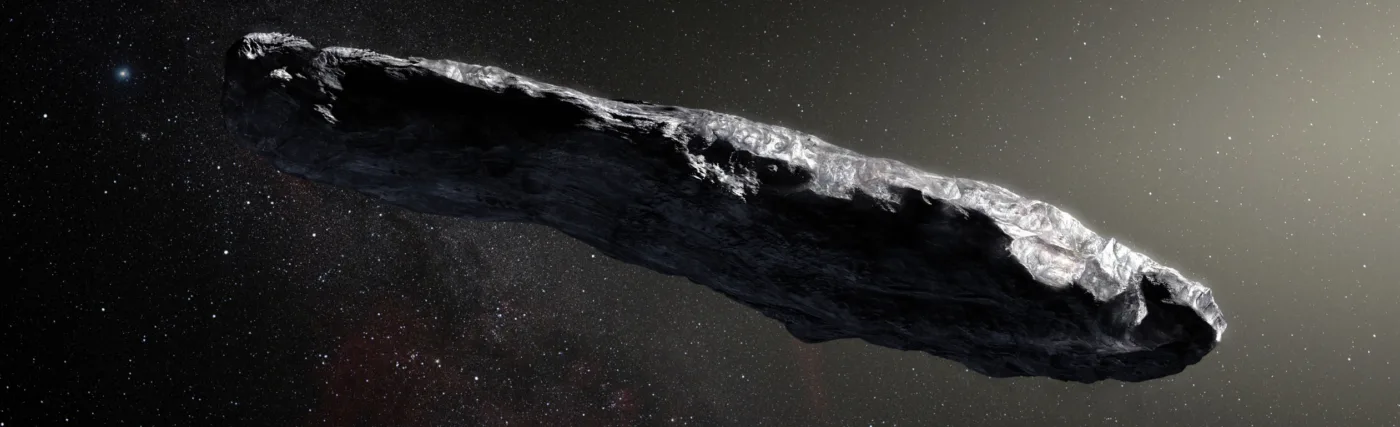
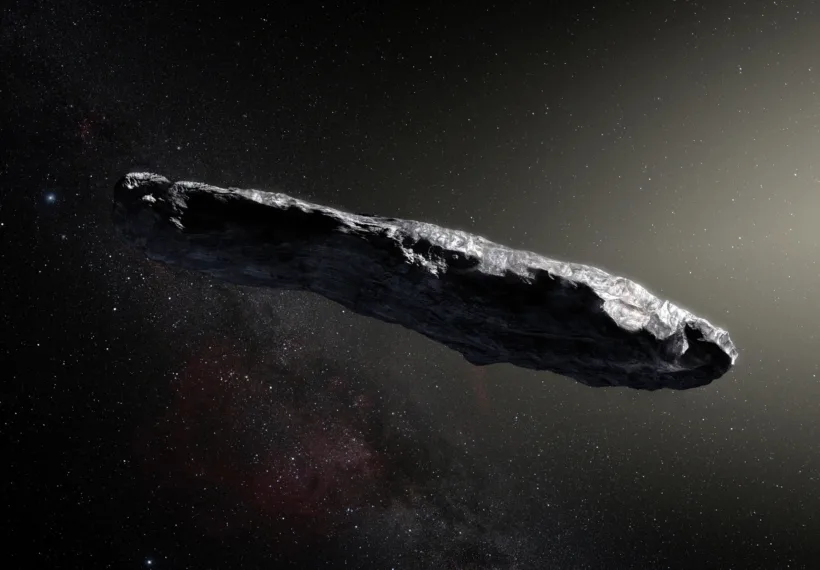
How can diverse experiences help accelerate the progress of science? We discuss the universal human experience and the impact of uplifting all minds. Find out about the concept of panspermia, Oumuamua, and whether Earth’s life comes from somewhere else. All that, plus we explore scientific moral quandaries, if scientists found something with potential to destroy would they still enlighten the public?
Thanks to our Patrons Pepper Horton, annie brown, Lance Cardwell, Natalie waugh, firestorm960, and Daryl Spencer for supporting us this week.
NOTE: StarTalk+ Patrons can watch or listen to this entire episode commercial-free.
Transcript
DOWNLOAD SRTNature Valley welcomes you to Camp Savory with new Savory Nut Crunch Bars.
These fun and snackable new bars come in surprisingly savory flavors like Everything Bagel, White Cheddar, and Smoky Barbecue.
So which camp are you in?
Camp Classic with Oats and Honey Crunchy Bars?
Camp Sweet with Chocolate Crunchy Dipped Granola Squares?
Or Camp Savory with its new tasty flavors?
There’s only one way to find out.
Nature Valley.
So you know, I’ve been wanting to learn Spanish.
You know, not to be fluent, just enough to communicate with somebody who doesn’t speak English.
And then I think, well, I might as well want to train to be an astronaut, because who has time for that?
And then I found Rosetta Stone.
You know, getting started to learn a language can seem overwhelming, but Rosetta Stone breaks down your new language into bite-sized pieces and focuses on speaking practice for real conversations.
It’s an immersive method that helps you learn intuitively, plus their true accent feature helps you perfect your pronunciation by telling you how well you said specific words or phrases compared to the native speakers.
With Rosetta Stone app, you can learn anytime, anywhere, make progress even if you only have 10 minutes at a time.
All of this adds up to me being able to learn Spanish when I need, how I need, wherever I need.
And the thing I like most is that they quiz you right after you learn.
And then the next lesson, you get another little quiz that kind of builds on the last lesson.
It’s really a very simple intuitive process that I’m looking forward to telling you all about in Spanish.
But you know, that’ll happen in a few weeks time.
Okay, maybe a little longer.
And now for a limited time, our listeners can get a Rosetta Stone’s lifetime unlimited subscription, which means access to all 25 of their languages from Dutch to Arabic to Italian forever for 40% off.
Hey, maybe I will learn more than Spanish.
Visit rosettastone.com/startalk.
Rosetta Stone, how language is learned.
Coming up on Star Talk, we speak with my friend and colleague, Aomawa Shields.
She’s an associate professor of astronomy, specializing in astrobiology at UC Irvine.
And we talk about the search for life on planets that are already known to exist in orbit around their host stars.
We’re gonna learn what M stars are.
We’re gonna find out what the color of the star has to do with what life might be like on a planet’s surface that orbits it.
And we’ll also take questions, Cosmic Queries from our Patreon members.
All that and more coming right up.
Welcome to StarTalk.
Your place in the universe where science and pop culture collide.
StarTalk begins right now.
This is StarTalk.
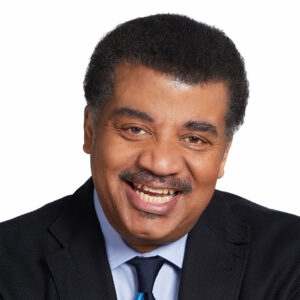
Neil deGrasse Tyson here.
You’re a personal astrophysicist.
I got Chuck Nice with me, Chuck.
Yes.
Doing it again.
The universe is nonstop.
That’s right.
And it is continually.
Is it really though, Neil?
Is it really?
Yes.
Does it?
I mean, seriously, can we say with certitude that the universe does not stop?
It does anything in the universe that doesn’t stop.
It’s the universe itself.
There you go.
I’m going to see your statement and raise your entropy.
Today we’re talking about life on other planets.
Yes.
Life on other planets.
And we’ve got a friend and colleague of mine, Aomawa Shields.
So she’s an astrophysicist and more specifically, an astrobiologist, which is kind of a new field.
New in the last few decades.
I’m old enough to call that new.
Also on the landscape of science communication, she’s there and she’s a force.
She’s an associate professor in the Department of Physics and Astronomy at UC Irvine and founder of Rising Star Girls, a program dedicated to helping girls discover the universe.
I know.
Also a trained actor.
What?
No.
Wait a minute.
I know, I know.
Wait, but I’m not done.
Until I’m done.
All right.
Now she’s got a new book out.
Oh, great.
Now you can react.
Okay.
What?
And she’s got a new book, Life on Other Planets, a memoir of finding my place in the universe.
Whoa, and that comes out in the middle of 2023.
Welcome back to StarTalk.
I think we’ve had you on before, haven’t we?
You have.
Thank you.
It’s wonderful to be back.
Last time we were talking about terraforming Mars, and now we get to talk about more life on other planets, places where there actually could be life, although maybe Mars, I don’t know.
Yeah, plus I want to get to the bottom of what it means to have a book telling life on other planets, and now you call it a memoir.
Chuck, I think she’s an alien.
Alien?
Okay, that’s what I’m saying.
This is evidence we use.
How was the trip?
I have a lot to share.
I have a lot of information now.
Yes.
So we’ll get to your book a little later, but let me just, can you update us on where are we in the search for life in the universe?
Because you focus on the habitability of exoplanets and in multi-planet systems, what climate might be on those planets.
So what are you doing when you go to work each day?
Yes.
So my team’s work starts after the planets have actually been found.
So it’s hard enough, as you know, to find a planet around another star and it’s all-
Although we are going like gangbusters, we’re approaching 6,000 planets.
That’s right.
And that’s the tiniest fraction of our own galaxy, nevermind the fact that we have a hundred billion plus galaxies in this universe.
But yeah, we’ve got close to 6,000 now that we’ve found.
And so, well, we don’t really know anything about how habitable they might be, whether they might have water on their surfaces, which is what we define as habitable, because we know all life on earth needs water.
Everything from the tallest, largest elephant to the smallest, tiniest microbe needs water.
And you just confess that you’re completely biased.
You’re not just looking for life, you’re looking for earth life.
That is true, that is true.
And this is why-
Okay, I want you to fess up, just right here now.
Thank you.
Show your cards, okay, go.
Very true.
And this is why the field of astrobiology is so important, because there are astrobiologists like me who are looking for planets that might be warm enough for liquid water on the surface, but not too warm.
And there are also astrobiologists whose job it is to ask the question, what about life as we do not know it?
What about non-Earth-like life?
Could life use something else besides water or something else besides carbon in its backbone?
So that’s really important.
We can’t be so Earth-focused that we’re misdiscovering life because of that.
Because I’ve seen some missions, they’re looking for Earth-like planets around Sun-like stars.
You can’t get more sort of biased than that.
True, true.
And Sun-like stars are not the majority of the stars in our galaxy.
The majority of the stars in our galaxy are actually much cooler, smaller and redder than the Sun.
Well, that sounds to me like we should be looking there.
I have spent a lot of my career focusing on that, right?
These M stars, these small, small stars.
M, so we’re a G star, Sun is a G star.
So with O, B, A, F, G, K, M.
So M is like the coldest star category we have.
So why would you think-
Pretty cool.
We know of some even cooler ones now like Ls and Ts, but then there’s been some controversy.
Are those really stars?
Are we getting so cool that we’re in the like brown dwarf regime?
But-
And just to be clear, when an emphasis refers to a cool star, we’re talking a few thousand degrees.
Still really hot.
Yes, not Robert Downey Jr.
We’ll still be incinerated.
Yeah, it’s all relative.
So how do you modify your search for life around an M dwarf star?
Yeah.
If you know it’s not as warm as the sun.
So what happens to the habitable zone and other sort of properties that you’re seeking?
So if we want to look for a planet that could be what we call it, this habitable zone or the Goldilocks zone, because it’s not too close to its star, not too far away.
So it’s not too hot, not too cold.
We have to look much closer to an M star than we would to around a sun-like star in the same way that if you’re, say you’re on the beach and you’re crowding around a little campfire, you’re gonna have to stand much closer to that campfire to get the same amount of heat as you would if that campfire was a bonfire.
But the same principle exists when we talk about these cool stars versus the hotter stars.
So we’re really close.
But it just redraws your habitable zone.
That’s right.
Yeah, so it smushes it closer up.
And there’s some interesting things that can happen when a planet is orbiting that close in to its star.
There’s forces at work, there’s tides, the planet pushes on the star, the star pushes on the planet, and the planet’s rotation period can get slowed down and maybe even to the extreme case where there’s one permanent day side and the other side it’s always night.
And we call that situation synchronous rotation.
It’s like this extreme case of tidal locking.
And it’s literally always day on the day side, always night on the night side.
And my team-
That can’t be good for life.
People have thought that it would be really bad.
Or maybe you just have like a work side of the planet and a party side of the planet.
Let’s go life on the night side.
So I get it.
You don’t wait for night to come.
Yeah, you go tonight.
You go tonight.
Oh, Chuck.
It’s like, yo, what you doing later?
Yo, I’m going over the night, bro.
And we’re about, we’re gonna chop it up crazy like.
And, you know?
It works.
So that has been a big concern.
However, fresh off the presses, my team actually has some new work that shows that you could have life along the terminator.
So that’s the dividing line between the day and the night side.
That’s what we call the terminator.
So, and now, so temperature wise, if it’s always night and you’re just never facing anything, that would be like a super cold part of the planet, right?
Right.
And then if it’s always daytime, that would be warm.
That would be a super hot part, right?
So there’s gotta be a spot that’s just right.
Right.
And it’s funny, the just right spot you call the terminator.
Right?
So much more amenable, much more neutral than our pop fiction Schwarzenegger terminator.
But I can’t help, I cannot help.
We coined this term terminator habitable and that’s the name of our paper and like you can’t not think about it.
So dabbly comfortable, very comfortable.
It’s like a warm bath.
So before we continue, let me, if I may, I will give a brief tutorial on how stars got the letter classifications.
Please.
So you go back 120 years, we’re getting data on stars that are not just pictures of them, but spectra.
And we don’t know what spectra are yet because quantum physics wasn’t yet discovered.
But we knew some spectra looked like others and you could put them on a continuum that transitioned from one kind of spectrum to another.
And so we did that.
And we lettered them A, B, C, D, E, F, G, H, I, G, L, M, N, O, P.
Okay.
Then quantum physics came around and we said, yo, there are reasons why the spectrum looked this way and it’s not what you’re thinking.
And it had to do with the temperature of the star.
And it turns out these features can duplicate between being too cool to have a feature and too warm to have that same feature.
By the time we shuffled these letters into a temperature sequence, A, B, C, D, E, F, G became O, B, A, F, G, K, M.
And why didn’t we just re-letter them, which I think we should have at the time?
But we didn’t.
So we have this artifact.
Could have gone with numbers.
Pretty simple.
Because now we get to confuse astronomy students the world over, year after year.
Forever and ever and ever.
Every year I get that question.
So both stars are hot, B stars are next hot, O, B, A, G, we’re G star.
And then each category is split into 10 other subcategories.
Okay, zero through nine.
So we are the G2.
Arabic numeral two.
And we divided them by what’s called luminosity class.
Like how big are you?
And so we have classes one through five.
Or four, or three, yeah, five.
And so we are G Roman numeral two.
I’ve got G Arabic numeral two, Roman numeral five.
You tell that to an astrophysicist, they know exactly what kind of star you’re talking about.
G to five.
That’s what it is.
Sounds like something that rappers fly to their next concert in.
G to five, baby.
So Aomawa, tell me what did you need to do to model a terminator habitability?
What kind of calculations were necessary there?
Yes, and I have to give a shout out to my postdoc, Anna Lobo, who’s spearheaded this work, and we had to ask that question, as I write in the book, that having this question, could these planets even exist?
It’s the first place to start for any scientist or any curious person.
Before you invent life on a planet, make sure that kind of planet could exist.
Could actually exist.
And the first thing we had to do, we’re using models, climate models, that are normally used to predict the climate on Earth.
So they’re the same models that have been used to predict the effects of climate change into the 2100s.
The reason why we know that climate change is real and that it’s going to continue unless we do something is in part because we’re using these models to forecast those effects.
But what we’re doing…
And these models, so all you have to do is change some of the…
They probably have knobs you can turn.
That’s right.
Where everything else…
Because the physics would just be the physics, but the rotation ray and the sun’s energy entering the system.
These are knobs, right?
These are knobs that we can turn.
I didn’t know these are general climate models.
They’re fascinating.
That’s right.
So we are changing the spectrum of the host star, right?
How its energy, its light is distributed across the whole spectrum is going to be different depending on the temperature of the star, the type of star.
We’re changing the shape of its orbit, how much atmosphere, what its atmospheric composition is, because we don’t know those things for Earth-sized planets.
We have no information about the type of atmospheres they might have or their surfaces.
And understanding the effects on climate of different types of atmospheres is going to help us understand which of these nearly 6,000 planets we want to prioritize and look at with next large generation telescopes to find out if there really is life there.
So, you know, wow.
So, this is a beautiful example of the cross-pollination between two otherwise very different disciplines.
Yes.
You go into climate science, folks.
They don’t care about exoplanets.
They just care about Earth.
I know.
And I’m on a personal crusade to change that, because it’s true.
Like, this is, it’s so interdisciplinary.
We’re using atmospheric science, climate science, astronomy, geology in some cases, glaciology, because I’m all about ice and different types of ice, and these different types of ice interact with different types of light, depending on the type of ice.
There’s more than just water ice.
We’re looking at CO2 ice and other ice.
So, different ice would reflect their sunlight differently.
Differently.
From other kinds of surfaces, and it would change how much energy enters the system.
That’s exactly right.
Bye.
Hey, if you like saving, you should join Walmart Plus.
It’s a membership that saves you money on the stuff you’d expect, plus the stuff you don’t.
Like gas, plus free delivery, plus a Paramount Plus subscription, plus so much more.
I love saying plus.
So you can drive the kids to soccer practice, order snacks from movie night, and stream your favorite movies all while saving.
Start a free 30 day trial at walmartplus.com.
See Walmart Plus terms and conditions.
Paramount Plus essential plan only, separate registration required.
Remember house calls?
When the doc came by and took your temp and tucked you in when he was all done.
No, you don’t remember that.
Those days are long gone, but one company is giving new meaning to the term house call, Teladoc Health.
Their primary 360 program lets you choose a board certified doctor that’s right for you and get primary care from the comfort of your own home.
You can connect via phone or online with a board certified doctor who will get to know you and provide whole person care, including offering advice, prescriptions, even mental health support and referrals.
They can also help with chronic conditions like hypertension and diabetes, as well as weight management.
I have used Teladoc, here’s what I love.
When you’re sick, you don’t feel like getting up and going to the doctor.
Why not let the doctor come to you?
That’s right, download the app to get started today or go online to register or schedule a visit at teladochealth.com/startalk.
That’s T-E-L-A-D-O-C health.com/startalk.
I’m Joel Cherico and I make pottery.
You can see my pottery on my website, cosmicmugs.com.
Cosmic Mugs, art that lets you taste the universe every day.
And I support StarTalk on Patreon.
This is StarTalk with Neil deGrasse Tyson.
So Aomawa, tell me, how does all this fold into this book that you just wrote?
I’m so excited for this book.
This has been a dream of mine for a long time.
And as you know, I have, I was astronomer, then I trained, I changed and studied acting, and then I came back and finished my PhD and became a professional astronomer and a professor.
And for the longest time, I was trying to reconcile these two things that I loved, acting and astronomy.
And I thought that they couldn’t coexist.
I thought I had to choose.
And when I would share with people those two loves, I got a lot of like, what, this is so strange, why, how?
And I, you know, I think I internalized that and tried to figure it out.
And it was funny because when I stopped figuring it out, these incredible miracles got to happen where I saw how they can really coexist, like hosting a science TV show, which I could never have planned on my own.
Eventually going back to grad school in part because of your suggestion and being put in touch with you and your mentorship.
And also I had applied to the Astronaut Candidate Program and had not made, had not reached the next level.
It was like everything was saying, go back, get your PhD.
And I finally became willing to listen.
And so the book really is about that whole journey.
It’s about why I fell in love with the stars and the night sky and why I fell in love with acting and this whole edge that I carried for a long time of like feeling like I was an astronomer or a scientist around actors, feeling like I was an actor around scientists.
And eventually coming into full acceptance of this non-traditional background that I had and how it could really make me a better scientist and a better communicator because of it.
It’s about the whole journey.
First of all, that’s a beautiful what you just said because it’s a reconciliation of self, which I think is always a wonderful thing that anyone has ever-
You could be a counselor.
You could be like a therapist.
Yeah, if you want to mess up your life.
No, I think if you have these loves, I too had so secondary pathways, but none as significant in my life as your acting was, but I just did little things.
I doodled and I like calligraphy when I should have been doing other things, but now when I sign my books, I use a calligraphic pen and the people receive the book, they appreciate it that much.
With little things like that, you find a way to fold it in, your life and the lives of others are much more enriched.
So I’m so glad that you pursued what you love rather than what people thought you should be doing.
Thank you.
I have to say I still remember and you’re going to find out.
You probably read parts of it already, but if not, you’ll see later, like you’re in the book.
I’m in the book.
Am I in the book?
You’re going to have to read it to find out.
And you’re in the book.
Who isn’t in the book?
There are a lot of people who are in the book.
But like I write about that moment when I first met you in person at the AAS, the American Astronomical Society.
That’s our professional conference for those who don’t know what AAS means.
And we sat on some umbrella chairs or whatever, and people were walking by like, is that who we think it is?
Is that Neil deGrasse Tyson?
And you were just there.
And I think I started to cry at one point because we’d been talking about my background and how I had…
There were ups and downs.
I had struggled academically because my head was not in the place.
My heart and my head were not in the same place.
You know, it’s funny because I cried when I met Neil, too.
Stop it.
But that’s because he was standing on my foot the whole time he was talking to me.
And he’s a big guy.
I’m telling you, he’s a large man.
It was not pleasant.
Wait, Aomawa, it didn’t help matters that you also married an actor.
Isn’t that right, if I remember correctly?
I did, yes, he is 100% actor.
He doesn’t have the actor, scientist, engineer, architect.
Distraction, distraction.
He’s 100% actor, although he does enjoy those doomsday Nat Geo shows or super volcano.
Okay, yeah, that’s in us.
But what I’m saying is that that would have been a force that would have been supportive of your acting, correct, I presume?
We met in acting grad school.
He was my classmate.
You were becoming a real actor.
She said acting grad school.
That’s the real stuff.
That’s when you’re just like, you know how people say, well, I’m going to be an actor and they’re like, well, you’re never going to get a job.
When you say, I’m going to acting grad school, they’ll be like, oh, you’re getting a job.
That’s what we hoped and expected.
That wasn’t always the case.
But yes, I wanted to study it in the same way that I studied astronomy.
That was so much fun.
I had left the PhD program that I was struggling academically in and I had an old white male professor tell me to consider other career options and I internalized that and left.
When I got to acting grad school, it was like I was free.
I felt so light.
But it wasn’t like it was easier compared to astronomy grad school.
It was harder in a different way.
And I write about this.
It wasn’t necessarily about the brain cells working overtime.
It was about dredging up my emotions and feelings and childhood experiences and bringing it all up.
That I needed to use it to embody these characters.
Summoning it on command.
Summoning it on command, yeah.
It’s got to be real.
It’s got to be real.
So you stitched this.
You’ve made a tapestry of your life with your professional ambitions in this book.
So it’s part memoir, part advice column.
Is that fair?
Yeah, there’s a little bit of…
Certainly it’s all spoken, for the most part, in the first person.
Like, this is what I did.
This is what helped me make my life better and reconcile these different parts of myself.
And I hope that I’m writing it for the people that have that question of like, is it too late?
There’s that part of me that I never could bring up into my life.
But it’s always been there.
Like I say in the book, when you leave a dream behind, it never dies.
It’s like sitting on the side of the road and eventually it’ll catch up.
And that’s what happened for me.
And the message of the book is that it’s not too late and that if there’s no role model that’s doing what you want to do, you can be your own role model.
And in fact, if you always needed a role model, you would only ever do things that other people did before you.
But sometimes you have to failblaze.
And like you just said, if you become your own role model, that’s harder, of course.
And you got to figure things out on the fly.
But if and when you succeed, then people say, of course, that’s what I always wanted to do, those who come behind you.
So just congratulations on that.
It’s fantastic.
Well, Chuck, let’s get to some queries.
All right, why not?
Especially tuned for this visit.
Absolutely.
These are questions from our Patreon members.
Patreon patrons who just for a haltery, almost insignificant $5 a month.
All right, this is Mike Parker.
And Mike Parker says, Hello, Dr.
Shields.
Mike Parker here from Richmond, Virginia.
If life does exist in our solar system, which planet or moon do you think offers the most promising location?
I love it.
In fact, give me the top three cases in order.
Oh, my gosh.
Not just one.
Okay.
This is a fantastic question.
Thank you for asking it.
Europa, which is the moon of Jupiter, would be my top, even though there’s a lot of buzz right now around Saturn’s moon Enceladus, which would be my number two, the next one.
Saturn’s moon Enceladus has geysers, geysers of liquid water that are shooting out from its south pole.
Can’t argue with geysers.
Apparently, all of the basic elements of life are there.
There you go.
Geysers lead to geysers.
Geysers lead to geysers.
Chuck, I don’t think that’s how language works.
And then, gosh, number three.
And third one, give me the third one.
I’m thinking.
I mean, I’m skeptical about Mars.
Mars, under surface Mars, you know there might be some liquid water in aquifers.
I’ll be your third option.
I was about to say that, but I’m skeptical.
Or it could be Mars might have fossilized life.
Okay.
So the life was there, it’s no longer there, but that still counts, because it ain’t here.
It ain’t here.
If we could prove that it was there, it still counts as life because it was there.
True.
And there’s so much evidence of liquid water on the surface at some point.
At one point, yeah.
All right.
Excellent.
Excellent question there.
Nice question.
Keep it going, Chuck.
Mike Parker, way to go.
Here we go.
This is Sherry Caruso and Sherry Caruso says, Hello, Dr.
Shields, do the ideal conditions for life on extrasolar planets depend on the star itself, or are the requirements the same no matter what?
Also, thank you, thank you for Rising Star Girls.
I am registering my niece.
You are an inspiration.
Sherry from San Diego.
Thank you so much, Sherry, for asking that question, and can’t wait to see your niece in Rising Star Girls workshops.
Rising Star Girls hosts summer, we host annual virtual workshops during the summer for middle school girls of color.
And that means ages 10 to 14 or 15, roughly.
No one is turned away.
And it’s virtual?
And they’re virtual.
So we have girls that participate from all over the country, and we even have girls participate from other countries, too.
And we’re ramping up to do even more.
We also host educator webinars where we show educators how to use the activities in our handbook with girls in their own communities all over the world.
And back to your question, the primary ingredients for life are liquid water or a liquid, which on our planet is water.
And as we know, we can’t just look for water, but that’s our first order thing.
We’re looking for some liquid that life can use to make the stuff it needs to carry out its chemical processes and reactions.
Some kind of energy source, whether it’s the sun, the star, or chemical energy, like life that lives in the deep ocean around these hydrothermal vents, has no access to sunlight, and yet there’s life there.
So it’s using the chemistry of rocks and heat from the core of the Earth.
And I add there that when I was taught biology, it was only assumed that life could thrive.
It was assumed that life could only use sunlight because we hadn’t discovered the life at the bottom of the ocean yet.
So they had to broaden the definition.
Not that life depends on the sun, but life depends on an energy source.
So I like this, that that’s now folded into that definition.
Okay, so keep going.
And then the last one is the basic building blocks of life, like some and some kind of environment for life to make its, to carry out its metabolic processes and to use.
So we think of this like it needs sulfur or phosphorus or oxygen or nitrogen or carbon.
These are like the basic elements of life.
Organic chemistry.
Yeah, organics, energy source and liquid.
So all of those things are what we look for when we’re looking for a planet that could be habitable.
And for the part that I am really focused on is where could the climate be suitable for water to not freeze, not evaporate away, but to stay in liquid form somewhere on that surface.
And so this can be affected by the type of star, as you bring up in your question, because this starlight can be different depending on the temperature of the star, how that starlight interacts with the surface of the planet, the various atmospheric molecules on that planet, that can influence the planet’s climate.
So it does depend on the star.
But those three ingredients are the main ingredients that we think any kind of planet would need to host life, to keep life going for a long time.
Now you just made me think of a question that I’ve…
If it’s a dumb question, just let me know.
There are no dumb questions.
That is not true.
You have not heard me ask questions.
When people say there’s no dumb questions, I’m like, just wait.
No, but so are there different stars that give off different colors and can look like our star is white, are there different stars that give off different colors and can those different colors actually affect the development of life?
That is the complete opposite of a dumb question.
That is a fantastic question.
So yeah, I’m not going to believe anything you say now.
It’s not a dumb question.
It just popped in my head.
So when it just pops in my head, I’m like maybe that’s a dumb ass question.
Never, never.
So yes, different stars have different colors.
And if you are fortunate enough to live someplace where you don’t have a lot of light pollution, if you go out on your porch or your stoop and look up, you’ll see this.
You’ll see this in action that all of the stars don’t all look the same.
Some of them look white, some of them look yellow, some look a little orange or a little red.
And if they’re twinkling, that’s a pretty good bet that that’s a star.
If it’s not twinkling, then you can be more convinced that it’s a planet.
There’s a lot more stuff between us and a star than there is between us and a planet in our own solar system.
And so there’s a lot more atmospheric distortion and turbulence, and that’s what we see as twinkling.
But anyway, yes, the colors are real, and that has to do with the temperature of the star and how much light it’s emitting.
And that light, again, if there’s a planet around that star and just about every star in our galaxy has a planet around it, may not be in the habitable zone, but if just about every star has a planet, then that planet, if it’s got an atmosphere, if it’s got a surface, that light is going to be shining down on that planet and how much light is in what region of the spectrum, the color of that light is definitely going to influence how it interacts with what’s on that planet and the weather, the temperature, the climate of that planet.
So you have one of the most complicated problems to solve out there, it seems to me, because it’s not just light shining on the planet, it’s like how does the chemistry of the atmosphere interact with the light that’s shining down on the planet?
Does it get absorbed?
Does it get re-emitted?
Is it reflected?
And then if it reaches the surface, then you got to worry about the surface, and somewhere in there maybe there’s life.
It’s so true.
It sounds like a really hard problem.
It is a really hard problem, because those same cool stars that comprise 70% of all stars in the galaxy, those M stars, they’re really awesome because they’re so numerous, and there’s a lot of advantages to looking for life around those stars, but there’s some disadvantages too.
They have really long phases where they send out a lot of X-ray and UV radiation shooting towards the surface.
And we know, the reason why we wear sunscreen, is that UV radiation is not good for biology.
And so it could be that life could only exist at the bottom of the ocean on those planets.
Where you’re protected from the UV.
Okay, cool, super cool.
All right, keep it coming.
All right, here we go.
This is Omar Marchelino, and Omar says, hello Dr.
Tyson, hello Chuck and Dr.
Shields.
Omar here from Dallas, Texas.
Dr.
Shields, giving your unique journey through the cosmos of astronomy and theater, two fields that are often mentioned never in the same sentence, let alone in the same career.
You have boldly gone where few have gone before, and leading the way in ensuring others from diverse backgrounds can do the same through your work with your rising star girls.
In your perspective, how could this universe of diverse talent and experiences propel us further into the final frontier?
How do you think incorporating a spectrum of perspectives in astronomy could accelerate our interstellar mission to understand and reach other worlds?
Now wait a minute, is your husband name Omar?
Is it about to be?
No, I’m kidding.
That was an excellently written question and recited.
So yeah, I’m going to say Omar, you want to read this book.
Oh, look at that.
This has got the whole journey in there, pretty much everything.
I see what you did there.
And go to risingstargirls.org because you’ll see, we’re not just teaching these girls astronomy and astrobiology.
We’re not just saying, hey, there’s stars out there, there’s galaxies, these are the names of it.
They get to write a poem about what they’re learning.
They get to design their own exoplanet and make choices about how many stars it orbits and if there’s life there and if there’s not, why not?
They get to write their own constellation myths.
They get to calculate the distance from themselves, from the earth to different solar system bodies and units of themselves.
So we’re doing this all to develop a personal connection between these girls and the universe of which they’re an integral part.
So we’re processing what they learn through a creative arts based lens.
And I wanted to bring it back to Rising Star Girls because that’s really, my journey has been epitomized by this program of like, they’re not these, the arts and the sciences are not as disparate as many people might think.
In both cases, it’s about the story, right?
Everything has a story.
Planets, stars, they all live, right?
And they die.
And there’s a story of their becoming and there’s a story of their evolution and there’s a story of their deaths, right?
The planets don’t have mother issues later in life.
There’s certain stories they’re not gonna tell, I’m pretty sure.
Yeah, the stories are different, but there’s a journey.
There are stories nonetheless.
There are stories nonetheless.
Or the stories of humans on the stage or on the screen, looking to live as one of my method acting teachers used to say, trying to find happiness and fulfillment.
So there’s that whole science and the arts and in fact, not only are they not as disparate as we might think, but they actually interweaving them is the key in my mind to answering your question is to creating imaginative thinkers and enlightened scientists and enlightened artists for that matter, realizing that these disciplines can fuel each other, can be used to elevate our core understanding of the human experience and the universal experience.
So that would be my best way to answer that really exciting question.
Can I add to that as a minimum, in a day when only men did science, it means half the population of the world, half the intellectual capital of our species was not at the table at the time anyone is thinking about how the universe works.
So the extent to which you can extend that to have 100% of our species have access to, whether they choose it, that’s another question.
But if they don’t access to it, then you can ensure that we’re getting the best minds who want to actually think about our past, present and future in the universe.
And right now, that is not the case.
That is absolutely not the case.
Well, physically, it was half.
Percentage wise, it was way more than.
Half.
It was half of the mass and less than half the actual brain power in the universe, I get it.
Yeah, and we want these girls to claim ownership of what they’re learning.
To know that they matter, that they’re an integral part of this universe, that just in the same way that if we were to look at the Milky Way galaxy through one type of light, just visible light, you’d see like this thin line with a bunch of dark clouds in it, and you’d think there was nothing there.
If all you looked at, if you looked towards the center of the Milky Way galaxy, that swath of space that some of us can see if we go out in the desert, if you just thought that that was the only…
That all of us can see.
Yeah, remaining 3% of the population of the world.
Where there’s no extra lights, pollution, right?
If we thought there was nothing there, we’d miss out on so much information about this galaxy.
But if we looked at the infrared, we see so much going on, right?
Never mind UV and gamma.
There’s so much more to the galaxy than meets the eye.
So too is there so much more to these girls than meets the eye.
We want them to have that ownership of that star, that planet, that galaxy that they’re studying, so that when they continue on and the heavy math comes in, they’d be less likely to leave the field because they think, oh, I didn’t get that question right on that test.
I didn’t know someone told me that I shouldn’t be here, right?
Just knowing that there’s a connection that they have between what they’re learning and who they are that we hope will really help them stay.
All right, let’s see if we can slip in two more questions, Chuck.
All right, well, here’s one from Carrie Manneberg.
And Carrie says, hi, Dr.
Shields.
Is there any scientific evidence that life on Earth came here from an interaction with a comet or asteroid that had biological foundation chemicals?
Oh, this is a popular question within the astrobiology community.
I believe that the term for this is panspermia, right?
That something comes in from other, from elsewhere and like, seeds there.
Seeds us.
It’s, I mean, of course, it’s possible.
I don’t think it’s been given very much funding, to be honest, and in terms of exploration of this topic, but it certainly has been discussed within astrobiology communities.
Okay, let’s listen to Jason.
He says, hello, Dr.
Shields, do you have any personal moral quandaries about science moving forward, or is pretty much just forget morals and let’s just see how far we can go?
Now, I don’t know if Jason is making an indictment of any sort or not.
That’s a very specific question.
It’s starting out with the premise that all scientists are immoral.
But I think I know what he means.
It’s like scientists want to discover.
What if you and you two, Neil, had the opportunity to make a discovery that would enlighten, but there was a larger chance that it would destroy?
Would you still expose that discovery?
That’s a moral quandary.
Hmm.
Yeah, this is an important question.
This harkens back to the last episode that I was fortunate enough to be on with you, where we talked about terraforming and we talked about some of the moral and ethical implications of that question.
Is it okay to terraform another planet or terraform Mars?
I do think that as scientists, ethics must be key.
So I don’t subscribe to the view that science and discovery at all costs.
There’s a piece that I’ve written for upcoming periodical that’s like, why do this?
Why look for life elsewhere?
Why spend billions of dollars doing all of this?
And is that object, umuamua, that first interstellar object, is it really an alien’s craft or is.
It just, can it be explained by regular scientific method?
I think what it comes down to is if we go, and I’m talking about this in the context of the search for life elsewhere, there’s all sorts of other genetics and questions about cloning and all of that that have their own ethical implications.
But from my part of the sphere on that question, if we were to discover that we are not alone, what would we do with that information?
Would we have to go and visit, or could we stay on our planet and know that we’re not alone and let that information inform how we think and feel and move throughout the world?
Or would we need to go?
And if we would need to go and visit, could we just go and visit and then come back home?
Or would we need to stay?
And if we needed to stay, could we just stay and not try to conquer?
Or would we have to go the way that, and emulate what was done on our planet with Columbus and Magellan and all the rest and the implications of that, right?
That led to genocide.
I would hope that we would be able to learn from the lessons of the past and not repeat them.
And that really is what I think it all comes back to, is hope.
I have no clear answer about what other scientists might do and maybe even what I might do if given the opportunity to go to another world and communicate with other species.
But I carry with me the hope that I would want to do whatever we do from a place of love, kindness, inclusivity, and welcome and humility, to be honest.
So that I think is the key that to be a scientist, I must concede that there is more that out there that can be explained and I can hold on to that humility and help and allow that to guide, to serve as a North Star for me morally.
So, I believe it there.
Well, that is beautiful.
As a comedian, let me just say this, that ain’t happening.
That is not what is gonna happen.
Well, but I got two reactions.
One, how charming it was that you thought we would go find aliens on another planet and that we might exploit them.
That’s just.
Oh, rather than like Independence Day and they’re gonna come and kill us.
Oh, exactly.
And believe me, if we go see them, they’re not answering the door.
They’re gonna play the role, just like we Jehovah’s Witnesses or something.
They’ll be like, they’re here, please.
Don’t let them, we’re not, get away from the window.
But that question’s.
Get away from the window.
I’ve never had heard anyone talk about an encounter with aliens and talk about we exploiting them.
That is like never, I don’t know any storyline.
If you’re thinking of that storyline, that is completely beautiful thing.
But of course it mirrors what happened on our planet.
I mean, how could I not think of it that way?
You know what I think about it?
I think if they come here and they do what we do to each other.
Oh, Lord.
As we portray in the films, then we’re creating them not based on a supposition of how they would behave, but on actual knowledge of how we did behave.
So, in fact, all of the alien movies are mirrors to our culture as you…
Treating it almost like a guidebook or a recipe.
Yes, yes.
And I couldn’t help…
You have to publish a paper on the interstellar visitor Amua Mua.
So we have Aomawa…
I know, it’s so close to my head.
We need that research paper.
I write it.
I write in the book, I say, Umua Mua, it sounds like my name.
That’s great.
Aomawa studies Amua Mua.
But Amua Mua is Hawaiian.
And Aomawa, does that have some origins?
My parents made it up.
They made up vowel sounds.
They put together their musicians.
They made a chant up.
But yeah, that sounds…
I went to Hawaii once.
They sounded like hippies.
They sound like some leftover hippies right there.
Very nice, very nice.
Well, at least you weren’t named Moon Unit, okay?
Or Pilot Inspector.
I mean, come on, that’s unfortunate.
But yeah, Oumuamua means messenger from afar arriving first.
Yes, the first messenger, yes, yeah, yeah.
So guys, we got to end it there.
That’s sad.
Thanks for being on, and congratulations again.
Thank you so much, Neil, and thank you, Chuck.
It’s great to be here.
All right, Chuck, good to have you, man.
Always a pleasure.
All right, I’m Neil deGrasse Tyson.
You’re a personal astrophysicist for StarTalk.
As always, I bid you…

 Become a Patron