


 Unlock with Patreon
About This Episode
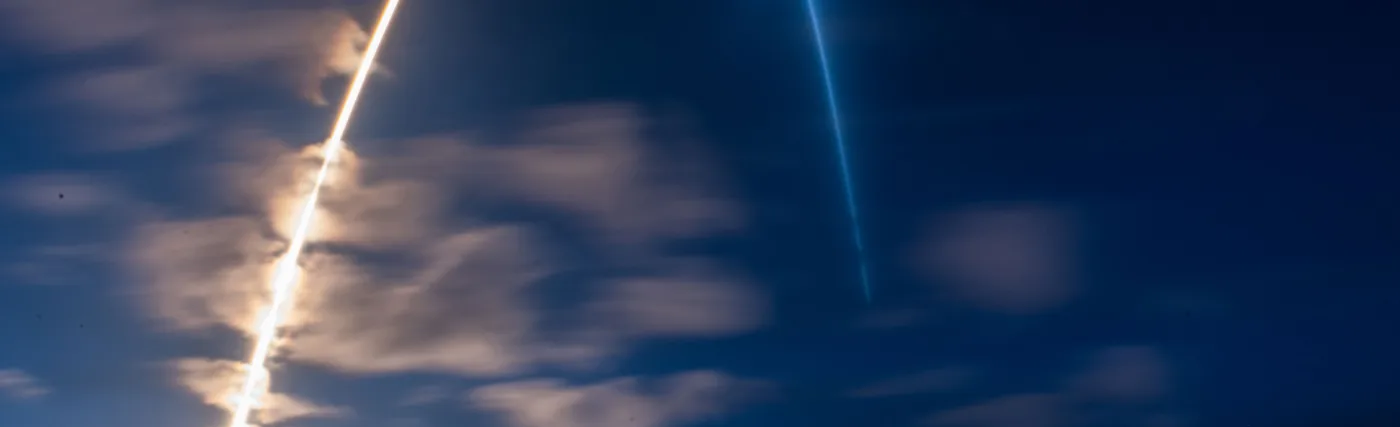
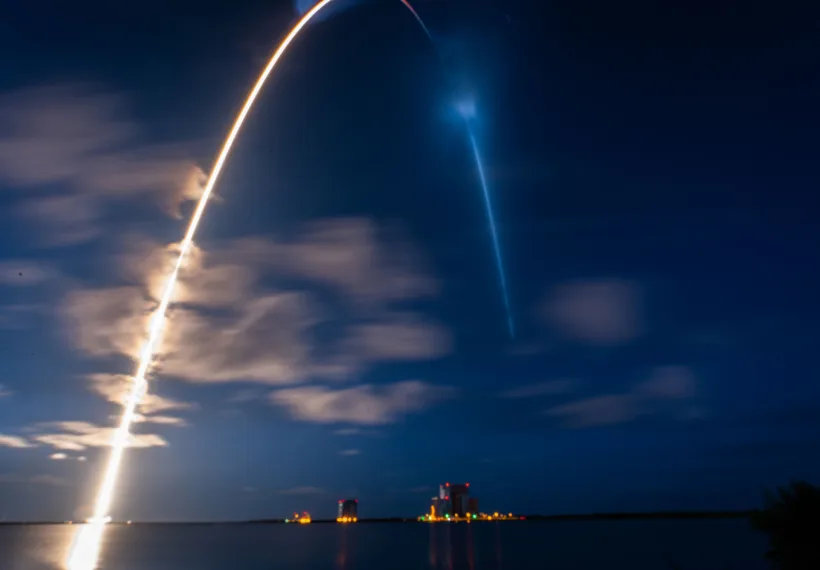
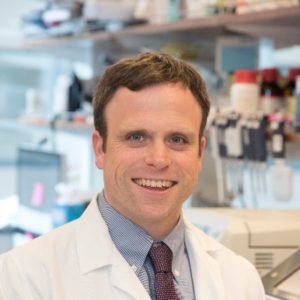
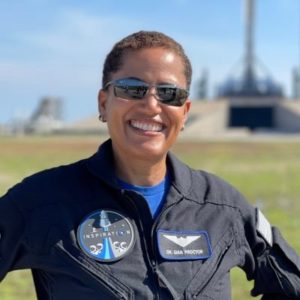
What did we learn from the first all civilian mission into orbit? Neil deGrasse Tyson and comic co-host Chuck Nice explore SpaceX’s recent launch, the Inspiration4, with biophysicist Dr. Chris Mason and geoscientist and pilot Dr. Sian Proctor.
Can the human body adapt to space? We discuss how humans respond to spaceflight, the biomes found within a spacecraft, and microbes in space. What happens when we only send the same kid of people up into space? What does a geoscientist think when she looks out the spacecraft window? What does it mean to be classified as civilians? We ask Chris what he is looking for in his tests. What do spaceflight and roller derby have in common?
What do you pack when you go to space? We break down the perseverance it takes to get to space and what sort of setbacks Sian saw on her way. We answer more questions like, how does zero G affect perfusion ratios in the lungs? Are there consequences? Do people in space really become taller? Is there a way to make this permanent? Discover the hardiness of bacteria in space and concerns about microbes from other planets. Could we contaminate the Earth with some Martian microbe? As space becomes more accessible is there a difference in training?
What changed about Sian after seeing Earth from space? Find out about Neil’s experience in a centrifuge. What did the Inspiration4 team eat in space? Are there long-term effects of being away from Earth’s magnetic field? How do you operate a Crew Dragon capsule? All that, plus, find out our wishlist for future space stations: What would you want to have in space?
Thanks to our Patrons Arlindo Anderson, Miranda Toth, Dino Vidić, Nala Andromeda, Erik Varga, JohnMettler, and Aaron Rikede Ahlman for supporting us this week.
NOTE: StarTalk+ Patrons can watch or listen to this entire episode commercial-free.
Transcript
DOWNLOAD SRTWelcome to StarTalk, your place in the universe where science and pop culture collide.
StarTalk begins right now.
This is StarTalk.
I’m your host, Neil deGrasse Tyson, your personal astrophysicist, and this is the Cosmic Queries edition.
And so Chuck, we’ve got people who know all about space, and zero G, and gravity, and gravity.
I love it.
You love it.
You love it.
I got Chris Mason, who’s a biophysicist responsible for analyzing the data they obtained on the health and well-being of the Inspiration4 crew that recently went into space.
Chris Mason, welcome to StarTalk.
It’s great to be back.
Yeah.
Yeah.
And you’re a biophysicist, professor of physiology and biophysics.
Love me some biophysics.
Cornell University, not upstate, because most of your medical stuff is happening right here in Manhattan.
That’s right.
What’s your address?
What’s your coordinates?
Right on York Avenue in 70s, so the concrete jungle in Manhattan.
There you go.
Yeah, I’m sorry, but that’s not really the concrete jungle if you’re on York Avenue.
I mean, let’s be honest.
Compared to Ithaca, New York, it’s a concrete jungle.
That’s the only place you can compare it.
Yeah.
So the only reason why we have Chris on the show is because we have Sian Proctor on the show, who actually went into space.
Sian, welcome to StarTalk.
Hi, Neil.
It’s great to be here.
Yeah.
And you’re a geoscientist.
I’ve got you here and a science communicator.
We love me some science communicators in this world and on this show.
And you flew in the SpaceX Dragon capsule, right?
I was the mission pilot for the SpaceX Dragon capsule.
So I became the first black.
Neil, I became the most black female pilot of a spacecraft in history.
So all the bling you got on there, for those who can see this by video, there’s chevrons on a shoulder.
You got wings.
You got art.
You got everything going on there.
You look like an African dictator.
Well, let me tell you, I came off that capsule dancing.
And I’ve been dancing ever since.
That’s tremendous.
Tremendous.
So tell me about the Inspiration4 mission.
What was the goal of the mission?
The goal of the Inspiration4 mission was the first all-civilian mission to orbit.
And we went for three days.
And our goal was to not only advance human spaceflight, but to raise $200 million for St.
Jude Children’s Research Hospital in the fight against childhood cancer.
Wow.
Amazing.
I mean, I just thought it was to let a billionaire go to space.
I didn’t realize there was something worthwhile attached to this whole thing.
I just thought, I just…
You solve for space, you solve for Earth.
Yeah, I thought we were just stroking billionaire egos.
Solving for space solves for Earth.
That’s…
And you guys were in orbit.
How many orbits did you guys execute?
Oh, that’s three days right there.
I know how to count my orbits.
And we went up 575 kilometers, so up there just above Hubble.
Oh, wow.
So, Chuck, just in case you didn’t know, there were two digs in that.
She first said, first civilian crew to go into orbit.
Did you catch that?
Not peek over a balcony.
Hey, guys, what’s happening out there?
Like, none of that.
Oh, wait a minute, we got to fall back to Earth.
As an astrophysicist, Neil, you know that it takes more energy to go to orbit.
So the mechanics are slightly, well, actually vastly greater than suborbital.
Plus, you guys need a heat shield to reenter.
And if you’re just going up and falling back, there are no heat shields involved at all.
That’s correct.
And then you said you just went above Hubble, just a little above.
Yes.
Hubble was initially inserted into orbit over 600 kilometers.
But over time, gravity has been pulling it closer to the Earth.
And yeah, we just went further than any human has been since servicing Hubble.
Yeah.
So this was badass in multiple dimensions there.
So what was your role other than like your pilot?
What was being monitored about you that brought Chris into the equation?
Oh, Chris just loved to poke and prod us.
I mean, he was swabbing.
We were giving blood.
We were using an ultrasound to look at our eyeballs and just all kinds of stuff, because I’ll let him tell you tell more about that.
I was the guinea pig in this.
Oh, okay.
So Chris, you know, if I were on that, I would say you ain’t touching me.
I’m just looking out the window the whole time.
Normally, Chris, the aliens are the ones doing this.
Yeah, I mean, that’s all I’m saying.
It’s like, you know, normally, it’s not another human.
It’s just like, you know.
Chris, we want to learn just like the aliens do.
We want to understand the humanities and particularly how humans respond to spaceflight.
So we did basically a follow up, not just for Dr.
Proctor, but for the whole crew of, you know, everything we could really have a full profile.
So blood draws, we looked at, you know, stool urine, saliva, you know, skin swabs, any biomolecules we could grab that they would consent to, we would grab it.
So basically, because we want to understand what happens to the body in space.
How do we prepare for longer missions?
How do we also plan just for, you know, any other space based medicine as well?
You will learn a lot when the body goes through these kinds of stressors.
You had me at stool sample.
And so, Sian, who else flew with you?
My commander, Jared Isaacman.
And then we had mission, our medical officer, Hayley Arseneau.
And our mission specialist, Chris Sombroski.
And then myself as the mission pilot.
So, it was a crew of four and that’s why Inspiration4.
Now, all of you are classified as civilians.
And so, I have a few questions about that.
So, you come to this also as a science educator.
And if I remember reading your bio, extensive background in art, correct?
Well, actually, funny enough, I just became an artist during COVID.
I needed a way to unleash my creativity because traveling and being an explorer as a geoscientist had been my career.
And this was during COVID, I found myself pent up with nothing to do.
And so, I thought, oh, okay, I’m going to invest in art and poetry.
And that’s actually how I won my seat to space is as an entrepreneur, an artist, and a poet.
Because I think to myself, there’s nothing less poetic than an astronaut from the old days coming back and talking about the right stuff that first went up.
They were not poets, right?
And so, I think space, we’ve been missing a dimension, a human dimension of what it is to experience space by having always sent the same kind of people up.
And so, now you help to sort of broaden what kind of brainwiring interprets what’s going on in space.
And I think that’s great.
What does a geoscientist see and think looking out the couple of window?
Well, you know, when you’re looking back on Earth as a geoscientist, you start to think about the geologic features, the big land masses, the bodies of water.
You know, we are a water planet.
But me coming with this artist perspective meant that now I’m seeing this, the colors, the brightness, the different hues of white, because a lot of times you think that it’s just one white of a cloud.
A lot of times we talk about the different hues of blue that you see from space, but there’s just as many variations of white in the clouds.
And I found that striking.
And then the patterns that the clouds form just from an artistic standpoint was stunning.
It was all stunning.
So, Chris, was there something in particular you were looking for, or were you doing, give me everything you got and I’ll sort it out afterwards?
What was the goal set for you?
We had some hypotheses, and it’s not just my own group, but there’s other collaborators working with Trish and other NASA investigators that are all working together on this mission.
But we had some hypotheses going in.
We actually thought that they probably would become more similar.
Their microbes on their skin would start to become more similar as the mission transpired, even only a few days in orbit.
And the bacteria and cells in your skin start to look a little bit more like the people next to you.
We’ve even seen this with roller derby.
If you just sequence the DNA of players before and after a match or a basketball game, there’s a transfer of microbes.
And so we’re calculating exactly how many we move around.
I don’t want anybody else’s microbes on my body.
There’s a lot of what we call foreign object debris floating in microgravity.
And so everything is moving.
Wait, wait.
So as I understand this, because I was once tested by MPR, did a special on this.
So each one of us has our own cocktail of skin microbes.
Is that a fair statement to make?
And it’s unique to us.
Might even be more unique than our fingerprints, perhaps.
And so now we’re all in a capsule together, breathing the same air, rubbing up against each other, and you’re there for days.
And so you’re suggesting that the microbiomes of people’s bodies might begin to converge.
Yes, and I don’t think they’ll just become one giant organism by the end of the mission.
That’s called alien.
Hey, you got your biome in my bacteria.
Hey, you got bacteria in my biome.
Well, I’m hoping I rubbed off on Jared then, or he rubbed off on me a couple billion dollars.
So it has literal meaning now.
Oh, you rubbed off on me.
It’s like literally.
It was really interesting to think about this because I had actually worked with Chris’s team beforehand, living in the Mars simulation at the high seas habitat, collecting samples before.
So I kind of came in with an awareness of what he had been working on.
And this whole idea of living in that time was four months.
I lived in the Mars simulation for four months, investigating food strategies for long duration spaceflight for NASA.
So Sian, you just don’t like home.
Are there problems at home that you want to share with us?
Well…
Send me to Mars.
Even fake Mars will do.
We’re here for you, Sian.
This whole idea though of the microbiology and how it changes and thinking about when we go off to confined habitats, what does that mean and how important it is.
And I think as a crew, we all thought that this was really important to do because, you know, advancing human spaceflight means advancing the science that comes along with that.
Yeah, if you don’t do that, what are you doing?
It just joy rides on that level.
Very cool.
Well, the whole point of this program is to get questions from our Patreon supporters.
Do we have to?
This is really very interesting.
You’re not hogging the questions, Chuck.
Yeah, I don’t want to kill this vibe with questions from regular people.
No, I’m joking, people.
We love you.
If a comedian has to say, I’m joking, what does that mean?
Uh-oh.
You’re going to get me killed on Twitter.
When we come back, Chuck has collected questions from our supporters.
And we’re really here to find out what they want to know about your trip in space with StarTalk.
Hi, I’m Chris Cohen from Haworth, New Jersey, and I support StarTalk on Patreon.
Please enjoy this episode of StarTalk Radio with your and my favorite personal astrophysicist, Neil deGrasse Tyson.
We’re back, StarTalk Cosmic Queries.
I got Chris Mason with me, and Sian Proctor, too.
Chris is a medical professional studying physiological changes that may or may not have happened in the Inspiration4 crew that included Sian Proctor, who’s with us here and now.
And this is a Cosmic Queries edition, but just before we go to the queries, Chuck.
Did you guys pack a suitcase?
When I saw you guys boarding, I don’t remember y’all carrying a bellhop and a roller and a rollerboard.
So what happened there?
Well, traditionally NASA astronauts have gotten a very small amount of allotments that they can take the space with us.
SpaceX said, you can take a duffel bag.
Now you can imagine my eyes getting big at the thought of, I can pack a duffel bag?
Well, I packed that thing so tight, I brought everything I could include, you know, think of from my childhood, my friends, my family, strangers off the street.
I was getting everything and bringing it to space.
And so what do you do?
You bring it back to them and you’re like, this has now been to space?
Is that the idea?
Yes, I took wedding rings.
I took pictures.
I took a friend of mine who was a flight attendant, her wings.
Oh, you took the flight attendant, right, okay.
I took a friend of mine’s wings.
But I also took things like comic books from when I was a kid.
I had Star Wars comic books and I had trading cards.
I took Star Wars and Star Trek with me in some form.
And so just really…
Yeah, and then my dad’s Neil Armstrong autograph that he got when he was working for the NASA tracking station on Guam during the 70s.
That’s pretty cool.
Yeah, and then my art supplies to paint with and to draw with.
What did you paint in space?
What did you draw?
I drew a dragon.
You drew trees and books and werewolves?
I have a kind of art style I call Afro-Gaia, you know, like Mother Earth, but from an Afro-futurism standpoint.
And so I drew this beautiful Afro-Gaia picture with the dragon capsule above it.
And so, yeah, really cool stuff.
Okay, that’s cool.
And I painted in space.
All right.
That’s pretty cool.
I would have just had a, I would have just got a black, I mean a white canvas painted all black and been like, space.
The final frontier.
That’s why we didn’t send you, Chuck.
You keep providing evidence for why you didn’t go.
There you go.
All right, so Chuck, give us some questions.
What have you lined up here?
All right, let’s jump into it here.
This is Kerry Gallacher, who says, hello, Dr.
Proctor, Dr.
Mason, Dr.
Tyson, and Lord Chuck.
Is that like Baltimore?
He who shall not be named?
Wait, Chuck, did she really call you Lord?
She called me Lord Chuck.
I remember that.
We had one episode with the general, who I made a joke and somehow this has stuck all over.
We had an Air Force general address Chuck as Lord, because we all had titles and he invented the title of Chuck.
Everybody had a title but me.
And now everybody’s calling Chuck Lord.
I love it.
Okay, here we go.
She says, my name is Scarlett and I am 10 years old and I love science.
I want to say, Dr.
Proctor, I watched the special with my mom and you were set back in your astronaut career.
What made you persevere?
I want to be a scientist and my mom says I can do anything.
Also, what was your favorite part?
And what experiments did you perform?
Hashtag girl power.
Oh, wow.
There is a lot there.
And perseverance.
I always say preparation and perseverance make you ready for opportunity.
And what I mean by that is that my preparation through my education, through whether it’s formal or informal, becoming an explorer, but then also perseverance, persistence.
And so in 2009, I was a finalist for the NASA astronaut selection process, got to the yes, no, and it was a no.
And you’re like, oh, you’re kind of devastated.
But then figuring out ways to persevere and persist by moving forward.
I became an analog astronaut and I thought if I can’t be advancing human spaceflight up in the stars, I will do it here on Earth.
And then when the opportunity for inspiration for came along, I had that preparation and perseverance, persistence to be able to take advantage of that opportunity.
And so I think, and as a result of that, my favorite moment was looking, opening up the cupola for the first time and seeing our planet from space.
It was transformative.
That’s great.
And so in summary, what you’re saying is that, well, I don’t want to generalize, but I think I can accurately that many people who succeed in life, that’s all you end up paying attention to, but you park the curtains and there were failures back there.
And often the people who do succeed are the ones who recovered from their failures, did something different, did something better, continued to advance.
And then you see them at the end and there’s a parade and there are paper articles and the magazines.
But in fact, no achievement really ever occurs without some kind of struggle.
Is that a fair characterization of what you said?
Absolutely.
And I look back when I got that call saying I was going to be the mission pilot for Inspiration4, that I’d won the seat.
My whole life came into focus and I was like, wow, all of that preparation from just like your mom Scarlett is telling you that you can do anything.
My dad told me that I can do anything and he always instilled that drive in me that the world was waiting.
Just follow my passion.
And so I look back and I think of all of the little steps that I had and some of them were to the side and some of them were a step back, but most of them were moving forward in some way.
And that’s led me to this opportunity in this moment.
I like the analog to steps.
That’s beautiful.
One step forward.
There you go.
Yes, absolutely.
Now I know what my problem is.
And one giant leap for humankind.
See, my parents said, you know, not you can do anything.
They went, let’s be honest, you can do a lot of things.
Let’s not get crazy.
Not going to say you can do anything.
All right, here we go.
This is Josh Weiner, who says, hello, everybody.
Josh from Huntington, West Virginia, here currently a second year medical student at Marshall University.
We’re in the pulmonary lungs right now, and we’ve learned about ventilation profusion ratio of the lungs changes as you move down the lungs, because, well, you guessed it, gravity and space travel, does removing the factor of gravity change the ventilation profusion ratios in different sections of the lungs and have any serious consequences on normal physiology?
I’m going to let Chris can take that one.
I could answer that, but it’s so simple, I’ll give it to Chris.
Sure answer, yes.
It does change when you’re in flight.
We have not actually, though, taken out human lungs after a space flight to really dissect them, because when they get back to Earth, the astronauts are still using their lungs.
So that hasn’t happened for a full deep dive.
But for mice, we have seen this.
When they get back, some of the mice have been dissected in space, and most of them, though, as soon as they land, we get dissections of mice, including the lungs.
And you can see really dramatic changes in lung function and also how genes are expressed.
So when your genes get activated or turned down in response to the stress.
So we know that there’s a lot of adaptation for lungs, and that the perfusion, though, from what we can tell, we can’t say for human, but we can say it looks like it definitely changes in mice when you’re up in flight.
And three liters of fluid goes up in your upper body when you get into space, and so that’s why you get sort of the puffy face when you first get up there.
You mean that fluid that would normally be in your lower half of your body doesn’t know to hang out there so that it just goes elsewhere in your body.
Is that what you’re saying?
Yeah, because millions and millions of years of evolution has gotten the body used to just being able to push back up and suddenly you don’t have to.
So it takes a little while for the body to adapt, but it’s actually quite adaptable.
Is that why when you wake up sometimes you have a puffy face?
Because you’re horizontal, and so the gravity doesn’t know to go up or down in your body.
But people do wake up with puffy faces.
It could be from drinking.
I was going to say it’s scotch.
That’s the scotch.
There’s a lot of reasons possible, but if you’re on an angle, it can contribute.
All right.
All I know now is that mice are the new red shirt Star Trek crew member.
They are.
As soon as they touch down, they die.
All right.
Here we go.
Let’s move on.
This is Andrew Magri.
I heard that people who go into space for months become taller by the time they come back to Earth.
What are the limits to height that you can gain if you were to stay in space?
Love the show.
It would be nine feet tall, I guess.
Sian, how much taller were you when you came back?
Actually, right when you get back to Earth, you shrink back down.
Gravity takes over.
But I felt taller on orbit, if that helps.
And Chris, what’s the data on how much you lose or gain?
One to two inches in flight.
So Scott Kelly, when he was up for a year, he got about two inches taller.
But as Dr.
Proctor just mentioned, as soon as you get back to gravity, gravity takes it away from you.
And Scott Kelly is not tall to begin with.
So if I remember, we had him on StarTalk.
So he was a short guy, so maybe he enjoyed those two inches if he had issues with it.
There was no way to keep him that way, unless you put him in a rack.
No, unless you stay in space or, yeah, like some implants maybe.
But that’s not a flight approved yet.
All right.
All right.
Give me another question, Chuck.
Here we go.
This is Nathan Mitchell who says, Hi, my current major is aerospace engineering.
However, I’m considering swapping my focus to botany and horticulture.
I’d love eventually to branch into the study of how we can seed planets and moons.
What do you professionals think will be necessary before we can successfully send down spores and seeds to begin to populate other viable bodies in our universe with life-sustaining plants and bacteria?
Wow.
Let me ask Chris, because Chris, you studied bacteria on the skin and in the digestive tracts, presumably also of your crew.
How hardy are bacteria?
Can we just take a colony of them and drop it on Mars, and will they get along just fine?
The bacteria come back in their spaceships.
Drop me off on a desert planet, will you?
I’ll show you!
They’ll mutate and come back.
I mean, so there are microbes, we know, that can survive in the vacuum of space, and there’s a big concern about if you bring something back from Mars.
Like, for example, in 2032, we’re supposed to get samples back from Mars.
We’re going to look at them.
And the Planetary Protection is a whole division of NASA that just thinks about this, either forward contamination or reverse, where we bring something back.
And we know that microbes can survive in almost any nook and cranny of the Earth, including past boiling water temperatures or really deep freezing, high pressure, high radiation.
So if we’re to find any life on Mars, it’d probably be microbial.
And there are strains of bacillus that could probably survive the trip there and back.
But there’s people looking at this.
We’ve published on this.
NASA has a whole team that just swabs the spacecraft before they go and before they get sealed off and sent.
So we’re keeping an eye on things.
So we just have to know whether bacteria will ever evolve to be able to build their own spaceships.
This is what should worry us.
Yes.
Because they’ll be pissed off that we dropped them off on Mars.
But if a meteorite hits and comes back with them, they can hit your eye that way.
And I will say, I did bring the first meteorite back to space with me when I went up.
So, yeah.
Really?
Didn’t you disrupt the natural order of the universe by reversing which way the meteorite went?
Yeah.
It’s a salmon meteorite, you know?
That’s cool.
All right.
Well, give me some more, Chuck.
All right.
Here we go.
This is Matthew Kelly.
He says, hello, everybody.
I’m a recent Patreon supporter.
I don’t know if this is actually related to the subject, but I’m going to throw it out here anyway because I can.
I’m wondering, as space becomes more and more accessible to civilians, is there any change in the training required to support a rocket launch?
If I remember correctly, astronauts feel a force of around 3 Gs during the launch.
No civilians are trained to support that much force on themselves.
No, wait a minute, Chris.
Isn’t 3 Gs what you get in any amusement park?
In a fast roller coaster?
On some of the bigger rides, you can get up there.
You get a bit briefly, though, but you’ll get a lot more Gs.
You can get up to 5 or 6 Gs even for some of the really larger rockets.
Actually, it lasts a little longer.
It’s not 3 or 4 seconds.
It will be for several minutes.
You’ll have pretty high G-forces as you go.
So, Sian, how many G-forces did you experience going up or coming back?
Between 3 and 4, but it was more, I tell you, coming back was a lot different than going up because, you know, being on orbit, not having any G-load for 3 days, when we hit the atmosphere, it was like, oh, oh, wait, what is this?
As gravity started to take over and I was doing some pressure breathing by the end.
So what are you saying is your body got lazy?
It did.
It got lazy quick.
That’s pretty cool.
It was definitely noticeable.
It happens fast.
If you miss one day of working out for long missions, you can see more calcium show up in the urine.
You can see the bones, they go away quickly.
So the body is built to move and built to have gravity.
So if you take that away, it starts to take, you know, just degrade a little bit.
So if you’re in space for long enough, you’ll just be boneless by…
Mmm, like a chicken nugget.
Oh my God.
Where have you been, space?
You look delicious.
It’s an alien plot.
It’s a big swimming pool full of barbecues.
All right, we gotta take a quick break.
When we come back, more really cool questions about the Inspiration4 flight and what it means to us all when StarTalk returns.
We’re back, StarTalk, third and final segment of Cosmic Queries.
We’ve been into space and back with Inspiration4, one of the most recent SpaceX launches, and with civilians, only civilians, the highest civilians have ever gone, higher than the orbit level of the Hubble Telescope.
And they went into actual orbit, not just into sub orbit.
So this was badass in every way.
Higher than me listening to Dark Side of the Moon back in college on a…
Okay, Chuck.
And we got Chris Mason, who’s our biophysicist, studying the crew, not only before they went up, but of course when they came back as any good science experiment needs.
They have to have the sort of the baseline of what is, so that you will know what could have possibly changed.
And of course, Sian Proctor.
I love your career and what you’ve done, and it’s just great to have you on the show.
And we’re hammering you with questions from our Patreon members.
So Chuck, keep it coming.
Jeff Johnson says, many astronauts have explained how profoundly their view of life and the world has changed as they have seen Earth from space.
You were high enough up to have this experience.
What changed about you?
Oh, I’ve got to say, what changed about me was thinking about it from that artist lens.
And when I was staring at our planet, I kept thinking how we’re just individual bristles of a brush, and we don’t think that we can make an impact.
But if you take all of those bristles together, you can paint a beautiful portrait.
And we are actually impacting our planet, and we are painting this portrait that’s in motion, and we get to determine what it’s going to look like.
I reference it to What Dreams May Come, the movie with Robin Williams, when he’s running through this portrait, and being able to change it and swirl it and make it into what he wanted to imagine.
Well, we as humans can do that with our planet, and with that comes responsibility.
I am so glad that you’re a painter because I forgot that you’re a painter, and when you said, each one of us is the individual brush.
That’s just beautiful.
No, I thought you meant a hairbrush, and I was like, this is the dumbest damn analogy I have ever heard in my life.
Okay, Chuck, the rest of us are on this call of paying attention, and I use the paintbrush.
I’m like, are you using a pick and not a brush?
Don’t.
He does not deserve that.
Here we go.
In the old days, there was survival training in the desert.
They put you in a centrifuge until you vomited.
You know, there are things that they used to do to astronauts.
And I don’t think they do that to them anymore today.
So what’s what has changed?
The training is not as how close can I get you to death and see if you don’t die.
It’s much more now.
Let’s make sure you’re safe and healthy.
Which it has this utility in the early days of the space program.
We didn’t know what we didn’t know.
So you got to protect.
They got to be they got to be ready for anything.
But I will say that we did have Centrifuge and which was very helpful to understand the G load.
And we did fighter jet training and we did a NOLS like experience where we hiked up to the top of Mount Rainier to do crew cohesion and bonding.
But what has been different as the mission pilot is that I really became a systems engineer where I had to understand all of the systems and how they integrate because the Falcon, well, the rocket, but also the Dragon capsule is autonomous.
And so my job in the commanders is to look at, you know, making sure the flight computer stays on target with what it’s supposed to do and know how moments talking to you and taking over, you know, 2001.
But also thinking about if you have a contingency or an emergency, how do you take care of that?
What do you need to do?
And so that’s what I was trained on.
Sian, did you barf?
You can tell us.
No, I didn’t.
But I don’t believe you.
No, you’re lying.
Better.
I did.
But I got a shot of Phinegrin.
I was like better living through chemistry.
Oh, I’m not ashamed to say that.
I got on orbit.
I was like, okay.
And why?
Why even chance it?
Hit me.
So I did a centrifuge once and I lost my lunch.
And so I was the inadequate stuff, not the right stuff.
But what’s great about it now is that you can take something or you can take a shot and feel better.
And I got one.
And within a half hour, I was like, okay, I’m great.
Some of my best friends are made of chemicals.
So that’s great.
All right, Chuck, give me some more.
All right, here we go.
This is jmax479 who says, hello, Dr.
Mason.
Hello, Dr.
Proctor.
Hello, Dr.
Tyson.
And Chuck, you occasionally make me laugh.
I should read these in advance of the show.
It says, this is Jason.
I’m a new member here.
How do you have to curtail your food intake for the mission?
I suppose there’s no Mexican buffet, right?
Oh, no.
I was eating pizza on orbit and BLTs and it was three days.
So we worked it out with SpaceX.
They wanted us to be on the healthier side and we’re like, this is more like camping.
We want food that because food and mood go together.
So we wanted food that wouldn’t stress us out because you’re already in a high stress environment.
I’m betting no one brought kale with them.
Kale chips.
That’s a very omnivorous thing to say.
With no Soylent, we didn’t bring that either.
Soylent, yeah.
But there were meal cubes that they offered us and we rejected them.
We were like, no, we’re not taking meal cubes.
And so because we were up there for such a short period of time, we had a cooler that with cold coffee, like frozen coffee that we could drink and tea and that helped to keep our fresh food, like veggies and pizza and, you know, like I said, BLT and bacon preserved.
Yeah, Sian, if they let you take a duffel bag, then you’re not eating food cubes.
There’s no way.
That was one of the things that we talked about.
Like if we get to fill a duffel bag, we can put whatever we want in here.
All right, Chuck, here’s some more.
All right, here we go.
This is Brian S who says, I’ve heard a lot about the effects of human beings being away from Earth’s atmosphere and gravity, but what can long term effects of being absent from the Earth’s magnetic field have on the human body?
Yeah, Chris.
Or does it?
So Chris, I don’t know that our bodies even thinks or cares or knows about the magnetic field at all physiologically.
Is that true?
We don’t do too much in sensitivity.
Whales potentially navigate with magnetic fields, but we don’t yet have any of those abilities.
So we can basically…
You’re working on that.
Yeah, that’s what we got.
There’s a project in lab.
It should be done next year.
They’re just implants.
That’s all.
So we’re still in the protected Big Sea Van Allen belt, so most of the risk of radiation is still fairly protected in low Earth orbit, but the Inspiration4 mission went much higher than the space station, which is normally 400 kilometers, went almost out to 600 kilometers.
And so there is an expectation it’s a little bit more radiation the farther you get from Earth.
And so that’s something we’re looking at right now in the data.
And I don’t know, Dr.
Proctor, did it feel more radiating out there?
Did you glow when you went to the…
I was going to say I came back with an aura.
In fact, artists have always painted auras.
This is a thing that shows up in artwork for sure.
Okay, so, but otherwise, Chris, because I know just numerically the field is very, very weak.
And so there was no reason why I think the field itself would matter, but the fact that it protects us from the harmful charged particles from the sun, that’s the interesting fact here.
Yes, yeah.
And then when you start to get the lunar missions that are planned and even Mars missions, you’ll then transit into planetary space and you’ll get a lot more radiation.
So that’s when it starts to really be a factor, we think.
And that’s one of the biggest questions that NASA has and that we have, just keeping an eye on the radiation risk.
Right, and you’re using radiation in the reference to particles, not electromagnetic energy of light, right?
Yeah, the light’s fine, but it’s really just these high-energy particles that zip through space.
It’s an unfortunate defect in the term back when we were first learning about radioactivity.
And they can have the similar effect on you, but they’re actually two different things.
One is made of light, the other is made of particles.
And so we’re stuck with it.
We’ve got just a couple of minutes left, Chuck.
Let’s try to do a lightning round.
So you guys have to answer the question in three seconds, okay?
Chuck, go.
All right, this is Bill Wasala who says, greeting Earthlings, how difficult was it to operate the touchscreens and read accurately during the powered ascent?
Oh, I like that.
Sian, what was happening there?
Easy, didn’t even notice.
I was surprised at the vibration level and stuff.
It was negligible.
Okay, and so now I have fat fingers, which makes it difficult to navigate on my smartphone.
So were those screens big enough so like a fat-fingered person won’t miss the right button?
Absolutely.
You’d fit right in.
Okay, because if one button is a nice sailing forward, the other one is eject.
I don’t want to miss the button.
Nice big screens.
Excellent.
Good.
This is Jared Sorber who says, Hello, given the current plethora of proposals for private space stations that are now out there, what are the additional capabilities or facilities that you might think would bring to the, that are not currently in the ISS?
So Sian, what do you need?
What do you want up there?
I want a, I want a shower.
I want that, I want that swimming pool that they had on Interstellar.
But I do want to take, not lose gravity, but I want something like that.
How about an espresso machine?
I mean stuff, you know.
Oh my goodness.
I want the replicator thing that, you know, when I say Earl Grey hot from Star Trek.
Earl Grey hot.
Yes, please.
Yes.
You know, now you just, you know, a child of science fiction.
I want the love drives.
I don’t think that’s what he was asking you.
But if you could get all sci-fi on us, okay, I want the replicator too.
It’s going to be more, I think, personal space is one of the things.
The Dragon capsule, we didn’t have any.
And so that’s something to think about.
When you’re talking about new, bigger, different designed international space stations for tourists and stuff, where it’s not research lab based, that means that some of the luxuries that you might want to have when it comes to bigger personal space, access to more windows, and then comfort areas where you can go and lounge and relax, I think those are things, because you’re moving to some extent away from that, that focus on just pure research and science behind it.
So comfort.
Yeah.
This reminds me, not reminds me, I mean I read, the first airplane flights, the biplanes where you would pay to take a ride, if you were around back then you might have said, you know, I think you should enclose this cabin.
I don’t want to wear goggles.
Simple things, you know.
Like a room.
So guys, we got to call it quits there, but this has been fun.
It’s been delightful just to see the dawn of an entire new industry really, which is tourists in space.
And I’m glad we, you know, this is StarTalk, so we do it from all angles.
And Chris, great to hear what you’re doing with the data and more that you might be learning that you can possibly report back to us in a future episode.
And Sian, delighted to meet you and see what you’re doing.
And I bet this won’t be your last time in space, is what I suspect.
All right, guys, again, thanks for being on the show.
Chris, Sian, Chuck, always good to have you there as my trustee co-host.
Neil deGrasse Tyson here.
And then Cosmic Queries, as always.
Can I put you on the spot and say, are we astronauts?
I heard your view on the suborbital.
Yeah, I don’t want to be like stick in the mud for everybody.
But if I had to really draw a threshold, I’d say going into orbit.
That’s as you began this show, saying accurately, it is completely different in the engineering of an object that goes into orbit than something that goes up above the Karman line and falls back to Earth.
And it’s not just one is not just simply an extension of the other.
It’s a whole other thing.
So but I’m going I’ll stay with it.
The Karman line.
OK.
But as an astrophysicist, send me somewhere.
Moon, Mars and beyond.
And then I’m good to go.


 Become a Patron