


 Unlock with Patreon
About This Episode
What are your burning questions about the universe? On this episode, Neil deGrasse Tyson and comic co-host Chuck Nice answer Patrons’ flaming-hot questions about the universe covering stars, black holes, gravity, philosophy… everything but the kitchen sink!
What is Neil’s favorite star? We dive into some of our galaxy’s most interesting stars and the mysterious phenomena around them, constellations, and whether the star of Bethlehem was a supernova. You’ll learn about ancient global astronomy through history. Shifting to our own solar system, find out if there is a mysterious ninth planet in our solar system beyond the light of our sun.
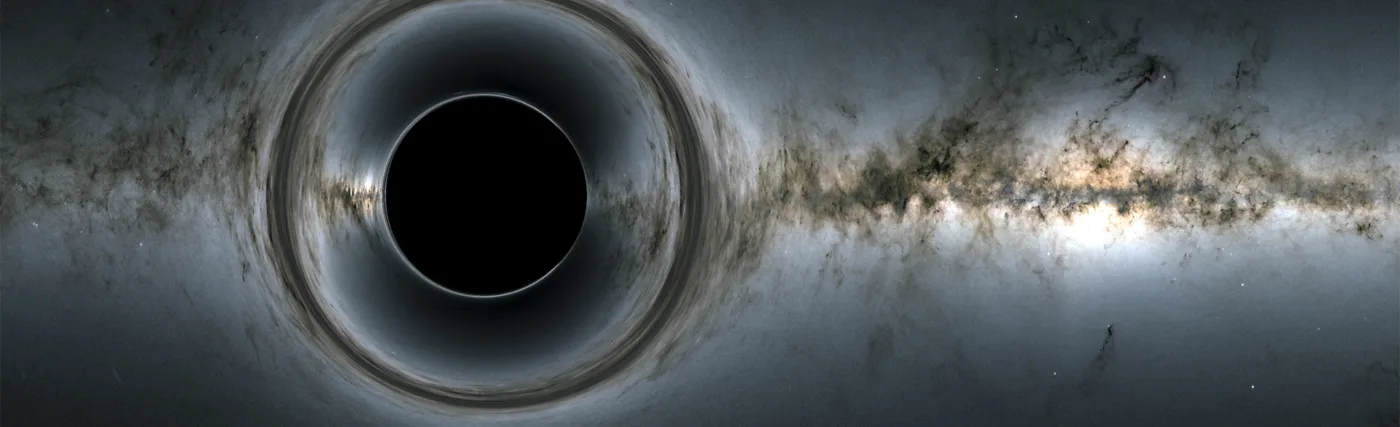
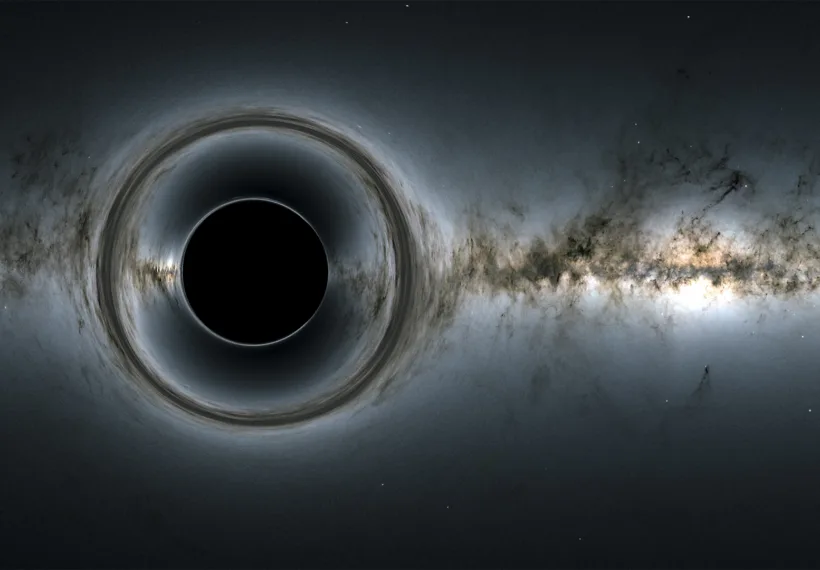
Discover the difference between how gas giants and stars form. We explore more black holes and explain how Hawking radiation works. How could black holes eject particles if nothing can escape the event horizon? Does a black hole have a memory? We talk Einstein, matter, and antimatter.
Going deeper and deeper, we answer the question: If energy and matter are equivalent, do modern theorists believe that free will exists? We break down subjectivity and the role of science within humanity. You’ll learn about neuroscience and the inception of thoughts in the brain. How does the subconscious mind work? We explore the idea of free will, whether or not we are in a simulation, and a quantum approach to predetermination.
Could we use stars as an alchemy table to forge elements we want? What other sci-fi concepts do our Patrons have cooked up? You’ll learn why gravity is such a weird force. Is there another paradigm to talk about gravity? Are there other dimensions or dark matter that work to impact gravity? The more we learn the more we know about our own universe. But above all, we thank the programmer of our simulation for free will and yet another episode of StarTalk!
Thanks to our Patrons Sabrina Anderson, Adam Collins, Jason Pretzlaf, Victor Sanchez, Gino Arizmendi, Austin Douglas, Sara George, douglas robinson, Royal_ish, Anita Petty for supporting us this week.
NOTE: StarTalk+ Patrons can watch or listen to this entire episode commercial-free.
About the prints that flank Neil in this video:
“Black Swan” & “White Swan” limited edition serigraph prints by Coast Salish artist Jane Kwatleematt Marston. For more information about this artist and her work, visit Inuit Gallery of Vancouver.
Transcript
DOWNLOAD SRTWelcome to StarTalk, your place in the universe where science and pop culture collide.
StarTalk begins right now.
This is StarTalk, Cosmic Queries edition, the ever-popular Cosmic Queries.
And that means I got Chuck Nice right next to me, virtually.
Virtually, yes, you don’t even know it.
But the calls are coming from inside the house, Neil.
I’m here.
I’m here.
He’s outside the back door.
He’s getting closer.
I saw that movie.
I don’t want that to happen.
So Chuck, you got some questions for us here.
Again, if you’re unfamiliar, we solicit questions from, in this case, our Patreon members.
They get their questions asked one on one.
And you got them and I haven’t seen them.
And if I don’t know the answer, I will tell you.
Go on to the next question.
That is not true.
If you don’t know the answer, you’re going to tell me something.
I’m going to tell you something, whether or not it’s the answer.
That’s true.
You’re going to tell me something.
I’ll value add to the question in whatever small way.
Look at you.
I like it.
All right.
So all of our questions come from Patreon now, people.
So if you want…
If someone says like, what does space smell like?
And I say, I don’t know.
What do you smell like?
There are ways of still addressing the question.
Neil deGrasse Tyson plays the dozens.
All right, here we go.
So by the way, people, all of our Cosmic Queries questions are drawn from Patreon now.
We used to scour the Internet and all of our incarnations to find out your burning questions.
But now we basically just go to one place and that’s Patreon.
So go to Patreon, sign up, get the get the minimum thing for, you know, being a Cosmic Queries submission and we’ll read your question.
Also just remember that when you do that, you’re helping us put this show on, OK?
So there you have it.
Here’s our first question.
This is.
Wait, wait, Chuck.
This is a grab bag, right?
Oh, that’s right.
It is a grab bag, which means there is no theme topic.
Anything these people want to ask you, they can ask you anything we’ve been trying to find a name for this.
Galactic gumbo was one I liked that my favorite, too, because now you know why they don’t know a call.
You know why?
Because now you know when you put it all together, you’re going to add a little guy on pepper and you’re going to end up with a little galactic gumbo.
So I don’t know, maybe we’ll call it kitchen sink, who knows?
Kitchen sink.
The cosmic kitchen sink.
Jensen Smart wants to know this.
What is your favorite star and why apart from the sun?
Oh, yeah, he knew that’s what I was going to give him.
Yeah, so it would have to be Beetlejuice.
Beetlejuice, if you want to pronounce it.
You know, I’ve heard people say Beetlejuice and I’m just like…
Really?
Actually, it’s Beetlejuice.
Yeah, it’s actually Arabic and maybe I’m not even pronouncing it right, but it’s definitely not Beetlejuice, okay?
I thought, okay, I’m going to shut up there.
But just make sure you don’t say it three times.
No.
Twice is okay.
So, Beetlejuice is one of the two brightest stars of the constellation Orion.
Beetlejuice is Orion’s upper left armpit, basically.
I’m told that if you translate from the Arabic, it’s like armpit of the great one.
And so he’s variously drawn, you can call it a shoulder if armpit grosses you out.
But so Orion is a hunter and he’s standing there and he’s defending himself against Taurus the Bull, another constellation up there in the sky.
And that star is a red supergiant.
And we tell it like we see it in astrophysics.
Why do we call it a red supergiant?
I’m going to guess that it’s red.
Because it’s red.
B, because it’s big.
C, because it’s super big.
All right, if you put Beetlejuice where the sun is right now in our own solar system, the earth would be orbiting inside its surface.
Okay, so we wouldn’t exist.
Big enough for you.
So, and Beetlejuice is a candidate for supernova.
As it ends its life, it will end stupendously in a titanic explosion.
And this sucker will be visible in broad daylight.
Yeah.
So it’s just, it’s a star that’s got a lot going on.
And I like stars that have a lot going on.
And this past couple of years, mysteriously Beetlejuice dimmed by two thirds.
Okay.
What’s that about?
Within months.
This is stars that live hundreds of thousands and millions of years.
And the high mass stars that blow up, they don’t live billions of years.
All right.
They only live hundreds of thousands and millions of years.
All right.
So if something happens within a short amount of time, it’s like, whoa, what’s happening?
What’s going on?
And I took photos of Betelgeuse as part of the whole constellation.
And then I looked at it and I almost lost my breath because I had never seen the constellation with the stars in that relative brightness.
My whole life, Betelgeuse is one of the brightest stars in the constellation.
Then it had dimmed and became uninteresting.
And it was like, oh my gosh, the sky is changing.
I got a little spooked.
I’ve got to give it to you.
If you’re wondering, just Google Betelgeuse and there are all manner of articles about it dimming.
It’s been slowly coming back.
Point is, we did not understand why it dimmed.
We don’t have a model for why it should dim.
And people were worried that maybe it’s ready to blow.
Or that there’s somebody has a dimmer switch.
Yes, of course.
Usually when there’s something in the sky we don’t understand, they’re the alien explainers that run to the front of the line.
I could explain it.
They’re aliens that were building a Dyson sphere to block the sunlight so that they can power their civilization.
This would be a sphere that prevents the light from emptying into space and collects all of the energy for their own exploitations.
So there’s always a person who wants to tell you aliens did it when at that moment we don’t yet understand it.
But it’s come back for most of its brightness.
And so I’m sleeping well at nights now, but over that time, I was a little uncomfortable.
So now this dimming, which I’m uncomfortable with now, is that, was there anything transiting to cause the dimming or?
No, nobody had any.
Jesus, that’s creepy.
Yeah, it was completely creepy.
Some mechanism was going on inside of it that we haven’t modeled and we don’t understand.
Oh, that’s cool, actually.
Yeah, it’s actually pretty cool.
It’s actually pretty cool.
By the way, there are plenty of stars.
By the way, let me make this clear.
Plenty of stars in the night sky are called variable stars, all right?
And they’re called variable stars because, Chuck?
Their intensity raises and lowers.
Yes, it varies, right.
Right, it varies, thank you.
Yeah, like I said, that’s how we roll.
So the plenty of stars that do that, and we call them variable stars, Betelgeuse was not among them.
So that’s why.
Oh, man, this is so interesting from one stupid question about what’s your favorite star.
It’s like, what’s your favorite color?
And you turned it into something interesting.
And you can look at old maps of the night sky from 500 years ago and earlier, and look at the maps that they drew of the constellations.
And there’s Orion and Betelgeuse is this juicy, bright thing.
I mean, how do you make something bright when you’re drawing with a pencil?
So they put stuff around it just so that it shows up more visibly in the line drawing of the constellation.
So you look at those maps and it’s like, whoa.
So now this supernova visible by in broad daylight.
So I read somewhere that many people, many people, take it back, the person that I was re was writing this thought it’s possible that the Star of the Three Wisemen was indeed a supernova that because the star was visible all the time, that’s why they were able to follow it because it was always visible, including daytime.
So is that possible that that’s what it was?
So you’re talking about the Star of Bethlehem?
Thank you, the Star of Bethlehem, because you know, I’m so good at religion.
So this is the star that the Three Wisemen, today we call them wise guys, maybe.
Hey, how you doing, Jesus?
Three wise guys.
Don’t be a wise guy.
What’s the problem, huh?
No room at the inn.
Okay, anyway, we’ll take, Louis will take care of it.
Hey, who thought you couldn’t sleep there, huh?
We got, we know people, we know people.
We know people, Jesus, it’s okay.
We got a manger for you down the street.
We’ll make this happen.
We’ll make good on this.
So the three wise guys.
So yeah, so there’s a lot written on the star of Bethlehem.
Could it have been a comet?
A, a, and so when you look back to when Jesus was likely born based on all information available, and that was around four BC, anywhere between sort of two and six BC.
So people split the difference around four BC.
Jesus was not born in zero, in year zero.
All right.
Plus there was no year zero, but that’s a whole other, we’ll do an explainer on that.
We went directly from one BC to AD one.
All right.
And there was no year zero, because when the calendar that was set up to do that, the zero had not yet been invented.
Oh, oh, thank you, man.
As I’m saying, it’s a whole, we might can explain her out of that one.
But here’s the thing.
So you can, there are a lot of things that happened in the sky that were never associated with good events, like comets, right?
So could it have been a comet?
No, because everyone says comets are bad at the time.
And other sorts of phenomenon.
So could it have been a supernova?
Well, supernovas leave behind sort of remnants of their existence.
We have what are called supernova remnants.
And we comb the sky for this and there’s no remnants.
Plus there’s nobody else talking about it in the sky at the time.
The Chinese were keeping really good records of their night sky.
Astrologers were convinced that whatever happened in the night sky was directly affecting events on earth.
And so you wanted to track such things.
No one has any other records of it.
So, yeah, we can’t really reconcile it with astronomical phenomena.
Interesting.
Okay, wow.
Yeah, but why stop there?
Most of what’s in the Bible is not reconcilable.
Just call them all miracles and you’re done.
Right?
Okay, I mean, yeah.
Yeah, maybe the star was only in the eyes of the three wise men, you know?
I mean, or whoever saw it.
And if you were a non-believer, you didn’t see it, right?
There are ways out of that, right?
Psychotropic drugs, okay?
If you are going to believe that the creator of the universe impregnated a virgin giving birth to his son, then you don’t need to appeal to actual astronomical phenomenon as the star Bethlehem.
You know, okay, that kind of makes sense.
It’s like it’s not a stretch to just say this was in there.
They saw this and it’s in their minds.
It’s like a black like a black storm trooper.
Like how can you have a problem?
Seriously, how are you going to have a problem with a black storm trooper?
Okay, really?
So you can suspend disbelief in a galaxy far, far away long, long ago.
But when it comes to a black storm trooper, that’s too much.
Okay, I got you.
I got what you’re saying.
I got what you’re saying.
Only the Star Wars fans are going to get that one.
Okay, that’s true.
All right, let’s move on.
Wait, we only did one question so far?
We did five questions wrapped in one.
Okay, here you go.
All right.
We got like only a couple of minutes left in this segment.
All right, then a couple of minutes.
This is perfect.
This is Kyle Marston, and he writes it just like this.
How you know we only have eight planets?
Boom.
How you know?
Man, that’s starting to fire.
Meet me outside.
Let me just tell you, that’s exactly how he wrote it.
How you know we only have eight planets?
How you know?
And that’s like, you need someone pressing against your chest, right?
How you know?
How you know?
All right, here you go.
You ready?
Go ahead.
We’ve sent spacecraft from Earth to the moon, Mars, and beyond.
Spacecraft that have traveled through the asteroid belt and beyond.
Let’s get the order here again.
Mercury, Venus, Earth, Mars.
The asteroid belt.
Jupiter, Saturn, Uranus, Neptune.
That’s eight.
Get over it.
So, how do we know there’s only eight planets?
Well, within the world of these eight planets, all gravity is accounted for.
So, we know where all these objects are, and you can run your equations that calculate the force of gravity tugging on your spacecraft.
So, as they move among the planets and to orbit around Saturn and go out to Pluto and wherever they’re going, you factor in all because you want to know where your spacecraft is and where it’s headed and where it’s been.
And there’s the initial thrust you gave it, but then there’s everybody tugging on it.
You want to track that.
So, once you track it of the eight planets and whatever other objects you think could be affecting it, some comments, maybe if there’s one nearby, definitely the sun.
Once you do that, there’s not some unexplainable force operating on your spacecraft.
So, we don’t need to appeal to some new ninth planet that we haven’t just given yet.
Now, if you want to go really far out in the solar system and find an object that’s so far away, it’s not affecting anything nearby.
And in fact, such work was done.
There is an object suspected of being way the hell out there, far beyond any zone we would call our solar system, historically, that goes like three, four, five times that size, and there might be a planet out there that’s affecting some comets.
All right.
Again, we’re looking at its effect on other objects.
So, maybe, but is it, let me give you the street answer there.
If it’s that far away, is it in the family?
It’s not in the family.
There you go.
Right.
Right.
Exactly.
Are you the ninth kid if you’re not, if you’re…
No.
No, you’re sleeping in the field, right?
Not in the house.
So, we might need another vocabulary word to account for objects that are so far away, yet still part of the son’s family, that maybe there’s just another word for them.
I don’t know.
You want to call them a planet?
Fine.
Let’s call it Fredo since you brought up the planet.
I mean, the family.
If I told you once, I’m telling you, I’m never going to tell you again, Fredo.
Don’t ever go against the family.
Don’t ever go against the family.
Was that the guy’s name Fredo?
Yeah, that was his brother.
That was Fredo.
Oh, it’s confusing with Frodo.
I’m mixing my stories.
Yeah, no, I’m talking Godfather.
That kind of family.
Godfather, not Lord of the Rings.
Well, then we would have to call the planet Samwiseganji.
We got to take a quick break.
When we come back more Cosmic Queries, grab back.
Hi, I’m Chris Cohen from Haworth, New Jersey, and I support StarTalk on Patreon.
Please enjoy this episode of StarTalk Radio with your and my favorite personal astrophysicist, Neil deGrasse Tyson.
We’re back, Cosmic Queries.
Galactic gumbo.
Yeah, yeah, burn home.
That’s what we’re doing right here.
A grab bag.
A little grab bag.
A grab bag gumbo right here.
So we gotta check how many ingredients are in gumbo, just to make sure, because maybe we have more ingredients in this than are actually found in gumbo itself.
I told you that brings up the, Yvonne Gagné’s gumbo.
I’m gonna have to, I keep forgetting.
All right, next time, we’ll straighten this out.
Because maybe we’re insulting the gumbo by putting too much in, or it’s insulting us that we don’t live up to it.
So give me another question.
This is a Velvet Dunlap.
Velvet Dunlap, from-
That’s somebody’s name?
That’s what they put, man.
That’s a movie star name.
Is it really?
Velvet Dunlap from Spokane, Washington.
I was wondering about the primary difference of a gas giant and a typical star during the formation from cosmic soup.
Is it just that there were more metals or heavier gases in the formation of the gas giant that turned it into what it is?
I love that question.
It’s a really nice question.
It’s an origins question, right?
So you go back to the gas cloud.
And by the way, all stars are made of gas and gas clouds are prevalent in the kinds of galaxies we live in, a flat spiral galaxy.
So it’s not a stretch to say maybe stars are born in these gas clouds.
You look in the gas clouds using special telescopes because they’re otherwise opaque.
You need telescopes where the wavelengths of light can go deep inside.
And when you do that, you can find stellar nurseries.
Even today, new stars are being born.
And so you look in there and you find out that most stars being born are not very massive.
In fact, most stars are less massive than the sun.
Those stars will turn out to live for trillions of years.
But as you sort of go up the mass scale, there are fewer and fewer and fewer such stars.
And the most massive of them, there might only be one or two of those made in any cluster of stars, in any sort of star family.
But otherwise, there’s no difference.
It’s made out of the same ingredients.
And the difference is, it happened to start out with slightly more mass than everybody else.
And if you have slightly more mass, you have more what, Chuck?
Gravity.
Gravity, thank you.
You have more gravity, you have more gravity, you get even more mass.
And now you have even more mass, you have even more…
Gravity.
Gravity.
And so there you go.
So it’s kind of a runaway for you.
And so you win, and everyone else gets the drags.
All right, so this is how that works.
It’s almost like capitalism, really.
Yeah, look at that.
The rich get rich.
Take that, you poor bastards.
I might rewrite Adam Smith’s The Wealth of Nations in terms of the formation of stars, the formation, life, death of stars.
By the way, that’s a brilliant concept, all joking aside.
However, yeah, that makes perfect sense.
So it really is just that like many things in life, you start out with a little bit more.
A little bit more.
Just a little bit more makes you that much more successful in life.
Look at that.
And those stars that actually become big like that, they’re called Beyonce stars.
Boom.
All right, that was a great question.
I liked it.
I learned something there.
By the way, I heard David Koch, one of the now deceased Koch brothers, tell a story about how he started in life.
And he tells a story.
He said, when I started out, I had a newspaper run on my bicycle, and I deliver newspapers every morning.
And I got $10 a week, and I carefully put it in my bank account.
And I kept doing this through middle school and right up through high school.
And then when my father died, I inherited $10 million.
Exactly.
That was the story.
That’s hilarious, because that is amazing, because that’s the origin story.
He just said, there it is.
There you have it.
Other than, I started off with a small loan of a million dollars.
And then I got another bridge loan of $100 million.
And then before you know it, I’m a self-made man as a billionaire.
All right, here we go.
Let’s go to Howard Chang.
Howard Chang says, Hey, I have a question about Hawking radiation and how black holes can theoretically lose mass by ejecting particles.
How is this even possible if nothing can exceed the speed of light?
My boy here is paying attention and he’s not letting anything go by.
All right.
Now, what I’m about to tell you, when I first learned it, completely blew my mind.
All right, cool.
All right, you ready?
I’m ready.
The black hole is not ejecting these particles, which have been called Hawking radiation.
That’s not what’s actually happening.
What’s actually happening is just outside of the event horizon, within which nothing escapes.
Right.
All right.
The black hole gravity is all throughout the space there.
It’s not only inside the event horizon, it’s outside the event horizon.
And it continues onward.
All right.
But just outside the event horizon, the gravitational energy is still sufficiently high that spontaneously matter is created from it.
Because E equals MC squared.
So that’s mass and energy back and forth.
It’s a two-way street.
So if you have a high enough concentration of energy, you can start popping particles into existence.
And it looks like they’re coming out of thin air, or thin space, but the cost is that the energy balance just dropped.
Okay, it’s not a balance.
So the cost of this is that the total amount of gravitational energy has diminished by that ever small amount.
And if you’re going to make particles out of thin air, you will always make a pair of particles.
Somebody’s got to pay something.
So you’re always going to make two.
One is going to be matter, the other is going to be antimatter.
And they’re going to be flying apart in the exact opposite directions.
So that’s just the physics of it.
And it happens all the time, so don’t sweat that.
So watch what happens.
This particle gets created right outside the event horizon.
One direction goes back into the event horizon, and the other direction goes out, and it escapes the system.
That particle that escapes is taking mass away from the black hole itself.
And you might say, but I thought the black hole is inside the event horizon.
No, the black hole is the entire system, including the gravitational energy that manifests it.
What?
And the inventory of these particles that come out of the gravitational energy, take your inventory.
How many quarks, how many protons, neutrons, electrons?
Take your inventory.
It will exactly equal what the black hole had eaten and pulled into its event horizon originally.
Damn.
So the gravitational field has a memory of what the black hole ate.
This is profound.
This is more than profound.
That’s some creepy trippy stuff right there, man.
It’s creepy.
Yes.
So the black hole is losing mass that it had long ago consumed out of the gravitational energy field that it has created in its environment.
And for some reason, what’s outside of that hole, outside of the event horizon, has an inventory checklist of what had crossed the event horizon and has taken them out one by one.
Oh my gosh.
That is beyond amazing.
Yeah.
And so what it means is you don’t lose information that had fallen into the black hole.
The information content of what stuff is made of.
And by the way, so you might say, well, how do I know this?
Did I go to the black hole and check it?
No, this is…
No, I met a particle and the particle told me.
I would say, what kind of particle are you?
He’s like, yo, I escaped the system.
I escaped the system and I never go back either.
What’s your name?
I don’t have no name no more.
Okay.
That was my government name.
I got a new name.
I got a new name.
I busted out.
So that’s kind of, I mean, it’s sort of what happened there.
That’s sort of.
So it’s free and it goes off to, you know, have an encounters with other objects in the universe.
So this process is slow.
So Hawking radiation, this evaporation of black holes, takes very, a very long time.
And that’s amazing, you know, longer than the current age of the universe.
So you’re not going to wait around for this, for it to completely evaporate.
But, so Hawking showed this, and later research showed that these particles do remember what was inside.
And that’s applying the very well tested concepts of quantum physics.
Wow.
That’s dope.
That’s all I could say.
That’s dope.
Damn.
All right, let’s move on.
Speaking of dope, there’s a movie called Dope.
Did you know that?
Yeah, there’s a movie called Dope about a kid who’s really nerdy in high school, but the gangs want him to join the gangs.
But he’s getting straight A’s, and he wants to go to Harvard.
But there’s all these forces operating on him, and he’s just trying to deal with it.
And I get name checked in the movie.
Get out of here.
Are you like his buddy or something?
No, no.
I have another nerd friend.
He’s going to be an astrophysicist.
He writes some essay, I think it’s for his English class, and the guy criticizes it.
And he said, what did you write here?
And he says, oh yeah, this is the story, if it were written by Neil deGrasse Tyson.
Because the English teacher wasn’t fully embracing his sci-fi creativity in the class or something.
But anyhow, there’s a movie called Dope.
Part comedy, but part serious social commentary.
Excellent.
All right, go on.
Here we go, this is Eric Gross.
Eric says this, hey, StarTalk team, I have a question I’ve always come back to that’s worthy of deep thought.
Given that the energy and-
We’ll be the judge of that.
Exactly.
Ha ha ha.
Given that energy and matter are equivalent and all existence as we know it is a subjective interpretation of infinite interactions of matter and energy, do modern theorists believe that anything like free will or self-determination is likely to exist?
I have an answer for that.
Oh, get out of here.
How the hell do you have an answer for that?
After the break, when we come back.
When we come back to StarTalk, God’s Require You.
Hey, it’s time to give a Patreon shoutout to the following Patreon patrons, Sabrina Anderson, Adam Collins, and Jason Pretzlove.
Hey guys, thanks so much for your support.
Without you, we could not do this show.
And for anyone else who would like their very own Patreon shoutout, please go to patreon.com/startalkradio and support us.
Thank you.
We’re back, Cosmic Queries, the Kitchen Sink edition.
Questions now cold from our Patreon supporters.
Thank you, I publicly thank you for that, your interest and your participation in making this highly successful variant of our StarTalk broadcast fun to do and happy to serve.
So Chuck.
Okay, here we go.
We left off with a deep question.
And what is it, if matter equals energy and all the world is a subjective perception?
It’s a subjective interpretation of infinite interactions between matter and energy.
Do modern theorists believe anything like free will or self-determination is likely to exist?
And who asked this question?
Yeah, tell me about it.
His name is.
Aristotle.
His name is I smoke weed every day.
I smoke weed.
This is from I smoke weed.
Every day is his last name.
I smoke weed Jones, right?
Yeah, no, this is Eric Gross.
What a great, great.
Eric Gross.
That’s a clean, simple name.
But a name like that shouldn’t be having thoughts this deep.
You need a different name for that.
Anyhow, so first of all, number one, it is true.
So your first given is accurate.
That matter and energy are equivalent as provided by equals MC squared.
Your second given.
I’m not giving you.
You’re trying to say the whole world is an unfolding of subjectively interpreted events.
You could get away with that before science was invented.
But we invented science to separate our sensory system from the thing that’s doing the actual measurements of what’s going on in the world.
So instead of using your eyes, we use a telescope.
Instead of using your eyes the other way, we use a microscope and we take measurements of this.
We no longer rely on your brain, eye, ear connection to either take data or report the data.
When you do this, you can now establish objective realities that are not filtered through your subjective system of your subjective sensory system.
So that’s why science works.
That’s why the question, if a tree falls in the forest and no one is there to hear it, did it make sound?
Yeah, if you don’t know anything about science, yeah, that’s a really deep question.
That’s a great philosophical question.
Okay, but I can put chart recorders there.
I can measure vibrations.
I can do things that establish the existence of sound independent of your sensory system.
And by the way, the tree falling in a forest that no one is there to hear makes this sound.
Okay, just go ahead.
And it’s only when no one’s there to hear it.
But one of my favorite Gary Larson comics was in The Barn, and there’s a chicken, a horse, a pig, and the farmer is somewhere else, and they’re all talking.
And I forgot who said what, but…
Was it the pig?
One of them said, but if you divide by the square root of mass, you get the same result.
And the chicken said, but you’re missing the basic premise of my theory.
And then someone looks out the window and says, farmer!
And then the farmer shows up and goes, cluck, cluck, cluck!
It’s like, as a scientist, I’m kind of hoping that’s really going on in The Barn, you know, even though I don’t really believe it, I want it to be true.
So the point is, I’m not giving you that.
You can’t have that.
That the whole world is somehow subjectively unfolded.
So now, how about free will?
A lot of recent work on this, especially in the neuroscience community.
And they’re finding things like, you’re sitting in a room and they got the electrodes on your head, and they find electrical activity and that precedes your conscious awareness of a thought that you then have and then act on that thought.
So you’ll say things like, I’m going to stand up right now.
And then you stand up.
You think you came up with that thought at the moment you think you came up with that thought, but brain scans and sensors tell you that that was already a thought in progress.
So our conscious awareness of free will is not actually free will.
Something else is going on subconsciously.
Wow.
So now you can ask, what is making the subconscious do its thing?
If you’re not aware of it, but you after the fact declare that you made this decision on your own, then what does free will even mean?
So that’s a line of questioning that’s coming back into that world.
And the neuroscientists are right on top of it.
Maybe we’ll do a whole episode just on free will to get to the bottom of that.
Because I’m only sharing with you what I’ve heard and read and spoken with some experts on it.
So, but that being said, even if it’s not real, I fully enjoy my illusion of free will.
You know, and take it all the way.
Maybe we’re in a simulation.
And all of this is already sort of programmed in.
And I’m going to thank the programmer for not telling me that I don’t have free will.
Because I like enjoying the idea that I do.
And if everyone is operating on that assumption, I wonder of what value is it to even contemplate whether you don’t.
Well, you could do it philosophically, legally.
You can say, oh my gosh, this person robbed the bank, but they were not of their own free will.
Well, in some respects, what you just said, there are some examples of that.
And I will say that drug addiction is one.
So there are people who feel like, oh, well, you know, all you have to do is stop doing drugs.
But what they don’t realize is that when you do drugs, you break your brain so that the stopping part no longer works.
Same with alcohol.
Exactly right.
And you dupe yourself.
You start making excuses and your brain starts taking control over your own power of decision and action.
So that’s a whole future of the world that we need to analyze to try to resolve and understand and possibly cure.
If, in fact, that’s how we’re going to get into our own brains.
So, yeah.
I don’t know if I did I fully answer?
Yeah, you did.
I mean, the fact that the real answer to the question is stop making assumptions about the infinite interactions between matter and energy that equate to a subjective interpretation of the entire universe.
Because that is not the case.
That’s the real answer.
That is not the case.
There’s also quantum physics where things are not deterministic.
They’re probabilistic.
And so you cannot know exactly what will happen.
You will only know probabilistically what will happen.
And what’s interesting in quantum physics is even though there are these uncertainties that guide what’s happening, we precisely quantify what those uncertainties are.
Wow.
So we can quantify our uncertainty.
That’s a head trip right there.
That’s a head trip right there.
That’s a head trip right there.
It’s primarily because these are systems of many, many particles and statistics come out basically perfectly.
The bigger the system is.
We are 100% sure that we are unsure.
That’s not what I said Chuck.
Next one.
All right, here we go.
Let’s go to Nathan Kane.
What’s up, Nathan?
He says this.
What’s the possibility that we could one day use stars as an alchemy table of sorts to forge elements for ourselves and then extract them?
Ooh.
Interesting concept.
I like where he’s going with that.
Ooh, so what we’re saying is, I need more gold.
All right, so let’s just churn the nuclear furnace and you could tap the star like you tap a keg, right?
And you put it in the right spot where the gold was being made.
Take it out and you have your gold atoms.
That’s fast.
That would be a really cool sci-fi novel, I think.
Yeah, yeah, yeah.
It’s just that so much of the rest of the star is doing things that you don’t care about.
So the fusion is going on only deep down in the core.
Core.
And it needs to be in the core because that’s where the high pressures are from all the stuff that’s not otherwise doing anything else.
What I might imagine is if you have the power enough to tap a star, you could just build some kind of particle machine, you know, in your backyard if this is the future, and just have it churn out the gold by fusing enough atoms together.
And that’s its only job, is to do that, rather than be a star in addition to making heavy elements.
So, in that future, that’s what I would try to invent.
Or what you’ve talked about in the past is you can just mine asteroids that will already have those elements inside of the pieces.
Thank you, Chuck.
I wouldn’t even think to say that.
You’re gonna get an honorary degree when this is all done, I just want you to say.
All right, so it’s exactly right, because landing on an asteroid, you don’t risk vaporizing yourself as you would trying to get into a star.
So yes, all of those heavy ingredients were scattered back into the universe and have collected and been pre-sifted to make these metallic asteroids where you have the platinum, the iridium, the gold, the silver, the iron, the nickel, all of it’s there.
So yeah, Chuck.
Cool.
Yeah.
All right.
Okay.
Just because you can do it that way doesn’t mean you should.
There might be other simpler ways, but I like the ways his brain is thinking.
Yes.
All right.
Let’s go to Steven Spotted Horse.
And Steven Spotted Horse says, Hello, Dr.
Tyson and Mr.
Nice.
Steven Spotted Horse here from Oklahoma.
Why is gravity so weird of a force?
We are also familiar with it.
It keeps our feet on the ground and yes, so much weaker than other forces.
Is it possible that there are other dimensions we cannot observe and gravity, our gravity could just be escaping into these other dimensions, therefore diluting the force of the gravity that we experience, making it so weak, but yet it’s really not.
We would be able to receive gravitational forces from other dimensions in space.
These people today are really, man, they must have got together.
They all got together just like, yo, man, you ever realized that maybe then we’re dealing with an infinite number of possibilities that really make sure that we don’t have any kind of true will or free will?
Nah, man, here’s what I want to know.
Why is gravity so weak?
I mean, seriously, it’s like the strongest force in the universe, but yet at the same time, I can break it just by jumping off the ground.
Oh, that’s some deep, deep shit, man.
All right, let me see if I can answer that in the remaining 90 seconds.
All right, spotted horse, here we go.
Gravity is the weirdest of the four basic forces.
It’s the weirdest because it is by far the weakest.
All right, the weakest force.
So and just bend down and pick up a paper clip off the ground.
You just you just resisted the gravity of the earth by pulling it away from the earth.
The earth cannot hold it against just the strength of your muscles.
So so it’s weak.
And there’s because of how gravity behaves and how Einstein describes it, maybe we shouldn’t think of it as a force at all.
Because if gravity is only how you are responding to the curvature of space and time, as Einstein said, it was an Einstein or one of his students, John Archibald Wheeler, one of the two of them said, matter tells space how to curve and space tells matter how to move.
So they’ve got this sort of two way street there.
And if you’re just moving along a curved surface, is that really a force?
Should you call it a force of rank and privilege of the other forces that we know?
So that’s a legitimate question to ask.
And if it’s not a force, that would explain why it doesn’t really play well in the sandbox with the rest of the other forces.
Now, are there higher dimensions in which gravity manifests differently?
Yeah, there could be.
And, you know, my favorite explanation for dark matter, which is really dark gravity, which is not what the professional physicist experts are betting on.
But I just kind of like it because it’s fun that maybe this mysterious source of gravity in our universe that has no known source is actually ordinary matter in a parallel universe with its gravity spilling into ours.
Right.
And we see, oh, there’s a mysterious force of gravity.
Where is it from?
I don’t know.
And it’s a big mystery.
And whereas in another universe, they just have ordinary objects with spillage.
So, yeah, this is unknown.
It’s unknown.
But I think the more we can learn about parallel universes, the more we might be able to think about how universes may go bump in the night and possibly alert each other to their presence in one way or another.
So, yeah, I like the way he’s thinking.
Yeah, it’s kind of cool.
It’s a cool thought.
Cool thought and exercise.
And Mr.
Spotted Horse, invite Chuck and me to your next session.
Yes, exactly.
Next time you guys all get together.
Yeah, so, Chuck, I think that’s all we have time for.
Well, let me just say hello.
These were some deep questions this round.
Deep questions.
And we still didn’t get to quite a few.
But don’t worry, guys, we’re going to get to your questions, so you’re on deck.
Chuck, we’re calling it there.
Always good to have you, Chuck, tweeting at ChuckNiceComic.
Thank you, sir.
Yes.
And if anybody’s looking, I hardly ever announce this, but I tweet at Neil Tyson.
Really?
Because you only have 15 million people on…
I think they already knew that, bro.
All right.
This has been StarTalk Cosmic Queries Kitchen Sink Edition.
And I’m your host, Neil deGrasse Tyson, your personal astrophysicist.
Keep looking up.

 Become a Patron