


 Unlock with Patreon
About This Episode
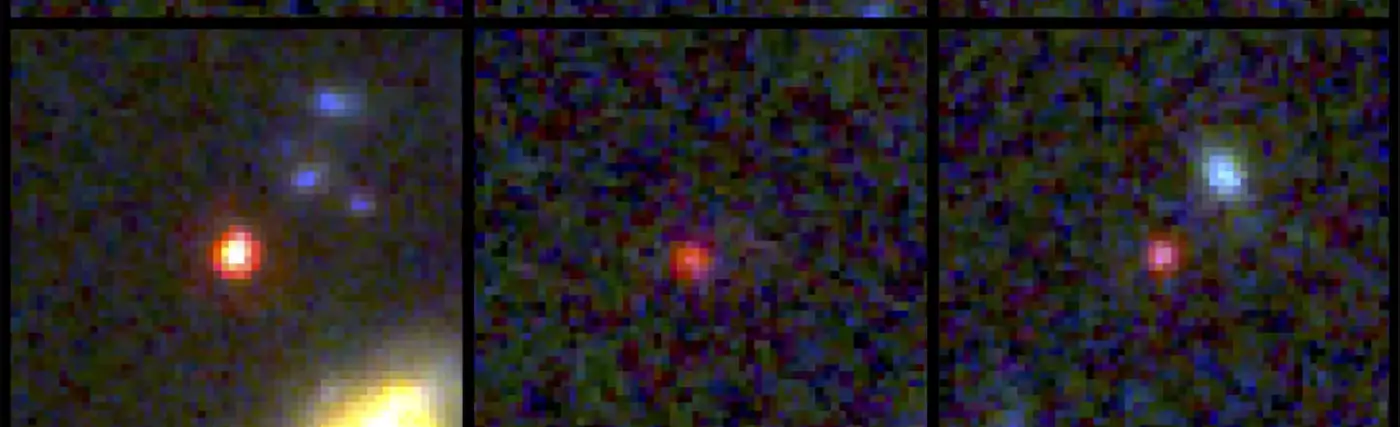
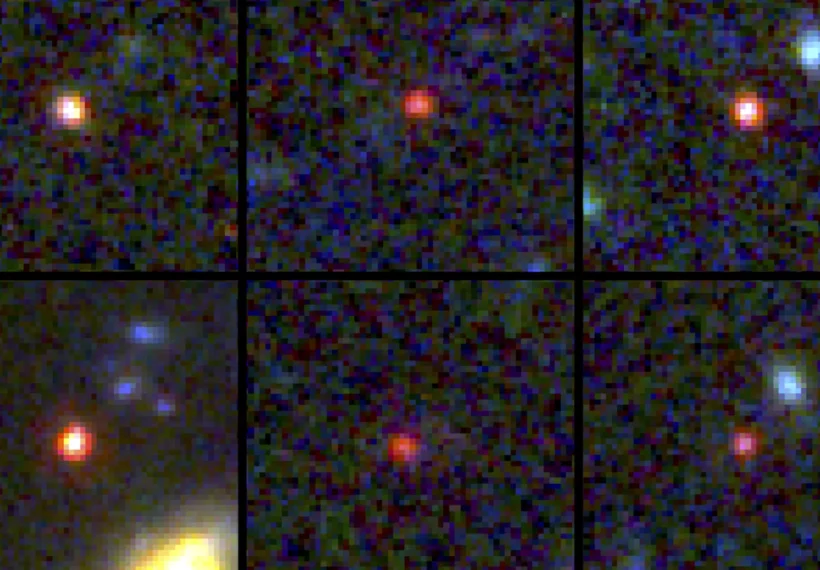
What do the early galaxies discovered by JWST tell us about the early universe? Neil deGrasse Tyson and comedian Matt Kirshen explore the expansion of space, dark energy, and the age of the universe with astronomer, Wendy Freedman.
What is the Hubble constant? Wendy helps us explain what it is, how Edwin Hubble got it, and why it’s important. If the universe is expanding at an increasing rate why are we calling it a constant? When did we figure out the expansion was speeding up? Discover our cosmic horizon, how we found the age of the universe, and Einstein’s biggest blunder.
What does the JWST discovery tell us about our current model for the early universe? Learn about The Dark Ages– and, no, it is not the era following the fall of the Roman Empire. How is the JWST helping challenge ideas in astronomy?
Is our universe young, middle-aged, or old? Learn about the different ages of the universe, dark energy, and how we live at an inflection point between eras. What does Wendy think about The Big Rip Theory? If time is relative, how do we reliably predict the age of the universe? What if we predicted the age of the universe from right outside a black hole?
Thanks to our Patrons Fernando Colón, Richie Mercado, Miami John, David Rivera, Matthew Reason, and Kostas Chaskis for supporting us this week.
NOTE: StarTalk+ Patrons can watch or listen to this entire episode commercial-free.
Transcript
DOWNLOAD SRTWe are living at an incredible age.
I mean, Hubble getting above the Earth’s atmosphere, we were able to see things we could never see before.
And same thing is happening with James Webb.
It’s opened up a whole new wavelength regime that we didn’t have access to.
So we’re learning new things.
It’s what makes science fun.
Welcome to StarTalk, your place in the universe where science and pop culture collide.
StarTalk begins right now.
This is StarTalk Cosmic Queries edition.
I got with me my co-host Matt Kirshen.
Matt, how are you doing, man?
I’m very good.
How are you?
Yeah, you still got your Probably Science podcast rolling along?
Still got that going?
We’re still chucking on.
Next time you got something big to promote and you need that 0.0001% bump.
The Kirshen bump.
Yeah, our doors are open.
Our microphone is free and ready to go.
I’m going to wait until you change the name to Definitely Science.
And then maybe I’ll come on.
We can do it as a one-off when you’re on the show.
We can do it for you.
So Matt, guess what?
We’re going to talk about the expanding universe today.
I love these episodes.
And one of the world’s experts on this is someone I came of age with.
We were like in graduate school, like at the same time, and went to all the same conferences.
I’m delighted to catch back up with her, Wendy Freedman.
Wendy, welcome to StarTalk.
Thanks very much, Neil.
It’s great to see you.
Yeah, we were young a long time ago.
Everyone was younger a long time ago.
I think it works for everybody.
That could be one of the questions.
Yeah, that’s right.
That’s right.
So, Wendy, I got in my notes here.
You are the John and Marion Sullivan University Professor of Astronomy and Astrophysics at the University of Chicago.
As we all know, many of us know, it’s an institution with a storied past in figuring out what was going on in the early universe, especially mixing our understanding of particle physics with what went on in the Big Bang.
And you devoted your life to the expansion of the universe, what role dark energy has played in it.
Galaxy evolution is a delight to have you on StarTalk.
I just want to put that out there.
And so, Wendy, remind everyone what the Hubble constant is.
Just, we’ve heard of it, and like, what is it?
Because we’ve got Hubble, the guy, the dude, the astronomer, then we have the Hubble telescope, and then we have the Hubble constant.
So what’s going on?
Yeah, all Hubble, same Hubble, Edwin Hubble.
And Edwin Hubble is the man who discovered that the universe is expanding.
And the rate at which the universe is expanding today is a quantity that we call the Hubble constant.
And what Hubble discovered was that when he went and made measurements of galaxies, this was in the 1920s, and we didn’t know at that time whether our own Milky Way galaxy was the entire extent of the universe or whether there might be other galaxies like the Milky Way.
And so we didn’t know how far away the objects were, something that astronomers called nebulae, and Hubble set out to study the nebulae.
And what he discovered was that they were outside the Milky Way itself.
There are many more galaxies in the universe, about 100 billion of them.
And then he went on to discover that not only are there other galaxies, but space is expanding and galaxies are going along with that expansion of space.
And the rate at which that’s happening today is what we call the Hubble constant after Edwin Hubble.
And it gives us a measure of both the size of the universe and its age.
So it’s a very important, it’s a fundamental parameter in cosmology.
Well, you keep saying it’s value today.
That means it had a different value yesterday and will have a different value tomorrow.
So why the hell are you calling it a constant?
Well, it’s confusing because the universe is evolving and it did have a different expansion rate in the past.
It will have a different expansion rate in the future because it’s actually speeding up.
But what we measure today locally in the universe around us, in the Milky Way or in another galaxy near us, we will measure the same expansion rate at the current time.
So the Hubble constant is the Hubble expansion rate today, our time.
Our time.
Constant in our time.
You got it.
Now, if I remember correctly, because I’m that old to remember it, when the Hubble telescope came around, one of the primary goals of it was to nail down the Hubble constant and therefore the age of the universe and the size of the universe, which was highly unknown at the time.
With warring factions weren’t even agreeing within a factor of two.
And you spearheaded that, if I remember correctly.
So, the value you got back then, has that been sustained over the years?
Have better measurements improved on it?
Yeah, it has.
And you’re correct.
So, when Hubble was launched and it was in fact the project that the Hubble telescope was built to solve, it was the umbrella project.
Of course, there are many things astronomers wanted to do, but this factor of two got in the way of everything.
We didn’t know how old the universe was.
We didn’t know how far away galaxies were, so we didn’t know how bright they were.
We didn’t know their masses, etc.
It was a huge problem.
And so, the size of Hubble’s primary mirror was set to allow us to measure a certain kind of star that lets us measure distances, the same kind of star that Edwin Hubble himself used called the Cepheid variable.
And so, the size of the mirror was not decreased.
Budget considerations made the telescope smaller than originally envisaged, but it allowed us to discover Cepheids in our nearby cluster called the Virgo cluster.
And so, yeah, we had a key project, which I was a scientific leader of, co-led with Jeremy Mould and Rob Kinnicket, and we measured the Hubble constant to an accuracy of 10% and got around this factor of two, resolved this problem that had been pressing for many decades.
And that has stood the test of time.
So people argued between values of 50 and 100 for this Hubble constant.
We got a value of 72 at the time with an uncertainty of 10%.
And ever since then, the value has stayed very close to that, maybe 73, 74 now, when it’s based on Cepheid variables.
So you said it’s speeding up.
Has that always been a known thing, or is the fact that it’s speeding up a new piece of information?
The fact that it’s speeding up came into a point of being able to be measured around the turn of the millennium.
And it’s interesting.
So what’s happened is that not only is the universe expanding, as Edwin Hubble told us, but it’s also speeding up in its expansion with time.
And that’s something that actually was allowed in Einstein’s general theory of relativity.
But Einstein rejected it because there was, one, no evidence that the universe was expanding at all.
And so he, in fact, added something into his equations that forced the universe to be static.
And he put a term in called the cosmological constant to force the universe to be static.
When Hubble discovered the expansion, Einstein is reputed to have said that this was his biggest wonder because he could have predicted the expansion.
But this cosmological constant sort of came and went over time as people thought they found evidence for it.
But it wasn’t until the late 1990s when it became possible to observe very distant supernovae, very bright explosions in the distant universe that showed that the universe was actually speeding up in its expansion and not slowing down.
And that had been the expectation that because of gravity, the universe would eventually slow down in its expansion over time.
And instead, it’s speeding up because of the presence of galaxies and matter in the universe.
And gravity, of course, is an attractive force.
The expectation was that the universe would decelerate, not accelerate.
So that’s a new discovery in the last couple of decades.
So, Wendy, what you’re saying is Einstein’s biggest blunder was saying that that was his biggest blunder.
Well, when you’re Einstein, you get to know a Nobel Prize was given for that discovery.
When you’re Einstein, one of your biggest blunders can turn out to be one of your most important scientific contributions.
If your blunder led to a Nobel Prize by others discovering your blunder, right, that’s completely crazy.
Einstein, as badass as you can get in his day.
I feel like one day a blunder of mine could lead to maybe a Nobel Prize for medicine.
Really?
Yeah.
I mean, like for someone else, like someone else, like, oh, I guess you can take that out of a human or, you know.
Who knew that we could get someone to survive that?
I see.
There’s ways.
No, I wouldn’t aim for that, though.
I think that sounds dangerous.
You never aim.
So, Matt, you got questions for us, right?
It’s a cosmic query.
We’ve got a question solicited from our Patreon fan base, and they have exclusive access to this line of questioning.
And we just said, we got Wendy, Dr.
Wendy with us, and we are going to talk about the expansion of the universe.
So let’s do it.
Yeah, so Fadi Hayek from Indianapolis, first, before asking any scientific questions, wants to know the official title of me.
Chuck is Lord Nice.
We need someone official to…
Said Lord Count.
No, no, we’ll work on it.
Thank you for that.
We’ll work on it, yes.
Yeah, it needs to be decided.
And then on a more scientific and more appropriate basis for our guest, how come the universe is expanding faster than the speed of light, but galaxy, stars and planets are not in a hurry to move away from each other?
I mean, the speed of expansion is not only mind-boggling, but in a way supernatural.
It should be perceivable.
I’m not entirely sure what Fadi is getting at there.
Yeah, so what’s up with that, Wendy?
So I think we probably heard that Albert Einstein told us that nothing could travel faster than the speed of light.
And what Einstein told us was that no information can go faster than the speed of light.
But there is in fact no speed limit for the universe itself.
And so that’s quite true.
There are parts of the universe beyond where we can see light that has traveled to us since the age of the universe, the time that the universe has been here.
And we don’t know anything about those because no information can come to us.
The universe is expanding faster than the speed of light.
So no violation?
No violation.
So there is physically no way to ever see those stars now and they’re basically gone.
They’re gone and they’re getting further away from anything that we can ever access.
That’s right.
They’re beyond our horizon.
We will not get information from them.
Not ever.
Yes, that’s correct.
Not ever.
That’s kind of sad.
It is kind of sad.
Well, in fact, we’re living at a time where we can see many, many hundreds of billions of galaxies.
But there will be a time when, except for our own local neighborhood, maybe the Virgo cluster and other clusters of galaxies near us.
And this comes to the second part of the question, which is that galaxies that are near to us are interacting gravitationally.
All galaxies are, you know, the force of gravity falls off as the distance squared.
And so the galaxies that are near us are gravitationally, we’re gravitationally bound.
And so even with this acceleration, that force is strong enough to keep them in our observable universe.
But if we came back in 65 billion years, we wouldn’t see all the galaxies in the sky that we see, assuming that we understand enough now about what is termed dark energy that is causing the acceleration.
That’s a separate question because we don’t yet understand the nature of the dark energy.
So you say that the local ones won’t escape past this horizon.
If you go far, far enough in the future, is that possible that that would happen?
Or would that never happen?
Will we always be able to see this stuff that’s now immediate?
No.
Well, things like, for example, we have in our own local group of galaxies, the Andromeda Galaxy, which if you go to a dark part of the sky, more and more rare on Earth right now, but you can actually see Andromeda with the naked eye.
But we will eventually collide with Andromeda billions of years from now.
We will be fine.
Stars are so far apart that we’re not going to have a collision with our sun, but the two galaxies will merge.
And that’s been happening over time.
Galaxies have been plunging into one another and becoming larger and larger.
So, no, the galaxies that are nearest to us and of course not ones that are sufficiently far away that they won’t fall into us, but they still have enough gravitational attraction that we will at some point look out at the universe and not see most of what we see today.
But I’m tucking tens of billions of years in the future.
So this isn’t a situation where we need to send Bruce Willis up in a rocket to deflect the galaxy to stop it from crashing into us, right?
No, it is that situation, I’m pretty sure.
We’re designing that mission now, flying two space shuttles simultaneously into space.
We got this.
We totally have this.
That’s good to know.
That’s a relief.
It’s really interesting now because it’s possible to study the evolution of galaxies and their interactions over time via gravity.
And so what we think of as distinct objects have been trading stars and plunging through each other and eventually merging.
That’s just been part of our cosmic past.
It’s a very dynamic place out there.
In fact, Matt, for a while we called it the mergers and acquisitions part of modern astrophysics.
And we have inflation and all sorts of things.
Yeah, all manner of cultural reference there.
We’re going to take a quick break when we come back more with my good friend, Professor Wendy Freedman, one of the world’s experts on the expanding universe.
Hi, I’m Chris Cohen from Haworth, New Jersey, and I support StarTalk on Patreon.
Please enjoy this episode of StarTalk Radio with your and my favorite personal astrophysicist, Neil deGrasse Tyson.
We’re back, StarTalk Cosmic Queries.
This is the expanding universe edition.
You got to do that every now and then just to check up on it.
I got Matt Kirshen as my co-host.
Very cool, Matt.
Matt, where do we find you on social media?
I’m at Matt Kirshen on Twitter, at Matt underscore Kirshen on Instagram, and then probably science is my podcast.
Excellent, Kirshen, K-I-R-S.
H-E-N.
If you just type English comedian Matt, K-I, and then bang the keyboard, Google finds me.
Okay.
And so, Wendy, we got more questions for you.
All right, let’s see what we’ve got.
Matt, give it to us.
Yeah, Jeremy Green from Nevada says, love the show with the James Webb Space Telescope finding galaxies that should not be existing that soon after the Big Bang.
How is that going to change thoughts in cosmology and how the early universe formed?
Okay, let me back that up a second and come back to you, Wendy, here.
Wendy, why should there be a time in the early universe where we don’t expect galaxies?
What’s going on?
So, in the very earliest moments of the universe, we had, of course, the Big Bang.
Radiation from the Big Bang couldn’t reach us early on.
There was a very hot plasma and it was too hot even for hydrogen atoms to form.
So, the photons from the Big Bang would hit the electrons in this plasma and we don’t have any information there.
At about 380,000 years after the Big Bang, the expansion had proceeded to the point where the temperature had cooled enough that you could form hydrogen.
And after that, the photons from the Big Bang could stream out and we can detect them today.
They’re all around.
The background radiation has been detected from the Big Bang.
Then with telescopes like Hubble, we can peer back into the universe.
And with Hubble, we can go maybe 12 billion years back in time.
We can see tiny little smudges that Hubble could barely resolve and you couldn’t get detailed information on those.
This is 12 billion out of nearly 14 billion.
So that’s pretty far back.
That’s pretty good, right?
12 out of 14.
It’s very good.
But there’s a region of space and time that we have actually referred to as the Dark Ages, which is the period between when we can first detect photons from the Big Bang, 380,000 years after the Big Bang, and maybe 12 billion years ago.
And we have no information about that time.
So one of the main scientific goals of the James Webb is to study the Dark Ages and to see galaxies forming, witnessing directly the first galaxies to form.
We know they’re there.
We’re in a galaxy.
We can see these faint smudges, but we have no information or had no information about that process.
And that’s what’s exciting about James Webb, is we’re opening up a whole new window and we needed an infrared telescope to do that.
But aren’t these galaxies, weren’t they found in the Dark Ages?
I mean, you wouldn’t expect that, right?
These new galaxies we’re finding, yes, they seem to have formed very early on after the Big Bang.
And you’re cool, and you’re okay with that?
I’m okay with that.
I mean, I’m okay with whatever the Universe did.
I’m not going to tell the Universe what to do.
I think that’s our job, is to go out and measure it.
And I think that’s one of the reasons why I was excited about James Webb, is we have lots of theories for how galaxy information would happen, and we’re pretty certain about those things.
But then you actually go and look, and you learn something new.
What we learn, I’m not sure yet.
I think we have more surprises yet in store.
In a way, that’s the whole point of the telescope.
Yes, yes.
And so right now, there’s this, I think, excitement that maybe galaxies, very massive galaxies, form very early on, and our current theories tell us there was no time to do that.
You can’t possibly have galaxies that are that massive that early.
But I think we need to explore a lot of other questions about what were the stars like that formed early on?
Are they the same as the ones that are forming today?
What was their dust in the early universe that we don’t know about?
Were the properties different?
Was the star formation rate different?
The way that they formed, the distribution of masses.
So there’s a lot of exploring I think we need to do.
So you’ll see headlines like the Big Bang is dead and standard cosmology is broken.
And I think we need to just slow down a little and really understand what we’re seeing, which is really interesting, but we don’t yet know I think what it means.
So you really should just get back to work on that right now.
If you weren’t bothering me, Neil, I’d be working on it.
You’re losing precious minutes here solving the universe.
That perfectly plays into a listener, Dylan, who asked, is all the breaking news stories related to James Webb Space Telescope findings, hoaxes, or are the findings challenging some core ideas in astrophysics and astronomy?
Well, I think we are challenging ideas in astronomy and astrophysics.
And I think whenever you get really new information, how you process that, how you get big enough samples, how you understand how things might have been different at a different time in a different environment, it takes time to settle those things out.
So we’re at the really exciting part, which is, hey, we don’t understand this.
What’s going on here?
But in terms of gaining understanding, I think that will take some time, but that’s part of the fun of doing science at the forefront.
And just to clarify, when scientists on the forefront find something they don’t understand, this is an exciting day.
It’s not a day to worry.
It’s like, oh my gosh, this doesn’t fit.
Let’s find out why.
But the press makes it out like we’re all just sitting there with our legs up on the desk, basking in our mastery of the universe, and then we get jostled by some result, and we’re on the floor trying to refine the drawing board.
Just screwing up, ripping up paper.
Yeah, but we’re not doing the whole painting over yet.
Right, right.
And regardless, Wendy’s always at the drawing board.
That’s the point here.
Yeah, I’m sort of envisaging just Wendy, just furious, punching through a straw boater, and just stamping on the floor every time.
Every time news telescope findings come through.
Yeah, no, no.
It’s hard not to be.
We are living in an incredible age.
I mean, Hubble getting above the Earth’s atmosphere, we were able to see things we could never see before.
And same thing is happening with James Webb.
It’s opened up a whole new wavelength regime that we didn’t have access to, not with the same sensitivity or resolution.
And so we’re learning new things.
It’s what makes science fun.
And I think there’s a tendency, partly because when we go to school, when you learn science, you’re given a problem, and then you can look up the answer in the back of the book.
And with the universe, there’s no back of the book to look up the answers.
We have to observe, read the universe, observe the universe experiment to see what it’s done.
But we don’t know the answer when we’re looking, when we first get new data.
But that really is part of the…
You know the closest thing we have to the back of the book?
You show it to a colleague.
And they’ll say, does this look right to you?
You know, I don’t know.
Let me get somebody, let me get Susie.
Look, does it look right to you?
No, you messed up, Wendy.
You forgot to carry the two.
You know, we got…
Our version of this checking process are our colleagues who…
And if they’re doing their job, it is their obligation to find out where we messed up.
Yes.
All right?
They’re not our friend if they say, oh, let’s not tell her, you know.
No, it’s one of the very unusual things about the nature of science is that you’re always trying to find what’s wrong and what we’ve done before.
You know, how did we look at this wrong?
What can we do to improve our measurements or, yeah, check our theories?
All right, Matt, keep it coming.
All right, Baron Amin asked a question from Baron’s 17-year-old son, who is taking AP Physics and wants to be an engineer.
This question also comes from…
Wait a minute, if you’re 17, they had their own account.
They could, like, fork up the $5 a month for Patreon.
We’ll take it this case.
Give him a pass.
I’ll give him a whole pass.
He’s interested.
What has been the most challenging aspect of your work trying to understand the age of the universe, along with using the James Webb Space Telescope to ascertain your research interests?
And big fan of the show, I Love Space slash Cosmos.
Thank you.
Nice, nice.
So Wendy, do you know enough math?
Do you ever have to go back into the math book?
Is all the physics, did you get that in graduate school?
Is there more physics you have to check in on?
What are some of your challenges, just as a professional on that frontier?
Yeah, I would answer it in two ways.
I mean, part of it is the theory or physical understanding of the nature of the universe, which has changed since I was a graduate student, since you were a graduate student.
And at that point, evidence for dark matter was just becoming, starting to be taken seriously.
We hadn’t yet learned about the acceleration of the universe and dark energy.
The idea of inflation was just beginning.
So cosmology has changed a lot, and you have to keep up with the changes.
But there are real mysteries.
We don’t know what is causing the acceleration.
There’s a Nobel Prize waiting for someone there.
We don’t yet know what the nature of dark matter is, although there are experiments all over the world trying to discover the nature of dark matter.
And so there are just a lot of open-ended questions right now.
And right now we’re even asking questions about whether the standard model, which is a model now that has dark energy and dark matter, that comprises about 95% of the universe.
And we don’t know what it is.
So there are a lot of open-ended questions right now.
So the other is the experimental side and what are the challenges there.
And when you’re making measurements, as we’ve gone along with time, we talked about the factor of two uncertainty and the Hubble constant when I began, then we got to 10%.
Now we’ve been able to get to 5%, I would say, confidently.
And there are some who say we’ve even reached 1%.
But when you’re trying to increase your accuracy, you’re dealing with, again, objects, astronomical objects that are astronomical distances, tens of light years to hundreds of light years to hundreds of millions of light years away.
We’re using the properties of stars to gauge distances.
And stars can be complex.
They have dust in their atmospheres.
They’re located in regions with dust.
And the farther away we’re making the measurements, the more crowded those stars become because you only have a finite resolution of your detector.
And so there are uncertainties that can creep into your measurements, and we constantly have to be checking our own measurements to see how we can improve them.
So those are real challenges, both from a theoretical perspective in the field of trying to understand what we’re observing and then from an observer’s point of view trying to make measurements and increasing our accuracy and being able to do so.
So not all data are created equal.
And so you have to know your data.
Otherwise, you could be garbage in, garbage out.
It’s been a history of the subject.
So why did Hubble measure a value for his constant of 500?
We’re now at a factor of eight different than we measure today.
And it had to do with problems in the photographic detectors he used, the fact he didn’t know about dust and other kinds of issues like that.
And we’re still confronting those.
And the higher accuracy we need to confront our theories, the harder it is to make these measurements.
And so we always have to remember that and keep testing ourselves and really trying to get more and more accurate data.
And keep in mind, he found a phenomenon even though he got the wrong number to measure it.
That’s an interesting fact here.
You don’t say, oh, he’s way off, so therefore forget everything he did.
No, the phenomenon is still real, even though his measurement of the phenomenon was very far off.
Yeah, no, he made a remarkable discovery.
And it’s clearly in the data you can see that there is a relationship between velocity and distance that bears his name, this Hubble constant, the slope of that relation.
But he didn’t have the ability to make accurate measurements.
And then again, even when we got better detectors, we had to wait for Hubble to get above the Earth’s atmosphere because of this question of resolution.
And now James Webb has four times the resolution at the wavelengths we’re observing at.
And we can see now these Cepheids in our James Webb Space Telescope data that pop out of these beautiful images that are completely smeared out and faint in Hubble’s images.
So each time we get a new facility, we get new capability and we can do better.
Astronomers never stop.
We just, bigger, better, more.
Yeah, there are more questions to answer.
More, more, more.
So the 17-year-old out there, we’ve left a lot for you to do.
So Matt, give me another one before the break.
Okay, well, this is one of those questions where I don’t know, I don’t know how you begin to give an answer to this one.
So I love these sort of slightly esoteric ones, I guess.
Okay, this one’s for you, Neil.
You can’t pre-punt the question to me.
That’s not fair.
Gavin Bamber from North Vancouver.
So also says, please visit Vancouver.
And is our universe young, middle-aged or old?
How much time does it have left to exist?
Ooh, I like that.
I know Wendy can take that.
But we actually have to take a break.
And when we come back, we’re going to find out whether Wendy thinks the universe is young, old, decrepit, or what.
What?
On StarTalk Cosmic Queries, the Expanding Universe Edition.
We’re back, StarTalk Cosmic Queries Expanding Universe Edition with Wendy Freedman, a Professor of Astronomy and Astrophysics at the University of Chicago.
Wendy, how do we find, do you have any social media footprint of your own?
Not of my own.
The University of Chicago has a footprint.
They have one.
So you don’t have one, so that means you actually are in the lab, do you?
You think you’re kidding.
I don’t know, I have enough things on my plate to do.
Productive, oh my gosh, okay.
If only I had that willpower.
So we left off.
Who was the person who asked that question, Matt?
That was Gavin Bamber from Vancouver.
Saying, is our universe young, middle-aged or old?
And I guess you can’t just say age is just a number when it’s your job to calculate that number to ever increasing levels of accuracy.
So some years ago, there was a book called The Five Ages of the Universe.
And I think it was by Fred Adams and Greg Laughlin, which was a follow-on to what the physicist, late physicist Freeman Dyson had written some years earlier, where you can think of ages of the universe as occasions where pretty much the same thing is happening and then something, almost geologically, right?
The same thing is happening and then it changes and something different is happening and then it changes, right?
And so the very early universe behaved in a certain way and then we had another.
So we’re in an age of the universe.
My question to you is following up on what Matt had just read, how long will we continue kind of this way and will we become something else later on?
And how later on would that be?
Yeah, it’s an interesting question because we’re actually living in an inflection point and it’s an interesting one.
It appears to be a coincidence that we happen to be living at the time where this dark energy that we’re referring to is just becoming the dominant component in the universe.
So in the early universe, first radiation dominated, then matter.
That was one of the eras, right?
That was one of the…
Right.
And now the universe is just starting to be dominated by the accelerating phase, by the dark energy.
And so before we were talking about the existence of dark energy, it was possible to calculate an age for the universe, and you could predict with some certainty how long the universe would…
You could say the universe, for example, would be infinite, or if it had enough matter, it would re-collapse.
But now that there’s this dark energy component, we can’t say for certain what the next phase will be, because we don’t know what the fundamental physics is that is driving the acceleration.
So will there be a new phase?
I think that’s just something that either some new theory could predict, but there isn’t a theory right now that could explain it.
Wendy, we brought you on the show to give us answers.
Don’t tell us how much we don’t know.
What good…
Why do…
You know, it’s one of the things that often happens in science, right?
The more you learn, the more questions that you raise.
Yeah, there it is.
This has been called one of the fundamental mystery in cosmology.
It’s one of the biggest unknowns in science right now.
It really is a mystery.
We don’t understand it.
Science does not have all the answers, if that’s my answer.
Yeah, I’ve heard people say, this is a mystery not even the scientists know, therefore it’s aliens or something.
They quickly go to some conclusion that…
Because the fact that a scientist doesn’t have the answer, is their measure that it must be something so exotic and so mystical and magical, rather than just, no, we’ve got top people working on it.
Just chill out.
No, it is mystical and magical.
What’s happened in the last couple of decades is there’s so much new data that have come from so many different directions measuring how fast galaxies are moving, measuring the radiation from the Big Bang, are measuring the expansion, and yet the basic model is holding up.
Yeah.
You know, there are perhaps cracks and we’ll learn something from where those cracks appear.
But overall, there’s been tremendous progress.
But yeah, there are things we don’t understand.
All right.
Matt, give me some more.
I’m combining two questions on this because that’s always fun to do when two people ask things that are playing in the same pose.
I still want to hear who asked each of the two questions.
Very much so because firstly, Adam Paradise, who is a longtime fan and first-time patron, so definitely giving you a shout out, welcome to the club, Adam.
And is finally happy to have a question.
What happens to black holes during slash after the big rip?
Do they have enough energy to resist the rip?
And if so, do they enact any force on the rest of the universe that maybe wasn’t large enough to matter before universal expansions load in?
I love it.
And says thank you for all your time.
And then Gina Martin from North Carolina says thank you for all the stellar, all you do for the stellar mining community at large, says Adam.
And then Gina from North Carolina says I recently heard Neil on a previous episode explaining the Big Rip and how the expansion of the universe would eventually cause matter on an atomic level to be ripped or stretched apart.
Would that not cause nuclear fission reactions or explosions similar to Big Bang and create a whole new universe?
So let’s get to the horse’s mouth here.
Wendy, what is the latest scholarship on the Big Rip?
And because to me it’s the most terrifying thing I’ve ever learned and read about.
But you’re in the middle of it.
So tell us what you’re allowed to say.
I think the thing to say is at present there’s no evidence that there’s going to be a Big Rip.
I think there’s nothing that we could point to in terms of evidence that would suggest that there’s going to be a Big Rip.
Now, you can’t say that with absolute certainty because, again, there are things we don’t understand yet about the evolution of the universe.
But if you confessed we don’t know about dark energy and what’s causing it, but we can measure it, isn’t the measurement sufficient to say, if this keeps up, what’s going to happen?
It’s just a simple sort of extrapolation that’s not allowed.
You guys don’t do that behind closed doors?
Yeah, I think we have to be careful with extrapolations, and I think with time the situation will become clearer.
But we’re talking about times, it’s important to say, that are so far in the distant future that I personally am not going to spend a lot of my time worrying about it.
I’m not going to worry about the sun exhausting hydrogen in its core yet.
Matt, I smell denial.
I think Wendy’s in denial.
I think there are more pressing issues to worry about.
I don’t want to think about it.
Where we have more information.
Sorry.
But go ahead.
Tell us what’s going to happen, Neil.
Speculate away.
She’s in denial, Matt.
It’s clear.
I see the signs are obvious.
No, no.
Wendy, you’re being very practical.
What you’re saying, not to put words in your mouth, but I think what you’re saying is that it is sufficiently speculative to not devote your hard earned time, lab time and telescope time on that problem relative to others that are less speculative and more tangibly answerable.
Is that a fair characterization of what you just said?
That’s fair.
Well, since you mentioned time, Liam Cochran from Rhode Island, I hope I pronounced that correctly, said, if time is relative, how do we accurately predict the age of the universe with the age we predict here on Earth different from an age predicted from another point in space, for example, near a black hole?
Yeah, I’d love that.
Yeah, Wendy, who keeps time in the universe?
You’re telling me how old the universe is.
Would the black hole agree with that?
Well, we’d have to go ask the black hole, I suppose.
But so what we are doing in a very practical sense is that we can measure how far away galaxies are at the current time.
We can measure the speed at which they are receding from us.
The universe is expanding.
And so we can measure, as I said earlier, the Hubble constant, which is the expansion rate at the current time.
And then it’s not unlike a movie.
You run it in reverse, right?
Except that you use in the language of mathematics Einstein’s general theory of relativity, upon which the Big Bang Theory is based.
And then calculate what the age, how long the universe has been expanding, given the amount of matter in the universe and given the amount of this dark energy.
You can then calculate what the age is.
And we get an age of about 13.8 billion years.
So it’s a very straightforward…
Yeah, but whose clock are you using?
Why is your clock the right clock and not the clock that was around?
If I had a clock in the early universe, is it measuring the time that you’re measuring now?
The rate of change of time?
So what essentially Einstein’s theory tells us is that…
So anywhere in the universe, because of this uniform expansion, anywhere we made this measurement, if I go to the Andromeda galaxy, if I go to another galaxy, another galaxy, another galaxy, I would look around and I would see all galaxies receding from us.
I would appear to be the middle of that expansion and I would measure the same expansion rate.
So macroscopically, that’s how that works.
Because the question talked about the time around a black hole.
We all saw that famous scene in the movie Interstellar where the guys are waiting for the folks down on the black hole planet and they come back 15 minutes later by their time, but like 20 years or something had elapsed on the orbiting spacecraft, waiting for them.
And so I think that’s the source of the questioning that’s coming onto the table now.
Whose clock are we using?
But if the really weird messed up time is right in the vicinity of black holes, and black holes are just dotting the universe, that’s not the clock you want to use for any of this.
So in the vicinity of a black hole when you have strong gravity, moving clocks are going to run slow, you’re in a strong gravitational field, Einstein tells us that things work differently, and you’re precisely right.
You don’t want to make measurements macroscopic on average of the universe, which is a giant place.
You don’t want to be using these very high density regions to make your measurements wrong place.
Matt, did you see, for those who were only viewing, Wendy extended her arms to gesture how big the universe is.
That is so quaint.
Can’t help it.
I definitely use my hands when I talk.
The universe is this big.
Yeah, I feel sorry for the audio only people who are still struggling to picture it.
Well, just picture Wendy extending her hands and that’s how big the universe is.
It’s expanding.
She nailed it right there.
So Matt, let’s get it.
We’ve got a few questions left.
I think we can get through all the ones I’ve got in front of me.
So Rob Love, while we’re talking about black holes, says, why are they called black holes?
Why not black stars?
After all, they’re formed from stars.
It seems like a fanciful name now leads to questions and confusions like what’s inside a black hole?
Right, Wendy, why not?
In fact, we know it’s condensed matter.
But do we know it’s condensed matter?
Because is it still condensed matter once it’s collapsed into a black hole?
He’s got black hole issues.
Okay, short of a very fast.
So if you imagine the Earth and you imagine throwing something up, it falls back down.
If you throw it with enough velocity, it can escape from the Earth.
And the same is true.
If you have enough matter, dense enough, what becomes a black hole is that it’s so dense that not even light, the escape velocity is such that not even light can escape.
So that’s the nomer black hole came because no light can escape from it.
But we won’t get into this.
You fall in and light doesn’t come out.
Yep, a black hole, that’s got to be better than black star, right?
Because it’s not right.
No, I’m with you on that.
Guys, I think we just ran out of time.
Damn, damn.
All right.
Wendy, it’s been a delight.
It’s been too long.
Can we keep you on our Rolodex for future James Webb discoveries, cosmological discoveries?
Sure.
It’s been a pleasure talking to you.
It’s nice to see you again after all these years.
Yeah, definitely.
Matt, always good to have you there, man.
It’s great to be here.
All right.
We’re ending this episode of Cosmic Queries, Expanding Universe Edition.
I’m Neil deGrasse Tyson.
You’re a personal astrophysicist.
As always, keep looking up.


 Become a Patron