


 Unlock with Patreon
About This Episode
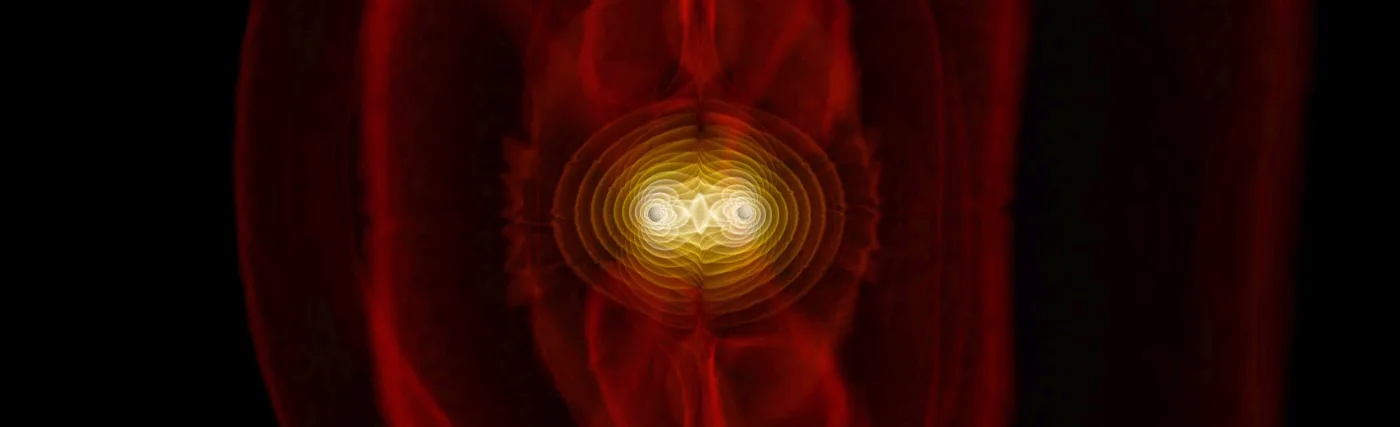
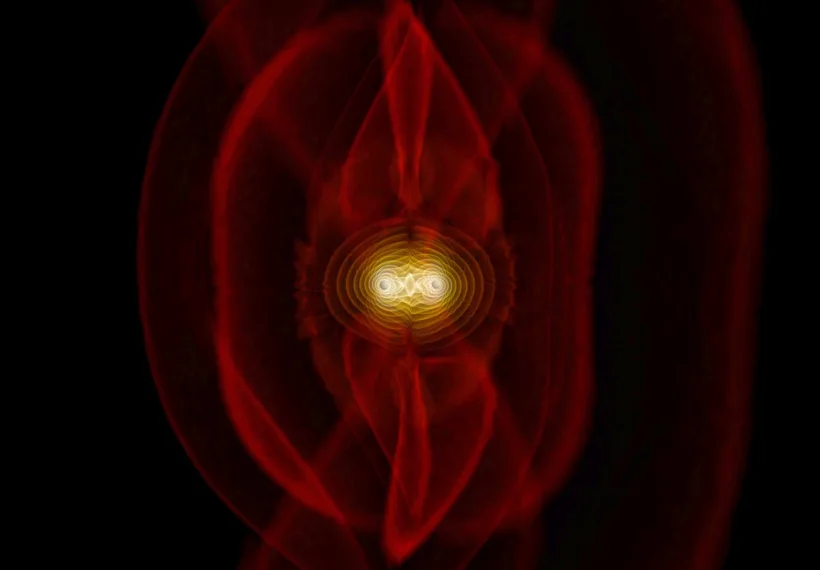
What happens when three black holes collide? On this episode, Neil deGrasse Tyson and comic co-host Chuck Nice explore even more cosmic collisions in space, in the quantum realm, and more!
Do photons experience time? We think about all the unseen photons and the science of lightsabers. Photons can cross but not hit each other? Can you make light interact with itself? We discuss: Could there be a time particle? What’s the smallest unit of space? Learn about the quantum field: Could dropping the temperature slow a radioactive element’s half-life? Could you keep food in the freezer forever?
Could the moons of outer planets have been born from inner rocky planets that are ejected? What should qualify as a moon? We know what the collision of two black holes is like, what about three? Find out the history of Albert Einstein, gravitational waves, and lasers. How frequently do black holes collide?
Could you join two bodies of ice together in a collision? Do any of these space collisions show light when they happen? Discover the electromagnetic spectrum, sonic booms, and the science behind why diamonds sparkle. All that, plus, are atoms actually just tiny solar systems?
NOTE: StarTalk+ Patrons can watch or listen to this entire episode commercial-free.
About the prints that flank Neil in this video:
“Black Swan” & “White Swan” limited edition serigraph prints by Coast Salish artist Jane Kwatleematt Marston. For more information about this artist and her work, visit Inuit Gallery of Vancouver.
Transcript
DOWNLOAD SRTWelcome to StarTalk, your place in the universe where science and pop culture collide.
StarTalk begins right now.
This is StarTalk, Cosmic Queries edition.
I got Chuck Nice with me.
Can’t do that without Chuck.
Chuck, how are you doing, man?
Well, that’s not true.
Oh, actually, it’s not true.
You have done this without Chuck.
That’s for sure.
I’ve had guest co-host for Chuck, because Chuck sometimes is a busy man and you don’t have time for us.
That’s how that works.
OK, well, that’s not true either.
So, Chuck, a little while ago, we did an entire Cosmic Queries on Cosmic Collisions, which is a very rich tapestry of phenomena and objects in the universe that go bumping in the night.
And in fact, of the portfolio of public talks that I give, that is the title of one of them, Cosmic Collisions.
So if a city invites me to their theater to give a public talk, and they get the list of things I can talk about, Cosmic Collisions is frequently selected in that list.
And so I’m ready for anything you got.
And so Chuck, you solicited questions from our Patreon members.
And so I guess it’s all about collisions.
So bring it on.
Okay, let’s jump right into this.
This is Christopher Bax.
And Christopher says, Dr.
Tyson and darling Chuck, well, Christopher.
Thank you, Christopher.
You really know a way to a man’s heart.
That’s all, I am susceptible to flattery.
Sometimes people refer to photons as not experiencing time from that photon’s vantage point.
The moment it’s emitted from a source and the moment it hits something are simultaneous.
Does that mean that the object a photon impacts is deterministic?
Let’s say, for example, I see a photon from a star one million light years away.
From my perspective, I just happened to be there when I looked up and the light hit my eye.
But from the photon’s perspective, it hits the lens of my eye at the exact moment it was emitted.
Does that mean that I had to be in that spot at that time because I was predestined to be hit by that?
My voice getting deep.
He’s getting deep.
Yeah, he just went off philosophical.
Also, he says at the end of that, are you a fan of Sativa marijuana or…
So if we think of photons hitting their destination as a collision, perfectly happy to think of it that way.
So if you didn’t happen to stand up and stand and look up when the photon hit your eye and you like stepped to the side, the photon would then hit the leaf or the grass or the mountainside or the beach.
It’ll just be instantaneous with that.
So what you’re thinking to yourself is that the photon, when it’s emitted, sees your eye and then just goes straight into your eye in that instant.
But no, 30,000, however many thousands of years do pass and things can happen before the photon hits its destination.
So I guess what you’re wondering is, does the photon have an awareness, an advance awareness of where it’s going to hit since no time elapses?
That’s kind of what you’re thinking.
What are you saying there, I think?
Is that what you think, Chuck?
Yeah, I think so.
I mean, that’s one version of predestination.
I mean, the other predetermined outcome would be that it was set before the photon left its origin.
Yeah, but I’m just saying, so the three of us are here looking up and we’re on some kind of rotating wheel, right?
And so, okay, who’s going to get the photon and who’s not?
And the photon already knows at the moment it was emitted whose eyeball it’s going to go into.
So that’s a way, I have to think about that some more.
Yes, because as far as the photon is concerned, that’s the way it has to be, because it actually comes into existence at the time of it reaching its destination.
Correct, correct.
So it has to be that way for the photon.
If that’s the case, so I have to think about that some more.
That’s a good one.
All right.
It’s truly philosophical in nature.
What he made me think about is, actually what you made me think about in reference to his question, are all the photons that lose out on being seen because they land on some stupid beach.
Well, I lament, I wrote about this long ago because I felt it, I was on mountaintops getting data for my PhD, and I thought to myself, the photons that come to my telescope and go into my detector and go into my data are serving to have the universe understand itself.
Because we humans are products of this universe.
And what if that photon missed my telescope and just slammed into the side of the mountain?
What a wasted trip, I kept thinking to myself.
Yes, that’s what I’m saying.
That’s sad.
I just traveled 40,000 years to be a part of Driftwood.
Driftwood, Driftwood.
Or you’re on a beach and you hit someone’s buttocks, who’s sunbathing, you know.
Oh man, yeah, exactly.
It’s like I spent all this time, I passed Neptune, I passed Uranus, only to hit your ass.
Your ass.
You passed Uranus to hit your ass.
So, yeah, I think about the photons.
And how about the ones that miss Earth entirely and just keep moving through space?
Lots of space is empty.
And so the universe is filled with photons crisscrossing through the night and the day.
And so, yeah, I have to think more deeply about the life of a photon.
And I picked that one back up.
I got to just pick up on that.
So two light sources, two photons in the emptiness of space.
Yes.
Crisscross.
But they can’t hit each other.
No, they can cross each other.
They’re just waves at that level.
So here’s the thing.
I got into a Twitter fight, mild Twitter fight with Brian Cox, who’s kind of my counterpart over in the UK.
Not Brian Cox the actor, but Brian Cox the physicist.
He’s done a lot of BBC TV.
In fact, he’s on tour.
He occasionally tours through the United States.
He’s got a whole universe show.
So I got into a Twitter fight because I said that lightsabers in Star Wars, they could cut things and do damage if they’re high enough power, but they can’t bounce off each other because light waves pass through.
Columns, there’s like two lasers, they’ll just pass through each other.
It’s not like Ghostbusters, right?
Don’t cross streams.
Don’t cross the streams.
We don’t know what happens if that’s what happens in Ghostbusters, but it’s not a problem with light beams.
So here’s my point.
So I say this, and then Brian Cost comes in, well, actually, if they’re made of gamma rays, the two gamma rays have a probability of interacting with each other and not passing through each other.
They have high enough energy to do this.
And then you could simulate what could be sort of a bouncing effect between two swords, two laser swords.
And so I had to, I conceded on international Twitter that I got out geeked in that tweet.
That’s cool.
Yeah, so not all photons will…
Wouldn’t you both be fried, wouldn’t the two sword fighters be fried by the gamma rays?
By the gamma rays?
Well, they’ll turn into the Hulk.
You know, there’s other issues.
Yeah, yeah, yeah.
That’s true.
That’s the least of my concerns about the absence of physics in Star Wars.
Let’s make that clear.
Yeah, I said it.
Alright, give me some more.
Alright, let’s go with Fred Lombardo.
Fred Lombardo says, Good day, Dr.
Tyson.
Since your numerous references to the idea that dark matter should be called Fred, which is my name, I thought of myself as dark matter.
My question, though, since the Fred particle seems to elude scientists, is it possible that the particle is actually a particle of time itself?
This would account for its making up a majority of what seems to construe the universe and explain why it, a particle, has never been found.
Love the show.
And please say hi to Chuck.
So a particle of time.
See, time is a coordinate, just as space is a coordinate.
So you’d have to have analog to, is there a particle of space that can move through space, the way a particle of time might move through time?
And I don’t think you can do that.
There is the smallest unit of space, okay, it’s called a Planck length.
It’s very small.
And the smallest unit of time would be the time it takes light to cross a Planck line.
So in a sense, space and time are quantized.
They’re effectively voxels, that’s volume pixels, voxels of space and time in the universe.
But they’re not separately particles in that sense.
By the way, I just thought of calling them Fred only because we don’t know what it is.
We don’t know what it is.
That’s all.
It’s really, you know what it literally is?
It’s dark gravity.
To call it dark matter implies it’s matter and we don’t even know that.
It’s a good bet that it would be.
If you’re a betting person, that’s the odds are in your favor.
But so no, I’m not voting for a particle of time.
What’s that movie?
There was a movie where you could collect time and then add it to your life.
Yes, that was with Justin Timberlake.
Justin Timberlake.
That’s correct.
I forget the young lady’s name.
But yes, you could buy time.
Time was the commodity.
There was nothing else of value in the world except time.
And it was the currency for everything.
Right.
And the rich people had all of it.
And the more time you had, the longer you lived.
Well, don’t the rich people always have more of everything that everyone else wants?
Otherwise, what’s the point of being rich?
That’s so true.
That’s it.
That’s it.
That’s all I’m saying.
So, in that one, maybe you can think of those as time particles.
I have a time particle and I hand it to you.
And then you accrue the time.
But it’s not clear why that would have anything to do with dark gravity.
Correct.
Or even the acceleration of the universe.
So, yeah.
Good try.
Well, there you go.
Nothing wrong with trying to find a little self-hype in dark gravity.
Fred?
Nothing wrong with that, Fred.
Did you know there was a DC superhero briefly introduced?
I think it was DC, not Marvel, who’s named Fred.
And that’s his sort of regular name, but his superhero name was Dark Matter.
And so…
I didn’t know.
You didn’t know that?
You’re just making that up right now.
I’m telling you.
I’m telling you.
In my astronomy bizarre public talk, I talk about Fred the Dark Matter.
By the way, I didn’t discover that myself.
Someone heard me calling Dark Matter Fred.
They said, did you know?
And then they showed me a picture.
And they showed you the picture?
It’s Fred with all of the properties.
It’s like, what are your parameters?
You know your origin story.
What are your powers?
What are your power limits?
And what’s your civilian name?
This is Dark Matter’s civilian name.
His civilian name is Fred.
Wow.
Right.
First of all, that has to be DC.
It’s probably DC, because they’ve got a civilian name.
Right.
Yeah, because Marvel would never make any superhero name Fred.
No offense to you, Fred.
That’s cold.
No, take that back.
No, take that back, Chuck.
No, because nobody goes just like, help me, Fred.
No, no, his superhero name is Dark Matter.
That’s my point.
Oh, yeah.
Well, still, even still.
I mean, think of it.
Let’s think of it now for a second.
Help me, Fred.
But no, think of this.
Bruce Wayne.
Clark Kent.
Peter Parker.
Fred Farter.
Fred what?
Fred.
No, Fred doesn’t work.
All right.
Fred doesn’t work.
Sorry.
Anyway.
We’ll send you complaints to the Marvel complaint chat room.
Right.
Marvel, they have good names.
Okay.
Here we go.
This is Justin Hansen.
Greetings, esteemed Dr.
Tyson.
My son Tucker, who just turned 11, recently asked me whether reducing the temperature of a radioactive element to absolute zero would give the appearance of the half-life being reduced due to relativistic effects.
You are lying.
No 11-year-old asked this damn question.
Who the hell you think you fooling?
Just say you want to know this, Justin.
That’s all you got to do.
Pass it off on his kids.
Yeah, I got a question I was thinking about for a long time.
You know, it has to do with absolute zero and radioactive elements.
11-year-old Tucker is the next superhero nemesis.
Yes.
Super superhero, right?
What is he building in his basement?
All right.
We must find that out immediately.
Send authorities.
And it ain’t good.
I’ll tell you this right now.
If Tucker wants to know if a radioactive element at absolute zero would give the appearance of the half-life being reduced due to the relativistic effects, you know.
I say move out now.
Blow up your house.
Move out now.
Yeah, move out now.
Because Tucker is blowing up.
Stay while you can.
So that’s an excellent question.
So as you know, everything slows down as you drop the temperature of things.
But when I say everything, everything chemical slows down.
Chemical things slow down.
So the rate at which chemical reactions unfold, it goes to about half the rate for every 10 degrees Celsius.
So that’s why, for example, it’s important that your refrigerator is as cold as you can get it but not freezing so that whatever bacteria are growing in your food that would ultimately turn it green and smell nasty, you want to delay that, all right?
It’s not that food is good until it’s nasty.
The food is systematically getting nasty until it hits some nose threshold or color threshold that you have held for it.
Right.
Unless it’s avocado, in which case five minutes is all it will last no matter what.
Until it turns brown on the top.
Right.
You take it out five minutes later, it’s a rotten mess.
No, you put some lemon juice on it.
Lime juice is good.
All right, I’m going to try that.
What do you mean try that?
You didn’t know this?
No, I didn’t know that.
Dude.
Is that for real?
Have you never met a Mexican in your life?
It’s like, you got to get out more.
You know what?
Now you’re embarrassing me because I’m going to tell you the truth.
I don’t know any Mexican people.
I’m in New York, man.
All my friends are Puerto Rican.
My friends and my family, I got friends and my family.
They’re all Puerto Rican or Dominican.
If they look like me, they’re Dominican.
All right, all right.
So for every 10 degrees, so that’s why food spoils faster if it’s not in the refrigerator.
You put it in the refrigerator, delays it, but it will all still go bad, all right, according to this calculation.
For every 10 degrees Celsius, it doubles the rate at which something will happen, or cooler, it’ll halve the rate.
Keep doing this down all the way to absolute zero.
You could basically keep food forever.
Forever in terms of bacteria that would be growing on it.
You have other issues related to the molecular integrity of the food itself.
So it can start losing its texture, but that’s not because bacteria we’re eating at, it’s because the molecules themselves are unstable.
Here’s the point.
The moment you go nuclear, then all the things that apply to atoms and molecules no longer apply, whole other sets of forces dominate in the nuclear regime.
And so if you cool things, the nucleus doesn’t give a rat’s ass.
It will still decay at exactly the rate that you had measured for it at any other temperature.
If you want to slow down the rate, what you do is you speed up the molecule.
You speed it up.
Put it in a particle accelerator, send it 9 tenths the speed of light, 99 one hundredths the speed of light, and it will slow down the decay rate by the exact amount predicted by Einstein’s special theory of relativity.
Aha, because anything moving at the speed of light, time itself slows down for that.
Well, at the speed of light, it stops.
It stops.
That’s what I’m saying.
The closer you get to the speed of light, the more time slows down.
People watch the timepiece that the particle is wearing on its wrist.
It’s everything about it.
Everything, including its very nature, this probabilistic thing that it will decay.
And that’s why you say it’s time itself that’s slowing down, not the measurement.
It’s not the measurement itself.
It’s the thing.
The thing itself.
So you’re going to look at your clock and you slow down, your brain slow down, the clock slows down, you don’t know anything is slowing down.
You don’t know anything has slowed down.
So the particle has no idea that it took, quote, longer for it to decay in its own reference frame.
But to our reference frame, it takes longer.
So if you want to relativistically affect particles that are decaying with half-lives, you just simply accelerate them or put them in a very different gravity field.
That will slow them down too.
Slow them down too.
Wow.
Okay.
Hey, Tucker, air quotes, Tucker, let me just say buddy, you are, you’re an amazing kid, Tucker, okay?
Let me just, you keep at this, Tucker, and whatever you’re building in that basement, when you unleash it on the world, just remember, Chuck Nice is your friend.
Chuck said something nice to you.
That’s right.
Just remember the black man who told you you were special.
When you are demanding your one billion dollars in ransom.
So Chuck, you’re agreeing to be his sidekick.
You’re agreeing to that all the way.
Yeah, listen, without a doubt.
Alright, when we come back, more Cosmic Queries on Cosmic Collisions.
Bye I’m Joel Cherico, and I make pottery.
You can see my pottery on my website, cosmicmugs.com.
Cosmic Mugs, art that lets you taste the universe every day.
And I support StarTalk on Patreon.
This is StarTalk with Neil deGrasse Tyson.
Chuck, we’re back, Cosmic Queries on Cosmic Collisions.
Of all kinds, small, large, medium, large, universe, everything.
And you got the questions from our Patreon members, so keep them coming.
All right, let’s do it.
This is Don Lane.
Sounds like a person from an old time movie.
Anyway.
No, Don Lane would be a game show host.
Oh, you’re right, that’s right.
That’s a game show host name.
I’m Don Lane.
That’s right.
It’s Cosmic Collisions with Don Lane.
All right, here we go.
This is, he goes, hello.
Do we watch too much TV, Chuck?
Is this a problem?
I don’t know, it could be.
Don Lane says, hello, Dr.
Tyson, Lord Nice.
Could moons of outer planets have been born from inner rocky bodies that may have broken off of molten rocky planets in the early formation of the solar system?
Could this be proven, or would it change our current understanding of how our solar system was formed?
I love it, I love it, I love it.
Okay, so let’s look at the solar system for the moment.
Only once we had sufficient computing power were we able to show, because we started saying, oh, our solar system is probably representative, and we have some small rocky planets up close, and some big gaseous ones far out, and some other gaseous ones a little farther out, and some comets and asteroids.
Why think that we look different, right, as a first pass?
When we started collecting data on exoplanets, oh my God, oh, there’s like a Jupiter orbiting as close to its host star as Mercury is to our sun, or even closer, and there’s all kinds of variation that no one expected, okay?
So, all we can say is that there is no standard solar system, star system, but first.
Second, when our computer models got good enough, we would start, we would create solar systems.
You’d say, okay, let’s start with 30 planets and see what happens.
Oh, they settle out.
Some planets get swung into the sun, others get eaten by the bigger planets, and others settle peacefully into their orbits.
So it is highly likely that any star system with eight or 10 planets in it started with two or three times that many objects, okay?
So, yes, now, if you take that down to a moon system, like Jupiter and I lost count of how many moons it has, 60, I don’t remember.
Wow.
There are things you, yeah, it’s a ton of moons.
There are things you can know.
If the moon looks like an Idaho potato.
Right.
Then it was never big enough for its gravity to shape it into a sphere.
Right.
Because.
Could it, could it, I’m just following up.
Could it have just been captured by that orbit?
Yeah, no, yes, but wherever it formed, I’m just saying it was never big enough to make a sphere out of itself.
So it stayed as a craggy chunk of rock.
Okay, gotcha.
That’s first, second, if you do see craggy chunks of rock out there in orbit, should we call it a moon?
There’s a lot of stuff, like, for example, Mars has, how many moons do you know how many moons Mars has?
I don’t.
It has two moons.
It has two moons, Phobos and Deimos, and they are the lamest moons I have.
No, they look like Idaho potatoes.
One is the size of Manhattan, right?
It’s like, no, no, don’t make me call these moons.
I’m sorry.
Why are you moon shaming Mars, man?
Dad, go on, that’s cold.
Cast a shade on Mars’ moons.
No, if I gotta be, you know, I know I have some history there with Pluto and stuff, but Pluto was at least big enough to be a sphere, all right?
As is its moon, its biggest moon, Sharon, was big enough to be a sphere.
So there’s the Sphere Club, and then there’s the craggy chunks of Rock Club, and there’s a very clear distinction between the two of them.
So things you can learn when you see moons around other planets is, well, was it, is it massive enough to have made it into a spherical shape?
If it’s craggy, it’s probably a chunk broken off of some other larger thing that was a sphere, okay?
In a collision.
So that’s another thing you can tell.
And also, there’s some moons where one half of the moon looks really different from the other half.
Because something collided into that half and then took its own shape relative to the side that is 180 degrees away.
And a third kind of moon, forgive me, I forgot the name, the famous moon, where it looks like some piece of other asteroid collided and got stuck in it.
Because if you look at the terrain, it’s really, really, really different over in one section compared with another section.
And it looks angular, and it’s like somebody just mashed it in there.
And so there’s a lot to learn from the topography of moons, provided they don’t have weather systems that erase the record of the collisions you experienced in life.
So you take a look at the surface of the moon, it’s been hit by some meteors, right?
How about Earth?
How many craters have you seen on Earth?
A few, all right?
But we’re right next to the moon in the stream of impactors, were it not for our atmosphere and our weather and other erosive, corrosive forces, we would look just like the moon.
Well, thank God that we have this weather and atmosphere.
Just like the moon.
You want to thank God?
That’s fine, because we’re, you know…
I mean, thank atmosphere, okay?
Thank atmosphere.
I’ll thank atmosphere and I’ll thank weather.
I don’t have a problem with you thanking God.
The moon is ugly.
The moon’s got an ugly face.
You know?
The moon is…
That’s cosmic acne.
Acne.
We have ways of covering up the history of that, the scars of having been slammed.
So there’s a whole branch of geology and astronomy that has merged as planetary geology.
And these are folks who worry about this all the time.
Excellent question.
Excellent question, man.
Keep it going.
This is our old buddy, Alejandro Reynoso.
Hello.
I am Alejandro Reynoso.
I am coming to you from Monterrey, Mexico.
Is he from Monterrey?
Yeah, he’s from Monterrey.
Oh, cool.
So it’s all there.
You’re running the gamut there.
Okay, go ahead.
He says…
Monterrey with two R’s by the way, correct?
That’s correct.
Yeah, yeah.
The Monterrey, California, I think, is one R.
But okay, go on.
And then he says, hello.
Stop!
Or should I say, hola?
That is not what he’s saying.
No, he says that.
Okay, go.
He says, if we could see it, how would the collision between two black holes look like it?
We actually have seen that.
Oh, no, no.
But wait, wait.
Then he goes on, all right, how about three?
Some people are just never satisfied.
Yeah, I love it.
Oh, that’s great.
Okay, you’re not likely to get three things to hit simultaneously.
Just you do the statistics on it, it’s just not happening.
You get two objects to collide and then collide with a third object.
But to have all three collide with each other at the same time is statistically sufficiently unlikely to not really want to waste your brain power on that.
But we do know we haven’t photographed the collision of two black holes, but we know exactly what it would look like, because we completely know the physics and the geometry and the relativity of what’s going on.
And all you have to do is Google a YouTube video of the black holes that collided, that LIGO observed.
So what would be the search on that?
Could search for YouTube LIGO colliding black holes, make sure it’s YouTube and then you’ll be a video.
And so you’ll see the two and what you’ll see their effect on the stars behind them.
Okay, that’s where their action is, because the space around the black holes are distorted.
And it brings things that are in a different place in the background into a new place in the foreground.
You have a completely distorted circular images of light around the black holes.
It is what you see with those recently released photos of black holes, one in our own galaxy and one in another galaxy called M87.
You see a ring of light and then a darkness in the center.
That darkness is basically the shadow of the black hole because no light is coming from it.
And what’s around it is all the light from distant beyond it that is collected into this ring, which is the effect that black holes have on their environments.
So you check it out and you watch it.
And then you see this ripple, which is the gravitational wave.
Waves.
That got emanated on collision.
And that’s what we waited 1.3 billion years to detect when we finally turned on the laser interferometer gravitational wave observatory LIGO.
Check it out.
It’s beautiful.
That is amazing.
It is beautiful.
And so now, what, let’s say we turned it on right after Einstein theorized that these gravity waves would happen, would we have then seen them?
No, no, right, right.
So here’s the thing.
Einstein wrote down an equation for the stimulated emission of radiation in atoms, and it was a small paper in quantum physics, and you had to, that was in 1916 or 17, and then you had to wait until 1957, so that’s 40 years later, where someone uses those equations to invent the laser.
Okay.
The L in LIGO stands for laser.
Nobody’s detecting anything without the laser here, okay?
So Einstein predicts gravitational waves, he presages the discovery of the laser, and then we use lasers to measure the existence of gravitational waves, which means Einstein was a badass.
That’s all.
It’s just pure and simple.
And he got a Nobel Prize in 1921 for nothing I just said, okay?
And that’s when you know you’re the goat, okay?
Greatest of all time.
Yeah.
Yeah.
So what we learned was, you know, if you turn on the machine and you discover a colliding black hole a week later, you say, boy, we got lucky.
Or maybe these things are happening more frequently than you previously thought.
So right now, I forgot the numbers, dozens of colliding black holes that we have data on.
So yeah, had we turned it on back when Einstein did this, we would have found them.
But where technology and computing wasn’t sufficient at the time to have come anywhere near a detection, you would have to wait most of the century.
We’re going to take a quick break when we come back to the third and final segment of Cosmic Queries.
We’re back, third and final segment of Cosmic Queries, Cosmic Collisions.
It’s one of my favorite subjects.
I can talk about this forever, Chuck.
I don’t know how many questions we’re gonna get through.
And this is our second installment of Cosmic Collisions.
All right?
Yes.
There’s probably a third one in there, but we’ll give you all a break, okay?
So Chuck, I was surfing the TV, and there you were, your smiley face on Nat Geo in Disney Plus, host of Brain Games.
Brain Games on the road.
We’re all proud of you, Chuck.
Well, thanks.
You’re not just any random comedian out there, you care about being smart, and we love that.
We love that.
Well, thank you, and that is true.
I appreciate that, yeah.
All right, here we go.
This is Woody.
He says, hello Neil, Lord Nice.
You know how the melting point of water lowers under pressure.
Could two bodies of ice join together in a collision?
And what kind of force would it need to make that party trick by whacking the joining ice cubes?
I did try clapping ice a few times while writing this, and no, it did not work.
Yeah, it doesn’t work.
I’m glad Woody did the experiment in anticipation of-
So this is not a question, he’s calling you for confirmation.
Confirmation of his experiment.
All right, so a fully solid object occupies space that cannot be encroached upon unless something changes about that body.
Now, we talked about this before with ice.
Ice, when you freeze water, it expands, right?
So how do I compress an ice cube back to its original volume?
You can’t, unless the ice melts under pressure and becomes water again.
So you can’t shrink the size of ice without ice having to completely change its molecular configuration, okay?
From a lattice for the ice down to fluid, which is then water.
So no, you can’t take two ice cubes and just merge them into one object.
That does not work.
But that’s true for any solid, homogenous object.
By the way, if the object has sort of air bubbles in it or air holes, yeah, you can sort of squeeze things in to that for sure.
But if it’s a uniform solid object, it’s not happening.
There you have it, my friend, Woody.
You have your confirmation.
Yeah, yeah, and you did the experiment.
I’m delighted by the experiment.
It was a success, bro.
By the way, there’s some things you can try to squeeze them together and they won’t intersect, but they’ll flatten, right?
If I take two sort of small cubes of gold and I try to squeeze them, I won’t succeed unless the gold has permission to flatten in all directions.
And on doing that, you can flatten two things, if you squeeze them, sure.
But the total volume of what you flattened is the same, just so you know.
Exactly, right, okay.
Okay, so this is Amanda who says, do any of these collisions show any type of light when they happen?
I know that there’s a lot of light being shown either by stars or implosions, explosions that have already happened years ago, but maybe, and maybe even millennia ago.
Ooh, ooh, I love it, I love it.
Okay, so generally if you have a collision, there’s a lot of energy that has to manifest in some way.
When you’re manifesting energy, often that energy comes out in the form of light of some kind.
And light can be any manner, any combination of the electromagnetic spectrum.
If any of that comes out as visible light, you will see a flash.
There are people who have made a cottage industry of staring at the un-illuminated segment of the moon on any given night, okay?
So let’s say it’s a half moon in the sky.
They put their telescope on the half that’s not lit, and they carefully look for flashes of light.
And that’s an impact?
That’s an asteroid impact on the surface of the moon.
You’re not going to notice it in the lit side because it’s too bright, all right?
So there’s an entire cottage industry of people who do this, all right?
And that impact, where does the kinetic energy of the object go?
So it goes back into the object.
We discussed this in part one of Cosmic Collisions.
I think, did we do that or is that in a explainer?
It’s all one memory to me now.
Of the collision of a high-speed impact where all the energy goes back into the object.
Right, absolutely.
So if you do that, then it explodes.
If that’s sufficient energy, like I said, a lot of that energy will go into infrared, just to heat, and also to visible light.
Now, here’s something interesting, okay?
You know what happens if an airplane goes through the air faster than the speed of sound?
You get a what?
You get a boom.
A sonic boom.
A sonic boom.
Okay, so now, what happens if a particle travels through a medium faster than the speed of light?
The entire universe implodes on itself.
So, here’s the thing.
And we all get sucked into oblivion.
Here’s the thing.
Light moving through transparent objects other than a vacuum travels slower than the speed of light in a vacuum.
Did you know that in diamond, which is like one of the densest transparent substances, light travels at 40% of its speed in a vacuum.
Oh, so diamonds are the brakes of light.
Yes, they put on brakes.
The brakes for light.
They slow them down.
And the slower something moves in the medium, the more it refracts when it bends going through it.
The bigger is that angle.
So what makes diamonds sparkle is light comes in in one place, it multiply internally refracts, and pops out another place.
So it looks like the diamond is sort of self-luminous, even though you don’t think you had anything to do with that.
So now, when you have a particle that goes through a medium and you accelerate it faster than the speed of light in that medium, it creates a flash of light.
It was discovered by a Russian called Cherenkov, and it’s called Cherenkov radiation.
It’s a light boom.
A light boom.
Yes, not a sonic boom, it’s a light boom.
Not a sonic boom, but a light boom.
That’s so cool.
Correct.
I just love the diamond little fat toy.
Yeah, yeah, so all of this.
So if you would have put particles through a diamond, you get that effect at only 40% the speed of light.
And just a fast fact here, the light actually doesn’t slow down.
We’re getting creepy now, this is cool.
Okay, so let’s say you’re trying to get from one side of a party to the other and it’s crowded, okay?
Right.
So what happens is you bump into somebody, you say, pardon me, excuse me, and then in the space between you and the next person, you go at the speed of light, but then you hit the next person, pardon me, excuse me, and then you go again, okay?
So when the light is interacting with each of the particles in the lattice, it has to get through that particle, and so that takes time, whereas when it’s between the particles in the lattice, it’s moving at the speed of light.
So you add it all up, there’s a net slowdown before the beam comes out the other side.
Ah, I got you.
It’s like hurdling.
Oh, yeah, okay.
It’s like a hurdler.
They’re probably going the slowest going over the hurdles.
Jumping over the hurdles.
But then they speed right back up.
That’s very cool.
Either that or a diamond is just, you know, just like, slow down, baby.
It’s got the music.
Why are you in such a hurry?
By the way, it’s too with light going into the Earth’s atmosphere, from the atmosphere into water and water into glass, glass into diamonds.
So any see-through medium or trans…
Any see-through medium, correct.
Cool, man.
You got it.
All right, here we go.
We’ve got one more question.
Time for one more question.
Make it a good one.
Here we go.
Alain in the Stars.
That’s the name.
Oh, A-L-A-I-N?
Yes, Alain in the Stars.
Then that’s Alain.
Alain.
No, A-L-L-A-I-N.
Alain.
Oh, Alain.
Alain, Alain.
Hi, Dr.
Tyson, Lord Nice, Alain from Montreal, Canada, I’m here.
Can a meteor impact create enough energy to spontaneously create particles?
Thank you, Alain.
Oh, no.
No, that’s all.
The energy of an impact, as ferocious as it is, is not sufficient to influence atoms.
Stuff will break apart, you’ll lose your molecules, you might even ionize some atoms, but the nucleus itself is way out of reach of the energetics of a mere meteor impact.
So, yeah, the regimes of the universe are very distinct and separate.
By the way, that’s why we can say with confidence, in the early days, when we said, oh my gosh, there’s such a thing as an atom, and we found electrons going around a nucleus.
Maybe it’s just a small version of a solar system.
And maybe it’s just that all the way down and all the way up.
Wouldn’t that be cool, like a nested doll?
And then we went down there, and we even called the electrons in their path around the nucleus, we called them orbitoles.
Okay, orbitoles.
We got the word from solar systems.
So you go down there and you find out, no, gravity has nothing to do with what’s going on.
It’s got nothing to do with Newton.
It has to do with quantum physics.
And all the forces are different.
And no, they’re not analogous at all.
And so same when you go very large.
When you go very large, certain forces no longer manifest in the same way.
So you can’t just scale things and claim to get everything in the same way.
It doesn’t work that way.
Wow, look at that.
That’s really, you know, the universe is a tricky little something.
It’s tricky.
It would be too easy if everything just scaled, right?
Yeah.
That would be just way too easy.
Yeah, but it’s not that.
It’s harder.
Which means physicists basically have jobs.
It’s the trickiness that keeps us employed.
Exactly.
So Chuck, that’s all we have time for.
And so we’ve got to call it quits there.
Always good to have you, man.
Always a pleasure.
This is StarTalk Cosmic Queries.
Collisions edition.
Our second installment.
We’ll probably do more, but we’ll give you a break from it.
Until you’re feeling it.
And we start getting requests.
I need more collisions.
Give them to me.
And we’ll be there for you on StarTalk.

 Become a Patron