Transcript
DOWNLOAD SRT
Welcome to StarTalk, your place in the universe where science and pop culture collide. StarTalk begins right now. Now. This is StarTalk Radio. I'm your host, Neil deGrasse Tyson, your personal astrophysicist. In studio with me, Chuck Nice. Hey Neil,...
Welcome to StarTalk, your place in the universe where science and pop culture collide.
StarTalk begins right now.
Now.
This is StarTalk Radio.
I'm your host, Neil deGrasse Tyson, your personal astrophysicist.
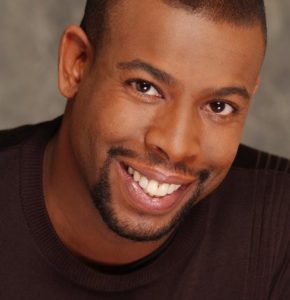
In studio with me, Chuck Nice.
Hey Neil, what's happening?
You're regular here, thanks for always coming back for us.
I love being here.
You're my personal astrophysicist.
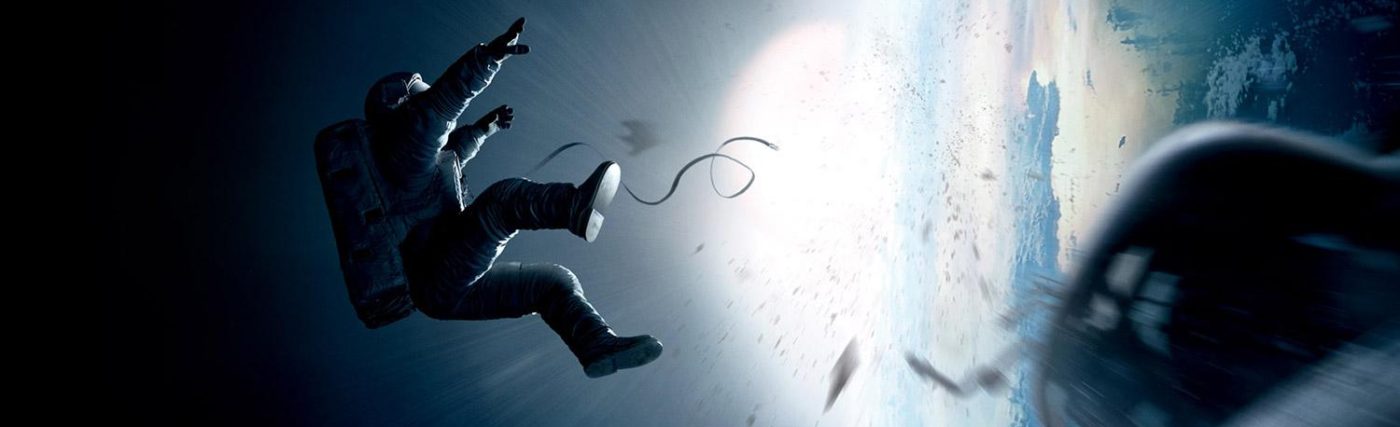
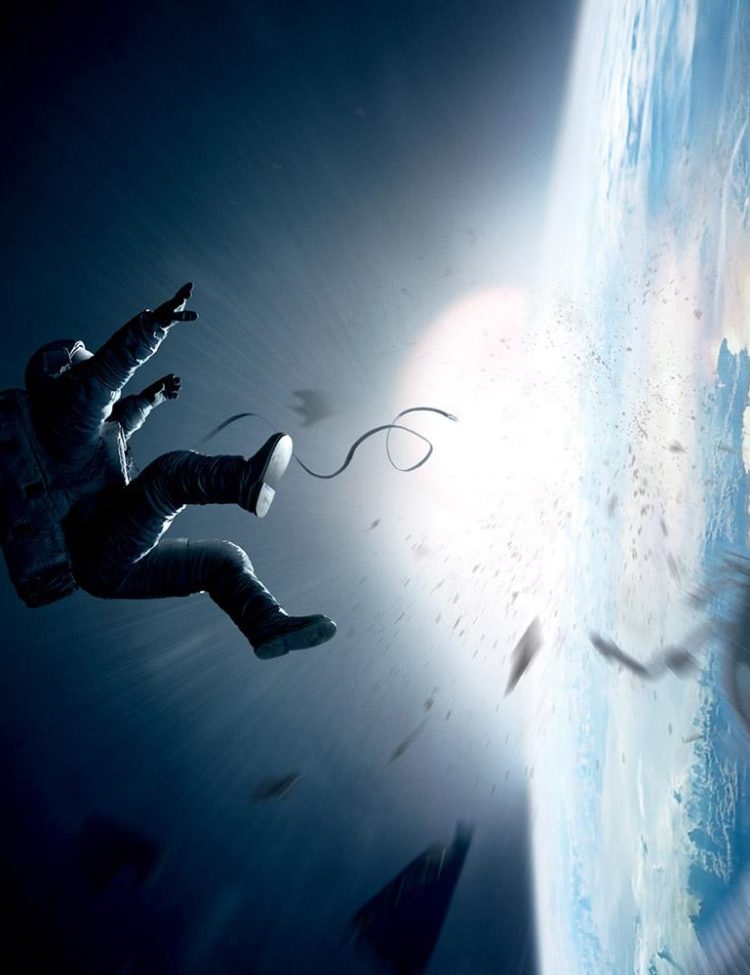
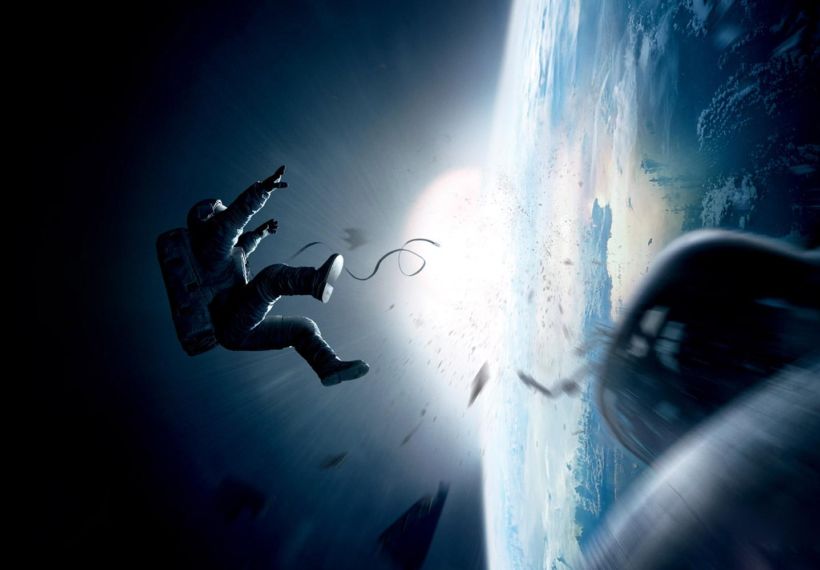
Today's show will focus on the movie Gravity.
The movie.
Yeah.
I've seen it, Chuck, have you?
I have not.
We'll find someone else right now.
There's surely some people out there who haven't seen it, and yes, there'll be spoiler alerts throughout.
But the premise of Gravity is it's basically a survival story with Sandra Bullock as a mission specialist, which means you have some expertise and you're not sort of a red-blooded astronaut.
You're brought in for your expertise.
And then.
Or a poser, as we like to call them.
And George Clooney, who's sort of fly boy astronaut.
And it's basically only the two of them in space.
It's a survival movie for 90 minutes.
Stuff is happening every minute.
Something they've gotta survive, figure out, be clever about.
Now, I gotta tell you right now, if this were a pitch right now, I would say that's the most boring movie I've ever heard of in my life.
It is, except there's like stuff flying at you every second, right?
Oh, okay.
So, now, since it's in space, I could, you know, I'm good with the physics, but I've never actually been in space.
So we had to comb the streets and find somebody who has been.
Not to say has been, but who has been in space.
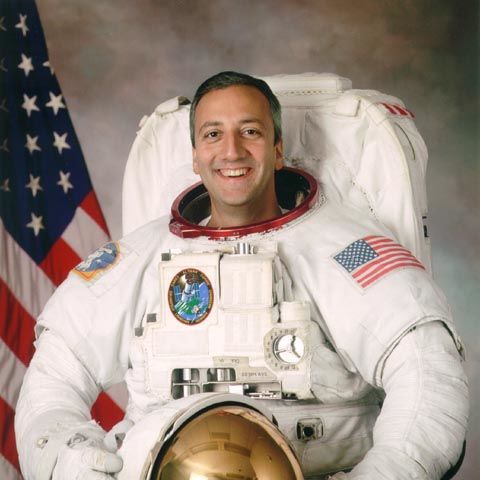
Mike Massimino, Astro Mike.
Astro Mike.
Welcome back to StarTalk.
Pleasure, Neil.
Thanks for having me.
You're in New York City visiting Columbia, so thanks for making time for us.
My pleasure.
Excellent, visiting faculty there.
Excellent.
Super cool.
So Mike Massimino flew on the shuttle and repaired the Hubble Telescope the last time.
That's right.
All by himself.
All by myself, except for my friends who are with me.
That's right.
You were the only one who counted, come on.
So this whole show is about the film Gravity and your questions related to it, and we solicited them from the internet.
That's right.
And, but we also have some call-ins.
So, but Chuck, you're leading the way here.
So here we go.
Actually, we're gonna kick things off with a phone call.
And Allison, are you there?
Yes, I am.
Hello, Allison, and where are you calling us from?
I am calling from Trenton, Michigan, which is just south of Detroit.
Yes, yes, and probably a damn sight better than Trenton, New Jersey, which is just south of my house.
So talk to Neil and Mike, Allison.
What do you got, Allison?
I'm a high school biology teacher, and my students often ask me if movies are scientifically accurate.
Of course, teens see a lot of movies, and they believe everything that they see.
So Dr.
Tyson, when they ask me about the movie Gravity, what should I tell them?
Ooh, well, I got into trouble three days after I saw the movie, because I tweeted about the movie, and there was about a dozen scientific inaccuracies in the film.
And there were a few more, but I parked it at a dozen.
People didn't like you for that.
No, I got in big trouble for that.
People go, I'm not going to movies with you, you can't be me, me, me, me, me.
But what I didn't do was spend 100 tweets talking about what they got right.
So I could have done that, but that would have been perhaps a little less interesting.
So I'd like to think that directors and producers who care, they'll get most of the science right.
And that is enough to ground a movie, and then they might take some liberties, or maybe there's some things they didn't know.
But once the movie is grounded, I'm good with that.
And it has earned the right to be criticized at that level.
What do you think, Mike?
No, I agree.
The accuracy that I saw was in the recreation of what space looks like, the views of the Earth, the tools that they had, the tools that we used on Hubble were in that movie.
I was wondering where they went, but they were in the movie.
They used it for the movie.
Plus Sandra Bullock was actually repairing the Hubble.
She was repairing the Hubble.
You'd expect similar tools for this.
Right, but they could have made up their own, or they could have left some of ours out, but they did exactly, they used exactly what we used.
So the suits look good, the feel, the look of space was there.
So I think they got that right.
So the mood and the feeling was captured.
And for a movie, that's perhaps the most important thing to get right.
They also show, I'm sorry.
I'm sorry, the question would be to you is, did you suffer any type of anxiety while you were watching this movie as a man who has actually been in space?
Well, I don't remember the movie for you.
As the dangers befell the astronauts.
Yeah, at first, it was kind of like, okay, we've kind of simulated some of those things.
They did show that space is a dangerous business.
And so some of the things that they showed in the movie, we kind of practiced to a point.
I mean, a micrometer, an impact, you've got to come inside really quickly.
What do you button up on the telescope?
What do you save?
Do you try to save this magnificent machine and go inside?
Or do you just worry about yourself?
Can you do something?
Things are the choices.
No, it's the Hubble telescope, you save the telescope.
You save the telescope.
No, seriously.
There are plenty of other astronauts, there's only one Hubble telescope.
That was kind of in our checklist.
Lost Crumen, we've got three others, don't worry about it.
That's why we had four space walkers.
Is there a circle next to the multiple choice My Ass?
Yes.
And there's hand signals too.
Really?
Yeah, because we wouldn't want to save that, we have hand signals for that.
So those are some of the things that I saw in the movie at first, and then it went crazy.
Okay, so what's the most egregious thing of all?
Just see if you had to pick one, what was it?
The way that they were so, I was jealous, the way they were easily able to go from place to place in space so effortlessly.
With their little jet packs.
With their little jet pack, that was, I think, but at the same time, Neil, I was glad that they included all that stuff.
You know what I mean, Chuck?
Because if you want, I'm glad they showed the shuttle, even though we don't fly it any longer.
I'm glad they included the Hubble.
That was STS-157 or something.
It was up there, yeah.
I had probably flown again.
I might have been in there if it was, but I wouldn't want to be there that day.
So we added the shuttles at what STS number?
135 was our last one.
Okay, so we're down 20 from that.
Yeah, so they were continuing a little bit further.
They were all in the museums and somehow they got them out for the movie.
But that's okay because that's the only way to include it was to take some license there.
They included the station and another place.
Station is the International Space Station.
International Space Station, so thanks.
But in order to include all that, you had to kind of take a little license.
Take some liberties.
Take some liberties.
So I was actually happier that they did that than they would have stick to, because for us, on our flight, the way we were gonna get rescued if we had a problem was we were gonna launch another space shuttle.
There was another space shuttle on the launch pad with us, for us, with a crew in quarantine that we were very nice to.
If we took damage or we couldn't come home, that's the way we were gonna get rescued.
We couldn't do what they did.
Right, but in Gravity, there was no rescue mission for anybody.
There was nothing.
Oh yeah, there was, yeah, there was, yeah.
Yeah, they had no, it was really a really bad, it was like a bad day on steroids.
It wasn't just a bad day.
So is it two thumbs up or one and a half thumbs up for the science?
Well, for the science.
No, no, sorry, space, capturing space.
I give it two thumbs up.
Two thumbs up.
Yeah, for the capturing space, yeah, it was cool.
I like that part of it.
Well, there you have it, Allison.
You can tell your students that the movie Gravity is like Cliff Notes for astronauts.
Excellent, thank you.
They'll be happy to hear that.
Maybe they'll be an astronaut someday.
Well, yeah, not a shuttle.
They'll be sending them to Mars if it comes to that.
Of course, yes, absolutely.
They'd like that, I think some of them.
And they might even be the right age.
So the first astronaut class drawn from K through 12 ranks.
Nice.
Yeah, well, thank you for that question.
Thank you very much for the opportunity.
All right, you're listening to StarTalk Radio.
When we come back, more with astro Mike Massimino and Chuck Nice in the Cosmic Currys edition, all about the film Gravity.
We're back, StarTalk Radio.
Chuck Nice, you've been reading questions in this Cosmic Queries edition.
Yes, I am.
Please continue.
If you have questions for me or astronaut Mike Massimino here in studio, go.
Here we go, so this one is from Facebook, it's from Andre Peralot.
And this is kind of for both of you guys.
Isn't it true that when you're in space, you're in free fall, and that's what makes you weightless, and it doesn't have anything really to do with gravity per se?
So one, for you, is that true from a physics standpoint?
Yes.
Really?
Yes, next question.
No, no, no, just, no, wait.
That was so false.
After I sent my whole list of tweets criticizing the movie Gravity for the scientific inaccuracies, I thought, let me put some positive energy in the air, and I spent another dozen tweets describing what free fall is.
And so people think you're in space, there's no gravity.
Of course there's gravity in space.
That's why the moon is still orbiting us.
That's earth's gravity.
And the astronauts are orbiting between us and the moon.
So it's not that there's no gravity, it's that they're actually falling towards earth.
And a thought experiment first performed by Isaac Newton.
He imagined a cannon sitting at the top of a mountain and you fire it slowly at first.
The cannonball doesn't come out too fast.
It arches and then hits the ground.
All right, we got that, we understand it.
Fired a little faster, it goes farther before it hits the ground.
Fire it even faster, it goes farther.
It'll keep going farther and farther.
Suppose you came out so fast, it went halfway around the earth before it hit the ground.
Just keep up this thought experiment.
Now it's three quarters around the earth.
Now it's completely around the earth before it hits the ground, and if you don't duck, it'll hit you in the back of the head.
Now, duck, it just continues.
It's right back to where it started with horizontal speed, just like what came out of the cannon.
So he deduced that an orbit is simply a continuously falling object and doesn't hit the ground because the curvature of the planet itself curves away from it.
It's trying to fall to the planet, but the planet is round, and it never actually hits the planet.
That's what an orbit is.
You are in free fall, and anytime you're in free fall, you are weightless.
And if you're on an elevator and I cut the cable, you're in free fall.
If you're standing on a scale, a spring scale, and it registers your weight, what are you, 170 pounds?
And-
Why, thank you.
So, you cut the cable, the elevator falls, the scale falls, you fall, nothing's squeezing the spring.
The scale reads zero.
You are weightless.
Mike, what do weightless feel like?
It's pretty fun.
Did you barf in your helmet?
I have to ask.
Not in my helmet.
No, not in my helmet.
My first space flight, I made sure there were plenty of Emesis bags, which is slang for vomit bags.
Bars bags.
Yeah, very close to me.
I think for the rest of us, the closest we get to that sort of zero G feeling is either in an amusement park on some of the rides, or if you ever go in your car and you go sort of over a little hump in the road, like a hill, and you feel like your stomach comes up in your throat, that's kind of sort of weightless, right?
It's kind of like that.
Sometimes, the motion of it, if you're in a pool neutrally buoyant, when we practice our spacewalks, that's what we do, we get in the pool.
A neutrally buoyant pool, you mean a swimming pool.
A swimming pool, thank you.
Just say what it is.
Yeah, so when you're in a pool, if you're floating, if you're in a picture like a scuba diver kind of floating under the water, just floating there, it's kind of like that type of sensation.
At that place of just buoyancy?
Right, just when you're just kind of floating.
So neutrally buoyant means you're not floating at the top.
You're just floating somewhere in the, yes.
In the volume of the water.
Correct, yeah.
Right.
So that's, but it's fun, getting to float and you quickly adjust to it after you get over the nausea, which takes usually about a day or so.
And it's just wonderful.
Just imagine if we could float around this room.
If you could float around your kitchen and grab whatever you needed from the cabinets, you can use a lot more of the house that way, too.
The three dimensionality of the house.
Yeah, it'd be really great in New York City with these small apartments that the guys live in here, if I could float around the place and use the high ceiling.
Have a seat on my wall.
Exactly.
Yeah, let's sleep on the ceiling.
Bedrooms on the ceiling, kitchen on the floor.
So that would be really handy here in New York City.
So that's what it's kind of like in space.
If I can describe a quick home experiment.
If you take a tall cup, fill it with water, puncture two holes in it, vertical holes.
So a lower hole, the water starts spewing out, it'll spew out sort of farther away than the higher hole because the pressure's not as great at the upper hole.
So you'll see these two spouts coming out, right?
Hold it up high while the water's spilling out.
By the way, it's spilling out because the water has weight and the water wants to get to the ground.
If you let go of the cup, both of those spigots cut off instantly.
The instant you let go of it, they stop and the water falls.
The whole cup and everything falls with it, the water does not even know to exit the cup because it's weightless.
That is fantastic.
In free fall.
And if either of my children are listening at home, if you try that damn experiment, I'll kill you because I'm not cleaning that up.
Wipe it up before dad gets home.
All right, let's move on.
That was fascinating.
That's awesome.
Let's move on to Dustin Pesatore.
Wait, wait, Mike, pronounce the name.
I can't see the spelling of it.
P-A?
Nope, P-E-S-S-A-T-O-R-E.
That's good, that's pretty pesatore.
So Dustin Pesatore says, first of all, are they constantly falling at 17,500 miles per hour?
And from Mike, how does that affect the brain's cognitive functions?
So does weightlessness have an effect on your brain?
Can you go weightless crazy?
And are they falling at the speed of 17,500 miles per hour?
No, they're going sideways at 17,000 miles per hour.
And the fact that they're going that fast sideways allows them to fall down towards the earth at the rate that earth's surface curves away from them.
In fact, we think when we watch the shuttle launch, and Mike, you gotta back me up on this.
When we watch the shuttle launch, we think, oh, there it is going up into space.
Most of that energy of all those engines is not to go up.
It's only going a couple hundred miles up.
Hell, that's from New York to Boston.
We can drive that.
Most of that energy is to give it horizontal speed.
And that's why that puppy does that half twist.
The roll.
The triple gainer half twist, double flip, and does a roll, a beautiful, balletic roll, and it's going sideways away from you.
Ain't that right?
That's it.
And the direction we go in, which is launching to the east, helps a little bit because you're picking up some speed because that's the way the earth is rotating.
Earth rotates, so you're being lazy on that one.
Every little bit of speed helps.
And you launch from Cape Canaveral, so my back of the envelope tells me you're probably getting 800 or 900 miles an hour from the earth from there.
That's about right.
Yeah, yeah.
Wow.
Sounds good to me, anyway.
So, yeah.
Yeah, yeah, that sounds right.
Now you know exactly how I feel at most of the stuff he says.
So, Chuck, here we have a phoner?
Yes.
Who do we have on the line?
Call or are you there?
Yes.
My name's Anthony.
Hey, Anthony, where are you calling us from?
I'm calling from Kansas City.
Kansas City.
Wait, wait, KC Mo or KC?
KC Mo.
All right.
All right, so what's your question for Neil or Mike?
Yes, once again, thank you for taking my phone call and Dr.
Tyson, thank you for being an inspiration for a lot of people going into science.
Thank you, thank you.
I have a question about the scene from the movie Gravity, in particular where she uses the fire extinguisher as the maneuvering unit.
An awesome scene, by the way, yeah.
Cover your ears, Chuck.
You don't hear this.
Yeah, like Ed White did in Gemini 4.
Is there any accuracy to that, or is it more of just the Hollywood effects that she was able to propel herself and hold on to it?
And get where she was wanting to go with.
I know the nozzle on that is bigger than the one that Ed White and Michael Collins experimented on.
So here's the question.
Can you actually use a fire extinguisher as a propulsion device?
So let me give the physics, and then Mike can tell me how it really goes down in space.
We got about 90 seconds in this segment, so I'll be quick.
So if you, if your physical mass loses mass in any way, so Sandra Bullock plus extinguisher, that's a certain mass content.
If the extinguisher sends any part of its mass, because she's holding on to it, in any direction, she must recoil, no matter what.
And by the way, this works for burps.
It works for any, if you can propel any part of you outside your body, you will go, you will recoil from that.
That's Isaac Newton's law of action and reaction.
Well, we all know what part of my body I'm using.
So, what it also means is, if she doesn't actually propel it through a line that connects to her center of mass, she'll not only recoil, she'll start to rotate.
And so, you gotta know where to aim that stuff.
So Mike, have you played in space this way?
Well, I haven't played in space, but in a simula, well, yes, yes we have, but not with a gas can, like you're saying, we practice that.
So, yeah, anything that's gonna move, you described it, anything that's gonna give you a gas going one way, you're gonna react to it.
But when I saw that scene, I was like, she's reusing her head now, she's being smart about it.
What we have on our jet pack, we don't have the big jet pack like they showed in the movie, but we have a smaller one, and it just basically just shoots gas out in one direction.
You have a controller to try to control the direction of that and a hand controller so that it figures out which way to shoot it, but that's the way we maneuver, so just like that.
A diet of beans would have the same effect.
It would, but I wouldn't trust, no matter how many beans, I would rather have a real gas can.
I would rather have the fire extinguisher.
When we come back, more Cosmic Queries with Mike Massimino, all on the movie Gravity.
We're back, StarTalk Radio in studio.
Chuck Nice and Astro Mike Massimino.
Chuck, you tweeted Chuck Nice Comic?
At Chuck Nice Comic.
Nice and at Astro Mike.
Is that an underscore between the two?
Yep, at Astro underscore Mike.
There could never be any other Mike astronaut?
No, they'll get pissed off.
There's an Iron Mike, the guy I have now, Mike Hopkins, is like Astro Illini.
They're running out of ideas.
You're at the University of Illinois.
So I've got Mike, stay away.
It's because you were the first person to tweet from space.
And you had first dibs.
That's right.
We are.
We're very creative.
Use Mike as my.
We are.
This is the Cosmic Queries edition, all about the film Gravity.
That's why we have a real astronaut in studio for this.
Yes.
So Chuck, oh, you know, where we left off, we were talking about how to propel yourself around space.
Yes, we were.
We learned some, but the second part of the question was, does weightlessness affect your cognitive capabilities?
Well, your brain is trying to figure out what's going on.
So one thing I thought was really interesting is that because you're weightless and your vestibular system doesn't know if you're upside down or right side up.
Your inner ear, which gives you a balance.
You use a lot of fancy words.
That's the first one I use in more than one syllable for Pete's sake.
I mean, I need a dictionary to talk to this guy.
You know what I mean, Chuck?
And I said, not the vestibule, people, it's your inner ear, your balance, your sense of balance doesn't work anymore because that works on gravity.
It presumes you're on Earth.
It presumes you're on Earth, where we evolved, yeah.
Right, so your inner ear is saying you're perfectly still.
So your eyes now are telling you what position you're in and what happens is when you're upside down, so picture now guys, we're in this room, or picture at home, your car or whatever, you're now weightless and now all of a sudden you go upside down, okay?
Your brain is telling you that you are still right side up and the scene has moved 180 degrees, it's now flipped.
So it's saying the whole room has rotated.
Not you, that the room has rotated.
And it really is a little disturbing.
It is cool, but at first you're like, holy crap, let me get into the right direction.
And then after a while you get used to it, your brain adjusts to that and you can have a conversation on the ceiling and be very comfortable with it.
It usually takes a couple days.
Okay, so it doesn't mess up your intelligence, it just messes up your orientation.
It messes up, your brain's trying to figure out what's going on and in there's some other bodily functions like the distribution of your liquid.
I'm trying to use a small word.
Fluid.
Fluid, thank you very much.
Of your fluids inside of you, it kind of pulls to the upper extremity.
So your head is kind of big in space at first because you're just floating up there.
Well, isn't that because your body is accustomed to fighting a force of gravity and now there's no force of gravity?
It'll just send all the.
Right, everything goes up.
And so what happens is your body thinks, your brain thinks that it has more water than you really have and you start to pee more in space more than you really should.
So there's a risk of getting dehydrated.
So you want to drink water as much as you can, especially when you first get there.
But all these things kind of adjust after a couple days.
Okay, but it doesn't affect your ability to push buttons and make safe decisions.
Unless you're nauseous, which is another problem.
And then it doesn't matter what's going on, Neil.
Even listening to StarTalk Radio, if you're nauseous, it ain't fun.
I feel like, oh, space is fun.
Yeah, if you're not nauseous, once you're nauseous, everything becomes not fun.
I don't care what it is.
Also, a point about spewing out gases in one direction or another, I mean, that quip about beans.
Of course, that would only work if you had a flap that opened on your spaceship.
Right, you'd have to, yeah, so you'd have to.
The gas has to leave your spaceship and you recoil from that.
Right, you nasty man.
That's why it's only been tried inside the spaceship when no one else is looking or with their heads turned, and it has not been done very successfully.
I would not suspect.
So I would rather have a real gas can to move myself around as opposed to, and I eat a lot.
We've had lunch together, but it doesn't matter how much you eat.
I still would rather have an actual mechanical device to propel me around.
To propel you through space.
Right, I want to take the chance, kids.
Chuck, so you got questions for us from the net.
What do you got?
This one from Nick Hoffman.
How did they not tear their suits, sliding all over the place, and later proceeded to access other spacecrafts which should be internally sealed?
So a compound question there.
I like that, yeah, I can't help you there, Mike.
So what do you got?
I have the same issue, I guess, if you really think, you wanna be very careful when you're in space because you can tear your suit.
In fact, my space glove tore on one of my spacewalks.
What were you doing with your glove?
I was fixing the Hubble Space Telescope.
He was doing a Michael Jackson impression.
I was, yeah.
But we had some problems with our gloves, right?
In the area between the thumb and the index finger was kind of a weak point there for a while, and if you had to be really careful, you could wear a hole in there.
So it was weak because you needed to be flexible.
You needed to be flexible, and it's something, we're using your hands to work out there, and you could wear, it needs to be flexible so maybe it's not as strong as the other parts of the suit.
It's a seven-layer suit, so even if you penetrate the first layer, you've got a couple other layers there.
It's seven layers for this reason.
For this reason, right, including a layer of Kevlar, and then at the bottom is the pressure layer, where it's kind of like a rubber.
If you have Kevlar in there, that means you're bulletproof.
Yeah, but you can still, in the gloves, we don't have the Kevlar in the gloves, so there are the weak points.
In the other parts, like in the arms and the pants, that's where the Kevlar layer is in amongst the seven.
So if one of the astronauts smuggles a gun through NASA security, goes up into the space, and shoots you, you have your Kevlar protection.
It's not that, no, I would not, let's not try that.
It's not very thick Kevlar.
It's really thin.
Let's not try that.
Yeah, it's very thin.
It's not wrapper-grade Kevlar.
Right, right, it's not, yeah.
Right, I would not want to go into a club with this stuff.
I would want a lot more protection.
Well, I mean, I'd say that not completely jokingly.
If there's debris flying through space, it has energetics of a flying bullet.
Right.
This has got bullet energy.
So we have thin layers, and they have seven layers on top of each other, so that you can withstand some type of impact is the idea.
And the final layer is the pressure layer.
But your gloves are the biggest part.
The final interior layer.
Yeah, the final inside against you is a bladder.
And once that's penetrated, that's when you get a leak.
But you can withstand.
A pressure leak, yeah.
A pressure leak, and that's when your oxygen's gonna go out and pressure goes away, and that's bad.
When we come back, more questions on the movie Gravity with in-house astronaut Mike Massimino.
We're back, StarTalk Radio, Cosmic Queries Edition, all about the movie Gravity.
Chuck, you got through half the person's question last time.
We got through half of it, but here was the second half, which was how do you proceed, how do they proceed to access other spacecraft which should be internally sealed?
So how do you get in from the outside when it's supposed to be locked?
They just turn knobs and open the door.
No, yeah, see, the issue there is that the doors we have open to the inside, right?
So that when you have pressure inside, it's like an airplane, right?
The doors open on the inside, so the pressure kinda keeps it locked.
Because you have more pressure on the inside than the zero pressure outside, obviously.
Correct, right, so it keeps it solid.
You can open an airlock door from the outside if there's no pressure on the inside of that airlock.
You know what I'm saying?
But then it would just swing free.
That's right, but if it's a pressurized volume, where if you can go in there without and be able to take your space suit off and live, then it gonna work.
So we can quantify this, right?
So you're probably not pressurized to sea level.
That's 15 pounds per square inch.
What are you pressurized to?
Inside your space suit?
No, no, no, in the air.
Okay, so it all depends.
But like on the show, we did our spacewalks.
We were a little bit less at 10.2.
So there it is.
So he's got 10 pounds per square inch.
And if your door is 30 inches by 60 inches.
You gotta get a space suit in and out of it.
Right, right, let's say 30 inches by 60 inches.
So that's 2000 square inches, is that right?
Times 10 pounds per square inch, that's 20,000 pounds of force, of pressure.
And it's probably more.
And the space station is even more, because they're at 14.7, they're one at atmosphere.
They are at one atmosphere.
So you're even more on the space station.
In other words, the door in every square inch has this air pressure pressing down on it.
In fact, that's why.
And it's pressing on it from the inside out.
Correct, out, right.
Exactly.
Sealing it.
Sealing the door.
Against the hole.
So the answer here is that's bogus.
It's a movie.
Here is what I'm getting from your answer.
Yeah, it's like knock on the door, open wide.
But they did show that presumably there was pressure on the inside and the door popped open.
Yeah, no.
Yeah.
Okay, okay.
Also, just, I gotta throw in some physics.
What we just described is why suction cups work.
And it got Jack to do with suction.
If you press a suction cup down, expelling the air, now there's nothing to balance the air pressure around it.
The atmosphere is sitting on top of the rubber suction cup at 14.7 pounds, round it to 15 pounds per square inch.
If your suction cup is 10 square inches, it's 150 pounds of pulling up force it will require to lift the suction cup.
You say, it was sucking hard.
No, the atmosphere is pushing down on that sucker.
So it's all pushing down, no sucking up.
No sucking up.
And we're all under pressure.
We're all under pressure, no wonder I feel like this.
It's not the questions, it's the pressure.
And also that pressure operates in every direction.
So that's why a suction cup will work on the ceiling.
Air pressure goes in all directions when you're at the base of the atmosphere as we are.
Okay, what else you got?
Another question, go.
Let's move on, this is Jim Lulo.
And Jim wants to know, I'm fascinated by his question.
When the fire in the ISS was starting, it was in small fireballs that were floating.
If heat rises, how does fire act in zero gravity?
All right, so I saw this and I was wondering about this.
We don't really know, we really don't know exactly how that would happen because we haven't had a real fire where we would, but if you think about it, gravity does help fire rage.
If we have an open flame on Earth and it's gonna spread, it needs fuel.
Most of the stuff that we have in space is fireproof.
That was one thing.
On purpose.
On purpose, so it doesn't burn.
Just about everything we have up there is fireproof.
The other thing is with the absence of gravity, I've talked about this with my friends, what would it be like?
A small localized, we do have fire extinguishers, there's two types, on the Russian segment and on the US segment, two different kinds, but it's mainly for electrical fires.
Whose is better, ours or theirs?
They're just different, different electrical components.
We expect more of an electrical fire, and it might be an open flame kind of localized where you would have to use an extinguisher on it, but this raging fire, because there's a lack of fuel and the gravity, the convection that you would get from gravity to feed the fire is not there, I always thought that we would never get a big raging fire.
It would just extinguish itself.
It would extinguish itself, right, if it did nothing.
I mean, the idea is if you do nothing, it should go out.
Because a candle on earth, the heat rises, oxygen comes in to replace the used oxygen in the flame itself, so it's a continuous flow of oxygen fuel.
And it's gravity that feeds it.
Gravity, the convection of the lighter gas and the heavier gas comes in below.
In space, a candle will extinguish itself.
If you do nothing.
Because there's no fresh oxygen to even know the place.
To know where to go.
To even know where to get in there.
It doesn't know how to get in there.
So you would think that a raging fire is impossible, but no one really wants to try.
So it's like, hey, would that really happen?
I don't think so, but I don't want to take the chance.
Don't play with matches.
So the answer is fires in space are like our debt ceiling here on Earth.
Nobody wants to know what kind of disaster will ensue.
There you go, stay away from it.
When we come back, more StarTalk Radio Cosmic Queries Edition on the film Gravity.
This is StarTalk.
Welcome back into the final segment of Cosmic Queries, all about the movie Gravity.
We are in the lightning round.
Yes.
Chuck, you know what that means.
That's right.
I've got Astro Mike with me, Astronaut Mike, and we're gonna answer questions as quickly as we can, get as many of the questions as possible.
Yes, we are.
All right, and with Test the Bell, we are good.
There you go.
Go for it.
Here we go, here's the first question from Timothy Tezica.
Are all astronauts really that good-looking?
No, better.
Okay, next.
That's why we're doing a radio show.
We all have faces made for radio.
Next.
All right, here we go.
All right, this one from George Asuna.
Oh, wait, I gotta add there real quick.
Because I've been talking to movie people lately, and everyone is convinced they completely retouched Sandra Bullock's legs and all those legs.
There's no blemishes, there's no varicose veins.
She's 49, there's nothing.
It was like Barbie legs all the way.
They were trying to match real astronauts.
As long as we're on radio, I'm very comfortable saying it.
Don't anyone ever watch this.
Chuck, go.
All right, from Jorge Asuna.
Are they allowed to stay outside until they reach the last 10% of oxygen?
Speaking of astronauts.
No, it's based on time and you wouldn't want to go with less like an hour left based on how you're using it.
Okay, an hour of reserves, go.
An hour of reserves, that's the answer.
Okay, this one from Dario Horvatinovic.
Cool.
If there was really a fat astronaut, how much would their gravity affect the Earth?
Quickly, Mike.
Luckily not at all.
Right, because it wouldn't affect any more than it would while they're on Earth.
But I can tell you, Mike, what's it cost per pound to put something in orbit?
A lot of money.
It's $10,000 per pound to put something in orbit.
So for every pound of excess fat, the taxpayer is paying $10,000.
Right, plus being a larger astronaut, it requires more food to feed us and larger clothes.
Larger clothes.
I had to use half of Megan McArthur's clothing locker for my clothes.
You're 6'3?
I'm 6'3.
How much you weigh?
About 200.
You got it.
Next.
Okay, if lost in space.
You weigh more than 200, Mike.
I do, but it's just.
You were so lying, but go on.
It's a slimming effect of radio.
Because I'm 240, and we're like, we've got similar growth here.
All right, go, all right, go.
It's a lightning round, I wanted to be quick.
I feel like I'm sitting here with two models, not two scientists.
All right, here we go, go.
If lost in space, is there a mythical suicide pill?
Ooh.
No.
Never.
No, we're not doing any of that.
No.
Wait, wait, wait, wait, the real question is, if there were one, would you admit?
And that was about to, would you use it?
No, no, if there were one, are you allowed to say you have one?
If there were one, they didn't tell me.
See, that's, he has to say that.
All right, so now, wait.
All right, quickly, quickly.
Chuck, you know he's got one.
You know he does.
He can't, he can't.
All right, so let's put it to you this way.
Okay, would you rather drift into space wantonly until you die or take a suicide pill?
I'd want to get every second out of it as I could.
Exactly.
I would not.
Me too.
I ain't ended it any sooner than I have to.
All right.
All right.
Next, go ahead and take your chances.
This is pretty much for both of you, but would it be possible to launch a satellite capable of changing orbital altitudes and not be in geosync orbit?
Is that possible?
So instead of falling around the earth.
If you bring fuel with you while you're in orbit, you can change orbit.
You can change angle, height, altitude, and you can even reenter, all right?
You fire your rockets the other way.
You drop down and you enter the atmosphere and plunk into the Pacific, or wherever you might happen.
Oh yeah, but you need fuel to do it.
Otherwise, you're not.
Okay, go.
Got you, got you, got you, got you, got you.
All right.
Chuck, we're faster than you here.
Cannon, absolutely.
I know, because my questions are all over the place.
He likes the answers, he's enthralled with the answers.
He doesn't get worried about the next question.
I do get excited.
Here we go.
Cannon astronaut overcome, okay, acidosis as Sandra Bullock did.
I don't know what acidosis is.
What the heck is that?
What is acidosis?
Does anyone know what acidosis is?
Is that like what we call algebra?
We played ignorance.
A fancy word for guess.
If Neil doesn't know the word, you don't have to answer the question.
If Neil doesn't know the word, I'm pretty sure you've made it up.
All right, here we go.
Do astronauts get trained in breathing techniques and is that important?
So if you know the oxygen is going low, can you change your breathing habits to prolong it?
You always wanna be breathing as lightly as possible.
Heavy breathing, a full breath is overrated, but you're not necessarily trained to do that, except you realize it's not a good thing to do.
But if you take a full breath, you are exhaling oxygen, aren't you?
You're exhaling, yeah, what you're doing is two things.
You're taking up more oxygen, but you're also getting out more CO2, which is gonna use up your filter, which is a lot of times, you can get more oxygen.
Exactly, you can't replace a scrubber, you can get more oxygen.
Chuck, real fast, we got like 10 seconds here.
On Earth we can only look at the sun for, this is from Meyer Garcia, on Earth we can only look at the sun for a couple of moments before it hurts.
What is it like for someone in an EVA suit drifting in orbit?
How long can they stand looking at the sun?
Use your visor.
Use your visor, you have a visor to put down because the sun is the brightest thing you can imagine when you're out on a space walk, you use your visor.
So who's behind those foster grants?
Astro Mike.
Astro Mike, this has been StarTalk Radio, Cosmic Queries edition, all about the movie Gravity.
Thanks, Chuck Nice.
Pleasure.
And we'll find you on Twitter, and Astro Mike, always great to have you on the show.
I'm Neil deGrasse Tyson, you're a personal astrophysicist.
That's all the time we've got.
Chuck, Mike, thanks for being on StarTalk Radio.
We've been brought to you in part by a grant from the National Science Foundation.
As always, I bid you to keep looking out.
See the full transcript



 Unlock with Patreon
 Become a Patron