


 Unlock with Patreon
About This Episode
Would aliens think we are smart? Neil deGrasse Tyson and comedian Chuck Nice answer grab bag questions on Chandrayaan-3, entangled particles in black holes, the shape of the galaxy, and more.
We explore the blind spots in our human senses and what is out there that we cannot detect. Learn about Antonie van Leeuwenhoek’s invention of microscope to view microorganisms and the discovery of infrared. We discuss India’s first moon landing with Chandrayaan-3 and the scientific collaboration between countries and private companies.
Would advanced aliens be impressed with us? We discuss how aliens could view our intelligence level and achievements. What is the shape of spacetime? What caused the universe to be infinitely hot and dense before the Big Bang? Find out more about the mechanism of the Big Bang as we explore the origin of the universe and the possibility we are in a multiverse.
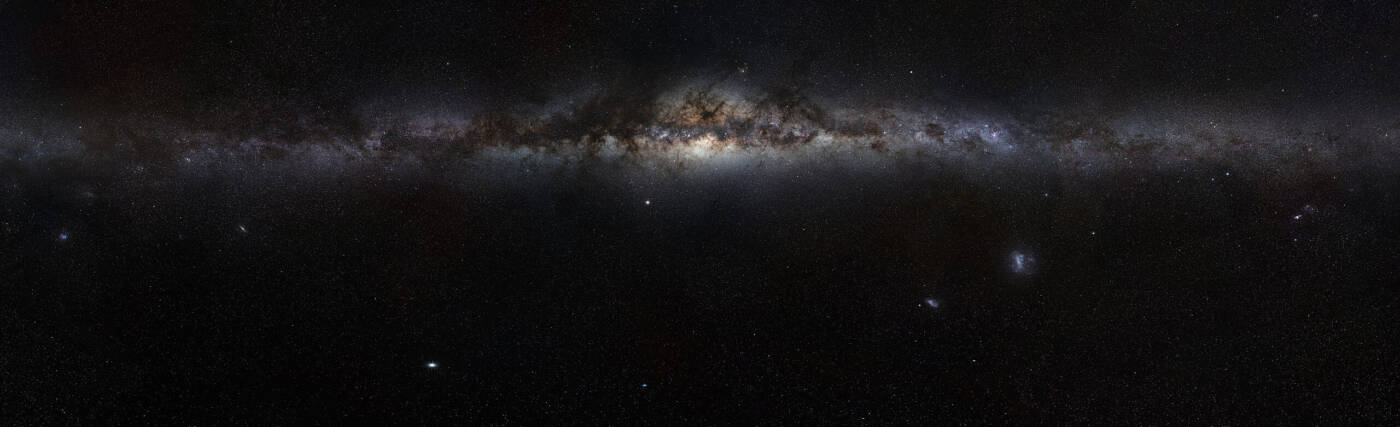
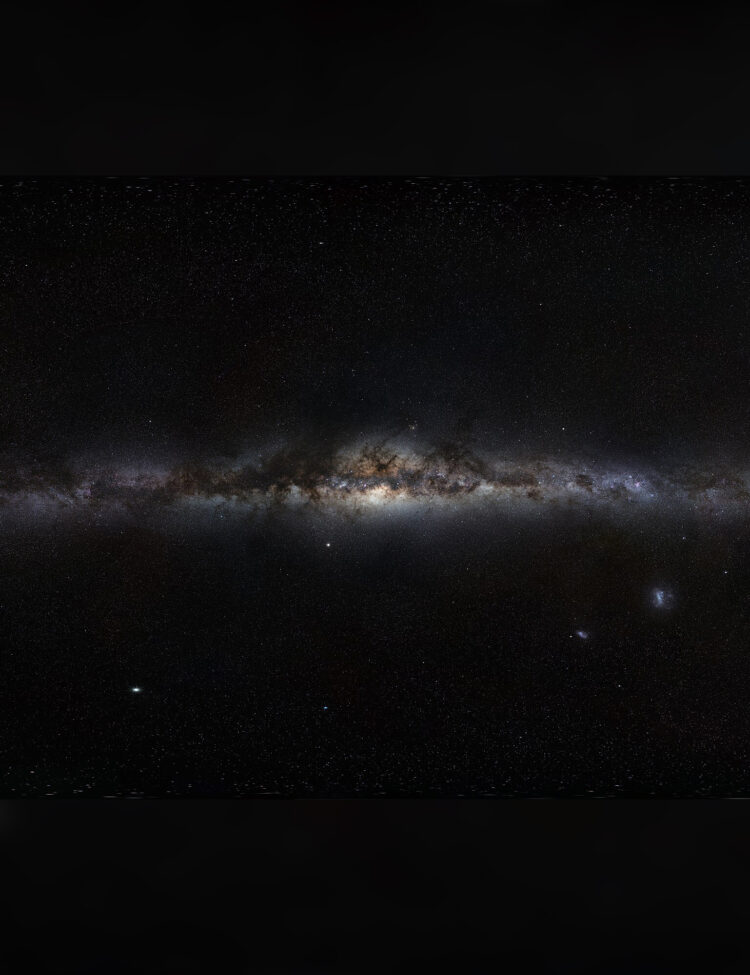
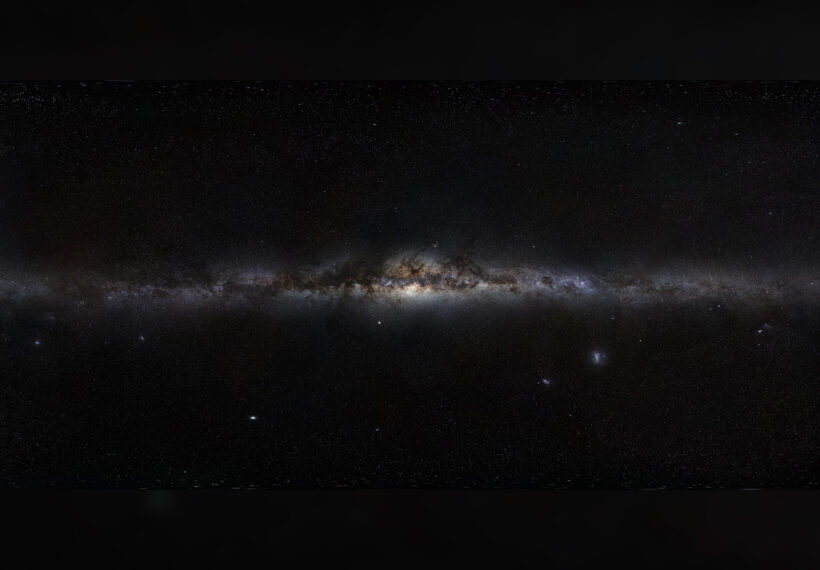
Why doesn’t the Milky Way cover more of the night sky? We cover the shape of the universe and Chuck answers a question on quantum entanglement. What would a naked space walk feel like? Would it be cold? To wrap things up, Neil gives his biggest priority in space exploration.
Thanks to our Patrons Joe King, Denis Ghislain, Ken Sayles, Nicholas, Ava Taylor, and Jared Coffman for supporting us this week.
NOTE: StarTalk+ Patrons can listen to this entire episode commercial-free.
Transcript
DOWNLOAD SRTHow great is it to be able to communicate with somebody in their language?
Makes you both feel good.
How about job prospects and how much more plentiful they are when you can speak another language?
Well, how about you learn a new language with Rosetta Stone, the most trusted language learning program to make you a more competitive job applicant?
It’s available on desktop and as an app and teaches through immersion.
Find convenient 10-minute lessons.
It’s used by millions because it works.
Rosetta Stone’s true accent feature even provides feedback on your pronunciation.
For a very limited time, StarTalk Radio listeners can get Rosetta Stone’s lifetime membership for 40% off.
That’s $179 for unlimited access to 25 language courses for the rest of your life.
Redeem your 40% off at rosettastone.com/startalktoday.
Muchas gracias, you say.
Siempre de nada, I say.
You know what’s missing in your life right now?
A little sparkle, a little effervescence, and maybe some fun while you’re supporting your immune system.
New Immune Supporting Emergency Crystals.
Bring you the goodness of emergency in a fun new popping experience.
There’s no water needed, so it’s super convenient.
Just throw it back in your mouth, feel the pop, hear the fizz, and taste the delicious natural fruit flavors.
Emergency Crystals, Orange Vitality, and Strawberry Burst flavors for ages nine and up have 500 milligrams of vitamin C per stick pack.
But more importantly, they make your mouth a lot more interesting while you support your immune system on a daily basis.
I love throwing back a pack and feeling the crackle in my mouth.
Makes me feel like I’m having fun while I’m supporting my immune system.
Look for emergency crystals wherever you shop.
These statements have not been evaluated by the Food and Drug Administration.
This product is not intended to diagnose, treat, cure, or prevent any disease.
Oh my God, the aliens are Swifties.
That’s why they came here.
That’s why they came.
They couldn’t get concert tickets on their world.
Welcome to Star Talk.
Your place in the universe where science and pop culture collide.
Star Talk begins right now.
This is Star Talk.
Neil deGrasse Tyson here.
You’re a personal astrophysicist.
Got Chuck Nice on the line.
Chuck, how you doing, man?
Hey, what’s happening, Neil?
All right, this is Cosmic Queries.
Yep.
This is so popular.
I’m amazed just how many people like to listen to other people’s questions.
And usually they probably got some questions of their own.
Inquiring minds want to know.
And so this is a grab bag.
Any subject at all.
That’s right.
Do we solicit grab bag or is this just leftovers from other ones that were not grab bags?
No, well, we actually ask people, do they want to send us some grab bag questions?
There you have it.
We ask.
Some of my favorite, because they’re so random, you know?
Yeah, well, that’s what makes it fun, you know?
I think they’re hip to that as well, when you see them.
Well, let’s jump into it, shall we?
And these are Patreon supporters.
Oh, that’s right.
Yeah.
They have exclusive access to the question line here and…
Well, you know, so many people were sending in questions that we’ve had to figure out a way to cull it down.
And we figured the best way to cull it down is to also make some money.
You say, it was $5 a month, man.
And you can ask whatever you would like.
No, the truth is that, you know, we need support through Patreon.
And we figured, why not make this a Patreon perk as a reward for the people who are so gracious as to support us.
All right, here we go.
This is Victor Ray Rutledge, who says, Hey Chuck and Neil, here’s my question out of Texas.
A truly weird space in the multiverse.
Since humans can vaguely see infrared and ultraviolet radiation, what other things in the physical world do we just ignore since they have always been ignored?
Oh, beautiful question.
So I write about this in, I forgot which book.
Okay, that is the most humble brag I’ve ever heard.
Oh my God, you’re insufferable.
You know, I wrote about this once, and I can’t quite recall which one of my many publications where I placed this particular information.
Okay, I guarantee it’s in Death by Black Hole and other cosmic quandaries.
Okay.
But there’s a chapter in there called Coming to Our Senses.
All right.
And it’s all about the fact that we have our traditional five senses that we know and love.
And consider that before science took on technology and engineering, why would you think that the world had stuff in it that you couldn’t sense or see or touch or taste or feel?
There’s no reason to even have that thought.
Because it’s all happening.
I’m seeing it all.
I’m touching it all.
I’m feeling it all.
I’m tasting it all.
And you’re telling me there’s a whole lot.
And if you’re religious, why would God make you have all these senses that when you’re practically blind to what’s actually happening out there?
Right.
So there was strong philosophical, cultural, emotional requirements that our five senses saw everything.
Anton van Leeuwenhoek, Dutch optical lens maker.
He had the sense, who do I get to say that now?
He had the curiosity to say, I wonder what would happen if I looked at a drop of pond water in my microscope?
To even have that thought.
It’s just water.
Why are you looking at a transparent liquid?
There can’t be anything interesting there.
And that was the day that he stopped drinking water forever.
That’s the footnote to this.
That was just a dehydrated body in the corner of the closet.
He looked at daddy, he was just like, oh my God, don’t ever do this.
Don’t ever put this stuff inside of you.
He saw all kinds of creatures.
And I love what he could, you know what word he used to describe him?
No.
Animacules.
Animacules.
Prettily a swimming.
Prettily a swimming.
That’s actually-
So he wrote this up and sent it to the Royal Society.
And they thought he was just pulling their leg.
Yeah.
Right?
And they said, you know, okay, this is fun to read, but next time put down the gin before you write to us.
Exactly.
Step away from the bottle.
And the good thing about science, among many things, is they can be skeptical of that report.
Who wouldn’t be?
But you can go check it out.
Right.
You can build one of these yourself.
You can look at your pond water.
So the verification of an extraordinary claim is fundamental to the advance of science.
So there’s something your senses can’t see.
You have sight.
So a microscope magnifies your sight so that you see things that were otherwise completely outside of your awareness.
And medicine could not have made the achievements it did without the microscope.
So it’s not that God punished you for being bad and that’s why you have this disease.
Something bit you.
Right.
And there’s a bacterium or a virus and you can track the flow of diseases in this.
And not only that.
God still could have punished you with the bite.
You know.
Could have let the animal bite you so that, you know.
You get what’s coming to you.
So we were off and running to the small and to the large, all of which you can’t see.
Okay, let’s keep going in my book, sorry.
Once again.
Shut up.
What was this?
Astrophysics for People in a Hurry, which I think has some of this senses discussion in it.
I recount the discovery of infrared.
Okay, I think we, did we have an explainer on that one?
We might have.
It’s one of my favorite stories.
Oh, yeah, because he’s looking at the spectrum.
This is William Herschel, after Newton did his thing with the prism and the colors of the rainbow, just deducing that the colors of the rainbow are embedded in white light, freaking out artists of the day, but that’s the physics of it.
And he said, I wonder what temperature the different colors are.
And so he put thermometers into the different colors of the rainbow projected on his table, but you need a control thermometer.
A thermometer that just simply measures the air temperature without the influence of the colors.
So he puts one off to the side of the red, and that thermometer measured a higher temperature than everybody else.
Oh, I love them.
So he’s freaking out.
And he says, I may have discovered light unfit for vision.
Wow.
Invisible light.
And so go from then onward when someone says, I have a sixth sense, I don’t even have that conversation because I say, I’m a scientist and I have 12 senses.
I can detect ultraviolet, infrared, x-rays, gamma rays, radio waves, microwaves.
You can’t, all right?
I have tools, or you can if you had these tools.
I can also detect gravitational vectors, ionizing radiation.
I can detect small things, big things, in things too far away for you to see or even notice.
So the answer is yes.
The universe brims with things outside of our senses, and modern science is okay with that because we don’t rely on our senses to decode the universe.
There it is.
Excellent.
All right.
All right, what shall we do?
Let’s move on to, come back to these letters here.
It goes, hello, Neil, and hello, Chuck.
This is Manoj Chug.
It’s as in chug a beer, Chuck.
From Plainview.
You got fans out there.
Yes, exactly.
That’s a good man or person here.
He says, I’m from Plainview, Long Island.
I’m a recent entrant as a Star Talk patron.
And although I’ve been a huge fan of you guys for a long time, my question is, with the recent success of Chandra Iyan, India’s unnamed moon mission to the moon South Pole, pulled off at a super low budget of just 75 million smackaroos, do you see NASA collaborating with the Indian Space and Research Organization for future space missions launching astronauts and payloads to the ISS, et cetera, as a more cost-effective option compared to SpaceX and other private agencies?
So I love my man is just like, is India NASA’s new dollar store?
He, he, dollar store.
Yeah, India, so our missions that do what India’s mission would do, would cost 2X, 5X, 10X what India, that’s $74 million.
That’s a low-budget action movie in Hollywood.
Isn’t that something?
$75 million, right.
Right, so we have a lot to learn about how they did it on the cheap.
The issue here is not how cheap it is in the absolute, but how cheap it is for the government to have done it.
So in our world, the government does it, it’s expensive, as many things are when you do them first.
Then you port it off to private enterprise that trims fat and this sort of thing.
And so I don’t know that if Elon had to put a satellite on the South Pole, whether he couldn’t have done it for $75 million or even less.
Right.
But NASA can’t do it for $75 million or less, or they never have.
So that’s my first point.
Second, the good thing about collaborations in space is everybody gets to do what they do best.
Right.
And you bring it together.
So, if India can get you there on the cheap, but they don’t have the experiment, but you have the experiment or you just mix and match, you mix and match the best features of the international participants.
And the International Space Station is kind of like that.
But that being said, competition also kind of works to stimulate innovation and achievement.
Right.
So does profit.
So does profit.
Sorry.
Profits first.
Remember.
So, I don’t see every country always collaborating.
That’s more than what is necessary to keep the engine going.
But when it makes sense to collaborate, yes.
And when I met with Prime Minister Modi of India, I asked him about the Artemis Accord, which is a document signed by modern spacefaring nations, where they promise each other to share data, to do this in peace as we advance the frontier.
So if you share data, that’s a form of collaboration.
Yes.
Right?
So they go to the South Pole.
They’re going to see where the ice is first.
They share the data.
But now we retool our mission to the moon with humans.
Now they don’t have to look in the same way, because that’s already been verified.
They can look in a different way, or look in a different place.
But will they really do that?
Because now water on the moon becomes a resource, and when resources are scarce, people get kind of sketchy.
That’s true.
There’s an agreement that says nobody can plant a flag on the moon and say this is ours, this is our territory, this is ours.
What you can do is take resources.
So now if people are locating and finding ways to extract and utilize especially water, and I learned this from you, water is what is the propulsion system to take you further into space.
Yeah, so you can, if you break apart the hydrogen and oxygen and then bring them back together, it’s highly exothermic, and it’s jet fuel, basically.
No, not jet, rocket fuel.
So now, if you got to find a bunch of ice up there, you’re like, damn, we just found all this rocket fuel, I’m not giving this to the United States.
Why would I give this to the United States?
And by the way, Manoj says, Dear Neil, my apologies on behalf of the anchor who recently interviewed you from the prominent Indian news network and kept referring to the far side of the moon as the dark side of the moon.
Definitely, he is not a follower of Star Talk.
Ah, there you go.
He saw that broadcast.
Yeah, he saw the broadcast.
I did some major Indian press that day.
Yeah, yeah.
Yeah, very cool.
Very cool.
All right.
And me and Modi were like that, you know.
No, that’s funny.
No, I saw that.
You made some headlines talking to Modi.
He called for you.
So that was a good thing.
Yeah, yeah.
Well, it was a good thing what you said, though, talking about how the idea of the furtherance of scientific literacy in the pursuit of these lofty goals in space is great for the entire country and therefore for the entire world.
Yes, the entire country, right, the entire country would include the one out of six residents of India who are Muslim.
That’s right.
And they’re Muslim children, and so I worry that he’s got that.
Yeah, he’s got that tendency.
There’s that Trumpist, you gotta find an enemy so you can vote for me because I’m hard on the enemy.
And that, in the long run, that’s destabilizing.
It does.
And I like to think that space can bring everybody together.
Exactly.
You know, chances are you’re listening to StarTalk Radio on your phone.
You’re probably on the go too.
Think of all you do on your phone the moment you leave your front door.
From checking the weather, to transportation, to online banking, to ordering food.
You know, that requires an amazing network.
And that’s why you should switch to T-Mobile.
T-Mobile covers more highway miles with 5G than anyone else, and helps keep you connected with 5G from the driveway to the highway, and all the miles in between.
Because your phone should just work where you are.
It’s your lifeline to pretty much everything you didn’t bring with you.
Side note, I’ve been a T-Mobile customer for many, many years, and I gotta tell you, I’m loving that network.
So next time you head out, whether you’re taking a trip or going to work or just running errands, remember, T-Mobile’s got you covered.
Find out more at tmobile.com/network, and switch to the network that covers more highway miles with 5G than anyone else.
Coverage not available in some areas.
See 5G details at tmobile.com.
This show is sponsored by BetterHelp.
So let’s talk about a time in your life when racing thoughts were keeping you up at night, waking you up early, or preventing you from being able to enjoy your own life.
Do you ever find that just as you’re trying to fall asleep, your brain suddenly won’t stop talking?
Do your thoughts start racing right before bed, or at other inopportune moments?
It turns out one great way to make those racing thoughts go away is to talk them through.
Therapy gives you a place to do that so you can get out of your negative thought cycles and find some mental as well as emotional peace.
If you’re thinking of starting therapy, give BetterHelp a try.
It’s entirely online, designed to be convenient, flexible and suited to your schedule.
Just fill out a brief questionnaire to get matched with a licensed therapist and switch therapists at any time for no additional charge.
Get a break from your thoughts with BetterHelp.
Visit betterhelp.com/startalktoday to get 10% off your first month.
That’s BetterHelp, help.com/startalk.
So a quick quiz.
What’s a game when no one wins?
The answer is simple.
The waiting game.
So when it comes to hiring, don’t wait for great talent to find you.
Find them first with Indeed.
When you’re hiring, you need Indeed.
Indeed is the platform where you can attract, interview and hire all in one place.
Instead of spending hours on multiple job sites searching for candidates with the right skills, Indeed’s a powerful hiring platform that can help you do it all.
With instant match, over 80% of employers get quality candidates whose resume on Indeed matches their job description the moment they sponsor a job.
Even better, Indeed’s the only job site where you only pay for applications that meet your must have requirements.
Start hiring now with a $75 sponsored job credit to upgrade your job post at indeed.com/startalk.
Offer good for a limited time.
Claim your $75 credit now at indeed.com/startalk.
Just go to indeed.com/startalk and support the show by saying you heard about it on this podcast.
indeed.com/startalk.
Terms and conditions apply.
Need to hire?
You need Indeed.
I’m Joel Cherico and I make pottery.
You can see my pottery on my website, cosmicmugs.com.
Cosmic Mugs, art that lets you taste the universe every day.
And I support Star Talk on Patreon.
This is Star Talk with Neil deGrasse Tyson.
All right, let’s go on to Cicero Artifon.
And Cicero Artifon says, hello, Dr.
Tyson.
Hello, Lord Nice.
This is Cicero Artifon from Toronto, Canada.
I’ve heard a few people saying that maybe a more advanced alien would not even see us because we are just not advanced enough to be seen, just like we don’t care about bugs and worms when we’re building our homes.
Is that really what you think?
With all of our technological advancements, wouldn’t aliens look at us and at least perceive us?
We’re able to do math.
I mean, we know physics.
We’ve been to space.
I mean, that’s got to count for something.
Man, my boy’s got…
He’s not getting to sleep at night on this one.
Cicero was upset.
He thinks…
Well, what do you think?
I mean, are we advanced enough to be at least interesting?
I allow the possibility that the answer to that is no.
Because…
All right.
I’ve given this example before, but I’m going to put it right out here and fresh.
So what animal is closest to us genetically in the tree of life?
Chimpanzees.
Chimpanzee, of course.
98 plus almost 99 percent identical DNA.
All right.
What’s the smartest thing a chimp would do?
Well, it could stack boxes and reach a banana, okay, if it sees a banana hanging from the rafters.
It might do some rudimentary sign language.
It will know what size stick to use to extract termites from a termite mound, because apparently they’re tasty to chimps.
All right.
So these are smart things that a chimp does.
So what do we do?
Well, we have math and poetry and music and art and the James Webb Space Telescope, and we walked on the moon.
So our urge is to say, what a difference that one and a half percent makes.
Well, that’s your ego talking, because maybe the difference between stacking boxes to reach a banana and the James Webb Space Telescope is as small as that one and a half percent difference in DNA.
Just consider that, OK?
And here’s how to do that.
You ready?
Imagine a species one and a half percent beyond us, genetically, on the intelligence scale.
What would we look like to them?
We’d look like chimps.
We’re one and a half percent beyond the chimps, and we have a James Webb Space Telescope.
Go one and a half percent beyond us.
Oh, they got a Dyson Sphere.
Dave, is anything we’ve done going to impress them?
Really?
And that’s just one.
Make it five percent.
Make it ten percent.
At ten percent, there is, I cannot imagine anything we would have done that would impress them.
I would say at one and a half percent, we would still be somewhat interesting because we study chimps.
Now, possibly we study chimps because they are also apes, and we are apes, and maybe that is what causes our intrigue and our curiosity.
But anything beyond the one and a half percent, I mean, when you say ten percent, I mean, if one and a half percent is the difference between us and chimps, then ten percent is unimaginable.
This is my point.
So, yeah, and I love the analogy.
You build a house, and do you concern yourself with displacing the ants?
No.
All right.
Or do you concern yourself with any of the wildlife that’s on the plot of land, where you just put in the foundation?
No.
So, I cannot say with good conscience that a sufficiently intelligent alien would possibly find us interesting.
And think of the ego involved in that too.
You know, all the people are saying, oh, the aliens are coming and they probed my gonads.
Really?
They care that much about you?
Right.
Really?
Yeah, you’re not that sexy and they don’t care that much.
So, there you go.
Wow, that’s very sobering when you think about it.
I’m just trying to be honest.
I don’t want it to be like that, but…
You know, it just says that if we ever are visited by aliens, that most likely they’re just going to take whatever we have.
Yeah, and don’t pull out your handgun and shoot at it.
That’s not going to…
Clearly, yes, exactly.
So, now, if there’s any thread of hope that I could offer here, it’s that human knowledge and achievement is cumulative.
True.
So, you don’t have to invent calculus.
Because somebody already did.
Already did.
You can use it, start there, and then invent something new.
So, maybe it’s not that we have some limit of our knowledge or our brilliance, and that’s that.
Maybe every bit of human achievement is a rung on a ladder that gets added that will enable us to see farther and farther into this universe, into the ideas that comprise the universe.
And if that’s the case, then we are smarter as a species than we are as individuals.
Oh, there you go.
That’s nice.
That’s a good thought.
I like that.
Or the aliens come and they say, take us to your leader, and you say, it’s that AI algorithm over there.
Right, yes.
Go tussle with our algorithm.
See if you survive that.
Or just take them to Taylor Swift.
And, you know, same difference.
Take them to Taylor Swift, man.
Here we go.
And believe me, the alien will be like, oh my God, it’s Taylor Swift!
Oh my God, the aliens are Swifties!
That’s why they came.
They couldn’t get concert tickets on their world.
Anyway.
Alright, keep going.
Here we go.
Stone Courier.
Stone Courier says this.
What a great name, by the way.
Stone Courier.
But is it real?
Yeah, exactly.
I mean, it’s definitely a news anchor name.
I’m Stone Courier.
It says, hello, Neil.
Hey, Chuck.
I was looking for some information on space time.
What shape is it?
I know our solar system and galaxy are flat disks.
Does this mean that space time is also a flat plane?
Also, what is the deal with bending to matter?
That’s a strange way to interact with matter, don’t you think?
Thanks, guys.
What’s the deal?
All right, let me lead off with the opening quote of my book, Astrophysics for People in a Hurry.
Do you know that opening quote?
Yes.
The universe is under no obligation to make sense to you.
That’s my answer to your guy.
There you go, buddy.
Stone courier, there you go.
So, matter and energy, which are the same thing, their influence on the space-time continuum is to curve it.
Curve it towards it.
So, the sun has space-time continuum curve towards it.
So, all the planets are falling towards it.
But they have a sideways speed which maintains their orbit.
But if you take away the sun, they will fly off at a tangent and never come back.
So, the dimple in the fabric of space-time is what contains all of the orbiting objects around the sun.
So, yeah, that’s how that works.
Like, deal with it.
And not only adjust the fabric of space-time, the time coordinate is such that your time slows down in the vicinity of these concentrations of matter and energy.
And so, time goes slower for us on Earth’s surface than it does up in high orbit.
Like, a couple hundred miles up where our GPS satellites orbit.
So, they have a different time system than we do.
Yet, as I’ve said in another show, we get our precise time from GPS.
So, how’s that possible if it’s in another time coordinate system?
Because we take Einstein’s General Theory of Relativity, published in 1915, calculate how much faster its time is ticking and correct it before it tells you what time it is on your cell phone.
It still blows my mind, man.
I mean, that is just…
That alone should make everybody a fan of science.
Just that fact.
And the fact that the man figured it out in 1915 before there was any such thing as a calculator.
Or space travel.
Or satellites, right.
50 years before…
45 years before anybody went into space.
Look at that.
So, yeah.
And then your people say, that’s science.
That’s just my own…
It’s like, okay.
What do I need science for?
I have a gut.
I got this gut, man.
That’s what God gave me this gut for.
I don’t need science.
You and your calculations.
Yeah.
I’ll do what I feel.
We’ll see how far that gets you.
Well, that was great, man.
Okay.
Let’s go to Johnny G.
Johnny G says, Hello, Dr.
Tyson and Lord Nice.
Hope your day is going well.
Easy name here for you, Chuck.
Okay.
Thanks, Johnny.
And I’ll write it in crayon so you can understand.
Exactly.
I have a question that keeps me up some nights.
What caused the universe to be infinitely hot and dense?
Was there something before the Big Bang, or did the universe expand and collapse time and time again before our universe could come about?
Also, what caused the Big Bang this particular time?
Well, that assumes that there were other times.
Thank you for your time and for the many laughs and for making learning so much fun.
I love that.
Love that.
So we devote a fair amount of pages, fair number of pages in the Cosmic Queries book, which I think you can click by it on our website, startalkmedia.com.
I think it’s in there somewhere.
If not, it’s on my website, if you can’t find it anywhere else.
And on my website, you have a choice of different vendors.
If you’re anti-Amazon, there’s like indie book sales and this sort of thing.
In there, there’s a fair number of pages given to the origin of the universe and the best current ideas surrounding it.
So to be very small, very hot, very dense, that is its birth state.
It was burst into that state.
So it’s not how did it become that.
That’s how it was born.
And it has to do with this pocket of energy that slides into a configuration that has such extreme temperatures and densities where when you are that hot and that dense, you only have one thing you can do, and that’s rapidly expand.
So now this mechanism that gives us our understanding of the Big Bang also makes other Big Bangs.
So that’s how you get the multiverse.
Right.
So you say, well, what time is it in this universe we can start the clock at our Big Bang, but maybe the multiverse has its own clock.
And we came into existence at 20 minutes after five on a Tuesday afternoon.
That’s when we’d start our clock, but the multiverse might have a meta clock where it’s cranking out the universe one by one.
So it has to do with these energy diagrams.
I’m trying to explain this in the best way I can.
But I want to give an analogy.
So what would that be?
If you have a hill that goes into a little basin, and it rains, and all water collects in that basin.
But wait a minute.
That’s not the lowest place that water can be.
Because there’s an even lower point on the other side of this little bump.
But this other water collecting there doesn’t know that.
It keeps building and building and building.
It is possible for the water on this side of the bump to tunnel through to the other side of the bump.
Quantum physics tells us that.
If it does that, then it falls to the bottom catastrophically.
And that falling to the bottom is the birth of another universe.
There you go.
That is…
It’s crazy.
It’s crazy.
I mean, that’s really cool stuff, man.
But that gets super deep.
I love it.
Right, right.
There you go, man.
Man.
Hey, if you like saving, you should join Walmart Plus.
It’s a membership that saves you money on the stuff you’d expect, plus the stuff you don’t.
Like gas, plus free delivery, plus a Paramount Plus subscription, plus so much more.
I love saying plus.
So you can drive the kids to soccer practice, order snacks for movie night, and stream your favorite movies all while saving.
Start a free 30 day trial at walmartplus.com.
See Walmart Plus terms and conditions.
Paramount Plus essential plan only, separate registration required.
Nissan has a car for everyone, every driver who wants more.
Whatever your more is, more fun, more freedom, more action, more turbocharged excitement, more head turning style.
From sports cars, sedans and EVs, to pickups and crossovers.
With Nissan, there is no compromising your next adventure.
Nissan has every kind of car to fit any kind of style.
With cars that specialize in performance, agility or adventure, there’s always more than one way to take on whatever excites you about driving.
At Nissan, they don’t just say less is more, they say more is more.
More revs in their sports cars, more guts with all wheel drive and more than enough options to fit your driving style.
Whether you like driving solo, driving with a furry friend or like cross-country road trips with your three best friends, Nissan is the key to a thrilling ride and more.
Nissan can take you anywhere you want to go.
Find your adventure and more with Nissan.
Let’s go to Mark Armstrong and Mark Armstrong says, Hello, Dr.
Tyson, hello, Chuck, why does the Milky Way look like a cloud when you look up at the sky?
Shouldn’t it cover the entire night sky?
Great question.
I love that.
I love that.
First, it looks like a cloud because you’re stuck with human eyeballs.
Stupid human eyeball.
Galileo with his newly perfected telescope said, I’m going to look at the Milky Way.
When he did this, he saw stars.
So the cloud, while there are gas clouds in the Milky Way, the light that you see is coming from the puddled, merged image of light that you cannot resolve into the component stars.
Right.
Okay?
Right.
And even binoculars.
It’s like an LED array, if you ever see these LED lights, it looks like one big light.
From a distance, right.
From a distance.
But when you get up on it, you see, oh, there’s all these tiny little diodes, each one of them being equally bright to create this giant…
What are you calling them, diodes?
Well, that’s the third letter in LED stands for.
Diode, light-emitting diode.
Yeah, you got it.
So that would be with binoculars or a telescope, resolves the puddled light into individual stars.
First.
Second, the Milky Way is very flat.
That the spiral pictures you see of spiral galaxies, if you put them on their edge, they’re not going to disappear, but they’re going to become very not visible to you.
I’ll tell you how flat the Milky Way is.
It’s flatter than a flapjack.
Than an actual flapjack.
Well, if you look at the ratio of the diameter…
That’s what I’m saying, ratio-wise.
It’s closer to a crepe, actually.
Oh, damn, that is thin.
Okay, so now let’s put you inside that crepe.
If you look horizontally around you, all you’re going to see is crepe.
That’s it.
But if you look above and below, there’s not much crepe there to block your view because it’s so thin.
But hopefully there’s some blueberry compote.
So the solar system is embedded in a galaxy crepe.
Right.
And the Milky Way is the plane of the galaxy.
And when we look above and below, we’re seeing outside of the plane of the galaxy, and there’s hardly anything there to block our view.
Look at that.
In fact, all data on all galaxies that we have in our catalogues come from looking above and below the plane of our galaxy because you cannot see through it.
That’s how dense the gas and stars are in our own Milky Way.
Wow.
Cool.
Yeah, and by the way, this is true with blueberries and pancakes.
The blueberry is always poking through the top of the pancake.
Right.
Always.
And so the blueberry said, What am I doing here?
Hey, I see the rest of the universe.
God, I am so hungry right now.
Could I go for it?
Crepes.
It’s been a while since I’ve had them.
Yeah, the crepes are fun.
Crepes are fun.
They really are.
Pancake variant that you got to throw in there every now and then.
It’s always good stuff, you know?
And they have the best toppings, crepes.
Anyway, let’s go to Peter Jacobs.
He says, okay, wait a minute.
I love it.
Listen to this, Peter Jacobs.
Listen to this.
This one’s for Chuck, okay?
If the vacuum of space spontaneously produces pairs of entangled quarks and Hawking radiation is where one of those quarks enters a black hole, can the remaining quark give us information about what’s happening inside the black hole?
You know what, Peter, you’re a jackass, okay?
Chuck, just say yes to that question.
The answer is yes.
You came with a little bit of extra authority at the end there.
Right.
Yes.
So first, it’s a brilliant question.
I love it.
It is.
And entangled particles allow you to know what the other particle is doing upon the measurement of a particle.
So the suspicion in this question is all the particles that went outside the black hole warfening their counterpart inside the black hole.
Will it tell us what’s inside the black hole?
The answer is yes.
Okay?
Except it’s weirder than that.
Okay, ready?
Go ahead.
The particles that pop into existence, these particle pairs, emerge from the gravitational field of the black hole.
Right.
The field.
Alright?
So, in this field, particle appears.
One escapes, one falls back in.
The black hole now weighs less than it did before, because you just took away some of its gravity.
Right.
The gravitational energy became particles, and one particle escaped.
If you inventory those particles that escape, they match everything the black hole has ever eaten.
So, the idea that a particle that escapes tells you what’s inside the black hole, yeah, it is the precise inventory of everything in its digestive tract.
So, the black hole does not lose information.
This is a famous bet between Stephen Hawking and my boy who worked with Interstellar, Kip Thorne, who got the Nobel Prize for his work on discovering gravitational waves using LIGO, Laser Interferometer Gravitational Observatory.
So, he’s all in on this.
So, he made a bet with Hawking, what happens to the information that falls into a black hole?
Is it forever lost?
Then you run the calculation, the Hawking radiation recovers that information until the black hole disappears entirely.
Look at that.
So, information is not lost.
Not lost.
And so, yes.
And you’re not finding out what’s in there because of what fell in just that moment.
You’re finding out what was in there that it had eaten long ago.
Look at that.
This is really great stuff.
When we say the black hole evaporates, it’s not particles escaping the black hole.
It’s particles being created out of the energy.
The energy of the gravitational field itself.
And that meant the gravitational field remembered when it had fallen in the first place.
And that’s some spooky stuff.
That’s really crazy, man.
That’s super cool stuff.
Well, Peter, thank you for that question, even though you’re a little bit of a jerk for putting it on me like that.
No, we don’t care.
Okay, this is Patrick Weglinski.
And he says, Hey, Patrick here from Salt Lake City, Utah.
Hello, Dr.
Tyson and Lord Nice.
If I were to go on a naked space walk, hypothetically, what would space feel like on my skin?
Just regarding the fact that I would be unconscious in about half a minute, of course.
And to my understanding, getting in a cold pool or going outside in the winter feels cold because of the molecules around me are spreading energy away from my body.
In space, there’s a lot less matter around you to draw heat away from you, and I think the only way to lose heat would be from the radiation of my own body, right?
Would that be enough to really feel cold as a human popsicle cold like in the movies?
Or could someone theoretically be comfortable for a short amount of time without a suit leaving their spaceship?
Thanks.
I like that.
Yeah, look at that.
He went all in.
All in.
He brought up the explainer that we did, too.
My boy was all in on the…
Because we did temperature explainers.
We did the temperature explainer.
Yeah, he’s…
So a note to self.
Tell him to check out our temperature explainer, where we talk about radiative cooling and heating and this sort of thing.
Exactly.
So, yes, there are no molecules to whisk away your body heat, and so you’ll be completely radiative.
Yes, your body heat will radiate away from your skin and it will do it faster than your body can maintain its temperature.
And so you will die, then your body temperature will drop rapidly.
So, yes, you could, a few seconds, this was correctly shown in the film 2001, A Space Odyssey.
The guy came through the airlock without his helmet, and he’s out in space, and in the vacuum of space, he holds his breath, and I don’t think it’s the right thing to do, because your lungs will explode.
The lungs have normal air pressure air in them, then you go to zero air pressure, it will just blow out your thing.
So you want to let the air slowly come out of you.
And I think divers know this as well.
And so depending on certain diving conditions where the air in your lungs is compressed once you’re already low, so as you come up, you can just exhale for longer than you thought you could, because the air is continuing to expand.
Yeah, so it’s an interesting phenomenon when it happens to you.
So yeah, I think you can survive a bit.
I’m not going to do that experiment myself.
But yeah.
And now why would you want to do this naked though?
Because you’ve all heard what happens to your ears when it gets very cold out.
Your ears will freeze and they’ll crunch off like a potato chip.
Well, I’m not worried about my ears.
I’m just saying.
I’m not worried about my ears.
Something far more important pops to mind.
Just saying.
Just saying.
Yeah.
So I will be cautious of that.
But again, it’s radiative heat that’s leaving your body.
Until your body reaches an equilibrium of the radiative energy that’s coming towards you.
Right.
And so if you happen to be near a star, you could probably reach an equilibrium temperature.
That would be okay.
But then you still have to breathe.
There’s no air out there.
Oh man, that’s so cool.
Well, it’s a fun thought experiment.
Let’s get one more question in there.
One last question.
Here we go.
This is Julia Lind.
Julia Lind.
Or Lindy.
She says, Hello, Dr.
Tyson, Lord Nice.
What should be our biggest priority for exploring the solar system?
Landing humans on Mars?
Sending probes to Europa or Enceladus?
Building a base on the moon?
Or maybe something else?
Thanks, Julia, from HatbarrowPA.
Ooh.
So I’m glad I can answer that with high, high authority and confidence.
You ready?
Let’s do it all.
So here’s, I will first, I will not tell people what they should do.
That’s not what I do, even if it feels that way sometimes.
I’m here to try to enlighten people, to inform them so that when you make a decision in a free country, where you vote for people who will go into space, you are as informed as you possibly can be.
That’s my goal.
So I’m not going to prioritize destinations in the solar system.
What I will say is it’s not all that expensive in the big picture.
Everything NASA is doing is happening with four tenths of one penny on your tax dollar.
Four tenths.
That was the DART mission to deflect an asteroid.
That’s the space station.
That’s the Artemis mission back to the moon.
All of that.
All right?
So, and that’s four tenths of one percent.
And I ask you, how much is the universe worth to you?
Ooh, look at that.
Yeah.
So, that’s what I ask.
And so, yeah, let’s put people on Mars and mine an asteroid and lasso a comet in case we need some fresh water and figure out a way to deflect the asteroid that’s headed our way.
And space tourism, let’s do it all.
All of it.
And then the solar system becomes our backyard, which is cosmically true, was always cosmically true, and then we’ll make it a reality for our species.
Nice.
Oh, and by the way, we want to look for life on Mars or on Europa.
Yeah, let’s do it.
And by the way, there are missions to do this, but they’re bits and pieces, and it’s not the backyard plan from NASA.
That would be fun.
Nice.
And by the way, there’s rare ingredients on Earth, like rare Earth elements, that are common in space.
Yeah.
Okay.
Energy is plenty full in space.
There’s a lot of things that are common in space that we’re fighting over to gain access to here on Earth.
And so space might be the greatest force of peace in the world, for removing an entire category of warfare that’s existed with us ever since we stepped out of the cave.
And that’s violence committed upon other tribes because of limited access to resources.
Resources, yeah.
Yeah.
There it is, Chuck.
Oh, man, that was a good one.
Well, this was a great episode.
Thank you, Peter, for all these great questions.
Thank you all for that.
And like I said, if you want to be the ones who can ask the questions, that’s just $5 a month.
That’s it.
And I’m pretty sure nothing in Starbucks costs $5.
No.
There might be hot water and a tea bag, I think is less.
No, you’re not getting that for $5.
Maybe if you brought your own cup.
And your own tea bag.
I think you’ll find out it’s hot water.
All right.
So this has been Cosmic Queries, Rad Bag Edition.
I’m Neil deGrasse Tyson, as always, bidding you to keep looking up.
Wendy’s Home Style French Toast Sticks are so sweet and crispy, some are saying they’re better than mom’s breakfast.
Did you say Wendy’s French Toast Sticks are better than mine?
No, mom, some people are saying that, not me, even if I am thinking it.
Choose Wendy’s Home Style French Toast Sticks.
Participating US.
Wendy’s during breakfast hours.
Thank you.

 Become a Patron