


 Unlock with Patreon
About This Episode
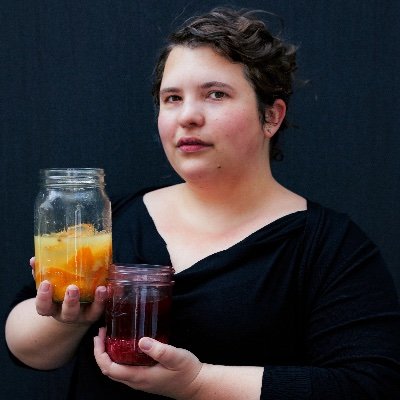
All you have to do is let it sit and watch the science happen. On this episode of StarTalk Radio, Neil deGrasse Tyson and comic co-host Chuck Nice are answering fan-submitted Cosmic Queries with Arielle Johnson, PhD, science officer on Good Eats, food writer, and formerly the in-house R&D scientist at Noma, ranked the world’s best restaurant in 2010, 2011, 2012, and 2014.
What is fermentation? You’ve heard of fermenting wine, beer, and cabbage, but how does it work? Arielle tells us how fermented foods made their way into our diets. You’ll learn how sugar plays a big part in the fermentation process. What’s the difference between fermented vs. pickled?
Why doesn’t fermented food make you sick? Why can we eat moldy cheese and not eat moldy bread? We investigate the popularity of kombucha. You’ll learn how kombucha is made. We explore some of the health benefits of kombucha and if there’s any substance behind the claims. You’ll learn if NASA has ever dabbled in fermentation aboard the International Space Station.
How common is fermentation in the wild? Do other mammals eat fermented fruits or vegetables? We also investigate why vinegar works as a natural preservative. Discover more about the importance of “water activity.” You’ll hear about mulled wine and rice wine. Lastly, we dive into sourdough bread, we ponder whether algae are the food of the future, and we ask Arielle if you can use fermentation to invent new foods.
Thanks to our Patrons Ryan Bariteau, Dan Snider, Shelia Hutson, Sonya Loeffler, Vishu Kamble, Dusty Switala, Daniel E Puig, Dan McGowan, Sullivan S Paulson, and Nigel Adams for supporting us this week.
NOTE: StarTalk+ Patrons can watch or listen to this entire episode commercial-free.
About the prints that flank Neil in this video:
“Black Swan” & “White Swan” limited edition serigraph prints by Coast Salish artist Jane Kwatleematt Marston. For more information about this artist and her work, visit Inuit Gallery of Vancouver.
Transcript
DOWNLOAD SRTWelcome to StarTalk, your place in the universe where science and pop culture collide.
StarTalk begins right now.
This is StarTalk Cosmic Queries edition, and we’ve titled this one Fermentation and Flavor Science.
Welcome, Chuck.
Always good to have you.
I don’t know if people know you’re my co-host in StarTalk Sports edition.
That’s right.
You’re quite the sports weenie I have come to learn.
That’s a compliment.
I’m not sure.
The words sports and weenie don’t really go together well.
You can be weather weenie.
No, I like sports weenie.
I’m going to be that.
No, we need an alliterative thing because weather weenie alliterates.
Sports, I’ll find something else for it.
But this is about food and what role fermentation plays.
I am a big fan of fermentation.
Of fermented food.
Well, not food.
Neither of us have…
Recreational fermentation.
Neither of us has expertise in this, but we got someone from the StarTalk Rolodex.
Dr.
Arielle Johnson.
Arielle, welcome back to StarTalk.
Thanks so much for having me back.
I think you were last on the show in a live StarTalk Live.
I think it was in New York City Town Hall.
I believe it was.
No, excellent.
Well, thanks for coming back.
Thanks so much for having me back.
And we did a whole show on food.
Let me remind people who you are if you didn’t either attend or see that episode.
You have a PhD in agricultural and environmental chemistry.
This is true.
Very cool.
I’m glad it’s true.
Thank you for verifying.
A crack team of researchers.
Our investigative reporters found this about you.
You’re a science officer for Good Eats on the Food Network.
And you’re a food writer with stuff published in the Lucky Peach, I think, LA Times.
And there’s one here called Mold Magazine.
It’s a speculational magazine about the future of food.
So if you’re into food or design, it’s a pretty excellent read.
Quite frankly, I don’t think you’re speculating when you call it mold.
It’s like, I am not picking up that magazine.
All food will eventually, in the future, become mold.
There’s no speculation there.
All food plus you will mold.
I suppose there might be an element of the homonyms of mold being fungus and mold being molding like a verb.
There you go.
Let me lead off with a question here.
So I think in modern times where we have modern means of preservation, I think we might have lost track or lost understanding of how fermented foods ever made their way into our diet in the first place.
And so why do we have cheese?
Well, if I know my history correctly, this was a product of fermented proteins in a milk or whatever, milk products that would last longer than the milk itself in the closet.
So basically all of fermentation was just to preserve food?
Is this a fair characterization of it all?
Yeah, I mean, most fermentation processes do preserve food often by adding acids to them or killing off less desirable bacteria and microorganisms.
Because I only want the desirable bacteria.
Yeah, the undesirable bacteria is not so good for you.
You know, your norovirus, which is a virus obviously, or your various spoilage molds and yeasts, not so tasty.
But I mean, one thing I like, a way that I like to think about fermentation is that like, you know, back in, probably not that far back in history, but pre-refrigeration and, you know, even pre-agriculture, most food would ferment pretty quickly.
So if you milk your cow or your goat or whatever sort of ruminant animal you have hanging around your village or your campsite, that milk is gonna start fermenting pretty quickly.
So vegetables likewise, if you pick them and store them for a while, will start fermenting, same with grapes or fruit, things like that.
So when I think of fermentation, I think of the sugar.
Like, I can’t think of fermented string beans, but I can think of a fermented grape or fruit.
So how do you ferment things that don’t have sugar in them?
Well, string beans actually have sugar in them.
So most vegetables have like anywhere between like two and even up to like 15% sugar for like a sweet carrot.
My mama never told me that string beans had sugar.
Otherwise, I would eat more of it.
Just a little bit, yeah.
Maybe that’s why my mom kept trying to give them to me as dessert.
It has sugar in it.
No, well, so like one of the most, one of the most like pervasive fermentations across like Eurasia is fermented cabbage.
So you see it as like sauerkraut in Germany, kimchi in Korea, swankai or paokai across China’s variations on kislya kapusta across more Slavic speaking regions.
So, I mean, that’s a vegetable.
It’s a vegetable that accumulates sugar and, you know, you can harvest it pretty weight and then ferment it to make it last the winter.
And what’s the deal with the process?
Is it just because it’s pre-refrigeration and it’s such an old tradition that they bury the, whatever it is that they fermenting?
I’ve heard about that.
What’s up with that?
What is that with that?
Yeah, well, I mean, I, this is putting on my sort of amateur anthropologist hat more, but, you know, one can imagine situations, you know, humans, free agriculture and free history, even like free permanent settlements where you, you know, forage or harvest to keep them safe and keep them away from scavengers once you’ve already got them.
One of the best ways is to like dig a hole and, you know, line the hole with leaves or something like that and then bury it and come back to it later.
Okay, so that wasn’t fundamental to the fermenting.
So the process, it doesn’t really do anything for the process.
Well, so burying underground does protect things from oxygen, so it excludes oxygen, which then knocks out a whole category of spoilage microbes like molds.
So, I mean, if we’re talking about like fermented fruits or vegetables, that’ll often be lactic acid bacteria, and most lactic acid bacteria doesn’t need oxygen.
Some of them don’t like oxygen at all.
So this is a way to tune the microbial cocktail for what it is that comes out the other end.
It’s sort of like cooperative microbe farming, like nudging it in a certain direction.
Very cool.
But wait a minute, what’s the difference then between fermented cabbage and pickled cabbage?
When I think of coleslaw, I think that it’s pickled, not fermented.
Well, so coleslaw, I mean, so you get into here like a language thing.
So like cucumber pickles are usually fermented, but you can also pickle things by adding, just adding acids to them without fermenting, so often using vinegar to pickle.
I mean, vinegar is the product of another fermentation, so you’re kind of either doing fermentation or having done fermentation and now using it for something else.
But yeah, pickling, especially in America, there’s a strong tradition of like vinegar pickling.
Right.
So I can grow a grape, drink the grape juice, the grape juice I don’t drink, I can ferment it, and I can make wine, and then I can ferment the wine and make vinegar, and I can use the vinegar to ferment a cucumber and make a pickle.
It is truly the gift that keeps on giving.
That’s good.
That’s good.
So all I need is some grapes.
Yes, some grapes and some sugar, and whatever wild yeasts and bacteria are hanging out on their skins.
That’s it.
Well, why don’t we go to some Q&A here?
I was going to eat up the whole show, but this is Cosmic Queries after all, and Chuck, you got the questions.
I haven’t seen any of these questions.
I don’t think you have either.
Is that right?
Arielle has not.
So we’re here to stump you.
That’s what we’re trying to do.
I’ll try my best.
Go for it, Chuck.
All right.
So these are all Patreon patrons, and basically let’s go with KProfit32 who says, hey, Dr.
Johnson, why doesn’t fermented food make you sick?
It is essentially spoiled food.
Also, what is your take on kombucha?
It makes me feel like garbage.
Thank you for your answer.
Have a nice day.
Oh, man.
Well, so if we’re talking about spoilage, some of that has actually to do with safety, but then some of it also has to do with just definitions that we apply somewhat subjectively.
So, I mean, if you smelled the smell of a beautifully fermented camembert cheese, if you did not know it was supposed to smell that way, you would run away from it because, you know, we had a magnet up at a shop I used to work at that said, what’s that smell?
It’s either bad meat or good cheese.
So context is very important for this, but also…
And some cheeses smell like gym socks, too.
Yes, yes.
There’s a whole landscape.
It’s either gym socks you pick up with forceps and take to the washing machine, or it’s cheese and you spread it on cracker and eat it.
Yeah.
And the stinkier, the more expensive somehow.
Yeah, because it has to be very carefully tended to achieve that quality.
So some of it is just, you know, aesthetic, but a lot of fermentation is just stuff that we’ve learned over thousands or millions of years to intentionally keep in the right conditions and coax what bacteria or fungi are growing on it so that from experience it is actually safe for us.
What you’re saying is it’s been trial and error historically to eat some spoiled foods and it kills you and other spoiled foods don’t kill you and you develop a taste for it.
So we have…
So there’s a lot of dead humans who gave their lives so that we could eat some stinky cheese.
Precisely, precisely.
Think of it as millions to billions of person hours of R&D just so we can get these…
That’s what it is.
And so because if I put…
I remember you do this experiment in elementary school.
You take some slices of bread, put some water in the bread bag and put it under the sink, and come back in a week and it’s mold growing on it.
And I pay top dollar for roquefort moldy cheese and I’m going to eat the cheese, but I’m not going to eat the mold on the bread.
But could I eat the mold on the bread?
I mean, would I say this is tasty?
I would…
I would not recommend it.
I’m not sure it would be actually dangerous, but I would not recommend it.
Although some roquefort producers do intentionally bake reds that become infected or cultured with penicillium molds and then use that to sort of kickstart the cheese fermentation.
Well, if you grow up in a household like mine and you have a great-grandmother who was born at the turn of the last century, moldy bread just means this part gets cut out and now you got some good bread to eat.
So tell me about kombucha.
Kombucha, yeah.
Well, so kombucha is…
Well, wait, can you please…
What is it?
Yes, yes.
So kombucha is basically fermented tea.
More technically, you start with a sweetened tea, so tea and sugar and water, and then you use a special culture of microbes called a scoby, a symbiotic colony of bacteria and yeasts.
So it’s alcohol-producing yeasts and acetic acid-producing bacteria that all live together.
Basically what happens is that the yeasts in the scoby ferment the sugars in the sweetened tea into alcohol, and then the acetic bacteria munch on that alcohol and create the acid, which you might also know as vinegar.
And the bacteria also make, they call them exopolysaccharides.
It’s basically like goop, so everything floats together in this sort of like mushroom-looking cellulose-based raft.
Wait, so what chemical is responsible for the hair that grows on your chest after you drink this stuff?
Yeah, and why?
I mean, I’m guessing testosterone, but…
And who wants to, why?
What is this for?
Why?
Well, it can be, when made correctly, tangy and fizzy and delicious.
Really?
I had it once, my brother served it to me once.
It was like, I didn’t mind having it once, but twice was not happening.
Yeah, there’s some bad renditions out there, but there are also very good renditions of it.
He paid money for it.
He paid real money for his stash.
So you’re saying that it is for, so first of all, I heard, I saw a video, I didn’t hear.
I saw a video on YouTube, and the woman on the video was trying to show us how to make kombucha.
And her first step was, well, you have to find somebody who has kombucha so that you can get their scoby.
I was like, wait a minute, you don’t get to do that.
That’s just like, I’m going to show you how to be a millionaire.
The first thing you have to do is find somebody with a million dollars.
Like, come on now.
So, Arielle, who is kombucha number one?
Who is that person?
Who is the herb kombucha?
Is it some Tibetan monk?
There’s a lot of people.
Probably Northern China, although I’m not totally sure.
But so there’s some fermentations where like, it’ll just happen if you store it correctly.
And some like kombucha or kefir is another one where some colony was established many, many, many, many years ago and worked so well that people held on to it and passed it.
So we need a kombucha map where you can choose where you get your kombucha cocktail.
Yeah.
I think Ben Wolf at Tufts, he’s a microbiologist who’s pretty cool, is doing a like kombucha mapping thing.
So he might be able to.
Okay, cool.
So now from a scientific standpoint, you as a doctor, Arielle, are all of these…
I mean, a doctor of agricultural and environmental chemistry, not a medical doctor.
Well, okay, that is clear.
Don’t worry.
Don’t worry.
If somebody has a heart attack in a restaurant, I will not call you.
I have given the Heimlich maneuver in a restaurant.
So no, are any of the claims to these fantastical claims that kombucha supposedly these benefits, are any of them true?
Or is it more lore?
Actually, we need to take a break right there.
But when we come back, we will find out from Arielle, if kombucha has any health benefits at all.
Is that where you’re going with that?
Yeah.
Right when we come back, StarTalk, Cosmic Queries.
I’m Joel Cherico, and I make pottery.
You can see my pottery on my website, cosmicmugs.com.
Cosmic Mugs, art that lets you taste the universe every day.
And I support StarTalk on Patreon.
This is Star Talk with Neil deGrasse Tyson.
We’re back, StarTalk, Cosmic Queries, Chuck Nice.
Hey, buddy.
And I have Dr.
Arielle Johnson, who’s making her second appearance on StarTalk.
We went into our Rolodex, because she had first appeared live with us on stage.
So thanks again for coming back.
We’re Cosmic Queries, pulling questions from our Patreon members.
And we left off with a question about kombucha.
And I’ve only been offered kombucha from food health people, right?
And they’re making claims about it.
And then I tasted it and I say, okay, the risk reward there is not good enough for me.
Whatever is not helping me in life, the taste of that is worse, right?
So could you just comment on why people drink it?
And is it for the flavor?
Or are they expecting some magic healing to happen?
Yeah, I mean, so personally, like I’m pretty skeptical of any like claims that any food is a panacea, you know, as those are the kinds of claims you get for a lot of foods now.
Except kale, kale, kale, kale.
Come on, Arielle, kale cures all.
Chuck, Chuck, you know, I’m done with kale.
I’m ready for the next vegetable to come along, I’m ready.
Okay, so go on.
Oh, so to my knowledge has been a few, but not extensive studies of kombucha, particularly as a probiotic.
So, you know, our guts are full of bacteria.
We have more bacterial cells in our body than human cells, and we use them to help us digest stuff and stay healthy.
So there’s some idea that, you know, bears out in data that kombucha can contribute live bacteria that is helpful to your gut.
I think some people do drink it out of a sense of, you know, kind of an elixir of health.
I’m not sure that’s borne out by any pure food science.
And a lot of people actually do drink it for taste.
I’m just saying, if there’s a lemonade in front of me and kombucha, I’m reaching for the lemonade.
That’s fair.
No, that’s totally fair.
I mean, when, well, I was working at Noma, the restaurant in Copenhagen.
We actually did a lot of-
It’s like one of the most famous restaurants in the world.
Very, very.
Yeah.
So I was working there as, yeah, we had a fermentation lab, but we made a lot of kombuchas specifically for the menu for flavor.
So we’d use things like elderflower or heirloom apples and things like that and would transform them to become acidic and tasty for things.
So it is definitely a flavor thing as well.
So you’re basically a food chemist.
That’s really what you were-
Yeah, yeah.
So, I mean, my track was food and wine chemistry and my dissertation focused on flavor chemistry and that’s mostly what I do now.
I mean, sort of publicly.
Flavor chemistry.
That is the best use of science I’ve ever heard.
Thank you.
In a long time, in a long time.
Let me just tell you right now, that is stellar.
Give me another one, Chuck.
Here we go.
This is Matt, Matt Herefield.
And Matt says, I’ve heard about elephants and other mammals becoming intoxicated from consuming fermented fruit.
How common is fermentation in the wild?
And what causes it?
Are mammals the only ones who partake?
Good question.
By the way, let me just very quickly.
There’s a very cool alcoholic squirrel in my neighborhood.
And you cannot, and we only see him at Halloween.
We had to stop leaving the pumpkins out because the squirrel, you know, you leave the pumpkin out for a while.
A week later, the pumpkin’s still out there.
Squirrel comes up, eats the pumpkin, and then you just see him kind of like wobbling around.
He’s just wobbling around the neighborhood like, yo, what’s up, what’s up?
Hey, what’s up?
Hey, can I, you got any Lucy’s?
Can I get a dollar for some cigarettes?
Can I get a dollar for some cigarettes?
So anyway, go ahead.
Chuck lives in the zoo, the Philadelphia Zoo.
Well, so pretty much any fermentation we do intentionally now started as like an accident or just sort of like the course of nature and, you know, the microbiome of wild microorganisms that are outliving on things.
So yes, spontaneous, spontaneous fermentation of fruits happens like all the time.
You know, we’re able to make wine because the yeasts that create alcohol actually live on the skins of grapes.
I mean, now a lot of wine is made with inoculated yeast, but for, you know, most of the history of wine, which goes back at least 8,000 years, was a wild fermentation with this yeast that was just turning out.
But is there enough, okay, so the first fermentation is the yeast turning the grape sugars into alcohol.
So is there enough alcohol in a fermented fruit to make mammals go shitfaced just by…
Oh, yeah, just by, yeah, I mean, you know, even a fruit that gets to like 2 or 3% alcohol, fruits can get much more alcoholic than that.
If you’re a small enough animal or you eat enough of it, can make you quite tipsy.
I’ve also heard the stories about elephants.
I think there was like a TikTok video going around of a pigeon that had eaten too many fermented apples and was just sort of like lying face planted on the ground.
Every animal in my backyard is absolutely plastered.
I think you might be feeding them intentionally for the comedic effect.
Okay, so you don’t have to be a mammal because birds aren’t mammals.
I’m speculating here.
This is getting sort of to the outer reaches of my specific knowledge, but I mean, you know, ethanol, alcohol, the product of alcoholic fermentation, you know, acts on central nervous systems, and many animals’ central nervous systems have a lot of stuff in common.
Especially vertebrate animals, I guess.
I mean, other molecules like nicotine from tobacco work on, you know, various animals’ nervous systems, including like insects, actually, but they don’t have vertebrae.
But yeah, so I would imagine most mammals can get plastered from fawn fruit.
Wow, okay.
All right, Chuck, give me another one.
Shoot, I’m ready to go get drunk with an elephant now.
All right.
All right, this is Luke.
I wonder if the elephants start telling jokes.
Where does a 900-pound human sit?
Or whatever.
It’s the 900-pound human in the middle of the room, guys.
I feel like they’d be very cuddly.
That might be fun.
Yeah.
Let me tell you something.
That’s the scariest thing I’ve heard, is an elephant trying to cuddle you.
Let me tell you.
I just see shades of mice and men.
Anyway, Luke Chibicki.
Luke Chibicki says this, or Gebicki, one or the other.
He says, I have a jar of pickled sausages that says it never needs refrigeration.
How does that work without spoiling?
Is it safe to eat?
And for how long?
So that’s a great question, because sometimes you think that those jars say that because they are vacuum-packed and that it doesn’t need refrigeration for storage, but once you open it, perhaps you do.
But what is the difference?
For me, I’ve never seen anything in vinegar that said must refrigerate.
So vinegar must have some magic preservative power.
Yeah, acetic acid is quite toxic to most microorganisms.
That’s the active acid in vinegar.
Yeah, so acetic acid itself is quite toxic, and the low pH also inhibits most microbes.
So it really is just a natural preservative.
Yeah, definitely.
I mean, if it’s a jar, I can’t tell if it’s…
Just to be clear, so high acid gives you the low pH.
Yes, high acid gives you the low pH, yeah.
It’s not high acid and low pH.
That is the same thing.
Well, actually, so technically, getting into some chemistry, the acetic acid molecule, only about one in 10,000 of them actually is acidic.
The rest stays fully together, non-associated and non-acidic.
So the ones that give up a hydrogen ion or a proton to create a low pH or acidity, that creates an inhospitable environment for spoilage microbes.
But the whole undissociated, non-acidic, acetic acid molecule itself is also toxic.
I think it interrupts the cell membrane of cells.
Oh, interesting.
But that wouldn’t then trigger the litmus score for it, even if it is preservative.
Okay, so the acidity is not a direct measure of how much acetic acid is in it.
You need activated molecules.
Yeah, well, every acid has its natural balance that it will go to you.
Okay, cool.
So when he says, how does that work, you just said that.
How long is it safe to eat something that is stored that way?
Well, so when you’re talking about especially like preserved meats and things, you’re getting into a concept called water activity.
So the more acid, the more salt, the more sugar you have, the lower the available water is.
So that’s why jam, which is just like spoilable fruits that you’ve added a lot of sugar to, can sit in your cupboard for a year because there’s just not enough free water for microbes to do their thing.
Interesting.
I mean, with stuff like that, there’s probably a best-by date stamp on it.
So that’s why dried beef jerky, jerky.
Exactly, beef jerky.
It’s lost all liquid or dried salmon or any of this.
Lots of charcuterie and salumi, things like pepperoni or capicola, either whole mussels or…
Sorry, Arielle, I’m sorry.
I’m from Philadelphia, it’s not capicola.
Thank you, thank you, thank you.
I just wanted to be intelligible to as many people as possible.
I also ascribed to the School of Gavagul.
We need Chuck’s hood to still……end the conversation.
All his peeps back in the hood.
Nobody would ever let me live down capicola.
I can’t let that happen.
Let me invert the question.
What do you know is not turned off by the high acid vinegar solution that would still grow regardless?
Oh, that’s cool, yeah.
Just to invert the question.
There’s plenty of like extremophile microbes out there.
You love high acid?
Yeah, high acid or high salt.
For the most part, if you’re adding a lot of salt to stuff, that excludes most microbes.
But then like soy sauce, which you usually ferment at like 12 to 20% salt, which is like super high, there’s an extremophile yeast called zygosecaromyces ruxii that like loves that level of salt and actually contributes to the flavor.
Let me hear that again.
Zygosecaromyces ruxii.
Nice.
You know what?
You just sound like you casted a spell on something.
The spell of soy sauce flavor.
That was totally, that was a witch spell right there.
Thank you.
So now when you say that that bacteria loves it and adds to the flavor, so will it ultimately spoil the soy sauce or does it just enhance the soy sauce?
That one’s generally not a spoilage microbe.
I suppose like it just produces like alcohol and flavor molecules.
Off the top of my head, I can’t think of any really significant like high acid, high salt tolerant spoilage microbes.
A real microbiologist might be mad at me right now for not identifying one, but mostly you don’t have like a ton to worry about.
And like what you should be looking out for for like unrefrigerated things possibly going bad would be like off smells there or like visible mold.
Visible mold, yeah.
That should always be a sign.
I don’t have a degree in anything chemistry, but I’m pretty sure that’s a good sign you don’t eat it.
Well, I mean, you know, up until past year, that’s how everyone knew that something was going bad.
Yeah, it’s just like, hmm, this bread is hairy.
All right, I’m going to pass.
All right, cool.
Give me another one before we can go to break.
Hi, Arielle.
Hi, Neil.
Often we hear of the words.
Did they say hi to you, Chuck?
They did not.
Oh, that’s cold.
That is cold.
Who is it?
Who’s the person?
You know what?
Here’s the thing.
They don’t even…
Here it is.
Their name was on the previous page.
It’s Avinov Abraham.
Avinov Abraham, who clearly doesn’t like me.
But you know what?
Know what?
I read everybody’s question.
It doesn’t make a difference how you feel about me.
God, it’s so sweet of you.
I’m the Joe Biden of Cosmic Queries.
Okay, here we go.
Hi, Arielle.
Hi, Neil.
Often we hear of the words fermentation with regards to preserving food and making alcohol with the help of microorganisms.
But what precautions are needed to take with respect to the fermentation process so that the next time I’m making my homemade wine, I don’t end up creating some superbug that will further harm this current scenario?
Or ferment the world.
Actually, we just ran out of time, but we’ll come back in the third segment.
We’ll lead off with the answer to that question on StarTalk, Cosmic Queries, The Fermentation Condition.
Hey, it’s time to give a Patreon shout out to the following Patreon patrons.
Ryan Baratow, Dan Snyder, and Sheila Hudson.
Guys, you are the solid rocket fuel that propels us to the stars.
Thank you so much for your support.
We couldn’t do the show without you.
And for those of you who’d like your very own Patreon shout out, please go to patreon.com/startalkradio and support us.
Thank you We’re back, Cosmic Queries, Food and Fermentation.
What does it all mean?
Why do we do it?
And we just blame Arielle for everything that’s happening.
Arielle, again, welcome back to our StarTalk family for this show.
Chuck, always good to have you here.
Always a pleasure.
And so, Arielle, we left off with someone asking about yeasts gone wild, I guess.
How to, you can use it for some purpose, some contained purpose, but could they mutate?
Could they become an infectious bug?
There’s all this fermenting going on where we think we’re in control of the microbes, but maybe one day the microbes will fight back.
Well, for, this is well outside the scope of the time that we have for anyone that’s interested in getting into that much more like philosophically.
Heather Paxson is a science and technology studies scholar at MIT and has really interesting work on what she calls microbiopolitics that talks a lot about this stuff.
Whoa, that’s a phrase?
No, but getting back to the subject of the question.
Well, so microorganisms are constantly mutating and evolving.
I mean, random mutation is what drives evolution and microbes are constantly mutating and swapping genes and trying new stuff out to better adapt to their environments.
So that’s just gonna happen anyway.
As we are currently all living as a reality right now.
We’re trying to get fitness from this particular environmental stressor.
And I just have to clarify something because it’s a common misconception.
It’s not that the bacteria are trying to survive by experimenting.
It’s that they are always experimenting.
And if you have a change in the environment, it kills everything that can’t survive it.
And so it’s not like, oh, the environment changed, let me adapt.
No, nothing adapts.
There’s always built in some variation and you live or die and the species adapts, but the organism does not.
I guess that’s the point I want to make, drive home.
No, that’s a good, random mutation is always happening.
It’s often bad for organisms, but occasionally it’s randomly good.
Although some microbes do engage in horizontal gene transfer.
I don’t think there’s any-
That sounds painful.
I don’t think there’s any choosing of what’s good there, but it’s another process to-
I’m only in the vertical gene transfer.
Just letting you know that.
It’s good to know your boundaries.
So what could happen?
Yeah, I mean, so yes, yeast will mutate, but I think probably in the course of a fermentation that you’re doing at home or in a winery, probably nothing’s gonna mutate to become like totally crazy and outside the bounds of anything you’ve seen.
Right, and escape the winery and then we have maps of the zones, it’d be like World War Z except for microbes.
Yeah, I mean, if that were to happen in your homemade wine, it would happen on a piece of fruit out in the wild just as easily.
If that’s the scenario, that would happen, we’re screwed anyway.
So Chuck, you get her answer is don’t panic.
Everything is fine, there’s nothing wrong.
Not correct, exactly.
I mean, actually, in terms of precautions for homemade wine, what’s more likely to happen is that the balance of the growth will shift.
And your wine will taste like crap.
That’s what’s really…
So, I mean, even if you add one strain of yeast to something or one strain of bacteria, the fermentation is going to involve many different species forming a whole ecological system.
So, with wine, probably what’s more likely to happen is that a wild yeast, Britannomyces or a bacteria will stay on for the ride and possibly make some off flavors you don’t want.
Or if the wine is to expose the oxygen, then you’re going to get acetic acid turning it into vinegar.
I mean, generally, alcoholic fermentations aren’t super high risk.
So, we’re safe continuing to make wine in your basement.
I think so.
Yeah.
Without ending the world.
If it gets moldy, throw it out.
Yeah.
Well, now, speaking of that, so what is Mold Wine then?
Mold Wine.
Yeah.
Is it actual mold?
Oh, Mold Wine.
Mold Wine.
M-U-L-L-E-D.
As opposed to M-O-L-D.
Well, I mean, Mold Wine is…
Okay, Chuck just got the wrong words.
You don’t have to answer them.
Chuck just got hominemed.
Although rice wines all start with a cultured mold, usually an aspergillus species that has been mostly domesticated.
Right on.
So what is Mold Wine, though?
With a U or with an O?
No, with a U.
With a U.
The real wine, the real wine that they call Mold Wine.
It’s wine that you heat up and add spices and sometimes fruit to.
So that’s what makes it.
So it’s the heat probably.
And even the spices have antimicrobial compounds.
So that would probably make it even less susceptible to molds with an O.
Just while we’re on the subject of homemade microbes, tell me about sourdough bread.
Yeah.
Well, so sourdough, before the advent of commercial yeasts, most breads had something like a sourdough starter.
Sourdough is just a mixture of yeasts, lactic acid bacteria and acetic bacteria, all of which can kind of live in wet grains.
And by feeding them some flour and some water and letting them do their thing, they add some nice flavors to a dough that you make.
More importantly, they create carbon dioxide as one of their waste products.
So, by kind of tending this farm of mixed microbes, you can cause your bread to rise in the oven, as you would with a commercial yeast, but with more flavors.
So, a little more flavorful and complex, I guess.
That’s it.
Some people will say, oh, here’s a sourdough from a recipe from my great-great-grandmother.
Who cares?
Why does that matter?
Well, so, I mean, one aspect of it is that…
Why is that a boast?
Is that when…
Is that the…
Like, how you feed…
So, you start with a starter that you’re constantly feeding.
So, kind of keeping it like an animal in the zoo.
So, you’re constantly, you know, every day or every several days adding flour and water to it.
So, when you choose to do that, how much it has fermented from the previous batch before you add more, how much you throw out or, like, incorporate, and then how much water you add.
Do you justify the strain?
Do you do this over generations and generations?
I mean, it’s always, it’s like pretty dynamic.
So, once, when you first add flour and water to a starter, there’s more, like, I think more yeast activity going on.
And then as it gets older and more mature, it’ll get more and more acidic.
So, then when you feed it and then when the, like, number of hours that you let pass before between feeding and actually making it into bread can have, like, a huge effect on flavor and rise.
So, the protocol that you follow that your grandmother figured out can actually be a pretty big deal.
So, this is the new title of the movie, The Sourdough Protocol.
The Mission Impossible.
With French bakers, you know.
All right.
Here’s Joy Pinheiro-Denise, who says this, I love you guys, Dr.
Tyson.
I love you guys.
I love you.
I love you.
I love you.
I love you.
I love you.
I love you.
I love you.
I love you.
I love you.
I love you.
I love you.
Is there a way to genetically produce an easily grown, hardy crop with high yield that contains the perfect amount of vitamins and minerals, amino acids and proteins?
Basically, a living version of what they eat on the Nebuchadnezzar hover ship in The Matrix.
Yes, by the way, she says, I know that’s Neil’s favorite movie.
So that’s the scene where it comes out of the spigot and it looks kind of like, as they say in the movie, it looks like a pile of snot.
They say, no, it’s got all the amino acids and vitamins that a healthy body needs.
So I’m curious about that.
And it tastes like tasty wheat.
I mean, it tastes like, yes!
I’m watching.
My question.
Is, is there some garden mixture of foods?
Let’s assume you can’t raise a cow.
So garden mixture of vegetables where, at a minimum size, one person can live off of that.
Oh, was that the…
So two questions.
One is the crop.
One is the crop.
The engineering of crops.
The engineering of crops.
The minimum amount of garden space.
I am not really sure what the minimum amount of garden space to translate into edible calories and nutrients is.
I know that, for example, one chestnut tree might be able to, at maturity, provide enough carbohydrates to keep one person fed for a year.
I mean, setting aside the apocalyptic scenarios where you would actually just have to have single-cell protein, tasty meat, generally the most nutritious and resilient systems that you should be trying to do to plan for the apocalypse would be fairly biodiverse ones.
So growing as many plants together as possible.
Humans are pretty interesting in their ability to get nutrition from lots of different things.
We’re omnivores, but we’re omnivores that can make our diets out of nearly anything.
So we interviewed the creator and founder of Soylent, this liquid, and this is this one, it’s your entire meal in a cup.
Yeah.
I was counting down the seconds to see how long it would take me to do that.
You know I had.
No, this is Soylent blue, not Soylent green, just to make that clear.
Right.
So but it’s the worst part of people.
So what intrigued me was he can make the exact ingredients that you need, but he wanted it to be more friendly to the ecosystem and wanted to infuse it with sort of base amino acids from as low on the food chain as he could go.
And I was very intrigued by that, at least as a goal.
Well, I know there’s a lot of people interested in algae.
Yeah, for example, exactly.
As sources of both proteins and fats, because yeah, fats are actually pretty important dietarily, especially if you’re eating a lot of protein.
Yeah, so there’s definitely a lot of research happening on that.
We may be seeing a future where we have gigantic tanks of algae that we then harvest and eat.
No, that’s nasty.
Tanks of algae.
Please, sir, got some more.
That would be the most brutal version of a future food scenario.
Just kill me, okay?
I’m going on record.
Just kill me.
That’s a thin gruel I never want to have to eat.
Yeah, the word vat and the word algae together in the same sentence.
Yeah, so nasty.
All right, Chuck, we got time maybe for one more question.
All right, let’s get to a chemistry question from Douglas Stern who says, has NASA used chemistry to ferment foods that astronauts eat in order to help them maintain better health while visiting the International Space Station, or will consuming artificial supplements just be an easier route?
Live long and prosper.
Oh, nice, nice.
So what do you know about the ISS?
I can tell you what I know about it.
Oh, yeah, I know a little bit, but you probably know more.
Yeah, there are enough supply ships to the ISS.
They just wait for the burger to come.
Well, so by the way, they’re getting cosmic Uber Eats.
They’re getting cosmic Uber Eats at the ISS, buddy.
Space Grub Hub, that’s what we’re talking about.
It’s the long-term voyages where they’re really thinking about this, where you don’t have a supply chain to it.
Nine months to Mars, two months on location, coming back, you’re away for three years.
Yeah, so I don’t know if they’re leaning towards just preserved food or salt-preserved, desiccated food or…
The problem is liquid weighs a lot relative to other things.
And so, if you need a big vat of your pickles that is liquid holding them, I don’t know that that would be a first choice.
No, I mean, I actually was…
I guess in 2017, I went to a workshop at Johnson Space Center, specifically on open-sourcing…
Wait, no, Kennedy in…
The one in Florida.
Oh, that’d be Kennedy Space Center, okay.
About what open source could do to think about food in space.
So, I know that they’re doing plant growth experiments at NASA, and they will actually bring up seeds and water and grow, you know, four tomatoes and one strawberry, and that will be your…
I mean, obviously not a big nutritional component…
It’s a start.
But it’s good for morale.
And it’s much better than a poop potato, so…
Although, I don’t know, after, like, however many weeks, I think those poop potatoes would start looking pretty good.
Yeah, yeah, yeah.
As Pinocchio says in the original book, hunger makes the best sauce.
Indeed.
Wow, I love that.
I mean, so in terms of, like, fermentation, I don’t think NASA is doing much with fermentation, if only because they try to not send as many…
any microbes up into space.
They try to sterilize things to avoid contamination.
Okay, that’s a very, very, very important and excellent point, I would think.
But we got to wrap this up.
Let me end with a question.
Is there other fermentive…
Is there a frontier of fermentation where you’ll show up one day, here’s a newly fermented thing that didn’t previously exist in the food catalogs, here?
Is it you and your people do those kinds of experiments, inventing foods?
Yeah, well, I’ve actually done some work.
I have friends at a company called Ginkgo Biowork.
They are a synthetic biology startup.
They may have surpassed startup phase.
They’re doing quite well.
So what they do is engineer microbes to do interesting things.
They had some cool strains of yeasts, some yeasts that were producing carotenoids, which are orange pigments in flowers and grass and carrots that are actually the precursors to a lot of interesting fruity flavors.
And then also yeasts that were producing flavor molecules specifically.
So Chuck, what she’s saying there is that nature is insufficient for Arielle.
There’s some flavors we need.
We’re just going to do it ourselves.
So I and their creative director, Christina Agapakis, who’s pretty awesome, got together and were making some fermented foods with these totally brand new super flavor molecule producing strains.
So if you don’t exist the next time we invite you, it’s because it’s one of those experiments.
We’ll have created the super bug.
It’s like try this.
We got to end it there, unfortunately.
But Arielle Johnson, very delighted to have you back on.
Oh, delighted to be here.
Thanks for all the great questions.
We’ll surely find another excuse to bring you back.
Chuck, I’m glad we now can pronounce words correctly as they do in Philadelphia.
Yes.
Yeah.
I still can’t pronounce names correctly, but at least we know that Coca-Cola is gubbagool.
All right.
This has been Cosmic Queries, the fermentation edition.
I’m Neil deGrasse Tyson, always bidding you good.


 Become a Patron