


 Unlock with Patreon
About This Episode
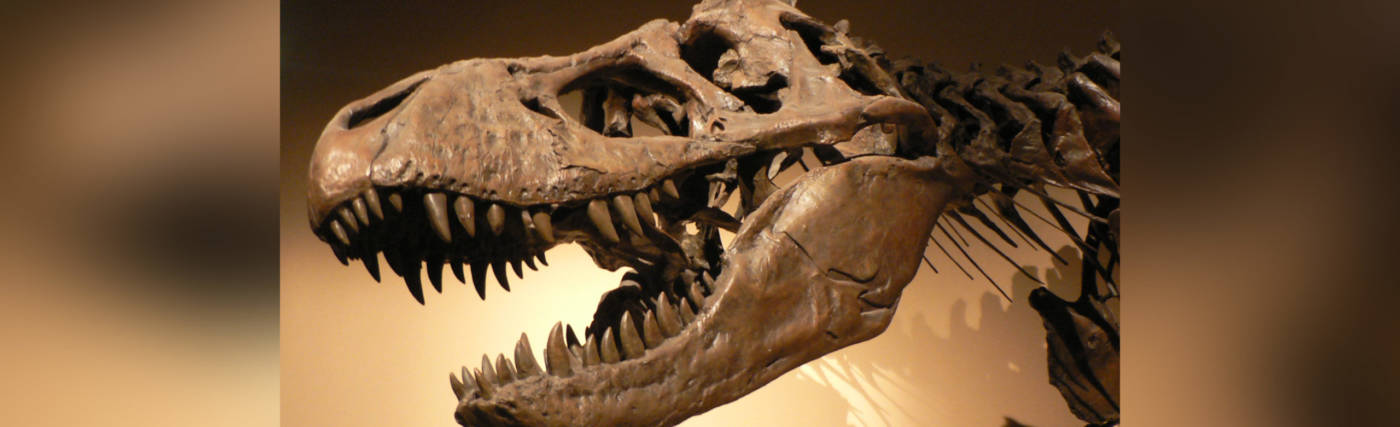
What did dinosaurs really look like? On this episode, Neil deGrasse Tyson and comic co-host Marcia Belsky explore questions we all have about dinosaurs, fossils, feathers, and asteroids with paleontologist Kimberly Chapelle. Are the Jurassic Park movies accurate?
How did dinosaurs get so big? We discuss how these massive creatures came to be and how scientists categorize them. Find out the difference between bird-hipped dinosaurs and lizard-hipped dinosaurs. Which groups do birds come from? If a meteor killed them, could that happen to us? Kimi explains which animals we have today are descended from dinosaurs. Discover if a Brontosaurus is a real dinosaur.
Why did some animals survive the meteor and others didn’t? Learn about genetic diversity amongst the dinos and whether being underwater helped. Are there asteroid-resistant genes? We talk about the Loch Ness monster, the meteor crater in the Yucatan Peninsula, and whether dinosaurs would’ve been domesticate-able. In a different timeline, would an early human have been able to ride a dinosaur? Can reptiles even be domesticated?
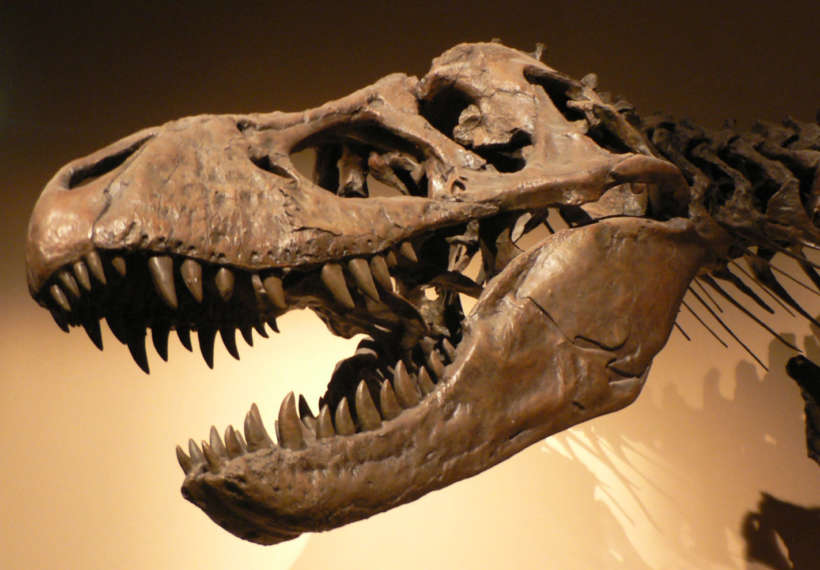
How accurate is Jurassic park? We explore Tyrannosaurus Rex, Velociraptors, and Pterodactyls. Did dinosaurs actually have feathers instead of scales? Were their brains really as small as a walnut? We dive into fossil preservation and our common ancestors with the dinosaurs. If the meteor had not stuck Earth would the dinosaurs still be around today? All that plus, the most important question: What the heck are the front limbs of T-Rex for?
NOTE: StarTalk+ Patrons can watch or listen to this entire episode commercial-free.
About the prints that flank Neil in this video:
“Black Swan” & “White Swan” limited edition serigraph prints by Coast Salish artist Jane Kwatleematt Marston. For more information about this artist and her work, visit Inuit Gallery of Vancouver.
Transcript
DOWNLOAD SRTWelcome to StarTalk.
Your place in the universe where science and pop culture collide.
StarTalk begins right now.
This is StarTalk.
We’re doing a Cosmic Queries edition today, and it’s going to be all about dinosaurs.
I think this is the first time we’ve ever made that the topic of a StarTalk episode.
I got with me as co-host, Marcia Belsky.
Marcia, welcome back to StarTalk.
Thank you so much.
I’m so happy to be back.
Excellent.
Excellent.
I don’t know if you, like everybody else, love dinosaurs as a kid, but however much you love them and however much I love them, we don’t have the expertise necessary for the show.
No.
So we had to find someone who does and came across a postdoctoral research fellow at my own home institution, the American Museum of Natural History.
Famous for its dinosaurs, I’d also like to think it’s famous for its Hayden Planetarium, but the two together are jewels in the crown that this institution wears.
Please help me welcome Kimberly Chapelle.
Kimberly, welcome to StarTalk.
Hi, Neil.
Hi, boy.
Shut up.
Now, you first introduced yourself to me as Kimi.
So we’re going to go with Kimi.
Yes, please.
Yes, let’s go ahead and do that.
So a dinosaurologist, that’s not what we call you guys.
We call you paleontologists, right?
That’s correct.
And what do you focus on?
So I mainly focus on the plant-eating group of dinosaurs called sauropodomal dinosaurs and that more, well, people are more familiar with the very, very large guys like the Plodocus and Brachiosaurus and things like that.
So it’s that main group of dinosaurs.
But the Brachiosaurus, that’s-
I’m Googling all of this.
Don’t forget the theosaurus.
That’s a new one that just entered there.
Is the Plodocus like the platypus?
Kind of.
Different.
Different body scales.
Okay.
Which one?
I just want to set this straight.
Which one?
Because we all, it’s almost like a Pluto story, we all lost the Brontosaurus at some point and that became what?
What became the closest thing to the Brontosaurus?
Well, the Brontosaurus comes in and out, right?
I mean, this is the thing in pay-doers, we can, then things get confirmed and then they get removed and then they get confirmed and it’s sort of how it works.
But the Brontosaurus was plant eating, correct?
Yes, that is correct.
Yeah.
I just always think of that movie, The Land Before Time, when I think of the Brontosaurus, because they really, with the dinosaur plot lines when you’re a kid, they really let you have it.
It’s really sad.
But Marcia, there have been more modern representations of dinosaurs since Land Before Time.
You’re talking about the animated series?
Yes.
Yes.
That’s like the most successful animated dinosaur series ever at the time.
Really?
Yes.
Okay, with the facts.
I mean, I believe that.
There’s drastic, there are other representations of dinosaurs that are not cartoons.
So I’ve heard.
So, everyone has dinosaur questions.
We’ll lead off.
I’ll ask a question maybe and then Marcia has one.
And then we’ll go to our fan base who all are Patreon members because right now they have the exclusive access to the question and answer mantle that is Cosmic Queries.
So let me ask you something, Kimi.
Alright.
So, how did dinosaurs get so big?
Like, did you have smaller, f**ked spindles?
Like, they didn’t just evolve overnight to be big.
Where’s the dinosaur that’s half the size of the biggest one and then half that size and then half that size?
Like, how are they just all so big?
Alright, Neil, so I’m going to take the next hour basically trying to answer this question.
I mean, that is one of the main things, especially in the plant-eating dinosaur group, right?
So the sauropodomal dinosaurs.
They start off as very, very small things.
For example, like Berylestes, which is tiny.
It’s about 15 kilograms, which is about 30 pounds, walks on two legs.
And then as we get to the more derived guys, things like, you know, Brontosaurus or Apatosaurus and things like that, they’re multi-ton animals.
So there’s this giant transition that happens in body size.
And one of the main questions is not only how does that happen, but also what are all of the physiological and anatomical changes that go hand in hand with that?
Because you can’t just grow and become giant.
There’s lots of things that you need to do to your body plan in order to be able to do that.
For example, you need fat stubby legs to hold up all that body weight.
That is one.
But you also, I mean, one of the main things…
You’re lucky they’re dead, Neil.
You’re lucky they’re dead.
Did I fat shame them?
Is that what you’re having?
Fat shame, yeah.
Fat, so watch your tone with that.
Watch your tone.
But one of the main transition that happens also in that is the going from being bipedal or walking on two legs to being quadrupedal or walking on four legs.
And that’s definitely something that allows this great gain in body mass because being giant and multi-ton and walking on two legs is just probably not feasible and not something that could work.
Like you need to be able to load all four of your limbs to be able to do that.
I’ve never thought about that, but that makes so much sense.
Yeah, but that doesn’t explain the millipede.
That doesn’t explain the millipede.
What kind of weight is it holding up?
I don’t trust those things.
That should be a little…
I hate them.
Millipedes should be a bazillion tons then.
It should just be like…
Yeah, I can’t do that.
And millipedes is like, why do you have so many legs?
You’re creepy.
Imagine a giant millipede.
Absolutely not.
Yeah, a multi-ton.
Thank God for small favors.
And please unpack your specialty dinosaur category, sauropodomorphs.
That is correct.
So, sauropodomorphs.
So, for example, the two main groups of dinosaurs are ceriskin and ornithiskins.
So ornithiskins will be your group that includes your triceratops and ankylosaur and things like that.
They are…
We love the triceratops.
Not everyone loves the triceratops.
Ornithiskin means…
She’s a favorite…
.
curred-hipped dinosaur, whereas soroskin, which includes your meat-eating dinosaurs like T rex and your sauropodomorph dinosaurs like the boticus, ceriskin means lizard-hipped dinosaurs.
So sauropod soros comes from lizard.
Interesting.
So you all care about the hip, where the hip bone connects to the leg bone.
So the hip is huge.
The hip is a big part of dinosaur studies.
It’s got big hips.
You got big ass dinosaurs.
This is what’s coming out of this exercise.
It’s also one of the most confusing things because so the main difference between lizard hips and bird hips, right, or if you look at a bird today, is the orientation of the pubis bone, whether it points forward or backwards.
But we all know that, well, maybe we don’t all know, but birds are related to dinosaurs.
They are the direct descendants of dinosaurs.
Birds fall within the lizard hip group, which is really confusing.
Not the bird hip group, the lizard hip group because…
Okay, Kimi, it’s a little weird to me that of all the features of a dinosaur, you’re focusing on the hip and categorizing them based on it.
That feels a little weird.
That’s where it’s different.
They said either it goes forward or back.
Okay, let’s say how big is your big toe?
And let me categorize that way.
But if the big toe were facing the other way in half the animals, that’s a different thing.
That’s a different one.
Marcia, stupid me.
And I don’t even know science good like that.
So Marcia, do you have a question before we go to our Cosmic Queries fan base?
I like to ask the existential questions.
I like to get to the root of, I think, I speak for the people.
And I feel like when I think about dinosaurs, my whole thing is, okay, if this like big bang killed them, who’s to say that’s not going to happen to us?
Basically, can you reassure me that a meteor is not going to crash into us or have you guys learned more about what the mass extinction event actually was based on?
Because I think there’s a lot of confusion around that and fear.
I’ll lead off and then hand to Kimi.
Yeah, an asteroid took out all her dinosaurs.
One of my rocks in space.
I don’t like that.
Yeah, that was on you.
Yeah, it’s your fault, Neil.
Another one could take us out.
And one that took out the dinosaurs pried open an ecological niche for our mammal ancestors to evolve into something more ambitious than a tree rodent.
I mean, I’m grateful for that, but…
Our asteroids can be our friends or our enemies.
Now, Kim, what do you have to say about asteroids or killer anything?
Extinction and dinosaurs.
Right.
I mean, I think with the sort of impretatious extinction and a lot of extinction events, there’s this sort of misconception that these things happen instantaneously and that all the dinosaurs disappear.
That is not the case.
That’s what happened in the land before time.
Right?
So, I mean, this is a thing with all paleo art reconstructions where you have a bunch of dinosaurs.
There’s always fire in the background and volcanoes.
There’s one of the baby dinosaurs yelling like, Mom, mom, it’s horrible.
Crying in the distance.
Within a direct radius of around the asteroid that impacts the earth, obviously everything is going to die much more quickly.
Extinction events take a very, very long time.
So, for example, the one that killed the dinosaurs, which did not kill all the dinosaurs because the birds made it through.
So birds are survivors.
My group of dinosaurs got wiped out completely.
Probably actually one of the reasons is that they were so big.
Being that big in size and losing a lot of your resources on earth is just a third go hand in hand, though.
It gets susceptible.
Yes, exactly.
Marcia, I remember a scene in Land Before Time where Chomper, do you remember who Chomper was?
Yeah.
That was the baby T-Rex.
Yeah.
Where it stumbled on the other playing dinosaurs.
I think there was the Triceratops baby, and there was the Brontosaurus baby.
And they’re playing, and Chomper doesn’t realize yet that it’s supposed to eat them.
Right?
Because they’re just babies.
It’s like the kitten and the puppy playing.
Until they reach an age, it’s like, wait a minute.
This is a violation.
And that’s a metaphor.
Wow.
I don’t remember that part.
Yeah.
I thought it was a charming sort of reality check on what’s going on.
Anyhow, that’s a cartoon.
Let’s go straight to our questions.
Let’s do it.
Okay, great.
Okay.
Let me ask the questions.
Let me pull these up.
I haven’t seen these and I don’t think Kimi has seen them either, right?
So you’re the only one, Marcia.
No, we’re going in blind.
I have all the control.
I could just be making these up for all, you know.
Okay.
I feel like this is a good follow up on what we were just talking about.
Hello, everyone.
Hello, Chris from California.
He said, why did some animals, parentheses, for example, many birds and alligators, survive the meteor that killed most of the life on the planet?
And I think some frogs survive too.
And you think that yes, a big animal needs a lot of resources and things, but a small animal might be more susceptible just because it’s small.
Perhaps, I don’t know for sure.
So we’re going to leave that as a cliffhanger, see what I did there.
We’re going to take a break from Cosmic Queries and when we come back more with our expert paleontologist, Kimi Chapelle, and our co-host Marcia Belsky and StarTalk return.
I’m Joel Cherico, and I make pottery.
You can see my pottery on my website, cosmicmugs.com.
Cosmic Mugs, art that lets you taste the universe every day.
And I support Star Talk on Patreon.
This is Star Talk with Neil deGrasse Tyson.
Thank you.
We’re back to Star Talk Cosmic Queries, the Dinosaur edition.
And I love these dinosaurs, at least I like rendering them extinct with asteroids.
But that’s all I ever do when I think about them.
Let the record show pro-asteroid.
Are you pro or are you anti-asteroid?
Something to hinge election results on, right?
So we’ve got Kimi Chapelle, who’s a post-doc at the American Museum of Natural History, and Kimi, you’re leaving us, I’m told.
So you’re from where to begin with?
So I’m from Johannesburg, South Africa, originally, and I had the great pleasure of doing a post-doctoral fellowship at the MNH, where I met all of you lovely people, and I’m currently transitioning back to South Africa to continue with a post-doctoral fellowship there.
Exactly, with which university?
I’m at the University of the Witwatersrand, or just Wits University, for short.
Wits, I’m glad it has a shortened version of that.
And so, South Africa as a country, does it have a lot of good fossils?
Oh man, again, I could fill a whole episode just to talk about the South African fossil record.
We have a great fossil record.
So 66% of South Africa’s land yields fossils of various types.
They go from mammal ancestors to very early dinosaurs to we have great hominids, just all sorts of very, very cool things.
The hominids in South Africa.
They have a thesaurus and hominids.
So Marcia, you left off with a question.
Someone asking, it was Chris from California, I think.
He wants to know, you have these creatures that live so long and so hardy, and an asteroid takes them out.
Okay, I get that.
But now we have other, why did the birds survive?
Or their bird ancestors and some alligators and other lizards.
Like what protection did they have that other animals did not?
So I think, I mean, again, especially with the encretation events, it is one that fascinates everyone, including scientists.
And just very recently, there was a big splash in the media about the days the dinosaur died was in spring.
So we’re still every day or in the spring.
So we’re still, there’s a lot of research ongoing as to one, like, you know, what happens directly after the asteroid hits, but also what happens, as we said, the long term after that.
Why do some animals survive?
Why do some don’t?
And there’s a lot of factors to consider.
One is where in the world those animals are compared to where the asteroid hit, which areas have the most diversity.
Groups that have a lot of genetic diversity might do better, for example, and that whole group of animals, that whole clade, not all of them will survive, but they’ll have enough representatives that will survive, that will keep the group going.
Wait, wait, that’s the whole value of genetic diversity.
Exactly, exactly.
Right, because you have variations that, and you don’t know in advance whether the variation is good or bad for what the change, the assault on your environment is.
And so now you get an asteroid.
So some versions of a group have asteroid resistant genes.
It’s just coded in there.
Yeah, exactly.
They knew, they foresaw it.
They knew it was coming.
That makes so much sense in terms of alligators.
I feel like alligators would survive a nuclear bomb.
Like they just seem so sturdy.
Because they know they’re bad.
I think that’s the thing.
They carry themselves that way, yeah.
They do, even though on land, they’re not nimble like they are in the water.
They’re nothing.
They’re still walking like, get out of my way.
Absolutely, yeah.
They have that confidence of surviving an extinction event.
It could be because their elbows are out when they walk.
And anybody who walks down the street with their elbows.
They look buff.
Yeah, yeah, they’re just like, don’t mess with them.
So you like our paleontology theories?
So I mean, I’ve done field work in Zimbabwe or Lake Kariba where you’re surrounded by crocodiles and hippos.
And between the two, I think on land, I would probably would rather run into a crocodile than a hippo, I think.
Oh yeah.
That would be why.
I don’t ever want to see a hippo.
Are hippos dinosaurs?
No.
They seem like dinosaurs.
This is what I don’t get.
Like I look at a blue whale.
I’m like, how is that not a dinosaur?
How is a hippo not a dinosaur?
That’s crazy to me.
Marcia, you can’t just wish animals to be dinosaurs.
There’s a science behind this.
I just want to tell you.
That’s why I’m on the show to educate myself because otherwise I just say a hippo is a dinosaur.
You’re not going to convince me otherwise.
Anything that looks mean is a dinosaur.
Anything that looks mean.
Any big mean animal, I think, is a dinosaur.
That’s right.
Big and mean.
Especially, what’s that lizard thing down somewhere?
The Komodo dragon.
Totally.
Exactly what you’re talking about.
In fact, I’m old enough to remember this.
Every dinosaur movie in the 50s and 60s had a dressed up Komodo dragon.
That was the…
That was…
Because we didn’t know how to do stop action, really, yet.
And so you got the most dinosaur looking thing.
But Marcia, they did not choose a hippo.
I don’t get that.
I think they should have.
If I were the casting agent, I would have gone a different way.
Would you teach it to walk on two legs, too?
I mean, I think hippos, even if you raise them from babies, it’s like, don’t mess with them.
They are dangerous.
This is the hippo podcast now.
But I did play Hungry Hungry Hippos.
I just want you to know.
And those look like dinosaurs, too.
Hungry Hungry Hippos.
Don’t they?
So Kimberly, does being underwater offer protection?
Because underwater is kind of a stable place.
And that’s where you might find dinosaurs.
There are some eggs that were laid.
I mean, something just has to get through that portal.
Right.
And come out on the other side.
So there aren’t many marine dinosaurs.
Again, there’s a lot of recent research that came out on Spinosaurus from Morocco being one of the, I mean, not most marine.
That’s a really bad way of describing it.
But really good, already successful at hunting in water or at foraging underwater.
But there aren’t strictly marine dinosaurs.
There are things like aethiosaur and plesiosaur, the things with the long neck that kind of look like the Loch Ness monsters running around.
Those are marine reptiles, so they’re not actually part of the dinosaur.
I love that you’re referencing real animals to a fictional one.
They look like the fictional.
And that’s something that everyone recognizes.
I agree 100%.
That’s kind of funny that everybody can recognize, yeah, a fictional thing, but then like real dinosaurs.
We’re like, no, we’ve never been educated about that.
No, but I know about what the Loch Ness Monster was.
It’s just a funny fact.
I’m just commenting on the social culture of that.
So just before we go on to the next question, you’re saying that it depends on what the diversity of that genus was, perhaps you didn’t use that word.
A clade, I think, as a whole.
It’s just a whole clade.
And so you expect that many would have died and others emerge on the other side.
So what’s interesting to me then, if birds survived or the bird ancestor, how many bird ancestors didn’t?
Probably a lot.
Yeah, that’s right.
All the ones who are on the ground when the meteor hit.
Or vaporized.
Exactly.
Where did the meteor hit?
I don’t think I know that.
At the Yucatan Peninsula, what is now Mexico.
There we go.
They found a crate of oil drillers prospecting for where they might find the next batch of Gulf oil.
Found a ridgeline buried, deep buried and they traced it into a whole circle.
And then they dated that zone and they found out that it dates from 65 million years ago.
And so there it is.
It was the complete, it was not only the smoking gun, not only the smoke, it was the gun.
It was all there, all in one thing.
And from that on, he said, yep, the asteroid took out the dinosaur.
But if you remember the Disney movie Fantasia, if you haven’t, I highly recommend it.
It’s all classical music and all animated and there’s no dialogue and different bits of classical music put to different animated stories.
And one of them was Stravinsky does The Rites of Spring.
And to that music, they portrayed dinosaurs thriving and then going extinct.
See, that’s what I’m talking about.
So much dark stuff.
But they didn’t know about the asteroid back then.
So they just had like the temperature changed, you know, and it got hot for them and they couldn’t survive it.
But Kimi, dinosaurs were around for hundreds of millions of years.
Surely the temperature would have changed at least a few times in that period, right?
I’m sure it did.
But it’s sort of like the extinction event today.
I’m sure it’s the rate at which it happens.
That’s what I was just thinking.
And going back to which clades go extinct and which don’t, I think, and this is also something we’re still working on and understanding.
I say we as a paleontologist as a whole, not me personally, but is the physiology of dinosaurs.
So I’m sure that being warm-blooded or cold-blooded is also going to affect how you survive in an ever-changing environment.
And there’s great research that’s recently come out on a new method to identify whether dinosaurs were warm-blooded or cold-blooded, for example.
So that’s, I mean, these are all questions that we’re also still working on.
And what’s funny is no one ever said he was a warm-blooded killer.
No, no, right?
It’s going to change the story.
So Marcia, give me another one.
Okay.
Another question, I like this one, says, hi everyone, I’m Lucas from New Westminster, British Columbia.
I have a geeky question for Dr.
Chapelle.
I’m going to mispronounce this word.
If Massas Pondylus, does that word make sense to you?
Massas Pondylus?
Massas Pondylus, yes it does.
Massas Pondylus, we’re still around today.
Do you think we could train them to be rideable?
Or would you be able to raise and grow them into an animal like a working horse?
That’s an incredible question.
So Massas Pondylus is my baby.
So that is what I did my honors, masters and PhD degrees on.
It’s the most common Southern African dinosaur that we have.
And it’s one of the very early members of that sauropodomorph group that we were talking about.
It’s much smaller.
It’s about half a ton for people who don’t know.
And it walks on two legs.
When it comes to training them, I would personally love to think that yes, I would say that if you’re going to train a dinosaur, I would probably go for one that is not ginormous, such as Diplodocus, because that seems really impractical.
And then also probably go for one that eats plants, because that sounds like a great idea.
You don’t want it to eat you.
That’s just practical.
That’s practical advice.
I would take some of the risk out of it that way.
Yeah.
So how do you ride something that walks on two legs?
Well, I guess that’s one of them.
I mean, they ride ostriches, right?
That’s doable.
Do they?
Who’s they?
I mean, people.
It’s the day.
Marcia, it’s the day.
It’s obvious.
People who race ostriches.
Who’s they that are riding ostriches?
It’s the thing.
They have ostrich races.
I’ve seen it.
No, I think I’ve seen it too.
I’ve seen it.
Plus in Star Wars, there’s that creature on the snow planet.
Yes, that’s what I was thinking too.
They’re two-legged.
With front little sort of T-Rex front legs.
Yeah.
They do nothing.
I feel like you can ride an animal that’s two-legged.
You just are going to look kind of silly.
It just doesn’t look right in the human brain.
You know what I mean?
It looks like a piggy background.
So, but Kimberly, the half a ton is about the weight of a horse.
We ride horses and we don’t hear the relative size difference.
Yeah.
Maybe we should, but we don’t.
So, do you think we could ride them?
You didn’t give an answer to this yet.
I think you’re dodging the answer.
Yes or no?
I’m going to pull my PSU out of the line and say yes.
Research comes out tomorrow that it’s not rideable.
I think the real question is, have any reptiles been domesticated?
Oh, that’s a mix of a question.
I’m trying to think.
Yeah, I don’t think so.
Not big ones.
Yeah, because I feel like the smaller ones, they just keep in cages and stuff.
They’re not trained to do anything.
Even snakes, people keep snakes as pets, but they’re not trained to behave.
If we have no experience successfully domesticating a reptile, then to get a reptile that’s a thousand pounds and believe that we could ride it, that’s kind of a pipe dream right there.
I think you could ride a big snake.
I feel like you could ride a reptile, even if they’re not mentally, you don’t have the bond like a cat or a dog.
You could put a saddle on a snake and ride it.
I think you could.
I think someone has.
I feel like riding an alligator or crocodile seems really inconvenient, doesn’t it?
I don’t know how you would do that.
Someone in Florida has done it.
Probably.
I 100% believe.
Somebody in Florida has done everything, right?
Definitely.
Or everyone in Florida has done something, right?
There it is.
Inverse of that.
So, give me another quick question here.
Let’s get another quick one in.
Okay.
So, this is the first one we got.
It says, hello, Dr.
Tyson, Dr.
Chapelle.
This is Devon from Indiana.
I was wondering how accurate the Jurassic Park movies are.
Can you extract DNA from fossilized mosquitoes that drank dinosaur blood?
And other science facts, I think, that that movie presents.
I know one fact.
I will lead off with this.
You ready?
Because I spoke to one of my paleontology colleagues at the museum.
So do you remember where they got the mosquito blood?
It was like in a cave in amber in South America, and they chopper it in.
And what I learned is one of the greatest, largest repositories of bugs in amber, including Mesquite, is just in New Jersey.
So the whole beginning of that movie would have been different as they’re stuck in traffic crossing the George Washington Bridge.
Just getting into Jersey.
On a jet ski on the Hudson.
On the Hudson.
Let’s take a quick break.
We’re going to come back straight back to Kimi, who’s going to tell us, who’s going to evaluate the authenticity of the Jurassic Park franchise when StarTalk has Macquarie’s Dinosaurs Edition return.
We’re back, StarTalk Cosmic Queries, Ninosaurus.
Kimi, how do we find you on social media?
You can find me on Twitter.
My handle is at Kimi, K-I-M-I, dash, chape, C-H-A-P.
You can find me there.
Dash, underline or straight dash?
Oh, it’s underline, underline, sorry.
It’s underline, right, so Kimi, underline, chape.
Yes, that’s right.
Okay, so the question we dangled with, who is it from again, Marcia?
This question is from Devin from Indiana.
Devin from Indiana.
So another one, when the first Jurassic Park movie was released, many of them collaborated with our paleontologists at the museum just back in the 1990s, and I was a brand new in the employ of the museum, and I was just intrigued to see all this dinosaur stuff happening, and they wanted to make sure that they positioned T-Rex properly to show how it would run, the way birds would run, and how.
So there’s a lot of this talk about, will the tail drag or does the tail not drag?
And I remember those questions being asked and solved at the time to include the authenticity of the dinosaurs that were in the films and in the entire franchise, but that’s the last I knew of it.
And so Kimi, you’ve been in the full middle of that.
What can you tell us about what we see versus fiction versus reality?
Right, so I went to see the new Jurassic World movie not that long ago.
Actually, the scientific advisor on that one is also an ex-AMNH, which is Steve Busati, so he was one of Mark Norell’s students.
Nice, AMNH, the American Museum of Natural History.
We got people.
So, Marcia, we’re gonna take over, we’re putting our people in stalling.
Yeah, people are out there working in Hollywood.
So, Kimi says, well, she’s leaving to go to South Africa.
She’s an operative.
Exactly, I’m representing, telling all the secrets.
And there is definitely…
So, they did have an advisor, so that’s good.
Yeah, they did.
And I think it’s also the balance between making it scientifically accurate, but also making it entertaining.
And as someone who grew up in a country where you can go on game drives or safaris, I think if they had made the dinosaurs as ecologically accurate as they would have been, it would not be the most entertaining of these.
Because carnivores don’t run around running after each other and eating everything that’s in their sight and roaring every two minutes.
That’s just not how it works.
But it is really cool to see them do that.
And they wouldn’t be very good predators.
T-Rex, you’re already so big.
Whereas my group of dinosaurs, the sort of monomolts, one are basically never hardly featured.
And they’re just like these lumbering things that walk around in the background not really doing anything.
They’re not dangerous.
And so they can’t eat you.
But you know so much cool things about them.
They could like, I don’t know, stampede people or do something cool.
Wait, was that a sentence that just came out of your mouth?
There’s such cool things about them.
They could stampede people.
Don’t underestimate them as the villains.
Did I just hear the sentence out of…
I’m thinking…
She’s trying to get her people in the film.
If I was to make them Jurassic World entertaining, that would be my thing.
Like, let’s get them to stop on things.
Like, they could stampede.
You get a bunch of herbivores stampeding one of the scientists, for sure.
Yeah.
Like, a giant herd of, like, dreadnoughtas, like, you know, dashing across.
That sounds terrifying.
It can be Hollywood exciting.
So, at our museum, we have a velociraptor fossil, like, there on display.
And the velociraptor, that was, like, the terrorizing one in the first Jurassic Park.
And if you look at it, you say, huh, it’s like the size of a large dog.
Yes.
Yeah.
It’s not very big.
And if that ran out to me, I would just kick it.
It’s like, get out of here.
I’m busy eating my sandwich, right?
And so, they clearly pumped that one up for the movie.
So, if you can drop, kick it, it’s not a dinosaur.
Is that what you’re saying?
It’s not a scary dinosaur.
What boosted the terror factor is that they made it the same eye level as you.
Yeah.
So, it’s like, oh my gosh.
This is…
With the teeth looking right at you.
Right at nuts, way high up where you can just dig in a hole.
So, this can chase you all the places you can go because it’s the same size as you.
Right.
And there was running through the doorways and all the rest of this, so.
I mean, people said it has better access to your face, which seems to be one of the main factors of the Jurassic world.
Better access to your face.
We know that the velociraptors, the T-Rex, they obviously had really good agents at the time and made sure that they got in the film.
Right.
Right.
So, if the herbivores had had better PR, they could have maybe gotten in there with a stampede, but it’s been three movies.
Where are they?
I agree.
So, what’s the biggest velociraptor that’s out there?
Do we just have a stunted one on display?
So, I mean, velociraptors, the genus, and they are quite small.
So, actually, the type specimen is at the AMNH, so the type specimen being the first one described.
The skull is only about that big.
Really?
Yeah.
That’s a phrase, type specimen.
So, it is the one that defined the species.
Or the genus.
The genus and species in this case.
But they are not big animals.
You do get raptors that get bigger, such as Utah Raptor, for example, that is a bigger one.
In Utah, okay.
What’s the one that flies, the famous one, the one that’s like really big and scary and flies?
No, no, the one in Utah is a Mormon.
That’s the different.
They grow bigger there because there’s no caffeine, no alcohol.
Totally healthy raptors.
They get big and strong.
The big one that flies, the pterosaurs, they’re like…
Maybe that.
How big is that one?
The pterodactyl.
Were there huge flying dinosaurs or were they all bird size?
Yeah, so there’s many lineages within reptiles.
So dinosaurs are part of the lineage that includes birds and crocodiles, just called archosaurs.
But then you also get marine reptiles like we spoke about, and then you get flying reptiles, which are the pterosaurs.
So they are part of reptilia as a whole, but they are not dinosaurs, they’re a different…
The pterosaurs, that’s a PT.
PT yes, yes.
We don’t have flying reptiles anymore, do we?
And that’s a good thing, I would think.
I’m glad we don’t.
People on the ground.
So I mean…
You know, one of the adversaries to Godzilla, who ostensibly is a T-Rex, was Mothra.
No, Mothra, Rodan was a flying dinosaur that could fly supersonic.
That was the baddest-ass dinosaur I’ve ever seen.
So that’s a good sentence.
So, I mean, the pterosaurs are also terrifying because they get really big.
So like Quetzalcoatl, if it’s sitting on land, it’s the same height as a giraffe, which is just awful.
Yeah, they’re really, really big.
So if it’ll just chase after you, they attack you from the sky.
Yeah, that’s it.
Yeah, I don’t like that.
And how does that even…
I mean, I guess airplanes are a thing.
I was like, it’s so big.
How does it even fly?
Well, again, another…
Did you really ask that?
Now I’m like, no, I know.
I know.
Yeah, yeah, yeah.
But it is a good question.
Let’s try to get in a few more questions.
We’ve got just a couple of minutes left.
So Kimi, we’re going to go into soundbite mode.
So we’ll test your evening news soundbite talents with this next set of questions.
Go.
Okay.
So this is a question I think we’re all curious about.
This comes from Hope.
She says, hi, Dr.
Chapelle.
What was it that made the community start to believe that many dinosaurs had feathers?
Great question.
Soundbite, please.
Great question.
So it’s all about how the fossils are preserved.
So some fossils that are preserved in the right kind of rock will actually preserve the feathers on them.
And that’s how you start understanding.
And then after that, you can sort of fill in the gaps on the tree of dinosaurs as to which ones would have had feathers and which ones wouldn’t have had feathers.
Nice soundbite.
Cool.
Next one, Marcia.
Wait, just to be clear, feathers don’t normally fossilize because they’re so fragile, correct?
So you need special fossilizing conditions for it.
I mean, it is special.
I mean, ideal conditions, essentially.
Perfect.
I don’t like imagining them with feathers, but that’s just me.
That’s my hard opinion.
This is from Sherry, who calls herself Sherisaurus from San Diego.
Love Sherisaurus.
Says, hi Dr.
Chapelle and Dr.
Tyson.
Are there any parts of my body that I can point to and say, look, this evolved from a dinosaur?
Oh, any cold overs.
I love it.
Not from a dinosaur directly, but probably from an ancestor from a dinosaur.
I mean, you can go back all the way to fish essentially, and some of your body parts will have evolved from that.
Like our vertebrae.
Yeah, exactly.
Limbs.
I was going to say my back, I think sometimes.
But no, not from a dinosaur directly.
So you’re saying nothing, but you have to go to it earlier in the tree of life to find a common ancestor.
Yes.
Because I mean, we’re on completely different branches of the tree of life, right?
So nothing that we will have will have evolved from the dinosaurs that entailed that we would have.
Got it.
But before each of our branches, there were animals with heads, four limbs, vertebrae, and two eyes and nose and a mouth, which we do share with dinosaurs.
Right.
So that is the common ancestor.
Okay.
One question that’s been bugging me.
Maybe I’ll save it for the end.
I’ll save it for the end.
Okay.
Marcia, go.
So this is Elaine in the Stars.
They said, greeting from Montreal.
Was the T-Rex able to run as fast as portrayed in Jurassic Park, chasing jeeps and all of that?
Questions are fired.
Sound bite.
Remember, it’s sound bite.
So T-Rex, there’s a great research that showed that they’re actually quite slow animals.
A lot of dinosaurs would have actually been very, very slow, mainly because of body size.
And they did some work where they scaled up a chicken, essentially, and the musculature that goes on the chicken, and found that it would have been very, not as fast as a Jurassic Park.
So a T-Rex is about as fast as a chicken?
Is that really what she said?
A scaled up chicken.
Well, you have to look at, in order to be able to understand how these dinosaurs moved, you have to look at animals that we know today, essentially.
Okay, yeah.
And you, because their physiology has enough similarities.
Exactly.
That you can get some insights.
Good soundbite.
These are great.
Hello, Dr.
Tyson, Dr.
Chapelle, greetings from Ontario.
If the meteor hadn’t struck, do you think dinosaurs would still be around and perhaps dominate the planet?
Homo sapiens would probably still live as grifters in the forest and eat insects?
I vote yes.
That sounds great.
I feel like that’s a great ultimate ending to the story.
But, I mean, okay, one, quickly, not all dinosaurs would extinct, so birds are still around.
I will say that.
So they are still around today, so technically that answers that part of the question.
But you know, that’s the one that we just can’t answer really because we don’t know what other events would have happened.
I guess lots of things can happen in the world to say-
Can I tell you why I vote yes?
Yes, go for it.
I vote yes rather than I’m not sure.
Here’s my yes.
You ready?
Yes.
Ask yourself, how many years have elapsed since the dinosaurs, as we know them, as portrayed in Jurassic Park, how many years have elapsed since they went extinct?
What’s the number?
65 million years.
Good.
So, now we ask, how long were dinosaurs on earth before then?
So, they appeared 160 million years.
Of millions of years.
So, they appeared 235 million years ago.
So, they were around long before, they would land for longer than the time that they had been extinct.
And so, when I just compare those two time frames, I say there is no reason to think that just in the next 65 million years, they go extinct.
They’ve been around for 300 million years.
That’s my…
Nothing that sets a great…
We’re afraid they’re going to come back and wants to make sure they know that he’s on their side.
He wants to stampede his phone calls on his side, that’s what he wants.
The Godzilla came back.
I’ll just say, hey, yo.
All these birds are going to say, thank you.
I was all for it with you here.
That’s why I’m looking to compare…
It’s a pure time scale argument.
It has nothing to do with…
I think that is a great answer.
And I do think that they would still be around, but I think that the diversity would have changed because that does happen in the 160 million years that they’re around, I think.
Yeah, sure.
Yeah.
We’d be a different ensemble, but as a group, they were very successful.
They would have survived until they met American hunters and then they would have…
Until humans came along, essentially.
No, no, no.
We would still be…
T-Rex or whoever would still be dining on our mantle ancestors as ordeurs.
And like you said, Kimi, we’d be eating insects in the forest trying to escape.
We’d be humble, at least.
We’d be humble.
So, I’m going to…
We got to bring this to a close.
I’m going to ask my final question, if I may.
This is a blunt question.
Just stay with me on it.
You ready?
Kimi, what the hell are the front limbs of T-Rex for?
That’s the next one.
Why do they exist?
I’m told that the two hands couldn’t even reach each other, so couldn’t even use them to hold anything.
Well, I guess, again, a lot of research goes into this question.
And still, at conferences today, it’s an ongoing debate as to why does it happen.
So it’s unsettled.
Yeah.
Why does it happen, but also how does it happen?
Because it’s not just T-Rex.
But just to be clear, Marcia, when she says a lot of research is going into this, that’s science code for we still have no idea what the hell is going on.
We don’t know.
That’s why there’s still research in it.
The public will be able to research, so we must know.
No, that is the evidence we don’t know.
Well, I think, I mean, it’s also sort of, yes, their arms shorten, but other things happen, right?
They have much stronger legs.
They have much stronger jaws.
So whether it’s sort of a trade-off between the two, they may have found a way that they…
If the two hands can’t even touch each other, wasn’t there a spell there for a while where people, your people, thought maybe T-Rex is not a predator, maybe it’s a, what do you call the other one?
A scavenger.
Because it can’t grab anything that it catches.
You can’t just bite at something as you’re chasing.
You gotta sometime grab it.
Well, you clearly have not seen Jurassic World, because that’s exactly what it does.
It just runs around, just like…
Yes, true.
Yes.
True.
Yes.
It does seem like it’s mainly using its skull for that kind of stuff.
It’s definitely not using its arms.
And one last thing about it.
Okay.
So you’re saying the arms, there’s a lot of compensatory physiology to the wimp arms that it has.
And is it true that the dinosaur brains were no bigger than the size of a walnut, even though they had huge heads?
Yes, they are proportionally very small brains.
That is true.
They have…
Yes.
Really?
Yes.
I mean, a walnut will depend on which dinosaur you’re talking about.
For example, a sauropod, like the product of the skull, is about that big.
The brain is probably only about that big, so they’re not.
Several feet across, and the brain is the size of an orange.
Yes, essentially.
It’s like the Amazon packaging where you get a big box and there’s a little tiny chapstick inside.
It’s all the packaging material.
That’s what a dinosaur brain is like.
Wait, wait, so what else is occupying the volume of the skull?
In what?
In all of them?
They have a lot of sinus cavities.
Well, if the brain is little in their…
They have a lot of sinus cavities, a lot of jaw musculature.
I mean, it also again depends on which one you’re looking at.
A lot of teeth.
Okay.
A lot of…
Okay, so they weren’t doing calculus or anything like that?
Oh, no.
No.
They’re just biting.
No, they’re just walking around, biting, eating, reproducing, sleeping, sort of thing.
Biting, or as your dinosaurs will do, they chew lettuce.
Exactly.
Yes.
As they turn their head left and right for the camera.
And stampede, and stampede, potentially.
And rip your face off, if you’re okay with it.
All right.
We got to end it there, guys.
It’s been highly illuminating.
Kimi, this has been wonderful.
It’s been awesome.
And every dinosaur movie that comes out, we’re going to have to call you.
That sounds great.
I like that deal.
I’m going to hold you to that.
Can I pre-arrange for that?
Very excellent.
There.
And Marcia, your social media?
My social media is all at Marcia Belsky and then my Instagram is at MarciaSky.
MarciaSky.
Any reference to the universe is goodbye me.
All right.
That goodbye me.
Good.
Any reference to the universe is okay in my book.
Okay, guys.
Great to have you both on StarTalk Cosmic Queries, the dinosaur edition.
Neil deGrasse Tyson here.


 Become a Patron