



 Unlock with Patreon
About This Episode
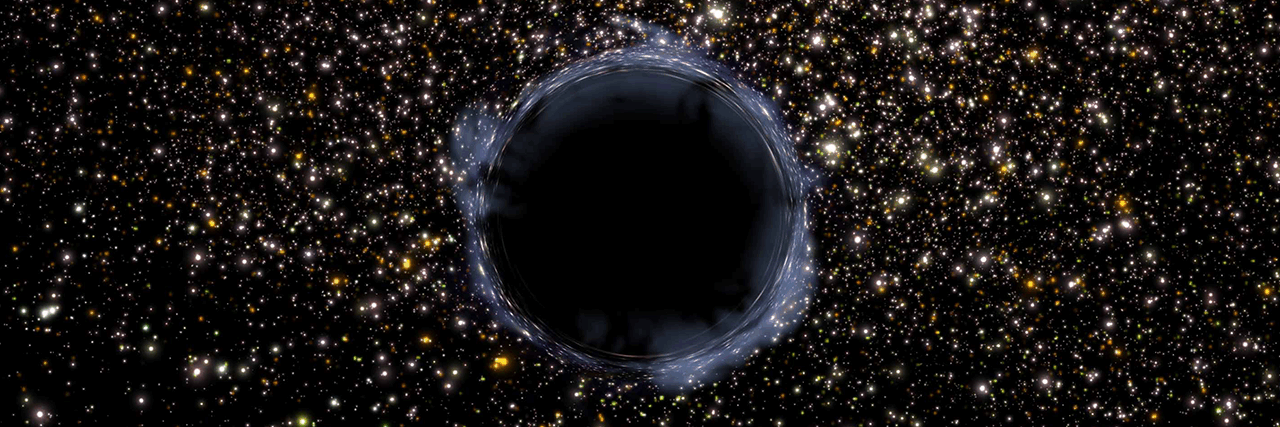
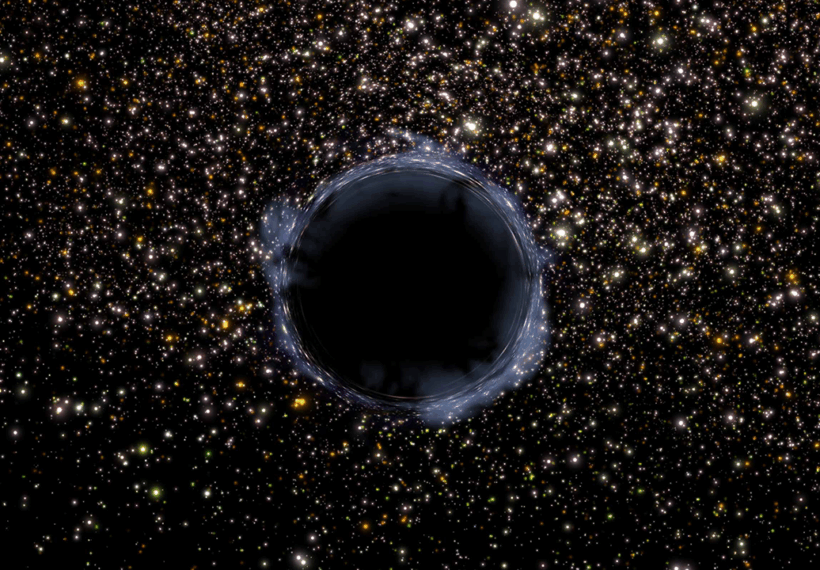
What is nothing? Could a dying back hole cause the Big Bang? Neil deGrasse Tyson and comic co-host Chuck Nice answer fan questions about a black hole’s dying gasp, lunar eclipses, and the meaning of nothing.
Why don’t we see a lunar eclipse every month? What happens when a black hole reaches the end of its life? Could the Big Bang itself have been a black hole explosion? Learn about how Hawking radiation accelerates, the runaway evaporation of dying black holes, and why their final “last gasp” would light up the universe in gamma rays.
Is “black hole” the right name for it? Should we call it a “black omega star”? We explore the limits of spacetime and causality. Could our universe be influenced by the gravity of a parallel universe? Could the universe “split” to prevent paradoxes if time travel were possible? Neil recalls Stephen Hawking’s time travel party and why the laws of physics might forbid going backward in time.
We discuss Jupiter’s protective gravitational shield, entropy and the illusion of order on Earth, and what really keeps life humming in an open system powered by the Sun. Finally, the conversation ventures into the vacuum. What is a vacuum? Why don’t fans work in space? What is nothing, really? We explore how even the emptiest parts of space still teem with quantum activity, virtual particles, and the fabric of spacetime itself.
Thanks to our Patrons Josh Gibson, John Radford, Jacob Carlile, Amelyah, Rebecca, Jalien, Logan woods, Justin Stauffer, Boaters Edge, Elizabeth Martinez, Kate Kessner, Kathy Cook, Mohamed Gamal, Sebastian Goeller, Scott Keller, Pravin Kadel, Jake M, David, Lehnert, Chris Fauerbach, Mic Phillips, Sandra Pink, João Samuel Lopes, Darnell Pisco, Santiago, Chewee, Dave, Jeditanker, Mayssam Sayyadian, Thomas Weisbjerg, Max, Harry Wells, Jonathan Lara, Brooks Long, Viktor Damjanovski, ion, David Cowles, Brian Swinteck, Opid Son, Ed, Robert Davis, aaron benedetti, George Daeem, Guillaume Franc, Zach Derbecker, Randle, andrew, j, Patrick Shoemake, Методи Кирилов, Robert Forbes Morrison, Denisse Campo, Scott Knapp, Anthony Suarez, Judy houck, Deyonn Froio, Marquis, Donald Johnson, Mandi G, Kathy Harris-Langham, Gerardo Diaz, Eric Fournier, Sylvia C., clionadh martin, Ari Timonen, Greg Morris, Micheal H., thomas hennigan, Alexandra Bugge, Chris Tenney, Taters, Precious, and Jason Perks for supporting us this week.
NOTE: StarTalk+ Patrons can listen to this entire episode commercial-free.
Transcript
DOWNLOAD SRTChuck, that was a brilliant set of questions.
Yes, it was.
Some bordered on the philosophical.
Yep.
Even the spiritual, maybe?
No, I was feeling it.
And I wrote them all.
I’m taking credit for every question.
You were lying.
I am.
And you did pretty good with pronouncing people’s names this round.
I would give myself a C plus.
He’s still working it.
Coming up, Cosmic Queries, Grab Bag Edition on StarTalk.
Welcome to StarTalk, your place in the universe where science and pop culture collide.
StarTalk begins right now.
This is StarTalk.
Neil deGrasse Tyson, your personal astrophysicist.
We got Cosmic Queries’ Grab Bag today.
Chuck.
Hey, what’s happening here?
We got a Grab Bag.
You grabbed inside the bag?
I did.
Sometimes they let you do that.
Chuck, stop.
So let’s go right in.
Yeah, we might as well jump right into it.
This is Roger McVeigh who says, hello, Dr.
Tyson.
Lord Nice, Roger from Wisconsin here currently in Surin, Thailand.
Wow.
Way to go, Roger.
Ooh, good food in Thailand.
Yeah, he says, why is there not a lunar eclipse every month?
Is it just the distance or the wobble or something else?
Great question.
That’s an observant question.
Yeah.
Very good.
Very good.
So if you look at the path the sun takes in the sky throughout the year.
Right.
Okay.
So the sun actually moves against the background stars.
You can’t see the stars, but you can kind of see them at twilight, like before sunrise, but it’s not so bright that you can’t see the stars.
Look at the stars that are there.
They come back in a month.
It’s a different set of stars.
Because I say the sun is moving.
We are orbiting the sun.
So our sight line on the sun is changing.
Every month the sun is in front of a different set of stars.
All right.
That is called the ecliptic.
The moon orbits in a plane that is tilted to the ecliptic.
Got you.
You can only get an eclipse if both the sun and the moon are in the same place.
Right.
In their tilted orbits.
Okay.
Okay.
I’m just saying the sun has an orbit.
I’m very pre-Copernican in this description.
Okay.
When they’re in the same place, then earth, the sun, and the moon line up.
But at any other time, the moon is above the sun, below the sun, or to the side.
And it’s not…
It’s got to be right.
And it’s called the ecliptic because when the sun, moon, and earth line up, you get a eclipse.
Oh, gosh darn.
That makes sense.
Doesn’t it?
Yeah.
We good here?
Yeah.
So, you can have a full moon, but it’s not crossing the ecliptic.
Okay.
So it’s not gonna enter our shadow.
You can have a new moon, and it’s not crossing the ecliptic.
And so it’s not gonna pass in front of the sun.
You need a new moon or a full moon coinciding with when they cross the ecliptic.
Right.
And so that doesn’t happen every month.
Right.
Not every month.
And in Dune, was it Dune?
Okay.
Where there were eclipses every day.
There was something getting eclipsed all the time.
I don’t know.
It was not even interesting anymore because it was kind of a daily phenomenon.
It’s like a sunrise at that point.
Yeah.
It’s still fun, but you’re not going to plan your life around observing it.
That’s the simple reason.
So if the two were aligned, we would have a…
If they were always in the same plane, it would happen that way.
Every month, we’d have a total solar eclipse.
And the difference is, not that this was in the question, a solar eclipse, you have to be on the spot on Earth where moon’s shadow drags across Earth’s surface.
And if you’re not in that spot, you’re not going to see the eclipse.
Whereas, in a lunar eclipse, the moon is entering Earth’s shadow in space.
Anybody who can see the full moon will watch it enter Earth’s shadow.
The entire half of the Earth that faces the moon will see a lunar eclipse.
Lunar eclipses are slightly, last I remembered, slightly less common than solar eclipses, but everybody gets to see it.
Oh, that’s cool.
You don’t have to travel.
You don’t have to go anywhere.
Very kind, very kind of the universe.
Yeah, it is.
Very cool, Roger.
Yeah, that’s the only reason.
What, what, what?
Spell it.
E-L-Y-S-S-I-E-L.
Okay, I don’t know how you, what you do with that.
I’m going with Elie Seyel.
This is a one-name person, like Cher, like Madonna.
Yes, exactly.
Yeah, but it’s like the more difficult version.
See Cher, Madonna, Elie Seyel.
Salutations from Newcastle, Australia.
Ooh, love them.
Which, if it is the case that a black hole explodes at the end of its life, would that explosion contain all the energy the black hole ever sucked in or has all that energy already escaped via Hawking radiation?
And I wonder if the Big Bang could have possibly been an exploding black hole of such mass that the event horizon was larger than our observable universe and the universe as we know it is now stretching out to fill the void left by the universally large black hole.
Perhaps beyond is a far larger, far older galaxy that is pulling on the mass of our observable universe at great enough distance, would seem that, like, it would seem that the pull attributed to dark energy.
Thank you.
So, did we get a black hole to fart us out and…
Was that the translation?
Basically.
And then there’s another galaxy that’s older that is actually pulling on us.
But what we’re feeling is the gravity of that other galaxy.
And that’s why we think we have dark matter.
Got it.
Okay.
Okay.
Couple of things.
All right.
So, he’s right.
As the black hole evaporates, it is losing mass.
And the more, the smaller the black hole becomes, the faster it evaporates.
Okay.
Until the rate at which it evaporates goes exponential.
And in Stephen Hawking’s original paper where he describes this, he says, the very last gasp of the black hole will be of such high energy, it will be a burst of gamma rays.
Gamma.
Gamma rays.
Because the wavelength of light is the size of the black hole emitting it.
All right.
So the black hole gets smaller and smaller.
The wavelength of light gets smaller and smaller.
And that means it has higher and higher energy.
Small wavelengths are higher energy.
And so the very last gasp would be gamma rays.
But that explosion means there’s nothing left.
So it’s not like that’s exploding and then you’re filling the void with something that will expand to fill that.
No, no, that was it.
That’s it.
That was the end of everything.
It.
Right.
It for the black hole.
Right.
So it’s spent.
Now you want something outside our horizon, possibly pulling away, giving us the delusion that there’s some mysterious force pressing outward on the universe.
The reason why that’s not likely, nothing wrong with the idea coming in.
All right.
Somebody’s tugging on it from the other side.
All right.
Because you’re still if that were the right explanation, it means you’re still dealing with ordinary gravity, because that’s what I grab just pulling the other way.
All right.
And it wouldn’t be a galaxy would be a whole other universe.
Right.
The reason why it’s probably not true is the dark energy is greatest, the larger the region of space that you’re describing.
So there’s not it’s not obvious to me why an external force of gravity would manifest that way here.
Right.
So what you’re saying is there are regions where it’s greater than in other regions?
Well, it depends on how big is the region that you carve.
That’s all.
So it’s a property of the vacuum.
Okay.
So the more vacuum you have, the more of this you have.
Okay.
That’s how you think about it.
So I should have said it.
Okay.
So the more, right.
So as the universe gets bigger, this phenomenon is more significant.
Right.
Whereas if there’s just something else pulling on the other side and we got bigger, the gravity would be less and less because we’re getting farther and farther.
Yeah.
So any and all ideas accepted or considered, because we don’t know what the hell dark energy is.
And you know, that’s what makes it so much fun that LACL can say this, because what I love is when our listeners like think.
Yeah.
Yeah.
And they come up with these like ideas and it’s real thinking.
It’s real thinking.
You know, it’s scientifically based.
It’s really cool.
Yeah.
Yeah.
All right.
But the answer is no.
All right.
Here we go.
This is Paradox.
Another one named person is Paradox.
Paradox.
Yeah.
There’s a wine called Paradox, but it has ducks on it.
Paradox.
Paradox.
Yeah.
I think it’s a play on that.
That’s very funny.
At first, I was just like, man, I’m like, wait a minute.
That’s kind of cool.
I see what they did there.
Paradox.
Okay, here.
Greetings, Dr.
Tyson.
This is Dennis from Salisbury, Indiana.
The case for taking the word whole out of black hole.
They are not holes in space.
It’s very off-putting to think of them that way.
Renaming them could possibly give new perspective on them.
B-O-S, black omega star.
How about that?
He is upset that we call them black holes.
They are not holes.
And so the black omega star, which sounds like a new Marvel character.
It sounds like the the black exploitation movie that never was never made in 1970s.
Oh, that’s right.
He came from another planet with superpowers in his Afro, powered by radiation and disco music.
He’s black omega star.
Black omega star, something’s going down at the disco.
Don’t worry about it, baby.
Black omega star be there.
Hold on for a second while I pick out my radioactive Afro.
So now I forgot the question.
Could we rename it?
I’m not one to debate word definitions.
I’m not that guy.
If I’m not that guy.
I see.
Good words are good words.
If you have a good reason to think it should be different, I’ll hear you out.
But see, don’t they call it a black hole because when you look at it through a telescope, first of all, you see all the light of the universe.
Forget the light.
They call it a black hole because you fall in.
You fall in.
Oh, that’s true.
You are falling in.
You’re falling in.
The difference is when we think of holes, we think of a two-dimensional surface and you fall through the hole.
Right.
This is a three-dimensional hole.
Any direction you approach it, you fall in.
It’s a hole.
So that’s a little freaky.
And by the way, when you fall in, you fall in every direction then.
Every direction.
Because you’re falling into a three-dimensional hole.
Yes.
So you got to be falling in every direction at the same time.
If you are falling in from any direction, right?
When you get inside of it.
I don’t know what you just said.
Neither do I.
Who cares?
It just makes sense that you’re falling in every direction at the same time.
So it’s a little odd that it’s a hole in every direction.
But so it’s a three-dimensional hole.
I mean, that’s what it is.
And light doesn’t come out.
So it’s black.
I think it’s the best named thing there ever was.
OK, well, that ends this conversation.
Like, well, there you go.
Sorry about that, Dennis.
No, just think about it, because the word galaxy, you know what that comes from?
No.
It’s Greek.
Greek for galactos.
Galactos.
You know what galactos means?
Let me say he’s the arch nemesis of Black Omega Star.
Galactos is milk.
The Milky Way.
This is how you get that.
Oh, that makes sense.
It’s poetic and romantic, but it’s still, you have to go there.
You gotta construct what’s going on.
Right.
And in China, where milk is a less popular beverage than in Europe, they don’t call it the Milky Way.
They call it the Silver River.
Oh, that’s lovely.
That’s way beautiful for me.
That’s better.
That’s even better.
Sorry, Greeks.
And by the way, we found a sugar in milk, a couple of sugars in milk, and one of them, we called it galactose.
That’s one of the sugars, and the other one is lactose.
Lactose galactose.
All because of the galaxy.
Right.
That’s cool.
Crossing our sky.
Anyway, so I think Black Hole is good, but Black Omega Star, you know, that’s…
Again, it’s the movie that was never written.
That was kind of wild, man.
I kind of dig it.
All right.
Well, there you go, Dennis.
We can get a phone call from some Hollywood director.
Exactly.
We got to make this movie.
Yes.
Black Omega Star.
Radioactive Afro.
All right.
All right.
Here we go.
Sam…
I’m sorry.
Oh, man.
I’m now thinking about Black Omega Star coming home from work and just this woman is just like, where you been?
You got time to be out there saving the universe, but you can’t be in here taking care of these kids.
Black Omega Star.
This is the home life of a superhero.
You need to get your ass over there to them Black Omega dishes.
That’s what you need to do.
All right.
Here we go.
Get your Black Omega ass on that lawn mower and mow the lawn, take the garbage out.
All right.
Here we go.
This is Sam Green.
Have you seen the Keegan-Peel skit?
On what?
Where they imitate me and my wife.
Yes.
You have seen that?
I did.
I finally did see it.
Yeah.
Somebody showed it to me here.
And it was very funny where…
Yeah.
Jordan Peel plays me.
Yes.
And I’m looking through a telescope.
And Keegan comes in dressed like my wife.
And said, Neil deGrasse Tyson, why don’t you stop looking through that telescope and do the dishes and take the garbage out and walk the dog?
And then he says, well, in another universe, in a quantum, that’s already happened.
So are we in this universe?
He says something really cosmic.
And then she says, oh, okay.
So when I first met them, it was at the Emmys because during one of our nominations when we had, when StarTalk was on Nachio, and we were nominated for Emmy three times, they were there.
And so I went up to him and said, dude, my wife has a PhD in mathematical physics.
So the conversation would not have gone down that way.
And then that’s when Jordan Peele went, well, actually.
All right, this is Sam Greene, he says, hi Dr.
Tyson, Lord Nice.
Sam here, living on Tulsa time.
Tulsa.
That’s right.
Tulsa, I rode in the, there’s a river there in Tulsa.
I rode there.
The annual festival.
Never been.
Yeah, when I rode for the University of Texas.
Oh, very nice.
Yeah, beautiful town.
That town has these big praying hands, I think.
They need it.
He says, My question is about space time and causality.
We usually limit our models of space time to ones where causality is preserved.
But I wonder, could space time behave in a sort of meiotic or metotic way to preserve itself when causality is violated?
I realize I’m borrowing from biology here, but imagine space time splitting when encountering…
Is that me-to-sis?
M-E-I-T-O-S-I?
That’s me-to-sis, yes.
What does it mean?
What word is that?
He said meiotic, M-E-I-O-T-I-C, or…
Maybe he’s borrowing from biology words, because I don’t know that in physics.
Yeah, and then mitotic, which maybe that is the mitosis.
Okay, go on.
I don’t know either one of those words either, so maybe we can look them up, guys.
Because maybe I’m not even saying them right, to be honest.
Who knows?
I don’t know.
People cut you slack every time now.
Well, you know, listen, it’s an honor to have me mispronounce your name or a word, all right?
That’s all he’s saying.
He’s like, come on, man, don’t let that happen.
All right, let’s get back to him.
He says, I’m realizing I’m borrowing from biology here, but imagine space time splitting when encountering a causal mass or replicating to contain a causal characteristics.
Could such a mechanism, a causal as in not causal, not causing a isn’t not.
Could such a mechanism be a way the universe maintains consistency?
I like that idea.
So the only way you’re going to mess up causality is if you go back in time.
And Rich Gott wrote a whole, you know, he’s a friend of StarTalk.
Yes.
In fact, he’s a co-author of mine.
We co-authored a book together called Welcome to the Universe.
Very nice.
It was based on a course that we co-taught together at Princeton, along with Michael Strauss, the three of us.
So it’s Tyson, Strauss, Gott, G-O-T-T, I want to find that.
And there were like four versions of the book.
There’s Welcome to the Universe, that’s like textbook style.
Then there’s a brief Welcome to the Universe, that’s like a pocket, sorry.
And then there’s Welcome to the Universe in 3D.
Wow, you guys really milked that thing, man.
I’m telling you.
Way to ride a horse.
All with Princeton University Press.
So Rich Gott wrote a book called Time Travel in Einstein’s Universe.
Right.
And it turns out there are solutions if you take a certain path around a black hole or a pair of black holes and then come back, you can come back before you left.
There’s a solution that I don’t know how to calculate.
But people who are fluent in this do.
But we don’t have to worry about the details of that.
What we care about is the idea of it.
All right.
Is the universe going to get angry if you manage to go back in time?
Then tell yourself to not go back in time.
Right.
How do you square that?
That would be the most awesome thing.
I can see why the universe could get mad at that.
Right.
So does the universe split?
I mean, it’s kind of what he’s hinting here.
Yeah, that’s what he’s saying.
Because at that point, what you have done, because you already…
Because you can’t let that go.
You already went.
Right.
So when you come back and don’t go again, what happened to the wind?
See?
Because you already went.
That’s how you got back.
Right.
But in the movies, what happens is you always end up doing something else that puts you right back where you gotta go.
Or you disappear from the photo.
Right.
Stephen Hawking has something called the time travel conjecture.
Okay.
He thinks, thought, that one day we would find a law of nature that explicitly says you cannot go backwards in time.
Okay.
And so as a conjecture, he’s imagining that one day we will make such a discovery.
You know what he did?
He had a time travel party.
Did you know about this?
I did not.
He or his people hosted a party at Caltech, and the announcement was made to all time travelers, come back in time and meet us here, and we will greet you.
Nobody showed up.
That’s funny.
So another one, you know the one about the Titanic, in the TV series Time Tunnel.
I don’t know that.
It had the same producer.
So it was a couple of shows that had the same kind of Land of the Giants, Time Tunnel.
It was like one-hour TV shows, primetime, that were sciency, science fiction-y, okay?
And Time Tunnel, the very first episode, they go back in time, and they’re kind of lost in time.
That’s the show.
They try to come back and they can’t.
They land up at another place.
So where’s the first place they went?
The Titanic.
The Titanic.
It was the Titanic.
Well, that was the end of the series.
That was nice while it lasted.
And so then the reveal is there as he’s walking on the deck.
Then he sees the lifesaver.
It says USS Titanic.
Well, no, it’s not US.
Oh, that’s right, because it’s not the US.
It’s British.
British, right.
Yeah, but I don’t know.
That’s S Titanic.
S Titanic.
It’s been hypothesized because everyone is so intrigued by the Titanic and that story that the day time travel actually gets invented, everyone wants to go back to the Titanic.
And that’s why it’s saying there wasn’t enough boats for everybody because they’re all time travelers.
I don’t want to go back to the Titanic.
I want to go back to a rowboat.
A rowboat?
Sitting off to the side of the Titanic, like eating some popcorn, like, wow, that is messed up.
Look at that.
You know?
Who knows how that would get resolved?
Either you can’t go back in time or if you do, the universe splits and prevents you from altering…
One of the timelines.
One of the timelines, correct.
And we’re not there yet.
But it’s a great question.
That’s super cool.
Parker Mann says, hello Dr.
Tyson and Sir Charles.
This is Parker Mann, retired geophysicist in Ventura, California.
Now, looking up instead of down.
Oh, nice.
Tell me the name again.
This is Parker Mann.
Parker Mann.
Shout out to you.
All right.
And by the way, we need more geologists to look up than down so that they will understand that it’s one of our asteroids that took out the dinosaurs.
Okay.
So we got a whole lot of down looking paleontologists out there.
All right.
I don’t want to loop you in with the paleontologist, but Earth is your place.
But yeah.
All right.
He says, I recently saw a video in which Dr.
Tyson said that Jupiter’s orbit allows it to partially protect the Earth from asteroid impacts.
If it were further out, would it protect Mars and closer in protect Venus?
Can you elaborate on why Jupiter differentially protects planets based on its orbit?
Thank you.
Good question.
Yeah.
Well, nice question.
So we say protects Earth because we don’t care if it protects anybody else.
But the truth is, it’s protecting everybody.
It’s protecting everybody within its orbit.
Within its orbit.
Because it’s what would happen is, it’s like alignment.
A comet would come by and you cannot escape the gravity of Jupiter.
Gravity of Jupiter.
I just say that more precisely.
You cannot come in and out of the solar system without having felt the influence of Jupiter.
Nice.
Okay.
Because the word escape has very precise meaning.
I don’t want to say it that way.
So Jupiter is protecting Mercury, Venus, Earth and Mars.
Yeah.
Period.
So a comet comes in and it feels Jupiter and it swings out the other side.
Right.
And never even comes in.
Never even comes in to come towards us.
Correct.
Correct.
So plus, the distances between and among the planets is exponential.
In units of the Earth-Sun distance, Mercury is 0.4, Venus is 0.7, Earth is 1, one distance.
Okay.
Of course it would be.
Mars is two and a half.
Oh.
Jupiter is five.
Oh.
Saturn is 10.
Oh.
Uranus is 20.
Neptune is 30.
No, but the distance is getting really big, really fast.
That’s what the point of this lame exercise.
I’m trying to lay down.
And so all of the inner planets basically are huddled compared to where Jupiter is.
Right.
And its ability to protect its inner children.
Yeah.
Cool.
Is that because the mass of these other planets is so much bigger that they need more distance so they’re not disturbing?
They would clear out more distance.
They would clear out more distance.
They would clear out more distance.
But the formation of solar systems is still an active field because we used to think any other star system would look like our solar system.
Right.
That’s the first assumption.
And I know none of them do.
Wow, that’s so cool.
Some of them have Jupiters as close as Mercury is.
Oh.
They’re called Hot Jupiters.
That’s cool.
Yeah.
How you doing?
I’m Hot Jupiter.
What’s up, Saturn?
That girl is ratchet, I’m telling you right now.
All right, that’s super cool.
If you want it, put a ring on it.
All right, Parker Man, what a great question.
Here we go.
The Freddie Abden.
Hey, Neil.
Hey, Chuck.
My name is Freddie Abden, an American living in Peria, Colombia.
But what’s the name of the town?
Peria.
I don’t know that town.
I don’t either.
Spell it.
Maybe I do know if you pronounced it right.
P-E-R-E-I-R-A.
Peria.
Peria.
Peria.
Okay.
It’s E-I-R-A?
That sounds Portuguese.
E-I-R-A.
Yeah.
Peria, Colombia.
Portuguese, they put the E in front of the I.
Yeah, okay.
Where the best coffee is grown.
Ooh.
That’s right.
Colombian coffee.
That’s right, Colombian coffee.
We used to get those TV commercials.
That are known as cocaine.
Ha, stop.
The second law of thermodynamics says entropy must increase.
Yet, for a surprisingly long stretch, Earth maintained extraordinary order and complexity, enabling life to thrive in stark contrast to the decay and disorder we observed elsewhere in the cosmos.
That should not have happened, statistically speaking.
What could explain that rare pause in entropy, that bubble of low chaos?
Could it point to…
Could it point to Captain Kirk?
What could it explain?
Could it point to the unique initial conditions or maybe even some odd influence beyond our natural forces?
Religious people who know only some physics, but not enough physics, know about the Second Law of Thermodynamics and that everything proceeds to chaos.
Correct.
That is a simplification.
But basically, it goes from order to disorder.
And Earth goes from disorder to now we have life.
We can’t get more complicated than life.
So they wanted to invoke that as a reason for not that physics didn’t work, but that the hand of God operated, intervened here, reversing what would otherwise be the trend that we see everywhere else in the universe.
So it was not a statement of physics not working.
It’s a statement of the handiwork of God.
And what is a miracle if not the suspension of the laws of physics?
The proper way to say the second law of thermodynamics is, for any closed system, the system will move to disorder.
Right.
Inexorably.
We’re not a closed system.
We are open to the universe.
We’re open to sunlight.
Right.
We’re bathed in sunlight.
That is energy entering our system.
Okay?
Right.
So if you have net energy flow into a system, then it’s not a closed system.
All right.
So now, but you gotta rob Peter to paint Paul.
If our entropy is going down, life is lower entropy than what was there before, somebody’s entropy had to go up.
Really?
The sun.
Oh, the sun is dying.
Yes, it is.
So that we might have life, a different kind of sun, giving up life that we might live.
Oh, I see what you did there.
I see what you did there.
So the sun will die.
Right.
And then when the sun dies, nothing is bolstered after that.
And then the whole system goes to entropy.
Yeah.
Look at that.
Now, a quick little aside, in our whole of the universe, we have a completely enclosed sphere, glass sphere, that has water and three life forms in it.
Why would you do that?
That’s terrible!
Ah!
That is just awful!
Okay.
Yes, they’re sealed in this cavity.
Oh, my God.
All right.
And so, we have three life forms.
There’s krill, like really tiny krill.
Like the little shrimpy things.
Little shrimpy things.
We have snails.
And we have something like kelp.
Like an underwater plant.
Planty thing.
Plant, plant.
That creates a complete ecosystem.
Okay.
So, the krill poops, the snails eat the poop.
Right.
The thing, okay.
And then that fertilizes the kelp.
And the sunlight comes in and helps the kelp.
Exactly.
And then it’s full circle.
Oh, so you noticed, it’s not a completely closed system.
Right.
Because it’s made of transparent glass.
So sunlight gets in.
Okay, so now, here’s the story.
When we were building the Rose Center for Earth and Space in the year 1999, because we opened January 1st, 2000, there was a lot of construction dust.
They finally moved that into place.
There’s construction dust.
So the construction people said, we clearly have to protect this sphere of glass.
Up came the tarp.
The porcelain.
The plant.
Fortunately, Clearhead caught it.
You can’t blame the construction workers.
They’re not astrobiologists.
They weren’t looking at that like, guys, I know it looks like a closed system, but it isn’t.
We got a lot of sun light in.
We need photosynthesis for the kelp.
And the two life forms actually will…
They’re all three life forms, and they’re dependent upon each other.
So, yeah.
So, I forgot how long.
It was a few days, but you picked it up, and there were a few belly-up krill.
Oh.
But they reestablished their equilibrium, and they’re still going.
They’re still going.
After 25 years.
In that seemingly closed system.
Seemingly closed system.
Seemingly closed system.
Correct.
It is living off of the sun.
Nice.
Yeah.
So, yeah, that’s how that works.
Okay.
Very cool.
All right.
I love that.
That was a great little lesson in entropy.
Nicholas Hayes.
Hello, Neil.
One other thing about entropy?
Go ahead.
Okay.
You’re alive, right?
Well, we both.
Okay.
Sometimes.
Right now, you are consuming energy for being alive.
For being alive.
Where did the energy come from?
I’m going to say Jesus.
No.
That’s the way you said that.
That’s very Southern Baptist.
Well, that’s the only way Jesus says.
Well, no.
I mean, I ate food.
You ate food.
I ate food.
People say they look at food and the calorie count is something bad.
Yeah.
The calories is the energy that you’re using.
Do you know what the word for energy is in French?
No.
The calorie count.
But the goals.
OK.
So when you die, you stop eating.
Right.
Well, there’s a reason why.
Sorry.
You don’t choose to stop eating when you die.
I don’t see too many corpses like, God, I am so hungry.
Man.
Hey, why don’t you eat?
What are you doing?
Man, you’re not taking care of yourself?
You’re just as you’re dead.
Sorry, I said it back.
I’m sorry.
I said it the wrong way.
So, but when you’re dead, there’s no more metabolism in you.
Right.
OK.
And you begin to decay.
Right.
You become disorder.
You’re moving to entropy.
Yes.
Right.
There it is.
Because you are now a closed system.
Right.
See, as long as you got a pie hole to shove food into, you’re not a closed system.
Very cool.
Yeah.
All right.
This is Nicholas Hayes.
He says, Hello, Neil and Chuck.
My name is Nick and I’m an industrial designer in North Bend, Washington.
Love him.
My question is, if I, in my super advanced starship, were traveling close to the speed of light and blew past a planet moving in the opposite direction, would I appear to be traveling faster than the speed of light to anyone watching me from the planet?
Or would my reference frame constantly change based on what is being passed by?
Yeah, no.
Okay.
Next question.
No, sorry.
Here’s how it works.
So at low speeds, you can just sort of add velocities.
So if you’re in a car going 60 miles an hour one way, a car going 60 miles an hour another way, you will pass each other at?
120 miles an hour.
Thank you.
Yes.
120 miles an hour.
Okay.
What’s really fun is in an airplane, where you see the ground going by slowly, because it’s high up, right?
When another plane is coming towards you, it’s the opposite direction, the relative, because you’re going maybe 500 miles an hour, and they’re going 500 miles an hour, it’s passing you at 1,000 miles an hour.
If you want to see what a supersonic jet would look like to you if you’re just standing there, and it’s really…
Just check it out next time.
When you’re…
Look out the window.
You will find planes coming the other way, and they go by fast.
Very fast, and they’re pretty far away, and they’re still zipping by you, man.
Zipping by.
So, the formula to add velocities is very simple.
It’s this one plus that one, and that’s your relative velocity.
As you go faster, that formula breaks down, and you need to use a relativity formula to add velocities.
Oh, please tell, because I’m not familiar with this.
You didn’t know about that.
I do not know.
This is so cool.
And the relativity formula, it is not how fast you’re going, it’s how fast you’re going relative to the speed of light.
Aha.
And that ratio is in the formula.
Oh.
Okay.
Very cool.
And so, when that ratio is near zero, the formula just becomes two numbers added.
But as that ratio gets higher, it’s a more complicated formula.
It becomes a more complicated formula.
And so, at half the speed of light and half the speed of light, you would see the other thing going maybe at two-thirds the speed of light.
Because half and half would be a full speed of light.
Right.
Right.
Going the opposite directions.
So if you’re going 99% that way and 99% this way, you invoke the formula, you’re never going to get higher than the speed of light.
Gotcha.
Yeah.
So the answer is no.
Because if, let’s say, you were going out on nine tenths the speed of light, without the formula, you’d be going much faster than the speed of light when you pass each other.
Correct.
And you can’t do that.
So you can’t violate that law.
Correct.
And so because you can’t violate that principle of physics or the universe, you gotta have this formula.
It’s not just a can, that’s what we observe.
And so this is the formula that describes what we observe.
What we’re observing.
Right.
The universe is not obeying our formulas.
Right.
Right.
Yeah, that makes sense.
Yeah, we’ve actually made a formula to tell us what the universe is doing.
Correct.
I got you.
It’s an important distinction.
It is.
I will occasionally loosely say, the planet is following Newton’s laws.
Right.
No, Newton’s laws are following the planet.
That’s funny.
Yeah.
All right.
That was, oh man, what a great question, Nicholas Hayes.
I can’t recite it off the top of my head, but I’m sure there’s a wiki page on adding relativistic velocities.
Relativistic velocities.
Adding relativistic velocities.
You just go there.
And the formula has some squares and square roots in it.
It’s not complicated.
It ain’t crazy.
It’s not crazy.
Right.
We can go crazy if you want to go crazy.
But so you can do it if you’ve had elementary arithmetic, elementary algebra.
Sorry.
This is John Stam.
He says, Hi, Neil and Chuck.
This is John from Tampa, Florida.
We describe space as being three-dimensional like a cube.
Is the fabric of space better described as a four-dimensional or a tesseract because it is also expanding?
What could happen if the universe stopped expanding?
Would time or the speed of light be affected?
We do not know what of what we measure is fundamentally linked to the expanding universe.
It has been suggested that the second law of thermodynamics, since we just went in and out of that, might be a property of an expanding universe.
And that if the universe slowed down and re-collapsed, maybe isolated systems achieve order rather than disorder.
Or does the second law of thermodynamics pass through an expanding and a collapsing universe?
Does the law of physics not change?
So these are unknown questions.
We make some assumptions, but they’re not tested.
And so we do not know.
Our time dimension is not a space dimension.
So it’s not a tesseract.
Tesseract is 4D, four spatial dimensions.
And time is different.
We need it as a coordinate, but it’s not the same as the other coordinates.
Because as I’ve said, we are a prisoner of the present, forever transitioning between our inaccessible past and our unknowable future.
So that is not a coordinate we can move back and forth on.
But X, Y and Z, we can go forward and back up and down and left and right.
We have full access.
So it’s correct to say we live in four dimensions, but one of those is space.
It’s a very different world from one where four space dimensions exist.
And then you have time on top of that.
That would be the fifth dimension.
Oh, watch out.
I told you the arranger of the fifth dimension was a family cousin.
Who?
The arranger.
His name was Rene DeNight.
Was Rene DeNight.
Oh, really?
Yeah.
And every time the fifth dimension came through New York, we got tickets.
Oh, that’s very cool.
I was a little kid.
But Ed Sullivan Theater, where they performed.
The fifth dimension is huge.
They’re huge.
They were huge.
They were worldwide.
When the moon is in the seventh house and Jupiter aligns with Mars and peace will guide the planet and love will steer the stars.
This is the dawning of the age of Aquarius.
Fifth dimension.
Yep.
All right.
Fifth dimension.
Yep.
All right.
That was for all you Aquarians out there.
We know how needy you are.
All right.
This is Marcus Gustafsson.
Gustafsson.
Gustafsson.
Is it two Fs?
Yep.
No, one F.
Gustafsson.
Gustafsson.
OK.
Is it two Ss?
Yes.
Yeah.
There you go.
Gustafsson.
I got the wrong double there.
He says, hello, everyone.
Marcus here from Sweden.
You think?
I think.
Gustafsson.
He says, I have a question about the value of scientific understanding.
Love it.
Love it.
I’ve always valued gaining knowledge about the universe after following, after and following StarTalk for years and reading books on the subject that I find my life has gained something for doing so.
But I have a difficult…
Notice, he didn’t say he read my books.
He just said he read books.
Let the record show.
Okay.
I’m sure you’re in there somewhere.
In his choices.
He says, but I have had a difficult time exactly pinpointing what.
I believe I have gained scientific literacy, which comes with a different perspective on how to know what is true and the value of quantifying my ignorance as well as getting humbled.
What will you say are some more important things a person gains from scientific understanding aside from knowledge alone?
Well, brother, you just named two huge, huge things to learn.
Okay.
So here it is.
The number one thing is the number one feature of science literacy.
Yeah.
It empowers you to know when someone else is full of shit.
Yeah.
Yeah.
Yeah.
It’s empowerment.
If someone says, well, I have these crystals, rub them and you…
If you understand crystals and you understand medicine, you understand, you’re not going to buy the crystal from the person.
Right.
All right.
You are a victim of charlatans, which implies the person selling to you knows better, or you’re the victim of other people who themselves are victims.
So he wants more out of this.
Ain’t that enough?
I mean, and by the way, quantifying your ignorance is a huge self-awareness that most people never ever get.
Where I thought he was going with the question was, there are things that we can measure but don’t understand.
Okay.
We measure dark matter.
Right.
We don’t know what’s causing it.
We measure dark energy.
We don’t know what’s causing it.
We know we’re alive.
We don’t know how we got from organic molecules to self-replicating life.
Right.
We don’t know.
Just because you can measure it doesn’t mean you understand it.
In fact, my favorite example here is once telescopes and cameras became, once cameras, once film became sensitive enough to, if you look at any old photo, like from the 1920s, 1930s, somebody’s blurred in it because you have, the camera wasn’t sensitive enough to light.
The film wasn’t sensitive enough.
And you need long exposures for everything.
And they say, hold that, hold the position.
Right.
Okay.
And there’s always some, especially if it’s a kid in a family photo, the kid is blurred.
It was very hard to get astroworthy photographs because the image is very dim.
When we did, we knew that when you take the starlight and pass it through a prism, you get important information about the light.
Chemical composition, well, there’s features in the light.
There are bright lines and dark lines.
It’s a spectrum.
In the 1910s and 20s, we started taking the spectra of stars, knowing that one day that’s going to be important, even though we don’t understand it, even though we don’t really know what’s going on.
Super cool.
And so, huge data sets came down the pipe.
And we have laboratory counterparts to the spectrum.
So we think that’s hydrogen.
Oh, we think that’s carbon.
We think because it’s over here and we see it there.
And…
That’s, I mean, unbelievable.
No, no, it’s amazing.
It’s amazing.
And finally, the 1920s come along.
Quantum physics gets developed.
We understand the fricking atom, what electrons are doing, what they do to light if white light passes through it or any kind of light passes through it.
And all the data we have been collecting and not understanding what the hell it was telling us became the foundations for our understanding of stellar evolution.
And it’s one of the great triumphs of 20th century astrophysics.
Wow.
Yeah, man, that is very, very cool.
All right, this is Alejandro Guardado.
That’s a different Alejandro.
It is.
We had Alejandro Reynoso.
That’s right, Alejandro Reynoso.
And this one is Alejandro Guardado.
Guardado, okay.
He coming in from where?
Alejandro from Washington State.
At least the other Alejandro was from Monterrey, Mexico.
Yes, Monterrey, Monterrey, Mexico.
Wasn’t he from Mexico?
Yes, he was from Mexico.
Okay, so maybe it’s just Alex.
You can call me Alex, though.
Hey, guys.
What are you doing?
Can I join?
Got a question for you, dudes.
The uncoolest person in the room.
You go from the most interesting man in the world to…
Hey, call me Alex.
Okay, Alejandro from Washington State.
From Washington State, he says, I’m a new Patreon member.
Oh, nice.
Welcome to the universe.
I get to do my voice.
Welcome to the universe.
There you go.
Oh, yeah.
You’ve been officially birthed into our family, bro.
By the way, I think you do get a lower voice than me, but you don’t sustain it.
I can’t.
You have that whiskey voice.
That’s why I can’t sustain it.
Because I’m drunk right now.
He says, my question is, what are good ways to wrap your head around partial or even complete vacuums, for example, space?
I’m still trying to wrap my head around fans not working in space.
That’s a weird thought.
It is.
Why don’t fans work in space?
I’m wondering why these…
The rotor is spinning.
I can’t.
I’m so hot.
I don’t understand how I’m hot.
It’s only like three degrees Kelvin in here.
Anyway, he says, I’m wondering why these things work the way they do.
What is the vacuum of space?
I mean, that’s a very weird…
There’s a deeper question there.
Go ahead.
And it’s, what is nothing?
What is nothing?
Yeah.
The best vacuum we’ve ever created was in the detector, was it, of the Large Hadron Collider.
Oh, cool.
Because you don’t want those particles hitting stuff they don’t want them to hit.
That’s right.
You got to suck everything out of there, man.
And one of the problems is, material.
I did this when I was in college.
I worked at Bell Labs for one summer.
And we explored different vacuums because we were testing for superconducting materials.
And you want a very sort of pristine environment for that.
But anyhow, so we have a cavity and you suck out all the gas until the pump can’t pump out any more out.
And you say, that’s pretty good.
Here’s what you do next.
You heat the walls.
The gas particles, they got stuck in the texture of the surface of the cavity.
You heat the walls, they all jump out.
You see the pressure go back up just by heating it.
Then you suck that out.
Now you cool it down.
Then you have a way better vacuum than you otherwise would have.
But still, the particles left over there.
So, we do okay with our vacuums.
You leave our atmosphere very far between the planets.
That’s an even better vacuum.
You go outside the solar system between the stars.
That’s an even better vacuum.
You go outside the galaxy between the galaxies.
That’s an even better vacuum.
And last I ran the numbers on that, that vacuum has one particle every cubic meter.
That’s correct.
And one particle.
Yeah, yeah.
One particle per cubic meter.
So leave your fan at home.
That’s the lesson here.
But if you take away that particle, then what is that?
Is there nothing there?
No, there is still something there.
The laws of physics are still there.
If you want a place where there’s nothing, shouldn’t you be removing the laws of physics as well?
Now we’re talking like we’re outside of Matrix stuff now.
Let me not even get there yet.
That’s not even a loading program anymore.
Let’s not even get there yet.
Now there’s no particles there.
Okay.
There is light passing through it.
The Cosmic Microwave Background visiting the region, okay?
And there’s something called virtual particles popping in and out of existence.
Quantum physics dictates this.
And so there’s a vacuum of no regular particles, but other stuff is happening.
And through that volume is the fabric of space and time.
So a real place, a real vacuum should have not only no particles, it should have no virtual particles.
It should not even have a space-time continuum.
And if it doesn’t even have that, maybe that’s how you get rid of the laws of physics.
You took away the space-time.
Maybe the laws of physics are a part of space-time.
So, yeah, this is kind of stuff like over a beer, you know, you…
Yeah, but make sure it’s a zero-calorie beer.
No, I know I said beer because you would have said weed.
That’s a weed conversation.
I’ve never smoked, so I don’t…
I can’t relate to what that might be.
That is definitely a weed conversation, man.
And, by the way, and I forgot which one of my two Merlin books, they just got republished, one last year, and one is coming out in a few days, actually.
Someone asked Merlin that very…
Merlin was my pen name for a column that I wrote for like 10 years.
And people asked…
the public asked…
So I’m very comfortable in this Q&A environment, just in case…
I don’t know, we didn’t know that.
Well, you know, we’ve been working together for a little while now, so I figured that out.
You figured that out?
So one of the questions was, what’s the best vacuum?
And so Merlin is my pen name, goes through all the various vacuums.
Oh, really?
And how many particles per cubic meter?
There’s a lot, and then less and less and less.
And so it’s in there, very cleanly described.
Very nice.
Yeah.
All right.
That’s all the time we have.
Oh my gosh.
And all these were asked by Patreon members.
That’s right.
Thank you all the Patreon people.
Yes.
We love our Patreon supporters.
And you can go to patreon.com and join the StarTalk family for as little as $5 a month.
You too can save a comedian.
In the arms of an angel.
You need puppy eyes?
No.
You got to be looking through a gate or something.
Yeah, we need a chain link fence right here.
And I’m just like…
All right.
That’s not where the money goes to.
It goes to experiments that we conduct to try to…
It allows us to expand the show.
Expand the show in ways that are not quite commercially viable yet.
And work on it and get people’s input.
And so, yeah.
We appreciate you is the point.
That’s right.
And we got StarTalk Plus channel now in YouTube.
Because of Patreon, because StarTalk Plus makes no money at all.
Not yet.
We’re working on it.
Well, yeah.
I mean, maybe one day.
Yeah, maybe one day.
We’re working on it.
Okay.
That’s it, Chuck.
Yeah, man.
Another episode of StarTalk Grab Bag.
All right.
So this has been yet another episode of Cosmic Queries Grab Bag Edition.
Chuck, always good to have you.
Always a pleasure.
All right.
Neil deGrasse Tyson here, as always, bidding you to keep looking up.

 Become a Patron