


 Unlock with Patreon
About This Episode
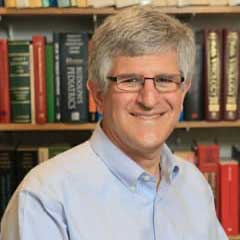
Is a COVID-19 vaccine likely in the near future? On this episode of StarTalk Radio, Neil deGrasse Tyson and comic co-host Paul Mecurio answer your fan-submitted Cosmic Queries about vaccines for COVID-19 with the help of their guest, Dr. Paul Offit, MD, Director of the Vaccine Education Center and an attending physician in the Division of Infectious Diseases at Children’s Hospital of Philadelphia.
We start with the big question: What happened? How did an outbreak like this occur in modern times? Paul sheds light on how, if we would’ve known about the outbreak sooner, we could’ve gotten ahead of the virus. We discuss how to navigate dealing with anti-vaxxers and those who don’t want to wear masks. Paul shares his thoughts on the hardest part of vaccine education.
For a quick refresher on Vaccines 101, Dr. Offit tells us how vaccines work. You’ll learn about the “typical” procedure used to create and distribute a new vaccine and why a vaccine for COVID-19 can be extremely accelerated. We also ponder whether a vaccine might reduce the number of anti-vaxxers? Dr. Paul explains the difference between being a vaccine skeptic vs. being a vaccine cynic.
Once a vaccine exists, who will get vaccinated first? We discuss strategies in place for when the day comes. We also discuss if COVID-19 will linger around like the flu or if we can remove it from the face of the Earth. You’ll also find out the role young people play with spreading the virus.
We investigate possible timelines for a COVID-19 vaccine. Paul shares his thoughts on what makes something a “bad” side effect. All that, plus, Neil wonders why medicinal procedures have yet to capitalize on computer simulations to test vaccines on human physiology.
Thanks to our Patrons Patrick Gibbs, Jonathan O’Rear, Rusty Faircloth, Jaclyn Mishak, Jeremy Scott, Alejandra Salinas, Tom Bock, and Marcus Richardson for supporting us this week.
NOTE: StarTalk+ Patrons can watch and listen to and watch this entire episode commercial-free.
About the prints that flank Neil in this video:
“Black Swan” & “White Swan” limited edition serigraph prints by Coast Salish artist Jane Kwatleematt Marston. For more information about this artist and her work, visit Inuit Gallery of Vancouver.
Transcript
DOWNLOAD SRTWelcome to StarTalk, your place in the universe where science and pop culture collide.
StarTalk begins right now.
This is StarTalk Cosmic Queries, a special edition on vaccines.
My co-host, Paul Mecurio, are you ready for this one?
So you’re ready for this one, I think.
Yeah, I’ll go ahead.
And of course, neither of us have any expertise in this at all, other than reading about it in the papers.
So we found one of the best, if not the best, at this.
Dr.
Paul Offit.
Paul, welcome to StarTalk.
Thank you.
Thanks for asking me.
Yeah.
So I looked at your pedigree here, director of the Vaccine Education Center and professor of pediatrics in the Division of Infectious Disease at the Children’s Hospital of Philadelphia.
So you’re the man for this episode.
I’m not exaggerating here, correct?
I think I’m a man.
The man.
The man.
But before we get to our abundant questions that have been submitted to us by our fan base on all manner of our social media platforms, I have some basic questions about what we’re all going through in this pandemic.
Why was I so naive to think that 100 years ago we had the flu pandemic?
Oh, that was 100 years ago.
This is the 21st century.
That can’t happen.
We have other issues, but not that.
What is going on?
Why did this even happen at all in what we are thinking of as modern times?
So this is essentially a bat coronavirus that has adapted itself to growth in humans.
This happens fairly frequently.
I mean, we saw there was SARS 1 that happened in 2002.
That was followed a few years later by years, the first one came out of Asia, the second one out of the Middle East.
So these were constantly in association with other animals, and then we sort of share our viruses, and one adapts to one or the other.
Most of the infections of people actually originally started in animals.
So it’s not unusual.
We’ve had warnings for this.
We just weren’t ready for this one.
So if we focus on vaccines for this, if you know this is in the works at all times, is there hope that we can be out ahead of these things instead of running up behind them?
I think it’s hard to predict exactly how it’s going to happen.
That it’s going to happen is clear.
When it’s going to happen is exactly what the virus is going to look like.
We don’t know.
But once we identified, and this was, I think, the tragedy of this, when this virus started to sweep across Wuhan and caused people to suffer and be hospitalized and die, and they were building hospital after hospital in Wuhan trying to handle all this, we should have known about that earlier.
The world should have known about that earlier.
We shouldn’t have had to rely on a whistleblower to tell us that this was going to happen, a whistleblower that ultimately died.
We should have had that virus in hand back in November, and all the world then should have been working on a vaccine way back then.
But so there was a late start with this.
So, and of course, you’re in the middle of, I mean, I get some of it because it’s anti-science when I see people saying, I’m not going to do a vaccine.
I think they’re dangerous.
You know, they’re making their own decisions.
You know, in a free country, we encourage people to be independent.
And, you know, there’s this conflict of messaging to say you live in a free country and I have freedom of choice, but now you’re saying I don’t have freedom of choice even if I don’t want your vaccine.
So you’re in the middle of that.
How do you deal with this?
Well, it plays out at many levels.
I mean, this notion that I don’t want to wear a mask.
It’s my right, it’s my freedom as an individual in this country.
Because it’s in the Constitution.
Paul, you saw that, right?
Yes.
They were using masks made out of cowhide at the time.
They were very sweaty.
By the way, I just want to interject.
I have COVID, I’m recovering from it.
And I got it because I was around people that refused to wear masks and some thought it was a hoax.
And my concern is when the vaccine comes out, they’re talking about herd immunity, the same people that are declaring their right not to wear a mask might declare a right not to take a vaccine.
And this is just going to be a bigger problem, you know, because I think what we’re all missing is it’s right plus social responsibility to your fellow man, right?
So how do you walk that line?
To me, this is not a line at all.
It’s not your right to catch and transmit a potentially fatal infection.
Any more than it’s your right to deny your child a potentially life-saving vaccine.
Sorry, I mean, any more than it’s your right to run a stop sign just because you feel like it.
I mean, you do have a responsibility to society.
And this is an example of that.
It’s really hard to watch people say, I’m not going to wear a mask because it’s not my matter.
It doesn’t just affect you.
It affects people who come in contact with you.
I got it and my son got it and his girlfriend got it for that reason.
I had someone come up to me and say, take your mask off.
This is in Florida.
This whole thing is a hoax.
Yeah, and Paul, that’s why we shipped Paul Mecurio to the moon.
So he’s broadcasting to us.
Yes, I am.
I’m in a giant plexiglass box, actually.
You can’t see it.
It’s out of frame.
You got a little HAB module.
So Dr.
Offit, one of your roles is education, vaccine education.
It’s in your title.
So what have you seen to be the greatest challenge at this?
Well, to make a vaccine quickly.
I think it’s actually remarkable how quickly it’s going to be made.
The average length of time it takes to make a vaccine is 15 to 20 years.
I was fortunate enough to work with the team at Children’s Hospital of Philadelphia that created the strains that became the rotavirus vaccine.
That was a 26-year effort.
It’s amazing that we’re going to make a vaccine in a year and a half.
And we are.
We just got the virus, really.
In January, there will likely be a vaccine by no later than the middle of next year.
But I want it now.
Hey, I just got the Russia vaccine, and it’s fine.
There’s no problem at all.
And you speak Russian overnight.
So Paul Mecurio, you’re both Pauls.
Let’s go to the questions and see what people have.
You have Patreon ones on top.
These are, as far as I can tell, all Patreon.
Wow, okay, let’s do it then.
Yeah, this is Eli.
I’ve heard that people have become infected with COVID twice.
How is this possible unless the virus has mutated?
Please enlighten me and thank you.
Yeah, excellent.
So if you’re going to make a vaccine successfully, the most important thing is to watch what happens with natural infection.
You want natural infection to protect against disease associated with re-exposure.
That does not have to completely protect.
You just want it to protect against moderate to severe disease, which apparently is what this virus does.
So if you’re infected with this virus, you can still get infected again.
You can still get asymptomatically infected or mildly asymptomatically infected.
What you haven’t seen, with the exception of one person I read about, you haven’t seen people get moderate to severe disease and then, say, five, six, eight months go by, and then they get moderate to severe disease again, which then suggests that natural infection doesn’t protect against disease, which means you’re going to have a hard time making a vaccine.
So what’s happening is what you would expect to happen.
It’s not because the virus mutates.
It’s because this particular type of virus, coronavirus, induces protection that is short-lived, meaning likely to last years but not decades, and incomplete, meaning protection against moderate to severe disease, but not all forms of reinfection.
So why can’t you go in to everybody who’s been infected, find their antibodies, and isn’t that the anti-coronavirus magic potion?
Why does it require this…
I know it’s a naive question, but if you have all these people that have achieved natural immunity, go in there and clone whatever the antibodies, and then stick that into other people’s bodies.
Or is that what finding a vaccine is?
Well, so the advantage of a vaccine is that then you instruct your body to be able to make the antibodies that you need when you confront the virus, which is a lot less expensive way to do it.
And also if you’re going to take the so-called convalescent plasma, you have antibodies from people who have been convalescent from infection, who have survived an infection, you would have to give it really prophylactically, preventively.
It really wouldn’t work to treat unless you gave it really just even before one had symptoms.
It’s true of all sort of antibody preparations.
They don’t work really once you’ve already started to develop symptoms.
So the whole thing with convalescent plasma, and Donald Trump standing up there and saying how this was going to be a major breakthrough, convalescent plasma.
First of all, I was on a conference call with some NIH researchers and one of them said, yeah, major breakthrough.
Maybe it will win the Nobel Prize in 1890.
And NIH, you mentioned that that’s the National Institutes of Health.
So if the idea is to create these antigens, to combat these pathogens, and this virus is in the family of coronaviruses, why can’t we quickly, and I know you said it’s on a fast track comparatively speaking, but why can’t an easy adaptation of a vaccine we’re already using for a coronavirus be used here?
What’s going on in the body?
There is no other coronavirus vaccine.
There’s four strains of human coronavirus that circulate every year.
Listen, if you’re going to contradict me with all your knowledge, I don’t need this.
I got coronavirus, buddy.
That was the COVID speaking.
That wasn’t me.
Now you know why we put them on the moon.
Right.
So as you know, there are four strains of human coronavirus that circulate every year.
They account for about 15 to 20% of the respiratory infections that come into our hospital every year.
And infection with one coronavirus type, if you will, stereotype, does protect you against sort of moderate to severe disease for a few years.
So that’s good.
But, you know, it’s not, we’re not going to eliminate this virus with so-called natural or herd immunity, which you’ve heard sometimes from the administration that just let’s get it.
Let’s everybody get sick.
Then they’ll get herd immunity.
And then we won’t have to watch this virus circulating more.
That’s never happened for any infectious disease.
I mean, we eliminated smallpox because we had a vaccine.
We eliminated measles from this country in 2000 because we had a vaccine.
Natural infection will never provide enough herd immunity to eliminate the virus.
Yeah, I mean, it’s a misnomer in a way, because you need the vaccine to create herd immunity.
But people have conveniently skipped over that.
How do vaccines work?
Can you give a vaccine 101 explainer, perhaps a vaccine science for dummies sort of thing?
Can I just say right up front, the public confidence right now in the COVID response isn’t great.
So let’s not use phrases like vaccine for dummies.
It’s going to really freak people out.
But go ahead.
I’d enjoy this as well.
So vaccine 101.
So the goal of the vaccine is to induce the protective immune response that is a consequence of natural infection without having the person pay the price of natural infection.
So you want the immunity without having to have the severe symptoms.
That’s how you make every vaccine.
And why does it take 20 years?
Well, you have to sort of do things sequentially.
So normally what you do is so-called preclinical trials and experimental animals.
You find, for example, Syrian hamsters get, you know, when you inoculate them with SARS-CoV-2 virus, develop symptoms similar to people, then you have an idea for a vaccine.
I’m going to take the virus and activate it with a chemical so that it can’t reproduce itself, so that it can’t cause disease, but hopefully can still induce an immune response and see if that works to protect this little Syrian hamster from getting infection.
And then you do it in a lot of hamsters or a lot of mice or rats or ferrets or monkeys.
So that’s your proof of concept.
Now you know this way, this strategy you have for making a vaccine might work.
Plus, you get to really literally dissect out that part of the immune response in the animal that seems to be protected.
Okay, so now you think you have your vaccine.
So now you do phase one studies.
Just to be clear, so a vaccine is a way of tricking your body into thinking it had the disease.
Prefer not to use the term trick on the anti-vaccine.
People love that term.
It’s a natural way of doing it.
It convinces your body that it had the disease.
It’s a lawyer.
It’s basically like a lawyer, like a personal injury lawyer, trying to convince you to settle.
The Wuhan situation…
Wait, wait, wait.
He’s still going.
Okay, so I’ll go quickly.
So then you go to phase one studies, which is usually 20 to 100 people, so-called dose ranging trials.
You try and see what dose of that vaccine you want to use.
Then you go to phase two studies, which are hundreds of people to make sure that your vaccine is consistently safe and induce an immune response.
Then you go to phase three studies, which are tens of thousands of people who either get a vaccine or don’t get a vaccine.
That’s the only way you can show that it works.
Then you mass produce it.
So as you go from each of those steps, you go from hundreds of thousands of dollars to preclinical studies, to millions, to tens of millions, to hundreds of millions of dollars, and then you mass produce it, which is hundreds and hundreds of millions of dollars.
What’s happened here is that essentially the government and other agencies have taken the risk out of it for pharmaceutical companies.
They’ve said, we’ll pay for the phase three trials.
We’ll pay to mass produce it at risk, meaning we’ll mass produce it without even knowing whether it works or knowing whether it’s safe.
And then if it doesn’t work and it’s not safe, we’ll throw all these millions of doses away.
No company would ever do that.
So that’s why it’s so fast.
That’s part of the fast-tracking, I get it.
Do you really trust that the vaccine is going to come?
I know it’s not going to come by the October, as some politicians have said, whatever, but it seems awfully convenient that the world is in a pandemic and we’re all sort of freaking out.
And for the first time ever, the pharmaceutical industry is able to generate a vaccine quickly.
It feels a little too convenient or coincidental, or am I just a negative pessimist?
You’re a negative pessimist.
And he’s on the moon.
Yeah, exactly.
When you’re on the moon, it’s very lonely.
The rarefied atmosphere on the moon.
I think you’re right.
I mean, if you look at the phrasing, the language that surrounds all this, warp speed, race for a vaccine, finalist, it’s scary.
And we’ve never made a vaccine.
The fastest vaccine previous to this was the mumps vaccine, which took four years to develop.
So it’s scary that it’s this fast.
But I will say this, as long as we do the phase three trial, the big phase three trial, this 30,000 plus person phase three trial, where you see whether tens of thousands of people get the vaccine, tens of thousands don’t get the vaccine, and to see whether it works, that’s typical for a vaccine trial.
The HPV, human papilloma virus vaccine, that was a 30,000 person trial.
The pneumococcal vaccine was a 35,000 person trial.
So this is typical.
So if we just let it go to completion, then I think we’re good.
That’s the proof.
And this responded to two questions that were similar, just from Patreon, about how do you fight side effects of a vaccine?
And also a person asked, is it really realistic quickly by the end of the year?
So it did address a couple of questions.
So let me move on.
Leslie Goodwill.
We got to take a quick break.
And when we come back, we’ll pick up more cosmic queries for Dr.
Paul Offit, vaccine specialist in Philadelphia.
And we’re back on StarTalk Cosmic Queries Vaccine Edition.
Got Dr.
Paul Offit here.
Thanks for taking time out of what I know is a busy schedule to offer your expertise to our fan base and our broader audience.
So, Paul, you’ve got some questions for us.
These are all from Patreon, folks.
This is Leslie Goodwill.
My daughter Trinity asks, if a COVID-19 vaccine will reduce the numbers of anti-vaxxers, meaning as they might see firsthand the benefits of vaccines.
And I don’t know, to me, what definitely will change the minds of anti-vaxxers is dying from the disease.
Maybe that would help change somebody’s mind.
It’s a Darwinian solution to that problem.
So, Paul, are people just missing their daily science miracle?
And this is why?
Do you have any sense of what’s driving this?
What’s driving the anti-vaxx movement?
Yes.
Well, the anti-vaccine movement has been around since the first vaccine, since the smallpox vaccine in the late 1700s.
I think at the heart of it is, I guess I divide it into two groups.
I think one group and the most common group, and this is okay, are people who are vaccine skeptics.
They’re concerned about whether or not the vaccine is safe and effective.
That’s fine.
I mean, I think I’m a vaccine skeptic.
I’m on the FDA Vaccine Advisory Committee.
I think everybody that sits around that table is a vaccine skeptic.
We want to see the data.
I think the true anti-vaccine activist is really a vaccine cynic.
I mean, they think that the pharmaceutical companies control everything.
It doesn’t matter what the data are.
They know the truth.
They know that Bill Gates started all this.
They know that the virus is transmitted through the 5G network.
They know that influenza vaccine actually has SARS-CoV-2 in it.
They know all those things and there’s no talking them out of it.
So I don’t think anything will convince them of anything other than vaccines are always bad.
How about just saying to them, have any of your friends recently called in to work sick with smallpox?
How about that?
That’s a pretty convincing argument.
Who is it that said you can’t use reason to argue someone out of a position they didn’t get into by using reason?
That’s a good point.
That’s one of the great challenges.
So Dr.
Offit, I hadn’t thought about it, these two separate camps.
And so it seems to me if you could convince people who are skeptics, that will take us quite a long way.
And the rest are just, you’re not going to get them no matter what.
Yeah, I think reason and logic works for people who are reasonable and logical.
You just have to find a way to, and you do this better than anybody, to convert difficult scientific issues and try and make it understandable and present it in a compassionate and passionate and compelling way.
And I think people are convinceable as long as data can convince them.
I’m reminded of a quote of Adlai Stevenson when he was running for, I guess it was president.
You know, he’s an intellectual, right?
And the quote goes something like, he says, but I have the vote of every thinking person in the country.
And his team said, but sir, you need a majority to win.
But a cynic on vaccine is doing the same thing in a way as people who won’t wear masks.
They’re putting others at risk by refusing to protect themselves, right?
So there is again, going back to this sort of social responsibility and ethics question that you can’t seem to get around.
Am I right?
Exactly right.
You’re not making a decision for yourself.
If you want to die from SARS-CoV-2, that’s your decision.
But the point is you’re pulling down other people with you.
This is also from Patreon.
Rude Vanderlinden, do we already have an idea of what people will be vaccinated first?
Will it be the most vulnerable or will it be specific groups that have the potential to be super spreaders?
Is there any strategy for this?
And who will be responsible for executing the strategy?
That’s a brilliant social question.
Yeah.
Right.
So there are two groups that make this decision.
One is the so-called Advisory Committee for Immunization Practices, which advises the Centers for Disease Control and Prevention, or CDC, and the other is the National Academy of Medicine.
Both of them have been putting out, actually, who will be that first tier of people who will get this vaccine.
So the answer to the question is it’s both.
It’s both people who are vulnerable, specifically those greater than or equal to 65, people who have certain comorbidities like, you know, chronic lung disease, asthma, obesity, and other comorbidities, and then people who are on the front lines, essential workers, healthcare workers, teachers, people who work in, say, in law enforcement, et cetera.
So actually, if you look at the numbers that were generated by the CDC, it’s about half of the American population, American adult population.
Children will not be on the front line initially of getting these vaccines.
So you’re talking about 150 million people to what is likely to receive to be a two dose vaccine.
That’s 300 million doses that we would have to get out there for a two dose vaccine that has to be separated by about a month.
It’s going to be very difficult to do that.
Yeah, but it’s it’s it’s it’s a I don’t want to call it a dry run because it’s a real run.
But if it’s something that we’re going to have to do more in the future, we might as well work on getting it right this time.
Agreed.
And I think I think we’ll learn as we go.
I think also people will feel better because not everybody is going to get the vaccine initially.
Initially, it’ll be 500,000 people, then a million, then two million.
And as you see that it’s safe now in that many people, as compared to say the 20,000 that were studied pre-approval, I think people will be more and more comfortable with the vaccines.
Why are two doses needed?
It’s just it’s that’s what’s required to induce an immune response that we think is what works.
We don’t know that yet.
I mean, the phase three trials have not been completed.
We don’t know any whether any of these vaccines work.
So the second shot, the second shot would be the same the same vaccine and amount as the first one, or is it sort of one has to build on the other?
It’s it boosts the first one.
The only example of a vaccine where it’s actually a different virus from the first first shot then a month later, the second shot is the Russian vaccine action.
By the way, I know this is your area, doctor, but I have personal knowledge that the people who are going to get it first are LeBron James.
Anybody that gets the board first class and not you know, the Kardashians because they’re not going to sit in a park a lot in a car and just waits for someone to come swap.
So you figure that out.
Yeah, exactly.
You know that.
Moving on to Gordon Vu.
Do you think COVID-19 will linger on even though we have developed vaccines, something similar to flu?
So flu is different.
I mean, flu mutates so much from one year to the next changes its surface coat so much from one year to the next that natural infection or immunization the previous year doesn’t protect you, so we need to give a yearly vaccine.
I don’t think that’s going to be this virus.
I mean, this virus has only been out there for about 10 months or so, so it’s hard to know exactly.
And although it does mutate all viruses like this, so-called single-stranded RNA viruses mutate a little, it doesn’t appear to functionally mutate in a way that suggests it’s going to evade the vaccine, at least not yet.
So I think we can make a vaccine that can protect us for a few years.
I think if we’re still willing to wear masks and do hygienic measures, which we’re going to have to do, we’re going to have to do both things.
I think people are going to think, well, I’ve gotten the vaccine, I don’t have to worry about a mask.
But if a vaccine is 75 percent effective, which I think everybody would be happy with, that means that one out of every four people isn’t protected against modern, severe disease.
Probably a greater percentage of that still can shed virus and be contagious with mild symptoms or be asymptomatic.
So I think we’re still going to need to wear a mask, and it’s been hard because obviously that’s not the administration’s message.
The administration’s message is the opposite of that.
I mean, Donald Trump does everything he can to try and discourage people from wearing masks.
It’s really hard to watch because that’s more powerful of the two.
I mean, I was on service last week at Children’s Hospital of Philadelphia walking around the wards and came in contact with people.
If you ask me which of the two I would prefer, a vaccine or a mask, mask, I mean, that’s much more likely to be effective than the vaccine.
A quick herd immunity question.
So if you have people who are rejecting masks and they’re walking around and they’re and they’re rejecting vaccine and then everyone else gets vaccinated, then and they don’t get sick because everybody else got vaccinated and everybody else wore masks, they would just say, see, none of that was necessary because now no one is left to make them sick.
So this could this could this could interfere with people’s rational analysis of what had just happened.
It’s like saying you don’t need you don’t need dandruff shampoo.
You don’t have dandruff.
Meanwhile, it looks like he came in from a snowstorm, right?
That’s the free rider, right?
You’re a free rider.
The free rider, right?
Yeah.
So I think it’s so I think we can eliminate this virus from the United States.
And usually when you talk about what percentage of people need to be immunized in order to eliminate it depends on two things the contagiousness of the virus and the effectiveness of the vaccine.
If this vaccine were 75% effective, you’d probably need to vaccinate about two-thirds of the American population to stop spread, roughly.
So people can still live within that.
And they’ll just free ride on everybody else.
Again, in a free country, if that’s what you’re going to do.
So Paul, you got another one.
I do.
By the way, Paul, just so you know, I’m calling you Paul.
I’m going to call our good doctor, Dr.
Offit.
Or you could call me Paulie, which is what everybody in my family calls me.
Oh, is that right?
That way I will distinguish the two of you.
All right, Paulie.
Paulie Two Shoes.
That’s my name.
Everyone is talking about rushing a vaccine, which means there will be risk given that COVID-19 is way less severe on young people than older people.
Would it be possible for young people, the risk of vaccine that is not fully tested is higher than the risk of getting it, getting COVID-19.
So I think they’re saying, you know, tested on young people first in a way.
That must be an old person who said that.
It’s a fair question.
I mean, it’s always a matter of risk benefit.
If you’re a healthy young person, you are unlikely to die from this infection.
There was just an article that was published in something called morbidity and mortality weekly report just yesterday, which looked at of the hundred and ninety.
That’s a publication with that title.
Are you serious?
Wow.
Little light reading at night before you go to bed.
This is funny stuff.
You guys are missing it.
You know, OK, I’m sorry to interrupt.
But what they looked at the people were morbidity and mortality.
Morbid.
It’s a great beach reading.
It’s great beach reading.
Sorry.
Sorry.
OK, continue.
Dr.
Offit.
So what they did was they looked at this.
They looked in.
Almost two hundred thousand people have died from this virus.
The number of people who have died who are less than 21 years of age, even though they make up twenty six percent of the population, is only point zero point zero eight percent.
So you’re right.
You’re much less likely to die if you’re a healthy young person.
And so therefore it does have to be held to a high standard.
I think it has to be very clear that this virus is safe in that age group before you could reasonably give it to them.
Because you’re right, their risk benefit ratio is different.
I mean, for somebody like me, who’s obviously a very, very, very old person, you know, for me, it’s, you know, based on what you’re reading, it’s pretty clear that that’s your area.
But go ahead, continue, sorry.
No, I think so the risk benefit ratio really does depend on what your risk is of getting the disease.
And so then the those ratios change.
So, I just understand your number, you said, oh, sorry, that age group is 25% of the population.
But what percent of the cases are they?
Well, of the deaths, it’s 0.08% of cases.
It’s about 380,000 cases in what’s probably reported cases.
But I think it’s probably a tenth of what it actually is.
So they’re particularly deadly to old people if they can be cavalier about possibly getting it.
But they’ll then be carriers and spreaders of it.
Yeah, you certainly can spread the virus asymptomatically.
That’s what’s the surprise.
That’s the scary part.
So therefore, everybody sees a problem.
Well, I got it.
My son got it.
I had symptoms.
My son had barely any.
Yeah, that’s generally true.
Children get it generally less frequently and less severely.
But now we’re scared of everybody we see on the street, right?
Because anybody can carry this virus.
It’s made for a strange time.
Just a quick follow-up question relating to kids.
For small children, I don’t mean that like literally small, you know, nine years old, eight years old.
Is there some special protocol in addition to what they would normally do with vaccines, given that they’re children?
Do they take greater precautions?
Do they have to be prepped more?
I don’t know what the term is, but…
So, this is not a vaccine that’s initially going to be given to children.
All the trials that are being done in the United States are not done in people less than 18 years of age.
I mean, I worked on a vaccine, rotavirus.
Would that virus cause fever and vomiting and diarrhea and dehydration and death in young children?
Babies, usually less than two years of age.
So therefore, the studies were all done in babies.
I mean, our trial was a 70,000 person baby trial, you know, that took four years and was in 11 countries and was a massive trial.
So that’s what you do.
I mean, if you’re worried about the disease in children, you tested in children.
So what’s going to happen here?
Because I think people will want to vaccinate children down the road.
I think these vaccines will be approved, then they’ll get out there, and then they’ll be tested in children, because you can’t really give it to children unless you test it.
You have to make sure that at some level it’s safe and effective before you put it into children.
And so I just think that’s all going to happen after these vaccines are approved.
Okay, related to this, John, Jake?
Paul, we got to take our last break before we go to our third and final segment.
And we’re talking about vaccines in the coronavirus pandemic on StarTalk Cosmic Queries.
Time for a Patreon shoutout to the following Patreon patrons, Patrick Gibbs and Jonathan O’Rear.
Guys, thank you for the gravity assist as you help us make our way across the cosmos.
We couldn’t do it without you.
And for those of you listening who would like your very own Patreon shoutout, go to patreon.com/startalkradio and support us.
Thank you.
And we’re back, StarTalk.
We’re talking about vaccines in this, the modern pandemic of COVID-19.
I got Dr.
Paul Offit.
I don’t know if he, the man on the town is gonna fix all of this, is that right?
Or at least tell us how to get through it.
Thanks for being here as our in-house expert for these Cosmic Queries.
Paulie, you got some more questions for us.
Yeah, we were talking about, before the break, we were talking about kids and the effect of this on them and the vaccine.
Related to that, John Jacobson, have there been investigations which strongly suggest that young people are perpetuating the spread by their greater socializing?
If this is true, how do we convince young people to change their behavior to continue their ability to benefit the world society?
I mean, I think you argue with them until they’re blue in the face, then tell them that they’re thick-headed and that they ruined Thanksgiving.
You know, the thing you say to every kid.
The usual, the usual, yeah.
What are your tactics?
Yeah, I mean, because kids feel they’re risk-free, right?
Nothing, I mean, some kids are breaking their necks doing keg stands in college, right?
But it’s sort of like, hey, so how do you get through that risk-averse point of view?
Beats me.
I mean, if you look at what happens on college campuses, they want to have on-site learning, which makes sense.
But you know, you can’t ask these 18 to 22-year-olds to be something other than 18 to 22-year-olds.
They’re going to have parties, they’re going to drink, they’re going to have on-site or off-site or off-campus parties and to convince them, to try and convince them that they’re at risk and they are at risk.
I mean, it’s certainly not risk-free.
This virus can be fatal even in a young person, but these are people who are of an age where they believe they’re invulnerable.
You’re not going to convince them of that.
So I think if you’re going to have them be back on campus, realize there’s going to be a certain amount of disease.
And this is the whole problem in general, is if you want to avoid this virus, if you want to avoid catching it or dying from it, then stay inside for the next two years.
I think that’s the answer.
If you’re going to walk outside, then realize you’re taking a risk.
So I think what we have to do in any situation, whether it’s elementary school or college or middle school, is we have to figure out the best way to mitigate the risk, especially for those who are at highest risk, like the teachers who are older, and realize there’s going to be some spread and there’s going to be, there may even be some death.
And, you know, but the other side of this pandemic that nobody talks about as much is that it’s led to massive joblessness, which has led to massive homelessness, which has led to all the problems of homelessness, like food insecurity and depression and suicide and child abuse and domestic violence.
I mean, that’s the other part of it.
So we do need to find a way to get back to work.
Our country is so bad at this, it is hard to watch.
Other countries have been able to do that.
They’ve been able to revive their economy.
They’ve been able to get back to work.
They’ve been able to get back to school.
Here we have roughly 4% of the world’s population and 25% of the world’s deaths.
It is unconscionable.
We are a technologically advanced society with economic advantages.
And we just are, our way of handling this is to say, to basically try and deny it or hope there’s some magical way of making it go away.
Like, you know, the oleander extracts or, you know, or UV light or Clorox or whatever.
It’s just painful to watch.
But, but how do you really feel?
You got to stop mincing words.
Yeah, yeah, it’s just, it’s just, well, listen, I mean, if, you know, I think the vaccine is going to take a while, you know, it sounds like it.
I mean, maybe because these, maybe is it that the researchers are working from home and nobody gets anything done working from home, right?
You got to play with the kids.
You end up down an internet rabbit hole.
The next thing you know, you’re at home.
A YouTube, a YouTube laboratory.
Yeah, and you’re at Home Depot buying a circular saw that you really don’t need, you know, that’s, you know.
This is an interesting question and it sounds silly, but this is interesting to me and I think there’s something, a point of view here that’s pretty strong.
This is KayeProfit32, Patreon.
Is a vaccine even necessary when you look at the actual mortality rate of the disease?
To me, that feels like someone that doesn’t believe in vaccines or whatever, but anyway.
If we want to really eliminate this virus from the face of the earth and we can, history teaches us that the only way that’s going to happen was with a vaccine.
We did it with smallpox, we’ve done it with two out of three strains of polio.
We can do it with measles.
We have done it with measles in the United States, at least up till 2000.
That’s it.
Herd immunity from natural infection is not going to do it.
Masking alone is not a long-term solution.
So I think the combination of masking and social distancing and hand washing and along with vaccines is our way out of this.
But we’re not going to get out of this without a vaccine.
So you mentioned earlier all the collateral damage that doesn’t get talked about as much as the direct cases of the virus.
Like you said, the loss of jobs and the homelessness and domestic violence and the like.
So that’s the total cost of the pandemic, right?
It’s not just the medical cost.
It’s the rest of what it has inflicted, if you will, on society.
But going forward, we just don’t want this to happen again.
So are you really telling me you can’t create a pre…
You can’t have a shelf of serums, a shelf of vaccines ready in the wings for anything that comes up, that handles classes of viruses, all right?
Are viruses so diverse that they defy your ability to have a serum that takes out whole categories of them?
And so specific, right?
Like every virus is its own animal, so to speak, right?
I think you can do this.
I think you can have a worldwide surveillance system when the minute something like this pops up that the world knows about it.
Then you have the virus in hand.
But I think in terms of how to best make a vaccine is really pathogen dependent.
I mean, what we’ve chosen to do here is we’ve chosen the vaccines that frankly are the easiest to construct, the fastest to construct, and the easiest to scale up.
That’s how that choice was made.
The so-called plug and play vaccines, the genetic vaccines.
I mean, you know what you’re interested in.
You know the protein of the virus you’re interested in.
It’s that spike protein that emanates from the surface of the virus that gives its name, that makes it look like a crown, corona.
So that’s the protein that attaches viruses to cells.
If you can prevent the virus from attaching to cells, you can prevent the virus from infecting cells, i.e.
infecting you.
So you know the protein you’re interested in.
You know the gene that makes that protein.
So all these strategies, messenger RNA, DNA, so-called replication defective adenoviruses or simian adenoviruses, are all based on that.
Just take the gene, plug it in, and give the vaccine.
Now just because they’re the fastest to make doesn’t mean they’re going to be the last best vaccine.
I suspect two or three years from now we’re going to find there’s a better vaccine out there.
But that’s how this was all constructed.
So in other words, do you develop a short-term vaccine because it’s a quick fix and simultaneously, or then you go to find something that has a longer lasting effect?
Well, hopefully these vaccines will be great.
See, the problem with this is that we don’t know anything about these vaccines.
Messenger RNA, DNA, replication defective adenoviruses, there is no commercial equivalent for those vaccines.
So this is new territory.
So basically you’re taking a new virus, a bad coronavirus, that’s already had a number of surprising clinical and pathological manifestations and you’re going to meet that with vaccine strategies that have never been used to make a vaccine before.
I mean, what could possibly go wrong, right?
So what you’re saying is that’s why some of the early attempts at vaccines or cures were things that had been already FDA approved for other purposes because then that would speed it to implementation if that worked for you.
So for example, the Chinese haven’t inactivated SARS-CoV-2 vaccine.
Take the virus, grow it up, kill it with formaldehyde.
We have those kinds of vaccines.
The inactivated polio vaccine is that, the hepatitis A vaccine is that, the rabies vaccine is that.
So you always feel comfortable with those strategies because you have a long history with those kinds of strategies.
But the ones that are currently going to be coming out first, you don’t have as much history from.
And so there will be a learning curve here, I think, over the next few years.
I’m sure there’s things that we’re going to learn in the next few years that we wish we knew now.
We just have to be open minded to that.
And we also, most importantly, have to be transparent with the public about what we know and what we don’t know moving forward.
I’ve got another question.
Do we have time for another one?
Yeah, yeah, a couple more.
John Jacobson, if COVID-19 vaccines cannot produce sustained antibodies for a considerable time in a person, are researchers concurrently investigating another line of defense?
Or would virus mutation over time and or herd immunity be our only hope?
You don’t always just need antibodies in your circulation to neutralize the virus.
Sometimes all you need is so-called immunological memory, meaning that you have so-called B and T cells in your body that remember that it’s seen this virus before.
And then there’s enough time when you then confront the virus for those kinds of memory cells to become activated, differentiate to antibody producing cells that protect you.
So I do think that we can have a vaccine that protects one for a few years.
One, two is I think this is a single serotype virus.
This is not flu.
I mean, all the evidence so far is that this is not flu, meaning that it’s not going to mutate one year to the next.
Although don’t hold me to any prediction I make on this show.
For everything that becomes wrong we have to flash up a date.
He said this before we knew.
Exactly.
People will be outside with sticks and stones outside your house.
Pitchforks, pitchforks is the universal sign.
Isn’t the answer at this point magic spells and chanting to get rid of this thing?
Isn’t that pretty much it?
I think you need sort of sock puppets and a magic eight ball.
There you go.
You want me to go?
You want to go?
Time for a couple more.
Alex Lopez, Patreon.
Dr.
Paul Offit, what is the efficacy required for an upcoming COVID-19 vaccine for us to be able to return to normal or close to normal as possible?
I think it’s going to depend on what level of disease and death we feel comfortable with.
Again, I mean, it’s last year, for example.
Did you hear that sentence?
Wow.
You said it so soberly.
How much death do you want?
You know who we have.
He’s Dr.
Evil.
That’s who he is.
Go ahead.
First of all, it’s all here.
That’s all I’m saying.
Based on your reading.
It will kill a million people.
So, for example, let me explain.
Last year, we had 780,000 hospitalizations from influenza and 60,000 deaths.
Could we have prevented a lot of that?
Sure.
We could have prevented it by wearing masks and social distancing.
Watch what happens this year.
This year, as we enter the winter, because a lot of people still are wearing masks and social distancing, we will have one of the least harmful flu seasons in a long time.
So there you have it.
We can prevent the flu with hospitalizations and deaths every winter if we want by wearing masks and social distancing more, but we don’t do that because we sort of had grandfathered flu deaths in as being okay.
I do think as time goes on with this virus, we are going to probably find that there’s a certain level of disease and death that we feel as a risk we’re willing to take and go back to our normal lives.
See, does that sound less evil?
A little less, just a little less evil.
I feel death all around me right now.
I think the philosophers call that a utilitarian approach.
It’s a troll car.
So Paul, a couple more.
Philip Lyons.
This person seems skeptical.
They say, is there any possibility that a vaccine could be developed as fast as by the end of the year?
Doesn’t this sort of thing take years to prove effective and safe?
So, Dr.
Offit, what’s interesting about that question is you could conceivably develop a vaccine quickly, but the trials take so long.
So what are the medical ethics of saying, I have a vaccine that could save tens of thousands of lives, but we have to test it just to know?
And where do you draw that line in your panels that you’re on and all the rest?
You have to test it.
I know we’re in the midst of a pandemic.
I know a thousand people are dying a day, but you can’t put a vaccine out there that may end up not being effective and then have people think that it’s effective.
You can’t put a vaccine out there that might be safe and find out that it’s not safe, because then you’ve taken an already scared American public and scared them more and possibly lost any chance you have of doing a vaccine.
I’ll give you another example.
Polio, I am old enough to remember polio.
When polio would cause 30,000 people to be children, children to be paralyzed every year, it would cause 1,500 children to die every year.
And so Jonas Salk tried to make a vaccine.
He took the virus and activated it.
He tested it in 700 children in the Pittsburgh area.
It induced a great immune response.
It was safe.
He could have said, this is it.
Let’s put it out there.
But instead, we did a one-year prospective placebo-controlled trial of 620,000 children, actually, to prove that the vaccine was safe and effective.
And if you think people were any less scared by polio then than they are of SARS-CoV-2 now, then that’s because you’re young, because that was a devastating disease then.
I mean, my parents were scared to death of that virus in terms of we wouldn’t let us go to public swimming pools.
It didn’t change people’s lives.
But we were willing to wait then, and we can wait now.
And it’s not that big of a wait.
It’s really months’ long wait.
We have one more, if you want to do one more.
Yeah, let’s just do one more.
And then we got to call it quits.
All right.
Nika Shartzvili, sorry, I’m doing the best I can.
How would scientists actually test a vaccine to avoid any bad side effects?
Now, you’ve talked about testing, but to add on to that, so what side effects are acceptable, what are not acceptable?
Yeah, great question.
Who makes those decisions?
Well, ultimately, the public makes those decisions.
I mean, in the pre-licensure trials that have been done so far, the so-called Phase I studies, these vaccines do cause fever, including high fever, and then the symptoms associated with fever, headache, chills, muscle ache, I mean, in a certain percentage of people.
In one trial, it’s as high as 50% of people.
Is that a level of side effects that you’re willing to accept for this virus?
I think most people would say yes.
It’s basically a level of side effects we accept with a shingle vaccine.
I mean, the shingles vaccine causes that same sort of level of fever and muscle aches, et cetera.
But to avoid shingles, which is one of the worst pains in medicine, people are willing to do it.
Now, you could argue, I’ll say it’s like, so are you shaking your head?
Don’t pay attention.
He’s on the moon.
Why are you even…
I don’t care.
None of this affects me.
Dr.
Offit, don’t feed the troll, okay?
Yeah, I mean, I think most people would accept that as a side effect, fever as an occasional side effect, because this is a scary virus, and if it means they get to go back to work and live their normal lives again, then it’s worth it.
But I think what they wouldn’t accept is they wouldn’t accept any severe side effect that caused permanent harm.
Mm-hmm, maiming or some other kind of permanent…
So, we got to end it, but I got to ask you one thing, Paul.
Not Paul E.
Paul.
In my field and in so many other fields, computers, simulations, modeling has replaced actual sort of physical testing on live subjects or in real situations.
We can now simulate what it is to fly in an F-18 fighter jet.
Why is medicine not there yet with being able to simulate and test the effects of a vaccine on human physiology so that you don’t have to run through all these trials?
You load up, you’ve got people’s genome.
Can’t you shake and bake that and run a million simulations and say this will get headaches and this will get that.
That’s good.
Let’s go to production.
Because historically, there’s always been surprises.
I mean, I guess I’ll give my personal experience.
I worked on a virus called rotavirus, which is a cause of fever, vomiting, and diarrhea, and kills about 2,000 before the vaccine came out, kills 2,000 children a day in the world.
So when I came into that virus, when I came to first start working on that virus, that field, it was the early 1980s.
At that time, the virus had been studied for 40 years.
It was known to be an animal pathogen.
It was known to be a human pathogen.
By the time the first vaccine came out, which was not the one I worked on or we worked on, but it came out in the late 90s.
So that virus at that point had been studied for 60 years.
And what that vaccine did was it caused intestinal blockage, which was a serious, and it can be an occasionally fatal problem, a disease called intestinal, when your small intestine kind of telescopes into itself and then gets stuck.
See how I worked telescope into this, by the way?
I noticed.
I noticed.
I got you on that one.
You’re 60 years into this.
And this was a complete surprise.
It was completely unpredictable.
I just think that’s the history really of modern medicine.
I don’t think there’s been a breakthrough that hasn’t been associated with the human cost.
I think we just invariably learn as we go.
You’d like to think we could predict it, but we’ve just often done.
Yeah, I mean, there’s no viruses in the Star Trek universe there in the 23rd century.
So we’ll look back on this conversation and say, look how primitive that conversation was.
Look at how quaint they were.
Oh, they’re wearing masks.
Oh, isn’t that cute?
Right.
Right.
Although I got to get that more big magazine.
That looks great.
We’ve got to call it Chris there.
Dr.
Paul Offit, I’ve known your work.
I was delighted that you agreed to be our guest on StarTalk.
And I hear you’re a fan of the stuff I do too.
So thank you for that as well.
And Paul Mecurio, good to have you, man.
Oh, always fun.
Great time.
All right.
Come again on that.
This has been StarTalk Cosmic Queries, the vaccine edition.
I’m Neil deGrasse Tyson, bidding you good luck.
 Become a Patron