


 Unlock with Patreon
About This Episode
What is nothing? Does nothing exist? Neil deGrasse Tyson and comedian Chuck Nice explore cosmological curiosities about the end of the universe, dark matter, and more!
What happens in an expanding universe where galaxies get too far away from each other? Is there a way to survive a Big Rip? If matter only takes up 5 percent of the universe, are we the anomaly? We discuss the Copernican principle and whether we are special. Could we be in a cycling universe that expands and collapses or is expansion just a one way trip?
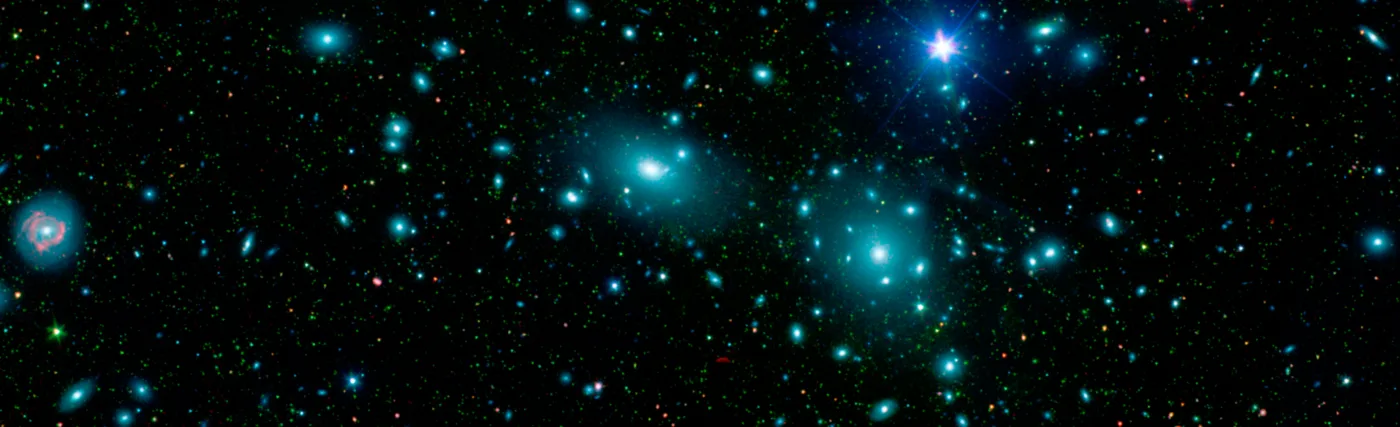
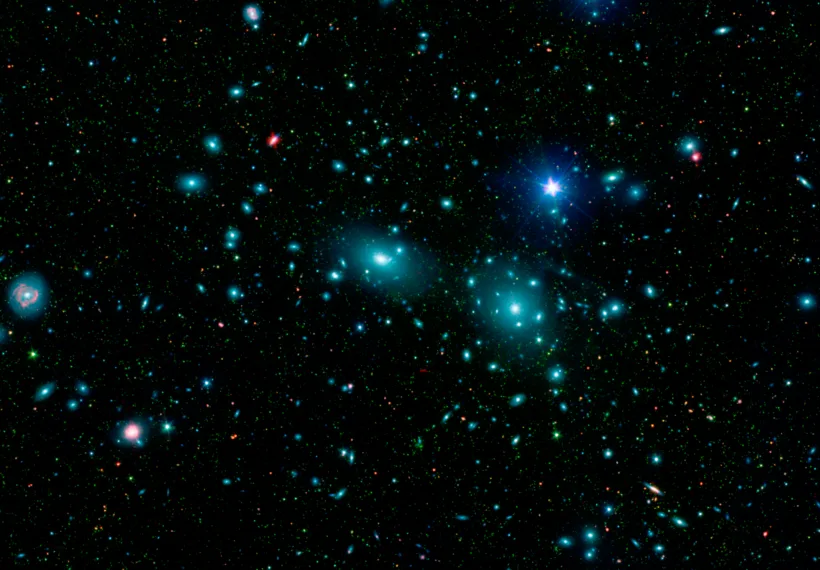
Does dark matter interact with anything beside gravity? Could it be possible for humans to create a black hole in order to study it? How big would an Earth-mass black hole be? Why do galaxies in the universe form a sponge structure when everything else creates disks? Learn about the Coma Cluster and how it helped us discover dark matter.
What would someone looking at us from 65 million light years see? What is nothing? We discuss the definition of nothing and whether we can wrap our heads around the concept. And finally, we explore The Matrix and whether our robot overlords could use humans as energy.
Thanks to our Patrons Matej Dvonč, Robert Weaver, David Lindberg, Denis, Jesus Hernandez, and Jack Reeves for supporting us this week.
NOTE: StarTalk+ Patrons can listen to this entire episode commercial-free.
Transcript
DOWNLOAD SRTNature Valley welcomes you to Camp Savory with new Savory Nut Crunch Bars.
These fun and snackable new bars come in surprisingly savory flavors like Everything Bagel, White Cheddar, and Smoky Barbecue.
So which camp are you in?
Camp Classic with Oats and Honey Crunchy Bars?
Camp Sweet with Chocolate Crunchy Dipped Granola Squares?
Or Camp Savory with its new tasty flavors?
There’s only one way to find out.
Nature Valley.
This episode is brought to you by Progressive.
Most of you aren’t just listening right now.
You’re driving, cleaning, even exercising.
But what if you could save money by switching to Progressive?
Drivers who save by switching save nearly $700 on average.
And auto customers qualify for an average of seven discounts.
Multitask right now.
Get a quote today at progressive.com.
Progressive casualty insurance companies and affiliates.
National average 12 month savings of $698 by new customers surveyed who saved with Progressive between June 2021 and May 2022.
Potential savings will vary.
Discounts not available in all states and situations.
So there are galaxies that are like 65 million light years away from Earth, okay, from our galaxy.
So right now, if they had a super duper telescope and they look towards Earth 65 million years ago, what are they witnessing?
Uh, dinosaurs, right?
Oh, and they’re getting killed.
It just dawned on me what that time frame was.
I’m like, oh snap, the Earth is putting on a show for them.
Welcome to Star Talk, your place in the universe where science and pop culture collide.
Star Talk begins right now.
This is Star Talk.
Neil deGrasse Tyson here, your personal astrophysicist.
Today we’re doing the ever popular Cosmic Queries edition.
Chuck, good to have you, man.
Yeah, always a pleasure to be here.
You’re preloaded with Cosmic Queries from our Patreon members.
So what’s the topic today?
We have Cosmological Curiosities.
That covers enough of it.
I got you.
And if something I don’t know, I have to call my people.
I got Cosmology friends.
So what do you have?
All right, let’s jump into it with Danny K.
Danny K.
He’s from somewhere?
He’s no…
Danny K from the ether.
He’s Danny K from the ether.
He goes, Good morning, gentlemen, of the Court of Knowledge and His Majesty, Neil deGrasse Tyson.
Dude, we’re going to answer your question anyway.
You didn’t have to.
This is…
Yes.
Even though you are asking that question first, I don’t know.
And actually, he does put in here, he goes, I am hailing from the Netherlands, Rotterdam.
Come to thee and these humble inquiries of knowledge.
Okay, so what does he have?
There he goes.
He goes, In a previous episode, there was a mention of an expanding of our universe and that there could be a point in the distant future where we would be stretched to a point where our neighboring galaxies would be too far to reach.
Would this expansion also affect our solar system as well?
Does it mean that our blue ball would slowly drift away from our star and would our star dim before that time comes?
And if so, would you suggest how we might be able to survive something like this?
We’re probably going to die.
Very simple.
Yeah, so in the vacuum of space, there’s this mysterious pressure forcing an acceleration of the expanding universe.
We have a word for it, but we don’t know what it is.
We have no business naming it, really.
And it’s called dark energy.
And I joke that we should just…
Dark matter, we don’t know what that is either.
We should just call it Fred and Wilma.
Just two words that don’t hint at anything physical, because we don’t really know what’s causing it.
But we can measure it.
And so this expansion of the universe that’s accelerating, that will continue to grow.
And the bigger the universe is, the more vacuum there is.
And this pressure is a property of the vacuum.
So as the universe expands, the gravity gets thinner, the gravity density gets thinner, but the dark energy continues to grow, relative to the gravity.
So initially, all the galaxies will expand beyond our horizon.
And then after that, it will start ripping apart the galaxies themselves.
Because that’s a stronger gravitational force holding them together, start ripping that apart.
And so the solar systems will be flung hither and yon.
Then it will start ripping the planets out of their solar systems.
Then it will start ripping moons from their host planets.
Then it will start ripping planets apart structurally.
Then it will start ripping apart the molecules.
Then it will start ripping apart the atoms in the molecules.
Then it will rip apart the nuclei of the atoms.
Then it will reach the point where the very pixels that comprise the fabric of the universe will succumb to this ripping force.
And it’s called the Big Rip, because we do not know what will happen after that moment.
At that moment, the universe will tear, because it will no longer be able to stretch in response to that force.
We call it the Big Rip, and it will happen if nothing else is in the way.
It’s going to happen in 22 billion years.
Well, there you go, Timmy.
Good night, and you sleep well.
Have a nice day.
Have a nice day, Timmy.
So, yeah, the sun will be long dead by then.
Sun will give up the ghost in about five years.
Five billion years.
We’re about halfway through the life expectancy of the sun.
So the sun will be dead long before that happens.
And so I wouldn’t worry about it.
Yeah, there you go.
So that’s the real answer.
The real answer is Danny, you shouldn’t care.
Exactly.
But I want to be around to watch that rip.
That would be…
Except I would be in the universe that was ripping.
And so I would be ripping apart as well.
I live every day in the universe that’s ripping.
Because, think about it.
When you zoom in on a photo, that only works until you start seeing the pixels that comprise the photo.
If you keep zooming in, there’s no more information there.
But what happens if you keep zooming in and you want to break apart the pixels themselves?
What’s between them?
Who knows?
In between the pixels of the photo that you’re zooming in on.
And so this is the mystery and the uncertainty we have in 22 billion years.
I have it on my calendar, by the way.
As I say, October 12th, 22 billion years from now.
22 billion years from now.
That’s very cool.
I believe that’s a Wednesday.
Thank you.
Thank you.
Yeah.
Chuck the Savant.
You pick any date 22 billion years from now, I’ll tell you what date it’s on.
All right.
This is James Booth.
And he says, my question is about dark gravity.
I understand.
Which is what most people would call dark matter.
But he knows I’m calling it dark gravity because that’s literally what it is.
It is gravity and you have no idea what’s causing it.
It’s not even black holes, by the way, or unilluminated matter.
We have good reason to know that that’s the case.
But go on.
He says, most of the matter we experience that makes up the stars of the galaxy only makes up about 5% of the content of the universe.
Correct.
If that’s the case, which you just said it is, is it possible that given we interact with such a small percentage of the universe, we are indeed the anomaly?
This really makes me feel weird.
Yes.
Yes.
So, it’s imagine you’re at night and there’s an ocean in front of you, but you don’t really know it.
And you turn on your light and you see these white caps, okay, which show up nicely under moonlight.
And we are the white caps of an ocean that surrounds us.
So, correct.
If there were beings made of dark matter, dark energy, they would see us as a contaminant in their universe.
That’s right.
Oh, look at that.
Yeah, I know.
Well, yeah, it is.
We are not representative of the most common stuff in the universe, which by the way is a violation of the Copernican Principle.
The Copernican Principle says that we are not special in time or in place or in location.
We’re orbiting an average star in an average galaxy.
Statistically, it says that we’re average, but if we are contained within that 5% of all the laws of physics, chemistry, biology, and all the ingredients that make up matter as we know it, then we are something unusual in the universe.
But could we be the average inside of the unusual?
Yes, we are.
So, I was going to complete the thought and say, given that we are unusual, we are average.
Okay, there you go.
Very nice, very nice.
You know, another example of that is, you know how school systems try to corral all the smart people together, right?
Well, they used to do this.
They put the smart people in their own class.
No, they do it still.
They have all the AP kids.
Exactly, exactly.
So, in the general population, you’re unusual because you’re smarter than everybody else.
Then they put you in the AP class, and now you are just average.
You see, that’s not average.
Everybody’s smart.
That’s right.
That’s it.
That is very cool.
What else you got?
A problem I did not have.
Therefore, that little bit of math was something you didn’t have to think about.
Is that what you’re saying?
Did not have to worry about.
I remember, okay, so I was not in the smart class in elementary school, but I was in the next class, because they totally ranked these classes.
And I remember the kids in the smart class, they got to take French.
I’m talking about sixth grade, my elementary school, before there was middle schools that would absorb a sixth grade class.
They took French.
They had a French person.
And I said, they’re learning a foreign language.
And learning how to smoke.
With the hand in front of the man.
Bunch of fourth graders sitting around.
You speak my language, and it sounds like how you say a dog pissing in my ear.
I don’t know why, but you bore me.
Why does every French person you imitate smoke a cigarette?
Why?
Yes, I always wanted that.
They were deciding what you would learn.
Without me saying, I want to learn it, and without measuring my ambitions for what I could be in life.
For me, that’s a travesty.
Who have we lost in the educational system for want of an educational program to identify where the ambitious kids actually are versus those who score high on a test?
And more importantly, not just the ambitious kids, but what are identifying their ambitions.
Exactly.
Because if you identify an ambition, you automatically excite the person to learn because they’re pursuing what they already lack.
Yes.
Chuck for president.
Okay.
Alright, next one.
Alright, here we go.
This is, let’s go to, hey guys, this is Rotten Josh here from Summerville, Florida.
My question, instead of the Big Bang, could the universe have formed from a big implosion instead of an outwards explosion?
When I think of the Big Bang, I imagine exploding outwards.
So I was thinking maybe it exploded inwards.
And thank you for your time.
Yeah, yeah.
So before we had good data on the very distant future history of the universe, there was our equations that are traceable to Einstein and others, including, what’s that dude’s name?
He was a Belgian priest, actually, who contributed mightily to our understanding of the Big Bang.
So, under the Einstein’s equations, it can sustain a collapsing universe as well as an expanding universe.
So people naturally said, if we measure an expanding universe, maybe it will one day re-collapse and then start all over again.
Start all over.
Yeah.
And that’s where you get this sort of…
these rhythms.
By the way, the name of that Belgian priest is Georges Lemaître.
Georges Lemaître.
Georges Lemaître.
Lemaître, yeah.
And so he took Einstein’s equations and said, wait a minute, this can give us an expanding universe.
And if we’re expanding, that means it had a beginning.
If it had a beginning, that’s interesting.
And then a lot of religious people said, oh, a Catholic priest says that, in fact, there was a beginning, because before then, no one knew how to think of a beginning of the universe.
It was not a thought.
It’s not that they thought about it and said, there wasn’t.
It’s like, of course, the universe was always here.
How could everything that there is have a beginning?
So we have Einstein’s equations.
George Lemaître says there’s a beginning.
And then everyone is jumping on that, saying, see, Genesis is true.
God’s made the beginning.
And so he said, no, this ain’t got nothing to do with Genesis.
There’s a little gap between the religious folks who were reaching for this scientific result and the Catholic priest who came up with the result, who was in denial of it confirming biblical Genesis.
That’s all.
And he was Catholic.
That’s kind of rough when your own people are just like, you know, nah, it’s kind of like you appoint a special counsel and he goes, yeah, there was no fraud in this election.
And then you go, yeah, you’re fired.
So anyhow, so in that scenario, until you have data to show which version of these, what variant on this equation is operating, you could have a cycling universe.
And when I, this is how old I am, when I was in graduate school, we explored all of these solutions to the equation.
But we know now from data that we’re on a one way trip.
The universe will never re-collapse.
So, no, we’re not going to have a collapsing universe.
And the birth of the universe, could it have been a universe before that, that collapsed and then birthed us again?
We don’t know.
It would be hard to have a collapsing system expand and then never re-collapse.
You see what I’m saying?
So, because whatever made it collapse should make it collapse again.
And there’s nothing out there that’s going to make that happen.
So, interesting.
There you go.
Hey, nice question.
Man, way to go.
Think about what happens when you’re sick and you have to see a doctor.
First, you have to schedule an appointment, which sometimes can take days or even weeks to get in.
Then, you have to go to the doctor, even though you’re probably feeling miserable.
Then, you wait in the aptly named waiting room, exposed to whatever the people around you are coughing and spewing into the air.
Oh, the humanity.
Fortunately, there’s an option that is far more humane.
Teladoc Health.
With Teladoc Health, you can get in touch with a doctor 24 hours a day, 365 days a year, all from the comfort of your own home.
Whatever your medical problem, just open the Teladoc app and connect with a board certified doctor who will offer advice, write a prescription, or even schedule an in-person visit.
Just open the Teladoc Health app and get a diagnosis, treatment plan and prescription, if needed, from a board certified provider.
All of which makes Teladoc Health a far healthier form of healthcare.
I am speaking from experience when I say that it works, because I use it all the time.
Download the app to get started today, or go online to register or schedule a visit at teladochealth.com/startalk.
That’s T-E-L-A-D-O-C health.com/startalk.
Football season is about to kick off and FanDuel is giving you the chance to win all season long.
Because right now, when you bet on a Super Bowl winner, you can get bonus bets every time they win in the regular season.
Just pick any team to win the Super Bowl and you’ll get bonus bets for every victory.
You can use your bonus bets on spreads, player props, over unders and more.
So visit fanduel.com/startalk and start earning bonus bets with America’s number one sports book.
That’s fanduel.com/startalk.
See terms at sportsbook.fanduel.com.
Fanduel is offering online sports wagering in Kansas under an agreement with Kansas Star Casino LLC.
Gambling problem?
Call 1-800-GAMBLER or visit fanduel.com/rg, Colorado, Iowa, Michigan, New Jersey, Ohio, Pennsylvania, Illinois, Tennessee, Virginia.
1-800-NEXT-STEP or text NEXTSTEP to 533-42 Arizona.
1-888-789-7777 or visit ccpg.org/chatconnecticut.
1-800-9-WITH-IT Indiana.
1-800-522-4700 or visit ksgamblinghelp.com Kansas.
1-877-770-STOP Louisiana.
Visit www.mdgamblinghelp.org Maryland.
1-800-522-4700 Wyoming or visit www.1-800-GAMBLER.NET West Virginia.
Hi, I’m Chris Cohen from Haworth, New Jersey, and I support Star Talk on Patreon.
Please enjoy this episode of Star Talk Radio with your and my favorite personal astrophysicist, Neil deGrasse Tyson.
So this is Gaud Haragunidoni.
I’m from San Jose, California.
My question regarding shyness of dark matter when interacting with other matter.
If we think dark matter as a giant spider web that holds the earth and the sun and the gravity, why does it interact with dark matter that holds the earth and the moon together?
Or the dark matter that holds our solar system and the Milky Way and the galaxy.
With normal matter, these three spider webs would scrape and break each other.
Dark matter is pretty outgoing all over the place, holding galaxies together and whatnot.
But when it comes to interacting with other dark matter, why is it so bashful?
Is it because it’s afraid of rejection?
Or maybe it’s just not interested in a three-way, or whatever reason.
I’m just curious.
Please let me know.
I think he was trying to do a bit at the end there.
I’m pretty sure he was trying to get a little bit at the end.
But I read it anyway just to satisfy you.
You got your little comedy bit in there, Gal.
Is there different dark matter that’s doing different things?
Dark matter is not holding Earth together.
The molecular forces are, the electromagnetic attraction forces are.
Dark matter is not holding the solar system together.
All the objects there is sufficient gravity to make that happen.
But dark matter is holding together the galaxy.
And it’s holding together galaxy clusters.
So it turns out, other than through gravity, we don’t interact with dark matter.
So you could just walk through dark matter.
You wouldn’t know it, and it wouldn’t know it.
More accurately said, you wouldn’t know it, and it wouldn’t care.
So now, not only do you not interact with dark matter, dark matter does not interact with itself.
Because if it did, you would have concentrations of dark matter.
Just think about it.
If you have two hot marshmallows, and they meet at night over the fire, what will they do?
Well, they’ll get it on because they’re both hot.
So, I mean, that sounds like the recipe for marshmallow love, if I ever heard it.
Two hot marshmallows coming together?
That was not my intent for you to take it down that path.
Two hot marshmallows, they’ll stick.
They’ll stick to each other.
So there are forces within the marshmallow, material forces, that when it sees other marshmallows, that they’ll stick.
Right.
So our matter knows how to do this.
All right?
That’s how you get planets.
That’s how you get stars.
Dark matter does not stick to us.
So it’s not with the marshmallow or with the planet or with the star.
And it doesn’t stick to itself.
So dark matter does not make concentrations.
So as far as we know and understand the behavior of dark matter, you don’t expect to see dark matter planets or dark matter galaxies.
Dark matter is the Unabomber.
It’s just…
What?
It’s a lone wolf.
It’s lone.
It’s out there by itself.
By itself.
And it does not care.
There it is.
Unabomber, that’s a stretch, I think.
But okay.
Yeah.
It was kind of a hermit, right?
He didn’t care about anybody.
I mean, listen.
There’s a morbid stretch, I might add.
It was a morbid stretch.
But anyhow, so yeah.
It’s just the fun…
The interesting part is that it doesn’t even interact with itself physically, only through the force of gravity.
Nice.
So watch.
So watch.
You have a forming solar system, and two bits of matter know this, and they fall towards each other and stick.
All right?
Now watch.
You have bits of dark matter, and they fall towards each other, and they pass through each other.
Pass through each other.
And they’ll just rock.
There it is.
Very rude.
Very rude.
There you have it.
Yeah.
Very cool.
That’s a great question, man.
We’re getting through these, Chuck.
We’re getting through them.
People have made note that sometimes we take and luxuriate in our question answers.
No, we’re making progress here.
So this is Bob Dan.
And Bob Dan says this.
Hi, this is Bob.
It’s from the US of A.
If space in the universe is expanding, then why aren’t we being stretched thin and ripped apart atom by atom?
And what am I missing here?
I mean, wouldn’t the expansion apply at every level right down to the subatomic?
And how is this current expansion different from the so-called big rip you talk about?
And here’s what I want to know, Bob Dan.
Why do you have such a damn attitude?
You gave me attitude.
I’m just reading the way it’s written.
No, you are imbuing this boy’s question with attitude.
I mean, it’s just…
I don’t know the way it sounds.
I could have read it peacefully and calmly, I’m sure.
Okay.
So, yeah, so the expansion of the universe, depending on the rate and where it’s happening, it will not overcome the gravitational forces and the electromagnetic forces that are otherwise binding solar systems and objects together.
The expansion of the universe has to be way stronger before that happens.
So in other words, yes, you’re stretching space, but I’m holding on to myself within the stretching space until the force of the expressing space exceeds that of my gravity or exceeds that of the electromagnetic force.
Then it will pull you apart.
So the fundamental forces of the universe right now are greater than the ripping forces that are enacted upon it.
Correct.
So, you got it.
So, the gravity, if you got a tight gravity system, you’re not pulling that apart with your expanding universe yet.
Cool.
Yeah.
Very cool.
Well, I’m sorry for giving you so much attitude.
I read the question.
It’s a good question, man.
What sentence had the most attitude there?
Read it to me.
And how is this current expansion different from the so-called big rip?
Okay, so I would read that.
Oh, and how is this current expansion different from the so-called big rip?
See?
See, that’s why you’re an astrophysicist, and I have problems with my phone carrier.
Next question.
What do you have?
I’m just saying, I get on the phone with them, and they’re just like, sir, you cannot talk to me that way, and I will not have…
Click.
Right.
They can hang up on your ass.
They can hang up on you now.
If you use profanity, they’ll just hang up.
They can hang up on you now, and it’s totally fine, you know.
I don’t have to use profanity.
If it’s AI, and you have the cover, will the AI hang up on you?
Or will it cut you back?
And that’s what I’ll say from now on.
I was just trying to figure out if you were AI.
Don’t hang up.
Just wanted to make sure you were an AI.
Anyway, this is Michael Rivera.
Michael Rivera says, hello, Dr.
Tyson and Lord Nice.
Michael here from Las Vegas.
My question is, would it be possible for humans to artificially create a black hole with significant mass in order to further study the mysteries of how black holes work and what they do?
If so, how dangerous would this be, this artificial black hole made here on earth at a sustainable size?
And would there be any way of containing it?
This guy, Michael, I have a feeling is trying to make a black hole in his basement or something.
These basement people, I worry about them.
See, I grew up in an apartment.
We don’t have any basement projects, you know.
Hidden from the parents.
That’s funny.
Neil, don’t make me come in here.
I feel like I hear a black hole being built.
What’s going on?
So, yeah, you wouldn’t know how to contain a black hole.
It’s like, Chuck, pass me that black hole.
Chuck, where’d you go?
That’s funny.
Chuck.
Oh, that’s funny.
So, yeah, we don’t know how to manipulate a black hole.
And so, maybe someday we could bunch up space-time and make a little container out of…
I don’t know.
I don’t know.
So, yeah, this would be a really bad idea.
Because a black hole is a voracious eater.
So let’s say you had a black hole on your desk and it fell to the floor.
It would start eating earth.
And it would just fall through earth eating anything that…
Any part of earth that was near it.
And it would continue to do this until the entire earth was inside the black hole.
You know how big an earth-mass black hole is?
No.
About the size of a plum.
Oh, wow.
That’s crazy.
Yeah.
That’s a sad day for earth.
That’s a sad day.
So, your black hole eating earth would become the size of a plum.
That’s the entire earth fitting inside the black hole.
That’s the entire earth inside the black hole, right?
Look at that.
Man, that’s so cool.
Yeah, it’s scary, too.
All of earth crunched down into something smaller than the size of my fist.
That’s very difficult to really conceive when you think about it.
Yeah, because you’re limited to your five biological senses.
Exactly.
The first is, repeat with me, under no obligation to make sense to you.
There you go.
And guess what?
It does a very good job of that.
It’s winning that battle, as far as I’m concerned.
All right, this is Captain James Riley, and Captain James Riley does not…
We know, we got a lot of his questions.
Captain Riley.
He says, Why do galaxies form a web or a sponge-shaped structure?
It seems that on small scales, gravity forms spheres and disks.
So I’m a little confused.
Oh, oh, good question.
Interesting.
Right, the large-scale structure of the universe is not with galaxies equally spread.
It’s not with galaxies all in tidy spheres, although some galaxy clusters are.
For example, the Coma Cluster of galaxies.
This is a cluster of galaxies that lines up with the stars in the constellation called Coma.
Coma Bernisi.
So it’s the hair of Bernice.
So if you look at constellation maps from like centuries ago when they used to draw this stuff, it’s just somebody’s hair.
Not to be confused with the comb over galaxy, commonly seen in board rooms around America.
Coma over galaxy.
Okay.
So the Coma, that’s a nicely spherical cluster of galaxies.
And in fact, that’s the first galaxy cluster where dark matter was discovered.
Because you looked at all the speeds of the…
and there’s a certain amount of mass gravity required to keep all of them in this ball, whole galaxies now, thousands of galaxies.
I think like maybe 800, I forgot the exact number, but it’s around a thousand galaxies.
And many, many hundreds.
And so you calculate that up and you find out that it needs like 10 times that much mass to keep the galaxies contained.
If you add up the mass of every galaxy, it doesn’t add up to the gravity needed to contain them.
So, that was a guy named Fritz Zwicky in the 1930s, in 1936, I think it was, where he’s a Caltech, Swiss-born Caltech astrophysicist who discovered this.
And it’s the longest unsolved problem in modern astrophysics, the dark matter problem, birthed with his observation.
Anyhow, there are some galaxy clusters that are nice, spherically shaped.
Others, you see these filaments.
It’s as though you had a sponge and you cut it, and you looked at the cross section where there’s some concentrations of sponge, but mostly there are these sort of bridges between concentrations.
That’s what the universe looks like, the inside cross section of a sponge.
Here’s the problem.
If you look at how fast the galaxy is moving along one filament and look at the size of the filament, the universe is not old enough for the galaxy to have crossed that filament.
So, you don’t have structures that represent what the galaxies really want to do if they had enough time.
So that’s what’s going on here.
So you have systems that are not gravitationally settled in what they should look.
But the Coma Cluster is, and it’s a term we use for this, I forgot it, what is it?
It’s a relaxed cluster.
It’s one where, okay, we got this, everybody’s orbiting just the way they should and…
Take a chill, baby.
Take a chill.
Exactly.
And they could cross the size of the cluster in the time the universe has been around.
So that how you know everybody’s settled into their routines.
And any structure is bigger than that, they have not had time to settle.
And so…
And they may never settle, given how long it takes and given how fast the galaxies are moving through space.
So yeah, that’s how and why we get that.
Very cool.
Yeah.
If you want to make sure your day goes smoothly, you want your voice to be smooth as well.
Throat irritations like horse voice, throat tickles and ahem ahem ahem can really get in the way.
From making a good impression on a first date, to perfecting that presentation you’ve been practicing all week, or just hitting those high notes for everyone in the car, whether they want to hear them or not, you need something you and your voice can rely on.
That’s where new Ricolor Throat Balm comes in.
It’s an entirely new and tasty way to do throat care.
It coats and protects against throat irritations and has a delicious duo of a liquid center with honey and smooth caramel flavored coating.
So whether you’re talking, presenting, singing, or even podcasting, new Ricolor Throat Balm is the drop you want to shop.
It’s the perfect drop of protection to add to your daily routine to make sure you’re at your absolute smoothest.
Try new Ricolor Throat Balm.
Coat your throat.
Now available in the cough and throat drop aisles in stores across the US.
Looking for a unique summer getaway?
How about a trip to the year 3023?
That’s right.
Futurama is back for an exclusive new season only on Hulu.
From the creators of The Simpsons, the six time Emmy Award winner and greatest show of the 31st century is back again.
It’s a brand new season of Sci-Fi Adventure with Fry, Bender, Leela and the whole gang.
So strap in, catch on new episodes of Futurama every Monday streaming only on Hulu.
This is Lou Perrault.
Lou Perrault says this.
Perrault, is that a silent T or are you…
A-U-L-T.
Oh, Perrault, okay.
Perrault.
Okay, Lou Perrault.
He says, hi, Neil, hi, Chuck, my name is Lou, and I’m writing from the seven islands, septiles.
He says, in Quebec.
In Quebec.
Quebec has islands?
That’s where I’m, hey, listen, you got me.
Isn’t Quebec inland?
I thought it was, you know.
Okay, but we’re American, so we don’t know.
Yeah, what do we know about the French-speaking province of Canada?
We’re not, we’re bad, we’re the worst in the world in geography.
Well, geography, that’s for sure.
We don’t know our own damn states, right?
Mm-hmm.
Well, some of them we don’t want to know.
Let’s be honest.
Let’s, come on.
I know we’re 50 states, but we kind of should be about 40.
Okay, let’s, come on, seriously.
All right.
He says.
My question.
I know, I know.
He goes, my question is, is it possible to see past by looking in the, see the past by looking into deep space?
And if so, which direction do we have to look?
And also, is it possible to see the Earth by sending a telescope multiple light years away?
Yeah.
So only if you can travel faster than light, can you see your own past.
So you can’t do that, but would, but so I know what he’s saying, but I want to lead up to that.
So clearly he knows that the farther out you look, the farther back in time you see.
So there are galaxies that are like 65 million light years away from Earth, okay, from our galaxy.
So right now, if they had a super duper telescope and they look towards Earth, what do they see?
If they’re seeing us however many light years ago.
65 million years ago, what are they witnessing?
Dinosaurs, right?
Oh, and they’re getting killed, yeah.
It just dawned on me what that time frame was.
Oh snap, the Earth is putting on a show for them.
So the galaxy that’s 65 million light years away is witnessing the extinction of the dinosaurs because that light is only now just reaching them, okay?
So, but we can’t see our own past.
That doesn’t work.
So, yeah, but if you send a telescope out there, let’s say a thousand light years away, and then come back, it will be seeing whatever happened here a thousand years ago.
Right.
Right.
That’s why it’s that simple.
So yeah, that’s it.
So, and then what you’d have to be like you say is faster than the speed of light so that you could go place it and come back and have it and be like, yo, yo, what’s up, what’s up, it’s me.
But once you go faster than the speed of light, then all bets are off.
And then you can do all kinds of paradoxy things, paradoxical things.
Yeah, cool.
All right.
This is Connor Holm.
He says, hi, if the big rip does occur.
A lot of big rip questions today.
People got it on their mind, man.
Because no one wants to be torn asunder by the universe itself.
No one wants to get, no one wants a new one torn into them.
Yes.
I’m the universe, boy.
I will tear you a new one.
That’s what I will do.
You keep on, you say another word.
Say another word, I’ll tear you.
I’m the universe, you know who you’re talking to.
What is he asking?
Connor says, if the big rip does occur, what would be the immediate results of tearing of the fabric of space time?
Would these tears, tears be black holes or would they simply just be voids of nothingness?
What is nothing?
How could nothing come out of something?
What would these voids be?
Wow.
That’s freaking crazy.
I love this, Connor.
Okay, so my simple answer is we have no idea.
Okay, the state of the universe post big rip is a complete mystery.
And what we don’t know is there’s some law of physics that will manifest at that time.
Think about that.
When do we discover new laws of physics?
When we step where we had never previously stepped.
When we look where we’d never previously looked.
When we bring a new kind of apparatus, a new kind of detector that we’ve never had before.
Then we see the universe behaving in waves we’ve never seen before.
Sends us back to the drawing board to say, is this understandable with previously known physics?
But do we have to invent new physics?
So Einstein said to himself, I don’t think we’ll ever have a black hole, even though his own damn equations predicted it, because a black hole in his equations have infinite density occupying zero volume in the center of the black hole.
And he said, surely there’s some new law of physics that’s gonna show up and save us from ourselves, save us from this mathematical craziness where God divides by zero.
Right?
So, what happens in the big rip?
What would it look like?
We do not know.
And I’d like to know before that day happens so that we can protect ourselves, if that’s possible at all.
We don’t know.
And he’s wondering if it rips, does nothing show up?
Okay?
Something we call nothing.
Something we call nothing.
Okay, but then what is nothing?
What is?
Okay.
I think we have a whole explainer on nothing.
We did do an explainer on that.
Let me tap some of that.
And what we got out of that was, there is no nothing.
Because, you know, is air nothing?
Well, you can see through it, but we know there’s air there, right?
So clearly it’s not nothing.
So not take away the air.
So what’s left?
Is that nothing?
Nothing, well, it’s still space.
Well, it’s empty space, nothing.
And we know from quantum physics that empty space is a seething soup of what we call virtual particles popping in and out of existence.
And so, and this is what we call the vacuum energy.
Just Google that, vacuum energy.
There’s an energy in the vacuum of space that quantum physics puts there.
And we thought, hey, that could be the dark energy in the vacuum of space.
So you do the calculation for how much dark energy we measure, then you do the calculation for how much pressure is coming in from these virtual particles popping in and out of existence.
And we are off by 100 orders of magnitude.
It is the biggest mismatch between an observation and a theory that has ever occurred.
This is further evidence that we have no clue what dark energy is.
Okay, so there it is.
Now, could we imagine a place where there’s not even these virtual particles?
Okay, but then you can’t have quantum physics.
All right, so now we have a place where there’s not only nothing, there’s not even the laws of physics.
Right.
Whoa.
So could you exist in that nothing?
Because you only exist because they’re like, molecules hold you together, and light and energy, and electro.
You only exist because the laws of physics of the something allow you to.
So the best nothing, if the rip gets you there, if you step through that rip, maybe that nothing does not even contain the fabric of empty space.
Look at that.
Because the laws of physics tell us what the fabric of empty space does.
So if you take away not only the empty space, but the laws of physics that would describe it, then that’s as good a nothing as I can imagine.
And that nothing exists inside of a bond.
I’ve been there.
I’ve been there.
I’ve been there.
I’ve been there.
Tell you.
The bong nothing, okay.
It’s the bong nothing.
It’s a nothing bong.
So Chuck, we have a couple minutes left.
I think I’m gonna allow you to give me one question, even though you’re a cheap-ass comedian.
Not paying your Patreon dues.
So I was watching this thing on listening to NPR and they were doing this thing about energy and all the different forms of energy.
And then they, for some reason, played a clip from what I know is one of your and my favorite movies, The Matrix.
And they played the clip about how the AI basically, after a singularity, saw us as a form of energy to be used as little batteries.
So my question to you is, do we put out enough energy that if I, if something were an AI would say, you know what, I need to put them to work.
And line us up head to toe.
That’s right.
And line us so that we would become little batteries as opposed to just taking us and literally putting us to work by subjugating us all and making us do their will.
Right, right, right, right.
Yeah, I’m just trying to think.
If they put you and me in a battery socket, I say, no, Chuck, we got to be head to toe, right?
Exactly.
You see the AI keep coming around and flipping us over.
Now, doesn’t this go on the spring side?
Just the feet go on the spring side, right?
That’s an exasperated AI.
Exactly.
That’s my AI that sounds like Chris Tucker.
Say, man, does the feet go on the spring side?
Okay, anyway.
So this energy described in The Matrix is drawn from the human body.
So you can look at our metabolism, all right?
If you’re a calorie counter, you’ll know that there’s something called your basal metabolism.
So this is the energy you burn, pay or play, okay?
Just for existing.
Just for existing.
Right.
And for some people, it’s maybe 1,500 calories a day.
For me, it’s more like I’m bigger.
For average, I’m a little bigger than average.
So like 2,000 calories a day is my basal average.
Okay.
So now, do you realize that the food calorie is written with a capital C?
You may not have noticed that.
There’s a reason for that.
Because a physics calorie is written with a lowercase c.
Because a food calorie, one food calorie equals a thousand physics calories.
So when I say I burn 2,000 calories a day, it’s 2,000 food calories, it’s 2 million physics calories.
And what is a physics calorie?
It’s the amount of energy required to raise the temperature of one cubic centimeter of water one degree Celsius.
That is one calorie.
That’s one calorie.
All right.
So once you have all these calories, it’s a rate at which you’re burning energy.
We have a unit of measure for that.
It’s called watts.
Watts.
And so when you do the math on this, the average person is operating anywhere between 50 and 100 watts.
Okay?
So it’s like a light bulb, you know, like an 80 watt light bulb.
The 80 watt bulb consumes energy at a rate.
So do we.
We radiate that.
Well, we consume that much energy, our circulation and everything else.
So what the machines did, the computers did in The Matrix, is line us all up and draw the 80 watts of power from every person at all times.
Okay.
That’s very inefficient.
So the answer is yes.
That’s how they did the movie.
However, it’s extremely inefficient.
Yeah.
You know why?
Because I don’t want to power a city off a light bulb.
No, if you get enough of us.
I use a light bulb as an example of something.
I know.
So here’s why it’s inefficient.
You’re burning 2,000 calories a day.
As long as what is happening?
As long as I’m living and breathing.
No.
Well, yes.
But more fundamental than that.
Well, equally as fundamental is that.
How long can you keep burning 2,000 calories a day?
I thought you said that was my base.
Yes.
That’s your base.
I got to be eating something too.
Thank you.
Yeah.
Thank you.
Where do you think that?
I got to eat something to burn them.
Where do you think those calories came from?
From the food you’re eating.
So in order for all of the Matrix people, the people in the pods, to be feeding 80 watts of power to the Matrix, the Matrix has to feed them.
That’s a lot of…
That’s 8 billion mouths.
Okay, so what I’m saying is, if the Matrix is feeding you…
2,000 calories a day, so that it can then pull your 80 watts off of you, why use the middle man?
Just burn the food calories that you’re feeding the people.
In fact, every time energy changes from one form to another, it’s not 100% efficient.
You lose some energy to heat.
All the time.
So you look at the energy in a gallon of gasoline, okay?
And that gets burned to drive the car.
I forgot the number.
80% of that energy goes into heat.
It does not go into moving your car forward.
That’s funny.
So this is a fundamental feature of thermodynamics in the universe.
So they were being inefficient.
So this is their weak point in their storytelling.
And I will give them a hall pass because they did everything else so brilliantly.
But that one was just plain stupid.
Because the machines, the computers, just would have used the food that they’re feeding them and get their energy off of that and leave the people out of it.
Look at that.
But then they wouldn’t have had a movie.
Well, you know, that’s a problem.
Yeah, that makes things difficult.
Yeah, yeah.
So there you go.
Yeah.
Cool.
All right.
That’s all the time we have, Chuck.
That was fun.
This was Cosmic…
Cosmological curiosity.
Cosmic Queries, Cosmological Curiosities.
I got it.
I got the tongue twister.
All right, Chuck.
Always good to have you here.
Always a pleasure.
All right.
This has been Star Talk, Cosmic Queries, Cosmology Edition.
Neil deGrasse Tyson here as always.

 Become a Patron