



 Unlock with Patreon
About This Episode
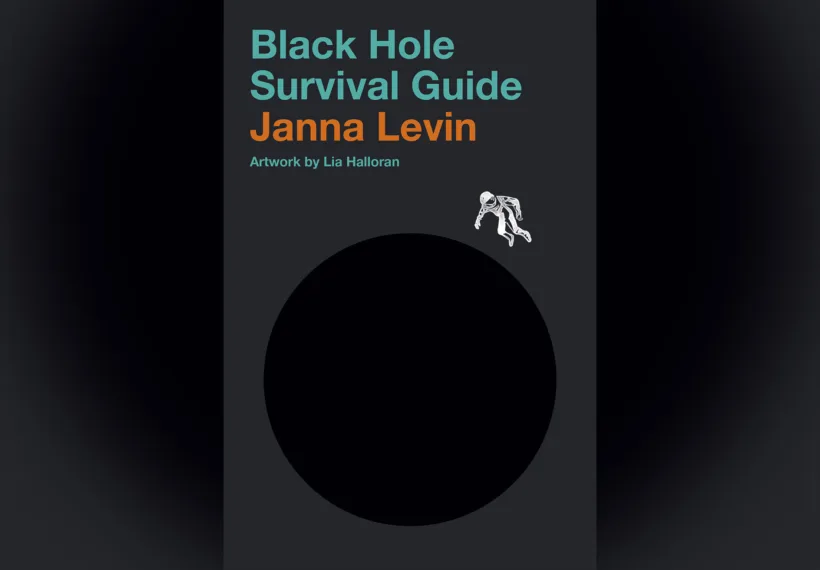
You’ve fallen into a black hole! Quick, what do you do? On this episode of StarTalk Radio, Neil deGrasse Tyson and comic co-host Chuck Nice investigate black holes with Janna Levin, PhD, astrophysicist and author of the new book Black Hole Survival Guide.
Janna starts off by telling us about how her new book Black Hole Survival Guide is “dispelling misconceptions about black holes.” You’ll get a quick refresher from Neil and Janna about “spaghettification” and if there’s any way to prevent that from happening to you if you were to fall into a black hole. Janna gives us a detailed description of what happens when you fall into a black hole and why it’s “safer” to fall into a bigger black hole.
Find out why you create a “storm” when you head into a black hole. Discover what it would be like to watch someone cross the event horizon from a distance. We discuss “time dilation.” You’ll learn what happens when there’s a “ring down” between two black holes.
If the multiverse is true, can super massive black holes enter other universes? Can we jet between the multiverse using black hole portals? Can you stitch together a black hole and a white hole? You’ll find out what black holes have in common with Doctor Who’s TARDIS. We explore the Black hole information paradox, Hawking radiation, and whether black holes are actually an illusion made by quantum-entangled wormholes.
Lastly, we discuss why we might have to look beyond general relativity to understand the singularity. We reflect on the Eddington experiment. All that, plus, we end by pondering the Big Rip.
Thanks to our Patrons Ryan Bariteau, Dan Snider, Shelia Hutson, Austin Cope, Zachary Keirstead, Chris Goshorn, Cory Flanagin, Jacob Lackeym, Adam Albilya, and Russell Konicki for supporting us this week.
NOTE: StarTalk+ Patrons can watch or listen to this entire episode commercial-free.
Transcript
DOWNLOAD SRTWelcome to StarTalk, your place in the universe where science and pop culture collide.
StarTalk begins right now.
This is StarTalk Cosmic Queries edition, which has become a fan favorite.
Like, Chuck, we’re doing these, like, all the time.
Yes, people like them very much.
People like them, and even though you don’t know how to pronounce anybody’s name, who asks questions.
That’s why people like it.
They’re like, wow, I now know my alias.
I now, I haven’t also known as.
Yeah, there it is.
Well, so on this episode, it’s going to be about black holes.
Again, you can’t do too many black holes.
And we go to our black hole person.
I’m so glad we have her.
And it’s Janna Levin.
Janna, welcome back to StarTalk.
Hey, great to see you guys.
Very excellent.
And you’re a professor up at Barnard and Columbia.
And so you’re a neighbor of ours on the Upper West Side from the American Museum of Natural History.
And you’re a cosmologist and also an author.
And we just caught up with you.
Thanks for fitting us into your busy media schedule.
You’ve got another black hole book.
I remember you have two other black holes, Black Hole Blues from 2016 after the LIGO detection of the collision of black holes.
Right.
And then you had a book before that, How Black Holes Got Their Spots.
No, How the Universe Got Its Spots.
Universe Got Its Spots.
OK.
A little just so reference.
And that’s actually just about the shape of space time and whether or not the universe is infinite.
So not a lot of black holes.
It’s just about the shape of space time.
It’s only about that.
That’s that was her first book.
You know, it had to be about something simple.
I think the subtitle is the universe infinite or just really big.
Oh, no, that was a paper I wrote, actually.
It’s not even the title.
I’m going with just really big.
It’s hard to wrap your head around infinite.
Right.
So who’s the publisher?
You got to give a shout out.
This is Knopf, who’s my publisher for the duration.
I love them, my good friends.
Awesome.
Dan Frank, my editor, is wonderful there.
So we’ve done a lot of really creative projects, and Dan really keeps me on, like, you know, keeps me on track.
Yeah, yeah.
So if the book does well, they say, okay, when’s the next book coming?
He’s paying his rent all for you.
Just make that clear.
I won’t tell him he said so.
Tell me about this book.
So this book, so when I was writing Black Hole Blues, I set out to write a certain book, you know, no, no.
Janna, we trained you.
It’s the Black Hole Blues.
Give me your version.
Black Hole Blues.
Black Hole Blues.
No, it’s the Black Hole Blues.
I don’t quite have that.
Chuck’s got a good.
Chuck’s got it better than I do.
Let me hear it again, Chuck.
Black Hole Blues.
Yeah.
Oh, that’s the one you want.
I’m putting that out there.
I like Janna’s though, it sounds like the blues as played on a ukulele.
This is the vessel.
This is the vessel I got.
So I really have to clip those recordings of you guys saying the title because it’s like my favorite thing, your DJ faces.
So when I was writing that book, that turned into really a story about the climb.
That turned into a story about the pilgrimage of trying to detect something so incredibly difficult.
And so a lot of this idea of writing about black holes actually didn’t happen in that book so much.
So this one, Black Hole Survival Guide, is just all black holes all the time.
It’s not historical.
It’s not about particular characters.
It’s very much the character in the book is the black hole and the astronaut trying to explore it.
So it’s very short.
And also, oh, damn, I wish I had one of my copies.
It’s tiny.
It’s so cute.
It’s like this big.
It’s a little guide.
You can put it in your back pocket.
Okay, so you can carry it with you when you confront the black hole and it’s not much of a luggage issue.
And I also had an artist friend of mine do the illustrations and she did 23 original paintings, Leah Halloran, for it.
And they’re just beautiful.
So it’s really this book feels very much like a little object.
But just to be clear, you have access to artists because you are active with the Pioneer Works over in Brooklyn, which is this remarkably creative juxtaposition of science and art.
Just give me like a fast 30 seconds on that.
Yes, so Pioneer Works is a new cultural center.
It was founded by the artist Justin Yellen and Gabriel Florence is a founding artistic director and they’re very art focused because they’re both artists.
Then we all kind of fell in love and I started doing science there and that was always kind of the vision that it would be all things in culture.
I’m a very big believer that science is part of culture.
So something I just believe very strongly.
You don’t have to package it, hide it and something else for it to be part of culture.
So we’ve been doing these events.
Like last night, I spoke to Siddhartha Mukherjee, the Pulitzer Prize winning researcher and doctor about COVID to a very small, because of COVID, very modest audience with masks on and socially distanced.
But that’s the kind of stuff that we do is a lot of life.
Excellent.
So you have access to artists.
That’s great.
They’re just in arm’s reach of you to nab one to illustrate your book.
Yeah.
I mean, the idea is really that there’s friction that just happens naturally.
We don’t prescribe it.
We never try to force people to talk to each other.
It just is what happens naturally because we’re all under the same roof.
See, I want artists in arm’s reach.
All I have is Chuck.
And I say, Chuck, I need a joke here.
Give me one.
Chuck, I need 23 jokes for my next book.
We should probably have a comedic department.
That’s what we need.
I also paint.
Yeah.
Well, not fine art.
More like the Sherwin-Williams kind, but it’s cool.
You paint the wall.
I paint walls.
You’re a painter.
Yes.
I paint houses.
So, are you trying to keep the astronaut alive in your storytelling here?
Yeah.
It doesn’t always end that well for my astronaut.
Oh, okay.
Yeah, but it’s a lot of dispelling misconceptions about black holes.
So people think, for instance, black holes are these dense objects.
And if you go up to the event horizon of a black hole and you’ll knock on some very dense matter or something like that.
But a black hole actually is nothing.
There’s nothing there.
That’s why it’s a hole.
It’s literally you go up to the event horizon and you actually shouldn’t really notice.
You could float right across and not really realize the danger you’re in, the peril you’re in because it’s empty space time.
And so there’s a lot of kind of trying to dispel this idea of sort of the cartoon notions of what black holes are.
Well, that’s good because that’s the natural progression, I think.
First, people have to know black holes exist, then they know some basic properties of it.
And now you’re taking us to the next level of the nuances of black holes.
Yeah.
I mean, it’s some pretty fun stuff, too.
Things that occur in research and then you realize, oh, people don’t actually think about this.
The black holes are dark on the outside, but they can be bright on the inside.
I mean, that’s just sort of one of these surprising things.
So, oh, now that’s…
So, well, maybe I should…
I’m not going to ask my question.
So…
No, no.
If Chuck doesn’t want to ask his question, you should just believe him because he says stuff that does not get filtered and he wants to filter this, let him filter it.
I can’t filter myself.
Well, no, no.
I just don’t know if I’m going to steal somebody’s thunder, but when you talk about a black hole being bright inside, if light cannot escape, is there a particular distance that light would transmit from the epicenter?
Is there just a radiation of light?
Oh, so the light was coming in from behind you basically.
So then it’s the light coming in, never the light going out.
The light could never come back at you.
It can never come back at you.
So the light is always falling towards the set.
Do you know how when you combine all the colors, you get bright white?
That’s how you get bright white light.
So if you imagine all the light from the galaxy.
Right.
If you do it with light, not with paint.
Yeah.
If you do it with paint, you get black.
Because Chuck’s our resident painter.
So the light falls in from the galaxy behind you and it gets really concentrated at you so that when you’re falling inside the black hole towards your demise, this light gets concentrated.
You actually would see like a bright light, like the near death experience light.
And I’m repeating myself, but I always call this, it’s like a total death experience.
You got this bright white light right before and then like it’s all over.
Wow.
So remind us all about spaghettification because I love describing it.
Did you coin that phrase, Neil?
No, no, no.
I did not coin it, but I was sort of a visible astrophysicist, using the term, that gave it sort of social currency at a time when others didn’t have that access to social currency.
So I think it’s traceable to Sir Martin Rees, or actually Lord Rees.
That was it.
It is.
It’s Lord Rees.
Lord Rees.
So I think he came up with it.
He also invented a peanut butter cup.
Rees is.
That’s a different one.
So I think he came up with it.
But when I started writing about it, I had books and I was on TV, and so people associated with me, but I love the word and I’m happy to keep using it, but I’m pretty sure it came from him.
But I have somebody, since you’re going to go ahead and talk about spaghettification, there’s a question that I might as well just give you since you’re going to do it.
Well, let’s start it off then.
If it goes there, yeah, let’s do it.
So Chuck, give me some Cosmic Queries.
All right.
Sure.
Let’s start it off with, first of all, all of these are from Patreon.
So all of our patrons, this is the benefit of being a Patreon patron.
You, you know, you get priority, you know, so Tony Baker says, is there a way to prevent spaghettification and travel into a black hole?
Yeah.
Well, I would advise you fall into as big a black hole as possible.
That’s the first step because it’s kind of, I liken it to standing on a basketball where you really notice the difference in the position of your two feet on the basketball, whereas if you stand on the earth, which is the same shape, you hardly notice the curvature.
So it surprises people, but it’s actually safer to fall into a bigger black hole.
And you would transition across the event horizon, it would be completely empty.
There’d be no stuff there and you’d be fine for a little while.
And the bigger the black hole, the longer, the longer you’ll survive, right?
But once you cross the event horizon, you are forced to continue to fall towards the center.
And we talked about this with the Nobel Prize announcement just a couple weeks ago, that the singularity from your point of view, because space and time are relative, from your point of view, what somebody on the outside considers the center of this sphere, of this black hole, for you is actually in your future.
It is a point in time and you are inevitably going to hit that singularity.
There is nothing you can do to avoid it.
You can try to go in some crazy orbit and prolong your life, but it’s coming.
It’s as inevitable as a moment in time.
And so once you are near the singularity, then you are really experiencing just such extreme curvature that you are almost like a disruption in the space-time.
Your energy and your mass are disrupting the space-time.
It creates almost like a storm, is kind of what you have to imagine.
But you are being squeezed because everything is trying to focus you towards the singularities.
You are also being elongated because one part of your body is falling towards the singularity.
It notices that it is coming sooner than your head.
Let’s say you begin to get, but Neil has described as spaghettification, you begin to get spaghettified and you also get pulverized from the space-time.
So basically you are flayed and it is not great.
You are having a nice day.
So you are, you know, obviously your lig, I mean, nobody describes it better than Neil, but your ligatures break, you become torn to pieces and eventually you are just your atoms and your quantum bits.
And then those things fall into place.
So Janna, you are saying, your singularity is inevitable no matter the size of the black hole.
That’s right.
It’s just that with a larger black hole, you’ll delay it a few minutes more into the refugio.
You might even get a year out of it if you go into a supermassive black hole.
So I think the numbers are, if you fall in a straight line in the sun, you know, if the sun were a black hole, it would be about six kilometers across, you’d get across that without too much pain and you’d have just a microsecond, I mean, it would be very fast before you hit the singularity.
But if you go into a supermassive black hole, you know, which is a billion times or 50 billion times the mass of the sun, you can you can hope for a little longer.
Wow.
And so I got a quick question, okay.
So I’m trying to imagine how to beat the spaghettification rap, okay.
So suppose as I’m falling, because what you’re saying, tidal forces will stretch you.
Suppose I, I tumble really fast.
That way there’s not one sort of coherent.
Make yourself as small as possible, and then I spin.
I tumble.
So then there’s not just sort of one force separating my feet from my head, because I’m always swapping them out.
Will that help?
Eventually you will, no matter how small you try to make yourself, you will be large compared to the tidal forces eventually.
It’s just inevitable.
And that’s like the basketball example, right?
That eventually you will start to notice, no matter how small you, if you’re a tiny, tiny ant on the basketball, you might not notice it’s curved, right?
So if you just make yourself smaller relative to the black hole, you’re doing okay.
You’re going to do better that way.
But eventually, if you make something small enough, even the ant realizes it’s on a curved surface.
And so the curvature is so extreme.
You also have to remember you have mass and energy, so you have an effect on space time as well.
And at those extreme curvatures, your effect on space time also goes up, so you create a kind of a storm.
I mean, it’s absolutely inevitable that you will be shredded and flayed into your quantum bits.
But that’s the story that terrifies people because physics is all about predicting the future or reconstructing the past or knowing the world.
And what the singularity suggests is at that point, we no longer know things about the world.
So I had neglected to fully embrace the fact that my body contains mass, which has its own relationship to the structure of spacetime.
So it’s actually an interaction between my mass and the mass of the black hole.
It’s actually a question that people ask a lot.
So suppose you’re two astronauts, Chuck and Neil are in a space station in a safe orbit around a black hole.
And you can find a safe orbit very close to a black hole.
And you can find a nice, stable safe orbit.
You don’t get sucked in unless you do something silly.
But one of you decides…
So I’m going to let you know, we call that orbit Earth.
Stay on Earth.
We are in orbit around…
I’m in orbit around the black hole right now.
You are.
We’re in orbit around Sagittarius A star, four million times the mass of the sun.
We’re very safe orbit.
But so, so, so Chuck, let’s say you have a change of heart.
You go, you explore the black hole.
Everyone knows that, or not everyone knows, but this is one of the well-known things is that as Chuck gets closer and closer to the event horizon, to Neil back on the space station, Chuck, it’s going to look like you’re frozen there.
Like you never really crossed the event horizon.
And if you imagine like the last light signal that you try to send as you’re crossing the horizon, it gets stuck at the event horizon, because you’d have to travel faster than the speed of light to escape.
So your signals stop coming and you appear as though you’ve just frozen there.
But what people fail to take into account is the mass of Chuck.
And if I take into account the mass of Chuck, it will actually, the event horizon will bubble around him in a finite time, according to Neil.
Now Neil might have already had his clones replace him and, you know, hundreds of years have passed, thousands of years, it could take a very long time depending on how small you are.
But eventually that event horizon will bubble around you, take you in, shake away any imperfections so that it restores itself to a perfect, pristine, featureless black hole.
And in a finite time, according to Neil and his descendants, you will have crossed the event horizon.
Right.
So at some point you do see the entry.
At some point.
For the reasons she gave.
Right.
Actually, so I have more inquiry about that, but we got to take a quick break.
So when we come back, more Cosmic Queries with Janna Levin, of course we’re talking about Black Hole.
Hi, I’m Chris Cohen from Haworth, New Jersey, and I support StarTalk on Patreon.
Please enjoy this episode of StarTalk Radio with your and my favorite personal astrophysicist, Neil deGrasse Tyson.
StarTalk, Cosmic Queries, Neil deGrasse Tyson.
Chuck Nice.
Hey, hey.
Always there for me.
Thank you, Chuck.
Janna Levin.
You’re like, you’re our Black Hole correspondent.
I miss, I miss doing this in person.
Oh, okay.
Yeah, yeah.
That day will come, for sure.
So I remember, Janna, in the 1970s, there was a science writer for the New York Times named Walter Sullivan, and he wrote a book called Frozen Star.
And it was inspired by the fact that the relative time between someone falling into a black hole and someone safely at a distance, the person at a safe distance would report that that person gets slower and slower and slower and then just freezes there.
And just before the break, what you said was, no, that’s not really how that plays out.
Yeah, it is surprising that if you take the most extreme example of two black holes, you might think, well, I’ll never see them merge because the time dilation as each one, make one much bigger than the other even, as each one, you know, the small one approaches event horizon or the other, you would think it would take an infinite time from our point of view for them to merge.
But that’s because we’re only considering the space time of one black hole.
And in reality, it’s a different space time when you have two black holes.
And they will, you will actually see in the simulations, which are very accurate using relativity, that the event horizons get totally deformed.
The whole event horizons bubble around each other and these two black holes absorb each other.
And then they they do something which we call the ring down, which is they shed away all those imperfections and gravitational waves.
Not to be confused with the hoedown.
The ring down.
So it rings down literally creating waves in the shape of space-time which we record a sound.
We literally record the ringing drum and play it back to ourselves.
That’s what LIGO does.
And you hear the ring down.
You hear it shedding away imperfections and at the end of the day, it just goes quiet and it’s this featureless perfect black hole.
That’s fascinating.
Okay.
So Chuck, we got through the first question.
Exactly.
This is Cosmic Queries.
Let’s keep going.
Give me some more.
All right.
This is Andrew Stope.
Stope, Stope, Stope.
Okay.
Whatever.
Andrew says, hello, Dr.
Tyson, Dr.
Levin and Dr.
Comedy.
And then he says, first off, Chuck, if you pronounce my name correctly, I’ll immediately double my Patreon membership.
You should have read that first.
I should have read that first.
I should have read that first.
How do you spell the last name?
It’s S-T-A-U-P-E.
So that says Stope.
Stope.
I’m going for Stope.
I bet there’s an S-H sound of Stope.
I’m going with Stope.
That’s very Yiddish.
No hooping, no stooping.
So he says, sorry, Patreon.
He just halved his donations.
No, that’s a shame.
I just lost half of a donation.
Damn, Chuck.
We take that out of your paycheck.
So he says, hey, my question is this.
If the multiverse, which, God, it’s everybody wants Black Hole to be part of the multiverse.
But he says, if the multiverse is indeed true, and there are other universes down the road, so to speak, do you think that massive black holes in our universe could bump into or enter into another universe since they are creating a deep hole in space time?
I love that deep hole in space time.
You’re feeling it.
So Janna, what’s up?
Can we jet between the multiverse through black hole portals?
Well, it’s a complicated question, but there is a real intuition that goes back a long way, that the singularity inside a black hole kind of sounds like the singularity of a big bang.
And in fact, formally, mathematically, I can sew them together.
So you imagine you sew together pieces that don’t fit together.
It’s a mess.
It doesn’t work.
But I can actually smoothly take a black hole, go into the interior, and smoothly sew it onto what we call a white hole, which is basically a big bang.
So that when you enter the singularity, instead of it actually being a true singularity, you actually get blown out into a big bang.
Right.
And then that’s where the whole multiverse thing comes together.
Well, that’s where the multiverse comes in.
So the white hole is the birth of some other universe on the other side of the black hole.
So all of your quantum particles and all your information could get blown out into a new universe and get recycled, and then there’s new black holes, and maybe your material even becomes part of it.
Wait, does that mean this universe loses information?
Well, obviously that’s extremely contentious.
So that would mean that this universe…
You see, Chuck, we have scientists, we have fights.
They have fights.
Yeah.
And now…
Look at that.
I was about to say, ding, ding, ding, in this corner!
Okay, what is the contention, Janna?
Well, there’s two things.
One thing just to point out, which is just kind of cool, is that the black hole, let’s say it’s the mass of the sun, is about six kilometers across.
It’s tiny.
Black holes are small.
That’s the cool thing about them.
It’s the size of the event horizon that you’re giving them.
Right.
That’s the size of the shadow cast.
And really, that’s what we really mean by a black hole.
Anything that goes on in the interior is so defended, we’re so defended from it, by the event horizon, because no information can come out, that to some extent, we don’t care that much about the interior, because all black holes are the same, because of the event horizon.
I can’t know that Chuck’s the one who fell in by looking at the black hole, because that would suggest the event horizon was leaking information, and it can’t.
One thing to note is that first of all, the black hole could be 6 km across on the outside, but as big as a universe on the inside.
That’s pretty staggering.
They’re bigger on the inside than the outside.
It’s like Dr.
Who’s TARDIS.
You go into your little booth, and it’s like…
The black hole can be arbitrarily large inside that 6 km surface, which is crazy.
Then your question about information is absolutely the most profound question in theoretical physics right now is what happens to the information that goes into a black hole.
It’s fine, and the reason why it’s so important is because information is what physics is all about.
It’s about can I track the information and is the information conserved?
Because if information simply disappears from the universe, then we don’t have a knowable universe.
Then we don’t have laws of physics that make sense to us.
It seems like no big deal, and in fact, a lot of people who started to think about this didn’t realize what a big deal it was.
But the idea of information going into another universe is even okay because it still exists, right?
But is that information really going into another universe if black holes evaporate?
That’s the problem.
Exactly.
Chuck, such a good student of astrophysics.
Look at you.
Exactly.
So when Stephen Hawking comes along in the 70s and says, oh, I found this really weird trick that when I add quantum mechanics around a black hole, allows a black hole to steal energy basically from nothing, from nothingness, and create what’s called Hawking radiation.
And we can talk about how the Hawking radiation happens, because it’s actually pretty cool.
But if you believe his thesis, and everybody does, nobody disputes it, black holes will slowly evaporate away.
And eventually, the whole event horizon is yanked up.
It’s gone.
And the singularity is exposed, if it exists.
And all this information seems to have disappeared from the universe in a way that’s really pathological.
That suggests that, oh, now we’re not protected by the event horizon anymore.
And we’ve lost predictability of facts of the world.
So quantum mechanics, people went crazy.
That means that the whole world is unknowable.
That physics doesn’t make sense.
That the laws are paradoxical.
And so it stirred a war that went on for 50 years.
What happened to that information?
Where does it go?
And what’s the resolution of this paradox?
So it is called the information loss paradox.
Oh my god, that is so freaking trippy.
That is absolutely trippy.
It’s really trippy.
Can we talk about how it steals energy?
Oh, Neil, you were going to say?
Wait, Anne, it’s bigger on the inside.
Just to round that out.
Yeah, that’s the beautiful thing about space-time.
Wait, Janna, I thought, and this is what I’ve been saying, maybe I don’t have it right, that the Hawking radiation, which prestidigitates matter out of the gravitational field, that if you inventory the Hawking particles, they would be a one-to-one match with every particle that the black hole had ever eaten in its life.
So that’s the hope.
Exactly.
So people said, look, here’s how you’re going to resolve this problem.
The Hawking radiation is actually going to encode information about the interior.
But let’s talk about why that’s so incredibly hard.
Because the radiation is not coming from the interior.
And to some extent, the radiation has nothing to do with what fell in.
So let’s say Chuck falls in.
And your descendants want to deconstruct the Hawking radiation of that evaporating black hole.
The information about what happened to Chuck before he hit the singularity.
Like what his last moments were like.
And they want to reconstruct it from the Hawking radiation.
Which is what you’re saying.
Maybe it contains all of that information.
But if you look at how Hawking radiation is generated, it has nothing to do with Chuck.
Literally, because of Heisenberg uncertainty principle, the principle that says that you can’t…
Chuck, get your principles straight.
Chuck, you’re not a principled person.
I know, man, of course.
Of all your principles, you’re not Heisenberg uncertainty principle.
Alright, here’s the deal.
We gotta stop for a second.
I gotta understand something here.
I gotta understand something, alright?
What you’re saying is, everything that is Chuck goes into the black hole.
So, as you wanna re-create or reconstruct the circumstance or anything about me before I’m in there.
But now that I’m in there, okay, what comes out, which would be the Hawking radiation and the evaporation of the black hole?
That’s what’s coming out.
But what’s coming out is nothing to do with it’s not a representation.
It’s not coming out.
It’s not a representation of me.
It’s materializing as opposed to exiting.
And so since it’s materializing as opposed to exiting, then what comes out is not necessarily related to me that went in.
It’s even worse than that.
You got me.
You got me.
I’m like, oh, damn.
The radiation was never inside the black hole ever.
So what’s happening, it doesn’t come out.
So what happens is there are these little quantum fluctuations that happen in empty space that are allowed because of uncertainty.
Because uncertainty says you cannot precisely say a particle is there, precisely, infinitely, you also cannot say it’s not there.
OK, so is that the uncertainty principle that you’re talking about?
So that creates the possibility that particles just kind of create, they kind of…
So it’s popping out of thin air.
Popping out of thin space.
It’s popping out of thin air.
Thin empty space.
And what happens is the black hole, so they have to come in pairs because if you think about empty space, it has to be also just completely bland and featureless.
So I can’t have an electron appearing because it has charge and it has spin and it has all these properties.
It has to come with a pair that cancels its charge and it neutralizes it completely.
We call it neutralizing all its quantum numbers.
So it has to come in pairs.
And then it can go in and out of the vacuum and just creates a kind of quantum froth that we never notice.
Wait, wait, just to be clear, that paired particle is antimatter, just to be clear.
Right, it would be an antimatter particle, but you could also have it with two photons or two bundles of light, which the photon is its own antiparticle.
So the electron has a positron.
So the electron and the positron can be created and then disappear.
Light can be created.
Any particle that exists in the universe has these fluctuations that we don’t notice.
It’s happening in this room.
It’s just very, very, very low level.
We don’t notice it.
But the black hole, what it does is it steals one of the partners.
It doesn’t matter which one.
It steals one of the pair.
And then the other one can’t go back to nothing because it’s not neutralized by its pair.
It just sits there.
So suddenly, this particle leaves and comes out of what seems like thin air, thin empty space, and that’s the Hawking radiation.
So it never originated inside the black hole.
It was stolen.
This is insane.
This is insane.
That’s why Hawking was so famous because it was like insane.
Janna.
Janna.
So let me make things nice.
I can’t have Chuck lose a brain gasket here because I need him for the show.
You said early at the beginning that the event horizon is not some wall.
It’s just space moves smoothly through and across the event horizon.
You said that, correct?
Now, the curved space-time shape is made by the black hole, correct?
Yep.
So every place that feels this curvature is basically part of the footprint of this black hole on the fabric of space and time.
So if I’m going to make a Hawking particle pair outside of the event horizon from the gravitational energy of the black hole itself, why won’t you allow me to say I am using the black hole identity to make this happen?
I will allow you to say that.
But the only identity, the only feature from outside the black hole, this is why the whole featureless aspect is so profound.
The only feature you can know about the black hole from outside because of the event horizon is its mass, its electric charge, and its spin, if it spins like the Earth.
And those are the only three things you can know about the black hole.
Any other information is occluded by the event horizon.
So you will reflect in the radiation, the mass, the spin, and the charge, but you won’t reflect that Chuck fell in, that he All of that’s gone.
I can reconstruct his particles, perhaps.
You can’t reconstruct even his quantum, no features about his quantum numbers are knowable on the black hole.
Wait, wait, you’re telling me Chuck has 80 gazillion neutrons made of quarks.
Now coming out the other side, will I get that same number of quarks that make neutrons?
So the hope is, so if you just look at Hawking’s original calculation, he said no, you won’t.
And that’s what initiated the whole crisis.
Because quantum theorists said that’s not possible.
So the deal is this, if what Neil just asked is the case, and you’re saying no, then are we saying that there’s a theft of information?
Is there a loss of information?
That’s what Hawking suggested.
And then it became this big fight.
So I would say right now, if you talk to people like Lenny Suskind, who has a great book called Black Hole Wars, where he talks about trying to make the universe safe from Stephen Hawking, they would say they figured out a way to encode the information of Hawking radiation.
So I would say right now, Hawking eventually kind of started to say, okay, maybe you quantum guys are onto something, and maybe there’s a sneaky, sneaky way that the black hole emits information, but it’s no mean feat.
And one of the craziest suggestions for how the black hole allows information to escape is to say that there are wormholes that connect the interior of the black hole to the exterior of the black hole.
So the Hawking radiation, which never came from inside the black hole, is actually the same particle as lived in Chuck’s body.
And it was navigated by a wormhole to the outside.
So it basically tunnels out.
It tunnels out.
Okay, so it sounds like, Janna, it sounds like they had the same reaction that Chuck did and they said, guys, we gotta fix this.
We can’t live with this phenomenon.
Make something up.
Let’s pull something out of our ass.
Let’s pull a wormhole out of our ass so we don’t have to blow our own gasket right the way Chuck did.
That’s exactly what happened, but it actually had really successful ideas.
So then it gets even worse because if you imagine all of these wormholes entangling every single one of Chuck’s particles with a particle on the outside, that means that, Neil, you or your descendants could reconstruct from fire what happened to Chuck, what he said, what his last moments were like.
But what also happens is that…
Oh, we know what I said.
Ah!
Ah!
Yeah, we don’t need wormholes to know that.
But it’s still fun to hear.
So the wormholes, what they end up doing is they create like stitching, quantum stitching.
So imagine like embroidery.
So imagine I embroider an image of a black hole.
It’s really made up of tons of stitches.
And when I look closely, I realize that there is no black hole there.
It’s just made up of tons of stitches.
And that’s actually one of the ideas that’s coming out that’s most radical, is that the black hole is made by these quantum entangled wormholes.
That that is what the event horizon is.
It is like crosshatched quantum phenomena.
And if I could see closely on the quantum level, I would realize the black hole emerges as an illusion out of quantum mechanics.
And that might be true for all of gravity, that it’s actually, it’s actually something that is fundamentally a loser-y and really is just a quantum phenomenon that we didn’t recognize.
All this because they didn’t want to lose information.
All that.
What sore losers they are.
We gotta take another break.
When we come back, more Star Talk, Cosmic Queries, stuff you never knew you didn’t know about black holes when we returned.
Hey, it’s time to give a Patreon shout out to the following Patreon patrons, Brennan Russ and Tony Marulli.
Guys, we are so appreciative for your gravity assists as we make our way across the cosmos.
Thank you so much.
Without you, we couldn’t do this show.
And for anyone listening who would like their very own Patreon shout out, please go to patreon.com/startalkradio and support us.
StarTalk, Cosmic Queries, the final segment, maybe ever after Janna tells us what happens if we fall into a black hole.
Janna Levin, you got a book titled Black Hole Survival Guide, but everything you’ve said in the show thus far tells us none of us will survive.
So it’s really the Black Hole Death Guide.
I don’t want to, you know, spoiler alert, but yeah.
The odds are not great.
All right, Chuck, we’ve been through two questions.
We’ve got to give me just and Janna, let’s see if we can go into a sound bite mode here.
Okay, Chuck, keep them coming.
More Patreon questions.
Go.
Here we go.
This is Paul Love.
He says, Chuck, you’re welcome for the easy to pronounce name.
People are in on it now, man.
All right, here we go.
My question is about singularities.
Is the concept of a singularity something that might actually exist at the center of Black Holes?
Or are they verbal descriptions of a mathematical error representing where our understanding of gravity breaks down?
Is that where God is dividing by zero?
That’s another way to say that.
I agree with the latter part, which was stated as a question.
I think most of us suspect that the singularity is general relativity signaling its breakdown.
It’s telling us I’m no longer predicting the laws of physics well here.
And it’s telling us that we have to look for something beyond general relativity to understand the singularity.
And that’s even what Roger Penrose says in his 1965 paper that won him the Nobel Prize.
He says the singularity is inevitable in the mathematics of relativity, but it’s not inevitable in reality.
So then how do we ever observe that if we can never see beyond the event horizon?
Right, you might not care.
A lot of people, and that’s another thing Penrose talked about, was what he called kind of cosmic censorship, that any terrible things like singularities would be projected by the event horizon.
They would be hidden by the event horizon, which is another reason why Hawking radiation was so bad, because it says eventually the event horizon is yanked up, and there you are, stuck confronting this terrible thing that happened on the interior.
Well, wait, it’s only terrible because we have found the limits of general relativity.
You’re calling it terrible because we’re not smart enough yet to figure out what’s actually going on.
That doesn’t make it terrible, that makes it exhilarating.
That’s right, it is exhilarating, because that’s exactly what the new direction is.
The new direction is, oh, well, when we understand quantum gravity, the singularity will go away.
But how do you understand quantum gravity as you bang your head against these questions?
And that’s exactly why Hawking radiation has been so fruitful, it’s been so provocative, because by banging your head against this incredibly confusing suggestion that the black hole evaporates, it’s forced people to make discoveries about quantum gravity.
All right.
Next one, Chuck, keep coming.
This is Cameron Bishop.
He says, how can light orbit black holes if photons are massless?
Is it more accurate to say that black holes bends the path of the light like a silly straw?
And if so, does that mean that light eventually carries on to its destination?
All of that is quite right.
So in Newtonian thinking before space-time thinking, the photon has no mass and would have absolutely, gravity would have absolutely no effect on it as a consequence.
But we know two things are true.
One is that when we start to talk about space-time, that what we really mean by the shape of space-time are the paths that things follow.
Like I can prove to you that the Earth curves space-time by throwing a golf ball across a room, because it’s not going to travel on a straight line.
And the curve it takes is measuring the curvature of space-time, right?
And so yes, the path of the light is bent, and you can bend the path of light into a full circle.
There’s a particular location around a black hole where you could stand, it would be hard to stay there, you’d have to be firing jet packs.
But light from your face would reflect, you know, if you were shining a light off the back of your head and come back around again on a perfect circle, and you’d see your, you could watch your back.
So the path of the light is definitely bent, but also in relativity, it’s not just mass, it’s anything with energy that’s affected by gravity.
Okay, Janna, I think I have to disagree with you on something.
You tell me, I think you, I think Newtonian gravity also bends light because the strength of the gravitational field that you’re moving in in Newtonian gravity does not care what your mass is, the mass divides out.
And the reason why I think this is really relevant is when Einstein did his famous, well, when…
Eddington.
Eddington did the famous 1919 experiment during another pandemic, by the way.
That was going on.
The Spanish flu.
The Spanish flu.
He wanted to see whether during a total solar eclipse, which is the only way you can see paths of light moving past the sun, otherwise it blots out, the sun is too bright, okay?
So he found that the path of light was bent.
However, that alone did not demonstrate relativity.
It had to bend by the amount Einstein relativity would have predicted, which is twice the value that Newtonian gravity would have predicted.
Yeah, that’s absolutely true.
I totally agree.
So you know what I’m going to do?
I’m going to take both your words for this.
Yeah, so no, that’s absolutely true.
And it is, just to talk about the Eddington eclipse because it was such a wonderful moment in history.
So here’s this total eclipse.
It’s, I think it’s May 29th, 1919.
It’s six months after World War I ends.
Europe is devastated.
You have this British astronomer trying to prove a German physicist’s work, which was unbelievable at the time.
So it was just, it was almost like a political gesture in a subtle way.
He was a pacifist, Eddington.
And so he goes to this small island, Principe, off Africa for this eclipse.
They’re in cloud cover.
Totality only lasts for a few minutes.
Eventually the clouds break and they do this incredibly monumental measurement.
And what they measured is the star cluster Hades, which was technically behind the sun.
They could see it because the path of the light emanating from Hades was bent their way.
And, Neil, you’re of course absolutely right.
They did have a Newtonian prediction that because this is part of the equivalence principle, that we all fall along the same path, the feather and the hammer on the moon falling at the same rate.
That’s what you’re referring to, really.
And so we did know that there would be some effect from Newtonian mechanics, but it was twice as large.
By the way, the hammer and feather on the moon is a little deceptive because, first it was all fake.
Because we never went to the moon.
No, no, people are thinking that that only happens on the moon.
But the point of that experiment was they’re in a vacuum.
And so in a vacuum, a hammer and a feather fall at exactly the same rate.
But it happens to also be a vacuum on the moon.
So people are thinking, go to the moon to do this experiment.
No, do it in an evacuated chamber.
You can get that to happen on Earth, too.
As long as you get rid of the air interference, the equivalence principle is very profound, actually.
The idea that we all fall…
Like if I throw a car and I throw a golf ball, I can throw them on the same path.
One just requires more energy to do so, but they should fall along the same path.
Yeah, and which blew out Aristotle’s statement that heavy things fall faster than light things in proportion to how massive they are.
He just clearly never did that experiment, because he would know.
Chuck, give me some more questions.
All right, here we go.
This is Steven Spotted Horse.
And Steven says, I simply want to know if everything was gone, all matter in the universe is non-existent, but just one simple supermassive black hole was at one end of the observable universe and, say, a planet at the other end of that same observable universe, and both objects are not moving in space.
Would the black hole eventually grasp the planet and pull it to its death, or is there simply too much space for the gravity to take hold?
There…
All things being equal, we would in principle, anything that could would eventually fall into a black hole.
We, in principle, will very likely fall into Sagittarius A-star after it merges with Andromeda and becomes a new, bigger black hole.
But the universe is expanding, and so the stretching of the space…
Wait, I got a clue in, Chuck, Chuck.
Yeah.
Janna casually implied, correctly, that our galaxy is going to collide with the Andromeda galaxy, and that collision, which will look like a train leg, we each have supermassive black holes in our center, and they will merge.
Yeah.
Continue, Janna.
Yes, so eventually, like, if you look at…
Janna left out the train wreck.
I did.
I had to freeze over that way.
So the whole solar system will start to orbit together.
It’s unlikely that the sun would be disrupted.
We’ll stay together at the solar system if the sun’s still alive, which we won’t have much time after that, and we’ll orbit this new, bigger black hole.
But in the example phrased in the question, you have two things at opposite ends of the observable universe.
The universe is expanding, and so it’s a competition between the universe trying to get these things to go apart and the gravitational attraction, and presumably, at that large scale, the expansion dominates.
The expansion will win out.
You have to be really…
You know this Woody Allen line, you live in Brooklyn, Brooklyn is not expanding.
He didn’t want to do his homework because he was upset about the universe expanding.
Brooklyn is not expanding, and the reason it’s not is because the local gravitational effect of the Earth is much more significant than the expansion made of the universe.
But as you get to larger and larger scales, the expansion eventually takes over.
So the galaxy stays together, we will fall with Andromeda, we will fall into the center of the black hole.
If the expansion picks up, it could tear the galaxy apart if it picks up, and we don’t really know in the far future.
If it just mounts and mounts and mounts, there will come a point where the expansion will tear apart the galaxy and Brooklyn will be expanding.
That would be the big rip.
The big rip.
There’s just no good news here.
Well, it’s…
Just bum us out in a tough year for us all.
You know what?
Speaking of that though, here’s the greatest thing.
If you’re bummed out about 2020, if you’re looking at COVID and you’re looking at everything that we’re going through, call Janna, and she will make you feel worse.
So you can say, this ain’t so bad.
An election, some Supreme Court nominee.
Well, you know, the interesting thing is universes can be like ecosystems.
So, if there is a multiverse out there, if there’s an infinite multiverse out there, everything, and if, this isn’t necessarily follow, but, and if everything that can happen will happen an infinite number of times, we’re going to have this conversation somewhere else in the multiverse.
So, you know, there’ll be somebody who’s almost Chuck.
Chuck Not-So-Nice.
I was going to say, the evil Chuck with the goatee, but he already has a goatee.
You know, Neil will like, you know, we’ll all be slightly different, but we’ll be having this conversation somewhere else.
All right.
Well, Janna, good luck with your tiny book.
We’ll look for it on newsstands or certainly on the internet.
I’m so bummed I didn’t bring a copy with me.
The Black Hole Survival Guide.
All right, Janna, always good to have you.
Always fun to talk to you guys.
Good that you’re there.
I’m Neil deGrasse Tyson.
As always, bidding us all to keep looking up.


 Become a Patron