The universe and all its wonder awaits you – join Neil deGrasse Tyson and a rotating team of comic co-hosts as they take you on a journey through the most wondrous and wild parts of the universe on this astrophysics mashup. To start, Neil and Leighann Lord explore the “dancing” of double stars, the dark matter in your bedroom, sending probes into black holes, and the Hubble constant. Following that, Neil and Chuck Nice break down tidal friction, alien plant life, and the “speed limit” of the universe. Next, Neil and Iliza Shlesinger investigate antimatter, the bleeding edge of astrophysics research, complete stillness, and whether Earth is gaining mass from impacting space rocks. After that, Neil and Godfrey ponder what a civilization on Alpha Centuri would see if they were watching Earth. Lastly, Neil and Chuck wrap up the show with talk about setting up permanent colonies throughout the solar system, the sun’s gravity, finding the chemical identity of celestial objects, and more.
Transcript
DOWNLOAD SRT
Welcome to StarTalk, your place in the universe where science and pop culture collide. StarTalk begins right now. Hi, I'm Neil deGrasse Tyson, your personal astrophysicist, and this week in a special mashup edition, you'll hear a mishmash of some...
Welcome to StarTalk, your place in the universe where science and pop culture collide.
StarTalk begins right now.
Hi, I'm Neil deGrasse Tyson, your personal astrophysicist, and this week in a special mashup edition, you'll hear a mishmash of some of our favorite moments around a specific topic using a range of expert guests and co-hosts.
This week, we've got a potpourri of cosmic queries on astrophysics.
Just for you.
Check it out.
William Jesse Miller has a question.
And William asks, how does a planet...
It's another three-name person.
Another three-name person.
Maybe they're feeling it with my Neil deGrasse Tyson, so they got to come in with three names.
Yeah, I feel that's how they got to get their entree.
William Jesse Miller, go.
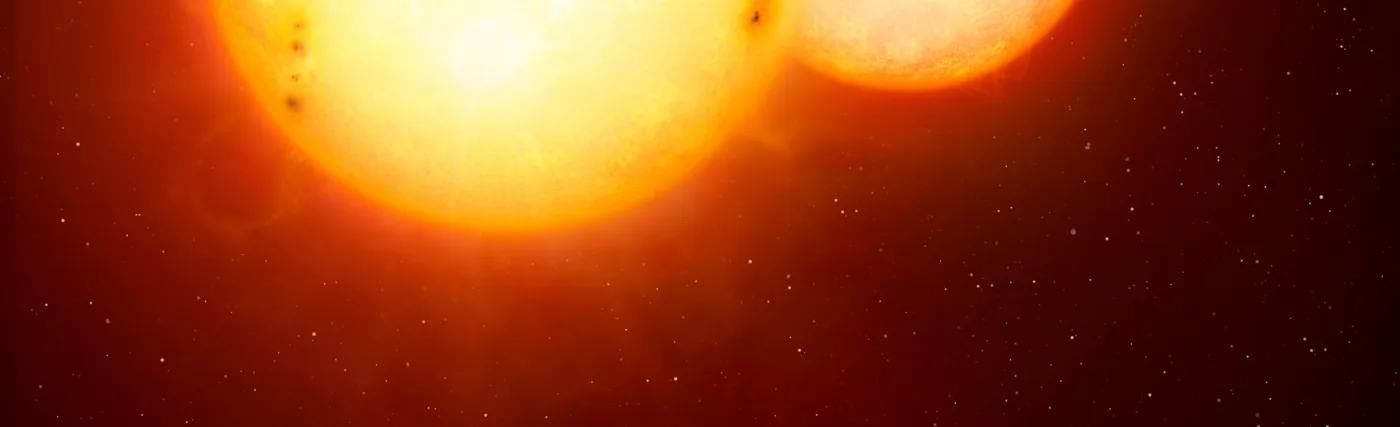
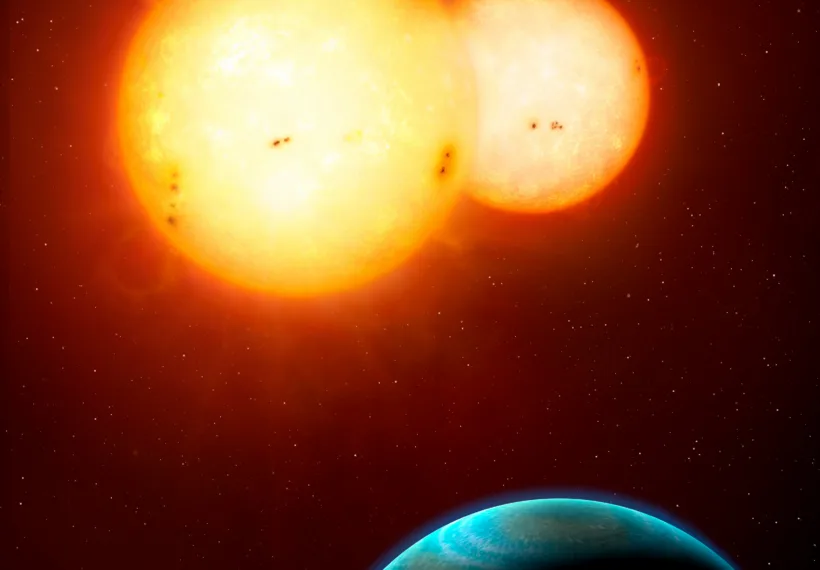
How does a planet have four suns?
Wouldn't some stars be ejected?
I thought three or more star system is unstable.
How does a planet have four suns?
Okay, yeah, sure.
So the universe, if you look up at night, most of the stars you see are not alone.
More than half of the stars in the night sky are multiple, double and multiple star systems.
Okay.
And so the solo star like Earth, like our sun is, I don't want to call it rare, but it's not the most common case in the galaxy.
Really?
Yeah.
And what a surprise that was to the first person with the telescope who looked up and saw, hey, that's not one star, that's two.
Oh, it must be a chance alignment of a star in the foreground and a star in the background, they said to themselves.
Then they looked around and they said, wait a minute, way too many stars are close to each other than statistics, then the randomness of stars in the galaxy should allow.
If you just randomly throw stars up on the sky, how often are they that close to one another?
It should be rare, yet it was common.
So the original research paper did this statistical calculation and concluded, this must be real, there must be actual double stars up there.
Hey, there's a triple star, there's a quadruple star.
You keep looking, whoa, we have a whole cluster of stars, a beehive of stars.
In fact, there's an actual cluster called the beehive cluster.
And all these stars orbiting a common center of gravity.
Yes, occasionally you get an ejected star because not all orbits are stable when you have all this action.
But there is what we call a parameter space where think this through, right?
Two stars orbiting close to one another, it's a tight orbit.
Now you pull one out a little kind of far, have that orbit, that pair.
It's orbiting so far away, it thinks it's orbiting one star.
So that's stable.
Now you get a fourth one, pull it far away.
Make it so far away, it thinks it's orbiting sort of one gravity field.
The questioner is right, Jesse's right.
When you orbit really close, the path, what path are you gonna take?
Will you next to now, some different tomorrow?
That could be hugely turbulent, hugely unstable to the orbits within the system.
But you can configure a system where you have a whole set of stable orbits and everybody's happy.
You know another set of stable orbits?
A pair of stars here and a pair of stars there and those pairs orbit each other.
Right?
Isn't that cute?
So that'd be a double, double stars.
And they're actual stars in the night sky visible to the naked eye that are double, double.
That's great.
So now I'm thinking about it.
The question was how does a planet orbit safely around four suns?
That's what his question actually asked.
I'm talking about how do you get four stable suns to begin with?
Oh, yeah.
So now if a planet were among the stars, it's not stable.
It'll fly away, right?
The planet will fly away.
Yeah, if the planet is orbiting within the orbits of the stars themselves, it's gonna fly away.
So you're saying the planet is commitment phobic?
It's totally commitment phobic.
It needs one sort of committed feeling.
So it can't be big love.
It's gotta go in one direction.
So in Star Wars, where they had the double sunset planet, those two stars are close enough to each other and the planet is far enough away from both.
So it executes one orbit around both.
That's how you pull this off.
But four, not gonna work.
Four, if you can start moving in and out, what's your allegiance as you get pulled to one star versus another and it wreak havoc on the planet and you just get ejected?
I have a question from Angie Suave.
I love that name.
Angie, Rico Suave's sister.
Sister, absolutely.
And she wants to know.
How sad is it that we know that?
I know, right?
That is so sad.
We gotta get a life.
We're lame.
We lost our street cred.
All right, could we send a probe of some kind into a black hole?
I realize it would be destroyed, but couldn't it transmit some relevant data at least for a short time on its approach and have we already done this?
We have not already, excellent question.
We haven't already done that.
We're not close enough to a black hole to even think about that experiment.
Really?
Now the dangerous part is suppose a black hole comes our way, like first, how would you know it was coming if it's black?
Space is black.
I know, well I'm saying.
So what you have to do is you look for the distortion of space around it, right?
So you have a star field.
If all of a sudden the star field starts looking like a fun house mirror, run.
Run, just pack up the planet.
Pack up the planet and get the hell out of that solar system because a black hole is on its way.
Most of, just as a quick aside, most of the black holes we know we detect from, because they're in a binary star system, there's another star adjacent to them being flayed.
Love that word.
A rare word, it means getting skinned alive, by the way.
Yes, yes, very middle ages.
And you're a word person, because you tweet word of the week.
It's very middle ages, right?
It's very like Spanish Inquisition.
So a black hole can flay an adjacent star.
If it becomes a red giant and its outer shells expand too much, that it'll then remove those outer layers and those layers will descend into the black hole.
Our X-ray telescopes detect material descending into a black hole that gets heated on its way down because of the friction of the disc that it makes.
It basically gets flushed toilet bowl style.
And as it descends down, it releases energy that it has from falling.
And that energy is very high.
It's like X-rays.
X-ray telescopes detect black holes in the galaxy.
There's none that we know of that are nearby.
Lucky for us.
But if we did send a probe, yeah, we could get some fascinating data on the gravitational field, the radiation field, and we get it all the way until it hit the point of no return, the event horizon.
I love that.
It's a poetic term for the place where you're never coming back.
Because within the event horizon, even if you could travel the speed of light, it's not fast enough to escape the gravitational field of the black hole.
So there you have it.
Is there something, I mean, are there plans to do this?
And can we really get some knowledge from this?
Yeah, we could get knowledge, but I'm saying there's no plan.
I mean, we don't know our own solar system much less trying to poke around in a black hole.
It's like, stay out of that, don't play.
You know, we gotta choose our play pens, our sandboxes.
Don't poke the bear.
Don't, until that day comes.
If we were to find a black hole, I'd try to find a way to exploit its gravitational field for the purposes of the production of energy.
Nice.
That'd be cool, yeah.
Reduce my light bill.
That'd be good.
I have a question from Gary Routh, and I love this.
Is there dark matter in my bedroom right now?
I love it.
Dark energy, is it inside of me right now?
Dark energy is, I guess, but dark matter, I'm not sure about.
Also, if the universe is expanding, does that mean that I'm expanding too?
This is a Dexter question.
This is, golly.
Is there dark matter in the right now?
I got like two minutes left, and I gotta like, I don't know that I can answer all three in two minutes, but I'll try.
Dark matter, we don't know what it is, but we know where we can find it.
But I can tell you that if it's in your room, there's not much of it.
Dark matter does not interact with our matter, and it doesn't interact even with itself.
That's assuming that it's matter at all.
So you don't have solid dark matter planets.
What does it take to make a planet?
Matter has to interact with itself, and make molecules, and cling together, and make rocks, and molecule, and people, and places, and things.
Dark matter has no such properties.
That's why it's diffuse across the galaxy.
We have what's called a dark matter halo around our galaxy.
And all the dark matter is scattered into this halo.
Huge quantities of matter.
I don't even know if it's matter, but it has gravity.
And it's huge.
But it's so dispersed.
And so that there's not a meaningful amount of it in any localized place that you're gonna find.
Very antisocial.
Yeah, very antisocial.
And dark energy, that's everywhere you find the vacuum, you have dark energy, the vacuum of the cosmos itself.
Yeah, so, and when the universe expands, are we expanding with it?
The molecular forces that keep your body together, those molecular forces are stronger than the force that's expanding the universe.
Thank goodness.
So as the universe expands, you don't.
Neither does our galaxy.
Well, until you hit middle age and then it's all downhill from there.
Or the solar system.
Alrighty then, moving on.
What else you got?
All right, this is from Michal Gorbachs.
About the accuracy of the age of the universe and the Hubble constant, how are we able to refine the 12 to 14 billion year estimate to 13.75 billion?
Which, that's really rude.
A lady doesn't like to tell her age.
Does the universe really want you know when that's 13.75?
Couldn't we go with the estimate?
For the longest time, in fact, my entire time as an undergraduate and in graduate school, we didn't know the age of the universe by a factor of two.
There was some research that indicated that we might be 10 billion years old.
Other research that indicated we might be 20 billion years old.
And there were warring camps at every conference.
There were the 10 billion year old people, the 20 billion year old people.
What did that fight look like in the lunch room?
What foodstuffs did we reach to throw at each other?
And this all relates to what's called the Hubble constant.
Named in honor of Edwin Hubble, the man.
There was a human being that predated the telescope whose name was Hubble.
What you say?
Now, here's an interesting case.
He had an affected British accent.
Yes, he was so fake and wore all these tweety things.
He smoked a pipe.
I love it.
And he was a misogynist racist, totally.
Well, if you're gonna be one, you should be the other as well.
Yeah, they go together.
Two for one.
They often go together.
And the good thing about science is that none of that's relevant.
What matters is how good was his science.
In many other walks of life, you fold all that together and you say the person is reprehensible.
I don't want any part of them.
I don't want them speaking to my children.
And in science, science distinguishes itself from other activities of the human condition for that reason.
It's got nothing to do with culture.
That's right.
So, he, in the 1920s, discovered that galaxies in the universe were moving away from one another in all directions.
And so, you look one direction, they're moving away from you.
Look another direction, they're still moving away from you.
I want my space.
It's not like, I need my space.
They're not coming towards you in one direction and away from you in another.
They're going away from you in all directions.
If you plot this up, the line that is drawn has a slope.
The slope of that line is the Hubble constant.
And if you know the slope of that line, you know the age of the universe.
Welcome back to StarTalk.
This week is a special mashup edition.
You're going to hear clips from some of our favorite discussions across the StarTalk network.
So, let's get right back to it.
Okay, okay, here's one.
So Jesse from Vancouver, Canada would like to know this.
Given that there is an upper limit or upper speed limit to the universe, being the speed of light, and a lower speed.
It's not just a good idea, it's the law.
All right.
Exactly.
You never know.
And there's a lower speed limit as well.
Oh, by the way, the buckling up.
You only buckle up because your car changes speed.
Right.
Not because it exists at any one speed at all.
Well, it's the change that's pretty.
Change is what will kill you.
Yeah.
Right, that's why you can be in an airplane going 600 miles an hour at 39,000 feet and say, you may now unbuckle your seatbelt.
Right, because nothing's going to happen.
Right, if you maintain your speed, that's not a problem.
It's if your speed changes, and that's what your seatbelt is for.
Okay, so given there's a lower speed limit, which is the absolute zero temperature, could velocity be considered a dimension like space, length, width and depth?
You have to ask, where are you going to go with that?
What are you going to do with that?
Because, for example, you can have a speed and then I can slow you down with brakes.
Did you change dimension?
I mean, where are you getting with that?
Why?
What is the purpose of even having?
Have thinking about it that way.
If you wanna, by the way, creative thinking is highly a good thing in this world.
But if you do so, ask yourself, is there something you will now be able to explain that you couldn't before?
Because everything we've constructed about velocity and speed and all of this, it's, as Einstein said, or was it his protégé, said space tells matter how to move and matter tells space how to curve.
Yeah, it's deep.
That's a great one.
Yeah, it's deep.
So in that sense, it's not your speed, but it's the gravity that's creating the dimensionality of the fabric of space and you can move within that.
So we move within the fabric of space.
The velocity itself is not, there's no cause to think about it that way.
That's all.
Gotcha.
I applaud the exercise.
Yeah, yeah, exactly.
It's very creative thinking.
And your answer, Jesse, is dark matter.
I'm just saying.
I will never answer one question with something else we don't know anything about.
See, that's how I do it.
No, people do.
People say, oh, can we explain this thing in terms of consciousness?
We don't know what consciousness is, so just back up.
Right.
Give it space.
That's funny.
But see, you know what, that's a great little cheat, though.
It is a cheat.
It's a great cheat.
It's a complete cheat.
People do it all the time.
Yeah, it makes, I mean, listen, because I don't know about this.
Well, why don't we think about it in terms of something else we don't know about?
Exactly, that'll answer it.
Because that'll answer it, right?
That's very funny.
All right, this is from Amanda Milligan.
She says, in every documentary.
Where is she from?
She's from Earth?
She is from Earth.
Okay.
She's just from Earth.
In every documentary I have seen lately, the extraterrestrial life is animal.
How do you think plant life would evolve outside of our own world?
Or could there be life that exists that could not be classified as either plant nor animal, but still life?
There's a famous science fiction story, and forgive me if I forgot who wrote it, because I don't come in here with notes in anticipation of questions.
Oh no, you don't know these questions, so how could you?
So there's a science fiction story where the aliens came upon Earth and saw that there's like muscle tissue, and they go back to their home planet and says, they're made of meat.
Because the aliens, they're made of some spirit energy, and we're made of meat.
And another thing that we take for granted, but I can imagine an alien life form that would just freak out.
Other than salt, animals have to kill to consume food.
Other than the consumption of salt.
Everything else you eat was once alive.
Sorry, sorry, sorry, unless you live off of milk and honey, all right, those themselves were not once alive.
That's still an animal byproduct.
It's an animal byproduct.
You have to kill something.
And even the vegetarians are slaughtering carrots.
That's right.
All right, and slicing them, dicing them up and shredding them.
Yes.
So the fact that we have to kill other life forms on our own planet for our own sustenance could easily be seen as one of the most barbaric things to another civilization where they all absorb energy from their host star.
Right.
Yes.
There you have it.
Because they're absorbing and not consuming.
Well, they're ingesting, they're not ingesting.
They're unlimited source of energy from their son.
Just like plants on earth.
They don't have to eat anything.
There's some that do, of course, but most don't.
The Venus flytrap is carnivorous.
And what's the other one that eats flies that smells like?
Picture plant.
So that one, okay, so they're carnivorous.
But all the rest.
Picture plant.
Are doing just fine with sunlight.
And that's an awesome way to live, I think.
If I were to evolve the human into another form, I'd evolve us with solar panels on our skin.
Nice.
Our skin would be one big solar panel.
And that way, getting sunburned, you just recharge your energetics.
Yes, I believe they call that Africans.
I'm just saying.
Last I heard, those, that's why they're black.
I said they.
I just said, that's why they're black.
That's so crazy.
All right, Megan Morrissey says, hi, I'm showing for the first time an episode of Cosmos in my high school earth sciences class.
Give it up for the teachers of the world.
There you go.
One of my students just asked me, if a ship that is designed like a ship of imagination would actually be able to fly into space, would that be possible?
Love your show and thank you.
I'm not authorized to say whether I actually own one of these.
No, the ship of the imagination on purpose has mobility through space and time.
And that mobility is empowered by my thoughts.
Whoa!
So there are no controls.
So there is no, plus we had a mini discussion with Andruyan who specified in the script that the ship would be impossibly minimalist.
Right.
So I would not be wearing a badge which would imply that I'm captain and you're not.
Because you should be able to fly this as well.
So the ship, no, it exists completely in my imagination as your tour guide.
So no, there is no attempt to try to make it real.
There you go.
As there have been with the Starship Enterprise and other sort of sci-fi creations.
So anyway, it's not real or it can even be imagined to be real.
Right.
Because it exists in my mind.
Nice.
As your private tour guide.
There you go.
All right, this is from Scott and that's all he says.
This is from Scott.
I love it.
He says, on your premiere of Cosmos, you mentioned that the moon was pushed away by tidal friction.
Can you explain that a little bit further?
I had never heard it put like that before.
Yep, pushed is a very visual image, but what's really happening is that it's getting flung.
Flung is a more sort of physically accurate thing.
So what's going on is the moon creates a tidal bulge on earth.
And so the water that's nearest the moon pulls towards the moon.
The moon is pulling on earth a little less and the water that's on the other side of the moon is pulling on even less.
So all the oceanic waters form this bulge.
It's in a direct line to the moon, okay?
It turns out it's not in a direct line to the moon because earth is rotating.
And we're rotating faster than the moon is turning around.
So we actually drag this bulge ahead of the moon.
So this bulge is actually trying to slow us down.
That's why we occasionally add leap seconds to the calendar.
And because the bulge is ahead of the moon, the moon feels a gravitational force ahead of it.
And so it wants to go faster in its orbit.
And by going faster in its orbit, it ascends to higher distances from earth.
So it's a cosmic ballet choreographed by the forces of gravity.
Gosh darn it.
That was fantastic.
The moon is spiraling away about five inches a year from earth just because of this flinging effect of the leading edge of this tidal bulge.
Right.
Oh Mike, that is fascinating because it's like the earth is a container holding this water.
Yes, yes, correct.
So instead of lining up with the gravitational pull from the moon, because the earth is a container holding this water and it's spinning, the water wants to move ahead.
Yeah, we're dragging the water ahead of the moon.
And that costs us our rotational energy to do so.
That, God.
That's awesome.
Oh my God, that's incredible.
It's just physics.
I know, but I don't do that a lot.
I don't do physics a lot.
You know what you look like at that moment?
You look like a double rainbow guy.
You remember double rainbow guy?
He comes around the corner of the mountain.
It's on YouTube.
He's like, oh, oh, oh, two rainbows.
Oh, oh, oh, and he starts crying.
I say, dude, it's physics, okay?
Oh my gosh, this is divine.
No, it's like, it's light, all right?
So I don't mean to take away the beauty of this.
By the way, there are other things that are mysteries that we don't understand, that are even more beautiful.
But I'm saying-
Like women.
We are in this tango with the moon.
Ultimately, when the moon wins, well, it's not gonna win.
Ultimately, the moon wants to slow us down so much that we rotate at exactly the same rate that the moon orbits us.
Right.
And when that's the case, our tidal bowls will align.
We will not be fighting the bowls and the bowls will not be flinging the moon forward.
And the system will be in what is called a double tidal lock.
Double tidal lock?
Yeah, which was a wrestling move.
I was gonna say, I wanted to invent that move.
I used to wrestle.
The double tidal lock.
I wrestle and I know astrophysics.
You know I was trying to invent a double tidal lock wrestling hold, right?
So, at that point, Earth Day will equal the lunar month.
And one side of the earth will only ever face the moon.
Just as today, one side of the moon only ever faces the earth.
Which is why there's never earth rise on the moon.
Always in the sky, if you're on that half of the moon.
Gotcha.
Yeah.
That's awesome.
Which is why that famous photo called Earthrise, taken by Apollo 8 in December 1968, is called Earthrise.
Because the earth was rising over the moon.
Why?
Well, it's because they were orbiting the moon.
And they tip-hull up the camera and there's earth rising.
That's how you get earthrise.
But people thought, oh, earth rises on the moon.
Just like the moon rises on earth, not.
No.
Right.
That's amazing.
Not until the moon wins.
Unfortunately, I'm still stuck on double title lock because I'm trying to figure out, like do you put your legs around the person's neck and then you're like hanging off of their back and then you grab both their knees and then you like whip it and.
No, I'll show you off camera.
I'll show you.
I never perfected it, but I had the ideas of one.
It was good.
That's pretty cool.
Because what happens is you face your opponent and then I swing you till you're out of balance and then take you down while I'm still facing you.
Because in a double title lock, both sides of the orbs are facing one another no matter what they do.
So the idea is to get the person still facing you and then as I swing and take them down.
Right, yeah.
Yeah, that's fantastic.
Maybe get a quick one in before the break.
All right, here's a good one, man.
Will the sky look different if we are all standing on another planet, constellations and such?
So if I'm on another planet in this solar system, do I see the same sky?
Yes.
What?
You said yes.
Yes.
Yeah, so here's, it's a simple answer, okay?
So the extent of our solar system is like from like the sun to Neptune.
Get over it.
No, if you look at the planets, so.
So it's this, so basically we're such a small little part.
Exactly, so.
We're not gonna change the frame of reference.
Exactly, so if you look at the width of the solar system, it's like 10 light hours across.
It would take a beam of light 10 hours to cross the solar system.
That's big, that's a long time, especially going at the speed of light.
However, as you look at the nearest stars, the stars that comprise the constellations, they are hundreds of light years away.
Gotcha.
So if you just shift your head 10 light hours, you know, the stars don't mean a damn thing to the stars.
So you gotta start moving among the stars to change your perspective on the constellations for them to take on other shapes.
Welcome back to StarTalk.
Here's more of this week's mashup.
More Emily Care boss, at Emily Care.
I don't understand what that means.
So it's at Emily Care, which is an old age home for only women named Emily.
What are the frontiers of research in astrophysics right now?
Oh, right now, we're looking for dark matter.
We don't know what is causing 85% of the gravity of the universe.
We don't know what is making the, yeah, yeah.
I'm not even done, right?
And there's a pressure in the vacuum of space making the universe accelerate in its expansion against the wishes of all the galaxies that it contains.
If you add up dark matter and dark energy, it is 96% of all that is driving the universe and we haven't a clue what they are.
Dark side is winning.
It's Star Wars.
The dark side is definitely winning.
Winning this contest of knowledge.
But something's out there just pulling.
Yes, and we don't know what it is, but we can measure it.
What does it have to do with?
I don't know.
I don't even know.
We shouldn't even, I've said, we shouldn't even call it dark matter, dark energy.
That implies we know it's matter and energy.
We don't even know what the hell it is.
It's evil though.
It's.
We know it's evil and it's out there and it's pulling.
Because it's dark.
Creating stretch marks on the universe.
Those are two.
And we're looking for life in the universe, life on Mars, life in Europa.
You're saying go for it and hawking is like nothing at all.
Well this could be probably microbial.
I don't think there's intelligent life lurking in caves on Mars.
But life at all would be a boon to biology.
They find.
Water bits on Mars.
Yeah, but not intelligent life.
That's different, yeah.
I think it's a little rude to call them intelligent.
It's a jump.
I think it's.
It's a jump to go from oozing water to intelligent life with civilizations.
Well, you haven't been at Hollywood, so your definition of intelligent, not the same as others.
Yeah, so I would say that plus on the biological side, which affects the search for life, we don't know how to turn organic molecules into self-replicating life.
That transition which Earth did, apparently without any issues.
Without any help.
Without any help.
So we don't know how to do that yet.
So that's an interesting frontier.
Once you figure that out, you can better decide what planet it might be happening on.
Right.
Yeah, yeah.
Hey, well, there's your answer.
Bring it on.
Care for only Emily's.
What else you have?
Another one.
What is anti-matter?
Do we have access to it?
That question by Andrew Sinclair on Facebook.
I wonder if these are people who have labs in their basement and they wanna become like.
What is anti-matter?
How do I get my hands on some?
So as far as we have been able to measure, all particles of matter have an exact replica of those particles except they're made of what we call anti-matter.
The doppelganger.
Which if they come together, they will completely annihilate and turn into pure energy.
And so, and it's not just, we discovered it first.
It was not science.
If science fiction does some stuff first, we did this first.
Right.
All right.
We came up with anti-matter, predicted its existence, discovered it.
How do you discover it?
Oh, so it's the product of other reactions.
So you have regular matter, you smash particles apart and in the particle stream, you see anti-matter.
And the anti-matter doesn't last very long.
You see anti-matter.
Well, because then it annihilates.
Yeah, you know, you see its path through it, but they had cloud chambers and things.
You see the path that it had traveled.
What about through soil?
You're still worried you want to store them.
Very worried about the nuclear reactions going through soil.
So it is real, and it would be matter, anti-matter.
Engines would be the most powerful engines, the most efficient engines we would ever know how to make if you're traveling through space, because you start with matter and then you have pure energy.
And if, you know, your car that you drive, you said a Civic or you were joking about a Civic, what is it?
It's like only 20 or 30% at most of the energy of the gas you put in the engine is going to move your car forward.
The rest gets dissipated as heat.
That's why your car gets hot when you drive it.
Imagine if all that energy went in to propel your car.
You'd be going 200 miles an hour.
Harnessing energy.
Harnessing energy is all about.
Harnessing expended energy.
All about that, exactly.
And if all of your matter becomes energy, you got it.
There you go.
Who do you think will win in the race to harnessing anti-matter first, us or the Russians?
You want the Cold War to come back?
What do I?
I don't think it ever left.
We have more resources than the Russkies do, so maybe it's us.
He said it.
Dasvidanya.
All right, let's go to a lightning round.
I'm trying to get as many questions as I can and I'm going to answer in sound bites.
Okay, are you ready?
Go.
Do I say the name of the person?
Just read fast.
Okay, what is complete stillness?
Would you be slingshotted to the end of time?
Would you be ripped completely from existence?
If you were completely still.
What is complete stillness?
Complete stillness, as far as I know, would have nothing to do with you traveling through time or being cast out to the edge of existence.
Also the name of a yoga studio.
And in fact, nothing is completely still.
There are vibrations at all levels, even at all temperatures, including absolute zero.
Matter vibrates.
Next.
If there...
By the way, it just vibrates more if it's hotter.
But even at absolute zero, quantum fluctuations create vibrations in matter.
And at the smallest level.
Exactly, go.
If there was no comet to wipe out the dinosaurs, how much harder would it be for mammals and eventually intelligent life to thrive?
Could we maybe get intelligent dinosaurs?
Okay, so great question.
So here's the thing.
Our mammal ancestors were running underfoot to T rex, trying to avoid being consumed as hors d'oeuvres.
So if the comet didn't come, the asteroid didn't come, it's not clear we would have evolved to anything unless we were on a completely separate continent where the dinosaurs couldn't swim and then eat us.
Then it's possible that we could evolve intelligence completely separately while there were major dinosaurs existing on another continent.
And then when Columbus sets out and crosses continents, he would have just gotten eaten.
They're there with like hats on like welcome to dinner.
You ever seen the way an iguana looks at you?
Like it knows something, it's like it could have been us.
Next.
All right.
So could dinosaurs involve intelligence?
Not likely, their brain cavities didn't look like, yeah, too small.
Okay, next.
Bunch of jerks.
Is Earth gaining mass from space dust and impact rocks or losing mass from evaporating gases and launching space probes?
What effects would this have on GPS satellite?
Excellent question.
So we are gaining three approximate, anywhere between two and 400 tons of meteor dust a day, which vastly exceeds spacecraft that we send out or lost evaporated particles in the atmosphere.
So Earth is gaining mass daily.
Consequences that would be, it is not any worse than an elephant collecting a gnat.
Oh wow, it's that small.
Yeah, it's less, it's less than that.
These questions are more just me trying to, I have no idea what I said when I read it.
It's just me trying to look like I know what's going on.
Okay, even if we somehow discovered the tech to travel at or faster than light, would passengers of the vehicle survive?
So, the issue is not how fast you go, it's what is your acceleration.
Acceleration is what kills you.
Deceleration is what kills you, right?
So, in a plane, you're going 600 miles an hour and you just find sipping tea.
That's not, speed doesn't kill you.
Speed has never killed you.
It's all about acceleration.
And I actually wrote a little essay for Motor Trend Magazine on acceleration.
And I said, it's not all about the speed, it's all about the acceleration.
Because that's what you feel and that's the feeling of going fast, whether or not you actually are.
That's right.
So no, go as fast as you want and enjoy.
Go as fast as you want from Neil deGrasse Tyson.
Don't wear a seatbelt and enjoy your life.
That's not what I said.
Pretty sure that's what you just said.
Fist bump out of this.
Iliza Schlesinger.
Still an issue, huh?
Yeah.
We are back on StarTalk Cosmic Queries edition.
And I got Godfrey here.
Hey man.
Godfrey tweeting at Godfrey Comedian.
Yes, that's right.
That's a lot of characters to give up to your Twitter handle.
Is it?
Godfrey Comedian.
It's the only way.
That's the only way.
I wanted to be as-
You could shorten it and just say God.
No.
Cannot do that.
Thou shalt not do that.
I would say, well, lowercase G.
Lowercase.
Lowercase.
Cause people will come up to me and go, oh, do they, and they do it like in an air going, do they call you God for sure?
You know what I mean?
I'm like, yes, they do.
Yes.
Yes, they do.
And you're a sinner, yes.
Are you ready?
So wait a minute.
So these are Cosmic Phenomena.
I haven't seen the question.
So bring them on.
Bring them on.
So I'm bringing you, let's see what I'm bringing you.
Let's see what you got.
Let's see what I got here.
Joshua Shoop from Twitter.
Aliens are so far away, they can see our entire history as it's happening.
Is that why they don't want to come here?
Yes.
Next question.
Well, just let me clarify why that would be the case.
If you are at any distance from anything you're looking at, you see it not as it is, but as it once was.
I see you not as you are, but as you were four billionths of a second ago.
So light takes about a nanosecond to go a foot.
A nanosecond to go a foot, wow.
A billionth of a second.
So you're about four feet from me right now.
I see you as you once were, four billionths of a second ago.
So now let's put a civilization in Alpha Centauri, the nearest star system to ours.
That's four light years away.
You're four light nanoseconds away from me.
Alpha Centauri is four light years away.
So anybody there is watching if they could get our signals.
They would be seeing Earth.
What was going on four years ago?
There was another campaign for president.
Obama was smashing that dummy.
What's that dummy's name?
Oh, that Mormon guy.
It's that guy's name.
No, he's so bad.
Mitt Romney.
Mitt Romney.
You could see him getting pummeled.
Well, okay, so he loses.
So they would be watching the last few weeks of that campaign.
Okay, all right.
In real time, as it was unfolding.
Because the light is just arriving at them at the time.
Wow.
Okay, so now if you go farther, so here you go, there are galaxies that might be six, there is one, 65 million light years away.
Why'd I pick that number?
Because the stuff that was happening here on Earth 65 million years ago is only now just reaching them.
It's just reaching them?
Just reaching them.
So they're gonna say, hey, let's check out Earth TV.
The Earth channel, there we go.
Yeah, so that's.
I mean, that's my tyrannosaur.
Is that your T-Rex imitation?
Exactly.
So, I'm sure that's what they sounded like.
So they would see the extinction of the dinosaurs, because that's when the asteroid struck.
Meteor.
The meteor struck.
The size of Mount Everest.
So that's what they would be seeing.
They would watch that in real time.
So, there's a lot of interesting history on Earth that shouldn't preclude alien visitation.
At least, maybe they visited the dinosaurs.
And then you could ask, why didn't they help them out?
You know, if they were really checking.
So, I was thinking they wouldn't come because of Trump.
No, nothing?
You didn't.
But Trump is a very recent phenomena that has not had enough time to reach any planets beyond our own solar system.
Can you imagine?
So, there's no understanding of recent current events to any aliens anywhere in the galaxy.
I don't want to Trump you, but I go, wrong.
That's what he did to hold that.
Wrong.
Wrong.
So, that's interesting.
I didn't think you would actually see the dying of the dino, the extinction of the dinosaurs.
Yeah, yeah.
That is cool.
So, yeah, so they would have access, depending on their distance, they would have access.
So, what are some events?
So, let's say, what's a good example?
World War I and World War II, pretty tragic times in the history of the Earth, 70, 80, 100 years ago.
And they might say these people have messed up.
Right.
And say, we will not come anywhere near.
This is, in summary, aliens have never visited because according to them, there's no sign of intelligent life on Earth.
Wow, there it is.
There it is.
Yeah, you got it.
Okay, I think you nailed that.
All right.
I think, okay, I got one.
It's called kneeling it, by the way.
It's called kneeling it.
I kneeled it.
You kneeled it.
Oh, you kneeled it.
I just got it.
Did you just, slow?
I thought Comedians were faster than that.
Oh no, because I'm looking at you from some light years away.
Okay, good comeback.
You get one time delay comeback.
Tachyon.
Per show.
So, I'm watching you from a couple light years.
You get one of those per show.
Wow, that was slow.
So, maybe people are slow because of light years.
They're not really here yet.
So, there's no such thing as being mentally slow.
It's just their perspective is kind of...
Okay, you should stop there, okay?
Yeah.
All right.
I have another question.
Cosmic Phenomena, bring it on.
This is by William Morris, Facebook.
What's a hen weigh?
About two to three pounds.
Next.
You can't, you can't, what do you think, I was born yesterday?
I just wanted to see that, what's a hen weigh?
There's no science behind that, huh?
That's it, next, that's it, what's a hen weigh?
We should call the first warp drive a hen weigh.
So that wherever they land, they say we gotta fix the hen weigh.
We gotta fix the hen weigh.
You could run that joke clear across the galaxy.
That was awesome.
So, Chuck, we are in the five minute warning zone.
This means, you know what that means.
That's right.
The lightning round.
It's the lightning round.
Okay, I will answer questions in soundbite mode.
Okay.
To get in as many as we can in the next four minutes.
All right, here we go.
This one from Facebook and Paul Bear.
Paul Bear wants to know, how is the gravity of the sun strong enough to hold Jupiter into place, but not strong enough to pull the Earth close enough to eat it up?
Oh, because Earth is moving faster than Jupiter and at our speed, at our distance, we are in a safe orbit.
If we were moving at the speed of Jupiter, at our speed, at our distance right now, we would fall into the sun.
Boom!
Bada-bing.
Bada-
oh, oh yeah.
There, okay.
Good, thank you, good, next.
All right, so every orbit, at every distance from the sun, there is one speed that you can sustain and maintain that orbit.
Anything less, you fall into the sun.
Anything more, you will go to a higher orbit.
Okay, rogue planet, all right, here we go.
Also from Facebook, Patrick Clark wants to know this.
Dr.
Tyson, what do you see as the advantages, benefits of permanent human colonization of other bodies in the solar system?
What resources do places like the moon and NEA's hold?
And how could we harness and use them efficiently?
Ooh, so NASA has a whole new branch of itself called ISRU, in situ resource utilization, which is NASA speak for.
When you get there, find your own damn food.
Damn, man, that's rough.
So you gotta look ahead, see is there water there?
Is there natural resources?
Can you seed the soils in a way to grow plant life?
Is there enough sunlight?
So right now, there's nothing like Earth out there.
And so if you're gonna go, you're gonna have to bring a whole lot of Cheetos.
There's something to keep you fed until you can, so the resource, we develop, our species exists on Earth, thriving on resources that are native to Earth.
That's why we are okay here and not okay on the moon or on Mars.
So this is a huge challenge that we have not yet resolved.
Go, next.
All right, there you have it.
The answer is, click your heels, Patrick, there's no place like home.
All right, let's see here...
That might mean Patrick is wearing ruby slippers.
All right, Amanda Dean wants to know this.
Why are some planets in gas form and some in solid?
Does this differ in a binary star system?
Turns out, would you say Earth is gaseous?
No, because it's mostly rock and then we have this thin layer of atmosphere on it.
Jupiter, if you go deep enough, it has a solid middle.
Okay.
Yeah, everybody's got a solid core.
So basically, we're all the same, it's just more atmosphere.
More atmosphere and in Jupiter's case, most of his mass is in the form of gas.
I got a fever and I need more atmosphere.
Fantastic.
More cowbell.
Absolutely more atmosphere.
All right, here's the next question.
This is from Gene.
Oh, by the way, Jupiter has a much higher gravity so it can hold the very light gases, such as hydrogen and helium, that we could not hold.
Jupiter is mostly hydrogen and helium, very light gases, very fast moving atoms.
They can fly out of a weak gravity field as they did for us.
Nice.
So our atmosphere is denser, heavier than Jupiter's atmosphere.
We have heavier molecules in our atmosphere because they don't move as fast and so they don't escape.
So you sound like a chipmunk on Jupiter.
Yes, you so would.
Yes, I never thought that through because I was not going to think I would get out of my spaceship and open my helmet while I was in the atmosphere of Jupiter.
But since you've already thought this through, Chuck, that is exactly how it would happen.
Time for one more question.
Go.
So all the Jupiterians are, sound like Mickey Mouse, go, go, the native Jupiterians, go.
All right, here we go.
This is from Paul F.
Aron Fransky Jr.
okay.
How can we tell what far our planets and the other objects are made of?
This was the birth of modern astrophysics in the late 19th century.
We took the spectroscope.
The prism.
Take light, move it through the prism out the other side.
It breaks it up into component colors like a rainbow.
And in there, you find embedded the fingerprints of the very chemical identity of what it is you are looking at.
Bada-bing.
You've been listening to a Cosmic Queries mashup.
I'm Neil deGrasse Tyson, your personal astrophysicist.
And, as always, I bid you to keep looking up.
See the full transcript



 Unlock with Patreon




 Become a Patron