


 Unlock with Patreon
About This Episode
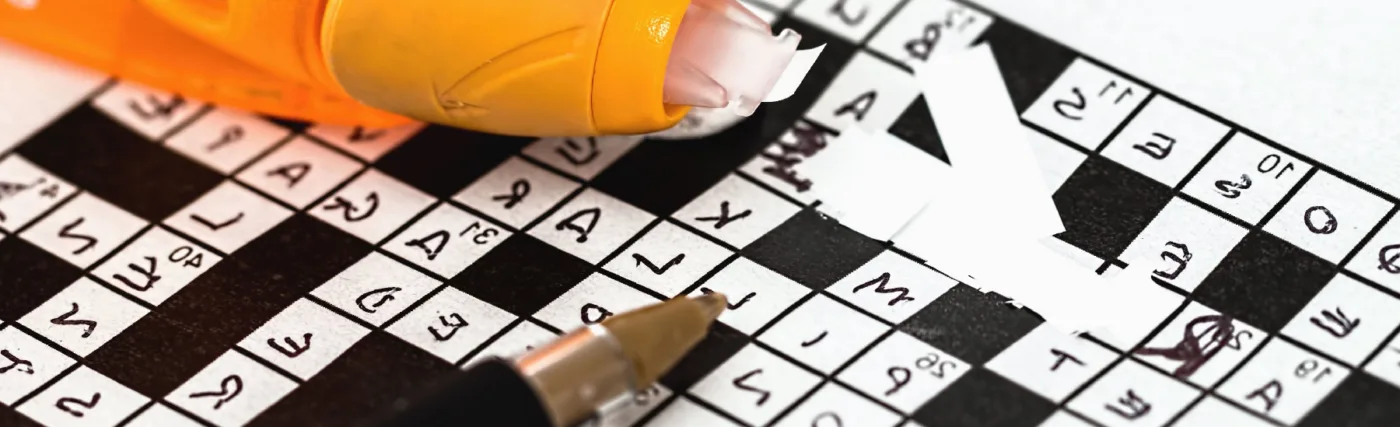
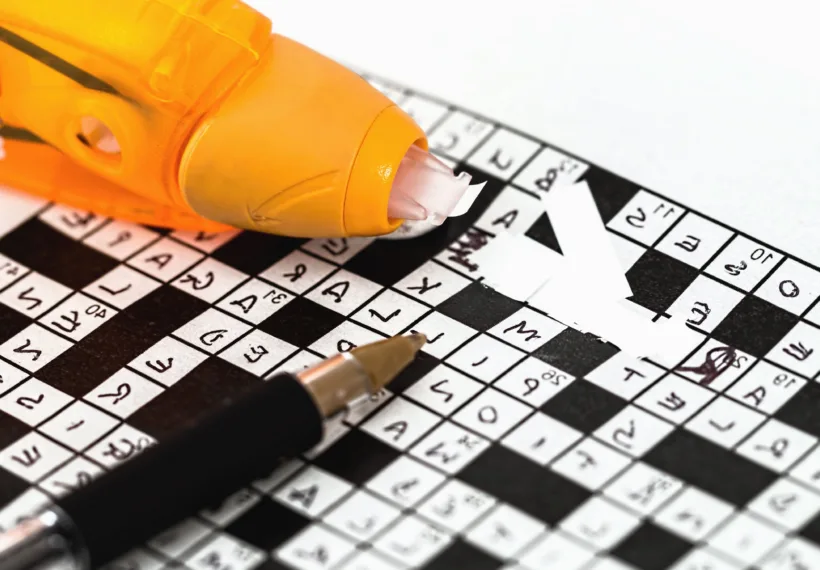
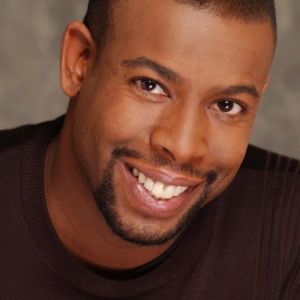
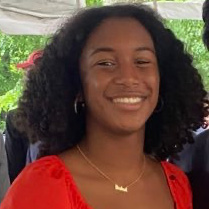
Got a problem? On this episode, Neil deGrasse Tyson and comic co-host Chuck Nice explore the world of puzzles and problem-solving with neuroscientist and clinical psychologist Heather Berlin featuring Soleil Saint-Cyr, the youngest woman to publish a crossword puzzle in the New York Times.
First, we dive into crossword puzzles with Soleil. What makes people want to construct them? How do you make one? Find out what it takes to get a crossword puzzle into the New York Times. We explore the connection between crossword puzzles, vocabulary, and pattern recognition. Why do people even like crosswords?
Next, we get to our patron questions with Dr. Berlin. What goes on in the minds of people who do puzzles? Why does anyone want to solve them? Discover our problem-solving roots and why our brains crave it. How far do games and puzzles go back? How does this activate our reward centers? We look into primary and secondary reinforcers and how different games and puzzles work within our minds. Are our brains hardwired for certain games? Why do puzzles seem to have a calming effect?
We continue with our patron questions, learning how doing puzzles and gaming connects to addiction. Why can’t we stop playing games on our phones? Is this linked to gambling and other addictions? We break down how easy or hard puzzles are and what they do to our brain. Do brain games help us keep our mind sharp as we age? Which ones? How come some puzzles seem to get easier over time? How does the unconscious mind help us solve problems? All that, and we break down the different parts of the brain involved in different types of problem-solving! Plus, hear a special announcement from Chuck!
Thanks to our Patrons Ken Abe, Oscar h, Travis Mansfield, Skyler Pierce, C Hough, Sunny Day, Ashlynn Iglesias, Shain Dholakiya, Joy Jane, and Elena Grab for supporting us this week.
NOTE: StarTalk+ Patrons can watch or listen to this entire episode commercial-free.
About the prints that flank Neil in this video:
“Black Swan” & “White Swan” limited edition serigraph prints by Coast Salish artist Jane Kwatleematt Marston. For more information about this artist and her work, visit Inuit Gallery of Vancouver.
Transcript
DOWNLOAD SRTWelcome to StarTalk, your place in the universe where science and pop culture collide.
StarTalk begins right now.
This is StarTalk.
I’m Neil deGrasse Tyson, your personal astrophysicist, and today we’re going to talk about puzzle solving, specifically crossword puzzle solving, the kind of puzzles that show up all around the world in newspapers, magazines, in puzzle books.
That’s what we’re going to be talking about.
Chuck, you’re going to help me talk about this.
I was going to say, in other words, we just want people not to see this show, huh?
How are you going to start this show with, like, and today we’re talking crossword puzzles?
Click!
You’re supposed to say, today we’re talking the science of the fast and the furious.
All nine movies, right?
I got this.
I got a new introduction.
You ready?
Okay, new introduction.
Okay, you ready?
This is StarTalk.
Today we’re talking about what goes on in the brain when you’re trying to solve a problem you’ve never seen before.
And we’re going to reach in and analyze what happened…
Is that a little better, Chuck?
Now I’m listening!
And now!
But of course, neither of us have any expertise in that.
We’ve got to get someone who is one of the experts in the world on creating crossword puzzles and solving them.
And so we combed the world and we found a 17-year-old girl.
Soleil, have you turned 18 yet?
I turned 18 in February.
In February, okay, okay.
Welcome to StarTalk, Soleil.
Thank you.
You are a resident crossword puzzle expert.
And we chose you because not that I had any special clairvoyance on this, but you were the youngest person to ever get a puzzle published in the New York Times.
Is that correct?
Did I understand that?
Youngest woman to get one in the New York Times.
Youngest woman ever to get one.
Well, I bet the youngest guy could not have been that much younger.
I’m betting.
How old was the youngest guy?
Thirteen.
Thirteen?
And guess what, Soleil?
Soleil, his puzzle sucked.
It was all about transformers and juice boxes and boobies.
So the youngest woman ever to get a crossword puzzle published in the New York Times.
So I think this brought you a lot of attention, didn’t it?
Yeah, it did.
A lot of unexpected attention, definitely.
But it was unexpected, but it wasn’t bad, I guess, right?
No, of course it was not bad.
It was not bad.
I was just like, I only made a crossword puzzle.
I didn’t anticipate, you know, the Today Show to ask for it.
Okay.
Well, you didn’t cure cancer or something.
So how long have you been doing crossword puzzles?
I’ve been doing crossword puzzles probably since I was like 10, but not of the New York Times caliber.
People Magazine, back with People Magazine with my mom.
Damn, she just dissed People Magazine.
Yeah.
Man.
Man.
She really didn’t diss New York, I mean, People Magazine.
People Magazine kind of dissed People Magazine by putting a crossword puzzle in People Magazine.
Chuck, what kind of reasoning are you invoking?
I’m just saying, like, if you’re going up against the New York Times, you shouldn’t call yourself People Magazine, okay?
All right, so you got engaged in solving them, right?
So fine.
All right.
I can, you know, throw a stick and hit 20 people who solve puzzles.
But it’s like another subset, another sort of in the Venn diagram, there’s that smaller subset who creates the puzzle.
So what possessed you to do such a thing?
Definitely a lot of boredom.
So I started wanting to be able to make them.
But wait, you’re in school.
You are supposed to you’re learning in school and now you’re saying you’re bored.
Well, it was summer 2020.
So it wasn’t really like I was doing much stuck out.
Oh, COVID summer, COVID summer.
Oh, got it.
Got it.
Got it.
Got it.
So you did something.
So instead of binging, you know, the Kardashians.
Yeah, you decided to wait a minute.
And so this was a relatively new endeavor for you.
To create a puzzle.
Which, okay, there are people who, one, puzzle competitively, and two, spend their entire fricking life trying to create a crossword puzzle.
And you’re saying that you got bored because you were home from school?
And so you…
Damn, okay.
So I think many people don’t realize that for many crossword puzzles, certainly the New York Times crossword puzzle, the black boxes where the occlude does not land is like laterally mirror symmetric across the puzzle.
So it’s rotational symmetry.
You have…
Yeah.
Okay, so it’s rotationally symmetric.
Yes, rotationally symmetric.
I believe it’s 180 degrees rotational symmetry.
You can do mirror symmetry if you’d like, but more classic is rotational.
Okay, so this makes it even harder because it forces how long the answers must be in relationship to what else is going on in the puzzle.
Right, right.
Wow.
Okay, so it’s just, yeah, of course, yeah.
It’s a puzzle within a puzzle when you’re trying to place the black squares just because depending on where you place the black squares, depending on what words you have in different places, different patterns arise.
And so bad black square placement could lead to a terrible puzzle.
Interesting.
Or an unsolvable puzzle.
So now when you say that, when you talk about the placement of the black squares and the puzzle within the puzzle, are you saying that to the consummate puzzler or a crossword person that they can look at your formation and that will help them in the solving of the puzzles?
Normally, no.
Okay.
When you’re solving them, it wouldn’t help.
But for a constructor, that’s really, that’s where the brain power comes in, I think.
Is arranging those black squares to make sure that, one, you have a solvable puzzle, and two, that you’re creating as many opportunities possible for you to have words in those spaces.
I get you.
Plus, and New York Times and I’m sure the London Times as well, there’s often a whole storyline going on within the clues of the puzzle itself.
Right.
A whole backstory on this clue relates to that clue, and it’s the third word of a title that was in that clue.
All these little Easter eggs that are hidden in the puzzle itself or the clues themselves.
Okay, but Soleil, doesn’t that mean you have to be older and wiser and have life experience to put all of this in the puzzle?
She’s like, no, you just have to know how to read.
That’s what Soleil is saying.
I mean, kind of, you’re right.
I don’t think that you have to be or have any sort of particular large subset of knowledge.
The way that crossword puzzle constructing works now is we have software and you put in word lists that a lot of people end up coding.
And I could put in TikTok language into my crossword puzzle.
Obviously, the 80-year-old won’t be able to solve it, but all of my friends will.
I don’t find it hard enough.
So you can tune the crossword puzzle to make it hard or easy for whoever it is you want to make it hard or easy for.
Exactly, yeah.
So now for the New York Times, what would you say is the hardest crossword puzzle to do on a consistent basis?
The Saturday.
The Saturday is known as the hardest puzzle.
Okay, so which puzzle did you do?
You did which puzzle?
I constructed a Monday, but the Saturday is the hardest to solve.
So Monday is easy.
Okay, so you still have head room here to grow.
So the Monday is like the entry level.
Yes.
And do they get progressively hard during the week or is it just Saturday is the hardest and that’s all there is to it?
They get progressively harder to solve throughout the week.
And then Sunday, like the famous Sunday Times puzzle, it’s just the largest in size.
So rather than a 15 by 15 grid, you have a 21 by 21 grid.
But it’s about Wednesday difficulty.
Oh, I didn’t know that.
So that also means you have to have a sizable vocabulary.
You have to have a sizable, yes, vocabulary, but also wordless.
So throughout the days or like weeks, a lot of crossword constructors will come upon a new word or you’ll come upon a new phrase and you’ll just add that into your word list on your computer.
And that word list will automatically update the software that it’s used to construct.
I think the hardest part about words and vocabulary when it comes to crossword puzzles is recognizing letter patterns.
So there’s obviously some letter patterns that everyone knows are more prevalent than others, like T-I-O-N.
Like everyone knows that’s quite common.
But when you’re constructing a puzzle and you see like three vowels in a row or something and you have like say like a seven letter word, you’re going to be able to tell more easily which words will be able to fit.
That’s the type of pattern recognition that you have to use as a constructor.
I see.
And because there are fewer words that will have that, but you have to be able to have to be armed and dangerous whenever time you see, because you could be handed that set of letters while you’re constructing the puzzle and then you can go straight to your word for it.
And the more you fill it in, the more the puzzle itself helps you.
Right?
The more you fill it in, the more you’d hope.
Sometimes, I mean, constructing a crossword puzzle, if you get stuck in one place, you kind of have to erase the entire corner and restart.
It’s not really like a, because it’s a domino once one word doesn’t fit or one word doesn’t work, everything else doesn’t work around it.
Okay, so, Soleil, do you take pleasure in this?
Is there some dopamine in your or is it pleasure knowing that you made a puzzle that other people can’t solve?
Like, I guess I’m just asking why?
Just like messing with old people sitting around reading a newspaper.
No, there’s definitely pleasure in it for me.
I love puzzles of all types.
I do a lot of science, but I also read a lot and I think all of those different types of endeavors are different types of puzzles and I think that this is just a different way to stretch my brain.
And then about making people frustrated and angry, I typically don’t like to do that.
When I started solving, I was 10 and crossword puzzle and I probably moved on to New York Times crossword when I was about 13.
And New York Times crossword puzzles are not made for 7th and 8th graders.
So most of the time, I finish a puzzle frustrated and having to Google everything because I had no idea how to solve it.
And I don’t like making people feel stupid.
And that’s how I felt when I solved them.
See, you would never make a good comedian.
You would never make a good comedian.
You’re right.
You are right.
That’s the best feeling in the world is making somebody realize how stupid they are.
So you’re graduating high school basically.
So what do you want to major in?
I assumed you’re going to college.
I’m going to Harvard next year.
I don’t know exactly what I’m majoring in.
But right now…
Wait, did I ask you where you were going?
No.
No, you weren’t.
And I need to fix that.
I need to fix that.
I need to stop doing that.
I did not ask you where you were going.
Let me tell you this joke, Soleil, so you can remember this.
How do you know somebody went to Harvard?
When they tell you they went to Harvard.
Don’t worry.
They’ll tell you.
Yeah.
But I was thinking about their history and science program and doing…
Very prestigious.
The history of science.
Yeah.
I’m really excited for that.
Hopefully I do that in philosophy maybe.
Okay.
So now I’ll ask you a few of your favorite things.
So what’s the best clue you ever came up with?
The most clever one you’re just really proud of and you put it on the wall.
Well, the one that sticks out in my head is the answer was Georgians and it was John Ossoff and Raphael Warnock for two.
And it was right after the Georgia Senate elections.
That was just timely and just like, I don’t know.
I like that.
I’m not super punny or clever when it comes to my…
Because I find some puzzles go out of their way to be punny and clever and it’s almost just annoying.
It is something.
They’re just trying to show off that they can pun that way.
It’s sometimes annoying but also I just genuinely cannot think that way.
I don’t know how people do it all the time.
So, I mean, I just like the pop culture references, the things that are relevant to the present day.
Okay, that’s what we do.
We try to do some pop culture on this show.
So, now, let me ask you this before we go to pop culture.
62 across, alright, kick up to be unruly.
And the answer is a fuss.
Now, a fuss itself is a word or a fuss as in you’re making a fuss?
As in you’re making a fuss.
Okay, you cheated, man.
Wait, a fuss is one word?
No, but it’s two words.
But it’s two words, but it’s you tricked me.
I thought it was a word.
It’s allowed.
Well, two word answers are fine.
Two word answers are okay.
You’re right, because you can have compound words or actual just two words or a title.
Or you could have a title.
So you’re absolutely right.
So you’re going to play that way?
You’re going to play that way?
I’ll tell you what you’re doing.
You kicked sand in my eyes.
You’re playing a little dirty.
All right.
Well, so this is great.
And I’m just delighted to have you on the show here and to showcase this.
And in the next two segments, we’re going to just sort of get inside the puzzle-solving brain and find out what it’s doing for us and why is it there at all.
Because think about it.
You know, do other animals solve crossword puzzles?
I don’t think so.
I don’t know, man.
I’ve seen a couple like orangutans sitting around.
But they were only doing the People Magazine.
Very cool.
All right.
Soleil, we’ve got to call it quits there.
But it’s been a delight to have you.
And good luck at school.
Excuse me.
Good luck at Harvard.
You, sir, have the boorish manners of a Yale-y just now.
When we return, we’re going to get inside the head of Puzzle Makers, of course, with the help of friend of StarTalk, Professor Heather Berlin.
When you return.
Hi, I’m Chris Cohen from Hallworth, New Jersey, and I support StarTalk on Patreon.
Please enjoy this episode of StarTalk Radio with your and my favorite personal astrophysicist, Neil deGrasse Tyson.
We’re back, StarTalk.
Cosmic Query’s Puzzle Edition.
What a first segment that was, Chuck.
It gives us hope for the future.
Nothing gives me hope for the future.
Nothing gives you hope.
Nothing.
But it did help.
It did help.
It did help, and what we want to try to do is get to the bottom of what’s going on in the mind of somebody who not only does puzzles, but even has the interest and the ability to create them in the first place, right?
That’s a subset of everyone, presumably, who does puzzles.
And we are delighted to always be in arms reach of our resident neuroscientist, Heather Berlin.
Heather, welcome back to StarTalk.
You’re a psychologist and professor of psychiatry at the Icahn School of Medicine at Mount Sinai, right here in New York City.
And it’s always good to have you, because you take us places that, you know, we think, you know, everyone likes to think they understand their own-
No, they don’t.
But they don’t.
Yes, you are, let me tell you something.
You are much more stupid than your brain.
That’s right.
Yeah.
So, Heather, before we get to our listeners’ questions about solving crossword puzzles, could you just set it up for us?
Why does anyone want to solve a puzzle?
How does that have any value to what it is to be here?
You know, it actually, it takes us back to our kind of hunter-gatherer roots, right?
It’s about searching.
It’s the hunt to find something.
To something that you value at the end of the hunt.
Exactly, so you pick up clues along the way.
You know, our brains evolved to try to figure out where the reward is, right?
Okay, I know that if I see, you know, the branch is hanging this way, that maybe means there’s an animal behind it.
And so we learned how to figure out and pick up on these cues to get the reward at the end.
If A, then B, then C, then maybe D.
And D is, okay, but people are doing this.
And when you finish the crossword puzzle, there isn’t a biscuit that comes out.
There isn’t some, you know, where is, what is the reward?
It can’t just be, I solved it.
That doesn’t improve your survivability.
Because we’re feeding the dolphin when it performs for us.
And you know, you’re throwing at the fish and you’re throwing, and even the dogs at the dog show, right?
They’re feeding them, any animal doing tricks, you feed them.
Yeah, by the way, the New York Times just called Neil and they said, thank you.
From now on, all crosswords will come with a little biscuit at the end.
Somehow our crossword patronage has gone up 5,000%.
Yeah, I mean, there are these, there are different kinds of rewards, right?
They’re primary reinforcers, we call them, which is, you know, food or water or sex for that matter.
But then we’ve evolved these secondary reinforcers.
So the same neural system that gives us that hit of dopamine, that gives us a reward when we eat something sweet, let’s say, has in a way been hijacked.
So now you’re getting that same reward, the same neural pathway is triggered when you solve a problem.
Whether you get a sweet treat at the end or not, it becomes irrelevant because it’s now a secondary reinforcer.
You’re reinforced just in the fact of having solved something.
Okay, so our reward system is really, I used the term, what, carjacked?
What kind of jacks was it?
Hijacked?
Oh, I thought it was carjacked.
I love carjacks.
Just step out of the brain.
Step out of the brain right now.
Step away from the puzzle.
So what you’re saying is things that were in some way did serve to get us food, food was primary but there’s secondary pleasures or rewards coming to the brain and that’s what we’re feeding today because obviously there’s food everywhere, right?
So that’s food is not the reward anymore.
And in a way it can become addictive.
Just like drugs of addiction, it’s that same neural pathway that you crave solving problems, which is a good thing.
All right, well, let’s see what our fan base, just what questions they have about puzzles.
So we’re already kind of a notch up because I think not everyone does puzzles.
So maybe this might be like slightly more erudite than what we’re normally doing here, but let’s find out.
Chuck, what do you have?
All right, let’s start things off with, this is Andrew, okay, Stalp, Stope, Stope, one or the other, or Stope, like taupe.
He says, hello, Dr.
Tyson, hello, Dr.
Berlin and Dr.
Comedy.
Oh, that was very funny and very funny, Andrew.
As always, Chuck, if you can pronounce my last name correctly the first time, I’ll double my Patreon membership immediately.
Wait, wait, now he tells you after.
I should have went to see, I don’t read these questions beforehand, people.
And now you know for a fact that I don’t read these questions beforehand because damn it.
Damn, we just lost out on that one.
Oh, man, Andrew, brother.
OK, wait, wait, so Chuck, how does he spell his last name?
It’s S-T-A-U-P-E, so Staupang, Staup.
No, I would say Staup.
Staup.
Staup.
Staup.
That’s my guess.
So Staup, to me, I figure, because it looks like Stup, but, you know, I don’t think that it, I don’t think anybody has like a Yiddish last name.
OK, all right.
So anyway, he says this.
What’s the question?
He says, we all know the human brain is especially hard-wired for problem-solving above and beyond many species living today.
However, I’m wondering if you or other scientists have speculation on how, as to how far back in Homo sapiens history, these earlier hominids could have had these various puzzles and games that modern humans do daily.
Would it be 10,000 years, 50,000 years, 100,000 years or more?
Interesting.
So a deeper question there is, is this a primate thing in general?
Or, I guess, lions are solving puzzles when they want to sneak up on their antelope or whatever they’re chasing, the zebra, right?
I guess they do a little bit of that.
But I think we’re thinking higher level problem solving, aren’t we, in this exercise?
Yeah, he’s also talking about for pleasure, not just survival.
It’s a good question.
It depends on how you define games, right?
Obviously, they’re not going to have the modern types of games that we’ve developed now as our prefrontal cortices have evolved over the last couple of 100,000 years.
But even 500,000 years ago.
Wait, wait, you don’t think they have Grand Theft Auto?
Video games, they didn’t have that.
Grand Theft Chariot.
I mean, they were solving problems.
Even, you know, there’s records of very sophisticated axes that were found that were hand carved, you know, 500,000 years ago.
And in order to do that, you really had to use a lot of problem solving skills.
So you can go as far back as that.
You can think about, there’s a whole theory that the brain developed because of our social interactions and having to solve problems in relating to other people.
And that goes very, very far back as well.
So, you know, it’s hard to say whether they were playing games for fun per se, but they certainly were developing the problem solving toolkit that is then needed to play the games that we now play for fun.
Whether they were getting pleasure out of the problem solving, I’m going to assume yes, they were, or else they wouldn’t keep doing it, right?
They kept doing it because they were either getting rewards at the end, killing an animal, or social positive feedback.
And over time, it became reinforcing in and of itself.
Right, wow.
That’s pretty cool.
All right.
I mean, that makes sense.
Yeah, you know, the thing is that pleasure back then, I mean, when you go far enough back in our human history, pleasure is surviving.
Anything that doesn’t kill you is pleasurable.
You know, so the whole idea of, you know, the Sunday afternoon crossword puzzle.
I don’t think you had that.
It’s like, Trog, Trog, the saber tooth only bit six of my fingers off.
I have four more.
I mean, the whole premise is that these systems, these neural systems that evolved to help us survive and to get pleasure out of doing the things that help us survive are now, we’re kind of hacking into them by creating these games that hack into the systems, the original purpose of which was to survive.
Yeah.
I think that’s the key point there.
All right, Chuck, what else you got?
All right, let’s move on to Mike Bertuccio.
And he says this.
Hi, my girlfriend loves all kinds of puzzles, jigsaws, crosswords, you name it, but hates playing board games or card games.
To me, puzzles and board games offer similar challenges and engagement.
Why are some people really into puzzles and not other kinds of mind-challenging pastimes?
Well, I wonder, Heather, puzzles are very solo, right?
Whereas board games, you’re competing against someone else.
So maybe that’s the difference.
What do you think?
Also, I mean, okay, it depends on what the board game is or the card game is, but a lot of board games, and I know this because I have young children and I’m forced to play board games quite often, is that it’s really a bit of luck that’s involved.
Do you pick the right card?
Do you roll the right number of dice?
So it’s less about problem-solving.
And you don’t have to really actively, cognitively engage, use your memory.
When you’re doing a crossword puzzle, you’re having to engage your memory and all these associations between words and ideas.
Board games don’t challenge you in that same way.
A lot of it is just, did you roll the right number?
Did you pick the right card?
Same thing with playing cards.
You know, are you lucky with the hand you were dealt?
And so it’s more about luck than it is about actually cognitive skill in many cases.
Okay, so this dude’s girlfriend is smarter than he even thought.
Because she wants to be in total control over all of what’s going on and do it with her mind and not rely on the randomness of dice.
Yeah, pretty much.
That’s, so you’re putting it at a higher level.
Again, depending on, you know, there are some card games or board games.
Yeah, I was gonna say, but bridge is a very, is a game of strategy.
And poker is really, for those who play it well, it’s really about knowing the percentages of the hands.
So what you’re doing is extrapolating the percentage that you might win if you’re a good poker player, but then also using human nature in terms of bluffing and knowing your opponent.
So it’s a different, I would say it’s a different skill sets than the ones that are used for these problem solving kinds of puzzles, different kinds of skills.
So I hesitate to say one is higher than the other.
It’s just different.
And some people prefer one over the other.
So there’ll be individual differences in terms of preferences.
Okay, so it’s sensible that there’s a divide between these two kinds of entertainment.
Interesting.
All right.
Wow, I never thought of it that way.
Mike, the real answer is, your girlfriend is right.
So, do you need anything else?
I don’t think so.
All right, here we go.
This is Jocelyn Salias.
Nope, Salas.
Forget it.
Salas, okay, there you go.
She says, hello, Dr.
Tyson.
Hello, Dr.
Berlin.
And okay, of course, Chuck.
Jesus Christ, what is that with you people?
What the hell is happening?
We love you, Chuck.
We love you, Chuck.
All right.
We love you, Chuck.
She says, my question is, why is it easier to solve number of puzzles like Sudoku than it is to find that one jigsaw piece you’ve been searching for that usually ends up being right in front of your face?
Are our brains just hardwired for numbers?
Also, why do solving puzzles have a calming effect?
I like that.
So is Heather, is a jigsaw puzzle visual and then Sudoku is just mathematical?
Is it that simple to say in response?
Again, using different aspects of your brain and of cognition.
So one is visual spatial solving puzzles.
And when we look at, we can do cognitive tests or IQ tests.
We find that some people are really have a skillset where they’re really good at visual spatial processing and maybe they’re not so good at working with numbers.
But so they’re two different skillsets.
And the thing with the puzzle pieces is that there’s something that’s called unintentional blindness.
So sometimes there are things that are in your environment that are right in front of your face, but you’re not paying attention to them because they’re kind of blending in with everything else.
So there’s nothing distinctive about that particular piece that’s going to make it highlighted above the rest of the pieces.
So in a way, you’re blind to it, which yeah.
It’s the nose blindness of your eyes.
Yes, you obituate.
Exactly, like if there’s a really horrible smell in the room, eventually you don’t smell it anymore over time.
Your brain habituates.
And the same thing with, you have the same environment all the time or like, you know, your spouse after a while, you just don’t see them.
That was my.
Don’t see them at all.
You just don’t see them.
That’s part of the machinery.
There you go.
It’s like, did I get a new sofa?
Oh no, that’s my wife.
So it looks, it sounds like Heather could use some counseling too at the end of the session.
The other thing I wanted to say is that yes, cousins can have a very calming effect.
That’s why people tend to go to these things like on their phones, you know, like Candy Crush or whatever, is that it’s a kind of repetitive, it’s very internally focused.
You don’t need any external, you know, you can just kind of play around in your mind.
And for some people that repetitive way of thinking can be very relaxing for them.
Plus in gamers I’ve spoken to who write these things, it’s apparently very important to have a reward system built in, where the whatever is, however small the accomplishment is, you get that sort of gold star like what you had in elementary school, and then that accumulates so that you’re always coming back to it.
So, but I can’t claim that it’s always calming when I see people getting a little getting sort of excited or anxious about going back in for that next level.
No, I think that can’t be good.
Making puzzles, those kinds of things, where it’s less about competition and where you’re getting the adrenaline and excitement, and it’s more about just solving things, solving a puzzle, solving the crossword.
And the games, it’s a different kind of thing.
It is more about the reward and the unexpected reward, and you keep trying to go for it.
It’s more to do with gambling than it is to do with that kind of calming effect.
Well, guys, we got to take a quick break.
But when we come back, more of Cosmic Query’s Puzzle Edition with our resident neuroscientist.
Heather Berlin, we’ll be right back.
All right, time to acknowledge our Patreon patrons by giving a Patreon shout out to Ken Abe, Oscar H and Travis Mansfield.
Hey guys, thanks for your support.
You know, without you, just can’t do this.
And for anybody else listening who would like their very own Patreon shout out, please go to patreon.com/startalkradio and support us.
We’re back.
Heather, Berlin, you’re helping us figure out the brain and puzzle solving.
And Heather, you have a Twitter account, HeatherBerlin, I think, right?
All right, Chuck, ChuckNiceComic, tweeting there, yes.
So you’ve got Q&A for us.
Let’s do it.
Let’s get right back into it.
Here we go.
This is Robert Weaver.
And Robert says, to the incredibly funny and smart Chuck Nice, thanks for taking my question.
Robert-
You’re lying.
You’re just trying to make up.
All right, this is what Robert says.
Robert says this.
We’re doing any studies about puzzle, puzzles solving addictions.
I am at level 7175 of Candy Crush.
I always seem to flip to it when I’m bored.
I love Sudoku and jigsaw puzzles.
Some people don’t seem to care.
I also like to gamble, smoke cigarettes.
Is there anything to puzzles, puzzle solving and addiction?
Heather, can you see a connection there?
Absolutely.
Like we were saying before, the reward system, we have an unexpected reward that’s going to hit.
You’re not sure when it’s going to come.
That causes you to keep coming back and back and back again to try to find when am I going to get my hit.
Some of these games, the game makers of Candy Crush, they studied psychology, they understand what they’re doing.
They’ve created the games.
They hire people like you.
They hire people like you to get inside our head.
They created the games with a reward schedule that will keep us coming back for more.
It’s especially for people who already have addiction issues in other domains, whether it’s with drugs and alcohol or gambling, they’re much more prone to get sucked into these games and find themselves doing it for hours and hours and not being able to stop.
Is there correlation between getting addicted to one thing and getting addicted to something else?
I mean, is there an addiction center that has the susceptibility?
There’s not an addictive type of personality, but yes, we tend to see addiction can cut across different domains.
And yeah, exactly.
That’s what I was wondering.
Some studies that we’ve done in my lab is that people who are, let’s say, addicted to gambling, they actually, the nucleus accumbens, the reward center of the brain that receives that hit of dopamine.
When you take a person without addiction and you say you’re about to get a reward, they start getting activation in that area.
People who have gambling problems, they have less activation.
They need more stimulation to get the same high.
So they’re chronically under-activated.
That’s why some people can resist it.
That’s why some people can resist it.
The others, they need that stimulation just to feel like another person might just feel naturally.
So rather that it’s kind of under-activation and they’re searching for more to get the same high that the average person might get with something way less intense.
Yeah.
So we’re just sacks of chemistry.
That’s all you’re telling us.
You are your brain.
Yes.
All right.
All right, Chuck, give me some more.
All right, this is Andrew Gendro who says this.
And by the way, they’re all Patreon.
Everybody is Patreon.
That’s what we’re doing now.
So if you’re listening and you want to send us a question that we will read over the air, please sign up and support us at patreon.com/startalkradio.
Because that’s where we get all of our inquiries from them.
And by the way, you said read it over the air.
Even if Earth had no air, since we use electromagnetic signals, it would still get transmitted.
So.
Okay.
Good to know.
Alex.
I’m just looking at that.
Heather’s making a note of that.
On the air is just bullshit.
It has nothing to do with the air.
It has to do with the space time continuum.
I just thought I’d slip that in.
But if we didn’t have air, no one would be here to receive the message that we’re sending.
It says, Dr.
Tyson, Dr.
Berlin, what do we know about how puzzles and challenges keep our minds sharp as we age?
Oh, I like that.
Yeah, Heather, what’s up with that?
I want to keep my mind as healthy as possible.
Which puzzles in particular should I be doing?
So.
And is it true at all to begin with?
You know, the research is mixed.
Some studies show that, yes, it helps stave off cognitive decline.
Others show that it doesn’t really make much of a difference.
So it’s been sort of controversy within the literature.
However, what we do know is that it has to do with novelty.
So if you’ve been doing crossword puzzles your whole life, your brain kind of habituates and it’s not helping you that much as you age, but it’s about changing it up.
Switch to do a different kind of mental activity.
Learn an instrument, learn a language, do something completely foreign.
Exactly.
Because the thing with dopamine, it’s not just about a reward.
It’s about motivation, right?
And the more novel something is, the more motivated you are, and the more you’re going to keep your brain active and healthy and excited to kind of keep learning.
So it’s about not just doing a puzzle itself, but about changing the cognitive task you’re doing as you age.
And that can help save all the aging.
Yes.
Uh-huh, uh-huh.
All right, keep it coming, Chuck.
Okay.
Time for a few more.
This is Fredrik Johansen who says, hello, Dr.
Tyson, Dr.
Berlin and Mr.
Nice Guy.
Okay, I’ll take that.
We’ll take that, we’ll take that.
Okay, Fredrik.
He says, how come it seems some puzzles, such as the Rubik’s Cube, seem nearly impossible to solve when they are first released, but after a while, people seem to be able to solve them within seconds blindfolded?
Okay, I think there’s a lot to unpack here, but what we know about solving puzzles is that the majority of what’s happening is happening unconsciously, right?
So we try to solve it consciously, and then because our unconscious has a much larger capacity, can process many more variables, most of problem solving is implicit or happening unconsciously.
And we know that from two interesting studies.
One is they gave people a problem to solve.
The answer wasn’t obvious.
You kind of had to think outside the box and people weren’t able to do it.
Then they use TMS, which is a type of magnetic stimulation.
It’s called trans-cranial magnetic stimulation to stimulate the dorsolateral prefrontal cortex, which in a way released our constraints in our brain.
Normally things are constrained.
They release the constraints and suddenly people were able to solve the problem because it allowed them to access these unconscious processes.
Whoa.
Really fascinating stuff.
And the other study that’s related to that is that they had people try to solve a problem, again, with a solution that was outside the box.
They couldn’t do it.
Then they either had them sleep for eight hours or kept them awake for eight hours.
And after which the people who slept, 60% of them could now find the shortcut and only 23% of the other group.
So again, the unconscious brain is processing.
So with the Rubik’s Cube, I think over time people, not only did they consciously learn the algorithms and figure out how to solve them, but after practicing and doing it over and over again, the unconscious again was picking up on cues and figuring out how to solve it maybe even faster than the conscious mind.
I think there’s a thread in that question unstated that there is a researcher named Rupert Sheldrake in the UK.
Yeah, who is certain that there’s some kind of consciousness field and that we all tap into and as more people solve it, that enriches the consciousness field such that it’s easier for you coming later in the day than it was for those who started it earlier in the day.
And he based that off of the very real statements that people make solving the London Times crossword puzzle.
By the end, they say, oh, by the end of the day, I was really good at it, but early on I wasn’t.
And so he’s making this assertion, but I always wondered, you know, maybe just you’re more awake at three in the afternoon than you were at nine in the morning.
There might be other explanations for that than a consciousness field that defies all experimental measures of the laws of physics.
Agreed.
I’m gonna go with that too.
I’m gonna go with that instead.
Instead of the consciousness field.
Okay, I’m gonna go with that.
All right, you’re going with that.
And by the way, Vadim Feskin, because you answered his question, but I would just want to read it.
He says, hello, Neil Chuck, Heather, I have a question about problem-solving phenomenon that happens when you get stuck on a problem and do some other non-brain-intensive activity, and then you happen to arrive at the answer what’s happening.
So I just wanted to read that because you answered his question in the process of answering this Rubik’s Cube question as well.
The thing is, when you’re trying to solve a problem, take in all the information, distract yourself, do something else, let your unconscious work on it, and then you’ll come up with these aha moments and be able to solve it.
Or walk into one of your magnetic chambers that you have in your home that you put your husband through every day.
Put that big magnet in the zapper right on one both sides.
And then all of a sudden, you won’t even care what the problem is, you’ll just go take out the garbage.
Yeah, Heather has the most obedient husband I have ever seen in my life.
That’s our little secret, we won’t tell anybody.
Chuck, time for a few more.
This is Joraj Petrovic who says this, hello Dr.
Tyson, Dr.
Berlin, I would like to ask you how different is the location of brain activity depending on the type of puzzle the person is actually solving?
Oh, I like that.
Are there any nodes, in quotations, of problem solving which might light up an MRI or other scans, no matter what the nature, visual, numerical, linguistical, of the problem may be?
So, no matter what the problem is, and of course, if it’s linguistic, you’re going to get language areas or visual spatial, you’ll get visual areas, but outside of those differences, you’re always going to get activation in the prefrontal cortex when you’re doing problem solving.
That’s called the, it’s involved in executive function of the brain, it’s kind of like the conductor of the orchestra.
And we see that always when somebody is solving a problem, no matter what the problem in what domain, you get prefrontal cortex activation.
And that’s why people have lesions in the prefrontal cortex or brain damage.
It can affect their problem solving skills.
But this is another really interesting case.
They can still solve problems in some cases.
So, this one patient, HM he had damage to his hippocampus, the memory part of his brain, and he would try to, they would have him solve these crossword puzzles.
He wouldn’t remember doing them at all.
But each day he would do them, he would get better and better at them.
So, his prefrontal cortex was intact, but his memory system was broken down.
So, he can’t remember doing the puzzles, yet he kept getting better at solving them.
So, the problem solving part of the brain is still doing its work, whether you’re consciously aware of it or not, which is also good.
So, he was not solving the puzzle from memory, is what you’re saying.
He was re-solving it every time.
And getting better, as if he didn’t know it from…
Getting better.
That’s amazing.
That’s really cool.
Yeah, HM cool subject.
And remind me what the hippocampus does?
Memory, long-term memory consolidation.
So, he lost his long-term memory, but he could still get better at implicit tasks like solving problems.
Damn.
Because I told Chuck before, in my day, I was a big man on the hippocampus.
I just want to say, I don’t mean to brag or anything, but in my day…
That hurt.
There can’t be that many brain jokes.
That hurt.
That hurt every lobe in my brain.
There’s got to be like a finite number of brain jokes that exist.
This reminds me, one of my favorite shows on National Geographic is Brain Games, where every show, they take you to some curious part of how we function as humans.
It’s my favorite show, too.
Oh, but I bet I think I know why it’s your favorite show.
Because we just learned on StarTalk that Chuck Nice, our very own…
Do we take an ownership?
Yes.
Our own Chuck Nice is the new host of Brain Games.
So, Chuck, congratulations.
Thanks, man.
And we knew you when, I just want to say.
You’ll still know me then.
Just don’t forget the little people.
Yeah, yeah, yeah.
Just when you’re, you know, just we’re still here, Chuck.
Everything he knows about the brain.
We taught him everything.
Heather needs a big thank you on that one, Chuck.
Yeah, without a doubt.
Yeah, no doubt.
So when does it air?
When does it kick in?
Fourth quarter of this year.
So look for it later on in the year, guys.
Yeah, it’s fall 2021.
We’re looking at it towards the end of this year.
Yeah.
Excellent.
How many episodes are there when it drops?
Well, there should be 20, but you never know.
Oh, so it’s going to go the whole year.
It looks like it’s going to run the entire year.
And if it doesn’t, then we will know that Chuck is no longer the host.
If it cancels.
If you see less than 20 episodes.
It did even worse.
We all look forward to that.
That’s one of my favorite shows on Natural Geographic.
After Cosmos, of course.
Yes, of course.
How could you not?
So, guys, thanks for being on StarTalk and helping make sense of this puzzle-solving centers of our brain.
And it was a delight to have Soleil Saint-Cyr in that first segment.
And I look forward to having her back.
Maybe she would have solved problems that we have created and have yet to solve going forward.
The first one could be, hey, when are you coming back?
Okay, that would be easy compared to other things we confront.
But anyhow, she’s the future and that gives me confidence that civilization will not go extinct.
Alright, Heather, always good to have you.
Chuck, we’re looking forward to your Brain Games.
I’ve been Neil deGrasse Tyson, keep looking.


 Become a Patron