


 Unlock with Patreon
About This Episode
What will first contact with aliens be like? On this episode, Neil deGrasse Tyson and comic co-host Chuck Nice say “Happy New Year!” by answering a grab bag of fan questions about aliens, string theory, moon landing skeptics, and more!
Will our first contact with aliens mean doom for us all? We explore why that might not be the case. Is it all just a projection of ourselves? Are we all just worms on a street? Is it true that string theory requires ten dimensions? Are particles points or strings? Learn about electrons, electricity, and matter in higher dimensions. What is a positron?
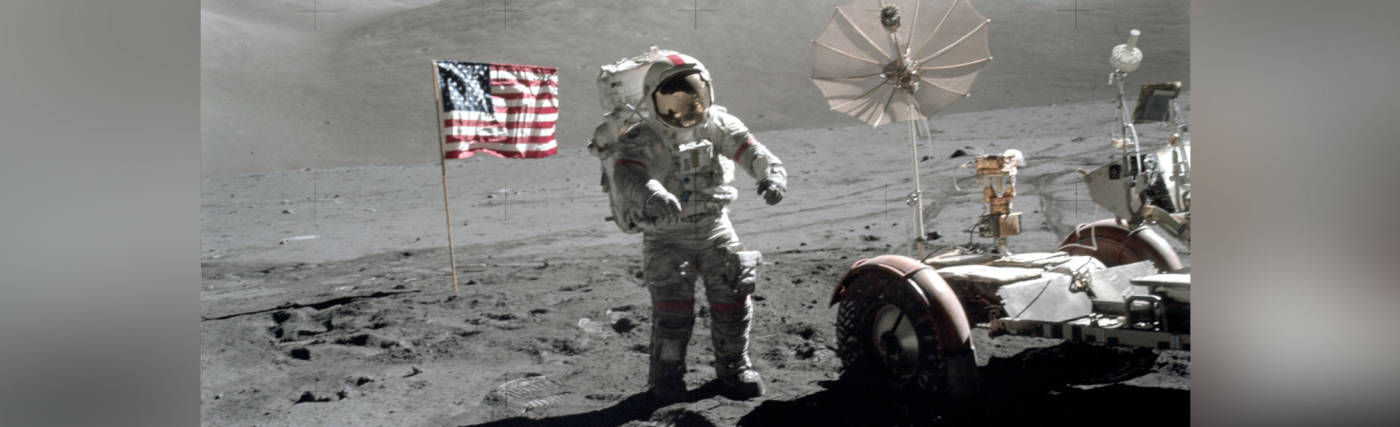
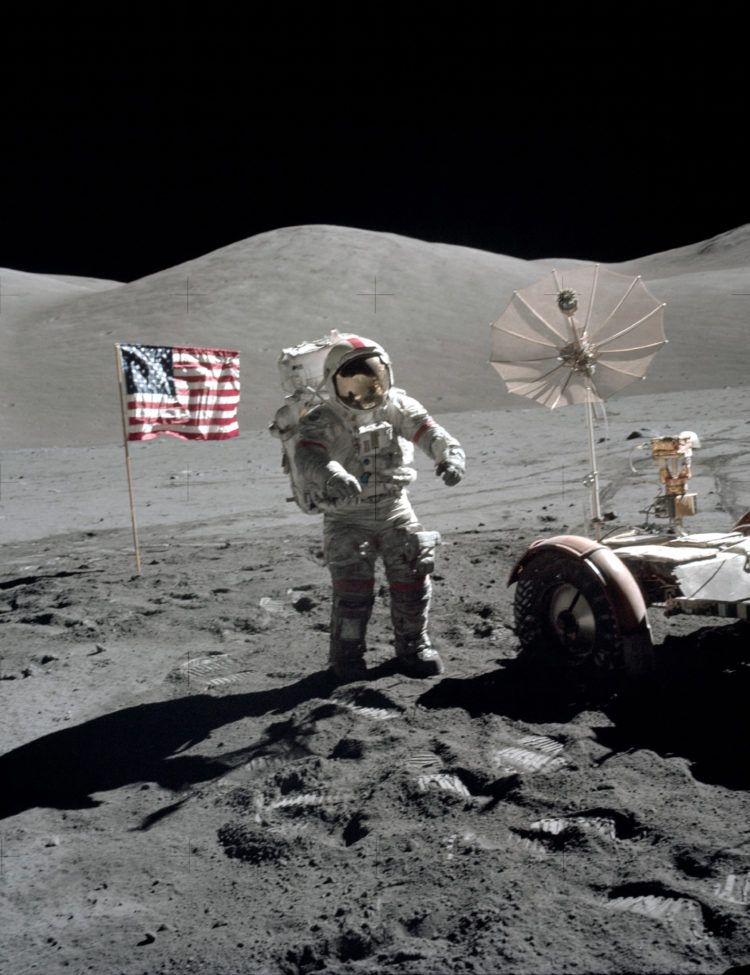
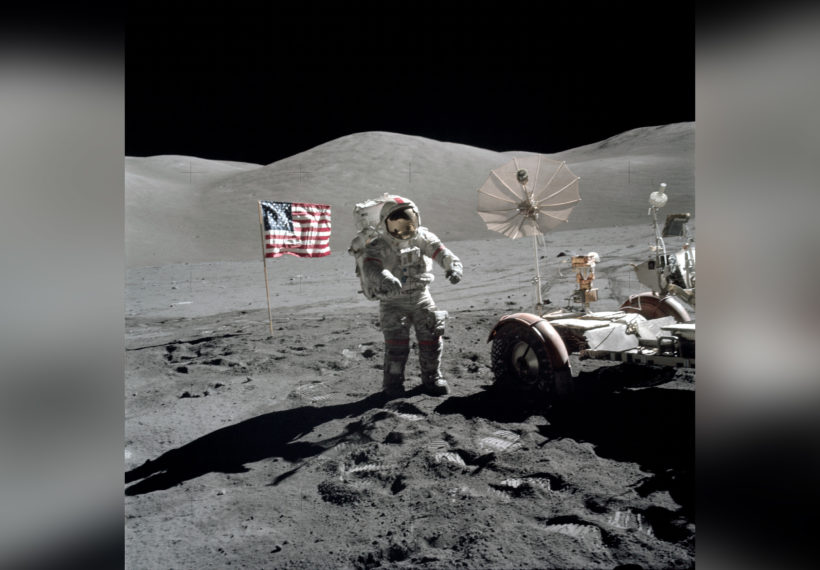
If we wanted to create a second moon how would we do it? We explore how much stuff it would take and the impact of gravity. Is it possible to make anything other than a sphere? We ask: Why is there so much skepticism about the moon landing? Is there any believable way it could’ve been faked? We break down moon landing deniers and why they’re right– just kidding, they’re completely wrong.
We explore plans to return to the moon and the commercialization of space travel. Are there any resources on the moon that we could use? Could we make Disneyland on the moon? Could people live there? At 1% of Earth’s mass, it’s a small world, after all. Discover NASA’s history with commercial industries and how exploration and research often pave the way for industry. All that, plus, hear Neil’s reflections on the past year, and hopes for the new one.
Thanks to our Patrons Mahina Knuckles, Robert Slosser, Brandon Herbst, Joshua DeNoyer, Chazz Gencarelli, christopher manley, Michelle Foster, Lunavyx, Kenneth Freeman, and Andrew Staupe for supporting us this week.
NOTE: StarTalk+ Patrons can watch or listen to this entire episode commercial-free.
Transcript
DOWNLOAD SRTWelcome to StarTalk, your place in the universe where science and pop culture collide.
StarTalk begins right now.
This is StarTalk, Cosmic Queries edition.
And if it’s going to be Cosmic Queries, we’re probably going to have Chuck Nice in the house.
Yes, Chuck Nice, your personal nothing.
Your personal nothing.
I’m your personal astrophysicist.
You’re the personal astrophysicist, making yourself available for people all across the cosmos.
I am your personal nothing, which means leave me to hell alone.
You are Lord Chuck.
Lord Nice.
Duly designated by a general in the US.
Air Force.
All right, Lord Nice, you got questions for me.
You know, this is the beginning of the year, you know, a third year of the pandemic.
So, a lot of people are bummed out.
But, you know, how much longer must we endure?
But a new year, of course, is always a time for sort of thinking fresh thoughts and possibly putting a positive spin on bad things and just putting positive out there at all, whether or not it’s a spin on something bad.
So, maybe I’ll try to give positively tinted answers to every question you have.
Because otherwise, it’s just a grab bag, right?
Let’s be real, though.
I mean, when do you ever give a truly negative answer?
No, that’s true.
Dr.
Tyson, I would like to know about time dilation.
Oh, well, dumbass.
It’s like you’re never negative.
No, that’s true.
No, I’m not negative.
That’s true.
That’s true.
But maybe I can do a little extra.
We’ll see.
Bring it on.
I like that.
This is the time of year to do that.
So you’re absolutely right.
Hey, how about Sean Grossman?
Let’s see what Sean Grossman is saying here.
It doesn’t say where he’s from, but he says, Hey there, Dr.
Tyson.
What do you think our first contact with alien life will be?
And how will it be received?
And I think by received, he means like, how will it come to us?
Not how will we respond to it?
So I have to stay positive here.
Right off the back, it’s a challenge.
First question.
First question is challenging the positivity.
The aliens would ask us, do you prefer to be boiled or sauteed?
Exactly.
It’s like, happy new year.
Well, there goes the positivity.
Wow.
So I think, I’ve said this before, but let me say it with precision, in this moment, I think the evil alien trope, which is in so many films, I think all of them, except for ET maybe, all right?
I don’t know.
They’re always evil and they want to harm us.
And that is not derived from, it’s what we think aliens will do to us.
So we’re projecting that on to aliens.
Well, yeah, we think that’s what they’re doing.
But it can’t be based on that, because we don’t know anything about the aliens.
But what we do know is ourselves.
And I think those scenarios are based on, not what we think aliens would do to us, but based on what we know we would do to ourselves.
Because we’ve already done it.
The issue is, you have a high technology civilization encountering a low technology civilization.
And it has never boded well for the low technology civilization among humans.
So I think these are projections, these are mirrors to our own conduct without us even knowing it.
So let me take a different tact and say, maybe the aliens are better than us.
Maybe they have no reason to be evil or to take our resources here on Earth because the universe is full of resources.
There’s nothing special that Earth offers that they can’t get elsewhere.
So they can’t be looking for that.
And so maybe they just want to make friends with us and just, you know, break out the M&Ms.
Break out the M&Ms and the Reese’s Pieces.
We’re going to make some alien friends.
And give them a sugar dependence.
Well, now, but what about this?
Just to dovetail into the question.
What if the aliens are so advanced that what we perceive to be evil, they perceive to just be the fact that we’re insignificant?
Is this your question?
No, no, this is kind of an extension of Mr.
Grossman’s question.
No, you’re lying.
You’re lying.
I am lying.
This is my question.
You’re lying.
That’s a good one.
We’ll take it as an add on to the Patreon members question.
The Patreon addendum.
That’s it.
If you’re walking down the street and you step on a worm, you don’t want all the worms thinking you’re an evil person who hates worms.
It was just kind of inadvertent.
Yeah.
I mean, worms mean nothing to you.
But then why would they spend all that effort to come to Earth?
See, I think we’re allowed to ask that question.
Because if they are, it’s like because you’re not going to say, let me drive 1,000 miles and then step on worms in the lawn of a stranger.
This is not…
So…
That’s funny.
That’s pretty funny.
Where are you going?
Arizona?
Why?
Got to kill a scorpion?
I got to kill a scorpion.
You’re driving to Arizona to step on a scorpion?
By accident.
Yeah, exactly.
Right.
So, yeah, I don’t see them coming this far for that reason.
Maybe they just want to, you know, be friends with us.
Right.
That’s all.
Yeah, exactly.
That’s true.
Okay.
I like that.
And guess what?
You did it.
You stayed positive.
Everything was positive.
Okay, one other positive thing.
I have a negative positive thing.
You ready?
Okay.
If the alien says, take me to your leader.
Right.
Take them to a scientist anywhere.
Right.
Don’t take them.
Right.
Whatever you do, don’t take them to the head of any country or any.
No, no.
It’s a bias I have.
I don’t want a politician to be the first encounter with an alien.
I kind of don’t want that because politicians can’t get along with each other.
How do we think they get along with an alien?
Whereas scientists get along with each other internationally and have done so ever since there’s been science.
So if there’s a chance of kind, considerate exchanges that might have some way to even communicate.
They’re not going to be speaking English or Mandarin or Spanish or Swahili or Burdu.
No, they’re speaking none of that.
They speak octopus.
They might have a periodic table of elements that you can compare it with or Pythagorean theorem.
There’ll be some rudiments of cosmically common communication that we might be able to invoke and be the first ones to say hi.
You can also take them to Oprah.
Clearly that works.
I don’t know why more sci-fi movies don’t do that, where they land and they go take us to Oprah.
Oprah’s down with everybody, right?
Right, exactly.
All right, let’s go to Sky.
This is Skyletta Ramona.
Skyletta Ramona.
Hello, Dr.
Tyson and Lord.
Some tell me that’s not how it’s pronounced, but go ahead.
I’m sure it’s not, but she’ll figure it out.
What kind of…
You’ll figure it out.
You’ll know who the hell this is.
If I was on this, if I put a question into this show and they said, we got Buck Rice from New Jersey, I’d be like, hey, that’s probably me.
Chuck messed it up.
That’s probably me.
This is Skyletta from Hawaii.
She says, hello, Dr.
Tyson and Lord Nice.
Do you believe that particles are point-like in particles or string-like as in string theory?
Also, I heard from Brian Green that string theory required 10 dimensions for the math of string theory to work.
Is that so and why?
That’s a lot.
That’s a lot in that question, Skyletta.
That’s a lot.
God.
That’s the rest of the game.
What, we’re supposed to distract you in Hawaii?
I know.
Should you be surfing?
Should you be out on the North Shore right now just chilling, sucking on a coconut drink and watching the sunset?
You’re talking about String Theory and Ten Dimensions.
Jesus.
Good stuff.
I mean, that’s the rest of the show, to be honest, but you know.
Okay, so here’s the thing.
Of all the particles have a known size except electrons.
Electrons have no known size.
They are smaller than our greatest efforts to ever measure how small they are.
So as far as we’re concerned, they’re infinitesimally small.
How is it that I did not know this all this time we have been together?
That is a fascinating fact.
You didn’t know this?
I did not.
Yeah, there’s no known dimension for electrons, correct.
Get out.
Correct.
Fascinating.
Correct.
Plus, while we’re there, every electron is identical to every other electron.
So if I have a wire filled with electrons, okay, and I stick one electron in the back of where I am, and this wire goes, I’m in New York and you’re in LA.
I put an electron in the back.
That one, the negative charge will push the other one forward and it’ll keep doing that until an electron pops out the other side.
And as far as that person is concerned, I sent them my electron.
Amazing.
That’s really cool.
Even though my electron is still back here.
That’s awesome.
That’s why electricity works.
That’s why I can send you a message.
You get it instantly.
It all goes by electrons over wires.
And all the electrons are identical.
And I put something here.
It pops out the other side.
And there you have it.
Did the electron actually go from New York to LA?
No.
No.
Yeah.
That is just great.
So now, so back to string theory.
So we have several fundamental particles.
Electrons are among them, quarks, photons.
They’re anti-matter counterparts, right?
The anti-matter counterpart to an electron is a positron, okay?
So what string theory suggests is all particles are strings that vibrate differently from each other.
So electron looks different from a quark or from anything else because of the nature of the vibrating string, because of how the string is vibrating.
But we mean everything is just made of strings, right?
So that simplifies it.
We’re not made of multiple different particles.
We made of one kind of string vibrating differently.
Now the point is that exists in a higher dimension, but as that string, as we experience that string in our lower dimensions, those vibrations manifest as these particles.
So, it’s not like a particle is just a point, or is it a string.
The whole point of the string, the whole feature of the string is that it is a string in higher dimensions and a particle in your dimensions.
That’s awesome.
I like the idea of the whole point of the string.
Anyway, that’s okay, cool.
Well, great question, Skyletta.
Way to jump to segments there.
We got to take a quick break.
This is Cosmic Queries, 2022 on StarTalk.
I’m Joel Cherico, and I make pottery.
You can see my pottery on my website, cosmicmugs.com.
Cosmic Mugs, art that lets you taste the universe every day.
And I support StarTalk on Patreon.
This is StarTalk with Neil deGrasse Tyson.
Thanks for listening.
Cosmic Queries, beginning of the year edition.
Trying to spend positive thoughts on to all that has brought us down in these past two years.
Entering our third year in the Coronaverse.
Ooh.
And then knocking out the Greek alphabet there.
Rock the Omicron, dude.
Well, when we get to Omega, kiss your back, oh nevermind, sorry.
That is the end of it all.
No letters left.
I was about to say, kiss your black behind, goodbye, but.
I was like, let me chill out.
Yeah, but when we get, yeah, Omega, that’s it.
That’s it, when you get to Omega, the Greek alphabet can’t help you.
That’s it, game over, baby, game is over.
I’m pretty sure COVID-19 doesn’t know about how many Greek letters there are in the alphabet.
I don’t think it cares about that.
I’m just thinking.
All right, Chuck, give me more.
Here we go, here we go, here we go.
Let’s go with Edward Trahan.
And Edward says, hello, Neil.
Hello, Chuck.
My question is, if humans were to build a massive object in space, let’s say just the size of the moon, would it generate a gravitational pull?
If so, would it depend on what materials would it be made of and what shape it was?
Or is there a certain size threshold?
What is it that would give it gravitational pull?
I love that.
Great question.
So, first of all, you’re going to make something the size of the moon.
You need that much mass.
Kind of.
So, where are you going to get it from?
So, what you could do is get it all from the moon, and then our moon would disappear, and then you just create another moon.
So, what did you gain by that?
The moon is actually about 1% of the mass of the Earth.
So, if you wanted to hue forth another 1% of Earth’s mass and put it up there in orbit, you can cart it out there.
Yeah!
Just put it out there and just keep adding to it, and you can just keep building and building and building, and we can watch this moon construction project in orbit around the Earth.
And yes, the gravitational field depends on only 2 things, how much mass it has and how far away you are from it, and that will tell you how strong the gravity will be at your location.
But for your gravity on the surface, it depends on what the density of the material is that you use.
So depending on how dense the material is.
But yeah, you can build up stuff and create a whole world.
And yes, it will have its own gravity.
And you want to build a shape that’s not a sphere, that’s very hard to do above a certain size.
Because the gravity will make the high places low and fill in the low places and make them high.
So that’s why large objects are all spherical in the universe.
Large sort of solid objects.
So yeah, you can’t make a cube the size of the moon.
It won’t maintain itself in that shape.
I don’t know if you knew that, Chuck.
Cool.
Yeah, but if it’s small enough, it will take on any shape.
If it’s small enough, that’s why if you look at tiny asteroids, they look like Idaho potatoes.
They’re not spheres.
They can be all kinds of weird, funky shapes.
Because above a certain size, gravity becomes more important than the things that are otherwise giving shape to it.
And gravity wants all parts of that object to come as close to the center as possible.
And if you’re high up and there’s a ditch near you, it’s going to take stuff that was high up and put it down in the ditch to bring it closer to the center of the object.
And so there you have it.
You say, well, how about our mountains?
Like, okay, Mount Everest?
Really?
Okay, it’s about five miles up?
Really?
That’s what you’re thinking about?
Well, how big is five miles compared to the 8,000 miles of Earth’s diameter?
Five miles on 8,000.
So Earth is basically perfectly smooth if you’re a giant and you came up to it with a finger and rubbed your finger across.
You would not notice the mountains, the valleys, the lakes, the oceans.
In fact, if you shrunk Earth down to the size of a cue ball, it would be smoother than all cue balls ever made.
Just saying.
Nice.
Oh, well, that’s a very interesting game of billiards.
That’s all I can say.
Yeah, so you’re going to make a moon.
If it’s big, it’s going to be spherical.
Deal with it.
There you go.
That’s very cool.
All right.
Give me more.
Let me say, I’m supposed to say nice things for the new year for every question.
So if you want two moons, that would be doubly romantic.
How do you like that?
The moonlight.
That’d be beautiful.
And over here, you’d have a crescent moon, and over there, you’d have a half moon.
And that would just be beautiful.
Sweetie, let’s take a walk by the moonlight.
There’s always moonlight, okay?
Always.
You’re not doing anything special.
There’s always moonlight.
Okay, I forgot about that.
Receptive of you, Chuck.
This is Brandon.
He says, Hey, Neil, I have been a fan for years.
You actually helped me get interested in space, along with your book, The Universe, in a nutshell.
My question for you is, why do you think there is so much skepticism and belief about the moon landing?
Scientifically, there’s more evidence to support that we went than there is to say that we didn’t, yet there are still naysayers and skeptics.
With all the footage, audio, documents, etc.
do you think there’s any believable way they could have faked it?
Man, okay, so first of all, I think there is a book called The Universe in a Nutshell, but I didn’t write it.
So, just put that out there.
If we’re talking about truth in advertising, if we’re talking about what people believe and what they don’t believe, I think there actually is such a book, I didn’t write it.
The book you might be referring to is Astrophysics for People in a Hurry, that could be the book that you’re thinking of.
That’s what he’s talking about.
So, my take on the moon landing is, how amazing it is that we live in a time where our science and technology is so advanced, that people living among it remain in denial of what those advances can bring to us.
For me, it’s evidence of how advanced we are.
What a compliment.
That’s how I…
I mean, it relates to Arthur C.
Clarke’s edict, any sufficiently advanced technology is indistinguishable from magic.
So, if you don’t know or understand how advanced these technologies are, it will look like magic to you.
And you’re not going to believe that magic is real, so you’ll have to say it’s faked, because you know Hollywood is really good at faking this stuff.
Again, these are very high compliments for the technologies that we have.
So, plus, we went to the moon nine times.
So, if you think we faked it, you’d have to think we faked it nine times.
And people know that only happens in marriage.
No, stop, Chuck.
This is the New Year, Chuck.
Say nice things, Chuck.
Nice things, nice things.
So, yeah, so I’ve stopped chasing down the people who are technology deniers because I know what the technology is.
I know how we make it happen.
Yeah, it costs a lot of money.
We spent a lot of money.
And by the way, you can calculate how much fuel is in that Saturn V rocket when it launched.
If you do that, this is enough fuel to take the lunar module, the three astronauts, into orbit, leave orbit, go to the moon, orbit the moon, return to the orbit, come back and land.
That’s how much fuel is in there.
So where the hell do they think that thing was going?
You saw it launch.
That was real.
What, do you think it was going to Piggly Wiggly to pick up some groceries?
No, that sucker was leaving Earth.
So if you do the math, you end up less stupefied by the things the math empowers in modern society.
That’s all.
That’s a mic drop, baby.
That’s a mic drop.
We got to take a quick break, but when we return, we will continue with Cosmic Varieties on StarTalk.
We’re back, Neil deGrasse Tyson here.
You’re a personal astrophysicist, and of course I got my co-host, Chuck Nice.
Hey, hey, hey, hey, Neil.
And if you’re watching or listening to this show on January 4th, allow me to announce that we are in Earth’s perihelion today.
Uh-huh.
Yeah, today, Earth is at its closest distance to the sun of any other day of the year.
And it’s midwinter in the Northern Hemisphere, which means our distance to the sun has nothing to do with what season it is, but that’s another show.
This is Cosmic Queries 2022.
So what do you have for us?
Yeah, yeah.
Let’s jump into JMAX 479.
And JMAX is, my real name is Jason M.
Benton, Jason M from Bentonville, Arizona.
And he says, hello, Dr.
Tyson.
Please remind us of plans to return to the moon or plans for moon habitation or maybe a moon space station.
Are those things relevant?
Relevant?
Ooh, that’s a loaded question, like relevant to what?
To us, to the future, to itself, to…
See, you know what’s good about the moon as a target, even though we’ve been there before, right?
I’m sure we’d all get excited if we landed there again and we would be really irritated if somebody else lands there again before we do, right?
But I can tell you this, that the moon, you can get there in three days.
That’s a news cycle, right?
You can launch today, get there by Friday, or whatever, whatever day it is.
Get there within the week, you can track it, you can do your business on the moon and then come back.
And all that happens over a time period when no one loses interest in your journey.
So I don’t mean to speak of it on such crass terms, but the reality is public support is fed by media interest.
And if the media can stay attached to what’s going on over that appropriate time interval, I think it’s win-win for everybody.
So trips back to the moon with human beings.
Yeah, I mean, they’re in NASA sites, I always think the timelines are a little more optimistic than what is real, but who am I to say?
But the Artemis mission is an architecture of rockets and capsules that will take human beings back to the moon.
And I don’t see why that won’t just continue within the NASA budget that’s already been allocated.
So yeah.
Now, what was the last part?
What is its value?
Yeah.
Well, space stations on the moon, moon habitation.
Would those things hold value?
Are they relevant in any way?
Are they relevant?
Well, if people are interested, they’re relevant.
If you’re not interested, it’s not relevant to you.
By the way, a whole lot goes on in the world that you might not be interested in.
That doesn’t mean it shouldn’t happen because it actually interests other people, right?
So, I don’t have a problem with that.
And at some point, you’d want to attach to private enterprise.
There could be some interesting journeys.
You know, would there be Disneyland on the moon?
That’d be weird and initially a little sad, but then you say, yeah, of course, that’s what it’s going to be.
So, is there anything, is there any resource on the moon?
I remember once, just give me a second here.
I don’t want to screw it up.
You said that the moon is bombarded all the time with helium-3?
And so…
And once again, you have not earned the right to ask a question, even though you’re my co-host.
But I will address this and I’ll dovetail it into the actual Patreon member’s question.
So, in the solar wind, these particles that, this effluence from the sun that leaves the sun continuously, the sun is losing mass continuously to these outer particles, the solar wind, and we call it the solar wind.
It’s pretty accurate to call it that, actually, because they’re particles that come from, you can’t see them, they’re small, they’re fast moving.
These are the particles that hit Earth’s atmosphere and render it a glow and you get the aurora.
And you get especially good aurora when you get solar flares aimed at Earth because then it’s intensified.
But anyhow, point is, some of these particles are helium, the helium nucleus, minus one of the neutrons.
So a red-blooded helium nucleus has two protons, two neutrons.
But you take away, so that’s helium-4, because there are four particles.
You take away one of them, you get helium-3.
Okay, so what, BFD?
The point is, if you harvest the helium-3, which is embedded in the soils of the moon, it’s not really soil, it’s called regolith.
It’s like pulverized rock.
Soil on earth has, like, microbes and things, and that’s what we mean by soil.
None of that is on the moon.
But I loosely call it soil.
It’s embedded in the soils of the moon.
If you remove that, you can put that into a nuclear fusion reactor, and helium-3 is one of the intermediate steps of going from hydrogen to full-up helium-4.
And if you supply it with that, oh, my gosh, it’s a game-changer for your thermonuclear fusion reactors in terms of the cost-benefit calculation you’d be doing for it.
So I’d be disappointed if we had colonies on the moon that didn’t undergo nuclear fusion as their energy source to power the entire moon, because it’s free sitting right there in the soil.
That’s very cool, actually.
There it is.
So there you have it, man.
And good memory, Chuck.
Good memory, Chuck, yeah.
Yeah, I was throwing a dart at a board, but it actually…
By the way, and one thing about colonies, you know, if there’s Disneyland, and there’s, you know, they have hotels and restaurants and, you know, parades, whatever, I mean, why not?
I mean, I don’t see any problem with that.
I don’t know about that.
It’s kind of…
I don’t know.
I feel like we’re somehow sullying the moon, like our presence there.
Chuck, you know how big the universe is?
I feel like we sully the universe, to be honest.
It’s like…
By the way, here’s one something for you.
Ready?
On the moon, helium balloons sink.
Oh, wow.
They only rise up because they’re more buoyant than the air that surrounds them.
If you go to the vacuum of the moon, the helium balloon will fall as fast as a brick will.
That’s great.
On the moon.
That’s pretty awesome.
Your helium balloon.
Yeah.
I think we slowly, the universe, I have a thought where in every sci-fi movie, there’s a planet that’s destroyed.
And then whoever’s watching becomes the last of that species.
And it’s just like, I watched my planet destroyed.
And I’m like, you know, if it were Earth, and I’d be like, Chuck, man, you just saw your planet destroyed.
And be like, yeah, I mean, you got to know those people.
Maybe it’s not that bad of a deal.
Chuck.
We’re supposed to have happy thoughts at the beginning of 2022.
That’s true.
Exactly.
Let me have a happy thought for you.
I got one ready.
So there’s an old oldie, but goodie, but I got to say it right.
So, you know, if you do have a whole colony, you’d have all the trappings of what you’d have on Earth, except on the moon.
And but you’d have to all the if you go to the restaurants, the food would be very different because you’re in less gravity and less air pressure.
And so so if you want to sort of know about those restaurants, however different the food will be, what you know is they won’t have any atmosphere at all.
That’s stupid, but it’s fine.
Okay, what else?
Tim Jackson.
Time for like just a couple more questions.
Okay, go.
Tim Jackson says this.
With the ever increasing commercialization of space, how is NASA positioned in the role of the space community?
And how is it changing?
What are some of the upcoming missions that may partner commercial enterprise along with the missions of NASA?
Let’s set the record straight.
NASA has always partnered with commercial industries.
The LEM that landed on the moon was designed and built at Grumman Aerospace right here in Bethpage, Long Island.
What?
Alright, I’m speaking to you from New York City.
You go to Bethpage today?
People still walk the streets proud.
They had an uncle, an aunt, somebody who worked for that LEM, right?
And so it was partnered.
So we paid for it.
Grumman built it, okay?
So we partnered with private enterprise from the beginning.
The difference is we had specs that they had to be built to, and so Grumman is sort of responding to NASA in what it produces.
That’s different from what SpaceX is doing.
SpaceX says, I’m building a rocket, whether you like it or not.
Oh, I have a rocket and I can launch satellites.
And NASA says, hey, you could do it on the cheap and we got to launch this satellite.
We want to buy your payload for that next launch.
So it’s still a commercial partner.
The difference is NASA is getting it off the shelf rather than a one-off, which is what the lambs were.
They were just one-offs for those missions.
So the partnership has always been there.
And the United Space Alliance, and it’s gone through several different incarnations with names.
But Boeing has been a part of that.
Lockheed, later Lockheed Martin, has been a part of that.
Martin Marietta went before they merged.
So there’s a long history of this.
So here’s the difference.
You need NASA to do the frontier stuff that doesn’t yet have a profit motive, that has geopolitical value, but nobody can make the money on it just yet because there’s a risk factor they don’t know about and what do they do and why and how would they?
The governments do it.
We find out where it’s safe to land, where it’s not.
All that gets figured out.
Private industry comes in afterwards.
So that’s why we now have private industry taking people into orbit.
It used to be just NASA.
And now SpaceX has taken astronauts to the space station.
Let’s do it that way.
Because if you’re private enterprise, you could probably do it for less.
But NASA doesn’t have SpaceX doing a frontier mission on Mars if it’s a one-off.
That’s not a business model.
And all research typically are one-offs.
The James Webb Space Telescope.
That’s not on somebody’s shelf.
That stuff got built from scratch.
And so that’s what you need NASA for, the frontier.
The rest of that private enterprise brings up the rear.
And that’s how it was with the early ages of exploration, where governments sent the explorers, and then later on, the Dutch East India Trading Company made a buck off of it.
So there you have it.
Private-public partnerships, hand-in-hand, pretty much always.
Always, yeah.
That’s how it can be, as it has been, and as it should be.
Okay.
So Chuck, we hardly have any time left.
This is the beginning of the year.
Can I offer you just some personal reflections?
Always, yes.
Always, okay.
I miss your personal reflections because we used to do it all the time when we did your Cosmic Perspectives.
But we stopped doing your Cosmic Perspectives.
Let me hand you one right now.
You ready?
We’ve been through some very challenging years with the coronavirus, the COVID-19 virus.
And I was early out of the box on that one with a tweet on March 6th, 2020.
I said, this is a virus that doesn’t care where you live, who you pray to, you know, who you have sex with.
None of that, it doesn’t care about any of that.
It just cares that you’re a human.
And so to combat this, we need coordination internationally across tribal boundaries, as we’ve been expressing them in modern times, to fight a common enemy.
It’s almost like an invader from space.
It’s not from space, but it’s like that.
Aliens just want to kill all the humans.
We have to band together and we didn’t.
And that upsets me as a member of a species that has the power and the knowledge to have done something about it.
So for this year, the 2022, I want to believe that people will see and understand and recognize what values science has, not only to our ability to thrive, but at its most base level, our ability to survive.
Science tells us what’s around the corner and why and how dangerous it is and what we can and should be doing.
And you know what space exploration does for me?
When I see the NASA docket for 2022, I say, yes, oh, we’re going to try to deflect an asteroid and save humanity in doing so.
Oh, we’re going to go back to Mars, a neighboring planet.
We’re going to do these things.
And it’s a reminder of how great we are as a species, how great we are as an intellect.
And so what a shame to have this intellect and not invoke it in the best ways we know how.
So I look forward to 2022 as a way where humans are back on the map showing the universe how smart we are so that we become better shepherds of our own fate as we move forward in this century, this millennium.
Chuck.
Man, that’s beautiful, man.
I mean, that really is.
I’m not screaming at you here.
No, you’re not.
Well, when you raise your voice in a positive tone, it’s not screaming.
It’s excitement.
It’s not screaming.
I hadn’t thought about that.
Yes, yes.
You know, if you were saying Chuck go to hell, that’d be screaming.
That would have been screaming.
All right.
We got to call it quits there.
Happy 2022 to everyone.
Star Talk is still strong.
We’re at it, and we’ve got more of the universe to bring down to Earth.
Much more of it coming soon.
I’m Neil deGrasse Tyson, your personal astrophysicist.
As always, and forever, and for this year, and forever more.

 Become a Patron