
Simulated visualization of the Universe showing galaxies organized into the cosmic web credited to V.Springel, Max-Planck Institut für Astrophysik, Garching bei München.

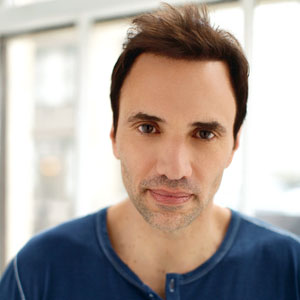
Cosmic Curiosities, with Paul Mecurio

Shown: A three-dimensional, simulated visualization of the Universe showing galaxies organized into the cosmic web. Image Credit: V.Springel, Max Planck Institut für Astrophysik, Garching bei München.
  • Free Audio
  • Ad-Free Audio

About This Episode

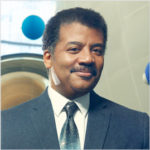
On this week’s episode of StarTalk Radio, Neil deGrasse Tyson and comic co-host Paul Mecurio sit down to answer a grab bag full of Cosmic Queries that span the cosmic spectrum. We start at the beginning – the Big Bang. Is “Big Bang” a misnomer for what actually happened? Neil and Paul try and figure out if there’s a better name. You’ll learn how the origins of the name “Big Bang” were birthed from the Steady-state model hypothesis. Discover more about the differences between a law, a hypothesis, and a theory. 

We ponder a thought experiment that explores the boundary conditions of the Earth and the Universe. We ask: if you travel close to the edge of the universe, will you see the other side? Find out the immense reach that astrophysical terminology has in popular marketing and everyday products. We discuss Star Trek and what things from the show could be true in real life.

You’ll hear why space tourism requires fundamentally new technology in order to make it accessible for everyday people. Neil tells us about his lottery idea that can send people into space for one dollar per person. You also find out the real costs for sending things into orbit. And, Nell explains why it’s almost certain that there will be fatalities when pushing a frontier forward, like the early days of the airplane industry. 

Dive into the delicious mysteries of dark matter: Is it a placeholder for our incomplete understanding of gravity? Does it work differently on galactic scales? Can we eventually use it to help us travel through space? Learn more about the science of something exploding in space. Get details on the tricky business of catching neutrinos. Lastly, you’ll discover why it’s hard to pinpoint the center of the universe. All that, plus, you’ll explore the obstacles in trying to communicate with extraterrestrial life. 

Thanks to this week’s Patrons for supporting us: Valentín Elizalde, Tyler Ford, Ted Shevlin.

NOTE: StarTalk+ Patrons and All-Access subscribers can watch or listen to this entire episode commercial-free.
Transcript

DOWNLOAD SRT
From the American Museum of Natural History in New York City and beaming out across all of space and time. I'm your host, Neil deGrasse Tyson, your personal astrophysicist. And we have a Cosmic Queries edition, but now it's kind...
From the American Museum of Natural History in New York City and beaming out across all of space and time. I'm your host, Neil deGrasse Tyson, your personal astrophysicist. And we have a Cosmic Queries edition, but now it's kind of, they're questions that kind of land in their own category. And so what do you do when you put questions together that belong each in their own category? You get a kind of a grab bag, a kind of a Cosmic Curiosities all mixed together. And I got one guy who's a Cosmic Curiosity himself, Paul Mecurio, Paul. Well, thanks for being on StarTalk. I've been on your show, the Paul Mecurio Show multiple times. Yeah, you're great. Well, thank you. You say that to all of you. You're actually, I didn't think you knew much about science, but I was surprised. You actually killed it. No, I love being on your show because you're curious and your fans are curious and I like being amid curious people because then I can fulfill my prime directive as an educator. I told my wife that if I had you as a science teacher, I'd probably be doing something in science. Really? Because I do think the message is the medium in some level and the person communicating and I had this guy, this big hulking, bitter guy who was in it 30 years and he would smoke. Bitter teachers, bitter teachers. He would smoke like, all right, we're gonna make a battery today and they're like, okay. What an exciting thing. I remember eighth grade, I couldn't, I'm like, this is the worst. I got a C in chemistry, but anyway, the way you, and I know you come on with Stephen Colbert a lot and I work on the show. He just loves. You're the warm up guy. Yeah, but he brightens up when you come on, like in rehearsal. Who are we having there? Oh, God, that's great. I don't have to do anything. I'll just ask one question. He'll talk for two segments. So you have a big fan over there. Yeah, no, it's excellent, excellent. So you collected all the questions. These are questions from the, I gathered from the internet. Right, along with the Lindsay. They're not specifically solicited because they're leftovers, really. They're like the leftover podcasts. I'm a leftover guy. Right, this is about right. What did you wanna call this? The Cosmic? Cosmic catch-all. Catch-all, Cosmic, yeah, the Cosmic catch basin. Cosmic trash bin. How about Paul's pathetic leftovers? Paul's pathos. All right. They all have mold on them and everything. No. No, the people, they should be rewarded for asking questions that fit no category. Yeah, and they're very good questions. There aren't enough people like that out there who walk at a pace that no one sees or understands. That's a good way of putting it. No, no, there's a quote from Nietzsche. This is one of my favorite quotes ever. Those who were dancing were deemed insane by those who could not hear the music. Whoa, that's heavy. Yeah. I think we should end the show there. Yeah, we're done. Think about it, if you're looking through a glass wall and you don't hear the music, what are people, and they're... That's so true. They're just jumping up and down, waving their appendages. All these people are having seizures. And if you don't know they're playing music and you can't hear the music, you think they're insane. It's definitely a good point because... So therefore, I respect people who think differently. In fact, one could define genius that way. A genius is one who sees what everyone else sees but thinks what no one else has thought. Were you always like this as a child? No, no, no, because you're one of the most... Are you psychoanalyzing me, Matt? No, no, no, I'm just curious. Tell me about your parents. That's what this sounds... What, what? No, I'm curious because of how you're so well-versed, not just in astrophysics and science but in pretty much everything and I'm just curious... No, there's stuff, plenty of stuff I'm not versed in. I just don't talk about it. That's smart. Huge gaping hole, but if I don't talk about it, you don't know how unversed I am. That's good PR. No, I just, anyway... No, you know what it is. You know what it is. And I mean it as a compliment. I'm not trying to be funny. It's hard to know if you're a compliment. Carol, did I just compliment him? He's asking his wife in the peanut gallery, was that a compliment? Of the spectrum of comments that come out of your husband's mouth, that counts as a compliment. Okay, hate to be in your home. All right, no, we got three segments of this. We got more. Okay, let's get some first questions going. Okay, all right. We're starting with our Patreon folks. Patreon folks, gotta, gotta, gotta, gotta. Priority people, gotta love them. The priority Patreons. This is John Callahan. Is the name Big Bang a misnomer? From what I recall, we don't actually have any evidence the Big Bang started with an explosion like a supernova or a black hole merger. Yeah, so first of all, the Big Bang was a name given to this idea that the universe started in this one primordial explosion. It was given pejoratively to this idea by proponents of what at the time was known as the steady state theory, hypothesis of the universe. One way the universe always was and always will be, even though it's expanding, it's always been expanding. And matter is spontaneously created in the vacuum to fill in for where space is getting thinner. So that you'd always see a universe that looked about the same. This is called the steady state hypothesis. You could get that out of Einstein's equations of gravity. That was allowed. But another solution was one where we're either collapsing or where we're expanding. All three solutions were allowed. The one with the Big Bang itself, there was an equal competitor to the steady state theory for decades until we finally got some evidence to support the Big Bang. And that was the famous cosmic microwave background. This is a leftover signal, signature from an explosion that started in one hot primeval fireball. 13.8 billion years ago. Thank you, sir. You don't need me for this. No, that was the only thing I remembered. You're showing off now. So it was given as a funny pejorative name, but it stuck, and if it fits, it fits. Now, it's not clear how much noise it would have made, because just the expansion of space itself, that's not associated with noise, and space is vacuum anyway, and noise doesn't propagate. So if you don't want to call it the Big Bang, because it was probably made no noise... I think you'd fix that by now. No, you call it the... How about the Main Event? Let's get ready to blow up! I think the Big Event, but the Main Event. Well, you've talked about laws and theories and what used to be called laws, we call theories. You remember that. That's a subtle point. In the old days, we'd come up with an understanding of the universe, a new law has been discovered. That's a very exciting time in science when that happens. And then you learn later on that with better instruments and more tools and deeper thinkers, that what you came up with as a law was a smaller subset of a larger understanding. So you shouldn't call it a law, but it works. So we just use the word theory for everything that works now. And if you just have an idea and it hasn't been tested, you can call it Paul's hypothesis. Right, well, there's a lot of those. Paul's BS hypothesis. But there's something you said... Right, exactly. There's something you said in this context. You said, as a quote of yours, what happened in the 20th century is that we came to learn that whatever we determined to be true about the universe may only be a subtext of a larger truth. Yeah, that's right. Not that it would later shown to be wrong. So it's not like science goes from one truth to another truth, discarding previous truths. Not the physical sciences, at least. Not since the 1600s have we been in that situation. Before the 1600s, that's about when we, the methods and tools and practices of what we now call modern science were forged. Galileo, Francis Bacon, folks said, you know, if you have an idea about how the world works, you should test it. I don't care how it looks. I don't care what your senses tell you. Come up with an experiment that goes a little beyond your senses or extends your senses. Galileo had a telescope, Liu and Hook had a microscope. You start seeing directions that were previously inaccessible to your sensory system. Your eyes, your sense of touch, taste, smell. And so the universe comes to you now outside of the experience of your senses. And the experiment then becomes the measure of what is true, not whether it makes sense. In one of my recent books, the front piece, I mean the epigraph, epigram, epigram or epigraph? I always forget what they're called. If you don't know, I'm not gonna know. Tyson said, I just lead, I just baptize people into this by saying the universe is under no obligation to make sense to you. Yeah, but we're always in a state of subtext then in some way? Possibly, there's some things we might know completely. But let it be open enough to say, this is a subset of a larger understanding. Newton's laws of motion and gravity worked. Did he experience anything faster than a running horse or the gravity of the earth? So it worked. In fact, it got us to the moon and back. But then we have particle accelerators and we have moved close to the speed of light. And we say, you know, Newton's laws are, there's weird things happening. So your knowledge is limited by what you can do at that time in the 20s and in the 80s and the 60s. And Einstein came up with his laws, his theories of motion and gravity. And we learned that it's a deeper understanding of reality that still has limits. His, you know where Einstein's theories leave us high and dry? At the singularity of the black hole and at the singularity of the Big Bang itself. It's like dividing by zero. You remember you're not supposed to do that in math class? Right, right? Okay, so there's a poster, probably a T-shirt by now, that said a black hole, the center of a black hole, that's where God is dividing by zero, right, okay? So I thought that was cute. So singularities are now the frontier of string theorists and others who are trying to take it to the next level. Got it. Just one other thing on this. Hawking said the boundary condition of the universe is that it has no boundary. Is that sort of what you're alluding to here? That's a way to think about it. I think that's a, it's an organizational thought for you. Okay, you can say, what is, here you go, ready? Holding flat earthers aside, I assume you agree that earth is spherical. It depends. Okay, so if I say to you, start walking and call me when you get to the edge of the earth. You'll say, I'm not gonna do that because earth has no edge. Meanwhile, you can walk forever and never get to an edge. So what are the boundary conditions of the earth? Is there an edge? No, there is no edge. Right, so. So you can have things that have no boundaries. They're real. The surface of the earth is one of them. So if you can have that on earth. Now you go to higher dimensions. You can just go to whole other places with that and imagine an entire universe that has no edge and no boundary. You can have no boundary in time. We live forever as a universe. There's no boundary at the other end of time. I gotta tell you, I love you. Your job's annoying because there's never an answer at the end of anything. No, we got to say no, no. I take you to places where we don't have answers because that's where things are coolest. But there's plenty of stuff we have answers to. No, I know. The age of the Earth, where humans came from. I got this. You know what I like about astrophysics is like, the names you come up with, other science. We got the coolest names. Well, wait a minute. Coolest names. Other science, like zoology, whatever, it's like Latin phrases. You have like quark, spooky action, and big bang. Who's next? Is this like Beavis and Butthead naming these things? Yes, no, we call it like we see them, okay? We, we, okay, the beginning of space, time, energy in the universe, big bang. We're into one syllable communications. For people like me to get it. Okay, there's a region of space where you fall in, you don't come out, light doesn't come out, black hole. Okay, there's a crater in Arizona made by a meteor. We call it Meteor Crater, okay? All the other sciences come up with these huge Latin, Latin, Greek derived words. Cretaceous paleogenesis. You would call it Dynapocalypse. No, I would say Big Tooth Animal, that's what we call it. Rrrr. Maybe make that noise. Make it onomatopoetic. So I think it's why so much of our vocabulary has been absorbed and adopted into the marketing of products. Yeah. Pulsar watches, I don't know if they still make them, but that was a watch, a Quasar brand TVs and microwave ovens in the old days. But today, I think it's the second, the third highest category of where you draw names from to name cars. Astrophysics. Yes, yes, yes. So, no, or science leaning astro. So let's start off, okay, all right? Aren't you supposed to be asking me questions that the public has? You want me to go to it? I count you as a questioner, you're two. Okay, so fine. This counts as Paul's question. No, no, I can go to the next question. Fine, fine. Wait, do you want me to ask the next question? No, we're doing Paul's question and make everyone pissed off at you. No, that's fine. I'm done. That's fine. I'm done, we can go to the next question. So number one in car names, I think are names that don't mean anything, like the S class for Mercedes. Just letters and digits and numbers, okay? The M class with a number, okay? Then you have locations, like Yukon or Denali. Telluride. Oh yeah, these are places. Okay, I think third is like science names, science astrophysics names. And I made a whole list of them. Is that right? Yes, I got a whole, let me read, I got it right here in my pocket. Okay, give me a second, pull this up. I swear to God I'm happy to go to the next question. No, the audience will be pissed off at you. That's fine, that's fine. Okay, ready, okay, between 1973 and 1975, what had just finished? What had we just finished doing just before that? Getting rid of Nixon. That's true, we just finished going to the moon. Yes. The car called the Apollo. Oh, I forgot about that, yeah. What did we forgot, are you that old? It was a Buick? Of course General Motors, okay? And then I got 2008 to 2009, the Saturn Car Company. Whoa. I start there, okay? They had a car called the Astra, which is basically star in Latin, okay? I got that. But this can go on and on and on. You tell me when to shut up. 2005 to current, the Chevy Equinox. I'm taking it. Equinox, you didn't know that these, okay? Keep going, here we go. Another one. Saturn, going back to Saturn, which the car company does not exist anymore, but Saturn from 2003 to 2007 had the Ion. I'm taking it. Did you say? The Ion, it's chemistry, but the sun is a ball of ionized gas called plasma. All stars are ionized. All right, I'll give you, it's a cousin, really. It's not a... But, excuse me, most of the universe is ionized. I'm taking it. I'm not giving that to you. Okay, the famous one here, 1962 to 1979, and again, 1985 to 1988, the Chevy Nova. That was the car we made out in. Wait, what's, yep, for those only listening, you should say who you were making out with. Oh. Not you and I, okay? My wife, Carol. Who was in the Pina Gallery of this dude. Yeah, we went to high school together. And you made out, the Chevy Nova's not all that large. We had a Chevy Nova. And we would go drive around. Okay, it had a bench front seat. You couldn't move the steering wheel up though. I don't think people know that a Nova was a star that had just blown up. I think Chevy, had they known that, they might have found it. Well, it's also means no going. No going in Spanish. I got another 20 cars in this list. I just wanna say, by the way, for those listening, he has it on his phone and he has so many that he must have did about 70 swipes. He just kept going and going and going. All right, we're gonna- Plus, ask me what gum I chew. Trident. Nope, Eclipse. Oh, God. Thank you. Or Orbit. Orbit, I prefer the harder gum rather than the softer gum. You're really committed to your craft. So, and there's Moonglow Bath Beads, you got Celestial Seasonings Tea, you got Milky Way Candy Bar, Mars Candy Bar, even though that's the name of the family, they named it Mars. And it's red, okay? The packaging is red, I'm taking it. That's all the time we have for today, everybody. I know, we got one, we got 30 seconds left in this. What's the next question? The next question is from another Patreon fan. Paul blew the entire first segment. One Hype Gazette asks, will space tourism require some fundamentally new technology to make it affordable for everyday people? This is Patrick Foles in Mill Creek, Washington. And we will get to that question in the next segment, StarTalk. This is StarTalk. Welcome back to the Cosmic Queries edition, where it's really a grab bag. It's Paul's, Paul Mecurio, my co-host today. Thanks for being on, Paul. From the Paul Mecurio Show on my podcast, and I've been on it several times, and it's always fun being on there with you. Thanks for coming to help me do StarTalk. I've been a big fan of the show. It was really like an honor to be asked to do this. And you collected not out of one category, you just, you got the dregs of everybody's questions. Yeah, but I think it's cool because it's like, it's a mixed bag, it's fun, you know? It's not just one topic, you know, we've got dark matter. Yeah, I think some of them are the best questions, right? They don't, they don't. There's several dark matter. March to the beat of a different drummer. Yeah. Okay, so what, you call this Paul's what? Cosmic catch-all. Catch-all, there you go, okay. So reread that question before we exit in that last segment. This is a Patreon person, One Hive Gazette. Patrick Folis in Mill Creek, Washington asked, will space tourism require some fundamentally new technology to make it affordable for everyday people? Yeah, so that's a really good question. What's interesting about access to space is if you remember your Econ 101, we think the demand is completely elastic, okay? And an elastic demand would be, if you drop the price, more people will do it. If you raise the price, fewer people will do it, but there's always a demand at a price, okay? It's one of the measures of whether something's elastic. If it's inelastic, it doesn't matter what price you charge, everyone has to buy it, and you can drive some people bankrupt or whatever. But elastic is like most products, you want them to be elastic. It's a healthy economy, okay? So, tourist seats have already been sold on the space station by the Russians, because the Americans wouldn't do it. And how much were they? They were $20 million. Why wouldn't we do it? Because it was not our, that's not how we roll. It was America, not for our greatest frontier. No, so for example, we have the right stuff. If you could just buy the right stuff, it ain't the right stuff. So our image of going into space had some of that right stuff. You don't want to sully it, right? Yeah, you don't want to sully it, yeah, exactly. I think that was, no one would say that, but I think that was part of it. But don't you think it's inevitable that- No, wait, I'm getting there, I'm getting there, yes, exactly. No, no, no, don't apologize for interrupting me. This is New York. If you interrupt me, that's my only evidence that you're paying attention to me, okay? I'm sorry, who are you again? So, you can drop the price, so if you made it 10 million, there might be 10 people who will go up. If you have a billion dollars, 10 million is lunch money, right, a lot of billionaires today. Make it 1 million, then you have all the, like, 100 millionaires, okay? So, as you go down the economic ladder, the number of people who I think would be interested in this would continue to grow. Plus, I bet, I don't know your budget, I don't know what you do on holiday, I'm not gonna ask, but I bet you would save two years of holiday expenses to go on one space trip. And you stay home and watch TV and all the other holidays when you might have gone to Aruba or whatever. Does my wife have to come? Yes, she's in the room now, the answer is yes. Can I go on a craft called Nova? So, I think there's a price that you can, you just keep doing this. Then, if there's a price below which it can't go, make a lottery. Oh, interesting. Yes, yes. So, let's say you can't get it below a million dollars. So, you sell a million lottery tickets for a dollar. You could do that every single time. How low do you? Every single seat will go for a dollar. Well, you can sell for a dollar and you get the one person and that's the million, the 10 million dollars it pays for that one person seat. You could do that every time. How low do you think the price could go realistically? It's tough. It's tough getting into space. It really is. I don't know. It's tough. Do you trust the technology on the private side to get it right and do it right? You mean to not kill you? Yes. No, people will die. That's what happened with the first airplanes. People die. Right now people... You're a bad commercial for this. No, it's just how this works. Go to space, die. No, go to space first, die. At least you went. People said, if Elon Musk has a spacecraft to Mars, would you take the first space ship? I said, no. I wait till after he sends his mother. And brings her back. If he can do that, then I'm going on the trip. Get a good Netflix account and occupy the nine months to get there. Listen, I believe in science. If you can make Disney and Disney World affordable, then I know we got something going on in science. I think you'd have to do lottery if the ticket doesn't come down to the $1,000 vacation that we would all take paying for an airplane and rental car and a hotel to go to a beach. You're dropping anywhere between $1,000 and $5,000 for a family that you might have saved up to do. And I don't see it getting that cheap. I don't see that happening. To me, it's come faster than I thought it would. I mean, it seemed like it just talked about a few years ago and suddenly we're close to making this happen. Yeah, and so as a thing, we'll watch the rich people do it first. By the way, rich people were the first to fly in airplanes. That's a good point. The first president to do it, that was headline news. President flies in an airplane. Okay, quick prediction and we'll move on. How many carry-ons am I allowed to do? I think you... Right now, access to orbit costs $10,000 a pound, no matter what it is. Whoa. Yes. So I can't do that fake, I have an emotional problem, can I bring my dog? Well, then you pay $10,000 a pound for your dog. So a lot of chihuahuas are on this trip. Forget it. You have the bloodhound and the Great Dane. You have the Great Dane on a weight loss program. You want to go to space? No, that ain't happening. No. So $10,000 a pound. Elon Musk is trying to get that down, but I don't think he's going to get it to $1,000 a pound. And what do you weigh? 150 pounds? So there'll be $150,000. Way less than a million. And I bet if you weighed 160, but you could drop to 150, you'd do that to save the $10,000. Absolutely. To go into space. I'd go on naked just to save the weight on clothes. So you talk about carry-ons, there better be some seriously important carry-on. Can I take my bowling ball on? It's going to cost you $15,000. All right, we're going to go on to another piece here. Bowling would be hard in space, by the way, if we're going there. Leave your bowling ball at home. If you get a strike in space and you don't hear it, did it happen? If you got a strike in space and you didn't hear it, you'd be bowling in a vacuum with a spacesuit on. And that would be weird. We would make a place where there's air and you could breathe. We would do that for you and your bowling ball. And one other thing real quick. I saw you were talking about something and you talked about the movie Gravity and you made the point that Sandra Bullock's bangs did not... The bangs always point you down. It was hilarious. The bangs knew where Gravity was. Which was, everything's floating around. Everything's floating around and the bangs didn't budge. That angered me irrationally. I'm sorry. And whoever cut it like immediately went to her face and said, she looked great. You're right. They were down, they were perfect, they were straight. Everything around her was floating. Now, was I wrong to go there? No, you were totally right. If you look at any picture of somebody in space who has long hair, the first thing you notice is that the hair is everywhere. That's the first thing. The women who go out with all their long hair and they don't tie it in the thing, sticking straight up. Is that why Kelly, the bald guy, he wants to keep you guessing if he's in space or if he's on a sound stage? Mark Kelly, Mark Kelly, the twins, I forget which one. I think it might be Scott, I don't know. Which one did we interview on StarTalk? We had one of those two twins. We had the better looking one, apparently, as he introduced himself. Scott Kelly, I think it was. He, yeah, maybe he had long dreadlocks. I'm gonna screw it there. I'm not gonna fool in that photo. Let me mess with him. All right, so we're gonna go on to another Patreon supporter, One Hive Gazette. This is the same gentleman, this is Patrick Fowler. He's gettin two questions in there, all right. Dark matter seems to be a placeholder for unexplained gravitational forces in the universe. Is it possible that our understanding of gravity is incomplete? Could gravity work differently on galactic scales? Not likely, it's an excellent question. First, it's not so much a placeholder. It is a placeholder, but it's not. We measure this thing out there that has gravity associated with it and we don't know what it is. Come up with a name, call it something. Call it Fred, I don't care what you call it, it's a thing. It's got gravity, we measure its gravity. It interacts with matter by gravity. So we happen to call it dark matter and everyone's thinking, oh, is it matter? It's really dark gravity. Dark matter implies you know its matter. We would label it correctly, just like the Big Bang, we'd have to call it the big event, the silent, silent movie, the main event. If it didn't make any sound, dark gravity is the accurate thing we should be calling it and we don't know what it is. But we can calculate it with it and you put it in the equations and it works. There's a term, here's the extra stuff, dark matter. Is it 85% or something like that? 85% of all gravity in the universe is of unknown origin. Gravity that we measure. So, yeah, it could be that we need a deeper understanding of gravity on larger scales, but we have examples of colliding galaxies and you can run the numbers on it and regular gravity accounts for that. And then you throw in dark matter to account for some other things that are going on. So, we think it's not that. By the way, there's a sub-cottage industry of people who think we just have to modify gravity, modify Newtonian gravity, and they abbreviated that M-O-N-D, modified Newtonian, and they called MOND, the MOND people. You type MOND in Wiki, you'll get all this description of taking Newton's gravity and adding a term to it for a large scale thing. And you can fit a few things, but there's some things you can't fit with it. So we think it's something else, that we simply don't know what it is. Well, you said you, this is something you said, you don't know if it's made of matter, it's a misnomer to send people in thought directions that's not the right path. I don't say it's not the right path. You don't wanna mislead, you don't wanna prejudge what it could be. Because then people use the word and then they get caught up in the word and then the word becomes the thing rather than the idea. Are you a WIMP proponent? A weakly interacting massive particles. Yeah, sure. The possibility of what role they could play in the universe, they do play, sure. In the universe astrophysics, we're open to anything. We are so ignorant of so much stuff. We should take any, you got an idea, bring it on and give us ways we might test it and we'll test it. Is there a process of elimination? Are you all crossing things off the list? You wanna come up with a hypothesis that has enough detail in your predictions that we can rule it out if we make the experiment. If you just say, oh, it could be just something that's there when you don't look at it, but then it's there for the, then give me a prediction. If you don't have a prediction, it's not useful. So the hypotheses that are put on the table, the more fuzzy wuzzy they are, the less useful they are and you just discard them. It's the ones that say, if this idea is correct, you should find this if you look in that direction. And then we do it, we find it, hey, you're on to something, give me another prediction. Oh, that failed, okay. Should you modify your hypothesis? And by the way, if your predictions keep coming right, we elevate your hypothesis to a theory. Oh. That's how you get to theory or gravity. You get quantum theory, you get relativity theory, you get evolutionary theory. These are ideas that started out as an hypothesis, elevated to a working understanding of how the universe works, that has predictive value. Is it possible that our understanding of gravity is so vague that my bathroom scale could be off, so that I'm actually lighter than I am? That's the part of gravity we understand precisely. Okay, we're gonna move on. By the way, people don't talk about this. Because of the centrifugal force of the rotating Earth, you weigh less on the equator than you do on the pole. Because the Earth is trying to spin you off. And so you actually weigh a little less at the equator. You weigh less here than you do in Canada. Really? Not only that, Earth is slightly wider at the equator than it is at the pole, so you're farther away from the center of the Earth. So you weigh less for that reason as well. You also weigh less because you are immersed in a fluid called air. There's a buoyancy that you have in air. Air is a fluid? If it takes the shape of its container, it's a fluid. You can have liquids and gases or fluids. So fluid dynamics, which is an entire branch of physics and engineering, involves the movement of things that would take... So the movement of water around bridge embankments, the movement of air over the wings of planes. It's all fluid dynamics. So why did I talk about that? Where was I going with this? Because I asked you if the laws of gravity are so vague that my scale could be off. Sorry, you started. So here's how to go. On the equator, where you get the centrifugal forces, you weigh a little less than you would... Santa Claus would weigh less on the equator than on the North Pole. You also weigh less on the equator because Earth is slightly wider at the equator than it is pole to pole. And you'd also weigh less if you went to a mountaintop because you're farther away from Earth's center than if you went down in a mine, for example. Carol, we're moving to an equator. I want to be able to eat what I want to eat. Moving to a mountain on an equator. Now you're talking. Pizza every day. Get you six ounces or whatever. When we come back with Paul Mecurio on StarTalk, we're going to do more Cosmic Queries from the dustbin. Hey, we want to shout out the following people who support us on Patreon and help us as we make our little journey through the cosmos, Valentín Elizalde, Wilson Teixeira, and Julia Leszek. Thank you so much, guys, for supporting us. And if you want your name shouted out, go to Patreon and support StarTalk Radio. Bringing space and science down to earth. You're listening to StarTalk. StarTalk, we're back, Paul Mecurio. On loan from the Paul Mecurio Show. Did you allow yourself to be loaned out to us? Okay, you have to check the authorities on that one. I bought myself a car service and everything. Yeah. Yes, I got permission to be out just for the day. Just for the day, they let you out. I said, please, it's Neil. And you brought your wife. She's in the studio with us here. Welcome. Tell me your name again. Carol, welcome to StarTalk. So you got some more questions for me. Let's go. I do. We're going, we're sticking with Dark Matter. This is Kale Honeyset, Instagram. Do you think that once Dark Matter is discovered and understood, would it actually help in space travel? So I'm going to answer a bigger question than that. Almost, by the way, we've already discovered Dark Matter. We just don't know what it is. Okay, so let me, what she means that there is, once we know what Dark Matter is made of, okay? We've already discovered it. It's there. Can we then use it? By the way, there's a long history of discovering things that we don't know what it is, okay? This is not a first time you discover something. The Kardashians. What is this? Why am I watching this? How did this come about? How did this come about? That would be Dark Matter forces operating on our culture. That's the 85%. That's the 85%. So once we find out what it is, I can say more broadly that practically every scientific discovery there ever was, when you have enough clever engineers and other folks in the pipeline, we find a way to apply it to our everyday lives. In this case, maybe space travel. Maybe we can exploit its existence as we move through space. Maybe we can isolate a Dark Matter particle here on Earth and use it for walking through walls. Dark Matter doesn't interact with ordinary matter in ordinary ways. In fact, it moves through it as though it's not there at all. And how do we know that if we don't know what it is? Oh, because we can see, oh, because we can see, you can log the behavior of things. Exactly. So you say, here's this region of space, we don't see any matter, no light is coming out, except stuff is getting attracted to it. Must be. Stuff that gets trapped moves through it, unimpeded with its speed. So I'm attracted to it, yet it's not slowing me down. I'm not plowing into anything. So dark matter and quote regular matter can move through each other with no effect at all. So maybe that's how you can make ghosts. Maybe these are the spirits of all the dead people. Do you believe in any of this? No. Next question. Okay, there's been about 100 billion people ever born on Earth, maybe a little less, like 80 billion. So, and we got about 7 billion here now. So let's, 80 billion minus seven, what did it get you down to? So that's 73 billion ghosts out there. So first, that's a lot of ghosts. People said, do you believe in ghosts? No, because there'd be so many of them. There'd be 10 times as many ghosts as there are people. You'd have to have high rises. It'd be so annoying. It's like, get out of here, I'm busy. Everywhere you turn, there's a ghost. There's a ghost. Enough with the ghost already. Great Caesars ghost, I don't know. Where was I? We were talking about 70 million ghosts. 73 million ghosts. So here's the thing. The total number of humans ever born doesn't amount to that much mass. There's way more mass in the universe in dark matter than ever could be equaled by the ghosts of dead people. So you can't appeal to the ghost of dead people or lost socks in the washing machine, space-time continuum. Jerry Seinfeld thing where the sock is up against the dryer wall trying to get out. Next question we have. By the way, on this dark matter thing real quick, the idea that you can't define it, we don't know what it is, that's a good way to scare kids. Like if you don't go to bed, dark matter is going to get you. You'd like freak them out. Oh. Did you ever think about that? No, I didn't. Do you have kids? Yes, we do. How old are they? I'm not sure. I'm trying not to get too close. We're going to move away from dark matter. We've got a few of those. This is from Mike Parker, Facebook. When something explodes in space, as is shown on numerous TV shows and movies, is there really a shock wave in a vacuum? So good question. So this person clearly knows there's no sound to move. You only get a shock wave if energy is moving through a medium. And so... Example of a medium. Oh, anything. Yeah, anything. That's how bombs work. A bomb works because it creates a shock wave that moves through air, then walls, then your flesh. Ghosts. I haven't seen experiments on ghosts yet. There's 73 million of them. You should get on it. No, a billion. A billion, sorry. Wow, I screwed that up. Sorry, go ahead. So, it goes through these mediums. And so, generally, in a supernova, which is some of our best shock waves in the universe, the star that was once there had shed a lot of gas into the vacuum of space. And deep down is where you get the explosion. And so the explosion happens, sending a shock wave rippling through the gas that it had spread out into space. You see these beautiful photos of these terribly disturbed, gaseous regions. The shock wave had blown through it. By the time it gets out the other end of the material, then the shock wave can't propagate. So what it does is it accelerates particles at the end with that leftover energy. You get very high moving, fast moving particles. It's a fun thing. Is this where Newton's third law comes into effect? Newton's third law always comes in. Oh, just there, but not with you? News laws apply everywhere at all times. My butt is pushing down on the sea. And it pushes back. Exactly. So you have this energy moving through and it needs to manifest. And at the edge of the gas, you get this acceleration. It happens at the edge of the sun as well. You get these accelerating particles at the edge of the sun. It's very cool. Really? It's part of the solar wind, actually. Does any of the stuff that happens on Star Trek, is any of that true? Because, I mean, I learned Klingon, so I hope it's not a waste of my time. You did learn Klingon. You're in the club. No, I didn't learn Klingon. I said, no, I'm going to use my brain for other things. I do enough back then that that's how I should be using my brain. All right, we're going to do- By the way, the photon torpedoes or the phasers, the ship phasers that shoot forward, if they're directing their energy to the ship in front of them, you should not see them from the side. There's no energy coming out from the side. It's like when the speedometer is on your windshield in a really fancy car, you can only see it straight on. Oh, this is because it's in a- Well, okay, that's because it doesn't let you see it from the side because it's in a cylindrical cavity. Oh, the digital ones. So what they do is they have like a polarized screen so only the driver would see it. You can do all that, but that's not why this is the case. When you see a laser through the air, it's because air is reflect- particles in the air are reflecting the laser light to you on the side. But if it's Starship against Klingon ship in the vacuum of space and you set a light beam forward, you have no idea the light beam is there. You said that about Rudolph's red nose, that it doesn't emit light, it's reflecting. It would reflect light, but we can allow it to emit light. Why do you know everything I've ever written or said? This is a little spooky. This is bordering on, what's the word you have? No, I'm interested in your stuff, and I feel like I should know something if you're nice enough to have me here. All right, what should we do again? Okay, we're at the five minute mark, which means we have to go into lightning round. Okay, here we go. Okay, so that means I will answer every question with a sound bite. Okay, and I will move to the next one. It gives me training for when I'm on the evening news. They only want sound bites out of me anyway. I feel like it's a game show. This is for a car. There we go, okay. Okay, Brian Amaral, Facebook. Hi, Neil, can you please talk about why scientists are so intent on catching neutrinos on Earth and what they can tell us about the universe? Thank you in advance. Excellent, so every nuclear process that goes on in the center of the sun and the center of every star, every nuclear event that happens has neutrinos associated with it. So for every hydrogen atom that becomes helium, becomes a helium atom, there's a neutrino emitted. And neutrinos are hard to block. In fact, they exit the sun without any trouble at all. And so neutrinos are the signposts of intense nuclear activity wherever you happen to be looking. And we think that there's a neutrino blast from the early universe when the universe was formed. And we want to create neutrino telescopes that could see that. This would be, for neutrinos, what the cosmic microwave background was for the Big Bang. And the rest of our understanding of the Big Bang. This would take us even farther back in time. So neutrinos, they're where the action is. I'm sorry, that's not the correct answer. Thank you for playing. Okay, we're going to Miriam Sissalem. I'm sorry if I'm butchering that. That's right, Chuck Nice is usually here, messes up every word. At present, how accurately can we intercept possible signals from intelligent aliens? Excellent, here's the problem. Let's say you assert that they're gonna communicate in this frequency. So now you build a particular frequency. Now you build a telescope. Doesn't it matter on their cell plan? It's exactly. International. Is it 3G or 4G? So now I'm gonna listen on that frequency, but which way am I gonna point the telescope? I'm gonna point it this way. Suppose they're giving me a message on a different frequency. Well, I could listen to that. Well, how about a different frequency from that? Suppose they're not in that direction. Suppose they're behind you. Are we eliminating possibilities? Suppose they sent the message 10 minutes ago before you started listening. Right, you were in the shower, you didn't hear it. This is called the parameter space of communication and are they using your frequency at your time from that direction and if it all has to match up. So you need a detector that can listen to all frequencies. You need to look in all directions and you need to look at for all of time. And we don't have that. We're not there. Yeah. We're not there. Are we working toward that? It's hard. Okay. It's hard. Plus, suppose they sent us a message and it came during the Roman Empire and no one caught the message because they didn't invent radio waves, discover radio waves yet and then nobody sends back a signal, they might conclude there's no sign of intelligent life on Earth yet we had the entire Roman Coliseum and statues and what we call intelligence. So, yeah, just no. Okay, let's get some more in. Yes, Luke the Inventor. These answers are too long. I gotta make them even shorter. Luke the Inventor, Instagram, do you think if people traveled closer to the edge of the universe with a huge telescope, they would be able to see past it to the other side and will they see a giant fetus and then an old man in a white bedroom? What does that mean? No, I'm just kidding, space odyssey. Yes, if you travel with a huge telescope edge, will you be able to see past it to the other side and what would they see? We are bound by the horizon, established by the speed of light. And so if you could travel faster than the speed of light, you could then get ahead of the signal that came from your past and then see things in the past. No, seriously, say that again. But right now, we don't know how to go faster than light. We don't have wormholes or anything. So you're stuck in your present and in your future. But the moment you can travel faster than light, you can get ahead of the light beam that you created in your past and be able to see your life unfold before your eyes. Next. I don't know if I'd wanna see that. I don't know what you've been into. ShavaBello at EmilyLuris, Instagram. What obstacles do you think space tourism will face? Here's one. No one talks about, okay? I send you up in space, you are weightless. How many of us have experience being weightless? None of us. By the way, it's the experience you get on an amusement park ride, except more so. And so in space, if you throw up, all your vomit continues to float in the air and doesn't go into a splatter diagram on the ground. Okay, you ever go, you see, you know, 3 a.m. throw up pattern. You take the fun out of everything. You walk the streets outside of bars, the throw up pattern is very clear, okay? It's very, they are different, but they're all said generally. Yeah, they're all different, but they have, there's a general recurring geometric pattern, okay? There's always some carrots in there in the middle somewhere, all right. 38, seven years. You know that, right. So, so we trust gravity to gather the vomit in one place. But in space, when you're in zero G, it's everywhere. So if you have all these newbie tourists throwing up everywhere, it will smell, it'll get in your hair, it'll just be nasty. You have to put them in a centrifuge and get them all like that thing and get them used to it. That gives you extra gravity when you're in centrifuge. See how I did the astrophysics thing? I went, zzz, zzz. You did the sound thing that you would not hear in space. Right. So, what? You really do ruin everything. All right, give me one last one real quick. Okay, Julian Garcia. Okay, we know where the center of the galaxy is, but does anyone know where the center of the universe is? Ooh, there is no center of the universe. The center is in fact everywhere. You want the center of the universe? Go back in time. Me. 3.8 billion years. Ask my wife. I tweeted that one. I said, there is no center of the universe, so you can't be it. So, if you want to think of a center of the universe, you have to go back in time when we were smaller, 13.8 billion years ago, when all the universe was in the same place at the same time. Think of that as the center. But then, we're all at the same place at the same time. So now, as we expand, the center of the universe is everywhere. Yeah, and that place is, like, a fraction of the... No, no, I'm just saying, it is now everywhere. That center of the universe is now the entire universe. Because we were all in the same place at the same time. Now, that being said, just because a thing exists doesn't mean it has to have a center. Where's the center of Earth's surface? Tell me. Uh, the corner of 88, the Clark Avenue. Paul, we gotta end it there. Paul, from the Paul Mecurio Show. I'm glad, thanks for coming to our show. Thank you for having me. This was really, really fun. You gotta have the coolest gig in the world, warming up the audience for Stephen Colbert. CBS Ed Sullivan Theater. Yeah, it's a really cool theater. It's always good to see you there. I've been there several times I've been on the show. They've been nice enough to have been on the show a bunch of times too. It's great. Stephen and I go back to The Daily Show together. It's really great to see how the shows come together. Yeah, exactly. And he found his groove. Yeah, because he's not a stand-up. That's not his thing. And he really got it. And you're always so great on the show. Oh, thank you. It is a high compliment. And by the way, you know when a guest is, like, the staff hangs out around the TV. I don't. I'm not a big fan of yours. But, no, they do. And, you know, you work on it. Sometimes people go, who's on the show today? It's like a job, right? But, like, you should know that. Oh, Neil's on and everybody's standing around the TV. I try to say something interesting about the universe. I'm glad sometimes. Absolutely. We're done there. You've been listening to, possibly even watching, StarTalk. And I, your host, Neil deGrasse Tyson, as always, thank you for watching.
See the full transcript

In This Episode

Get the most out of StarTalk!

Ad-Free Audio Downloads
Priority Cosmic Queries
Patreon Exclusive AMAs
Signed Books from Neil
Live Streams with Neil
Learn the Meaning of Life
...and much more

Episode Topics