



 Unlock with Patreon
About This Episode
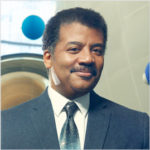
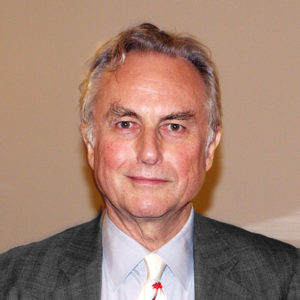
How do we stop anti-science? In this episode, Neil deGrasse Tyson sits down with evolutionary biologist Richard Dawkins to talk about religion, the importance of science communication, and Dawkins’ new book, Books Do Furnish a Life: Reading and Writing Science. How does the public receive scientific information?
You’ll learn about the role of being a science communicator and what lessons Neil and Richard have learned over the years. What’s the difference between the written and the spoken word? How do you get the attention of people who don’t read often? We discuss the value of social media from a scientific perspective.
We get into religion, and the meaning of faith-based belief and evidence-based belief. What tactics do you use to convince someone to trust science? Is it worth it? Why does it matter? We philosophize about truth, what it means to live in a free society, and Richard’s other book The God Delusion. What is a secular humanist? What does morality look like without a higher power? How do you create a code of ethics based on scientific thought?
Discover the cost of pseudoscience and what the future of religion is in society. Is atheism catching on? Or if you take away someone’s religion is it going to be replaced with something else? Find out about B.F. Skinner’s superstitious pigeons and how we misuse intuitive statistics every day. What sort of ethics exist for different types of scientists? We break down ethical lapses in biology, like the eugenics movement and Tuskegee study. And what happens if scientists fail to communicate well with the public? How has this impacted the pandemic? We also discuss the public understanding of science, the role of academia, and how people approach statistics and risk. Are you approaching risk wrong in your life? Plus, we ask, are we hardwired to think religiously? Find out, on another episode of StarTalk!
Thanks to our Patrons Tariq Shureih, David Matthews, Jordna Sisinni, Bryan Paschal, Ivan Karpan, joann lovan, Joe Selmser, Robert Pierce, Ash (Æ), and Daniel Smith for supporting us this week.
NOTE: StarTalk+ Patrons can watch or listen to this entire episode commercial-free.
Transcript
DOWNLOAD SRTWelcome to StarTalk, your place in the universe where science and pop culture collide.
StarTalk begins right now.
This is StarTalk.
I’m your host, Neil deGrasse Tyson, your personal astrophysicist.
And today, we’re going to feature an exclusive interview with the one and only Richard Dawkins.
Richard Dawkins has a new book called Books Do Furnish a Life, which we’ll spend a lot of time talking about because it goes everywhere and that’s where we want to go.
Richard Dawkins professionally is an ethologist, an evolutionary biologist, an author, popularizer of his field in science in general and rational thinking all around.
And so much of what he does is what we celebrate here on StarTalk.
So we’ve got it.
Richard, welcome back to StarTalk.
This is not your first rodeo with us.
It’s such a pleasure, Neil.
Thank you very much.
Yeah, I was looking at your book.
Oh my gosh, Richard, that dare I say, dare I even suggest that if anyone read only one book of yours, it should be this because this to me reads like a cross section of everything you have cared about and expressed professionally and in the public with regard to what your life has been about.
Is that a fair characterization of what you’re watching?
Well, it’s very interesting.
I never thought of that before, Neil.
Thank you.
It does span much of my career ever since I started reviewing books, I suppose, and writing forwards to books.
So, yes, it’s a good slice of my increasingly alarmingly long career.
And I, you know, so I worried because people who start sort of collecting their life’s works, it’s almost like they’re ready to die.
And I don’t want you dying anytime soon.
So just that’s why I was worried when, uh-oh, uh-oh, let me check his heart rate.
Well, let me let me reassure you, Neil, I’ve got two books, two other books coming out, one in November and one not quite sure when.
But anyway, the one in November, I’m looking forward to very much.
And so I’m not checking out any time soon.
Okay, stay alive at least until your last book gets published.
I’m also, I noted in the first section of the book called Front Matter, there’s a list of all of your previous books.
And I went down the list.
And forgive me, Richard, I haven’t read all 30 of them, 15 or so.
No, but I’ve read like three and a half, okay.
And I got the list.
I’ve read The Selfish Gene.
I’ve read The Blind Watchmaker.
I’ve read The God Delusion.
And I’ve read parts of other books.
And I can say that each one of the books is a jewel.
It’s a jewel of writing.
It’s a jewel of science communication.
It’s a jewel of intellect.
So I will extrapolate and declare that every one of these books is a jewel, and it forms a crown of some kind, some kind of bejeweled crown that is a gift to civilization of how you think and how you would welcome others to think to make a better world.
How kind?
What can I say?
I mean, I’d love to think that.
So let’s go straight into some of these topics.
I very much embrace your organization of the book.
There are sections and each section sort of delves into an area of science as it relates and as it is received by the public.
And I’m honored actually to be mentioned in your first section where you recount an interview that we had in my office at the Hayden Planetarium.
We talked about science communication and we were sort of trading notes as how I remember it and to see, you know, what succeeded, what didn’t.
And what I want for you, can you tell me over your years, what have you learned to do differently?
Good question.
Based on either the trial and error of your successes or failures, or did you find one recipe and you sort of stuck with it all the way through?
I’d be interested to know what your answer to that question is, Neil, as well.
Well, I don’t have much of a recipe, and if anybody ever invites me to give a talk on something like science communication, I don’t really know what to say.
I mean, I just do it.
I suppose one of the things that I do is to put myself in the position of the reader.
I mean, that’s an obvious thing.
How could anyone not do that?
And yet many people don’t, actually.
You have to imagine yourself in the position of the reader who would, or the listener, who would wonder, what’s he getting at there?
What’s happening there?
I don’t get that point.
Please elaborate on that point.
So I tend to imagine an imaginary reader looking over my shoulder.
And it can be a particular person.
It could be a person that, oh, perhaps wrote me a letter that day.
And so I’ve got him or her in my mind.
And so I imagine, what would it be like for her reading this?
What would it be like for him reading this?
I don’t know whether you do anything like that.
I guess you probably do.
Oh, I do that.
Yeah, of course, all the time.
But I add another aspect to it, I think.
And again, with varying success.
Most people don’t read.
So for me, I always ask myself, is there something I can add to this that will attract someone who doesn’t have walls of books behind them, in their bedroom or in their den?
And so that involves some sensitivity to just people in the street.
And so I’m wondering for you, what is the difference to you between the written word and the spoken word, or the written word and the conversation you’re having someone who’s just curious in the street?
You can’t just tell them, read my 400-page book.
That doesn’t work.
And actually, you’re reminding me, Neil, of one of our first encounters when you took me to task.
I think it might have been in San Diego or maybe Seattle or something like that.
And you said that maybe you said something like, it’s got to be an act of seduction, an act of persuasion, as opposed to here’s my book, take it or leave it.
And you’ve just, as it were, reiterated that point.
It’s a very good point.
Well, let me tell you, let me remind you what I, precisely what I took you to task about.
And just to sharpen that memory was 2006.
It was a conference, one of the early conferences that landed on YouTube.
And so it received a lot of attention at the time.
Today it might get lost in sort of the noise of what’s been posted, but 2006, and they finally got all the talks together by 2007.
So it was early clickable internet content.
And it had a mixture of scientists and a couple of theologians, if I remember correctly, skeptics, and it was just, it was called Beyond Belief.
You know, where do we go if belief is not going to be the centerpiece here?
All I told you at the table, which was the very first day I had met you, by the way, and I was very nervous, because you’re one of my heroes of-
I was nervous too.
Of science and communication.
And what I-
I had seen you give a talk at this very same conference.
Damn, this guy is sharp.
And the wit is just barbed.
And it’s like, and he knows he’s right.
And he knows who he’s talking to is wrong.
And it was just, it was so precise.
And so there was no room to have a person just say, can you let me just, I don’t know, recover for a moment?
And so I worried that your messaging was missing people because of how articulately barbed it was, that it might’ve actually turned people off.
And then I said, perhaps you can go at this with a more of a subtle art of persuasion, rather than just saying, I’m paraphrasing here, you’re all idiots, read my book, you’ll be fine for it.
See, so that’s what I came at you.
It’s all coming back to me very vividly now.
And I was very, I was moved by it actually.
And what I said at the time, I think, was I gratefully accept the rebuke, and I did.
Yes, you did, and you were very gracious about it.
And by the way, no one back then knew me from Adam, but they all knew you.
And when I said this, it was basically an attack.
And there was this eerie silence in the room after I had spoken.
And when you said, I gratefully accept your rebuke, it was like, oh, I think people wanted to be fisticuffed.
I mean, I recall, I can actually hear it again.
Your wonderful laugh as I said that.
And I hope I’ve learned from that.
I don’t know whether I have.
I wonder whether you agree with me that sometimes, if you make a great effort to be clear, as we both do, it can come across as a bit aggressive.
Sometimes people like to hear a bit of flanneling around, a bit of woolly talk.
And if you make a real effort to talk clearly, they think it’s somehow too in your face.
Yeah, so there is what you think it is, and there’s how it’s received, right?
And as you can be an educator who faces the chalkboard and puts the notes on the board and not really paying attention, or you can try to meet the people, not just halfway, but maybe 90% of the way to their own space of thinking.
And yeah, by the way, this, we’ll talk more about this a little later, but my primary, the primary value of social media to me, apart from what it is to wade through the cesspool that it is, is I get to see how people are thinking.
Based on what words I chose, what phrase I composed, what idea I put on the page, and I can say, oh, you’re all wrong or you misinterpreted me.
No, this is a real, this is a real experiment in progress.
If they misinterpreted you, if they didn’t understand the word, how you used it, if that happened, that actually happened.
It is real.
So I’ve used social media as my source of awareness of how people think, what they think, and what I might want to do if I want to be more effective.
That’s interesting.
I find your tweets, which I look at from time to time, very interesting because you tend to be, I think you think of yourself as an educator, which you are, and you tend to give little snippets of interesting, fascinating science in a witty kind of way.
And so it seems to me that what you’re doing is arousing people’s excitement for science by what you tweet.
And I wouldn’t, I hadn’t realized that you were actually looking out for how people respond to that.
That’s interesting.
So in a way, think of it as a sort of a neurosynaptic snapshot of how people are thinking about what you’re saying, so that next time you’re in front of a large audience in an auditorium, let’s say, you now have a portfolio of at least a statistical portfolio of how people are thinking and what they’re thinking and why and what they’re, and how they’re reacting more importantly.
So that’s kind of how I think about it.
We’ve got to take a quick break, but when we return, more of my interview with Richard Dawkins, where we talk about religion and society, you knew we’d go.
Thank Hey, I’m Roy Hill Percival, and I support StarTalk on Patreon.
Bringing the universe down to earth, this is StarTalk with Neil deGrasse Tyson.
We’re back, StarTalk.
We’re featuring my exclusive interview with Richard Dawkins.
Let’s jump right back into it.
There are people in the world who have very strong belief systems.
And for many, it’s unresponsive to evidence.
So there’s that saying, I think it’s 85% true.
You can’t use reason to argue someone out of a point that they didn’t use reason to get into.
So you need some other tactic.
You’ve written so much and spoken so much about religion in the world, which almost by definition is faith-based, rather than evidence-based.
And so how do you, what are your tactics there?
And why do you even care?
If we live in a free society, people ought to be able to think what they want.
Like, why do you care if God created the universe in six days and this is deeply held by someone’s feelings?
Why does it matter to you?
Don’t you care?
I mean, eat.
Well, no, okay, no, so thanks, okay, okay, all right.
You just hit my serve back to me on a tennis court, okay?
So I care when the religious thinking, and there’s so many religions in the world and gods that have been praised in the world.
I care when that attempts to influence law, policy and the science classroom.
Otherwise, if you go to mosque on the weekend, synagogue, church, I don’t concern myself with that.
Okay, I think this is where we may slightly differ.
I do care about that, but I also care about this.
I care more that we live in a free society where people can do that.
Yes, okay, obviously I’m more for freedom.
However, I do care if people think they live in a very different kind of universe from the one that I think they live in.
Now, you and I would agree that the universe came about with the Big Bang nearly 14 billion years ago and all that stuff and a wonderful story of inflation and then the origin of life and evolution and so on.
This is a thoroughly exciting, exhilarating, stimulating story.
Now, if people believe that the universe was invented by a kind of superhuman being, that is not just a falsehood, it’s a denigration of the wonder of the truth.
And nobody’s better than you at expressing the wonder of the truth.
And I’m surprised you’re not worried that there are people who perpetrate, promulgate this minimization of the excitement of what’s really true.
Well, you can offer them the truth, but if they prefer their personal truths of their holy books, then that’s a decision they made in a free society.
Now, here’s the key words you use, promulgate.
Yeah, if they say, I am Christian, I’m going to, well, this happened historically, it happens less so today.
I’m Christian, I’m going to make you Christian at the point of a sword, then yeah, I object to that, right?
I don’t want people’s, the coercion of people’s belief systems being forced on, as an active force on others, be it in the school system or anywhere else.
But I walk in this, I live in a city, as do you, you walk down the street, you see people saying, oh, the Jesus is coming, the end is near, or they’re talking out loud to no one and spouting Bible verses.
And I think to myself, wow, they really believe this.
This is their, and that’s their world.
And I don’t try to, I have, maybe because I don’t have the energy to do so.
I can’t explain it.
I don’t know.
I’m sure it’s not that.
But I don’t want them running for office, making laws that then have to apply to other people who have different religions or no religion.
No, we agree about that, and I too do not want to bludgeon people into believing what I believe.
I want to persuade them.
I want to show them, as you do, how wonderful the scientific worldview is.
I’m just sad if they don’t get it.
Of course, they’re free not, and I wouldn’t want to compel anybody, but they’re missing so much.
And you must agree with that.
I mean, when you think of how wonderful the stories that you tell in the planetarium are, if they don’t get it, then they’re missing so much.
And it’s such a shame.
That would be my way of looking at it.
So why is it their problem and not your problem?
So in other words, why isn’t, while they’re not getting it, I must be failing at my test to persuade them.
I agree with that.
Rather than, oh, there it is.
I can’t.
Of course.
And that’s why I work so hard at it.
I mean, I work so hard at writing these books, because I want people to get it, but I don’t want to force them to get it.
I want them to get it because it’s so wonderful.
Is it true that of all of your books, the biggest selling among them is The God Delusion?
I’m afraid it is, yes.
What do you mean you’re afraid?
It just is.
I would like it to be one of the science books, but it is, yes.
Because people are interested in the subject of God.
I heard you say, I think it was an interview, that some non-zero fraction of the sales of that book were from evangelical religious folks to try to sort of clue themselves in on how the other side thinks.
Do you have any data on that?
I’m not sure about that.
It’s certainly true that there are about 22, I think, books from evangelical, or from Christians, anyway, replying with names like Deluded by Dawkins and the Dawkins Delusion and permutations on the title of the God Delusion.
So that is true, but I don’t have any actual statistics on it.
That’s pretty cool, Deluded by Dawkins.
Give him credit for that.
There are lots like that.
Okay, so that meant somebody out there was reading your book from the other camp, I guess.
Tell me more about the goal of the Richard Dawkins Foundation.
And I’m delighted to say, you don’t have to say this, that if your books are successful enough and there’s a supply of cash, you can create a foundation that can help causes around the world in the service of a mission statement.
And then the foundation attracts donors who are of like mine, as any foundation would be.
So could you just give me a few sentences about this foundation?
I started it soon after The God Delusion was published, and I started it both in Britain and America, the Richard Dawkins Foundation for Reason and Science.
It’s now mostly based in America.
And in the last few years, it merged with the Center for Inquiry, CFI, which is a much larger organization.
And so there’s now a big organization behind it between these two.
It’s a sort of sub-department of the Center for Inquiry.
The CFI has magazines and lists.
There’s a whole machine in place, yes.
There’s a whole machine there and a big office.
And it has a whole division which is concerned with non-religious nonsense like astrology and homeopathy and things like that, being abduction by flying saucers and stuff.
And that’s been going for a very long time.
And so also has the secular humanism been going on for a long time.
And so the Richard Dawkins Foundation fits in nicely with that.
But it’s become a sort of junior partner to the CFI.
Just a quick question about the term secular humanism.
Aren’t there deeply religious people who would call themselves secular humanists?
And if so, could you explain that to me?
Yes, there are.
And they believe in, well, certainly secular, which of course means just simply that you don’t let your religion interfere with politics.
So this is separation of church and state as a principle.
So that in that sense, the foundation of the United States is secular.
Secular does sometimes mean to some people a more anti-religious stance.
It’s never meant that to me, but I think it does mean that to some people.
Humanism tends to be a bit like a religion, but it’s not a religion because it’s godless.
And it’s an ethical system.
So secular humanism would be an ethical system, which is godfree, godless.
I got it.
So if you’re purely secular, then there’s no way for you to think about morality and other topics that have been historically in the domain of religions.
So humanism is an attempt to wrestle from, I’m asking if you would agree with it.
It’s an attempt to wrestle from religious communities, the understandings and implementations of moral code.
Would you say that characterizes it?
Yes, religious should not have a monopoly on moral codes and on ethics.
So secular moral philosophy is an important subject.
So this is how you can get religious people embracing secular humanism because, or at least certainly secularism, but they’re perfectly happy with the religion, but they too don’t want religion in the politics.
I guess that’s the-
There are people like that, certainly.
And in Britain, for example, they’re called Humanist UK now.
They used to be the British Humanist Association.
They have a rabbi who is in charge or was in charge, and what actually still is, of the campaign against faith schools, against schools which indoctrinate.
So yes, there are people like that.
There are many people who are sort of, call themselves secular humanists and who say that they’re religious, but who often are kind of spiritual, rather than believing in some particular religion, like Christianity or Islam.
So how then would you create a code of ethics based purely on sort of science and rational thought?
Because I’ve heard passionate, impassioned religious folks who can’t possibly embrace the notion that moral code is invented by humans, that they’re sure it’s something writ in our hearts and in our souls by a divine, all-knowing, all-good entity.
Well, before answering your question positively, I should say that the idea that people could get their morals from religion is a horrible one.
You think about where it would come from.
You think about if you had ever read the Old Testament, for example.
You would not get your morals from the Old Testament.
It’s quite a bloody place, yeah.
Nor would you get your morals from being scared of God, which is the other thing.
By the way, I have a quick story from the Old Testament, and it disturbed me, actually.
We all have seen the cinematic epic, The Ten Commandments.
We’ve all seen that with Charlton Heston.
And we all remember Charlton Heston as Moses.
He comes down from the mountain with the tablets.
Sorry, I remember the Mel Brooks version of that, where he has 15 commandments, there are three tablets, and Moses accidentally, one accidentally, Lord Jehovah gives us 15, and then one breaks, 10 commandments, one with the other five, I want to know.
But Moses did drop them, break them.
Yeah, he did, right, but after they were already sort of released into the world.
So, yeah, he dropped them on purpose, not by accident.
So he comes down the mountain, and of course, they’re the tribes, they made a golden calf, and everyone, there’s revelry, and there’s bonfires, and, you know, what, as he raises his staff, he drops the thing, and then there’s lightning and thunder, and the earth opens up, and all the bad people fall on the earth, and the good remain.
And I said, wow, that, okay, sure, that can happen.
I mean, if you’re God and you’re connected to God, that’s how that would happen.
Then I read what, quote, actually happened in Exodus, okay?
I read this, and it’s, oh my gosh, what does Moses do?
He says, are you with me or are you against me?
Step on my side if you’re with me, and then took his sword and massacred with he and Aaron and others, took their sword and hacked to death everybody else.
And I said, oh my gosh.
This is, you know, that’s not even God, right?
I can handle it because God was doing all kinds of powerful things in the Old Testament.
And if you’re going to open up the earth, sure.
Only the bad people fall in, sure.
But Moses does it at his own hand.
And I said, this is sad.
This is, and so I couldn’t, I couldn’t reconcile the two.
And so what that meant was Hollywood wasn’t going to go there.
They were not going to turn Moses into a murderer.
They were not going to do this or someone who just totally embraced killing.
And so they cleansed even the Bible itself.
And here we are thinking that the movie is some epic, slightly fictionalized storytelling of important books in the Bible.
And they just took out something that I think would have been a, like a scene out of the movie 300, where as bloody, you know, heads cut off, disemboweled people.
And that was not shown.
That’s all I’m saying.
Well, I forget to say that the best advertisement for atheism would be to read the Bible.
Anybody who actually reads the Bible from cover to cover is going to end up an atheist.
Well, apparently it doesn’t work for everyone.
We’ve got to take a quick break, but when we return, more of my interview with Richard Dawkins, and we talk about the cost of pseudoscience in this world.
Hey, it’s time for a Patreon shout out to Tariq Shuri, David Matthews, and Jordana Sissini.
Guys, thank you so much for your support of this show.
Without you, we couldn’t make our way across the cosmos.
And for anybody else listening who would like their very own Patreon shout out, please go to patreon.com/startalkradio and support us.
Thank you.
We’re back, StarTalk, featuring my exclusive interview with the one and only Richard Dawkins.
So Richard, what is the future of religion in society?
You know, it’s been around for 10,000 years.
Probably Neanderthal had some kind of religion, so it goes back even farther.
So it seems to be a pretty fundamental part of the wiring of the human brain.
So who are you to say, let’s just unwire this?
I mean, it’s almost evolutionary.
Yeah, I think it is, of course.
It’s not totally, because lots and lots of people are actually not religious.
And the number who are not religious is increasing.
Statistics show that.
I mean, I think even in America, which is the most religious country in the Western world, I think the number of people who no longer have allegiance to any religion is about 25%.
It’s about a quarter.
It compares with any particular religion, that number.
In size, yeah, I see.
OK, so that’s an interesting thing.
But it could just settle there, right?
And just stay.
Well, it could do.
But whatever the trend is, I’m hoping it’ll continue.
Except, unless, of course, what is replacing religion is something like woo-woo astrology, the kind of nonsense which is not based on God, but which nevertheless is supernatural and is just as bad, if not worse.
Well, Richard, I remember a study, but I haven’t seen it duplicated.
This is going back now, I think, to the 1980s, where someone went across the country with a survey and asked, do you believe in God?
Or do you belong to a church?
This sort of thing.
And in that same set of questions were questions like, do you follow astrology, or crystal healing, or spirit energies?
This sort of thing.
And so there was sort of the pseudoscience in mix among questions about religion.
And what she found, this researcher, was that as you go across the country, you hit the Bible belt, for example, the religiosity was high and the pseudoscience was low.
And as you got to the Pacific Northwest and other sort of famously famous centers of pseudoscience, the pseudoscience rose and the religiosity dropped.
And if you added those two fractions together, they were roughly constant across the country.
Which strongly indicated that, yeah, if you take away someone’s religion, it’s going to be replaced with something else.
What do you think of that?
It’s depressing that, yes, I didn’t know that.
I did not know that study, but it does not surprise me.
It discourages me, I must confess.
It’s as though there’s a kind of quotient of nonsense which needs to be filled.
And if religion doesn’t fill it, then other sorts of nonsense do.
I don’t see why we can’t fight against that.
It seems to me that that’s pretty much what CFI is doing, both its wings, both the anti-religion part and the anti, what you call it, other kinds of superstition part.
I don’t see why we shouldn’t win that battle.
And science, of course, is the way to win it.
I mean, science is the antidote to both.
Are there any evolutionary thinking about the value of superstition in the species?
I read a study that ducks can be superstitious.
Is that correct?
They did some study where…
And I forgot what the study was, but I read it.
It’s like, damn, the bird was superstitious.
Because there was something it did that got the same result, and then they changed it, but it kept doing it.
You’re thinking of pigeons.
Pigeons, okay.
It’s pigeons, yes.
It’s a classic study by Skinner, the inventor of the Skinner Box.
And you know, in the Skinner Box, what happens is that the bird is…
Normally, it’s rewarded for pecking at a key and gets food reward.
But if you turn the mechanism off, such as it’s used to the idea that it should be getting a reward, you give it rewards at random, regardless of what it does.
And what happens is if you have half a dozen birds all in separate boxes under this regime where they get food reward at random, they don’t know why they’re getting it.
What happens is that each bird develops a different habit, superstitious habit, presumably, quote, thinking that this is what gave it the reward.
So you will have one bird that preens its left wing, another bird that pecks its foot, another bird that looks over its left shoulder, another bird that waltzes round and round in circles.
All these things skinner observed.
And that is a beautiful analogy to superstition where you sacrifice a goat and lo and behold, the rainy season comes, which is what you want for your crops.
You think, ah, it must have been you, it must be sacrificed a goat and from then on, you don’t dare not sacrifice the goat for fear that next time the rains won’t come.
And so it is a beautiful demonstration of superstitious behavior in pigeons.
I didn’t know pigeons had shoulders.
It looks over its left shoulder.
They sort of do, don’t they?
I guess so.
They’re vertebrates, so they’ve got some anatomical correspondence.
Okay, so we want to believe we’re in control of outcomes, whether or not that’s a true fact.
We’re in a very complicated world where in order to survive, we need to do some kind of intuitive statistics, maybe Bayesian statistics, anyway, some kind of intuitive statistics.
And we’re not ideal, we’re not very well versed in statistics unless we’ve learned it at school or university.
And so we have to intuitively guess that something that we did might have had some beneficial effect or some bad effect.
And it’s pardonable in a way that we should be bad statisticians.
It’s entirely understandable that natural selection would have built into our nervous system a tendency to try to be a good statistician.
That’s fascinating.
So what you’re saying is we are trying to be logical and rational in this world.
And so that maybe gave us the capacity to be scientific at all.
But when you don’t have the methods and tools of science, it is rife with ways that this effort to be that fails.
That’s kind of what you’re saying.
And add to that, add to that, that the world we live in is capricious and complicated.
And so the weather is unpredictable, virtually unpredictable.
The sudden appearance of predators, the sudden appearance of a spring in the ground, finding a river, all these things are unpredictable.
And so, I mean, they are statistically predictable, but they’re not absolutely predictable.
So we have to do statistics.
We have to think probabilistically.
And there’s, I suppose, there’s a trade-off between what statisticians call a Type 1 error and a Type 2 error, false positive and false negative.
If you make an error in the direction of, say, thinking it’s a lion when it isn’t a lion, then you waste and you run scared from every little movement of the bushes.
Then you never get any eating done.
On the other hand, if you’re too blasé and you assume it’s not a lion, then you get eaten.
In some of the cases, yes.
There’s a difficult balance between being too risk-averse and the opposite of being risk-averse.
And where the balance should be struck is difficult.
And so when you get it wrong, it comes out as superstition.
Can you comment on the ethics of science and who should be tasked with establishing any kind of ethical code?
I mean, there’s some out there, but I don’t know that it’s not some centralized document, thou shalt not or thou shalt.
And so can you just reflect on that a bit?
Yes.
Oh, by the way, in my field, thankfully, I don’t have to think about the ethics of like studying black holes or the origin of the universe.
There’s no…
it doesn’t touch human life in the ways that anthropology does that can influence legislation about how people treat each other or any kind of research into the genetics of what it is to be human or different kinds of human.
So I’m…
my field is largely untouched by that.
The biggest trouble I ever got into was participating in the demotion of Pluto.
That was…
I got raked over the cold.
That was big trouble for me.
I wasn’t cold in front of Congress.
So the closest we come to ethics is NASA has something called the Planetary Protection Division.
So if we send a probe to a moon or a planet that might have life or might have ever had life on it, it goes through much higher levels of disinfecting or sterilization because we don’t want someone might have sneezed in the lab and some rhinovirus lands on Mars.
And then in 10 years, we discover the rhinovirus on Mars.
So we don’t want to contaminate our own research.
But also, if we have sample returns coming back, there are protocols around how that gets handled.
And that’s been going on ever since the astronauts came back from the moon.
They were put in a little sort of air stream vessel until they were sort of investigated, decontaminated and the like.
So that’s the farthest we go.
But your field, oh my gosh, you go from things like what your brethren were saying in the 19th century, just about humans and about races and about…
and how that worked its way into our society and into our culture.
And right on through eugenics and the Tuskegee experiment.
So what do we do about science going forward?
Well, I suppose we want to make a distinction between technology and science.
And you’re talking about science, not technology.
In technology, of course, there are ethical problems.
And in a way, your thing about disinfecting is more on that end of it.
Also, I suppose also the economics of space exploration mean inevitably, no such thing as a free lunch.
What’s spent on space exploration cannot be spent on other things, on human welfare.
And so there’s that angle to it as well.
But you’re asking me about my own field of biology, where we do have to face things like the status of humanity, the status of humanity versus other species, for example, the kind of things that the philosopher Peter Singer has alerted us to, cruelty to non-human species.
Sentient beings, yeah.
What’s the definition of human?
When does a fetus become human, end of life, euthanasia?
All these problems arise in medicine, abortion.
You mentioned race and the controversies over discrimination and racial prejudice, all these things that are terrible, things that, as you said, in previous centuries, things are getting better.
You have to say that.
Yes, they are.
People don’t want to admit it, and particularly if you’re only born in the present, you think of only bad things in the moment.
But I had full record of what was going on for my parents and my grandparents, which would span the last 120 years, I would say, where whatever stories I had, they had far worse stories.
And so I had good anchoring in terms of, as we say, the arc of progress in our civilization.
So Richard, what happens if we both fail at the central mission statements that we’ve carried into our professional lives?
We’re trying to infuse the world with a bit of rational thought, decision making.
What happens?
The obvious answer which people might expect us to give, I suppose, would be that we would handle the COVID pandemic even worse than we did if science had been ignored completely.
And so science is obviously important for everyday life, all aspects of everyday life, not just pandemics, but everything.
So there is that.
So if science communication fails and people come to mistrust science totally, then it would be a very bad thing.
But for me, that is not the only thing.
For me, and I’m sure for you as well, I said before, people would be missing so much.
I mean, science, both your science and mine, are great aesthetic experiences.
I mean, it’s like missing out on great art or great music.
If you can’t appreciate the universe in which you live, the life of which you’re a part, the cells of which you’re made, these are so important and so beautiful, so elegant and wonderful, that I think that for me would be the worst aspect of if we fail.
Richard, there’s actually a theological version of what you just said, and it was uttered by Giordano Bruno, which got him burned at the stake.
It was thinking that the stars in the sky themselves are other suns that could be orbited by planets.
This or he imagined that God was bigger than the God as described in the Bible.
And so one of his famous statements is, your God is too small.
There’s a bigger God out there of the larger universe where there are civilizations everywhere from here to the space.
You must know the Carl Sagan quote.
He says something very similar.
Like they say, no, no, no, our God is a little God and we want him to stay that way.
They can’t bear the fact that science is making things so much bigger than their punitive imaginations could ever conceive.
So we’re not the only ones who are aware of this.
I remember one of the Microsoft billionaires, I think it was Charles Simone, endowed a professorship.
I think it was at Oxford for the public understanding of science and wasn’t that a chair that you occupied for a while?
Yes.
I was the first holder of the Charles Simone professorship of public understanding of science.
I can’t overstate how important that is because here are universities which to some is just an ivory tower with eggheads and they just talk to themselves and it’ll do anything relevant.
Somebody comes along and says, bring some of that outside of your ivy covered gates and share it with the public.
And I wouldn’t imagine a more fitting person than you for that.
But since then, there’s now a professorship for the public understanding of mathematics and another one, a professor for the public understanding of risk.
Have you heard about that one?
I did not.
That’s very good.
Oh my gosh.
Yes.
Risk.
Risk.
Can you spend a moment just reflecting on how people think about and make decisions in their lives regarding risk?
It’s a fascinating subject.
I’m not very much of an authority on it.
But yes, they’re extraordinary things.
People get utterly obsessed with what actually amounted to a tiny little risk and ignore something far greater.
You get very unpopular if you point this out because it seems callous.
Some of my friends have gotten unpopular pointing out that, oh, maybe I better not even say, but something like the death toll from 9-11 was dwarfed by the death toll from motor accidents, that kind of thing.
You can’t say that sort of thing.
People object because they say you’re being callous to all the people who died in 9-11.
But the fact is that risk is very, very widely misunderstood.
And obviously you feel the same.
Yeah, I do.
And you’re absolutely right.
I think risk management, should we call it that?
The management of people’s thinking about risk needs to have a psychological component.
All right?
So you can be coldly mathematical and say, don’t do this because it has a higher risk than you doing that.
And you can tell people this, but it doesn’t land the same way with them emotionally.
So Richard, here’s an example of this sort of mismatched risk taking that people are doing.
It’s a story, it’s surely apocryphal, but we can all picture it, where there’s a child being brought to the mall and the child is not strapped in the car seat, okay?
And they’re just sort of bouncing around the back seat.
And the parent takes them into the mall and says, make sure you hold my hand.
I don’t want you wandering away.
Someone might steal you, okay?
So, here’s someone who is very hell bent on not losing her child in the mall to some criminal who steals in each children, but took no effort to strap them into the car seat.
And you can just look at the statistics of stolen children versus children who died in car accidents by being improperly restrained.
And that should have just had a very different situation.
Unfortunately, in each case, the child did not die in that example.
But that’s, you’d think it would be a simple case, but people don’t do it.
There’s a psychological dimension to this that I don’t know is well understood.
I can’t top that.
I mean, that’s a very, very nice example.
I suppose another one might be the very tiny risk from vaccination where, not COVID necessarily, but any vaccination where there are figures published whereby a very, very small percentage of vaccinations have an adverse result.
And people are scared of that.
And they don’t titrate that against the hugely greater risk from the disease that’s being vaccinated against.
Could it be that we are all at some level still deeply religious in the following way?
If a doctor gives me an injection and I die from it, the doctor killed me.
If nobody gives me an injection and then I catch the disease just out of the air, then that is the natural course and order of the universe.
It’s not just the doctor who killed.
It’s your decision to give the child the vaccine.
You made the choice to ask the doctor to give the child that vaccination.
So you killed the child.
Right.
And that’s the asymmetry there, perhaps, is what you’re suggesting.
Right, exactly.
So I’m just wondering, whereas if it happened by natural causes, there is no one to blame.
And you’re not going to blame yourself, of course, but you can then sort of credit God in God’s infinite wisdom and God works in mysterious ways.
You’ve got it out in that direction without carrying anger and an ir in the rest of your life.
It could be just act of God in the insurance company sets.
At least you were not responsible for it.
You were not responsible.
So that’s another psychological dimension if we’re going to think about risk.
You were responsible because you had the option of giving the vaccination.
Refraining from vaccinating actually is what killed the child.
Yeah, but no one thinks we don’t think that.
No, exactly.
You’re being rational again, Richard.
Sorry.
When we had kids, I found some document published by the government that ranked causes of death at different ages.
It’s fascinating.
When you’re eight-year-old, what is the most likely way you will die if you die at all?
And this changes as you get older.
So what I did was as our kids went through the ages, we go around the house and adjust what they had access to in response to the statistics on what was killing children at that age.
And that was so that we totally did not approach that emotionally.
We did it completely rationally.
But what it means is you’re absolutely right.
Our brain is not wired for statistics.
And I was astonished to learn the first person to take an average of numbers.
That’s like the simplest statistic you could possibly construct.
It was something like the late 1700s or early 1800s.
It was not.
It was not a thousand years ago.
It was not.
It’s very late mathematics.
And so that had to mean that we’re just not wired to think probabilistically at all.
If we could think statistically, that would change so many laws that are on the books about what is controlling our behavior and what isn’t.
That’s what I would think.
So Richard, this last entry, you said you want it read over your casket.
And no, no, no, that would mean this is your last book and I won’t accept that.
But you do say very important, deep things in it, things that have affected my life.
I have communicated it to others.
And could you just summarize it?
Don’t read it, because I want people to read it when they have the chance.
Just tell me in a few sentences what the gist of it is.
I’m tempted to say over my dead body.
OK, it’s really reflecting on how lucky we are to be alive.
And my particular way of putting that is to point out that the number of different combinations of DNA that could have been here in my place is mega hyper astronomical.
And so we are incredibly lucky to be here.
We’re incredibly lucky to be on, to come to life on the planet that we have, which is well, obviously, it has to be well suited to be for our life, or we wouldn’t be here.
But nevertheless, we are very lucky to be around, and we should make the most of our life.
We should not fear death necessarily, but try to make the best of our life as long as we have life, because it’s the only life we get, and we are very, very privileged and lucky to have it at all.
And to be alive means we die, which means we’re the lucky ones because we even get to die.
We’re the lucky ones.
We get to die.
Most people have never even got to be born.
Ladies and gentlemen, that’s Richard Dawkins and his latest book just published by Bantam, a division of Penguin Random House.
Richard, thanks for being on StarTalk.
Thank you very much.
It’s been a real pleasure, Neil.
Thank you.
This has been StarTalk.
Thanks for listening.
Some of you are even watching.
I’ve been your host, Neil deGrasse Tyson, your personal ash-tooth physicist, as always, bidding you to keep working hard.
 Become a Patron