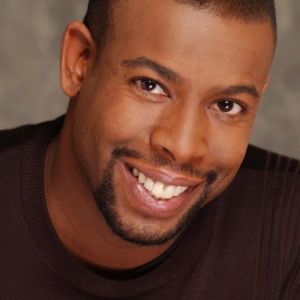
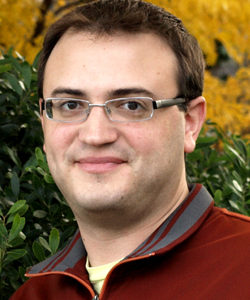
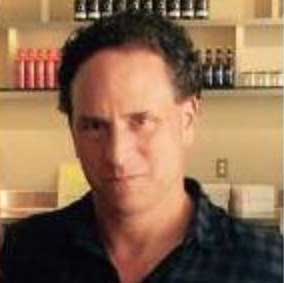
The Mississippi Delta is experiencing historic flooding, tornadoes recently tore up towns in Alabama, and multiple blizzards buried the Northeastern U.S. last winter. These and other extreme weather events around the world are dominating the news, making people wonder whether climate change is the culprit for all these catastrophes. NASA climatologist David Rind discusses the science of climate and weather with host Neil deGrasse Tyson, explaining what’s known and what’s still a mystery. Andrew Freedman of Climate Central comments on the media and politics focused on the climate change debate, and filmmaker Charlie Lyons provides his take on The Day After Tomorrow and An Inconvenient Truth. Comedian co-host Chuck Nice looks for the bright side of climate change: pre-cooked trout in overheated streams; dead cedar forests mean more material to build closets… what’s so bad about that?
Transcript
DOWNLOAD SRT
Welcome to StarTalk, your place in the universe where science and pop culture collide. StarTalk begins right now. Welcome back to StarTalk Radio, I'm Neil deGrasse Tyson, your personal astrophysicist. Joining me this week is my comedic co-host, Chuck Nice....
Welcome to StarTalk, your place in the universe where science and pop culture collide.
StarTalk begins right now.
Welcome back to StarTalk Radio, I'm Neil deGrasse Tyson, your personal astrophysicist.
Joining me this week is my comedic co-host, Chuck Nice.
Chuck, welcome back to StarTalk.
It's great to be here, Neil.
Yeah, you look like you're like your eighth time or something.
Yeah, I love it.
I can't think of a better way to spend an early Sunday evening, Neil.
I don't know if you're joking.
I don't know.
And Chuck, you're tweeting at NiceChuckNice, still going strong there.
No, I changed it.
It's at ChuckNiceComic.
Why?
What are you doing to me here?
How am I going to find out what the...
Okay, fine.
ChuckNiceComic.
Fine.
I just thought it was simpler.
This week, we couldn't leave it unattended to.
We are going to devote this entire StarTalk Radio to climate confusion.
Yeah.
What's going on?
Tornadoes, wreaking havoc and floods.
Of course, there's always been tornadoes and there's always been floods, but there's the worry that this is happening at a greater frequency and a greater intensity.
Yes.
Is it global warming, global climate change, or is it just a fluctuation?
We assembled some experts that will get to turn the show to just chat about this.
I love the way you put it as climate confusion.
That is so much better than any term I've heard.
It makes the climate seem like a confused teenage girl.
It's climate confusion.
Confusion.
Actually, it's not the climate that's confused.
It knows it certainly what the hell it's doing.
Let me bring in first, Andrew Friedman.
Andrew Friedman is exactly the kind of profile we wanted to explore for this show.
He's managing editor of online content of climate policy.
Let me get this.
Excuse me.
Andrew, what are you?
I'm a managing editor at Climate Central.
At Climate Central.
Right next door to Comedy Central.
We have a very weird relationship.
There you go.
This is based in Princeton, New Jersey.
What do you do there?
We cover climate change.
We basically put scientists and journalists together.
Is that a good thing or a bad thing?
Both.
And we use that to cover climate and communicate it about it in ways that we think will be helpful to people to understand it.
So you're at the nexus of this important place where scientists are trying to communicate and you actually have people who know how to do this.
Yeah, well, we hope.
Are you successful?
We are and we aren't.
There's a lot to battle in this issue.
It's not an answer.
We are 100% successful.
There you go.
I can't think of anything wrong there.
That's right, Andrew.
Go the Donald Trump route.
How are you going to stop confusion of weather and climate in the public if you don't even know if you're successful?
This worries me.
Where's you too, I suppose?
Yeah, well, I think that people are generally confused about what the difference is between weather and climate.
Tell us.
Tell us.
Well, I mean, you just have to think of it as...
People think they're the same thing, typically.
I think so.
So fix it for us.
Of course.
Well, weather is short-term, and climate is the average of weather over the longer term.
Longer a month, a week, a month, a year, 10 years, a millennium?
Tell me.
It depends exactly what you're talking about.
Is climate the ice age, or is climate...
That is climate.
It's summertime now, because the next three months, you know, I'm going to the beach.
Right.
Yeah.
I mean, that's also...
That's not exactly weather.
It's still climate.
It's knowing that it's gonna be colder in January than it is in July.
That's climate.
Okay, so now I get a tornado through my backyard, and I've never had one in the history of my town.
What's that?
That's weather.
That's weather.
Yeah.
Now, the fact that I never had one of these tornadoes before, that's kind of interesting to climate scientists, I presume.
Yeah.
I think that the whole...
A lot of the discussion right now is coming out of, well, weather seems to be getting more and more unusual and extreme.
And is that really the case?
Or are we just focusing on it more because there's this climate change backdrop on which to interpret it?
Because if you go back in time, there have been extremes of weather, you know, there's the blizzard of 88 in New York that took out all of our power lines that you can go back.
Every town has got the legends of their town.
Exactly.
Floods.
And so are we just focusing a little better?
And so we're diluted into thinking that it's all the product of climate change.
I think that there's some of that that goes on, but I think there's also actual trends that climate scientists can point to that show that certain extreme events are happening more frequently and they're happening in more extreme ways.
It depends exactly what you're talking about.
So I know exactly what I'm talking about.
In the last six months, you look across the country, these huge floods, record floods, basically, and tornadoes in St.
Louis Airport and in Alabama, tearing up Alabama.
And again, not that they may have never heard of a tornado before, but we're talking about tornadoes in places other than where Darcy, other than Kansas, Kansas is, of course, tornado alley.
But if you have tornadoes in places other than tornado alley, do we see a trend unfolding here?
We don't see a trend in terms of where tornadoes are occurring.
There's actually another alley that's called Dixie Alley, which is the whole area that got hit by that massive tornado outbreak in Alabama and Mississippi.
Yeah, just a few weeks ago, yes.
But what they are looking for is trends in tornado strength and trends in tornado frequency.
A lot of that is still quite hazy because our records of tornadoes going back into the 1950s and earlier are really terrible.
Why are they terrible?
If a tornado comes, you think people would know about it and write it down.
Right.
There's no excuse there, I would think.
There weren't that many people throughout the United States to record the tornadoes.
Oh, so tornadoes may have happened and they just weren't actually experiencing it.
If you look at the numbers, there are more and more tornadoes occurring every year, but they think that most of that trend is actually because we're just noticing them more.
We have these radars, we have storm spots.
We got better equipment than ever before to find out what's going on here.
You know, there's a big climate change guy just who thinks a lot about it, in fact lectures on his Bill Nye.
Bill Nye the Science Guy?
He's like climate dude of late.
Yeah, and so he did a quick Bill Nye one minute rant for us.
Let's see what he tells us.
Up until late in the last century, the one thing people could agree on was the weather.
Statements like, it's cold, it's hot, it's rainy, or even it's that dry heat, were not controversial.
But now they are, because now people are wondering why the weather has turned so wacky.
Flooding in the heartland again, but no force five hurricane to bring it on.
Tornadoes?
Sure, it's North America, but now they're in Brooklyn.
If you're a climate change denier from, say, the wide open spaces of Oklahoma, you just can't believe that things are not normal back in Norman, no matter how many homes are now underwater.
A few humans can't change a climate.
The earth is just too big, isn't it?
Look at the earth from space.
The atmosphere is thin.
If you could somehow drive at highway speeds straight up, you'd be in outer space in just two hours.
When it comes to the atmosphere and the sea ice and the no-show snows of Kilimanjaro, ours is a small world.
And get this, by the end of October of this year, we will have 7 billion people on this planet.
A lot more humans, but no spare air.
It's human-made carbon dioxide that's holding in the heat.
On Venus, the same gas and the same heat-holding effect make it hot enough to melt metal.
To understand climate change, compare planets.
Have a look in from out in space.
Nothing out there to cloud your thinking.
For StarTalk Radio, I'm Bill Nye the Science Guy.
The one and only Bill Nye.
Welcome back to StarTalk Radio.
By the way, you can find us on the net, on the internet.
We are at startalkradio.net.
That's our website.
And in fact, we've got a Facebook page.
Nice.
StarTalk Radio, you can like us.
Like us.
In the old days, you'd friend you, but now you just like it.
That's what's a little creepier, I think.
Yeah, you know, it actually does change the social dynamic.
I don't wanna be your friend, but hey, I like you.
I'll still like you.
I'm nonetheless like you.
So Bill left us with the notion that compare planets.
There's a whole sub-cottage industry of astrophysics called comparative planetology, where you look around to other planets and see what knobs got turned there, see if you can get any insight to what's going on here on Earth.
So we know Venus, their atmosphere, is mostly carbon dioxide, 98% carbon dioxide, the kind of gas that traps heat.
It, in fact, is doing a lot of heat trapping on Venus, so much that the temperature there has risen to 900 degrees Fahrenheit.
It's hotter than a pizza oven.
In fact, I did the calculation, but I don't know if you do this, Chuck.
Next time you're in Venus, you can take a 16-inch pepperoni pizza, put it on the window sill, it will cook in nine seconds.
Actually, that sounds like a delicious meal.
I might want a vacation in Venus now.
I accept that you would vaporize as well.
Oh, I forgot about that little drawback.
Also Mars once had liquid running water on its surface.
It's bone dry today, and it's a couple of hundred degrees below zero.
Some knobs got, and by the way, one of those planets is to our left, the other is to our right as we orbit the sun.
So it sounds to me like we are the Goldilocks of planets.
The question is for how long?
Let's see if we can bring in a research scientist in climate science.
We've got David Rind here.
David, you're a climatologist with NASA's Goddard Institute for Space Studies.
That's right there on the upper west side of Manhattan.
Hardly anyone knows it's there, why?
Well, it prefers to be incognito.
Why?
Well, historically, it was around during the late 60s when science was an anathema to a lot of people who related the science we were doing to Defense Department research.
Oh, so that's why you're tucked away behind the restaurant.
Well, we're at Tom's restaurant, right above Tom's restaurant.
So this is a famous restaurant.
It not only shows up in every other scene change of Seinfeld, also there's a famous song written in that restaurant by Susan Vega.
Yeah, the restaurants are deadly, a lot more famous than us, no doubt about it.
I think that's a travesty, actually, if you're NASA and a restaurant's more famous than you.
So tell me, what is climate?
You're the man here, you do research on this.
Yes, we build computer models of the climate system to try to answer questions just like the one you were asking.
If something happens, do the climate models predict?
That's the sort of thing that would be the result of increasing carbon dioxide.
So your climate models are only as good as how you set them up and what parameters you have interacting with each other.
Definitely, and we also use satellites then, this is NASA after all, to try to observe the system and understand the relationship so that we can improve them all.
The system is like land, ocean, air kind of thing.
And sun, driving sun as your source of energy.
And so, are you good at this?
Well, that's an absolute term.
Relatively, I can say this, we're better than we used to be.
You know, you guys have given me wishy-washy answers here.
All right, how about this, what does the history of your efforts tell us?
Are you on the right track?
Have you ever had to flip-flop based on one prediction from your computer models to another?
Somebody did a study of this and looked at what the predictions were over the past 20 years for what would actually happen.
That would be a good test of your integrity.
And actually, the models in general have been right on as to what's happened over the last 20 years.
So if you go back 20 years, see what they predicted, see what happened, it's pretty much aligned.
That's a good track record.
But it doesn't mean that it's a good one.
Everyone has a big but, as to what's your but.
But sir, mix a lot of comedy.
But is that we're just at the beginning of climate change.
And if we go 50 years in the future, we may be at much more extreme climate change.
And our ability to predict that, that we can't guarantee.
What you're saying is that your models are maybe good at predicting slow trends, but if there's a catastrophic tipping point, your models are less good at doing that.
And even just the exponential increase of temperature and water and rain with time, whether we get those extremes right, that we can't guarantee.
There's nowhere to check that.
So all you have to do now, David, is change the model so everything will be okay.
And then we're all right.
Chuck, I don't think it works that way.
He doesn't control the earth.
I should have told you before the show.
He may be powerful, but not that powerful.
So let me just ask you, in the parameters that you plug in, the knobs that you turn, are there some knob you wish was better, that you had better handle on?
Yeah, the worst two knobs.
That's what I want to hear before we go to our commercial break.
Clouds, because clouds can amplify or diminish climate warming and our ability to generate clouds right, pretty...
Because they reflect sunlight or trap heat underneath, okay.
Okay, when we come back, we'll bring in a filmmaker and find out what challenges he's faced when he's tried to communicate climate change.
Welcome back to StarTalk Radio.
I'm Neil deGrasse Tyson with Chuck Nice, comedian.
Yes.
Keeping it real.
Let me reintroduce Andrew Friedman.
Andrew works at the Climate Central, which is an office at Princeton University, charged with connecting scientists and the public.
Yeah, yeah, we're scientists and journalists working out there.
That's right, trying to get that story straight.
And David Rine from the Goddard Institute for Space Studies up on the Upper West Side of Manhattan.
So thanks for being on, guys.
David, before the break, you commented on a couple of the uncertainties that lurk in your models.
Among them is how much cloud cover we have, because the water vapor in the cloud actually is itself a greenhouse gas, right?
Exactly.
Water traps heat, and clouds are made of water.
And you also talk about aerosols.
You're talking about my underarm spray.
What do you mean aerosols?
So aerosols are little particles, dust for example, or sand that gets thrown in the air.
Or when you burn coal, you get soot thrown in the air.
And the big issue here is that in addition to putting all this carbon dioxide in the atmosphere, which we've been doing now for a couple hundred years.
Yeah, the Industrial Revolution and onwards, yeah.
Exactly.
That also has put a lot of dust and dirt and aerosols in the air.
And that reflects sunlight back to space, and it cools the climate.
So the problem is we don't know how much of warming we've been doing relative to the cooling that these aerosols do.
So what are you saying is if Earth is warming from the CO2, what we need is more particles to block the sunlight.
Well, you know, we're going in the opposite direction because we're cleaning the air up, because particles irritate people, whereas carbon dioxide is invisible.
So we're actually, by cleaning the air up, we're actually exacerbating the warming.
So what you're saying is a solution is to just put dust in the atmosphere and block the sunlight.
Exactly.
A lot more asthma cases, a lot higher medical costs, but less global warming.
Oh, who needs to breathe?
Let me bring in a guy who is actually a filmmaker, a documentarian, and who has actually done segments on climate change for the NewsHour.
And it's Charlie Lyons.
Charlie, welcome to StarTalk Radio.
Thank you for having me.
Yeah, thanks for being here.
So you made segments for...
It wasn't just sort of global warming stories.
It wasn't just global, global warming stories.
They were local global warming stories.
What were they?
Well, like Andrew, I was working with Climate Central.
And our idea was to take this huge issue and try to make it local.
So to find stories in Montana, in Iowa, in Georgia, in...
Just like CBS Sunday Morning, where you go to the mom and pop in the local town.
But what people are seeing change, and getting and talking to them.
Give me a couple of examples that you found.
Well, trout fishing.
Trout fishing, okay.
I had trout just recently, by the way.
Really?
Yeah, I grilled it, it was beautiful.
Like, rainbow?
Ooh, I don't, it was just trout.
Anyway, so we talked to you.
It was really thin, but it was delicious.
Generic trout.
When you buy it at the market, it just says trout in black and white letters.
Thank you, thank you, Chuck.
There we are.
So we talked to a trout fishing guide out in Livingston.
Wait, Livingston where?
Montana.
Montana.
Big sky country.
Yes, and we also talked to a scientist at the University of Montana who made something very clear that when the snowpack melts two or three weeks earlier, that creates a scenario by the end of the summer with a lot of warm days where the trout, which is a cold water species, end up just in these sitting pools that are getting hotter and hotter and hotter and they can't survive.
Bad for trout.
Bad.
Sounds to me, though, like the problem solving itself.
We're cooking our trout early.
Steamed trout.
That sucks.
Chuck.
So there it is.
We solved that one.
Okay, what other town did you go to?
We interviewed a guy on the coast.
Wait, wait, just to back up.
So the point there is, it's not just monitoring the weather that gives you indicators.
You can monitor the ecosystem is the point.
Yes.
Okay, so what other examples did you have there?
Well, we also talked to a river keeper, a guy down in Atlanta, not Atlanta.
In the old days, they call them trolls, who you paid to cross the river.
The river.
In Georgia.
And what he was seeing was he was seeing a lot of the cedar trees dying.
And his claim, and we supported this, was that there was an increase in salinity because of the fresh water mixing with the saltwater.
And the saltwater coming farther in because of.
Less fresh water to stave it off, is that how it happens?
Well, no, just because of sea level rise.
That's even worse.
Oh, yeah.
Okay, so the brackish water was reaching further up the.
That's right, that's right.
And so that was another concrete instance of a guy who spent his whole life working on this river, saw something, saw something and said something.
So if you see something, say something.
Well, let me just say once again, being the eternal optimist, from that I just see more cedar closets.
Just trying to keep it positive.
The positive outlook, Chuck, here.
And so now, David, you're a documentarian filmmaker, and so do you study other people's attempts to do this?
Oh, sorry, Charlie, sorry.
Yeah, I mean, the thing is that the imperatives of drama, whether you're doing a documentary for PBS or whether you're trying to make a film about Edna St.
Vincent Millay.
Which is what you're doing now, I read, yes.
Yes, I imagine, I imagine.
The imperatives for drama are totally different than the imperatives for science.
For science communication.
Well, for science itself.
And so the problem is when you try to merge those two agendas to tell a story versus, you know, to tell a story with characters, with struggles, with overcoming struggles.
Well, that might not necessarily be...
How you tell the science story.
Exactly.
Right, but they try.
They try.
It doesn't stop them.
Okay, so the day after tomorrow.
You want to talk about it?
You had to bring up the day after tomorrow.
Somebody who was going to do it first.
Yeah, it was Charlie brings it up first.
Okay, so you got a point to make?
Well, let's perhaps listen to a couple of clips.
Oh, you brought some clips?
Okay, Ivan, our engineer, you got some clips queued up here.
Let's see what he's got going here.
So, there's a clip from Day After Tomorrow.
Scientist speaking, can you set up the clip?
The first clip is one of the first announcements by our main character, Dennis Quaid, who's talking about evidence that things are getting worse.
Okay.
And you might look at its accuracy.
Okay, let's check it out.
Go for it.
What we have found locked in these ice cores is evidence of a cataclysmic climate shift which occurred around 10,000 years ago.
The concentration of these natural greenhouse gases in the ice cores indicates that runaway warming pushed the planet into an ice age which lasted two centuries.
I'm confused.
I thought you were talking about global warming, not an ice age.
Yes, it is a paradox, but global warming can trigger a cooling trend.
Let me explain.
The Northern Hemisphere owes its temperate climate to the North Atlantic current.
Heat from the sun arrives at the equator and is carried north by the ocean, but global warming is melting the polar ice caps and disrupting this flow.
Eventually it will shut down, and when that occurs, there goes our warm climate.
Excuse me, when do you think this could happen, Professor?
When?
I don't know.
Maybe in a hundred years, maybe in a thousand.
But what I do know is that if we do not act soon, it is our children's...
That's Dennis Quaid trying to tell it like it is in a movie.
So, Charlie, so he's trying to convey this, and we see the confusion.
In fact, one of the people listening said, I'm confused.
And the title of this StarTalk Radio broadcast is Climate Confusion.
Let me just check.
David, you're our research scientist here.
Apart from what might be errors in detail, is there a general truth that you can have global warming that leads to a freeze?
So, let's take it step by step.
Models do show that as the climate warms, the North Atlantic circulation slows down and the...
This is warm currents that come up the side of the United States.
And they get reduced.
So that aspect is consistent with what models are showing.
The difference is models show that that aspect is completely overwhelmed by the warming that the increased CO2 is causing.
So even in these regions where the currents have slowed down, it still warms up.
The situation talked about in the movie was historically during a time when ice spread all over good portions of North America and Europe.
In that case, when that...
That's the ice age.
Yes, when that ice melted, which is a hell of a lot more ice than we have today available, that really shut down the circulation and produced a lot colder conditions.
Now Chuck, just so you know, humans were alive back then and we survived it just fine.
The ice age?
Yeah, exactly, because they found footprints of a man right next to footprints of a brachiosaurus.
Yeah, that makes sense.
You got the wrong deon there, I think.
So Andrew, I'm told you read the script for this.
I did, I did.
I met with the author.
So do we credit you or blame you?
Do we credit you for the little bit of the sciences there or do we blame you for how much they got wrong?
I'd appreciate both, actually.
I connected the writer with a bunch of scientists in the government and outside and I gave some helpful comments about how inaccurate it was.
But I don't think that I was ultimately the deciding factor on how to portray this.
I mean, they basically just sped up rapid climate change to unfathomably fast, you know, levels.
Yeah, well, the moon was only two hours.
Come on, man.
Exactly.
So Charlie, that's your clip, Charlie, that you brought in here.
Again, it's the imperative of drama.
You need to, you know, in screenwriting talk, up the stakes, up the NT really, really quickly.
And so when he talks about, in that clip, 100 years, then very soon after that, he's, something else has changed, and all of a sudden we're talking about six to seven weeks, and then we're talking about seven to 10 days, and then we're talking about 48 hours, and then we're talking about a day after tomorrow.
You know, a temperature drop of 10 degrees every second.
Hence the title.
When we come back after this next break.
I wanna talk more about the portrayal of climate change and some famous films we all know about.
Back on StarTalk.
I'm with my cohost, Chuck Nice.
And I also have Andrew Friedman with Climate Central in Princeton, and David Rind, a climate research scientist for NASA's Goddard Institute for Space Studies.
And also Charles Lyons, filmmaker and documentarian.
Charlie, we left off before the break with you giving us a clip from The Day After Tomorrow, and there's Dennis Quaid, is that right?
Yeah, yeah, just telling it like it is from his world, taking something that might take 100 years and for the movie it became The Day After Tomorrow.
But the question is, if things are changing, let me go back to you, David, what kinds of changes would be the most obvious or perhaps the most devastating?
Because I don't mind an extra couple of degree days in the summer, so what?
Well, there are two really components that people focus on.
One is that we already have seen that when it's raining, the rain comes heavier, there's more moisture in the air.
Higher intensity.
So if the climate warms up, it evaporates and sustains more moisture in the air.
Exactly.
Because the air becomes better able.
You can see in the summer, there's more moisture than in winter because the air can just hold more moisture.
Just in general.
And when climate warms, even more moisture shows up.
And then if there's a lot more moisture, it can rain heavier.
And we've been seeing that already now for the last decade.
So what you're saying is that climate change in the form of warming will give you more episodes of precipitation, be it snow or rain.
Well, heavier episodes of precipitation.
Heavier.
More droughts, more floods, just an amplification of the hydrology.
Of the extremes.
Hydrology, exactly.
Oh, hydrology, that's a nice word.
So hydrology is the cycle of water coming in and out of the atmosphere, I guess.
And the second component also relates to water, and that's melting of ice sheets and things of that nature and rising sea level.
These would only be ice sheets that are on the land because if you melt ice that's floating, it doesn't change the ocean level.
Exactly.
You could do that experiment at home.
Did you know this, Jack?
Yes, yes, as a matter of fact.
You know this experiment.
Ice has a larger volume than water itself when it's frozen.
Listen, the man is doing his, let's check him out.
So water expands when it freezes, so if you put ice in a glass and you fill the glass, when the ice melts, there'll actually be less water in the glass than when it was when the ice was displacing the unmelted.
That's almost right.
Almost?
You'll get a B plus for that.
B plus?
Yeah, yeah, so what you do is you fill up a glass with ice and then fill it as high as you possibly can with water and the ice rises above the water line.
And you ask yourself, well, when it melts, is it gonna spill?
That's the big question.
Just do the experiment.
You do the experiment, the ice melts, it does not overflow, because in fact the ice shrinks in volume and occupies the space.
Wait a minute, didn't I just say that?
No, you said something a little different.
Okay, I'll take a B plus.
From you, a B plus is like an A plus in my book.
Back to David.
So David, so we melt the ice sheets.
Yeah, so then what happened?
So Greenland and Antarctica basically.
Yeah, so the estimates are now, the latest estimates, we've had sea level rise for the past 100 years because the oceans have been warming and the sea level water expands when it warms.
That's normal expansion.
Normal expansion.
But now the estimates are that whatever we've got in the past 100 years, the estimates are five to 10 times as great as that for the next 100 years.
Now you're starting to really threaten a lot of the big coastal cities and places along the Gulf.
Florida is underwater.
Well.
The Everglades is ocean.
Under the most extreme conditions, which nobody knows whether they'll happen or not.
If anyone knows it would be you because you turn the knobs on your model.
So what do you mean nobody knows?
So it depends on how much people pay us to turn them out one way or the other.
But the reality is that...
He means grant money people, not...
Yes, exactly.
The reality is we don't know how dangerous this situation is.
10 years ago, we thought, ah, not so likely.
Now we're thinking, hey, it looks more likely than we thought.
And that would have such a big impact on economies and people's lives.
And that would happen within a century.
People didn't think so, but now they're not so certain.
So really, the real danger here is not whether we get hot or cold, but whether we drown.
Yeah, drown or droughts.
Droughts are another big issue.
And we've been seeing them occurring.
So it'll wreak havoc on our, our economic, the economic distribution of resources will be totally altered here, is what you're saying.
Water availability, coastal availability.
Right now, you have this huge flood on the Mississippi River.
A couple hundred miles away, you have one of the worst droughts in Texas's history going on right now.
I know, right next to each other, right there.
I smell aqueduct.
No, one of the world's water world.
Water world.
So Charlie, that one, you know, the whole world is water.
I guess is that's, I forgot what the theme was because I'm one of the billion people who never saw the movie apparently.
Yeah, I think they kept referring to Kevin Costner as Kevin Cost a lot.
Kevin Cost a lot.
After that movie, right?
But the premise, of course, was some climactic, apocalyptic earth.
Exactly.
And you know, and basically what results, and arguably that would be true with 2012, that came out a couple of years ago and made about a billion dollars, is what happens is that these sorts of events lend themselves to what people call, in academia and elsewhere, disaster porn.
Disaster porn.
Really?
Whoa.
All right, you just got my attention.
No, but basically, it's someone like Rowan Emmerich who directed both 2012 and A Day After Tomorrow.
They did smell the same, actually, now that you mention it, yeah.
He's a terrific, sort of a maestro at doing these special effects.
Disaster porn.
Yes, yes, yes.
I mean, forget about the characters, you better get the logical story development, it's about.
Forget the story, forget whether any of the characters are believable, he did an awesome film.
No, no, no, it's better than I'm giving credit for.
But I mean, the point is that it's easier to go for the big stuff than to be subtle.
And you know, there was a movie called The Age of Stupid, which is much more subtle, which I think is extremely effective.
And that of course only made a million dollars.
So that, so hardly anyone saw that, but that took place in the future, reflecting on the chatter that's going on today.
Exactly.
Then the arguments.
And just playing stuff that we hear every day, you know, reports from Australia or from the Middle West.
I mean, well, that wasn't in there, of course, but a lot of the reports that we've heard in the last five years were actually quoted.
And informing the dialogue of this future world where climate change has happened.
Let me find out.
So David, our climate research scientist here, anytime talk shows, of which there are many during the day and they run 24 seven, they want to tackle this subject, they bring on a climate change skeptic and plus some other climate change researcher.
And what's going on there?
What is the viewer to make of this?
Because they both carry scientific pedigree and you yourself have been on many of these shows.
Why should I believe you and not the other pedigree scientist who's arguing against you?
Well, I'd say given that we live in a democratic society, there've been polls done of the major scientific organizations in the US and around the world.
And like 99% of the scientists polled believe that global warming is real, is happening, and will be a real danger to the world.
That would be a scientific consensus of great magnitude.
Exactly.
I mean, you could get people to disagree about anything.
Is the world really round?
You know, does the earth really go around the sun?
Yeah, but those are crazy people arguing that.
You go to the 1% of the scientists who are pedigreed in all the ways that our society pedigrees somebody, and they're up there 50-50 given arguments on the screen.
The most rational arguments against it really relate to the issue of whether models can predict the future accurately or not.
How much warming is gonna happen?
How fast is the warming?
You mean the distant future, not next week's weather.
Exactly.
So now it's a question of degree rather than the reality of the situation.
Those are the most rational skeptics.
And the most irrational of the scientifically trained skeptics might say what?
Well, they would say they don't believe global warming is happening.
The observations are not clear.
What is the viewer to make of this?
I tell you what I make of it, because I'm just the only guy here who's not a scientist.
I'm going with the people who don't believe in global warming because I just purchased a bunch of Exxon stock.
So your worldview is altered by your financial circumstances.
You darn skippy.
Charlie, what do we make of this?
I just want to say one thing.
I mean, having worked in television and film, I feel at this point with the statistic that was just given here.
99%, 1%.
That we're really doing a great disservice to the public by having these talking heads constantly making it a debate.
And it's constantly all...
Let's just get beyond the debate and let's try to get the networks or the major cable companies to discuss specific things that people are seeing that are happening, rather than this moronic, it really is a moronic debate.
Andrew, you're head of the Climate Central.
Are you taking this advice to heart?
What are you doing?
How does that happen?
To solve this, yeah.
Well, we're trying.
In fact, we're blaming you, actually, for this.
It results from your journalistic training is this concept of balance, right?
You wanna do a story on something in Congress and you go to a Republican and a Democrat and you get both voices in there.
And if they're two different religions, it's one religion.
Exactly.
So everybody's got...
No one is more right than the other and they each have the right to their own view.
But that doesn't work when it comes to science.
Why don't you communicate this fact?
We have and we do.
And I think by and large, at least the print press has gotten a lot better.
I think you won't really see in your Times story or even a Wall Street Journal story.
Wall Street Journal editorial is different.
That's true.
That talks about...
Which is not news, it's just somebody's interpretation of the news.
And that talks about climate change like it's a debate.
The challenge now is to tell stories that relate to people that use some of the dramatic elements from these movies that we talked about, but help anchor the stories in a way that people can make connections.
Charlie, so you actually made me feel a little better about The Day After Tomorrow, when you said dramatically they couldn't make it last 100 years, they had to do it quickly, and then it became an exciting movie to watch.
So are you prepared to forgive filmmaking in this way if at least the message is accurate, the total message is accurate?
Well, I'm really uncertain about it, and it actually kind of disturbs me.
We've got to take a quick break.
More StarTalk when we return.
Back on StarTalk.
I've got Chuck Nice right with me, one of my co-hosts.
Yes, sir.
One of my stable of co-hosts.
Andrew Freeman from Climate Central at Princeton.
David Ryan, Goddard Institute for Space Studies.
Thanks for coming in.
And Charlie, Charlie, you brought clips from The Day After Tomorrow with you.
You're a filmmaker, so that's, and you got one more.
Let's hear what that one says about climate shift.
And this is, is this your favorite movie on climate change, by the way, or is it?
I wouldn't say that.
Your favorite one to critique, let's say.
All right, let's go.
Let's go check out that last clip.
What about the North Atlantic current?
What about it?
I got a call last night from Professor Rapson at the Headland Center.
He thinks the current has changed.
Oh, come on, Jack, how could that be?
The current depends upon a delicate balance of salt and fresh water.
We all know that.
Yes, but no one has taken into account how much fresh water has been dumped into the ocean because of melting polar ice.
I think we've hit a critical desalinization point.
It would explain what's driving this extreme weather.
Headland had some pretty convincing data.
They've asked me to feed it into my paleoclimate model to track the next set of events.
Hold on, Jack, are you suggesting these weather anomalies are gonna continue?
Not just continue, get worse.
Let's analyze that.
Wait, let me, Charlie, sorry, David.
David, in this clip with Dennis Quaid commenting that he had new data to put into his model, are these recent storms and turbulent activity that we've seen around the world, can they feed your model to make it more accurate as we go forward, or are these fluctuations that you can't, that don't have the, they haven't been going on long enough to matter in your models?
How do you deal with it?
Well, what we can do is we can see if we add more carbon dioxide to the radiative code of the model, do we get those same sort of phenomena?
Does a warming climate produce that type of thing that we're seeing going on?
If it does, it's a little bit more confidence that it is related to it.
So my question is, does it?
Some of the events, as we said, heavier rainfall events, without a doubt.
Without a doubt.
Melting of sea ice, melting of glaciers, without a doubt, melting of snow cover.
Tornadoes, difficult story, hurricanes, difficult story.
Okay, so you're getting some, some, not all.
Chuck, that was a clip from Day After Tomorrow.
And you told me that's like, you had a favorite spot of that movie.
What was it?
I love that movie because I love the end.
Because at the end, the Mexicans say to the Americans, you can't come in our country.
Sorry, dudes.
Because everyone is told to run south.
Everybody says you have to go south because it's warmer down there.
And then we all start going south and they're just like, sorry, gringos.
But yeah, but then we cut a deal to relieve them of their debt.
Right.
Isn't that funny?
Even in the movie, America buys its way out of a global disaster.
Andrew, you work at Climate Central Princeton.
I wouldn't mind if people chose sides on whether they were climate deniers or climate support or climate change deniers or supporters, if it's just sort of random with the person.
But it seems to split along political party lines or liberal and conservative.
Is that what you see in your data and why is that so?
Well, the polling data suggests that the number one predictor of what you're going to think about climate change is your political affiliation.
Why that is?
That's crazy.
It is a little bit crazy.
What science you'll accept is a function of what your political affiliation is.
That's crazy.
We're at a very unusual point right now where you cannot believe in climate change and run in the Republican presidential primaries.
You saw Tim Pawlenty disown his cap and trade support.
But I think this will change.
I think that people are rational and will take a look at the science and it'll change.
Well, will it change because things will happen fast enough and then they see the evidence of these predictions?
Because that's the disconnect.
There's the prediction and they're not believing the predictions.
Or in this case, a lot of them believe that the solution, the proposed solution is like a big government tax and spend proposal and they're opposed to that, ideologically speaking, so they don't want it.
And that's not true.
Charlie, there have been other climate change movies.
The most famous, I think, among them is?
The documentary, Inconvenient Truth.
Inconvenient Truth, produced by former vice president.
Yeah, Al Gore.
But so he used various tactics, you know, personal narrative and he had a big graph with a cherry picker.
And are there any other ways to communicate this?
Well, I would argue that one of the reasons that movie was so effective is people criticized it by saying it's just a slideshow and all that.
But it really did include a lot of his personal narrative just after, you know, arguably getting the raw end of the deal after the election.
So it was a classic case of a movie using character, in this case, Al Gore, as a way of really...
Of delivering a message.
Delivering a message and getting people involved in the story.
All right.
So and you mentioned earlier during the break about animation.
What role would that play?
Well, in that movie, there's some terrific animation, but I think animation is probably one of the least tapped methods of communicating.
On purpose or just overlooked?
No, I just don't think it's been done well enough yet.
So people will accept this information from Bugs Bunny, is what you're saying.
They might, and actually, it's interesting.
This is sad, actually.
No, but you're being funny about it.
Ignore the scientist, listen to the cartoon character.
But that's what we're doing here on this show.
Bart Simpson on climate change.
You can communicate this stuff much better if you're being funny, and I think that animation can do that, and you can just send a little link to people.
It's an excuse to be funny.
Yeah, there's another movie, Happy Feet.
That was one of my favorite movies out there.
Some people thought it was a little too preachy, but I enjoyed the dancing and the singing, actually.
It was kind of like river dancing for Penguins.
I liked it.
It was, but actually that was like the third Penguin movie in two years or something.
We had Penguin Overload.
A quick question here for my whole panel, can I call you that, is can you imagine the future where we don't stop producing CO2, we invent some machine that removes it from the atmosphere, or we have some CO2 forest where the whole job of the wood is to grow faster to suck it out so that we fight the emissions rather than getting rid of them?
Do you have some insights into that?
Yeah, there are proposed solutions.
The bottom line for all those solutions is you first have to take the problem seriously before you're going to put money into building those solutions, basically.
Yeah, and if you don't believe the problem is there at all, there's no solution waiting to happen.
And we've been talking about the need to reduce by 80% by 2050, and the fact that certain people have been saying that that's very, very unlikely it's going to happen, and so geoengineering is coming into the discussion.
Geoengineering, we have the power to alter entire weather systems to your whims.
Unfortunately, we've got to end it there.
You've been listening to StarTalk Radio.
I'm Neil deGrasse Tyson, and as always, I bid you to keep looking up.
See the full transcript



![Photo of a stop sign reading "stop global warming," at 19th and Q in Washington D.C., during the 2nd North American blizzard of 2010. Image credit: AgnosticPreachersKid [CC BY-SA 3.0 (https://creativecommons.org/licenses/by-sa/3.0)], from Wikimedia Commons.](https://startalkmedia.com/wp-content/uploads/2012/05/blizzard-800.jpg)
 Unlock with Patreon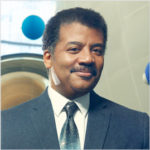

 Become a Patron