“Clean Meat” – if you aren’t familiar with the term, this is the episode for you. On this episode of StarTalk Radio, Neil deGrasse Tyson and comic co-host Maeve Higgins explore the rise of clean meat and the future of food with Paul Shapiro, author of Clean Meat: How Growing Meat Without Animals Will Revolutionize Dinner and the World, and Dr. Liz Specht, Senior Scientist at The Good Food Institute, a non-profit helping shape the future of food in healthier, more responsible, and exciting ways. You’ll learn more about the process of growing clean meat or “cultured meat” and how it can help reduce problems like world hunger and climate change. You’ll discover more about the companies at the forefront of the clean meat industry. You’ll hear how NASA was influential in the creation of this now budding industry. We also answer fan-submitted Cosmic Queries: find out if clean meat tastes the same as regular meat, learn about the drastic differences in energy consumption between animal agriculture and the clean meat process, and explore the differences in nutritional value. Ponder the possibilities of “designer” meats. All that, plus, we look at how clean meat could de-politicize food.
NOTE: All-Access subscribers can watch or listen to this entire episode commercial-free here: Clean Meat, with Paul Shapiro.
Transcript
DOWNLOAD SRT
Welcome to StarTalk, your place in the universe where science and pop culture collide. StarTalk begins right now. Welcome to StarTalk. I'm your host, Neil deGrasse Tyson, your personal astrophysicist, and I'm also the director of New York City's Hayden...
Welcome to StarTalk, your place in the universe where science and pop culture collide.
StarTalk begins right now.
Welcome to StarTalk.
I'm your host, Neil deGrasse Tyson, your personal astrophysicist, and I'm also the director of New York City's Hayden Planetarium at the American Museum of Natural History.
My co-host today, comedic co-host Maeve Higgins, Maeve!
It's been so long, it's been too long.
Yeah, I know.
I was in Ireland, I had my sister's, you don't need to hear all this.
And you're a long-time veteran of StarTalk, and you're a host of the podcast, Maeve in America.
Cute title.
I did your podcast.
You did, yeah.
Okay, I hope I did okay.
You did great.
I mean, my podcast is about immigration, and your point was we're all from Africa.
Yes.
So that was really blew my podcast out of the water.
No, everybody is an immigrant to where they are.
Yeah, yeah, yeah.
It's just a matter of how far back you look.
Exactly, yeah.
So, yeah, don't come to me telling me, well, you're an immigrant and you're not, you're a native, no, nobody's native.
Not even the people who call themselves native are native.
It's true.
But you know, it's hot, it's a hot topic.
We're all natives of Africa.
Right.
If you want to go all the way back.
Right, right, right, which is why it was cool when the English went and claimed Africa, no, I'm just kidding.
So today, we're not talking about immigration.
We're talking about the future of meat, meat.
And meat as it might appear to have a future in the laboratory.
That's according to Paul Shapiro, author of the recent book, Clean Meat, How Growing Meat Without Animals Will Revolutionize Dinner and the World.
And we've got him in studio to give us all the details on the future of this sustainable, humane, and...
Tasty, we hope.
Indeed it is, Maeve.
So Paul, welcome to StarTalk.
Not your first rodeo with us.
No, I'm very honored to be back.
Yeah, yeah, excellent, excellent.
You carry a title, Vice President of Policy at the Humane Society of the United States.
That's a thing.
That is a thing, yeah, amazing, I know.
But it's great to be here, and I'll tell you that if you go back to the time when we were walking around the plains of Africa, when we're is the cradle of humanity, never since that time have we had the ability to divorce meat production from live animal, raising or killing.
And now, scientific advances are allowing us to do just that, and there's a lot of reasons that we wanna do that.
So, for example, Neil, your brother from another mother, Bill Nye, often points out that raising animals for food is one of the leading contributors to climate change and love other pressing environmental problems.
Agriculture in general, yes.
Agriculture, but especially animal.
Especially animal raising.
Right, and so one of the solutions could be just eat less meat and enjoy more plant-based foods.
That's a great solution, we oughta do it.
I feel like that's something we all know and like not many of us do.
Maeve, you're hitting me on the head.
You're trying to change people's behavior.
Right, it's like exercise.
And we're like, mm-hmm, I absolutely mean to.
And I will do this.
I had intended to this morning.
Yes, that's right.
All the more reason why we want to divorce meat production from livestock raising.
And so now, if the problem is that we're raising too many animals for food, one of the solutions may lie within those animals themselves, that is within their very selves.
Like if they could learn to speak, they'd be like, stop it.
That is one of the things we need a pioneer to enable them to have a voice.
But until then, until then though, there's now a group of startups that are creating what's called cellular agriculture, the process of growing real foods like real meat from animal cells as opposed to animal slaughter.
And what these companies are doing is producing real animal products.
We're not talking about alternatives to meat here.
We're talking about real meat simply grown with vastly fewer resources than are needed to produce whole animals only to slaughter them.
I know it sounds like science fiction and indeed in many sci-fi plots.
But they're not animals, so they're not animal products.
Well, they come from animal cells a lot of the time.
So you're growing meat from animal cells.
But they don't have like-
You're culturing the cells.
That's exactly right.
Basically, you're producing this through cell culture.
And so it's been the domain of sci-fi for a long time.
Everything from Star Trek on the USS Enterprise, that's how they ate meat, was eating clean meat.
But now, it's not sci-fi.
In fact, it's science fact.
And that's what you cover in your book.
That's right.
So how real is it?
Can we, is there a restaurant that's gonna get a T-bone steak that you grew in your lab?
Perhaps one day, but for right now, these companies are making ground meat products.
Think more like hot dogs, hamburgers, chicken nuggets, sausages, rather than-
Stuff where the texture of the meat is lost from its original fibers anyway.
And there's so many meat products that are on the docket for that.
As you said, just ground beef anyway.
Hot dogs, sausage, that sort of thing.
You're not growing creatures, right?
They don't have bones or brains or organs.
It's just like the stuff we use.
Yeah, that's exactly right.
So we just need the meat.
It reminds me of, it was one of the Gary Larson comics.
And it said, boneless chicken ranch, and the chickens have no bones, they just fall on the ground.
They're just slithering.
Well, maybe this will be like the brainless chicken ranch where it's just a bunch of cells.
So how soon is this gonna happen?
Well, these companies are not yet commercialized with the exception of one, a company called GelTor, which is producing gelatin from, basically through cell culture.
Gelatin has always been like animal hoofs or something.
Yeah, hoofs or skin or skeleton.
Gelatin is basically just like.
The day I learned that, I said, no, I don't need Jell-O that badly, okay?
I'm sorry, I don't crave Jell-O.
It's funny that they never branded it differently.
They were like, gelatin, Jell-O.
The link is so there for us all to know about.
Well, with the exception of GelTor, which has commercialized, these companies are looking at introducing products like meat or milk or eggs or even leather.
Really in the next.
They can make eggs.
Oh yeah, yeah, absolutely.
And so what we're talking about is probably for some of them, like leather and egg whites and milk, probably another year or so.
Then with the meats, you're looking probably more like 2021, although one company, Hampton Creek, does pledge that within 2018, they will start selling some product that is a queen meat product.
And they're called Hampton.
Hampton Creek.
And it's like a race, right?
Like, so I can imagine there's all companies.
Is it like the space race almost?
Like where they're all trying to get there first?
Oh, that's gotta be hugely lucrative.
Hugely lucrative.
These companies are bringing in millions of dollars from venture capital funds in Silicon Valley and even agriculture giant Cargo is investing in this space because they see queen meat as part of the future of humanity's protein consumption.
Who's gonna be the first to adopt clean meat?
Would it be vegans?
No, quite the opposite.
The reality of the surveys shows that the more meat you eat now, the more likely you are to want to eat clean meat, the less meat you eat now, the less likely you are.
Because this is meat, it's real animal meat.
And so vegans and vegans.
You're not enslaving and killing animals to get it.
And that has been one of the many arguments posed against meat eaters.
So that is one of the reasons why some people choose to be vegetarian or vegan.
And for those people, that problem is addressed through clean meat.
People have other reasons too.
But the fact remains that the more meat you eat, the heaviest meat eaters, so to speak, are the people most interested in eating this.
And how do you know they'll be most interested?
One is, I want my T-bone out of the rib of a cow.
And none of this newfangled Franken food, no scientist gonna put a.
Like a barbecue guy.
Right, barbecue guy.
Well, interestingly enough, Memphis Meats, which is one of the companies leading this space is.
See, that's the kind of name, Memphis Meats.
Yeah, well, one of the guys who.
For those of you listening on the radio, Neil is wearing a cowboy hat.
It just appeared out of nowhere.
It just materialized.
It just materialized.
As soon as the voice started.
But anyway, yeah, they are one of the top people of the company as a guy whose family owns a chain of barbecue joints in Memphis and the surrounding areas.
And they have pledged they want to be serving Queen Meat on their menu as soon as these guys get it ready.
And what they're envisioning is something to be pretty cool.
So they want to do, like, imagine right now a restaurant.
You might think in the back, they're brewing their own beers.
Maybe they got their own type of IPA.
Imagine a restaurant.
Yeah, I live in Brooklyn.
That's like every.
Imagine, instead of brewing their own beer, they're brewing their own meats.
And you could even imagine, like, the mascot, like a pig from whom these cells were biopsied in the restaurant looking around.
That would be cool.
And you could eat the meat.
In fact, the company we were just talking about, Hampton Creek, did exactly that.
They took a sesame seed-sized biopsy from a chicken, grew real chicken nuggets from his cells and ate them while he pecked about at the grass right before their feet.
Yeah.
No, that's quite sci-fi in the moment.
In the moment.
Now, what is this that NASA has to do with this?
I know that there's a huge food research group in Houston for this to keep food fresh for the length of space missions.
So I know they think a lot about food texture, food taste.
And so what's their role in this?
I have that in my notes and I'm like, where's it coming from?
Oh, they're the progenitor.
So NASA was doing research around the turn of the century, funding this research into growing meat because if humans are gonna travel the cosmos, they're not bringing Noah's Ark in tow.
If they want meat, they're gonna have to grow it.
And so NASA funded this research.
It's not a separate spaceship for the cow.
Yeah, right.
That's exactly right.
NASA needs to be ultra efficient with how they're producing food for anybody who wants to go on long distance cosmic tourism.
And the way that you do that is you grow it.
And so they funded this research to grow real fish meat outside of the fish.
And it got a lot of attention when they did it right around the turn of the century.
And that spawned this whole industry because people thought to themselves, wait a minute, they wanna do that out in space.
Why not here on Earth?
We have a real problem with animal agriculture.
And if we could address some of the key problems of sustainability with animal ag, you could address huge problems from climate change and so many other issues.
Do you know enough about the molecular structure of the different cuts of meat to be able to duplicate that in the lab?
Well, I know it's T-bone meat versus a filet mignon.
So far, they don't have the capacity to make those types of whole cuts of meat.
So right now, what they're doing is like we said, ground meat.
And so yeah, they can do different cells.
I mean, they could even do like a turducken type thing where you take cells from a turkey, cells from a duck and cells from a chicken and mix them all together.
So you could do that, but it's still.
Yeah, oh yeah.
I can't say I've ever had that urge.
You know, these can be birds.
I wanna put them all together.
But you know, this field of cellular agriculture, it is still a nascent industry.
I mean, this is really these companies.
Is it easier to make fish than it is to make like steak?
Yes, absolutely.
In fact, one company called Finless Foods, I ate their queen fish recently.
And it is definitely easier to produce fish.
And then the next would be like avian, like poultry meat, and then mammalian meat comes later.
But these companies are doing it all.
And their goal is to compete with animal products, not in some type of a way where these are a niche product, but rather to compete on cost and on taste with commodity needs.
Is fish easier because almost no matter where you are in the filet, it tastes the same?
Or is it not so with the side of a cow?
That may be one reason, but a bigger reason is that fish are in a much colder environment that we're in.
And so the cells don't have to be kept at such a high temperature.
So you have far fewer energy costs, because fish cells can be kept at the temperature in which the fish live.
That's right.
So yeah, I didn't ask you about the energy and the cost to make it.
So first, let me agree with you.
If you make hamburgers this way, you can just transform the hamburger market.
Everyone's gonna agree.
No one is gonna deny that.
I agree.
Completely.
And that's a huge part of the American diet, is the hamburger.
And I might even eat more hamburgers knowing that this is what it is.
So what would, per pound, what's your lab meat gonna cost?
Your Frankenmeat?
Hardly.
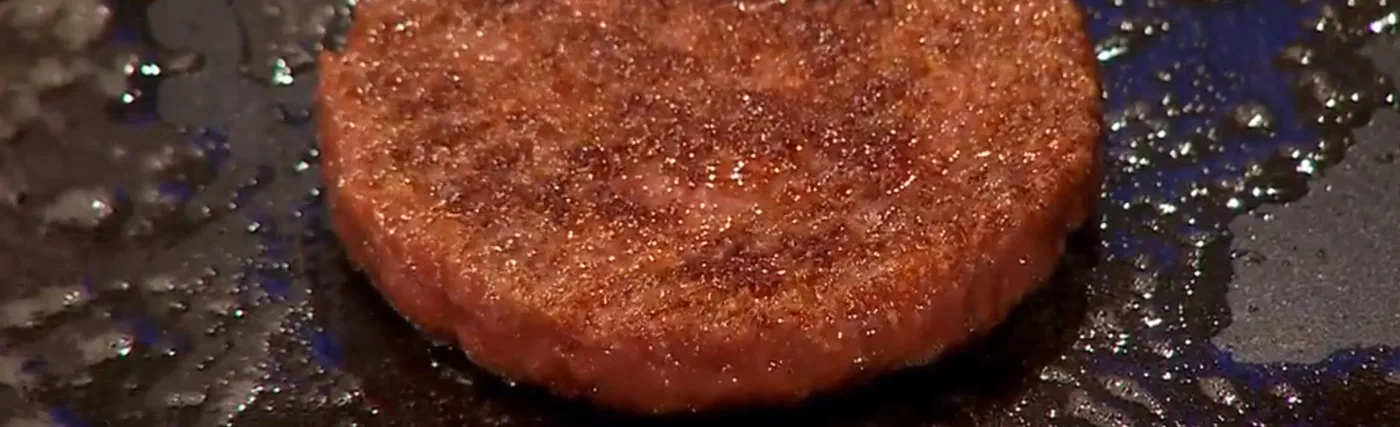
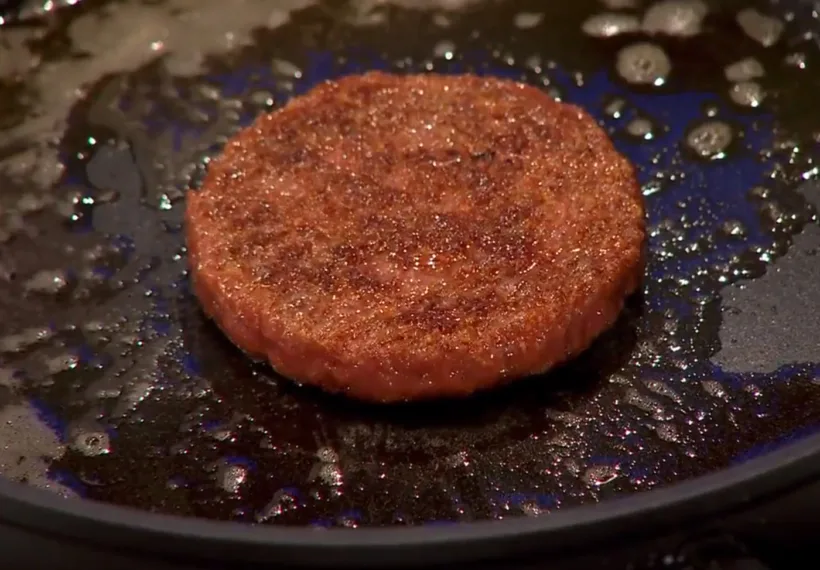
The first ever clean burger that was ever produced was in 2013 and Sergey Brin, the co-founder of Google, funded it.
And it was for a bargain price of $330,000 per burger.
Okay, now the second burger is the one that cost $5.
Yes, and so in the last four years, the price has come down more than 80%.
They took all the diamonds out of the burger.
Let's try it again.
Now the burger's only $20,000 rather than $380,000.
Yeah, I don't know why they didn't use ketchup instead of gold dust, but no.
So now these companies are saying they think by around 2020 or so they might get it down to like $11 a burger.
But there's a long way to go.
But the first iPhone was over a billion dollars to produce and these companies have only been in existence for a couple years.
They're already driving the cost way down and clean meat will become a reality within years, not decades.
So Paul, recently I posted a tweet that I didn't think would be controversial.
I thought people would just be intrigued by it.
The tweet was, cows are biological machines invented by humans to turn grass into steak.
And I thought the blunt truth of that would just sort of wake people up and say, oh my gosh, is that what this, oh, I didn't know that kind of thing.
I think many people don't know that we invented cows.
There's no herds of roaming cows terrorizing the hillsides.
Because that's what cows do, terrorize.
The herbivores are always terrorizing.
Oh man, yeah, the gang of herbivores.
So they, so, and it received a very strong negative reaction.
I would say 80, 20, negative to positive or to neutral.
And I didn't see that coming.
Did you see that coming?
You follow me on Twitter, right?
Is that right?
I certainly do follow you on Twitter.
He's the one.
You started, Mr.
Humane Society Guy.
So yeah, as you know, I published a piece in response to this where I was defending part of what you were saying.
I mean, I think, look, if you consider that when you domesticate wild animals into domesticated animals, that that's an invention of an animal that didn't exist before, then sure, that is a type of invention.
I will say, though, that the wild animals from whom they were domesticated, the auroch, they were turning grass into meat, too, before we ever saw them.
That's what ruminants do.
That's what giraffes and camels and deer and elk do.
They turn grass into meat.
So I don't know that we caused them to do that, but to the extent that we did create cows by domesticating the auroch.
How cows do it way more efficiently than the auroch did, I'm sure.
Although we still use the aurochs.
Yeah, well, we actually exterminated them.
They're extinct.
The last one died in the 1600s.
That's what I heard.
They actually came farther into modern times than just the ice age debacle of the mammals.
But don't you think that it's because people just feel so bad and weird about that stuff?
And that's why when you just said the blunt truth, they were like, no, that's not it.
It was like, cows are feeling creatures.
I said, my tweet has nothing to do with that.
Yeah, it's hard to separate it, I think.
Yeah, you're right, Maeve.
I think the idea of an animal being a machine is what some people found offensive because a machine implies that they're not sentient, that they don't have thoughts.
I said biological machine.
Yeah, oh, I think for anybody who follows the VI.
That's a very scientist kind of thing.
No, no, it could be a mechanical machine.
There's a biological machine.
Because in a way, we are biological machines too.
Of course, of course.
Right, exactly.
Of course, but that one has a very tuned purpose.
That's all.
We gotta take a quick break.
When we come back, more on the future of clean meat when StarTalk returns.
Welcome back to StarTalk.
I'm your host, Neil deGrasse Tyson.
I got my co-host, comedic Maeve Higgins.
Maeve, and host of the podcast, Maeve in America.
Maintaining an Irish accent since 1981.
You actually have a Brooklyn accent now.
You're hiding it.
Hey, thank you.
A special in-studio guest is Paul Shapiro, author of the recent book Clean Meat.
How growing meat without animals will revolutionize dinner and the world.
Cool subtitle there.
And we've been exploring just the cutting edge technology that Paul says is gonna revolutionize everything about our relationship to animals that are farmed for their products.
It wouldn't only be food but leather, presumably, or other products.
We're gonna bring in some more expertise here.
Joining us on video call to help us just break down the science inside the laboratory is biologist Liz Specht.
Liz, welcome to StarTalk.
Thanks so much for having me on.
Excellent, so you're a senior scientist at the Good Food Institute.
Correct.
Okay, who's the senior scientist at the Bad Food Institute?
That's what I wanna know.
No, no, her arch enemy in the parallel universe.
I want the scientist in the Bad Ass Food Institute.
How about that?
So you use biotech to, in the field of synthetic biology to make clean meat.
And I don't know that that's a common term yet today, synthetic biology.
It sounds almost oxymoronic.
Could you define that for us all?
Absolutely, yeah.
So my academic background is in the field of synthetic biology.
And the way I like to explain it is to think of biology like a Lego set.
So in all of the millions of years that biology has been doing its thing through evolution, we've developed this really cool toolkit of all of these various enzymes, metabolic pathways to make cool molecules, structures that have different functions and properties.
So synthetic biology is simply looking at all the Lego pieces across a lot of different Lego sets and building new things that never existed before rather than just building the objects on the front of the Lego box.
What's cool though is that you actually don't need something like synthetic biology to make clean meat.
So that's, certainly there's room for synthetic biology to do more sophisticated tricks down the line, but clean meat is just farming animal cells, muscle cells and fat cells and so forth, rather than farming the whole animal.
So when we grow and multiply these cells in culture, it's kind of the most natural thing for cells to do.
There's nothing really synthetic about going from one cell to two, two to four, four to eight.
That's what they do best.
Okay, do you just diss Paul and his book?
It feels like you just dissed his entire work here.
No, I think there's definitely room for synthetic biology.
I think folks who kind of assume that there's something engineered or synthetic about clean meat might be wary of it as the technology going into their food.
Obviously, we find our food very personal.
So certainly there's room to leverage synthetic biology and obviously I'm incredibly excited about the potential of that.
But we can grow these cells in a very straightforward way in culture.
If I understand you correctly, you're interested in creating transgenic life, life that nature itself hadn't produced or doesn't know to produce and you had some clever need for one kind of animal or bacteria or virus versus another, and you just go at it.
Is that a fair characterization?
So certainly that's been part of my research background, yeah.
And again, I think there's a role for that in clean meat, but it's not necessary.
So clean meat is separate from whether these will be genetically engineered cell lines.
One thing that I find really cool about clean meat is that whether you engineer the cell lines or not, you completely decouple the manner of production from the animal itself.
So now we're open to all of the species we could possibly want to farm for the meat.
It's just as easy for us to make an antelope steak as it is a cow steak.
So Paul, if you're just duplicating cells or culturing cells, whatever the proper bio word is, does that mean you could also manufacture organs for transplant?
Yeah, interestingly enough, the lead company in the cellular agriculture space, a company called Modern Meadow, they're making clean leather, it was founded by a father and son team that before that had founded a company called Organova where they were making human organ tissues for experimentation purposes and one day for transplantation purposes too.
One key distinction, so you can use synthetic biology for example to make some of these products like milk and egg whites and so on.
The clean meat companies though, not the liquid products but the solid products really are just using tissue engineering, not so much the type of syn bio so to speak as the others are using.
Okay, so I'm just curious if there might be part of the world who's afraid to eat food that a scientist made in the laboratory.
I heard that there was a restaurant.
For no reason of course, because if it's the same cells.
Right, it's the same.
It would be out of the absence of awareness and knowledge of what you're actually doing and the fear factor that comes with every new wave of scientific discovery.
Yeah, I heard there was a restaurant around the corner here that got busted.
They were trying to make their food more palatable and so they were throwing sodium chloride on it.
Oh, you can't do that, oh my gosh.
I know.
So of course as educated listeners of this show know, it's just table salt.
But for most people they hear sodium chloride or dihydrogen monoxide and they think these are real problems and of course it's just table salt and water.
And so I think that there are some people who have a concern about technology as it's applied to food, but keep in mind virtually everything we eat has had some type of food technology applied to it.
I mean, most people aren't concerned about eating a seedless watermelon despite the fact that it's hardly natural.
A seedless anything.
Yeah, that's right.
So Liz, are you the weird one at the Thanksgiving table?
Well, I think the weird one might be that father and son team who were like, well, we used to make human organs, but now we make bacon.
Yeah, I'm just wondering, how are you received by would-be friends or family?
I think I am lucky in that I reside in pretty nerdy circles.
So I think most people that I interact with day to day really get the value of leveraging all the tools that we have to build more sustainable food system.
I think a lot of people who kind of initially push back on this, same thing with genetically modified organisms in our crop species, once you actually explain to them the benefits of having that type of precision when you're developing better foods, it really resonates with people.
Very cool.
And tell me Paul, why did you choose, maybe not you, but your people, if not you, choose the word clean meat?
Because that's a little unfair, because it implies that meat from a living animal is dirty.
Would you agree that you're playing dirty pool there?
The term clean meat was really popularized by The Good Food Institute, where Liz works, and I'll tell you, one, like clean energy, clean meat is just cleaner for the planet.
But it's also just literally cleaner.
So think about it, right now, we're warned to treat raw meat in our kitchens almost like toxic waste.
Why?
Because it's riddled with feces, E coli, salmonella, campylobacter.
These are all intestinal pathogens that can sicken us if we don't cook the crap out of our meat, literally.
But-
Cook the crap out of the meat.
I like that.
Literally cooking the crap out of the meat.
But when you're growing clean meat, you don't need to grow intestines at all.
You don't have those intestinal pathogens.
You're just growing the muscle that you want.
And so that's why it's both literally cleaner and cleaner for the planet.
Okay, you've convinced me.
Great.
I didn't think that would happen.
We got a cosmic query from somebody.
Oh yeah, we're ready for cosmic query.
Cosmic query section.
Yeah, this is-
Wait, wait, wait, I have to introduce it.
Now is the time for cosmic queries.
We have two good experts about this topic and I will just sort of watch as this unfolds.
Okay, so this came in through Facebook.
There's a huge fascination with this whole topic, right?
This is Daniel S.
Haltgrew and he said that he read that clean meat tastes bland cos it's muscle cells and there's no fat cells.
So what do you need to do to get stranded fat marbling like that you find in a good steak and how far away is that?
Yeah, yeah, so Liz, if I'm choosing a steak, it's the marbled steak cos it's not, of course, it's not just the meat, it's the fat.
Absolutely.
And this is, and the Kobe steaks and all that whole other sort of branch of steak eating, that's fat level, very high fat level.
So what's going on there?
Yeah, and fat is such a flavor carrier, obviously.
So it also provides some nutritional value.
There's all kinds of reasons you would want a genuine marbled steak.
So for this question, I would just urge that all of the companies that have developed products so far, these are early stage prototypes, they're working with single cell culture.
So yeah, some of the products so far have just been muscle cells.
But of course, there's the ability to co-culture multiple cell types.
So to have muscle cells growing right alongside fat cells.
What's cool and what really geeks me out is that when you have these cells grown on what's called a scaffolding material that's helping to kind of structure the final product, you can actually use that scaffolding material to help guide the cells where spatially you want them to differentiate into muscle versus fat.
So imagine having the perfect marble steak and you can make a million of those with that exact marbling pattern because you're defining it at that level.
Yeah, so you would need someone to study the perfect steak under natural causes and then duplicate that or possibly even improve on it now that you have laboratory controls.
So you can cultivate fat cells the way you can protein cells.
Okay, I didn't know that.
I'm thinking fat is just fat.
That you need to just sit those cells down in front of Netflix for three weeks.
Nachos all the time.
All right, so you got another query.
Okay, so this is Shay and he wrote in on Instagram, he asked how much energy would be consumed growing meat in a lab versus raising animals.
Pound for pound.
Pound for pound.
So there are a lot of different life cycle analysis that have been done so far.
But, and they show generally, not always, but generally that you're talking about a big energy savings but also way fewer greenhouse gas emissions, way less land, 99% less land, much less water use.
But as Liz correctly points out, these are still early prototypes.
Like they don't know what it's gonna be when it's at commercial scale yet.
Presumably it will be even more efficient.
But for right now, it's looking pretty good.
So what you're saying is the projections for the land use, water use, power use are so much better than anything going on now that even when it becomes mass market commercialized, you're gonna win every contest up against whatever used to be required to get the same product.
Hands down.
Hands down.
Water use, everything.
Yep.
Right, because you don't have to create the grass that the cow eats to make the steak.
Yeah, I think about it, right now an animal is doing all types of things that require calories for things that we don't care about.
Breathing, digesting, thinking, seeing, walking.
When you're just growing the muscle that we want or the fat that we want, you need way fewer resources to do that.
And even don't animals like taste better when they can move around and you give them space?
Like they actually need more space?
I don't think that's what they say.
Do you eat meat?
I don't, but I eat meat many times.
I don't think that's what they say.
But you know, like free range chickens taste better than chickens who live in a cage forever.
Well, usually the free range also have other aspects about them that make them.
Like a little treadmill.
I'm sure there are no treadmills.
No, you don't want like a big muscular like chicken on your table.
What else do you have?
Okay, so Mason Everest on Twitter, he asks how long, roughly, that's nice that he gave you that out.
It's a process from animal cells to edible product.
So I guess he's talking about like two cells in the beginning.
Yeah, so Liz, if you start with like one cell and then it doubles and quadruples and whatever, how long does it take?
Just physically, if you were to watch it happen.
Yeah, good question.
So we can work out the math on that.
Obviously, cells are growing exponentially.
The doubling time for these types of animal cells is typically on the order of 20 to 24 hours.
I've done some calculations myself when I'm trying to look at how close might we get to cost parity and so forth where I'm trying to bound how long a process might be from say a starter vial to growing say a 20,000 liter tank full of cells.
And for that process being pretty conservative with doubling times, we're looking at something between maybe three weeks and five weeks.
And that's for a whole batch kind of from start to finish.
But as with any scale process, you'll be making use of the latter end of that exponential growth curve and simply harvesting, get another doubling and so forth.
Right, but it still feels short to me because if you, two to the 30th power, if you go over a month, what do you get there?
You get five billion, I think, something like that.
You're a better mathlete than I am.
But cells are very small.
So five billion cells, that's not very much.
Is that like a Shake Shack double burger?
But because doubling time is in your favor, that if you don't have what you need in the 21st day, you might have what you need in the 22nd day.
Because what happens in the 22nd day duplicates what happened between day one and day 21.
So really this is a non, this is a no-brainer here.
Literally.
Yes.
Is he good?
Is he good?
He's good.
Okay, this is, I think-
One more question before we take a break.
Last one?
How do the nutritional benefits, and this is from Frank Kane on Patreon.
He's one of our Patreon supporters.
You're supposed to read his question first.
Oh, I am?
Yes.
Okay.
Patreon get their questions first.
Oh, let's edit this.
Um, sorry, Frank Kane.
Yeah.
Um, how do the nutritional benefits of clean meat stack up to soy and bean-based meat substitutes that are already available?
Ooh, good one.
Good one.
Who's gonna take that?
Paul, yeah?
I'm happy to.
Do you eat soy?
So, you're a vegan or a vegetarian?
Well, I've eaten queen meat many times, so whatever that makes me, I'm a queen meatitarian, I guess.
Were you so happy to eat it the first time?
The first time I ate queen meat was in 2014, and at that time, more humans had gone into space than had eaten meat, real meat grown outside of an animal.
So, in that I was happy, I thought it was a cool thing to do, but it didn't do much else for me other than that.
But since then, I've eaten queen beef, fish, duck, chorizo, liver, yogurt, lots of these products are now.
All in one, go.
Yeah, it was like the ultimate turduck and just everything all together.
No, I've eaten them separately.
One of the benefits of writing this book was that these companies want to share their products with you.
But nutritionally.
Yes, so you can control.
So as Liz was saying, you can control how much fat, the types of fats.
I mean, theoretically, you could envision putting instead of saturated fats in maybe omega-3 fatty acids.
So you would have a hamburger that rather than causing heart attacks would prevent them.
But right now they're just trying to get it to the point where it's just the same, the same exact thing.
So the same amount of protein.
So then you could just do a comparison directly with soy as with regular meat.
Yeah, right now the clean meat products are trying to get them to be exactly like the meat that we have except much safer.
Then when you compare it, let's say to plant-based products, plant-based products are very nutritious.
They're good for you, they're sustainable, they're very energy efficient and they're great.
We want them.
Clean meat is not an alternative to them.
It's really a supplement because if you think about it, take them out kind of like fossil fuels in that fossil fuels are such a big problem, you want more than one solution.
You don't want just wind.
You want solar, you want geothermal, you want to put everything in one basket.
The same with the problem of animal agriculture.
It's so bad, it's so serious that you want many alternatives including plant-based meats and whole plant-based foods but also clean meats too.
All right, well we gotta take a quick break and when we come back more about clean meat we'll have a StarTalk this week.
We're back on StarTalk, Neil deGrasse Tyson, with my co-host, Maeve Higgins.
And our topic today is clean meat.
And I've got someone who literally wrote the book on it.
Paul Shapiro.
I literally wrote the book because I literally wrote the only book on it.
Hence, the book on it.
How Growing Meat Without Animals Will Revolutionize Dinner and the World.
And joining us on video call is Liz Specht, senior scientist at The Good Food Institute.
And you're joining us from San Francisco.
So, thanks for being on the show.
And just a quick question.
I heard before the break, Paul just slipped in.
Talked about vegetative meat.
Plant-based meat.
Plant-based meat.
I don't know what that is.
What is it?
Is it just the fake, like the soy burger and that sort of thing?
Yeah, I don't know if I would call it fake.
It's very real, natural food.
It's just we use plants to mimic the taste and texture of meat.
Have you seen the YouTube video where it's meat eaters talking about food the way vegetarians would?
Oh, I haven't seen it.
And they say, okay, well, have you tried this celery made from animal meat?
We've taken out the flavor and put in celery flavor, so it tastes just like celery, except it's made from burger.
It's a whole video skit on, it's pretty funny.
You know what it reminds me of a little bit?
I want to just tell a very brief story.
So in the mid-19th century, you had a huge natural ice industry.
They're harvesting lots of blocks of ice from frozen lakes in the north, transporting it all around the world.
Then you have the advent of industrial refrigeration.
And all of a sudden, it's a lot cheaper to produce ice from the water right in front of you.
The natural ice makers.
By the way, that took major understandings and advances in physics and thermodynamics.
To be able to take heat from something that's, take heat out of something that's already colder than the environment.
To make it colder.
That was a major advance in sort of the engineering physics of thermodynamics, but go on.
Well, the natural ice people, the barons of the natural ice industry were really upset by this because it threatened their market.
And so they derided what they called artificial ice.
And they said, oh, be careful of the artificial ice.
The ammonia used in the coolant could leak in.
It could hurt you.
The irony at the time was that the so-called artificial ice was actually much safer than the natural ice because the natural ice, one, is coming from waters that are polluted with industrial revolution pollutants.
And they've got horses dredging the ice out, going to the bathroom right on top of the ice as they're pulling out.
Whereas the artificial ice is being produced from water that had been filtered or boiled.
You fast forward to today, and virtually every one of us has an artificial ice maker in our homes.
We call them freezers.
And nobody thinks there's anything unnatural or fake about it.
We just call it ice.
So Maeve.
Yep.
We're still in Cosmic Queries mode.
Yes, we are.
So give it to me.
Okay, this is from Chris.
This is from Chris Ryu and he's on Patreon.
Now he opens by saying, nice to meet you.
Okay, I just want to say that.
I mean, M-E-A-T.
You've never heard it before.
I'm sure you haven't.
That's very nice of you.
So he's asking, how does a clean meat process compare with organic farming when it comes to greenhouse emissions, energy consumption, and the space that you need?
So he's writing from the UK actually.
So what do you think, organic farming?
Sure, I'll hop on this.
Paul took a life cycle analysis question.
So I think the most relevant attribute here is really the amount of resources used.
Like Paul said, when we're growing meat by funneling calories through an animal, it's an inherently inefficient process, just thermodynamically.
There's no getting around that.
So organic farming, just like industrialized animal agriculture, will always be much less efficient.
In many cases, organic farming often ends up taking more land because you're not able to get the same yield out of the same area of land for the feed, for example, for these animals.
That's organic farming relative to traditional farming.
It even takes more land for the same yield.
That's what you're saying.
Correct.
Yep.
Yeah, so it's more efficient than all of the above is what this comes down to, whether or not you're organic.
Right, so it could be more organic, have them rethink, because you can have organic animals, of course.
Organic is not just vegetables, right?
So this would completely transform.
It means that they're not given, I guess, antibiotics and hormones and stuff, right?
That's what an organic animal is.
It's not formally defined, yeah, organic.
Right, this is an interesting question from a chef.
His name is Aaron Nelson, and he said, I'm a chef, I'm interested in the idea of lab-grown meat.
As it stands, where a cow is raised, how it's raised, what it eats, all affect the flavor and the texture of a steak.
Do you think lab-grown meats could open the possibility of designer meats with customizable taste, appearance and texture?
Yeah, because I've been in restaurants where they say, this meat, no, it's cheese, you can buy cheese.
This is spring cheese versus fall cheese.
In the spring, the cows are eating on this side of the hill and the grass is this, but later on, it's a different grass and so.
Right, there's like fires on it, I'm food, I'm the moon is.
Yeah, so are you, so Liz, do you know the molecules well enough to duplicate the subtleties that go on not only in the food we eat but in our capacity to taste it?
Are you there?
Like a sunshine morning in Montana, that's where this cow was.
And the monks treated this, massaged this cow.
The cow felt uncomfortable.
Yeah, do you have the monk massage gene in there?
Yeah.
They actually have monks stirring the bioreactors.
Give them something to do.
They add their secret sauce.
I do, not there yet, just because people haven't looked at it yet, but I think that's a relatively straightforward question to answer and I think what's so exciting about this process is the degree of control you have over it.
So you can do an analysis of what are all of the subtle flavor components that you're getting when you're fermenting grass from a certain area and you can figure out what that actually is and then you make your cell culture media, their nutrient feed, to have exactly that composition.
So from a culinary perspective, I mean, you could patent your formula of what you're feeding to your cells and that can be your five-star meat, one of a kind that you hang your hat on as a chef.
Wow, I hadn't thought about that.
Patent your own steak.
And what it would also mean is whatever might, because it's not just whatever the cow.
Didn't Donald Trump have his own steaks?
Yeah, he did.
He's such a leader in scientific thinking.
Well, how lucky we are.
So it seems to me there's not only whatever the cow ate giving whatever flavor and texture to the meat that was in it that you now can possibly duplicate.
But there's also the topical dressings you might put on it, the dry rub.
In principle, you could infuse your cultures with like Texas barbecue sauce, right?
So then you just get the meat, cook it.
It's got all the flavor you would have put on it after the fact.
That's just like Iberico ham, right?
The pigs eat this special type of acorn and then they taste so good.
I didn't know about this ham.
Oh, it's delicious.
But it's basically your idea and it's happening.
We're gonna drop acorns in with the cells.
There you go, yeah.
It would be an interesting cocktail, I guess, when you do that.
What else you got?
Time for a couple more questions.
Okay, so I mean, this is from Instagram, the granola.
I can't wait to try this.
I hope it's good enough to shut all the vegans up.
What?
I mean, vegans do love to be vegan.
Yeah, yeah, it's a thing, not all of them, but we all know the ones that do.
We do, yeah.
Right, and it's odd because, Paul, I mean, I'm the senior citizen here.
There was a day where you were invited to someone's house.
They didn't ask you what you couldn't eat.
You just ate what you were served.
Any allergies or anything?
Well, I'm vegetarian, I'm this, and I'm allergic to these seven.
Okay, I will now accommodate you.
That is today, but back in my day, no, you ate what was put in front of your face, no matter what.
So, the whole culture, the whole.
It was snowing outside too, all the time.
All the time, I feel back and forth to school.
So, I'm just intrigued how, like you said, it's almost as though people's food habits have become their religions.
And you choose friends based on it.
And you, so it'd be nice if that we can do away with that.
If we just manufacture everything in the lab.
I'm a scientist, just go for it.
I'm there for you.
Yeah, I mean, already our food, a lot of our foods do start out in a laboratory, right?
Like you think about corn flakes.
I mean, they're not, it's not like they just grow on a tree.
Some white cut scientists in a lab created corn flakes and now it's producing a factory.
Eventually, clean meat isn't gonna be coming from a lab.
It'll be coming from a man, like a brewery basically.
And so, sorry, let's go ahead.
I was gonna say, what excites me about clean meat is that it actually levels the playing field in terms of what, globally, we can't all eat because we're lowering the resource burden of making meat.
So this is no longer a wealthy Western world type luxury.
This is now something that could be accessible to everyone.
So I think, in some ways, it makes eating less politicized because we're all using a much more effective method that makes this kind of democratized.
And the-
Let me just pause on that moment.
De-politicizing food.
This is beautiful.
That's beautiful, Liz.
Because here in America, we have so many options.
Is that right?
But we could be making-
Options we take for granted as well.
But that doesn't really, already we have so much here, but it hasn't evened things out around the world.
No, of course not.
Right, right, just we have access to too many resources.
Right, we're just getting so chubby.
Yeah, I mean-
I mean, a diet heavy, a diet that's very heavy in meat is a first world issue, right?
Like there's a reason why the poorer nations of the world don't eat that much meat, it's very resource intensive.
And so I think Liz is right, when we're talking about democratizing food, if you could have these type of systems where you're producing meat much more efficiently, you could make it available, not only to people who don't have access to it today, but to the billions of people who are gonna come onto the planet, primarily in developing countries like China and India-
The billions yet born.
Yeah, right, and who are gonna want to eat like Americans.
China's not a developing country.
To the billions yet born.
They're still coming into-
China has a space program.
They're not a developing country.
Okay, fair point.
Let's keep that clear.
Fair point, fair point.
What you're hoping for, it would be like kind of trickle down chicken nuggets.
We got time for one last quick question.
Okay, great, okay.
So, this is from Andre Frost.
If I want to support the development of vat-grown meat and haste, vat-grown meat, is that what you said?
First thing to do, Andre, is to stop calling it that.
That's your first thing to support.
And haste, and it's commercial viability.
Which company or organization should I throw money at?
So, one thing, Liz doesn't want to be so self-serving to say it, so I'll say supporting her non-profit, The Good Food Institute.
That's a not-for-profit?
Yes.
Okay, cool.
So, I will say that's a great place to invest your money, Andre.
But also, if you buy the book, which you can get from cleanmeat.com.
Which is not a not-for-profit.
Yeah, you can see the main companies that are leading in this space right now.
Because I profile those companies in the book.
Profile in a good way.
Yeah, they're a chron, they're-
Because in my world, it's never good to profile.
Yes, good point.
They are-
To be clear.
They are historically profiled.
Meaning that I chronicle their exploits, and so you can check them out.
But Andre, go to cleanmeat.com and see for yourself.
Well, excellent, so I trust and expect and hope the book will do well and help sort of change the dialogue out there.
And Liz, we'll be keeping an eye on you.
I want my T-bone steak in-
Medium rare.
And three weeks.
But we'll be looking at The Good Food Institute and good to know we've got good people out there just trying to change the world, all for the better.
So thanks for being on StarTalk, Liz.
Thanks so much for having me on, it's been a pleasure.
Yeah, and Maeve.
Yeah.
Always good to have you.
Any final thoughts, Maeve?
No, I'm hungry.
Yeah, I think that the actual role of science, yes, it has affected information technology, it's affected transportation, it can still.
There are many more places that science has yet to tread in our lives that it could just transform civilization as we know it.
And it's always science that transforms civilization.
And this seems like it would be the next one and would be welcome to us all, all 10 billion of us sharing this planet in the year 2040, 2050, you got it.
Well, we gotta end it there.
You've been watching and more likely listening to this episode of StarTalk.
Thanks Paul, Paul Shapiro, Maeve, Liz, I've been your host, Neil deGrasse Tyson, and as always, I bid you farewell.
See the full transcript



 Unlock with Patreon



 Become a Patron