


 Unlock with Patreon
About This Episode
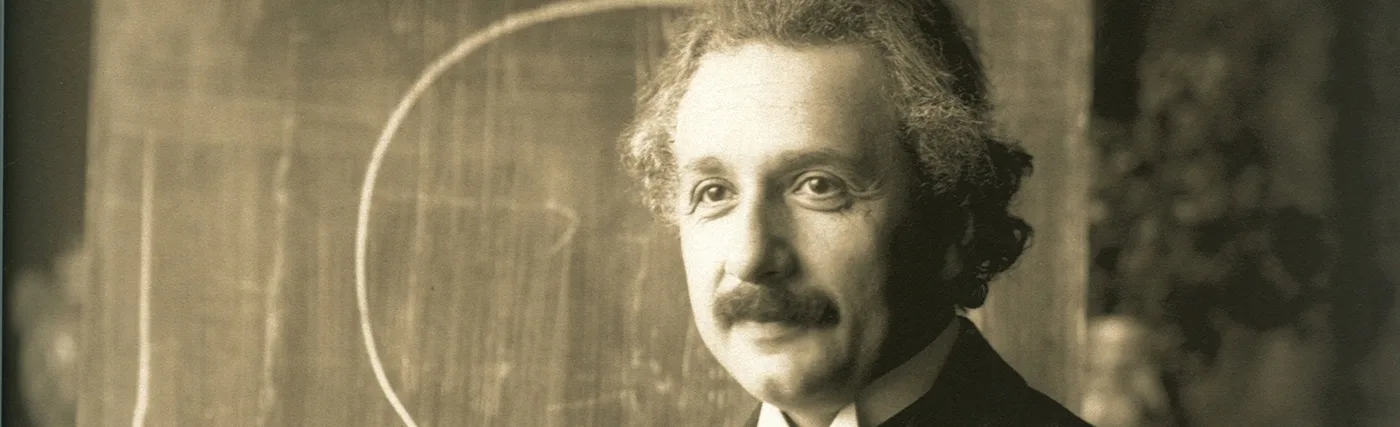
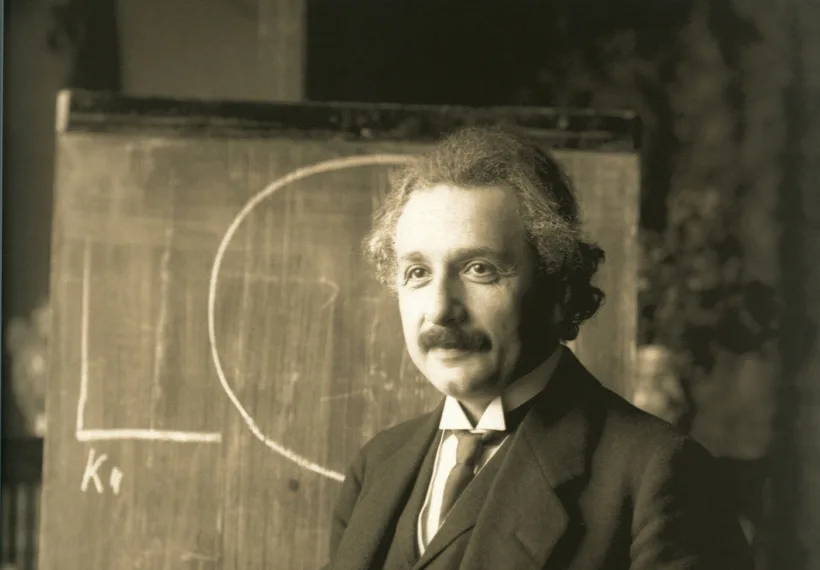
On this episode of StarTalk Radio we’re celebrating the life, legacy, and genius of Albert Einstein. Neil deGrasse Tyson is joined by comic co-host Chuck Nice and fellow astrophysicist Janna Levin to reflect upon Einstein’s greatest achievements. You’ll hear about Einstein’s early days as a patent clerk and how his early papers changed the course of modern physics. Learn about the process behind his discoveries of special and general relativity, and which one was harder to work out. Find out how Einstein’s work influenced the discovery of gravitational waves at LIGO. Our trio dives into the groundbreaking discovery of gravitational waves at LIGO, how the discovery was at an unexpected time, and what current discoveries are being made involving neutron stars. Discover more about black holes, electromagnetism, and gravity. You’ll also explore creativity: is it better to have a set of restraints or free rein? All that, plus, Neil, Chuck, and Janna give final reflections on the importance of Einstein’s life and achievements.
NOTE: All-Access subscribers can watch or listen to this entire episode commercial-free here: Celebrating Einstein.
Transcript
DOWNLOAD SRTWelcome to StarTalk, your place in the universe where science and pop culture collide.
StarTalk begins right now.
This is StarTalk.
I’m your host, Neil deGrasse Tyson, your personal astrophysicist.
And I got with me Chuck Nice.
Go, host.
How are you, buddy?
Tweeting at ChuckNiceComic.
Thank you, sir, yes.
You have to tell people that you’re funny so that they’ll laugh at your tweets?
Otherwise, how would they know?
How would they know?
So Chuck, no one isn’t a fan of Albert Einstein.
That is true.
He’s like the modern icon of what it is to be smart.
And he’s also somebody that, he’s so smart that people use him as the singular example of being smart.
And his name is an adjective.
Right.
What are you, some kind of Einstein?
You know what he said about himself when he was a kid?
Haven’t introduced you yet, Janna.
Janna just busting in.
I’m trying to like, warm up my homie here and now you gotta bust in.
All right, since you busted in.
Janna Levin, always good to have you on StarTalk.
Always good to be here.
You’re one of our StarTalk All-Stars.
Now you’re like hosting your own PBS shows and stuff.
Yeah.
It’s good for us.
Look at the whole thing on Black Holes.
I pretend it’s my evil twin.
Oh my God, that was Janna.
We have a show on Black Holes out.
Janna was working it, man.
With all kinds of.
Space suits.
High tech at CGI.
Space suits and stilettos, cause you need stilettos.
She had a space suit.
That’s very cool.
Of course all space suits are shiny, cause apparently stars are brighter in the future and you gotta reflect the sunlight.
Now you guys are talking about shiny clothes and stilettos.
I’m trying to arouse me, I’m just telling you.
It’s working.
It’s working.
So Janna, you’re a professor of physics at Barnard in Columbia.
And so thanks for coming in for this.
I’m so glad to be here.
Just to help us sort of, I know a little bit about Einstein, but that’s a subset of what you know about Einstein and that’s why we got you on the show.
I really wanted to give my Einstein quip though about the adjective of Einstein.
Well, tell me.
He said about himself, when I was a student, I was no Einstein.
Did he really say that?
I don’t know.
Let us declare the legend here and now.
Google, man, Google and see if it’s a verifiable quote.
You’ve written a couple of books and what’s listed here does not include that book, but I’m gonna mention it anyway.
How the Universe Got Its Spots.
Very nice, very, very Rudra Kiplerian of you.
Yes, yes, definitely reference to How the Leopard Got Its Spots.
Yes, definitely, and also most recently Black Hole Blues.
Now he says it better than you do.
And other songs of outer space.
Black Hole Blues, I’m a fan of the blues.
I’m a fan of Toto.
So what was that book about just broadly?
So the book really follows the recent announcement of the gravitational wave detection from the collision of two black holes, but it precedes the detection.
So the story is really about the climbing Mount Everest aspect of embarking on a very long-term scientific experiment that may or may not succeed.
And so it was called Black Hole Blues because Ray, who won the Nobel Prize in 2017, along with Kip Thorne and Barry Barish, said to me literally the month before the detection, 50 years into this endeavor, if we don’t detect black holes, he said this whole thing’s a failure.
Ooh, and but then now we don’t have to worry about that because it didn’t happen that way, see.
New Song Atlee came out to be what it was, LIGO, that’s what I’m talking about.
There is this interesting idea that you can fail.
I mean, everyone spoke Cajun.
That’s because the experiment was in Louisiana.
You know, you have to think, though, about the prospect of failure 50 years into an experiment that has a lot of negativity against it, even from other accomplished scientists, and that this is something we don’t understand about science is that the risk of failure, if you’re not really risking big, you’re not out there enough.
Right.
So it’s think big or go home.
Yeah.
So Albert Einstein was born in Germany on March 14th, 1879.
And Chuck, do you know what day that is?
1879, March 14th.
March 14th.
Any year.
In any year.
What day of the year is March 14th?
I believe it’s the day that precedes the Ides of March.
What is March 14th?
I really don’t know.
Before the Ides of March, there’s Pi Day.
Oh my God.
Yes!
Okay, I didn’t know it was actually March 14th, but of course that makes sense.
3.14.
3.14, yeah, you get Pi Day, March 14th.
When written in sort of the American way, where we put the month before the day of the month.
Right.
Yeah, I mean, so 3.14, that’s Pi Day.
Then you get really geeky, and then at 159, right?
3.1415, 159 and 26 seconds.
Right.
Then you get a full-up Pi moment.
Can I just suggest that that’s probably the access code to every physics department in the world?
That’s the one, two, three, four of physics departments?
If you walk up to a sealed theoretical physics department, try 3.1415.
And you’ll get it.
Oh my God, it worked.
And tomorrow, the missiles got launched and it all because of Janna.
Yeah, I shouldn’t reveal these things.
So let’s talk about this.
So Janna, what is the Anis Meriballis?
And why do we even say that in Latin?
Why can’t we just say it in English?
It’s miracle year.
It’s, well, I don’t know why do we say it in Latin.
That’s a different question.
We’ll just talk about the miracle year first.
It’s America, Jack.
So 1905?
Yeah, 1905.
1905.
How old is he?
25.
Yeah, 25.
So Einstein was a clerk in a patent office and he couldn’t get a job in a physics department.
His father was desperately writing to famous theoretical physicists saying, you know, my son’s really committed.
And he couldn’t get hired.
One of his professors called him a lazy dog.
And here he is in this patent office in Bern, Switzerland and he has a drawer at his desk that he calls the physics department.
And in this drawer, he has these scientific papers he’s working on in between finessing other people’s patents to make them better.
And in that year, he has this extraordinary year where he publishes a series of three papers that absolutely transform modern physics.
One of them is on the special theory of relativity.
One of them is on Brownian motion, which refers to the atomic aspect of air and molecules.
Like if you see a little piece of lint, you notice that it takes a zigzaggy pattern and that’s because it’s all these little atoms.
And the photoelectric effect, which is staggering because it probes the wave particle duality of light that sometimes light acts like a wave and sometimes it acts like a particle.
Did this by the time he was 26?
Yeah.
Chuck, how old are you?
And unemployed.
Verifying.
I’m 22.
I got time.
Okay, you got time.
Thank you for verifying that.
So they call it an Anis Miriballis.
Why do we say Anis Miriballis?
Because it was all in German.
Did that get him a job?
Oh yeah, well he did become, to the credit of the scientific community, even though this outsider was publishing these papers, it was very swiftly accepted the significance of all these papers, very swiftly.
And that should also be a lesson to those many people who send me their theories.
That when they’re transparently correct, they are grabbed at with glee.
Right, all the most amazing, mind-blowing, earth-shaking scientific research was published in legitimate journals, accepted by peers.
By peer-reviewed, so as they say, to be a genius is to be misunderstood.
But to be misunderstood is not to be a genius.
Oh, that’s nice.
So you can’t come to me and say, I have an idea, but the establishment is not, they’re gonna reject it.
Therefore, it’s brilliant.
Therefore, right.
They don’t get this, man, they just don’t understand.
I’m starting a Facebook page for everyone to evaluate, you know, so they don’t have to come to us.
It’s just amongst themselves, talk amongst yourselves.
Yeah, now we have Twitter for that, I mean.
Now, he didn’t call it special theory of relativity, so who called it special?
That’s interesting, maybe, I actually don’t know specifically the history, I mean.
Why do we have you on this show?
Because I could explain relativity.
I mean, the general theory obviously came later when he included the curvature of spacetime, but I don’t know who actually coined it special.
It was just the theory of relativity at the time.
Because the paper was on the electrodynamics of moving bodies.
That’s the name of that paper.
Yeah.
Of the special relativity paper.
Grabbing title.
The amazing thing.
So that was, wait, 1905, then a general theory comes out when?
1915.
So that’s 10 years.
And he basically pulled that out of the ether.
It’s probably published in 1916, but it’s 10 or 11 years of struggling with the mathematics to elevate what we now call the special theory to the general theory.
Yeah, I mean, he was being influenced by people like Grossman, who was a mathematician.
Hilbert was very influential.
So Einstein wrote down several wrong theories along the way.
And there’s actually a kind of adorable story when he was thinking about something like gravitational waves, where he kept changing his mind in print.
He would write papers, say the real-
It’s adorable for a physics story.
That’s it, that’s it.
The record, adorable for a physics story.
Let the record catch that, pause for a moment.
Right after this, believe me, we’re gonna get to some very darling theories.
So he-
Cheeks you just wanna pinch, yeah, all right, go on.
He writes a paper saying gravitational waves are not real.
Then he writes a paper saying they are.
Then he writes another paper several years later saying that they’re not.
In between acceptance of this paper and publication, he sneaks in a draft of a manuscript that says that they are.
And one of his colleagues says, Einstein, you have to be really careful.
Your famous name is gonna be on these papers.
And he just laughs.
He says, my name is on plenty of wrong papers.
You do not need to worry about that.
So it takes him a long time.
I mean, there’s decades of him figuring out gravitational waves.
And the general theory was 11 years and he needed help from other people.
He wrote down several wrong theories.
No.
10 years.
Is that actually something that is…
Did that do anything to…
In retrospect, that is short order.
Look at string theory, we’re decades deep.
It’s still in it for decades after decades after decades.
It might be hundreds of years.
I mean, there’s no human scale turnaround.
And that’s dozens of leaders in the field.
Really brilliant people.
And we have one guy, Einstein.
I himself.
Basically, yeah.
No, I mean, I didn’t mean to take away Janna’s point that there are others trying to push things along.
They’re nudging him along.
Right, right.
They’re nudging him along because he’s actually putting something out there to be nudged.
Yeah.
Good point.
It was really interesting that it was really him on the, I mean, largely there were other physicists, but him largely on the physics side and the mathematicians pulling him up.
Because he was not actually the most sophisticated mathematical thinker.
Another one of my Einstein quotes is this is, you think you have a lot of difficulty with mathematics?
You should see my difficulties with mathematics.
So he was a very intuitive thinker.
And he really originally rejected the idea that you had to do all of this differential calculus and this really elaborate mathematics.
He thought that’s ridiculous.
It’s totally overkill.
Pure thought.
You could just think it through and it’ll be like algebra.
And he did that with the special theory.
It was stunning, but he could not do that with the general theory.
He had to step it up to be differential calculus on curved manifolds, no mean feat.
But it’s pretty.
Look, how did you do in differential?
What grade did you get in that class?
I was gonna say that what I kind of go with is that you don’t need that.
I know, you say, I will never need that in my life.
I actually use that.
So, all right, so he does this, and then in 1921, he wins the Nobel Prize.
But he did so many things, what did he win it for?
Well, he didn’t win it for relativity.
Which is really interesting.
That is pretty crazy.
Yeah, was it the photoelectric effect?
I think technically it was the photoelectric effect.
Or contributions to quantum, I don’t remember the phrasing.
Do you have the phrasing?
Oh, no, I might do my notes here.
But some of the contributions to quantum, like often they’re phrased in a way that removes it from a specific, right.
But it was not for relativity.
And that is clearly his greatest accomplishment.
Wow, so it’s kind of like when an actor never wins an Oscar and then they’re just like, all right, so we’re just gonna give you a lifetime achievement.
He won it in 21, which is quite early in a way.
I mean, it was pretty soon after he proposed, it’s not staggeringly late after he proposed this sort of revolution of quantum thinking.
And the interesting thing is that he never really accepted quantum mechanics, right?
So he initiates this revolution.
But wait a minute, is that his brilliance, the fact that he was so self-contradicting?
Like he just, no, it couldn’t be.
I think his brilliance is, I think there’s something to that, which is his refusal to accept them, something he didn’t actually understand.
That’s a good point.
Plus there was the, it was hard to, you gotta remember the era he came from.
From the 19th century into the 20th century, this was the towering achievement of classical physics, where the world, the universe was deterministic.
If you tell me where to stand and I measure the motions and momentum, I will predict all future of this universe.
That was a certain posture that the community of physicists has.
Up comes quantum physics, is it a wave, is it a particle, is that some percent of the time and who?
And what was his famous quote?
He was trying to tell God what to do, what was it?
God doesn’t play dice, was that the one?
Oh yeah, God doesn’t play dice.
I’m telling God not to throw dice.
Oh, he tells God not to throw dice?
God doesn’t, I think as quoted by Niels Bohr or somebody, God doesn’t play dice with the universe.
No, he plays roulette instead.
Roulette, he plays craps, plays craps, you know?
Then what does Stephen Hawking say later?
God not only plays dice, but he sometimes throws the die where you can’t see them?
Yeah, there you go.
Sounds to me like God’s a grifter.
So, and then Einstein said something else, said another point about God, and then Niels Bohr, I think it was Niels Bohr, said, Einstein, stop telling God what to do.
All right, so 1921, we’ve got general, so for my money, I think general relativity is a brilliant achievement in the following, let me quantify that for you, see if you agree.
So, if Einstein didn’t come up with a special theory of relativity in 1905, some combination of others in the day would have come up with the same thing probably by 1910, but if Einstein didn’t come up with general relativity in 1915, 16, I think it would have gone another 50 years undiscovered.
And so this, for me, makes general relativity a greater singular achievement than special.
I do think that you’re right, it would have been many decades before it was discovered, if it had not been discovered by Einstein, general relativity, and that is intriguing.
As I know you badass from one of your college.
I also think it would have looked totally different.
So Einstein gave us all of this, the general theory of relativity is a theory of curved space-time and we follow the natural curves in space and all of this elegance of geometry, but none of it is necessary.
There’s a whole bunch of extra degrees of freedom.
In thinking about geometry, they’re not at all required and I think what would have happened is that somebody like Richard Feynman, who was a particle physicist, who was thinking about interactions of particles, would have discovered general relativity but would never have hung all of the space-time language on it.
It would have just been masses.
It’s like in gravitons.
A facade.
Yeah, it would have looked totally different.
And a completely different frame of reference.
And a completely different machinery.
Everything would have been, wow, that’s incredible.
Yeah, I really think it would have been like, oh, particles exchange light and that’s electromagnetism.
This would have been particles exchange gravitons and that’s the theory of gravity.
So was Einstein more of a poetic thinker when it came to it?
I mean, where do you get this kind of expanse and elegance that you can attach to what you’re talking about?
I mean, I don’t want to presume to know, but you do have a sense that here is a very visual thinker and very intuitive and so all the space-time machinery, there might be excesses to it that are not formally required but create such powerful imagery and tools that in that particular example, which is often rare, it’s kind of the contrary of Occam’s razor where the extra machinery actually leads to better, clearer intuition than the total leanest abstraction of just particles exchanging gravitons.
That’s beautiful, right?
You should write a book or something.
Book in there somewhere, isn’t there?
We gotta take a break.
We come back more of our exploration of Einstein, the man, the myth, the legend, on StarTalk.
I got Chuck Nice, co-host.
I got Janna Levin, old-time friend, colleague, physicist, expert on the universe and all ways that matter, especially for this conversation, because we’re celebrating the life and times of Albert Einstein.
So, Janna, your book, The Black Hole Blues, it explored the quest to measure gravity waves and what effort that would take.
So, could you describe to me what’s going on when two black holes collide and how they’re gonna give us a gravity wave?
Why don’t they give us gravity waves all the time?
Yeah, so in principle, they do give us gravity waves.
Are we giving off gravity waves now?
Yeah, right now, Chuck and I.
This is pretty modest.
If you think about how weak gravity is, the entire Earth is pulling on me and with my little arms, I can resist.
You can lift stuff away from the Earth.
Whereas if it was charge, if there was that much charge pulling on me, I’d be liquefied.
So gravity is incredibly weak.
It takes an entire planet for it to even make it hard for me to walk.
That’s a good thing, then.
There’s another quick calculation you can do.
Back when we had a space shuttle that would launch people into space, if you took all the electrons out of one cubic centimeter of the nose cone, just remove the electrons and put them at the base of the launch pad, the shuttle wouldn’t be able to launch.
Wait a minute.
Because the electrons would be-
Just the electrons.
In one cubic centimeter.
At the base of the launch pad.
They would be pulling on the leftover extra protons that are at the top.
They would be attracting one another.
You would not be able to launch them.
Oh, wow.
One cubic centimeter.
One cubic centimeter.
So the difference between the gravitational attraction between an electron and a positron and their electromagnetic attraction is something like a trillion, trillion, trillions.
So it’s that much stronger, the electrical attraction.
And the gravitational attraction.
It’s the gravitational pull.
It’s weak.
So gravitational waves are incredibly weak.
So what you need in order to have any aspiration, even Einstein didn’t think this would be possible because he didn’t think anything in the universe could possibly bring space time out enough.
It’s pre-black hole.
So you need something like the tremendous radical concentration of mass and energy in a black hole.
You need them not only that, but you need them to be in the final throws of their orbits together.
So it’s like mallets on a drum.
When they get closer and closer, they’re getting louder and louder.
And it’s like this crescendo.
So when LIGO made its first detection, it was the last one-fifth of a second of the orbits of two black holes, each one about 30 times the mass of the sun, a couple hundred kilometers across.
They’re going very nearly the speed of light and they’re executing a few orbits in the final one-fifth of a second and boom.
It’s finally loud enough that even though it’s traveling for 1.3 billion years across the cosmos, by the time it hits the earth, if you think about the time it left, that just multi-celled organisms were differentiating on the earth.
Yes, they were.
And there’s this race, they’re building LIGO in the final hundred years and then boom, when it hits, it’s just barely loud.
And all the while, that wave is heading towards earth.
That’s right, but it could have been for the previous several billion years, it’s been ringing the earth, but there was nothing there capable of detecting it.
Yeah, now is there any way that we could have missed it?
Yeah, anyway, so that actual night that the first detection was made was supposed to be the first science run of the advanced instruments, it was in September 2015.
And they decided they weren’t ready yet, so they canceled the science run.
And instead, they were there, it’s like Sunday night, Monday morning, in the middle of the night, hammering on the instrument, trying to mess with it, just as tests, they’re literally driving trucks along the access road, slamming on the brakes to see if it screws with the instrument.
And then in the middle of the night, they get exhausted, they put their tools down, they go home.
The same thing happens in Washington State, this is in Louisiana, within the span of an hour, this thing that’s been traveling 1.3 billion years, smacks the instrument.
Doesn’t that tell you that this is happening more frequently than we think?
Way more frequently, because everyone told me, with the exception of Kip Thorne, that black holes would be years, years on, that we would detect all kinds of things first that we predict existed, but black holes were far off in our future, and they were not only the first things we detected, and it was beautiful black hole signature, but it was the first four things we detected, were all black hole collisions.
Now look at that.
Black holes all the time.
All black holes all the time.
Exactly.
So what’s the future of this?
Well, a wonderful thing happened not too long ago.
They made an announcement that they detected the first neutron stars colliding.
So neutron stars are dead stars that aren’t quite big enough to become black holes.
They’re under two times the mass of the sun, and they’re dense dead stars.
They’re often highly magnetized.
But the interesting thing, see, black holes are empty.
They’re just darkness, empty space.
There’s nothing there.
So when they collide, it’s in darkness.
The black hole collision.
Just to be clear, when we say that a black hole has a certain size, that’s not a physically occupied volume.
Describe the size of a black hole.
The size of a black hole is really just the extent of the shadow that it casts on the sky.
By convention.
Yes, by convention.
It’s the region beyond which light cannot escape.
And so it is literally just the shadow cast on the sky.
If you were to-
Three-dimensional shadow.
Yeah, if you were to-
Yeah, it’s really cool.
Okay, yeah.
Did you know you can have a three-dimensional shadow?
Yeah, it’s like, you should call it black ball, not black hole.
What could go wrong?
The French already objected to black hole.
Did they?
Yeah, true noir, it’s offensive in French, apparently.
Oh, what do they call it?
A black hole.
They gave in, you know?
They gave in, yeah.
Couldn’t resist forever.
Yeah, so that’s the fascinating thing about a hole.
When we think of a hole, we think of a circle in a horizontal surface that you go through in a plane.
Whereas, this is a hole in three-dimensional space you can fall into from any direction, yep.
Whoa!
And walking into the shadow should be as harmless as walking into the shadow of a tree.
Nothing’s there.
You wouldn’t notice anything.
You’d cross right over.
There’s no dense material there.
There’s just nothing there.
So when black holes collide, it’s truly a dark event, which even though the first collision was the most powerful event ever detected since the Big Bang, none of it came out as light.
None of it.
So can I ask you this, if?
If it did, it would be the brightest thing in the night and daytime sky.
It would have outshone all the stars in the observable universe combined.
So, okay, what if we don’t see what’s colliding?
Okay, what is colliding?
Space-time itself.
So the black holes blob together.
And the shadow distorts.
Wait, just hold on, my head, oh God.
Space-time itself.
Colliding, yes.
Then, like this blobby thing, it sheds off all its imperfections and it settles down to be one bigger black hole.
So there’s a black hole out there, as far as we know, about a little bigger than 60 times the mass of the sun, that’s just wandering the cosmos aimlessly, completely dark and completely quiet.
But the fantastic thing is they settle down.
Because I’m only a hole.
Don’t get in my way.
So that’s amazing.
Yeah, you see it in, I mean, you hear it in the recording that LIGO makes, you hear it ring down.
You hear it settle down to a final black hole.
So tell me how 1.3 billion light years away, we can know it’s two black holes, 128 times the mass of the sun, 136.
What is getting modeled there?
Give us that confidence.
It is, there’s an old fashioned mathematical problem, can you hear the shape of a drum?
And it’s very similar.
If I bang a drum, yeah.
That’s beautiful.
I think that’ll be the title of my memoirs.
Can you hear the shape of a drum?
Can you hear the shape of the drum?
We all recognize sounds.
Our phones go off and we’re like, that’s my ringtone.
So it’s kind of similar.
We have a prediction for how the mallets, the black holes bang on the drum of space time, creating a sound.
And it’s a very specific prediction.
It’s not a whole range of possibilities.
We can literally hear if I played for you our predictions, the difference between black holes that were extremely disparate in size, it sounds different.
If the black holes are on wildly eccentric orbits, it sounds different.
So you can reconstruct the motion, size, behavior, spins of the mallets.
With some things less confidence than others.
So like the spin of the black holes is hard to determine.
They’re both probably spinning.
Some things with less confidence, but that there were two black holes with a pretty good degree of confidence.
And with the masses that they were ascribed.
Right, with the masses they were ascribed.
So you can tell how big they are too, because you can hear the orbits.
Again, just like how you can hear mallets on a jump.
And even though-
That’s a weaker signal though.
Well, it is, but it’s 0.7 times the speed of light, and you can tell when it’s done one full orbit, and that tells you how big the system is.
And that means you’ve got these two black holes summing to a little more than 60 times the mass of the sun in a region only a couple hundred kilometers across.
So how are you gonna do that?
There’s only one way.
So are there any black holes tiny enough that they spin and collide and create the sound of a triangle?
Well, it is fantastic that black holes that are just a few times to hundreds of times, 10 times the mass of the sun, something in that range, actually ring space time in the human auditory range.
What?
Yeah, so the LIGO as an instrument is sensitive.
You told me that once and I said, what are you talking about?
So LIGO as an instrument.
There’s no sound in space.
Is sensitive to the range of the piano.
So it’s true, there’s no sound in space because there’s no air.
And anyone who sees somebody screaming outside a spaceship is gonna write complaints on Twitter that they don’t know what they’re talking about.
But if you were near enough those two black holes, really near enough, your ear could technically ring in response to the gravitational waves.
What you’re saying is your eardrum that is normally set into vibration by vibrating air molecules, in this case would be set to vibrate by vibrating fabric of space-time.
Yeah, it would pluck it like a string.
Like a harp string.
Yeah.
Ooh, wow, that’s weird.
That is weird, that’s gonna be wild.
Yeah, I know, you could like, if you heard that, like get out, move away.
Like imagine, you would see nothing.
No, no, if you heard that, it’s too late.
Right, too bad it doesn’t actually, maybe that’s what it says when you hear it, instead of a boom, it’s just like, ha ha ha, you’re cooked.
So what would, hold my eardrums aside, what would my body feel if a wave went across my body?
So presumably right now, there are black holes colliding all over the universe, we’re being squeezed and stretched, but again, it’s so weak that we don’t even notice.
If it’s strong, will I say, ooh, I felt that?
Or if it’s reshaping the fabric of space and time and I occupy that coordinate, wouldn’t I just shake with it and I wouldn’t even know?
Yeah, probably most of these-
Get that Chuck, what I was just saying?
Yeah.
If you’re in, if I draw a stick man on a rubber sheet and I bend the rubber sheet, the stick man goes with it.
So I think-
Without even knowing that he’s being bent.
It’s just, this is how I’m doing it.
But the difference with the stick man is that we’re bound together.
So for instance, your head is harder to squeeze and stretch than your eardrum.
Speak for yourself.
So if you were there, your ear would start resonating more willingly than your head would.
So the fact that we’re bound means we’re resisting to some extent.
So the whole earth, when the wave passes, doesn’t really notice it.
It’s just so atomically bound to itself.
It would just be so funner if, in fact, we did.
Yeah, I think it’s gonna be more like for these long waves, it’s gonna be more like bobbing on an ocean, which is kind of what the mirrors in the LIGO instrument do.
When the wave passes, they bob on the wave.
It’s not that the mirror itself is being squeezed and stretched.
It’s that it’s starting to swing.
And that’s what you’re looking for.
You’re looking for the motion of the mirror.
It’s opened a whole new way of observing the universe.
Any way to bring LIGO to bear on the Big Bang itself?
Definitely gravitational wave experiments, but probably not LIGO.
So LIGO can put limits on the Big Bang.
So the Big Bang might have actually made a bang.
When the universe was created, gravitational waves probably really cacophonous.
It probably sounded like noise.
But it’s outside of really the range LIGO’s optimally designed to detect.
It’s much more likely that a space-based instrument like LISA, the Laser Interferometer Space Antenna, if it ever launches, that LISA would be able to detect the sound of the bang.
It would be a cacophony.
Yeah, noise.
Just like, shh.
Yeah, and so you ask me, how do you know it’s black holes?
Those two things sound really different.
Yeah, in the black hole sound, I’m like, there’s this.
I don’t know if I could do it again.
It’s a black hole.
It’s called a chirp.
Black hole colliding.
That’s a black hole colliding.
Those are two black holes colliding.
Much less, I don’t know, macho than most people expect.
It has this sort of like sweet little chirp.
Has anyone thought about how you get a 30 solar mass black hole?
That’s a really excellent question.
So not only was the first.
I don’t know how you make one of those.
Right, and not only did they detect the first gravitational waves, but they actually started probing new astronomy.
We had no idea there were black holes that big.
The projections were for much smaller ones.
And now we know there’s 160 solar masses.
So maybe there are 100, 150.
Maybe there’s some that are bigger than that.
Right, so did those already collide with other black holes to get that big?
Or were they formed by direct collapse?
Did they skip the Death Star state?
We don’t really know.
So that’s already people are working on.
Yeah, because normally if you learn about black holes in your astrophysics class, what did you get in your astrophysics class?
My astrophysics.
Taking it with me next.
No, I got an incomplete that was.
I got an I, I got an I in astrophysics.
So we learned that one way to get a black hole is the endpoint of a high mass star.
Right.
But the high mass stars are 20, 30, 40, 50 solar mass, but they lose a lot of mass en route.
So by the time it’s done, you don’t have, you don’t really have 30, 40, 50, 60 solar mass.
So, and so, but now we know for a fact that we do have one because we watched them collapse.
I go pick them up.
There are some people that think they’re pure dark matter, that they don’t form from stellar collapse, that they’re not the death state of a star, that they’re an example of dark matter.
I’ll tell you this.
Just as a vote for science here, any time we have a new instrument that takes us into a parameter space where we had not previously looked, you discover stuff that nobody ordered.
Right.
Now you can, now, a well-designed experiment is thought up to test for something that you have an idea about, right?
So we think we will detect colliding black holes.
You do it and oh my gosh, it’s a kind of black hole we never even thought was there.
Right.
And so good science is that which shows that maybe you’re on the right track to begin with but it opens up whole new places.
You never even know.
So now the next generation LIGO is gonna know how to do it, how to be better at what it is for the new stuff.
And they’ll discover 60 solar mass black holes that will collide and say, damn, look out.
Look out.
That’s where you’re going.
No, no, Chuck, it wouldn’t be the 60s because the 60s would be more powerful than the 30s.
Oh, right.
So it would detect lower mass black holes or the 30 mass black holes farther away.
Farther away.
Right?
Also, what about something we’ve never even thought of before?
I mean, you think of the time Galileo first pointed the telescope at the sky, he’s looking at Saturn, he’s looking at the sun.
He’s not thinking quasars and black holes.
Those things aren’t even conceivable to him.
And what we all really hope secretly is that we’re gonna discover stuff in gravitational waves that we couldn’t possibly see in light.
After all, 95% of the universe is completely dark.
Right, exactly.
So maybe there’s something out there that we have not even thought of and that is what everyone hopes for, to be honest.
We gotta take a break.
When we come back more on the life, the legacy, the predictions, the discoveries, just to all over a bad attitude, Albert Einstein, StarTalk Radio.
We’re back on StarTalk, Einstein edition.
We got you, Janna Levin.
Hey, thanks for coming.
I’m glad to be here.
A physicist up at Barnard in Columbia, and I just heard you taught a class this morning.
I taught a class this morning.
That’s badass.
I did, I taught Gauss’s law.
Who’s law?
That’s beautiful, Gauss’s law.
Gauss’s, oh, Gauss’s?
Yeah, Gauss’s is brilliant mathematician.
Oh, I thought it was the thing you get when your feet swell up to eatin rich food.
Gauss, you’ve had Gauss before.
I got the Gauss.
I got a little case of the Gauss.
It’s more elegant than that.
Yeah, Gauss is a beautiful guy.
What’s Gauss’s law?
So, Gauss’s law is this suggestion that you can look at all the flux coming out of a surface and determine all the charge enclosed.
It sounds very simple, but it’s basically a way to understand the electric fields as sources and sinks in the most elegant way imaginable.
You can do these incredibly quick rapid fire calculations where you’re pulling out the electric field in these very sort of symmetric situations.
And what is the surface that you’re looking at?
It’s an imaginary surface that you make up.
So let’s say I have, like this table is charged.
I can use Gauss’s law to find out the electric field from this table by drawing an imaginary surface around and understanding how much charge is enclosed and the flux of fields in and out.
It’s incredibly powerful.
Maybe I could say it shorter by forgetting what it actually says mathematically, by saying it is one of the fundamental laws of electricity and magnetism.
That’s pretty wild.
Because what you just described, a company came out with a baby monitor that does that for babies.
I’m not lying.
It takes exactly what you just said and it puts a camera on it.
Tells you how many babies are in the crib.
No, what it does is it uses all these little flux around the baby to tell you the baby’s heart rate, the baby’s temperature, actually the health of your baby.
So it’s a tricorder for the crib.
It’s basically a tricorder for the crib.
And whenever you go check on the crib, there’s a recording that goes, he’s dead, Jim.
It’s a cube, Jim.
Electricity and magnetism is the first example of unification, and this actually relates to Einstein because he was interested in this idea of unification.
So there used to be two forces, electricity, which had to do with charges, and magnetism, which we saw in rocks and stuff, and there didn’t seem to be any obvious.
Anybody who’s ever been electrocuted knows that those two things are very, very closely related.
Can I let go of this pole?
This was the first example in the late 1800s that two seemingly totally different forces could actually be unified into one.
And we could realize that electric fields and magnetic fields are different sides of the same coin.
It’s really one field, one force.
And so that program has gone on for the past 100 years and more to realize that basically all the matter forces are just one.
The electroweak theory is unified, so let’s imagine it’s in the weak force, and the strong force easily in a grand unified theory could be, you know, a couple of problems.
So Einstein was digging this.
He liked the unification.
How far did he get?
So right, so at the time that Einstein was thinking, it wasn’t all worked out perfectly, but he kind of accepted matter, was all the matter forces, all of them were gonna be one.
Gravity stood apart.
And one of his conditions.
Why isn’t gravity a matter force?
I don’t understand.
So gravity actually is just pure space time.
I mean, it’s true, masses interact gravitationally, but in some sense, you’re not talking about, in matter forces, you can ignore space time if you wanted to and only talk about how matter interacts with each other, like in your body, in this room, I’m not really so concerned about curved space time theory.
It’s just too large scale, it’s not relevant.
But when you try to push those things towards each other, like in the center of a black hole, and ask how matter behaves in a very strongly curved space time, it all falls apart.
We can’t unify them together.
There should be one theory, a theory of everything.
Isn’t that a bias?
It’s the hope.
You are bringing a philosophical bias.
It’s a bias, I am indeed.
I am bringing aesthetics.
Confess right now.
Worse, worse, I’m bringing aesthetics.
And the last best example of bringing aesthetics to the problem was Kepler, who said, wait a minute, there are five planets, because it was Mercury, Venus, Earth, Mars, Jupiter, Saturn.
There are five planets, and there are six platonic solids.
Do you know about this, there’s a cube, a tetrahedron.
These are solid shapes where every surface is identical to every other surface, okay?
The dodecahedron and octahedron, okay?
There’s only five.
He said, well, there’s six of those and five of these.
Maybe you can embed the distances of the planets with these five solids, because this is geometry and it’s perfect, and it’s the universe, and if it’s the universe and it’s created by the same thing, that must be it.
Nature missed an opportunity.
He spent 10, yeah.
Nature missed an opportunity.
So he spent 10 years driven by the elegance and the purity and the simplicity of this idea, and it was just bullshit.
Yeah.
Yeah.
So many people spent years since Maxwell to the 70s, 80s successfully unifying matter forces, and they did a beautiful job.
I mean, the thing is, is there was a lot of reward in the previous attempts.
Why gravity is so stubborn and insists on standing apart?
It plagued Einstein’s thinking in his later years and has plagued an entire two, three generations of physicists.
Now, maybe, so he got as far as he did.
There’s a lot of discussion about things that interested him in childhood, like a compass, like watching or thinking that how does the compass know?
I don’t know.
Oh, it’s great.
Well, we have to explain today what a compass is.
Yeah, so it’s a thing you put a pencil in and it has a point on it and then you can draw perfect circles.
Oh, no, another compass, right.
That’s another compass, oh yeah.
Yeah, yeah, nobody.
Does anybody actually use a compass?
No, you got GPS?
Have children even seen a compass?
No, they got GPS.
You know, we had to learn about the compass and magnetic fields and the poles and all that, but.
Compass doesn’t point to Santa Claus.
It points to the magnetic north, not the actual north that you really care about.
That’s right.
And any good Boy Scout knows that.
And out of the girl, I’ve only seen the Boy Scout manual.
I don’t know, I would not know.
You would, she said it defiantly.
I would not know.
So there’s an angle corrector, depending on your latitude on Earth.
Because if you’re up in Canada, your north pole compass could be at a pointing south because the magnetic pole is separated from the geographic pole.
So if you’re up hiking around Canada, a compass is not very useful to you to find sanity.
Just like the Canadian.
It’s a really, but it’s an interesting point about how the magnetic fields are invisible.
And that’s what in Shady Einstein, right?
How does it know?
That’s what you’re asking.
And the magnetic fields aren’t actually invisible.
Right now, I am seeing you because of electromagnetic fields bouncing off of your face.
And it’s just that we can’t see magnetic fields that are fairly static.
Our eyes are really bad detectors of those.
Really excellent detectors of ones that wave around at a certain frequency.
Because they make light.
And so it looks to us like there’s this invisible force, but it’s something only invisible to us.
There are weirdly animals that can see it.
Wait, there are animals that can see the magnetic fields that are static?
Well, see is a loose word there, right?
They can know it’s there.
They have an organ that can detect it, fair enough.
Cool.
I mean, seeing is, I don’t mind using the word see, but we have to make sure people know it.
They see the way dogs see with their nose.
It has some organ which detects it.
What emerges in their little minds, we don’t know.
Fascinating.
You know what I wanna do one day?
We could do this all night.
You know what I wanna do?
Can we rap?
Can we just hang out?
What I wanna do is when we perfect genetic engineering of humans, we go through the animal kingdom and find all the things that they have that we don’t have, that we want.
And we didn’t even think of.
Okay, right.
I wanna see static fields.
Good.
And you know what else?
I wanna be able to see in the infrared like snakes.
What else I wanna do?
I wanna be able to eat a sandwich five times bigger than my head, like snakes.
Like a snake.
Unhinge your jaw.
Unhinge your jaw.
Yeah, oh yeah.
I’d like to be able to hear like a dog but not smell like a dog.
I’m just saying.
I’m just saying.
I believe there’s more problems than the benefits.
You gotta be careful what you wish for.
Exactly.
Right, plus there are plenty of animals that regenerate limbs, something that would be hugely useful, especially for disabled veterans.
So a newt can do it and we can’t.
Here we are, so we’re at the top of the evolutionary chain.
Why can’t we do that?
Oh please, newt, can we have some of what your stuff can do?
Right.
Right, right.
What happened is science will find a way to help us regenerate limbs but then we’ll actually grow a tail.
Could be useful too.
It is hard to predict all the possible consequences.
Right, yeah, you don’t always know what else it comes with.
Yeah.
Right, it’s the full package of what it would mean if that were the case.
We’re always unintended consequences.
Always, always.
So can you give us just some final reflections on Einstein’s life so that if we wanna think, if we wanna live, you know how a religious person would say, I wanna live the way Jesus lived, right?
So in the geek world, you say, I wanna live the way Einstein lived.
Is there anything that you can tell us?
I really admired above all else Einstein’s independence of mind and spirit.
So when everyone else was saying, oh, there’s something wrong with this supposition that speed of light is a constant, that just makes no sense whatsoever.
Einstein-
Still doesn’t really make sense.
It’s really challenging.
But Einstein accepts, and this is something that’s often misunderstood in the idea of relativity.
He accepts the rigidity of the constraint.
That’s what he does.
And then around that constraint, he sees where he’s free to move, and it’s very limited.
But from this tight constraint, he makes this, it’s like squeezing a balloon in one direction and it blows out in the other direction.
It leads to things that were so much more magnificent than just allowing the speed of light to not be constant.
You know, it’s interesting that you say that.
I just thought of this now.
The worst thing you can tell an engineer is, build this and there are no constraints and spend as much as you want.
It’s like, oh my gosh, I don’t know what to do.
But if you say, it’s gotta be 30 kilos in mass and it’s gotta use this much power and it’s gotta fly in this way and it’s gotta be made of these materials, go.
Then that’s where the creativity.
Absolutely.
And so, for example, how do you get a telescope bigger than the width of your rocket into orbit?
How do you do that?
And people say, oh, okay, you tell the engineers.
Invent a telescope that unfurls.
Who would have thought of that?
Who would have thought of that?
Sassity is the mother of invention.
Think of it because I didn’t let you do something else.
And I loved your reference to Einstein in that context.
It didn’t constrain him, it liberated him.
So I wanna ask you something because you just sparked a question and make it quick because we’re out of time.
We’re out of time?
Okay, so you said about Einstein and light being a constant.
So when LIGO detected the pulsar, the neutron star.
Oh, the neutron stars, yeah.
Neutron star, when they detected that, did they make the detection and see the light at the same time since the light is a constant?
This is why everyone was incredibly excited.
It might be at the end of the day, the most highly studied astronomical event in history.
Basically, some huge fraction of the entire international astronomical community turned telescopes, satellites, all kinds of instruments in the direction of the collision.
We do that.
Yeah, it was a network.
We’re good about that.
We’re good that way.
Well, I got your back.
We got your back.
It’s a very important thing.
I’m in the middle of my own research program, and then, in the old days, it would have been a telegram.
Now it’s a, oh my gosh, there’s an event over here.
Gotta drop it.
And I have my detector, which is different from your detector, a different sound.
Now we have 9,200 different kinds of detectors getting different aspect.
One event.
One event.
And you look at this part, and I look at that part, and I look at this wavelength, and you look at that wavelength, and you put that all together.
You, all eyes, all hands on deck.
All telescopes, check it out.
It was really remarkable.
So LIGO caught about a minute in the recording, but all of these telescopes combined caught a month.
And it kept spiking in different wavelengths.
It would go in the infrared, in the gamma ray, in the x-ray, and so all these different instruments had their time.
Yeah, so that’s how we roll.
Collaboration, international collaboration.
Got each other’s back.
Guys, we gotta shut it down here, but Chuck, always nice to have you.
Always a pleasure.
And it’s even more nice to have you.
We’ll find some excuses to talk about Einstein and the universe just to get you back.
Love it.
All right, you’ve been watching and possibly only listening to StarTalk.
I’m your host, Neil deGrasse Tyson, your personal National Physicist.
And as always, I didn’t keep looking up.


 Become a Patron