


 Unlock with Patreon
About This Episode
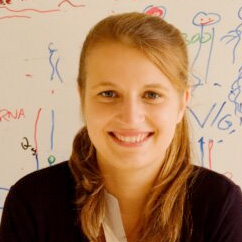
What is the origin of life in the universe? Neil deGrasse Tyson and comic co-host Matt Kirshen explore how life got its start, the Miller-Urey experiment, and synthetic biology with Kerstin Göpfrich, professor at Heidelberg’s Center for Molecular Biology and leader of the Max Planck Research Group for Biophysical Engineering of Life. Could the first alien life we find be the one we make?
Do we have a clear enough definition of “life” to know when we’ve made it? Kerstin takes us inside her lab, where she’s building synthetic cells from the bottom up. How do you go from chemistry to biology? Can RNA nanotechnology act as the toolkit to assemble life? Learn about RNA origami and how Kerstin’s team designs molecular structures on a computer before testing them in the lab. What can computational design reveal about creating systems that evolve, mutate, and even die?
We explore astrobiology and ask: would life elsewhere in the universe use DNA and RNA, or something completely different? If we replayed Earth’s history, would evolution land in the same place again? Why does all life on Earth share the same molecular handedness, and could a right-handed chirality version of life ever have existed?
We explore the ethics of creating life in the lab. What happens if a self-replicating system emerges? Could synthetic life transform medicine, manufacturing, or even our understanding of the universe? And, most fundamentally, why try to make life at all?
Thanks to our Patrons Kory Thompson, Scott Brooks, Evelyn ZB, Ken Robertson, Richard Iserman, JenFran, Adam Peters, roccie hill, Linux Diner, Steve Jaeger, Devona Johnson, Aaron Cortese, Jennifer Hoying, Brian Howard, kuwar Ahluwalia, Tal Kennedy, Amanda Echon, Michael McCarron, George Katsoufis, Martin BElan, sebby randazzo, Doug, Eval, Nate Amsden, Preston Kersey, Brian, Larbi, Aaron N., Ericka Nightshade, Alisha Okoroafo, karla, Daniel Mekonnen, James J.C. Kelly, MM, Josue Montanez, Stephen Addy, Fox Riley, Caleb Lillard, Louis-Gabriel Thibault, Wendy Kleeb, Jakob Linderoth, Aura, Mary, Mike D’Agostino, Julia Donehew, Jorge, Daniel Tersigni, Lindsay M., Jay Dakota Nance, and Goose for supporting us this week.
NOTE: StarTalk+ Patrons can listen to this entire episode commercial-free.
Transcript
DOWNLOAD SRTSo, Matt, she’s making aliens in the laboratory.
She is the puppet master.
She’s the new creator of the universe, and it’s quite terrifying, but fun.
It’s informative, but terrifying.
Scientifically enlightened, I would say.
Very.
Coming up on StarTalk.
Welcome to StarTalk, your place in the universe where science and pop culture collide.
StarTalk begins right now.
This is StarTalk, Neil deGrasse Tyson, your personal astrophysicist.
I got with me today, Matt Kirshen.
Hey, welcome back.
Thank you so much, Neil.
It’s good to be back.
Yeah, it’s been too long.
It’s been a while.
It’s nice to be back in New York, in the office.
It’s great.
But where are you based?
I’m in LA.
I’m still in LA.
Oh, you’re an LA guy.
I knew that.
I knew that.
Yeah, so it’s nice to be back over on this coach.
So we nab you every time you slip by.
Anytime I’m anywhere near, I will hit your people up and.
And now you’re on tour apparently.
Oh my gosh.
Yeah, well, I’m on two sort of.
I saw I’m touring at the moment with opening for Sarah Millican, who’s a great UK comic.
So I’m doing lovely.
But she’s coming through the stage.
She’s doing the US.
And then I’m also doing my own headlining spots kind of off the back of those shows.
So I’m like, hey, loads and loads of people, if you enjoyed me for 15 minutes in this massive room and want to see me do a headline show in a significantly smaller room then.
So yeah, I’m doing those.
So yeah.
Okay, so we can find you mattkirshen.com.
mattkirshen.com.
Yeah, all the tour dates and the links are up there.
Very cool.
I’m such a big fan of comedians.
Thanks for being a part of civilization.
Oh, well, I’ve never heard it put like that.
That is a much deeper way than I’ve ever had my job described before and I love that.
Tell your parents that too, in case they were wondering.
Mom, dad, you know that degree that I did nothing with and then ran off to join the circus?
Well, I am a deep part of civilization.
Exactly, there you go.
Well, today’s topic, oh my gosh, oh my gosh, we’re talking about making life from scratch.
Speaking of parts of civilization or?
Making life from scratch, which technically would be alien life, if you think about it that way, right?
I mean, if it’s life that has never existed on Earth before.
Yeah, what are the rules?
Because if it’s made from scratch on Earth, is that alien or what?
Oh, I don’t know.
I guess we’re getting into immigration questions now.
The illegal aliens or legal aliens?
Yeah, is there birthright laws for?
If you make them in the United States, they’re native to America.
Right.
All right.
Or if you make them on an army base in another country, then I don’t know.
Like, what are we doing here?
So I don’t have sufficient expertise on this.
And as what we do on StarTalk is find the expertise wherever it is.
And that took us to Heidelberg.
Oh, my gosh.
Beautiful city.
Join me in welcoming Kirsten Göpfrich.
Did I pronounce that correctly?
Excellent.
I’m very excited to be here, Neil.
There was two thumbs up.
Two thumbs up.
Two thumbs up.
Kirsten, thanks for agreeing to this conversation.
You are professor at the Center for Molecular Biology at Heidelberg University.
Love it.
And you led the Max Planck Research Group in Biophysical Engineering of Life.
Now, just remind me, because there’s a Max Planck Institute for Astrophysics.
So there are Max Planck Institutes for many different branches of science, correct?
Indeed.
There is more than 80 Max Planck Institutes across Germany and abroad, actually.
I didn’t know there were even that many.
Max Planck is basically birth quantum physics.
Right.
With a paper he published in 1900 saying, hey, wait a minute, maybe energy is not a continuum.
Maybe it comes in quantized amounts.
I didn’t know.
So he would be considered the father of one of the fathers of quantum physics.
Well, he planted this seed that completely blossomed a century ago, like Max Planck, and he’s duly honored in all of these institutes throughout Germany.
You got your PhD at the University of Cambridge, and where you were a Marie Curie Fellow in Synthetic Biology.
Wow.
That means you are Dr.
Frankenstein creating life in a laboratory.
Have I mischaracterized you in any way by calling you that?
I’m not Dr.
Frankenstein.
Our aim is really to create a synthetic cell from the bottom up.
So to achieve a transition from method to life in the laboratory, that’s right, yes.
So just to be clear, you don’t have to wait for lightning to strike a lab before?
No, not really, not really.
And we are also doing it for with the best intentions, I have to say.
The lightning is metaphor for an energy source, that would then infuse the life form.
So why don’t we just start from the beginning?
Do we have a sufficiently good definition of life for us to then know the moment you may have created it?
Yeah, so there’s many definitions of life out there, right?
And there’s not really consensus on one, but I would say in my field, Bottom-up Synthetic Biology, what we really use as a working definition, and you’ll be happy to hear this, Neil, is a self-sustaining chemical system capable of Darwinian evolution.
And that definition was put forward by the NASA.
And we extend it, we don’t just want a system capable of Darwinian evolution, we actually want a system capable of open-ended evolution.
So it can essentially increase itself in complexity, it can evolve to perform any desired task in the end.
So that’s what we are after.
So what’s the difference between Darwinian evolution and open evolution?
So there can be open-endedness in Darwinian evolution.
So what we are really after is a system where the evolutionary landscape is large enough so that at any given time the number of genotypes only exploit a sufficiently small space on that evolutionary landscape, so to say.
So there is really a lot of space to introduce serendipity, to introduce changes, to introduce well, also some kind of emigrant properties that are inherent to living systems.
So Darwinian would presume that the changes favored only for the survival of the organism, and you’re suggesting there might be forces operating that just simply change the organism without reference to its survival.
Is that a fair way to think about open-ended evolution?
Yeah.
Well, yeah, to essentially go for systems that increase in complexity and do interesting things.
So that’s what we are after.
So if an organism never dies or lives sufficiently long, then it can’t undergo Darwinian evolution.
So on the population level, I think introducing death into living systems is absolutely crucial, because otherwise, you know, you just have exponential growth and the resources will be exploited.
I’ve never heard anybody say that before.
We have to make sure you die in order to…
for us to evolve you.
That kind of makes perfect sense.
Yeah, again, that’s sort of a little mind blowing.
Yeah, of course.
I’m not saying it doesn’t make sense.
I’m just saying I never heard anybody admit that.
Yeah.
So you’re the first biologist I’ve heard be honest about the fact that Darwinian evolution requires that everybody dies.
Yeah.
So, I mean, on the population level, at least when we think about synthetic cells, we really think about very, very minimal and living entities that are much simpler than the simplest cell that we currently know on Earth.
So much simpler.
We are really talking something where essentially we want to get to the point where chemical evolution becomes biological evolution, right?
That’s where we want to get.
And in that context, I’m saying that if we manage to construct a system which is capable of self-replication, then eventually resources will be exploited, especially if you have, of course, limited resources, right?
And in this stage, this is where we have a situation where survival of the fittest is what’s driving evolution essentially.
We have a situation on our hands.
So this conversion from complex chemistry to simple biology, that harkens back to the Miller-Urey experiment, very famous experiment.
When was that?
In the 1960s, was it?
Perhaps early 70s.
Could you remind us about the Miller and Urey experiment and what that did in your field back then?
Yeah, so I think it was earlier even than that.
It was around 1950, 1952 or so.
Yeah, so it was the first time that essentially Miller was performing chemical reactions in a way that is kind of similar to the early earth, to the environment on early earth.
So he was trying to recreate the atmosphere that was present on early earth.
And then he could see that very simple building blocks of life, such as some amino acids which build proteins, so to say, were present in that solution after he provided the system with energy.
So that kind of shows that organic synthesis is possible under prebiotic conditions, essentially.
And, you know, that’s far away from a biological system.
So we’re talking really individual amino acids, but it shows that prebiotic conditions can give rise to organic molecules, like amino acids, that build proteins today.
So in the Miller-Urey experiment, they knew to start with organic molecules.
Right?
They knew to start with that.
And they went to then see what the organic molecules might do for themselves, when left unmonitored and left alone.
But they had to give it an energy source, right?
And if memory serves, that energy source was a little spark.
Very Frankenstein-like.
Simulating lightning, so to say, in the early Earth.
Yeah.
You want a big night switch or something.
Yeah, I want a massive lever that someone…
Do you have a henchman?
I’m hoping you have a henchman.
A henchman with a lamp.
I’m afraid not.
But what I find interesting about this experiment is that, even before that, about 100 years earlier, there was the common belief among chemists at the time was that organic molecules are molecules which can only be synthesized by living things, right?
Like that organic synthesis in the laboratory is essentially impossible.
And then chemists at the time, like 1800 something, managed to actually make the first organic molecules synthetically in the lab.
And that was actually urea.
And that proved that we as human beings can synthesize organic molecules, which are otherwise made by living things from scratch, right?
And I see synthetic biology or the bottom-up creation of synthetic life a little bit at a similar point right now, where kind of a proof of principle is needed to show that we cannot only make organic molecules like the ones that were made in the Miller-Urey experiment, but that we can also actually achieve a transition from matter to life in a laboratory setting.
How does your work follow this?
And what’s different about your approach?
So essentially we start at a much, much later point.
So we start with biomolecules, and we ask ourselves the question whether it’s possible to actually assemble molecules in such a way that we can create a system that’s capable of undergoing, create a self-sustaining chemical system that’s capable of evolution.
So that’s our starting point and end goal.
And what we do in order to get there is we are making lipid vesicles, so kind of the envelope of a cell.
And we are building, constructing our own molecular machinery.
And we do so with RNA, RNA nanotechnology.
And that may be a little bit reminiscent of the RNA world hypothesis and the origins of life fields.
As I understand your work or any work that anyone does, you are only as effective as the tools you use.
And if you are trying to assemble molecules, you need something that can…
Are they tweezers?
You need some tools that are small enough to take this molecule over here and attach it to that molecule over there.
And it seems like this is the RNA nanotechnology that you’re referring to.
Your toolkit are not mechanical tools.
They’re biological and chemical tools.
Is that a fair way to characterize what you’re doing?
Indeed, indeed.
So we don’t use tweezers on a nanoscale, although they exist, right?
It’s actually an amazing part of physics.
They do exist, but what we do is we actually do something very similar to what a protein designer would do, right?
Protein design won the Nobel Prize last year and we do something similar or we’re trying to do something similar with RNA.
And that’s a much less explored field indeed.
And so RNA origami is quite new.
But what we’re essentially trying to do is we are trying to assemble a synthetic gene from scratch, a piece of DNA, which encodes for an RNA that folds up during transcription.
So while the DNA is read off, it folds up into a desired structure.
So that could be something that resembles a cytoskeletal element or it could be something that resembles a nanopore that assembles into the lipid membrane of a cell.
So we can feed it, for instance.
So the functionality, so the forms are really driven by the function that we would like to create.
And design happens with computational tools, essentially.
So the folding, I’m fascinated by the folding.
Absolutely.
As a kid, I was into origami and I still am a little bit.
I have big pudgy fingers, but I’m very delicate with my little birds and I can still do it.
OK, I got like three left in my repertoire that I can.
Do you know in advance how you need to fold your proteins?
Because the protein itself is obviously not yet life.
So, do you know what you’re doing?
If you don’t know, no, I mean, it’s rumored that this is what Einstein said.
Research is what I’m doing when I don’t know what I’m doing, right?
So, if you’re not targeting a life form you already know about, then how do you direct the decisions you make towards a life form that has never existed before?
Well, essentially, we know what functions we need to realize, right?
So, we want in the end a self-replicating system which is capable to evolve.
And in order to have that, first of all, this system needs to be able to build up its own molecular machinery and that machinery we build from RNA.
And one piece that we think is crucial for such a machinery is actually kind of a machinery which can divide a lipid vesicle.
So, essentially, impose a certain amount of membrane curvature on the membrane of a vesicle.
And in natural cells, this happens via an architecture that’s called the cytoskeleton, the skeleton of a cell.
So, one of the first kind of things that we build from RNA was actually cytoskeletal mimics, so to say, but all from RNA, not from protein.
So, we look at them, we look at how they look in nature, we look at how they function in nature, and we are trying to design something which looks very similar.
So that could be, first of all, small building blocks that then assemble into micrometer long filaments that then can, for instance, attach to the membrane so that the membrane can be deformed.
And because they are genetically encoded, we now have actually a quite powerful helper and that’s evolution.
So, essentially, we can then start to go to the DNA level again and introduce mutations so that we can evolve the RNA structures towards even better function.
Well, so you are introducing your own mutations.
Well, we have biological machinery, introduce them, essentially, yes.
You’re not going to wait around a billion years or a million years.
You’re doing it yourself.
We’re doing two things here.
We start with a rationally engineering starting point, right?
So we already know what we want to get.
So we have a very simple version that already works a bit.
And then we let evolution brush it up, so to say.
Where does information theory fold into this?
Because when we’re taught DNA in school, we think of it less of a molecule.
Of course, that’s what it is.
But as something that encodes the biological information.
And so how do you make sure that the information that’s in there is the information you need?
So that’s where computational design really comes in, right?
And so we really start with…
We think of what kind of 3D architecture do we want to create from RNA.
And then we essentially design a synthetic gene, a synthetic piece of DNA, which upon transcription, so when it’s read by the biological polymerase, will make an RNA that folds up on itself in the desired way, essentially.
How much of the sort of design in the fold…
You said it’s done computationally, so how much of it is sort of design computationally and how much is it you physically do it and then you see what you end up with and adjust?
First we design computationally and then we physically do it.
We check it in the lab with experimental techniques like cryo-electron microscopy to really visualize single molecules and their architecture.
And then we can essentially see if the structure is entirely correct or if we need to make improvements on the DNA sequence level in order to fix certain things that we would like to look ever so slightly different.
Is there a difference between you creating a life that we already know about, so synthetically creating a simple life?
Because it seems to me that would be easier because you already have, you already know exactly what you’re aiming for versus putting all this together and creating something no one has ever seen before.
You’d still get a lot of credit in this world if you created a life form that already exists on earth just out of raw ingredients.
That would still be amazing.
But that’s not good enough for you.
You want something else to crawl out of the test tube.
So essentially there are a bit different branches in the field of bottom-up synthetic biology which use different types of molecules, different types of molecular building blocks.
So either the very natural ones, so really taking pieces from cells essentially, proteins that you just encapsulate and boot so to say inside of a lipid vesicle.
Then there is others who take entirely synthetic pieces.
Then there is us who are somewhere in the middle.
There is pros and cons to using the biological machinery.
But in the end, I could imagine that bottom-up synthetic biology brings about multiple examples of synthetic life, the ones that are very similar to life as we know it and ones that are quite far away.
The problem with biology as we know it is that it’s already extremely complex.
So to give you an example here, all life on earth that we know adheres to the central dog mouth molecular biology, which states that DNA makes RNA, RNA makes proteins.
And now, this machinery alone requires this step from RNA to protein, requires 150 components, 150 genes just for this step.
So if we can circumvent the use of proteins and we just build a functional machinery from RNA, so we have our genotypes stored in DNA, but we have the function in the RNA, the phenotype is introduced by RNA, then we can reduce the complexity of the system quite a lot.
And, you know, life has not always been that complex at the origins of life.
Simpler solution must have been capable of sustaining self-replication and evolution.
And therefore, I believe that building our own molecular building blocks, so to say, can actually be a shortcut.
But we’ll see, you know, all of these approaches are super cool.
And in the end, it would be amazing to have not just biology 2.0, but also 3.0, 4.0, 5.0, and so on.
So all of this is valid.
I like the fact that you took a look at life and said, I can do a better job.
I can simplify it.
It’s very complex.
Yeah, I can make, I can be, I can simplify that.
That’s delightfully audacious.
Essentially, it’s a bit, a little bit similar to, to, you know, we came from the Miller-Urey experiment, right?
Where also you start with very, very simple building blocks.
And I’m sure at the origins of life, self-replication and evolution have been sustained by a simpler set of building blocks.
And, you know, one can ask if it’s, if it’s possible to, to, to use such, to use, well, to use such building blocks to, to start not from where life is right now, because that took 4 billion years to get there, right?
But to start actually at a simpler stage essentially, but still have a system capable of evolution.
That’s really, that’s really the holy grail, I would say here, because, you know, it’s A, part of the fundamental definition of life, and B, will help us to get somewhere interesting.
So do you think life on another planet is likely to have something very similar to our DNA, RNA, protein system, or do you think it could be a completely different self-replicating thing?
Like is it likely that-
That’s the million dollar question, because if we’re looking for carbon-based, DNA-based life on other planets, we might miss it.
So another way to word this, I think, is how inevitable in the biochemistry of an early planet is what happened here on this planet with DNA to RNA to folded proteins.
Is that so inevitable that you’re saying, yeah, any place we find life, it would have been through this-
It would have arrived at the same solution.
It would have found the same solution.
Are you prepared to say that?
In other words, even like if we replay the-
If we replay history on this planet, right, would we end up with essentially the same thing, or could we end up with something quite different?
And I said the evolutionary landscape is vast, right?
We’re just with life as we know it, exploring a tiny, tiny, tiny, tiny, tiny bit of that.
And I believe that the idea of creating very minimal living systems from scratch will ultimately be able to help us to address these kinds of questions, right?
So you could, for instance, introduce metabolic pathways that are completely different from the ones that we know from life as we know it into such artificial systems and study them.
So at the moment, we don’t have evidence for silicon-based life, right?
But I think there’s, personally, I think there’s also reasons for that, right?
Like both of them can do, can make four bonds, right?
But it seems that carbon is just much more versatile.
But, you know.
The carbon in the universe is also like five times more abundant.
So silicon sits right under carbon on the periodic table.
So just as she said, they can each bond four ways.
Everything in that column can.
So carbon has four electrons in its outer shell, and it can take four more, right?
Which is a highly versatile situation to be in.
And but silicon can do that too.
But we don’t need, I’d be fun to find silicon-based life.
We just don’t need it because carbon is everywhere in the universe.
It does the same job, but kind of better.
Yeah.
So do astrobiologists call you and get your insights into what they might be looking for?
I would say the field is very, very interdisciplinary.
Bottom-up synthetic biology is very interdisciplinary.
And we’re for sure, we’re for sure keeping the discussion entirely open with astrobiologists and really also think about, you know, implementing solutions that evolution may not have explored, right?
And so that’s for sure a super interesting conversation to be had.
You know something evolution did not come up with?
A four-legged vertebrate creature that also has wings.
But we have Pegasus, Pegasus popped some wings out his back.
Right.
That is not in the plan, OK?
So when you look at life on Earth, do you say, here’s something that evolution could have, should have, maybe, but didn’t?
Well, it does seem, again, from my limited knowledge, it does seem that evolution does seem to keep landing on the same solutions for…
Oh, interesting.
There are a bunch of different animals that have evolved through different pathways, the same things.
Yeah, Kerstin, I like what he said there.
Is that the same at the lower level?
Yeah, evolution has found similar pathways to solve its survival problems that in some are even unrelated, but they land in the same place.
So that might give you insight, does it, to for what biochemistry likes?
Yeah, and I think one place where we could see this, for instance, is that when we build our life, our very, very minimal synthetic cell as the minimal unit of life, and I don’t mean really a cell as we know it, but a very, very simple version of that, essentially, that that cell is by far not as efficient as life as we know it because its catalytic activity is based on RNA, and RNA catalysis is much slower than what proteins can do.
And the moment you introduce proteins to the system, so a way of having translation of making, producing proteins inside of a synthetic cell, you may find that this is actually a much more efficient solution.
So this may be why we don’t see an RNA world around us anymore, simply because once you have proteins, they win in a direct competition.
But again, if we start with a simple system, evolution may bring about these more complex systems.
So in fact, if you look at the ribosome, so the ribosome is the component in the cell which is responsible for turning RNA into protein.
So it’s doing this translation inside of the cell, then that ribosome, the catalytic activity, the core of the catalytic activity actually comes from RNA and not protein.
So indeed, we have some of the most intricate molecular machines that cells use today are actually RNA-based.
We want, when the aliens come, we want you in the room when that happens, so that you might be able to understand what kind of life they are, right?
You’ll be perfectly suited for this.
Is that correct?
Well, let’s see what they look like, right?
I may or may not.
As I understand it, correct me if I’m wrong, all life on Earth has a certain handedness in its molecules.
Like it’s all left-handed, or it’s all right, whatever it is, because some molecules are, they’re not symmetric, like they’re mirror versions of them.
Right.
And so we’re all one kind of molecule.
Which one is it, left or right-handed?
I forgot which it is.
Left-handed.
So that origins of homochirality, actually.
So the handedness of life, so to say, is another very, very interesting question.
So in fact, we talked about the Miller-Urey experiment, right, where amino acids were produced.
And actually, in that experiment, a racemic mixture of these molecules was produced.
So the left-handed version as well as the right-handed version, right?
So that experiment does not solve the origins of homo chirality at all.
And that’s an another very, very interesting field of study, I have to say.
Of course, the molecules that we use are all the standard handedness, you know, that life uses today.
This might be a dumb question, but of the left-handed and right-handedness of the molecules, which one’s good and which one’s evil?
Well, I’d say which one has nature chosen and that’s the left-handed one, yeah.
That’s a separate lab, they’re working on that.
Oh, okay, okay, good.
Since biochemically, there’s no difference between making life forms with left or right-handed molecules, in principle, both handedness could have started on Earth.
Is there a search for right-handed colonies of life on Earth that are thriving in their own little world and no one knows about them?
And somehow the left-handers took over the world, suppressing any uprising of the right-handed molecules?
I don’t like that kind.
I don’t like those righties.
We do it for less as humans, don’t we?
Is there any thought as to whether, if we look harder, we might find a right-handed colony of life?
I believe we should see traces of such forms of life if they were existent.
So the fact that we don’t see those traces, the fact that we don’t find any, wherever we take probes on earth, we don’t find any of these molecules, make me believe very strongly, and I don’t know, it’s not my field, but make me believe very strongly that the left-hand version is the one that made it.
It’s the good that has triumphed over the evil.
She didn’t say that, but that’s what she meant.
Well, we don’t know.
All the evil that triumphed over the good.
There’s no way to…
Oh, yeah.
If you only have one, you don’t know whether you’re the evil one or the good one.
Which one has the mustache?
The mustache…
You can, of course, make mirror versions of molecules in the lab.
So that is possible.
And that sometimes can even be desirable, for instance, for therapeutic applications because their degradation and recognition properties and so on are different, right?
Because our machinery in the cells does only recognize its own kind, so to say.
So in that sense, yeah, it’s interesting to think about it.
So, Kirsten, just like in the Miller-Urey experiment, they tried to create what they thought were the conditions in the early Earth.
You, in your biochemical experiments, presumably the environment has some temperature or some air mixture of molecules.
Presumably, you’re doing the same thing, but in a more advanced way.
We now have a catalog of nearly 6,000 exoplanets, and we know some things about them.
Are these conditions that can inform your experiments as we look for life on other planets?
And are the conditions you do your experiments in, how realistic are they?
Because we have life on Earth that is living in the ice and living on the sides of volcanoes and all the extremophiles.
So are you testing for conditions that an extremophile would be happy in rather than just us?
So typically we test conditions that are compatible with our research budgets, and this typically means that we take conditions which are as simple as possible.
So you’re not in a volcano right now.
Yeah, exactly.
Like if you want to work in an atmosphere that’s not what is around us, experiments all of a sudden become much more complex and costly and difficult, right?
So in our case, what we want to do is to create a version of synthetic life, and we don’t really care.
We want to make our lives as easy as possible because the question itself is hard enough, right?
So we typically try and work at either room temperature or 37 degrees, which all laboratory equipment is designed to be compatible with.
And we work with DNA and RNA.
We produce synthetic genes by standard manners that biology has come about.
And so we take the conditions as they are.
Of course, these days, you find sophisticated experiments and sophisticated pieces of equipment, which are at least partially trying to replicate these more extreme conditions where we could talk astrophysics and alien life or conditions that resemble more the origins of life on earlier Earth.
In our case, we’re just taking what works, the simplest systems.
37 degrees Celsius.
Oh, I’m sorry.
Yes.
You’re speaking to us from Europe.
We’re here in America.
Let’s talk about something that I know is on everyone’s mind.
What are the ethics of this exercise?
Might you create something that will crawl out of the beaker or out of the test tube and then become our overlord or infect us all and we all die?
And would it see you as its natural parent?
Or as its creator?
Creator, yeah.
She is their god, right?
Their god, but then also they hit the rebellious teenage phase and they’re like, I don’t even have to be alive.
So no, I don’t think anything we create will crawl out of the test tube anytime soon, right?
And so we are after a very, very minimal version of a synthetic cell, which is much less complex than life as we know it, right?
So essentially, you know, life as it evolved came with robustness.
What we are creating is very, very fragile and requires a lot of care, so to say.
And but you’re completely right, like ethics, to consider ethics is of course extremely important.
So, you know, one may think about things like, okay, once you have a self-replicating system, should the same rules apply as for life as we know it, in terms of biocontainment, for instance.
So we have very good containment rules for organisms, especially for engineered organisms, we have to work at certain biosafety levels, depending on their risk for the environment and the human being, right?
And so to use these kinds of rules also for, or to extend these kinds of rules also for synthetic life and to understand the risks as well as the opportunities is super important, of course.
Let me ask the most basic question of them all.
Why are you doing this?
What’s the question I ask myself every day?
Did you wake up one morning, now you’re gonna be responding for everyone in your field with this question, did you wake up one morning and say, you know, I’m not happy with the biodiversity of life on earth.
I want it even more diverse.
And then you say, I want to invent life.
Because that’s a different goal from just trying to understand how life formed on earth.
How we went from organic molecules to self-replicating life.
That has a certain accessible, yeah, I understand.
That’s the frontier of biology.
But now you want to create something.
So where’s the ethical line between trying to understand how life started and trying to create life?
Yeah, look, we have extremely limited knowledge about the exact conditions on early earth, right?
And there’s only so much we can know about this.
And so experiments in the end need to be reproducible.
We have only one example of life as we know it.
And I’m just super, super curious, you know, about what life is and what it could be.
Right.
So all those questions that your parents can’t answer when you were a kid.
Right.
So I think it’s somehow intrinsic to human curiosity to ask what life is and why it’s there and so on.
And recreating it, building it is one way to really bring our understanding of life to a new level, I believe.
But from a practical point of view, right, where you could think about evolving such very minimal entities, such very minimal entities towards user defined goals.
So this could be in immunology, this could be a new way of making evolvable material.
So this could really be a new way of manufacturing in the end.
So while, you know, we come in with curiosity, we are, synthetic cells and synthetic life have really the potential to revolutionize the way we manufacture on Earth, right?
I mean, just look around you, right?
I mean, if you, it’s amazing to see the generative power of evolution, right?
Like nature has built ginormous architectures that capture CO2.
I mean, look at trees.
Nature has built cells which capture pathogens inside our body, right?
So in all of this just comes from the same common ancestor.
So imagine we could create synthetic life and evolve it really towards user-defined goals.
And I think, yeah, I think this is in the end, what motivates us is a very fundamental question and the creation of tools and evolvable systems that can be evolved in the end.
And I think RNA design is a really nice example.
We talked about it earlier where both of it comes together, right?
I mean, we all know about RNA therapeutics.
There is a 30 billion dollar market right now.
And so advancing RNA design has immediate implications also on the therapeutic level.
And at the same time, it allows us to answer some of the, or to address, to deal with some of the very fundamental questions.
So I feel like it’s a super nice sweet spot to study RNA and lipids and their interactions and so on.
Yeah, I’m embarrassed.
I didn’t think of any of that when I asked you that question.
So I should have, of course, now that you mentioned it, that it’s so clear and present that there are things that your work can do that can improve the state of human health in the world and our relationship to other animals or the biome that we’re immersed in, in our gut, on our skin.
Just, you could be the savior of us all.
What’s clear, for instance, right, we talked about RNA, RNA folds and RNA design.
So, mRNA, like mRNA, as it is in our vaccines, is inherently unstable, right?
That’s what makes the deployment so difficult.
You have to cool it down to preserve it.
And now when you fold RNA in distinct ways, the RNA origami, the RNA nanostructures we make, they are stable at room temperature for days, just on the bench.
So, by folding RNA, we can also package more on a smaller footprint, right?
So, by making nanostructures from RNA, I really think we can advance the way we build therapeutics, and at the same time actually also address these very fundamental questions on origins of life and creating of very minimal synthetic cells and synthetic life.
I think we got to end it there, but this has been a brilliant conversation.
I’m delighted to learn that such a field exists that is vibrant and that you’re in the middle of it.
That gives me confidence that only good will come of this.
Again, thank you for your time, and like I said, delighted to know that this is a field that’s vibrant and probably still growing.
And I look forward to see what it will deliver to civilization.
For sure.
Yes.
All right.
Thank you for Beyond Star Talk.
Thank you.
Matt, thanks for coming through.
This was fascinating.
Thank you for having me.
And I keep forgetting you’re in LA.
I’m in LA.
And I got a book coming out in a few months.
Yeah, we’re going to still you for Probably Science, if we can.
I’d be happy to go on Might Be Science.
Sorry, what’s it called?
We think it’s science.
Probably Science is my podcast.
I’m certain what comes out of my mouth will be science.
Change the name of the show for that episode.
When you’re on, we change the name.
Otherwise, probably when it’s us and other comedians who know very little.
All right, so that’s all we’ve got here on StarTalk.
Neil deGrasse Tyson, as always, bidding you to keep looking up.

 Become a Patron