



 Unlock with Patreon
About This Episode
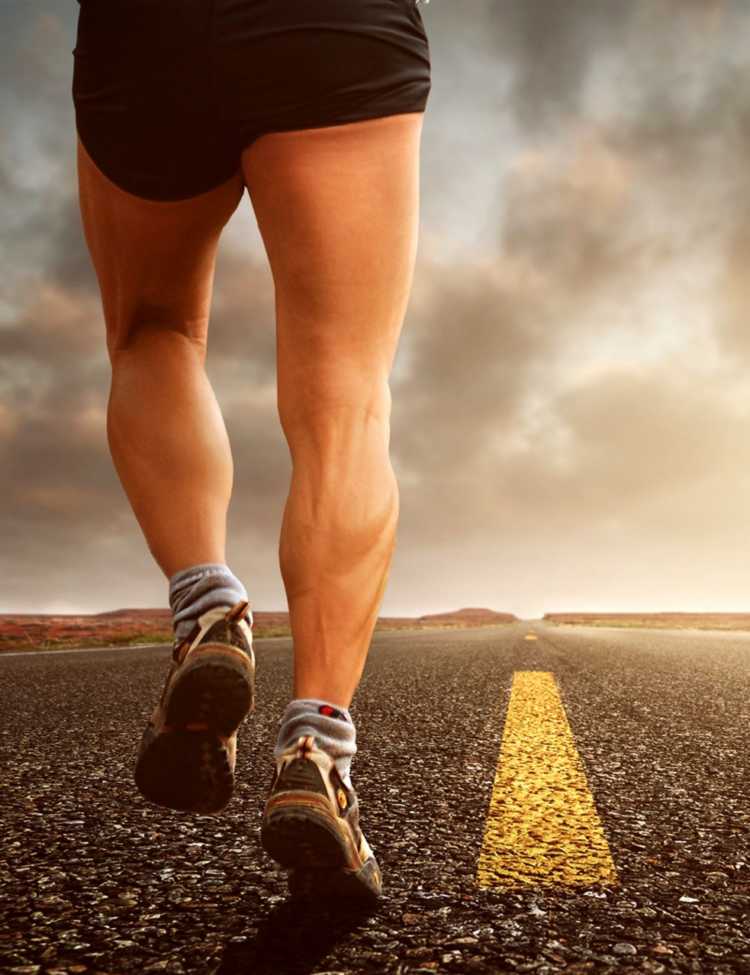
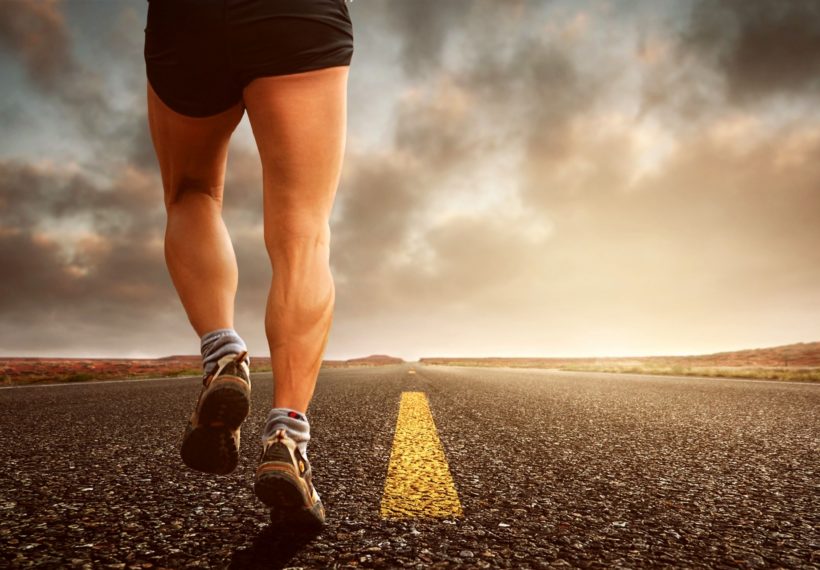
Why do humans have butt cheeks? On this episode, Neil deGrasse Tyson and co-hosts Chuck Nice and Gary O’Reilly learn about the biomechanics of running with professor and running specialist Dr. Irene Davis, featuring Neil’s interview with Born to Run author, Chris McDougall.
Are we living the lives our bodies have adapted us to lead? We discuss the “mismatch theory of evolution” and the biological markers that enable us to become good runners. If our feet have adapted for running does that mean they’re perfect? But aren’t we slower than most of the animal kingdom? We break down the history of running shoes and how they impact our performance and injuries.
You’ll learn about barefoot running, ancient and modern. Are we trying to retrofit evolution? Find out about Neil’s father’s running career and what the proper running form looks like. Are you a heel-striker? Discover how our bodies differ from one another, and the motions that can cause injury. What do a Greek urn and the Boston Dynamic robot, Atlas, have in common?
Are we in the pocket of Big Shoe? We talk about running shoe addiction and how we can get out of it without getting “sensory input” all over our feet. Can people with fallen arches change their feet? Can a shoe really make people faster? What about those weird toe shoes? How can lessons from running help us in other places? All that, plus, Neil’s convex feet and whether we are trying to out-engineer the human body!
Thanks to our Patrons Stephan Hoffmann Arvidsson, Louis Palen, Kara Young, Nick Skibicki, Jennifer Magnus, Ceasar Perez, Cameron Bishop, dniel, Pouneh Golabian, and Coleman for supporting us this week.
NOTE: StarTalk+ Patrons can watch or listen to this entire episode commercial-free.
About the prints that flank Neil in this video:
“Black Swan” & “White Swan” limited edition serigraph prints by Coast Salish artist Jane Kwatleematt Marston. For more information about this artist and her work, visit Inuit Gallery of Vancouver.
Transcript
DOWNLOAD SRTWelcome to StarTalk, your place in the universe where science and pop culture collide.
StarTalk begins right now.
This is StarTalk, Sports Edition.
I’m your host, Neil deGrasse Tyson, your personal astrophysicist and one-time athlete, actually.
Today’s topic is BORN TO RUN, FARTHER.
I got my co-host, Chuck Nice, Chuck.
Hey, that’s right.
No-time athlete, maybe.
No-time?
Yeah.
You just joke about athletes when you’re doing stand-up.
There it is.
And I got Gary O’Reilly.
Gary, former pro footballer over in the UK, giving authenticity to this show.
And this topic is all in.
I mean, we’re talking about the biomechanics.
I love that term, the concept, the profession, the biomechanics of running.
And we’re going to talk about, like, do we need shoes?
What are shoes for?
We spent hundreds of thousands of years without shoes, and then all of a sudden somebody’s making money off of selling you shoes.
We’re going to talk about running technique, ancient versus modern.
We’re going to get all up in the shoe situation and what it has to do with running and especially running far.
So, now since none of us have any particular expertise in this, we’ve got to reach in and do our thang as we do on StarTalk.
And we go into the academic pool to find out who’s actually thought hard and deep about this.
And who do we have?
Dr.
Irene Davis.
Irene, welcome to StarTalk.
Thanks, Neil.
It’s great to be here.
Yeah, you’re the founding director of the Spalding National Running Center in the Department of Physical Medicine and Rehabilitation, Harvard Medical School.
That sounds like exactly where athletes want to go.
Exactly.
When they’re hurt, okay.
It also sounds like a place where everybody there just has to jog every place they go.
From meeting to meeting, no matter what you’re doing.
Just to set a good example.
You just have to be at a light jog no matter what you do at the National Running Center.
And you’re also a Professor Emeritus in Physical Therapy at the University of Delaware.
So all of this is really important, cool pedigree.
And what we’re doing is we’re featuring in an interview that I conducted with a bestselling author and runner, Chris McDougall.
And we’ll be playing clips from that interview just because he’s thought a lot about this.
And as a journalist, it’s taken him to many places and we see the influence of his research on his own life.
And on the people that he’s studied and written about.
So we’ll be featuring clips from that as this show proceeds.
Oh, by the way, Irene, rumor has it you’re a barefoot runner yourself?
Yes.
I think everybody should try it.
It’s a way to kind of free your feet and get all that sensory input that you’re supposed to have.
Oh, OK.
We’ll get into that.
I like that.
It’s not that you have bloody feet from running on pavement.
It’s sensory input.
That’s right.
That’s quite a euphemism, Irene.
I’m just saying.
That’s such a…
I mean, you say it in a clinical term, but for thousands of years, there’s a thought in many cultures that in order to connect with who you are and where you’re from, you have to put your bare feet into the ground, like that there is something spiritual and something connective about that experience that has nothing to do with what we’re talking about.
Well, let’s get to the bottom of it then.
So, Irene, if you look at the evolution of humans as a species, we spent much more time not wearing shoes than wearing shoes.
So, are we living the lives, our bodies have been adapted to lead?
You touched on a very good point, Neil.
So, that is the basis of the mismatch theory of evolution.
And I’m sure probably Chris touched…
That’s a thing?
The mismatch theory?
It’s definitely a thing.
Wait, we need brilliant academics to come up with something called the mismatch theory.
I know.
Chuck could come up with it.
Chuck, that’s your theory.
Exactly.
The mismatch theory of evolution.
Yeah.
We knew.
All right.
Go on.
What do you have there?
So the mismatch theory of evolution does basically hypothesize that we’re not living the lives that our bodies were adapted for.
And it relates to a lot of different features, like the air we breathe, the food we eat, our activity level.
But clearly the way that we run.
So we did evolve to run barefoot.
We started running about 2 million years ago.
And the first shoes that were found were about 10,000 years old.
There may have been some before that.
But for the majority of our evolutionary history, we have run barefoot or in minimal shoes.
So let’s go straight to my first clip with author and runner Chris McDougall.
And I asked him to highlight in sort of biomechanical terms what changed in our early primate ancestors that turned us into runners.
And was it just this sort of nuchal ligament that stabilized our head?
Let’s check it out.
Everything you need for like a running animal is all piled up in human body.
We have springy tenons.
We have this nuchal ligament.
We have arches in our feet, which give us lots of recoil energy.
We have an Achilles tendon.
Excuse me.
I have flat feet.
So just be careful when you talk about arches in your feet.
I just want you to know before you step someplace where we got to fight about it, just so you know.
The Achilles tendon, for instance, every runner is always complaining about their Achilles tendon.
Like, what’s the first thing that people say hurts?
Oh, it’s my Achilles.
The reason why is because the Achilles tendon plays this huge role in the running stride.
And so that’s basically where we started to diverge.
We went from being these walking creatures into the running creatures as soon as we took on all these tendons.
So tell me again where this neck ligament connects.
It connects what to what?
Yeah.
So it’s a ligament which runs down between the skull and the lumbar vertebrae.
So it basically connects the back of your skull to your spine.
So you look at this pig and the head’s wobbling around.
If you wanted to stabilize that head, what would you do?
You take a piece of wire, stick it on its skull and just anchor it to the back of its spine.
Bam!
Nougat ligament.
So what’s really weird is we somehow are enchanted by bobblehead dogs.
We have reversed out this key ligament to who and what we are as humans, and then we have humans with bobbly heads.
That’s sad.
You know what’s a head that bobbles around is a baby, right?
So those bobbleheads are like, Stephen Jay Gould would have a field day with this kind of stuff.
We have turned the baby into something cute, but babies, because they haven’t stabilized yet, they got the bobbleheads.
Yeah, just to flesh out that reference, Stephen Jay Gould was one of the early anthropologists, biological anthropologists, to suggest that we think babies are cute because they have these huge eyes and huge head relative to their body.
And then when doll manufacturers figured this out, they started making all dolls for kids with these huge heads.
And it was, oh, isn’t that cute?
It’s that cute.
So, fascinating.
Steve Gould, he’s sorely missed on the landscape of biologists today.
So, Irene, how many markers coming out of Homo erectus can we identify that enabled, empowered them to become good runners?
So, based on the article by Dennis Bramble and Dan Lieberman, actually titled BORN TO RUN, there were 26 markers of endurance running.
And the nuke ligament is one because it keeps your head from bobbing.
But the medial longitudinal arch is another one because it helps to attenuate the loads when you run.
Larger joint surfaces because the forces are twice that in running than in walking.
A long Achilles tendon because you need to be able to store and release energy.
So these are just some of the markers of endurance running that really demonstrate that we needed, we evolved for running.
They optimized us for running.
Just to be clear, when you say store energy, you don’t mean for long term effect.
You mean store it the way you stretch a rubber band.
It’s stored and then you let it go and it snaps back.
Exactly.
So an immediate return of energy.
Immediate return of energy that you don’t lose in some other way.
Okay, so our ancestors had it, they were pre…
We had good ancestors for this.
It’s not a weird fact that we have running contests and running is a part of our culture because it’s a part of our past.
Before we extol the virtues of humans running, aren’t we slower than practically…
Everything…
.
every forfeited creature that’s out there?
I mean, seriously, the only turtles look at us and go, God, if only…
I wish I had an Achilles tendon.
If only I had an Achilles tendon.
God, if only I didn’t carry my whole house on my back.
Yeah, you try carrying your house on your back, homo sapiens.
You think you’re slow.
Turtles will totally go all up in your face about that.
So, you know, I don’t…
So maybe we’re better runners than we would have otherwise been as primates, but in the animal kingdom, I think other…
Especially the four-legged felines, I think they pity us, really.
Yeah.
So we are among the slowest, for sure, but we have the ability to run for very long distances.
And that was important for us for survival because our brains were getting bigger and we needed protein at a time before we had projectiles, like spears and those kinds of tools.
And so we had to carve a kudu out of the herd, and run them to exhaustion, and then we would club them to death.
Wow.
I got to tell you, that sounds like a party if you ever have one.
So finally, something evolutionary that humans have at advantage physically over other animals.
So none of them were wearing shoes.
So I had to ask Chris, I said, you know, Chris, why do we wear running shoes at all?
I asked him this.
Let’s see what he tells us.
I think the reason why we wear shoes is because in the 1970s, someone thought it would be really cool to sell people a bunch of shoes.
Running shoes.
That’s when it took off, the 1970s.
That’s right.
You know, it’s fascinating, Neil, is if you look at a running shoe prior to the early 70s, you basically take the top off and it’s a sandal.
You know, the early running shoes, like your father wore, they’re basically sandals with a little top on top for laces.
You know, that’s interesting you point that out because my father, he showed me his track shoes one day when we went to the track.
My father used to run track and long enough he did in high school and college.
And then he continued outside of school.
And while we, my brother and sister and I were born, so I got to see sort of the tail end of that.
And I saw he pulled his shoes out of the trunk and they were as light as a feather.
It wasn’t all this extra rubber and texture and heel.
It was like hardly anything covering his foot.
And this is old school now, I’m talking, right?
So what happened in the 1970s?
Or was it just marketing?
So those early running shoes, because they looked like nothing, there was nothing to modify.
A running sandal will last you a lifetime.
There’s nothing to sell.
And so in the 1970s, what happened is you have Bill Bowerman, who was the coach at the University of Oregon, teaming up with one of his runners, Phil Knight, and they thought, well, I can’t really sell a sandal.
But what if we put a swoosh on the side?
What if we put a waffle sole on it?
What if?
And they just started adding sales gimmickry to this very, very simple device over and over again.
That’s why every six months you go to the running shoe store.
Hey, I want that shoe I got last month.
You know, last year it worked great.
No, sorry, that’s gone.
And thus was born Nike.
Yeah, yeah.
So this is it.
Basically what it came down to is there was nothing to sell with a simple sandal.
But if you tell people, hey, if you don’t buy these shoes, you’re going to get injured.
That’s a real motivator, man.
That’s like mafia based motivation.
You know, if you don’t do this thing, you’re going to get hurt.
We’re going to take out your knees.
That’s the running shoe industry’s whole promise.
Either buy the shoe or we’ll take out your knees.
So, Irene, is Chris right about the running?
Do you agree with that?
That perspective is 50 years of being sold a product that we really don’t…
Gangster running shoes.
Gangster, yeah.
You know, I love Chris McDougall.
Let me just say that.
But I think this is a place where we have a slightly different perspective.
So, I have spoken with Jeff Johnson, who was with Nike back in the day in those very early days.
And what happened is that in the early 70s, we had the running boon, right?
And a bunch of people who were not trained, they’re probably more fit than you and I are today, but they were untrained.
Most of the people running were running in running clubs or in collegiate teams.
And they started to run.
And these are people who are walking around in shoes that had maybe 2-inch heels on them, just normal shoes.
Now you’re putting them into a racing flat.
So, now you’re increasing the load on the Achilles.
And they ended up with some problems.
And so, what happened is Nike actually brought some sport podiatrists in who saw a lot of these injuries in these new runners and asked them, what is it?
And they came up with a number of different changes to the shoe.
And this is what Jeff told me.
So, by adding a heel-to-toe drop, you unload that Achilles.
So, that’s one way of adapting the shoe to these individuals who are not used to landing on a flat surface.
Then the podiatrists also felt that they were landing hard and they had a lot of pronatory problems.
So, they started to add cushioning and they started to add motion control.
And then it became more and more and more and more.
And so, my view of this is that the running shoe companies, rather than have the runners adapt to the sport, which is what everyone did in the past, they took the shoe and adapted it to the runner.
And ended up, actually, I think, doing more harm than good.
So, Dr.
is it as simple as playing on our fear of getting sports running-related injuries that these empires have been built?
And they are empires.
They’re global empires.
And fear is quite the motivator in all of this.
In everything.
The problem is that there haven’t been, I’m not going to say any, because maybe there’s one or two, but there’s very few studies that show that these shoes have reduced running injuries.
And even today, when you look at the epidemiological studies, running injuries have not reduced.
They have not been on the decline.
If you put into PubMed a search for running injuries, there’s almost nothing prior to 1970.
Everything starts at about 1970 and has just continued to increase in terms of reports of running injuries.
Yeah, but why are the shoes so comfy when you try them on?
They’re like you’re putting on pillows.
Because they’re like the Barca lounger, right?
You love that.
You just want to get in there and sit and be comfy.
But, you know, comfortable is…
I’m not saying we should never do that, and we should only squat and go back to caves.
But just keep in mind that when you are doing that, you are not using the muscles of your core and your back.
It really deconditions you.
It’s so funny that you actually mentioned squat, because that is another thing that is a recent invention in human history is, you know, sitting down and sitting down for long periods of time.
This is not something that we have done throughout history.
You don’t find chairs.
No, wait, wait.
Chuck, we adapted.
That’s why we have butt cheeks.
Those are our cushions for sitting.
I think that’s all we have been taking care of in the last half a million years.
No, no.
The butt cheeks were not designed so you could sit on a rock for an hour or two.
Irene, you have to settle this before we go to break.
The butt cheeks are actually, we needed larger glutes when we ran.
The gluteus maximus became much broader.
Because now you are coming and you are landing on one foot with two and a half to three times your body weight.
You need that stabilization.
So those butt cheeks, I tell my husband that.
I go, honey, this is why I have this gluteus maximus.
But basically those butt cheeks are really to help us to stabilize in running.
I like my hypothesis better.
We evolved to have butt cheeks so that we could one day have rap videos.
Let’s be honest.
What advanced thinkers we used to be.
So that was the evolutionary drive.
That was it.
The need for rap videos.
The need for rap videos.
We’re going to take a quick break.
And when we come back, we’re going to talk more with Irene Davis and Chris McDougall on the biomechanics of running and in particular technique when StarTalk returns.
We’re back, StarTalk Sports Edition, with Chuck Nice and Gary O’Reilly.
You’re my peeps, dudes.
All right, and today we’re talking about running, running technique, the biomechanics of running, and we’re wrapping it around my interview with bestselling author and runner himself, journalist, Chris McDougall.
And since we don’t have the academic expertise here, we brought in Irene Davis from the Department of Physical Medicine at the Harvard Medical School.
So, Irene, are you based up in Boston at Mass General?
Is that where that happens?
I’m based out of Spaulding, yes, in Boston, in Cambridge.
Oh, okay, in Cambridge.
Okay, that’s Spaulding Center that we introduced at the beginning.
Let’s check out my next clip with Chris McDougall.
We’ve been buying ever more sophisticated running shoes for decades.
Do we need them, or do we need to change the way we run?
He gleaned insight from studying a group of people in Mexico in his journalistic voyages to understand running.
Let’s check it out.
I would try to run to get in shape.
I would get injured.
Doctors have said your body isn’t designed for this.
You’re too big.
The impact’s bad.
Then I get out of the Copper Canyon, and I had this bizarre-
Copper Canyon in Mexico, where you find the Tahara-Humara tribe.
Yes.
Yeah, so I’m down there.
And I think I’m gonna find a group of people that are genetically predisposed to this.
But what I also find is a guy who looks just like me.
He’s my same height.
He’s my same shoe size.
And when he came down to the Copper Canyon 15 years earlier, he had also been chronically injured.
A guy named Mike Catrou.
And at the point I met him, after 15 years of running with the Tahara-Humara, this guy is just cruising for 50 miles at a time.
And what he told me is, it ain’t the shoes, it’s not the genetics, it’s how you run.
And he taught me a different running style.
And the thing about it was, it all hinged on the lack of footwear.
The less obstruction I had between my foot and the ground, the better and more injury-free I became.
So, all right, so let me praise what you said and then criticize what you said.
So, if this is the case, then the less footwear, the better, and everyone should be running in bare feet.
But we have like cement roads and asphalt and dog poop.
And, you know, so shouldn’t some protection of the foot be in order here?
Exactly, protection, but not correction.
Oh, very good.
Your dad had protection.
We have correction.
We have four years of podiatry school is somehow supposed to trump two million years of evolution.
So, someone gets an idea like, hey, let’s put a wedge in it.
It’ll help.
It doesn’t help.
So, why, so tell me now, I mean, we’re dancing around this blunt question.
Why is barefoot better than a shoe?
Why isn’t the shoe supplementing what you have to make your running stride better rather than supplanting what you have, making it worse?
The reason why is because it doesn’t sell.
A simple device that anybody can make in their own backyard.
That answer is too easy.
I want a more complicated answer.
All right, I’ll give you more complicated answer.
Because when most people start to run, the first thing they do is walk.
You walk first.
When you try on a pair of running shoes in a store, there’s not a room for you to go running back and forth.
So you’re walking.
And so what they did was they stuck a big cushioned heel underneath your foot, because that’s very comfortable for walking.
So what they did was they took a shoe that’s really designed for walking and they marketed it as a running shoe.
And that’s basically the problem.
It’s the big fat heel.
So Irene, are we just trying to retrofit evolution?
I mean, what of the notion that, yeah, we’ve been doing it for 10,000 years, the 50,000 years, 100,000 years, and now we’re claiming something’s wrong with it.
But what’s also true is back then, people didn’t really live much past 30.
So I kind of like modern technology and what it has done for civilization, even in spite of where we landed on the evolutionary arc.
So where do you land in all of this?
Well, I think it’s very difficult right this moment for someone to just immediately go back to not wearing shoes because over the past 50 or 60 years, we have deconditioned our feet and now our feet need it because our feet are unable to cushion.
Our feet are unable to support themselves well when you run.
If you took someone who runs in a modern day cushion supportive shoe and put them into a minimal shoe or had them run barefoot, I guarantee you, and had them run their normal miles, I guarantee you, it’s guaranteed they’re gonna get injured.
So that’s the problem is people have become comfortable and in order to move away from it, it takes a lot of time and patience and a lot of people don’t have that time and patience.
But I think if we had not accommodated the shoe to the runner and actually tried to get the runners to accommodate to the sport and that we didn’t develop these cushioned and supportive shoes, we wouldn’t have the musculoskeletal injuries that we have today.
That is my hypothesis.
Why didn’t you push back on all this when these shoes started rising up?
It’s your fault.
Do you want to know the truth?
Because, okay, so, you know, when I started this career.
We’re all about the truth on this show.
So 25 years ago when I was getting out of my PhD and I really believed that there were some feet that actually could not tolerate the loads of walking and running and they needed orthotics.
And I became the orthotic specialist at Delaware, in the Department of Physical Therapy.
I taught them.
Just to be clear, orthotics means supplements to your feet for whatever reason.
They’re insoles.
Right, and I was promoting motion control and cushioned shoes and I was in that mindset.
So I didn’t push back on it.
And it was kind of an aha moment for me.
It was sort of, I call it a perfect storm of some research that came around.
It was Chris’s book that made me think a little bit differently, but I was also, my research showing that when people land on their heels, they have big impacts, ground reaction force impacts that are not there when you land on the ball of your foot and when you’re barefoot, you land on the ball of your foot.
So all of this kind of came together and slowly changed my thinking.
What is your opinion on this?
What is your opinion on this?
What is your opinion on this?
What is your opinion on this?
What is your opinion on this?
What is your opinion on this?
What is your opinion on this?
What is your opinion on this?
What is your opinion on this?
What is your opinion on this?
What is your opinion on this?
What is your opinion on this?
What is your opinion on this?
What is your opinion on this?
What is your opinion on this?
I’m gonna say that when you look at different styles of running, that was a movement a few years ago that really took flight, excuse the terminology, but where staying on the balls of your feet the entire time that you’re during your run was supposed to be a healthier and less degenerative means I.
Think there’s a lot of people who are not aware of the impact of the impact of the impact of the impact of the impact of the impact of the impact of the impact of the impact of the impact of the impact of the impact of the impact of the impact of the impact of the impact of the impact of the impact of the impact of the impact of the impact of the impact of the impact of the impact of the impact of the impact of the impact of the impact of the impact of the impact of the impact of the impact of the impact of the impact of the impact of the impact of the impact of the impact of the impact of the impact of the impact of the impact of the impact of the impact of the impact of the impact of the impact of the impact of the impact of the impact of the impact If.
You look at cross-country runners, they all have the same form.
So what is up with that?
Okay, well, let’s go to my next clip with Chris McDougall and see where that goes.
Check it out.
You could universalize all those 30,000 runners in like one second if at the starting line, you said, everybody take your shoes off.
And then, Neil, and then run in place.
Now when you run in place, and you can do this experiment yourself, Neil, if you take off your shoes and you just run in place in your apartment, what you’re gonna find is you’re gonna have to keep your back straight because if you’re slumping forward, you’re gonna move forward.
You’re gonna have to land on your forefoot because you can’t run in place and land on your heels.
It doesn’t work.
And that’s basically it.
There’s a guy who created a thing called the 100 Up.
Back in the 1800s, this was a carpenter’s apprentice who had to work inside, and he competed in track events on the weekend.
So he invented the 100 Up.
And the 100 Up is, if I run in place for 100 strides and don’t move forward, then I did a perfect repetition.
And what he found is just by trying to do 100 strides, running in place in his bare feet, he was able to develop perfect running form.
And that’s basically what it comes down to.
So anybody who wants to change their running form, take off your shoes, run in place, and you will automatically start to mimic how the Taro model run.
So Irene, is there an ideal surface on which to run?
Because you’ve been suspiciously ignoring whether running on spikes or grass or tartan track.
You want to run barefoot, but on what surface does it matter?
So that’s a really good question.
We, what’s amazing is that we were adapted to run on many different surfaces.
So the Tama Humara, think about it.
They’re running in the copper canyons of Mexico.
They’re running on some hard rock.
They’re running on dirt.
We run in grass.
And what happens is you adjust automatically.
Your legs spring to the surface that you come in contact with.
So if you come in contact with a hard surface, you make your legs spring more compliant.
When you come in contact with a soft surface like sand or grass, you make your legs stiffer.
So you can adjust your stiffness to the surface that you come in contact with.
So our brains are like the computer chips in our cars for limited slip differential.
No matter the terrain, no matter the terrain.
Yeah, I love that.
Yeah, but does it have positraction?
That’s the way it is.
It’s the positraction.
It’s got to have that.
So if there is a correct running technique, we’re all different shapes and sizes.
All four of us are a different shape.
So can we just give, that’s the correct technique, you do it, but you’re different to you and you’re different to her and he’s different to me.
So is there the correct technique and the correct technique only, or do we have some area that we have to change and develop?
Look, we all are different.
We all are unique.
We’re all gonna move differently, but there are some fundamentals about the way that we move.
And I’m gonna make an argument about our structure that actually suggests that we really are adapted to land on the ball of our foot.
So let me just give you a couple of examples.
Our heel pad, there’ve been studies have shown that when you apply a force, a load to the heel pad, you hit your pain pressure threshold at the point the force exceeds the forces of walking.
What that means is your heel pad is there designed to attenuate the loads of walking, not running.
The stiffness of the forefoot pad is higher than the stiffness of the heel pad, meaning that it’s better able to dampen the loads of landing.
So those are just two examples.
The Achilles tendon is there.
It developed in order to be able to store and release energy.
And you have a much larger calf than you do in anterior tib muscles.
So those are just some examples that show that really we were adapted to.
And if you look at, I get in this argument a lot with my colleagues because 95% of modern runners who wear modern shoes are rear foot strikers.
And they say to me, Irene, then that’s normal.
And I say, no, I think it’s abbe normal.
I don’t think that’s normal.
I think that we are maladapting and we really were adapted to run this way.
And we did for most of our evolutionary history.
If you look at ancient pictures of vases, Greek vases and figures, it portrays man running on the ball of his foot.
If you look at the Boston dynamic robot named Atlas, who’s a very cool, he can do parkour, he can dance.
He’s awesome.
But he runs-
They’re all creepy.
These are creepy robots.
He’s so cool though.
He’s so human.
He runs on the-
That’s what you say now until they become our overlords.
True, true.
But he runs on the ball of his foot.
And so they’re not gonna design something that’s not efficient.
So there just are so many indicators to me that this is the way we were adapted to run, the way we were meant to run.
And we may get into talking about injuries at some point, but I can give you biomechanical examples of how it can reduce risks for injuries as well.
I’ll say this, as you were making that explanation, which was quite specific, thank you.
Yeah, it was a very tight explanation.
In my mind, I was picturing a person running.
And what struck me was the heel strike method gives you an extra unnecessary movement in running.
You strike your heel, then the rest of the foot comes down, then there’s a return of energy.
The other way, you eliminate that extra movement, the ball of your foot comes down, and a spring action actually happens, eliminating that extra movement, and then there’s a more immediate return of energy.
So it makes sense why so many people, one of my close friends, just had this surgery.
They had to take a tendon from another part of her body and replace her Achilles tendon because she’s addicted to running and ran her Achilles tendon into oblivion.
So, I mean, what you say just makes absolute perfect sense.
Chuck, you should come work for us at the Spaulding National Running Center.
I’d like to see that.
Today in the news, the Spaulding Center closed down.
You’re welcome any time.
So, Doctor, just not the efficiency of running, right?
Because we’ve sort of identified earlier in the show that we’re not the fastest species.
But we are able to run these long distances.
We’re built for efficiency, but that efficiency came with a package of injury prevention.
Am I getting that right?
Is that the way it’s supposed to work?
Well, if we were meant to run and we had to run for survival, it doesn’t make sense that 50% of us would get injured in a given year, which is on average.
So I don’t think that we were designed to get injured.
I think we were designed to be able to run without injury.
Now, it’s not so simple.
I don’t think we were designed to run even 26 miles in a straight line on hard surfaces.
We ran on multiple surfaces.
We ran in many directions.
Our ancestors did with persistence hunting.
And that varies the load that the body experiences.
And that helps to reduce the risk of injury.
But having said that, I still think that the injury rate is much higher than it should be based on the fact that we evolved to run.
So if I run correctly with the correct technique, in my mind, I will then strengthen.
I can’t strengthen the ligament, can I?
It’s the ligaments, the ligament.
But I can strengthen the muscles.
Yeah, around the ligament and tendons.
So I will actually have a stronger and I’ll call it healthier foot.
Where else does this develop from the foot through the Achilles, through the calf muscles?
The biggest change in load when you go from a rear foot to a forefoot strike is from the knee down.
And we do know that habitual forefoot strikers have stronger, stiffer, and you want a stiff tendon because they store and release that immediate energy quicker.
They have stronger, stiffer tendons because they land on the ball of their foot and they’re constantly strengthening them.
Your arch muscles have greater demand put on them when you’re landing on the ball of your foot.
Greater demand means that over time, they’re gonna get stronger.
So clearly, this kind of a pattern, in the beginning, transitioning, those are the areas that can get injured because you’re not accommodated to it.
So calf, arch, sometimes metatarsals.
But if you take it slow and transition slowly, then you can train the body to adapt to that load and then those tissues will actually get stronger.
Irene, I just realized something.
Correct me if I’m wrong.
Almost all fast-running four-legged animals, vertebrates, their heel never touches the ground because it evolved up higher up on their leg.
That’s right.
Aren’t they basically running on their toes, like horses and the big feline, lions and tigers?
Isn’t that, am I correct about that?
I think I’m correct.
Yes, you are.
Now, we don’t…
Did you say forget the heel?
I’m not even going there.
I don’t even wanna do that.
I just wanna make that point.
I think that we do want to come down and land on the heel and then come back up again.
You don’t wanna land on the ball of the foot and keep the heel up.
That helps to actually give that calf a break and let you go through the full range of motion.
But you’re right, a lot of the animal kingdom does not land on their heel at all.
And their legs bend like our elbows.
So what’s up with us there?
It’s just the proportions of the long bones are different.
So it looks freakier.
We gotta take a quick break, but when we come back, let’s talk, we’ll spend some time chewing the fat and exploring whether we can out-engineer evolution itself in human performance when StarTalk Sports Edition returns.
We’re back, StarTalk Sports Edition.
Got Chuck Nice, co-host.
Chuck, you’re tweeting at ChuckNiceComic.
Yes, sir, thank you for mentioning.
Everybody want to check that out?
And Gary O’Reilly.
Tweeting at my three-
Three left feet.
Three left feet.
Yes.
I gotta sort of remember that.
Yeah, that’s a challenge for the doctor.
Yeah.
Okay, one day you’ll explain.
We’ve got with me as our in-studio academic expert, Professor Dr.
Irene Davis.
Irene, are you active in social media?
I am.
Cool.
What’s your best handle we can find you?
Davis.
Easy.
There you go.
On Twitter.
Twitter, yeah.
Very good, very good, okay.
We’re gonna find you there.
And you’re an expert on all things feet.
So why don’t we go straight into my final clip with Chris McDougall?
Because we always seem to be striving to, reaching for the next bit of technology to improve our performance.
And either by engineering or by design.
And are we looking in the right place for our answers?
I brought that up with Chris.
Let’s check out his reply.
Yeah, I think there’s a natural ancestral pull, you know, that early humans, if you saw something new, interesting, or more effective, you would gravitate toward that.
That’s the reason why we went from spears to bows and arrows.
The better technology is gonna give you an evolutionary advantage.
That’s fantastic.
The problem is that’s so hard-grained in our minds, we can’t stop shopping.
You know, we keep looking for the thing that’s gonna be better.
And we just need to cycle back every once in a while and just say, hey, what has worked for 2 million years as opposed to 10 years?
You know, you look at like sports drinks.
You gotta have the special sport drinks in the bottle.
Dude, a cup of water is all you need.
A little water, a little salt, you’re good to go.
And that’s basically what it comes down to is rather than being sold, look back as to what you can actually practice.
What behavior can you change that will provide the difference?
So you’re a living nightmare of at least a dozen different companies who want you to buy their products.
Yeah, I think so.
Especially when it comes to things like running, you’re pre-equipped with everything you need.
So, Irene, what advice do you have for parents who want to do right by their kids?
Are you just gonna send them off barefoot?
What are you gonna do?
You know, it’s such a good question because I think the holy grail to reducing musculoskeletal injuries is starting with kids.
I think that if we put our kids, I have grandkids and my grandkids are in minimal shoes.
I buy them minimal shoes all the time.
When they grow out of them, I buy them a new pair because I think if you teach, if you put them in minimal shoes, their feet will get stronger.
They’ll develop the kind of lower extremity that we evolved to have.
And they’re gonna be much less likely to land on their heel when they go to run.
They’re gonna be more likely, and studies have shown this, to land on the bottom of their foot.
I would tell them to let their kids be barefoot.
And I used to step in dog poop.
And when I was a kid, I spent a lot of time barefoot.
And I think kids should be allowed to have that sensory input.
So yes, let kids go barefoot and try to keep them in minimal shoes and not go, don’t be tempted to go to the highly cushioned and highly supportive shoes.
Chuck, how do you think that goes over in elementary school?
So tell us about your grandmother.
She told me to step in dog poop with my bare feet.
I need more sensory input, that’s all.
Excuse me, what’s that on your foot?
Sensory input, thank you.
Thank you.
It’s just a little smelly sensory input on my foot.
Okay, what’s your big deal?
I got a problem with that.
Go sit over there on your own.
So let me ask you this, Dr.
Davis, I have fallen arches, I passed that on to my children.
Is that a problem?
Is there anything that can be done to correct that?
I have a seven year old, so is it too late?
When in your development, Kent, is it too late or is it ever?
So, I mean, we all have different structure.
Not everybody has perfect arches and I think probably from an evolutionary standpoint, that was the case as well.
There’s a lot of variation in our anatomical structure.
That doesn’t mean that you can’t strengthen your arch muscles and once your ligaments are stretched out, you can’t really shorten them short of surgery, but you can train the muscles to hold up that arch.
And so I do think that there is the ability for kids to develop that and even adults.
We work with adults with flat feet and we’ve gotten people to actually get rid of their orthotics and use the muscles rather than the insoles to actually support their arch.
So I do think that there’s hope.
Look at that.
I’ve never even heard of that before.
That’s amazing.
And let me just say, like I said, I was born with flat feet, had flat feet my whole life and it’s so flat, it comes out the other way.
You’re like this.
I come out of the shower, big foot, just flap, flap, down, duck, flap.
And I could outrun everybody when I was growing up.
So just with that, to put that on.
Here you come in though.
Who’s applauding right now?
Who is applauding?
That’s just me flapping my way down the track.
So Gary, how does all this apply to soccer, you know, when you’re running up and down a soccer field?
Any questions you have for Irene that comes from that angle?
Well, because we need, I mean, our human hand is so dexterous, but our foot has nothing like that mobility.
But we caress a soccer ball with our foot.
We need to move it.
We need to do certain things with it.
And the ability to have not a completely loose ankle and foot would be really advantageous if you could sort of develop that flexibility in the foot or are we kind of kidding myself?
No, I agree.
I think, you know, running is the easiest case to make for minimal footwear because our feet were designed to run.
Although soccer, people ask me about basketball and skiing and other sports, but soccer really is running.
And it’s running in multi-directions.
There are still communities that play soccer barefoot.
And so I think soccer could also fit into this.
Same kind of paradigm.
Yeah.
Through the show, we’ve talked about how we’ve got running shoes that have been built, constructed, engineered.
Are we trying to out-engineer the human body?
We are.
I mean, the cure you’ve talked about for fallen arches is a natural thing.
You are strengthening a muscle by bringing in your toes and developing certain areas.
Are we really just out-engineering our foot?
I don’t think you can out-engineer Mother Nature.
I think we need to really rely on Mother Nature.
And there are caveats to this.
If somebody doesn’t have the ability, as long as those muscles are not paralyzed, they can get stronger.
But if you have someone that has a developmental disability, cerebral palsy, maybe a stroke or diabetes where they don’t have good sensation, there are lots of applications to correct, as Chris said.
But the large majority of people that are in these shoes have normal, intact musculoskeletal systems.
And those are the people who I think we need to let Mother Nature do its work.
Yeah, I suffer from something called chiptitis.
It’s where you lay on the couch and eat chips.
All right.
Oh, that’s a specific variety.
I think there’s a shoe for that.
Yes.
My father said it goes in a particular place.
So, okay, doctor, I mean, we’re just stolen the virtues of running in minimal shoes or barefoot.
In 10 years’ time, are we all going to be running in barefoot?
Is it going to catch on?
Or is it just, you know, the guys who run barefoot are going to do it at midnight when no one’s watching?
Well, I mean, I can tell you what I hope.
I hope that this catches on.
I think that more and more parents are not putting their kids into those really rigid shoes that we used to put our kids in and I was in as a child.
What was that about?
You know, remember those?
Yes, those little Frankenstein shoes.
Oh, I know.
Exactly.
They were awful.
And the kids couldn’t walk, you know?
So they’re now putting kids in soft shoes.
And now a number of podiatrists that I know are not putting people in foot orthotics for their whole life, just temporarily.
So I think that the pendulum is swinging a little bit.
And I hope, I just hope that with more evidence and, you know, more of these kinds of shows where people listen, because when I talk, people go, wow, I never thought about it that way.
You know, you wouldn’t put a neck brace on your on your neck for life because you wouldn’t be able to hold your head up.
And yet we put these supportive shoes and orthotics in our in our shoes for life.
And we don’t think another thing about it.
So if we all do this, we’re going to put you out of the gym.
Yes, that’s okay.
I’m okay with that.
So what about the feet shoes?
Do you guys know what I’m talking about?
I see some people at the gym wearing these.
I love those.
They look weird, but is there any benefit to them?
Because I’m not going to make fun of those people if there’s a benefit.
But if there’s not a benefit, you need to take your planet or the apes and take those shoes off, man.
Wait, let me lead into that.
Let me add to Chuck’s question.
Because no time so far have you spoken to the consequences to your skin on the bottom of your feet for having your body weight slam down on pavement or anything else all this time.
So what I’m wondering is whether this shoes that Chuck is referring to, which is just basically a covering of your foot that highlights each of your toes, it’s kind of cute, a little creepy, but cute when you see it, is that really just replacing your skin so that you don’t have skin injuries?
Because otherwise it’s clearly not structural, right Chuck?
It looks like a glove for your foot.
It is a glove for your foot.
And in all minimal shoes, I put those five, they’re called five fingers, and they’ve got individual pockets, but they’re really not that much different than a minimal shoe.
A minimal shoe is a shoe that has a very thin outer sole, maybe a canvas type of top, one that you can roll up and put in your pocket.
That is a minimal shoe, just like the five fingers.
So the five fingers are a minimal shoe.
Some people like the individual movement of the toes.
Other people find it a little uncomfortable because their toes are kind of weird, as you know, and they don’t always fit in the pockets well.
You have to break them in.
I’ve had them, and you do have to break them in.
But they’re not the only kind of minimal shoe.
A minimal shoe could be something you get at Target for $10, a pair of white cheap canvas shoes.
I mean, that’s what a minimal shoe is.
Oh, I’m so happy to hear that.
I guess you’re not a big fan of these carbon fiber shoes that have got the plates in them that are going to reduce running time.
So, well, you know, here’s my feeling about that.
So, clearly, these shoes have been shown to increase performance or reduce running time.
Wait, just a quick, Gary, are they shoes that have, that store energy better than your feet would, and so you get it all back?
They have carbon fiber plates in them, small little plates, and the whole idea is to return energy.
Got it, okay.
And for an elite marathon runner, all you need is a 3% or 4% kick.
Or less.
Or less.
And you’re gone.
1% gets you 10 minutes at the other end, 5 minutes at the other end.
So, Irene, are you all for this or not?
Well, you know, so they’re called the 4% shoe because that was the average improvement that they saw with these shoes.
And to be honest, it’s more in the foam, Gary, than in the plates.
The plates provide rigidity, but they don’t have as much energy return as the special foam.
Of course, the foam gets worn out pretty quickly.
So the problem that I see with it is that I believe in purity.
I want the person who’s up on that podium to be up on that podium because of their own ability and not because they have footwear that’s, you know, giving them spring.
So let’s have people run on springs, you know?
And I know that, you know, they’re struggling with this.
You know, world athletics is struggling with this.
They’re struggling with this because, you know, and the other problem with this is that not everybody can wear them.
You know, Nike’s the one that have these shoes, but not everyone’s sponsored by Nike.
So then you have a disadvantage.
And I don’t know, I just, I’d rather go back to just flats, racing flats like we had before in the 60s and early 70s, and let the person’s ability be what puts them up on the podium.
That’s my feeling.
Now, if I were a high level elite runner, I’d probably love those shoes.
Yeah, I just love the idea of running on springs.
I won the Boston Marathon in the fastest time ever.
Too bad I was on the Pogo stick.
You know?
The Pogo, got to start the Pogo, Pogo is first, because they’ll get through.
If we do all convert to barefoot running, and your clinical aspect of things will be probably able to answer this.
What sort of percentage reduction in injuries would we see?
Alright, that’s a really good question.
First of all, I’m not advocating everybody go out and run barefoot, because I think that people, especially if you’re running a race, you don’t want to cut your foot.
You can cut your foot.
You expose it, right?
So there are times when you want to protect your feet.
Minimal shoes and barefoot running are very similar.
They’re not the same.
You don’t get the same sensory input.
You don’t get that dog poop between your toes.
But the mechanics are very similar between barefoot and minimal shoes.
So I’m really proposing that people go to footwear that just basically protects and doesn’t correct, as Chris says.
How much will that reduce injuries?
It’s really hard to say.
I think it will significantly reduce injuries.
We know that when you run on the ball of your foot, it reduces the load at the knee, and the most common running-related injury is at the knee.
We know that when you run on the ball of your foot, it reduces the load to the anterior compartment, the lower leg, the front of your lower leg.
That is where shin splints occur.
That is also where anterior compartment syndrome occurs, where you get high pressure.
So I know that that’s going to be reduced.
I know that it strengthens the Achilles tendon, so I believe that there’s a 52% likelihood of Achilles tendonitis in males over the course of their running history, their running career.
So I know that that’s going to be reduced.
So I really believe that these kinds of musculoskeletal injuries that are very common are going to be reduced when you reduce the impacts and you run in a way that we’re adapted to run.
I feel like taking off my shoes now.
I was going to say, at the least everybody, especially if you’re a dog owner, get out there and get some sensory input between your toes.
You still can’t shake the sensory input.
No, he’s locked on that.
I’d like to ask you guys all to take your shoes off and see if you can spread your toes.
Gary, you said your hands have this mobility, but your feet don’t.
But you know what?
You have every single muscle in your foot that you have in your hands.
You’re supposed to be able to spread your toes.
I used to pick stuff up with my toes all the time.
I was just too lazy to bend over and grab it with my hand.
But then you have to be able to lift your leg up high enough to then reach it.
You need a double thing going on there.
But I have pretty dexterous toes myself.
I don’t mean to brag or anything.
I’m pretty sure my toe dexterity is suffering quite a bit.
Maybe I’m going to start working on that.
You should work on it.
Alright, Dr.
Irene Davis from the Harvard Medical School.
Thanks for joining StarTalk.
It’s been a blast.
Gary, always good to have you here.
Pleasure, Neil.
Thank you.
Alright, Chuck.
Always a pleasure.
I don’t want to smell your feet whether or not you’ve stepped in poop.
Well, okay.
Alright.
Well, I’m disappointed.
Well, now what am I going to get you for Christmas?
Alright, this has been StarTalk Sports Edition, all about the feet.
Neil deGrasse Tyson here, your personal astrophysicist.




 Become a Patron