


 Unlock with Patreon
About This Episode
Are the UAP sightings aliens here on Earth? Neil deGrasse Tyson and comedian co-host Paul Mecurio discuss the congressional hearings on unidentified anomalous phenomena (UAP) with astrophysicist and chair of NASA’s UAP independent study team, David Spergel.
Learn about the UAP hearings, what the goals are, and what NASA can contribute to our understanding of these phenomena. What is NASA’s attitude on UAPs? What sort of institutionalized thinking needs to be overcome? Find out what an “artifact” is and why so many UAP sightings are classified. Are conspiracy theorists right that the government is hiding something?
Why are people afraid to report UAP sightings? How can we reduce the stigma around reporting UAPs? We discuss China’s spy balloon and the discovery of lightning sprites. Why aren’t UAP sightings more common? Is there a reason why mostly the military sees them? Learn about examples of unidentified things in the sky that turned into scientific discovery.
What makes something anomalous? We discuss the difference in culture between the military and science community and what changes are needed in both. We think of ways for ordinary citizens to collect UAP data and the likelihood of even recognizing an alien spacecraft. Plus, what could a UAP be besides weather balloons and aliens?
Thanks to our Patrons Melissa Campbell, Martynas Piliutis, Darrel Mosier, Danielle Martinez, Randall Thompson, and Anton Popov for supporting us this week.
NOTE: StarTalk+ Patrons can listen to this entire episode commercial-free.
Transcript
DOWNLOAD SRTLooking for a unique summer getaway?
How about a trip to the year 3023?
That’s right, Futurama is back for an exclusive new season only on Hulu.
From the creators of The Simpsons, the six time Emmy Award winner and greatest show of the 31st century is back again.
It’s a brand new season of Sci-Fi Adventure with Fry, Bender, Leela and the whole gang.
So strap in, catch on new episodes of Futurama every Monday streaming only on Hulu.
Nature Valley welcomes you to Camp Savory with new savory nut crunch bars.
These fun and snackable new bars come in surprisingly savory flavors like everything bagel, white cheddar and smoky barbecue.
So which camp are you in?
Camp Classic with oats and honey crunchy bars?
Camp Sweet with chocolate crunchy dipped granola squares?
Or Camp Savory with its new tasty flavors?
There’s only one way to find out.
Nature Valley.
Once you realize it is not a threat to your plane, your job is to keep going.
You don’t say, hey, I see something really cool and interesting.
I don’t know what it is.
I’m gonna turn the plane around.
We’re gonna have a look.
I’m gonna try to figure this out.
See, if I were a pilot, I’d say everybody on the right side of the plane, take a picture of this.
That’s what I would say.
Welcome to StarTalk, your place in the universe, where science and pop culture collide.
StarTalk begins right now.
This is StarTalk.
I’m your host, Neil deGrasse Tyson.
You’re a personal astrophysicist.
And today we’ve got a Cosmic Queries edition featuring UAPs, UAPs, and we might throw a little cosmology in on that as well.
I got with me my co-host, Paul Mecurio.
Paul, welcome back to the show.
Hey, thanks for having me.
Great to see you again, Neil.
So we’ve got someone who is uniquely positioned to comment on the UAPs.
Just remind everyone what UAPs stand for, unidentified aerial phenomenon.
We’ve got a long time friend, long time colleague, recently tasked by the US government, NASA in particular, to investigate UAPs in all ways that they might lend themselves to become accessible to scientific inquiry.
David Spergel, David Spergel, theoretical astrophysicist.
We have many overlapping years at Princeton University, where he is an emeritus professor.
And now he’s president of the Simons Foundation.
But more specifically, more importantly for this podcast, he’s the chair of the NASA Independent Study Team on Unidentified Aerial Phenomena.
So David, welcome to Star Talk.
Great to be here.
Yeah.
So you’ve got your.
So how did you step in this?
Sorry.
How did you land in this?
I don’t want to lead the witness.
How did you come to be chosen as the chair of this committee by NASA?
So I’ve done a lot with NASA over the years.
I’ve been involved with a number of NASA missions.
And I feel NASA has done a lot of great science and really enabled my career.
So when I got a call from the head of science at NASA, then head of science at NASA, Tom Zabroukin, asking me to chair this committee, my first response was, what committee?
Why am I doing this?
And then he said, you know, he really wanted someone who had a broad scientific vision, who didn’t really have an agenda here.
And also as someone who now leads a science foundation, I’m not someone who gets funded by NASA.
So they wanted someone who really had an independent perspective, independent both of NASA itself and no real kind of agenda here, right?
I mean, this is an area with a lot of strong feelings.
And I can vouch for your independence, your rationality, your sensibility, your politic in the sense that when people are disagreeing, you will find ways to bring people together.
And that is rare among people in general and in the sciences, we might have a few more in the sciences than you find on social media.
But whatever that pyramid is, for me, you’re at the top of that pyramid.
So I concur with all of the efforts that people put in to get you to lead this.
But let me ask, what is the difference between your committee and other committees that have testified in front of Congress or other efforts that Congress has engaged to try to get to the bottom of the UAPs?
So our mission in some ways is narrower, right?
Our mission is tell NASA what they can do that could contribute to understanding.
Right.
So our job is not to say resolve every UAP event, right?
NASA has passed.
Resolve, when you say resolve, you mean here’s a light in the sky, we don’t understand it, figure it out.
That’s not your task.
Or we have like this, we have this massive alien being in a warehouse in Arizona, please go in like Jeff Goldblum and make it go away.
Right.
Right.
Well, our job is to say, okay, what is NASA’s role if there is something like that?
Right.
So, you know, I think of this in terms of, okay, let’s say there was some thing we didn’t understand.
Right.
There’s some rock you don’t understand.
Well, you know, NASA has done this before we bought black rocks from the moon.
What do you do?
You make it available to everyone.
Right.
Like you make it, you want to have things open to the whole scientific community.
You know, I think our job was to say, how do we address questions like this as scientists?
And just to back you up there.
So scientists are trained to ask questions, trained to to train to not agree with each other, actually.
And no, and being a friend of Neil’s, man, that’s a big thing with him is just not agreeing.
Well, trained not not to believe, right?
So I think what could turn out to be one of the big science results of the year is this claim from South Korea that they made a high temperature superconductor, right?
And if that works, that moves power, room temperature, all sorts of great stuff.
Everyone’s reaction is, I don’t believe it.
I want to make the same thing in my lab and see if I can do it.
And what’s happening right now is there are literally tens, maybe hundreds of labs throughout the world trying to reproduce the results from South Korea.
And all their data is public.
It’s all on the archive.
And you go and you test it and you see if you can verify it.
And that’s, as you know, how we do things as scientists.
It’s healthy skepticism, especially if a claim is extraordinary that’s put on the table.
Yeah, absolutely.
I have a question as I have a question as a lay person for both of you in dealing with NASA.
Is there institutionalized thinking sometimes that you have to overcome?
Right?
In other words, are they come in with a preconceived notion or agenda that you even though it may not be spoken is sort of beneath the surface and you have to sort of navigate?
Well, that’s the whole point of David being independent.
I mean, he’s not coming from within a NASA establishment to do this.
You know, and also NASA isn’t one really monolithic agency, right?
There’s a piece of it that’s concerned with sending humans on the space station, right?
And that’s very sick.
It’s a good anything that deals with putting humans in space tends to be very conservative and careful.
Because they don’t want things to blow up, right?
So there’s that kind of a piece of NASA’s culture is that careful engineering mentality.
And the piece that I was mostly working with is the science mission directorate, right?
And culturally, that’s people who come, they’re science PhDs who lead them.
And that’s it’s that part of the agency very much has a science culture.
I would say more than the engineering management culture.
The point is, you got multiple cultures coming from different places.
And people come in and out of NASA.
So while they’re career people at NASA, there’s fresh blood moving through there with quite a bit of frequency.
And many people who do work quote for NASA, they’re separate from NASA because they have independent appointments at universities, right?
So, so it’s to have the idea that everyone at NASA is in some kind of monothink.
That’s this is the last of all agencies for which that could possibly be true, be true is NASA.
Well, you know, look, as as just a lay person is a citizen, you don’t know how this works and life is political and in the world is political and you don’t know like, well, okay, well, you get in a call sometimes from the administration saying, look, we, there’s a UAP.
It’s not going to be good to talk about this right now, wait six months, you know, I’m imagining it doesn’t work that way.
But you know, for the person looking on the outside looking in, unlike the two of you, it’s refreshing and good to know that there are checks and balances and having healthy independent skeptics out there working with the agency as opposed to, you know, being a kowtowing to them or sort of carrying their pills of water, so to speak.
So you who’s on your committee?
What types of people are on your committee?
We’ve got a great group of people from a number of scientists from a number of fields, oceanography, atmospheric physics, some people who study exoplanets, planetary scientists.
We have a lot of people from the remote sensing community, including people who’ve worked with the Defense Department in remote sensing.
We have two members of the FAA on the committee, a number of NASA officials, Nadja Drake, who’s a science writer.
So we have a lot of different perspectives, and it’s been a really engaged committee that I’ve learned a lot from my fellow committee members.
Excellent.
Excellent.
Let’s go to our Q&A here.
So, Paul, did you collect?
I haven’t seen them.
I don’t think David has seen them, but you have, and these are all Patreon supporters.
They are.
Exclusive access.
Yes, they are.
That’s a new rule that we put into play.
So go right ahead.
All right.
Start a softball.
And David, just a suggestion.
It’s your will not mine.
I think the committee needs a social media influencer.
That’s all I’m saying.
I mean, they’re big out there, and you may want to put one on because they have a lot of power now.
Anyway, here we go.
Troy from Virginia regarding the UAP that was a cube in a bubble.
What if in between the clear sphere and cube, there’s a vacuum that allows the ship to maneuver through our atmosphere in the unseen ways mentioned in Congress?
Because I’m reminded that because many of us saw the testimonies of, I guess, whistleblowers.
What is that committee that congressional committee that Oh, the Complete Waste of Time committee that you know, one of the things and I think this is going to affect how we answer a lot of these questions.
We looked at the reports we saw.
And the thing that struck us most was the lack of data quality.
So what do I mean by that?
Like if I have an image of something that look strange, like I’d like to know, be convinced I understand the instrument that took the image, convinced that I’m not seeing artifacts.
Ideally you’d like to see the same thing.
So if you have a brand new instrument, in fact, it’s more likely to happen in a brand new instrument than a well-tested instrument, if you have yet to characterize how that instrument is going to obtain and hand you data, then you don’t always know what you’re looking at, whether you’re looking at is real, or something the instrument put in there.
And until it’s properly characterized, you don’t know how to subtract it out.
And so we call those artifacts in this business.
So let me give you a good way to make one.
You can do this experiment at home.
Go take a picture of a friend.
Now everyone’s told you, take a picture of someone with the sun behind the photographer and the light on the person’s face, right, that gives the best picture.
Don’t listen to what people have told you.
Have them stand with the sun behind them, coming in at some odd angle to the camera.
You’ll find that what that will do most often with your camera is produce a terrible picture.
Often with a funny shaped light coming across your camera.
And that’s the light of the sun bouncing around inside your cell phone camera.
No, no, no, David, it’s an aura from the person just, just, just could be, could be the aura.
Neil’s aura is like, no, it takes over the whole picture.
Knowing some of the people involved, I don’t think they have much of an aura.
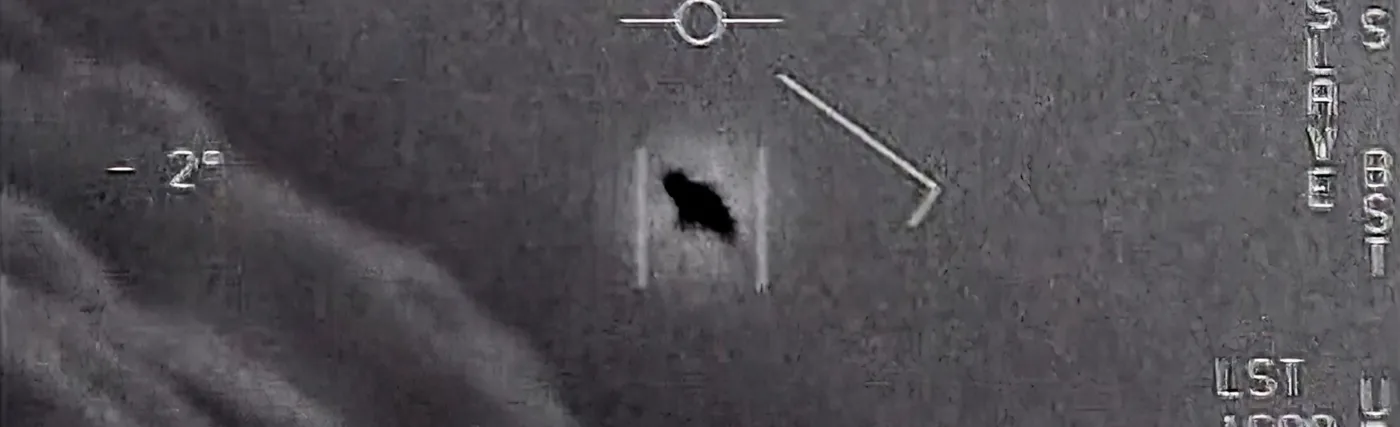
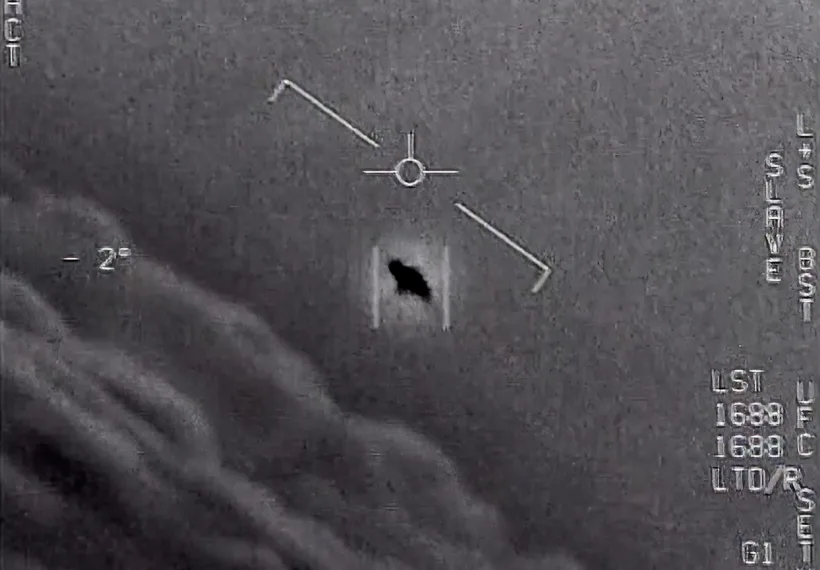
But you know, and an example of something that’s been understood is there’s a famous image in the UFO community of these rotating triangles that was taken, I think, by an F-16.
And you can reproduce this by taking the F-16 camera, putting the sun at an, at an angle relative to the camera, and that will produce a triangle shaped optical effect.
And that’s just the sun’s light bouncing around and that would be an artifact, right?
Right, not a real object, right.
Now, the F-16 camera sits on a mount and it’s not designed to do astronomical studies.
It’s designed to like follow enemy targets.
So when it’s tracking that target and the cable wraps around, fully around it, it automatically swings it around rapidly and undoes the cable wrap, keeping track on the target.
And that produces rapid rotation in the object and can reproduce it.
Now one of the things that provides a bit of an obstacle, a serious obstacle to looking at a lot of the UFO reports or UAP reports from the military is that they’re classified.
Now why are they classified?
Not because of what’s in the image, but how the image is taken.
If you take data with the camera on an F-16, that image is automatically classified.
Any image taken with military cameras and particularly anything taken from space with our spy satellites, those images are classified because if you see the image, you can study it and learn about our military capabilities.
So that’s been an obstacle, I think, to transparency in this area, is that many of the best known events are taken by military planes and then the military classifies it.
So that’s why we have not gone through the classified data.
We don’t have, we want to operate entirely in the open.
I have no classified clearances and we made sure that we structure our committee.
So, while some people had clearances, most of us didn’t, so we can do a completely open report.
But that means that we’re relying on the AARL, that’s a committee, an organization set up within the Defense Department coordinating both DOD and the intelligence community, led by Ashanka Patrick.
And they have the charge of reporting to Congress on the individual events.
And they have full access to the classified data.
So, David, why didn’t anybody say this earlier, that any military image basically is going to be classified, so that we don’t reveal our capacity to obtain data?
Because everyone is thinking it’s classified because the government knows something that we don’t know about the thing that’s in the picture.
So why wasn’t, why isn’t that made much clearer to everybody?
It should have been made clear, that should be made clear.
I mean, that’s, I think that’s known by the people involved.
And there are some people who know that about classification.
There was a famous incident during the Trump administration, where there was people in the intelligence community got very upset at President Trump because he made public an image of an Iranian missile site.
And in doing so, he revealed to the Iranians our satellite capabilities.
So normally we would only talk about or they would only talk about what’s seen.
They would make public the image.
But he wanted to show everyone the images we know he likes to show stuff.
So that was concerning because we sort of leaked intelligence by revealing an image like that.
Little known fact, he still has that photo in his closet in Mar-a-Lago, just so you know.
But I thought it’s all by the toilet.
Well, best thinking happens.
Think about what happens when you’re sick and you have to see a doctor.
First, you have to schedule an appointment, which sometimes can take days or even weeks to get in.
Then you have to go to the doctor, even though you’re probably feeling miserable.
Then you wait in the aptly named waiting room, exposed to whatever the people around you are coughing and spewing into the air.
Oh, the humanity.
Fortunately, there’s an option that is far more humane.
Teladoc Health.
With Teladoc Health, you can get in touch with a doctor 24 hours a day, 365 days a year.
All from the comfort of your own home.
Whatever your medical problem, just open the Teladoc app and connect with a board certified doctor who will offer advice, write a prescription, or even schedule an in-person visit.
Just open the Teladoc Health app and get a diagnosis, treatment plan, and prescription if needed from a board certified provider.
All of which makes Teladoc Health a far healthier form of healthcare.
I am speaking from experience when I say that it works because I use it all the time.
Download the app to get started today or go online to register or schedule a visit at teladochealth.com/startalk.
That’s T-E-L-A-D-O-C health.com/startalk.
This show is sponsored by BetterHelp.
You know, there are times you feel uncertain in life.
You just don’t feel super confident about where you’re going or what you have to do.
Well, sometimes we’re faced with a crossroads in life and we don’t know which path to take.
Maybe you’re thinking about a career change or feeling like your relationship needs some TLC.
Whatever it is, therapy can help you map out your future and trust yourself to find the way forward.
If you’re thinking of starting therapy, give BetterHelp a try.
It’s entirely online, designed to be convenient, flexible and suited to your schedule.
Just fill out a brief questionnaire to get matched with a licensed therapist and switch therapist anytime for no additional charge.
Let therapy be your map with BetterHelp.
Visit betterhelp.com/startalktoday to get 10% off your first month.
That’s BetterHelp, help.com/startalk.
Hey, I’m Roy Hill Percival, and I support StarTalk on Patreon.
Bringing the universe down to Earth, this is StarTalk with Neil deGrasse Tyson.
So Paul, give me another question.
This is Malcolm Marfan.
There are a number of reasons why people might be afraid to report UAP sighting.
Just a second, do they say where they’re from?
Why didn’t you say that?
I want to hear where these people are from.
Okay, definitely.
There are a number of reasons why people might be afraid to report UAP sightings.
People are afraid of being ridiculed or ostracized.
Others are afraid that they’ll be labeled as mentally ill.
Still others are afraid that they will be investigated by the government.
The stigma has chilling effect on the reporting of UAP sightings.
It makes it difficult for researchers to gather data on UAP and therefore has also made it difficult to understand what these phenomenon are.
How can we reduce the stigma around reporting UAP sightings?
So David, let me just slip something in there.
My thought is it’s not that there’s stigma around a UAP sighting.
It’s that there’s stigma around anyone’s assumption that the UAP is visiting intelligent aliens from outer space.
If I say I saw something in the sky, I don’t know what it is, let’s investigate it.
Who’s gonna fault me for that?
But if I were to say I saw aliens today, that’s a whole other leap that people have made that would get a giggle factor.
So isn’t there a line in the sand here that we can draw?
Well, it depends who you are.
So you’re a professional scientist, a professional astronomer.
You say you something, you see something in the weird, in the sky.
It’s like, yeah, that’s your job to see weird.
I look up all the time, right, right.
There’s stuff up there, yeah.
There is a lot of stigma, particularly for commercial pilots and for military pilots to report anomalies.
So, you know, this is something we’ve heard from a lot of pilots.
It’s something that was talked about in the congressional hearings.
And it’s very clear that there are, if you see something odd as a pilot, there’s a sense that, oh yeah, you’re sort of, you know, let’s not imagine that that oddity is an alien spacecraft.
Oddities are just not reported.
There was a culture that wasn’t collecting that.
The military has made an effort to change that culture.
That’s why the number of UAP reports in the last two years is so much higher than in the past.
Those people are encouraged if you see something strange reported.
Mm-hmm.
Okay.
Now, let’s talk about just two classes of events that are certainly there that you wanna make sure get reported.
We all heard about this Chinese balloon that flew over the United States.
And by the way, it was in full high resolution, you know, so it wasn’t some fuzzy object, you know, it was like fully identifiable.
Well, right.
But that was very clearly a Chinese balloon, but initially those balloons have probably been for at least what I’ve read in the press and stress I have no clearances.
This is what I read in the Washington Post, right?
The Chinese were flying balloons and spying on US.
Navy operations for years.
That’s right.
And probably some of these balloons were seen by commercial and military pilots as UAPs.
They saw something strange, but because of the stigma, those aren’t getting reported.
So one of the things we wanna do is reduce that stigma just to get those reports.
But can’t you push back on the stigma by the people that are applying a stigma to it?
They’re the ones that should have a stigma.
That’s narrow thinking.
It’s based in insecurity that we are, it’s also sort of a little self aggrandizing that we could be the only things in the entire universe, only living beings.
So why hasn’t there been able to be a shift?
For years, it’s been like this, right?
Oh, you said you saw an alien?
You’re crazy.
No, no, I think to say you’ve seen an alien, to know that it’s an alien is taking a big step.
That’s the point I was making.
To say, hey, I see something I don’t understand.
But when even people say that, they get the stigma.
Sorry, you have…
I don’t give them the stigma.
I said, tell me about it.
What does it look like?
You got video?
You got images?
So that’s one of the things we are aiming to do in this report is you see something weird, report it and give us good data, right?
Now, most of the time, that weird thing is going to be an airplane, a balloon, a drone.
It’s weird to you, but give it more data, we’ll figure it out.
Sometimes it’s going to be something interesting.
Interesting could just, you know, knowing about for the US military to know about a Chinese spy drone or balloon.
That’s pretty interesting.
They’d like that thing.
And then there’s phenomenon, and my favorite on this list is lightning sprites.
You know, these lightning sprites are amazing.
They’re upward going lightning.
I encourage any of your listeners to just go on the web and look at pictures of lightning sprites if you haven’t seen them.
And these were reported by pilots for years.
They saw these weird lightning flashes going up.
They were these amazing patterns and no one believed them.
And some of them look really bizarre.
Right, they’re not normal lightning bolts, right?
It’s like a sheet of electricity, sort of.
They’re really amazing.
And it was only with the development of high-speed cameras and dedicated instruments to go after it that people believed that they’re there and started to understand them.
And David, this is only in the last few years, right?
Where we have authentic high-speed imagery of them, right?
And they really represent something where I think the kind of the whole UFO stigma thing affected the discovery of lightning strikes.
Because people…
I saw this really weird flashing lights.
It’s like, oh, you’re seeing aliens.
You know, they’re really interesting, but they’re a different phenomenon, right?
So, set aside those other, you know, the most exciting interpretations.
Just removing the stigma, collecting data in a systematic way.
You see something that’s surprising to you, collect data.
I mean, I think that like, that’s a message we want kind of for everybody.
And data for most people is very good imagery.
If you’re a scientist, you bring out some other tools and instruments for that, of course.
And I may be jumping ahead, but like, one of the things I think we’re gonna be encouraging NASA to do is actually develop apps for people’s cell phones.
So you see something, have a standard app that takes an image, records the metadata, records-
Metadata’s location, time, that sort of thing.
Location, time, how the image was taken, what the focus of your camera is.
You could incorporate with that data because your phone records amazing things.
Your phone measures magnetic field.
It measures the local gravitational field.
That’s how it knows its orientation.
Your phone’s of course recording sound.
And you could imagine combining all that data, encrypting it so people can’t easily at least edit the images and Photoshop in something interesting.
You would know that from the metadata.
And then if you’ve got the time and location and you see something interesting and someone else 10 miles away sees something interesting from a different perspective, that’s the same event, and you’ve got four or five observations, we could combine them, get distance, velocity, acceleration.
Usually it’s going to turn out to be something conventional.
And you’re not beholden to the limitations and vagaries of the five senses, our biological senses, which are highly susceptible to error.
Listen, and you’re both brilliant, but I have to just jump in here.
Look at how many apps I have.
I can’t handle another app, okay?
You got to do, I can’t do your job for you.
There’s a whole bunch of apps there.
You got a lot of apps you’re not losing.
Yeah, I agree with David.
Delete half your apps.
Your iPhone is already removing half your apps that you haven’t touched in months.
So that’s the one with the little cloud next to it, right?
Yes, exactly.
So what do we do his job for him?
You are the data taking device that’s out there.
All right, here we go, here we go, ready?
Another one?
Yes.
Thomas Cochrane from Kansas City.
If these UAPs are-
Is it KC Mo or Kansas City, Kansas?
It just says Kansas City.
Okay.
If these UAPs are as common as the latest hearings imply, why aren’t more common folk seeing them and posting what they see?
Everyone has a camera in their pocket nowadays.
Why hasn’t there been a more scientific method to studying these UAPs?
Yeah, David, what do you think of that?
Yes.
Yeah, you’d like to see high quality images with multiple angles.
Once you’ve got those events, the FAA has radar data that it has recorded for and it keeps.
So, let’s say you see something strange.
We could go to radar, turn it around and say, what would you like?
This is how we thought about this.
You have these events where you’ve got a fuzzy picture that’s ambiguous and we’re asked, what do you conclude from this?
What you conclude from this is, I can’t tell.
I need better data.
I think of this as, and there’s been a lot of astronomical phenomenon like this, where people see something they don’t understand, it’s strange.
The first thing you do is collect better data in a systematic way and most of the time, it turns out to be something conventional that you understand.
And every now and then, it turns out to be something surprising and interesting.
But if it’s surprising and interesting, you’re going to want multi-wavelength data, you’re going to want to have optical data from many angles, cameras from many angles, radar data and so on, and piece together a full picture.
And just to be clear, in our field, Paul, we’re not satisfied with just one wavelength band when we’re studying an object in the sky.
If I find something really interesting with my telescope, and it’s really, really interesting, people will pull all stops and pull out all the big guns, all the varieties of telescopes we have because rarely is an object only talking to you in one band of light.
So one of my favorite examples is of unidentified things in the sky that took a long time to figure out are what we call gamma ray bursts.
These were bursts of gamma radiation seen first by spy satellites that were designed to look for nuclear tests.
And as they were seen by them, they were actually classified for two, three years until they convinced themselves that they weren’t coming from Earth or from space.
So then they let the astronomers know about them.
And it took astronomers a long time to figure out.
They first thought they were in the galaxy.
And in fact, when Neil and my late colleague, Bowden Pachinsky, someone who I think we both worked with and admired and died tragically young of cancer, came up with this idea with others that this could be something like an extra galactic event.
People figured out eventually that these might be the merger of two neutron stars and propose that in fact all of the gold in the universe comes from these mergers.
And only in the last couple years did we see one of these mergers happen where we saw gravitational waves from it.
We saw X-rays from it, gamma rays.
Optical radiation, radio signal.
Putting all those pieces together.
We got the story of this merger of this incredibly powerful explosion, in some ways the most powerful in the universe, these explosions.
And it turns out by understanding them, that’s how we understand where gold and platinum and all the heavy elements come from.
So you start with something you don’t understand that’s a bright flash and it literally leads you to gold.
That’s how we roll.
Hey, if you like saving, you should join Walmart Plus.
It’s a membership that saves you money on the stuff you’d expect, plus the stuff you don’t.
Like gas, plus free delivery, plus a Paramount Plus subscription, plus so much more.
I love saying plus.
So you can drive the kids to soccer practice, order snacks for movie night, and stream your favorite movies all while saving.
Start a free 30 day trial at walmartplus.com.
See Walmart Plus terms and conditions.
Paramount Plus essential plan only.
Separate registration required.
Hey, let’s see if you know this one.
What’s a game where no one wins?
Did you say the waiting game?
Because if you did, ding, ding, ding, that’s what it is.
And when it comes to hiring, don’t wait for great talent to find you.
Find them first with Indeed.
When you’re hiring, you need Indeed.
Indeed is the hiring platform where you can attract, interview and hire all in one place.
Instead of spending hours on multiple job sites searching for candidates with the right skills, Indeed’s a powerful hiring platform that can help you do it all.
With instant match, over 80% of employers get quality candidates whose resume on Indeed matches their job description the moment they sponsor a job.
Even better, Indeed’s the only job site where you only pay for applications that meet your must have requirements.
Start hiring now with a $75 sponsored job credit to upgrade your job post at indeed.com/startalk.
All for good for a limited time.
Claim your $75 credit now at indeed.com/startalk.
Just go to indeed.com/startalk and support the show by saying you heard about it on this podcast.
indeed.com/startalk.
Terms and conditions apply.
Need to hire?
You need indeed.
Paul, you got another question.
I do.
Joseph Fogus, I do not have where he’s from.
I feel pretty confident assuming we aren’t being visited by beings from another planet, as far as I know.
Earth has nothing special to offer that can’t be found in abundance elsewhere.
Well, how about the Kardashians, buddy?
Anyway, come on, just having a, that and stuffed crust pizza.
Come on, guys.
But given the declassified, albeit fuzzy footage in the admittance of them, not really knowing what it was they were looking at, what are the current leading hypotheses in the scientific, not military community?
Also have you guys informed the military that HD cameras now exist?
Ha ha ha ha ha.
So, it is, you look at fuzzy pictures and say, wait, how come we have incredible cell phone pictures of everything else?
Why don’t we have high-quality pictures?
And that’s one of the things that I think has encouraged us to encourage NASA to develop better ways of…
It’s because you have your 60-year-old uncle who can’t take a picture at a wedding properly taking the picture, like, what button do I push?
Maybe that’s part of the problem.
As a 62-year-old…
Oh, jeez, I’m sorry, he was 70, I said 70.
There you go, thank you, you should say 70, I thought I heard you say 70.
Yeah, I mean, some of this is with the military data, I think a very interesting difference, I would say, in culture between a military pilot, a commercial pilot and a scientist.
You’re a commercial pilot flying from Denver to Chicago, and you see something really odd and interesting on your right-hand side.
Once you realize it is not a threat to your plane, your job is to keep going.
You don’t say, hey, I see something really cool and interesting, I don’t know what it is, I’m going to turn the plane around.
We’re going to have a look, I’m going to try to figure this out.
See, if I were a pilot, I’d say, everybody on the right side of the plane, take a picture of this.
That’s what I would say.
But like, you know, your job as a pilot is to get everyone safely to Chicago, right?
And you’re a military pilot, your job is to carry out your mission.
As a scientist, my job is, I see something weird.
My job, like, that’s the exciting thing.
My job is to figure it out, I go to investigate it, and we go get more data, we come back to it.
We live for weird stuff.
That’s right, but, you know, when a lot of these things are being seen by, say, commercial military pilots, the cameras they have are not designed for this, right?
We talked about, you know, your camera on a military plane is designed to pick, have very wide field of view.
It’s designed to pick up enemy threats.
It’s not designed to have very clean images that are reproducible, free of artifacts and defects that we talked about.
So you’re kind of prone to these sorts of problems.
So these military jets should have science mode, right?
You flick a button and then it goes into curiosity.
Well, I was just thinking, why not, in all seriousness, why not equip these planes with better cameras to gather this data, have the cameras they currently have or put a second camera on?
I mean, I would think the technology’s there.
I mean, iPhone 6, that would be better.
It was, it’s really, it’s really small.
It’s only got two gigs, it’s only got two gigs of…
Two gigs, but iPhone 6 could take better images than anything they’ve been showing us, right?
I’m thinking.
Well, this is something where I think, I see this actually as an opportunity for citizen science.
I think this is something where we shouldn’t be asking the military, you know, hey, you know how military spending works?
You add an iPhone 6 to an F-16, that’s going to be like $20 million on the contract.
Committee hearings.
For every iPhone 6.
Right?
And then the cover for the iPhone 6, that’s another $20 million right there.
That’s right.
But…
And a special cable to charge the right thing.
You gotta have the dongle, this dongle right here.
This is $40 million right here for each place.
That’s crazy.
No, but I think this is a good system science opportunity.
I think…
I love the idea of an app that is streamlined, user-friendly, even 70-year-old uncles can use.
And that’d be great to see that become something real.
Because we would all have it.
And it would be one of the more frequently used apps.
So just have it right in the wings of your, maybe not on the first screen, but definitely on the second screen of your over stuff.
And I think it just sends out a message that you see something strange, get the data.
And then we’ll figure it out.
And then we work together to figure it out, because that’s what we do.
So just in terms of strange things, something that people should keep in mind, because a lot of the reports that you get when you look at them are flashing lights.
Why do we put flashing lights on things?
So they’re seen.
You put flashing lights on bridges.
You put flashing lights on planes.
You put flashing lights on drugs.
And lighthouses.
Yeah.
Lighthouses.
If you don’t want to be seen, you don’t put a flashing light on.
When the Ukrainians attacked Moscow with the drone, it doesn’t come with flashing lights.
When the Russians attacked Odessa, no flashing lights.
And when we fly our military planes in effectively kind of war mode, when they may put lights on if they’re doing something in commercial airspace, you don’t do that.
So let’s imagine that we are being, someone comes to visit Earth from outside.
There’s two possibilities.
They want to be seen or they don’t want to be seen.
They want to be seen.
They’re gonna land in front of the White House.
They don’t want to be seen.
They’re not putting flashing lights on.
So, you know, flashing lights are almost always airplanes or drones.
It’s not gonna be.
Not all events are flashing lights events, but flash, you know, a lot of the most common conventional and kind of easily explained events.
Time for just a couple more questions.
Maybe two more, maybe two more.
Greetings from Sheboygan Falls Middle School in Wisconsin.
This is Matt Berg.
Oh, Sheboygan.
My question is about-
But who is it?
It’s Matt Berg, Sheboygan Falls Middle School in Wisconsin.
My question is what it means to be, is what it means to be anomalous in the first place.
My students and I discussed the importance of basing final conclusions of any experiment on accumulated data.
When looking at a data set, at what point does a piece of data move from what is considered to be an anomaly to something that is just considered part of the data set overall and an expected result?
So I think in a sense, once you can explain it, it’s not anomalous, right?
Those, that Chinese balloon is not a UAP anymore.
It was when it was first seen.
We didn’t know what it was.
It’s an IAP.
It’s an identified it.
IAP, identified aerial.
It’s an identified aerial phenomenon.
Which ironically was made in the US.
I’m just throwing, putting that out there.
No, ironically, it was copied off of those balloons that Google was designed in the US., made in China, like many things.
I think of this problem of looking for anomalies, like looking for a needle in the haystack.
And there’s two ways I know of finding needles in haystacks.
Either you have a really good idea of what a needle looks like, and this gets to how artificial intelligence or machine would do this.
You then design a matched filter that looks for a needle.
And you just look, I’m only looking for needles.
And it would do better job than your eye brain combination would because the filter is precise.
As you say, I know what hay looks like, and I have a very good model of how hay looks like.
And I am looking for everything different from hay.
And this gets to what an anomaly is.
You’re going through a haystack, you know, that’s, and you’re looking for things that don’t look like hay.
That’s looking for anomalies.
So it may not be a needle, but it may be something else.
But it’s only anomalous if you didn’t know it was going to be there.
So you have a hay model and you have a poop model, so that now you can separate both of those from what still might be the needle.
But you have to know in advance you might be finding poop.
But isn’t David saying it’s anomalous because it’s also because it’s not useful to anything?
No, it’s anomalous because it’s a hay model and it’s not hay.
And you say, hey, oh, I discovered something.
Bailers of hay in a barn have poop in them.
All right, good, I understand that.
I now have a hay model and a poop model.
And I’m now interested in things that aren’t hay or poop.
Found a horseshoe.
You identify what’s there and you find anomalies, and you understand them, and that’s how we proceed.
And then they’re not anomalies, right?
And then they’re anomalies.
So, you know, you go through this list of here’s weird things and then they’re anomalies.
And I think if we look at the events that have been reported, there are a bunch that you look at and you say, hey, those are anomalies.
We don’t understand them.
And you want to understand them better, get better data.
And then we’re going to need is, you know, we want to have data on lots of wavelengths.
We want to have lots of observations.
You know, I look at the reports that we’ve heard about, and you say those are interesting enough that they merit investigation.
Maybe we should be looking at anomalies more closely, but not interesting enough, not complete enough that we know what’s there.
But Paul, one last question if we can go through it fast.
Go.
Absolutely.
Sean Ravenfein, don’t have location.
On the subject of UAP UFOs, it seems kind of unlikely to me that extraterrestrials would traverse space in something we would recognize as a ship.
Imagine that any civilization that regularly crosses interstellar distances would probably use some kind of wormhole technology or something we never even thought of yet.
But this raises the question, if UAPs aren’t alien ships, but it turns out that they’re also not something mundane like weather balloons and such, then do we have a third option, guesses as to what they may be?
So let me agree in the sense that if I think about life on other planets, we know that the stars around us are typically 100 million years or a billion years older than us or younger than us.
So any civilization, any life form is 100 million years, a billion years behind us in evolution, in a sense, or ahead of us.
And behind us, they’re bacteria, they’re not travel.
Ahead of us, I think of the time scale for us for technological evolution is such that if you take someone from 1923 and bring them forward, they’ll kind of understand the world today.
Cars are better, planes, so on.
Take someone from 1023 to today, it’s magic.
A thousand years is huge steps in technological evolution.
A hundred million years is a hundred thousand steps like that.
Any alien civilization capable of space travel is going to be so advanced compared to us that their technology will not be recognizable.
They will be…
And will look like magic.
It will look like magic.
It will look like magic.
So if you’re looking at some technology that turns out to be like, hey, they’re better than I thought drones are.
Well, that probably is because the military or someone is doing tech development and is pushing the edge of drones.
So, you know, my guess is a bunch of the anomalies are drones and they’re drones that the military is developing and that’s a class of events.
And another class of events, and this is a national security concern, is if there are Chinese or Russian or other North Koreans are developing some drone technology that are being developed to spy on our planes, our navy ships, that’s something of national security concern.
And we want to understand that technology.
And I know that we’re developing pretty cool technologies just to spy on other countries and monitor their military.
And that’s sort of the job of the intelligence community and the military here.
David, give us one summative thought.
I think the best summary I saw of what we were doing came from someone on Twitter, and I’ll take out the expletives.
Those scientists, they don’t believe, they just want better data.
And I think that’s what we’re coming at this.
You come at something where you see something you don’t understand, rather than jumping to believing the most exciting hypothesis, you say, all right, how do I collect better data to understand what’s going on?
This is something I don’t understand.
And of course, in any scientific conference, when two scientists are in heated argument, at the end of the day, you’re going to go have a beer because you’re going to say to each other, we need better data to resolve this.
Or you’re going to say, that wasn’t dog poop in the hay.
No, that isn’t.
I’ve never learned so much about dog poop in one conversation.
Thank you to both of you, by the way.
Yes, of course.
Well, you know, look, you got to get training.
Exactly.
I got to get ready for the new career.
Well, David, thanks for that bit of sort of sage, level headed assessment of what’s going on out there.
We’re all excited to see what comes of this.
I can’t wait for my app.
And we all have to agree that Paul has way too many apps on his iPhone.
So he will not be a participant in these discoveries.
He’ll be fumbling.
He’ll be fumbling for where the app is while the alien is trying to shake his hand.
And he’ll miss the data.
And my 75 year old uncle, not 60 year old uncle, will have a problem with his finger in front of the camera lens.
So that’s my only skepticism of this conversation, is relying on us to give you quality data.
Well, whatever it is, it’s some data rather than no data.
Actually, we’re relying more on the wisdom of crowds.
You may take crappy data.
But if we’ve got 10 people taking data, combined data is actually almost always quite good.
So, Paul, great to have you back.
And your podcast is Inside Out with Paul Mecurio.
Yes.
All right, guys.
So this has been Star Talk.
Cosmic Queries Edition, focusing on UAPs, which we all know is just a rebranding of UFOs by the US government.
Until next time, Neil deGrasse Tyson here, bidding you to keep looking up.



 Become a Patron