


 Unlock with Patreon
About This Episode
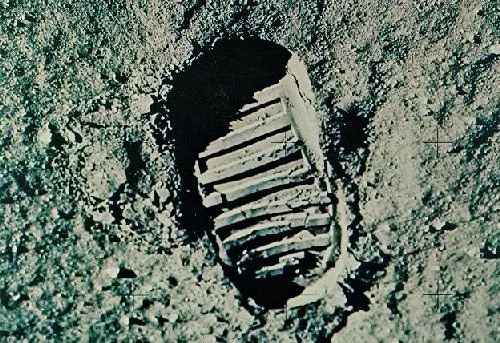
That’s one small step for man, one giant leap for mankind. Neil Armstrong spoke these words after placing his foot down onto lunar soil, and throughout the course of the Apollo program eleven other astronauts also walked on the Moon. In this show, Neil Armstrong, Buzz Aldrin, and many others share their memories of Apollo, and say what they think should be NASA’s next step in space.
NOTE: All-Access subscribers can listen to this entire episode commercial-free here: Anniversary of Apollo 11.
Transcript
DOWNLOAD SRTOur universe is filled with secrets and mysteries, leaving us with many questions to be answered. Now, more than ever, we find ourselves searching for those answers as the very fabric of space, science and society are converging. This is...
Our universe is filled with secrets and mysteries, leaving us with many questions to be answered.
Now, more than ever, we find ourselves searching for those answers as the very fabric of space, science and society are converging.
This is StarTalk.
Now, here's your hosts, astrophysicist, Dr.
Neil deGrasse Tyson and comedian, Lynn Coplitz.
StarTalk.
Welcome back to StarTalk.
I am indeed your host, Neil deGrasse Tyson.
Lynn Coplitz is out on the road doing her stand up comedian thing.
And I have a guest co-host today.
A guest co-host brought to you from space.
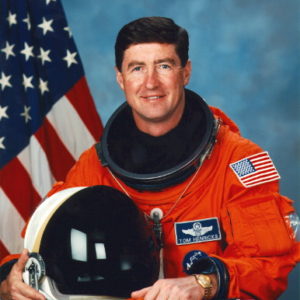
His name is Tom Kendricks.
We'll get to him in just a moment, but he's a four-time shuttle astronaut.
And today we're celebrating the 40th, 40 years since Neil Armstrong walked on the moon.
He walked on the moon 40 years ago.
How long is that to you, I wonder?
And those old enough remember it, and those not old enough are told about it and might have other space memories.
But I want to bring in right away my co-host for today, Tom Kendricks.
Kenricks, Tom, welcome to StarTalk.
It's great to be here, Neil.
And you've been in space four times.
Right.
Don't you share that with somebody?
Did someone else only went once because you got it four times?
Well, there's been people who have gone seven times.
Oh.
Maybe I should have gone by.
All in the shuttle era.
That's correct.
Shuttle era.
And you're born in what state?
Where are you from?
Ohio.
Every astronaut I ask where they're from, they seem to be like they're from Ohio.
Well, Ohio has had more than its fair share of astronauts, I have to admit.
Why?
Some in the water supply?
Well, we've been accused of that.
Actually, I heard Colbert joke about this.
He said Ohio has so many astronauts because they're trying to get away from Ohio.
There may be some truth to that, but we did have good schools and a good Midwestern work ethic.
Uh-huh, uh-huh.
Well, that's cool.
Well, thanks for being with me today because what we're going to do is, you know, we should do, we're at the top of the hour.
Let's find out what our good old friend Bill Nye has to say about this 40th anniversary.
Take a Bill.
Hey, hey, Bill Nye the Science Guy here.
Forty years ago, humans walked on the moon, the Earth's moon, our moon.
The moon landings were a result of the Cold War, it became a competition to see who could build the biggest number of history's deadliest rockets.
Along with that was a push to gain the ultimate high ground, space.
The moon became the highest of the high.
The United States mobilized a tremendous core of workers, built the big rockets and got it done.
The Soviet Union went out of business about 20 years later, but despite the politics, it was the most exciting thing ever.
For many days after the successful landing and return of the Apollo 11 crew, everyone on Earth shared that spirit of excitement.
Forty years later, people everywhere continued to fly in space and explore our neighboring planets and distant stars.
This is Bill Nye, the Science Guy, hoping you'll think a bit about the most exciting thing ever, exploration and the joy of discovery.
I'm out of breath every time I hear the guy.
Bill Nye, you gotta love him.
So, Tom, my guests here are on StarTalk.
By the way, if you have a question or a comment during the show where we're celebrating the 40th anniversary of the Apollo landing, give us a call, 1-877-5-STARTALK.
You can even drop us an email, go on to our website, startalkradio.net and check it out.
So Tom, how old were you back when we landed on the moon?
I was 17.
17, and back in Ohio, I guess.
Oh, a small town watching the moon landing with a friend late at night.
Did you know you were destined to go into space at that time?
Oh, no, not at all.
No one in my family had ever been to college, and I didn't have my sights set that high, and I tell people that they should aim high as a young person now.
Well, you say aim high because I happen to know that you end up going to the Air Force, and what's their motto?
Aim high.
Okay, so a little bit of marketing for the Air Force here.
Absolutely.
So you went to high school in Ohio, and then college, where did you go to college?
I ended up going to the Air Force Academy.
Air Force Academy?
Out in Colorado Springs.
Colorado Springs.
I get them all confused.
What's in Annapolis?
That's the Naval Academy, and West Point here in New York is the Army's headquarters.
That's the Army.
And then the Marines go where?
They're part of the Navy.
They might not want to always acknowledge that, but they're part of the Navy.
Yeah, if you talked to Marines, you would never know that they were part of the Navy.
They're a very proud corps.
Okay, so you know, when I was, in 1969, I was nine years old, and I was in Virginia with my best friend.
Who?
Incidentally, Tom, is visiting New York today, and I said, you got to come by the studio just so that I could share this special moment with the listeners.
So I want to introduce to the world, Philip Branford, my friend since fourth grade.
Phil, welcome to StarTalk.
It was great to be here.
It's always an honor.
It's really, I enjoy seeing you again.
Oh, well, thanks.
And you were with me, we were together visiting your relatives, who were kind of crazy relatives, I have to say, down in Virginia.
It was like something in the water supply or something, I don't know what it was.
It was out in the country.
And all I remember is seeing Neil Armstrong take his first steps on a small fuzzy TV in Virginia.
Did I remember that correctly?
Well, I think your memory is a little selective.
As I remember, we were on our way back to New York that day, back home, and we were late trying to get to a bus.
But you insisted upon jumping out of the car and running in to see the TV to watch the moon landing.
And I was not quite that interested, but I regret it now because it was a historic day.
So you didn't know at the time that someone walking on the moon would be an historic thing?
What's wrong with you?
What are you?
Maybe I was already in space myself.
But I have to tell the listeners that this guy, Philip Branford, was the first one, not only did I share that moon landing moment with him, however disinterested he was, he was the first to lend me a pair of binoculars, me being a city kid, and I never looked up before.
With those binoculars, I looked up, saw the moon, and it became a world to me, not just some orb sitting up there in space.
I've been hooked ever since.
Those years between age 9 and 11, sorry, I was 11 years old in 1969, and those years were formative of my life, and you were a fundamental part of that.
I want to thank you for coming by StarTalk.
I'm glad I was there.
I'm glad I'm here today.
Thanks.
So even if space meant nothing to you, your influence made it make everything to me.
That's all that matters.
All right.
Thanks for visiting StarTalk, Phil.
Thanks.
So, Tom, we were together this Monday, January 20th in Washington, DC.
We went separately, of course, but you just happened to be there, and I was there at the NASA's 40th anniversary celebration of the moon landing in the Air and Space Museum.
Yeah, it was great.
I had to work for my food, though.
You did a great job as the MC.
I had to be MC of the evening, bringing speakers in and out.
Well, you just got to hang out and drink and eat.
Absolutely.
What I did was I brought my favorite microphone, which is my roving microphone, where if I get somebody next to me, I can get a good interview with them.
I want to share with the listeners all these interviews very quick.
I just asked them simple questions, what I just asked you.
How old were you?
What were you thinking?
What's the most memorable part?
Where do you think NASA's going to go in the future?
You can hang out the whole hour and listen to what these are.
I'm curious.
I want to hear them.
You want to hear what they are?
All right, let's go to our first interview.
I'm there in Washington, DC.
Monday night, July 20th, and there are all these people who are like icons of the Apollo era and beyond.
Let's check out our first interview with Walter Cunningham, lunar module pilot for Apollo 7 mission.
I flew the first test flight of the Apollo spacecraft.
It was called Apollo 7.
That's after they scrapped 1 through 6.
No, they didn't scrap 1 through 6.
The fourth mission, because Gus Grissom had enough drag with NASA headquarters, was called Apollo 1.
And the first three were unmanned tests, Apollo 4.
Apollo 4 was Apollo 1.
And then after the fire, well, we were on the backup crew.
So I backed up Roger Chaffee on Apollo 1.
I worked on the fire investigation board for a couple weeks.
Then they told us we inherited the first mission.
That left time, they flew two more unmanned missions, and then we flew the first engineering test flight.
So three questions, you ready?
How old were you 40 years ago today?
Let's see, 40 years ago today, I had just turned 37.
And what's your most indelible memory of the entire Apollo era?
Be it your mission or any other?
Of the entire, well, it's the landing on the moon.
Apollo 11.
Apollo 11, 500 years from now.
That's the only thing they're gonna remember the 20th century for.
Last question.
Where should NASA go in the future?
Well, there's only one objective in my mind, and that's Mars.
Mars with people.
Mars with people.
As me, I mean, we need to continue to have unmanned exploration as well.
When I say Mars, it could be Phobos, it could be something like that.
But I'm one of those that thinks that landing on the moon or a program to go back to the moon is what I call Mars light.
It's a place to get bogged down, to have all kinds of problems and spend a lot of money stuck on the moon and having to resell some program to get to Mars.
Tom, did you know Walter Cunningham?
I have met him several times.
Yeah, was he significant in your life or he's just one of the other characters from the Apollo era?
He was just one of those heroes from the Apollo era to me.
Yeah, I mean, the Apollo era is full of them.
I mean, and I don't think enough people know their stories, in spite of the movies, and I think there's still a lot of storytelling to go on.
I agree.
Just about every one of them has had a book out and they're great, great novels.
Now, while down there, by the way, you're listening to StarTalk Radio.
I'm your host, Neil deGrasse Tyson, with my guest host this week, because Lynn Koplik is out in the field doing her stand-up comedy that she does.
She's also an actress, by the way, and stars in Z-Rock, the independent film channel show.
It airs Sunday night.
But I've got with me Tom Kenricks, who's a four-time shuttle astronaut, happens to be a New York City resident today, and was kind enough to agree to be co-host with me.
And so, Tom, my next interview down there in Washington, DC was the one and the only.
Who am I talking about?
Neil Armstrong.
The other Neil.
The other Neil.
Let's check him out.
Neil Armstrong, go.
Neil Armstrong, commander of Apollo 11.
How old were you 40 years ago today?
I was 38.93.
Excellent.
I love it.
And of the entire Apollo era, what's your most indelible memory?
And it could be your own walk, but if not, I'm just curious.
Most indelible memory was approaching the moon and flying through the moon shadow so that the moon was eclipsing the sun and we could see the corona all around the moon.
And it was not circular, it was elliptical, which was a big surprise, I didn't understand that.
And then we could see the moon, the dark side of the moon, of course, illuminated by earthlight.
And we could see the craters in the valleys and the plains in a blue, gray, three-dimensional view that was spectacular.
Texture, the image had to be.
And remarkable, but imperceptible to a camera, but the human eye was wonderful.
And the last question, what do you think NASA should do next?
I'm supporter of the NASA plan.
Just needs more money, I suppose, but the ideas are there.
Yeah, I think the approach they're on is a good one.
I like that.
They're a little below glide slope, but they're gonna get there.
Neil Armstrong, down in Washington, DC just a few days ago.
So, Tom, is he one of your heroes?
Gotta be, Neil Armstrong.
Of course, he's another Ohio astronaut.
So he's an Ohio astronaut, he flew, plus he was a pilot.
Test pilot.
You were a test pilot, too, is that right?
For the Air Force.
Correct.
So you just kindred spirits from way back.
Well, I like to think so.
You know, there's a Kennedy speech where he said, we will go to the moon and we'll do the other thing.
I never really knew what he meant when he said we'll do the other thing.
Do you talk about that in the astronaut corps when you were there?
We have, of course, it's a mixed corps now.
So what does he mean, do the other thing?
I don't know what that even means.
Well, it depends on which side of this story we're on here.
Oh.
We did have mixed crews, we had men and women on the space shuttle.
Oh, that's what the other, no, that's what, you think that's what he actually meant, do the other thing?
You know, also the first words that Neil Armstrong spoke, man, do you think there might have been alternative scripts that could have been used?
Do you guys talk about that?
Uh, no, but the one thing I learned...
Had I landed on the moon, I would have said, yee-haw!
No, I would have been less literal, I don't know, I would have been more emotional about it.
Well, he had prepared that statement, a small step for man, before he got on the...
But who selected that above what might be another statement, for example?
Well, apparently, it was he, Buzz, Mike Collins, and the three astronauts of Apollo 11.
They decided what to say and didn't have to ask permission.
They kept that to themselves.
I didn't know that.
So basically it was a tantamount to a secret to everybody else, until it actually happened.
Very cool.
You know who else was down there in Washington?
By the way, you're listening to StarTalk, StarTalk Radio.
You can track us on the web at startalkradio.net.
And if you have a question about the Apollo landing or the missions that followed, or of our four-time shuttle astronaut, Tom Kenricks, give us a call at 1-877-5-STARTALK.
Down there in Washington for the 40th anniversary gala at the Air and Space Museum, I bumped into not only Neil Armstrong and other astronauts, but also June Lockhart.
Do you remember June Lockhart?
I do.
Lassie.
Lost in Space.
Yes, she's the mom.
She's Timmy's mom on Lassie.
And she was also the mom, she made a good mom in 1960s TV shows.
She was the mom on Lost in Space.
And I said, I got an interview.
She's there.
How can I let that one go?
Let's see what she had to say.
So June Lockhart, how old were you 40 years ago today?
I know it sounds impudent, but we have to put it in context.
I have absolutely no facility at math.
Well, I'm 84 now.
So you subtract.
So you're 44?
44.
So 44 when Neil Armstrong landed on the moon.
Of the whole Apollo era, what was the most indelible memory you had from that whole era?
Oh, attending from that era 40 years ago?
While we were on the moon.
Being the landing, which of course was, you know, one foot on the...
It was very touching, and I was so moved by it to think that I had been able to share it, to share it with the world.
It was quite an astonishing experience.
So if you were 44 at the moon landing, that means you were around at a time when no one ever thought that was possible, that in fact they just declared that it was just impossible, and then you see it happen, and did that change your outlook on life and on what did it do inside of you?
Well, at that point, I was already in lost in space and had been for several years.
Not lost in space, you were in lost in space, just to clarify.
You were in lost in space, not lost in space.
That is correct.
But I've always been interested in aviation, so when space travel came along, it just absolutely fit into my general philosophy.
There was really, I was in awe that we accomplished it, but not too surprised because I always thought it would happen.
Do you have any specific dreams for NASA going forward?
Oh yes, I think it's very important that we go back to the Moon and then go to Mars.
And that young people are educated to know of this possibility and of the importance to them of this, to realize this great goal.
June Lockhart from Lost in Space, 84 years old and going strong.
She looked good too, I have to say.
I had to have my picture taken with her.
You saw her too, yeah.
She still looked like that mom from Lost in Space.
Yeah, I felt very, you know, maternal.
I felt like I was a kid around her.
It was great.
Now, she was in Lost in Space, you as a shuttle astronaut, did you ever feel like you might get lost in space?
We actually did get lost in space on my second mission.
What does that mean?
Aren't we tracking you with ground-based antennas?
Yes, but only when you're over the stations.
And we had been in a point where our antennas had pointed the wrong direction and we had no communication with the ground for over one orbit.
So that would be an hour and a half.
Exactly.
Wow, so why weren't the antennas pointed towards you?
Well, it wasn't my fault.
I was asleep for the time.
Wasn't my fault?
Weren't you shuttle pilot commander?
Wasn't my fault!
So how did it happen?
It was just a switch error.
A switch error?
An IO error, incompetent operator error.
So the space program is not only about flyboys and actresses.
Of course, there are scientists who greatly benefited from this whole effort.
And there's a colleague of mine who I adore.
She's, she's, I call her like Madame Saturn.
I think I'd say it to her face.
She's one of the world's experts on planets and Saturn in particular.
She was there.
Her name is Carolyn Porco.
Let's see what she has to say.
Slightly different perspective than what you might think.
It was Carolyn Porco, a colleague of mine, and I call her Madame Saturn.
Carolyn Porco, how old were you 40 years ago today?
Oh my God.
I was 16.
16.
And what's your most indelible memory from the entire Apollo era?
The entire Apollo era?
Well, my most indelible memory is from 40 years ago tonight when my family, who used to dine in the dining room, pulled the dining room table from the dining room into the living room so that we could watch the landing and Armstrong walking on the moon because we had one of those console immobile televisions long ago.
And it was the first time I ever saw my father, who was an immigrant from southern Italy, literally had been a shepherd as he was growing up.
It was the first time I ever saw him cry.
In fact, I'm going to cry now.
I'm touching.
Oh my gosh.
Oh my goodness.
Last question.
What do you see should be the future priorities for NASA going forward?
I think we need both human flight and robotic exploration.
You can't have one without the other.
You certainly can't have human flight without robotic because we need to study the places before we send humans there.
And I think that sending humans provides technological challenges that we need to meet because of the advances that come along with meeting those challenges.
And I also think that it's something that humans have done forever.
We are wanderers, we are explorers, and it's going to happen anyway.
So whether we talk about it or not, it will happen.
So I want to see a robust human flight program.
I want to see us do it in a measured fashion because I think this rush to go any one place and then say we got there, we tried that already.
It didn't work for us, sustaining us.
So I'd like to see a more measured approach.
I like the idea of going to the moon, again testing out our technologies that we will use to go beyond.
So I want to see both.
That's my message, we need both.
Final, final question, how's Saturn doing?
It's both of our favorite planet.
Saturn is as magnificent and as splendiferous as it ever was.
Carol and Porco!
Neil Tyson!
That's one of my favorite people anywhere, Carol and Porco.
You're back on StarTalk Radio.
I'm your host, Neil deGrasse Tyson, and I have a guest host this week, Tom Hendricks, who is a four-time shuttle astronaut.
We're here celebrating the 40th anniversary of Apollo, playing clips from the anniversary gala that took place July 20th at the Air and Space Museum, an event at which I was MC for the formal part of the evening, but Tom Hendricks was also there.
Tom, we occasionally hear rumors that astronauts don't get along.
Is that really true?
Of course, we can't expect them all to be friends, but what kind of tensions exist between and among astronauts within an era or between eras, from Apollo to shuttle and the like?
Well, from my experience, it was the tension in space.
You know each other very well.
You've been training for a year and a half, but now you get into a closed environment where no one's getting a good night's sleep.
It's extremely stressful.
So people start getting cranky.
They start getting cranky, and you see the raw nerves in that stressful environment, and I've actually had to referee in space.
Ooh, that probably didn't make it onto the NASA TV channel.
No.
You stopping the fisticuffs.
Also, another quick one here.
We hear about them recently.
There's a new recycling machine that converts urine into drinking water.
Did they have that machine back when you were in orbit?
We didn't have that, thank you very much.
We actually produced our drinking water through the fuel cells on the space shuttle.
So we had fresh water.
Oh, the fuel cells are combining hydrogen and oxygen to make electricity, and the byproduct, the exhaust of a fuel cell, is just drinkable water.
Okay, so you're in the early days before you drank each other's urine, is what you're saying.
Yeah, if that's progress.
So we're back in Washington, and everybody was there, anybody who's anybody in the entire space history was there.
And I just felt fortunate that all these folks gave me two minutes of their time to tell me what they were thinking and where they were coming from.
Let's go next to the second guy to walk on the moon.
You know him, you love him.
He's got a name that showed up in a Disney movie Let's see what Buzz Aldrin has to say.
Here with Buzz Aldrin.
Buzz, how old were you 40 years ago today?
Thirty-nine and a half.
Exactly.
What's your most indelible memory from the entire Apollo era?
Well, what I'm trying to remember the most are two things sitting on the launch pad, halfway up, not quite there, all by myself.
The other two guys are getting put into the spacecraft.
I'm the third guy that goes in the center.
As you're ascending the Saturn front?
Yeah, as we're going up.
I was all by myself with my little air conditioning unit, looking out there, seeing the sunrise, waves coming in, quiet, foam, I mean frost and everything coming off the side.
So that was one.
The other one is...
So it's just a serene, personal, quiet moment.
All by myself about to depart on a trip.
And the next one is the second or two arriving on the trip.
Engine stop.
Contact light.
Contact light, engine stop.
You know, we got there.
And I'm trying to stress that that was really opening the door to every piece of exploration to ever follow that.
And without having done that, you couldn't do the rest of it.
I have to agree that the actual landing on the Moon loses its meaning compared to walking.
But landing, you're touched down.
Yeah.
So what?
Then you got to do something else.
What do you see as the highest priority for NASA going forward?
US global space leadership by way of progressive change and enlightened cooperation.
That's the answer.
Progressive change is in parentheses Obama, and enlightened cooperation is Space Station, China, and the moon.
Buzz Aldrin, thanks for being on StarTalk.
So, Tom, we're back on StarTalk.
That was just an interview with Buzz Aldrin in Washington, DC where both Tom Hendricks and I were on July 20th.
Tom, as you know, we both know that Buzz has a lot of energy for trying to think about NASA's next steps.
He's got thoughts about architecture, reusable rockets, and you, forgive me for not saying earlier, you were president of Aviation and Space Weekly, a very important magazine to the industry.
So you see ideas come in and out and what the new thoughts are.
So how do you, what do you think the architecture of space exploration should be right now?
Well, there's a study out that's being conducted right now to determine what to recommend to President Obama for NASA's next steps.
My personal agenda was the...
The Augustine Committee.
The Augustine Commission, very good.
But I think what we need to do is get the general public and especially young people excited about space again.
Doesn't matter whether it's to moon or Mars.
We just got to create that excitement again.
I think that's an enlightened perspective, which doesn't then chew sides over what kind of hardware it is, because you need the landscape to make it happen.
And space exploration is not just flyboys and scientists.
It's a good friend of mine who is a space policy analyst, John Logsdon.
I caught up with him in Washington.
Let's see what he has to say.
John Logsdon, space policy analyst extraordinaire.
John, how old were you 40 years ago today?
31.
What's your most indelible memory from the entire Apollo era?
Well, I was at the launch, so nothing will beat seeing the three guys walk by me coming out of the operations building early in the morning on their way to the moon.
That's like watching Columbus sail out of the harbor.
And John, what would you make as the highest priority for NASA going forward?
Going somewhere.
You know, it's time to go explore.
Pure and simple.
There you go.
You agree with that, I guess, John?
I do, as long as it creates that excitement.
We've got to get the general public back involved, or NASA will be accused of being adrift again.
But it sounds like you speaking as shuttle astronaut, pilot on two missions, commander on two other missions, that you're saying NASA needs something exciting.
Does that imply that the shuttle missions were not exciting?
Because in my opinion, they kind of weren't compared with the Apollo era.
It's kind of boldly going where hundreds have gone before.
Well, and NASA kind of sold it as an operational vehicle.
They tried to make it routine.
Space travel is not yet routine by any means.
Well, there's an aspect of the routine nature of it mattered when it came time to repairing the Hubble Telescope because the Hubble was designed to be a repairable thing.
You go up, fix it, come back.
So I kind of like that aspect of it.
In fact, we caught up with John Grunsfeld, who is one of the shuttle mission specialists who's been up every time we've had to touch the Hubble Telescope and service it.
He's been there to do it.
Let's see what he has to tell us.
I'm here with John Grunsfeld, one of the lead spacewalkers of the recent STS-125 mission to service the Hubble Telescope.
John Grunsfeld, that was like your fourth mission, wasn't it?
It was my fifth mission, my third to Hubble.
Awesome.
John, how old were you 40 years ago today?
Ten years old.
What is your most indelible memory from the entire Apollo era?
I think it's watching John Young and Charlie Duke drive around on the surface of the moon in the rover getting airborne and kicking up dust.
And what do you see as the single highest priority that NASA should have going forward?
Getting people off planet Earth for good.
How about space colonization?
I think it's more survival of the planet and finding another good place to live.
After we trash this one?
We're doing that now.
That's just what it is.
Now, of course, shuttle initially was just getting it to work, and then we decided to build a space station using the shuttle with components brought up in the bay.
Were you a pre-space station era?
Is that right?
Your four missions?
Yes, the Mir space station was up there, the Russian station.
The Mir, Mir means freedom, I think, right?
In Russian, what is Mir?
Yes, peace or freedom, yeah.
I was there when we were designing the space station, and I think that the station was justified in part to keep the space shuttle flying.
Recall that after the Challenger accident, the payloads were taken off if they were just satellites to orbit, because we decided that wasn't worth risking human life for.
So it was an after-the-fact kind of justification rather than something born of a true and pure mission.
So you're critical of the space station then.
I am.
I think that investment could have been better used.
Not everybody is.
As you know, John Glenn is a big supporter of the space station, and I caught up with him down in Washington.
Let's see what John Glenn has to say on StarTalk Radio.
I'm here with Senator John Glenn, America's first astronaut.
John Glenn, how old were you 40 years ago today?
Well, let's see, 40 years ago today, I'd be 44.
What's your most indelible memory from that entire sort of Apollo era?
I was in the observation area in the control center down there, so I remember very vividly the landing and the fact that they were down almost out of fuel when they finally sat down.
It was getting very, very tight, and we didn't know whether they were really going to be able to land or whether they were going to have to abort out of there.
So the anxiety of that moment?
Yeah, that was very impressive.
Last question, what do you think should be NASA's greatest priority going forward?
Well, I'd like to see us fulfill our commitments on things we've already committed to and have not fulfilled before we do a lot of other things.
We built the International Space Station.
We have spent just around $100 billion on that station.
It just now is able to have a full crew on board, and yet they cut the research money out of it.
And I think that is one of the craziest things I've seen in all the time I was in government, is to make a $100 billion investment and not even try to get the research return on it.
So I'd like to see that done, and if we want to go to the moon and Mars, that's fine.
I think that's great, but let's pay for it, and let's not take the money out of the research that was supposed to be done on the station.
Perfect answer.
Senator John Glenn, thank you.
So, Tom Hendricks, that was Senator John Glenn, and we know his political record and his sort of cultural record is one of support of the space station.
So, you're at odds with that, but it's kind of too late now.
It's built, it's there.
What do you do next now that it's there?
Well, Senator Glenn identified it, is there's no funding now to do the research that we sent the space station to do.
It's going to be abandoned.
So it's a vessel of no use at this point.
Someone called it a white elephant, so it's up there, but no use.
And it's way bigger than an elephant's.
You know, I'm curious, you have military background.
How many of these space missions are military now within the shuttle era?
We had about a half of them.
Military and therefore secret.
And tell us all the secrets that you're...
I was on the last military mission.
We deployed a defense support program satellite to still up there, infrared telescope, but it was actually declassified right before we launched it, so there are no longer any secret missions on the shuttle.
Okay, so now the shuttle is just completely open to all in this.
Correct, NASA doesn't have any secure facility for launching or training.
So you're listening to StarTalk Radio.
I'm your host, Neil deGrasse Tyson, with my special guest co-host.
We've got Tom Hendricks here, who is president of an industry magazine called Aviation and Space Weekly, and he's kind enough to join me as co-host for today, celebrating the 40th anniversary of the Apollo landing.
He's a four-time shuttle astronaut, twice as pilot and twice as mission commander.
We were both in Washington on the anniversary, back on July 20th, in a beautiful gala that NASA hosted at the Air and Space Museum, and I also happened to MC that.
That was one of my toughest gigs I ever did.
Oh, you did a great job.
Well, thank you, but it was juggling so many different factors and forces, and it was just hard.
It was hard.
And I'm curious.
It's not often we get to hang out with an astronaut.
You're there in the space shuttle, in the launch pad, the next living human being outside of your, you and your co-pilots and mission specialists, or three miles away.
Just three miles away because it's dangerous.
Do you feel that danger?
Do you know you're sitting on top of a controlled bomb?
We know that, but the apprehension about the launch, I think, is greatest about two nights before liftoff.
That's when I personally had the nightmares.
When I got out to the launch pad, I was focused, because I controlled part of what our future would be, and I did not want to make a mistake.
So I focused on what I could control, not what other folks had done up to that point.
So you went back into test pilot, Air Force mode, where you're all business at that point.
Talk about getting your game face on.
That's the biggest game I ever had.
All the way.
Well, before we started our show, you were telling me about a moment where, as you launched up and you looked up into the sky, you saw the constellation Orion in front of you, and it just stayed there.
And you knew the constellation is up in the sky, but you're supposed to be going into orbit around the Earth.
I thought we were leaving the solar system.
I was having a Star Trek moment.
That's supposed to be a fun feeling.
And then at some point, you have to tip your trajectory tips enough to know that you're actually stuck to Earth.
Yes.
When the engines shut off, we're just falling around the Earth.
That's what zero gravity or microgravity is like.
So was that a letdown when you realized you're still on Earth?
It really wasn't.
In orbit, but on Earth, yeah?
I had another Star Trek experience.
When the engines shut off, I looked out and saw the Earth's atmosphere being illuminated by the full moon.
And I'd never seen a planet look like that.
I thought we had orbited another planet.
So first you think you're going into space.
Now you think you're orbiting another planet.
What did you eat for dinner the night before?
I didn't share that with the doc.
You're listening to StarTalk, StarTalk Radio.
I'm Neil deGrasse Tyson, astrophysicist, with a special guest co-host, Tom Hendricks.
So next, you know what I liked about this is there were scientists celebrating this, as well as flyboys and astronauts and administrators.
And there's another friend of mine who's a big space nut and who's powerful in NASA community, but has no memory of Apollo, because so often we speak of people influenced by Apollo.
Let's see what a good friend and colleague of mine, Lori Leschin, has to say.
So you're head of science at Goddard.
Pretty much.
Lori, how old were you 40 years ago today?
I was three.
So what is your most indelible memory of the Apollo era?
I don't have one.
So of what you've read and heard and the stories you told, what sits with you the most?
Well, obviously it was an incredible moment for the history of humanity.
I mean, it was a moment that we were all riveted because we made something impossible possible.
So if the Apollo era had no influence on you, what did?
Viking images from the surface of Mars.
When I was 10 years old, I wanted to touch those rocks.
So you came of age in a robotic era of NASA.
I did.
And space shuttle Sally Ride as well was a huge influence on me.
Where do you think NASA should go in the future?
What's your highest priority for NASA going forward?
Again, I think that the thing that makes us great as a nation is when we try to do impossible things.
So reaching beyond what we can do now and whether that's moon, Mars and beyond, that's where we should go.
What's the next impossible thing?
Well...
Men on Mars?
It's not men on the moon.
I say women on Mars sounds pretty good to me.
Need some more women in there.
Get this man talk out of there.
Men walk on moon.
It was the New York Times headline on July 21st.
So what I'm intrigued about is when we started the shuttle era flights, the first commander or pilot was Bob Crippen, but he didn't go alone.
There were two.
Who was the other...
John Young.
And John had walked on the moon.
So do you think that was on purpose that NASA would put a moon person in with the shuttle era just to transition like a passing of the torch?
John Young had been there in the Gemini program as well, so he was transferring all that knowledge that he had gained developing those vehicles and transferred it to the crews who would fly the space shuttle.
Let's see what Bob Crippen has to say.
I'm here with Bob Crippen, who is...
You were pilot or commander of the STS-1?
Pilot.
I was the co-pilot.
Okay, so let me introduce that again.
Here with Bob Crippen, pilot of STS-1, the first space shuttle launch.
Let me ask you, first of all, how old were you 40 years ago today?
40 years ago today, I was 31 years old, and I was interviewing for a job in the astronaut office with Deke Slayton.
Excellent.
And what is your most indelible memory of the Apollo era?
The whole thing.
The fact that we actually did it, and did it in the time frame that we did.
Just disappointed we aren't doing it fast enough again.
And what do you see as the highest priority for NASA going forward?
To get a good budget where they can go forward.
Will you have some sadness about the retirement of the shuttle since you're the first man up?
Obviously.
I mean, the shuttle's been a great program, but all good things must go.
The real thing that I regret is if we retire before we have the capability to put people in space ourselves again.
I find that almost criminal in my mind.
We got you.
Thank you, Bob Crippen.
You're welcome.
How brave was Bob Crippen and John Young to sit on top of the space shuttle, this whole completely new design for getting into space?
They were putting their trust in a lot of engineers and researchers that had put many years into developing that.
Well, you did that as test pilot.
So is that a culture of test pilots?
You just get in there and pull the throttle?
I mean, that's what you guys do.
We all love to do that.
Everyone wants to be the first to fly a first vehicle.
So you like putting your life at risk.
I'm glad y'all are among us, because the rest of us are not doing it.
Well, we feel it's a controlled risk.
It's not a necessary risk.
Okay, well, that's an intelligent way to think about the problem.
But the risk is still there, but it's a calculated risk that you're accepting, given the reward that could come on the other side.
Exactly.
So what's your general opinion of the Space Shuttle as a space vehicle?
Well, it was designed to be reusable and low-cost to take us into space, to be that space truck.
Low-cost.
And it didn't turn out to be low-cost.
Plus, we lost two of them.
Correct.
I mean, two disasters.
These are bad.
Absolutely.
We lost Challenger in Columbia, and it proved the engineers to be right, and there are odds that we would lose one in 75.
So you already kind of knew those were the odds going up, based on what the engineers told you.
And when did you enter the Astronaut Corps?
I joined in 85, six months before the Challenger accident.
Six months before Challenger.
So after Challenger, did you have more resolve to stick with it?
What was NASA...
How did that work?
It was interesting.
Nobody left, no astronauts left, because of the Challenger accident.
That's our profession.
We knew that those astronauts that were lost would want us to continue the program.
We did.
So it's a matter of maintaining the mission and the purpose.
Right.
We felt we were serving our country, and we were going to stick with it.
And would you say the same sentiment prevailed after Columbia burned up coming back from orbit?
Yes, the astronauts, same thing.
They said, this is our job, this is our profession, we're going to keep doing it.
But the administration decided to shut down the space shuttle program as soon as the space station is complete, and that will be next year.
And bring on some other architecture for it.
So I'm impressed that even when they interviewed the families of the dead astronauts, the families didn't say, stop the carnage.
They said, this quest must continue, because it's what got humans out of the cave in the first place.
So somebody's got to do it, and we're fortunate to even be married to those who did.
Even in death.
The analogy was made, the safest place for a ship is in the harbor, but that's not why you build a ship.
That's not what ships are for.
I got a couple of minutes with Gene Kranz.
Gene Kranz, you might remember from the movie Apollo 13, his character, and the real person himself, is the one famous for saying, failure is not an option.
Let's see what Gene Kranz had to say on July 20th down in Washington.
Here with Gene Kranz.
Failure is not an option, Gene Kranz.
Is that your middle name now?
That's been a good game plan for most of my life.
I really came into failure as not an option well after I started the business of Stars and Stripes forever.
When I was going through flight training, I had a very bad night.
My first night solo, I suffered almost disabling vertigo.
And finally got back landed, and the next evening you got to go out and do it again.
And there's a story about you got to ride the horse that threw you.
I was fortunate that as I was sweating it out, chain smoking, lucky strikes, the flight line public address system came alive, checking it out for the Saturday parade, and they played the Stars and Stripes forever.
I picked up my parachute, aced that night flight.
In fact, I aced the business as a cadet, graduated, went to fighter weapons school, and from that day on, every day of my professional life started with the Stars and Stripes forever.
Gene Kranz, you got to love that guy.
He's a great leader.
He sounds like he invented the mission control voice.
He was and still is often considered the face of mission control.
He is what every flight controller wants to grow up to be.
So what is the flight controller, the guy who stands up and looks over all of the monitors that everybody's on in mission control?
That's the flight director who is orchestrating.
Oh, that's the flight director?
Yes, and that's what Gene, you know, he wore the vest in the movie, the right stuff, and he is the flight director that manages and orchestrates all the other flight controllers.
Oh, okay, so do you know Gene Kranz?
I do.
Yeah, yeah, I mean.
Another Ohio guy.
Oh, there he goes again, this Ohio thing.
And John Glenn is also from Ohio, as we all know.
So that voice of his, when I hear his voice, it transports me back in time, 40 years.
It's the kind of voice, like absent of emotion, all straight, and it gets through the airwaves and through the static, and it's Gene Kranz, and you feel like all is well, because the man is in charge.
And every flight director is trained to keep that tone on his team in some of the most stressful environments.
That's just, I'm just amazed by this.
And I'm also impressed.
Was there anyone talking about scrapping the space program after either Apollo 1, where the three, we lost three astronauts in a fire, or Apollo 13 with the accident, or the two space shuttle failures?
Anyone within NASA saying, we've got to just give this up, it's too dangerous?
Well, I think it's questioned every time something that tragic happens.
And after the Apollo program was ended, or when it was ended, we still had two or three other missions that could have gone.
And decision was made at the highest levels in the government at the time to not risk three more crews on a trip to the moon.
That's above NASA at that level.
So NASA wasn't saying, give it up.
It's politicians at that point.
Same thing with the space shuttle retirement.
Of course, politicians birthed the space program themselves.
Got to give them credit there.
They giveth and taketh away.
I was down in Washington for the gala.
By the way, you were listening to StarTalk radio, and today's subject is the 40th anniversary of the landing of Apollo 11 and Neil Armstrong making his historic first steps.
There's a good friend of mine who's a science writer, a space historian, Andrew Shaken.
He's recently authored the book A Man on the Moon.
Let's see what he has to say.
He was also at this gala.
I asked him all the same questions we've been asking everybody else.
Andrew Shaken, space author extraordinaire.
Andy, how old were you 40 years ago today?
I was 13.
I was glued to the TV.
I had told my parents I was not going to go to summer camp.
I don't know whether they were planning to send me, but I was not going, and I was in the den with my Revell model kits that I had built, my Maps of the Moon, my copies of Time and Newsweek.
I had my mission control in the den, and I was all set.
Nerd kid from the beginning.
Space nerd kid, and I even got my dad to go out and fill up with golf so I could get the paper lunar module that they were giving away.
What is your most indelible memory from the Apollo era?
Oh, my God, my most indelible memory.
There are about 20, but just off the top of my head, getting to see the launch of Apollo 17 from the VAB, from right outside the VAB.
That's the one at night, wasn't it?
Yeah, that was the only night launch of the Saturn V, and it was like the sun coming up in the middle of the night.
It was incredible.
And knowing the best part was knowing where those people were headed.
What do you think should be NASA's highest priority in the future?
Get back in the exploration game with humans as well as robots.
We're already sort of doing that.
You mean you're not happy with low Earth orbit?
Are you?
I would like to go somewhere.
I would like us to go somewhere.
You don't want to just drive around the block for...
Oh, God, please.
Before I'm too old to be aware of it.
Andrew Shaken, thanks for that.
You've been on StarTalk.
Andrew Shaken, he's a great guy.
He's had access to all the Apollo-era astronauts to write the material for his books.
Probably more access than anyone else putting it together.
So history will remember his efforts as sort of a fundamental documentarian, print documentarian of that entire era.
Tom, I'm curious, what human frailties would prevent NASA from selecting you as an astronaut?
Is it vision, or is it if you have indigestion?
Give me a quick, a top three list of what, how you might want to be an astronaut, and they say, sorry, you know, go work in the back office.
It's essentially the same as becoming an FAA pilot.
They use the same criteria that the Federal Aviation Administration does for pilot selection, but most people are either colorblind or don't have the vision, the 2020 corrected vision.
Those would be the primary ones.
And then basic health, obviously.
I mean, you know, physical condition would be necessary.
Right.
Back in Washington, I also bumped into Roger Lanius, who's an historian for the Air and Space Museum, and he had for me, I think, the funniest memory of the Apollo landing.
Let's check him out.
Here with Roger Lanius of the National Air and Space Museum, and, Roger, we characterize you as a historian.
That's correct.
A historian of space.
Right.
And so, three questions.
How old were you 40 years ago today?
I was 15 years old.
And what's your most indelible memory from the entire Apollo era?
Oh, there's no question.
It's the moon landing.
The first moon landing.
The first moon landing, and obviously, 40 years ago today.
Actually, tonight.
And just how you felt, is that why?
It was very exciting, but I got to tell you, as Neil set foot on the moon, I was sitting on the hood of a car, listening to the broadcast on the car radio.
There was a girl beside me, and what was taking place on the moon was not my first priority.
But you nonetheless influenced.
Nonetheless, I was influenced by it, and I will say this, I remember very well what was taking place on the moon.
I remember very little of what was taking place on the hood of the car.
Okay, last question.
Where do you think NASA should be headed going forward?
The high top priority of its mission?
I want to explore the planets.
No question about that.
With people?
We're already there with robots.
I'm happy to send robots.
We need to send them as surrogates.
They need to get more and more sophisticated and autonomous.
I'd like to follow with people down the road, but that doesn't have to happen soon.
So people to the planets eventually?
Eventually.
Back on StarTalk Radio, Neil deGrasse Tyson here as your host and my guest co-host.
Swapped in for comedian, actress Lynn Coplitz.
We have today Tom Hendricks, four-time shuttle astronaut.
Tom, we were together there in Washington, and it was full of people who, ex-astronauts who had military backgrounds, and folks with military backgrounds aren't always the most articulate.
They're not always the most, I mean, they've got a job to do.
They've got to land the machine.
They've got to be emotion-free when you need to be emotion-free.
But sometimes, maybe you want emotion, because emotion is the source of some of the greatest creativity humans have ever expressed.
So, do you regret that in that era, they perhaps maybe should have sent up an artist or...
No, Alan Bean himself was an artist, right?
He became an artist later.
Yeah, Apollo 12, Alan Bean?
Yeah, he became an artist later, but obviously he didn't start out as one for that.
So, do you think we lost an opportunity there?
We did during the Apollo program, I believe.
It would have been appropriate to send someone with that other perspective to the moon.
A writer, somebody who can come back and emote what happened rather than just describe it.
Well, in fact, NASA recognized it and had a program that was going to select journalists and artists to go on board the space shuttle, but that was canceled after the school teacher was lost on...
On Challenger.
So the school teacher was Chris McAuliffe.
So they're worried that they...
You know, it's okay...
Well, it's okay to kill a military pilot, but not a civilian school teacher, I guess.
Well, and people have to recall that more than half of the NASA astronauts are not military.
Today.
Or former military, even back then, since the shuttle program.
Shuttle era, sure.
Yes.
So, but the worry is that it would be really bad PR if you start killing school teachers and poets and musicians.
Or is it worth risking your life for?
And that would be the debate.
Is it worth risking an artist's life for that perspective?
Some could argue yes.
Well, I think I would leave that decision up to the artists themselves.
People risk their lives all the time to achieve some kind of goal.
A poet who's looking for something to inspire, some kind of muse for their creativity, if they judge that there's a 25% chance they're not coming back, but if they do come back, they're going to have an inspiration of their lifetime to compose poetry for the rest of their life.
That's got to be worth it.
That's no worse of a risk than hikers who are trying to go up to the top of Mount Everest, because there's a vista that they've never seen or experienced so they can come back and get to talk about it.
Right.
You see, they're there to give access to everyone.
If we could all go to space, that would be ideal.
That would be really cool.
I mean, that's what the space tourism thing is all about, right?
A little high-priced right now.
One of my dearest friends is a four-star general in the Air Force, Lester Lyles.
I've been on several committees and commissions with him in Washington.
And we're going to end on a two-minute conversation I had with him reflecting on the Apollo era.
Let's see what General Lester Lyles has to tell us.
I've got General Lester Lyles as a retired general in the US Air Force.
And he's a space activist, I would say, because he's been on commissions and committees trying to get NASA back in line.
So, Les, let me ask you, how old were you 40 years ago today?
40 years ago?
Oh, Grace, you would have to add that.
I was 23.
23.
And what is your most indelible memory of the Apollo era?
My most indelible memory is President Kennedy's speech.
Which speech was that?
The first one to Congress where he announced that we were going to go send a man to the moon and bring him back.
You felt it?
Yes, I was about to enter high school here in Washington, DC young, very, very interested in science and technology.
He said that it inspired me to get out of my neighborhood, which is a neighborhood that usually graduated basketball players and criminals.
Where was that?
In Washington, DC in far northeast, and to go to an academic-oriented high school here in the district, and it made a big difference.
Then when Apollo went off, the Apollo program started, I was about to enter Howard University, and just got to go to school of engineering at Howard.
So it inspired me to be an engineer.
It completely shaped your life.
It shaped everything about my life.
Yes, it did.
So you're giving back now as an advisor to...
Trying to.
My first assignment to the Air Force was as a rocket scientist.
So it's all serendipitous.
So where do you want NASA to go in the future?
If you had to say what should it do next?
I just finished a study for the National Academy called Rational and Goals for the United States Civil Space Program.
The title of the report is America's Future in Space, Aligning the Civil Space Program to National Needs.
And what I want NASA to do is continue doing what they're doing, but also remember that all that great technology that led to going to the moon can also be utilized to solve some of the greatest challenges we have in our generation today.
So that will be a report that tries to make a real...
express the value of that investment in the quality of life on Earth?
Exactly, and to inspire more than just us normal space geeks, more than those of us who drank the Kool-Aid, to inspire others to realize what great things have come out of NASA.
Or drank the Tang.
Or drank the Tang.
Thank you, General Lye.
Tom Hendricks, we only have like a minute and a half left at most.
Do you see space as a place for adventure or a place for discovery that could then apply back here to Earth?
Give me your quick sense of going forward in space.
We've got to get those young people excited.
It is a place to explore.
It is a place for discovery.
And that's what has to become exciting to young people.
And if it's not, there's no hope, is what you're saying?
No.
I have to agree.
I mean, I don't want to agree, but I have to agree.
I think that some things are worth doing, whether or not it gets everybody excited, but it's a tax-based source of money, and the public's got to get jazzed by it.
And if they don't, I fear for its future.
They pay the bills.
Tom Hendricks, thanks for joining me on StarTalk.
You've been listening to StarTalk Radio, a program funded by the National Science Foundation.
And we've been talking about the 40th anniversary of the Apollo landing.
Thanks for being with us.
We'll see you in a week.
Astronomical.
 Become a Patron