



 Unlock with Patreon
About This Episode
Jon Stewart is the first guest of the new season. He and Neil discuss the Daily Show book, Earth: A Visitor’s Guide to the Human Race. Addressed to aliens who visit our planet long after humans have gone extinct, this book is all that’s left to document the world as we know it. Lynne Koplitz returns as Neil’s co-host to investigate this hilarious encyclopedia humanica.
NOTE: All-Access subscribers can watch or listen to this entire episode commercial-free here: An Alien’s Guide to Earth.
Transcript
DOWNLOAD SRTWelcome to StarTalk, your place in the universe where science and pop culture collide. StarTalk begins right now. Welcome to the new season of StarTalk. I'm your host, Neil deGrasse Tyson, your personal astrophysicist. I'm also the director of the...
Welcome to StarTalk, your place in the universe where science and pop culture collide.
StarTalk begins right now.
Welcome to the new season of StarTalk.
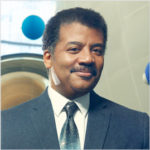
I'm your host, Neil deGrasse Tyson, your personal astrophysicist.
I'm also the director of the Hayden Planetarium at the American Museum of Natural History.
Joining me today as my co-host is comedian, Lynn Coplitz.
So, Lynn, we've been on hiatus for a while.
What have you been up to?
Oh, my gosh, I've been on the road a lot.
Doing?
Doing comedy.
And I just got back, and I've been gone from New York pretty much for like three months.
Three months?
And I've talked about feeling like an alien.
Everything changes.
The city doesn't stay the same.
So, I forgot who you were.
Or didn't care who you once were.
Yeah, my tan salon is gone.
It's been there eight years.
And I went, I thank God, I didn't buy points.
No wonder you look so pale today.
Thank you, Neil.
So, you always got something going on TV.
What's that?
I got my new show with Joan Rivers called Joan Knows Best.
She's your buddy.
She is my buddy.
Hopefully, she's going to do our show again, too.
So, it's not Lynn Knows Best.
It's Joan Knows Best.
No, it's Joan Show.
Joan and Melissa Show.
And who are you to her in the show?
It's a reality show and it's on WeTV and it will be on January 25th at premieres.
And I'm just good friends to Joan and Melissa.
Do you play yourself if it's a reality show?
I do.
It's really fun.
I'm now getting paid on this show and on that show to just be me.
Just come and be a jackass.
Other people who are taking time to work on science and bettering themselves, we really don't have to.
You're proof that that's unnecessary.
I am proof that that's unnecessary.
Me and the Palins.
The universe is always flinching, it seems.
Did you catch the new cycle this past week?
I just love the universe is flinching like an abused housewife.
Well, it's every week because we have active people doing active things in the universe.
And if it's not a black hole, it's life on another planet or maybe.
And so there was this this highly hyped NASA announcement last week that something was going to be told at an upcoming press conference about life in the universe.
Were you aware of that new cycle?
Isn't that the Mono Lake thing?
I have you on my Twitter.
I know.
You follow my tweets.
And I follow your tweets and I follow some of the people you follow.
Well, okay.
So you plug in.
I can't do my own thing, so I go to the people I like and I follow their people.
My people and your people will get together.
Okay, so you already briefed on the story.
It's a Mono Lake thing, right?
In that lake in California, they found evidence of microbes that thrive on arsenic, which is really cool.
And it's cool because arsenic would normally kill us, but apparently there are bacteria doing the backstroke on it.
And we have, because I'm connected this way, I have Dr.
Mary Wojtek on the line with the name, sounds like it belongs in Star Trek.
Can I ask you a question before we talk to Dr.
Mary?
So, now, you know me, I'm allowed to ask these questions.
Please don't tweet and tell us, Lynn sounds stupid, because that's why I'm here.
We're not here to sound stupid.
Not sound stupid, but I'm not an astrophysicist.
So, my question is, so these are biologists that scoop the stuff up out of the lake, right?
So, how many bags of crap did this lady have to dig up?
Like, wouldn't this be, like, I mean, I'm just guessing, but isn't this, like, the major, isn't this the thing you scoop in crap up out of the lake for, hoping to find?
Well, I would have to ask Mary Wojtek, because she's the program scientist for the astrobiology program at NASA headquarters in Washington.
And she, in fact, was at the press conference moderating the scientific results.
And I think we have her on the line, do we?
So Mary Wojtek, are you there?
Yes, I am.
Hi, Neil.
Welcome to StarTalk.
And that, and your last name sounds completely made up, like you saw it in a Star Trek episode, Mary Wojtek.
Like, where did that come from?
Well, some people may remember this classic Star Trek episode where the crew confronted an organism called the Horta that was made out of silica instead of life on Earth, which is made out of carbon, and we believe that our scientists found a bug in the mud in Mono Lake that instead of being made out of phosphorus is using arsenic, which you mentioned is poisonous to most life.
Okay, so that's not where you got your name, that's where you got the evil bug that eats arsenic.
But Dr.
Mary, wouldn't that be like the lotto for that scientist who found that?
The jackpot.
The jackpot, yeah, the winning lotto ticket, I'm guessing you have to scoop up a lot of crap out of the lake before you find something good.
How long were they looking?
I'm sorry, I couldn't hear you there.
So how long were they looking for this microbe in Mona Lake in California?
Is this an easy thing to have come upon or is this the result of many, many years of work?
Well, Ron Ormlin, one of the investigators, has been up at Mona Lake looking at lots of different unusual organisms because it's got very high levels of arsenic, it has a very high pH, so it's almost like living in a Clorox, so it's very extreme, it's really inhospitable, you'd never want to swim in it, and he's been studying the life that lives there and a natural continuation of the work they've been doing where they found organisms that can tolerate arsenic, they decided to see if they could find ones that actually need it or can use it in this fundamentally very different and exciting way.
So, in other words, for the life to thrive in this arsenic-heavy lake, it had to figure out how to use it or thrive on it, otherwise it would have been long gone.
Yeah, well, you either have to figure out how to avoid it or use it and thrive, and so there's examples of both of that going on in the lake.
And so, this adds another element to that fundamental list of the elements of life, right?
Absolutely, and for us at NASA, this is really exciting news, because we are interested in understanding life here on Earth, because that's what we know and what we have examples of, and understanding where it can live, the extremes in temperature, the extremes in chemical concentrations of things and what they need in order to help us look for life elsewhere.
So basically, it works both ways, where you can explore the extremes of life on Earth, it allows us to look for alien life in new places, and we look out to the universe to see what insight it gives us to life here on Earth.
Absolutely, and in this case, we're finding, this has opened up our concepts of where we might expect to find it.
So the more we learn about things here, as you said, the more possibilities there are for life to be harbored elsewhere.
Well, thank you, Mary.
You sound like you're really plugged in to the astrobiology frontier.
We'd like to know that you're available to us to call back when any time another story breaks.
Anytime, and stay tuned.
We have some really exciting stuff going on here.
Okay.
All right, Mary.
Thanks for calling in.
Thank you.
Thank you very much.
I wanted to know what it was.
I wanted a little tester.
We got a show to do here.
That's just the beginning, opening.
She's got some sort of alien foot in her closet.
She's not telling me.
I want to know what it is.
Dr.
Mary's holding out on us.
And you think she'd tell the world if you asked, even though she's sworn to secrecy.
Neil, was that organism...
I didn't get to ask Dr.
Mary.
Was it just...
has it been there the whole time?
We have to assume.
Yeah, we have to assume.
And so it didn't just show up for their lab experiment.
Well, I don't know.
I was wondering if maybe some waste or something from us created it.
Oh, contaminated by other sources.
I made the genius thing, Tinnentie.
Well, it's time to get to the beginning of our interview with...
It's exciting...
.
with Jon Stewart.
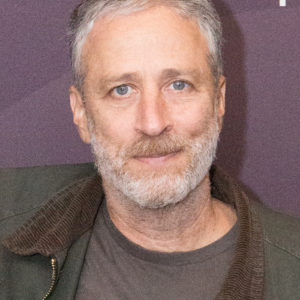
Jon Stewart is our inaugural victim for StarTalk.
His book's great.
It's great.
It's his book that's out now, Earth, A Visitor's Guide to the Human Race.
And in this book, it's imagined as just something that we leave behind after we're extinct and aliens come and find it.
And that's how they learn all about us.
The idea that we've been stalking the universe for all this time.
So let's begin that interview.
And in fact, it was...
I taped it live in his office a few weeks ago.
And we're slicing it into our program and we can chat about it as we interrupt it at will to comment on where it's going and where it's coming.
Let's start it off.
Love your book.
Man, what a concept that is.
I don't know why nobody did it 30, 40 years ago.
Because nobody wanted to waste that much time.
But we did here at the show.
Everything is in that book.
It is hilarious.
It is fun.
And the full title is Earth, the book.
And the premise there is civilization is gone.
All that's left is here is the book.
And they pick up the book and this is how they learn about us.
This is our record of the entirety of man's existence here on this Earth.
This is like the Voyager record that went out into space, that captured culture.
The only difference is it is obviously abbreviated somehow.
234 pages.
What is your favorite part of that book?
I have my favorite parts and I will share them with you in a minute.
The favorite parts for me are the smallest jokes that we came up with in periods of delirium like, it was never a good idea to judge a book by its cover and it is a picture of Wuthering Heights and on it was a picture of a dog going to the bathroom.
You know, that kind of thing.
Some of the most ridiculous little silly jokes are some of my favorites.
And what I like about it is its breadth of subjects that it covers.
For example, in the section on psychology, there is no real psychology listed there.
Well, I was a psychology major so I know just how little there is to list.
There is really nothing.
So you have all this like pseudo-scientific stuff listed there.
That's right.
You are just telling it like it is.
Telling it like a TI is.
So it is taking names and…
Pluto is in there.
Pluto is in there.
I will not back down from Pluto.
You still haven't gotten over it.
Can I tell you something though?
We did…
You couldn't keep it out of your book.
We did call it a trans-Neptunian option.
That's good.
We did not call it a planet.
Get the science right.
That's good.
That's right.
We don't want to mess around.
One of my favorite parts is where you talk about how we all thought everything revolved around us and the evolution of that thought and what remained after it.
Okay, so we learn we're not in the center of everything, but there's still sort of a holdout, right?
It's like an arrogance.
An arrogance.
But we nonetheless named the planets after gods.
What we learned is that we were in control of our destiny, that there was no real spirituality that was all a series of chemical interactions, but we named the planets after gods just to be sure.
You just didn't know.
Okay, that's what we think.
But at the end of the day, let's say we're wrong.
Hey, look, Saturn, huh?
Saturn.
You're Saturn.
Saturn.
So you don't want to piss them off too bad.
That's exactly right.
So we work it all through.
And there are people who think there's actually a face on Mars.
Who are these people?
Do they watch your show?
I would assume.
I would hope so.
Well, you know, the man on the moon, there was always a big thing that there was a face on the moon.
There was craters from this distance.
But they didn't think it was actually a man on the moon.
They just said it looked like it.
The people are thinking there's actual civilizations on Mars.
Or that, you know, Mount Rushmore was naturally carved.
You know, the Mount Rushmore being naturally carved is probably because people are confusing Mount Rushmore with something else.
So they're hearing Mount Rushmore.
It's a lack of knowledge of what Mount Rushmore is more than you would show them a mountain with president's heads on it.
And then they would go, that's got to be wind, right?
That is so hopeful for this country that you say that.
No, no, no, I'm sure that's what it is.
That is so hopeful.
Whenever they ask those questions, it's always like, is Mount Rushmore a natural?
And people always think like, oh, right, Mount Rushmore.
They're just thinking of a different thing.
I wish I had that much hope.
Oh, I absolutely have that much hope.
Although my kids still believe the moon is following them.
And how old are they?
Twenty-eight, twenty-six.
Six and four.
But they believe that the moon is following them.
Yeah.
Well, that daddy is powerless to stop it.
Why don't they credit daddy with the power for having done that in the first place?
Here's what they credited daddy with, the power to tint our windows so that we could roll them up and not see the moon anymore.
You missed out on a power opportunity over your kids, saying, it is by the power that I have over the cosmos that I make the moon follow us and nobody else.
Listen, I put the milk on the highest rack in the refrigerator, believe me, I have the power.
There's nothing that happens in that house.
They can't open a juice box.
I don't need to lord it over them anymore.
That's the first segment of our interview on StarTalk Radio with Jon Stewart.
He's great.
Your host, Neil deGrasse Tyson.
Lynn, what do you think of that?
I think it's great, and I can't wait to hear more, but, Neil, I have to tell you the first thing that made me laugh out loud was when you guys were talking about planets, and you said, oh, I see Pluto is in there, like he invited your ex-girlfriend to a dinner party.
I see you noted Pluto.
You know I think she's a whore, right?
Pluto is a victim of all of our ignorance.
That's the problem there.
You know I told you she's not marriage material.
Why is she there?
You've got Jon Stewart's book in front of you, fully doggy ear.
We'll have to get back to some of the points that look like you're ready to...
I love it.
We've got to take a quick break, but more of my interview with Jon Stewart when StarTalk returns.
Welcome back to the season premiere of StarTalk.
I'm Neil deGrasse Tyson with Lynn Coplitz.
We've been, at the break, I was looking through Earth, the book, A Visitor's Guide to Human Race.
This is his book, and we chatted a bit about things like the Voyager record that's giving a signal to the aliens who might collect this intrepid spacecraft that's been going for 35 years.
Okay, Neil, I have a million questions.
Let's start with, I'm looking at this page now in the book that's got all of this stuff, how we've been trying to get a hold, how we've been stalking any kind of alien life that could be out there.
This is the section on biology and exotic biology.
We're like drunken dialing all these people.
Just wondering if you're out there, aliens.
We're trying to send signals in case they're out there.
What, you got a problem with that?
Well, yeah, I do, because in 1973, it says we sent the Pioneer plaque.
Yes, this is a plaque that tells aliens who collect the plaque where we came from.
Yeah, a plaque that anyone listening, please go online, look for this plaque.
Pioneer plaque, and I want you to look at the picture.
It looks like something my nieces could have drawn.
They're 11 and eight.
And they're white people, first of all.
This is what we want to, and what I do like is that the girl is kind of chunky.
Like, she's my size.
She's like 10.
Oh, she's got, she's got extra hips there.
It's an earlier standard for a female body illustrated there, because the plaque, if you've never seen it, contains sort of geometric information about where we came from, information about molecules and...
I see a star and this woman who obviously has a Brazilian in 1973.
And two illustrations, line drawings of a man and a woman.
And you're right, the woman is not, doesn't have the body of a supermodel.
She's well-groomed for the 70s.
But she's got some extra 70s kind of body.
That's right, that's right.
Well, do you think that's because we're trying to tell the aliens we're fertile?
Come breed with us.
Come breed.
My favorite response to that was, I forgot where I saw it, it was a comic.
Two aliens collect this plaque, they're dressed in tuxedos, and they're looking at the pictures of the humans, and it said, they're just like us, except they don't wear any clothes.
Wait, but what's that bra thing at the top of it?
It's not a bra, it's the hydrogen atom.
But how would they know that?
Well, we're assuming they're intelligent, or at least as intelligent as we are.
Or at least as knowledgeable as our scientists are.
Interesting, so then they made a record.
Yeah, so then they put some of that on the record, and that went on to the Voyager spacecraft, which followed the Pioneer spacecraft as the only spacecraft to ever have enough energy to leave the solar system.
That's why we're trying to talk to the aliens on it.
Honestly, Neil, no offense, I think this is crap.
I don't think it's real.
I think that's crazy.
Those pictures are just, I think they're made to look like they're something.
I'm just impressed there's a whole section in Jon Stewart's book about ways that we try to communicate with aliens and what effect that might have had.
Well, the radio transmissions, is that supposed to be like, that's like contact, like listen to?
Yeah, yeah, radio waves.
Cause they travel, they can cut through the galaxy without leaving a mark.
I mean, they're...
You listen to your laundry washer.
Isn't that what happened in Contact?
She's listening to the wash.
She's got the headphones on, trying to hear the aliens talk to her.
I mean, and she did.
They finally told her about prime numbers in the movie.
Yeah, we have more to talk about with that because I like the idea too that that was in that situation, it was like science kind of led you to a religious.
Oh, at the end, yeah.
Oh, actually, well, religion, no topic is left untouched in Jon Stewart's book, including religion.
And I don't know that he's ever been charitable to religious thinking on the show.
Yeah, I think he's definitely a comic who has a point of view, and I like it.
So in our next segment, I talk to him about the religious content of the book and see where his points of view take us.
Interesting.
So let's go right on in and find out what he says.
So in this book, it touches all parts of culture and people and time.
What do you say about religion in there, do you remember?
We just mention it as being a 100% purely positive thing and nothing ever going wrong, I think.
Not, I'll tell you what it says.
I think it was, religion provided great comfort to a world torn apart by religion.
I believe that was the ending.
Period, that's what you got.
Now here's the thing, here's a good question.
Where are we going with science?
What if science is just leading us to a religious epiphany?
Do you ever wonder about that?
Well, some people have speculated about it, like we find the God particle or the theory of everything or the Big Bang and science has its sort of godlike figures.
In your book, you list science gods, Newton and Einstein, you have Edison in there.
Marie Curie.
Yeah, yeah, so science has its idols and it also has its martyrs.
Has its idols, its martyrs and its faith to some extent.
Isn't a hypothesis to some extent faith?
Yeah, the difference is when you find a hypothesis is wrong, you stop believing in it, so that's the difference.
The difference is you will, but no one knows yet if religion is wrong.
No one has yet to figure out.
They may figure out that the books that man created for it are wrong, but they have yet to prove religion itself is wrong.
Because it's hard to prove a negative.
Yeah, yeah, that's it.
Well, it's a pop-up, it's like a pop-up.
I'm just saying.
I'm just saying.
Okay.
Do you think scientists have just pure faith in methodology?
Well, it's worked before, so we keep at it.
I mean, you'd need the faith if you tried it before and it never worked, but you keep trying it.
That would require faith.
But if it's worked before, do you want to call that faith?
I call it, hey, it worked before.
You're talking about it, that's experience.
Yeah.
Scientific method.
That's experience.
Can I tell you something?
I love the scientific method.
It's awesome.
And people over-define it.
People over-define the scientific, you know what it is?
It's do whatever it takes to not fool yourself.
Period.
That's the scientific method.
I always thought it was to create something recreatable.
Yeah, but to know that you've done it successfully, you have to make sure your bias didn't affect your measurements.
So you write it down instead of just trying to remember because your brains don't work.
Are there things in theoretical physics, are there theoretical physicists that you are uncomfortable with their relying on scientific method and do they ever in any way veer into the lane of faith?
Dark matter, that kind of thing?
No, we measure.
Not dark matter, what was it called?
There's dark energy, there's dark matter, there's string theory.
Yeah, well there's some branches of science that are not really susceptible to experiment and so these folks are out there on the dangling, bleeding edge of inquiry.
But it's a pencil, a paper, maybe a laptop.
They're not expensive to keep in business.
So I don't lose sleep over that.
What about the climate stuff?
The climate stuff, man, people, here's the problem.
It's become so political.
Here's the problem.
People think that the criterion for believing something is whether or not it feels good, that that's the measure of truth, if it made you feel good and there's something wrong about that.
That's a recipe for disaster.
It's the ostrich with the head in the sand.
I don't want to know about it because it'd make me feel bad.
I will only believe and listen to the stuff that makes me feel good.
And if I have this investment in the oil industry, I'll believe what makes me feel good about that.
Let me go the other way, though.
Is it also, though, people have become calloused to the dire warnings that are no longer valid, is it ostrich head in the sand or boy who cried wolf?
Because there is also.
Where the sky is falling, yeah, we got all of them, yeah.
We got all of them.
And trying to discern between those can be very difficult.
So I guess when the science has a fuzzy edge where we can say this might happen in the next 50 years, people don't know how to deal with that, that uncertainty.
But I say the total rise of.
It's difficult now because there is no organization that has earned a certain credibility anymore.
There is no Walter Cronkite of science.
Yeah, it's someone where everyone turns to and said, this is the man who tells it like it is and we'll all believe it even if it's uncomfortable.
And who will also tell us the things that are uncomfortable that are not true.
So we need a Walter Cronkite of science.
Done.
And I have a nomination.
Wanna hear my nomination?
Who's your nomination?
No heavy sigh, what kind of heavy sigh is that?
And that's the way it will be.
All right, that's not it.
You are the Walter Cronkite of science.
That's the way it once was.
I mean, if I remember correctly from our last season, you're actually a bit spiritual yourself, right?
So what do you think it is?
I'm actually kind of religious.
Religious, yeah.
I mean, I'm like a foul mouth.
I'm like a Mary Magdalene kind of.
But here's my, I'd wash Jesus' feet with my hair.
I'm that person.
But here's my question, Neil.
When you were talking about, we got, when you were talking about religion, and you said that you think people want to believe only what makes them feel good.
But, you know, the Bible, if you read it, it doesn't make you feel good.
There's a lot of negative stuff in there, and you feel guilty a lot of the time.
And you feel bad.
If you're Catholic, yeah, you get the guilt.
No, I think Jewish people get it, and Christians get it.
We all get it, and I get it.
But I mean, if anything you read in there, lots of it, you can't live up to Jesus.
I just see, it wouldn't have to be religious.
It's just ideas that make people feel good that I have found that they're more likely to want to believe, whether or not it's religious.
It's lazy.
I think it's laziness.
I think people just don't want to do anything.
It's like, well, if I don't see it, I'm not going to worry about it.
You're listening to StarTalk Radio.
I'm your host, astrophysicist, Neil deGrasse Tyson.
I'm also the director of the Hayden Planetarium in New York City here with Lynn Coplitz, professional comedian, who deigned to spend an hour with us on this Sunday.
Don't you have a new show, too, coming out?
The Nova?
The Nova?
Yes, yes, well, the spin-off of Nova, PBS Nova, Nova Science Now.
Yes, thanks for mentioning that.
By the way, you can find us on startalkradio.net.
That's where you get back episodes, as well as the one-day delayed podcast of anything you might hear live on the radio.
And what?
Brought to you by science.
The podcast.
It's all brought to you by science.
Oh, Neil.
I think we're going to have time for another Jon Stewart clip.
I hung out in his office for a long time trying to milk him for everything he's got.
He couldn't shake you.
It was a little odd that he was kissing my butt at the end there saying, oh, you're the next one.
Why is he doing that?
He doesn't have to do that.
You're getting kind of famous.
Oh, well, he doesn't have to do that.
I don't know about that.
He felt bad about what he did with Pluto.
So we've got our second break coming up.
And like I said, you're listening to StarTalk Radio.
Welcome back to StarTalk.
I have with me my co-host, Lynn Coplitz.
And in this program, I've been interviewing Jon Stewart.
I interviewed him in his office, like between takes on his show.
It was very kind to give us the time that he had.
And I asked him about his book.
It's an extraordinary collection of comedic reflections on human culture, Earth.
It's so great.
It's the best Hanukkah gift.
A visitor's guide to the human race.
And in there, if you never thought how to look at yourself from a different perspective, this book will do it.
Because it's sort of what's leftover of our culture.
It's imagined to be the book that aliens would find.
And it's how they would think about the extinct species that once ruled the world.
It's such a clever way of discussing pop culture and mixing it with science and history.
It's just great.
And humor, and humor.
Oh, it's hilarious.
And we just came out of a segment with Jon, where he talked about what role religion has played in the world.
And he's not always been charitable.
In that particular case, he was okay.
He was all right there.
I thought he was very diplomatic.
Diplomatic.
Very careful, more careful than he usually is.
One of my great worries is people's urge to believe things that just make them feel good, rather than what might be the truth that would make them feel bad.
That's my worry when I'm dating someone.
You just want to feel good.
Look at me!
Because sometimes you gotta take the bad with the good.
There's not, they can't always feel good there.
You gotta look at the real stuff too.
You got to, you got to.
And, but although, I mean, consider that in our lives today, we're doing things that are not necessarily good for our long-term survival.
There's all this talk about, you've heard global warming and polluting the atmosphere and the environment.
I was just home with my mother and I said, Mom, do you recycle?
People do.
I said, but you don't?
No, I find it annoying.
Oh, really?
So she's not a people.
Really?
You find it annoying?
So you're helpless to convince her that this is good to do.
I think she's coming around because I'm starting to just kind of push them.
Because I pointed out that it was the very least she could do.
Well, what happens if you don't, then what happens is our survival is at peril, given the resources that Earth has so graciously given of itself to us over all these years.
There's a point where that could run out.
We could poison ourselves.
We could kill ourselves.
And in fact, the entire appendix, or a big part of the appendix of Jon Stewart's book explores ways that we might have gone extinct.
And I wanted to find out what inventive ways he came up, he and his staff of writers came up with to explore just that.
Oh, you guys talk about that now?
Just that possibility, let's check it out.
Tell me about the appendix of your book.
Does it actually say how humans die out?
You know what, you hate to be a spoiler.
Now, do we know?
Look, the aliens are coming to Earth with no people, so something happened.
You want them to get to the end of the book.
They don't know why we're gone.
So you want to give them eight different possible ways.
What's the top scenario?
A shark-B hybrid, genetic shark-B, killer shark.
What is that?
What is that?
It's a flying killer shark.
These are the geneticists gone wild.
Geneticists gone wild.
In the meetings, they said, hey, what if we combine a killer-B with a killer shark?
Nobody raised their hand and said, you know, I'm not so sure that's a great idea.
So they went ahead and did it.
No one said, let's not do that.
And wouldn't you know it?
Imagine killer sharks that live in giant hives and just come out.
And they can fly and swim.
That's right.
To get you no matter what you're doing.
There's no way of getting around it.
Okay, is that the number one likelihood?
I don't like to rank them, but yeah.
Okay, well, that's scary.
I think that's pretty likely.
That's a scary thing.
I think that's pretty likely.
Sharks that hang out in hives.
That's right.
Well, they're not sharks necessarily.
They're shark bees.
Shark bees, of course.
Of course.
Sharks be hybrid.
And they've been bred.
Yeah, bred to render us extinct.
That's right.
Yes.
Okay.
So, what else is on the list?
Obviously, technology overtaking us.
Except it never has in the past.
Well, no.
It's twice the future.
It's not a history book.
It's a future book.
Stupid comment on my part.
Exactly.
Now, I'm not suggesting that in the future, you won't be able to send yourself back to the past to stop the robots.
To kill the grandmother of the robot so that it doesn't.
I'll come back naked.
That's right.
Thank God this is radio.
So there's that.
Obviously, Super Bug.
Like a virus kind of bug.
Like an Andromeda strain.
Yeah, okay.
That's cool.
It turns us all to dust.
For those who are not old enough, in the Andromeda strain, the virus rendered blood into powder.
Yeah.
And instantaneously, you'd walk out in the street, and cars would still be there.
Everything.
People were just frozen.
In situ death.
What a great movie that was.
Oh, Death by Black Hole.
Hadron Collider.
The guys are like, oh, nothing's going to go wrong here.
Bonk.
Wrong.
Oh, we're not going to create a molecule that eats all other molecules.
Wrong.
If the world ends in that scenario, the last words uttered on Earth by man will be, hey, it worked.
Jon Stewart, thank you for being our inaugural guest.
Stop.
I enjoyed it very much.
StarTalk Radio.
That was Jon Stewart.
You got to love the guy.
The appendix is my favorite part of this book.
And what's interesting is how glibly he goes in and out of real science and pseudoscience and pokes fun at pseudoscientific concepts.
This is not a good book for an idiot because it really does speak its truth and some of it is really, I mean, you're reading it and you're like, oh, I was filling out the form, the alien questionnaires, we have idiots, and then I realized, oh, this is a complete joke.
Well, what concerns me as a scientist and as an educator, we find ourselves spending a lot of time undoing people's misconceptions about the world, among them the Mayan calendar in 2012.
You know, this has been going on.
Adults, kids, even some educated people are totally wrapped up in the belief that somehow the world is going to come to an end.
People felt like that about the Millennium.
I know, every ten years.
They always feel like that.
They seem like they're only happy when they're sad about the end of the world.
I'll tell you what it's going to be.
What?
Don't laugh at me.
Zombies.
Zombies.
Not zombies per se, but my point is I've been watching that show Walking Dead, and I think it's going to be some sort of incurable disease.
We're paying so much attention to all the other stuff.
I think some weird thing is going to happen.
So people will be walking down the street infected.
No, I don't think it's going to be zombies.
But I think that show is a metaphor for what happens when the thing you didn't plan for happens.
Who plans for zombies?
Well, here's the thing.
That'd be a different kind of end of the world than what has preoccupied people for so long, where people look up to the sky and think the sky is going to kill us.
Now, it's odd because I wrote a book called Death by Black Hole, so I'm no stranger to the ways the universe wants to kill us.
I'm just saying throughout history.
Death by Black Hole.
But in the biotapestry...
Or the Linkopolis story.
Do you know the biotapestry that retells the Norman conquest?
Yeah, it's right next to my bed.
There's a comet in the sky, and it actually turns out to be Halley's comet, by the way.
Oh, really?
I was going to say they didn't know it at the time.
Well, of course they didn't, because Halley came much later.
It turns out to be the same comet.
But what I found interesting is that people always say that a comet portends disaster.
Yet, whatever disaster happens, whatever leader steps down from power, someone else ascends to power.
So you could just as easily say a comet is the sign that someone ascends to greatness.
I'm just saying.
Now, there are real-life disaster scenarios.
You've heard about Apophis.
That's my favorite asteroid out there.
I love him.
He's great.
He's the best backstreet boy.
No, don't say that.
You know I don't know who Apophis is.
Apophis is the asteroid that's the size of the Rose Bowl that's headed our way.
That's the, what do you call it, the movie.
What's the one?
Deep Impact.
Well, yeah, so this one is littler than the one in Deep Impact.
The size of the Rose Bowl, this one would only take out the west coast of the United States.
It wouldn't necessarily render us all extinct.
And we have proof that this is happening.
No, we have proof that it's going to come, it's going to give Earth a buzz cut on April 13th, 2029.
You see, what I think is funny is we have, like, how can people not believe things that we can prove?
That's a, thank you for that question because I'm puzzled by that all the time.
People do it all the time.
Like, no, that didn't happen.
But there's proof.
Here's a bone.
I'm shaking the bone at you.
We know these people were here.
No, they weren't here.
Yes, they were.
So what you have is this asteroid that will come so close to Earth.
It will come closer than our orbiting communication satellites.
It will be the biggest, closest thing we've ever seen in recorded history.
And it's not going to hit us on April 13, 2029, which, by the way, is a Friday, in case you were wondering.
Yeah, I was sweating it.
But, you know, I was actually wondering how we get someone in outer space to get on top of the asteroid and put a drill bit in it or whatever like we do.
I think we would easily get volunteers to do that.
If someone had the option of saving the world, I think they would take it up.
There are people who dangle off airplanes and bungee jump and rock climb for fun.
And if you can say, here, put your life at risk and you might be saving the world, you know the line will be around the block, you know.
I'd have to think about it.
I'm kidding.
So you have ideas.
I have ideas of how I think the world is going to end.
Okay.
What do you think?
I got a few ideas.
So I think what will happen is we, right between the time when we have an active space program where we could have defended ourselves against an asteroid, and before other countries have built up their space program to do it, that's when an asteroid is going to come.
And the world will go extinct just like the dinosaurs.
I find it, but see, I don't know about that.
I'm telling you, listen to my zombie thing for a minute.
You're still on the zombie thing.
No, because the thing I like, it's just a metaphor for other things.
The thing I like about it is if you watch that show, it also shows that they have no technology anymore.
They can't call, they can't go on computers, so they have to learn other ways to communicate and deal with things.
It's just odd that they always get the upper edge on regular people if they have no technology at all.
And zombies don't know how to run, apparently.
Not the zombies, the regular people, Neil.
Gee whiz, that are still alive.
We've got to take a quick break, but more StarTalk when we return.
Welcome back to StarTalk.
Lynn Coplitz, my co-host.
Lynn, do you have a day job or you only work at night?
Well, thanks, Neil.
No, I didn't mean it that way.
Are you just a hooker or do you do other stuff?
No, I don't have a day job.
I mean, I write and do, you know.
But you work at your night, you do nightclubs and stuff.
Yeah, I work all night.
I got off at three o'clock in the morning.
In the show, we interviewed Jon Stewart in three segments, and we have his latest book sitting right in front of us on this table, Earth, A Visitor's Guide to the Human Race.
And Lynn, your copy of the book is dog-eared completely.
I like it.
You've been hanging out in the appendix.
I have this job now where I have science stuff, and this is funny science.
It combines you and me, funny and science.
Is there stuff there you need some highlight?
Yeah, I have a question.
I wanna know, see, this is what people say to me.
Oh, is it fun co-hosting with Neil?
I'm like, yeah, are you kidding?
It's great to have an astrophysicist right by your side.
What about this?
What does this mean?
Well, thank you for that.
You're welcome.
I wanna go through, my own private genius, I wanna go through the things that Jon, some jokingly and some seriously, that he said could be the end of the world.
And just quickly, I want you to tell me on a scale of one to 10 what the chances are.
Gotcha.
Ecological catastrophe.
Rendering us extinct on a scale of one to the likelihood where one is unlikely, 10 is likely?
One to 10.
Okay, I would say ecological disaster, five.
If we do go extinct, the chances of it being ecological disaster, I'd say five.
I'll put on a scale.
Nuclear holocaust.
Five.
Hmm, okay, robot rebellion.
I didn't know you'd be giving me a test, had I known.
I'm just writing them down.
They're things I want to know about, what I have to focus on.
Robot rebellion, zero.
Oh my god, some people peeled the Spockier back right now and cried.
Okay, a one.
I'll give them a one, not a zero.
Black hole.
Black hole, that would be, if you had a go, that's a fun way to go.
So, just-
I didn't ask you what you think is a fun way.
What's the chance of-
A half.
A half, that's not gonna happen.
And rapture.
I'll give it a nine.
Rapture.
That's from the Bible.
Isn't there a blondie song called Rapture?
No, it's, there's a big trumpet and then me and a bunch of other Christians leave.
And you stay here for a while.
I am much less convinced of this than devout Christians, so I gotta go low on that one.
I'll give that one a negative one.
Okay, go on.
Even below the shark bee mutation?
Below the shark bee mutation.
I know we got people in the labs mutating gene pools, so.
What about, how do you say that, pandemic?
Pandemic.
Pandemic.
Pandemic.
So instead of an epidemic, a pandemic.
A pandemic.
You know, pandemics.
That could happen, right?
Before we had airplanes moving people back and forth, transporting their germs with them, you had to go like Conestoga to take a, you know, someone who was germ-infested from one place to another, and even then they didn't get very far.
Don't go to whatever, they got malaria.
Right, and so nowadays you've, we can, any disease, a bug that shows up in one place, it could be all around the world as much faster than it otherwise would have been taken to get there.
So I put a pandemic very high.
I'd go seven, seven or eight.
Yeah.
Yeah, you think about that.
Back in Bible times, if they had planes, everyone would have leprosy.
Everybody, everybody, and the plague and everything.
Yeah, everything.
Okay, and then the last one was alien invasion.
Alien invasion, with aliens coming to suck our blood.
Why do they always make them out to be bad?
What if aliens just came and wanted, you know, needed a place to stay?
Do you remember when Hawking gave the warning that aliens would probably be evil and what, like wanna enslave us?
I think his concept of that is a feat, it's a mirror held up to the human race because it's how we know we'd behave.
And it's what we've done.
It's what we've not only.
We've been doing it.
Been there, been doing it.
That's right, any mismatch.
Whoever's got the bigger stick wins.
Bigger stick, well, or more, and speaking in a more modern sense, whoever who's got the best, the more advanced technology wins.
And so any alien who's crossing the galaxy to visit Earth.
So shouldn't Japanese people win?
So I'm just saying, aliens that come to Earth, if they came to Earth, across the galaxy, they got more technology than us.
So there's a fear factor that they'll all be evil.
And my, what I think will save us is that they'll take it, they'll study Earth really hard, and they'll look at the species that calls itself dominant, and they will conclude, based on all the evidence available to them, that there is no sign of intelligent life on Earth, and thereby leave us alone.
You think we're gonna be so stupid, they're gonna leave us alone?
Compared to them, if they're that advanced.
They're gonna leave these ants alone.
When was the last time you walked past a pile of worms and said, gee, I wonder what they're thinking.
I wanna make peace with them.
But I've also seen people stomp them, just because they were there.
Because they were in the way.
Yes.
So this is how I think about the ends of the world.
And I think some are more likely than others.
I think we're more likely to kill ourselves than to have something in the universe that we then blame it on.
Because I just see our behavior.
Just look at our past behavior.
It looks, it's, it's, it's, it, human behavior scares me.
Yeah, it scares me too.
And you're right.
Because if the aliens did come here and they didn't want to fight, we'd be like, oh, can we go back to your planet and take everything?
We're just going to do a little cherry pick and see if there's anything we want.
Now I saw a science fiction, actually it was a science fiction radio play one time where the aliens came to Earth because they wanted the hydrogen in our water.
And they had run out of hydrogen where they were and it was sucking our water supply.
And so they were not fighting us, they were taking our natural resources.
And that was a science fiction author.
It's interesting, but that science fiction author never had Astro 101 because they would have learned that 92% of the entire universe is made of hydrogen.
You don't have to come to Earth.
So everyone take-
You can get it somewhere else.
Pay attention in Astro 101 because that's what'll work for you there.
You can get it closer to your planet.
We've got to wrap up the show, but you've been listening to StarTalk.
And I'm Neil deGrasse Tyson, your personal astrophysicist.
And as always, I bid you to keep looking up.

 Become a Patron