


 Unlock with Patreon
About This Episode
What will life be like on other planets? On this episode, Neil deGrasse Tyson and comic co-host Chuck Nice explore the origins of life on alien planets and extremophiles right here on Earth with astrobiologist Kennda Lynch.
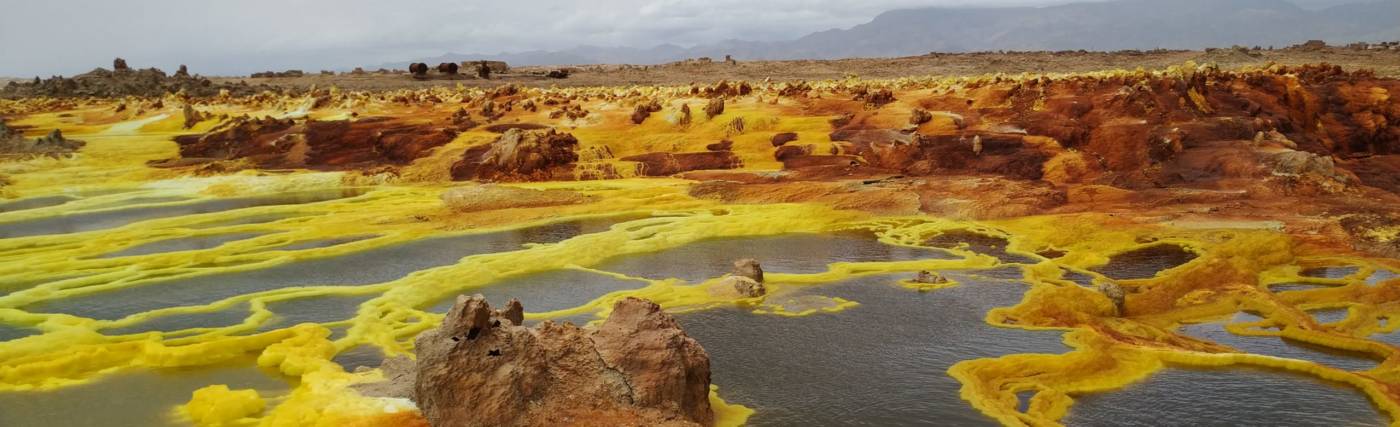
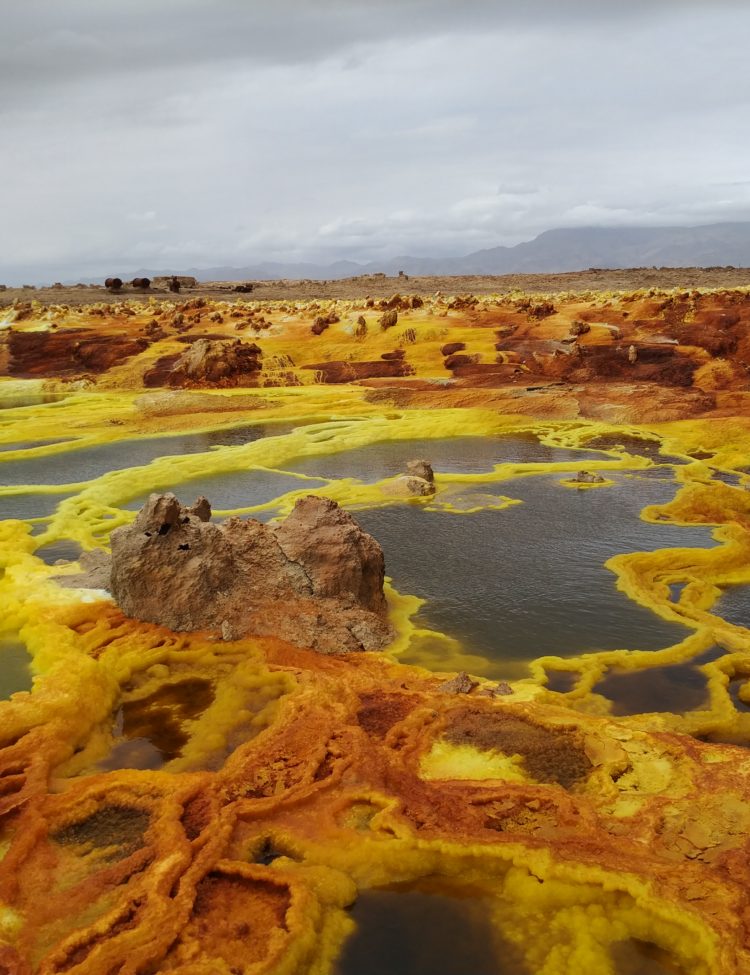
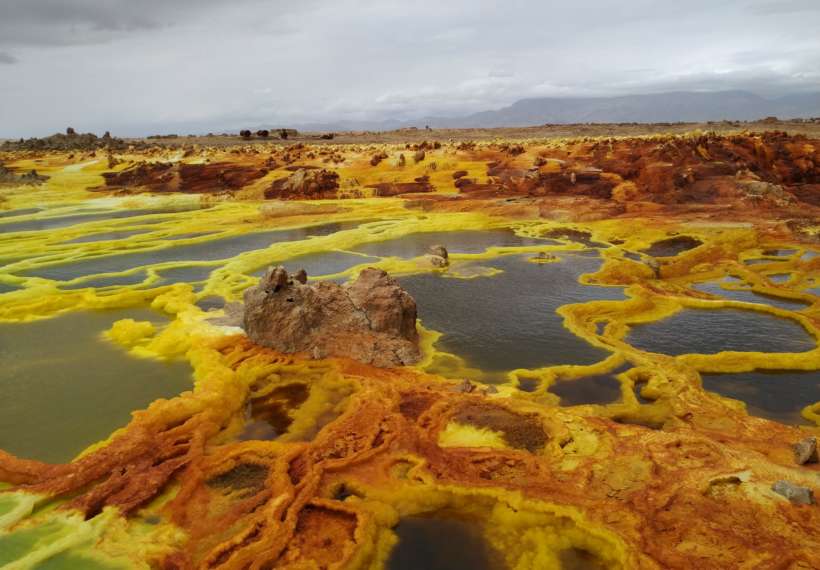
We dive into the salty acidic waters of the Dallol in the Danakil Depression and Kennda’s appearance in Netflix’s Alien Worlds. How is it that life can live in these extreme conditions? Find out about extremophiles. How does one even become an astrobiologist? Kennda walks us through all the hats she wears in her field and her experience growing stuff in space. Would Matt Damon really have been able to grow potatoes on Mars and life? What is regolith?
Next, we start our Cosmic Queries: What is Kennda’s favorite extremophile? Are we biased for our own conditions for life? Could there be life the size of planets or quantum lifeforms? How do we think about life as we don’t know it? Could life come from a liquid other than water? Is it possible that biology is the same across the universe? What are the requirements for life? Could we find life in our own solar system? We break down planetary protection rules and what science we would like to explore Enceladus.
What’s the difference between exobiology and astrobiology? What is the Allan Hills rock? We discuss meteorites and what we learn from them. Could microbes take over the whole planet? Find out why larger lifeforms will likely continue to prevail on Earth. Does all life need heat from the sun? Discover how astrobiologists are reimagining life on other planets. All that, plus, are there bugs that eat rocks somewhere?
Thanks to our Patrons Alex Chadwick, Eric Gross, Tamara Michael, Gerald Johnson, Jordan Shelley, Brendan Barbieri, David Bell, Costa Cad Creations, Tim Costella, and Adam Baker for supporting us this week.
NOTE: StarTalk+ Patrons can watch or listen to this entire episode commercial-free.
Transcript
DOWNLOAD SRTWelcome to StarTalk, your place in the universe where science and pop culture collide.
StarTalk begins right now.
This is StarTalk, Cosmic Queries edition.
And today’s subject is extremophiles and alien worlds.
One of my favorite subjects.
Chuck, what do you think about that topic?
It kind of sounds like aliens gone wild.
Call right now.
It’s aliens gone wild.
You’ve never seen aliens like this before.
Extremophiles.
I love me a little bit of this subject, but we have one of the world’s experts on it on StarTalk today.
Kenda Lynch.
Kenda, welcome to StarTalk.
Thanks for having me.
I’m so excited to be here.
Excellent, excellent.
You have a PhD in this stuff, but let me just alert people that your expertise is some kind of amalgam of whole field that were previously distinct from one another.
Because I think of geology and I think of biology, and I think of modern astrophysics, and you just took a big fat stapler and crammed them together, and you do all three of these all at once.
How is that even possible?
It’s called astrobiology.
No, but you got to know your geology too, right?
You do have to know your, I mean, so yeah, it’s kind of this interesting thing where you just got to learn to wear a lot of hats.
And you don’t necessarily, you should have, I mean, ultimately you have expertise in one thing a little bit more than the other, but you have to know enough about the others to kind of pull those pieces in, because ultimately they are really interconnected.
And you also have to know when you don’t know something and pulling the right people to work with you, but you have to be able to speak their language.
So having that understanding of geology, so I can talk to a hard rock geologist about, you know, how I think my bugs are eating their rock, you know, is important and being able to have the same, you know, same conversation about it is really important.
Let me tell you something.
This is why I love being on this show.
It’s the only time you will ever hear somebody say, and I have to talk to them about how their bugs are eating my rocks.
There’s a sentence, I did not see that sentence coming.
I did not either.
But, Kennda, you work on Earth.
So, what does it have anything to do with aliens on other worlds?
Well, I mean, the reality is, is when we’re trying to understand life in the universe right now, we only have one data point, and that’s Earth.
So, we have to kind of work on Earth and try to understand life here.
And really, when we think about it, it’s a big question.
How did life even come to be on Earth?
How did Earth come to be this big cradle where there’s lots of life just kind of crawling all over it and in it and everywhere?
Let me help you with that, Kennda.
Bugs started eating rocks.
Chuck is not going to shake that sentence for the next five years.
Yum, yum, yum, tasty rocks.
But when we really try to understand looking for life in the universe, a logical first question, and especially since we’ve tried and hadn’t been too successful in the past looking for life on other planets, was, well, how do we understand life here on Earth?
Do we understand the extent of where life can live on Earth?
Do we understand how life arose on Earth and what did early life look like on Earth and where can we go to look for it and what kind of environments do we live in?
And those are a lot of the questions.
Okay, I’m an old man here.
When I learned about this, it was we need the 72 degree tide pool for life to thrive on Earth.
Yeah, I know.
That’s how old I am.
One of the things that we have learned…
Life is not comfortable unless it’s room temperature.
And it needs just the right amount of sugars and it needs this special kind of media.
No, what we have learned is…
Every once in a while, every once in a while life is just like, who touched that thermostat?
Exactly.
Now which one of y’all touched that thermostat?
On its Barco lounger.
That would be us as a life.
We’re the ones that kind of need to…
We are the ones that glamp, right?
But microbial life, man, every time we think we got those bucks figured out, they do something crazy.
And we’re like, wait, what do you mean you can live on a nuclear reactor?
Wait, what do you mean you can live two kilometers down in a subsurface, in the subsurface, and we find you when we’re mining for gold?
What do you mean you can live in like super hot water that’s also salty and acidic?
What do you mean?
Okay, wait a minute.
Three sentences ago, you used the word glamp.
Could you please, for anyone over 50, could you just tell people what that word means, please?
It’s like camping, but glamour camping, like bringing your house with you camping, so you maybe have like, you’re not really camping.
You’re in the wild, but not really, because maybe you like tow a big old house trailer with you and that’s your camper.
If you can still watch HBO in your trailer, you’re not camping.
If you’ve got a hot tub, and you’ve got your Keurig, or your Tosimo, or your, what’s the other one?
You got that making your coffee, you’re not camping.
That’s why I camp at the Ritz Carlton.
There you go.
Okay, so you’re a staff scientist at the storied Lunar and Planetary Science Institute.
Is that right?
No, just Lunar and Planetary Institute.
Lunar and Planetary Institute, correct, yes.
Right, right.
And that’s based in Houston, Houston, Texas.
And we’re especially interested in you today because you’re featured in episode two of Netflix’s docuseries, what’s it called?
Alien Worlds.
So pick up the action for us.
Where do we find you?
You find me, as far as in the episode, right when we open up right in the beginning, you see this alien landscape that kind of looks, in my opinion, it looks like Mars.
But we’re actually in the Dalal hydrothermal system, which is in the Danakil Depression in Ethiopia.
And the Danakil Depression…
So hydrothermal, this would be heat emerging from Earth’s crust, manifesting on the surface somehow.
Yeah, hydrothermal meaning that it’s heat coming from the Earth’s subsurface.
And in this case, a hydrothermal system usually meets heat-generated waters, like geo-generated water manifesting up in the surface.
So there’s water flowing in the subsurface passing over usually like what we call a magma pocket.
There’s a big pocket of lava.
And there’s water flowing over it, getting superheated and then pushing up to the Earth’s surface and boiling out and spewing out all sorts of hot gases and everything like that, and that’s called a hydrothermal system.
So at those high temperatures, does it absorb a lot of minerals from the rocks that it passes through?
It absorbs a lot of minerals.
So there’s a lot of what we call anions and canons.
There’s a lot of dissolved constituents, chemical constituents.
And especially in the Dallol system, it also goes through a subsurface salt deposit.
So not only is it getting minerals from just like the ground, the subsurface rock, like over the magma pocket, but it’s also picking up all these minerals and dissolving all these salt minerals.
And so Dallol is amazing because it’s hydrothermal, really hot and super salty, hyper saline.
And it’s also acidic because there’s also all this iron and sulfur that make it super acidic.
And that’s where you want to find life.
It’s what we call a poly-extreme environment.
And it’s so amazing.
And it’s a crazy challenge for life.
And yet there’s multiple teams of us working there that are finding evidence for life in this environment.
Okay, so the Dead Sea, which is a highly saline body of water, could only have been named that by people who did not have access to a microscope.
Yeah, because there’s a lot of life in the Dead Sea.
Just no fishes, no vertebrate fishes.
I kind of get the feeling that the Dead Sea was named because somebody drank it.
And then everybody else was like, you see what happened?
Everybody?
You see what just happened?
Water, water all around and not a drop to drink.
So tell me about that.
I read something about there’s an algae pool nearby or in some other parts of your work.
What’s going on there?
In Dalal or in other sites that I work at.
I just have notes that I’m piecing together here.
Just pools of algae in a toxic liquid.
What’s going on there?
There are pools of algae.
We have these bubbling pools.
You literally have elemental sulfur precipitating out of these waters.
You can see…
Sulfur, so it stinks.
It stinks and it’s like…
You think the Dead Sea is deadly?
Oh no, Dalal is deadly.
You’ll see when we’re walking through there.
You literally see if you get too close on the ground, there’s so much hydrogen sulfide gas and carbon dioxide gas that if you get too close…
Wait, you got to tell Chuck.
Holding himself in.
You have no idea the amount of restraint I just exercised.
I have 15 fart jokes right now that are bubbling up in me.
That’s the wrong way to talk about a fart joke.
Fart jokes backed up in that whole time you’re talking about this, Kennda.
I was ready to explode with fart jokes.
This is all I’m saying.
Okay, so hydrogen sulfide.
H2SO4, is that correct?
H2S actually.
Oh, just H2S.
Oh, H2SO4 is sulfuric acid.
And that’s what’s in the water.
The sulfuric acid is actually…
There’s H2S, low molarity.
So, I mean, well, I don’t know.
I haven’t touched the water.
But in other acidic environments, usually the H2S is kind of low molarity.
Because I’ve also worked in the Rio Tinto acid river system.
And so the H2S is pretty low.
It’s not going to immediately burn your skin off.
You’ll get a nice peel, though, from it.
Okay, so that’s the place.
If you’re going to eat beans, no one will blame you for anything.
Because you got total…
The whole landscape to blame it on.
I would do very well there.
Yes.
I would do very well there.
Yeah, nobody’s going to lose.
Chuck, for one night only, an evening of fart jokes.
So, Kennda, where did you grow up?
I grew up…
I’m a midwestern kid.
I grew up in a town called Rockford, Illinois, which is just west of Chicago, about 90 miles.
I went into Chicago a lot for going to see shows.
Well, just to be clear, if you were just 90 miles west of New York City, you were across New Jersey into Pennsylvania.
So, to index your location to be 90 miles in any direction from Chicago, does that mean there’s no other big city you can tell us what you’re near?
No, not where I am, because I’m west.
If I was east, I could say Detroit’s not far away.
But I’m west, so no, it’s kind of open plains and cornfields and stuff.
North of me, though, is Green Bay.
If I had straight north, you’d be in Great Bay in a few hours.
We’ve all heard of Green Bay.
But I’m a Bears fan, so let’s not go there.
The Bears.
So, how do you land on Extremophiles as a career goal?
Well, this is interesting, because I had a different hat on when I started my career.
I actually started learning how to try to grow food and keep astronauts alive on other planets.
That’s cool, too.
Both of these are cool.
I started out as a systems engineer working on Space Station and trying to keep people alive, but in my education, I’m nuts, and I did a dual degree.
I literally have two bachelor’s degrees, one in engineering, one in biology.
But generally, if you’re nuts, you don’t have to tell that to other people because it’s just completely clear.
It is true.
By the way, all you have to do is say, I got two bachelor’s degrees at the same time, and people will look at you and go, you must be nuts.
And so part of, yeah, so, yeah, well, yeah.
And I like pain apparently, so, you know, there’s that.
Part of it, part of my training was to also learn about microbes because when growing, trying to grow plants and develop earth microcosms, you know, microcosms, you have to understand, you know, not only how humans live but how everything else that’s going to interact lives.
So I took classes in, you know, aquatic ecology.
I took classes in lake ecology.
I took classes in plant biology, you know, and I took classes in microbiology.
And so…
So at the end of the day, you realized you took two different majors’ worth of courses.
Is that what happened there?
So what are the two majors?
What were the two?
The first one was basically systems engineering.
So it was all of, I took a full course of engineering classes and then I took a full course of general biology classes.
And my engineering degree lets me specialize, so I was able to use a couple of my upper level biology classes for my specialization in engineering.
Wait, wait.
So your PhD, what was the title of your PhD thesis?
A Geobiological Investigation of the Hyper-Sailing Sediments of Pilot Valley, Utah, a Terrestrial Analog to Ancient Lake Basins on Mars.
Okay.
That’s why I had to read it.
I got to tell you right now, I’m sorry he asked.
I retract the question.
The funny thing is my PhD was still an engineering degree.
I unintentionally got three engineering degrees along the way.
I’m liking it.
Oh, the Masters along the way?
Yeah, aerospace engineering for my Masters.
Okay, so you were totally loaded.
What do you think about since you’re a microbiologist and you were talking about growing food as one of your tasks when you were working on space station?
What do you think about Matt Damon growing poop potatoes on Mars?
Poop potatoes on Mars.
We need the final word there.
He would have had some problems with his thyroid because of all the prochlorate in the regolith.
So, yeah.
Wow.
So basically…
Just to be clear, wait, wait.
I got to unpack that.
Wait a minute.
So, on Earth we have soil, which is rich in microbes that participate in the ecosystem.
On the Moon and on Mars, there is no soil.
Whatever the dust is there is like ground up rock basically.
And you call it regolith.
We call it regolith because it has not been processed by microbes that we know of.
Definitely not on the Moon and on Mars.
Not that we know of.
And we are not sure what the origin is of the organic matter that we have found so far on Mars.
So, we call it regolith because it is not soil like we know it on Earth that has been processed over years by microbes and other life elements.
And there is not a significant amount of organic matter making it kind of a…
So, he would have had a thyroid problem.
So, when they picked him up to save him, he basically would have had a goiter.
Probably or some other crazy issues.
His metabolic system would have been having some weird issues because perchlorate actually kind of competes with iodine to bind on your thyroid.
And we know that Mars has an abundance of perchlorate in the regolith.
And that’s actually something that I’m working on with other scientists.
It’s kind of funny in my astrobiology life.
I’m starting to kind of go back to my human space flight roots.
And bringing my astrobiology knowledge and my human space flight knowledge together as we’re getting ready to go back to the moon.
Well, in the next segment, we’re going to pick up questions from our fan base, our Patreon fan base.
Chuck has all the questions.
I haven’t seen them.
And we’re going to find out what the public has to ask you.
And we got good people out there who listen to this show.
They’re scientifically literate and they want to get more scientifically literate.
And that’s what this is all about when StarTalk returns.
Hey, I’m Roy Hill Percival, and I support StarTalk on Patreon.
Bringing the universe down to earth, this is StarTalk with Neil deGrasse Tyson.
We’re back, StarTalk Cosmic Queries.
We’re talking about extremophiles and alien worlds, with one of the world’s experts on that, and apparently a whole lot of other stuff too.
We’ve got Kennda Lynch, who is a scientist at the Lunar and Planetary Institute in Houston, and who specializes in bugs on Earth that do the backstroke in high temperature, high acid, high everything else that would kill us post-haste, and we’re loving it.
So, Kennda, also, where might we find you on social media?
I am on Twitter, and I am on Facebook.
I have an Instagram, but I need to use it more, but Marsgirl42 on Twitter, for sure.
Whoa, cool.
Hey, cool.
It’s a good one.
And you can also find me on the LPI website as well.
Okay, the Lunar and Planetary Institute.
Okay, very cool.
Cool.
So Chuck, this is a Cosmic Queries.
So we put out the call, and so what did you get?
Well, we got a bunch of people who actually, believe it or not, are super interested in this subject.
No, I believe it.
I believe it.
It’s like weirdly interesting.
It really is.
It really is.
Okay, let’s start off with our favorite.
This is Violetta and her mom.
It says, hello, Neil.
Ain’t that child grown up by now?
She’s in college by now, Violetta.
She used to write it when she was like 11 and 12.
Well, no, when she was 11 and 11 and a half.
And 12 and 12 and a half.
Okay, well, here we go.
This is, hi Neil, hi Chuck, hi Kennda.
Violetta here, the 13 and a half year old.
He’s a full up teenager.
So you said it, Neil, she did 11 and then 12, 12 and a half, now she’s 13 and a half.
And a half, all right.
She says, I’m writing in from Washington, DC.
And my question is, what is the most surprising, fascinating life form or trait about a life form here on earth that you have discovered or learned about in your career so far?
How did this impact the way you think about what life might look like elsewhere in the universe?
Thanks, guys, and I just want to say to Dr.
Lynch that the world needs more scientists that look like you.
By that, she means fabulous.
Looking fabulous, we have fabulous scientists.
She says, thank you so much for doing and being an inspiration.
So, oh my gosh, there’s so many, there’s so many crazy.
What’s the weirdest bug out there?
You probably have posters that rank the weirdest to, don’t tell me that you don’t know what your answer is.
I’ll give you my number one favorite because I just think it’s so crazy.
The thought of it is just so crazy.
My favorite bug is the one that can live on nuclear reactors.
It’s literally.
And does it have a name?
Yes, and I’m trying to remember the name.
It’s not the tardigrade.
It’s not the tardigrade?
It’s not the tardigrade because the tardigrade is not, that tardigrade is a micro, is a small organism, but it’s a multicellular organism.
It’s, oh my gosh, my brain is, but it’s…
Okay, but tell us more about it.
So it can live inside a nuclear reactor?
They found it living on nuclear reactors.
It can take these high doses of radiation and it’s got this cool shape.
It’s actually kind of like a cube almost shape.
Okay, in Japan, those things turn into Godzilla.
That’s how you got all those Japanese monsters.
You’re talking about a Marvel origin story right now.
So somebody, it’s…
Oh yeah, the name will come to me and I’ll spit it out at some point later.
I know I will.
All right, so you like the radiation resistance of that.
I just think it’s amazing that, again, it’s this whole thing about every time we think we got bugs figured out, like, okay, here’s their radiation limit.
Here’s their life water limit.
Here’s their cold limit.
Here’s their hot…
And then bugs are like, yeah, no.
And they blow us right away.
And they’re like, no, we figured out a way.
We got this.
All right, so is this a single-celled organism?
Yes, this is a single-celled organism, yes.
Got it, okay.
Whereas the tardigrade is a whole macroscopic object with legs and…
Right, it’s a multicellular organism, but it’s still small and it’s still something that has amazing, amazing resilience and can survive incredible, incredible environments.
So I’d be excited if we could find something like the tardigrade on another planet, because it definitely has developed strategies to live in crazy environments.
It kind of basically desiccates itself and like goes dormant and goes into like a, it’s like, you know, they call it a water bear, so it goes into hibernation, this really crazy like dehydrated hibernation and it can survive all sorts of insane environments, including being exposed to space.
Oh man, there’s a whole episode of Star Trek Discovery devoted to a space tardigrade that they find that helps them navigate the mycelium network.
And the mycelium, cosmic mycelium network is this thing that allows you to move faster than light because you entered this network that kind of transports you almost instantaneously to different locations throughout the universe.
Who would have thought tardigrades were also space faring?
Well, if they came from space initially, that’s the big thing there.
Cool.
Let’s get the next question.
Chuck, what else you got?
Alrighty, let’s do it.
Here we go.
Okay.
All right, that’s your name now, man.
Take it or leave it, okay.
He says, I often wonder, when we’re looking for life out there, aren’t we a bit biased by our own conditions for life itself?
Like water or breathable air.
Even when considering silicon life forms, this still assumes creatures living on planets.
Do you think it would be reasonable to consider, for example, other scales of life in size and space time?
Maybe some life forms would be the size of planets, even galaxy or quantum particles moving in time so fast that we, as slowpokes, can’t even see them.
Whoa.
So, Kendra, what part of your PhD thesis dealt with quantum life forms?
Not much of it, but I’ll tell you, I was a fan of Star Trek Next Generation, so I’m there with this person’s questions, you know?
But quantum life forms, so not part of that, but in astrobiology, we really do think about what we call as life as we don’t know it, or what some people like to call weird life.
And we try to think, when we’re looking for life, we try to do, we’re developing this way to try to think what we call agnostically about life, which means, so life as we don’t know it, or we’re life.
So yeah, there’s the problem.
We only have one data point, Earth and life, and life on Earth has these.
And even your extremophiles are part of that one data point.
Even though they’re extreme and they can live on radio, you know, live on reactors or breathe iron or, you know, eat other crazy, you know, metals and things like that.
Rocks.
Eat rocks, yeah.
And even though they can do these crazy things, they all still have the same amino acids as we do.
They have the same stereochemistry as we do.
And we all have the same fundamental, basically, code.
You have DNA and RNA.
We all have the same fundamentals.
We all have that same base code of life that kind of builds the structure of life.
So yeah, when we think about life on another planet, we have to think about life as we don’t know it.
What if they use a completely different stereochemistry?
What if they use a different set of amino acids to build their proteins?
What if they have a different liquid?
I was just getting asked this in a previous conversation about what about Titan where we have lakes of methane?
We’re sending a beautiful little helicopter that’s going to go and land and study the surface and those lakes and some of the organic sands there and try to understand the possibility for prebiotic chemistry on Titan.
And that’s the question is, is prebiotic chemistry possible in that kind of environment and what would it look like and what could life look like being arising in that kind of environment?
One of my favorite New Yorker comics was there’s a crashed flying saucer in the desert and these two aliens are just crawling along the sands and one says to the other, ammonia, ammonia.
I mean, that’s totally it, right?
I mean, it doesn’t, I mean, on earth it just happened that water was the thing that was going to be the basis for life’s chemistry but that doesn’t necessarily mean that that’s how it’s going to work on other planets and that’s something that we do have to think about.
You know, and then thinking about the larger scale of life, we do have scientists that are, you know, they look at things called technosignatures.
So we try to understand the scale of, you know, contacting other intelligent, you know, what we call intelligent, I mean, forms of life and get me started on the intelligent comment, you know, I don’t know.
We’re not even that yet.
Right, right.
The jury’s still out on us.
Yeah, so, yeah, exactly.
So can I ask both of you this?
Is there a finite chemistry in the universe?
I know we have the period, a pretty periodic table.
Is there anything that could be outside of that that could actually contribute to life that is not on our periodic table?
No.
No, that can’t happen.
Everything that we know.
Now, there may be other elements that we haven’t discovered just because we haven’t discovered them yet, but no, I mean, because all life begins with stars.
All of our elements come from stars.
So the star stuff, that’s the one common thing that makes it possible for us to really think about this question is that…
If the ingredients in the kitchen are all the same.
The ingredients in the kitchen are the same across the universe.
So that’s helpful.
Right.
It’s just the recipe.
We’re doing better than that because we have created elements that the universe has never seen before in our laboratories.
So we’ve created two dozen more elements or 20, yeah, about 20 more elements than we’re currently there.
So let me ask you this, Kennda.
If chemistry is the same and basically geology is the same, right, you put a geologist on a planet, oh, I know what rock this is.
We might have a different kind of minerality, but it won’t be so foreign to them that they’ll be befuddled.
Is there any reason, and the physics is obviously the same, so if I have the same physics, the same chemistry, the same geology, why can’t we think that maybe biology will all focus towards the same forms as we have here if everything else does that in the other branches of science?
Well, I mean, that’s a loaded question because it’s not, I mean, we can expect some of the same principal things to happen, like there’s going to be some kind of cell wall structure, there’s going to be an encoding system, there’s going to be some way to transfer information, there’s going to be some way to move energy and generate energy, there’s going to be some way to move things in and out of an interior environment.
Those kind of things, yeah, we can kind of figure out that those kind of are the common elements that are gonna make life happen for biology, and those are the kind of things that we agree, we actually kind of agree there’s a common set of about eight things that all life, anything that we call life would probably have going on.
Now, how they get it and how they put it together, that’s where that chemistry is different, and that’s where the environmental context that made the geology is probably different, you know?
That’s gonna matter, okay.
And that’s where maybe some of the physics, because the gravity is a little different, so some things are slightly different that help drive that environmental context.
So does that make sense?
I can say that you’re not gonna expect life forms the size of galaxies.
Can I tell you why?
I’ll tell you why, okay?
Okay, so our galaxy is 100,000 light years across, okay?
100,000.
If that were a life form and one part of it had an itch, how long would it take to scratch that itch?
You can’t move faster than the speed of light.
So it has an itch and then it brings one part of it over to the other part to scratch it.
100,000 years later, it scratches the itch.
This is not very effective.
This is not a coherently functioning organism.
Right, exactly.
And if evolution requires a lot of experimenting, then the life form has to be able to change either on purpose or by accident fast enough so that you can have enough of these experiments for it to take on interesting forms.
And if you’re really, really big, that doesn’t happen.
And if it takes 100,000 years to scratch an itch, just imagine how uncomfortable it would be when its underwear gets stuck in its butt.
I’m more thinking about the size of the underwear at this point, you know?
I know.
Well, just to be clear, I wear boxer briefs, and boxer briefs don’t get stuck in the box.
The same.
So, let’s see if we can squeeze one more in before the break.
Alrighty, let’s do it.
Here we go, this is Akilesh Kashyap, man.
Y’all just messing with me now, man.
That ain’t a real name.
Okay, it’s A-K-H-I-L-E-S-H.
Akilesh, Akilesh Kashyap.
C-K-A-S-H-Y-A-P, Kashyap, I hope.
Hello, Dr.
Tyson.
We’ll give you a B-minus on that one.
I get an A-minus?
A B-minus.
Oh, damn.
You just keep, I keep going down.
Before you know it, it’s just like you’re expelled.
Hello, Dr.
Tyson.
Hello, Dr.
Lynch and Lord Nice.
I’m a first time Patreon member.
And my question is, if we discover life on a restricted body, like Europa or Enceladus, are we allowed to study them only through orbiting satellites?
Or can we bring something back home and cut them open for science, of course?
I mean, you went dark there.
You went dark at the end, bro.
You started off with, real good.
You started off with our continuing mission.
To seek out new life, new civilizations.
And then you ended up with, let’s just cut these suckers open.
Well, be careful.
There’s some folks around where Kendra hangs out in Texas where, can we bring it back and barbecue it?
Yeah.
We will get to that answer after the break on StarTalk Cosmic Queries with astrobiologist, Kennda Lynch.
And we’ll be back for the third and final segment of StarTalk Cosmic Queries.
Kennda Lynch is with us.
She’s an expert in microbes on Earth as possible analogues to microbes in the universe.
So, Kennda, over the break, you remembered this radioactivity-loving microbe.
The name of it, what’s it called?
It’s called Dinocacus radiodurans, and they literally can live on, they found them on nuclear reactors, and they are very, you know.
Dinocacus?
Dinocacus, Dinocacus, yes.
Radiodurans.
This sounds like a rock group.
It really does, you know?
Chicago, are you ready?
Dinocacus radiodurans.
Rock it out.
Wow, that’s cool.
Okay, so we left off with a question about, what was it, Chuck?
So, he wants to know that if we discover life on a restricted body, like Europa or Enceladus.
It’s protected by NASA law, basically.
So, can we actually study it just through satellites orbiting, or can we bring back something and cut it open?
So, I mean.
Well, let me just back up for a second.
So, NASA has a department of planetary protection.
And there’s a code within them, which is, not a computer code, but a behavioral code.
Whereas, there are these selected objects in the solar system that may have life.
We don’t mess with them, or if we do, we go in a highly sterilized way.
And if we bring anything back to Earth, we want to keep that quarantine to make sure it doesn’t kill us.
That’s their job.
Yeah, and that’s the planetary protection office.
And the answer is, we’re moving into this phase of science where we are trying to bring things back because we realize that we need to bring things back to be able to study them better, to understand if there’s life in them or not.
Right now, we’re in the process with the Perseverance Rover in Jezero Crater for the Mars 2020 mission.
They’re caching samples that we’re gonna send a lander to go and pick up those samples and hand them off from the rover.
And we’re gonna bring those samples back to Earth from Mars.
And we actually are, have missions that are being developed to go to try to land on both Europa and Enceladus.
Enceladus is my favorite.
It’s one of my favorite icy moons, by the way.
I love Enceladus.
To try to understand, to look at the surface and maybe eventually try to get a sample that came up from the subsurface ocean on both of those planets, you know, that we can study in situ and maybe someday we can figure out how to bring those back.
But right now, the goal is to just try to get to land on the surface and try to study samples in situ to see if we can find evidence for possible biosignatures of life.
So I may be mistaken with this question, but I’m just gonna ask it.
Did we not learn from what’s Madam Saturn, what’s Carolyn Porco, that they’re gonna try to fly something through one of the plumes of Enceladus and maybe collect what’s being pushed out of the ice?
Yeah, we have a mission that’s gonna try to do that.
Well, we also have Europa Clipper that’s going back to Europa.
That might even be able to do that with Europa Clipper, but we’re also trying to fly through the plumes of Enceladus.
We have the Enceladus Orbilander concept that is looking at doing that, like orbiting, but also sending a lander down to the surface to do some in-situ science on the surface of Enceladus, hopefully near one of the tiger claws where all this stuff is pewing out.
Okay, so that’s the third time you said in situ.
In five sentences.
In situ, excuse me, Madame Latin there.
Sorry, Latin, that’s all science, especially biology.
We like throwing Latin around everywhere.
You throw into it Latin.
Everything has a Latin name.
Everything has a Latin name in biology.
Yeah, yeah, it’s Latin.
So let me emphasize something that I think you said, but just wafted by it.
The ice on Europa is very thick, but it also cracks, and then water seeps up in the cracks and refreezes.
So you’re gonna be astrophysically lazy, and instead of trying to dig through the ice, you’re gonna try to see if there’s anything that came up through the ice and froze there that requires no digging at all.
Well, I mean, yeah, I mean, it might require some digging for the subsurface, but there are, you know, we have some really brilliant scientists, not me, but some of my colleagues that are really brilliant that study the kind of the ice.
Other brilliant scientists, yeah.
Other brilliant scientists, not me, because I don’t study ice dynamics.
I’m a, you know, I’m the biology one, but they study kind of that geology of those ice dynamics, and they found that there is likely water that is seeping up from the ocean and kind of connecting in the shallow subsurface and doing things that they can actually see on the surface from remote sensing.
And if that water below the surface had life, it would have gurgled up and frozen in place.
You’d have freeze-dried life to study.
Yeah, exactly, if we can access some of those areas where that life probably kind of gurgled up.
And then on cellulose, of course, we’ve got the tiger claws just spewing stuff out into the space so we can try to capture some of that.
And then we can also land on the surface to try to see what we can see that maybe kind of fell back down, if anything, you know?
Okay, so how sterilized do your probes have to be to land on a protected body?
Oh, very sterile.
That’s the challenge of doing this, is that yeah, you’ve got to make sure not only that the lander is very sterile, but that all the instruments that you’re working on are very sterile.
Everything, everything.
And there are, they’re even working on concepts.
A coronavirus found on…
Yeah, yeah.
Just make the lander wear a mask.
That’s our everything, Chuck.
It’s just like, make sure you wear your mask, lander.
Use hand sanitizer and show us your Vax card before you touch that.
All right, Chuck, give me another one, another question, Chuck.
All right, you know what?
I gotta ask this just before we go.
I know I’m not a Patreon, but…
So when you talk about this water underneath this basically, you know, this planet, you got the ice like a crust and then the water underneath, but then you have other bodies in space that are just frozen solid pieces of water.
Why doesn’t the planet just freeze all the way down?
Why is there water underneath that ice that can just…
On the moons.
Yeah, on the moons, not the planet, I’m sorry.
Why do we have these ocean worlds on moons around Jupiter?
On moons, yes.
Well, first of all, a couple of different things.
First of all, there is, we get heating from the gravity, the extreme gravity that causes what we call tidal heating and Neil can probably explain that better, that kind of pushes and flexes and causes heating that kind of adds some heating to the planet and keeps it warm.
Plus these waters have lots and lots and lots and lots of salt, lots of salt that are keeping, that are depressing the freezing, the freezing point.
So the salt, the water is able to stay liquid because there’s so much salt in it that that freezing point gets lowered because there’s so much salt in it keeping it liquid.
It’s been rumored that zero on the Fahrenheit scale is the freezing temperature of a supersaturated solution is the freezing temperature of a supersaturated solution of brine, of salt water.
It’s been rumored.
And so that’s where you get a zero.
That’s the coldest liquid they could get that would freeze.
And then regular water just goes freezes at the warmth of 32 degrees on the Fahrenheit scale.
But yeah, no, you said it perfectly, Kennda, just the tidal stress between Jupiter and the tugs of other surrounding moons are pumping energy in.
And so now there’s a heat source that has nothing to do with the sun.
I learned in my biology books, you need sunlight for life.
What you really need is just energy to take the physics angle on it.
You just need energy.
And you pump energy in from tidal forces, you got it.
And what they think is going on in Enceladus is they actually think that heat is also generating kind of, and maybe some residual heat, but probably more of the tidal forces in Enceladus, generating heat that’s causing hydrothermal vents, like what we see on Earth, the deep sea hydrothermal vents with the black smokers and things that you see like on the National Geographic videos.
They think that that’s what they’re seeing in Enceladus, and that’s kind of what’s kind of helping to kind of possibly generate the tire claws, pushing that energy out.
And that is creating a lot of cool chemistry that life could take advantage of.
So, Kennda, we’ve had Natalie Starkey on the show who wrote a book recently on all the cool, literally and figuratively, things in the universe, volcanoes, hot and cold.
And she describes Enceladus as an ice volcano.
And the plumes are just where you just need extra pressure buildup.
It didn’t have to be hot compared to us.
It could just be pressure in its own environment even if it’s very cold.
So, very cool.
Chuck, keep it coming.
You can’t get better than that.
That’s so cool.
Cryovolcanism.
If that doesn’t make you love science, you’re dead inside.
I want that on my business card.
Exactly.
I’m a cryovolcanist.
What are you?
Here we go.
This is William DA.
Thank you, William.
Thank you.
He says, given that humans have always been fighting a war with tiny bacteria, viruses and prions, et cetera, how likely do you think it is that there’s a planet out there with a tiny microscopic organism and it wiped out the more complex life?
What would such a planet look like long term?
And that’s what he said.
So if we’re in a war, if we all got killed by a virus here, then what happens long term, even if it’s just here on Earth?
Yeah, ultimately, do all the little things kill all the big things and you just have a planet full of viruses or single celled organisms.
Where does the biology go?
Hey, what’s up, Corona?
What’s up, Strepococcus?
Hey, Rhinovirus, how you doing today?
Yeah, everybody’s just chilling.
Oh, the viruses.
They got cities and things.
Get out of here, herpes.
You know, given that we’ve already had multiple mass extinction events on the planet already, where not necessarily microbes have taken out our bigger organism, but something else, usually an asteroid or something else took out our larger organisms, life has just kind of rebounded.
And yeah, for a while, the little guys were, you know, the little guys were in charge, but life eventually kind of picked back up and organisms got more, you know, there’s an advantage on earth for multicellularity.
And so life eventually kind of worked its way back to multicellularity at some point, you know, and those small guys got bigger and bigger and more complex and more complex each time.
But we, you know, so, oh, I would say is if we had a micro generated mash extinction event, my guess is, yeah, for a while the little guys would be in charge, but then eventually, you know, depending on, you know, the environment of earth, if it’s advantageous to take advantage of resources and to keep yourself alive, become multicellular, life would probably go back to being multicellular or having a multicellular component on the planet.
That’s an excellent argument because if we’ve done it multiple times in the past, why not again?
I mean, after the K-T extinction, nothing bigger than a suitcase or something.
Yeah, like squirrels and rats, like small.
Yeah, a duffel bag, which was the biggest size life form.
And now we have the blue whale swim in the ocean, the largest animal there ever was.
So a very good argument there.
Yeah, I’m with you on that.
That’s very cool.
Chuck, we got time for like one more, I think.
All right, let’s go to Kevin, the sommelier.
I like Kevin.
Yes.
All right.
We’re gonna party with you, Kevin.
Kevin says, you know when I’m sitting around drinking a Chateau Neuf de Pau, I often say.
No, he doesn’t say no.
I’ll just do that in there.
I thought that’d be cool.
I wish he did start like that.
Kevin says, astrobiology used to be termed exobiology.
Was this just a rebranding to make people more interested in it, like when Coke introduced new Coke, but had to go back to classic Coke?
Well, keep drinking up, Kevin the Salmonier.
That’s a very good question that I’m thinking about here, because the reality is, is that when I fell in love with this, it was exobiology.
When I was, and I’m not gonna date myself, but when I got my first lecture, it was from this gentleman named Donald DiVincenzi, who was a part of what was called the Exobiology Office at NASA and FYI.
NASA always had an Exobiology Office.
NASA started with an Exobiology Office.
So this has been a question that NASA has wanted answered since the beginning of NASA.
So this has been kind of part of our charter from the beginning.
And so I think the big transition came obviously after the Viking results, but I think the big transition came after the Allen Hills rock and the discovery of the organics in the Allen Hills rock and the hypothesis that these organics were made by Martian microbes and these kind of microbes may be special.
The whole argument about the biogenicity of the organic structures in the Allen Hills rock.
The Allen Hills rock is about the size of a Idaho potato.
Been sitting on the shelf for years.
We knew it was a meteorite, but no one really knew much about it until, like you said, the Viking mission, we have accurate measurements of the atmosphere of Mars from that mission.
And air pockets trapped in that rock matched that air exactly.
And oh my gosh, a rock from Mars sitting on the shelf.
The age of SNC rocks, meteorites, was born.
I never mind looking ignorant because it’s my specialty.
Please tell me what the Allen Hills rock is.
The Allen Hills is a Mars meteorite.
We know, as Neil said, that it came from Mars because we look at these little, little bubbles in it that keep gasses in it and we’re able to extract the gas and look at the gas composition and it tells us it has the exact same composition of the gasses on Mars from our Viking results.
And so we know that this meteorite was a piece of Mars that got blasted off and traveled to Earth and kind of landed on Earth.
And so Allen Hills is one of what we call an SNC or a Mars meteorite that came from Mars.
Just for background, there’s a set of hills in Antarctica called the Allen Hills where the glacier that is like permanently on Antarctica for now, as it migrates, it comes up against the hills.
And if any rock fell from space and landed on this glacier, it gets dragged to these hills and deposited there.
So it’s a really convenient way to scoop up meteorites without having to comb thousands of square miles of area.
You let the glacier do it for you.
So it’s in Allen Hills and was found in 1984.
And they still do annual trips, or they had been, I don’t know if they stopped because of COVID for a while, to Antarctica to go out and look on the glaciers for meteorites.
Because anywhere else, you actually have to watch it fall to go look for it.
Or you have to, you know, and we’ve had, we have people send us rocks, especially at the LPI all the time.
I think it’s a meteorite and it’s not.
Yeah, it’s here we call the meteor wrongs.
The meteor wrongs.
No, the point is, is it most?
Certainly, possibly as much as half of all meteorites in our collections come from these ice sheets.
And people wonder, well, do the meteorites, do the meteors aim for the ice sheets?
No, that’s the only place you would find them if they fell.
Otherwise, you have to sift through countless other rocks in the forest to know which one came from space and which didn’t.
And most of the ones that are verified that weren’t fallen on the glacier is because somebody watched it fall and tracked it.
Yeah, exactly.
But the point is that after we got Allen Hills, and this was back in, I think it was 92, 93, is that right?
When the study came out and they thought that this happened and everybody kind of disagreed and we had arguments back and forth about are they life, are they not life?
And then we realized, do we really understand what life is?
And this is about the time that we started learning about, we started learning more about extremophiles and the RNA world, the vastness of the RNA world.
And we started learning more about biotechnology and our capabilities for higher sample resolution and sample detectability in our instruments got higher.
So all of this kind of stuff made us start to question.
I mean, instruments got more sensitive.
Yes, thank you, more sensitive.
I can’t find my words today.
That’s fine.
But all of these things kind of together, kind of, you know, with that Alan Hill’s discovery and at that time they went back and looked at the Viking results and realized that Viking would not have necessarily caught everything because the sensitivity wasn’t high enough, right?
So there’s all of these things going on.
You know, we started asking the question like, what do we really know about life?
Do we really understand life on earth?
Do we really understand the extent of life or what is alive on earth?
And so that’s where astrobiology, because it was looking, exobiology was like looking for life elsewhere, but astrobiology includes understanding how life on earth also came to be.
How did we become to be a living planet?
So that’s where the new term astrobiology came from because it became about looking for life on earth, looking for life in the universe, but also trying to understand it.
How did we become the data point that we have now?
So I take the meta view, which is everything the astrophysicist does in space has a counterpart here on earth.
And so you want to glue together astro in front of each of those words.
So we have astrochemistry, astrobiology, astroparticle physics.
So astro, we’re the pushcart for it all.
Funny how the astrophysicist become the quarterback of the team.
Oh, I get it, there you go.
We got appointed by the universe itself to be that role.
So, Kennda, I remember when that Alan Hill’s rock made news and it was a research paper by some folks at Johnson Space Center making the claim that maybe this has evidence for life which meant life was on Mars.
I remember it like it was yesterday and there was some chemistry within the rock and then there was a photo of a worm looking thing on the surface and we didn’t know what it was.
It was really tiny but it was just kind of intriguing.
It made a good headline photo but the better evidence was from the other chemistry going on in the rock.
I was on a talk show to comment on this rock and they had me, a philosopher and a biologist and the philosopher said, how do we know whether the rock itself is not alive?
Okay, we got that out of the way.
We got to make that comment.
Stop smoking weed, dude.
We have to get past that and then, so then they put up the photo of this worm thing and the biologist says, that can’t possibly be life.
And I’m thinking, wow, the biologist must know a lot to know that that can’t be.
So I said, well, how come?
And he says, oh, because that’s one tenth the size of the smallest microbes on earth.
And I then said, last I checked, this is from Mars.
It was like, and I realized how narrow the thinking was of biologists.
Because like you began this program, Kennda, if all you have is a data sample of one, you have no capacity to think differently.
Everything has to be shoehorned into your own understanding of the world.
And I was perfectly happy to have it be a life form that we don’t know anything about.
Deal with it.
And that biologist today is working at McDonald’s.
I don’t remember who that was, but I don’t know probably who that was.
We gotta call it quits there.
Kenna, it’s been a delight to have you on the show.
I remember you when you were in graduate school, you’re all grown up now.
It’s so good, she’s all grown up.
It’s such an honor to be here, and I’m so glad that you remember me.
Actually, we finally found you in the ether.
And we can find you on Netflix, episode two of Aileen World.
And we’re loving it.
And Chuck, always good to have you there, my co-host.
Always a pleasure.
All right, Neil deGrasse Tyson here, your personal astrophysicist.



 Become a Patron