


 Unlock with Patreon
About This Episode
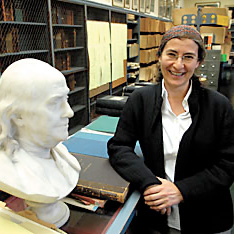
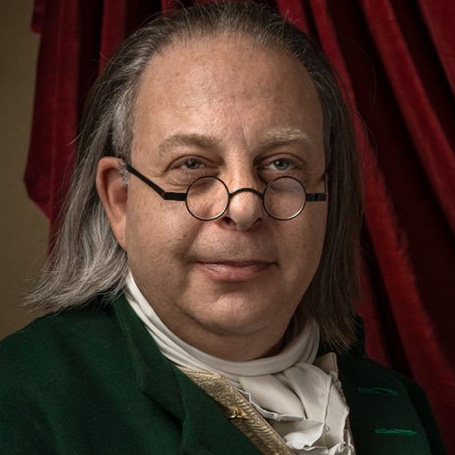
How does lightning work? On this episode, Neil deGrasse Tyson and comic co-host Chuck break down the legendary science and inventions of Benjamin Franklin, live with chief editor of The Benjamin Franklin Papers, Ellen Cohn and Benjamin Franklin himself!
Who was Benjamin Franklin? Neil discovers a way to transport him to the present so we can get our answers directly from the source. We explore how he got his start in science, almanacs, and diplomacy. When did Franklin go from being a publisher of science to a doer of science? Learn about the transit of Venus. How did scientists in the 1760s calculate the distance between the Earth and the sun?
We explore Franklin’s most iconic experiment: the kite with a key. Discover “electrical fluid,” as they called it, the invention of the battery, and the key to electricity. How does lightning work? We explain how lightning rods work, how it saved many New England buildings, and how it got Franklin in trouble with the church. Is capturing lighting thwarting the will of god?
We learn about Franklin’s role in the American revolution. Why was he sent to France to conduct diplomacy? Explore the power of science and how Franklin helped Captain Cook finish his journey back from the South Pacific. Why did Europe turn dark in 1783? Where does the word “mesmerize” come from? We dive into Franklin’s efforts to debunk Anton Mesmer’s “animal magnetism” and the discovery of the placebo effect. All that, plus, words from Neil about the value of discovery and continuing to learn throughout your life.
Thanks to our Patrons Andrew Herron, Bhargava Kandada, and Mark Roop for supporting us this week.
NOTE: StarTalk+ Patrons can watch or listen to this entire episode commercial-free.
Transcript
DOWNLOAD SRTWelcome to StarTalk, your place in the universe where science and pop culture collide.
StarTalk begins right now.
Welcome to StarTalk Live!
at the Keswick Theater.
All right.
I am Neil deGrasse Tyson, your personal astrophysicist, and I always do this with a co-host.
My co-host tonight is going to be and is Chuck Nice.
Chuck, where are you, man?
What’s up, buddy?
Chuck Nice!
What’s up, Philly?
Some of you know Chuck is a Philly native.
That’s right.
Born and bred, Philadelphia.
That’s why I know we’re not actually in Philadelphia.
You know, but it doesn’t really work when you walk out like, what’s up, Cliffside?
That wouldn’t work.
That wouldn’t work.
So, Chuck.
Yeah, man.
So I think we’re in Philadelphia.
Very cool.
You know, StarTalk is about science, right?
I did not know that.
So I thought to myself, let’s talk about, like, a cool, important, interesting scientist who we associate with Philadelphia.
Will Smith.
Is he from Philadelphia?
He is from Philly.
West Philadelphia, born and raised, from what I hear.
And he’s a slapologist.
No, no, no, no, no, no, no.
We’re going to talk about perhaps Philadelphia’s most famous scientist, which many other people think of him as just a founding father.
Of course, we’re talking about Benjamin Franklin.
All right.
So let’s get started.
So Chuck, what do you know about Benjamin Franklin?
Oh, man, I know he’s got a parkway.
I know he’s got a bridge.
I know he got an institute.
I know he’s on a hundred dollar bill.
Exactly.
Oh, man.
Yeah.
It’s all about…
You look at this like you’ve never seen a hundred.
Do we not pay you enough?
Let me tell you something.
This is…
You just…
I can’t even talk anymore.
That’s how much I love money and Ben Franklin.
Yeah.
No.
So that’s good.
So we know, we associate him, at least in the scientific community, with his discoveries on electricity.
Of course.
Okay.
And electricity and lightning.
I got a lot to say about lightning.
People think they understand lightning, but usually they don’t, even if they think so.
Because, you know, lightning strikes from the ground up, not from the clouds to the ground.
Did you know that, John?
Tell that to every Greek painting that I’ve seen.
But what else?
Ben Franklin was a printer?
Okay.
That’s right.
And he printed…
And people don’t know this.
Chuck, you come from a printer family.
And every printer in the world loves Ben Franklin.
I love Ben Franklin because my father was a printer.
And if it weren’t for Ben Franklin, I would have starved as a child.
No, but you worked in the printing factory with him.
With my dad, yes.
And I actually ran something called a raised letter press, which is what he pretty much invented.
Yeah.
Okay.
All right.
And Ben Franklin was also a successful businessman.
He did so many things.
And I don’t have particular expertise on this.
Okay.
I’m just saying.
So we got to do this StarTalk style.
And we combed the landscape for an expert on Benjamin Franklin.
You know where we landed?
At the Yale Library, which is undergoing a multi-year project to collect the complete papers of Benjamin Franklin.
So we got the Editor-in-Chief of that project here today.
Please give a warm, philly welcome to Ellen Cohn.
Ellen.
So let me ask you, Ellen, your Editor-in-Chief of this project, I mean, we think of him as a founding father, and nowhere on the $100 bill is there any indication that he was a scientist.
So what percent of his papers and his body of work is reflected, reflects his capacity as a scientist?
Well, you know, here’s the amazing thing about him, is that his entire life he was interested in science.
He was so curious about everything that he saw.
As any good scientist should be, okay?
Not like you’re going to find too many scientists are like, what’s that?
That’s right.
Like, just to give you an example, how many people of his day or how many of you have ever sat in a darkened room with a fire going in the fireplace and there’s a candle on the table?
Now, Benjamin Franklin noticed that the smoke from that candle was traveling in a certain direction.
And he thought, huh, that’s interesting.
And he made it his business to try to find out why.
I mean, that’s the kind of guy he was his entire…
Oh, so it was a lit candle.
Yes, I’m sorry.
I tend to…
Like, why would the candle start floating through the air?
Okay, so he’s saying normally the smoke of a candle would go straight up.
He’s got a fireplace going, and now the smoke is going towards the fire.
So he notices this and asks himself what’s going on.
What’s going on?
That’s an observant, curious person.
Yeah.
Yes, because all I would have thought is, why am I here alone?
This setting is very, very sexy.
Wait, so he didn’t, so something I didn’t, I never knew.
I know a little bit about Ben, but did he, he didn’t study science in school?
So here’s the thing.
This kid was the 15th child in a family of 17.
Wow.
His poor mother.
His poor mother’s.
Mother’s?
Well, that is to say, he only.
First of all, I don’t need you bringing that kind of stuff into my school system.
Next thing, you’ll be up here talking about your Ben Franklin Critical Race Theory.
I don’t think she meant he was raised by two mothers.
I’m pretty sure that’s not the…
Yeah, that’s it.
Oh, my goodness gracious.
I walked right into that one.
Yeah, you did.
Well, so, I don’t know if you know, I have some expertise in the fabric of the space-time continuum.
Did you know this?
Yes.
So…
Also, I have a watch.
So, there…
So, I was experimenting on this, and I was able to open a portal through time.
Right.
And I got Benjamin Franklin.
And I’m starting to get a little worried, to be honest, right now.
Because what I know is Neil does not smoke marijuana.
So, I brought him through, and then I’m trying to…
Why don’t I just bring him here?
And so, then I got in an Uber, and he didn’t.
And so, I lost him.
Neil and Ben’s not-so-excellent adventure.
Because that…
I would be fun if we had Ben Franklin here.
But so…
But I don’t know where he is.
He’s wandering the streets of Philadelphia.
Yeah.
Well, here’s what you don’t know.
I would think that that was, like, a fantastical story, except that I actually found Ben Franklin.
I found him standing on the street, just staring at some electrical wires.
And then when I asked him, what are you doing?
He was like, I’m not looking at the wires.
This is Philly.
I’m looking at them shoes.
Why would anybody put shoes up on a wire?
Was it a tightrope artist who fell?
And that is all that is left of him?
What exactly happened here?
A tightrope artist.
Yeah, that, wow.
Yeah, I never thought to think that.
But if I came from another time, yeah, that’s what I…
You might think of that.
Yeah.
Right.
Yeah.
But really it’s just some brother walking around without sneakers because he ran into the wrong people in Philly.
The only city where they don’t steal your shoes, they throw them up on the wire so that you can look at them every day.
Yeah, man, those were my shoes.
Wait, can we get back to Ben Franklin?
Oh, Ben Franklin.
Ben Franklin.
Wait, so you, so…
I’m serious about Ben Franklin.
Did you bring him here?
I thought by now he was Ben Franklin.
Ben.
Ben.
You’re very kind.
Benjamin Franklin.
It was just an Uber I was getting into.
You didn’t have to be afraid of it.
You just wandered off.
You left me just standing there.
Can we get Ben a chair, please?
Do we have…
You’re too kind.
How do you do, Ellen?
It’s nice to see you.
Thank you.
Good to see you again, Ben.
Good to see you as well.
How are you?
I’m very well.
I’m excellent well.
You’re very kind to ask.
Nice to see you all, my friends.
Good evening.
Thank you.
You’re very kind.
You’re too kind.
So, Ben, you were a successful printer.
In fact, from what I’ve read, you were quite wealthy.
So, does that wealth give you free time to then do cool science things?
Because I don’t think anyone was paying you to do science.
That is true.
No, that would be the purview of a gentleman.
You’re absolutely right.
I did have some success with my printing, specifically with my almanac.
Did very well.
Poor Richard’s almanac?
Poor Richard’s almanac.
Wait, let me ask Ellen.
Who the hell is Poor Richard?
Well, Poor Richard is a character Franklin made up.
He, in Philadelphia, he, I mean, he just had to make a buck.
He had to make a living.
And he saw that almanacs sold really well.
And so he wanted to make one himself.
And he, in fact, was such a cutthroat competitor.
His almanac was funnier, wittier.
It just obliterated the competition because he created this character called Richard Saunders.
And Richard Saunders, in the preface to the first almanac, says, kind reader, I’m an honest fellow, but I got this wife back home who’s really, like, hammering on me to make more money.
And so to please her, I’m doing this almanac because I know they sell really well.
And I never, ever would have done this if it hadn’t been for the fact that Titan Leeds, the other almanac maker in town…
Far more popular than me at the time…
.
that Titan Leeds, we know from predictions in the almanac that he’s going to die on a certain day.
Wow.
And he also, because he’s a great predictor of things, he also knows he’s going to die on a certain day.
But we differ about which day it’s going to be.
And so, although I’m a good friend of his, I thought maybe now’s the time for me to get into it.
Well, Titan Leeds had no intention of dying.
And when he read that, he went nuts.
And he went hopping around town, saying, I’m not, unlike you, I’m not dead.
I’m not dead.
And there was such excitement, and Franklin just outmaneuvered him in every way.
And before you know it, his leads just folded, and his almanacs flew off the shelf.
But here’s a connection to science.
As soon as Franklin’s almanacs became really popular, he was able to add more pages to them, because everybody, everybody was buying them.
And what did he do?
He starts putting articles in there about science.
He took, he took articles that had come over from London, and he would reprint them in the almanac, because it wasn’t enough for him to learn about these amazing things.
He wanted to educate everybody about them.
But this is very much true, taking this knowledge out of the universities, taking it out of the monasteries, and bringing it to the people.
This is what we’re trying to do on StarTalk, actually.
Yeah.
So what is the Junto Society?
Does that have science?
Well, so after having published the almanac for a number of years, at the age of 42, I was able to retire and sell my business, and I would never have to work again.
And this is when I had begun.
At age 42?
At age 42.
Wow.
This is when I began the pursuit seriously of science.
But earlier, I had been in London when I was 19, and I had seen other clubs, the TIFF Club, the Tuesday Club.
And I had created a club when I was a working man in Philadelphia called the Junto with other like-minded working men.
Eventually, we were joined by ship’s captains.
And together, Junto, of course, being Latin for joined together, Junta JuCons, joined together, they assist.
Joined together, they assist.
And so together with the Junto, with this club of like-minded people, we were able to better ourselves, better our community.
And eventually, we together founded the first library, subscription library here in America, which still exists today, and the first science academy, the American Philosophical Society, which still exists in your day.
I was recently inducted as a member to the American Philosophical Society.
In fact, they are based here in Philadelphia, and that’s how I found them.
They told me about you, yes.
Neil is like the Black Ben Franklin.
No, wait, so, but…
Well, they have a number of my little improvements and my rattle traps.
What I’m asking is, you create this, you create that, and at no time have we yet even talked about Ben Franklin as a diplomat.
And that’s how most of anyone thinks about you as a founding father.
So, how did you have time for all of this?
Time machine?
Time is…
It requires concentration and a schedule.
I have a certain mathematical attitude towards time, just as I have to everything.
I, for instance, if one wants to live a good and virtuous life, one must create a moral compass or moral algebra.
If one is to have enough time to do everything one wishes to accomplish, one must allot the time and one must devote the time to it.
And so, I created a very rigid schedule, which for the most part, until much later in my life, I stuck to and allowed myself to wake at a certain time, to prepare my letters at a certain time, to devote a certain amount of time.
I believe that the translation of what Ben is trying to say is, we did not have the Internet.
Yeah.
Or Netflix, right?
Right, or Netflix at night.
And we certainly did not chill ever.
But nothing is done in a vacuum.
We are, I am working alongside, I mean, I’m inspired by so many greater men and working alongside so many other great minds.
So, Ellen, from your records, when did Ben transition from the bringer of science to people to the doer of science?
When was that?
Well, one of the first things that he did in a scientific realm in America, I think, was…
If you don’t know, we can find out, because he’s sitting right here.
The study of the transit, is that what you’re thinking?
Well, go ahead.
No, no, please, please.
You’ve read my letters more recently than I have.
No, talk about the transit.
Well, the transit of Venus, I actually…
Neil, you probably know more about this.
Indeed, the transit of Venus is a very important phenomenon.
You probably had a chance to study it in your lifetime as well.
Yes, so Venus, twice every couple of hundred years, will move between Earth’s vista on the sun and the sun itself.
And that, when observed from different parts of the Earth, enable you to triangulate and get a precise distance to Venus.
When you do that, it allows you to get the full measurement of the entire solar system, where the distance is to all the planets, because previously, you got distances just in units of the Earth-Sun distance, but you didn’t know exactly how far that was.
So everything was in unit of Earth-Sun, but the transit of Venus transforms that.
And you would have seen the transit of Venus in the 1780s?
Is that right?
Well, so in 1761, we have one, and unfortunately, I’m not able to see it, but we begin to see it studied.
And also in 1761, there is war taking place that’s going to interfere.
But I think it’s in 1769 that we are able to participate globally.
So we have Mason and Dixon studying.
We have David Rittenhouse creating a telescope and studying it not far from here in Norton.
And I’m, in fact, I’m in a, we build an observatory just behind the Pennsylvania State House.
And some years later, the Declaration of Independence will be read out loud from that same platform where we will track and study and time the transit of Venus in order to come up with this final number that will finally give us the distance between the sun and the earth.
Yeah.
And we came up with the number of 90 million miles.
That was so wrong.
It’s 93 million miles.
We were very wrong.
Ben, get back to the drawing board.
That’s correct.
Your life has been wasted, sir.
It is an absolute failure.
Before we take our first break, let me just bring this to, I think, an interesting close.
That transit of Venus was also viewed by Captain Cook on an expedition from England.
And that was best viewed from the South Pacific.
And so England says, Captain Cook, go to the South Pacific.
Here are new tools to measure the transit of Venus.
Oh, by the way, by the way, could you map every coastline you see?
Whatever landmass you had to give me?
Just on the side, go ahead and do that.
He measures the transit of Venus brilliantly, comes back to England, presents the maps of Australia, New Zealand, the Cook Islands, all of this.
And within decades, England takes ownership of those land masses.
That’s right.
Just take a look at all the flags of those countries, okay?
Half of them have the Union Jack inserted in it.
That’s traceable to Captain Cook.
Not still.
Many of them do still.
Have they learned nothing?
We’re gonna take a quick break.
When we come back, we’re gonna delve deeper into Professor Franklin’s scientific career on StarTalk Live!
at the Kesswick Dinner!
Hey, I’m Roy Hill Percival, and I support StarTalk on Patreon.
Bringing the universe down to earth, this is StarTalk with Neil deGrasse Tyson.
All right, we’re back!
Kestwick Theater, StarTalk Live!
We’re outside of Philadelphia, and who better to talk about is one of its finest, most significant citizens of the past, and I would say even the present day, his spirit energy remains with us in this part of the world, and I would say around the world itself.
Benjamin Franklin.
Give up for Benjamin Franklin.
And of course, Ellen Cohn, who is the Editor-in-Chief of the Benjamin Franklin Papers Project, which is being conducted out of the Yale Library.
Yes!
So Ben, let’s talk about your most famous experiment, which I, as a kid, didn’t understand, and I still don’t.
What’s up with you and a kite and a key?
Ah, yes.
Electricity.
What the hell were you doing?
Why?
Who?
Don’t you know it’s dangerous?
Oh, I do know that’s why I did not fly the kite in the storm.
That’s the legend.
I stood in a little paddock and my son William flew the…
Oh!
If you’re going to perform…
Father of the Year there, that’s easy.
If you’re going to perform a dangerous experiment, may I always suggest placing your progeny in…
They can’t sue you, mostly because they can’t sue you.
Okay.
So, what was your objective there?
So, we’re working with the American Philosophical Society.
We’re doing experiments.
I have retired.
And I am corresponding with a friend in England at the Royal Society, Peter Collinson.
And he sends me a wonderful new invention from the University of Leiden, known as Leiden jar.
Normally, these sort of inventions, these innovations would have been named after the creator.
But in this case, the creator was a professor, Musselbach.
I don’t think anyone’s going out and buying a Musselbach jar.
So, we called it a Leiden jar.
And he sort of, so Peter sends me one of these.
And he says, perhaps you’d like to consider understanding how it works, learn how it functions.
And we begin by very, would you like to describe?
Well, so the Leiden jar, as I remember from my physics training, it’s a jar that’s sort of electrically insulated from what’s around it.
But there are metal sheets inside of it that if they become charged, they just sort of resist each other.
And you see them just sort of separated, sitting there, perfectly happy, separated.
Kind of opposite what gravity would otherwise have them do.
So, in a way, it has trapped electricity in this volume.
That’s right.
And what I’m going to do is take a dozen of them, 18, and put them in a box and wire them all together and create, instead of just producing electricity, electrical fluid by rubbing a piece of wool on a glass tube, I’m going to create an electrostatic generator, an enormous machine, and now I’m going to have rows, so imagine, if you will, rows and rows of these jars, all sticking up, just imagine.
And now I can store quantities of the electrical fluid in it, and it is rows and rows of these jars sticking out of a box, as if, to me, it appears like a row of fouling pieces, or cannons sticking out of the top of a balustrade.
And do you know what we call that?
A battery.
A cannon sticking out of a balustrade?
A battery.
A battery.
Yes.
And that is what we’re going to do.
We’re going to try and invent and name the battery.
Okay.
And we’re going to once again fail, but…
Got to start somewhere, Ben.
But it’s going to inspire me to perform, I don’t know, Ellen, 130 separate experiments.
And eventually it will lead us to the understanding that the electric…
Well, it will lead us to many understandings.
It will lead us to…
Most importantly, it will give us a vocabulary, a language, a nomenclature for studying this new fluid.
So, is that why you needed the kite and the key?
Well, so ultimately, the kite and the key is going to prove the final experiment, which is that one form of this electrical fluid is the discharge of lightning.
And we are going to take some electrical……charges……fluid from the sky…
.
from the sky, not from a lightning bolt, that would be in lunacy.
And we’re going to put it into one of these capacitors.
We’re going to take it back to our laboratory.
We’re going to perform a series of experiments with it.
Just how quickly can it burn a piece of paper?
How quickly can it?
And then we’ll take another battery filled with electrical fluid created from a generator.
And it will perform exactly the same way.
Therefore we will prove that these two seemingly different substances are in fact the exact same thing.
And at any time in this experiment, does it get you back to the future?
Apparently so.
I would have said no.
So just to put us on the same page, every time it rains anywhere in the world, there are electrons that used to be up in the sky, in the clouds, that have arrived on Earth.
And electricity doesn’t like being imbalanced that way.
All right.
These are from ions that come out of the rain-swelled skies.
And so the electrons collect.
Now, if you happen to be under a thunderstorm, there will be a lot of those electrons collecting locally.
The electrons want to get back to the cloud, but they’re really lazy.
Okay?
And the last thing it wants to do is move through air, because air is actually an electrical insulator, all right?
It hates moving through the air.
So, when you build up enough charge, the charges look around and say, wait a minute, I see a human being.
Let me go up into the human being.
Now I have five and a half less feet I have to move through the air.
Oh, wait a minute, there’s a tree.
Let’s go higher up.
Okay?
There’s less air that I have to move.
Wait a minute, there’s a church steeple.
Let’s go up to the tip of the church steeple and we will discharge there.
And so, lightning, there’s what’s called a leader stroke that is exploring what path between the sky and the ground requires the least stress on the movement of these electrons.
It finds the path, it’s called a leader stroke.
And the moment that leader stroke completes, the electrons surge back to the cloud.
And that is the lightning bolt that we all see that most people think comes from the cloud to the ground.
But it’s the electrons that had accumulated going from the ground back up to the clouds.
Now, so you died because of a bunch of lazy electrons.
Yes.
Right.
So if you’re the tallest one in an area, you are susceptible.
OK?
Any time lightning hits a baseball game, who does it hit?
The pitcher.
The pitcher is just a little bit closer on the pitcher’s mound.
And they step on it.
And that leader stroke, the moment it comes out, you actually will feel the static electricity.
So if you feel your hair rising up, because you start accumulating these extra charges, if you start feeling the hair rise up on your skin, drop to the ground immediately.
Because what’s happening is the electrons are gathering and they’re ready to make that jump, they’re ready to jump.
But if you drop low in that instant, then you will confound this exercise.
Oh my God, where do we go?
You know, I’m just sitting here trying to be a lazy electron.
I don’t understand.
What just happened?
So, just a little bit of…
And by the way, when they launch rockets, you ever notice there’s the launch pad in the middle, and there are four towers.
There are multiple towers.
There’s a water tower as well, for other reasons.
But there are four towers that compete with the rocket to attract lightning.
So, if lightning comes…
If the electrons are ready to come up and go back to a cloud, the rocket is not their first choice, because we’ve supplied them with a way to go back.
And this reminds me of one of Professor Franklin’s most brilliant inventions, the lightning rod.
Dude, you did good there.
Thank you.
And in fact, Ellen would know better than I.
There is a French natural philosopher who is able to attract charges during a bright sunshine.
We see at the time that I’m in France, the Italian, Signore Volta, expanding on these ideas.
Yeah, so the Italian, the electricity is, has an imprint of all the people who are fundamental to its progress.
So, Alexander Volta is a, the vault is named after him, not the Chevy car.
I’m talking about the vaults of your battery.
There’s Ampere, amps come from, I think Ampere is French, Ampere.
So all of these names and terms come, there’s even a, there’s a Faraday, there’s a, but all these words we have for electricity, like you were saying, Professor, there’s-
Doctor.
Say again?
I was never a professor.
Okay.
You can just call me Ben.
Ben.
Just Ben.
As we were saying, Ben, that, I can’t call you Ben.
That’s too-
Behind my back, the other members of the Constitutional Convention called me Dr.
Fatsides.
Really?
Okay.
That’s what I’m going to call you then.
If it wasn’t even the worst insult among us.
If you prefer Ben.
Today, of course, we don’t body shame people that way.
Thank you so much.
Yes, yes, yes.
So, yes, Ben will.
So, with Lightning Rod, you now give the electrons a place to depart Earth so that they don’t randomly find some other thing like a church steeple and destroy the church people.
And in Boston, they kept tearing down the Lightning Rods for fear that I was, they believed, from the pulpit, suggesting that I was somehow creating an accumulation of electrical fire.
I left something out, excuse me.
So, the Lightning Rod is so brilliant, it may have been more brilliant than Ben knew, because, watch what happens.
So, you have the Lightning Rod, which is just a piece of metal sticking up, and it’s the highest point of your structure, right?
So the electrons gather.
If you make the Lightning Rod a point, this is important.
Then, the electrons, on going to that point, ready to go to the cloud, they’ll leak off, and they’ll just sort of drizzle off into the sky.
So, Lightning Rods not only reduce the chance you’ll get struck by lightning, if you’re struck by lightning, it saves you from destruction.
But this was a very important argument at the time.
People, the debate over a dull topped lightning rod versus a very sharp point was something we took very seriously.
All the electrons crowding there, they spill out.
It’s very crowded, and you can spill electrons back and basically never have the lightning strike that would have otherwise taken place.
It’s just brilliant.
Now, let me ask you, Ellen, I heard this, and I just want verification.
I want to see if you have it.
Before the Lightning Rod, by the way, this is the 1760s, 70s.
What’s the tallest structure in any city in colonial America?
Church, okay?
So what structure is most likely to be hit by lightning first?
Church.
So if there’s a church here and a church there and a church there, and that church gets hit by lightning, I got a story.
In my church, right?
They say, That was the false church, people.
Yep, that was the false god.
Clearly, God didn’t like your church.
Didn’t like your church.
Good way for me to get more churchgoers into my church by holding that argument.
But then Ben comes along and saves all the churches.
I heard that there was criticisms, I don’t know if it was heresy, of Ben thwarting the will of God.
Right.
Which is why we had to help it along with something called Jesus arson.
Jesus arson?
What?
Because Ben put up these lightning rods, these churches aren’t burning down, and God told me to just burn your church down.
Wait, so-
That was not my intention.
Wait, so Ben, so for me, the idea that you would be accused of heresy for thwarting the will of God, I’m thinking to myself, how powerful is the God you’re worshipping if Mr.
Fatso can prevent him from destroying your church?
This is my thought.
So, is there any correspondence related to this?
Oh, he got immense criticism from people all over America and Europe, too.
Most people believed that lightning was God.
Of course, divine.
Was divine.
Not just in modern religion, but you go back to Zeus and religion.
Zeus, you know, and did Thor wield the lightning bolt with just a hammer?
No, Thor called on lightning.
He called down lightning with his hammer.
With his hammer.
Okay.
Yeah.
And I got that from Marvel.
Okay.
Now, you know what else?
Inside churches throughout Europe, there wasn’t just people inside there.
You know what else they used to store in churches?
The parts of dead saints?
Gunpowder.
Oh, that’s smart.
You know that place that just keeps catching fire for some reason more than any other place?
You know what we said?
That’s for some gunpowder there.
Well, just only, what, 20 years before I was born, 20 years or so, 30 years, was the Great Fire of London, 1666, not too long, so.
And what do they keep in their churches?
Dynamite?
But dynamite was invented by Alfred Nobel much later.
Oh, okay.
I don’t spend that much time in churches.
Clearly, I did not know that.
It’s where he made his money to leave the trust that would give the Nobel prizes.
Dynamite, TNT.
That’s somewhat disturbing, to be honest.
That the man who created the stuff that blows things up also made the Peace Prize.
You have to give a prize for peace?
Yeah, unfortunately.
Yeah, we need that.
Otherwise, there may be even less incentive than there otherwise would be to create peace in the world.
But Ben, before you take a break, I want to get to your other experiments.
But tell me what other critiques that were handed down?
Well, one of the ways that Franklin countered this argument was to say, you know, God sends rain, and that doesn’t keep us from putting roofs over our head.
Brilliant, Ben, that was good.
Ben, that was good.
In the middle of the summertime, the sun is really strong.
That doesn’t prevent us from carrying parasols.
So, why should it be that if the deity gives us the knowledge to understand these phenomenon, then why shouldn’t we take advantage of that knowledge to protect ourselves?
A couple of other physics moments here.
So, what’s this oil and water thing you did, Ellen?
So, even from the earliest age, Franklin being the observant kid he was, and young man, as he was crossing the ocean back and forth, he noticed that when the cooks dumped the cooking oil overboard, the waves smoothed out.
Why is that?
Why is that?
He kept on thinking about it.
And much later, when he was living in England, he thought, he was talking to people about this phenomenon, and he said, I want to do an experiment.
He took a little bit of oil, and he carried it to a pond that he knew about.
He put the oil on the surface of the pond on a windy day to see what would happen.
And to his amazement, because no one ever expected this, the oil smoothed out the water.
It became smooth as glass, but it didn’t stop there.
That smooth area kept going and going and going until, to everybody’s amazement, half an acre of water was absolutely flat.
Covered by a tiny bit of oil introduced to it.
A teaspoonful of oil.
Eh, he would have loved Exxon.
Well, but, you know, in our time, there was practical applications for this.
Oyster divers would put a little bit of oil and it would allow them to see their catch.
Oh, because otherwise, the turbulent water disrupts the optics of what’s below.
All right, we’re going to take a quick break, and when we come back, we’re going to find out what Ben was doing in France during the Revolutionary War, when StarTalk Live!
from the Keswick Theatre continues.
We’re back, StarTalk Live, Keswick Theater.
I got Chuck Nice, my co-host.
I’ve got Ellen Cohn, Editor-in-Chief of the Benjamin Franklin Papers Project up at Yale in New Haven.
And we’ve got none other than Ben Franklin himself.
Thank you, Ben, for coming out for this.
So, we know that the American colonies were very friendly with France through Jefferson and through the diplomacy of Ben Franklin.
And, of course, while we’re fighting England, the French are always looking for a good fight against England anyway.
So they were sympathizers to our cause.
And very shortly after our revolution, they had theirs, right?
So I’m going to ask you, what brought Ben to France?
And what was he doing there while in residence?
Well, actually, it was not at all a given that France was going to help the American colonies.
Not at all.
We are not sure if we want to help you, colonists.
You do not have the hard French soap.
You smell like peasants.
Chuck, does every French person you imitate smoke a cigarette?
This is what we do.
We were bombed with cigarettes in our hands.
Okay.
Continue.
Never mind, Chuck, on the corner there.
Okay, go.
So, when the Patriots gathered and wrote the Declaration of Independence and pledged that they would risk their lives on this cause, the question was, how are we going to win this war?
I mean, it’s one thing to declare a war.
It’s another thing to fight a war when you don’t have guns, you don’t have ammunition, you don’t have any place to go and buy tools.
The Colonies relied on England for everything, and now all of a sudden, not only did they declare their independence, they’re cut off from their supplier.
So, they sent Benjamin Franklin to France to try to persuade the King of France to support a revolution against another king.
Now, that was not gonna play necessarily, cause kings kind of like…
Yo, kings roll with kings.
Real recognize real.
Okay.
So, why did they choose Franklin to do this mission that was in fact not at all a sure thing?
The reason was that by the time 1776 rolled around, he was already by far the most famous man in America.
Why?
Because of his lightning experiments.
His science.
His science.
And it wasn’t just that the lightning rod was saved millions of lives, and it wasn’t just that he invented the battery.
Most people considered the most significant thing about his experiments to be that he proved that something that was invisible in the atmosphere was actually electricity.
No one had any concept of that before he came along and proved it with the Kite and the Key.
So his legacy preceded him in Europe.
Yes.
He was immediately made a member of the Royal Society, which was the greatest scientific organization in England.
And he was made, and this was astonishing because the French don’t do this very often, they made him a member of the French Academy of Sciences.
So he was, when he arrived, now Congress sent him over to France in top secret, he was on a ship that if it had been captured, he would have been hanged.
So no one had any idea that he was actually on that ship.
And when he set foot on French soil, the French went nuts because they already knew who he was and they loved him.
So it was his scientific reputation.
I did not know that.
So are you telling me that if we sent Neil deGrasse Tyson on a secret mission to talk to Vladimir Putin?
That there could be a possibility that we might be able to get something done.
Okay, this is very encouraging.
This is beautiful and brilliant.
And I’m deeply moved by this fact, that science in the day would be elevated to become something even greater than diplomacy itself.
Because it sailed above popularity contests or anything else of the seizing of power.
It recognized brilliance.
And that gives us deep hope, I think.
Yeah, and let me tell you something else that’s totally inspiring.
You mentioned before about Captain Cook.
Yes.
Well, after that voyage, they sent him back.
You remember this.
Yeah, he had multiple voyages, yeah, yeah.
Until he didn’t.
But I was in Hawaii once, and I was watching Don Ho, OK?
That’s how old I am.
I was watching Don Ho.
And someone asked him at the end, what happened to Captain Cook?
And Don Ho said, I don’t know.
We haven’t seen him in a while.
That’s so…
Rumors are that he was eaten by locals.
He was.
He was.
I dined with Captain Cook once, but I assure you, he left the table.
Oh, good.
OK.
So here’s the thing.
During the war, during the American Revolution, Captain Cook…
Well, actually, they didn’t know it in London, but he had already been put in the pot.
But the rest of his boats, the rest of his ships…
Somebody had Captain Cook for dinner.
Yes.
But his ships that had…
Sorry, that was low-hanging fruit.
I had to say somebody had Captain Cook for dinner.
And they enjoyed it.
Yeah.
OK.
We heard it the first time.
Yeah, OK.
Sorry, Ellen.
We’ll shut up.
Please continue.
Well, so word reached Europe that Captain Cook’s ships were on their way back from this voyage of exploration and discovery.
And Franklin was our ambassador in France.
He couldn’t communicate with Congress.
There was no way to do that.
A letter might take six weeks to go and six weeks to come back.
He had to act on his own.
So when he found out that Cook’s ships were traveling north, he issued on his own initiative an order to every single American captain sailing on the ocean.
Leave those ships alone.
Not only leave them alone, but if you meet with Captain Cook’s ships.
Now keep in mind these are British ships, and by rights, any American would have been authorized to seize them.
Franklin said, leave them alone, in fact, give them any assistance that they might require, because they’re on a mission, a scientific mission, and science should be in a plane above politics.
Wow!
Applause Amazing.
So, just to finish the story about Captain Cook, when word reached the Royal Society in England that Franklin had done this, still in the middle of the war, I mean, the war was like, at its height, the Royal Society voted to give him a gold medal, and the British, the British Admiral, the head of the British Admiralty, wrote him a letter and sent it to him.
And you can just imagine what this meant to him.
Yeah, I mean, if the world recognizes your work, that goes beyond just whatever satisfaction you’d get recognizing yourself.
So, congratulations.
I’m far too humble to…
Okay.
But wait, but that wasn’t, it didn’t stop there.
Europe turned dark in 1783.
Oh, this is interesting, Ellen.
For mysterious reasons.
This is while I’m in France.
In 1783, this is the same time that we are writing the Treaty of Paris.
The war will be coming to an end soon.
So, tell me what happened then.
Well, it was this amazing, terrifying thing that happened.
In the summer of 1783, hadn’t yet signed the treaty, the sky all over Europe turned dark.
The sun was just this dim, little disc in the sky.
When the sun set, it was blood red.
People were terrified.
That summer…
They got all biblical probably, right?
Yeah, yeah.
That summer was super, super, super hot.
There were thunderstorms.
People were dying.
Livestock was dying.
Nobody knew what in God’s name was going on.
And that continued for months into the next winter, which correspondingly was the coldest winter on record.
And so at a certain point, I mean, scientists all over Europe were writing to each other, trying to figure out what caused this, what’s going on here.
And Franklin very tentatively wrote a letter, a little essay, which he called Meteorological Conjectures, because he wasn’t sure.
But he analyzed the situation and he said…
The sign of a good scientist is if you don’t really know for sure, you don’t say that you know for sure.
And the really good ones never say they’re sure, because then they can never be wrong.
All right.
So what he said was he thought that it was possible that the particulate in the air was actually ash and gases from a volcano in Iceland, that he had read a story telling him that this huge explosion had happened, eruption.
And it turned out he was absolutely right.
And that happened just a few years ago even.
Ten years ago?
Yeah, around there.
Yeah.
A volcano in Iceland erupted?
The same volcano.
The same?
They had to stop all air traffic.
Yes.
The airplanes, we invented how to fly, just so you know.
Okay.
So because jet engines take in air, and if the air is filled with dust from a volcano, that is bad.
But if you look at prevailing wind patterns in the rotating Earth, generally they move west to east.
That happens in the United States, it happens over Europe, and I…
I wonder how we determined that that was happening in the United States.
Oh.
Sorry.
Remember how he said he’s so humble.
I’m sorry.
I proved that weather appearing to come to Philadelphia from the northeast was in fact coming from the southwest, hence the nor-easter term that I…
Sorry.
Please continue.
So, I wouldn’t even call that a good guess.
I mean, he had to really think through what that is and what it meant and arrive at that conclusion.
Let me keep going, because we’re running out of time.
Ben, what could you tell me about Mesmer?
Friedrich Mesmer.
Yes.
So Mesmer had been going…
Anton, thank you.
Anton Mesmer.
Friedrich was pretty good too, though.
Friedrich.
Anton Mesmer.
Anton Friedrich.
Friedrich von Steuben.
So Anton Mesmer is going around Europe, the continent, claiming a new form of medical treatment, which will eventually become known as animal magnetism, this quality that rests within us.
And he can treat it, and he has various techniques, and eventually he, this, this, this, this, this animal magnetism can be affected, he claims, by a musical instrument that I had invented, known as the glass armonica.
And eventually he finds his way to France while I’m there as our minister to France.
And I will let Ellen take over from this point and let you know what happens when Mesmer, Antoine Mesmer and his animal magnetism begins to practice.
This is the same Mesmer as what gave us the…
Mesmerize.
Yeah.
The mesmerization, mesmerizing is part of it.
That’s the same Mesmer, okay.
You know you can’t resist me.
This is the same, the music is very…
Well, the music is incidental, in fact.
Please.
I mean, he used music, but then he didn’t use music.
Here’s the thing about Mesmer.
The reason he came to France is because he was kicked out of Vienna.
This is a guy, this was a doctor who gathered people around, turned off the lights, put his patients right in front of them, stroked their thighs.
I’m not kidding you.
And then he would look deep into their eyes, Mesmerism.
And then he would tell them that whatever was ailing them, he could cure.
Sounds like a human resources problem.
And people believed him.
They believed him because they wanted it to be true.
And so he gets run out of Vienna, he comes to Paris, sets up clinics.
All these French people come, pay tons of money.
They’re all having symptoms and twitching and God knows what.
And the government’s getting really worried about this guy.
So they, the King of France, appoints a commission of the greatest scientists from the Academy of Sciences and the greatest doctors from the Academy of Medicine.
And they say, you got to investigate this guy.
Now, what’s fast, this is one of the most important incidents in the history of medicine of the 18th century.
Because, just think about it, nobody could see this magnetic fluid.
And they put Benjamin Franklin on the commission.
You can understand why.
He was the guy who had identified this invisible force in the sky.
Now, there’s a doctor claiming there’s some invisible force that he can manipulate.
And only he knows the secret, he’s not telling.
So, how do you, like, get at this?
How do you figure out whether it’s true or not?
And one of the most brilliant things about this commission was, they, they conferred, they tried to think, how do we devise experiments to get at this?
And they came up with this idea.
Animal magnetism can exist without being useful.
But it cannot be useful if it doesn’t exist.
So, the science contingent said, before we do anything else, we have to see if we can prove whether this invisible force exists.
And they did, over the course of four months, a series of controlled experiments that are mind blowing.
And they wrote up a big report that reads like a detective novel.
It’s so well written.
And you’re just on the edge of your chair.
The one experiment that was the one that clinched it, that animal magnetism didn’t exist, they had a doctor who practiced magnetism.
And he went and he magnetized a tree in Franklin’s yard.
And they said to the guy, now you can bring with you a patient, you choose the patient.
And we’re going to test using a blind phodium and see if he can feel anything from the magnetized tree.
This was a little boy, 12 years old.
And I don’t think they were counting on the fact that the kid would be blindfolded and that when the doctor magnetized the tree, they would be, the kid was like inside the house.
So there could be no communication.
Well, the kid with his blindfold went to the wrong tree and start shaking and having convulsions, and God knows what.
Anyway, it was obvious that this was a bunch of hooey.
The word is bullshit.
Yes.
Sorry.
Excuse me for the thing.
But here’s the next part of the story that is mind-blowing.
After they proved that it didn’t exist, it was Franklin who had for almost all of his life been thinking about how the mind can affect sensations in the body.
This is the key.
And so they devised a series of amazing tests that we would call double blind experiments where they had patients think that they were being magnetized when they weren’t.
They had patients sitting there not knowing anything what was going on with the doctor, like shooting death rays at them.
They did all kinds of variations.
And the conclusion was this thing worked if the patient believed that it would work.
And this was the moment in the history of science when what they called imagination.
They said, animal magnetism doesn’t exist, but it seems to be true that our own minds are able to cause all kinds of physical sensations in our body.
And this led to what we call the placebo effect, all kinds of things like that.
Well, they did the wrong experiments.
If they wanted to know if animal magnetism really existed, all they had to do was put Chuck Nice in a cocktail party.
That’s how that works.
But this is a very important notion, because I have tried in everything I have endeavored to serve the benefit of mankind.
And here we have an unscrupulous doctor practicing what is clearly an unscrupulous technique.
But you wouldn’t have known that until you could demonstrate it and have everyone else convinced of it.
But what if it serves some purpose?
What if it is useful for some, what if they believe themselves to be here?
I don’t mind that, but just don’t call it science.
So, I’m going to summarize, if I may, that the life of Ben Franklin was not so much enumerated experiments.
His entire life was an experiment.
And I’m reminded with the starkness of the detail here, just in blunt detail, that an experiment is the boundary between what is known and unknown in the universe, what is unknown and unknown for you.
So, experiments are something to be cherished, something to be cultivated, something that we should continue our entire lives lest we ossify in whatever was the last course we took in school, and then you think that’s the understanding of reality.
But reality is continually being explored by the likes of Benjamin Franklin in modern times and we hope continuing into the future.
And the more people who think that way and participate in that exercise will transform civilization as we know it, because we need it, because we need to become better shepherds of our own future that right now is driving off a cliff.
So, thank you all for coming.
This has been StarTalk Live!
at the Keswick Theatre.
Thank you Ellen Cohn.
Chuck Nice.
Mitchell Kramer as Benjamin Franklin, ladies and gentlemen.
All of you drive safely, stay safe, wear masks, do things smart.
I want you to live as long as human physiology will allow.
As always, keep looking up.
 Become a Patron