


 Unlock with Patreon
About This Episode
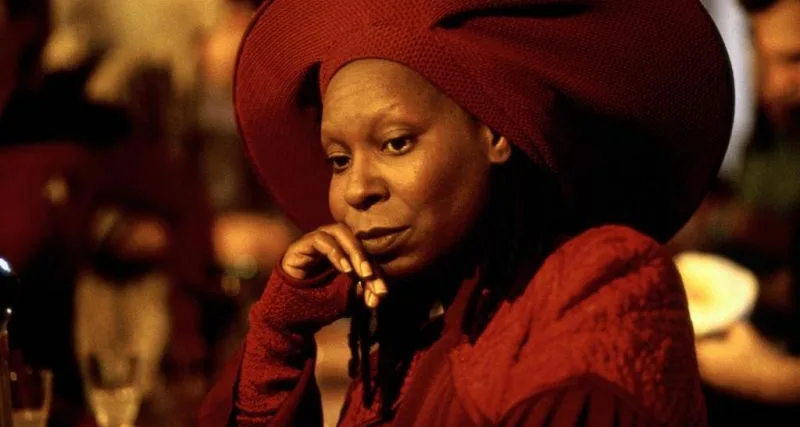
Movie star and stand-up comic Whoopi Goldberg has won many awards over the course of her career — from an Academy Award and a Golden Globe for her role in the movie Ghost, to an Emmy for co-hosting the ABC talk show, The View. Now she joins Star Talk Radio to discuss her love of science and science fiction, her thoughts about space exploration and sending people to Mars, and her role as Guinan on Star Trek, The Next Generation.
NOTE: All-Access subscribers can listen to the entire episode ad-free here: A Conversation with Whoopi Goldberg.
Transcript
DOWNLOAD SRTWelcome to StarTalk, your place in the universe where science and pop culture collide. StarTalk begins right now. Welcome to StarTalk Radio. I'm your host, Neil deGrasse Tyson, and this week's episode is a conversation with the one, the only...
Welcome to StarTalk, your place in the universe where science and pop culture collide.
StarTalk begins right now.
Welcome to StarTalk Radio.
I'm your host, Neil deGrasse Tyson, and this week's episode is a conversation with the one, the only Whoopi Goldberg.
With me in studio is my friend and longtime colleague, Charles Liu.
Charles, welcome back to StarTalk Radio.
Such a pleasure to be here.
I'm so psyched for today's conversation.
I have seen Whoopi Goldberg's every Star Trek episode in The Next Generation.
Some people don't know that she actually had a recurring role in Star Trek.
We'll get to that in a minute, but let's remind ourselves what Whoopi Goldberg's portfolio is.
First, she appears on The View for ABC, and in that she's won Emmy for doing that, and she was in that, she won the Academy Award for Ghost as, what was her name?
That medium person.
She won the Academy Award for Ghost, and she's won a Grammy Award for a comedy album.
She's two Golden Globes for The Color Purple and for Ghost, and the list goes on and on and on.
She's highly decorated, and she's a household name, and we have her for different reasons though.
Not simply that she is known for acting in her comedy, but that science has played a fundamental role in the shaping of her career.
You knew this, I guess, Charles.
Because you're a big Star Trek fan.
Yes, absolutely.
And let's find out.
Let's go get a little bit of her background going here, and we're going to pick up my interview with Whoopi Goldberg, obtained just a few months ago, and find out just how she was born and how she thinks about life.
I grew up on 26th Street and 10th Avenue.
In Manhattan, yeah.
This was some place I came.
The American Museum of Natural History.
You know, in those days, you could get for a quarter, you could get on the bus.
And come all the way up, and everything was free.
Okay, so you had early scientific baptisms, if you will.
You were exposed to museums.
And how'd you do in your science class, in your math class?
Well, math classes were bad for me, because I'm also dyslexic, and numbers are horrifying to me.
They are the scariest things in the world.
Which, in a way, is why I'm happy that there's an iPhone, but unhappy, because I used to have to force myself.
I can't do sequence.
Number sequencing is very difficult.
But the iPhone, I can just look on the phone and get the phone number.
That's just right.
Yeah, it's really good.
So you can work at the McDonald's, where you just push the button that has the picture of the French fries on it.
Maybe.
I'm not even sure about that.
You know.
But if you tell me things, I retain it very well.
So I can remember things.
So you have to shape your life around these facts, obviously.
So coming here.
Everything's visual.
It was visual.
So it was the perfect place for me.
And the Planetarium, for me, was always, you know, literally growing up, going from, you know, the voice of the adult.
Yes, the voice.
To like the hippies talking about like the landscape of the sky and the light and the stars.
And the laser show came to be.
The laser show.
Oh my God.
Did I love the laser show.
The laser shows went out when you could buy lasers at the checkout line at Kmart.
Then it's no longer a cool thing.
But man, they were spectacular because it was all about how did we get here.
Whoopi Goldberg, she was in my office for that interview and it was fun having her back at the Hayden Planetarium.
You know, she was, she narrated the current.
And she did a great job, too.
The show, it's stars.
It's all about stars and stars of the cosmic variety.
Make sure when you visit, you're not looking for like the pop list of who won Academy Award.
Well, actually, why not, right?
We should all stop being surprised that artists, you know, performing artists are inspired by science and love science.
That works.
That works for me.
So, it's interesting how she had problems with numerical sequences and that would not bode well for doing well in math, but nonetheless, she retained an interest all along.
I think that's an important state to be in because what it gives us confidence that even if you're not good at math, you can at least embrace or appreciate what math or science can do for you.
No question about it.
Or do for society.
Now, we're scientists and we love good movies and good music, so it makes perfect sense that actors and musicians love science too.
Whether or not they can do it, they can still love it, they can affect them very, very positively.
And in fact, she counts herself among the ranks of geeks.
Awesome.
And let's find out a little more.
My sister.
Let's find out a little more about how she includes herself in that exclusive community.
Check it out.
I'm a bit of a science geek.
That's good.
Well, I think it's good, but you know...
I know it's good.
Well, of course, because you're a doctor, doctor, doctor, doctor, right?
But there are just things that interest me, like how did we get here?
And that's why I was so happy to come and do the voiceover.
Yeah, let me tell our listeners that Whoopi is the voice for our current running space show on stars.
And so thank you for doing that.
And you brought a voice, a familiar, comfortable voice, to a subject that I think people need to be familiar and comfortable with.
Well, yes, because science is always sort of touted as something we won't understand, we won't get, normal people whose brains are not, well, the size of yours.
I think it's because the people who had previously been tasked to tell people about science weren't thinking about how to make it fun and interesting.
I worry that it's just, that's just the consequence of failed education.
Well, not just that, but it is also was thought of as being something that was an elite thing, that we mere mortals were not nearly smart enough to understand.
Then here you come.
Not only are you not just a mere mortal, but you're a big old black man.
Which is very...
Last I checked, yes.
Do your listeners know this?
Have they seen your picture?
Because if you don't know, shocker.
Listen, when he walked in while I was listening to the recording, I thought my head was going to explode because I'd never met, and I've met a lot of people, I've never met a black physicist or anyone who knew about the larger sciences as I think of them.
Well, there are a few of us, not many, but there's a few.
But believe me, when I was a kid, there were none.
There were none, sure.
That I was aware of.
Yeah, and so suddenly, like golf in a weird way, and like the presidency, these things now have become possible.
You know what we call that in mathematics?
What?
In existence proof.
You know I didn't know what we call it.
Mathematics.
In mathematics, you call something like that in existence proof, where you don't necessarily know the details yet of how it happened, but it did happen.
But it did happen.
And so therefore, it is possible.
I like that, and that's how I sort of feel about you and about all of the things over here.
Because now I feel like I'd ask you questions.
The thing for me is that you talk to me like a normal person.
Thank you.
I mean...
It's important, Neil.
It's very important because people don't want to feel like...
That they're too dumb to get it, you know?
And you couldn't say anything to your science teacher.
You know, you can say, listen, man, could you sort of explain this so that I could understand what you're talking about?
You actually explained why Pluto was gone.
Did you finally get over that?
No, I never got over that.
Okay, but you understood it.
I understood it, but you know, it's the same with purgatory.
How the hell can you just get rid of purgatory?
But clearly, people can get rid of planets and purgatory and any old damn thing they want to.
You know what else we lost?
The Brontosaurus doesn't exist anymore.
Who decided that the Brontosaurus didn't exist?
As I understand it, the original Brontosaurus had the wrong head attached to the body.
The creature that we assembled and called the Brontosaurus was parts of two different species of dinosaur.
Now, you mean to tell me.
Yes, I do.
That we made up a name for something because we didn't know what it was?
We thought, that's going to be a Brontosaurus.
Well, because we had the wrong pieces and you think it's an actual, you know, you do the best you can at any given time.
So the head went to another creature.
So nobody knew that the head was wrong?
Not at the time that it got named.
And so you put the head where it belongs, the body where it belongs.
So they just made it up.
So now you have two separate, so the Apatosaurus, I think, is one of the.
How do I know that that's real?
Well.
Can I believe in anything now, Neil?
Well, can I believe in anything?
No brontosaurus.
I like brontosaurus.
Charles Brontosaurus.
That's how I responded to the brontosaurus.
Plus Dino on the Flintstones was a baby brontosaurus.
I think that they're just trying to make it so we don't want to know more about the brontosaurus because I believe that there's one around somewhere.
An actual brontosaurus?
Listen, I saw Jurassic Park.
I believe that stuff.
You know, we should do.
We should say, OK, rather than admit the mistake, let's just make one.
Yes.
Somebody's going to do it.
They made Dolly, they can make a damn brontosaurus.
I am going to change my name now to Charles Brontosaurus.
Charles Liu trying to create a new image for himself.
So, Charles, you were with me back when we reassigned Pluto's status as a dwarf planet at the planetarium.
Totally the right thing to do.
Charles worked with us at the American Museum of Natural History as we built the new Rose Center for Earth and Space.
Now you're on the faculty at City University.
That's right, and Staten Island, and excellent work you do there.
And so, I think some people get uncomfortable if they have a lifetime of exposure to one knowledge base or one fact, and then it changes.
Absolutely.
Do you have any insight into that, do you think?
Well, let me mention, Whoopi talks about the expectation from others that she couldn't understand science because of who she is.
I mean, that's an expectation people thought about for a long time.
Well, now, I'm an Asian guy, so you might think, oh, yeah, I'm a scientist, big deal.
But the reality is that when Star Trek came out back in the 60s, what were Asian guys on TV?
They weren't the scientists, they were the cook.
Well, they knew kung fu.
That's right.
They were the guy who ran the laundromat in San Francisco, old town.
Who could kung fu you.
They could kung fu you.
Yeah.
So, I can't kung fu you, I'm sorry, I can solve third order differential equations.
It's a generational thing that keeps changing and we all always have to adapt.
Psychologists talk about something called cognitive dissonance and whether it's Pluto or whether it's the role of people in society and what they can and can't do, it's always changing and we should always be ready for that change.
And the people who are not, maybe what we have to train people in school is, I'm saying just be ready for it, but maybe that's a missing part of our educational portfolio.
Because we're handed things that we say, this is the knowledge passed on from the ancients, when in fact, it's something that's in motion at all times.
That's right.
It's something that's not really conveyed by the educational system.
Haven't you been quoted, Neil, as having said, we spend the first few years of our lives learning how to stand up and walk around and talk, and then we are spent the next few years in school being told to sit down and shut up?
Yeah, I said it a little more efficiently than that.
I said the first year of our life being taught to walk and talk, and the rest of our lives being taught to shut up and sit down.
That's right.
Yeah.
I think that component, just as you described it.
Not conducive for learning something new.
Not conducive for learning something new that you had already learned.
So later on in the show, we're going to talk much more with Whoopi Goldberg about her life on Star Trek and all of the rest of what-
Cannot wait.
And all that represented.
So, Charles, let me get back to you just for a minute.
This shifting of expectations as you go from one generation to the next is a remarkable fact that we kind of live with, right?
What it really represents is the shifting of stereotypes.
I can't agree with you more.
Yeah.
Yeah, and so in your life, I mean, you came a little later than all this.
That's right.
So you have the stereotype where you're supposed to really do well in school.
That's right.
No one is handing you their shirts to be dry clean.
That's right.
Okay.
Although I can do the laundry.
You know, I do a good job separating whites from pink.
So is it really true that an A minus is an Asian F?
Well, I was, yes.
It's a matter of what are the consequences when you come home with your A minus.
Well, you got to follow your heart no matter what.
It's a fascinating irony that my kids and the kids of those generation coming after us are facing that other expectation.
They got to break out and they should.
Everyone should follow the point is no one should ever have any expectations for any allow people to be what they want to be.
I could not agree with you more.
Life is about exceeding, defying expectation.
And of course, this Asian F concept has nothing to do with the students, but the pressures that the parents put upon them.
No question.
And so that's absolutely that's where the problems.
That's right.
Well, when we come back, more of my interview with Whoopi Goldberg, this is StarTalk Radio.
Aren't you going to tell me you have to assimilate me?
You wish to be assimilated?
No, but that's what you things do, isn't it?
Resistance is futile.
Resistance is futile?
It isn't.
My people resisted when the Borg came to assimilate us.
Some of us survived.
Resistance is not futile?
No, but thanks to you, there are very few of us left.
That was the voice, of course, of Whoopi Goldberg playing Guinan.
Uh-huh.
In Star Trek Next Generation.
The episode I Borg.
Excuse me.
Actually, I should know that you know that because that's why I have you on this show.
I have seen every episode of Star Trek on which Whoopi Goldberg has appeared.
Well, and plus you have Star Trek blood running through you.
And so that's part of why we've got you on here.
More on Star Trek and Whoopi Goldberg in a minute.
We have, this is a conversation with Whoopi Goldberg, and she was in my office for a couple of hours, and we were just whooping and hollering it up.
And I wanted to get to the bottom of how Whoopi Goldberg, dreadlock haired Whoopi Goldberg, could end up on Star Trek The Next Generation.
I would very much like to know that.
I wanted to know that back story, so let's check it out.
My friend, LeVar Burton, came to see me one day.
So he was already a cast member?
Yeah, I said, what are you doing, LeVar?
Jordy, was he Jordy, right?
He said, oh, I'm doing the new Star Trek.
I said, the what?
Star Trek had been dead for 20 years.
Yeah, and he said, the new Star Trek.
I said, dude, you have to tell them I want to be on it.
Why?
Because of Lieutenant Uhura.
Uhura.
Now, when you watch Star Trek, the original, the original, what most people don't know, because they're not kind of geeky like I am, is that before Uhura, there are no black people in the future in any sci-fi.
At all.
At all.
I heard a comedian, if not you, forgive me for not remembering who said this, they were worried about the future, because nobody included us in that.
Before Lieutenant Uhura, that's absolutely true.
And it's hard to put your brain back in that mind state at the time, because you just look at it, oh, just a good actress doing her thing.
And now you look at it and you say, well, of course there are black people in the future, but what is it, 62 that there's?
No, there's 66.
66.
Think of all of the science fiction movies that predate StarTalk.
Oh, there are tons, there are tons, especially the era of the 50s.
There's not one black person anywhere.
And I thought-
So you saw that and you-
Well, as a kid, I saw Lieutenant Uhura, I just assumed I was gonna be in the future.
It wasn't until I got older that I recognized that before Star Trek, there was none.
So I wanted to be part of that legacy.
It had been in you for that long.
Oh yeah.
And when there's no show, there's no reason to keep thinking about it.
Somebody says the show's reborn.
There it is.
Yeah, they had the same doubts.
So for a year, I didn't hear from anybody because he told them.
They can't have taken you seriously.
No, they didn't.
They thought you were just messing with them.
They thought I was fooling around.
And so I saw him like a year later and said, you know, they never called.
He said, they didn't believe me.
I said, call the office right now.
Plus who walks off the Academy Awards stage and said, put me in a TV show?
Well, you know, everybody started on TV.
You know, you look at Robert Redford.
You look at a lot of those actors.
They started on Twilight Zone.
Yeah, yeah, with good roles, good well-written roles.
Fantastic roles.
So television has always been a great place to be, but I was always a character actor.
I wasn't thinking of myself as a star because as a character actor, I could do anything.
You know, as a star, you're limited.
Yeah, right, because there's only one star, but there's a hundred different characters doing their thing.
Yes, that's right.
There's lots to be done.
And so I made an appointment with Gene Roddenberry.
He said, why do you want to be on the show?
And I explained to him, just as I explained to you.
About a week and a half, two weeks later, I get a call and it says, well, Gene has written you a part and the character's name is Guinan, after Texas Guinan, who always greeted her patrons with the words, hello suckers.
You know, she was a great bar owner, I think the early part of the 1900s.
Bartenders are generally, they hear everyone's stories, so they have a certain wisdom.
And I think if I remember your part, this is what you were.
Yeah, and well, she was very old, very old.
We're not really sure what her origins are, except that she and Q have a very rough relationship.
Q is one of those, you know, omnipresent, god figures.
And so one thinks that I could have smote him if I wanted to.
I love that word.
No one uses it.
You never hear of being smote.
Good one syllable words are hard to come by.
You know, yeah.
I will smoke you.
Yeah, I think, you know, I think smiting is a lost art.
A little more of my interview with Whoopi Goldberg in my office at the Hayden Planetarium.
And so there's a little bit of that history.
So LeVar Burton was the transfer point for her.
That I didn't know before that had happened.
It's really some fascinating stuff, the history of Star Trek.
It's neat that she wanted to be part of it.
And so the fact that she did not see black people in the future visions of the world, you growing up Asian, Asians, as we discussed earlier, were they clean your shirt.
The first Asian person I saw on television was the guy in the Calgon laundry detergent commercial.
Remember that one?
Wow, you're going way back on that one.
What's your secret for keeping your whites so white?
Shh, ancient Chinese secret.
So, nonetheless, it's still a cleaning, you're still the shirt cleaner in that one.
That's right, no, but she's definitely not that in this environment.
Star Trek is a tremendous show for many, many reasons.
So, look.
So, tell me more about her character.
Okay, I have to give you a warning, because if I start lapsing too deeply into Roddenberry geekdom, you have to smite me and pull me back into reality, okay?
So, what conjugation of smite is smote?
There is no smote, there's only smitten.
But I so like smote.
I, well, okay, it is now smote.
My middle name is now smote.
My name is now Charles Smote Brontosaurus, okay?
But here's the deal.
Beginning of the second season, she shows up.
There was not a bar in Star Trek before then, but she shows up and she becomes a deep listener.
She's a person that is very old.
We don't know her history.
How do you distinguish someone who's a deep listener from someone who's just ignoring you?
The reason is she's a race of listeners.
Her entire species were listeners.
And she shows up, for example, in a time travel episode called Time's Arrow, where ancient San Francisco, well not ancient for us, but ancient for the Star Trek people, and meets up with Picard at that time.
And then also-
Jean-Luc Picard.
Jean-Luc Picard.
Another very famous, memorable thing she does is in an episode called Yesterday's Enterprise.
She introduces the gruff Klingon security officer Worf to a tremendously delicious warrior's drink called Prune Juice.
I didn't get to go through a lot of the doors, you know, because I was always in my bar.
But periodically I could go through the door, and what would happen is I would go through and go, whoosh!
So I'd have to do it again, because the sound man could hear me making the sound of the doors opening.
So Whoopi, on the show you're given a script, and in the making of the show, did you get the sense that it was about the drama and the performance and the acting, or was there a greater science message to be conveyed?
I don't know.
I never got that deep.
It just all seemed right.
I mean, I don't know whether they were accurate with what they were saying, because of course none of us have ever been on a starship, except probably you.
Really?
I'm not authorized to.
Yeah.
So I don't know.
So I couldn't tell you if we were scientifically correct.
But I do know that when anyone had to do this jargon, people would be cussing under their breath, because it's hard to get all of this stuff.
I never had to do it, so I'm very happy.
It was just some other...
It's a new language...
.
another language from another planet.
Yes.
And it's just syllables on a page.
Yes, really.
Except that the people who speak Romulan, they're not kidding.
They actually speak Romulan, and they can find Romulans in LA meet up with Romulans from New York and they have a conversation.
And you're an actor just trying to pronounce the syllables.
Yeah, you're just trying to do the show.
But you know, folks are living this lifestyle.
They're living it.
And it's the fact that they were living it is what created the buoyancy to have the resurrected shows to begin with.
Yes, well, because people love the idea of a society of people from different races and different styles and different...
I'm glad, but I can say it's not everybody loves that idea.
Not in today's world.
Well, you know, well, people will get over it.
Well, they have to because it's not like any of the races are disappearing.
Right, right, right.
We're all here and everybody's getting more mixed.
And getting more mixed.
And pretty much, you can hardly tell who's who.
In the original Star Trek, the stories were about us.
Yes.
It wasn't about aliens.
No, but see, people often don't recognize themselves.
And the only way to get people to recognize themselves is to make them alien.
So, you have people who are blue.
You have people who are silver.
As it turns out, people are much more comfortable with blue and silver people than they ever are with black people, which I find extraordinary.
But that's just me.
Blue and silver.
Oh, the blue people were called Andorians, by the way.
They had a name.
Charles, you're out of control.
So, yeah, it's a vision for the future that Gene Roddenberry, creator of Star Trek, not only in the guise of the original series, but continuing on through Next Generation, managed to create this way that people could think that we could interact.
And I really think that that was the most attractive aspect for Trekkies who like to live this thing.
They like the idea that there's a utopia in the future, that there's good stuff we're looking for.
That's why they wrapped themselves.
It's not completely without bad forces, of course.
But there's good triumphing over bad forces.
And the good are people who are not just one monolithic set of folk.
I mean, it's people banding together.
Exactly.
To defeat the bad.
Right.
And that's such a nice thing for people, geeks like me, to feel.
There is hope for the future.
That's what science fiction feels like.
Right.
But if only geeks ever felt that, that's not good enough.
I'm afraid so.
It's got to cross over at some point.
And I think Whoopi Goldberg would have then represented an important crossover character.
Because many of the other characters had been lifetime associated with those roles, and she hadn't been.
That's right.
And so she would have her following follow her to that program.
You did exactly.
You say it exactly correctly.
Okay, well, thanks for that.
We've got to take a quick break, but more StarTalk when we return.
But I don't understand it.
Why did he come back?
I don't know.
Why is he still here?
He's stuck, that's what it is.
He's in between worlds.
You know, it happens sometimes that the spirit gets yanked out so quick that the essence still feels like it has work to do here.
Would you stop rambling?
I don't think I'm rambling.
I'm just answering a question.
He's got an attitude now.
I don't have an attitude.
Yes, you do have an attitude.
We have a little discussion.
If you didn't have an attitude, you would not have raised your voice to me now, would you?
That was Whoopi Goldberg in, of course, the movie Ghost, which had everyone believing that, sure, all their dead ancestors and relatives are floating around them.
Well, the irony, of course, is that she, as the medium, she readily admits that she's a fraud.
Except for now, you have to believe me now, because I was lying my whole life about ghosts.
And now, suddenly, I am telling the truth.
There's an interesting bit of skepticism that was not often discussed about that movie.
She's a self-admitted fraud, until that moment.
That's right, until Patrick Swayze convinces her that, for that moment, yep, she's real.
Well, interesting, in my interview with Whoopi Goldberg, in my office at the Hayden Planetarium, it's fun having her there and just hanging out.
Must have been awesome.
Just just hanging out.
It's where I learned that she has some skepticism, speaking of skepticism, about the moon landings.
No.
And I said, no, let it not be true, whoa!
And the audacity to admit that in front of me, in my office, at the Hayden Planetarium, which some people think of as the center of the universe.
And so, let's find out.
And I don't remember how I reacted.
I gotta hear the clip to remind myself how I actually reacted to that comment.
Let's find out.
You know I have questions about that.
You don't think we went to the moon?
I'm sure we did.
Okay.
I'm sure we did.
Here, I'll give you some evidence.
See the rocket here in my office?
Yes.
Okay, it's a scale model, the Saturn V rocket.
That's probably the size that went.
I don't actually believe we didn't go, okay?
I just want you to, cause I know the emails will come.
So this is the Hollywood model that they used to launch it.
So anyway, so the astronauts in the upper little segment, up that little cone shape right there, the three astronauts in there, practically every the rest of this is fuel.
There's fuel in there needed to launch the rest of the fuel that you haven't burned yet, okay?
All right, you can calculate how much fuel that is.
It is enough fuel to get you to the moon and back.
And so to see this thing launch, where do you think it's going?
Like to the piggly wiggly?
What?
We've been everywhere else two, three times.
Why haven't we been to the moon more often?
Oh, well, no, we went to the moon many times, six times in a row.
That's it.
Then we stopped.
Why?
What happened up there?
They saw something.
I'm not authorized.
I'm sure you're not, but you know they saw something and said, you know, we're not coming back.
Because every time we shoot something up, you know, they, I love when they land when the, you know, the camera thing or the rover lands, and then you don't hear from it.
For a period, yeah, yeah, yeah.
And then suddenly, oh, we found it.
No.
You think it found some stuff, it had to bury the bodies.
Everyone that's living up there said, you know what?
We do not want these people up here.
Don't want them up here.
We cannot let them see what's really going on.
So they take it and they make, you know, they ship new stuff and then they put it back out.
And then we get what we think are really amazing pictures.
What we don't know is what's in the core.
Okay, so if you're the number one skeptic, what we should do is send you next time.
You come back and talk about it.
Well, you know what?
Nope, that'll solve that problem.
I would have loved to have gone to the moon.
I would have loved to have been an astronaut when I was younger.
I think that would have been really exciting before the things that freak me out set in.
It would have been really nice.
I would have loved to have been an explorer.
So you're a fan of the space program.
Well, I am, I am, but I get very mad when they cut education and put all of the money into the space program.
Okay, so you want to balance it out in a way that doesn't-
I'd like to balance it out.
Because I want to go to space.
I want to know what's up there.
I'm not sure they want us up there.
Because you know they're looking down and going, what the hell?
Plus, we've been giving our return address and some signals that we've been sending.
We keep saying, here we are, here we are.
Do you think that's a bad idea?
Well, I'm not sure.
Because we don't know what's up there.
Well, Star Trek has imagined what some of those encounters might be like.
Yes, yes.
And I hope we were right.
Okay, that explains a lot.
So what I'd like hearing in this conversation with Whoopi Goldberg is she wasn't simply the actress in Star Trek Next Generation.
She's thought a lot about our presence in space and NASA and budget.
And so have you, right?
Neil, aren't you writing something about that?
I mean, you could probably explain to me exactly why we did not go back to the moon as many times as we could have.
Yeah, I can't.
Yeah, I'm trying to.
It's more catharsis.
Yes, I'm writing.
Every thought I've ever had about the past, present and future of our place in space is assembled into a book.
But it's a few more months, a few more months.
But yeah, and now I don't have to talk about it or think about it now that it's in the form of a book.
I just say go read the book.
But yeah, but what I like about this interview is that it reminds me that if you are a deep thinking person, whether or not you have the answers, you at least have the thoughts and you have the questions that you can ask.
And that's an important place that I think not enough people have reached.
Right.
Questions are much more important than answers when it comes to studying the unknown.
Always the case.
And in fact, she as a very visible citizen, if she ever mentions NASA at all, that's NASA being mentioned out of a new mouth, a new face with an audience that's different from who typically would listen to NASA stories.
Extremely important.
Yeah, so in fact, I thought, let me just continue that conversation with Whoopi Goldberg and just ask what she thought about whether we should send people to Mars, because some people feel differently about that.
They say, well, we have all these problems on Earth, why should we either go to Mars to explore or go to Mars and make problems there?
Oh, come on.
Let's find out how that went.
I think we got to send people to Mars.
I think we have to really sort of make being an astronaut something someone really wants to dedicate their life to, you know, that the exploration of other places is still a grand and wonderful thing.
Not enough people know that.
Well, because we live in such a now time and a me time, you know, that going to other planets and exploring was about what if we have to evacuate ourselves from our planet?
Are there other places to go that can sustain life?
No one's even thinking that way.
No.
And I can tell you this.
Of all the statues that are in the world, they tend to go to military people and to explorers.
Explorers seem to be a fundamental part of what it is to be human.
Well, Jacques Cousteau was a part of our daily lives as a kid.
We don't have that connection now.
You know, we don't have that connection to what it is we're trying to do.
And I don't know if it's because there's nobody to beat getting there, you know, that it was mirrored in competition.
But the curiosity, there should be here one day.
You'd want this to happen by virtue of curiosity, not because we're in a war race.
But it starts with little kids.
If I say to you, what do you think Mars would look like?
And have kids design what they think Mars would look like.
And then say, okay, here's everybody's idea of what it would be, you know.
And I know the technology will catch up, but so you could turn a thing and suddenly you're in somebody's idea of what the planet is.
And you know what I also think of?
If we actually have a funded Mars mission and you know you want to land on Mars in, let's say, 2035, those astronauts are now in elementary school.
So you can actually select your astronaut class out of elementary school and you can track them.
They'd be in Teen Beat magazines and you'd be finding out how are their grades doing, are they staying healthy, are they...
And then you'd have this...
That would be great.
It would be like the original Mercury 7.
Everyone would be into their lives because they're about to be our emissaries to another planet.
That's how I dream about it.
But I think that you have to make space for kids who may not be able to do it technically with numbers and things because kids like me or like the kid I was would have loved to be able to sit with this idea that I could go to another planet and didn't have to be the rocket scientist, but that what I had to offer was equally important, you know, because that's important for kids to know that maybe you're not the greatest numbers person, maybe you don't know, but there are things that you do know that we need.
So you're welcome also.
All are welcome.
When I was a kid, I believed all are welcome to go into space.
It is for everyone.
And it didn't matter what color you were.
As a kid, this is what I thought.
Now, I also believed that I could be in the ice capades because there didn't seem to be this idea of, well, you can't do that.
And consequently, with all of the things that I am not able to do, there are thousands of things I am able to do.
I put on a little weight so I don't think going on a space mission is going to work now.
But still, I still...
It's $10,000 a pound to get in to orbit.
Well, that's out.
We're out.
It's 10 grand a pound.
We are definitely out.
Because, you know, there's a lot back there going on that can't happen.
Yeah.
Go to a weight loss regimen if you're going to put yourself into space, I think.
But, you know, the thing that she mentions, oh, I wish everybody could go into space.
I think, this is just me, you have to fill me in on the details of this.
Because I think it will be easier for kids now, eventually, to be in space than it will be for kids now to be in the ice capades.
What do you think?
Is the science there?
That's an interesting thought.
I like that idea.
But not easy, it won't be easier.
It will be...
Technologically more feasible.
More feasible than skating on ice.
Well.
No, I think, if I were a kid, I'd rather dream of something bigger than the ice capades.
So I'm with it all the way.
And I like the idea of identifying an astronaut class that's in the modern day middle school.
And in the 20 years when the launch vehicles are ready, then we've already got them.
They're ready to go.
And everyone would have been tracking them the whole way.
Well, what's the technology that's going to allow us to go up to space 20 years from now for cheaper than 10,000 bucks a pound?
I have no idea.
And so this is the challenge of the future engineers of what we have to solve.
And by the way, space is still difficult.
NASA doesn't have a shuttle going into orbit anymore.
We're hitching a ride on Russian vehicles.
There's been a recent failure of one of the Russian launch of a mission to Mars.
This was an experiment to go.
Although Mars Curiosity Rover was successful.
Yes, it was.
I caught you on CNN getting interviewed about that.
Good work there, Charles.
Thank you.
We've got to take a quick break, but more StarTalk waiting to turn.
This is StarTalk Radio, welcome back.
On this edition of StarTalk Radio, it's a conversation with Whoopi Goldberg, and in my office, we were just chilling and whooping and hollering and just having a good time.
But the core of that conversation was the role that science played in her life's trajectory, and which brought her through a major role in Star Trek, The Next Generation.
Guinan the bartender.
Guinan the bartender.
And she, it's not only that role, she thinks about the future, she thinks about science fiction, she thinks about NASA, and I had to ask her what, she's an avid reader, and so when you read, the world comes into new kinds of perspectives for you, because you get to see how everyone has imagined it.
So true.
And so let's find out how she just thinks about storytelling now and for what the future can bring.
I love science fiction because to me, it's the predictions of the future.
I was worried because I love the movie Soylent Green.
Oh, that's the one where it's people?
Yes, yes, yes.
Spoiler alert.
Yeah, yeah, yeah.
Yes, yes, and Edward G.
Robinson.
Yeah.
I just love it.
But so many of those futures were apocalyptic.
They were not utopian.
Soylent Green, they were like melting down people and making green patties out of it to feed other people.
Yeah.
That's creepy.
It is creepy, but stranger things have happened and science fiction movies have sort of told us what's going on.
That's what it's about.
It's about going to, maybe if they make it creepy enough, you're alerted to avoid it, if that's what it is.
Well, you would think so, but it doesn't always happen.
I mean, look at computers.
You look at the computers in 1930s sci-fi or 20s sci-fi, you know, and you think, oh, really?
That's never going to happen.
You'd watch them, and then next thing you know, you're walking around with an iPad.
Right.
They would have resurrected the witch-burning laws if that came out even 10 years ago.
Yeah.
Think about it.
Well, they tried to mess them up, you know, because now everybody's trying to catch up.
The curse that everybody says, may you live in interesting times, you know, that's an old, supposedly an old Chinese curse.
But the truth of the matter is, we do live in interesting times, and interesting times have happened all the time.
Right.
We live in an era of interesting times.
Yes.
And an accelerated era, because I think we're seeing in children and also in adults an acceleration of evolution.
Because little kids are born now, it seems, with an ability to connect to the computer.
They know things.
To me, it is a prelude to our lives.
A window to what can be.
What can be.
And no longer do people go, oh, come on, that's never going to happen.
Right.
They don't say that anymore.
No, because we know it is all possible.
Isn't that interesting?
Because in the pre-Moon launch era, people said, oh, the moon will never.
Once we started going to the moon, everything became possible in our minds.
Yes.
I'm still waiting for my jet pack.
In the flying car.
Yeah.
Well, no, the flying car I didn't like.
You didn't like that.
Because I want to get the control aware of all that.
I want it to just be me moving through space and landing somewhere.
I want the jet pack.
You want the jet pack.
Yes, but I don't want it to be fueled by hydrogen.
Now you're getting picky.
Come on.
I feel that there should be some new discovery.
Some new source of energy.
Some source of energy.
You don't have to slap a nuclear device on your back.
Because what happens if you have a rough landing?
There are jet packs now, by the way.
But we're the bubble cars.
Come on.
I'm not the flying cars.
All right?
Well, there was a jet pack that went 150 miles an hour just a few months ago, I think.
Was someone attached to the jet pack?
One guy flying it.
Yeah.
And actually still in control, which is pretty impressive.
That's the control part that's what matters here.
Because we can always get rockets going wherever the rocket wants to go.
So Star Trek was, as we said earlier, and as she reaffirmed, Star Trek was an optimistic vision of the future, but not all science fiction visions are optimistic.
Some are dystopic, right?
In fact, most of the ones that do really well, most of the ones that become science fiction films that do really well showed some really bad science gone bad.
And do you have any thoughts on that?
Well, you know, the people who study literature, they say, why do we have tragedies as well as comedies?
The tragedies are warnings to us.
They are a way for to remind us what not to want to have happen.
So it's totally okay to have these tragic dystopic visions of the future so that we can know to avoid them.
We ask ourselves, what can we do to change that?
And then you have an optimistic vision like, say, Star Trek, where we say, oh, wow, we have solved the problems of disease, hunger, poverty.
And that's because we all decided to work together as opposed to hate each other.
We decided to band together, pool our resources, and treat each other nicely as opposed to the other way around.
So are you implying that the dystopic science visions of the future are not intended to be real?
They're intended to be lessons to avoid?
Absolutely.
I never thought of it that way.
The same is true.
I kept saying, you know, my science is not going to destroy the world the way you keep trying to get me to get us to think.
The dinosaurs are not going to take over the town.
You know, there is no Godzilla.
And I keep, so I'm overreacting to this.
Well, it could be, right?
When we all talk about scientists as being human beings who have responsibility, nuclear weapons, genetic engineering, every frontier of every science, be it geology, we had the core, where, you know, the geologists were messing with the Earth.
There were genetic, genetics gone bad, physics gone bad, the universe turned bad.
They'd taken, you know, the astrophysicists get blamed for the asteroid.
Yeah, it's all our fault.
Well, the reality is there.
By seeing what could happen, we are reminded that we should prevent it.
But then we can also reach for those things that we do want to have.
So, you know, it's interesting.
We have yet to have a movie that showed a financial collapse.
And that's why we didn't avoid it.
That's the answer.
That's the answer.
Then we can certainly fund new missions to Mars.
No question.
So, would you say that the whole message of Star Trek has been positive?
I mean, there's some bad things in Star Trek too.
The Borg is not, they're not pleasant to be around.
We're saying that the universe can be a difficult and challenging place, and possibly evil can exist, but human beings can become better.
By the way, that's a theme deep within Whoopi Goldberg's tone and her manner.
She's very hopeful.
Everything that she said is just tremendously impressive, and I really, really enjoyed listening to her talk today.
Is there emergent science fiction that you think is supplanting what the role Star Trek played in the past generations?
Always.
There's always stuff coming along.
Any individual stories, we never know whether they have lasting power, but often we look to the past to see what's going on in the future.
You can talk about Harry Potter, which is a very optimistic place, right?
Although there is evil in the world, Harry does in fact marshal the forces of good and save the world as well.
And it could just be the next great movie, the next great book, will give us that same new vision of the future that's going on.
How about Wall-E?
How about that sweet, cute little robot?
Wall-E.
That's a beautiful story that came out.
And it's science fiction.
And it's science fiction.
And it showed how machines and people actually interact nicely together instead of unnicely.
Playing nicely in the sandbox.
That's right.
Well, let me think about how to wrap up this show.
A beautiful interview with Whoopi Goldberg.
And what we're going to try to do, there's much more of that interview, of course.
We're going to try to find a way to post the rest of that online so that a person can totally get into that.
We've got to wrap the show, but I want to thank my guests.
And, as always, I bid you to keep looking up.

 Become a Patron